

The effects of antenatal dietary and lifestyle advice for women who are overweight or obese on neonatal health outcomes: the LIMIT randomised trial
Open accessThe DOI matches its Crossref record; 52 of the 54 references it cites were found in a registry or an index.
Abstract
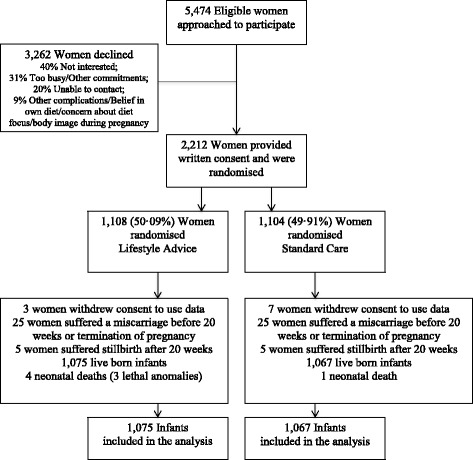
BACKGROUND: Overweight and obesity during pregnancy represents a considerable health burden. While research has focused on interventions to limit gestational weight gain, there is little information describing their impact on neonatal health. Our aim was to investigate the effect on a range of pre-specified secondary neonatal outcomes of providing antenatal dietary and lifestyle advice to women who are overweight or obese. METHODS: We report a range of pre-specified secondary neonatal outcomes from a large randomised trial in which antenatal dietary and lifestyle advice was provided to women who were overweight or obese. Pregnant women were eligible for participation with a body mass index of 25 kg/m(2) or over, and singleton gestation between 10(+0) and 20(+0) weeks. Outcome measures included gestational age at birth; Apgar score below 7 at 5 minutes of age; need for resuscitation at birth; birth weight above 4.5 kg or below 2.5 kg; birth weight, length and head circumference (and Z-scores); admission to the nursery; respiratory distress syndrome; and postnatal length of stay. Data relating to the primary outcome (large for gestational age infants defined as birth weight above the 90th centile) and birth weight above 4 kg have been reported previously. Analyses used intention-to-treat principles. RESULTS: In total, 2,142 infants were included in the analyses. Infants born to women following lifestyle advice were significantly less likely to have birth weight above 4.5 kg (2.15% versus 3.69%; adjusted risk ratio (aRR)=0.59; 95% confidence interval (CI) 0.36 to 0.98; P=0.04), or respiratory distress syndrome (1.22% versus 2.57%; aRR=0.47; 95% CI 0.24 to 0.90; P=0.02), particularly moderate or severe disease, and had a shorter length of postnatal hospital stay (3.94±7.26 days versus 4.41±9.87 days; adjusted ratio of means 0.89; 95% CI 0.82 to 0.97; P=0.006) compared with infants born to women who received Standard Care. CONCLUSIONS: For women who are overweight or obese, antenatal dietary and lifestyle advice has health benefits for infants, without an increase in the risk of harm. Continued follow-up into childhood will be important to assess the longer-term effects of a reduction in high infant birth weight on risk of child obesity. Please see related articles: http://www.biomedcentral.com/1741-7015/12/161 and http://www.biomedcentral.com/1741-7015/12/201 . CLINICAL TRIAL REGISTRATION: Australian and New Zealand Clinical Trials Registry ( ACTRN12607000161426 ).
Overview
The claims and statistics of this paper haven’t been checked yet.
Free: it reads the open-access text and checks the first 5 claims that cite a source we can check. Create a free account to check every claim.
Integrity signals
Registry
Cites
Statistics
Figures
Verification
Claims the paper makes
The claims and statistics of this paper haven’t been checked yet.
Free: it reads the open-access text and checks the first 5 claims that cite a source we can check. Create a free account to check every claim.
Claims other papers make about this one
Each is checked against this paper’s own text: does it say what the citing paper says it does?
The source backs part of the claim, not all of it — or backs it for a different population, condition or comparison.
In the citing paper
“In the LIMIT trial conducted in Australia, Dodd et al. 128 found that a diet and lifestyle intervention reduced the risk of a birth weight above 4000 g by 18% (RR = 0.82, 95% CI = 0.68–0.99, p = 0.04), but the results for maternal weight gain showed no significance for the intervention group.”
From Overweight, obesity and excessive weight gain in pregnancy as risk factors for adverse pregnancy outcomes: A narrative review (2022) · cites this paper as [128]
Experimental — accuracy not yet measuredThe check wasn’t confident either way, so it gives no verdict — never disputed.
In the citing paper
“In the LIMIT trial conducted in Australia, Dodd et al. 128 found that a diet and lifestyle intervention reduced the risk of a birth weight above 4000 g by 18% (RR = 0.82, 95% CI = 0.68–0.99, p = 0.04), but the results for maternal weight gain showed no significance for the intervention group.”
From Overweight, obesity and excessive weight gain in pregnancy as risk factors for adverse pregnancy outcomes: A narrative review (2022) · cites this paper as [128]
Experimental — accuracy not yet measured
Self-check
Percentages, sums and reported differences re-computed from the paper’s own numbers.
The self-check needs the paper’s full text.
Citations
Cites
Obesity is associated with macrophage accumulation in adipose tissue
Weisberg, S. P., McCann, D., Desai, M., Rosenbaum, M., Leibel, R. L., & Ferrante, A. W. (2003) · Journal of Clinical Investigation · doi:10.1172/jci200319246 · Cited by 10,041 · cited 1×
“There is increasing recognition that adipose tissue is far from an inert storage organ, being responsible for the active secretion of a number of metabolically active adipocytokines [49], and there is a well-described association in non-pregnant individuals between obesity and a low-grade inflammatory state [50,51], w…”
BackgroundXu, H., Barnes, G. T., Yang, Q., Tan, G., Yang, D., Chou, C. J., Sole, J., Nichols, A., Ross, J. S., Tartaglia, L. A., et al. (2003) · Journal of Clinical Investigation · doi:10.1172/jci200319451 · Cited by 6,760 · cited 1×
“There is increasing recognition that adipose tissue is far from an inert storage organ, being responsible for the active secretion of a number of metabolically active adipocytokines [49], and there is a well-described association in non-pregnant individuals between obesity and a low-grade inflammatory state [50,51], w…”
BackgroundObesity in children and young people: a crisis in public health
Lobstein, T., Baur, L., & Uauy, R. (2004) · Obesity Reviews · doi:10.1111/j.1467-789x.2004.00133.x · Cited by 3,801
Neonatal Encephalopathy Following Fetal Distress: A Clinical and Electroencephalographic Study
Sarnat, H. B. (1976) · Archives of Neurology · doi:10.1001/archneur.1976.00500100030012 · Cited by 2,680
Global prevalence and trends of overweight and obesity among preschool children
de Onis, M., Blössner, M., & Borghi, E. (2010) · The American Journal of Clinical Nutrition · doi:10.3945/ajcn.2010.29786 · Cited by 2,182
Being big or growing fast: systematic review of size and growth in infancy and later obesity
Baird, J., Fisher, D., Lucas, P., Kleijnen, J., Roberts, H., & Law, C. (2005) · BMJ · doi:10.1136/bmj.38586.411273.e0 · Cited by 1,185 · cited 1×
“Both high maternal BMI and excessive gestational weight gain have been consistently associated with adverse pregnancy outcomes [10-13], and are significant predictors of increased adiposity and future child/adult obesity [14-17], with some studies also finding consequent associations with cardiometabolic risk factors,…”
BackgroundPrepregnancy Weight and the Risk of Adverse Pregnancy Outcomes
Cnattingius, S., Bergström, R., Lipworth, L., & Kramer, M. S. (1998) · New England Journal of Medicine · doi:10.1056/nejm199801153380302 · Cited by 1,047 · cited 1×
“Although some authors have identified an increased risk of preterm birth in obese women [45], others indicate that this reflects iatrogenic prematurity rather than spontaneous labour [10].”
BackgroundMothers, Babies and Disease in Later Life
Barker, D. J. P. (1994) · Medical Entomology and Zoology · Cited by 888
Mothers, Babies, and Disease in Later Life
Gillman, M. W. (1995) · BMJ · doi:10.1136/bmj.310.6971.68a · Cited by 880
Thangaratinam, S., Rogozinska, E., Jolly, K., Glinkowski, S., Roseboom, T., Tomlinson, J. W., Kunz, R., Mol, B. W., Coomarasamy, A., & Khan, K. S. (2012) · BMJ · doi:10.1136/bmj.e2088 · Cited by 802 · cited 2×
“In the few studies specifically involving women who are overweight or obese where birth outcomes have been reported, the predominant focus has been on infant birth weight, with no reporting of other relevant clinical infant outcomes [20-22].”
Background
Research works printed but not linked: 1
- 26. Royal College of Obstetricians and Gynaecologists: Recreational exercise and pregnancy: information for you.RCOG Press 2006, [ https://www.rcog.org.uk/globalassets/documents/patients/patient-information-leaflets/pregnancy/recreational-exercise-and-pregnancy.pdf]
Cited by
Poston, L., Bell, R., Croker, H., Flynn, A. C., Godfrey, K. M., Goff, L., Hayes, L., Khazaezadeh, N., Nelson, S. M., Oteng-Ntim, E., et al. (2015) · The Lancet Diabetes & Endocrinology · doi:10.1016/s2213-8587(15)00227-2 · Cited by 642
Diet or exercise, or both, for preventing excessive weight gain in pregnancy
Muktabhant, B., Lawrie, T. A., Lumbiganon, P., & Laopaiboon, M. (2015) · Cochrane Database of Systematic Reviews · doi:10.1002/14651858.cd007145.pub3 · Cited by 601
Langley‐Evans, S. C., Pearce, J., & Ellis, S. (2022) · Journal of Human Nutrition and Dietetics · doi:10.1111/jhn.12999 · Cited by 288
“In the LIMIT trial conducted in Australia, Dodd et al.128 found that a diet and lifestyle intervention reduced the risk of a birth weight above 4000 g by 18% (RR = 0.82, 95% CI = 0.68–0.99, p= 0.04), but the results for maternal weight gain showed no significance for the intervention group.”
MethodInfluentialCombined diet and exercise interventions for preventing gestational diabetes mellitus
Shepherd, E., Gomersall, J. C., Tieu, J., Han, S., Crowther, C. A., & Middleton, P. (2017) · Cochrane Database of Systematic Reviews · doi:10.1002/14651858.cd010443.pub3 · Cited by 235
Self-citationDiet and exercise interventions for preventing gestational diabetes mellitus
Bain, E., Crane, M., Tieu, J., Han, S., Crowther, C. A., & Middleton, P. (2015) · Cochrane Database of Systematic Reviews · doi:10.1002/14651858.cd010443.pub2 · Cited by 188
Self-citationMartínez‐Hortelano, J. A., Cavero‐Redondo, I., Álvarez‐Bueno, C., Garrido‐Miguel, M., Soriano‐Cano, A., & Martínez‐Vizcaíno, V. (2020) · BMC Pregnancy and Childbirth · doi:10.1186/s12884-020-03335-7 · Cited by 167
Ribaroff, G., Wastnedge, E., Drake, A. J., Sharpe, R. M., & Chambers, T. J. G. (2017) · Obesity Reviews · doi:10.1111/obr.12524 · Cited by 156
“One large Danish trial showed that if women followed dietary advice during pregnancy, infants were less likely to be born with high birth weight (3).”
BackgroundPatel, N., Godfrey, K. M., Pasupathy, D., Levin, J., Flynn, A. C., Hayes, L., Briley, A. L., Bell, R., Lawlor, D. A., Oteng-Ntim, E., et al. (2017) · International Journal of Obesity · doi:10.1038/ijo.2017.44 · Cited by 114
Hayes, L., McParlin, C., Kinnunen, T. I., Poston, L., Robson, S. C., & Bell, R. (2015) · BMC Pregnancy and Childbirth · doi:10.1186/s12884-015-0479-2 · Cited by 103
“In the LIMIT RCT of a combined diet and physical activity lifestyle advice intervention in 2212 overweight and obese pregnant Australian women, fewer macrocosmic infants were born to women randomised to receive lifestyle advice than to those receiving standard care [21].”
BackgroundWexler, D. J., Powe, C. E., Barbour, L. A., Buchanan, T., Coustan, D. R., Corcoy, R., Damm, P., Dunne, F., Feig, D. S., Ferrara, A., et al. (2018) · Obstetrics & Gynecology · doi:10.1097/aog.0000000000002726 · Cited by 80
Grivell, R. M., Yelland, L., Deussen, A. R., Crowther, C., & Dodd, J. M. (2015) · BJOG An International Journal of Obstetrics & Gynaecology · doi:10.1111/1471-0528.13777 · Cited by 70
Self-citationLouise, J., Poprzeczny, A. J., Deussen, A. R., Vinter, C., Tanvig, M., Jensen, D. M., Bogaerts, A., Devlieger, R., McAuliffe, F. M., Renault, K. M., et al. (2021) · BMC Medicine · doi:10.1186/s12916-021-01995-6 · Cited by 62
Self-citationMelnik, B. C., John, S. M., & Schmitz, G. (2015) · Journal of Translational Medicine · doi:10.1186/s12967-014-0377-9 · Cited by 65
Ding, B., Gou, B., Guan, H., Wang, J., Bi, Y., & Hong, Z. (2021) · Archives of Gynecology and Obstetrics · doi:10.1007/s00404-021-05984-1 · Cited by 57
Atkinson, S., & McNamara, P. (2016) · Midwifery · doi:10.1016/j.midw.2016.12.008 · Cited by 57
Gomes, C. D. B., Malta, M. B., Louzada, M. L. D. C., Benício, M. H. D., Barros, A. J. D., & Carvalhães, M. A. D. B. L. (2019) · Maternal and Child Health Journal · doi:10.1007/s10995-018-2690-z · Cited by 51
Viswanathan, S. K., McNelis, K., Makker, K., Calhoun, D. A., Woo, J. G., & Balagopal, B. (2021) · Pediatric Research · doi:10.1038/s41390-021-01904-w · Cited by 50
Buckingham-Schutt, L., Ellingson, L. D., Vazou, S., & Campbell, C. G. (2018) · American Journal of Clinical Nutrition · doi:10.1093/ajcn/nqy359 · Cited by 48
Li, S., Tan, I., Atkins, E., Schutte, A. E., & Gnanenthiran, S. R. (2024) · Current Heart Failure Reports · doi:10.1007/s11897-024-00672-y · Cited by 54
“This review will focus on pharmacological management in GH rather than lifestyle modifications, which have shown negligible effects [ 28, 29].”
BackgroundDodd, J. M., Deussen, A. R., Mohamad, İ., Rifas‐Shiman, S., Yelland, L., Louise, J., McPhee, A., Grivell, R. M., Owens, J. A., Gillman, M. W., et al. (2015) · BJOG An International Journal of Obstetrics & Gynaecology · doi:10.1111/1471-0528.13796 · Cited by 47
Self-citationAISF position paper on liver disease and pregnancy
Morisco, F., Bruno, R., Bugianesi, E., Burra, P., Calvaruso, V., Cannoni, A., Caporaso, N., Caviglia, G. P., Ciancio, A., Fargion, S. R., et al. (2015) · Digestive and Liver Disease · doi:10.1016/j.dld.2015.11.004 · Cited by 51
Low-Protein Infant Formula and Obesity Risk
Kouwenhoven, S. M. P., Muts, J., Finken, M. J. J., & van Goudoever, J. B. (2022) · Nutrients · doi:10.3390/nu14132728 · Cited by 43
Dodd, J. M., Newman, A., Moran, L. J., Deussen, A. R., Grivell, R. M., Yelland, L. N., Crowther, C. A., McPhee, A. J., Wittert, G., Owens, J. A., et al. (2016) · Acta Obstetricia et Gynecologica Scandinavica · doi:10.1111/aogs.12832 · Cited by 34
Self-citationHeslehurst, N., Dinsdale, S. L., Brandon, H., Johnston, C., Summerbell, C., & Rankin, J. M. (2016) · Midwifery · doi:10.1016/j.midw.2016.11.001 · Cited by 45
“Recent intervention trials have successfully increased physical activity levels among obese pregnant women (Dodd et al., 2014; Poston et al., 2015).”
BackgroundDodd, J. M., McPhee, A. J., Deussen, A. R., Louise, J., Yelland, L. N., Owens, J. A., & Robinson, J. S. (2018) · International Journal of Obesity · doi:10.1038/s41366-018-0019-z · Cited by 39
Self-citationWang, C., Tung, Y., Chang, H., Lin, C.-H., & Chen, Y. (2020) · Nutrients · doi:10.3390/nu12113477 · Cited by 45
Prenatal Diet and Child Growth at 18 Months
Dodd, J. M., Louise, J., Deussen, A. R., McPhee, A. J., Owens, J. A., & Robinson, J. S. (2018) · PEDIATRICS · doi:10.1542/peds.2018-0035 · Cited by 35
Self-citationEarly Life Programming of Health and Disease: The Long-Term Consequences of Obesity in Pregnancy
Langley‐Evans, S. C. (2022) · Journal of Human Nutrition and Dietetics · doi:10.1111/jhn.13023 · Cited by 33
“Pregnancy is perceived as a teachable moment when women are more open to public health messages and willing to make lifestyle changes,(8,124) although numerous large‐scale trials show limited efficacy of, and high resistance to pregnancy‐focused interventions.(125,126) The most effective approaches to managing weight…”
BackgroundMaier, J. T., Schalinski, E., Gauger, U., & Hellmeyer, L. (2015) · Journal of Perinatal Medicine · doi:10.1515/jpm-2015-0172 · Cited by 36
Szmeja, M. A., Cramp, C., Grivell, R. M., Deussen, A. R., Yelland, L. N., & Dodd, J. M. (2014) · BMC Pregnancy and Childbirth · doi:10.1186/s12884-014-0409-8 · Cited by 31
Self-citationReiß, K., Breckenkamp, J., Borde, T., Brenne, S., David, M., & Razum, O. (2015) · European Journal of Public Health · doi:10.1093/eurpub/ckv072 · Cited by 27
Behavioral Determinants of Objectively Assessed Diet Quality in Obese Pregnancy
Most, J., Rebello, C. J., Altazan, A. D., Martin, C. K., Amant, M. S., & Redman, L. M. (2019) · Nutrients · doi:10.3390/nu11071446 · Cited by 27
“Improvements in diet quality during pregnancy can prevent poor outcomes in nonobese women [1–9], but dietary interventions have been largely unsuccessful in women with obesity [12,14,16,17,38,39].”
BackgroundMoran, L., Fraser, L. M., Sundernathan, T., Deussen, A. R., Louise, J., Yelland, L. N., Grivell, R. M., Macpherson, A., Gillman, M. W., Robinson, J. S., et al. (2017) · BMC Medicine · doi:10.1186/s12916-017-0790-z · Cited by 26
“The methods [41] and primary clinical findings [39, 40, 42] of the LIMIT randomised trial have been reported in detail previously.”
BackgroundMethodSelf-citationMaternal obesity: focus on offspring cardiometabolic outcomes
Gambineri, A., Conforti, A., Nisio, A. D., Laudisio, D., Muscogiuri, G., Barrea, L., Savastano, S., & Colao, A. (2020) · International Journal of Obesity Supplements · doi:10.1038/s41367-020-0016-2 · Cited by 24
Clinician’s Attitudes to the Introduction of Routine Weighing in Pregnancy
Hasted, T., Stapleton, H., Beckmann, M. M., & Wilkinson, S. A. (2016) · Journal of Pregnancy · doi:10.1155/2016/2049673 · Cited by 26
Dairy Products: Is There an Impact on Promotion of Prostate Cancer? A Review of the Literature
Vasconcelos, A., Santos, T., Ravasco, P., & Neves, P. M. (2019) · Frontiers in Nutrition · doi:10.3389/fnut.2019.00062 · Cited by 26
“Other reviews analyzed, relate the consumption of dairy products and the activation of the mTORC signaling pathway and conclude that milk consumption during pregnancy can be determinant in the risk of developing diseases of civilization, such as obesity, diabetes, and cancer (76) and therefore the limits of milk consu…”
BackgroundShort-term neonatal outcomes of pregnancies complicated by maternal obesity
Dinsmoor, M. J., Ugwu, L. G., Bailit, J. L., Reddy, U. M., Wapner, R. J., Varner, M. W., Thorp, J. M., Caritis, S. N., Prasad, M. R., Tita, A., et al. (2023) · American Journal of Obstetrics & Gynecology MFM · doi:10.1016/j.ajogmf.2023.100874 · Cited by 25
For the LIMIT Randomised Trial Group, Dodd, J. M., Ahmed, S., Karnon, J. D., Umberger, W. J., Deussen, A. R., Tran, T. S., Grivell, R. M., Crowther, C. A., Turnbull, D. A., et al. (2015) · BMC Obesity · doi:10.1186/s40608-015-0046-4 · Cited by 25
Self-citationManaging obesity in pregnancy – An obstetric and midwifery perspective
Dodd, J. M., & Briley, A. L. (2017) · Midwifery · doi:10.1016/j.midw.2017.03.001 · Cited by 26
Self-citationPoprzeczny, A. J., Louise, J., Deussen, A. R., & Dodd, J. M. (2018) · BJOG An International Journal of Obstetrics & Gynaecology · doi:10.1111/1471-0528.15288 · Cited by 27
Self-citationAlAnnaz, W., Gouda, A. D. K., El-Soud, F. A. A., & Alanazi, M. R. (2024) · Nursing Reports · doi:10.3390/nursrep14020094 · Cited by 22
“…that influenced the outcomes and access to specialized care and interventions, could contribute to differences in NICU admissions, and different population characteristics also may have had variations in demographic characteristics, socioeconomic factors, or underlying health conditions [40,41].”
BackgroundDodd, J. M., Kannieappan, L., Grivell, R. M., Deussen, A. R., Moran, L., Yelland, L. N., & Owens, J. A. (2015) · Obesity · doi:10.1002/oby.21145 · Cited by 19
Self-citationDodd, J. M., Grivell, R. M., Louise, J., Deussen, A. R., Giles, L. C., Mol, B. W., Vinter, C. A., Tanvig, M. H., Jensen, D. M., Bogaerts, A., et al. (2017) · Systematic Reviews · doi:10.1186/s13643-017-0442-6 · Cited by 24
Self-citationWomen's experiences of pregnancy and lactation after bariatric surgery: A scoping review
Sweet, L. P., & Vasilevski, V. (2022) · Midwifery · doi:10.1016/j.midw.2022.103338 · Cited by 18
Martín, M. J., Manzano, M., Bueno-Vargas, P., Rueda, R., Salto, R., Girón, M. D., Vilchez, J. D., Cabrera, E., Cano, A., Castro, A., et al. (2018) · The Journal of Nutritional Biochemistry · doi:10.1016/j.jnutbio.2018.05.018 · Cited by 21
Dodd, J. M., Deussen, A. R., Mitchell, M., Poprzeczny, A. J., & Louise, J. (2022) · Expert Review of Endocrinology & Metabolism · doi:10.1080/17446651.2022.2094366 · Cited by 18
Self-citationGestational Weight Gain—Re-Examining the Current Paradigm
Louise, J., Deussen, A. R., & Dodd, J. M. (2020) · Nutrients · doi:10.3390/nu12082314 · Cited by 19
Self-citationDodd, J. M., Plessis, L. E. D., Deussen, A. R., Grivell, R. M., Yelland, L. N., Louise, J., McPhee, A. J., Robinson, J. S., & Owens, J. A. (2017) · Scientific Reports · doi:10.1038/s41598-017-01672-w · Cited by 18
Self-citationOkesene-Gafa, K. A. M., Li, M., Taylor, R. S., Thompson, J., Crowther, C. A., McKinlay, C. J. D., & McCowan, L. M. E. (2016) · BMC Pregnancy and Childbirth · doi:10.1186/s12884-016-1149-8 · Cited by 18
Self-citationSalto, R., Girón, M. D., Manzano, M., Martín, M. J., Vílchez, J. D., Bueno-Vargas, P., Cabrera, E., Pérez-Alegre, M., Andújar, E., Rueda, R., et al. (2020) · Nutrients · doi:10.3390/nu12020528 · Cited by 16
“These diets during pregnancy led to a decrease of gestational weight gain [22], and smaller fat deposits in the babies [23].”
BackgroundRaghavan, R., Dreibelbis, C., Kingshipp, B., Wong, Y. P., Terry, N. L., Abrams, B. F., Bartholomew, A., Bodnar, L. M., Gernand, A. D., Rasmussen, K. M., et al. (2019) · doi:10.52570/nesr.pb242018.sr0101 · Cited by 15
Validation of the Intuitive Eating Scale in pregnancy
Paterson, H., Hay‐Smith, J., Treharne, G. J., Herbison, P., & Howarth, C. (2016) · Journal of Health Psychology · doi:10.1177/1359105316671186 · Cited by 14
“The ideal intervention to optimise GWG, with the goal of improving health outcomes for mother and child, has still not been agreed upon (Dodd et al., 2014).”
BackgroundPhysical Activity during Pregnancy and Childhood Obesity: Systematic Review and Meta-Analysis
Barakat, R., Silva-José, C., Sánchez‐Polán, M., Zhang, D., Lobo, P., Roia, G. F. D., & Montejo, R. (2024) · Journal of Clinical Medicine · doi:10.3390/jcm13133726 · Cited by 14
Sedentary behavior, gestational diabetes mellitus, and type 2 diabetes risk: where do we stand?
Johnson, S. T., Lynch, B. M., Vallance, J. K., Davenport, M. H., Gardiner, P. A., & Butalia, S. (2016) · Endocrine · doi:10.1007/s12020-015-0828-y · Cited by 15
Liu, J., Wilcox, S., Wingard, E. E., Burgis, J. T., Schneider, L., & Dahl, A. A. (2020) · Women s Health Reports · doi:10.1089/whr.2020.0089 · Cited by 14
Michalopoulou, M., Jebb, S. A., Mackillop, L. H., Dyson, P. A., Hirst, J. E., Zhu, S., Wire, A., & Astbury, N. M. (2024) · Diabetes Obesity and Metabolism · doi:10.1111/dom.15442 · Cited by 12
Sujan, M. A. J., Skarstad, H. M. S., Rosvold, G., Fougner, S. L., Follestad, T., Salvesen, K. Å., & Moholdt, T. T. (2025) · BMJ · doi:10.1136/bmj-2024-083398 · Cited by 11
“16 In contrast, some large lifestyle intervention trials, such as the UPBEAT study 17 and the LIMIT trial, 18 did not show the effectiveness of a diet and exercise intervention in pregnancy for GDM prevention.”
Dodd, J. M., Deussen, A. R., Peña, A. S., Mitchell, M., & Louise, J. (2023) · BMC Pediatrics · doi:10.1186/s12887-023-04466-4 · Cited by 11
Self-citationIn overweight and obese women, fetal ultrasound biometry accurately predicts newborn measures
O’Brien, C. M., Louise, J., Deussen, A. R., & Dodd, J. M. (2019) · Australian and New Zealand Journal of Obstetrics and Gynaecology · doi:10.1111/ajo.13025 · Cited by 10
Self-citationPregnancy and Lactation: A Window of Opportunity to Improve Individual Health
Rodríguez-González, G. L., Castro-Rodríguez, D. C., & Zambrano, E. (2018) · Methods in molecular biology · doi:10.1007/978-1-4939-7614-0_7 · Cited by 10
Szewczyk, Z., Weaver, N., Rollo, M. E., Deeming, S., Holliday, E. G., Reeves, P., & Collins, C. E. (2020) · Nutrients · doi:10.3390/nu12113532 · Cited by 8
“- High pre-pregnancy BMI has been shown to be strongly associated with EGWG [3] and increased resource use in the antenatal period [3,60,61].”
BackgroundReiß, K., Breckenkamp, J., Borde, T., Brenne, S., Henrich, W., David, M., & Razum, O. (2016) · International Journal of Public Health · doi:10.1007/s00038-016-0825-9 · Cited by 8
Implications of maternal obesity on fetal growth and the role of ultrasound
O’Brien, C. M., Poprzeczny, A. J., & Dodd, J. M. (2016) · Expert Review of Endocrinology & Metabolism · doi:10.1080/17446651.2017.1271707 · Cited by 7
“7% [55], consistent with the findings from the UPBEAT randomized trial [56] which utilized customized birthweight centiles.”
BackgroundSelf-citationMcCance, D. R., & Cassidy, L. (2024) · Wiley eBooks · doi:10.1002/9781119697473.ch71 · Cited by 9
Dodd, J. M., Grivell, R. M., & Owens, J. A. (2014) · Current Nutrition Reports · doi:10.1007/s13668-014-0101-7 · Cited by 6
Self-citationThe association of physical activity during pregnancy with birthweight extremes: A scoping review
Watt, G. E., Hubbard, M. E., & Mottola, M. F. (2024) · Journal of science and medicine in sport · doi:10.1016/j.jsams.2024.05.016 · Cited by 7
Obesity in pregnancy: could lifestyle interventions work?
Poston, L. (2014) · BMC Medicine · doi:10.1186/s12916-014-0201-7 · Cited by 5
Mitchell, M., Deussen, A. R., Louise, J., Poprzeczny, A. J., Keir, A., Briley, A. L., Oxlad, M., & Dodd, J. M. (2025) · BMJ Open · doi:10.1136/bmjopen-2025-105478 · Cited by 3
Self-citationEarly Nutrition, Epigenetics, and Human Health
Langley‐Evans, S. C., & Mühlhäusler, B. S. (2017) · Elsevier eBooks · doi:10.1016/b978-0-12-811060-7.00011-5 · Cited by 3
The preconception period as a platform for preventing diabetes and non‐communicable diseases
Jacob, C. M., & Hanson, M. A. (2022) · Practical Diabetes · doi:10.1002/pdi.2404 · Cited by 2
Taylor, P. D. (2016) · Springer eBooks · doi:10.1007/978-1-4939-6386-7_14 · Cited by 3
Weight in early pregnancy and outcomes in early infancy
Owe, K. M. (2014) · BMJ · doi:10.1136/bmj.g6850 · Cited by 2
Wyst, K. B. V., Quintana, G., Balducci, J., & Whisner, C. M. (2019) · Nutrients · doi:10.3390/nu11123018 · Cited by 1
Almekhaini, L. A., Awar, S. A. A. R. A., Hamad, S. A., Almesmari, F., Khaled, M., Qasem, N., Bahwan, F., Aburawi, E. H., & Narchı, H. (2024) · Cureus · doi:10.7759/cureus.75038 · Cited by 1
Channon, S., Coulman, E., Cannings-John, R. L., Henley, J., Lau, M., Lugg-Widger, F. V., Strange, H., Davies, F., Sanders, J., Scherf, C., et al. (2023) · Health Technology Assessment · doi:10.3310/nkix8285 · Cited by 1
Why it is critical to address the challenge of maternal obesity
Vinter, C. A., & Geirsson, R. T. (2016) · Acta Obstetricia Et Gynecologica Scandinavica · doi:10.1111/aogs.12911 · Cited by 1
Lifestyle Intervention and Prevention of Spontaneous Preterm Delivery in Obese Pregnant Women
Vinter, C. A. (2015) · Springer eBooks · doi:10.1007/978-3-319-16853-1_12
Reynolds, R. M. (2015) · BMJ Evidence-Based Medicine · doi:10.1136/ebmed-2014-110163
In search of balance: promoting healthy gestational weight gain
Merkx (2017) · Research Publications (Maastricht University) · doi:10.26481/dis.20170519am
Maternal Obesity: Effects of Dietary and Exercise Interventions to Prevent Adverse Negative Outcomes
Zambrano, E., & Rodríguez-González, G. L. (2017) · CRC Press eBooks · doi:10.1201/9781315154312-21
Optimizing Pregnancy for Intergenerational Health Benefits
Ferraro, Z. M. (2017) · University of Ottawa Journal of Medicine · doi:10.18192/uojm.v7i2.2139
“small- and large-for-gestational age), and increase the likelihood of delivering an infant whose birth weight is appropriate for their gestational age [28-36].”
BackgroundDuré, M. L., Ardenghi, R. M., Reuter, C. P., & Burgos, M. S. (2019) · Revista Brasileira de Educação Física e Esporte · doi:10.11606/1807-5509201900020207
Vinter, C. A., & Jensen, D. M. (2017) · Wiley eBooks · doi:10.1002/9781119043805.ch6
Short- and Long-Term Effects of Maternal Obesity and Dysglycaemia for Women and Their Children
Dodd, J. M., Poprzeczny, A. J., Deussen, A. R., & Louise, J. (2022) · Cambridge University Press eBooks · doi:10.1017/9781009272254.006 · Cited by 3
Self-citationEarly-life nutrition and obesity risk
Kouwenhoven, S. M. P. (2023) · doi:10.5463/thesis.108
Pisoh, D. W., Foinsok, N. E., Niba, L. L., Tameh, T. Y., Mforteh, A. A. A., Boten, M., Ako, T. W., & Julius, D. S. (2023) · Open Journal of Obstetrics and Gynecology · doi:10.4236/ojog.2023.134060
Effects of pre-pregnancy body mass index on cardiometabolic biomarkers in pregnant emirati women
Almekhaini, L. A., Awar, S. A. A. R. A., Zoubeidi, T., Hamad, S. A., Yasin, J., George, J. V., Khaled, M., Qasem, N., Bahwan, F., Narchı, H., et al. (2024) · Reproductive Health · doi:10.1186/s12978-024-01940-9
Louise, J., Poprzeczny, A. J., Deussen, A. R., Vinter, C. A., Tanvig, M. H., Jensen, D. M., Bogaerts, A., Devlieger, R., McAuliffe, F. M., Renault, K. M., et al. (2021) · Figshare · doi:10.6084/m9.figshare.14715008
Self-citationLouise, J., Poprzeczny, A. J., Deussen, A. R., Vinter, C. A., Tanvig, M. H., Jensen, D. M., Bogaerts, A., Devlieger, R., McAuliffe, F. M., Renault, K. M., et al. (2021) · Figshare · doi:10.6084/m9.figshare.14715005
Self-citationMaternal antenatal health and infant growth outcomes: a Microbiome Understanding in Maternity Study
Stevenson, E., Susic, D. F., Craig, M. E., Henry, A., & Gow, M. L. (2026) · Journal of Developmental Origins of Health and Disease · doi:10.1017/s2040174425100378
Metadata
- Authors
- For the LIMIT Randomised Trial Group, Dodd, J. M., McPhee, A. J., Turnbull, D., Yelland, L. N., Deussen, A. R., Grivell, R. M., Crowther, C. A., Wittert, G., Owens, J. A., & Robinson, J. S.
- Affiliations
- The University of Adelaide (AU)
- Women's and Children's Hospital (AU)
- Women's & Children's Health Research Institute (AU)
- University of Auckland (NZ)
- Corresponding author
- Dodd, Jodie M
- ORCID
- Venue
- BMC Medicine
- Published
- 2014-10-13
- Volume
- 12
- Issue
- 1
- Pages
- 163-163
- ISSN
- 1741-7015 (ISSN-L)
- PMC
- PMC4194368
- OpenAlex
- W1979324338
- Cited by
- 91
- References
- 54
- Citations by year
- 2026: 1 · 2025: 2 · 2024: 8 · 2023: 5 · 2022: 7 · 2021: 5 · 2020: 7 · 2019: 7 · 2018: 7 · 2017: 13 · 2016: 10 · 2015: 15 · 2014: 4
- FWCI
- 14.87
- Type
- journal article
- Language
- en
- Open access
- gold
- doi.org
- Locations
- BMC Medicine (publishedVersion, cc-by)
- PubMed Central (publishedVersion, cc-by)
- PubMed (publishedVersion)
- Adelaide Research & Scholarship (AR&S) (University of Adelaide) (submittedVersion, cc-by)
- Own your potential (DEAKIN) (submittedVersion)
- Funders
- University of Adelaide
- National Health and Medical Research Council (627005, 519240, 1052388, 1073514)
- National Heart, Lung, and Blood Institute (R01HL094235)
- Topics
- Health Sciences › Medicine › Obstetrics and Gynecology › Gestational Diabetes Research and Management
- Health Sciences › Medicine › Pediatrics, Perinatology and Child Health › Maternal and Neonatal Healthcare
- Health Sciences › Medicine › Pediatrics, Perinatology and Child Health › Birth, Development, and Health
- Keywords
- maternal overweight, maternal obesity, gestational weight gain, neonatal outcomes, birth weight, respiratory distress syndrome, Apgar score, large for gestational age, gestational diabetes mellitus, gestational hypertension, gestational diabetes screening, lifestyle advice, dietary recommendations, weight management in pregnancy, singleton pregnancy, neonatal intensive care admission, neonatal resuscitation
- MeSH terms
- Adult, Australia, Diet, Female, Humans, Infant, Newborn, Length of Stay, Life Style, Male, New Zealand, Obesity, Pregnancy, Pregnancy Complications, Pregnancy Outcome, Prenatal Care, Exercise, Treatment Outcome, Risk Reduction Behavior
About these checks
Registry, retraction, Cites and statistics results are computed, not judged, with one exception: a printed reference that no index lists is read once by a model before it counts as a citation error. Claims are extracted by a model and kept only when their quote appears verbatim in the text; each cited source is then checked, with a model’s help, for whether it says what the claim relies on. Those verdicts can be wrong — read the claim’s quote and the cited source before relying on one.
Statistics and arithmetic are recomputed, not judged.
Confidence bands are shown only for fields calibrated on our annotated test set. None is calibrated yet, so no band is shown.
What counts as a claim ›How we measure confidence ›How we check this ›
Are you an author, or do you see a problem with this page? Request a review
Data sources
Bibliographic data: Semantic Scholar, OpenAlex, Crossref.
Contains information from the Semantic Scholar Academic Graph Datasets, made available under the ODC Attribution License (ODC-BY 1.0).
Semantic Scholar’s data is described in: Kinney, R., et al. (2023). The Semantic Scholar Open Data Platform. arXiv:2301.10140.
