

Comorbidity and dementia: a scoping review of the literature
Open accessThe DOI matches its Crossref record; 85 of the 85 references it cites were found in a registry or an index.
Abstract
BACKGROUND: Evidence suggests that amongst people with dementia there is a high prevalence of comorbid medical conditions and related complaints. The presence of dementia may complicate clinical care for other conditions and undermine a patient's ability to manage a chronic condition. The aim of this study was to scope the extent, range and nature of research activity around dementia and comorbidity. METHODS: We undertook a scoping review including all types of research relating to the prevalence of comorbidities in people with dementia; current systems, structures and other issues relating to service organisation and delivery; patient and carer experiences; and the experiences and attitudes of service providers. We searched AMED, Cochrane Library, CINAHL, PubMed, NHS Evidence, Scopus, Google Scholar (searched 2012, Pubmed updated 2013), checked reference lists and performed citation searches on PubMed and Google Scholar (ongoing to February 2014). RESULTS: We included 54 primary studies, eight reviews and three guidelines. Much of the available literature relates to the prevalence of comorbidities in people with dementia or issues around quality of care. Less is known about service organisation and delivery or the views and experiences of people with dementia and their family carers. There is some evidence that people with dementia did not have the same access to treatment and monitoring for conditions such as visual impairment and diabetes as those with similar comorbidities but without dementia. CONCLUSIONS: The prevalence of comorbid conditions in people with dementia is high. Whilst current evidence suggests that people with dementia may have poorer access to services the reasons for this are not clear. There is a need for more research looking at the ways in which having dementia impacts on clinical care for other conditions and how the process of care and different services are adapting to the needs of people with dementia and comorbidity. People with dementia should be included in the debate about the management of comorbidities in older populations and there needs to be greater consideration given to including them in studies that focus on age-related healthcare issues.
Overview
The claims and statistics of this paper haven’t been checked yet.
Free: it reads the open-access text and checks the first 5 claims that cite a source we can check. Create a free account to check every claim.
Integrity signals
Registry
Cites
Statistics
Figures
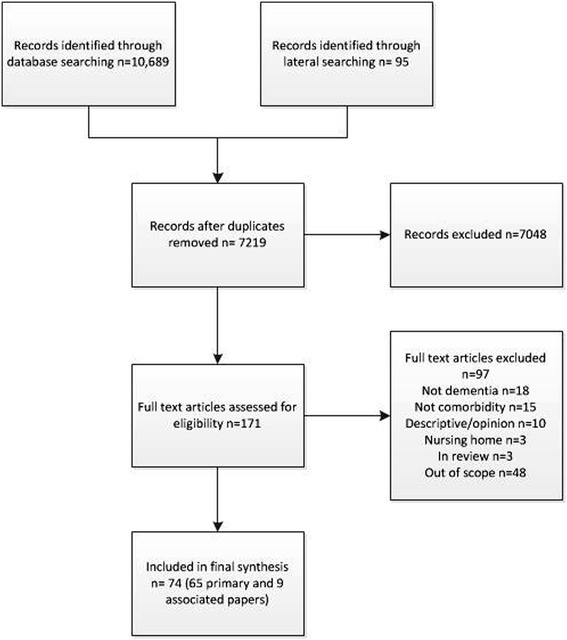
Verification
Claims the paper makes
The claims and statistics of this paper haven’t been checked yet.
Free: it reads the open-access text and checks the first 5 claims that cite a source we can check. Create a free account to check every claim.
Self-check
Percentages, sums and reported differences re-computed from the paper’s own numbers.
The self-check needs the paper’s full text.
Citations
Cites
Scoping studies: towards a methodological framework
Arksey, H., & O'Malley, L. (2005) · International Journal of Social Research Methodology · doi:10.1080/1364557032000119616 · Cited by 36,742 · cited 1×
“The scoping review was guided by Arksey and O’Malley’s methodological framework [17,18] which includes: identifying the research question; searching for relevant studies; selecting studies; charting the data and collating and summarising and reporting the results.”
MethodScoping studies: advancing the methodology
Levac, D., Colquhoun, H., & O'Brien, K. K. (2010) · Implementation Science · doi:10.1186/1748-5908-5-69 · Cited by 15,268 · cited 1×
“The scoping review was guided by Arksey and O’Malley’s methodological framework [17,18] which includes: identifying the research question; searching for relevant studies; selecting studies; charting the data and collating and summarising and reporting the results.”
MethodA typology of reviews: an analysis of 14 review types and associated methodologies
Grant, M. J., & Booth, A. (2009) · Health Information & Libraries Journal · doi:10.1111/j.1471-1842.2009.00848.x · Cited by 10,817 · cited 1×
“Whilst the scoping review has a number of similarities to a systematic review it does not typically involve quality assessment and findings are reported in a narrative format [19,20].”
BackgroundBarnett, K., Mercer, S. W., Norbury, M., Watt, G., Wyke, S., & Guthrie, B. (2012) · The Lancet · doi:10.1016/s0140-6736(12)60240-2 · Cited by 6,972 · cited 9×
“Nine studies reported the prevalence of stroke in people with dementia [5,26,46,55,56,58,64,80,81] and two in people with cognitive impairment [36,72].”
BackgroundMethodInfluentialRisk of dementia in diabetes mellitus: a systematic review
Biessels, G. J., Staekenborg, S., Brunner, E., Brayne, C., & Scheltens, P. (2006) · The Lancet Neurology · doi:10.1016/s1474-4422(05)70284-2 · Cited by 2,187 · cited 1×
“For example, cognitive decline may be accelerated in older people with type 2 diabetes [9,10].”
BackgroundSelf-citationGreenhalgh, T., & Peacock, R. (2005) · BMJ · doi:10.1136/bmj.38636.593461.68 · Cited by 2,045 · cited 1×
“Such lateral strategies have been shown to be particularly important for identifying non-randomised studies [22].”
BackgroundDefining Comorbidity: Implications for Understanding Health and Health Services
Valderas, J. M., Starfield, B., Sibbald, B., Salisbury, C., & Roland, M. (2009) · The Annals of Family Medicine · doi:10.1370/afm.983 · Cited by 1,722 · cited 1×
“There is also a lack of research on patients’ views on the ways in which multiple conditions affect their health, well-being and clinical care [16].”
BackgroundHypoglycemic episodes and risk of dementia in older patients with type 2 diabetes mellitus
Whitmer, R. A. (2009) · JAMA · doi:10.1001/jama.2009.460 · Cited by 1,128 · cited 1×
“For example, cognitive decline may be accelerated in older people with type 2 diabetes [9,10].”
BackgroundALZHEIMER'S DISEASE INTERNATIONAL
Graham, N., & Brodaty, H. (1997) · International Journal of Geriatric Psychiatry · doi:10.1002/(sici)1099-1166(199707)12:7<737::aid-gps625>3.0.co;2-b · Cited by 851
The Impact of Comorbid Chronic Conditions on Diabetes Care
Piette, J. D., & Kerr, E. A. (2006) · Diabetes Care · doi:10.2337/diacare.29.03.06.dc05-2078 · Cited by 731 · cited 1×
“In addition, if the dementia is symptomatic (such as the behavioural and psychological symptoms associated with dementia) then dementia may become clinically dominant and detract from the management of conditions such as diabetes mellitus [93,94].”
Background
Research works printed but not linked: 10
- Bunn F, Goodman C, Brayne C, Norton S, Rait G, Robinson L, Schoeman J: Comorbidity and Dementia: Improving Healthcare for People with Dementia. (CoDem). 2013
- Australian Commission on Safety and Quality in Health Care: Evidence for the Safety and Quality Issues Associated with the Care of Patients with Cognitive Impairement in Acute Care Settings: a Rapid Review. Sydney: 2013.
- Allen K, Stapleton K, McLean F: Dementia and Deafness: an Exploratory Study. 2005, Queensbury House Trust and the Scottish Executive.
- Gladman J, Porock D, Griffiths A, Clissett P, Harwood RH, Knight A, Jurgens F, Jones R, Schneider J, Kearney F: Care of Older People with Cognitive Impairment in General Hospitals. Final report NIHR Service Delivery and Organisation programme. 2012
- Hill J, Hicks D, James J, Vanterpool G, Gillespie C, Fox C, Sinclair A: Diabetes and dementia guidance on practical management. Training, Research and Education For Nurses in Diabetes and Institute of Diabetes in Older People. 2013
- Holmes J, Montana C, Powell G, Hewison J, House A, Mason J, Farrin A, McShane P, McParland L, Gilbody S, Young J, Keen J, Baldwin R, Burns A, Pratt H, Anderson D: Liaison Mental Health Services for Older People: A literature review, service mapping and in-depth evaluation of service models. Produced for the National Institute for Health Research Service Delivery and Organisation programme. 2010
- McKeefry D, Bartlett R: Improving vision and eye health care for people with dementia. 2010, Thomas Pocklington Trust.
- Jara M, Zhang I, Tcherny-Lessenot S, Wanju S: Less or more cataracts in Alzheimer’s disease. Pharmacoepidemiol Drug Saf. 2011, 20: S302-S303.
- Lawrence F, Murray J, Banerjee S: The Experiences and Needs of People with Dementia and Serious Visual Impairment: a Qualitative Study, Volume 19. 2008, Thomas Pocklington Trust, 8
- Allan K: Deafness and dementia: consulting on the issues. J Dement Care. 2006, 14: 35.
Cited by
Items 201–300 of 459
Patients with dementia: prevalence and type of drug–drug interactions
Muñoz-Contreras, M. C., Cerdá, B., López-Román, F. J., & Segarra, I. (2024) · Frontiers in Pharmacology · doi:10.3389/fphar.2024.1472932 · Cited by 16
“(Doraiswamy et al., 2002) including three or more chronic diseases (Bunn et al., 2014; Bynum et al., 2004) such as hypertension and musculoskeletal, cardiovascular, metabolic/endocrine, and gastrointestinal disorders.”
BackgroundModelling the value of innovative treatments for Alzheimer’s disease in the United States
Makin, C., Neumann, P. J., Peschin, S., & Goldman, D. P. (2021) · Journal of Medical Economics · doi:10.1080/13696998.2021.1927747 · Cited by 11
Inflammatory bowel disease as a new risk factor for dementia
Zuin, M., GIORGIO, R. D., Capatti, E., Boschetti, E., & Zuliani, G. (2022) · Aging Clinical and Experimental Research · doi:10.1007/s40520-022-02076-1 · Cited by 11
“It is known that patients with dementia have a high prevalence of comorbid medical conditions and related complaints, which directly influence the disease progression and relative outcome [2, 3].”
BackgroundResearch Progress on Lipocalin-2 in Diabetic Encephalopathy
Zhang, W., Chen, S., & Zhuang, X. (2023) · Neuroscience · doi:10.1016/j.neuroscience.2023.02.011 · Cited by 13
François, M., Sicsic, J., Elbaz, A., & Pelletier‐Fleury, N. (2017) · Drugs & Aging · doi:10.1007/s40266-017-0481-7 · Cited by 15
“After the age of 65 years, half of patients have at least three coexisting chronic diseases [43], and patients with dementia have more co-morbidities than patients without dementia [44].”
BackgroundPage, A. T., Clifford, R. M., Potter, K., Seubert, L., McLachlan, A. J., Hill, X., King, S., Clark, V., Ryan, C. A., Parekh, N., et al. (2017) · BMJ Open · doi:10.1136/bmjopen-2017-017906 · Cited by 12
“The coexistence of dementia with other chronic conditions thus poses a challenge for health professionals seeking to optimise medication use.(4) We recently developed the Medication Appropriateness Tool for Comorbid Health conditions in Dementia (MATCH-D) criteria, which provide expert consensus to manage medication u…”
BackgroundBunn, F., Goodman, C. M., Russell, B., Wilson, P. M., Manthorpe, J., Rait, G., Hodkinson, I., & Durand, M. (2018) · Health Services and Delivery Research · doi:10.3310/hsdr06280 · Cited by 16
Self-citationHybrid simulation modelling for dementia care services planning
Evenden, D., Brailsford, S., Kipps, C., Roderick, P., & Walsh, B. M. (2020) · Journal of the Operational Research Society · doi:10.1080/01605682.2020.1772020 · Cited by 13
Toubøl, A. G., Moestrup, L., Ryg, J., Thomsen, K., & Nielsen, D. S. (2020) · Global Qualitative Nursing Research · doi:10.1177/2333393619899388 · Cited by 11
“Hospital admissions for people with dementia are predicted to rise in the future (Lin et al., 2013), due to the increasing number of people affected by dementia (Patterson, 2018) and the associated comorbidity (Bunn et al., 2014).”
BackgroundEnhancing early detection of cognitive impairment in primary care with the TabCAT-BHA
Breithaupt, A. G., Sideman, A. B., Goode, C., Hill‐Sakurai, L., Premkumar, M., Scheffler, A. W., Chodos, A., Tsoy, E., Rankin, K. P., Kramer, J. H., et al. (2025) · Alzheimer's & Dementia · doi:10.1002/alz.70437 · Cited by 10
Farhana, N., Peckham, A., Marani, H., Roerig, M., & Marchildon, G. P. (2023) · Journal of Patient Experience · doi:10.1177/23743735231211066 · Cited by 17
“26,27 Consistent with the literature that suggests provider perceptions of the disease impact timely diagnosis and diagnoses of other comorbidities, 28,29 which may result from providers attributing other ailments to the dementia.”
BackgroundSocial Factors, Age, and Health at Time of Dementia Diagnosis
Ding, M., Schmidt‐Mende, K., & Modig, K. (2025) · JAMA Network Open · doi:10.1001/jamanetworkopen.2024.61117 · Cited by 12
Sečník, J., Eriksdotter, M., Xu, H., Annetorp, M., on behalf of the SweGeroCOVID Project, Rytarowski, A., Johnell, K., Hägg, S., & Religa, D. (2023) · Alzheimer s Research & Therapy · doi:10.1186/s13195-022-01154-w · Cited by 11
“These associations are likely explained by overall higher comorbidity burden including respiratory complications [11, 12, 33], inability to follow social restrictions [8, 15], increased caregiver burden [15], and possibly even higher infectious load in apolipoprotein E epsilon-4 variant carriers [15, 34].”
Background(2018) · Europe PMC (PubMed Central) · Cited by 10
Temedda, M. N., Garnier‐Crussard, A., Mouchoux, C., & Dauphinot, V. (2024) · The Journal of Prevention of Alzheimer s Disease · doi:10.14283/jpad.2024.51 · Cited by 10
“Specifically, in people with cognitive impairment some factors may contribute to the variability over time of comorbidity burden as the poor level of treatment adherence and the lower access to health services (42).”
Alharkan, K. S., Aldhawyan, A. F., Bahamdan, A. S., Alqurashi, Y. D., Aldulijan, F. A., Alsamin, S. I., Alotaibi, J. K., & Alumran, A. K. (2024) · Journal of Family and Community Medicine · doi:10.4103/jfcm.jfcm_268_23 · Cited by 14
“[13] On the other hand, patients who have dementia need a special approach for other comorbid diseases they have, such as diabetes or hypertension.”
BackgroundInfluentialWalsh, C., Capstick, A., Fletcher‐Lloyd, N., True, J., CR&T Group, Management, L. A., Sharp, D. J., Wilson, D., Daniels, S., Wingfield, D., et al. (2025) · Communications Medicine · doi:10.1038/s43856-024-00724-3 · Cited by 11
Gabbard, J., Pajewski, N., Callahan, K. E., Dharod, A., Foley, K. L., Ferris, K. G., Moses, A., Grey, C., & Williamson, J. D. (2019) · BMJ Open · doi:10.1136/bmjopen-2019-032732 · Cited by 11
Glucose-Lowering Medications and Post-Dementia Survival in Patients with Diabetes and Dementia
Sečník, J., Xu, H., Schwertner, E., Hammar, N., Alvarsson, M., Winblad, B., Eriksdotter, M., Ptacek, S. G., & Religa, D. (2022) · Journal of Alzheimer s Disease · doi:10.3233/jad-215337 · Cited by 11
“Diabetes is a major comorbidity in patients 40 with dementia, where approximately 13–20% of all 41 dementia patients are co-diagnosed with diabetes 42 [1, 2].”
BackgroundDementia, nurse staffing, and health outcomes in nursing homes
Mukamel, D. B., Ladd, H., Saliba, D., & Konetzka, R. T. (2023) · Health Services Research · doi:10.1111/1475-6773.14270 · Cited by 10
Gibson, C. E., Goeman, D., Pond, D. C., Yates, M. W., & Hutchinson, A. M. (2024) · BMC Family Practice · doi:10.1186/s12875-024-02401-9 · Cited by 9
“Given that it is common for PLWD to have at least one other long-term health condition [32, 40] and higher rates of hospitalisation compared with people living without dementia [41], high-quality care needs to address the impact of dementia in all chronic disease management interventions.”
BackgroundAssociation of Acute Kidney Injury with the Risk of Dementia: A Meta-Analysis
Hussain, S., Singh, A., Antony, B., Granado, R. C., Klugarová, J., Líčeník, R., & Klugar, M. (2021) · Journal of Clinical Medicine · doi:10.3390/jcm10194390 · Cited by 11
Gungabissoon, U., Broadbent, M. T. M., Perera, G., Ashworth, M. J., Galwey, N. W., & Stewart, R. J. (2022) · Journal of the American Medical Directors Association · doi:10.1016/j.jamda.2022.04.045 · Cited by 10
Liu, C.-L., Lin, M., Hwang, S., Liu, C., Lee, H., & Wu, M. (2018) · BMC Endocrine Disorders · doi:10.1186/s12902-018-0273-z · Cited by 11
Tay, R., Tan, J. Y. S., Lim, B., Hum, A. Y., Simpson, J., & Preston, N. J. (2024) · Palliative Medicine · doi:10.1177/02692163241265231 · Cited by 12
“103 Informal caregivers may feel inadequate managing an acute medical condition such as pneumonia at home, while healthcare professionals in long-term care, by virtue of the resources available and their professional training, may feel better equipped.”
Comorbidity patterns in institutionalized older adults affected by dementia
Zazzara, M. B., Vetrano, D. L., Carfì, A., Liperoti, R., Damiano, C., & Onder, G. (2022) · Alzheimer s & Dementia Diagnosis Assessment & Disease Monitoring · doi:10.1002/dad2.12320 · Cited by 8
Dementia and Risk Factors: Results from a Prospective, Population-Based Cohort Study
Villani, S., Ferraro, O. E., Poloni, T. E., & Guaita, A. (2022) · Life · doi:10.3390/life12071055 · Cited by 10
“In contrast with previous data on high comorbidity in individuals with dementia, we found that comorbidities are not predictors of dementia cases [19,48].”
ResultTsunawaki, S., Abe, M., DeJonckheere, M. J., Cigolle, C. T., Philips, K. K., Rubinstein, E. B., Matsuda, M., Fetters, M. D., & Inoue, M. (2023) · BMC Family Practice · doi:10.1186/s12875-023-02088-4 · Cited by 9
“Third issue is the integration of health and social care for multimorbid patients with dementia [6, 7, 18, 19].”
BackgroundCaregivers’ Burden on Patients with Dementia Having Multiple Chronic Diseases
Jhang, K.-M., Liao, G.-C., Wang, W., Tung, Y., Yen, S., & Wu, H. (2024) · Risk Management and Healthcare Policy · doi:10.2147/rmhp.s454796 · Cited by 8
Vitamin K Properties in Stroke and Alzheimer’s Disease: A Janus Bifrons in Protection and Prevention
Grimaldi, L., Cavallaro, R. A., Angelis, D. D., Fuso, A., & Sancesario, G. M. (2025) · Molecules · doi:10.3390/molecules30051027 · Cited by 8
“Compared to the general older population, people with dementia have increased rates of cerebrovascular disease [117–120], stroke [121] Parkinson’s disease [117,119] diabetes [119,121] and others.”
Lam, A., Ploeg, J., Carroll, S. L., Duggleby, W., McAiney, C. A., & Julian, P. (2020) · SAGE Open Nursing · doi:10.1177/2377960820934290 · Cited by 12
Keuning‐Plantinga, A., Stoffels, J. M. J., Roodbol, P. F., Finnema, E., & Munster, B. C. V. (2023) · Nursing Open · doi:10.1002/nop2.1618 · Cited by 9
Liu, C.-L., Lin, M., Hwang, S., Liu, C., Lee, H., & Wu, M. (2018) · Journal of Diabetes and its Complications · doi:10.1016/j.jdiacomp.2018.10.014 · Cited by 9
Understanding Aging, Frailty, and Resilience in Ontario First Nations
Slater, M. B., Jacklin, K. M., Sutherland, R., Jones, C. R., Blind, M. J., Warry, W., Valvasori, M., & Walker, J. D. (2020) · Canadian Journal on Aging / La Revue canadienne du vieillissement · doi:10.1017/s0714980820000276 · Cited by 11
“Recently, aging research has focused on frail, older adults with complex health needs (Bunn et al., 2014).”
Feng, J., Teng, Z., & Chen, S. (2025) · PeerJ · doi:10.7717/peerj.19442 · Cited by 9
“It is estimated that approximately 20% of individuals aged 60 and older with T2D may develop dementia, which represents an advanced stage of cognitive impairment ( Srikanth et al., 2020 ; Bunn et al., 2014 ).”
Bu, X., Zhu, W., Wang, Q.-H., Liu, Z., Bao, Y.-Y., Bai, Y., Li, J.-H., Liu, Z.-H., Zhao, J.-L., Xiang, Y., et al. (2025) · Nature Communications · doi:10.1038/s41467-025-60748-8 · Cited by 9
Varkey, B. P., Joseph, J., Haokip, H. R., Sharma, S. K., Mathews, E., Ameen, S., Narasimha, V. L., Dhandapani, M., & Grover, S. (2022) · Indian Journal of Psychological Medicine · doi:10.1177/02537176221130252 · Cited by 7
Davis–Ajami, M. L., Chang, C., Gupta, S., Khan, B. A., Solid, C. A., Sharu, H. E., Boustani, M. A., Yates, B. A., & Simon, K. I. (2023) · American Journal of Critical Care · doi:10.4037/ajcc2023328 · Cited by 7
Chu, C., Cheng, S.-L., Bai, Y., Su, T., Tsai, S., Chen, T., Yang, F., Chen, M., & Liang, C. (2023) · Psychiatry Investigation · doi:10.30773/pi.2023.0112 · Cited by 8
Patient and caregiver experiences of living with dementia in Tanzania
Walker, J., Dotchin, C. L., Breckons, M., Fisher, E., Lyimo, G., Mkenda, S., Walker, R., Urasa, S. J., Rogathi, J. J., & Spector, A. E. (2023) · Dementia · doi:10.1177/14713012231204784 · Cited by 9
“Management often becomes more dif fi cult as dementia symptoms progress (Bunn et al., 2014) and goals of care change (Taghizadeh Larsson & ¨Osterholm, 2014).”
BackgroundAbowari-Sapeh, M. E., Ackah, J. A., Murphy, J. L., & Akudjedu, T. N. (2024) · Journal of medical imaging and radiation sciences · doi:10.1016/j.jmir.2024.01.008 · Cited by 9
Chen, C., Zhang, S., Huang, N., Zhang, M., Fu, J., & Guo, J. (2024) · Cambridge Prisms Global Mental Health · doi:10.1017/gmh.2024.141 · Cited by 8
“…between physical multimorbidity and future cognitive function decline in our study were consistent with the previous findings from animal models, clinical and epidemiological studies (Aarts et al., 2011; Bunn et al., 2014; Gerritsen et al., 2016; Vassilaki et al., 2015, 2016; Wang et al., 2018).”
Predicting Alzheimer's Disease Onset
Zeliger, H. I. (2019) · European Journal of Medical and Health Sciences · doi:10.24018/ejmed.2019.1.1.16 · Cited by 8
Potter, C., Peters, M., Cundell, M., McShane, R. H., & Fitzpatrick, R. M. (2021) · Quality of Life Research · doi:10.1007/s11136-021-02762-z · Cited by 8
“In contexts of high multimorbidity [18, 19], a generic HRQoL measure might be preferred for assessing overall outcomes of joined-up services.”
BackgroundComparison of the Quality of Chronic Disease Management Between Adults With and Without Dementia
Gotanda, H., Nuckols, T. K., Mori, K., & Tsugawa, Y. (2021) · JAMA Network Open · doi:10.1001/jamanetworkopen.2021.9622 · Cited by 7
Nakanishi, M., Yamasaki, S., Endo, K., Niimura, J., Ziylan, C., Bakker, T. J. E. M., Granvik, E., Nägga, K., & Nishida, A. (2021) · JMIR Medical Education · doi:10.2196/30652 · Cited by 8
“The severity and mortality of COVID-19 worsens with age [5] and in individuals with pre-existing illnesses, such as hypertension and diabetes [6,7], which are common in people with dementia [8].”
BackgroundIdentifying patterns of potentially preventable hospitalisations in people living with dementia
Engel, L., Hwang, K., Panayiotou, A., Watts, J. J., Mihalopoulos, C., Temple, J., & Batchelor, F. (2022) · BMC Health Services Research · doi:10.1186/s12913-022-08195-9 · Cited by 8
“Generally, it is important to recognise that people with dementia have a high prevalence of comorbid medical conditions [31], which requires adaptation in current process of care and service delivery.”
BackgroundWang, Y., Li, M., Kazis, L. E., & Xia, W. (2023) · Journal of Aging Research and Lifestyle · doi:10.14283/jarlife.2023.8 · Cited by 6
“Patients diagnosed with AD often exhibit a wide range of comorbid diseases such as diabetes, hypertension, or hypercholesterolemia (6).”
An Algorithm to Characterize a Dementia Population by Disease Subtype
Albrecht, J. S., Hanna, M., Randall, R. L., Kim, D., & Perfetto, E. M. (2019) · Alzheimer Disease & Associated Disorders · doi:10.1097/wad.0000000000000295 · Cited by 8
Predictors of emergency department visit among people with dementia in Taiwan
Huang, M., Tsai, C.-F., Cheng, C., Lin, Y., Lee, W., Kuo, Y.-S., Chan, Y. E., & Fuh, J. (2022) · Archives of Gerontology and Geriatrics · doi:10.1016/j.archger.2022.104701 · Cited by 6
Joshi, A., Todd, S., Finn, D. P., McClean, P. L., & Wong‐Lin, K. (2022) · BMC Medical Informatics and Decision Making · doi:10.1186/s12911-022-01892-9 · Cited by 6
“Additionally, patients living with dementia often have other comorbidities which, at times are undiagnosed and difficult to manage [4].”
BackgroundChen, C., Zhao, Y., Su, B., Wu, Y., Zhong, P., & Zheng, X. (2023) · Frontiers in Public Health · doi:10.3389/fpubh.2023.1115207 · Cited by 9
Managing diabetes and dementia, a challenging duo: a scoping review
Sharkey, F., & COATES, V. E. (2023) · Practical Diabetes · doi:10.1002/pdi.2469 · Cited by 8
Demencia de inicio en edades avanzadas: aspectos clínicos y fisiopatológicos diferenciales
Marín-Carmona, J. M., & Formiga, F. (2015) · Revista Española de Geriatría y Gerontología · doi:10.1016/j.regg.2015.06.005 · Cited by 7
Thunell, J. A., Ferido, P., & Zissimopoulos, J. (2023) · Journal of the American Geriatrics Society · doi:10.1111/jgs.18230 · Cited by 6
Lea, E. J., Robinson, A., & Doherty, K. (2023) · Ageing International · doi:10.1007/s12126-023-09523-y · Cited by 8
“Typically, these residents may have symptoms such as anxiety, agitation and apathy and a number of possible comorbidities, including diabetes and stroke (Bunn et al., 2014 ; Tible et al., 2017 ).”
Beigh, S., Adnan, R., Abdulaziz, A.-J., Abdullah, S., Nasser, N., Ghazzay, R., Abdulaziz, R., Mohammed, E., Abouhussien, R. M., & Alshehri, M. A. (2024) · Cureus · doi:10.7759/cureus.52507 · Cited by 7
Liu, R. M., Peak, K., Trubits, E. F., & Quiñones, A. R. (2025) · European Geriatric Medicine · doi:10.1007/s41999-024-01150-3 · Cited by 6
Rickardsson, N., & Crooks, S. (2021) · Clinical Case Studies · doi:10.1177/15346501211012099 · Cited by 9
“Firstly, most BC in the context of dementia occur co-morbidly with various longterm physical health problems and medical conditions (Bunn et al., 2014).”
BackgroundJavanmardifard, S., Shirazi, F., Jamalnia, S., & Sadeghi, E. (2022) · Journal of Holistic Nursing and Midwifery · doi:10.32598/jhnm.32.3.2207 · Cited by 5
“The prevalence of diabetes in people with CI ranges 6-39 % [9].”
BackgroundSabatini, S., Martyr, A., Ukoumunne, O. C., Ballard, C. G., Collins, R., Pentecost, C., Rusted, J. M., Quinn, C., Anstey, K. J., Kim, S., et al. (2022) · BMC Geriatrics · doi:10.1186/s12877-022-03336-5 · Cited by 6
“Hence the slightly more negative ATOA reported by PwD may be due to them being more likely to experience depression and poor self-rated health [16, 17] than people without dementia.”
BackgroundShepherd‐Banigan, M. E., Miller, K. E. M., Hastings, S. N., Schleiden, L. J., & Thorpe, J. M. (2023) · PLoS ONE · doi:10.1371/journal.pone.0282071 · Cited by 7
“Mental illness is associated with many other physical health comorbidities, such as diabetes and cardiovascular disease [9–11]— which are also risk factors for AD/ADRD [23].”
BackgroundAlageel, N. A., Hughes, C. M., Alwhaibi, M., Alkeridy, W. A., & Barry, H. E. (2024) · BMC Geriatrics · doi:10.1186/s12877-024-04949-8 · Cited by 5
“Given the high prevalence of comorbid medical conditions and frailty among people with dementia (PwD), the risks of polypharmacy, drug-drug and drug-disease interactions are greater than among their older counterparts [8–12].”
BackgroundOtani, N., Kanda, K., Ngatu, N. R., Murakami, A., Yamadori, Y., & Hirao, T. (2024) · Medicina · doi:10.3390/medicina60101633 · Cited by 8
“As most patients with Alzheimer’s disease are elderly, they often present with comorbidities [9,10].”
BackgroundFazio‐Eynullayeva, E., Cunnington, M. C., Mystkowski, P., Lv, L., Aly, A., Yee, C. W., Desai, R. A., Liu, C., Duh, M. S., & Mattke, S. (2024) · Journal of Medical Economics · doi:10.1080/13696998.2024.2442240 · Cited by 5
“Further, more advanced AD-related symptoms may be clinically dominant and detract from the management of other comorbidities, resulting in a net equivalent number of healthcare encounters as AD progresses 22 .”
Antiamyloid treatment for dementia: concerns outweigh hopes
Flicker, L. A. (2025) · Current Opinion in Psychiatry · doi:10.1097/yco.0000000000001021 · Cited by 7
Use of medical services by older Australian women with dementia: a longitudinal cohort study
Byles, J., Cavenagh, D., Bryant, J., Mazza, D., Browning, C. J., O'Loughlin, S., & Sanson‐Fisher, R. (2021) · Australian and New Zealand Journal of Public Health · doi:10.1111/1753-6405.13146 · Cited by 6
Dasch, B., & Lenz, P. (2021) · Zeitschrift für Gerontologie und Geriatrie · doi:10.1007/s00391-021-01976-7 · Cited by 9
Potential role of Drug Repositioning Strategy (DRS) for management of tauopathy
Zaki, M. O., Elsherbiny, D. A., Salama, M., & Azab, S. S. (2021) · Life Sciences · doi:10.1016/j.lfs.2021.120267 · Cited by 7
Qin, Q., Veazie, P. J., Temkin‐Greener, H., Makineni, R., & Cai, S. (2023) · Journal of the American Medical Directors Association · doi:10.1016/j.jamda.2023.02.111 · Cited by 5
Niu, Y., Zhong, J.-F., Wen, H.-Y., Yan, H., Diao, Z., Li, J., Bai, X., Qiu, J., Xu, Z. N., Chen, L., et al. (2024) · The Journals of Gerontology Series A · doi:10.1093/gerona/glae034 · Cited by 6
Feter, N., Leite, J. S., Cardoso, R. K., & Rombaldi, A. J. (2021) · Cadernos de Saúde Pública · doi:10.1590/0102-311x00046520 · Cited by 6
Comorbid Dementia and Cancer Therapy Decision-Making: A Scoping Review
Halpin, S. N., Alain, G., Seaman, A. T., Stevens, E., Zhao, H., Fowler, M. E., Zhang, Q., Cadet, T. J., Ye, M., & Krok‐Schoen, J. L. (2024) · Journal of Applied Gerontology · doi:10.1177/07334648241233375 · Cited by 6
“A scoping review of dementia and other comorbidities more broadly was published almost a decade ago, yet this review did not focus on cancer and dementia more speci fi cally (Bunn et al., 2014).”
Identifying synergistic combinations of repurposed treatments for Alzheimer’s Disease
Ballard, C. G., Sultana, J., Doherty, P., Williams, G. H., & Corbett, A. (2025) · The Journal of Prevention of Alzheimer s Disease · doi:10.1016/j.tjpad.2025.100329 · Cited by 7
“In the broader group of individuals with AD or other dementias, the majority of people are over 80, many presenting with multiple comorbidities such as cardiovascular and renal disease, necessitating numerous concomitant medications [121].”
Developing a predictive model for mortality in patients with cognitive impairment
Sugimoto, T., Sakurai, T., Noguchi, T., Komatsu, A., Nakagawa, T., Ueda, I., Osawa, A., Lee, S., Shimada, H., Kuroda, Y., et al. (2023) · International Journal of Geriatric Psychiatry · doi:10.1002/gps.6020 · Cited by 5
“37 Based on previous studies and our results, severe dementia and the presence and management of comorbidities seem to have an impact on mortality from pneumonia.”
ResultOng, S. C., Tay, L. X., Yee, T. F., Teh, E. E., Ch’ng, A. S. H., Razali, R. M., Lim, W. C., Zam, U. A. A. U. M., & Parumasivam, T. (2024) · Scientific Reports · doi:10.1038/s41598-024-69745-1 · Cited by 4
“Considering the high prevalence of chronic diseases among older population, it is not surprising that patient with AD have an average of 2–8 comorbidities which could further affects the cognitive and functional ability in daily life 57,58 .”
Zhang, Y., Deng, Z., Seaman, J. B., & Koleck, T. A. (2025) · Health Science Reports · doi:10.1002/hsr2.70449 · Cited by 4
Chen, E., Ding, M., Szummer, K. E., Bergqvist, M., Modig, K., & Schmidt‐Mende, K. (2025) · British Journal of General Practice · doi:10.3399/bjgp.2025.0044 · Cited by 4
“29 The current study found larger HF drug treatment gaps between patients managed in primary care versus those also managed in cardiology care than previously reported (ACEi/ARB/ARNI 16.9% [ n = 2647] versus 11.2%, BBs 13.5% [ n = 2084] versus 6.8%, MRA 27.5% [ n = 4581] versus 11.5%).”
InfluentialCognitive Impairment and the Diabetic Brain
Jellinger, K. A. (2015) · International Journal of Neurology and Neurotherapy · doi:10.23937/2378-3001/2/2/1033 · Cited by 4
“The prevalence rates varied from 6 to 39% [12].”
Practical considerations for managing patients with diabetes and dementia
Mair, M. L., Athavale, R., & Abdelhafiz, A. H. (2017) · Expert Review of Endocrinology & Metabolism · doi:10.1080/17446651.2017.1395692 · Cited by 4
“care for people with complex health needs [113].”
BackgroundDaley, S., Hebditch, M., Feeney, Y., Towson, G., Pooley, J., Pietersen, H., & Banerjee, S. (2023) · Dementia · doi:10.1177/14713012231191412 · Cited by 6
Horner, E. M., Strombotne, K. L., Huang, A., & Lapham, S. (2018) · SSM - Population Health · doi:10.1016/j.ssmph.2018.01.004 · Cited by 5
小林, 啓., & Arai, H. (2018) · Alzheimer s & Dementia Translational Research & Clinical Interventions · doi:10.1016/j.trci.2018.03.002 · Cited by 4
“seeking necessary help and support in a timely manner [19,20].”
BackgroundShape Profile of Corpus Callosum As a Signature to Phenotype Different Dementia
Mangalore, S., Mukku, S. S. R., Vankayalapati, S., Sivakumar, P. T., & Varghese, M. (2020) · Journal of Neurosciences in Rural Practice · doi:10.1055/s-0040-1716805 · Cited by 4
New Models for Managing Longevity Risk: Public-Private Partnerships
Mitchell, O. S. (2022) · doi:10.1093/oso/9780192859808.001.0001 · Cited by 6
An emerging necropolitics of the dementias
Robertson, H. A., & Travaglia, J. (2023) · Routledge eBooks · doi:10.4324/9781003221982-15 · Cited by 4
Neurodegenerative Disorders/Dementia
Manni, B., Bergamini, L., & Turci, M. (2023) · Springer eBooks · doi:10.1007/978-3-031-27968-3_22 · Cited by 4
Dobson, A. J., Waller, M., Hockey, R., Dolja‐Gore, X., Forder, P., & Byles, J. (2020) · Journal of the American Medical Directors Association · doi:10.1016/j.jamda.2020.02.018 · Cited by 5
Tran, L., Jung, J. K., Carlin, C., Lee, S., Zhao, C., & Feldman, R. D. (2020) · Journal of Alzheimer s Disease · doi:10.3233/jad-200949 · Cited by 4
“In addition, dementia patients have limited ability to self-manage chronic conditions and show great dependency, which challenges primary and secondary care [4, 7].”
InfluentialAshbourne, J. (2015) · UWSpace (University of Waterloo) · Cited by 6
Syndromes and Diseases Studied by Behavioral Neurology
Slachevsky, A., Ramos, T. D. J. M., & Olavarría, L. (2021) · Elsevier eBooks · doi:10.1016/b978-0-12-819641-0.00165-1 · Cited by 4
Sabatini, S., Hawes, F. M., Eluigwe, K. N., & Tang, E. Y. H. (2025) · Journal of Applied Gerontology · doi:10.1177/07334648241309734 · Cited by 3
“Individuals with dementia with comorbid conditions receive less treatment and monitoring for non-dementia conditions (e.g., diabetes) than people with the same conditions but without dementia (Bunn et al., 2014).”
Summanwar, D., Owora, A. H., Miled, Z. B., Dexter, P. R., Kulshreshtha, A., Strunk, S., Jiang, B., Coppedge, K., Disla, S., Galvin, J. E., et al. (2025) · Clinical Interventions in Aging · doi:10.2147/cia.s544727 · Cited by 3
“70 While the association between cognitive impairment and MCC is well established, 41,55,56,71–73 our study contributes to the literature by focusing on undiagnosed cases of MCI and ADRD.”
Post-stroke cognitive impairment: More than a lesion-symptom model
Huygelier, H., Moore, M. J., Odom, A., Tuts, N., Thielen, H., Mancuso, M., Gillebert, C. R., & Demeyere, N. (2025) · Imaging Neuroscience · doi:10.1162/imag.a.1050 · Cited by 6
“There is also high comorbidity between stroke and major neurocognitive disorders and mild cognitive decline ( Bunn et al., 2014).”
Fundarò, C., & Maffoni, M. (2026) · European Journal of Internal Medicine · doi:10.1016/j.ejim.2025.106670 · Cited by 4
Richards, T. C., Meléndez‐Torres, G. J., & Dawes, H. (2026) · Health Policy · doi:10.1016/j.healthpol.2026.105697 · Cited by 3
Lasrado, R., Baker, S., Zubair, M., Kaiser, P., Lasrado, V. J., Rizzo, M., Govia, I., & Edge, D. (2020) · The Gerontologist · doi:10.1093/geront/gnaa023 · Cited by 5
Xu, W., Raver, E., Jung, J. K., Li, Y., Thai, G. T., & Lee, S. (2023) · BMC Women s Health · doi:10.1186/s12905-023-02301-7 · Cited by 3
Zhang, Y., Luo, H., Lum, T. Y. S., Knapp, M. R. J., Vetrano, D. L., Chui, C. S. L., Wang, P., & Wong, G. H. Y. (2023) · Dementia · doi:10.1177/14713012231177593 · Cited by 4
“First, dementia is associated with poorer access to services, and hence lower healthcare utilizations, in some counties (Bunn et al., 2014).”
BackgroundKim, J. I., & Kang, B. (2024) · Scientific Reports · doi:10.1038/s41598-024-75774-7 · Cited by 4
Metadata
- Authors
- Bunn, F., Burn, A.-M., Goodman, C., Rait, G., Norton, S., Robinson, L., Schoeman, J., & Brayne, C.
- Affiliations
- University of Hertfordshire (GB)
- University College London (GB)
- Guy's Hospital (GB)
- Newcastle University (GB)
- South Essex Partnership University Foundation NHS Trust (GB)
- University of Cambridge (GB)
- Corresponding author
- Bunn, Frances
- ORCID
- Venue
- BMC Medicine
- Published
- 2014-10-31
- Volume
- 12
- Issue
- 1
- Pages
- 192-192
- ISSN
- 1741-7015 (ISSN-L)
- PMC
- PMC4229610
- OpenAlex
- W2150294937
- Cited by
- 451
- References
- 85
- Citations by year
- 2026: 25 · 2025: 49 · 2024: 55 · 2023: 62 · 2022: 43 · 2021: 47 · 2020: 37 · 2019: 30 · 2018: 34 · 2017: 37 · 2016: 20 · 2015: 11 · 2014: 1
- FWCI
- 17.40
- Type
- journal article
- Language
- en
- Open access
- gold
- doi.org
- Locations
- BMC Medicine (publishedVersion, cc-by)
- Europe PMC (PubMed Central) (publishedVersion, cc-by)
- PubMed Central (publishedVersion, cc-by)
- PubMed (publishedVersion)
- Research Portal (King's College London) (publishedVersion, cc-by)
- University of Hertfordshire Research Archive (University of Hertfordshire) (acceptedVersion)
- University of Hertfordshire Research Archive (University of Hertfordshire) (submittedVersion, cc-by)
- Apollo (University of Cambridge) (submittedVersion, cc-by)
- UCL Discovery (University College London) (submittedVersion)
- Apollo (cc-by)
- Funders
- National Institute for Health and Care Research (NIHR-RP-011-043, NF-SI-0611-10084, 11/1017/07)
- Topics
- Health Sciences › Medicine › Psychiatry and Mental health › Dementia and Cognitive Impairment Research
- Health Sciences › Medicine › Epidemiology › Chronic Disease Management Strategies
- Health Sciences › Medicine › Geriatrics and Gerontology › Pharmaceutical Practices and Patient Outcomes
- Keywords
- dementia, comorbidities, health care access, quality of care, patient and caregiver experiences, family caregivers, visual impairment, diabetes mellitus, older adults, chronic disease management
- MeSH terms
- Aged, Dementia, Diabetes Mellitus, Type 2, Female, Humans, Male, Vision Disorders, Comorbidity, Disease Management, Stroke
About these checks
Registry, retraction, Cites and statistics results are computed, not judged, with one exception: a printed reference that no index lists is read once by a model before it counts as a citation error. Claims are extracted by a model and kept only when their quote appears verbatim in the text; each cited source is then checked, with a model’s help, for whether it says what the claim relies on. Those verdicts can be wrong — read the claim’s quote and the cited source before relying on one.
Statistics and arithmetic are recomputed, not judged.
Confidence bands are shown only for fields calibrated on our annotated test set. None is calibrated yet, so no band is shown.
What counts as a claim ›How we measure confidence ›How we check this ›
Are you an author, or do you see a problem with this page? Request a review
Data sources
Bibliographic data: Semantic Scholar, OpenAlex, Crossref.
Contains information from the Semantic Scholar Academic Graph Datasets, made available under the ODC Attribution License (ODC-BY 1.0).
Semantic Scholar’s data is described in: Kinney, R., et al. (2023). The Semantic Scholar Open Data Platform. arXiv:2301.10140.
