

The impact of maternal smoking during pregnancy on depressive and anxiety behaviors in children: the Norwegian Mother and Child Cohort Study
Open accessThe DOI matches its Crossref record; 60 of the 61 references it cites were found in a registry or an index.
Abstract
BACKGROUND: Maternal smoking during pregnancy (MSDP) is associated with multiple adverse childhood outcomes including externalizing behaviors. However, the association between MSDP and internalizing (anxiety and depressive) behaviors in offspring has received less investigation. We aimed to assess the association between MSDP and childhood internalizing (anxiety and depressive) behaviors in a very large, well-characterized cohort study. METHODS: We assessed the association between MSDP and internalizing behaviors in offspring utilizing information drawn from 90,040 mother-child pairs enrolled in the Norwegian Mother and Child Cohort Study. Mothers reported smoking information, including status and frequency of smoking, twice during pregnancy. Mothers also reported their child's internalizing behaviors at 18 months, 36 months, and 5 years. Associations between MSDP and childhood internalizing behaviors, including dose-response and timing of smoking in pregnancy, were assessed at each time point. RESULTS: MSDP was associated with increased internalizing behaviors when offspring were aged 18 months (B = 0.11, P <0.001) and 36 months (B = 0.06, P <0.01), adjusting for numerous potential confounders. Higher rates of smoking (e.g., >20 cigarettes per day) were associated with higher levels of internalizing behaviors. Maternal smoking during early pregnancy appeared to be the critical period for exposure. CONCLUSIONS: We found evidence supporting a potential role for MSDP in increasing internalizing (anxiety and depressive) behaviors in offspring. We also found evidence supportive of a possible causal relationship, including dose-dependency and support for a predominant role of early pregnancy exposure. Further investigation utilizing genetically informed designs are warranted to assess this association.
Overview
The claims and statistics of this paper haven’t been checked yet.
Free: it reads the open-access text and checks the first 5 claims that cite a source we can check. Create a free account to check every claim.
Integrity signals
Registry
Cites
Statistics
Figures
Verification
Claims the paper makes
The claims and statistics of this paper haven’t been checked yet.
Free: it reads the open-access text and checks the first 5 claims that cite a source we can check. Create a free account to check every claim.
Claims other papers make about this one
Each is checked against this paper’s own text: does it say what the citing paper says it does?
The source backs part of the claim, not all of it — or backs it for a different population, condition or comparison.
In the citing paper
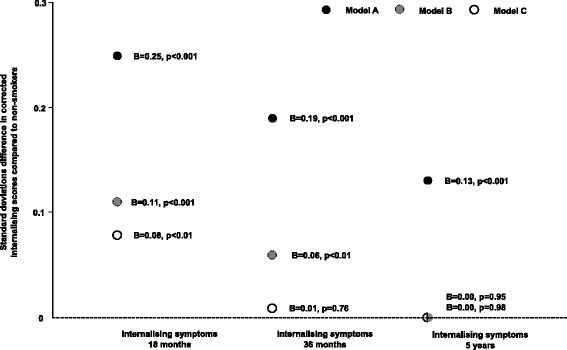
“At 36 months and 5 years of age, however, no statistically significant differences were found after adjusting for covariates.”
From Prenatal nicotine exposure during pregnancy results in adverse neurodevelopmental alterations and neurobehavioral deficits (2023) · cites this paper as [129]
Experimental — accuracy not yet measuredThe cited source says what the claim attributes to it.
In the citing paper
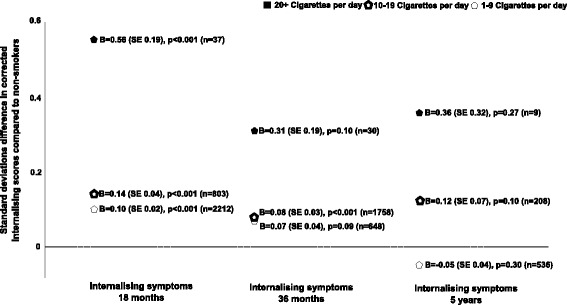
“They observed a dose-response relationship between frequency of PNE and childhood internalizing behaviors at 18 months and found that smoking 20+ cigarettes per daily conferred a much larger effect (B = 0.56, SE = 0.19, p < 0.01) than smoking 10–19 cigarettes (B = 0.14, SE = 0.04, p < 0.001), or 1–9 cigarettes (B = 0.1, SE = 0.20, p < 0.001) when compared with”
From Prenatal nicotine exposure during pregnancy results in adverse neurodevelopmental alterations and neurobehavioral deficits (2023) · cites this paper as [129]
The cited source says what the claim attributes to it.
In the citing paper
“These results indicate that a dose-response relationship between PNE and childhood internalizing behaviors (anxiety and depression) may be present at certain developmental stages [129].”
From Prenatal nicotine exposure during pregnancy results in adverse neurodevelopmental alterations and neurobehavioral deficits (2023) · cites this paper as [129]
Self-check
Percentages, sums and reported differences re-computed from the paper’s own numbers.
The self-check needs the paper’s full text.
Citations
Cites
Applied Multiple Regression/Correlation Analysis for the Behavioral Sciences
Cohen, P., Cohen, P., West, S. G., & Aiken, L. S. (2014) · Psychology Press eBooks · doi:10.4324/9781410606266 · Cited by 20,737
Murray, C. J. L., Vos, T., Lozano, R., Naghavi, M., Flaxman, A. D., Michaud, C., Ezzati, M., Shibuya, K., Salomon, J. A., Abdalla, S., et al. (2012) · The Lancet · doi:10.1016/s0140-6736(12)61689-4 · Cited by 8,888
(1991) · Medical Entomology and Zoology · Cited by 8,071
Constructing validity: Basic issues in objective scale development.
Clark, L. A., & Watson, D. (1995) · Psychological Assessment · doi:10.1037/1040-3590.7.3.309 · Cited by 6,567 · cited 3×
“Clark LA, Watson D. Constructing validity: basic issues in objective scale development.”
BackgroundInfluentialFitzmaurice, G. M., Laird, N. M., & Ware, J. H. (2011) · Wiley Series in Probability and Statistics · doi:10.1002/9781119513469 · Cited by 4,639
Applied Multiple Regression/Correlation Analysis for the Behavioral Sciences.
Fong, G. T., Cohen, J., & Cohen, P. (1985) · Journal of the American Statistical Association · doi:10.2307/2287930 · Cited by 4,475
(2004) · Choice Reviews Online · doi:10.5860/choice.42-2265 · Cited by 1,384
Strand, B. H., Dalgard, O. S., Tambs, K., & Rognerud, M. (2003) · Nordic Journal of Psychiatry · doi:10.1080/08039480310000932 · Cited by 1,304 · cited 3×
“The HSCL-5 correlates strongly with the HSCL-25 [41,42].”
MethodMajor risk factors for stillbirth in high-income countries: a systematic review and meta-analysis
Flenady, V., Koopmans, L., Middleton, P., Frøen, J. F., Smith, G. C., Gibbons, K., Coory, M., Gordon, A., Ellwood, D., McIntyre, H. D., et al. (2011) · The Lancet · doi:10.1016/s0140-6736(10)62233-7 · Cited by 1,247 · cited 2×
“Consistent findings across differing study designs, in concert with the known deleterious impact of MSDP on other elements of childhood health [1,3,11], would provide further support for public health interventions aimed at reducing smoking in women of child-bearing age.”
BackgroundResultCohort profile: The Norwegian Mother and Child Cohort Study (MoBa)
Magnus, P., Irgens, L. M., Haug, K., Nystad, W., Skjærven, R., & Stoltenberg, C. (2006) · International Journal of Epidemiology · doi:10.1093/ije/dyl170 · Cited by 1,027 · cited 1×
“The Norwegian Mother and Child Cohort Study (MoBa) is a prospective population-based study that aimed to recruit all women who gave birth in Norway between 1999 and 2009 [36].”
Research works printed but not linked: 1
- 37. Achenbach TM Manual for the Child Behavior Checklist/2-3 and 1992 Profile 1992 Burlington, VT Department of Psychiatry, University of Vermont
Cited by
Early Intervention in Bipolar Disorder
Vieta, E., Salagre, E., Grande, I., Carvalho, A. F., Fernandes, B. S., Berk, M., Birmaher, B., Tohen, M., & Suppes, T. (2018) · American Journal of Psychiatry · doi:10.1176/appi.ajp.2017.17090972 · Cited by 354
Self-citationEngland, L. J., Aagaard, K., Bloch, M., Conway, K., Cosgrove, K., Grana, R., Gould, T. J., Hatsukami, D., Jensen, F., Kandel, D., et al. (2017) · Neuroscience & Biobehavioral Reviews · doi:10.1016/j.neubiorev.2016.11.013 · Cited by 181
Ruszkiewicz, J. A., Zhang, Z., Gonçalves, F. M., Tizabi, Y., Zelikoff, J. T., & Aschner, M. (2020) · Food and Chemical Toxicology · doi:10.1016/j.fct.2020.111245 · Cited by 114
“Interestingly, in human maternal CC exposure, particularly heavy smoking (>20 cigarettes/day) has been associated with increased anxiety and other internalizing behaviors in young children (Moylan et al., 2015).”
BackgroundNeurodevelopmental pathways in bipolar disorder
Kloiber, S., Rosenblat, J. D., Husain, M. I., Ortiz, A., Berk, M., Quevedo, J., Vieta, E., Maes, M., Birmaher, B., Soares, J. C., et al. (2020) · Neuroscience & Biobehavioral Reviews · doi:10.1016/j.neubiorev.2020.02.005 · Cited by 122
Self-citationMaes, M. H. J., Bonifácio, K. L., Morelli, N. R., Vargas, H. O., Moreira, E. G., Stoyanov, D., Barbosa, D. S., Carvalho, A. F., & Nunes, S. O. V. (2018) · Neurotoxicity Research · doi:10.1007/s12640-018-9906-2 · Cited by 81
“Previously, it has been reviewed that smoking and nicotine dependence may increase the risk of GAD (Moylan et al. 2015) and that there is a significant comorbidity between GAD and TUD (Fluharty et al.”
BackgroundPrenatal risk factors for internalizing and externalizing problems in childhood
Tien, J., Lewis, G. D., & Liu, J. (2019) · World Journal of Pediatrics · doi:10.1007/s12519-019-00319-2 · Cited by 80
“For example, while the Norwegian Mother and Child Cohort Study reported that maternal smoking during early pregnancy shared a dose–response relationship with increased anxiety and depressive behaviors in children at 18 months and 3 years-of-age [39], The Netherlands Twin Register Study, failed to observe an associatio…”
BackgroundLi, G., Saad, S., Oliver, B. G., & Chen, H. (2018) · Toxics · doi:10.3390/toxics6030043 · Cited by 67
“In addition, confounding factors such as paternal smoking, alcohol consumption, socio-economic status, and family history of mental issues can result in inconsistent human findings [80].”
BackgroundPrenatal tobacco exposure, birthweight, and offspring psychopathology
Talati, A., WICKRAMARATNE, P. J., Wesselhoeft, R. T., & Weissman, M. M. (2017) · Psychiatry Research · doi:10.1016/j.psychres.2017.03.016 · Cited by 66
Maternal fever during pregnancy and offspring attention deficit hyperactivity disorder
Gustavson, K., Ask, H., Ystrøm, E., Stoltenberg, C., Lipkin, W. I., Surén, P., Håberg, S. E., Magnus, P. M., Knudsen, G. P., Eilertsen, E. M., et al. (2019) · Scientific Reports · doi:10.1038/s41598-019-45920-7 · Cited by 67
Self-citationDolan, C. V., Geels, L. M., Vink, J. M., van Beijsterveldt, C. E. M., Neale, M. C., Bartels, M., & Boomsma, D. I. (2015) · Behavior Genetics · doi:10.1007/s10519-015-9738-2 · Cited by 64
“Correcting for paternal smoking, and maternal education, age, alcohol consumption and internalizing symptoms, Moylan et al. (2015) observed a dose–response relationship between the amount smoked during pregnancy and the severity of internalizing problems (anxiety and depression) in offspring from…”
Wells, A. C., & Lotfipour, S. (2023) · Advances in Drug and Alcohol Research · doi:10.3389/adar.2023.11628 · Cited by 50
Maternal Smoking in Pregnancy and Offspring Depression: a cross cohort and negative control study
Taylor, A. E., Carslake, D., de Mola, C. L., Rosenqvist, M. A., Nilsen, T. I. L., Bjørngaard, J. H., Horta, B. L., Pearson, R. M., Rai, D., Galanti, M. R., et al. (2017) · Scientific Reports · doi:10.1038/s41598-017-11836-3 · Cited by 55
Helland, S. S., Røysamb, E., Wang, M. V., & Gustavson, K. (2017) · Development and Psychopathology · doi:10.1017/s0954579417001559 · Cited by 49
“The internalizing items in the MoBa have been used in several studies (Moylan et al., 2015; Sivertsen et al., 2015).”
MethodSelf-citationGustavson, K., Røysamb, E., & Borren, I. (2019) · BMC Medical Research Methodology · doi:10.1186/s12874-019-0757-1 · Cited by 54
Self-citationvan Otterdijk, S. D., Binder, A. M., & Michels, K. B. (2017) · Epigenetics · doi:10.1080/15592294.2017.1361592 · Cited by 49
“Several studies have reported adverse health outcomes in children exposed to maternal smoking during pregnancy, including low birth weight, early respiratory illnesses, childhood and adult obesity, impaired behavioral development, anxiety and depression, cancer, and impaired reproductive health.(1-9) These impacts on…”
BackgroundMeier, S. M., Plessen, K. J., Verhulst, F., Mors, O., Mortensen, P. B., Pedersen, C. B., & Agerbo, E. (2017) · Psychological Medicine · doi:10.1017/s0033291716003627 · Cited by 39
“Studies that have investigated this association report both positive and null results (Ashford et al. 2008; Carter et al. 2008; Robinson et al. 2010; Moylan et al. 2015).”
BackgroundResultChan, Y. L., Saad, S., Machaalani, R., Oliver, B. G. G., Vissel, B., Pollock, C. A., Jones, N. M., & Chen, H. (2017) · Frontiers in Molecular Neuroscience · doi:10.3389/fnmol.2017.00306 · Cited by 33
“This is in line with a previous animal study which showed that prenatal nicotine exposure can increase anxiety levels (Moylan et al., 2015).”
ResultPham, C., Thomson, S. M., Chin, S., Vuillermin, P., O’Hely, M., Burgner, D. P., Tanner, S., Saffery, R., Mansell, T., Bong, S.-H., et al. (2023) · Molecular Psychiatry · doi:10.1038/s41380-023-02284-9 · Cited by 29
Serious Psychological Distress and Smoking During Pregnancy in the United States: 2008–2014
Goodwin, R. D., Cheslack‐Postava, K., Nelson, D. B., Smith, P. H., Hasin, D. S., Janevic, T. M., Bakoyiannis, N., & Wall, M. M. (2017) · Nicotine & Tobacco Research · doi:10.1093/ntr/ntw323 · Cited by 28
Pham, C., Bekkering, S., O’Hely, M., Burgner, D. P., Thomson, S. M., Vuillermin, P., Collier, F., Marx, W., Mansell, T., Symeonides, C., et al. (2022) · Brain Behavior and Immunity · doi:10.1016/j.bbi.2022.05.011 · Cited by 25
Prenatal Nicotine Exposure in Rodents: Why Are There So Many Variations in Behavioral Outcomes?
Polli, F. S., & Kohlmeier, K. A. (2019) · Nicotine & Tobacco Research · doi:10.1093/ntr/ntz196 · Cited by 25
Tzoumakis, S., Carr, V. J., Dean, K., Laurens, K. R., Kariuki, M., Harris, F. A. J., & Green, M. J. (2018) · Criminal Behaviour and Mental Health · doi:10.1002/cbm.2089 · Cited by 23
“In line with other studies that found a dose-response relationship (Brennan, Grekin, & Mednick, 1999; Moylan et al., 2015), we found that frequency did matter for both exposures; the odds of childhood vulnerability in the context of heavy smoking and more frequent offending tended to be highest, and the relationship b…”
ResultVarela, R. B., Cararo, J. H., Tye, S. J., Carvalho, A. F., Valvassori, S. S., Fries, G. R., & Quevedo, J. (2022) · Neuroscience & Biobehavioral Reviews · doi:10.1016/j.neubiorev.2022.104579 · Cited by 24
Dachew, B. A., Scott, J. G., Mamun, A. A., & Alati, R. (2019) · Journal of Psychiatric Research · doi:10.1016/j.jpsychires.2019.01.001 · Cited by 23
Sutin, A. R., Flynn, H. A., & Terracciano, A. (2017) · Journal of Psychiatric Research · doi:10.1016/j.jpsychires.2017.03.003 · Cited by 21
“The relation with internalizing symptomatology in childhood is less clear (Moylan et al., 2015); some research finds a positive relation between MSDP and internalizing symptoms (McCrory and Layte, 2012) and some research finds no association (Melchior et al., 2015).”
BackgroundSchellhas, L., Haan, E., Easey, K., Wootton, R. E., Sallis, H., Sharp, G. C., Munafo, M. R., & Zuccolo, L. (2021) · Addiction · doi:10.1111/add.15521 · Cited by 21
Chu, X., Ye, J., Wen, Y., Li, P., Cheng, B., Cheng, S., Zhang, L., Liu, L., Qi, X., Ma, M., et al. (2021) · Journal of Psychiatric Research · doi:10.1016/j.jpsychires.2021.05.067 · Cited by 20
Duko, B., Pereira, G. F., Betts, K. S., Tait, R. J., Newnham, J. P., & Alati, R. (2020) · Journal of Affective Disorders · doi:10.1016/j.jad.2020.10.030 · Cited by 17
Bonifácio, K. L., Barbosa, D. S., Moreira, E. G., de Farias, C. C., Higachi, L., Camargo, A. E. I., Soares, J. F., Vargas, H. O., Nunes, S. O. V., Berk, M., et al. (2017) · Journal of Affective Disorders · doi:10.1016/j.jad.2017.07.010 · Cited by 16
Self-citationJansone, K., Eichler, A., Fasching, P. A., Kornhuber, J., Kaiser, A., Millenet, S., Banaschewski, T., Nees, F., & On Behalf Of The Imac-Mind Consortium (2023) · International Journal of Environmental Research and Public Health · doi:10.3390/ijerph20064716 · Cited by 17
“The association may therefore not necessarily be indicative of causal intrauterine effects [53].”
BackgroundAngel, P., Hermansen, M., Ramlau‐Hansen, C. H., Gaml‐Sørensen, A., Kristensen, D. M., & Lindahl‐Jacobsen, R. (2024) · Fertility and Sterility · doi:10.1016/j.fertnstert.2024.10.017 · Cited by 15
Dachew, B. A., Scott, J. G., Mamun, A. A., Fetene, D. M., & Alati, R. (2020) · Annals of Epidemiology · doi:10.1016/j.annepidem.2020.08.015 · Cited by 17
Shenassa, E. D., Rogers, M. L., & Buka, S. L. (2023) · Psychological Medicine · doi:10.1017/s0033291721001392 · Cited by 13
“…& Koot, 2008; Batstra, Hadders-Algra, & Neeleman, 2003; Brion et al., 2010; Hook, Cederblad, & Berg, 2006; Knopik, 2009; Lavigne et al., 2011; Moylan et al., 2015; Tiesler & Heinrich, 2014) and adolescents (Albers & Biener, 2002; Ashford et al., 2008; Indredavik, Brubakk, Romundstad, & Vik,…”
What lessons have we learnt about the impact of maternal cigarette smoking from animal models?
Chan, Y. L., Oliver, B. G. G., & Chen, H. (2019) · Clinical and Experimental Pharmacology and Physiology · doi:10.1111/1440-1681.13182 · Cited by 13
Dugre, J. R., & Potvin, S. (2020) · Psychological Medicine · doi:10.1017/s0033291720001877 · Cited by 14
“, 2018) and anxiety-depressive traits (Moylan et al., 2015).”
Wang, R., Shi, M., Zhang, Q., Zhang, J., Sun, L., Jia, Y., Zhu, Z., Xu, T., & Zhang, Y. (2024) · Translational Psychiatry · doi:10.1038/s41398-024-03006-7 · Cited by 11
Ekblad, M. O., Marceau, K., Rolan, E. P., Palmer, R. H. C., Todorov, A. A., Heath, A. C., & Knopik, V. S. (2020) · International Journal of Environmental Research and Public Health · doi:10.3390/ijerph17217921 · Cited by 11
“Alternatively, few studies have found an association between SDP and internalizing problems [13,14] with the majority of studies reporting null results [8,10,15].”
BackgroundDuko, B., Pereira, G. F., Tait, R. J., Betts, K. S., Newnham, J. P., & Alati, R. (2022) · Psychiatry Research · doi:10.1016/j.psychres.2022.114466 · Cited by 12
Prenatal determinants of depressive symptoms in childhood: Evidence from Growing Up in New Zealand
Theunissen, G., D’Souza, S., Peterson, E. R., Walker, C. G., Morton, S., & Waldie, K. E. (2022) · Journal of Affective Disorders · doi:10.1016/j.jad.2022.01.076 · Cited by 11
Wang, W.-C., Ding, M., Strohmaier, S., Schernhammer, E. S., Sun, Q., Chavarro, J. E., & Tiemeier, H. W. (2022) · Psychological Medicine · doi:10.1017/s0033291722003257 · Cited by 11
Commentary: Human brain organoid-on-a-chip to model prenatal nicotine exposure
Qiao, H., Zhang, Y. S., & Chen, P. (2018) · Frontiers in Bioengineering and Biotechnology · doi:10.3389/fbioe.2018.00138 · Cited by 11
“Moreover, neurobehavioural disorders associated with maternal smoking during pregnancy are related to offspring intelligence (Breslau et al., 2005), anxiety behaviors (Moylan et al., 2015), cognitive ability (Batty et al., 2006), and neurodegenerative diseases of adulthood (Picciotto, 2008).”
BackgroundProud, E., Rodríguez-Ruiz, M., Gummerson, D., Vanin, S., Hardy, D. B., Rushlow, W. J., & Laviolette, S. R. (2024) · Frontiers in Pharmacology · doi:10.3389/fphar.2024.1473213 · Cited by 11
Sabbagh, H. J., Sharton, G., Almaghrabi, J., Al-Malik, M. I., Hassan, M. H. A., & Helal, N. (2021) · International Journal of Environmental Research and Public Health · doi:10.3390/ijerph18010319 · Cited by 10
Ramos-Jaraba, S. M., & Palacio, I. (2019) · Health Care For Women International · doi:10.1080/07399332.2019.1566331 · Cited by 9
“Worldwide studies have documented low levels of education as a risk factor for some maternal and perinatal outcomes (Almeida, Almeida, & Pedreira, 2015).”
ResultTaylor, R., Smith, R., Collins, C. E., Mossman, D., Wong‐Brown, M. W., Chan, E., Evans, T., Attia, J. R., Buckley, N., Drysdale, K., et al. (2020) · Brain and Behavior · doi:10.1002/brb3.1579 · Cited by 9
“Early-life exposures, including maternal smoking (Polanska et al., 2017; Moylan et al., 2015), low birthweight (Arcangeli, Thilaganathan, Hooper, Khan, & Bhide, 2012; Miller, DeBoer, & Scharf, 2017), and inadequate nutrition (Darling et al., 2017; Liu and Raine, 2017), have been associated with…”
Connell, A., Rogers, R., Healy, E. F., Shaikhyousef, M., Regan, C., Douglass, A., Doolan, A., Fitzpatrick, P., Cox, D., & Downes, M. (2025) · Acta Paediatrica · doi:10.1111/apa.70285 · Cited by 11
Sallis, H., Wootton, R. E., Smith, G. D., & Munafo, M. R. (2023) · International Journal of Epidemiology · doi:10.1093/ije/dyad022 · Cited by 9
Nadler, E. B., Jacobus, J., & Rabin, R. A. (2024) · The Canadian Journal of Psychiatry · doi:10.1177/07067437241271696 · Cited by 8
“31,32 33-36 The studies that did fi nd an association 37,38 failed to control for other prenatal substance exposure, such as alcohol, which may be driving the effect.”
Soke, G. N., Rosenberg, S. A., Hamman, R. F., Fingerlin, T. E., Rosenberg, C. R., Carpenter, L. A., Lee, L.-C., Giarelli, E., Wiggins, L. D., Durkin, M. S., et al. (2019) · Research in Autism · doi:10.1016/j.rasd.2019.01.007 · Cited by 9
Roigé-Castellví, J., Murphy, M., Hernández-Martínez, C., Solé-Navais, P., Cavallé-Busquets, P., Fernández-Ballart, J., Ballesteros, M., & Canals, J. (2020) · Journal of Reproductive and Infant Psychology · doi:10.1080/02646838.2019.1580350 · Cited by 7
“…exposure (PSE) has been associated with adverse effects on neonatal and infant behaviour (Hernández-Martínez, Arija, Escribano, & Canals, 2012; Moylan et al., 2015; CONTACT Josefa Canals josefa.canals@urv.cat The study is registered in clinicaltrials.gov: NCT01778205…”
BackgroundMihov, M., Shoctor, H., Douglas, A., Hay, D. C., O’Shaughnessy, P. J., Iredale, J. P., Shaw, S., Fowler, P., & Graßmann, F. (2025) · EBioMedicine · doi:10.1016/j.ebiom.2025.105590 · Cited by 7
Ratsch, A., Bogossian, F. E., Burmeister, E. A., & Steadman, K. J. (2021) · Australian and New Zealand Journal of Public Health · doi:10.1111/1753-6405.13186 · Cited by 6
Polli, F. S., & Kohlmeier, K. A. (2022) · World Journal of Psychiatry · doi:10.5498/wjp.v12.i2.212 · Cited by 7
Leusin, F., Damiano, R. F., Mendes, L. S. T., Hoffmann, M. S., Manfro, A. G., Pan, P. M., Gadelha, A., Mari, J. D. J., Manfro, G. G., Miguel, E. C., et al. (2024) · European Child & Adolescent Psychiatry · doi:10.1007/s00787-024-02402-0 · Cited by 6
“For example, maternal smoking has been associated with a higher odd of developing in offspring disorders such as depression, anxiety, ADHD and oppositional defiant disorder (ODD) [48, 49] stressing a sharable common factor.”
Corrêa, M. L., da Silva, B. G. C., Wehrmeister, F. C., Horta, B. L., Gonçalves, H., Anselmi, L., Barros, F. C., & Menezes, A. M. B. (2022) · Preventive Medicine · doi:10.1016/j.ypmed.2022.106983 · Cited by 6
Zhang, Z., Yu, J., Li, Q., Zhao, Y., Tang, L., Peng, Y., Liu, Y. M., Gan, C., Liu, K., Wang, J., et al. (2024) · Journal of Affective Disorders · doi:10.1016/j.jad.2024.12.075 · Cited by 5
In Utero Exposure to Nicotine, Cocaine, and Amphetamines
Singer, L. T., Min, M. O., Lang, A., & Minnes, S. (2016) · Springer eBooks · doi:10.1007/978-3-319-32358-9_3 · Cited by 4
Helmikstøl, B., Moe, V., Smith, L., & Fredriksen, E. (2023) · Research on Child and Adolescent Psychopathology · doi:10.1007/s10802-023-01145-x · Cited by 6
“…and dietary patterns in pregnancy, maternal mental and physical health, as well as intimate partner violence have been investigated (Clayborne et al., 2021; Khoury et al., 2018; Kingston et al., 2018; Leis et al., 2014; Moylan et al., 2015; Steenweg-de Graaff et al., 2014; Tien et al., 2020).”
BackgroundHartman, J. D., & Craig, B. M. (2018) · Maternal and Child Health Journal · doi:10.1007/s10995-018-2577-z · Cited by 4
Abdulqader, S. A., & Saeed, B. A. (2019) · PLoS ONE · doi:10.1371/journal.pone.0209418 · Cited by 4
Maternal Smoking and Fetal Brain Outcome: Mechanisms and Possible Solutions
Chen, H., Chan, Y. L., Oliver, B. G. G., Pollock, C. A., & Saad, S. (2019) · Elsevier eBooks · doi:10.1016/b978-0-12-813035-3.00002-2 · Cited by 4
Castellví, J. R., Murphy, M. M., Voltas, N., Solé-Navais, P., Cavallé, P., Fernandez-Ballart, J. D., Ballesteros, M., & Canals, J. (2021) · Journal of Child and Family Studies · doi:10.1007/s10826-021-01978-4 · Cited by 4
“Few studies have investigated the contribution of PSE to these, and those that have, report inconsistent results (Moylan et al., 2015; Zhang et al., 2018).”
BackgroundCollier, A. D., Abdulai, A. R., & LEIBOWITZ, S. F. (2023) · Cells · doi:10.3390/cells12202505 · Cited by 5
Al-Amri, I. S., Kadim, I. T., AlKindi, A. Y., Khalaf, S., Hamaed, A., Alyaqoobi, S., Al-Harrasi, A., Al‐Hashmi, S., Al-Maasbi, A. A., Al-Harthy, R. S., et al. (2021) · International Journal of Morphology · doi:10.4067/s0717-95022021000100318 · Cited by 3
“Research findings on the effects of prenatal exposure on internalizing disorders and their association with anxiety and depression (Hettema et al., 2005; Ashford et al., 2008; Carter et al., 2008; Robinson et al., 2010; Moylan et al., 2015; Talati et al., 2017).”
BackgroundWillford, J. A., & Kaufman, J. M. (2024) · Neurotoxicology and Teratology · doi:10.1016/j.ntt.2024.107384 · Cited by 3
The neurodevelopmental basis of bipolar disorder: Mechanisms and implications
Kloiber, S. M., Rosenblat, J. D., Husain, M. I., & Carvalho, A. F. (2020) · Elsevier eBooks · doi:10.1016/b978-0-12-819182-8.00002-8 · Cited by 4
Fetal Exposure to Tobacco Metabolites and Depression During Adulthood: Beyond Binary Measures
Shenassa, E. D., Gleason, J. L., & Hirabayashi, K. (2024) · Epidemiology · doi:10.1097/ede.0000000000001757 · Cited by 3
Anxiety, Depression, and Emotional Dysregulation Following Prenatal Substance Exposure
Diaz, M. R., Varlinskaya, E. I., & Schatz, K. C. (2026) · Advances in experimental medicine and biology · doi:10.1007/978-3-032-12741-9_5 · Cited by 4
Cavalsan, J. P., Rennó, J., Rocha, R., Cantilino, A., Ribeiro, J. D. A. M., Valadares, G. C., & da Silva, A. G. (2017) · Debates em Psiquiatria · doi:10.25118/2236-918x-7-2-4 · Cited by 2
Bhat, S., Beilin, L. J., Robinson, M., Burrows, S., & Mori, T. A. (2018) · Journal of Developmental Origins of Health and Disease · doi:10.1017/s2040174418000533 · Cited by 3
Simanek, A. M., Uddin, M., Yolken, R. H., & Aiello, A. E. (2016) · Frontiers in Environmental Science · doi:10.3389/fenvs.2016.00054 · Cited by 1
Watkeys, O. J., Tzoumakis, S., Dean, K., Laurens, K. R., Harris, F. A. J., O’Hare, K., Carr, V. J., & Green, M. J. (2025) · Australian & New Zealand Journal of Psychiatry · doi:10.1177/00048674251324805 · Cited by 1
“…with high service use after controlling for other factors, consistent with multiple previous studies (Gaysina et al., 2013; Green et al., 2022; Moylan et al., 2015), although it is noted that there has been some failure to replicate these associations (Obel et al., 2016; Quinn et al., 2017),…”
Butler, E., Spirtos, M., O’Keeffe, L. M., & Clarke, M. C. (2025) · European Child & Adolescent Psychiatry · doi:10.1007/s00787-025-02730-9 · Cited by 1
Wei, W., Cheng, B., Qi, X., He, D., Cheng, S., Yang, X., Pan, C., Meng, P., Hui, J., Gou, Y., et al. (2026) · Translational Psychiatry · doi:10.1038/s41398-026-03976-w · Cited by 1
“Research suggests that MSDP is linked to severe emotional and behavioral disorders in adolescents [12], as well as anxiety and depressive behaviors in children aged 18 to 36 months [13].”
Comparing smoking topography of usual brand cigarettes in pregnant and non-pregnant women
Bergeria, C. L., Heil, S. H., Sigmon, S. C., Durand, H., & Higgins, S. T. (2017) · Drug and Alcohol Dependence · doi:10.1016/j.drugalcdep.2016.08.067 · Cited by 1
Nani, D. (2022) · Jurnal Keperawatan Soedirman · doi:10.20884/1.jks.2022.17.1.5312 · Cited by 1
“Conversely, studies from Norway and the UK have shown that there was no relationship between smoking status during pregnancy and ASD (Moylan et al., 2015); (Caramaschi et al.”
BackgroundJalnapurkar, I. R., Oran, A., Frazier, J. A., Cochran, D., Kim, S., Jensen, E. T., Joseph, R. M., Hooper, S. R., Junior, H. P. D. O. S., Jara, H. J., et al. (2024) · Frontiers in Child and Adolescent Psychiatry · doi:10.3389/frcha.2024.1334316 · Cited by 1
Ekvall, S. W., Ekvall, V. K., & Niedbala, B. (2017) · Oxford University Press eBooks · doi:10.1093/acprof:oso/9780199398911.003.0001
Bhat, S. (2017) · UWA Profiles and Research Repository (UWA) · doi:10.4225/23/59783951e351f
Effects of Prenatal Cannabis Exposure on Offspring Emotional Development and Stress Response
Pritchett, A. (2021) · CUNY Academic Works (City University of New York)
Nüsken, E., Lechner, F., & Nüsken, K. (2016) · Frauenheilkunde up2date · doi:10.1055/s-0042-111926
Campion, J. (2022) · Oxford University Press eBooks · doi:10.1093/med/9780198861478.003.0051
Huang, H., Liu, L., Feng, F., Sun, H., Li, F., Wu, H., Liang, C., Chu, X., Ning, Y., & Zhang, F. (2023) · Psychiatric Genetics · doi:10.1097/ypg.0000000000000347
“MSDP also exerts influence on some psychiatric diseases in offspring, including depressive and anxiety behaviors (Thakur et al., 2013; Moylan et al., 2015).”
BackgroundZhang, Z., Luo, H., Wang, X., Zhang, Y., Li, J., Hu, R., Guo, Y., Tan, J., Li, J., Wang, Y., et al. (2024) · Research Square · doi:10.21203/rs.3.rs-3812822/v1
Rising Stars in Child Mental Health and Interventions
(2024) · Frontiers research topics · doi:10.3389/978-2-8325-5655-9
Prenatal nicotine exposure affects hippocampal development and behavior in mouse offspring
Fan, S., Zhou, Y., Liu, L., & Liu, Q. (2025) · NeuroToxicology · doi:10.1016/j.neuro.2025.103342
Corrêa, M. L. (2021) · LA Referencia (Red Federada de Repositorios Institucionales de Publicaciones Científicas)
Castellví, J. R. (2019) · Rovira & Virgili repository
Krogsrud, S. K., Nordeng, H., Roe, J. M., Torkildsen, J. V. K., Wood, M. E., & Ystrøm, E. (2025) · Developmental Cognitive Neuroscience · doi:10.1016/j.dcn.2025.101667 · Cited by 1
“Covariates were chosen based on established associations with both maternal medication use and child neurodevelopmental outcomes (Hornig et al., 2018; Moylan et al., 2015; Nygaard et al., 2018; Vejrup et al., 2022; Walhovd et al., 2016, 2024).”
Bujold, A., Rosialda, K. J., & Orri, M. (2026) · Psychological Medicine · doi:10.1017/s0033291725102936
“For example, studies have shown an increased risk of internalizing symptoms during childhood among children exposed to tobacco in utero (Moylan et al., 2015).”
Liu, Y., Deng, J., & Zhang, Y. (2026) · Tobacco Induced Diseases · doi:10.18332/tid/226577
“Some studies report that MSDP increases the likelihood of anxiety and depression in early adulthood by 45% and 75%, respectively 11 , while a large Norwegian cohort study found that the association was no longer significant by the age of 5 years 12 .”
Early predictors of the childhood dysregulation profile from ages 5 to 8
Vitkauskaite, E. (2026) · Open Access at Essex (University of Essex) · doi:10.5526/err-00044039
Metadata
- Authors
- Moylan, S., Gustavson, K., Øverland, S., Karevold, E. B., Jacka, F. N., Pasco, J. A., & Berk, M.
- Affiliations
- Deakin University (AU)
- Norwegian Institute of Public Health (NO)
- Barwon Health (AU)
- Corresponding author
- Moylan, Steven
- Venue
- BMC Medicine
- Published
- 2015-02-03
- Volume
- 13
- Issue
- 1
- Pages
- 24-24
- ISSN
- 1741-7015 (ISSN-L)
- PMC
- PMC4314755
- OpenAlex
- W1977105915
- Cited by
- 87
- References
- 61
- Citations by year
- 2026: 4 · 2025: 6 · 2024: 10 · 2023: 7 · 2022: 9 · 2021: 8 · 2020: 8 · 2019: 11 · 2018: 7 · 2017: 11 · 2016: 5 · 2015: 1
- FWCI
- 7.95
- Type
- journal article
- Language
- en
- Open access
- gold
- doi.org
- Locations
- BMC Medicine (publishedVersion, cc-by)
- PubMed Central (publishedVersion, cc-by)
- PubMed (publishedVersion)
- Bergen Open Research Archive (BORA) (University of Bergen) (publishedVersion, cc-by)
- NORA - Norwegian Open Research Archives (submittedVersion, cc-by)
- BIBSYS Brage (BIBSYS (Norway)) (submittedVersion)
- Deakin Research Online (Deakin University) (submittedVersion)
- NORA - Norwegian Open Research Archives (submittedVersion, other-oa)
- Figshare (submittedVersion, cc-by)
- Minerva Access (University of Melbourne) (submittedVersion, cc-by)
- Funders
- Amgen
- Bristol-Myers Squibb
- Eli Lilly and Company
- Sanofi
- Geelong Region Medical Research Foundation
- American Society for Bone and Mineral Research
- Beyond Blue
- Norges Forskningsråd (151918/S10)
- Servier
- H. Lundbeck A/S
- Utdannings- og forskningsdepartementet
- National Institutes of Health (n01es75558-11-0-1, NO1-ES-75558)
- National Health and Medical Research Council
- National Institute of Neurological Disorders and Stroke (UO1-NS-047537, 2UO1 NS047537-06A1, 047537-01, UO1 NS 047537–01, U01NS047537, UO1 NS 047537-06A1, 1 UO1 NS 047537‐01)
- National Institute of Environmental Health Sciences (UO1 NS 047537-01, N01 ES075558, NO1-ES-75558)
- Cilag
- Topics
- Health Sciences › Medicine › Pediatrics, Perinatology and Child Health › Prenatal Substance Exposure Effects
- Health Sciences › Medicine › Public Health, Environmental and Occupational Health › Smoking Behavior and Cessation
- Health Sciences › Medicine › Public Health, Environmental and Occupational Health › Maternal Mental Health During Pregnancy and Postpartum
- Keywords
- smoking during pregnancy, childhood anxiety, childhood depression, prenatal tobacco exposure, dose-response relationship, child mental health
- MeSH terms
- Anxiety, Child, Child Behavior Disorders, Child, Preschool, Depression, Female, Humans, Male, Pregnancy, Prenatal Exposure Delayed Effects, Smoking, Cohort Studies
About these checks
Registry, retraction, Cites and statistics results are computed, not judged, with one exception: a printed reference that no index lists is read once by a model before it counts as a citation error. Claims are extracted by a model and kept only when their quote appears verbatim in the text; each cited source is then checked, with a model’s help, for whether it says what the claim relies on. Those verdicts can be wrong — read the claim’s quote and the cited source before relying on one.
Statistics and arithmetic are recomputed, not judged.
Confidence bands are shown only for fields calibrated on our annotated test set. None is calibrated yet, so no band is shown.
What counts as a claim ›How we measure confidence ›How we check this ›
Are you an author, or do you see a problem with this page? Request a review
Data sources
Bibliographic data: Semantic Scholar, OpenAlex, Crossref.
Contains information from the Semantic Scholar Academic Graph Datasets, made available under the ODC Attribution License (ODC-BY 1.0).
Semantic Scholar’s data is described in: Kinney, R., et al. (2023). The Semantic Scholar Open Data Platform. arXiv:2301.10140.
