

Taxonomy of the burden of treatment: a multi-country web-based qualitative study of patients with chronic conditions
Open accessThe DOI matches its Crossref record; 43 of the 43 references it cites were found in a registry or an index.
Abstract
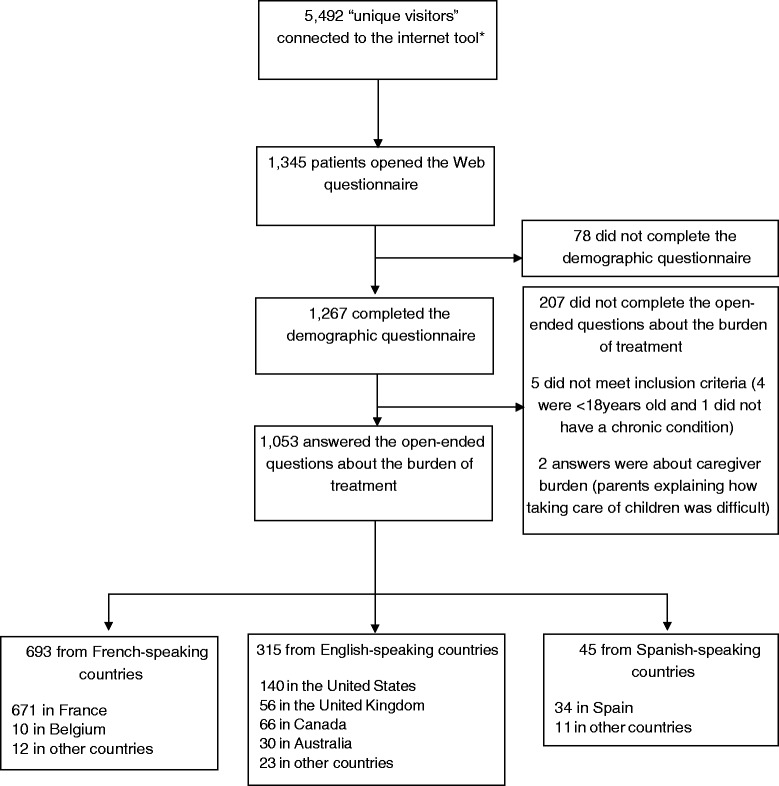
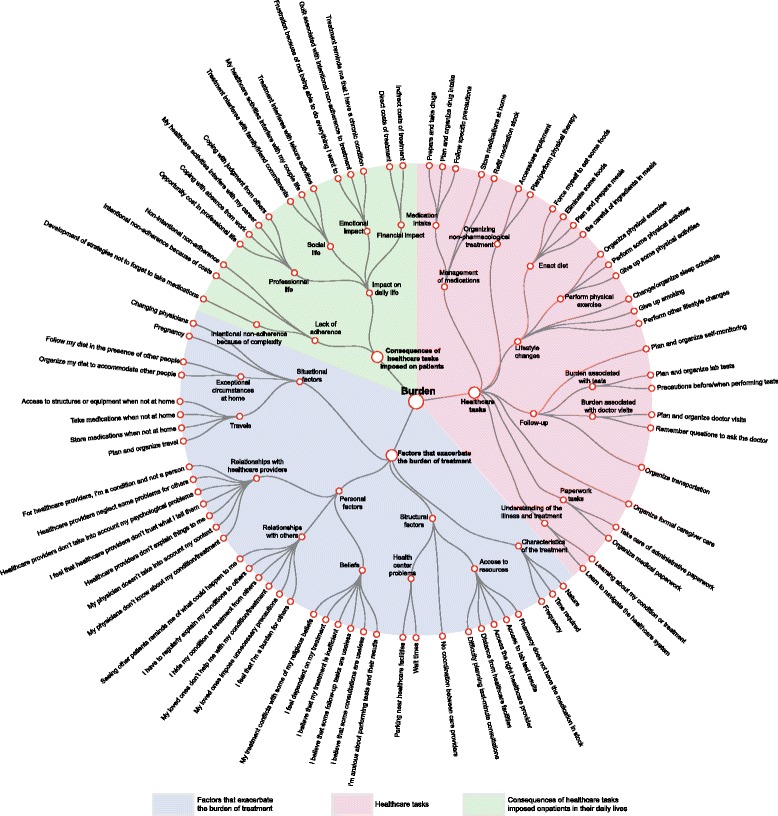
BACKGROUND: Management strategies for patients with chronic conditions are becoming increasingly complex, which may result in a burden of treatment for patients. To develop a Minimally Disruptive Medicine designed to reduce the burden of treatment, clinicians need to understand which healthcare tasks and aggravating factors may be responsible for this burden. The objective of the present study was to describe and classify the components of the burden of treatment for patients with chronic conditions from the patient's perspective. METHODS: We performed a multi-country qualitative study using an online survey and a purposive sampling strategy to select English-, French-, and Spanish-speaking participants with different chronic conditions. Participants were recruited by physicians, patients' associations, advertisement on social media, and 'snowballing'. The answers were analyzed by i) manual content analysis with a grounded theory approach, coded by two researchers, and ii) automatic textual analysis by Reinert's method. RESULTS: Between 2013 and 2014, 1,053 participants from 34 different countries completed the online survey using 408,625 words. Results from both analyses were synthesized in a taxonomy of the burden of treatment, which described i) the tasks imposed on patients by their diseases and by their healthcare system (e.g., medication management, lifestyle changes, follow-up, etc.); ii) the structural (e.g., access to healthcare resources, coordination between care providers), personal, situational, and financial factors that aggravated the burden of treatment; and iii) patient-reported consequences of the burden (e.g., poor adherence to treatments, financial burden, impact on professional, family, and social life, etc.). Our findings may not be applicable to patients with chronic conditions who differ from those who responded to our survey. CONCLUSIONS: Our taxonomy of the burden of treatment, provided by patients with chronic conditions from different countries and settings, supports the development of tools to ascertain the burden of treatment and highlights potential targets for interventions to minimize it.
Overview
The claims and statistics of this paper haven’t been checked yet.
Free: it reads the open-access text and checks the first 5 claims that cite a source we can check. Create a free account to check every claim.
Integrity signals
Registry
Cites
Statistics
Figures
Verification
Claims the paper makes
The claims and statistics of this paper haven’t been checked yet.
Free: it reads the open-access text and checks the first 5 claims that cite a source we can check. Create a free account to check every claim.
Claims other papers make about this one
Each is checked against this paper’s own text: does it say what the citing paper says it does?
In the citing paper
“Individual people may incur needless harms without net benefits, bear the psychological impact of disease labeling, or carry an avoidable supplementary burden of treatment in addition to the burden of illness (Grady and Redberg 2010; Moynihan et al., 2012; Tran et al., 2015).”
From When more is not better: 10 ‘don’ts’ in endometriosis management. An ETIC* position statement (2019) · cites this paper as Tran et al., 2015
Self-check
Percentages, sums and reported differences re-computed from the paper’s own numbers.
The self-check needs the paper’s full text.
Citations
Cites
Health Measurement Scales: A Practical Guide to Their Development and Use
Streiner, D. L., Norman, G. R., & Cairney, J. (1989) · Cited by 9,595
(2013) · Handbooks of Sociology and Social Research · doi:10.1007/978-94-007-6772-0 · Cited by 7,486
Barnett, K., Mercer, S. W., Norbury, M., Watt, G., Wyke, S., & Guthrie, B. (2012) · The Lancet · doi:10.1016/s0140-6736(12)60240-2 · Cited by 6,972 · cited 1×
“Background Multimorbidity is becoming increasingly common: 42 % of patients have one chronic condition and 23 % have multiple chronic conditions [1].”
BackgroundQualitative research: standards, challenges, and guidelines
Malterud, K. (2001) · The Lancet · doi:10.1016/s0140-6736(01)05627-6 · Cited by 5,014 · cited 1×
“The strength of this study relies in our focus on reducing the researcher’s impact on the analysis by involving multiple researchers in the manual content analysis, each researcher supplementing and contesting others’ statements [36], and by performing two separate analysis, one of which was automatic.”
MethodQualitative Data Analysis for Health Services Research: Developing Taxonomy, Themes, and Theory
Bradley, E. H., Curry, L. A., & Devers, K. J. (2007) · Health Services Research · doi:10.1111/j.1475-6773.2006.00684.x · Cited by 3,437
Boyd, C. M., Darer, J., Boult, C., Fried, L. P., Boult, L., & Wu, A. W. (2005) · JAMA · doi:10.1001/jama.294.6.716 · Cited by 2,581 · cited 1×
“For example, a physician following clinical practice guidelines could prescribe up to 12 medications for a patient with osteoporosis, osteoarthritis, diabetes mellitus, hypertension, and chronic obstructive pulmonary disease [5].”
BackgroundQualitative Research: Qualitative interviews in medical research
Britten, N. (1995) · BMJ · doi:10.1136/bmj.311.6999.251 · Cited by 1,670
Denscombe, M. (2003) · Cited by 1,205
A Systematic Review of Prevalence Studies on Multimorbidity: Toward a More Uniform Methodology
Fortin, M., Stewart, M., Poitras, M.-E., Almirall, J., & Maddocks, H. (2012) · The Annals of Family Medicine · doi:10.1370/afm.1337 · Cited by 1,135 · cited 1×
“Some authors argued that using more than three disease entities would likely identify patients with greater health needs and would therefore be more useful to clinicians [30].”
BackgroundSampling hard to reach populations
Faugier, J., & Sargeant, M. (1997) · Journal of Advanced Nursing · doi:10.1046/j.1365-2648.1997.00371.x · Cited by 1,050 · cited 1×
“Participants who had been invited were encouraged to invite relatives and friends who had chronic conditions to participate by a ‘snowball’ sampling method [14], which involves identifying an initial number of participants who serve as ‘seeds’ to help identify peers who, in turn, are asked to invite others and so fort…”
Background
Cited by
Items 101–200 of 235
Health-System-Based Interventions to Improve Care in Pediatric and Adolescent Type 1 Diabetes
Corathers, S. D., Schoettker, P. J., Clements, M. A., List, B. A., Mullen, D. M., OHMER, A. L., Shah, A. C., & Lee, J. M. (2015) · Current Diabetes Reports · doi:10.1007/s11892-015-0664-8 · Cited by 18
Comprehensive Geriatric Assessment in hospital and hospital-at-home settings: a mixed-methods study
Gardner, M. P., Shepperd, S., Godfrey, M., Mäkelä, P., Tsiachristas, A., Singh-Mehta, A., Ellis, G., Khanna, P., Langhorne, P., Makin, S., et al. (2019) · Health Services and Delivery Research · doi:10.3310/hsdr07100 · Cited by 23
“Mean costs during index admission (SE) 3195 (41) 877 (32) –2318 (–2420 to –2217) 3426 (71) 3273 (32) –153 (–277 to –29) 2383 (90) 1287 (132) –1096 (–1398 to –793)”
MacLeod, J., Scher, L., Greenwood, D., Isaacs, D., Albanese-O’Neill, A., O’Neill, M. S., Golden, L., & Scalzo, P. (2021) · ADCES in Practice · doi:10.1177/2633559x211032227 · Cited by 16
“The goal of technology use is to decrease burden on both PWD and the care team and improve quality of life, not add complexity to an already challenging condition.(17) Collaboration must be an ongoing process in which the DCES ensures that the technology continues to provide value to both the PWD and the care team and…”
BackgroundPetersson, C., Fust, R., Hagstedt, C., Wågström, P., & Nilsdotter‐Augustinsson, Å. (2018) · Journal of Clinical Nursing · doi:10.1111/jocn.14580 · Cited by 18
Duncan, T. S., Engström, J., Riggare, S. S., Hägglund, M., & Koch, S. (2022) · Journal of Participatory Medicine · doi:10.2196/39174 · Cited by 24
“These burdens are described as being imposed on patients as they perform self-management and could lead to struggle with adherence to treatment and care, as well as poor quality of life [21,22].”
BackgroundInfluentialChou, M. S. H., Ting, N. C. H., El-Turk, N., Harrington, Z., & Dobler, C. C. (2021) · PLoS ONE · doi:10.1371/journal.pone.0252915 · Cited by 17
“Treatment can also have significant financial, social, and psychological burdens [16, 19].”
BackgroundQuinn, L. M., Narendran, P., Bhavra, K., Boardman, F., Greenfield, S., Randell, M. J., & Litchfield, I. J. (2024) · Pediatric Diabetes · doi:10.1155/2024/9927027 · Cited by 21
“Following coding, we identi fi ed important parallels between the burden of chronic disease/burden of treatment [35] framework and the burden of screening.”
Comorbidities and depressive symptoms among older adults with asthma
Mindlis, I., Wisnivesky, J. P., Wolf, M. S., O’Conor, R. M., & Federman, A. D. (2021) · Journal of Asthma · doi:10.1080/02770903.2021.1887890 · Cited by 14
“activity (6), creating significant demands on older”
The treatment burden of long-term home noninvasive ventilation
Spurr, L. (2021) · Breathe · doi:10.1183/20734735.0291-2020 · Cited by 17
“Comprehensive support and coordination of care has been shown in other conditions to be important in helping manage the workload of technology-based therapies and complex treatment regimens [4, 21].”
BackgroundHusebø, A. M. L., Dalen, I., Richardson, A. M., Bru, E., & Søreide, J. A. (2021) · European Journal of Cancer Care · doi:10.1111/ecc.13437 · Cited by 16
“K E Y W O R D S colorectal cancer, patient- reported outcome, post- discharge, supportive care, treatment burden 2019; Tran et al., 2015).”
BackgroundPrevalence of Treatment Burden in the Last Three Years of Life
Siddiqui, A., Ornstein, K. A., & Ankuda, C. K. (2020) · Journal of Palliative Medicine · doi:10.1089/jpm.2020.0170 · Cited by 15
Shourick, J., Sénéschal, J., Andreu, N., Meurant, J. ‐., Pane, I., Ravaud, P., Tran, V.-T., & Ezzedine, K. (2021) · Journal of the European Academy of Dermatology and Venereology · doi:10.1111/jdv.17742 · Cited by 13
Self-citationDaker‐White, G., Goulding, R., Blakeman, T., Croke, S., Brown, B. C., Esmail, A., & Bower, P. (2018) · BMC Family Practice · doi:10.1186/s12875-018-0844-0 · Cited by 18
“make clear that a patient’s “relational networks will often include healthcare and other professionals” [36] although subsequent studies have tended to focus on treatment burden for patients, sometimes with the aim of informing a “minimally disruptive medicine” [37] or in efforts to mobilise patient resources to acces…”
BackgroundZanin, A., Baratiri, F., Roverato, B., Mengato, D., Pivato, L., Avagnina, I., Maghini, I., Divisic, A., Rusalen, F., Agosto, C., et al. (2024) · Children · doi:10.3390/children11070821 · Cited by 12
“Since medication burden in children is not yet well defined, particularly in CMCs, it could be critical to estimate adherence to therapy, the risk of administration errors or drug interactions, and the impact on the family’s quality of life.”
BackgroundHaider, S., Kawkgi, O. M. E., Clark, J. E., Breslin, M., Boehmer, K. R., Montori, V. M., & Lipska, K. J. (2021) · Endocrine · doi:10.1007/s12020-021-02757-3 · Cited by 13
Self-citationGaspar, A., & Miranda, J. J. (2022) · PLOS Global Public Health · doi:10.1371/journal.pgph.0000484 · Cited by 17
Technology to overcome therapeutic inertia
Greenwood, D. A., & Peeples, M. (2019) · mHealth · doi:10.21037/mhealth.2018.12.05 · Cited by 13
“All solutions need to be designed to decrease the burden for both patients and the care team (24).”
BackgroundLaing, L., Salema, N.-E., Jeffries, M., Shamsuddin, A., Sheikh, A., Chuter, A., Waring, J. J., Avery, A. J., & Keers, R. N. (2022) · PLoS ONE · doi:10.1371/journal.pone.0275633 · Cited by 13
“Patients living with long-term health conditions may experience less treatment burden and related implications if their care is more streamlined and their treatment regimen is comprehensible [48].”
BackgroundKhan, A., Hussain, S. G., Mushtaq, S., Abbas, S., Dong, Y., Feng, W., & Yu, F. (2024) · Journal of Pharmaceutical Policy and Practice · doi:10.1080/20523211.2024.2427779 · Cited by 21
Smith, S. K., Pryce, H., Burns-O’Connell, G., Hussain, S., Shaw, R. L., & Straus, J. (2024) · Health Expectations · doi:10.1111/hex.14067 · Cited by 16
Impact of neighborhood characteristics on textbook outcome following major surgery
Abbas, A., Dalmacy, D. M., Paro, A., & Pawlik, T. M. (2022) · The American Journal of Surgery · doi:10.1016/j.amjsurg.2022.04.007 · Cited by 10
Bekalu, A. F., Yenit, M. K., Tekle, M. T., & Birarra, M. K. (2022) · Frontiers in Clinical Diabetes and Healthcare · doi:10.3389/fcdhc.2022.977216 · Cited by 10
Montori, V. M. (2021) · Health Services Research · doi:10.1111/1475-6773.13865 · Cited by 12
Self-citationZahidy, M. A., Simha, S., Branda, M. E., Borras-Osorio, M., Haemmerle, M., Tran, V.-T., Ridgeway, J. L., & Montori, V. M. (2024) · Mayo Clinic Proceedings Digital Health · doi:10.1016/j.mcpdig.2024.11.001 · Cited by 12
Self-citationChen, Y., Ji, M., Wu, Y. X., Wang, Q., Deng, Y., Liu, Y., Wu, F., Liu, M., Guo, Y.-Q., Fu, Z., et al. (2021) · JMIR mhealth and uhealth · doi:10.2196/26439 · Cited by 11
“However, increasing the amount of functionality in a system may also increase the treatment-related burden on patients and affect effective care delivery [55].”
BackgroundHassen, M., Mekonnen, D., & Muhammed, O. S. (2022) · Scientific Reports · doi:10.1038/s41598-022-23700-0 · Cited by 9
Naga, Y. S., Hamdy, N. A., Bassiouny, A. E., Selim, M. A., & ElHafeez, S. A. (2023) · BMC Nephrology · doi:10.1186/s12882-023-03332-w · Cited by 15
“Treatment burden is defined as the burden imposed on a patient by his treatment plan and its effect on his QoL [34].”
BackgroundTemporary Stoppages and Burden of Treatment in Patients With Cancer
Vachon, E. A., Given, B. A., Given, C. W., & Dunn, S. (2019) · Oncology nursing forum · doi:10.1188/19.onf.e135-e144 · Cited by 10
“Tran et al. (2015), Sav et al. (2013), and Eton et al. (2015) are the three primary contributors to BOT conceptual literature.”
Farrington, N., Dantanus, K., Richardson, A., & Bridges, J. (2022) · Health Expectations · doi:10.1111/hex.13523 · Cited by 9
“The structural lack of coordination described here is known to exacerbate treatment burden.(39) Our findings reveal the impact of this fragmented experience for patients and caregivers.”
BackgroundLuckhaus, J. L., Clareborn, A., Hägglund, M., & Riggare, S. S. (2024) · Health Expectations · doi:10.1111/hex.14027 · Cited by 6
“25 4.2 Our findings align with aspects of Tran et al.'s ‘ burden of treatment ’ 26 for chronic conditions, in which one burden is ‘ healthcare tasks ’ , including ‘ lifestyle changes ’ and ‘ management of medications ’ .”
ResultInfluentialPorcher, R., Tran, V.-T., Blacher, J., & Ravaud, P. (2019) · Hypertension · doi:10.1161/hypertensionaha.119.13749 · Cited by 8
“This may cause anxiety or depression, induce difficulties in gaining insurance coverage in some countries,(16) and generate a burden related to the need for medical visits, going to the pharmacy, not forgetting the treatment, etc.(17) Our results somewhat differ from those of Bundy et al(5) The latter used estimates d…”
ResultSelf-citationMustapha, F. I., Aagaard‐Hansen, J., Lim, S. C., Nasir, N. H., Aris, T., & Christensen, U. B. (2020) · Health Services Research and Managerial Epidemiology · doi:10.1177/2333392820918744 · Cited by 14
Dagnew, S. B., Moges, T. A., Tarekegn, G. Y., Wondm, S. A., Assefa, A. N., Bekahegn, M. A., & Zewdu, W. S. (2025) · BMJ Open · doi:10.1136/bmjopen-2024-095666 · Cited by 9
Burda, V., Mráz, M., Schneider, J., & Novák, D. (2022) · JMIR Diabetes · doi:10.2196/36675 · Cited by 11
“Consequently, we have identified several improvements that might reduce the burden of the disease and increase engagement by expanding the modular architecture [38-40].”
BackgroundAbbas, H. K., Kadhim, D. J., Gorial, F. I., & Shareef, L. G. (2022) · F1000Research · doi:10.12688/f1000research.124698.1 · Cited by 8
Naumann, L., Reul-Hirche, H. M., Comans, T. A., Burns, C. L., Paratz, J. D., & Cottrell, M. A. (2023) · Supportive Care in Cancer · doi:10.1007/s00520-023-07693-8 · Cited by 9
Litchfield, I. J., Calvert, M., Kinsella, F. A. M., Sungum, N., & Aiyegbusi, O. L. (2023) · Orphanet Journal of Rare Diseases · doi:10.1186/s13023-023-02680-y · Cited by 10
“In this instance we populated a framework created of the domains and constructs that constitute the Burden of Treatment [26] (see Table 1).”
BackgroundMethodInfluentialFrost, J., Hall, A., Taylor, E., Lines, S., Mandizha, J., & Pope, C. J. (2023) · Orphanet Journal of Rare Diseases · doi:10.1186/s13023-023-02682-w · Cited by 9
“Where qualitative evidence of patient experiences have been collected, they have been subject to content analysis and automatic textual analysis [9, 10], rather than in-depth qualitative analyses that could inform improvement.”
BackgroundGuo, Y., Tan, J., Shi, W., Bai, J., & Wang, J. (2025) · Frontiers in Medicine · doi:10.3389/fmed.2025.1521189 · Cited by 9
Muhammed, O. S., Hassen, M., Taye, M., Beyene, E., Nasir, B. B., & Tamiru, M. T. (2024) · Scientific Reports · doi:10.1038/s41598-024-54609-5 · Cited by 8
Boehmer, K. R., Holland, D. E., & Vanderboom, C. E. (2019) · BMC Health Services Research · doi:10.1186/s12913-019-4709-6 · Cited by 6
“[24], key takeaways from the first CCT visit and the”
BackgroundBurden of support: a counter narrative of service users’ experiences with community housing services
Heerings, M., van de Bovenkamp, H., Cardol, M., & Bal, R. A. (2022) · Disability & Society · doi:10.1080/09687599.2022.2087490 · Cited by 9
“This includes treat-ment and self-management related work, such as self-measuring blood sugar levels in case of people with diabetes, which has impact on daily life (Tran et al. 2015; Llorca et al. 2017).”
BackgroundGuerrero, A. V. S., Setchell, J., Maujean, A., & Sterling, M. M. (2020) · Pain Medicine · doi:10.1093/pm/pnaa277 · Cited by 7
Fu, Y., Wu, J., Guo, Z., Shi, Y., Zhao, B., Yu, J., Chen, D., Wu, Q., Xue, E., Du, H., et al. (2025) · Clinical Interventions in Aging · doi:10.2147/cia.s488890 · Cited by 9
Noori, A. J., Kadhim, D. J., & Al-Hilal, M. A. (2022) · F1000Research · doi:10.12688/f1000research.124941.1 · Cited by 5
Important Issues to Severe Trauma Survivors
James, A., Tran, V.-T., Gauss, T., Hamada, S., Roquet, F., Bitot, V., Boutonnet, M., Raux, M., & Ravaud, P. (2020) · Annals of Surgery · doi:10.1097/sla.0000000000003879 · Cited by 14
Self-citationValidation of a novel patient-reported measure of the burden of digital care in diabetes
Zahidy, M. A., Ridgeway, J. L., Branda, M. E., Guevara, K., Simha, S., Herzog, A., Hougen, J., Borras-Osorio, M., Tran, V.-T., & Montori, V. M. (2025) · BMC Medicine · doi:10.1186/s12916-025-04579-w · Cited by 4
“Higher treatment burden is associated with decreased adherence to care plans, increased hospitalization rates, and overall poorer health outcomes [7, 13].”
Self-citationPatient Preferences for In-Person vs Remote Care for Long-Term Conditions
Lenfant, T., Perrodeau, É., Ravaud, P., & Tran, V.-T. (2026) · JAMA Network Open · doi:10.1001/jamanetworkopen.2025.57759 · Cited by 4
Self-citationThe burden of shared decision-making: A scoping review of burden assessments in SDM research
Montori, V. M., Huijgens, F. L., Gionfriddo, M. R., Gravholt, D. L., Suárez, N. R. E., Torres, R. L., Prokop, L., Ridgeway, J. L., Montori, V. M., & Kunneman, M. (2026) · Patient Education and Counseling · doi:10.1016/j.pec.2026.109550 · Cited by 6
Self-citationGeng, Y., Zhou, M., Liu, Y., Zhao, T., Zhang, J., Min, X., Wang, W., Zhang, G., & Huang, L. (2025) · Frontiers in Public Health · doi:10.3389/fpubh.2025.1527982 · Cited by 4
Bennink, C., van der Klift, M., Sonneveld, P., Hazelzet, J. A., & Blommestein, H. M. (2022) · Health Policy and Technology · doi:10.1016/j.hlpt.2022.100695 · Cited by 4
Al-Ebrahim, S. Q., Harrison, J., Chen, T. F., Alzubaidi, H., & Mohammed, M. A. (2024) · Exploratory Research in Clinical and Social Pharmacy · doi:10.1016/j.rcsop.2024.100523 · Cited by 4
Ogdie, A., Shaw, Y., Almonte, M., Hernandez, E. J. M., Stolshek, B. S., & Michaud, K. D. (2023) · ACR Open Rheumatology · doi:10.1002/acr2.11530 · Cited by 4
Ryan, S., Bullock, L., Manning, F., Chew-Graham, C. A., & Paskins, Z. (2023) · Rheumatology Advances in Practice · doi:10.1093/rap/rkad054 · Cited by 4
“To address the potential for treatment burden, health-care professionals need to understand which health-care tasks might contribute to the burden and how [15].”
BackgroundMroz, E. L., Hernandez‐Bigos, K., Esterson, J., Kiwak, E., Naik, A. D., & Tinetti, M. E. (2023) · PEC Innovation · doi:10.1016/j.pecinn.2023.100242 · Cited by 5
“The number of older adults experiencing multiple chronic conditions (MCCs) is increasing [1,2].”
BackgroundPender, K., & Omole, O. B. (2019) · African Journal of Primary Health Care & Family Medicine · doi:10.4102/phcfm.v11i1.2110 · Cited by 4
Multimorbidity in emergency departments: urgent need for integrated care
Yordanov, Y., Beauvais, A., & Thiebaud, P. (2024) · BMJ Medicine · doi:10.1136/bmjmed-2024-000989 · Cited by 4
Jia, Z., Niu, Z., Wang, J. J., Hernández, J., Li, Y., & Wang, H. (2024) · Risk Management and Healthcare Policy · doi:10.2147/rmhp.s464434 · Cited by 3
“5 Furthermore, we observed a significant association between attendance in health education and trajectories of treatment burden, which carries implications for health promotion and counselling strategies to promote patients’ adherence to individualised plans for lifestyle modifications and…”
BackgroundJones, H. G., Lavelle, G., Aylwin‐Foster, E., Regan, C., Simpson, A., Carr, E., Hotopf, M. H., & Lawrence, V. C. (2026) · Journal of Medical Internet Research · doi:10.2196/81943 · Cited by 5
“One population who may particularly benefit from online peer support is people living with long-term physical health conditions, as this population often reports experiencing psychological distress, loneliness, and disconnection from people in their social circles [10-12].”
Development of the TBQ+D: A Novel Patient-Reported Measure of The Burden of Digital Care
Zahidy, M. A., Guevara, K., Simha, S., Borras-Osorio, M., Branda, M. E., Tran, V.-T., Ridgeway, J. L., & Montori, V. M. (2025) · Patient Preference and Adherence · doi:10.2147/ppa.s540026 · Cited by 4
Self-citationWieringa, T. H., Sanchez-Herrera, M. F., Suárez, N. R. E., Tran, V.-T., & Boehmer, K. R. (2020) · Journal of Participatory Medicine · doi:10.2196/13763 · Cited by 6
Self-citationWalton, H., Simpson, A., Ramsay, A. I. G., Hudson, E., Hunter, A., Jones, J., Ng, P. L., Leeson‐Beevers, K., Bloom, L. C., Kai, J., et al. (2021) · medRxiv · doi:10.1101/2021.11.16.21266387 · Cited by 3
Yang, J., Zou, S., Wang, Y., Wu, B., Zhang, D., & Tang, S. (2026) · European Journal of Oncology Nursing · doi:10.1016/j.ejon.2026.103144 · Cited by 2
Al-Ebrahim, S. Q., Hafidh, K., Jallo, M. K. I., Mauwfak, M. M., Nassef, M., Alzubaidi, H., Harrison, J., Chen, T. F., & Mohammed, M. A. (2025) · Exploratory Research in Clinical and Social Pharmacy · doi:10.1016/j.rcsop.2025.100568 · Cited by 3
On-TRACC Pilot Study: A Novel Intervention for Persistent Post-Concussive Cognitive Symptoms
Pagulayan, K. F., Rau, H., Sheppard, D. P., Shulein, O. M., Onstad-Hawes, E., Hoffman, J. M., & Williams, R. M. (2024) · Journal of Head Trauma Rehabilitation · doi:10.1097/htr.0000000000001014 · Cited by 3
Lee, J., Park, D.-I., Duncan, P., & Lee, K. S. (2025) · Journal of Nursing Research · doi:10.1097/jnr.0000000000000674 · Cited by 2
Minimally Disruptive Diabetes Care for the Elderly
Spencer‐Bonilla, G., Rodríguez‐Gutiérrez, R., & Montori, V. M. (2016) · Diabetes Technology & Therapeutics · doi:10.1089/dia.2016.0380 · Cited by 2
“The extent to which this work, including the work of managing diabetes, impacts patients’ performance and well-being reflects the burden of treatment.(20,21) Overwhelmed patients may not be able to reach hemoglobin A1c or blood pressure targets,(19) as their burden of treatment is associated with exhaustion with self-…”
BackgroundSelf-citationTran, V.-T., Djima, M. M., Messou, E., Moisan, J., Grégoire, J., & Ekouévi, D. K. (2018) · PLoS ONE · doi:10.1371/journal.pone.0202911 · Cited by 3
Self-citationStrong, A., & Verma, R. (2018) · Service science: research and innovations in the service economy · doi:10.1007/978-3-319-98512-1_9 · Cited by 4
Development of models of care coordination for rare conditions: A qualitative studyPreprint
Walton, H., Simpson, A., Ramsay, A. I. G., Hunter, A., Jones, J., Ng, P. L., Leeson‐Beevers, K., Bloom, L. C., Kai, J., Kokocinska, M., et al. (2021) · medRxiv · doi:10.1101/2021.11.16.21266395 · Cited by 2
Wortham, W. K., Ancharski, K., Sullivan, K., Kaplan, D., Timmer, S. G., Cloître, M., Chemtob, C. M., & Lindsey, M. A. (2024) · SSRN Electronic Journal · doi:10.2139/ssrn.4803720 · Cited by 2
Piraux, A., Poitras, M.-È., Lemarchand, S., Sidorkiewicz, S., & Ramond‐Roquin, A. (2024) · BMC Family Practice · doi:10.1186/s12875-024-02606-y · Cited by 1
“It is particularly heavy for people with multimorbidity and those close to them [5], and this is worsened by the burden of treatment [6].”
BackgroundAmjad, N. A., Shoar, S., Bryant, C., Hunt, M., & Kwak, M. J. (2025) · Annals of Geriatric Medicine and Research · doi:10.4235/agmr.24.0182 · Cited by 2
“19,23,24) Therefore, an appropriate tool to assess the medication-related burden is needed to ensure that patients benefit from the medications while minimizing the negative effects.”
Price Transparency and Patient Empowerment
Hall, A. (2025) · Health Care Analysis · doi:10.1007/s10728-025-00550-1 · Cited by 3
“…sched - uling and traveling to medical visits and laboratory tests, monitoring one’s health, participating in self-care activities such as exercise and preparing food according to specific dietary requirements, as well as managing any paperwork that accom - panies medical care [ 62, 66, 70 ].”
Morillo‐Verdugo, R., Barrueta, O. I., Conde, M. M., Vicente‐Escrig, E., & Macías, E. C. (2026) · Patient Preference and Adherence · doi:10.2147/ppa.s591288 · Cited by 1
“8 These frameworks have advanced conceptual understanding by highlighting that beliefs, expectations, motivation, and perceived burden are crucial in shaping adherence behaviour.”
Healthcare experiences of patients with chronic heart failure in Germany: a scoping review
Dieckelmann, M., Petersen, J. J., Güthlin, C., Reinhardt, F., Plath, J., Jeitler, K., Semlitsch, T., Gerlach, F. M., & Siebenhofer, A. (2020) · BMJ Open · doi:10.1136/bmjopen-2020-037158 · Cited by 1
The Role of Social Networks When Using Digital Health Interventions for Multimorbidity
Polak, S., van Leeuwen, C., Smitt, M. S., Doyle, J., Smith, S., & Jacobs, A. (2023) · Lecture notes in computer science · doi:10.1007/978-3-031-35748-0_9 · Cited by 1
Alcocer‐Bruno, C., Ferrer‐Cascales, R., Ruiz‐Robledillo, N., & Clement‐Carbonell, V. (2023) · Applied Neuropsychology Adult · doi:10.1080/23279095.2023.2298375 · Cited by 1
“Problems with adapting to chronic medication and lifestyle changes difficulties, are characteristics of treat-ment fatigue, and are linked to negative consequences in professional, social, health and family domains of quality of life (Tran et al., 2015).”
InfluentialChinweuba, A. U., Anyanwu, I. S., Anetekhai, C. J., & Wasini, K. B. (2020) · International Journal of Medicine and Public Health · doi:10.5530/ijmedph.2020.2.18 · Cited by 1
“Data collection continued in each ward for eight (8) weeks and three (3) days 3rd September and 31st October 2018.”
BackgroundUnderstanding Complex Problems in Healthcare : By Applying a Free-Flowing Design Practice
Thies, A. (2016) · DiVA (Stockholm University) · Cited by 3
2022 National Standards for Diabetes Self-Management Education and Support
Davis, J., Fischl, A. H., Beck, J. K., Browning, L., Carter, A., Condon, J. E., Dennison, M., Francis, T., Hughes, P. J., Jaime, S., et al. (2022) · doi:10.2337/figshare.17049224 · Cited by 22
Loss of Resources and Demoralization in the Chronically Ill: A Mediation Model
Dischinger, T., & Inés, M. (2016)
eHealth and the burden of cancer survivorship.
Cox, A. (2016) · University of Surrey Open Research repository · Cited by 1
Wahowiak, L. K. (2018) · AADE in Practice · doi:10.1177/2325160318763322
“5 hours to a person’s day.(8) standard 7 also highlights the use of electronic health records (eHRs) and patient-generated health data (PGHD) to help providers of DsMes better individualize services.”
BackgroundIt is hard work being a patient
Wilcock, M. (2019) · Drug and Therapeutics Bulletin · doi:10.1136/dtb.2019.000025
Jones, R. (2019) · Charles Sturt University Research Output (CRO)
A Paradigm Shift: Taking a Solution-Focused Approach to Practice
Ross, T. A., & Greenwood, D. A. (2020) · ADCES in Practice · doi:10.1177/2633559x20899413
Paving the way : the second generation of e-patients, their experiences, actions and driving forces
Duncan, T. S. (2020) · Figshare · Cited by 2
L’asthme sous l’angle de la maladie chronique
Hassoun, D., Magar, Y., Pomies, J.-M., & Pison, C. M. (2020) · Revue des Maladies Respiratoires Actualités · doi:10.1016/s1877-1203(20)30014-8
Medication Related Burden pada Pasien Gagal Ginjal Kronis di RSUD Kota Yogyakarta
Supadmi, W., Muhlis, M., & Agung, I. B. (2021) · Jurnal Sains dan Kesehatan · doi:10.25026/jsk.v3i6.575
“Hasil studi menunjukkan adanya keterkaitan antara beban pengobatan dengan kepatuhan dalam pengobatan suatu penyakit [5-8].”
BackgroundHypólito, T. M. (2021) · Digital Library of Theses and Dissertations (Universidade de São Paulo) · doi:10.11606/t.6.2021.tde-24062021-193148 · Cited by 3
Consumo de tiempo del paciente oncológico en actividades relacionadas con la atención médica
Alcántara, J. L., Servienti, P., Comesaña, G., Pinto, P., Valdez, P. R., Costa, J., Hirsch, I., & Piñon, L. (2022) · Oncología Clínica · doi:10.56969/oc.v26i1.10
Cancers du sein, actualité des stratégies thérapeutiques
Sicard, J., & Veron, F. (2023) · Actualités Pharmaceutiques · doi:10.1016/j.actpha.2023.01.037
How to Represent the Patient Voice in the Electronic Health Record?
Silsand, L., Severinsen, G.-H., Berntsen, G., & Steinsbekk, A. (2023) · Studies in health technology and informatics · doi:10.3233/shti230100
“The sum of these issues leads to loss of patient adherence, and a waste of time and resources spent [5, 6].”
BackgroundRam, D., Benny, N., & Shruthy, K. V. (2022) · International Journal of Health & Allied Sciences · doi:10.55691/2278-344x.1033
Intergenerationelle omsorgsarrangementer i et aldrende samfund
Hillersdal, L., & Winther, J. (2023) · Tidsskriftet Antropologi · doi:10.7146/ta.vi86.141322 · Cited by 1
Mykytyuk, M., Титова, Ю., & Смольницька, С. (2023) · PROBLEMS OF ENDOCRINE PATHOLOGY · doi:10.21856/j-pep.2023.3.13
Sarafinovska, M. (2024) · OpenArchive@CBS (Copenhagen Business School) · doi:10.22439/phd.01.2024
Cross, S. P. M., & Álvarez‐Jiménez, M. (2024) · doi:10.2196/preprints.57014
Metadata
- Authors
- Tran, V.-T., Barnes, C., Montori, V. M., Falissard, B., & Ravaud, P.
- Affiliations
- Inserm (FR)
- Université Paris Descartes (FR)
- Université Paris-Sud (FR)
- Corresponding author
- Tran, Viet-Thi
- Venue
- BMC Medicine
- Published
- 2015-05-14
- Volume
- 13
- Issue
- 1
- Pages
- 115-115
- ISSN
- 1741-7015 (ISSN-L)
- PMC
- PMC4446135
- OpenAlex
- W1540405158
- Semantic Scholar
- bec83eb876f665dfaa27aa62ccb5f5e326e7b014
- Cited by
- 235
- References
- 43
- Citations by year
- 2026: 19 · 2025: 16 · 2024: 24 · 2023: 15 · 2022: 39 · 2021: 26 · 2020: 23 · 2019: 22 · 2018: 21 · 2017: 14 · 2016: 15 · 2015: 1
- FWCI
- 13.34
- Type
- journal article
- Language
- en
- Open access
- gold
- doi.org
- Locations
- BMC Medicine (publishedVersion, cc-by)
- PubMed Central (publishedVersion, cc-by)
- PubMed (publishedVersion)
- Funders
- Fondation pour la Recherche Médicale
- Topics
- Health Sciences › Medicine › Epidemiology › Chronic Disease Management Strategies
- Health Sciences › Medicine › Geriatrics and Gerontology › Pharmaceutical Practices and Patient Outcomes
- Health Sciences › Medicine › Family Practice › Medication Adherence and Compliance
- Keywords
- chronic disease, patient perspectives, medication management, medication adherence, financial burden, health care access, care coordination, quality of life impact, patient-reported outcomes
- MeSH terms
- Chronic Disease, Data Collection, Delivery of Health Care, Humans, Male, Middle Aged, Cost of Illness, Disease Management, Internet, Qualitative Research
About these checks
Registry, retraction, Cites and statistics results are computed, not judged, with one exception: a printed reference that no index lists is read once by a model before it counts as a citation error. Claims are extracted by a model and kept only when their quote appears verbatim in the text; each cited source is then checked, with a model’s help, for whether it says what the claim relies on. Those verdicts can be wrong — read the claim’s quote and the cited source before relying on one.
Statistics and arithmetic are recomputed, not judged.
Confidence bands are shown only for fields calibrated on our annotated test set. None is calibrated yet, so no band is shown.
What counts as a claim ›How we measure confidence ›How we check this ›
Are you an author, or do you see a problem with this page? Request a review
Data sources
Bibliographic data: Semantic Scholar, OpenAlex, Crossref.
Contains information from the Semantic Scholar Academic Graph Datasets, made available under the ODC Attribution License (ODC-BY 1.0).
Semantic Scholar’s data is described in: Kinney, R., et al. (2023). The Semantic Scholar Open Data Platform. arXiv:2301.10140.
