

Taxonomy of the burden of treatment: a multi-country web-based qualitative study of patients with chronic conditions
Open accessThe DOI matches its Crossref record; 43 of the 43 references it cites were found in a registry or an index.
Abstract
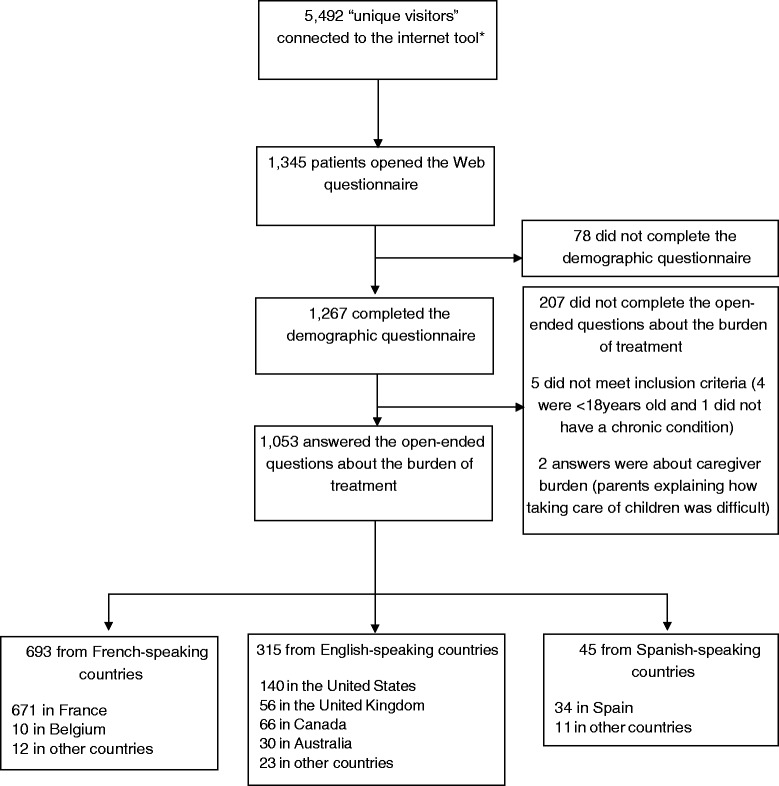
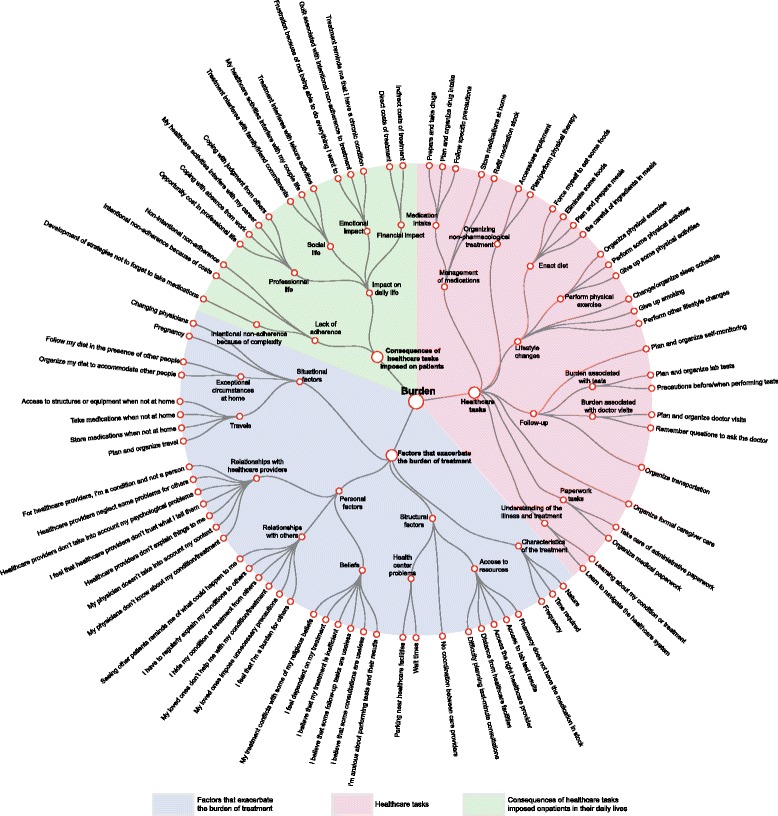
BACKGROUND: Management strategies for patients with chronic conditions are becoming increasingly complex, which may result in a burden of treatment for patients. To develop a Minimally Disruptive Medicine designed to reduce the burden of treatment, clinicians need to understand which healthcare tasks and aggravating factors may be responsible for this burden. The objective of the present study was to describe and classify the components of the burden of treatment for patients with chronic conditions from the patient's perspective. METHODS: We performed a multi-country qualitative study using an online survey and a purposive sampling strategy to select English-, French-, and Spanish-speaking participants with different chronic conditions. Participants were recruited by physicians, patients' associations, advertisement on social media, and 'snowballing'. The answers were analyzed by i) manual content analysis with a grounded theory approach, coded by two researchers, and ii) automatic textual analysis by Reinert's method. RESULTS: Between 2013 and 2014, 1,053 participants from 34 different countries completed the online survey using 408,625 words. Results from both analyses were synthesized in a taxonomy of the burden of treatment, which described i) the tasks imposed on patients by their diseases and by their healthcare system (e.g., medication management, lifestyle changes, follow-up, etc.); ii) the structural (e.g., access to healthcare resources, coordination between care providers), personal, situational, and financial factors that aggravated the burden of treatment; and iii) patient-reported consequences of the burden (e.g., poor adherence to treatments, financial burden, impact on professional, family, and social life, etc.). Our findings may not be applicable to patients with chronic conditions who differ from those who responded to our survey. CONCLUSIONS: Our taxonomy of the burden of treatment, provided by patients with chronic conditions from different countries and settings, supports the development of tools to ascertain the burden of treatment and highlights potential targets for interventions to minimize it.
Overview
The claims and statistics of this paper haven’t been checked yet.
Free: it reads the open-access text and checks the first 5 claims that cite a source we can check. Create a free account to check every claim.
Integrity signals
Registry
Cites
Statistics
Figures
Verification
Claims the paper makes
The claims and statistics of this paper haven’t been checked yet.
Free: it reads the open-access text and checks the first 5 claims that cite a source we can check. Create a free account to check every claim.
Claims other papers make about this one
Each is checked against this paper’s own text: does it say what the citing paper says it does?
In the citing paper
“Individual people may incur needless harms without net benefits, bear the psychological impact of disease labeling, or carry an avoidable supplementary burden of treatment in addition to the burden of illness (Grady and Redberg 2010; Moynihan et al., 2012; Tran et al., 2015).”
From When more is not better: 10 ‘don’ts’ in endometriosis management. An ETIC* position statement (2019) · cites this paper as Tran et al., 2015
Self-check
Percentages, sums and reported differences re-computed from the paper’s own numbers.
The self-check needs the paper’s full text.
Citations
Cites
Health Measurement Scales: A Practical Guide to Their Development and Use
Streiner, D. L., Norman, G. R., & Cairney, J. (1989) · Cited by 9,595
(2013) · Handbooks of Sociology and Social Research · doi:10.1007/978-94-007-6772-0 · Cited by 7,486
Barnett, K., Mercer, S. W., Norbury, M., Watt, G., Wyke, S., & Guthrie, B. (2012) · The Lancet · doi:10.1016/s0140-6736(12)60240-2 · Cited by 6,972 · cited 1×
“Background Multimorbidity is becoming increasingly common: 42 % of patients have one chronic condition and 23 % have multiple chronic conditions [1].”
BackgroundQualitative research: standards, challenges, and guidelines
Malterud, K. (2001) · The Lancet · doi:10.1016/s0140-6736(01)05627-6 · Cited by 5,014 · cited 1×
“The strength of this study relies in our focus on reducing the researcher’s impact on the analysis by involving multiple researchers in the manual content analysis, each researcher supplementing and contesting others’ statements [36], and by performing two separate analysis, one of which was automatic.”
MethodQualitative Data Analysis for Health Services Research: Developing Taxonomy, Themes, and Theory
Bradley, E. H., Curry, L. A., & Devers, K. J. (2007) · Health Services Research · doi:10.1111/j.1475-6773.2006.00684.x · Cited by 3,437
Boyd, C. M., Darer, J., Boult, C., Fried, L. P., Boult, L., & Wu, A. W. (2005) · JAMA · doi:10.1001/jama.294.6.716 · Cited by 2,581 · cited 1×
“For example, a physician following clinical practice guidelines could prescribe up to 12 medications for a patient with osteoporosis, osteoarthritis, diabetes mellitus, hypertension, and chronic obstructive pulmonary disease [5].”
BackgroundQualitative Research: Qualitative interviews in medical research
Britten, N. (1995) · BMJ · doi:10.1136/bmj.311.6999.251 · Cited by 1,670
Denscombe, M. (2003) · Cited by 1,205
A Systematic Review of Prevalence Studies on Multimorbidity: Toward a More Uniform Methodology
Fortin, M., Stewart, M., Poitras, M.-E., Almirall, J., & Maddocks, H. (2012) · The Annals of Family Medicine · doi:10.1370/afm.1337 · Cited by 1,135 · cited 1×
“Some authors argued that using more than three disease entities would likely identify patients with greater health needs and would therefore be more useful to clinicians [30].”
BackgroundSampling hard to reach populations
Faugier, J., & Sargeant, M. (1997) · Journal of Advanced Nursing · doi:10.1046/j.1365-2648.1997.00371.x · Cited by 1,050 · cited 1×
“Participants who had been invited were encouraged to invite relatives and friends who had chronic conditions to participate by a ‘snowball’ sampling method [14], which involves identifying an initial number of participants who serve as ‘seeds’ to help identify peers who, in turn, are asked to invite others and so fort…”
Background
Cited by
Skou, S. T., Mair, F. S., Fortin, M., Guthrie, B., Nunes, B. P., Miranda, J. J., Boyd, C. M., Pati, S., Mtenga, S., & Smith, S. M. (2022) · Nature Reviews Disease Primers · doi:10.1038/s41572-022-00376-4 · Cited by 1,362
Greenwood, D. A., Gee, P. M., Fatkin, K. J., & Peeples, M. (2017) · Journal of Diabetes Science and Technology · doi:10.1177/1932296817713506 · Cited by 526
American Diabetes Association Professional Practice Committee (2022) · Diabetes Care · doi:10.2337/dc22-s005 · Cited by 445
ElSayed, N. A., Aleppo, G., Aroda, V. R., Bannuru, R. R., Brown, F. M., Bruemmer, D., Collins, B. S., Hilliard, M. E., Isaacs, D., Johnson, E. L., et al. (2023) · Diabetes Care · doi:10.2337/dc23-s005 · Cited by 362
2017 national standards for diabetes self-management education and support
Beck, J., Greenwood, D. A., Blanton, L., Bollinger, S. T., Butcher, M. K., Condon, J. E., Cypress, M., Faulkner, P., Fischl, A. H., Francis, T., et al. (2017) · Diabetes Care · doi:10.2337/dci17-0025 · Cited by 348
“Health care teams must consider the burden of treatment placed upon those living with diabetes—in essence, the "work of being a patient"—and consider all decisions within the lens of the individual’s capacity (28).”
BackgroundCancer Survivors’ Experience With Telehealth: A Systematic Review and Thematic Synthesis.
Cox, A., Lucas, G., Marcu, A., Piano, M., Grosvenor, W., Mold, F., Maguire, R., & Ream, E. (2017) · Journal of Medical Internet Research · doi:10.2196/jmir.6575 · Cited by 330
“Key sources of increased treatment burden for patients with chronic conditions include fragmented or poorly organized care lacking in continuity [62-65], poor communication with or between HCPs, barriers to accessing services, or insufficient time with health care professionals [63-65].”
Boyd, C., Smith, C. D., Masoudi, F. A., Blaum, C. S., Dodson, J. A., Green, A. R., Kelley, A., Matlock, D., Ouellet, J., Rich, M. W., et al. (2019) · Journal of the American Geriatrics Society · doi:10.1111/jgs.15809 · Cited by 313
“▪ Competing conditions that affect outcomes, response to interventions, and patients’ priorities.(9,25,30) Encourage patients and family/caregivers to participate in decision making ▪ Encourage patients to discuss their health priorities and inquire about ways in which their healthcare may help them accomplish these h…”
BackgroundAmerican Diabetes Association Professional Practice Committee, ElSayed, N. A., Aleppo, G., Bannuru, R. R., Beverly, E. A., Bruemmer, D., Collins, B. S., Darville, A., Ekhlaspour, L., Hassanein, M., et al. (2024) · Diabetes Care · doi:10.2337/dc24-s005 · Cited by 285
Palazzo, C., Klinger, E., Dorner, V., Kadri, A., Thierry, O., Boumenir, Y., Martin, W., Poiraudeau, S., & Ville, I. (2016) · Annals of Physical and Rehabilitation Medicine · doi:10.1016/j.rehab.2016.01.009 · Cited by 287
“The difficulties patients encountered in exercising are mainly the same as for other treatments [25].”
2017 National Standards for Diabetes Self-Management Education and Support
Beck, J., Greenwood, D. A., Blanton, L., Bollinger, S. T., Butcher, M. K., Condon, J. E., Cypress, M., Faulkner, P., Fischl, A. H., Francis, T., et al. (2018) · The Diabetes Educator · doi:10.1177/0145721718754797 · Cited by 288
Rosbach, M., & Andersen, J. S. (2017) · PLOS ONE · doi:10.1371/journal.pone.0179916 · Cited by 239
2017 National Standards for Diabetes Self-Management Education and Support
Beck, J., Greenwood, D. A., Blanton, L., Bollinger, S. T., Butcher, M. K., Condon, J. E., Cypress, M., Faulkner, P., Fischl, A. H., Francis, T., et al. (2017) · The Diabetes Educator · doi:10.1177/0145721717722968 · Cited by 193
2022 National standards for diabetes self-management education and support
Davis, J., Fischl, A. H., Beck, J., Browning, L., Carter, A., Condon, J. E., Dennison, M., Francis, T., Hughes, P. J., Jaime, S., et al. (2022) · Diabetes Care · doi:10.2337/dc21-2396 · Cited by 191
2022 National standards for diabetes self-management education and support
Davis, J., Fischl, A. H., Beck, J., Browning, L., Carter, A., Condon, J. E., Dennison, M., Francis, T., Hughes, P. J., Jaime, S., et al. (2022) · The Science of Diabetes Self-Management and Care · doi:10.1177/26350106211072203 · Cited by 169
Assessing the Burden of Treatment
Workgroup, O. B. O. T. I. M. D. M., Spencer-Bonilla, G., Quiñones, A. R., & Montori, V. M. (2017) · Journal of General Internal Medicine · doi:10.1007/s11606-017-4117-8 · Cited by 168
Self-citationRoberti, J. E., Cummings, A. J., Myall, M., Harvey, J. M., Lippiett, K. A., Hunt, K. J., Cicora, F., Alonso, J. P., & May, C. R. (2018) · BMJ Open · doi:10.1136/bmjopen-2018-023507 · Cited by 181
Boehmer, K. R., Abu Dabrh, A. M., Gionfriddo, M. R., Erwin, P., & Montori, V. M. (2018) · PLOS ONE · doi:10.1371/journal.pone.0190852 · Cited by 128
“Treatment burden has been well documented across a number of conditions and is an important factor that can lead to nonadherence.[10, 11, 23, 24, 42, 43] Furthermore, the burden of multimorbidity, andits associated increases in treatment work, falls more often on patients of lower socioeconomic status, often times wit…”
BackgroundSelf-citationPatient administrative burden in the US health care system
Kyle, M. A., & Frakt, A. B. (2021) · Health Services Research · doi:10.1111/1475-6773.13861 · Cited by 140
Development of a Clinically Feasible Process for Identifying Individual Health Priorities
Naik, A. D., Dindo, L. N., Liew, J. R., Hundt, N. E., Vo, L., Hernandez‐Bigos, K., Esterson, J., Geda, M. E., Rosen, J. D., Blaum, C. S., et al. (2018) · Journal of the American Geriatrics Society · doi:10.1111/jgs.15437 · Cited by 116
“Although promising, prior collaborative goal-setting studies have not focused on older adults with multiple chronic conditions.(7,9,10,35) We developed and refined an approach to identify individual priorities that builds primarily on collaborative goalsetting to elicit health outcome goals and healthcare preferences.”
BackgroundA conceptual model of treatment burden and patient capacity in stroke
Gallacher, K., May, C. R., Langhorne, P., & Mair, F. S. (2018) · BMC Family Practice · doi:10.1186/s12875-017-0691-4 · Cited by 124
Predicting data saturation in qualitative surveys with mathematical models from ecological research
Tran, V.-T., Porcher, R., Tran, V. C., & Ravaud, P. (2016) · Journal of Clinical Epidemiology · doi:10.1016/j.jclinepi.2016.10.001 · Cited by 251
Self-citationSav, A., Salehi, A., Mair, F. S., & McMillan, S. S. (2017) · BMC Medical Research Methodology · doi:10.1186/s12874-017-0411-8 · Cited by 117
“[21] adapted the TBQ amongst an English speaking sample using an internet platform.”
BackgroundMethodInfluentialReeve, J. L., Maden, M., Hill, R. A., Turk, A., Mahtani, K. R., Wong, G., Lasserson, D. S., Krska, J., Mangin, D. A., Byng, R., et al. (2022) · Health Technology Assessment · doi:10.3310/aafo2475 · Cited by 134
Nordfonn, O. K., Morken, I. M., Bru, L. E., & Husebø, A. M. L. (2019) · Journal of Clinical Nursing · doi:10.1111/jocn.14799 · Cited by 156
Morris, J., Roderick, P. J., Harris, S., Yao, G., Crowe, S., Phillips, D. R., Duncan, P., & Fraser, S. D. (2020) · British Journal of General Practice · doi:10.3399/bjgp.2020.0883 · Cited by 103
Tran, V.-T., Montori, V. M., & Ravaud, P. (2019) · Mayo Clinic Proceedings · doi:10.1016/j.mayocp.2019.09.004 · Cited by 83
Self-citationTreatment burden in multimorbidity: an integrative review
Lee, J. E., Lee, J., Shin, R., Oh, O., & Lee, K. S. (2024) · BMC Family Practice · doi:10.1186/s12875-024-02586-z · Cited by 93
“Studies have frequently investigated resources and included them in previous conceptual frameworks or taxonomy of the treatment burden of people with multimorbidity [14, 18, 19, 21, 71].”
BackgroundResultInfluentialMohammed, M. A., Moles, R. J., Hilmer, S. N., O’Donnell, L. K., & Chen, T. F. (2018) · BMJ Open · doi:10.1136/bmjopen-2017-018880 · Cited by 75
“These subscales match well to a priori theoretical conceptual framework and supported by several qualitative research into medication and treatment burden.(5) 6 43–45 This indicates the thoroughness in the approach used to inform the development of MRB-QoL.”
MethodChevance, A., Tran, V.-T., & Ravaud, P. (2020) · Journal of Clinical Epidemiology · doi:10.1016/j.jclinepi.2020.01.004 · Cited by 71
Self-citationWhen more is not better: 10 ‘don’ts’ in endometriosis management. An ETIC* position statement
Club, E. E. T. I., Alio, L., Angioni, S., Arena, S., Bartiromo, L., Bergamini, V, Berlanda, N., Bonin, C., Busacca, M., Candiani, M., et al. (2019) · Human Reproduction Open · doi:10.1093/hropen/hoz009 · Cited by 64
“The burden of treatment has been defined as the challenges associated with everything patients have to do to take care of themselves (Tran et al., 2015).”
BackgroundAl-Mansouri, A., Al-Ali, F. S., Hamad, A., Ibrahim, M. I. M., Kheir, N. M., Ibrahim, R., Al-Bakri, M., & Awaisu, A. (2021) · Research in Social and Administrative Pharmacy · doi:10.1016/j.sapharm.2021.02.010 · Cited by 77
Primary care and multimorbidity in six Latin American and Caribbean countries
Macinko, J. A., Andrade, F. C. D., Nunes, B. P., & Guanais, F. C. (2019) · Revista Panamericana de Salud Pública · doi:10.26633/rpsp.2019.8 · Cited by 72
“Individuals with multimorbidity are more likely to report treatment burdens due to poor coordination between providers, which in turn imply greater financial costs, lower adherence to medication regimens, and difficulty initiating and maintaining lifestyle changes (8).”
BackgroundAhmed, S., Kelly, Y. P., Behera, T. R., Zelen, M. H., Kuye, I. O., Blakey, R., Goldstein, S. A., Wasfy, J. H., Erskine, A., Licurse, A. M., et al. (2020) · Annals of Internal Medicine · doi:10.7326/m19-3852 · Cited by 64
“Because of the mismatch between supply and demand for specialty services, additional challenges include prolonged wait times and patient burden from additional visits (2, 3).”
BackgroundLarkin, J., Foley, L., Smith, S. M., Harrington, P., & Clyne, B. (2020) · Health Expectations · doi:10.1111/hex.13166 · Cited by 73
Point of data saturation was assessed using resampling methods in a survey with open-ended questions
Tran, V.-T., Porcher, R., Falissard, B., & Ravaud, P. (2016) · Journal of Clinical Epidemiology · doi:10.1016/j.jclinepi.2016.07.014 · Cited by 186
Self-citationBrito, J. P., Montori, V. M., & Davis, A. M. (2017) · JAMA · doi:10.1001/jama.2016.20563 · Cited by 59
Self-citationFriis, K., Lasgaard, M., Pedersen, M. H., Duncan, P., & Maindal, H. T. (2019) · Patient Education and Counseling · doi:10.1016/j.pec.2019.05.013 · Cited by 69
Cross, S. P., Karin, E., Staples, L. G., Bisby, M. A., Ryan, K., Duke, G., Nielssen, O., Kayrouz, R., Fisher, A., Dear, B. F., et al. (2022) · Internet Interventions · doi:10.1016/j.invent.2022.100506 · Cited by 57
Treatment Burden and Chronic Illness: Who is at Most Risk?
Sav, A., Whitty, J. A., McMillan, S. S., Kendall, E. A., Kelly, F., King, M. A., & Wheeler, A. (2016) · Patient · doi:10.1007/s40271-016-0175-y · Cited by 66
“[4] found that the themes identified in their study complemented their treatment burden questionnaire they developed 3 years earlier.”
InfluentialZidan, A., Awaisu, A., Hajj, M. S. E., Abdulla, S. A. A., Figueroa, D. C. R., & Kheir, N. M. (2018) · Pharmacy · doi:10.3390/pharmacy6030085 · Cited by 64
“Studies have also highlighted the association between this burden and adherence to medication therapy [6, 15, 21, 22].”
BackgroundMaidment, I., Lawson, S., Wong, G., Booth, A., Watson, A., Zaman, H., Mullan, J., McKeown, J., & Bailey, S. (2020) · BMC Geriatrics · doi:10.1186/s12877-020-01568-x · Cited by 63
“Burden: burden was identified as a potential key topic early in MEMORABLE and confirmed as the research progressed, linked to medication management workload and capacity [13, 15, 49, 79].”
BackgroundHind, D., Parkin, J., Whitworth, V., Rex, S., Young, T. A., Hampson, L. V., Sheehan, J., Maguire, C., Cantrill, H., Scott, E., et al. (2017) · Health Technology Assessment · doi:10.3310/hta21270 · Cited by 67
“Often, the strategies that we develop to manage chronic disease created additional burdens of work for patients, leading to poor adherence and clinical outcomes, as well as wasted resources.(113,114) Minimally disruptive medicine should identify this burden, encourage improved co-ordination of care and design, or prio…”
BackgroundBoehmer, K. R., Hargraves, I. G., Allen, S. V., Matthews, M. R., Maher, C., & Montori, V. M. (2016) · BMC Health Services Research · doi:10.1186/s12913-016-1742-6 · Cited by 55
“Attending appointments, taking medications, shopping for and preparing healthy food, enacting an active lifestyle, dealing with administrative tasks related to insurance, scheduling appointments, refilling prescriptions, and self-monitoring are activities that take time, effort, sense-making, and attention [8, 9].”
BackgroundSelf-citationCOllaborative open platform E-cohorts for research acceleration in trials and epidemiology
Tran, V.-T., & Ravaud, P. (2020) · Journal of Clinical Epidemiology · doi:10.1016/j.jclinepi.2020.04.021 · Cited by 54
Self-citationTran, V.-T., Riveros, C., Péan, C., Czarnobroda, A., & Ravaud, P. (2019) · BMJ Quality & Safety · doi:10.1136/bmjqs-2018-008593 · Cited by 59
Self-citationA systematic literature review looking for the definition of treatment burden
Alsadah, A. H., Merode, T. V., Alshammari, R., & Kleijnen, J. (2020) · Heliyon · doi:10.1016/j.heliyon.2020.e03641 · Cited by 64
“Treatment burden is a broad concept and involves many domains (Eton et al., 2015; Tran et al., 2015).”
BackgroundHerzig, L., Zeller, A., Pasquier, J., Streit, S., Neuner‐Jehle, S., Excoffier, S., & Haller, D. M. (2019) · BMC Family Practice · doi:10.1186/s12875-019-0974-z · Cited by 55
2017 National Standards for Diabetes Self-Management Education and Support
Beck, J., Greenwood, D. A., Blanton, L., Bollinger, S. T., Butcher, M. K., Condon, J. E., Cypress, M., Faulkner, P., Fischl, A. H., Francis, T., et al. (2020) · The Diabetes Educator · doi:10.1177/0145721719897952 · Cited by 46
“being a patient”—and consider all decisions within the lens of the individual’s capacity.(28) All DSMES services must focus on the priorities, concerns, and preferred delivery method and timing of the individual, incorporating a person-centered approach.”
Hu, X., Wang, H., Li, Y., Wu, X., Wang, Y., Chen, J., Wang, J., Wong, S. Y. S., & Mercer, S. W. (2021) · Health Expectations · doi:10.1111/hex.13363 · Cited by 45
“Recent evidence suggests that across a wide range of health conditions and settings, a significant proportion of treatment burden results from the way in which healthcare is organized and delivered, rather than by specific patients, diseases or treatments.(20)”
BackgroundCross, S. P. M., & Álvarez‐Jiménez, M. (2024) · Frontiers in Psychiatry · doi:10.3389/fpsyt.2024.1382726 · Cited by 58
Wallace, E., McDowell, R. D., Bennett, K., Fahey, T. P., & Smith, S. M. (2016) · BMJ Open · doi:10.1136/bmjopen-2016-013089 · Cited by 43
Walton, H., Vindrola‐Padros, C., Crellin, N. E., Sidhu, M. S., Herlitz, L., Litchfield, I. J., Ellins, J., Ng, P. L., Massou, E., Tomini, S. M., et al. (2022) · Health Expectations · doi:10.1111/hex.13548 · Cited by 47
“Negative impacts may include health consequences faced by patients due to not adhering to treatment and patients' professional, social, emotional and financial situation.(18) Different individuals may tolerate different levels of treatment burden, and it has been suggested that this needs to be assessed regularly as t…”
BackgroundInfluentialTurning Away From Industrial Health Care Toward Careful and Kind Care
Montori, V. M. (2018) · Academic Medicine · doi:10.1097/acm.0000000000002534 · Cited by 46
Self-citationManaging Diabetes in Hard to Reach Populations: A Review of Telehealth Interventions
Appuswamy, A. V., & Desimone, M. E. (2020) · Current Diabetes Reports · doi:10.1007/s11892-020-01310-2 · Cited by 50
Development of models of care coordination for rare conditions: a qualitative study
Walton, H., Simpson, A., Ramsay, A. I. G., Hunter, A., Jones, J., Ng, P. L., Leeson‐Beevers, K., Bloom, L. C., Kai, J., Kokocinska, M., et al. (2022) · Orphanet Journal of Rare Diseases · doi:10.1186/s13023-022-02190-3 · Cited by 49
“Findings from previous research relating to chronic conditions [1, 8, 15], together with the vast number of rare conditions [16], differences in availability of services (e.”
BackgroundResultBoehmer, K. R., Dobler, C. C., Thota, A. D., Branda, M. E., Giblon, R. E., Behnken, E., Organick, P. W., Allen, S. V., Shaw, K., & Montori, V. M. (2019) · BMJ Open · doi:10.1136/bmjopen-2019-029105 · Cited by 43
Self-citation2022 National Standards for Diabetes Self-Management Education and Support
Davis, J., Fischl, A. H., Beck, J. K., Browning, L., Carter, A., Condon, J. E., Dennison, M., Francis, T., Hughes, P. J., Jaime, S., et al. (2022) · Diabetes Spectrum · doi:10.2337/ds22-ps02 · Cited by 50
Monitoring of patients treated with lithium for bipolar disorder: an international survey
Nederlof, M., Heerdink, E. R., Egberts, T. C. G., Wilting, I., Stoker, L. J., Hoekstra, R., & Kupka, R. (2018) · International Journal of Bipolar Disorders · doi:10.1186/s40345-018-0120-1 · Cited by 48
“On the other hand, excessive monitoring may have a negative impact on health care costs and provide an extra burden to patients and may even lead to a reduced treatment adherence (Tran et al. 2015).”
Background2017 National Standards for Diabetes Self-Management Education and Support
Beck, J., Greenwood, D. A., Blanton, L., Bollinger, S. T., Butcher, M. K., Condon, J. E., Cypress, M., Faulkner, P., Fischl, A. H., Francis, T., et al. (2019) · The Diabetes Educator · doi:10.1177/0145721718820941 · Cited by 39
Holden, R. J., Daley, C. N., Mickelson, R. S., Bolchini, D. P., Toscos, T., Cornet, V. P., Miller, A., & Mirro, M. J. (2020) · Applied Ergonomics · doi:10.1016/j.apergo.2020.103107 · Cited by 43
Core GRADE 6: presenting the evidence in summary of findings tables
Guyatt, G. H., Yao, L., Murad, M. H., Hultcrantz, M., Agoritsas, T., de Beer, H., Schandelmaier, S., Iorio, A., Zeng, L., Prasad, M., et al. (2025) · BMJ · doi:10.1136/bmj-2024-083866 · Cited by 50
“…addition to displaying benefits and harms in their summary of findings tables, Core GRADE users may choose to narratively summarise available data on the burden of interventions 48 49 —what has been called the “work” of being a patient and what GRADE guidelines have referred to as practical issues.”
Self-citationLeadership for careful and kind care
Allwood, D., Koka, S., Armbruster, R., & Montori, V. M. (2021) · BMJ Leader · doi:10.1136/leader-2021-000451 · Cited by 40
Self-citation2017 National Standards for Diabetes Self-Management Education and Support
Beck, J. K., Greenwood, D. A., Blanton, L., Bollinger, S. T., Butcher, M. K., Condon, J. E., Cypress, M., Faulkner, P., Fischl, A. H., Francis, T., et al. (2021) · The Science of Diabetes Self-Management and Care · doi:10.1177/0145721720987926 · Cited by 43
“being a patient”—and consider all decisions within the lens of the individual’s capacity.(28) All DSMES services must focus on the priorities, concerns, and preferred delivery method and timing of the individual, incorporating a person-centered approach.”
Medication burden of treatment using oral cancer medications
Given, B. A., Given, C. W., Sikorskii, A. E., Vachon, E. A., & Banik, A. (2017) · Asia-Pacific Journal of Oncology Nursing · doi:10.4103/apjon.apjon_7_17 · Cited by 36
“Burden of treatment is defined as the patient workload to carry out the therapeutic recommendation of healthcare professionals and its impact on the patient’s functioning and well‐being.([1,2,8]) Burden of treatment includes physical, financial, temporal, and psychosocial time demands on patients to follow the recomme…”
BackgroundLesage, A., Leclère, B., Moret, L., & Glatin, C. L. (2021) · PLoS ONE · doi:10.1371/journal.pone.0245112 · Cited by 36
Boehmer, K. R., Gallacher, K., Lippiett, K. A., Mair, F. S., May, C. R., & Montori, V. M. (2022) · Mayo Clinic Proceedings · doi:10.1016/j.mayocp.2021.09.003 · Cited by 47
Self-citationPaukkonen, L., Oikarinen, A., Kähkönen, O., & Kaakinen, P. (2022) · Health Science Reports · doi:10.1002/hsr2.735 · Cited by 49
“The burden of treatment facing many multimorbid patients can thus be compared to the burden of diseases itself.(15) As a such, success of self‐management is emphasized by one's ability and willingness to be involved in the care process, which is often referred to as patient activation.”
BackgroundMinimally Disruptive Medicine for Patients with Diabetes
Serrano, V., Spencer‐Bonilla, G., Boehmer, K. R., & Montori, V. M. (2017) · Current Diabetes Reports · doi:10.1007/s11892-017-0935-7 · Cited by 37
Self-citationGu, J., Yang, C., Zhang, K., & Zhang, Q. (2021) · Geriatric Nursing · doi:10.1016/j.gerinurse.2021.07.006 · Cited by 38
Between Curing and Torturing: Burden of Adverse Reaction in Drug-Resistant Tuberculosis Therapy
Ausi, Y., Santoso, P., Sunjaya, D. K., & Barliana, M. I. (2021) · Patient Preference and Adherence · doi:10.2147/ppa.s333111 · Cited by 41
Schamess, A., Foraker, R. E., Kretovics, M., Barnes, K. D., Beatty, S. J., Bose‐Brill, S., & Tayal, N. H. (2016) · Disability and health journal · doi:10.1016/j.dhjo.2016.10.004 · Cited by 32
Foley, L., Hynes, L., Murphy, A. W., & Molloy, G. J. (2021) · British Journal of Health Psychology · doi:10.1111/bjhp.12568 · Cited by 33
Empowering Diabetes Self-Management Through Technology and Nurse Health Coaching
Miyamoto, S., Henderson, S., Fazio, S., Saconi, B., Thiede, E., Greenwood, D. A., & Young, H. M. (2019) · The Science of Diabetes Self-Management and Care · doi:10.1177/0145721719879421 · Cited by 46
“Self-management is a complex process that involves numerous competing tasks, such as managing medication, self-monitoring, accessing health care resources, and initiating lifestyle changes.(13) Self-management is difficult for many individuals, and although there have been intervention efforts in this area, more infor…”
BackgroundMedication management in older people: the MEMORABLE realist synthesis
Maidment, I., Lawson, S., Wong, G., Booth, A., Watson, A., McKeown, J., Zaman, H., Mullan, J., & Bailey, S. (2020) · Health Services and Delivery Research · doi:10.3310/hsdr08260 · Cited by 49
Patient-perceived treatment burden of tuberculosis treatment
Ting, N. C. H., El-Turk, N., Chou, M. S. H., & Dobler, C. C. (2020) · PLoS ONE · doi:10.1371/journal.pone.0241124 · Cited by 29
Piette, E., Nougairède, M., Vuong, V., Crickx, B., & Tran, V.-T. (2017) · Journal of Telemedicine and Telecare · doi:10.1177/1357633x16663328 · Cited by 28
“This is important, as these factors (simply receiving a diagnosis or treatment plan and the delay in receiving this information) have been shown to influence patients’ quality of life.(15) Patients and GPs’ satisfactions were not significantly different between the two groups.”
BackgroundSelf-citationMobile health applications in clinical practice: pearls, pitfalls, and key considerations
Cook, V. E., Ellis, A. K., & Hildebrand, K. J. (2016) · Annals of Allergy Asthma & Immunology · doi:10.1016/j.anai.2016.01.012 · Cited by 31
Husebø, A. M. L., Morken, I. M., Eriksen, K. S., & Nordfonn, O. K. (2018) · BMC Medical Research Methodology · doi:10.1186/s12874-018-0612-9 · Cited by 27
Tran, V.-T., Diard, É., & Ravaud, P. (2020) · BMJ Quality & Safety · doi:10.1136/bmjqs-2020-011219 · Cited by 31
Self-citationQuinn, C. C., Swasey, K. K., Crabbe, J. C. F., Shardell, M. D., Terrin, M. L., Barr, E. A., & Gruber-Baldini, A. L. (2017) · JMIR mHealth and uHealth · doi:10.2196/mhealth.8910 · Cited by 25
Tran, V.-T., Messou, E., Djima, M. M., Ravaud, P., & Ekouévi, D. K. (2018) · BMJ Quality & Safety · doi:10.1136/bmjqs-2017-007564 · Cited by 27
Self-citation2017 National Standards for Diabetes Self-Management Education and Support
Beck, J. K., Greenwood, D. A., Blanton, L., Bollinger, S. T., Butcher, M. K., Condon, J. E., Cypress, M., Faulkner, P., Fischl, A. H., Francis, T., et al. (2017) · Diabetes Spectrum · doi:10.2337/ds17-0067 · Cited by 30
“being a patient”—and consider all decisions within the lens of the individual’s capacity.(28) All DSMES services must focus on the priorities, concerns, and preferred delivery method and timing of the individual, incorporating a person-centered approach.”
Pulvirenti, F., Cinetto, F., Pecoraro, A., Carrabba, M., Crescenzi, L., Neri, R., Bonanni, L., Fabio, G., Agostini, C., Spadaro, G., et al. (2019) · Journal of Clinical Immunology · doi:10.1007/s10875-019-0592-5 · Cited by 29
Co-ordinated care for people affected by rare diseases: the CONCORD mixed-methods study
Morris, S., Hudson, E., Bloom, L. C., Chitty, L. S., Fulop, N., Hunter, A., Jones, J., Kai, J., Kerecuk, L., Kokocinska, M., et al. (2022) · Health and Social Care Delivery Research · doi:10.3310/lnzz5321 · Cited by 30
Mohammed, M. A., Moles, R. J., & Chen, T. F. (2018) · International Journal of Clinical Pharmacy · doi:10.1007/s11096-017-0582-8 · Cited by 23
Which Benefits Can Justify Risks in Research?
van Rijssel, T. I., van Thiel, G. J. M. W., Gardarsdóttir, H., van Delden, J. J. M., & on behalf of the Trials@Home consortium (2024) · The American Journal of Bioethics · doi:10.1080/15265161.2023.2296404 · Cited by 27
“Studies on patients’ experiences demonstrate how planning and organizing visits to hospitals has a great impact on their daily lives (Tran et al. 2015).”
Cheng, A., & Levy, M. A. (2017) · PubMed Central · Cited by 21
Minimally disruptive medicine for patients with complex multimorbidity
Trevena, L. J. (2018) · Australian Journal of General Practice · doi:10.31128/afp-10-17-4374 · Cited by 22
Treatment burden experienced by patients with lung cancer
El-Turk, N., Chou, M. S. H., Ting, N. C. H., Girgis, A., Vinod, S. K., Bray, V., & Dobler, C. C. (2021) · PLOS ONE · doi:10.1371/journal.pone.0245492 · Cited by 20
“The interview guide (S1 File) was derived from a preliminary framework of treatment burden in lung cancer, generated from a taxonomy of the burden of treatment [5] and a systematic review of patient-reported measures of burden of treatment in three chronic diseases [7].”
BackgroundMethodLawson, S., Mullan, J., Wong, G., Zaman, H., Booth, A., Watson, A., & Maidment, I. (2021) · Patient Education and Counseling · doi:10.1016/j.pec.2021.12.017 · Cited by 26
Measures of Treatment Workload for Patients With Breast Cancer
Cheng, A., & Levy, M. A. (2019) · JCO Clinical Cancer Informatics · doi:10.1200/cci.18.00122 · Cited by 23
“2-17) 16 (10 -27) 36 (14-71) 64 (28-83) 40 (17-79)”
InfluentialA systematic review of the use of burden of treatment theory
Smyth, R., Smith, G., Alexander, E., May, C. R., Mair, F. S., & Gallacher, K. (2025) · Journal of Multimorbidity and Comorbidity · doi:10.1177/26335565251314828 · Cited by 26
Service design in healthcare: a segmentation-based approach
Engström, J., Norin, O., de Varennes, S. D. G., & Valtakoski, A. (2022) · Journal of service management · doi:10.1108/josm-06-2021-0239 · Cited by 30
The impact of cardiovascular medication use on patients’ daily lives: a cross-sectional study
van der Laan, D. M., Elders, P. J. M., Boons, C. C. L. M., Nijpels, G., Krska, J., & Hugtenburg, J. G. (2018) · International Journal of Clinical Pharmacy · doi:10.1007/s11096-018-0601-4 · Cited by 20
“Patients with chronic diseases are confronted with developing an understanding of the disease and treatment, should attend regular appointments, take several chronic medicines and enact lifesty le changes [1-5].”
BackgroundWalton, H., Simpson, A., Ramsay, A. I. G., Hudson, E., Hunter, A., Jones, J., Ng, P. L., Leeson‐Beevers, K., Bloom, L. C., Kai, J., et al. (2022) · Orphanet Journal of Rare Diseases · doi:10.1186/s13023-022-02321-w · Cited by 23
“taxonomies for related concepts [16,17,18,19], this is the first research that has attempted to develop a taxonomy of care coordination for rare conditions.”
BackgroundMethodFulop, N., Walton, H., Crellin, N. E., Georghiou, T., Herlitz, L., Litchfield, I. J., Massou, E., Sherlaw‐Johnson, C., Sidhu, M. S., Tomini, S. M., et al. (2023) · Health and Social Care Delivery Research · doi:10.3310/fvqw4410 · Cited by 21
Data Driven Approach to Burden of Treatment Measurement: A Study of Patients with Breast Cancer.
Cheng, A., & Levy, M. A. (2016) · PubMed · Cited by 19
Primary care redesign for person-centred care: delivering an international generalist revolution
Reeve, J. L. (2018) · Australian Journal of Primary Health · doi:10.1071/py18019 · Cited by 20
Larkin, J., Foley, L., Smith, S. M., Harrington, P., & Clyne, B. (2020) · HRB Open Research · doi:10.12688/hrbopenres.12915.2 · Cited by 16
Steitz, B. D., Unertl, K. M., & Levy, M. A. (2019) · Journal of the American Medical Informatics Association · doi:10.1093/jamia/ocz151 · Cited by 17
Metadata
- Authors
- Tran, V.-T., Barnes, C., Montori, V. M., Falissard, B., & Ravaud, P.
- Affiliations
- Inserm (FR)
- Université Paris Descartes (FR)
- Université Paris-Sud (FR)
- Corresponding author
- Tran, Viet-Thi
- Venue
- BMC Medicine
- Published
- 2015-05-14
- Volume
- 13
- Issue
- 1
- Pages
- 115-115
- ISSN
- 1741-7015 (ISSN-L)
- PMC
- PMC4446135
- OpenAlex
- W1540405158
- Semantic Scholar
- bec83eb876f665dfaa27aa62ccb5f5e326e7b014
- Cited by
- 235
- References
- 43
- Citations by year
- 2026: 19 · 2025: 16 · 2024: 24 · 2023: 15 · 2022: 39 · 2021: 26 · 2020: 23 · 2019: 22 · 2018: 21 · 2017: 14 · 2016: 15 · 2015: 1
- FWCI
- 13.34
- Type
- journal article
- Language
- en
- Open access
- gold
- doi.org
- Locations
- BMC Medicine (publishedVersion, cc-by)
- PubMed Central (publishedVersion, cc-by)
- PubMed (publishedVersion)
- Funders
- Fondation pour la Recherche Médicale
- Topics
- Health Sciences › Medicine › Epidemiology › Chronic Disease Management Strategies
- Health Sciences › Medicine › Geriatrics and Gerontology › Pharmaceutical Practices and Patient Outcomes
- Health Sciences › Medicine › Family Practice › Medication Adherence and Compliance
- Keywords
- chronic disease, patient perspectives, medication management, medication adherence, financial burden, health care access, care coordination, quality of life impact, patient-reported outcomes
- MeSH terms
- Chronic Disease, Data Collection, Delivery of Health Care, Humans, Male, Middle Aged, Cost of Illness, Disease Management, Internet, Qualitative Research
About these checks
Registry, retraction, Cites and statistics results are computed, not judged, with one exception: a printed reference that no index lists is read once by a model before it counts as a citation error. Claims are extracted by a model and kept only when their quote appears verbatim in the text; each cited source is then checked, with a model’s help, for whether it says what the claim relies on. Those verdicts can be wrong — read the claim’s quote and the cited source before relying on one.
Statistics and arithmetic are recomputed, not judged.
Confidence bands are shown only for fields calibrated on our annotated test set. None is calibrated yet, so no band is shown.
What counts as a claim ›How we measure confidence ›How we check this ›
Are you an author, or do you see a problem with this page? Request a review
Data sources
Bibliographic data: Semantic Scholar, OpenAlex, Crossref.
Contains information from the Semantic Scholar Academic Graph Datasets, made available under the ODC Attribution License (ODC-BY 1.0).
Semantic Scholar’s data is described in: Kinney, R., et al. (2023). The Semantic Scholar Open Data Platform. arXiv:2301.10140.
