

Safety and efficacy of anti-PCSK9 antibodies: a meta-analysis of 25 randomized, controlled trials
Open accessThe DOI matches its Crossref record; 49 of the 50 references it cites were found in a registry or an index.
Abstract
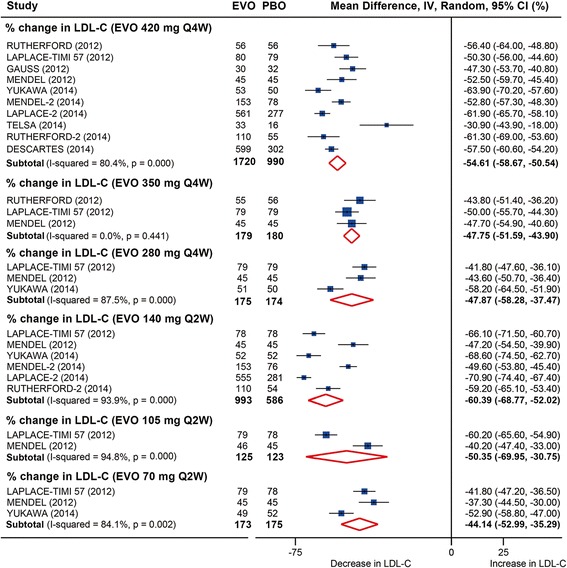
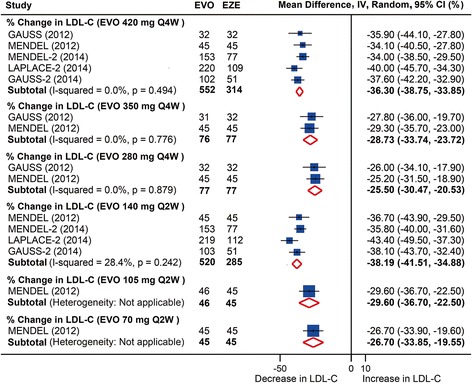
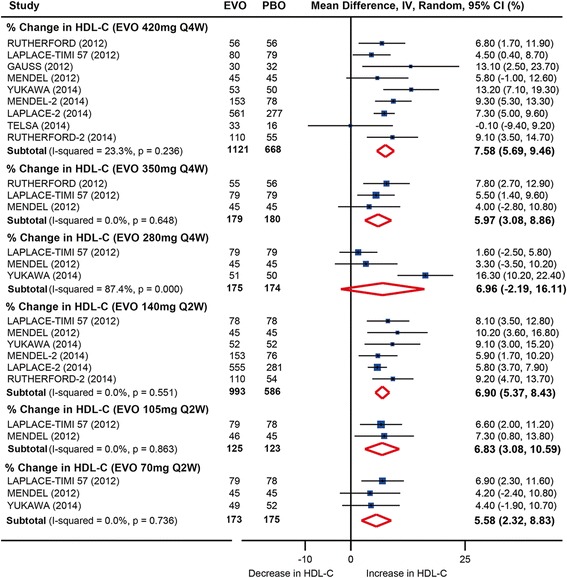
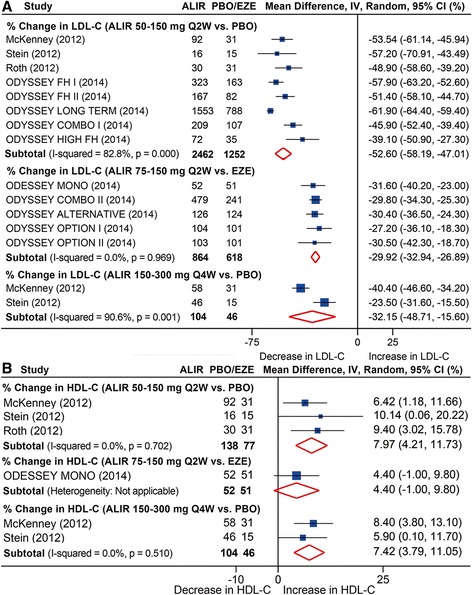
BACKGROUND: Inhibition of proprotein convertase subtilisin/kexin type 9 (PCSK9) has been intensively studied to lower low-density lipoprotein cholesterol (LDL-C) levels. The purpose of this meta-analysis was to evaluate the safety and efficacy of anti-PCSK9 antibodies in randomized, controlled trials (RCTs). METHODS: PubMed, EMBASE, CENTRAL databases, and recent conferences were searched. Safety outcomes were rates of common adverse events. Efficacy outcomes included percentages of LDL-C lowering and other lipid changes compared with placebo and ezetimibe, respectively. RESULTS: Twenty-five RCTs encompassing 12,200 patients were included. The rates of common adverse events were firstly reported in our study by pooling together all evidence in RCTs, showing largely no significant difference between anti-PCSK9 antibodies and placebo (or ezetimibe), except that alirocumab was associated with reduced rates of death (relative risk (RR): 0.43, 95 % confidence interval (CI): 0.19 to 0.96, P = 0.04) and an increased rate of injection-site reactions (RR: 1.48, 95 % CI: 1.05 to 2.09, P = 0.02); evolocumab reduced the rate of abnormal liver function (RR: 0.43, 95 % CI: 0.20 to 0.93, P = 0.03), both compared with placebo. No significant difference in safety outcomes was detected between monthly 420 mg and biweekly 140 mg evolocumab treatments. Monthly 420 mg evolocumab treatment significantly reduced LDL-C by -54.6 % (95 % CI: -58.7 to -50.5 %) and by absolute -78.9 mg/dl (95 % CI: -88.9 to -68.9 mg/dl) versus placebo, and by -36.3 % (95 % CI: -38.8 to -33.9 %) versus ezetimibe, and increased high-density lipoprotein cholesterol (HDL-C) by 7.6 % (95 % CI: 5.7 to 9.5 %) versus placebo and 6.4 % (95 % CI: 4.3 to 8.4 %) versus ezetimibe. An equal or even greater change was observed following biweekly 140 mg administration. Significant and favorable changes were also detected in other lipids following evolocumab treatment. Biweekly 50 to 150 mg alirocumab lowered LDL-C by -52.6 % (95 % CI: -58.2 to -47.0 %) versus placebo, by -29.9 % (95 % CI: -32.9 to -26.9 %) versus ezetimibe, and increased HDL-C by 8.0 % (95 % CI: 4.2 to 11.7 %) versus placebo. CONCLUSIONS: Evolocumab and alirocumab were safe and well-tolerated from our most-powered analyses. Both antibodies substantially reduced the LDL-C level by over 50 %, increased the HDL-C level, and resulted in favorable changes in other lipids.
Overview
The claims and statistics of this paper haven’t been checked yet.
Free: it reads the open-access text and checks the first 5 claims that cite a source we can check. Create a free account to check every claim.
Integrity signals
Registry
Cites
Statistics
Figures
Verification
Claims the paper makes
The claims and statistics of this paper haven’t been checked yet.
Free: it reads the open-access text and checks the first 5 claims that cite a source we can check. Create a free account to check every claim.
Claims other papers make about this one
Each is checked against this paper’s own text: does it say what the citing paper says it does?
The cited source doesn’t support the claim as written.
In the citing paper
“The cardioprotective effects of PCSK9 inhibitors were subsequently confirmed in other clinical trials and meta-analyses [80–85].”
From Established and Emerging Lipid-Lowering Drugs for Primary and Secondary Cardiovascular Prevention (2023) · cites this paper as [84]
Checked by a reasoning model — may be wrong.
Experimental — accuracy not yet measuredThe source backs part of the claim, not all of it — or backs it for a different population, condition or comparison.
In the citing paper
“Placebo-controlled trials evaluating the addition of the PCSK9 inhibitors evolocumab and alirocumab to maximum tolerated doses of statin therapy in participants who were at high risk for ASCVD demonstrated an average reduction in LDL cholesterol ranging from 36 to 59%.”
From 10. Cardiovascular Disease and Risk Management: Standards of Care in Diabetes—2023 (2023) · cites this paper as [114]
Experimental — accuracy not yet measuredThe source backs part of the claim, not all of it — or backs it for a different population, condition or comparison.
In the citing paper
“The addition of the PCSK9 inhibitors evolocumab and alirocumab to maximum tolerated doses of statin therapy in participants who were at high risk for ASCVD demonstrated an average reduction in LDL cholesterol ranging from 36% to 59% (126,127).”
From 10. Cardiovascular Disease and Risk Management: Standards of Care in Diabetes—2025 (2025) · cites this paper as [127]
Experimental — accuracy not yet measured
Self-check
Percentages, sums and reported differences re-computed from the paper’s own numbers.
The self-check needs the paper’s full text.
Citations
Cites
Toprak, O., Kurt, H., Sarı, Y., Şarkış, C., Us, H., & Kırık, A. (2017) · Kidney and Blood Pressure Research · doi:10.1159/000468530 · Cited by 29,627
Grundy, S. M., Bilheimer, D. W., Chait, A., Clark, L. T., Denke, M. A., Havel, R. J., Hazzard, W. R., Hulley, S. B., Hunninghake, D. B., Kreisberg, R. A., et al. (1993) · JAMA · doi:10.1001/jama.269.23.3015 · Cited by 27,947
Expert Panel on Detection, E. (2001) · JAMA: The Journal of the American Medical Association · doi:10.1001/jama.285.19.2486 · Cited by 26,011
Cochrane Handbook for Systematic Reviews of Interventions: Cochrane Book Series
(2008) · doi:10.1002/9780470712184 · Cited by 25,048
Stone, N. J., Robinson, J. G., Lichtenstein, A. H., Bairey Merz, C. N., Blum, C. B., Eckel, R. H., Goldberg, A. C., Gordon, D., Levy, D., Lloyd-Jones, D. M., et al. (2014) · Circulation · doi:10.1161/01.cir.0000437738.63853.7a · Cited by 7,081
Cholesterol Treatment Trialists' (CTT) Collaboration (2010) · The Lancet · doi:10.1016/s0140-6736(10)61350-5 · Cited by 6,550
Cochrane Handbook for Systematic Reviews of Interventions
Tarsilla, M. (2010) · Journal of MultiDisciplinary Evaluation · doi:10.56645/jmde.v6i14.284 · Cited by 5,178
Stone, N. J., Robinson, J. G., Lichtenstein, A. H., Bairey Merz, C. N., Blum, C. B., Eckel, R. H., Goldberg, A. C., Gordon, D., Levy, D., Lloyd-Jones, D. M., et al. (2014) · Journal of the American College of Cardiology · doi:10.1016/j.jacc.2013.11.002 · Cited by 3,845
Sequence Variations in PCSK9, Low LDL, and Protection against Coronary Heart Disease
Cohen, J. C., Boerwinkle, E., Mosley, T. H., & Hobbs, H. H. (2006) · New England Journal of Medicine · doi:10.1056/nejmoa054013 · Cited by 3,181 · cited 1×
“However, the probable clinical benefits could be preliminarily inferred based on current evidence: 1) anti-PCSK9 antibodies substantially reduced LDL-C, non-HDL-C and ApoB levels, all of which are positively associated with CVD events [46], and ‘a lower LDL-C, a better outcome’ has been indicated not only in the era o…”
ResultMutations in PCSK9 cause autosomal dominant hypercholesterolemia
Abifadel, M., Varret, M., Rabès, J.-P., Allard, D., Ouguerram, K., Devillers, M., Cruaud, C., Benjannet, S., Wickham, L., Erlich, D., et al. (2003) · Nature Genetics · doi:10.1038/ng1161 · Cited by 2,985 · cited 1×
“The role of proprotein convertase subtilisin/kexin type 9 (PCSK9) in cholesterol regulation has been established since PCSK9 mutations were first discovered in autosomal dominant hypercholesterolemia (ADH) in 2003 [4].”
BackgroundCollaborators, C. T. T. (. (2012) · The Lancet · doi:10.1016/s0140-6736(12)60367-5 · Cited by 2,833
Efficacy and Safety of Alirocumab in Reducing Lipids and Cardiovascular Events
Robinson, J. G., Farnier, M., Krempf, M., Bergeron, J., Luc, G., Averna, M., Stroes, E. S., Langslet, G., Raal, F. J., El Shahawy, M., et al. (2015) · New England Journal of Medicine · doi:10.1056/nejmoa1501031 · Cited by 2,296 · cited 2×
“The OSLER trial, an extension trial of several phase 2 and phase 3 parent trials (most of which were included in our meta-analysis), showed similar rates of adverse events in patients with LDL-C levels less than 40 mg/dl or less than 25 mg/dl as in those with higher LDL-C levels following evolocumab treatment [45].”
ResultSystematic Reviews in Health Care: Meta‐Analysis in Context
(2001) · doi:10.1002/9780470693926 · Cited by 1,693
Efficacy and Safety of Evolocumab in Reducing Lipids and Cardiovascular Events
Sabatine, M. S., Giugliano, R. P., Wiviott, S. D., Raal, F. J., Blom, D. J., Robinson, J., Ballantyne, C. M., Somaratne, R., Legg, J., Wasserman, S. M., et al. (2015) · New England Journal of Medicine · doi:10.1056/nejmoa1500858 · Cited by 1,509 · cited 2×
“The OSLER trial, an extension trial of several phase 2 and phase 3 parent trials (most of which were included in our meta-analysis), showed similar rates of adverse events in patients with LDL-C levels less than 40 mg/dl or less than 25 mg/dl as in those with higher LDL-C levels following evolocumab treatment [45].”
ResultZhang, D.-W., Lagace, T. A., Garuti, R., Zhao, Z., McDonald, M., Horton, J. D., Cohen, J. C., & Hobbs, H. H. (2007) · Journal of Biological Chemistry · doi:10.1074/jbc.m702027200 · Cited by 788 · cited 1×
“PCSK9 binds to LDL receptors (LDLR) and facilitates the degradation of LDLRs [5] and thus leads to LDL-C increase, indicating great therapeutic potential.”
BackgroundRaal, F. J., Stein, E. A., Dufour, R., Turner, T., Civeira, F., Burgess, L., Langslet, G., Scott, R., Olsson, A. G., Sullivan, D., et al. (2015) · The Lancet · doi:10.1016/s0140-6736(14)61399-4 · Cited by 756 · cited 1×
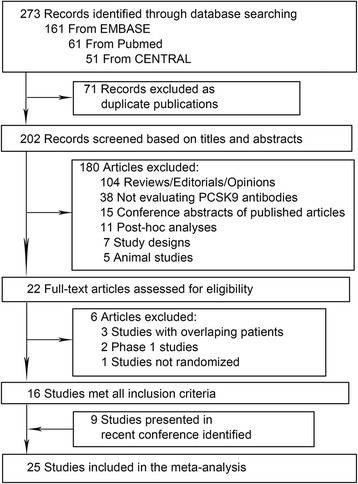
“Twelve trials were conducted using anti-PCSK9 antibody evolocumab (AMG 145) [7, 25–35], and 13 were on alirocumab (SAR236553/REGN727) [16–22, 36–39].”
MethodRaal, F. J., Honarpour, N., Blom, D. J., Hovingh, G. K., Xu, F., Scott, R., Wasserman, S. M., & Stein, E. A. (2015) · The Lancet · doi:10.1016/s0140-6736(14)61374-x · Cited by 734 · cited 1×
“Twelve trials were conducted using anti-PCSK9 antibody evolocumab (AMG 145) [7, 25–35], and 13 were on alirocumab (SAR236553/REGN727) [16–22, 36–39].”
MethodA 52-Week Placebo-Controlled Trial of Evolocumab in Hyperlipidemia
Blom, D. J., Hala, T., Bolognese, M., Lillestol, M. J., Toth, P. D., Burgess, L., Ceska, R., Roth, E., Koren, M. J., Ballantyne, C. M., et al. (2014) · New England Journal of Medicine · doi:10.1056/nejmoa1316222 · Cited by 720 · cited 1×
“Regarding evolocumab, all trials were followed up for 12 weeks, except the OSLER and DESCARTES trials [25, 30], which were followed up for 52 weeks.”
MethodEffect of a Monoclonal Antibody to PCSK9 on LDL Cholesterol
Stein, E. A., Mellis, S., Yancopoulos, G. D., Stahl, N., Logan, D., Smith, W. B., Lisbon, E., Gutierrez, M., Webb, C., Wu, R., et al. (2012) · New England Journal of Medicine · doi:10.1056/nejmoa1105803 · Cited by 664
Stein, E. A., Gipe, D., Bergeron, J., Gaudet, D., Weiss, R., Dufour, R., Wu, R., & Pordy, R. (2012) · The Lancet · doi:10.1016/s0140-6736(12)60771-5 · Cited by 588 · cited 1×
“With regard to alirocumab, most trials were followed up for 24 weeks except three phase 2 trials which were followed-up for 8 to 12 weeks [36, 37, 39].”
BackgroundVery Low Levels of Atherogenic Lipoproteins and the Risk for Cardiovascular Events
Boekholdt, S. M., Hovingh, G. K., Mora, S., Arsenault, B. J., Amarenco, P., Pedersen, T. R., LaRosa, J. C., Waters, D. D., DeMicco, D. A., Simes, R. J., et al. (2014) · Journal of the American College of Cardiology · doi:10.1016/j.jacc.2014.02.615 · Cited by 581 · cited 1×
“However, the probable clinical benefits could be preliminarily inferred based on current evidence: 1) anti-PCSK9 antibodies substantially reduced LDL-C, non-HDL-C and ApoB levels, all of which are positively associated with CVD events [46], and ‘a lower LDL-C, a better outcome’ has been indicated not only in the era o…”
ResultFitzgerald, K., Frank-Kamenetsky, M., Shulga-Morskaya, S., Liebow, A., Bettencourt, B. R., Sutherland, J. E., Hutabarat, R. M., Clausen, V. A., Karsten, V., Cehelsky, J., et al. (2014) · The Lancet · doi:10.1016/s0140-6736(13)61914-5 · Cited by 577 · cited 3×
“Therefore, inhibiting PCSK9 by monoclonal antibodies [6, 7], small interfering RNA [8], and small molecule inhibitors [9] has been evaluated to lower LDL-C levels in human studies during the last few years.”
BackgroundInfluentialAnti-PCSK9 Antibody Effectively Lowers Cholesterol in Patients With Statin Intolerance
Stroes, E., Colquhoun, D., Sullivan, D., Civeira, F., Rosenson, R. S., Watts, G. F., Bruckert, E., Cho, L., Dent, R., Knusel, B., et al. (2014) · Journal of the American College of Cardiology · doi:10.1016/j.jacc.2014.03.019 · Cited by 526 · cited 1×
“Twelve trials were conducted using anti-PCSK9 antibody evolocumab (AMG 145) [7, 25–35], and 13 were on alirocumab (SAR236553/REGN727) [16–22, 36–39].”
MethodMcKenney, J. M., Koren, M. J., Kereiakes, D. J., Hanotin, C., Ferrand, A.-C., & Stein, E. A. (2012) · Journal of the American College of Cardiology · doi:10.1016/j.jacc.2012.03.007 · Cited by 514 · cited 1×
“With regard to alirocumab, most trials were followed up for 24 weeks except three phase 2 trials which were followed-up for 8 to 12 weeks [36, 37, 39].”
BackgroundRaal, F., Scott, R., Somaratne, R., Bridges, I., Li, G., Wasserman, S. M., & Stein, E. A. (2012) · Circulation · doi:10.1161/circulationaha.112.144055 · Cited by 508
Self-citationRobinson, J. G., Nedergaard, B. S., Rogers, W. J., Fialkow, J., Neutel, J. M., Ramstad, D., Somaratne, R., Legg, J. C., Nelson, P., Scott, R., et al. (2014) · JAMA · doi:10.1001/jama.2014.4030 · Cited by 496 · cited 2×
“Therefore, inhibiting PCSK9 by monoclonal antibodies [6, 7], small interfering RNA [8], and small molecule inhibitors [9] has been evaluated to lower LDL-C levels in human studies during the last few years.”
BackgroundAtorvastatin with or without an Antibody to PCSK9 in Primary Hypercholesterolemia
Roth, E. M., McKenney, J. M., Hanotin, C., Asset, G., & Stein, E. A. (2012) · New England Journal of Medicine · doi:10.1056/nejmoa1201832 · Cited by 469 · cited 1×
“With regard to alirocumab, most trials were followed up for 24 weeks except three phase 2 trials which were followed-up for 8 to 12 weeks [36, 37, 39].”
BackgroundSelecting Studies and Collecting Data
Higgins, J. P., & Deeks, J. J. (2008) · Cochrane Handbook for Systematic Reviews of Interventions · doi:10.1002/9780470712184.ch7 · Cited by 467 · cited 2×
“We combined the results from these subgroups into a single group using the formulae recommended by the Cochrane Collaboration [12].”
MethodSullivan, D., Olsson, A. G., Scott, R., Kim, J. B., Xue, A., Gebski, V., Wasserman, S. M., & Stein, E. A. (2012) · JAMA · doi:10.1001/jama.2012.25790 · Cited by 447 · cited 1×
“Twelve trials were conducted using anti-PCSK9 antibody evolocumab (AMG 145) [7, 25–35], and 13 were on alirocumab (SAR236553/REGN727) [16–22, 36–39].”
MethodGiugliano, R. P., Desai, N. R., Kohli, P., Rogers, W. J., Somaratne, R., Huang, F., Liu, T., Mohanavelu, S., Hoffman, E. B., McDonald, S. T., et al. (2012) · The Lancet · doi:10.1016/s0140-6736(12)61770-x · Cited by 428
Anti-PCSK9 Monotherapy for Hypercholesterolemia
Koren, M. J., Lundqvist, P., Bolognese, M., Neutel, J. M., Monsalvo, M. L., Yang, J., Kim, J. B., Scott, R., Wasserman, S. M., & Bays, H. (2014) · Journal of the American College of Cardiology · doi:10.1016/j.jacc.2014.03.018 · Cited by 411 · cited 1×
“Twelve trials were conducted using anti-PCSK9 antibody evolocumab (AMG 145) [7, 25–35], and 13 were on alirocumab (SAR236553/REGN727) [16–22, 36–39].”
MethodCannon, C. P., Cariou, B., Blom, D., McKenney, J. M., Lorenzato, C., Pordy, R., Chaudhari, U., & Colhoun, H. M. (2015) · European Heart Journal · doi:10.1093/eurheartj/ehv028 · Cited by 402
Koren, M. J., Scott, R., Kim, J. B., Knusel, B., Liu, T., Lei, L., Bolognese, M., & Wasserman, S. M. (2012) · The Lancet · doi:10.1016/s0140-6736(12)61771-1 · Cited by 366 · cited 1×
“Twelve trials were conducted using anti-PCSK9 antibody evolocumab (AMG 145) [7, 25–35], and 13 were on alirocumab (SAR236553/REGN727) [16–22, 36–39].”
MethodPCSK9R46L, Low-Density Lipoprotein Cholesterol Levels, and Risk of Ischemic Heart Disease
Benn, M., Nordestgaard, B. G., Grande, P., Schnohr, P., & Tybjærg-Hansen, A. (2010) · Journal of the American College of Cardiology · doi:10.1016/j.jacc.2010.02.044 · Cited by 314
Stein, E. A., Honarpour, N., Wasserman, S. M., Xu, F., Scott, R., & Raal, F. J. (2013) · Circulation · doi:10.1161/circulationaha.113.004678 · Cited by 300
Sterne, J. A. C., Bradburn, M. J., & Egger, M. (2001) · Systematic Reviews in Health Care · doi:10.1002/9780470693926.ch18 · Cited by 297 · cited 1×
“5 to each cell of the 2 × 2 table for the trial [10, 11].”
BackgroundRoth, E. M., Taskinen, M.-R., Ginsberg, H. N., Kastelein, J. J. P., Colhoun, H. M., Robinson, J. G., Merlet, L., Pordy, R., & Baccara-Dinet, M. T. (2014) · International Journal of Cardiology · doi:10.1016/j.ijcard.2014.06.049 · Cited by 249 · cited 1×
“Twelve trials were conducted using anti-PCSK9 antibody evolocumab (AMG 145) [7, 25–35], and 13 were on alirocumab (SAR236553/REGN727) [16–22, 36–39].”
MethodLipid lowering with PCSK9 inhibitors
Dadu, R. T., & Ballantyne, C. M. (2014) · Nature Reviews Cardiology · doi:10.1038/nrcardio.2014.84 · Cited by 237 · cited 1×
“intensive LDL-C lowering because of extremely high baseline LDL-C levels, or patients with very high risk of CVD events need more intensive lowering therapy [3].”
BackgroundBerge, K. E., Ose, L., & Leren, T. P. (2006) · Arteriosclerosis, Thrombosis, and Vascular Biology · doi:10.1161/01.atv.0000204337.81286.1c · Cited by 236 · cited 1×
“Indeed, missense mutations in PCSK9 increased response to statin therapy in unrelated hypocholesterolemic subjects and familial hypercholesterolemia patients [41].”
BackgroundEffects of AMG 145 on Low-Density Lipoprotein Cholesterol Levels
Dias, C. S., Shaywitz, A. J., Wasserman, S. M., Smith, B. P., Gao, B., Stolman, D. S., Crispino, C. P., Smirnakis, K. V., Emery, M. G., Colbert, A., et al. (2012) · Journal of the American College of Cardiology · doi:10.1016/j.jacc.2012.08.986 · Cited by 235 · cited 1×
“Six studies were further excluded, in which one study was not RCT [13] and two were phase 1 trials with either non-constant dosage of anti-PCSK9 antibodies or with too few participants [14,15].”
BackgroundKoren, M. J., Giugliano, R. P., Raal, F. J., Sullivan, D., Bolognese, M., Langslet, G., Civeira, F., Somaratne, R., Nelson, P., Liu, T., et al. (2014) · Circulation · doi:10.1161/circulationaha.113.007012 · Cited by 218 · cited 2×
“The OSLER study was carried out based on participants from four parent trials (GAUSS, MENDEL, LAPLACE-TIMI 57, and RUTHERFORD) and was followed up for 52 weeks [30].”
MethodSchömig, A., Mehilli, J., de Waha, A., Seyfarth, M., Pache, J., & Kastrati, A. (2008) · Journal of the American College of Cardiology · doi:10.1016/j.jacc.2008.05.051 · Cited by 210
Boekholdt, S. M., Arsenault, B. J., Hovingh, G. K., Mora, S., Pedersen, T. R., LaRosa, J. C., Welch, K. M. A., Amarenco, P., DeMicco, D. A., Tonkin, A. M., et al. (2013) · Circulation · doi:10.1161/circulationaha.113.002670 · Cited by 196 · cited 1×
“However, the probable clinical benefits could be preliminarily inferred based on current evidence: 1) anti-PCSK9 antibodies substantially reduced LDL-C, non-HDL-C and ApoB levels, all of which are positively associated with CVD events [46], and ‘a lower LDL-C, a better outcome’ has been indicated not only in the era o…”
ResultBallantyne, C. M., Neutel, J., Cropp, A., Duggan, W., Wang, E. Q., Plowchalk, D., Sweeney, K., Kaila, N., Vincent, J., & Bays, H. (2015) · The American Journal of Cardiology · doi:10.1016/j.amjcard.2015.02.006 · Cited by 170 · cited 1×
“Therefore, inhibiting PCSK9 by monoclonal antibodies [6, 7], small interfering RNA [8], and small molecule inhibitors [9] has been evaluated to lower LDL-C levels in human studies during the last few years.”
BackgroundCombination of simvastatin with berberine improves the lipid-lowering efficacy
Kong, W.-J., Wei, J., Zuo, Z.-Y., Wang, Y.-M., Song, D.-Q., You, X.-F., Zhao, L.-X., Pan, H.-N., & Jiang, J.-D. (2008) · Metabolism · doi:10.1016/j.metabol.2008.01.037 · Cited by 162 · cited 1×
“Therefore, inhibiting PCSK9 by monoclonal antibodies [6, 7], small interfering RNA [8], and small molecule inhibitors [9] has been evaluated to lower LDL-C levels in human studies during the last few years.”
BackgroundAwan, Z., Seidah, N. G., MacFadyen, J. G., Benjannet, S., Chasman, D. I., Ridker, P. M., & Genest, J. (2012) · Clinical Chemistry · doi:10.1373/clinchem.2011.172932 · Cited by 149 · cited 1×
“This is not a surprise because statin therapy has been well documented to increase PCSK9 levels [40]; thus, inhibiting PCSK9 might enhance the LDL-C lowering effects of statins.”
BackgroundStatins for people at low risk of cardiovascular disease – Authors' reply
Mihaylova, B., Emberson, J., Keech, A., Collins, R., & Baigent, C. (2012) · The Lancet · doi:10.1016/s0140-6736(12)62027-3 · Cited by 146
Hirayama, A., Honarpour, N., Yoshida, M., Yamashita, S., Huang, F., Wasserman, S. M., & Teramoto, T. (2014) · Circulation Journal · doi:10.1253/circj.cj-14-0130 · Cited by 117
Bays, H. E., Farnier, M., Gaudet, D., Weiss, R., Ruiz, J. L., Watts, G. F., Gouni‐Berthold, I., Robinson, J. G., Jones, P. H., Severance, R., et al. (2014) · Kölner Universitäts PublikationsServer (Universität zu Köln) · Cited by 11
Research works printed but not linked: 7
- Robinson JG Long-term safety, tolerability and efficacy of alirocumab versus placebo in high cardiovascular risk patients: first results from the ODYSSEY LONG TERM study in 2,341 patients 2014 Barcelona Paper presented at 2014 Scientific Sessions of European Society of Cardiology
- Luscher TF Efficacy and safety of alirocumab: results from the ODYSSEY COMBO II study and results of ODYSSEY FH I and FH II studies 2014 Barcelona Paper presented at 2014 Scientific Sessions of European Society of Cardiology
- Cannon CP Efficacy and safety of alirocumab in high cardiovascular risk patients with inadequately controlled hypercholesterolaemia on maximally tolerated daily statin: results from the ODYSSEY COMBO II study 2014 Barcelona Paper presented at 2014 Scientific Sessions of European Society of Cardiology
- Moriarty PM ODYSSEY ALTERNATIVE: efficacy and safety of the proprotein convertase subtilisin/kexin type 9 monoclonal antibody, alirocumab, versus ezetimibe, in patients with statin intolerance as defined by a placebo run-in and statin rechallenge arm 2014 Chicago Paper presented at 2014 Scientific Sessions of American Heart Association
- Kereiakes DJ Efficacy and safety of alirocumab in high cardiovascular risk patients with suboptimally controlled hypercholesterolemia on maximally tolerated doses of statins: the ODYSSEY COMBO I Study 2014 Chicago Paper presented at 2014 Scientific Sessions of American Heart Association
- Ginsberg HN ODYSSEY HIGH FH: efficacy and safety of alirocumab in patients with severe heterozygous familial hypercholesterolemia 2014 Chicago Paper presented at 2014 Scientific Sessions of American Heart Association
- Cannon CP IMPROVE-IT trial: a comparison of ezetimibe/simvastatin versus simvastatin monotherapy on cardiovascular outcomes after acute coronary syndromes 2014 Chicago Paper presented at 2014 Scientific Sessions of American Heart Association
Cited by
Ibanez, B., James, S., Agewall, S., Antunes, M. J., Bucciarelli-Ducci, C., Bueno, H., Caforio, A. L. P., Crea, F., Goudevenos, J. A., Halvorsen, S., et al. (2018) · European Heart Journal · doi:10.1093/eurheartj/ehx393 · Cited by 9,728
Garber, A. J., Abrahamson, M. J., Barzilay, J. I., Blonde, L., Bloomgarden, Z. T., Bush, M. A., Dagogo-Jack, S., DeFronzo, R. A., Einhorn, D., Fonseca, V. A., et al. (2016) · Endocrine Practice · doi:10.4158/ep151126.cs · Cited by 878
“When added to maximal statin therapy, these once- or twice-monthly injectable agents reduce LDL-C by approximately 50%, raise HDL-C, and have favorable effects on other lipids (191-197).”
Background10. Cardiovascular Disease and Risk Management: Standards of Medical Care in Diabetes—2022
American Diabetes Association Professional Practice Committee (2022) · Diabetes Care · doi:10.2337/dc22-s010 · Cited by 869
“These agents have been approved as adjunctive therapy for patients with ASCVD or familial hypercholesterolemia who are receiving maximally tolerated statin therapy but require additional lowering of LDL cholesterol (108,109).”
BackgroundA highly durable RNAi therapeutic inhibitor of PCSK9
Fitzgerald, K., White, S., Borodovsky, A., Bettencourt, B. R., Strahs, A., Clausen, V., Wijngaard, P., Horton, J. D., Taubel, J., Brooks, A., et al. (2017) · New England Journal of Medicine · doi:10.1056/nejmoa1609243 · Cited by 768
“(%)§ White 4 (67) 12 (67) 4 (100) 7 (88) 6 (67) 19 (79) Other 2 (33) 6 (33) 0 1 (12) 3 (33) 5 (21) Weight — kg 70.”
Garber, A. J., Handelsman, Y., Grunberger, G., Einhorn, D., Abrahamson, M. J., Barzilay, J. I., Blonde, L., Bush, M. A., DeFronzo, R. A., Garber, J. R., et al. (2020) · Endocrine Practice · doi:10.4158/cs-2019-0472 · Cited by 598
Metadata
- Authors
- Zhang, X.-L., Zhu, Q.-Q., Zhu, L., Chen, J.-Z., Chen, Q.-H., Li, G.-N., Xie, J., Kang, L.-N., & Xu, B.
- Affiliations
- Nanjing Drum Tower Hospital (CN)
- Corresponding author
- Xu, Biao
- Venue
- BMC Medicine
- Published
- 2015-06-23
- Volume
- 13
- Issue
- 1
- Pages
- 123-123
- ISSN
- 1741-7015 (ISSN-L)
- PMC
- PMC4477483
- OpenAlex
- W1890541571
- Semantic Scholar
- 4332175d98d83040cd053c5ed5dee55f95c21710
- Cited by
- 260
- References
- 50
- Citations by year
- 2026: 5 · 2025: 16 · 2024: 13 · 2023: 21 · 2022: 21 · 2021: 9 · 2020: 21 · 2019: 24 · 2018: 32 · 2017: 45 · 2016: 38 · 2015: 14
- FWCI
- 8.24
- Type
- journal article
- Language
- en
- Open access
- gold
- doi.org
- Locations
- BMC Medicine (publishedVersion, cc-by)
- Europe PMC (PubMed Central) (publishedVersion, cc-by)
- PubMed Central (publishedVersion, cc-by)
- PubMed (publishedVersion)
- Funders
- National Natural Science Foundation of China (81200148, 81070195, 81270281)
- Topics
- Health Sciences › Medicine › Cardiology and Cardiovascular Medicine › Lipoproteins and Cardiovascular Health
- Health Sciences › Medicine › Cardiology and Cardiovascular Medicine › Lipid metabolism and disorders
- Life Sciences › Biochemistry, Genetics and Molecular Biology › Biochemistry › Cholesterol and Lipid Metabolism
- Keywords
- PCSK9 inhibition, alirocumab, evolocumab, LDL cholesterol lowering, lipid-lowering therapy, adverse events, injection site reactions, hypertriglyceridemia, HDL cholesterol, ezetimibe, statins, hypercholesterolemia, cardiovascular risk reduction, drug safety and efficacy, dose comparison
- MeSH terms
- Proprotein Convertase 9, Antibodies, Monoclonal, Anticholesteremic Agents, Humans, Hypercholesterolemia, Cholesterol, HDL, Cholesterol, LDL, Serine Endopeptidases, Randomized Controlled Trials as Topic, Treatment Outcome, Proprotein Convertases, Lipid Metabolism, Antibodies, Monoclonal, Humanized
About these checks
Registry, retraction, Cites and statistics results are computed, not judged, with one exception: a printed reference that no index lists is read once by a model before it counts as a citation error. Claims are extracted by a model and kept only when their quote appears verbatim in the text; each cited source is then checked, with a model’s help, for whether it says what the claim relies on. Those verdicts can be wrong — read the claim’s quote and the cited source before relying on one.
Statistics and arithmetic are recomputed, not judged.
Confidence bands are shown only for fields calibrated on our annotated test set. None is calibrated yet, so no band is shown.
What counts as a claim ›How we measure confidence ›How we check this ›
Are you an author, or do you see a problem with this page? Request a review
Data sources
Bibliographic data: Semantic Scholar, OpenAlex, Crossref.
Contains information from the Semantic Scholar Academic Graph Datasets, made available under the ODC Attribution License (ODC-BY 1.0).
Semantic Scholar’s data is described in: Kinney, R., et al. (2023). The Semantic Scholar Open Data Platform. arXiv:2301.10140.
