

Safety and efficacy of anti-PCSK9 antibodies: a meta-analysis of 25 randomized, controlled trials
Open accessThe DOI matches its Crossref record; 49 of the 50 references it cites were found in a registry or an index.
Abstract
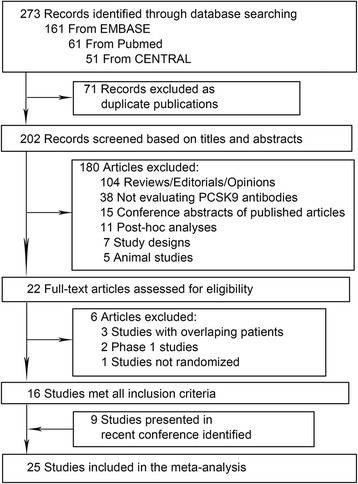
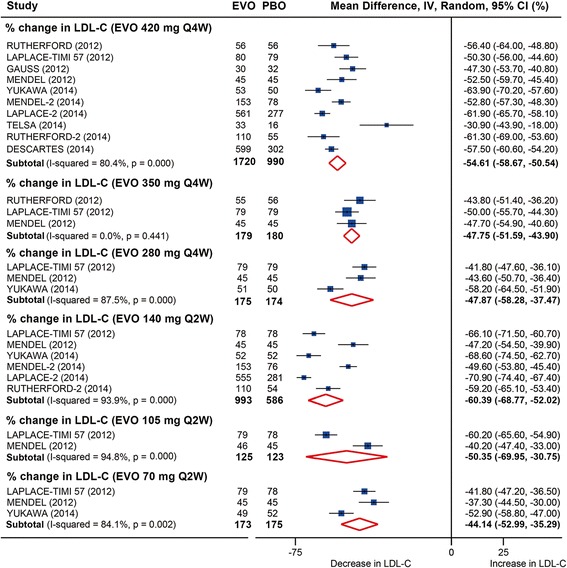
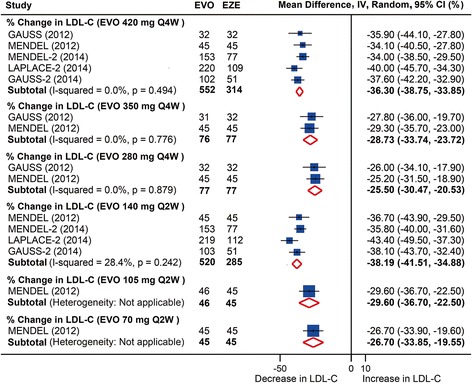
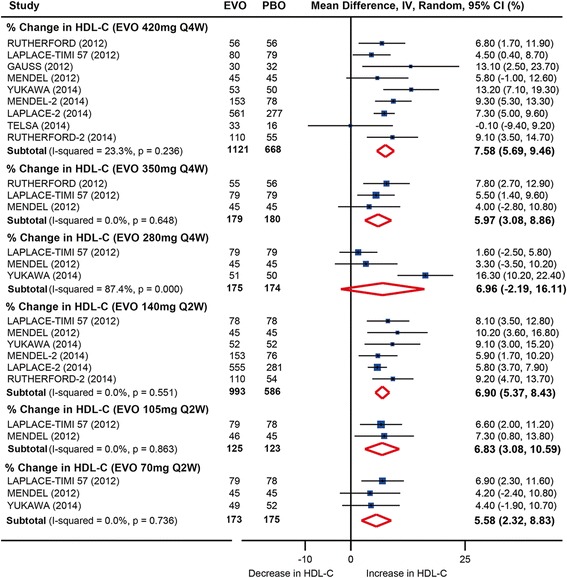
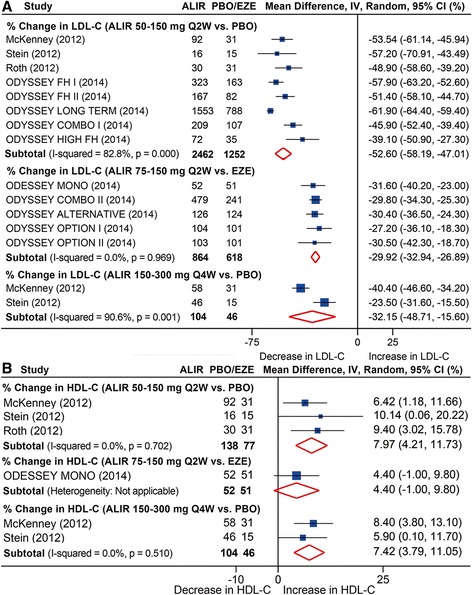
BACKGROUND: Inhibition of proprotein convertase subtilisin/kexin type 9 (PCSK9) has been intensively studied to lower low-density lipoprotein cholesterol (LDL-C) levels. The purpose of this meta-analysis was to evaluate the safety and efficacy of anti-PCSK9 antibodies in randomized, controlled trials (RCTs). METHODS: PubMed, EMBASE, CENTRAL databases, and recent conferences were searched. Safety outcomes were rates of common adverse events. Efficacy outcomes included percentages of LDL-C lowering and other lipid changes compared with placebo and ezetimibe, respectively. RESULTS: Twenty-five RCTs encompassing 12,200 patients were included. The rates of common adverse events were firstly reported in our study by pooling together all evidence in RCTs, showing largely no significant difference between anti-PCSK9 antibodies and placebo (or ezetimibe), except that alirocumab was associated with reduced rates of death (relative risk (RR): 0.43, 95 % confidence interval (CI): 0.19 to 0.96, P = 0.04) and an increased rate of injection-site reactions (RR: 1.48, 95 % CI: 1.05 to 2.09, P = 0.02); evolocumab reduced the rate of abnormal liver function (RR: 0.43, 95 % CI: 0.20 to 0.93, P = 0.03), both compared with placebo. No significant difference in safety outcomes was detected between monthly 420 mg and biweekly 140 mg evolocumab treatments. Monthly 420 mg evolocumab treatment significantly reduced LDL-C by -54.6 % (95 % CI: -58.7 to -50.5 %) and by absolute -78.9 mg/dl (95 % CI: -88.9 to -68.9 mg/dl) versus placebo, and by -36.3 % (95 % CI: -38.8 to -33.9 %) versus ezetimibe, and increased high-density lipoprotein cholesterol (HDL-C) by 7.6 % (95 % CI: 5.7 to 9.5 %) versus placebo and 6.4 % (95 % CI: 4.3 to 8.4 %) versus ezetimibe. An equal or even greater change was observed following biweekly 140 mg administration. Significant and favorable changes were also detected in other lipids following evolocumab treatment. Biweekly 50 to 150 mg alirocumab lowered LDL-C by -52.6 % (95 % CI: -58.2 to -47.0 %) versus placebo, by -29.9 % (95 % CI: -32.9 to -26.9 %) versus ezetimibe, and increased HDL-C by 8.0 % (95 % CI: 4.2 to 11.7 %) versus placebo. CONCLUSIONS: Evolocumab and alirocumab were safe and well-tolerated from our most-powered analyses. Both antibodies substantially reduced the LDL-C level by over 50 %, increased the HDL-C level, and resulted in favorable changes in other lipids.
Overview
The claims and statistics of this paper haven’t been checked yet.
Free: it reads the open-access text and checks the first 5 claims that cite a source we can check. Create a free account to check every claim.
Integrity signals
Registry
Cites
Statistics
Figures
Verification
Claims the paper makes
The claims and statistics of this paper haven’t been checked yet.
Free: it reads the open-access text and checks the first 5 claims that cite a source we can check. Create a free account to check every claim.
Claims other papers make about this one
Each is checked against this paper’s own text: does it say what the citing paper says it does?
The cited source doesn’t support the claim as written.
In the citing paper
“The cardioprotective effects of PCSK9 inhibitors were subsequently confirmed in other clinical trials and meta-analyses [80–85].”
From Established and Emerging Lipid-Lowering Drugs for Primary and Secondary Cardiovascular Prevention (2023) · cites this paper as [84]
Checked by a reasoning model — may be wrong.
Experimental — accuracy not yet measuredThe source backs part of the claim, not all of it — or backs it for a different population, condition or comparison.
In the citing paper
“Placebo-controlled trials evaluating the addition of the PCSK9 inhibitors evolocumab and alirocumab to maximum tolerated doses of statin therapy in participants who were at high risk for ASCVD demonstrated an average reduction in LDL cholesterol ranging from 36 to 59%.”
From 10. Cardiovascular Disease and Risk Management: Standards of Care in Diabetes—2023 (2023) · cites this paper as [114]
Experimental — accuracy not yet measuredThe source backs part of the claim, not all of it — or backs it for a different population, condition or comparison.
In the citing paper
“The addition of the PCSK9 inhibitors evolocumab and alirocumab to maximum tolerated doses of statin therapy in participants who were at high risk for ASCVD demonstrated an average reduction in LDL cholesterol ranging from 36% to 59% (126,127).”
From 10. Cardiovascular Disease and Risk Management: Standards of Care in Diabetes—2025 (2025) · cites this paper as [127]
Experimental — accuracy not yet measured
Self-check
Percentages, sums and reported differences re-computed from the paper’s own numbers.
The self-check needs the paper’s full text.
Citations
Cites
Toprak, O., Kurt, H., Sarı, Y., Şarkış, C., Us, H., & Kırık, A. (2017) · Kidney and Blood Pressure Research · doi:10.1159/000468530 · Cited by 29,627
Grundy, S. M., Bilheimer, D. W., Chait, A., Clark, L. T., Denke, M. A., Havel, R. J., Hazzard, W. R., Hulley, S. B., Hunninghake, D. B., Kreisberg, R. A., et al. (1993) · JAMA · doi:10.1001/jama.269.23.3015 · Cited by 27,947
Expert Panel on Detection, E. (2001) · JAMA: The Journal of the American Medical Association · doi:10.1001/jama.285.19.2486 · Cited by 26,011
Cochrane Handbook for Systematic Reviews of Interventions: Cochrane Book Series
(2008) · doi:10.1002/9780470712184 · Cited by 25,048
Stone, N. J., Robinson, J. G., Lichtenstein, A. H., Bairey Merz, C. N., Blum, C. B., Eckel, R. H., Goldberg, A. C., Gordon, D., Levy, D., Lloyd-Jones, D. M., et al. (2014) · Circulation · doi:10.1161/01.cir.0000437738.63853.7a · Cited by 7,081
Cholesterol Treatment Trialists' (CTT) Collaboration (2010) · The Lancet · doi:10.1016/s0140-6736(10)61350-5 · Cited by 6,550
Cochrane Handbook for Systematic Reviews of Interventions
Tarsilla, M. (2010) · Journal of MultiDisciplinary Evaluation · doi:10.56645/jmde.v6i14.284 · Cited by 5,178
Stone, N. J., Robinson, J. G., Lichtenstein, A. H., Bairey Merz, C. N., Blum, C. B., Eckel, R. H., Goldberg, A. C., Gordon, D., Levy, D., Lloyd-Jones, D. M., et al. (2014) · Journal of the American College of Cardiology · doi:10.1016/j.jacc.2013.11.002 · Cited by 3,845
Sequence Variations in PCSK9, Low LDL, and Protection against Coronary Heart Disease
Cohen, J. C., Boerwinkle, E., Mosley, T. H., & Hobbs, H. H. (2006) · New England Journal of Medicine · doi:10.1056/nejmoa054013 · Cited by 3,181 · cited 1×
“However, the probable clinical benefits could be preliminarily inferred based on current evidence: 1) anti-PCSK9 antibodies substantially reduced LDL-C, non-HDL-C and ApoB levels, all of which are positively associated with CVD events [46], and ‘a lower LDL-C, a better outcome’ has been indicated not only in the era o…”
ResultMutations in PCSK9 cause autosomal dominant hypercholesterolemia
Abifadel, M., Varret, M., Rabès, J.-P., Allard, D., Ouguerram, K., Devillers, M., Cruaud, C., Benjannet, S., Wickham, L., Erlich, D., et al. (2003) · Nature Genetics · doi:10.1038/ng1161 · Cited by 2,985 · cited 1×
“The role of proprotein convertase subtilisin/kexin type 9 (PCSK9) in cholesterol regulation has been established since PCSK9 mutations were first discovered in autosomal dominant hypercholesterolemia (ADH) in 2003 [4].”
Background
Research works printed but not linked: 7
- Robinson JG Long-term safety, tolerability and efficacy of alirocumab versus placebo in high cardiovascular risk patients: first results from the ODYSSEY LONG TERM study in 2,341 patients 2014 Barcelona Paper presented at 2014 Scientific Sessions of European Society of Cardiology
- Luscher TF Efficacy and safety of alirocumab: results from the ODYSSEY COMBO II study and results of ODYSSEY FH I and FH II studies 2014 Barcelona Paper presented at 2014 Scientific Sessions of European Society of Cardiology
- Cannon CP Efficacy and safety of alirocumab in high cardiovascular risk patients with inadequately controlled hypercholesterolaemia on maximally tolerated daily statin: results from the ODYSSEY COMBO II study 2014 Barcelona Paper presented at 2014 Scientific Sessions of European Society of Cardiology
- Moriarty PM ODYSSEY ALTERNATIVE: efficacy and safety of the proprotein convertase subtilisin/kexin type 9 monoclonal antibody, alirocumab, versus ezetimibe, in patients with statin intolerance as defined by a placebo run-in and statin rechallenge arm 2014 Chicago Paper presented at 2014 Scientific Sessions of American Heart Association
- Kereiakes DJ Efficacy and safety of alirocumab in high cardiovascular risk patients with suboptimally controlled hypercholesterolemia on maximally tolerated doses of statins: the ODYSSEY COMBO I Study 2014 Chicago Paper presented at 2014 Scientific Sessions of American Heart Association
- Ginsberg HN ODYSSEY HIGH FH: efficacy and safety of alirocumab in patients with severe heterozygous familial hypercholesterolemia 2014 Chicago Paper presented at 2014 Scientific Sessions of American Heart Association
- Cannon CP IMPROVE-IT trial: a comparison of ezetimibe/simvastatin versus simvastatin monotherapy on cardiovascular outcomes after acute coronary syndromes 2014 Chicago Paper presented at 2014 Scientific Sessions of American Heart Association
Cited by
Ibanez, B., James, S., Agewall, S., Antunes, M. J., Bucciarelli-Ducci, C., Bueno, H., Caforio, A. L. P., Crea, F., Goudevenos, J. A., Halvorsen, S., et al. (2018) · European Heart Journal · doi:10.1093/eurheartj/ehx393 · Cited by 9,728
Garber, A. J., Abrahamson, M. J., Barzilay, J. I., Blonde, L., Bloomgarden, Z. T., Bush, M. A., Dagogo-Jack, S., DeFronzo, R. A., Einhorn, D., Fonseca, V. A., et al. (2016) · Endocrine Practice · doi:10.4158/ep151126.cs · Cited by 878
“When added to maximal statin therapy, these once- or twice-monthly injectable agents reduce LDL-C by approximately 50%, raise HDL-C, and have favorable effects on other lipids (191-197).”
Background10. Cardiovascular Disease and Risk Management: Standards of Medical Care in Diabetes—2022
American Diabetes Association Professional Practice Committee (2022) · Diabetes Care · doi:10.2337/dc22-s010 · Cited by 869
“These agents have been approved as adjunctive therapy for patients with ASCVD or familial hypercholesterolemia who are receiving maximally tolerated statin therapy but require additional lowering of LDL cholesterol (108,109).”
BackgroundA highly durable RNAi therapeutic inhibitor of PCSK9
Fitzgerald, K., White, S., Borodovsky, A., Bettencourt, B. R., Strahs, A., Clausen, V., Wijngaard, P., Horton, J. D., Taubel, J., Brooks, A., et al. (2017) · New England Journal of Medicine · doi:10.1056/nejmoa1609243 · Cited by 768
“(%)§ White 4 (67) 12 (67) 4 (100) 7 (88) 6 (67) 19 (79) Other 2 (33) 6 (33) 0 1 (12) 3 (33) 5 (21) Weight — kg 70.”
Garber, A. J., Handelsman, Y., Grunberger, G., Einhorn, D., Abrahamson, M. J., Barzilay, J. I., Blonde, L., Bush, M. A., DeFronzo, R. A., Garber, J. R., et al. (2020) · Endocrine Practice · doi:10.4158/cs-2019-0472 · Cited by 598
JCS 2018 Guideline on Diagnosis and Treatment of Acute Coronary Syndrome
Kimura, K., Kimura, T., Ishihara, M., Nakagawa, Y., Nakao, K., Miyauchi, K., Sakamoto, T., Tsujita, K., Hagiwara, N., Miyazaki, S., et al. (2019) · Circulation Journal · doi:10.1253/circj.cj-19-0133 · Cited by 565
Garber, A. J., Abrahamson, M. J., Barzilay, J. I., Blonde, L., Bloomgarden, Z. T., Bush, M. A., Dagogo-Jack, S., DeFronzo, R. A., Einhorn, D., Fonseca, V. A., et al. (2018) · Endocrine Practice · doi:10.4158/cs-2017-0153 · Cited by 502
10. Cardiovascular Disease and Risk Management: Standards of Medical Care in Diabetes—2021
American Diabetes Association (2021) · Diabetes Care · doi:10.2337/dc21-s010 · Cited by 495
“These agents have been approved as adjunctive therapy for patients with ASCVD or familial hypercholesterolemia who are receiving maximally tolerated statin therapy but require additional lowering of LDL cholesterol (102,103).”
Background10. Cardiovascular Disease and Risk Management: Standards of Medical Care in Diabetes—2020
American Diabetes Association (2020) · Diabetes Care · doi:10.2337/dc20-s010 · Cited by 487
“These agents have been approved as adjunctive therapy for patients with ASCVD or familial hypercholesterolemia who are receiving maximally tolerated statin therapy but require additional lowering of LDL cholesterol (98,99).”
Background9. Cardiovascular Disease and Risk Management: Standards of Medical Care in Diabetes—2018
American Diabetes Association (2018) · Diabetes Care · doi:10.2337/dc18-s009 · Cited by 485
“These agents have been approved as adjunctive therapy for patients with ASCVD or familial hypercholesterolemia who are receiving maximally tolerated statin therapy but require additional lowering of LDL cholesterol (71,72).”
Background10. Cardiovascular Disease and Risk Management: Standards of Medical Care in Diabetes—2019
American Diabetes Association (2019) · Diabetes Care · doi:10.2337/dc19-s010 · Cited by 471
“ASCVD or familial hypercholesterolemia who are receiving maximally tolerated statin therapy but require additional lowering of LDL cholesterol (95,96).”
Background10. Cardiovascular Disease and Risk Management: Standards of Care in Diabetes—2023
ElSayed, N. A., Aleppo, G., Aroda, V. R., Bannuru, R. R., Brown, F. M., Bruemmer, D., Collins, B. S., Das, S. R., Hilliard, M. E., Isaacs, D., et al. (2023) · Diabetes Care · doi:10.2337/dc23-s010 · Cited by 465
Ibánez, B., James, S., Agewall, S., Antunes, M. J., Bucciarelli-Ducci, C., Bueno, H., Caforio, A. L. P., Crea, F., Goudevenos, J. A., Halvorsen, S., et al. (2017) · Revista Española de Cardiología (English Edition) · doi:10.1016/j.rec.2017.11.010 · Cited by 461
“86) but are based on relatively few endpoints.(378,381) In the Further Cardiovascular Outcomes Research with PCSK9 Inhibition in Subjects with Elevated Risk (FOURIER) trial consisting of 27 564 patients with atherosclerotic cardiovascular disease, additional risk factors, and LDL 70 mg/dL (1.”
Background10. Cardiovascular Disease and Risk Management: Standards of Care in Diabetes—2024
American Diabetes Association Professional Practice Committee, ElSayed, N. A., Aleppo, G., Bannuru, R. R., Bruemmer, D., Collins, B. S., Das, S. R., Ekhlaspour, L., Hilliard, M. E., Johnson, E. L., et al. (2024) · Diabetes Care · doi:10.2337/dc24-s010 · Cited by 438
Garber, A. J., Abrahamson, M. J., Barzilay, J. I., Blonde, L., Bloomgarden, Z. T., Bush, M. A., Dagogo-Jack, S., DeFronzo, R. A., Einhorn, D., Fonseca, V. A., et al. (2017) · Endocrine Practice · doi:10.4158/ep161682.cs · Cited by 435
“When added to maximal statin therapy, these once- or twice-monthly injectable agents reduce LDL-C by approximately 50%, raise HDL-C, and have favorable effects on other lipids (206-212).”
Background10. Cardiovascular Disease and Risk Management: Standards of Care in Diabetes—2025
American Diabetes Association Professional Practice Committee, ElSayed, N. A., McCoy, R. G., Aleppo, G., Balapattabi, K., Beverly, E. A., Briggs Early, K., Bruemmer, D., Das, S. R., Echouffo-Tcheugui, J. B., et al. (2025) · Diabetes Care · doi:10.2337/dc25-s010 · Cited by 486
8. Cardiovascular Disease and Risk Management
American Diabetes Association (2016) · Diabetes Care · doi:10.2337/dc16-s011 · Cited by 329
Garber, A. J., Abrahamson, M. J., Barzilay, J. I., Blonde, L., Bloomgarden, Z. T., Bush, M. A., Dagogo-Jack, S., DeFronzo, R. A., Einhorn, D., Fonseca, V. A., et al. (2019) · Endocrine Practice · doi:10.4158/cs-2018-0535 · Cited by 297
9. Cardiovascular Disease and Risk Management
American Diabetes Association (2017) · Diabetes Care · doi:10.2337/dc17-s012 · Cited by 223
“These agents may therefore be considered as adjunctive therapy for patients with diabetes at high risk for ASCVD events who require additional lowering of LDL cholesterol or who require but are intolerant to high-intensity statin therapy (64,65).”
BackgroundCurcuminoids modify lipid profile in type 2 diabetes mellitus: A randomized controlled trial
Panahi, Y., Khalili, N., Sahebi, E., Namazi, S., Reiner, Ž., Majeed, M., & Sahebkar, A. (2017) · Complementary Therapies in Medicine · doi:10.1016/j.ctim.2017.05.006 · Cited by 220
Phase 2b Randomized Trial of the Oral PCSK9 Inhibitor MK-0616
Ballantyne, C. M., Banka, P., Mendez, G., Garcia, R., Rosenstock, J., Rodgers, A., Mendizabal, G., Mitchel, Y., & Catapano, A. L. (2023) · Journal of the American College of Cardiology · doi:10.1016/j.jacc.2023.02.018 · Cited by 218
2018 Guidelines for the management of dyslipidemia
Rhee, E.-J., Kim, H. C., Kim, J. H., Lee, E. Y., Kim, B. J., Kim, E. M., Song, Y., Lim, J. H., Kim, H. J., Choi, S., et al. (2019) · The Korean Journal of Internal Medicine · doi:10.3904/kjim.2019.188 · Cited by 213
PCSK9 monoclonal antibodies for the primary and secondary prevention of cardiovascular disease
Schmidt, A. F., Pearce, L. S., Wilkins, J. T., Overington, J. P., Hingorani, A. D., & Casas, J. P. (2017) · Cochrane Database of Systematic Reviews · doi:10.1002/14651858.cd011748.pub2 · Cited by 205
2018 Guidelines for the Management of Dyslipidemia in Korea
Rhee, E.-J., Kim, H. C., Kim, J. H., Lee, E. Y., Kim, B. J., Kim, E. M., Song, Y., Lim, J. H., Kim, H. J., Choi, S., et al. (2019) · Journal of Lipid and Atherosclerosis · doi:10.12997/jla.2019.8.2.78 · Cited by 192
Lipid nanoparticles for targeted siRNA delivery - going from bench to bedside
Zatsepin (2016) · International Journal of Nanomedicine · doi:10.2147/ijn.s106625 · Cited by 162
“67 However, there is a strong opinion that RNAi-based drugs will find a niche even in this competitive market, since existing treatments leave a significant number of patients with poorly controlled LDL levels, even at the highest tolerated doses of existing drugs.”
Cardiovascular risk and dyslipidemia among persons living with HIV: a review
Maggi, P., Biagio, A. D., Rusconi, S., Cicalini, S., D’Abbraccio, M., d’Ettorre, G., Martinelli, C. V., Nunnari, G., Sighinolfi, L., Spagnuolo, V., et al. (2017) · BMC Infectious Diseases · doi:10.1186/s12879-017-2626-z · Cited by 169
Ray, K. K., Stoekenbroek, R. M., Kallend, D., Leiter, L. A., Landmesser, U., Wright, R. S., Wijngaard, P., & Kastelein, J. J. P. (2018) · Circulation · doi:10.1161/circulationaha.118.034710 · Cited by 154
Inhibiting PCSK9 — biology beyond LDL control
Stoekenbroek, R. M., Lambert, G., Cariou, B., & Hovingh, G. K. (2019) · Nature Reviews Endocrinology · doi:10.1038/s41574-018-0110-5 · Cited by 141
Awad, K., Mikhailidis, D. P., Katsiki, N., Muntner, P., & Banach, M. (2018) · Drugs · doi:10.1007/s40265-018-0870-1 · Cited by 141
Cui, D., Yu, X., Guan, Q., Shen, Y., Liao, J., Liu, Y., & Su, Z. (2025) · Molecular Biomedicine · doi:10.1186/s43556-025-00321-3 · Cited by 145
“Additionally, when combined with statins, they enable further reductions in LDL-C levels [201].”
2019 Guidelines on the management of diabetic patients. A position of Diabetes Poland
Araszkiewicz, A., Bandurska-Stankiewicz, E., Budzyński, A., Cypryk, K., Czech, A., Czupryniak, L., Drzewoski, J., Dzida, G., Dziedzic, T., Franek, E., et al. (2019) · Clinical Diabetology · doi:10.5603/dk.2019.0001 · Cited by 123
PCSK9 monoclonal antibodies for the primary and secondary prevention of cardiovascular disease
Schmidt, A. F., Carter, J.-P. L., Pearce, L. S., Wilkins, J. T., Overington, J. P., Hingorani, A. D., & Casas, J. (2020) · Cochrane Database of Systematic Reviews · doi:10.1002/14651858.cd011748.pub3 · Cited by 123
Toward an international consensus—Integrating lipoprotein apheresis and new lipid-lowering drugs
Stefanutti, C., Julius, U., Watts, G. F., Harada‐Shiba, M., Cossu, M., Schettler, V. J. J., Silvestro, G. D., Soran, H., van Lennep, J. E. R., Pisciotta, L., et al. (2017) · Journal of clinical lipidology · doi:10.1016/j.jacl.2017.04.114 · Cited by 124
Established and Emerging Lipid-Lowering Drugs for Primary and Secondary Cardiovascular Prevention
Michaeli, D. T., Michaeli, J. C., Albers, S., Boch, T., & Michaeli, T. (2023) · American Journal of Cardiovascular Drugs · doi:10.1007/s40256-023-00594-5 · Cited by 109
Inclisiran for the Treatment of Cardiovascular Disease: the Orion Clinical Development Program
Stoekenbroek, R. M., Kallend, D., Wijngaard, P. L., & Kastelein, J. J. (2018) · Future Cardiology · doi:10.2217/fca-2018-0067 · Cited by 106
Chamberlain, J. J., Johnson, E. L., Leal, S., Rhinehart, A. S., Shubrook, J. H., & Peterson, L. (2018) · Annals of Internal Medicine · doi:10.7326/m18-0222 · Cited by 116
“Ezetimibe is indicated to reduce LDL cholesterol levels in patients with hyperlipidemia, and the PCSK9 inhibitors evolocumab and alirocumab have been approved as adjunctive therapy for patients with ASCVD or familial hypercholesterolemia who are receiving maximum tolerated statin therapy but require additional lowerin…”
France, M. W., Rees, A., Datta, D. B. N., Thompson, G. R., Capps, N. E., Ferns, G. A., Ramaswami, U., Seed, M., Neely, D., Cramb, R., et al. (2016) · Atherosclerosis · doi:10.1016/j.atherosclerosis.2016.10.017 · Cited by 107
A systematic review of PCSK9 inhibitors alirocumab and evolocumab
McDonagh, M., Peterson, K., Holzhammer, B., & Fazio, S. (2016) · Journal of Managed Care & Specialty Pharmacy · doi:10.18553/jmcp.2016.22.6.641 · Cited by 103
Effect of Access to Prescribed PCSK9 Inhibitors on Cardiovascular Outcomes
Myers, K. D., Farboodi, N., Mwamburi, M., Howard, W. H. R., Staszak, D., Gidding, S. S., Baum, S. J., Wilemon, K. A., & Rader, D. J. (2019) · Circulation Cardiovascular Quality and Outcomes · doi:10.1161/circoutcomes.118.005404 · Cited by 102
“27 Although PCSK9is are highly effective in reducing low density lipoprotein - cholesterol levels and cardiovascular risk, 8–17 , 28– 32 access to these medicines For rejected prescriptions, rejection may be because of disagreement between the providers’ diagnoses and the payer policies for…”
Atherosclerosis in diabetes mellitus: novel mechanisms and mechanism-based therapeutic approaches
Khan, A. W., & Jandeleit-Dahm, K. A. M. (2025) · Nature Reviews Cardiology · doi:10.1038/s41569-024-01115-w · Cited by 107
“A meta-analysis of randomized, controlled trials on alirocumab and evolocumab also showed that both drugs are well tolerated 140 .”
Sahebkar, A., Simental‐Mendía, L. E., Watts, G. F., Șerban, M.-C., & Banach, M. (2017) · BMC Medicine · doi:10.1186/s12916-017-0787-7 · Cited by 100
Impact of Apolipoprotein(a) Isoform Size on Lipoprotein(a) Lowering in the HPS2-THRIVE Study
Parish, S., Hopewell, J. C., Hill, M. R., Marcovina, S., Valdes-Marquez, E., Haynes, R., Offer, A., Pedersen, T. R., Baigent, C., Collins, R., et al. (2018) · Circulation: Genomic and Precision Medicine · doi:10.1161/circgen.117.001696 · Cited by 93
Adverse Events Associated With PCSK 9 Inhibitors: A Real‐World Experience
Gürgöze, M. T., Muller‐Hansma, A. H. G., Schreuder, M. M., Galema‐Boers, A. M. H., Boersma, E., & Roeters van Lennep, J. E. (2019) · Clinical Pharmacology & Therapeutics · doi:10.1002/cpt.1193 · Cited by 92
Toth, P. P., Worthy, G., Gandra, S. R., Sattar, N., Bray, S., Cheng, L., Bridges, I., Worth, G. M., Dent, R., Forbes, C. A., et al. (2017) · Journal of the American Heart Association · doi:10.1161/jaha.116.005367 · Cited by 92
PCSK9 inhibitors for treating hypercholesterolemia
Pasta, A., Cremonini, A. L., Pisciotta, L., Buscaglia, A., Porto, I., Barra, F., Ferrero, S., Brunelli, C., & Rosa, G. M. (2020) · Expert Opinion on Pharmacotherapy · doi:10.1080/14656566.2019.1702970 · Cited by 95
“The addition of a PCSK9-I to the statin therapy, with or without ezetimibe, can lead to a further LDL-C reduction of about 60% and more importantly to a significant lower incidence of CV events in comparison with placebo [19].”
BackgroundHypercholesterolemia: The role of PCSK9
Melendez, Q. M., Krishnaji, S. T., Wooten, C. J., & Lopez, D. (2017) · Archives of Biochemistry and Biophysics · doi:10.1016/j.abb.2017.06.001 · Cited by 103
Moon, J. S., Kang, S., Choi, J. H., Lee, K. A., Moon, J. H., Chon, S., Kim, D. J., Kim, H. J., Seo, J. A., Kim, M. K., et al. (2024) · Diabetes & Metabolism Journal · doi:10.4093/dmj.2024.0249 · Cited by 90
PCSK9 signaling pathways and their potential importance in clinical practice
Wiciński, M., Żak, J., Malinowski, B., Popek, G., & Grześk, G. (2017) · EPMA Journal · doi:10.1007/s13167-017-0106-6 · Cited by 69
PCSK9: Regulation and Target for Drug Development for Dyslipidemia
Burke, A. C., Dron, J. S., Hegele, R. A., & Huff, M. W. (2017) · Annual Review of Pharmacology and Toxicology · doi:10.1146/annurev-pharmtox-010716-104944 · Cited by 74
Cardiovascular Disease and Diabetic Kidney Disease
Maqbool, M., Cooper, M. E., & Jandeleit-Dahm, K. A. M. (2018) · Seminars in Nephrology · doi:10.1016/j.semnephrol.2018.02.003 · Cited by 80
Emerging Non-statin Treatment Options for Lowering Low-Density Lipoprotein Cholesterol
Bardolia, C., Amin, N. S., & Turgeon, J. (2021) · Frontiers in Cardiovascular Medicine · doi:10.3389/fcvm.2021.789931 · Cited by 74
Current and future trends in the lipid lowering therapy
Okopień, B., Bułdak, Ł., & Bołdys, A. (2016) · Pharmacological Reports · doi:10.1016/j.pharep.2016.03.016 · Cited by 72
“Until recently there are no indications of severe side effects associated to the treatment with PCSK9 inhibitors [41].”
BackgroundLipid Management in Patients Presenting With Acute Coronary Syndromes: A Review
Claessen, B. E. P. M., Guedeney, P., Gibson, C. M., Angiolillo, D. J., Cao, D., Lepor, N. E., & Mehran, R. (2020) · Journal of the American Heart Association · doi:10.1161/jaha.120.018897 · Cited by 71
Beyond statins: New pharmacological targets to decrease LDL-cholesterol and cardiovascular events
Raschi, E., Casula, M., Cicero, A. F. G., Corsini, A., Borghi, C., & Catapano, A. (2023) · Pharmacology & Therapeutics · doi:10.1016/j.pharmthera.2023.108507 · Cited by 59
Statins and Their Effect on PCSK9—Impact and Clinical Relevance
Taylor, B. A., & Thompson, P. D. (2016) · Current Atherosclerosis Reports · doi:10.1007/s11883-016-0604-3 · Cited by 72
PCSK9 inhibitors and cardiovascular disease: heralding a new therapeutic era
Chapman, M. J., Stock, J. K., & Ginsberg, H. N. (2015) · Current Opinion in Lipidology · doi:10.1097/mol.0000000000000239 · Cited by 65
Diabetes-Driven Atherosclerosis: Updated Mechanistic Insights and Novel Therapeutic Strategies
Karakasis, P., Theofilis, P., Patoulias, D., Vlachakis, P. K., Antoniadis, A. P., & Fragakis, N. (2025) · International Journal of Molecular Sciences · doi:10.3390/ijms26052196 · Cited by 72
“A meta-analysis of randomized controlled trials further confirmed that both agents are well tolerated [129].”
Faludi, A., Izar, M., Saraiva, J., Bianco, H. T., Chacra, A., Bertoluci, M., Moreira, R., Turatti, L., Bertolami, A., Sulzbach, M. L., et al. (2017) · Arquivos Brasileiros de Cardiologia · doi:10.5935/abc.20170188 · Cited by 110
Diabetes mellitus type 2 in adults
Dedov, I. I., Shestakova, M. V., Mayorov, A. Y., Шамхалова, М. Ш., Sukhareva, O. Y., Galstyan, G. R., Tokmakova, A. Y., Nikonova, T. V., Surkova, E. V., Кононенко, И. В., et al. (2020) · Diabetes Mellitus · doi:10.14341/dm12507 · Cited by 69
PCSK9 inhibitors in clinical practice: Delivering on the promise?
Stoekenbroek, R. M., Hartgers, M. L., Rutte, R., de Wijer, D. D., Stroes, E. S. G., & Hovingh, G. K. (2017) · Atherosclerosis · doi:10.1016/j.atherosclerosis.2017.11.027 · Cited by 73
Cao, Y., Liu, H., Dong, Q., Li, S., & Li, J. (2018) · Diabetes, Obesity and Metabolism · doi:10.1111/dom.13235 · Cited by 61
“Given findings of a moderate increase in NODM after statin therapy, concern about PCKS9-mAbs arises; PCSK9-mAbs are currently the most powerful lipid-lowering drugs, able to substantially reduce LDL cholesterol concentrations by up to 70% and leading to regression of atherosclerosis, as shown by many clinical trials a…”
BackgroundNew Era of Lipid-Lowering Drugs
Barter, P. J., & Rye, K. (2016) · Pharmacological Reviews · doi:10.1124/pr.115.012203 · Cited by 65
“When administered subcutaneously at two to four weekly intervals, these agents are well tolerated and reduce the plasma concentration of PCSK9 by up to 80%, with concentrations of LDL-C and apoB being reduced by up to 60% (Giugliano et al., 2012; Koren et al., 2012, 2014; McKenney et al., 2012; Raal et al., 2012; Roth…”
BackgroundLipid lowering therapy in cardiovascular disease: From myth to molecular reality
Mourikis, P., Zako, S., Dannenberg, L., Nia, A. M., Heinen, Y., Busch, L., Richter, H., Hohlfeld, T., Zeus, T., Kelm, M., et al. (2020) · Pharmacology & Therapeutics · doi:10.1016/j.pharmthera.2020.107592 · Cited by 63
Kang, S., Kang, S. M., Choi, J. H., Ko, S., Koo, B. K., Kwon, H.-S., Kim, M. K., Kim, S. Y., Kim, S., Kim, Y., et al. (2025) · Diabetes & Metabolism Journal · doi:10.4093/dmj.2025.0469 · Cited by 85
Bertoluci, M. C., Moreira, R. O., Faludi, A. Á., Izar, M. C. D. O., Schaan, B. D., Valério, C. M., Bertolami, M. C., Chacra, A. P. M., Malachias, M. V. B., Vencio, S. A. C., et al. (2017) · Diabetology & Metabolic Syndrome · doi:10.1186/s13098-017-0251-z · Cited by 70
Monami, M., Sesti, G., & Mannucci, E. (2019) · Diabetes, Obesity and Metabolism · doi:10.1111/dom.13599 · Cited by 58
microRNAs in lipoprotein and lipid metabolism: from biological function to clinical application
Desgagné, V., Bouchard, L., & Guérin, R. (2017) · Clinical Chemistry and Laboratory Medicine (CCLM) · doi:10.1515/cclm-2016-0575 · Cited by 57
Lipids, blood pressure and kidney update 2015
Banach, M., Aronow, W. S., Serban, M.-C., Rysz, J., Voroneanu, L., & Covic, A. (2015) · Lipids in Health and Disease · doi:10.1186/s12944-015-0169-0 · Cited by 56
“93) [28].”
BackgroundInfluentialTherapeutic strategies for atherosclerosis and atherothrombosis: Past, present and future
Weber, C., Badimón, L., Mach, F., & van der Vorst, E. P. C. (2017) · Thrombosis and Haemostasis · doi:10.1160/th16-10-0814 · Cited by 60
Toth, P. P., Bray, S., Villa, G., Palagashvili, T., Sattar, N., Stroes, E. S. G., & Worth, G. M. (2022) · Journal of the American Heart Association · doi:10.1161/jaha.122.025551 · Cited by 56
“88,89 A recent NMA performed by Burnett et al concluded that inclisiran, alirocumab, and evolocumab are expected to provide similar clinically meaningful improvements in LDL-C in patients with hypercholesterolemia on maximally tolerated statins who were at increased cardiovascular risk.”
Monoclonal antibodies: A review of therapeutic applications and future prospects
Mahmuda, A., Bande, F., Al-Zihiry, K. J. K., Abdulhaleem, N., Majid, R. A., Hamat, R. A., Abdullah, W. O., & Unyah, N. Z. (2017) · Tropical Journal of Pharmaceutical Research · doi:10.4314/tjpr.v16i3.29 · Cited by 60
“Both antibodies were reported to substantially reduced the LDL-C level by over 50%, increase high-density lipoprotein cholesterol (HDL-C) level and result in favourable changes in other lipids [48].”
Zhao, Z., Du, S., Shen, S., Luo, P., Ding, S., Wang, G., & Wang, L. (2019) · Medicine · doi:10.1097/md.0000000000014400 · Cited by 54
Feng, Z., Li, X., Tong, W. K., He, Q., Zhu, X. L., Xiang, X., & Tang, Z. (2022) · Frontiers in Pharmacology · doi:10.3389/fphar.2022.894685 · Cited by 55
Dicembrini, I., Giannini, S., Ragghianti, B., Mannucci, E., & Monami, M. (2019) · Journal of Endocrinological Investigation · doi:10.1007/s40618-019-01019-4 · Cited by 51
Sex difference in circulating PCSK9 and its clinical implications
Jia, F., Fei, S.-F., Tong, D.-B., Xue, C., & Li, J.-J. (2022) · Frontiers in Pharmacology · doi:10.3389/fphar.2022.953845 · Cited by 40
Khoury, P. E., Elbitar, S., Ghaleb, Y., Khalil, Y. A., Varret, M., Boileau, C., & Abifadel, M. (2017) · Current Atherosclerosis Reports · doi:10.1007/s11883-017-0684-8 · Cited by 52
2018 Guidelines on the management of diabetic patients. A position of Diabetes Poland
Diabetology, C. (2018) · Clinical Diabetology · doi:10.5603/dk.2018.0001 · Cited by 53
Effects of proprotein convertase subtilisin/kexin type-9 inhibitors on fatty liver
Shafiq, M., Walmann, T., Nutalapati, V., Gibson, C., & Zafar, Y. (2020) · World Journal of Hepatology · doi:10.4254/wjh.v12.i12.1258 · Cited by 48
Effects of PCSK9 Inhibitors on Other than Low-Density Lipoprotein Cholesterol Lipid Variables
Filippatos, T. D., Kei, A., Rizos, C. V., & Elisaf, M. S. (2018) · Journal of Cardiovascular Pharmacology and Therapeutics · doi:10.1177/1074248417724868 · Cited by 41
Endothelial Dysfunction in Dyslipidaemia: Molecular Mechanisms and Clinical Implications
Zarić, B. L., Obradovic, M. M., Trpković, A., Banach, M., Mikhailidis, D. P., & Isenović, E. R. (2019) · Current Medicinal Chemistry · doi:10.2174/0929867326666190903112146 · Cited by 46
PCSK9 inhibition: the way forward in the treatment of dyslipidemia
Stoekenbroek, R. M., Kastelein, J. J., & Huijgen, R. (2015) · BMC Medicine · doi:10.1186/s12916-015-0503-4 · Cited by 44
“Given that PCSK9 inhibitors could be a valuable option for statin-intolerant patients, the observation that elevated creatine kinase occurred less frequently in PCSK9 inhibitor-treated patients than in controls is of interest [19, 20].”
BackgroundInfluentialQian, L., Gao, Y., Zhang, Y. M., Chu, M., Yao, J., & Xu, D. (2017) · Scientific Reports · doi:10.1038/s41598-017-00316-3 · Cited by 46
Treatment patterns and patient characteristics among early initiators of PCSK9 inhibitors
Hines, D. M., Rane, P., Patel, J., Harrison, D. J., & Wade, R. L. (2018) · Vascular Health and Risk Management · doi:10.2147/vhrm.s180496 · Cited by 45
“Biweekly treatment with 50–150 mg alirocumab resulted in LDL-C reductions slightly over 50% vs placebo.(15) No significant difference in the incidence of treatment-emergent adverse events was observed in patients who received PCSK9i compared with controls who received placebo with or without other LLT.”
BackgroundNew treatment options for lipid-lowering therapy in subjects with type 2 diabetes
Scicali, R., Pino, A. D., Ferrara, V., Urbano, F., Piro, S., Rabuazzo, A. M., & Purrello, F. (2017) · Acta Diabetologica · doi:10.1007/s00592-017-1089-4 · Cited by 47
“Nowadays, only evolocumab and alirocumab clinical programs have been reached phase III trials demonstrating a significant efficacy to reduce LDL plasma levels [75].”
BackgroundHyperlipidaemia in primary biliary cholangitis: treatment, safety and efficacy
Wah‐Suárez, M., Danford, C. J., Patwardhan, V. R., Jiang, Z. G., & Bonder, A. (2019) · Frontline Gastroenterology · doi:10.1136/flgastro-2018-101124 · Cited by 52
Insight into the Evolving Role of PCSK9
Maligłówka, M., Kosowski, M., Hachuła, M., Cyrnek, M., Bułdak, Ł., Basiak, M., Bołdys, A., Machnik, G., Bułdak, R. J., & Okopień, B. (2022) · Metabolites · doi:10.3390/metabo12030256 · Cited by 41
Gouni‐Berthold, I., Descamps, O. S., Fraass, U., Hartfield, E., Allcott, K., Dent, R. E., & März, W. (2016) · British Journal of Clinical Pharmacology · doi:10.1111/bcp.13066 · Cited by 43
MicroRNAs: New Therapeutic Targets for Familial Hypercholesterolemia?
Momtazi‐Borojeni, A. A., Banach, M., Pirro, M., Stein, E. A., & Sahebkar, A. (2017) · Clinical Reviews in Allergy & Immunology · doi:10.1007/s12016-017-8611-x · Cited by 43
Alradwan, I. A., Fayez, N. A., Alomary, M. N., Alshehri, A. A., Aodah, A. H., Almughem, F. A., Alsulami, K. A., Aldossary, A. M., Alawad, A. O., Tawfik, Y. M. K., et al. (2024) · Pharmaceutics · doi:10.3390/pharmaceutics16081037 · Cited by 50
“It is important to note that other approaches targeting PCSK9, such as siRNA [209] and mAbs [210], are also being investigated.”
BackgroundBruikman, C. S., Stoekenbroek, R. M., Hovingh, G. K., & Kastelein, J. J. P. (2016) · Canadian Journal of Cardiology · doi:10.1016/j.cjca.2016.09.010 · Cited by 45
Recent trends in and new data on the epidemiology and prevention of non-communicable diseases
Boytsov, S. A. (2016) · Terapevticheskii arkhiv · doi:10.17116/terarkh20168814-10 · Cited by 40
Mu, G., Xiang, Q., Zhou, S., Liu, Z., Qi, L., Jiang, J., Gong, Y., Xie, Q., Wang, Z., Zhang, H., et al. (2020) · Advances in Therapy · doi:10.1007/s12325-020-01259-4 · Cited by 39
“It has shown that PCSK9 monoclonal antibodies could incrementally lower LDL-C levels by about 50%, which might be associated with a proportionally reduced risk of major cardiovascular events (MACEs) [5, 6].”
BackgroundTreatment of hypercholesterolaemia with PCSK9 inhibitors in patients after cardiac transplantation
Kühl, M., Binner, C., Jozwiak, J., Fischer, J., Hahn, J., Addas, A., Dinov, B., Garbade, J., Hindricks, G., & Borger, M. A. (2019) · PLoS ONE · doi:10.1371/journal.pone.0210373 · Cited by 36
Novel aspects of PCSK9 and lipoprotein receptors in renal disease-related dyslipidemia
Shrestha, P., van de Sluis, B., Dullaart, R. P. F., & van den Born, J. (2018) · Cellular Signalling · doi:10.1016/j.cellsig.2018.12.001 · Cited by 35
Bandyopadhyay, D., Ashish, K., Hajra, A., Qureshi, A., & Ghosh, R. K. (2018) · Journal of Lipids · doi:10.1155/2018/3179201 · Cited by 34
“A meta-analysis of 25 randomized controlled trials has shown no significant difference regarding the occurrence of adverse events between PCSK9 inhibitor group and placebo group (or ezetimibe group) [85].”
BackgroundRecomendaciones preventivas cardiovasculares. Actualización PAPPS 2018
Cuixart, C. B., Sánchez, J. J. A., Banegas, J. R., León, C. F., Lobos-Bejarano, J. M., Rioboó, E. M., Pérez, J. N., Orozco‐Beltrán, D., & Álvarez, F. V. (2018) · Atención Primaria · doi:10.1016/s0212-6567(18)30360-3 · Cited by 50
Manejo do risco cardiovascular: dislipidemia
Izar, M. C. D. O., Fonseca, F. A. H., Faludi, A. Á., de Araújo, D. B., Valente, F., & Bertoluci, M. C. (2022) · Conectando Pessoas eBooks · doi:10.29327/557753.2022-19 · Cited by 34
Achimastos, A. D., Alexandrides, T., Alexopoulos, D. K., Athyros, V. G., Bargiota, Α., Bilianou, E., Chrysochoou, C., Drogari, E., Elisaf, M., Ganotakis, E., et al. (2016) · HORMONES · doi:10.1007/bf03401398 · Cited by 35
Morena-Carrere, M., May, C. L., Chénine, L., Arnaud, L., Dupuy, A., Pichelin, M., Leray‐Moragues, H., Chalabi, L., Canaud, B., Cristol, J., et al. (2016) · Journal of clinical lipidology · doi:10.1016/j.jacl.2016.10.005 · Cited by 32
Bradley, C. K., Shrader, P., Sanchez, R. J., Peterson, E. D., & Navar, A. M. (2019) · Journal of Clinical Lipidology · doi:10.1016/j.jacl.2019.06.008 · Cited by 31
Metadata
- Authors
- Zhang, X.-L., Zhu, Q.-Q., Zhu, L., Chen, J.-Z., Chen, Q.-H., Li, G.-N., Xie, J., Kang, L.-N., & Xu, B.
- Affiliations
- Nanjing Drum Tower Hospital (CN)
- Corresponding author
- Xu, Biao
- Venue
- BMC Medicine
- Published
- 2015-06-23
- Volume
- 13
- Issue
- 1
- Pages
- 123-123
- ISSN
- 1741-7015 (ISSN-L)
- PMC
- PMC4477483
- OpenAlex
- W1890541571
- Semantic Scholar
- 4332175d98d83040cd053c5ed5dee55f95c21710
- Cited by
- 260
- References
- 50
- Citations by year
- 2026: 5 · 2025: 16 · 2024: 13 · 2023: 21 · 2022: 21 · 2021: 9 · 2020: 21 · 2019: 24 · 2018: 32 · 2017: 45 · 2016: 38 · 2015: 14
- FWCI
- 8.24
- Type
- journal article
- Language
- en
- Open access
- gold
- doi.org
- Locations
- BMC Medicine (publishedVersion, cc-by)
- Europe PMC (PubMed Central) (publishedVersion, cc-by)
- PubMed Central (publishedVersion, cc-by)
- PubMed (publishedVersion)
- Funders
- National Natural Science Foundation of China (81200148, 81070195, 81270281)
- Topics
- Health Sciences › Medicine › Cardiology and Cardiovascular Medicine › Lipoproteins and Cardiovascular Health
- Health Sciences › Medicine › Cardiology and Cardiovascular Medicine › Lipid metabolism and disorders
- Life Sciences › Biochemistry, Genetics and Molecular Biology › Biochemistry › Cholesterol and Lipid Metabolism
- Keywords
- PCSK9 inhibition, alirocumab, evolocumab, LDL cholesterol lowering, lipid-lowering therapy, adverse events, injection site reactions, hypertriglyceridemia, HDL cholesterol, ezetimibe, statins, hypercholesterolemia, cardiovascular risk reduction, drug safety and efficacy, dose comparison
- MeSH terms
- Proprotein Convertase 9, Antibodies, Monoclonal, Anticholesteremic Agents, Humans, Hypercholesterolemia, Cholesterol, HDL, Cholesterol, LDL, Serine Endopeptidases, Randomized Controlled Trials as Topic, Treatment Outcome, Proprotein Convertases, Lipid Metabolism, Antibodies, Monoclonal, Humanized
About these checks
Registry, retraction, Cites and statistics results are computed, not judged, with one exception: a printed reference that no index lists is read once by a model before it counts as a citation error. Claims are extracted by a model and kept only when their quote appears verbatim in the text; each cited source is then checked, with a model’s help, for whether it says what the claim relies on. Those verdicts can be wrong — read the claim’s quote and the cited source before relying on one.
Statistics and arithmetic are recomputed, not judged.
Confidence bands are shown only for fields calibrated on our annotated test set. None is calibrated yet, so no band is shown.
What counts as a claim ›How we measure confidence ›How we check this ›
Are you an author, or do you see a problem with this page? Request a review
Data sources
Bibliographic data: Semantic Scholar, OpenAlex, Crossref.
Contains information from the Semantic Scholar Academic Graph Datasets, made available under the ODC Attribution License (ODC-BY 1.0).
Semantic Scholar’s data is described in: Kinney, R., et al. (2023). The Semantic Scholar Open Data Platform. arXiv:2301.10140.
