

Clinical and economic outcomes of remotely delivered cognitive behaviour therapy versus treatment as usual for repeat unscheduled care users with severe health anxiety: a multicentre randomised controlled trial
Open accessThe DOI matches its Crossref record; 40 of the 43 references it cites were found in a registry or an index.
Abstract
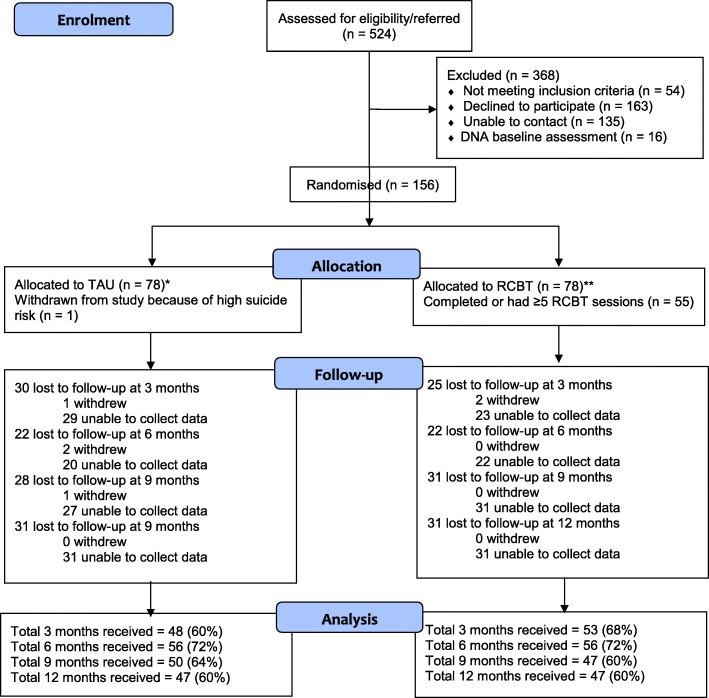
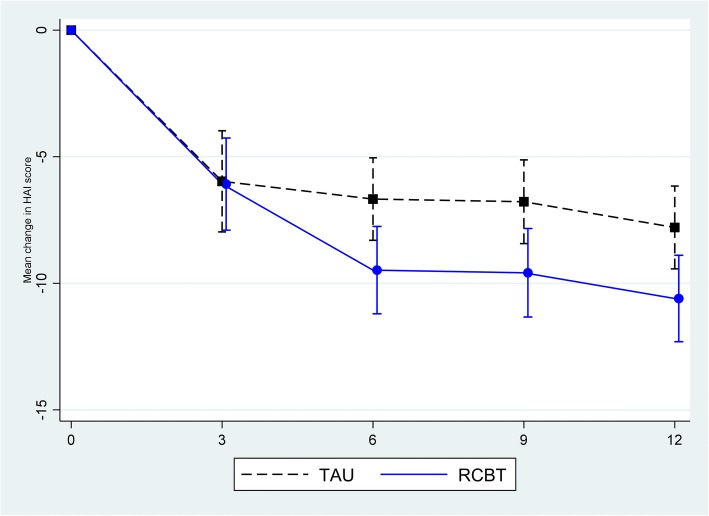
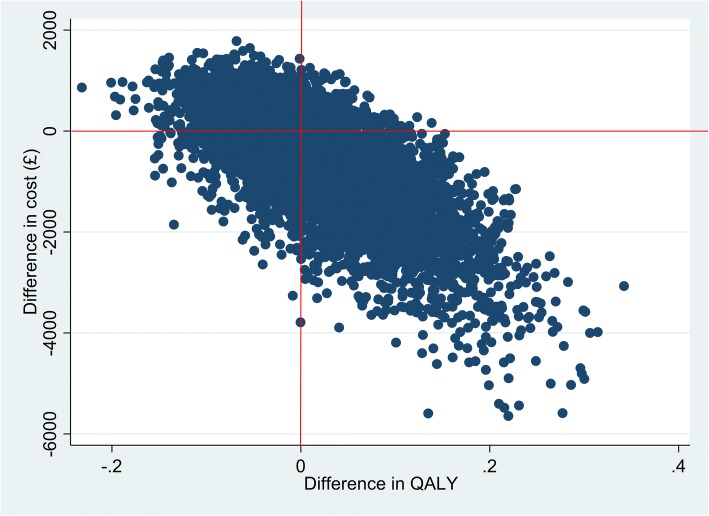
BACKGROUND: It is challenging to engage repeat users of unscheduled healthcare with severe health anxiety in psychological help and high service costs are incurred. We investigated whether clinical and economic outcomes were improved by offering remote cognitive behaviour therapy (RCBT) using videoconferencing or telephone compared to treatment as usual (TAU). METHODS: A single-blind, parallel group, multicentre randomised controlled trial was undertaken in primary and general hospital care. Participants were aged ≥18 years with ≥2 unscheduled healthcare contacts within 12 months and scored >18 on the Health Anxiety Inventory. Randomisation to RCBT or TAU was stratified by site, with allocation conveyed to a trial administrator, research assessors masked to outcome. Data were collected at baseline, 3, 6, 9 and 12 months. The primary outcome was change in HAI score from baseline to six months on an intention-to-treat basis. Secondary outcomes were generalised anxiety, depression, physical symptoms, function and overall health. Health economics analysis was conducted from a health service and societal perspective. RESULTS: Of the 524 patients who were referred and assessed for trial eligibility, 470 were eligible and 156 (33%) were recruited; 78 were randomised to TAU and 78 to RCBT. Compared to TAU, RCBT significantly reduced health anxiety at six months, maintained to 9 and 12 months (mean change difference HAI -2.81; 95% CI -5.11 to -0.50; P = 0.017). Generalised anxiety, depression and overall health was significantly improved at 12 months, but there was no significant change in physical symptoms or function. RCBT was strictly dominant with a net monetary benefit of £3,164 per participant at a willingness to pay threshold of £30,000. No treatment-related adverse events were reported in either group. CONCLUSIONS: RCBT may reduce health anxiety, general anxiety and depression and improve overall health, with considerable reductions in health and informal care costs in repeat users of unscheduled care with severe health anxiety who have previously been difficult to engage in psychological treatment. RCBT may be an easy-to-implement intervention to improve clinical outcome and save costs in one group of repeat users of unscheduled care. TRIAL REGISTRATION: The trial was registered at ClinicalTrials.gov on 19 Nov 2014 with reference number NCT02298036.
Overview
The claims and statistics of this paper haven’t been checked yet.
Free: it reads the open-access text and checks the first 5 claims that cite a source we can check. Create a free account to check every claim.
Integrity signals
Registry
Cites
Statistics
Figures
Verification
Claims the paper makes
The claims and statistics of this paper haven’t been checked yet.
Free: it reads the open-access text and checks the first 5 claims that cite a source we can check. Create a free account to check every claim.
Claims other papers make about this one
Each is checked against this paper’s own text: does it say what the citing paper says it does?
The source backs part of the claim, not all of it — or backs it for a different population, condition or comparison.
In the citing paper
“In contrast, cost-utility analyses using quality-adjusted life-years (QALYs) as the primary outcome measure were less conclusive, with CBT showing limited benefit for health-related QoL [26–29].”
From Cost Effectiveness of Internet-Delivered Acceptance and Commitment Therapy for Patients with Severe Health Anxiety: A Randomised Controlled Trial (2022) · cites this paper as [29]
Experimental — accuracy not yet measuredThe source backs part of the claim, not all of it — or backs it for a different population, condition or comparison.
In the citing paper
“Using the Health Anxiety Inventory (HAI) as the outcome measure, CBT was found to be cost effective regardless of the form of delivery.”
From Cost Effectiveness of Internet-Delivered Acceptance and Commitment Therapy for Patients with Severe Health Anxiety: A Randomised Controlled Trial (2022) · cites this paper as [29]
Experimental — accuracy not yet measuredThe source backs part of the claim, not all of it — or backs it for a different population, condition or comparison.
In the citing paper
“Recent larger clinical trials have found significant cost reductions associated with CBT interventions [28, 29].”
From Cost Effectiveness of Internet-Delivered Acceptance and Commitment Therapy for Patients with Severe Health Anxiety: A Randomised Controlled Trial (2022) · cites this paper as [29]
Experimental — accuracy not yet measuredIn the citing paper
“One of the big advantages for health services following successful treatment is a reduction in medical attendances and consequent cost savings.15,16”
From Why health anxiety needs to be recognised in hospital practice (2020) · cites this paper as [16]
In the citing paper
“What is encouraging is that these patients appear to respond very well to psychological intervention, provided it is offered in an appropriate way.16,22,23”
From Why health anxiety needs to be recognised in hospital practice (2020) · cites this paper as [16]
1 more claim about this paper
Create a free account to see every claim other papers make about this one.
Self-check
Percentages, sums and reported differences re-computed from the paper’s own numbers.
The self-check needs the paper’s full text.
Citations
Cites
The PHQ-9: Validity of a brief depression severity measure
Kroenke, K., Spitzer, R. L., & Williams, J. B. W. (2001) · Journal of General Internal Medicine · doi:10.1046/j.1525-1497.2001.016009606.x · Cited by 44,910 · cited 5×
“(DOCX 50 kb) Abbreviations CBT: Cognitive behaviour therapy; CHAMP: Cognitive Behavioural Therapy for Health Anxiety in Medical Patients; CSRI: Client Service Receipt Inventory; CTSR: Cognitive Therapy Rating Scale Revised; EQ5D-5L: Euroqol health utility measure; GAD-7: 7-item Generalised Anxiety Disorder scale; ICER…”
MethodInfluentialA Brief Measure for Assessing Generalized Anxiety Disorder: The GAD-7
Spitzer, R. L., Kroenke, K., Williams, J. B. W., & Löwe, B. (2006) · Archives of Internal Medicine · doi:10.1001/archinte.166.10.1092 · Cited by 31,765 · cited 5×
“(DOCX 50 kb) Abbreviations CBT: Cognitive behaviour therapy; CHAMP: Cognitive Behavioural Therapy for Health Anxiety in Medical Patients; CSRI: Client Service Receipt Inventory; CTSR: Cognitive Therapy Rating Scale Revised; EQ5D-5L: Euroqol health utility measure; GAD-7: 7-item Generalised Anxiety Disorder scale; ICER…”
InfluentialDevelopment and preliminary testing of the new five-level version of EQ-5D (EQ-5D-5L)
Herdman, M., Gudex, C., Lloyd, A., Janssen, M., Kind, P., Parkin, D., Bonsel, G., & Badia, X. (2011) · Quality of Life Research · doi:10.1007/s11136-011-9903-x · Cited by 9,795 · cited 4×
“(DOCX 50 kb) Abbreviations CBT: Cognitive behaviour therapy; CHAMP: Cognitive Behavioural Therapy for Health Anxiety in Medical Patients; CSRI: Client Service Receipt Inventory; CTSR: Cognitive Therapy Rating Scale Revised; EQ5D-5L: Euroqol health utility measure; GAD-7: 7-item Generalised Anxiety Disorder scale; ICER…”
MethodInfluentialWare, J. E. (2000) · Spine · doi:10.1097/00007632-200012150-00008 · Cited by 4,455 · cited 4×
“36-item Short Form Health Survey (SF-36) [30].”
InfluentialThe PHQ-15: Validity of a New Measure for Evaluating the Severity of Somatic Symptoms
Kroenke, K., Spitzer, R. L., & Williams, J. B. W. (2002) · Psychosomatic Medicine · doi:10.1097/00006842-200203000-00008 · Cited by 3,298 · cited 4×
“(DOCX 50 kb) Abbreviations CBT: Cognitive behaviour therapy; CHAMP: Cognitive Behavioural Therapy for Health Anxiety in Medical Patients; CSRI: Client Service Receipt Inventory; CTSR: Cognitive Therapy Rating Scale Revised; EQ5D-5L: Euroqol health utility measure; GAD-7: 7-item Generalised Anxiety Disorder scale; ICER…”
InfluentialThe Work and Social Adjustment Scale: a simple measure of impairment in functioning
Mundt, J. C., Marks, I. M., Shear, M. K., & Greist, J. M. (2002) · British Journal of Psychiatry · doi:10.1192/bjp.180.5.461 · Cited by 2,515 · cited 2×
“8-itemWork and Social Adjustment Scale for social function (WSAS) [28].”
SALKOVSKIS, P. M., RIMES, K. A., WARWICK, H. M. C., & CLARK, D. M. (2002) · Psychological Medicine · doi:10.1017/s0033291702005822 · Cited by 1,351 · cited 12×
“(DOCX 50 kb) Abbreviations CBT: Cognitive behaviour therapy; CHAMP: Cognitive Behavioural Therapy for Health Anxiety in Medical Patients; CSRI: Client Service Receipt Inventory; CTSR: Cognitive Therapy Rating Scale Revised; EQ5D-5L: Euroqol health utility measure; GAD-7: 7-item Generalised Anxiety Disorder scale; ICER…”
MethodInfluentialCarlbring, P., Andersson, G., Cuijpers, P., Riper, H., & Hedman-Lagerlöf, E. (2018) · Cognitive Behaviour Therapy · doi:10.1080/16506073.2017.1401115 · Cited by 1,232
The impact of guidance on Internet-based mental health interventions — A systematic review
Baumeister, H., Reichler, L., Munzinger, M., & Lin, J. (2014) · Internet Interventions · doi:10.1016/j.invent.2014.08.003 · Cited by 1,037 · cited 1×
“Digitally delivered psychological therapies are generally more effective when supported by a therapist, as opposed to being unguided or self-guided [18, 19].”
BackgroundAndrews, G., Basu, A., Cuijpers, P., Craske, M. G., McEvoy, P., English, C. L., & Newby, J. M. (2018) · Journal of Anxiety Disorders · doi:10.1016/j.janxdis.2018.01.001 · Cited by 922 · cited 1×
“For anxiety and somatic disorders, RCBT can achieve comparable outcomes to face-to-face treatment [16, 17].”
BackgroundMultiple Imputation and its Application
Carpenter, J. R., & Kenward, M. G. (2013) · doi:10.1002/9781119942283 · Cited by 913
Costing psychiatric interventions.
Beecham, J. K., & Knapp, M. R. J. (1992) · Kent Academic Repository (University of Kent) · Cited by 710
The revised cognitive therapy scale (CTS-R): psychometric properties.
Blackburn, I.-M., James, I. A., Milne, D. L., Baker, C., Standart, S., Garland, A., & Reichelt, F. K. (2001) · Behavioural and Cognitive Psychotherapy · doi:10.1017/s1352465801004040 · Cited by 568 · cited 3×
“(DOCX 50 kb) Abbreviations CBT: Cognitive behaviour therapy; CHAMP: Cognitive Behavioural Therapy for Health Anxiety in Medical Patients; CSRI: Client Service Receipt Inventory; CTSR: Cognitive Therapy Rating Scale Revised; EQ5D-5L: Euroqol health utility measure; GAD-7: 7-item Generalised Anxiety Disorder scale; ICER…”
MethodNewman, M. G., Szkodny, L. E., Llera, S. J., & Przeworski, A. (2011) · Clinical Psychology Review · doi:10.1016/j.cpr.2010.09.008 · Cited by 480 · cited 1×
“Digitally delivered psychological therapies are generally more effective when supported by a therapist, as opposed to being unguided or self-guided [18, 19].”
BackgroundSalkovskis, P. M., & Warwick, H. M. C. (1986) · Behaviour Research and Therapy · doi:10.1016/0005-7967(86)90041-0 · Cited by 475 · cited 1×
“Severe health anxiety, which is defined as a preoccupation with health worries or a belief that one might have a serious physical illness [5], is one possible reason for repeated use of unscheduled care.”
BackgroundResource Utilization of Patients With Hypochondriacal Health Anxiety and Somatization
Barsky, A. J., Ettner, S. L., Horsky, J., & Bates, D. W. (2001) · Medical Care · doi:10.1097/00005650-200107000-00007 · Cited by 309 · cited 1×
“For those who are unwilling or unable to engage in face-to-face CBT for health anxiety in existing psychological treatment services, our methods of explanation and remote delivery may provide a cheap, effective and implementable method of delivering CBT to repeat users of unscheduled care with high health anxiety, ins…”
MethodGrosser, R. C. (1994) · The Journal of Nervous and Mental Disease · doi:10.1097/00005053-199407000-00029 · Cited by 309
Health anxiety in Australia: prevalence, comorbidity, disability and service use
Sunderland, M., Newby, J. M., & Andrews, G. (2013) · British Journal of Psychiatry · doi:10.1192/bjp.bp.111.103960 · Cited by 280 · cited 1×
“5% in primary care and 24% in hospital clinics [6, 7].”
Fink, P., Ørnbøl, E., & Christensen, K. S. (2010) · PLoS ONE · doi:10.1371/journal.pone.0009873 · Cited by 227 · cited 1×
“For those who are unwilling or unable to engage in face-to-face CBT for health anxiety in existing psychological treatment services, our methods of explanation and remote delivery may provide a cheap, effective and implementable method of delivering CBT to repeat users of unscheduled care with high health anxiety, ins…”
MethodWhich features of primary care affect unscheduled secondary care use? A systematic review
Huntley, A., Lasserson, D., Wye, L., Morris, R., Checkland, K., England, H., Salisbury, C., & Purdy, S. (2014) · BMJ Open · doi:10.1136/bmjopen-2013-004746 · Cited by 223 · cited 1×
“Introduction In health services, unscheduled same-day care is defined as any unplanned contact with a health service by a person requiring or seeking help, care or advice [1].”
BackgroundInterventions to reduce emergency department utilisation: A review of reviews
Van den Heede, K., & Van de Voorde, C. (2016) · Health Policy · doi:10.1016/j.healthpol.2016.10.002 · Cited by 208
Olatunji, B. O., Kauffman, B. Y., Meltzer, S., Davis, M. L., Smits, J. A. J., & Powers, M. B. (2014) · Behaviour Research and Therapy · doi:10.1016/j.brat.2014.05.002 · Cited by 167
Tyrer, P., Cooper, S., Salkovskis, P., Tyrer, H., Crawford, M., Byford, S., Dupont, S., Finnis, S., Green, J., McLaren, E., et al. (2014) · The Lancet · doi:10.1016/s0140-6736(13)61905-4 · Cited by 167 · cited 3×
“A team of four experienced CBT therapists remotely delivered CBT for health anxiety using a treatment manual developed from the Cognitive Behavioural Therapy for Health Anxiety in Medical Patients (CHAMP) study [15].”
BackgroundMethodSelf-citationSalmon, P. (2007) · Patient Education and Counseling · doi:10.1016/j.pec.2007.03.008 · Cited by 164 · cited 1×
“For those who are unwilling or unable to engage in face-to-face CBT for health anxiety in existing psychological treatment services, our methods of explanation and remote delivery may provide a cheap, effective and implementable method of delivering CBT to repeat users of unscheduled care with high health anxiety, ins…”
MethodEffect of Medicaid Coverage on ED Use — Further Evidence from Oregon’s Experiment
Finkelstein, A. N., Taubman, S. L., Allen, H. L., Wright, B. J., & Baicker, K. (2016) · New England Journal of Medicine · doi:10.1056/nejmp1609533 · Cited by 127
Cognitive Behaviour Therapy for Health Anxiety: A Systematic Review and Meta-Analysis
Cooper, K., Gregory, J. D., Walker, I., Lambe, S., & Salkovskis, P. M. (2017) · Behavioural and Cognitive Psychotherapy · doi:10.1017/s1352465816000527 · Cited by 118 · cited 1×
“The benefits are similar to those achieved when offering face-to-face CBT for health anxiety with more selected groups such as hospital clinic attenders [11, 13].”
BackgroundKirmayer, L. J., & Looper, K. J. (2006) · Current Opinion in Psychiatry · doi:10.1097/01.yco.0000194810.76096.f2 · Cited by 113 · cited 1×
“Despite the effectiveness of CBT for health anxiety, uptake is typically low because of stigma and negative experiences of mental health services [14, 15].”
BackgroundRowley, E., Morriss, R. K., Currie, G., & Schneider, J. M. (2012) · Implementation Science · doi:10.1186/1748-5908-7-40 · Cited by 113 · cited 2×
“The principles of user-design and co-production were utilised by developing a network of patient and public involvement (PPI) members, health practitioners and researchers contributing at all stages of the study including study design, recruitment, RCBT delivery methods and interpretation of results [23].”
BackgroundMethodSelf-citationMorriss, R., Dowrick, C., Salmon, P., Peters, S., Dunn, G., Rogers, A., Lewis, B., Charles-Jones, H., Hogg, J., Clifford, R., et al. (2007) · British Journal of Psychiatry · doi:10.1192/bjp.bp.107.040683 · Cited by 112 · cited 1×
“We did not inspect patients’ primary care and general hospital records because self-report may be more accurate in patients who frequently utilise multiple sources of unscheduled care from different agencies [37, 43].”
BackgroundSelf-citationGP frequent attendance in Liverpool and Granada: the impact of depressive symptoms.
Dowrick, C. F., Bellón, J. Á., & Gómez, M. J. (2000) · Europe PMC (PubMed Central) · Cited by 108
Newby, J. M., Smith, J., Uppal, S., Mason, E., Mahoney, A. E. J., & Andrews, G. (2018) · Journal of Consulting and Clinical Psychology · doi:10.1037/ccp0000248 · Cited by 84
Zimmermann, T., Puschmann, E., van den Bussche, H., Wiese, B., Ernst, A., Porzelt, S., Daubmann, A., & Scherer, M. (2016) · International Journal of Nursing Studies · doi:10.1016/j.ijnurstu.2016.08.007 · Cited by 62 · cited 1×
“Lower rates of follow-up might be expected in studies of harder-to-engage patients [42].”
BackgroundTyrer, P., Salkovskis, P., Tyrer, H., Wang, D., Crawford, M. J., Dupont, S., Cooper, S., Green, J., Murphy, D., Smith, G., et al. (2017) · Health Technology Assessment · doi:10.3310/hta21500 · Cited by 59 · cited 5×
“The benefits are similar to those achieved when offering face-to-face CBT for health anxiety with more selected groups such as hospital clinic attenders [11, 13].”
BackgroundMethodInfluentialSelf-citationHedman, E., Andersson, E., Ljótsson, B., Axelsson, E., & Lekander, M. (2016) · BMJ Open · doi:10.1136/bmjopen-2015-009327 · Cited by 49
Berge, L. I., Skogen, J. C., Sulo, G., Igland, J., Wilhelmsen, I., Vollset, S. E., Tell, G. S., & Knudsen, A. K. (2016) · BMJ Open · doi:10.1136/bmjopen-2016-012914 · Cited by 41
An examination of the factors that influence costs in medical patients with health anxiety
Barrett, B. M., Tyrer, P. J., Tyrer, H., Cooper, S., Crawford, M., & Byford, S. (2012) · Journal of Psychosomatic Research · doi:10.1016/j.jpsychores.2012.04.014 · Cited by 23 · cited 1×
“5% in primary care and 24% in hospital clinics [6, 7].”
BackgroundSelf-citationMalins, S., Kai, J., Atha, C., Avery, A., Guo, B., James, M., Patel, S., Sampson, C., Stubley, M., & Morriss, R. (2016) · British Journal of General Practice · doi:10.3399/bjgp16x686569 · Cited by 23 · cited 2×
“Higher rates of recruitment (33% of those eligible) than previous trials of psychological interventions in frequently attending patients with health anxiety [11, 37] suggest that the recruitment methods involving non-stigmatising explanation and RCBT were acceptable.”
BackgroundSelf-citationAxelsson, E., Andersson, E., Ljótsson, B., & Hedman-Lagerlöf, E. (2018) · Behaviour Research and Therapy · doi:10.1016/j.brat.2018.06.002 · Cited by 19
Hughes, R. (2010) · British Journal of Healthcare Assistants · doi:10.12968/bjha.2010.4.12.619 · Cited by 10
Patel, S., Malins, S., Guo, B., James, M., Kai, J., Kaylor‐Hughes, C., Rowley, E., Simpson, J., Smart, D., Stubley, M., et al. (2016) · BJPsych Open · doi:10.1192/bjpo.bp.115.002220 · Cited by 8
Self-citation
Research works printed but not linked: 4
- Clark D Oates M Improving access to psychological therapies: Measuring improvement and recovery, version 2 2014 London NHS England
- First MB Williams JB Karg RS Spitzer MD Structured Clinical Interview for DSM-5 Disorders 2016 Washington, DC American Psychiatric Association
- Curtis L Burns A Unit Costs of Health and Social Care 2016 2016 Canterbury Personal Social Services Research Unit, University of Kent
- National Institute for Health and Care Excellence (NICE). Guide to the methods of technology appraisal 2013. London: NICE; 2013. https://www.nice.org.uk/article/pmg9/chapter/foreword. Accessed 06 Aug 2018. 27905712
Cited by
Improving Access to Care: Telemedicine Across Medical Domains
Barbosa, W., Zhou, K., Waddell, E., Myers, T., & Dorsey, E. R. (2021) · Annual Review of Public Health · doi:10.1146/annurev-publhealth-090519-093711 · Cited by 299
Patel, S., Akhtar, A., Malins, S., Wright, N., Rowley, E., Young, E., Sampson, S., & Morriss, R. (2020) · Journal of Medical Internet Research · doi:10.2196/16228 · Cited by 190
“A recent RCT investigating the clinical and cost-effectiveness of videoconferencing CBT delivered to repeat unscheduled care users with health anxiety found completion rates to be substantially higher than other DHI studies [7].”
BackgroundResultSelf-citationThomas, N., McDonald, C., de Boer, K., Brand, R. M., Nedeljkovic, M., & Seabrook, L. (2021) · Psychology and Psychotherapy: Theory, Research and Practice · doi:10.1111/papt.12332 · Cited by 132
“…acceptability and efficacy of videoconferencing have informed the implementation of videoconferencing within services, particularly for programmes delivered to geographically isolated or dispersed individuals (Morriss et al., 2019; Muir et al., 2020; Varker, Brand, Ward, Terhaad, & Phelps, 2018).”
BackgroundAxelsson, E., & Hedman-Lagerlöf, E. (2019) · Expert Review of Pharmacoeconomics & Outcomes Research · doi:10.1080/14737167.2019.1703182 · Cited by 96
“2019 (UK) 156 ≥18 on the HAI-14 HAI-14 Individual Internet/phone WLC [61]”
BackgroundInfluentialNikopoulou, V. A., Holeva, V., Parlapani, E., Karamouzi, P., Voitsidis, P., Porfyri, G.-N., Blekas, A., Papigkioti, K., Patsiala, S., & Diakogiannis, I. (2020) · International Journal of Mental Health and Addiction · doi:10.1007/s11469-020-00414-w · Cited by 119
“A score of 18 is considered the optimal cutoff for the 14-item SHAI (Clark and Oates 2014; Morriss et al. 2019).”
BackgroundMethod
Metadata
- Authors
- Morriss, R., Patel, S., Malins, S., Guo, B., Higton, F., James, M., Wu, M., Brown, P., Boycott, N., Kaylor-Hughes, C., Morris, M., Rowley, E., Simpson, J., Smart, D., Stubley, M., Kai, J., & Tyrer, H.
- Affiliations
- University of Nottingham (GB)
- Nottinghamshire Healthcare NHS Foundation Trust (GB)
- Leicestershire Partnership NHS Trust (GB)
- Imperial College London (GB)
- Corresponding author
- Morriss, Richard
- ORCID
- Venue
- BMC Medicine
- Published
- 2019-01-23
- Volume
- 17
- Issue
- 1
- Pages
- 16-16
- ISSN
- 1741-7015 (ISSN-L)
- PMC
- PMC6343350
- OpenAlex
- W2947718981
- Cited by
- 60
- References
- 43
- Citations by year
- 2026: 4 · 2025: 2 · 2024: 6 · 2023: 8 · 2022: 13 · 2021: 16 · 2020: 8 · 2019: 3
- FWCI
- 11.32
- Type
- journal article
- Language
- en
- Open access
- gold
- doi.org
- Licence
- cc-by
- creativecommons.org/licenses/by/4.0/ (tdm)
- Locations
- BMC Medicine (publishedVersion, cc-by)
- Europe PMC (PubMed Central) (publishedVersion, other-oa)
- PubMed Central (publishedVersion, cc-by)
- PubMed (publishedVersion)
- Repository@Nottingham (University of Nottingham) (publishedVersion, cc-by)
- City Research Online (City University London) (acceptedVersion)
- Repository@Nottingham (University of Nottingham) (submittedVersion, cc-by)
- Minerva Access (University of Melbourne) (submittedVersion, cc-by)
- DOAJ (DOAJ: Directory of Open Access Journals) (submittedVersion, cc-by-sa)
- Nottingham ePrints (University of Nottingham) (submittedVersion, cc-by)
- Funders
- National Institute for Health Research (NIHR CLAHRC East Midlands)
- Topics
- Social Sciences › Psychology › Applied Psychology › Digital Mental Health Interventions
- Health Sciences › Medicine › Public Health, Environmental and Occupational Health › Telemedicine and Telehealth Implementation
- Social Sciences › Psychology › Experimental and Cognitive Psychology › Anxiety, Depression, Psychometrics, Treatment, Cognitive Processes
- Keywords
- health anxiety, videoconferencing, telephone-delivered therapy, generalized anxiety disorder, depression, health care costs, cost-effectiveness, treatment engagement, primary care, general hospital care, Health Anxiety Inventory, net monetary benefit, willingness to pay, somatic symptoms, health-related quality of life, informal care
- MeSH terms
- Adolescent, Adult, Aged, Anxiety, Cost-Benefit Analysis, Female, Humans, Male, Middle Aged, Cognitive Behavioral Therapy, Single-Blind Method, Treatment Outcome, Telemedicine
About these checks
Registry, retraction, Cites and statistics results are computed, not judged, with one exception: a printed reference that no index lists is read once by a model before it counts as a citation error. Claims are extracted by a model and kept only when their quote appears verbatim in the text; each cited source is then checked, with a model’s help, for whether it says what the claim relies on. Those verdicts can be wrong — read the claim’s quote and the cited source before relying on one.
Statistics and arithmetic are recomputed, not judged.
Confidence bands are shown only for fields calibrated on our annotated test set. None is calibrated yet, so no band is shown.
What counts as a claim ›How we measure confidence ›How we check this ›
Are you an author, or do you see a problem with this page? Request a review
Data sources
Bibliographic data: Semantic Scholar, OpenAlex, Crossref.
Contains information from the Semantic Scholar Academic Graph Datasets, made available under the ODC Attribution License (ODC-BY 1.0).
Semantic Scholar’s data is described in: Kinney, R., et al. (2023). The Semantic Scholar Open Data Platform. arXiv:2301.10140.
