

Hospitalisation rates and predictors in people with dementia: a systematic review and meta-analysis
Open accessThe DOI matches its Crossref record; 64 of the 65 references it cites were found in a registry or an index.
Abstract
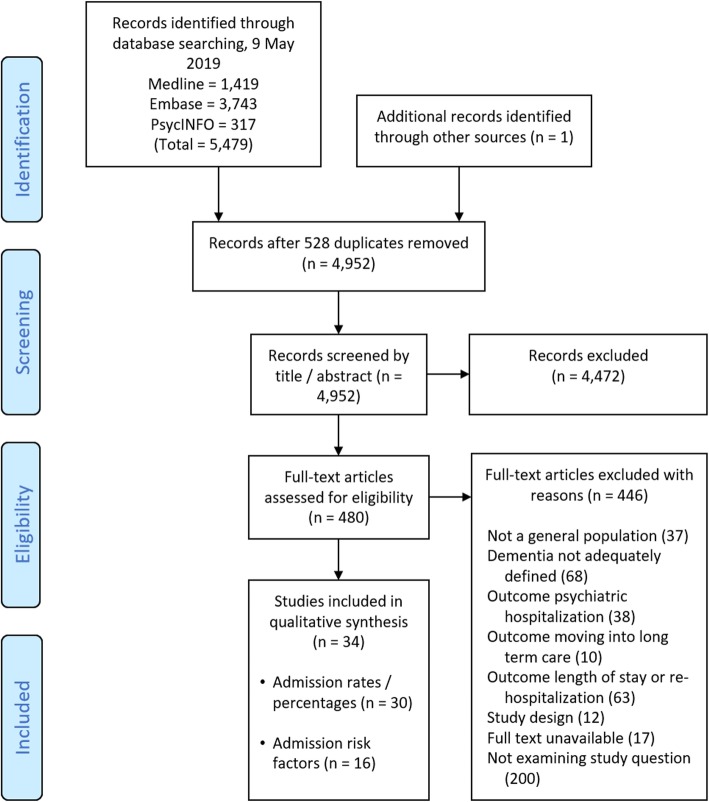
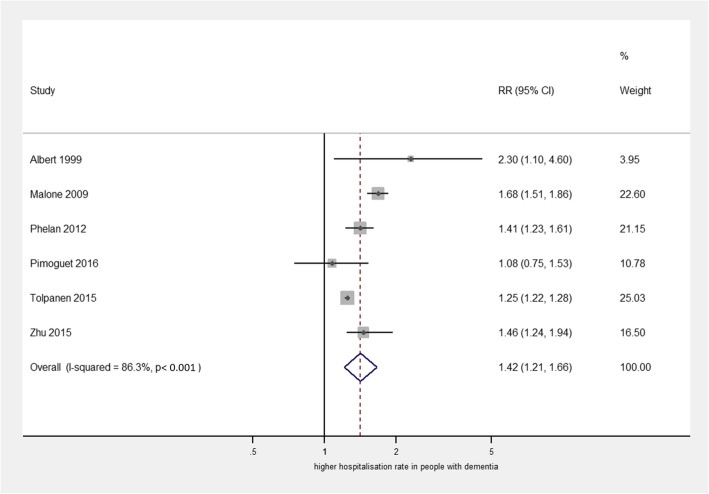
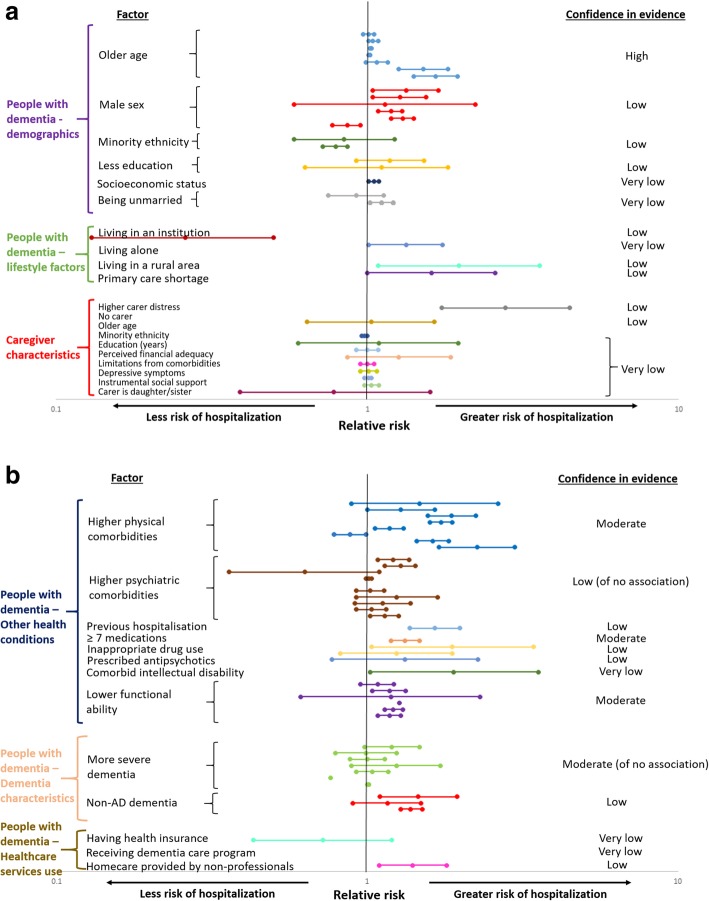
BACKGROUND: Hospitalisation is often harmful for people with dementia and results in high societal costs, so avoidance of unnecessary admissions is a global priority. However, no intervention has yet reduced admissions of community-dwelling people with dementia. We therefore aimed to examine hospitalisation rates of people with dementia and whether these differ from people without dementia and to identify socio-demographic and clinical predictors of hospitalisation. METHODS: We searched MEDLINE, Embase, and PsycINFO from inception to 9 May 2019. We included observational studies which (1) examined community-dwelling people with dementia of any age or dementia subtype, (2) diagnosed dementia using validated diagnostic criteria, and (3) examined all-cause general (i.e. non-psychiatric) hospital admissions. Two authors screened abstracts for inclusion and independently extracted data and assessed included studies for risk of bias. Three authors graded evidence strength using Cochrane's GRADE approach, including assessing for evidence of publication bias using Begg's test. We used random effects meta-analysis to pool estimates for hospitalisation risk in people with and without dementia. RESULTS: We included 34 studies of 277,432 people with dementia: 17 from the USA, 15 from Europe, and 2 from Asia. The pooled relative risk of hospitalisation for people with dementia compared to those without was 1.42 (95% confidence interval 1.21, 1.66) in studies adjusted for age, sex, and physical comorbidity. Hospitalisation rates in people with dementia were between 0.37 and 1.26/person-year in high-quality studies. There was strong evidence that admission is associated with older age, and moderately strong evidence that multimorbidity, polypharmacy, and lower functional ability are associated with admission. There was strong evidence that dementia severity alone is not associated. CONCLUSIONS: People with dementia are more frequently admitted to hospital than those without dementia, independent of physical comorbidities. Future interventions to reduce unnecessary hospitalisations should target potentially modifiable factors, such as polypharmacy and functional ability, in high-risk populations.
Overview
The claims and statistics of this paper haven’t been checked yet.
Free: it reads the open-access text and checks the first 5 claims that cite a source we can check. Create a free account to check every claim.
Integrity signals
Registry
Cites
Statistics
Figures
Verification
Claims the paper makes
The claims and statistics of this paper haven’t been checked yet.
Free: it reads the open-access text and checks the first 5 claims that cite a source we can check. Create a free account to check every claim.
Claims other papers make about this one
Each is checked against this paper’s own text: does it say what the citing paper says it does?
The source backs part of the claim, not all of it — or backs it for a different population, condition or comparison.
In the citing paper
“Thanks to their daily caregiving role, direct care workers are well-placed to observe and report changes of status to clinical care partners, thereby helping to reduce the risk of emergency department visits, avoidable hospitalizations and other adverse outcomes that are disproportionately high among people living with dementia.664,665”
From 2023 Alzheimer's disease facts and figures (2023) · cites this paper as [664]
Experimental — accuracy not yet measuredThe source backs part of the claim, not all of it — or backs it for a different population, condition or comparison.
In the citing paper
“Thanks to their daily caregiving role, direct care workers are well‐placed to observe and report changes of status to clinical colleagues, thereby helping to reduce the risk of emergency department visits, avoidable hospitalizations and other adverse outcomes that are disproportionately high among people living with dementia.”
From 2024 Alzheimer's disease facts and figures (2024) · cites this paper as [773]
Experimental — accuracy not yet measuredThe check wasn’t confident either way, so it gives no verdict — never disputed.
In the citing paper
“Although evidence exists that if staff are sufficiently and rigorously protected they are unlikely to develop COVID-19, many staff have become unwell and some have died.263, 264”
From Dementia prevention, intervention, and care: 2020 report of the Lancet Commission (2020) · cites this paper as [264]
Experimental — accuracy not yet measuredThe check wasn’t confident either way, so it gives no verdict — never disputed.
In the citing paper
“The impacts of COVID-19 on people with dementia might be particularly severe in LMICs, due to smaller health budgets for testing and protective equipment, capacity of health-care systems, quality of care home provision and patterns of workforce mobility.264”
From Dementia prevention, intervention, and care: 2020 report of the Lancet Commission (2020) · cites this paper as [264]
Experimental — accuracy not yet measured
Self-check
Percentages, sums and reported differences re-computed from the paper’s own numbers.
The self-check needs the paper’s full text.
Citations
Cites
Preferred Reporting Items for Systematic Reviews and Meta-Analyses: the PRISMA statement
Moher, D., Liberati, A., Tetzlaff, J., Altman, D. G., & for the PRISMA Group (2009) · BMJ · doi:10.1136/bmj.b2535 · Cited by 83,823
Preferred reporting items for systematic reviews and meta-analyses: the PRISMA Statement.
(2009) · PubMed Central · Cited by 44,859
Meta-analysis in clinical trials
DerSimonian, R., & Laird, N. (1986) · Controlled Clinical Trials · doi:10.1016/0197-2456(86)90046-2 · Cited by 39,552 · cited 1×
“Random effects models are appropriate where there is potential heterogeneity in study populations [16] and allows a combination of different measures of relative risk, e.”
BackgroundWang, G., Ma, R., Qiao, G., Wada, K., Aizawa, Y., & Satoh, T. (2015) · Integrative Medicine International · doi:10.1159/000368408 · Cited by 18,657
(2014) · Medical Entomology and Zoology · Cited by 17,633
Operating characteristics of a rank correlation test for publication bias
Begg, C. B., & Mazumdar, M. (1994) · Biometrics · doi:10.2307/2533446 · Cited by 16,955 · cited 1×
“10 indicating risk of publication bias [15], using STATA 14.”
MethodDementia prevention, intervention, and care
Livingston, G., Sommerlad, A., Orgeta, V., Costafreda, S. G., Huntley, J., Ames, D., Ballard, C., Banerjee, S., Burns, A., Cohen-Mansfield, J., et al. (2017) · The Lancet · doi:10.1016/s0140-6736(17)31363-6 · Cited by 6,072 · cited 1×
“Background The number of older people is expected to rise throughout the century, with the number of people with dementia rising in parallel [1].”
BackgroundSelf-citationMann, C. J. (2003) · Emergency Medicine Journal · doi:10.1136/emj.20.1.54 · Cited by 1,558 · cited 1×
“Research cohort participants are often healthier than non-participants [53] and are subject to attrition of study participants; death is a common cause of attrition in studies of older populations [54].”
BackgroundLiving Well with Dementia: A National Dementia Strategy: (608082011-001)
(2009) · PsycEXTRA Dataset · doi:10.1037/e608082011-001 · Cited by 1,123
Iorio, A., Spencer, F. A., Falavigna, M., Alba, C., Lang, E., Burnand, B., McGinn, T., Hayden, J., Williams, K., Shea, B., et al. (2015) · BMJ · doi:10.1136/bmj.h870 · Cited by 880 · cited 1×
“We then used the Cochrane Collaboration’s Grading of Recommendations, Assessment, Development and Evaluation (GRADE) approach to rate the confidence in the estimates given [14].”
Method
Research works printed but not linked: 3
- Department of Health Living well with dementia: a National Dementia Strategy 2009
- Wells G Shea B O’Connell D Peterson J Welch V Losos M Newcastle-Ottawa quality assessment scale case control studies 2014
- Bynum J Rabins P Weller W Niefeld M Anderson G Wu A Illness, Medicare expenditures, and hospital use J Am Geriatr Soc 2004 52 187 194 10.1111/j.1532-5415.2004.52054.x 14728626 · DOI · Paper page
Cited by
Items 101–200 of 233
Adlbrecht, L., Karrer, M., Helfenberger, N., Ziegler, E., & Zeller, A. (2024) · BMC Geriatrics · doi:10.1186/s12877-023-04612-8 · Cited by 5
“Persons with dementia have a significantly higher risk for hospital admission due to an acute physical illness, compared to same-aged persons without cognitive impairment [1].”
BackgroundIngelson, B., Dahlke, S., O’Rourke, H. M., & Hunter, K. F. (2024) · Journal of Clinical Nursing · doi:10.1111/jocn.17164 · Cited by 19
Ascertaining Out-of-Pocket Costs of Dementia Care: Feasibility Study of a Web-Based Weekly Survey
Dawson, W. D., Mattek, N., Gothard, S., Kaye, J. A., & Lindauer, A. (2024) · JMIR Formative Research · doi:10.2196/56878 · Cited by 6
“Furthermore, existing research shows that there is an increased rate of hospitalization among people living with ADRD compared to people without ADRD, while the number of potentially avoidable hospitalizations of people living with ADRD is also increasing [28,29].”
BackgroundMerchant, R. A., Dong, Y., Kumari, S., & Murphy, D. P. (2025) · Frontiers in Medicine · doi:10.3389/fmed.2025.1540050 · Cited by 6
Redley, M., Poland, F. M., Coleston-Shields, D. M., Stanyon, M. R., Yates, J., Streater, A., & Orrell, M. W. (2022) · Journal of Applied Gerontology · doi:10.1177/07334648221118557 · Cited by 4
“Nevertheless, it is not generally the severity of dementia that predicts hospital admission, but other factors including multiple health conditions, polypharmacy, and dependency (Shepherd et al., 2019), alongside domestic instability (Perlman et al., 2018).”
BackgroundPaudel, A., Boltz, M. P., Kuzmik, A., Resnick, B. M., Liu, W., & Holmes, S. (2023) · Journal of Applied Gerontology · doi:10.1177/07334648231168446 · Cited by 4
“The purpose of the parent study was to examine the efficacy of Fam-FFC (Family-centered Function-focused Care), a nurse-family caregiver partnership model that aims to improve: 1) the physical and cognitive recovery in hospitalized patients living with ADRD during hospitalization and 60-day post-acute period and 2) ca…”
BackgroundInfluentialValidation and expansion of a behavioral framework for dementia care partner resilience (CP-R)
Zhou, Y., Hasdemir, D., Ishado, E., Soo Borson, B., & Sadak, T. I. (2023) · Dementia · doi:10.1177/14713012231181160 · Cited by 4
“During the health crisis, care partners often experience cumulative and elevated care burdens due to care recipients ’ declining health and functions before reaching the point of crisis (Afonso-Argil´es et al., 2020; Shepherd et al., 2019).”
BackgroundHauer, K. A., Dutzi, I., Werner, C., Bauer, J. M., & Ullrich, P. (2023) · Journal of Alzheimer s Disease · doi:10.3233/jad-230644 · Cited by 6
Testing the sensitivity of two dementia knowledge instruments in dementia workforce education
MacRae, R., Gamble, C., Ritchie, L., & Jack-Waugh, A. (2021) · Nurse Education Today · doi:10.1016/j.nedt.2021.105210 · Cited by 4
Gadsby-Davis, K., Garner, N. J., Ergin, B. D., Dhatariya, K., & Hornberger, M. (2024) · Diabetes Therapy · doi:10.1007/s13300-024-01672-w · Cited by 5
Vargese, S. S., Jylhä, M. K., Raitanen, J. A., Forma, L., & Aaltonen, M. S. (2025) · Aging Clinical and Experimental Research · doi:10.1007/s40520-024-02918-0 · Cited by 5
Manietta, C., Rommerskirch‐Manietta, M., Purwins, D., Knecht, C., & Roes, M. (2025) · Age and Ageing · doi:10.1093/ageing/afaf048 · Cited by 4
“They have a greater risk of hospital admission than older people without dementia [7], and the prevalence of dementia or symptoms of dementia among older patients in hospitals is high [8, 9].”
Eshetie, T. C., Caughey, G. E., Lang, C. E., Whitehead, C., Crotty, M., Corlis, M. E., Visvanathan, R., & Inacio, M. C. S. (2025) · Alzheimer s & Dementia · doi:10.1002/alz.70487 · Cited by 3
Hannan, M., Haase, K. R., Sun, V. C.-Y., Strohschein, F. J., Sattar, S., Pattwell, M., Kenis, C., Walsh, D., Slavova-Boneva, V., Vonnes, C., et al. (2025) · Journal of Geriatric Oncology · doi:10.1016/j.jgo.2025.102735 · Cited by 5
Kim, S., Kremen, S. A., Danovitch, I., & Lahiri, S. (2026) · Alzheimer s & Dementia · doi:10.1002/alz.71184 · Cited by 3
Fowe, I. E., Sanders, E. C., & Boot, W. R. (2023) · PubMed Central · Cited by 10
Beccaria, L., Hoey, H., Towler, H., Rees, S., Brazier, R., Gordon, K., Neville, C. C., & Knight, B. G. (2024) · Collegian Journal of the Royal College of Nursing Australia · doi:10.1016/j.colegn.2023.12.002 · Cited by 4
Watson, J. B., Green, M. A., Giebel, C. M., & Akpan, A. (2024) · BMC Geriatrics · doi:10.1186/s12877-024-04744-5 · Cited by 5
“Ineffective healthcare use is associated with increased negative health outcomes [70] and greater financial cost to health and social care services [13, 71].”
BackgroundBowman, J. K., Ritchie, C. S., Ouchi, K., Tulsky, J. A., & Teno, J. M. (2024) · Journal of the American Geriatrics Society · doi:10.1111/jgs.19025 · Cited by 6
Fatores associados à qualidade de vida de idosos hospitalizados
Martins, B., Yoshitome, A. Y., Vieira, T. F., Sala, D. C. P., Júnior, G. S., & Okuno, M. F. P. (2021) · Revista de Enfermagem da UFSM · doi:10.5902/2179769244098 · Cited by 3
Experience of Paramedics Providing Care to People Living with Dementia: The Working with Uncertainty
Courtney‐Pratt, H., Eccleston, C. E. A., Lucas, P., Tierney, L., Harris, W., Campbell, B., & Lawler, K. (2022) · Australasian Journal of Paramedicine · doi:10.33151/ajp.19.929 · Cited by 3
“Such focus is based on knowledge that entry to acute care settings for older people, and particularly older people living with dementia is associated with increased risk of distress, falls, pharmaceutical errors, development of pressure injuries and in extreme cases death.(10)”
BackgroundUsing Markov chains and temporal alignment to identify clinical patterns in Dementia
Costa, L. M., Colaço, J., Carvalho, A. M., Vinga, S., & Teixeira, A. S. (2023) · Journal of Biomedical Informatics · doi:10.1016/j.jbi.2023.104328 · Cited by 5
Singh, S., Moore, E., Melissa, P., Patel, V., Brown, J., & Davidson, J. (2024) · British Journal of Community Nursing · doi:10.12968/bjcn.2024.29.5.224 · Cited by 5
Matsunaga, M., Tanihara, S., He, Y., Yatsuya, H., & Ota, A. (2024) · Geriatrics and gerontology international/Geriatrics & gerontology international · doi:10.1111/ggi.14926 · Cited by 4
“25 Second, the previous study showed no association between hospitalization and early-stage dementia.”
Berry, E., Nally, C. S. M., Barbosa, A., Mason, C., & Jones, D. (2024) · Radiography · doi:10.1016/j.radi.2024.09.057 · Cited by 5
Werner, P., AboJabel, H., Saban, H. C., Schiffman, I. K., Idilbi, N. M., Engel, A., Malka-Zeevi, H., Dwolatzky, T., & Dudkiewicz, M. (2020) · Journal of Nursing Management · doi:10.1111/jonm.13177 · Cited by 3
Huang, A. P., & Holloway, R. G. (2024) · Seminars in Neurology · doi:10.1055/s-0044-1788723 · Cited by 2
Still, C., Hoel, S., Strayer, A., Werner, N. E., & Fields, B. (2024) · HERD Health Environments Research & Design Journal · doi:10.1177/19375867241276121 · Cited by 3
“However, as PLWD are more likely to experience hospitalization and rehospitalization than their counterparts without a dementia diagnosis, it is important to understand how the physical environment impacts their care delivery during hospitalization (Shepherd et al., 2019).”
Pinto, B. F., Gonçalves‐Pinho, M., Freitas, A., Fernandes, L. P. N. S., & Ferreira, A. R. (2024) · Archives of Gerontology and Geriatrics · doi:10.1016/j.archger.2024.105666 · Cited by 2
Sakakibara, S., Dove, A. E., Dunk, M. M., Fastbom, J., Grande, G., Akenine, U., & Xu, W. (2025) · Journal of the American Medical Directors Association · doi:10.1016/j.jamda.2025.105594 · Cited by 2
Stuber, M. J., Brockhus, L. A., Spinewine, A., O’Mahony, D., Jennings, E. L. M., Dalleur, O., Knol, W., Koek, H. L., Baggio, S., Rodondi, N., et al. (2025) · Journal of the American Geriatrics Society · doi:10.1111/jgs.70049 · Cited by 3
Artificial intelligence approach to optimise safety for hospitalised patients with dementia
Bangerter, L. R., Fong, A., Zabala, G., Kim, Y. K., Tabaie, A., Werner, N. E., Jonge, K. E. D., & Ratwani, R. M. (2025) · BMJ Open Quality · doi:10.1136/bmjoq-2024-003270 · Cited by 2
Thissen, S., Sizoo, E. M., Smalbrugge, M., Gerritsen, D. L., & Perry, M. (2026) · Age and Ageing · doi:10.1093/ageing/afaf383 · Cited by 2
“These overlap with known risk factors for acute healthcare utilization, such as comorbidities, previous hospitalizations and behavioural disturbances [21– 23].”
Penfold, R., Wilkinson, T. S., Stirland, L., MacRae, C., Russ, T. C., Shenkin, S. D., Vardy, E. R. L. C., Anand, A., Guthrie, B., Sampson, E. L., et al. (2026) · Age and Ageing · doi:10.1093/ageing/afag038 · Cited by 7
Hirooka, K., Fukahori, H., Ninomiya, A., Fukui, S., Takahashi, K., Anzai, T., & Ishibashi, T. (2023) · Archives of Gerontology and Geriatrics · doi:10.1016/j.archger.2023.105183 · Cited by 2
Rönneikkö, J. K., Huhtala, H., Finne‐Soveri, H., Valvanne, J., & Jämsen, E. (2023) · BMC Geriatrics · doi:10.1186/s12877-023-04408-w · Cited by 3
“Of the available determinants, impaired cognition (CPS > 2) and urinary incontinence were considered in the modification of DIVERT algorithm based on earlier literature [13, 43, 54] and as they were strongly associated with hospitalization in some but not all DIVERT groups.”
MethodSluggett, J. K., Air, T., Cations, M., Caughey, G. E., Lang, C. E., Ward, S. A., Ahern, S., Lin, X., Wallis, K., Crotty, M., et al. (2023) · Journal of Alzheimer s Disease · doi:10.3233/jad-230730 · Cited by 2
“People living withAlzheimer’sdiseaseandotherformsofdementia have a higher risk of hospitalization than individuals without dementia, especially for injuries and delirium, and typically have longer hospital stays [2–4].”
Khadka, J., Ratcliffe, J., Caughey, G. E., Air, T., Wesselingh, S. L., Corlis, M. E., Evans, K. E., & Inacio, M. C. S. (2024) · Australian Health Review · doi:10.1071/ah24081 · Cited by 4
Scheibner, H. J., Gesell, D., Hauptmann, M., Heinze, M., Horenkamp‐Sonntag, D., Koller, D., Kubat, D., Marschall, U., Meixner, J. M., Michalowsky, B., et al. (2025) · BMJ Open · doi:10.1136/bmjopen-2024-092210 · Cited by 2
Chen, Y., James, B. D., Capuano, A. W., Banerjee, M., Springer, M. V., Lange‐Maia, B. S., Barnes, L. L., Bennett, D. A., Bynum, J., & Grodstein, F. (2025) · Journal of the American Geriatrics Society · doi:10.1111/jgs.19446 · Cited by 3
Robert, G., Niaré, D., Pennec, S., Morand, E., de Geyer, L., Frin, M., Hanslik, T., Blanchon, T., Morel, V., & Rossignol, L. (2025) · Journal of Palliative Medicine · doi:10.1089/jpm.2024.0303 · Cited by 4
“Although our fi ndings are controversial about the literature, 36 they con fi rm that palliative care strategies should focus on dementia as much as, or even more than, cancer.”
Waller, A. E., Bryant, J., Bowman, A., White, B. P., Willmott, L., Pickles, R., Hullick, C., Price, E., Knight, A., Ryall, M., et al. (2022) · BMC Medical Ethics · doi:10.1186/s12910-022-00811-x · Cited by 4
Lutski, M., Shahar, R., Vered, S., Novick, D., Zucker, I., & Weinstein, G. (2023) · International Journal of Geriatric Psychiatry · doi:10.1002/gps.5871 · Cited by 3
“30 times the risk for individuals without dementia.(11) Longitudinal studies demonstrate substantial increase in the costs of health care services before the diagnosis of dementia.”
BackgroundResultTulliani, N., Mills, C., Collison, L., Peel, N., Fahey, P. P., & Liu, K. P. Y. (2023) · Campbell Systematic Reviews · doi:10.1002/cl2.1322 · Cited by 3
“than among older people without dementia (Shepherd et al., 2019).”
Li, W., Li, L., Ornstein, K. A., Morrison, R. S., & Liu, B. (2023) · Journal of Applied Gerontology · doi:10.1177/07334648231213747 · Cited by 2
“Previous studies showed that hospital admission rate among individuals with dementia was associated with multimorbidity and polypharmacy (Shepherd et al., 2019).”
Chen, A., Li, Q., Huang, Y., Li, Y., Chuang, Y.-N., Hu, X., Guo, S., Wu, Y., Guo, Y. M., & Bian, J. (2024) · medRxiv · doi:10.1101/2024.02.10.24302621 · Cited by 2
Antony, A. R., & Champion, J. D. (2022) · Research in Gerontological Nursing · doi:10.3928/19404921-20220609-01 · Cited by 1
Mortality Among the Dementia Population in Not-For-Profit Hospitals with Better Nursing Resources
Hovsepian, V. E., Sloane, D. M., Muir, K. J., & McHugh, M. D. (2024) · Journal of Aging & Social Policy · doi:10.1080/08959420.2023.2297596 · Cited by 1
“In addition, the use of health care services including hospital admission is also soaring (Shepherd et al., 2019).”
Drazich, B. F., Kim, N., Gurlu, M., Boltz, M. P., Kuzmik, A., Galik, E. M., & Resnick, B. M. (2024) · Geriatric Nursing · doi:10.1016/j.gerinurse.2024.06.024 · Cited by 1
“When older adults with dementia are hospitalized (approximately one in four hospitalized older adults has dementia 9,10 ), they experience a multitude of barriers to physical activity such as exhaustion from their acute illness, bed alarms and other tethers, and disorientation due to an unfamiliar…”
BackgroundThe Effect of Influenza Vaccination on Hospitalization and Mortality Among People With Dementia
Appel, A. M., Jensen‐Dahm, C., Laursen, T. M., Waldemar, G., & Janbek, J. (2025) · Journal of the American Geriatrics Society · doi:10.1111/jgs.19392 · Cited by 3
Ullrich, P., Dutzi, I., Buchner, T., Werner, C., Bongartz, M., Bauer, J. M., & Hauer, K. A. (2025) · Geriatric Nursing · doi:10.1016/j.gerinurse.2025.03.009 · Cited by 1
Sawyer, J. M., & HIGGS, P. F. D. (2025) · Palliative Care and Social Practice · doi:10.1177/26323524251347653 · Cited by 2
“17,18 19–21 The care needs of people with dementia not only out-strip the professional resource available to meet them – they also present a level of complexity that is poorly provided for by statutory services.”
Wesson, J., Cross, A. J., Watson, K. M., Jokanovic, N., Schneider, C. R., Mirzaei, A., Lo, J. C. M., & Sawan, M. J. (2026) · Age and Ageing · doi:10.1093/ageing/afag108 · Cited by 1
Catalán, L., Pepper, A., Pot, A. M., Becerra-Villarroel, P. I., Dening, K. H., & Oliveira, D. (2026) · International Psychogeriatrics · doi:10.1016/j.inpsyc.2026.100210 · Cited by 1
Yu, J., Gnjidic, D., Nastatos, X. L., & Sawan, M. J. (2026) · Age and Ageing · doi:10.1093/ageing/afag172 · Cited by 1
“Hospital admission rates in people with dementia are 1.42 times higher than those without dementia [ 3], with 518 hospitalisations per 1000 in the USA compared with 234 per 1000 [ 4].”
InfluentialFactors associated with healthcare utilization and trajectories in retirement village residents
Bloomfield, K., Wu, Z., Broad, J., Tatton, A., Calvert, C., Hikaka, J., Boyd, M. L., Peri, K., Bramley, D. M., Higgins, A., et al. (2021) · Journal of the American Geriatrics Society · doi:10.1111/jgs.17602 · Cited by 1
“Previous studies in older adults have found dementia to be associated with hospitalizations,19 LTC admission,29 and mortality.48 Exclusion of these participants will therefore likely underestimate true outcome measures in RV residents, and lack of associated risk of depression and these results are additionally not ge…”
ResultOmeally-Soto, S., Zhong, J., Boafo, J., Wu, B., Brody, A. A., Riffin, C. A., & Sadarangani, T. R. (2022) · Journal of Psychosocial Nursing and Mental Health Services · doi:10.3928/02793695-20220929-02 · Cited by 2
Two factors that can increase the length of hospital stay of patients with dementia
White, M. D.-O., Vassallo, M., Kelly, F., & Nyman, S. R. (2022) · Revista Española de Geriatría y Gerontología · doi:10.1016/j.regg.2022.10.004 · Cited by 1
Providing person-centred dementia care on general hospital wards
Kerry, H. J. (2022) · Nursing Standard · doi:10.7748/ns.2022.e11932 · Cited by 2
Extending the Continuum of Care for People with Dementia: Building Resilience
Marquardt, G., & Büter, K. (2023) · Springer eBooks · doi:10.1007/978-3-031-20970-3_12 · Cited by 3
Paudel, A., Boltz, M. P., Kuzmik, A., Resnick, B. M., & BeLue, R. (2023) · Geriatric Nursing · doi:10.1016/j.gerinurse.2023.08.025 · Cited by 1
Liu, T., Nakatani, H., Chen, H., & Gao, N. (2024) · International Journal of Nursing Sciences · doi:10.1016/j.ijnss.2024.06.002 · Cited by 1
“People with dementia are more likely to be hospitalized [4] and have longer hospital stays and higher medical expenses than people without dementia [5].”
End-of-Life Healthcare Utilization in Lewy Body Dementia
Alipour‐Haris, G., Armstrong, M. J., Goodin, A. J., Guo, J. S., & Brown, J. D. (2024) · Journal of Alzheimer s Disease · doi:10.3233/jad-240194 · Cited by 2
“The current study is generally in line with previous research showing limited sex-related differences in hospitalization in dementia 39 or in PD 30 in the last year of life, though the finding of a slightly lower odds of hospitalization in men is in contrast to prior results.”
Catalán, L., Pot, A. M., Pepper, A., Dening, K. H., & Oliveira, D. (2024) · PLoS ONE · doi:10.1371/journal.pone.0301651 · Cited by 1
Cumal, A., Colella, T. J. F., Puts, M. T. E., & McGilton, K. S. (2024) · PLoS ONE · doi:10.1371/journal.pone.0308268 · Cited by 1
“Older adults ( � 65 years) [6] with CI are frequently hospitalized [7].”
Supporting a Family Member with Dementia to Live at Home: The Experiences of Caregivers
Redley, M., Poland, F. M., O’Raw, L., & Orrell, M. W. (2025) · Healthcare · doi:10.3390/healthcare13020171 · Cited by 3
Riquelme-Galindo, J., & Lillo‐Crespo, M. (2021) · PeerJ · doi:10.7717/peerj.11589 · Cited by 1
“, 2016), and people living with dementia have almost double the hospital stays per year than any other older people (Shepherd et al., 2019).”
BackgroundBorson, S. (2022) · American Journal of Geriatric Psychiatry · doi:10.1016/j.jagp.2021.12.017
Laver, K., Lynch, E. A., Rupa, J., McNamara, C., Crotty, M., & Harvey, G. (2022) · BMJ Open Quality · doi:10.1136/bmjoq-2021-001774 · Cited by 1
Harvey, G., Pham, C. T., Inacio, M. C. S., Laver, K., Lynch, E. A., Jorissen, R. N., Karnon, J. D., Bourke, A., Forward, J., Maddison, J., et al. (2020) · Research Square · doi:10.21203/rs.3.rs-93290/v1
“Studies have identi ed socio-demographic and environmental factors such as higher age, being male, level of educational attainment, marital status, geographical location, socio-economic deprivation, living alone without help, reduced social activity and community engagement as potential risk factors for hospitalisatio…”
BackgroundReeves, D., Holland, F., Morbey, H., Hann, M., Ahmed, F., Davies, L. M., Keady, J. D., Leroi, I., & Reilly, S. (2022) · Research Square · doi:10.21203/rs.3.rs-1593977/v1
Marshall, M. B., Campbell, P., Bailey, J., Chew-Graham, C. A., Croft, P., Frisher, M., Hayward, R. A., Negi, R., Rathod‐Mistry, T., Singh, S. P., et al. (2022) · medRxiv · doi:10.1101/2022.10.11.22279756
“malnutrition, fall trauma, neuropsychiatric disorders, sleep disorders.(8,9) These signs and symptoms are likely to occur prior to more recognised long-term outcomes such as hospital or care home admission, and earlier mortality.”
BackgroundDosanjh, A., Moore, C., Hyman, A., & Fisk, L. (2021) · Clinical Psychology Forum · doi:10.53841/bpscpf.2021.1.341.39
Impact of Hospitalization of People With Dementia or Cognitive Impairment on Family Caregivers
Casafont, C., García, M. J. G., Casadamon-Munarriz, I., Piazuelo, M., Sánchez, J. L. C., Bravo, M., Frías, C. E., & Zabalegui, A. (2023) · Research in Gerontological Nursing · doi:10.3928/19404921-20230817-01 · Cited by 2
Kosteniuk, J. G., Morgan, D., Osman, B. A., Islam, N., O’Connell, M. E., Kirk, A., Quail, J. M., & Osman, M. (2023) · Canadian Geriatrics Journal · doi:10.5770/cgj.26.653 · Cited by 1
“A recent review found dementia increased the risk of hospitalization by an estimated 42%, due partly to older age, comorbidities, and polypharmacy.(4) Dementia has also been found to increase hospital stay by 1.”
BackgroundDeterminants of hospital readmissions in older people with dementia: A narrative reviewPreprint
Browne, B., Ali, K., Ford, E. M., & Tabet, N. (2023) · Research Square · doi:10.21203/rs.3.rs-3499229/v1
Bonares, M. J., Fisher, S., Quinn, K. L., Wentlandt, K., & Tanuseputro, P. (2024) · Diagnostic and Prognostic Research · doi:10.1186/s41512-024-00168-2
Insights into Young-Onset Dementia: An 8-Year Nationwide Study Using Administrative DataPreprint
Pinto, B. F., Pinho, M. G., Freitas, A., Fernandes, L. P. N. S., & Ferreira, A. R. (2024) · SSRN Electronic Journal · doi:10.2139/ssrn.4852328
Baxter, V., Kennedy, M., Speed, E., & McPherson, S. (2024) · Mental Health Practice · doi:10.7748/mhp.2024.e1713
鈴木, 裕., & 小島, 太. (2024) · Nippon Ronen Igakkai Zasshi Japanese Journal of Geriatrics · doi:10.3143/geriatrics.61.425
Ying, M., Cheng, Z., Hirth, R. A., Maddox, K. E. J., & Li, Y. (2025) · Journal of Applied Gerontology · doi:10.1177/07334648251333496 · Cited by 1
“Unlike earlier research that demonstrated signi fi cant associations between ADRD and increased hospital utilization using data prior to 2010 (Bynum et al., 2004; Feng et al., 2014; Shepherd et al., 2019a, 2019b; Phelan et al., 2012; Zhu et al., 2015), Medicaid Services, 2021).”
InfluentialEvaluation of Nursing Care Quality for Alzheimer's Patients During Hospitalization
Castillo, D. J. P. (2025) · Contemporary research analysis journal. · doi:10.55677/craj/05-2025-vol02i06
Zerbini, G., Wiese, E., Muehlich, L., Hasan, A., Kunz, M., Haeckert, J., & Reicherts, P. (2025) · Journal of Applied Gerontology · doi:10.1177/07334648251372691 · Cited by 2
“…are hospitalized in an acute psychiatric hospital, despite the observation that older individuals with dementia are more likely to get hospitalized than older individuals without dementia and that hospital stays are usually longer for this population (M¨ollers et al., 2019; Shepherd et al., 2019).”
Elliott, E., Ventre, J. P., Smith, S. K., Carey, W. P., Eost‐Telling, C., Money, A., Bryce-Jones, T., Dickens, V., Todd, C. J., & Vardy, E. R. L. C. (2025) · European Geriatric Medicine · doi:10.1007/s41999-025-01304-x
Mirzaei, A., Jamshidinia, M., Noveiri, M. J. S., Imashi, R., Saghezchi, R. Y., Jafari, M. J., & Nemati‐Vakilabad, R. (2025) · PLoS ONE · doi:10.1371/journal.pone.0332036
Howard, C., Fernández‐Sanlés, A., Abukar, N., Davis, D. H. J., Goodman, C. M., Gupta, S. K., Handley, M., Mukadam, N., Riddington, C., Walters, K. R., et al. (2025) · medRxiv · doi:10.1101/2025.10.13.25337873
Self-citationKuzmik, A., Resnick, B. M., McPherson, R., Galik, E. M., & Boltz, M. P. (2025) · Alzheimer Disease & Associated Disorders · doi:10.1097/wad.0000000000000697
Melendo-Azuela, E. M., Lladó, A., Vela, E., Mariscal, S., Clèries, M., Piñol‐Ripoll, G., & Santaeugènia, S. (2025) · BMC Public Health · doi:10.1186/s12889-025-24341-4 · Cited by 2
Burch, B. F., Resnick, B. M., Zhu, S., Kuzmik, A., Galik, E. M., Wells, C. L., McPherson, R., & Boltz, M. P. (2025) · Journal of Aging and Physical Activity · doi:10.1123/japa.2024-0236
Orrell, M. W., Coleston-Shields, D. M., O’Raw, L., Broome, E., Challis, D., Dening, T., Guo, B., Hoe, J., Lloyd‐Evans, B., Moniz-Cook, E. D., et al. (2025) · Programme Grants for Applied Research · doi:10.3310/kgrq1188
Hoang, M. T., Le, N. T., Nguyen, T. T. H., Nguyen, T.-D., Nguyen, T. X., Nguyen, A. N., Thu, D. K., Nguyen, B. T., Nguyen, H. T. T., Pham, T., et al. (2025) · Gerontology · doi:10.1159/000550017
“Polypharmacy was shown to be associated with higher risk of adverse health outcomes of people with dementia including increased risk of emergency admission, hospitalization, and death [13, 14].”
Zhao, Y., Liu, L., Ding, Y., Shan, Y., & Chan, H. Y. L. (2022) · Figshare · doi:10.6084/m9.figshare.19092519
Watson, J. B., Green, M. A., Giebel, C. M., & Akpan, A. (2024) · Figshare · doi:10.6084/m9.figshare.26680637
Watson, J. B., Green, M. A., Giebel, C. M., & Akpan, A. (2024) · Figshare · doi:10.6084/m9.figshare.26680634
Zhao, Y., Liu, L., Ding, Y., Shan, Y., & Chan, H. Y. L. (2022) · Figshare · doi:10.6084/m9.figshare.19092516
Myhre, J., Bergh, S., Kirkevold, Ø., & Lichtwarck, B. (2024) · Figshare · doi:10.6084/m9.figshare.27071791
Chen, P., Smits, L., Miranda, R., Liao, J.-Y., Petersen, I., Van den Block, L., & Sampson, E. L. (2022) · Figshare · doi:10.6084/m9.figshare.19076469
Browne, B., Ali, K., Ford, E. M., & Tabet, N. (2024) · Figshare · doi:10.6084/m9.figshare.25596485
Adlbrecht, L., Karrer, M., Helfenberger, N., Ziegler, E., & Zeller, A. (2024) · Figshare · doi:10.6084/m9.figshare.26664067
Watson, J. B., Green, M. A., Giebel, C. M., & Akpan, A. (2024) · Figshare · doi:10.6084/m9.figshare.26680619
Metadata
- Authors
- Shepherd, H., Livingston, G., Chan, J., & Sommerlad, A.
- Affiliations
- University College London (GB)
- Corresponding author
- Sommerlad, Andrew
- Venue
- BMC Medicine
- Published
- 2019-07-15
- Volume
- 17
- Issue
- 1
- Pages
- 130-130
- ISSN
- 1741-7015 (ISSN-L)
- PMC
- PMC6628507
- OpenAlex
- W2956299528
- Cited by
- 232
- References
- 64
- Citations by year
- 2026: 34 · 2025: 34 · 2024: 50 · 2023: 31 · 2022: 43 · 2021: 22 · 2020: 18
- FWCI
- 3.49
- Type
- journal article
- Language
- en
- Open access
- gold
- doi.org
- Licence
- cc-by
- creativecommons.org/licenses/by/4.0/ (tdm)
- creativecommons.org/licenses/by/4.0/ (vor)
- Locations
- BMC Medicine (publishedVersion, cc-by)
- PubMed Central (publishedVersion, cc-by)
- PubMed (publishedVersion)
- DOAJ (DOAJ: Directory of Open Access Journals) (submittedVersion, cc-by-sa)
- UCL Discovery (University College London) (submittedVersion)
- Funders
- Wellcome Trust (200163/Z/15/Z)
- Alzheimer's Society
- National Institute for Health and Care Research
- Marie Curie (MCCC-FCO-11-U)
- University College London
- Economic and Social Research Council
- Topics
- Health Sciences › Medicine › Psychiatry and Mental health › Dementia and Cognitive Impairment Research
- Health Sciences › Medicine › Geriatrics and Gerontology › Geriatric Care and Nursing Homes
- Health Sciences › Medicine › Geriatrics and Gerontology › Pharmaceutical Practices and Patient Outcomes
- Keywords
- dementia, hospitalization, community-dwelling people with dementia, multimorbidity, polypharmacy, functional capacity, dementia severity, old age, unnecessary hospitalization
- MeSH terms
- Aged, Dementia, Hospitalization, Humans, Prognosis, Prospective Studies, Risk Factors
About these checks
Registry, retraction, Cites and statistics results are computed, not judged, with one exception: a printed reference that no index lists is read once by a model before it counts as a citation error. Claims are extracted by a model and kept only when their quote appears verbatim in the text; each cited source is then checked, with a model’s help, for whether it says what the claim relies on. Those verdicts can be wrong — read the claim’s quote and the cited source before relying on one.
Statistics and arithmetic are recomputed, not judged.
Confidence bands are shown only for fields calibrated on our annotated test set. None is calibrated yet, so no band is shown.
What counts as a claim ›How we measure confidence ›How we check this ›
Are you an author, or do you see a problem with this page? Request a review
Data sources
Bibliographic data: Semantic Scholar, OpenAlex, Crossref.
Contains information from the Semantic Scholar Academic Graph Datasets, made available under the ODC Attribution License (ODC-BY 1.0).
Semantic Scholar’s data is described in: Kinney, R., et al. (2023). The Semantic Scholar Open Data Platform. arXiv:2301.10140.
