

Hospitalisation rates and predictors in people with dementia: a systematic review and meta-analysis
Open accessThe DOI matches its Crossref record; 64 of the 65 references it cites were found in a registry or an index.
Abstract
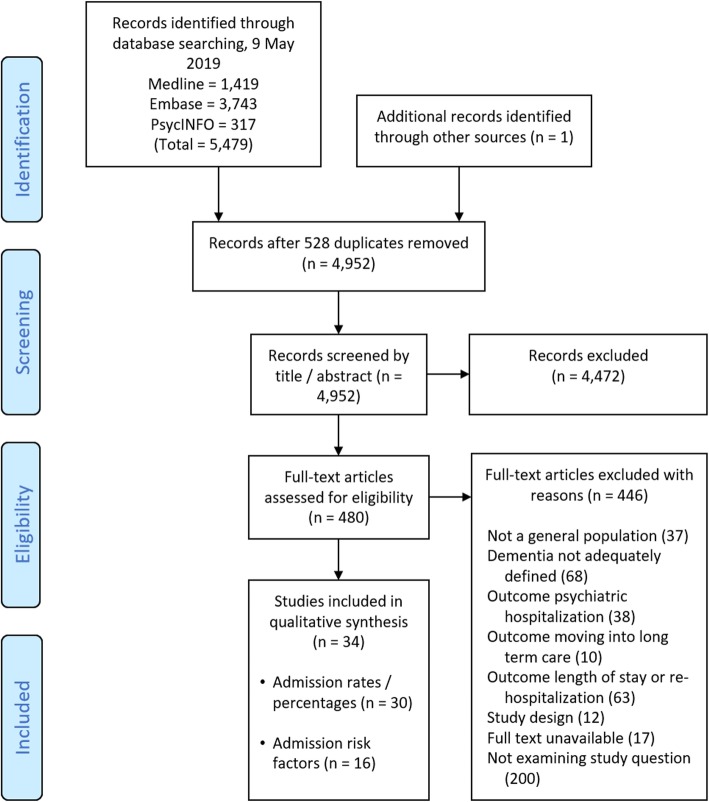
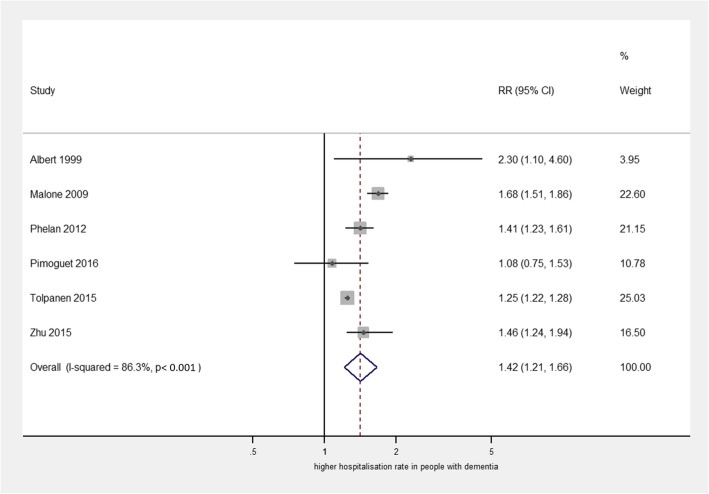
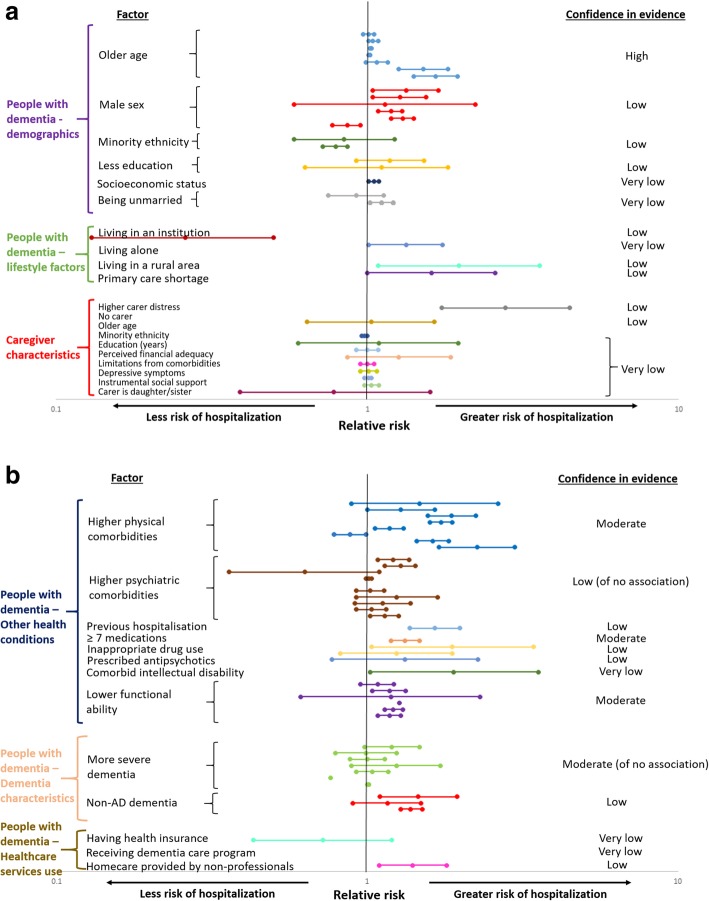
BACKGROUND: Hospitalisation is often harmful for people with dementia and results in high societal costs, so avoidance of unnecessary admissions is a global priority. However, no intervention has yet reduced admissions of community-dwelling people with dementia. We therefore aimed to examine hospitalisation rates of people with dementia and whether these differ from people without dementia and to identify socio-demographic and clinical predictors of hospitalisation. METHODS: We searched MEDLINE, Embase, and PsycINFO from inception to 9 May 2019. We included observational studies which (1) examined community-dwelling people with dementia of any age or dementia subtype, (2) diagnosed dementia using validated diagnostic criteria, and (3) examined all-cause general (i.e. non-psychiatric) hospital admissions. Two authors screened abstracts for inclusion and independently extracted data and assessed included studies for risk of bias. Three authors graded evidence strength using Cochrane's GRADE approach, including assessing for evidence of publication bias using Begg's test. We used random effects meta-analysis to pool estimates for hospitalisation risk in people with and without dementia. RESULTS: We included 34 studies of 277,432 people with dementia: 17 from the USA, 15 from Europe, and 2 from Asia. The pooled relative risk of hospitalisation for people with dementia compared to those without was 1.42 (95% confidence interval 1.21, 1.66) in studies adjusted for age, sex, and physical comorbidity. Hospitalisation rates in people with dementia were between 0.37 and 1.26/person-year in high-quality studies. There was strong evidence that admission is associated with older age, and moderately strong evidence that multimorbidity, polypharmacy, and lower functional ability are associated with admission. There was strong evidence that dementia severity alone is not associated. CONCLUSIONS: People with dementia are more frequently admitted to hospital than those without dementia, independent of physical comorbidities. Future interventions to reduce unnecessary hospitalisations should target potentially modifiable factors, such as polypharmacy and functional ability, in high-risk populations.
Overview
The claims and statistics of this paper haven’t been checked yet.
Free: it reads the open-access text and checks the first 5 claims that cite a source we can check. Create a free account to check every claim.
Integrity signals
Registry
Cites
Statistics
Figures
Verification
Claims the paper makes
The claims and statistics of this paper haven’t been checked yet.
Free: it reads the open-access text and checks the first 5 claims that cite a source we can check. Create a free account to check every claim.
Claims other papers make about this one
Each is checked against this paper’s own text: does it say what the citing paper says it does?
The source backs part of the claim, not all of it — or backs it for a different population, condition or comparison.
In the citing paper
“Thanks to their daily caregiving role, direct care workers are well-placed to observe and report changes of status to clinical care partners, thereby helping to reduce the risk of emergency department visits, avoidable hospitalizations and other adverse outcomes that are disproportionately high among people living with dementia.664,665”
From 2023 Alzheimer's disease facts and figures (2023) · cites this paper as [664]
Experimental — accuracy not yet measuredThe source backs part of the claim, not all of it — or backs it for a different population, condition or comparison.
In the citing paper
“Thanks to their daily caregiving role, direct care workers are well‐placed to observe and report changes of status to clinical colleagues, thereby helping to reduce the risk of emergency department visits, avoidable hospitalizations and other adverse outcomes that are disproportionately high among people living with dementia.”
From 2024 Alzheimer's disease facts and figures (2024) · cites this paper as [773]
Experimental — accuracy not yet measuredThe check wasn’t confident either way, so it gives no verdict — never disputed.
In the citing paper
“Although evidence exists that if staff are sufficiently and rigorously protected they are unlikely to develop COVID-19, many staff have become unwell and some have died.263, 264”
From Dementia prevention, intervention, and care: 2020 report of the Lancet Commission (2020) · cites this paper as [264]
Experimental — accuracy not yet measuredThe check wasn’t confident either way, so it gives no verdict — never disputed.
In the citing paper
“The impacts of COVID-19 on people with dementia might be particularly severe in LMICs, due to smaller health budgets for testing and protective equipment, capacity of health-care systems, quality of care home provision and patterns of workforce mobility.264”
From Dementia prevention, intervention, and care: 2020 report of the Lancet Commission (2020) · cites this paper as [264]
Experimental — accuracy not yet measured
Self-check
Percentages, sums and reported differences re-computed from the paper’s own numbers.
The self-check needs the paper’s full text.
Citations
Cites
Preferred Reporting Items for Systematic Reviews and Meta-Analyses: the PRISMA statement
Moher, D., Liberati, A., Tetzlaff, J., Altman, D. G., & for the PRISMA Group (2009) · BMJ · doi:10.1136/bmj.b2535 · Cited by 83,823
Preferred reporting items for systematic reviews and meta-analyses: the PRISMA Statement.
(2009) · PubMed Central · Cited by 44,859
Meta-analysis in clinical trials
DerSimonian, R., & Laird, N. (1986) · Controlled Clinical Trials · doi:10.1016/0197-2456(86)90046-2 · Cited by 39,552 · cited 1×
“Random effects models are appropriate where there is potential heterogeneity in study populations [16] and allows a combination of different measures of relative risk, e.”
BackgroundWang, G., Ma, R., Qiao, G., Wada, K., Aizawa, Y., & Satoh, T. (2015) · Integrative Medicine International · doi:10.1159/000368408 · Cited by 18,657
(2014) · Medical Entomology and Zoology · Cited by 17,633
Operating characteristics of a rank correlation test for publication bias
Begg, C. B., & Mazumdar, M. (1994) · Biometrics · doi:10.2307/2533446 · Cited by 16,955 · cited 1×
“10 indicating risk of publication bias [15], using STATA 14.”
MethodDementia prevention, intervention, and care
Livingston, G., Sommerlad, A., Orgeta, V., Costafreda, S. G., Huntley, J., Ames, D., Ballard, C., Banerjee, S., Burns, A., Cohen-Mansfield, J., et al. (2017) · The Lancet · doi:10.1016/s0140-6736(17)31363-6 · Cited by 6,072 · cited 1×
“Background The number of older people is expected to rise throughout the century, with the number of people with dementia rising in parallel [1].”
BackgroundSelf-citationMann, C. J. (2003) · Emergency Medicine Journal · doi:10.1136/emj.20.1.54 · Cited by 1,558 · cited 1×
“Research cohort participants are often healthier than non-participants [53] and are subject to attrition of study participants; death is a common cause of attrition in studies of older populations [54].”
BackgroundLiving Well with Dementia: A National Dementia Strategy: (608082011-001)
(2009) · PsycEXTRA Dataset · doi:10.1037/e608082011-001 · Cited by 1,123
Iorio, A., Spencer, F. A., Falavigna, M., Alba, C., Lang, E., Burnand, B., McGinn, T., Hayden, J., Williams, K., Shea, B., et al. (2015) · BMJ · doi:10.1136/bmj.h870 · Cited by 880 · cited 1×
“We then used the Cochrane Collaboration’s Grading of Recommendations, Assessment, Development and Evaluation (GRADE) approach to rate the confidence in the estimates given [14].”
MethodFu, R., Gartlehner, G., Grant, M., Shamliyan, T., Sedrakyan, A., Wilt, T. J., Griffith, L., Oremus, M., Raina, P., Ismaila, A., et al. (2011) · Journal of Clinical Epidemiology · doi:10.1016/j.jclinepi.2010.08.010 · Cited by 730
Association of Incident Dementia With Hospitalizations
Phelan, E. A., Borson, S., Grothaus, L., Balch, S., & Larson, E. B. (2012) · JAMA · doi:10.1001/jama.2011.1964 · Cited by 547
Bynum, J. P. W., Rabins, P. V., Weller, W., Niefeld, M., Anderson, G. F., & Wu, A. W. (2004) · Journal of the American Geriatrics Society · doi:10.1111/j.1532-5415.2004.52054.x · Cited by 405 · cited 4×
“Sommerlad A, Perera G, Mueller C, Singh-Manoux A, Lewis G, Stewart R, et al. Hospitalisation of people with dementia: evidence from English electronic health records from 2008 to 2016.”
BackgroundInfluentialSager, M. A., Rudberg, M. A., Jalaluddin, M., Franke, T., Inouye, S. K., Landefeld, C. S., Siebens, H., & Winograd, C. H. (1996) · Journal of the American Geriatrics Society · doi:10.1111/j.1532-5415.1996.tb00910.x · Cited by 403 · cited 1×
“Hospital admissions can be harmful and distressing for people with dementia who are less likely to receive adequate pain relief [2], more likely to receive potentially harmful medication [3], have a higher risk of delirium than those without dementia [4], and commonly decline functionally during admission [5].”
BackgroundMartin, P., Tamblyn, R., Benedetti, A., Ahmed, S., & Tannenbaum, C. (2018) · JAMA · doi:10.1001/jama.2018.16131 · Cited by 401 · cited 1×
“A recent randomised controlled trial indicated that communitybased deprescribing can be undertaken safely in older people without dementia, so it should be considered whether this could safely extend to people with dementia [60].”
BackgroundTransitions in Care for Older Adults with and without Dementia
Callahan, C. M., Arling, G., Tu, W., Rosenman, M. B., Counsell, S. R., Stump, T. E., & Hendrie, H. C. (2012) · Journal of the American Geriatrics Society · doi:10.1111/j.1532-5415.2012.03905.x · Cited by 253
The clinical implications of ageing for rational drug therapy
Shi, S., Mörike, K., & Klotz, U. (2008) · European Journal of Clinical Pharmacology · doi:10.1007/s00228-007-0422-1 · Cited by 244 · cited 1×
“Drug interactions are more likely with each drug taken [58] and are more likely to be harmful in older patients [59].”
BackgroundHospitalization in Community‐Dwelling Persons with Alzheimer's Disease: Frequency and Causes
Rudolph, J. L., Zanin, N. M., Jones, R. N., Marcantonio, E. R., Fong, T. G., Yang, F. M., Yap, L., & Inouye, S. K. (2010) · Journal of the American Geriatrics Society · doi:10.1111/j.1532-5415.2010.02924.x · Cited by 203 · cited 2×
“There was also moderate confidence in the finding that severity of dementia was not associated as three studies at low risk of bias consistently found no effect of dementia severity on hospitalisation [37, 38, 51].”
BackgroundHealthcare costs and utilization for Medicare beneficiaries with Alzheimer's
Zhao, Y., Kuo, T.-C., Weir, S., Kramer, M. S., & Ash, A. S. (2008) · BMC Health Services Research · doi:10.1186/1472-6963-8-108 · Cited by 196 · cited 1×
“19), but we did not include these in our meta-analysis as we wished to examine the hospitalisation risk accounting for the potential confounding effect of physical illness; we were unable to include one other study which did not provide a specific p value or confidence interval [44].”
BackgroundClague, F., Mercer, S. W., McLean, G., Reynish, E., & Guthrie, B. (2016) · Age and Ageing · doi:10.1093/ageing/afw176 · Cited by 195
Browne, J., Edwards, D. A., Rhodes, K. M., Brimicombe, D. J., & Payne, R. A. (2017) · BMJ Open · doi:10.1136/bmjopen-2016-012546 · Cited by 186
Pérez, T., Moriarty, F., Wallace, E., McDowell, R., Redmond, P., & Fahey, T. (2018) · BMJ · doi:10.1136/bmj.k4524 · Cited by 168 · cited 1×
“The study examining polypharmacy adjusted for patient comorbidities, suggesting that medication use may contribute to elevated hospitalisation risk independent of multimorbidity; potentially inappropriate prescribing is common in older people without dementia and associated with a higher risk of hospitalisation [57].”
BackgroundCauses of Hospital Admission for People With Dementia: A Systematic Review and Meta-Analysis
Toot, S., Devine, M., Akporobaro, A., & Orrell, M. W. (2013) · Journal of the American Medical Directors Association · doi:10.1016/j.jamda.2013.01.011 · Cited by 153 · cited 1×
“An earlier systematic review of reasons for admissions for people with dementia found that they are more likely to have been admitted to hospital for falls, fractures, and respiratory and urological infections than inpatients without dementia [56], so falls prevention and early recognition and management of respirator…”
BackgroundZhu, C. W., Scarmeas, N., Ornstein, K., Albert, M., Brandt, J., Blacker, D., Sano, M., & Stern, Y. (2015) · Alzheimer's & Dementia · doi:10.1016/j.jalz.2013.12.018 · Cited by 137 · cited 1×
“There was also moderate confidence in the finding that severity of dementia was not associated as three studies at low risk of bias consistently found no effect of dementia severity on hospitalisation [37, 38, 51].”
Drug metabolism and drug interactions in the elderly
Herrlinger, C., & Klotz, U. E. (2001) · Best Practice & Research Clinical Gastroenterology · doi:10.1053/bega.2001.0249 · Cited by 132 · cited 1×
“Drug interactions are more likely with each drug taken [58] and are more likely to be harmful in older patients [59].”
BackgroundJennings, L. A., Laffan, A. M., Schlissel, A. C., Colligan, E., Tan, Z., Wenger, N. S., & Reuben, D. B. (2019) · JAMA Internal Medicine · doi:10.1001/jamainternmed.2018.5579 · Cited by 128
Polypharmacy in people with dementia: Associations with adverse health outcomes
Mueller, C., Molokhia, M., Perera, G., Veronese, N., Stubbs, B., Shetty, H., Codling, D., Huntley, J., & Stewart, R. (2018) · Experimental Gerontology · doi:10.1016/j.exger.2018.02.011 · Cited by 113 · cited 5×
“Livingston G, Sommerlad A, Orgeta V, Costafreda SG, Huntley J, Ames D, et al.”
BackgroundResultInfluentialUse and cost of hospitalization in dementia: longitudinal results from a community-based study
Zhu, C. W., Cosentino, S., Ornstein, K., Gu, Y., Andrews, H., & Stern, Y. (2015) · International Journal of Geriatric Psychiatry · doi:10.1002/gps.4222 · Cited by 106
Cortes, F., Nourhashémi, F., Guérin, O., Cantet, C., Gillette-Guyonnet, S., Andrieu, S., Ousset, P.-J., Vellas, B., & REAL-FR Group (2008) · Alzheimer's & Dementia · doi:10.1016/j.jalz.2007.10.018 · Cited by 106
White, N., Leurent, B., Lord, K., Scott, S., Jones, L., & Sampson, E. L. (2017) · International Journal of Geriatric Psychiatry · doi:10.1002/gps.4463 · Cited by 103 · cited 1×
“Hospital admissions can be harmful and distressing for people with dementia who are less likely to receive adequate pain relief [2], more likely to receive potentially harmful medication [3], have a higher risk of delirium than those without dementia [4], and commonly decline functionally during admission [5].”
BackgroundHospitalization and Alzheimer's Disease: Results From a Community-Based Study
Albert, S. M., Costa, R., Merchant, C., Small, S., Jenders, R. A., & Stern, Y. (1999) · The Journals of Gerontology Series A: Biological Sciences and Medical Sciences · doi:10.1093/gerona/54.5.m267 · Cited by 92
Sköldunger, A., Fastbom, J., Wimo, A., Fratiglioni, L., & Johnell, K. (2015) · Drugs & Aging · doi:10.1007/s40266-015-0287-4 · Cited by 91
Lichtner, V., Dowding, D., Allcock, N., Keady, J., Sampson, E. L., Briggs, M., Corbett, A., James, K., Lasrado, R., Swarbrick, C., et al. (2016) · BMC Health Services Research · doi:10.1186/s12913-016-1690-1 · Cited by 91 · cited 1×
“Hospital admissions can be harmful and distressing for people with dementia who are less likely to receive adequate pain relief [2], more likely to receive potentially harmful medication [3], have a higher risk of delirium than those without dementia [4], and commonly decline functionally during admission [5].”
BackgroundThe impact of attrition on the representativeness of cohort studies of older people
Brilleman, S. L., Pachana, N. A., & Dobson, A. J. (2010) · BMC Medical Research Methodology · doi:10.1186/1471-2288-10-71 · Cited by 90 · cited 1×
“Research cohort participants are often healthier than non-participants [53] and are subject to attrition of study participants; death is a common cause of attrition in studies of older populations [54].”
BackgroundHospitalization in people with dementia with Lewy bodies: Frequency, duration, and cost implications
Mueller, C., Perera, G., Rajkumar, A. P., Bhattarai, M., Price, A. C., O'Brien, J. T., Ballard, C. G., Stewart, R. J., & Aarsland, D. (2017) · Alzheimer s & Dementia Diagnosis Assessment & Disease Monitoring · doi:10.1016/j.dadm.2017.12.001 · Cited by 85
Older people and emergency bed use Exploring variation
Imison, C., Poteliakhoff, E., & Thompson, J. N. (2012) · Cited by 81
Maust, D. T., Kales, H. C., McCammon, R. J., Blow, F. C., Leggett, A., & Langa, K. M. (2017) · The American Journal of Geriatric Psychiatry · doi:10.1016/j.jagp.2017.02.025 · Cited by 74
Sommerlad, A., Perera, G., Mueller, C., Singh-Manoux, A., Lewis, G., Stewart, R., & Livingston, G. (2019) · European Journal of Epidemiology · doi:10.1007/s10654-019-00481-x · Cited by 74 · cited 4×
“Sommerlad A, Perera G, Mueller C, Singh-Manoux A, Lewis G, Stewart R, et al. Hospitalisation of people with dementia: evidence from English electronic health records from 2008 to 2016.”
BackgroundResultInfluentialSelf-citationNourhashémi, F., Amouyal-Barkate, K., Guyonnet, S., Cantet, C., & Vellas, B. J. (2005) · PubMed · Cited by 72
Medicare Utilization and Expenditures Around Incident Dementia in a Multiethnic Cohort
Zhu, C. W., Cosentino, S., Ornstein, K., Gu, Y., Scarmeas, N., Andrews, H., & Stern, Y. (2015) · The Journals of Gerontology Series A: Biological Sciences and Medical Sciences · doi:10.1093/gerona/glv124 · Cited by 67 · cited 1×
“Admissions are costlier for people with dementia than those without [8], and pressures on hospitals to reduce admission length could also mean that people with dementia are prematurely discharged from hospital into long-term care [9].”
BackgroundBurden of Alzheimer's disease and association with negative health outcomes.
Malone, D. C., McLaughlin, T. P., Wahl, P. M., Leibman, C. W., Arrighi, H. M., Cziraky, M. J., & Mucha, L. (2009) · PubMed · Cited by 66
Factors associated with nutritional status in a group of people in an early stage of dementia
Holm, B. (2003) · Clinical Nutrition · doi:10.1016/s0261-5614(03)00035-9 · Cited by 64 · cited 1×
“For instance, decreased ability to prepare food in people with dementia could lead to dangerous levels of malnutrition, dehydration, or weight loss [61], and therefore acute hospitalisation.”
BackgroundThorpe, J. M., Van Houtven, C. H., Sleath, B. L., & Thorpe, C. T. (2010) · The Journal of Rural Health · doi:10.1111/j.1748-0361.2010.00276.x · Cited by 62 · cited 6×
“People with multimorbidities are unsurprisingly at higher risk of admission, but in one study, multimorbidity was associated with a higher risk of conditions judged as potentially manageable within primary care [12].”
BackgroundResultInfluentialPreventable hospitalizations among older patients with cognitive impairments and dementia
Wolf, D. G. F., Rhein, C., Geschke, K., & Fellgiebel, A. (2018) · International Psychogeriatrics · doi:10.1017/s1041610218000960 · Cited by 59 · cited 1×
“Avoidable admissions are more frequent for people with dementia [6] and readmission is common [7].”
BackgroundHealth Care Utilization in Dementia Patients With Psychiatric Comorbidity
Kunik, M. E., Snow, A. L., Molinari, V. A., Menke, T. J., Souchek, J., Sullivan, G., & Ashton, C. M. (2003) · The Gerontologist · doi:10.1093/geront/43.1.86 · Cited by 58
Hill, J., Fillit, H., Shah, S. N., del Valle, M. C., & Futterman, R. (2005) · Journal of Alzheimer's Disease · doi:10.3233/jad-2005-8105 · Cited by 57
Phelan, E. A., Debnam, K. J., Anderson, L. A., & Owens, S. B. (2015) · Medical Care · doi:10.1097/mlr.0000000000000294 · Cited by 55 · cited 1×
“Previously designed interventions to reduce hospitalisations in people with dementia have not been found to be effective [10].”
BackgroundChen, L., Reed, C., Happich, M., Nyhuis, A., & Lenox-Smith, A. (2014) · BMC Geriatrics · doi:10.1186/1471-2318-14-76 · Cited by 52
Dementia and Hospital Readmission Rates: A Systematic Review
Pickens, S., Naik, A. D., Catic, A., & Kunik, M. E. (2017) · Dementia and Geriatric Cognitive Disorders Extra · doi:10.1159/000481502 · Cited by 47 · cited 1×
“Avoidable admissions are more frequent for people with dementia [6] and readmission is common [7].”
BackgroundTolppanen, A., Taipale, H., Purmonen, T., Koponen, M., Soininen, H., & Hartikainen, S. (2015) · Alzheimer's & Dementia · doi:10.1016/j.jalz.2014.10.005 · Cited by 36 · cited 1×
“17 admissions/py [43] may be the most reliable due to the large sample size and outcome derivation from a national register.”
BackgroundPrediction of general hospital admission in people with dementia: Cohort study
Russ, T. C., Parra, M. A., Lim, A. E., Law, E., Connelly, P. J., & Starr, J. M. (2015) · British Journal of Psychiatry · doi:10.1192/bjp.bp.113.137166 · Cited by 34 · cited 1×
“There was also moderate confidence in the finding that severity of dementia was not associated as three studies at low risk of bias consistently found no effect of dementia severity on hospitalisation [37, 38, 51].”
Chen, Y., Ho, C., Huang, C., Hsu, Y., Chen, Y., Chen, P., Chen, G., & Wang, J. (2017) · Geriatrics and gerontology international/Geriatrics & gerontology international · doi:10.1111/ggi.13084 · Cited by 34 · cited 1×
“There was low confidence in the evidence as the studies are of moderate and low quality respectively, and they present contradictory estimates [47, 48].”
Dementia as a determinant of social and health service use in the last two years of life 1996-2003
Forma, L., Rissanen, P., Aaltonen, M. S., Raitanen, J. A., & Jylhä, M. K. (2011) · BMC Geriatrics · doi:10.1186/1471-2318-11-14 · Cited by 33 · cited 1×
“There was low confidence in the evidence as the studies are of moderate and low quality respectively, and they present contradictory estimates [47, 48].”
Soto, M. E., Andrieu, S., Garès, V., Cesari, M., Guyonnet, S., Cantet, C., Vellas, B. J., & Nourhashémi, F. (2015) · Journal of the American Geriatrics Society · doi:10.1111/jgs.13347 · Cited by 31
Health Care Utilization Among Elderly Medicare Beneficiaries With Coexisting Dementia and Cancer
Kedia, S. K., Chavan, P. P., Boop, S. E., & Yu, X. (2017) · Gerontology and Geriatric Medicine · doi:10.1177/2333721416689042 · Cited by 31
Sloane, P. D., Schifeling, C. H., Beeber, A. S., Ward, K. T., Reed, D., Gwyther, L. P., Matchar, B., & Zimmerman, S. (2017) · Journal of the American Geriatrics Society · doi:10.1111/jgs.14672 · Cited by 27
Primary vs. Subspecialty Care: A Structured Follow-Up of Dementia Patients and Their Caregivers
Aupperle, P. M., & Coyne, A. C. (2000) · American Journal of Geriatric Psychiatry · doi:10.1097/00019442-200005000-00012 · Cited by 25
Health Care Utilization and Costs Among Patients With AD With and Without Dysphagia
Tian, H., Abouzaid, S., Sabbagh, M. N., Chen, W., Gabriel, S., Kahler, K. H., & Kim, E. (2012) · Alzheimer Disease & Associated Disorders · doi:10.1097/wad.0b013e318258cd7d · Cited by 24
Brüggenjürgen, B., Andersohn, F., Ezzat, N., Lacey, L. A., & Willich, S. N. (2015) · Journal of Medical Economics · doi:10.3111/13696998.2015.1014090 · Cited by 23
Pimouguet, C., Rizzuto, D., Fastbom, J., Lågergren, M., Fratiglioni, L., & Xu, W. (2016) · Journal of Alzheimer s Disease · doi:10.3233/jad-150853 · Cited by 23 · cited 4×
“Sommerlad A, Perera G, Mueller C, Singh-Manoux A, Lewis G, Stewart R, et al. Hospitalisation of people with dementia: evidence from English electronic health records from 2008 to 2016.”
BackgroundInfluentialAxmon, A., Karlsson, B., & Ahlström, G. (2016) · Journal of Intellectual Disability Research · doi:10.1111/jir.12338 · Cited by 21 · cited 1×
“Four other studies [23, 34, 41, 46] did not adjust for comorbidity and two of these found notably higher relative risk estimates (3.”
ResultPuhan, M. A., Hansel, N. N., Sobradillo, P., Enright, 5., Lange, P., Hickson, D., Menezes, A. M., ter Riet, G., Held, U., Domingo‐Salvany, A., et al. (2012) · Research at the University of Copenhagen (University of Copenhagen) · doi:10.1136/bmjopen-2012 · Cited by 20
Hospital admission risk in community dwelling elderly dementia subjects
(2018) · Journal of Clinical Gerontology and Geriatrics · doi:10.24816/jcgg.2018.v9i2.02 · Cited by 2
Exploring variation in emergency bed use by older people
Hughes, G. F. (2012) · Emergency Medicine Journal · doi:10.1136/emermed-2012-201867 · Cited by 1
Untitled work
Moher (2009) · doi:10.1371/journal.pmed1000097
Research works printed but not linked: 3
- Department of Health Living well with dementia: a National Dementia Strategy 2009
- Wells G Shea B O’Connell D Peterson J Welch V Losos M Newcastle-Ottawa quality assessment scale case control studies 2014
- Bynum J Rabins P Weller W Niefeld M Anderson G Wu A Illness, Medicare expenditures, and hospital use J Am Geriatr Soc 2004 52 187 194 10.1111/j.1532-5415.2004.52054.x 14728626 · DOI · Paper page
Cited by
Dementia prevention, intervention, and care: 2020 report of the Lancet Commission
Livingston, G., Huntley, J., Sommerlad, A., Ames, D., Ballard, C., Banerjee, S., Brayne, C., Burns, A., Cohen-Mansfield, J., Cooper, C., et al. (2020) · The Lancet · doi:10.1016/s0140-6736(20)30367-6 · Cited by 10,430
Self-citationRetracted2023 Alzheimer's disease facts and figures
(2023) · Alzheimer's & Dementia · doi:10.1002/alz.13016 · Cited by 3,212
2024 Alzheimer's disease facts and figures
(2024) · Alzheimer's & Dementia · doi:10.1002/alz.13809 · Cited by 2,536
2025 Alzheimer's disease facts and figures
(2025) · Alzheimer's & Dementia · doi:10.1002/alz.70235 · Cited by 474
Continuity of GP care for patients with dementia: Impact on prescribing and the health of patients
Delgado, J., Evans, P. H., Gray, D. P., Sidaway-Lee, K., Allan, L., Clare, L., Ballard, C., Masoli, J., Valderas, J. M., & Melzer, D. (2022) · British Journal of General Practice · doi:10.3399/bjgp.2021.0413 · Cited by 70
Metadata
- Authors
- Shepherd, H., Livingston, G., Chan, J., & Sommerlad, A.
- Affiliations
- University College London (GB)
- Corresponding author
- Sommerlad, Andrew
- Venue
- BMC Medicine
- Published
- 2019-07-15
- Volume
- 17
- Issue
- 1
- Pages
- 130-130
- ISSN
- 1741-7015 (ISSN-L)
- PMC
- PMC6628507
- OpenAlex
- W2956299528
- Cited by
- 232
- References
- 64
- Citations by year
- 2026: 34 · 2025: 34 · 2024: 50 · 2023: 31 · 2022: 43 · 2021: 22 · 2020: 18
- FWCI
- 3.49
- Type
- journal article
- Language
- en
- Open access
- gold
- doi.org
- Licence
- cc-by
- creativecommons.org/licenses/by/4.0/ (tdm)
- creativecommons.org/licenses/by/4.0/ (vor)
- Locations
- BMC Medicine (publishedVersion, cc-by)
- PubMed Central (publishedVersion, cc-by)
- PubMed (publishedVersion)
- DOAJ (DOAJ: Directory of Open Access Journals) (submittedVersion, cc-by-sa)
- UCL Discovery (University College London) (submittedVersion)
- Funders
- Wellcome Trust (200163/Z/15/Z)
- Alzheimer's Society
- National Institute for Health and Care Research
- Marie Curie (MCCC-FCO-11-U)
- University College London
- Economic and Social Research Council
- Topics
- Health Sciences › Medicine › Psychiatry and Mental health › Dementia and Cognitive Impairment Research
- Health Sciences › Medicine › Geriatrics and Gerontology › Geriatric Care and Nursing Homes
- Health Sciences › Medicine › Geriatrics and Gerontology › Pharmaceutical Practices and Patient Outcomes
- Keywords
- dementia, hospitalization, community-dwelling people with dementia, multimorbidity, polypharmacy, functional capacity, dementia severity, old age, unnecessary hospitalization
- MeSH terms
- Aged, Dementia, Hospitalization, Humans, Prognosis, Prospective Studies, Risk Factors
About these checks
Registry, retraction, Cites and statistics results are computed, not judged, with one exception: a printed reference that no index lists is read once by a model before it counts as a citation error. Claims are extracted by a model and kept only when their quote appears verbatim in the text; each cited source is then checked, with a model’s help, for whether it says what the claim relies on. Those verdicts can be wrong — read the claim’s quote and the cited source before relying on one.
Statistics and arithmetic are recomputed, not judged.
Confidence bands are shown only for fields calibrated on our annotated test set. None is calibrated yet, so no band is shown.
What counts as a claim ›How we measure confidence ›How we check this ›
Are you an author, or do you see a problem with this page? Request a review
Data sources
Bibliographic data: Semantic Scholar, OpenAlex, Crossref.
Contains information from the Semantic Scholar Academic Graph Datasets, made available under the ODC Attribution License (ODC-BY 1.0).
Semantic Scholar’s data is described in: Kinney, R., et al. (2023). The Semantic Scholar Open Data Platform. arXiv:2301.10140.
