

Hospitalisation rates and predictors in people with dementia: a systematic review and meta-analysis
Open accessThe DOI matches its Crossref record; 64 of the 65 references it cites were found in a registry or an index.
Abstract
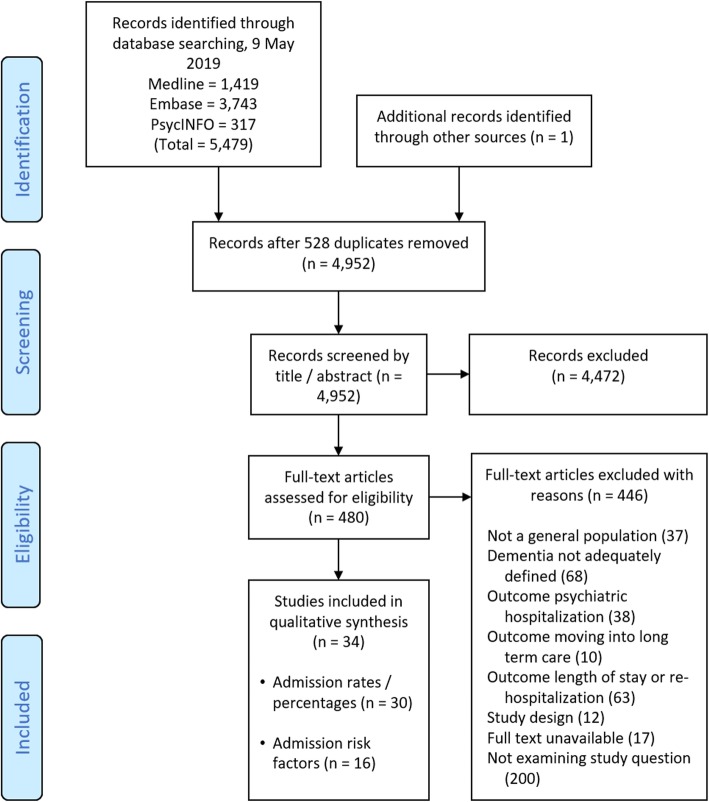
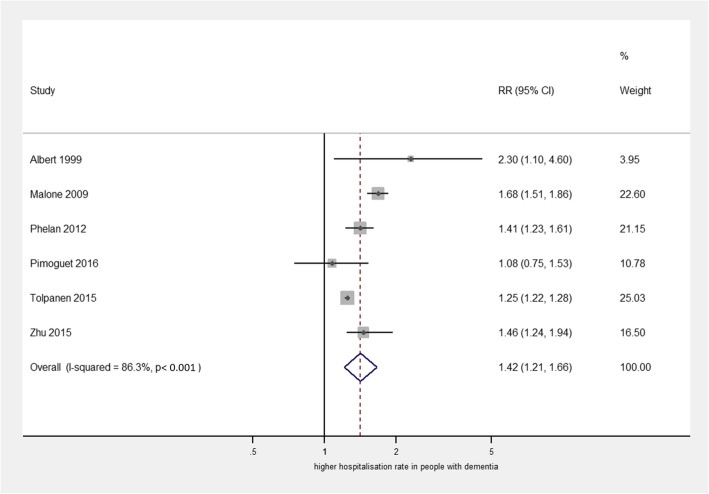
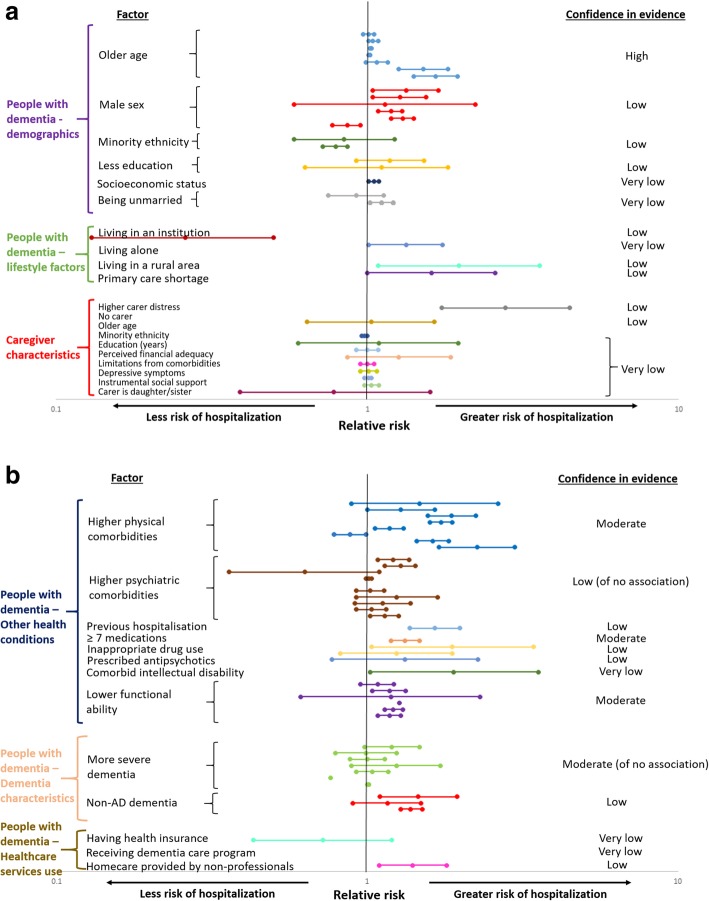
BACKGROUND: Hospitalisation is often harmful for people with dementia and results in high societal costs, so avoidance of unnecessary admissions is a global priority. However, no intervention has yet reduced admissions of community-dwelling people with dementia. We therefore aimed to examine hospitalisation rates of people with dementia and whether these differ from people without dementia and to identify socio-demographic and clinical predictors of hospitalisation. METHODS: We searched MEDLINE, Embase, and PsycINFO from inception to 9 May 2019. We included observational studies which (1) examined community-dwelling people with dementia of any age or dementia subtype, (2) diagnosed dementia using validated diagnostic criteria, and (3) examined all-cause general (i.e. non-psychiatric) hospital admissions. Two authors screened abstracts for inclusion and independently extracted data and assessed included studies for risk of bias. Three authors graded evidence strength using Cochrane's GRADE approach, including assessing for evidence of publication bias using Begg's test. We used random effects meta-analysis to pool estimates for hospitalisation risk in people with and without dementia. RESULTS: We included 34 studies of 277,432 people with dementia: 17 from the USA, 15 from Europe, and 2 from Asia. The pooled relative risk of hospitalisation for people with dementia compared to those without was 1.42 (95% confidence interval 1.21, 1.66) in studies adjusted for age, sex, and physical comorbidity. Hospitalisation rates in people with dementia were between 0.37 and 1.26/person-year in high-quality studies. There was strong evidence that admission is associated with older age, and moderately strong evidence that multimorbidity, polypharmacy, and lower functional ability are associated with admission. There was strong evidence that dementia severity alone is not associated. CONCLUSIONS: People with dementia are more frequently admitted to hospital than those without dementia, independent of physical comorbidities. Future interventions to reduce unnecessary hospitalisations should target potentially modifiable factors, such as polypharmacy and functional ability, in high-risk populations.
Overview
The claims and statistics of this paper haven’t been checked yet.
Free: it reads the open-access text and checks the first 5 claims that cite a source we can check. Create a free account to check every claim.
Integrity signals
Registry
Cites
Statistics
Figures
Verification
Claims the paper makes
The claims and statistics of this paper haven’t been checked yet.
Free: it reads the open-access text and checks the first 5 claims that cite a source we can check. Create a free account to check every claim.
Claims other papers make about this one
Each is checked against this paper’s own text: does it say what the citing paper says it does?
The source backs part of the claim, not all of it — or backs it for a different population, condition or comparison.
In the citing paper
“Thanks to their daily caregiving role, direct care workers are well-placed to observe and report changes of status to clinical care partners, thereby helping to reduce the risk of emergency department visits, avoidable hospitalizations and other adverse outcomes that are disproportionately high among people living with dementia.664,665”
From 2023 Alzheimer's disease facts and figures (2023) · cites this paper as [664]
Experimental — accuracy not yet measuredThe source backs part of the claim, not all of it — or backs it for a different population, condition or comparison.
In the citing paper
“Thanks to their daily caregiving role, direct care workers are well‐placed to observe and report changes of status to clinical colleagues, thereby helping to reduce the risk of emergency department visits, avoidable hospitalizations and other adverse outcomes that are disproportionately high among people living with dementia.”
From 2024 Alzheimer's disease facts and figures (2024) · cites this paper as [773]
Experimental — accuracy not yet measuredThe check wasn’t confident either way, so it gives no verdict — never disputed.
In the citing paper
“Although evidence exists that if staff are sufficiently and rigorously protected they are unlikely to develop COVID-19, many staff have become unwell and some have died.263, 264”
From Dementia prevention, intervention, and care: 2020 report of the Lancet Commission (2020) · cites this paper as [264]
Experimental — accuracy not yet measuredThe check wasn’t confident either way, so it gives no verdict — never disputed.
In the citing paper
“The impacts of COVID-19 on people with dementia might be particularly severe in LMICs, due to smaller health budgets for testing and protective equipment, capacity of health-care systems, quality of care home provision and patterns of workforce mobility.264”
From Dementia prevention, intervention, and care: 2020 report of the Lancet Commission (2020) · cites this paper as [264]
Experimental — accuracy not yet measured
Self-check
Percentages, sums and reported differences re-computed from the paper’s own numbers.
The self-check needs the paper’s full text.
Citations
Cites
Preferred Reporting Items for Systematic Reviews and Meta-Analyses: the PRISMA statement
Moher, D., Liberati, A., Tetzlaff, J., Altman, D. G., & for the PRISMA Group (2009) · BMJ · doi:10.1136/bmj.b2535 · Cited by 83,823
Preferred reporting items for systematic reviews and meta-analyses: the PRISMA Statement.
(2009) · PubMed Central · Cited by 44,859
Meta-analysis in clinical trials
DerSimonian, R., & Laird, N. (1986) · Controlled Clinical Trials · doi:10.1016/0197-2456(86)90046-2 · Cited by 39,552 · cited 1×
“Random effects models are appropriate where there is potential heterogeneity in study populations [16] and allows a combination of different measures of relative risk, e.”
BackgroundWang, G., Ma, R., Qiao, G., Wada, K., Aizawa, Y., & Satoh, T. (2015) · Integrative Medicine International · doi:10.1159/000368408 · Cited by 18,657
(2014) · Medical Entomology and Zoology · Cited by 17,633
Operating characteristics of a rank correlation test for publication bias
Begg, C. B., & Mazumdar, M. (1994) · Biometrics · doi:10.2307/2533446 · Cited by 16,955 · cited 1×
“10 indicating risk of publication bias [15], using STATA 14.”
MethodDementia prevention, intervention, and care
Livingston, G., Sommerlad, A., Orgeta, V., Costafreda, S. G., Huntley, J., Ames, D., Ballard, C., Banerjee, S., Burns, A., Cohen-Mansfield, J., et al. (2017) · The Lancet · doi:10.1016/s0140-6736(17)31363-6 · Cited by 6,072 · cited 1×
“Background The number of older people is expected to rise throughout the century, with the number of people with dementia rising in parallel [1].”
BackgroundSelf-citationMann, C. J. (2003) · Emergency Medicine Journal · doi:10.1136/emj.20.1.54 · Cited by 1,558 · cited 1×
“Research cohort participants are often healthier than non-participants [53] and are subject to attrition of study participants; death is a common cause of attrition in studies of older populations [54].”
BackgroundLiving Well with Dementia: A National Dementia Strategy: (608082011-001)
(2009) · PsycEXTRA Dataset · doi:10.1037/e608082011-001 · Cited by 1,123
Iorio, A., Spencer, F. A., Falavigna, M., Alba, C., Lang, E., Burnand, B., McGinn, T., Hayden, J., Williams, K., Shea, B., et al. (2015) · BMJ · doi:10.1136/bmj.h870 · Cited by 880 · cited 1×
“We then used the Cochrane Collaboration’s Grading of Recommendations, Assessment, Development and Evaluation (GRADE) approach to rate the confidence in the estimates given [14].”
Method
Research works printed but not linked: 3
- Department of Health Living well with dementia: a National Dementia Strategy 2009
- Wells G Shea B O’Connell D Peterson J Welch V Losos M Newcastle-Ottawa quality assessment scale case control studies 2014
- Bynum J Rabins P Weller W Niefeld M Anderson G Wu A Illness, Medicare expenditures, and hospital use J Am Geriatr Soc 2004 52 187 194 10.1111/j.1532-5415.2004.52054.x 14728626 · DOI · Paper page
Cited by
Dementia prevention, intervention, and care: 2020 report of the Lancet Commission
Livingston, G., Huntley, J., Sommerlad, A., Ames, D., Ballard, C., Banerjee, S., Brayne, C., Burns, A., Cohen-Mansfield, J., Cooper, C., et al. (2020) · The Lancet · doi:10.1016/s0140-6736(20)30367-6 · Cited by 10,430
Self-citationRetracted2023 Alzheimer's disease facts and figures
(2023) · Alzheimer's & Dementia · doi:10.1002/alz.13016 · Cited by 3,212
2024 Alzheimer's disease facts and figures
(2024) · Alzheimer's & Dementia · doi:10.1002/alz.13809 · Cited by 2,536
2025 Alzheimer's disease facts and figures
(2025) · Alzheimer's & Dementia · doi:10.1002/alz.70235 · Cited by 474
Continuity of GP care for patients with dementia: Impact on prescribing and the health of patients
Delgado, J., Evans, P. H., Gray, D. P., Sidaway-Lee, K., Allan, L., Clare, L., Ballard, C., Masoli, J., Valderas, J. M., & Melzer, D. (2022) · British Journal of General Practice · doi:10.3399/bjgp.2021.0413 · Cited by 70
National Trends in Potentially Preventable Hospitalizations of Older Adults with Dementia
Anderson, T. S., Marcantonio, E. R., McCarthy, E. P., & Herzig, S. J. (2020) · Journal of the American Geriatrics Society · doi:10.1111/jgs.16636 · Cited by 68
The effect of PARO robotic seals for hospitalized patients with dementia: A feasibility study
Kelly, P. A., Cox, L. A., Petersen, S. F., Gilder, R. E., Blann, A., Autrey, A. E., & MacDonell, K. (2021) · Geriatric Nursing · doi:10.1016/j.gerinurse.2020.11.003 · Cited by 58
Afonso-Argilés, F. J., Meyer, G., Stephan, A., Comas, M., Wübker, A., Leino‐Kilpi, H., Lethin, C., Saks, K., Soto‐Martin, M., Sutcliffe, C., et al. (2020) · BMC Geriatrics · doi:10.1186/s12877-020-01835-x · Cited by 63
“In a recent systematic review of the literature, Shepherd et al. (2019) concluded that people with dementia are more frequently admitted to hospital than those without dementia, and identified hospitalisation rates in people with dementia between 0.37 and 1.26/person-year in high-quality studies…”
BackgroundInfluentialEthical considerations in design and implementation of home-based smart care for dementia
Hine, C., Nilforooshan, R., & Barnaghi, P. M. (2022) · Nursing Ethics · doi:10.1177/09697330211062980 · Cited by 54
“Hospitalisation rates for people living at home with dementia are high and reduction in emergency admissions is a key priority.(7) In the field of dementia care, AI solutions can allow both informal carers and healthcare professionals to receive alerts about troubling patterns of activity in vulnerable older people an…”
BackgroundGkioka, M., Schneider, J., Kruse, A., Tsolaki, M., Moraitou, D., & Teichmann, B. (2020) · Journal of Alzheimer s Disease · doi:10.3233/jad-200741 · Cited by 47
“to hospital settings than older people without dementia [2].”
BackgroundCaregivers' experiences of medication management advice for people living with dementia at discharge
Sawan, M. J., Jeon, Y., Bond, C., Hilmer, S. N., Chen, T. F., Wennekers, D., & Gnjidic, D. (2021) · Journal of Evaluation in Clinical Practice · doi:10.1111/jep.13551 · Cited by 41
2026 Alzheimer's disease facts and figures
Alzheimer's, T. S. O. A. D. A. A. W. S. C. I. T. B. I., neurons, T. B. N. A. E. A. A. H. A. B. H. B. O., long, E. W., connections, B. E. T. E. E. I. N. T. F. C. W. O. N. A. S., synapses, C., memories, I. F. I. T. B. O. C. T. A. R. B. O. N. A. T. U. B. A. N. T. B. C. T. O. S. T. A. S. T. T. R. T. T. B. T. S. F. T. C. B. O., thoughts, sensations, emotions, & skills., M. A. (2026) · Alzheimer s & Dementia · doi:10.1002/alz.71345 · Cited by 124
Williamson, L. E., Evans, C. J., Cripps, R. L., Leniz, J., Yorganci, E., & Sleeman, K. E. (2021) · Journal of the American Medical Directors Association · doi:10.1016/j.jamda.2021.06.012 · Cited by 38
Yorganci, E., Stewart, R. J., Sampson, E. L., & Sleeman, K. E. (2022) · Age and Ageing · doi:10.1093/ageing/afac098 · Cited by 45
“Finally, this was a descriptive study using routine data; we did not test for differences or predictors of unplanned hospital admissions, which have been examined previously [26].”
Tsai, Y. I., Browne, G., & Inder, K. (2020) · Journal of Advanced Nursing · doi:10.1111/jan.14660 · Cited by 40
A Framework for Assessing the Effects of Climate Change on Dementia Risk and Burden
Zuelsdorff, M. L., & Limaye, V. S. (2023) · The Gerontologist · doi:10.1093/geront/gnad082 · Cited by 41
“…and other chronic disease are reflected in health care utilization and costs: in the United States and elsewhere, multimorbidity that includes dementia is associated with increased risk of hospitalization (Shepherd et al., 2019) and with increased costs during care (Alzheimer’s Association, 2022).”
BackgroundBishara, D., Perera, G., Harwood, D., Taylor, D. M., Sauer, J., Funnell, N., Stewart, R. J., & Mueller, C. (2021) · Journal of the American Medical Directors Association · doi:10.1016/j.jamda.2021.08.011 · Cited by 33
Watson, J. B., Green, M. A., Giebel, C. M., Darlington‐Pollock, F., & Akpan, A. (2022) · Aging & Mental Health · doi:10.1080/13607863.2022.2107176 · Cited by 41
“Among PLWD, there are differences in the likelihood of using potentially avoidable healthcare, by socio-economic and demographic groups, including by gender, age, levels of deprivation and rurality (Husaini et al., 2015; Thorpe et al., 2010; Shepherd et al., 2019; Watson et al., 2020).”
BackgroundCouzner, L., Spence, N., Fausto, K., Huo, Y., Vale, L., Elkins, S., Saltis, J., & Cations, M. (2022) · Frontiers in Rehabilitation Sciences · doi:10.3389/fresc.2022.934099 · Cited by 35
Ding, J., Cook, A. G., Qin, X. S., Ho, S. C. H., & Johnson, C. E. (2020) · International Journal of Nursing Studies · doi:10.1016/j.ijnurstu.2020.103655 · Cited by 32
Lau, E. C. Y., Wojt, I. R., Jeon, Y., Hilmer, S. N., & Tan, E. C. K. (2022) · Journal of the American Medical Directors Association · doi:10.1016/j.jamda.2022.01.083 · Cited by 35
Chen, Y., Lai, Y.-C., Wu, Y.-C., Sasaki, J., Tsai, K., & Ho, C. (2021) · International Journal of Environmental Research and Public Health · doi:10.3390/ijerph18115705 · Cited by 28
Integrated palliative homecare in advanced dementia: reduced healthcare utilisation and costs
Pereira, M. J., Tay, R. Y., Tan, W. S., Molina, J. A. D. C., Ali, N. B., Leong, I. Y. O., Wu, H. Y., Chin, J. J., Lee, A. O. K., Koh, M. Y. H., et al. (2020) · BMJ Supportive & Palliative Care · doi:10.1136/bmjspcare-2019-002145 · Cited by 28
Lin, X., Wallis, K., Ward, S. A., Brodaty, H., Sachdev, P. S., Naismith, S. L., Krysinska, K. E., McNeil, J. J., Rowe, C. C., & Ahern, S. (2020) · BMC Geriatrics · doi:10.1186/s12877-020-01741-2 · Cited by 27
Liang, C., Chou, M.-Y., Hsu, Y., Wang, Y., Liao, M.-C., Chen, M., Hsiao, P., Chen, L., & Lin, Y. (2022) · British Journal of Clinical Pharmacology · doi:10.1111/bcp.15457 · Cited by 28
“Studies show that the effect of taking ≥7 medications on hospitalization is moderate, but conflicting results are reported for PIMs.(23,31,32,52) A Swedish longitudinal cohort study of 4108 people (3783 older adults and 319 with dementia) reports a significant association between PIMs and increasing risk of hospitaliz…”
BackgroundResultInfluentialAnderson, T. S., Marcantonio, E. R., McCarthy, E. P., Ngo, L., Schonberg, M. A., & Herzig, S. J. (2022) · Journal of General Internal Medicine · doi:10.1007/s11606-022-07549-7 · Cited by 21
Watson, J., Darlington-Pollock, F., Green, M., Giebel, C., & Akpan, A. (2021) · International Journal of Environmental Research and Public Health · doi:10.3390/ijerph182413405 · Cited by 21
“PLWD pay more out-of-pocket for social care [6] and use healthcare services more than those without dementia [7].”
BackgroundLai, H., Kolanko, M., Li, L. M., Parkinson, M. E., Bourke, N., Graham, N., David, M., Mallas, E., Su, B., Daniels, S., et al. (2024) · Journal of Infection · doi:10.1016/j.jinf.2024.106167 · Cited by 27
Determinants of hospital readmissions in older people with dementia: a narrative review
Browne, B., Ali, K., Ford, E., & Tabet, N. (2024) · BMC Geriatrics · doi:10.1186/s12877-024-04905-6 · Cited by 18
“…of dementia (BPSD), may also contribute towards increased hospital readmissions in PLWD. People with dementia who live in areas of social and economic deprivation or live with depression or anxiety, are at a greater risk of avoidable healthcare outcomes including hospital readmissions [7, 8].”
BackgroundSoysal, P., Tan, S. G., Rogowska, M., Jawad, S., Smith, L., Veronese, N., Tsiptsios, D., Tsamakis, K., Stewart, R. J., & Mueller, C. (2021) · International Journal of Geriatric Psychiatry · doi:10.1002/gps.5659 · Cited by 20
Scheel, J., Luttenberger, K., Graessel, E., Kratzer, A., & Donath, C. (2022) · BMC Geriatrics · doi:10.1186/s12877-022-03346-3 · Cited by 27
“This is similar to recent studies that found that falls were associated with polypharmacy [10, 11] and a larger number of medications [10, 12, 56] and that hospital admissions were associated with polypharmacy [13], number of medication [11], and ≥ 7 drugs [6].”
BackgroundResultInfluentialMedication misuse and overuse in community‐dwelling persons with dementia
Deardorff, W. J., Jing, B., Growdon, M. E., Yaffe, K. S., Boscardin, W. J., Boockvar, K. S., & Steinman, M. A. (2023) · Journal of the American Geriatrics Society · doi:10.1111/jgs.18463 · Cited by 20
“First, PWD are at high risk for drug-related problems.(7,8,35) PWD are more likely to be hospitalized due to adverse drug events and medication errors than persons without dementia with one study identifying that anticoagulants and opioids contributed to the majority of admissions.”
BackgroundChen, P., Ho, C., Liao, J., Smits, L., Hsiung, C. A., Yu, S., Zhang, K.-P., Petersen, I., & Sampson, E. L. (2020) · International Journal of Environmental Research and Public Health · doi:10.3390/ijerph17249255 · Cited by 20
“People with dementia are at a high risk of experiencing hospitalisation or other care transitions [4], particularly towards the end-of-life [5–7].”
BackgroundVoss, S. E., Brandling, J., Pollard, K. C., Taylor, H., Black, S., Buswell, M., Cheston, R., Cullum, S. J., Foster, T., Kirby, K., et al. (2020) · BMC Emergency Medicine · doi:10.1186/s12873-020-0306-6 · Cited by 20
Pain treatment and functional improvement in home health care: Relationship with dementia
Wang, J., Cato, K., Conwell, Y., Yu, F., Heffner, K. L., Caprio, T. V., Nathan, K., Monroe, T. B., Muench, U., & Li, Y. (2021) · Journal of the American Geriatrics Society · doi:10.1111/jgs.17420 · Cited by 16
Impact of home healthcare on end-of-life outcomes for people with dementia: a systematic review
Chen, P., Smits, L., Miranda, R., Liao, J., Petersen, I., den Block, L. V., & Sampson, E. L. (2022) · BMC Geriatrics · doi:10.1186/s12877-022-02768-3 · Cited by 18
Gungabissoon, U., Perera, G., Galwey, N. W., & Stewart, R. J. (2022) · BMJ Open · doi:10.1136/bmjopen-2021-055447 · Cited by 16
Harkin, D., COATES, V. E., & Brown, D. (2022) · International Journal of Older People Nursing · doi:10.1111/opn.12487 · Cited by 15
Collinson, M., Mason, E. D., Kelley, R., Griffiths, A. W., Ashley, L., Henry, A. M., Inman, H., Cowdell, F., Hennell, J., Jones, L., et al. (2022) · BMC Family Practice · doi:10.1186/s12875-022-01882-w · Cited by 14
Reeve, E., Bayliss, E. A., Shetterly, S. M., Maiyani, M., Gleason, K. S., Norton, J. D., Sheehan, O. C., Green, A. R., Maciejewski, M. L., Drace, M. L., et al. (2023) · Age and Ageing · doi:10.1093/ageing/afac335 · Cited by 15
Dementia caregiver burdens predict overnight hospitalization and hospice utilization
Sullivan, S. S., de Rosa, C. B., Li, C., & Chang, Y. (2022) · Palliative & Supportive Care · doi:10.1017/s1478951522001249 · Cited by 19
Designing Dementia Care Pathways to Transform Non Dementia-Friendly Hospitals: Scoping Review
Riquelme-Galindo, J., & Lillo‐Crespo, M. (2021) · International Journal of Environmental Research and Public Health · doi:10.3390/ijerph18179296 · Cited by 15
“This situation contributes in making PwD have almost double hospital stays per year than any other group of older people [14].”
BackgroundEffects of Humanitude care on people with dementia and caregivers: A scoping review
Giang, T. A., Koh, J. E. J., Cheng, L. J., Tang, Q., Chua, M. J., Liew, T. M., Wee, S. L., & Yap, P. L. K. (2022) · Journal of Clinical Nursing · doi:10.1111/jocn.16477 · Cited by 22
A realist synthesis of dementia education programmes for pre-registration nurses
Conway, A., Harkin, D., & Ryan, A. A. (2024) · Nurse Education Today · doi:10.1016/j.nedt.2024.106393 · Cited by 15
Feeney, Y., Daley, S., Flaherty, B., & Banerjee, S. (2021) · BMC Medical Education · doi:10.1186/s12909-021-02632-9 · Cited by 14
“The inherent presence of multi-morbidity and advancing age means that people with dementia are high users of health and social care services and have an increased risk of hospital admission [3, 4].”
BackgroundGolden, B. P., Block, L., Benson, C., Cotton, Q. D., Wieben, A. M., Kaiksow, F. A., & Gilmore‐Bykovskyi, A. L. (2023) · Journal of the American Geriatrics Society · doi:10.1111/jgs.18541 · Cited by 13
Barry, L. E., Carter, L., Nianogo, R. A., O’Neill, C., O’Shea, E., & O’Neill, S. (2024) · Archives of Gerontology and Geriatrics · doi:10.1016/j.archger.2024.105487 · Cited by 13
Oesterhus, R., Dalen, I., Bergland, A. K., Aarsland, D., & Kjosavik, S. R. (2020) · Journal of Alzheimer s Disease · doi:10.3233/jad-191141 · Cited by 12
“Dementia itself is considered a risk factor for hospitalization [2], and a study from the UK found that patients with dementia had over two times more unplanned hospitalization than age-matched controls without dementia [3].”
Zhao, Y., Liu, L., Ding, Y., Shan, Y., & Chan, H. Y. L. (2022) · BMC Nursing · doi:10.1186/s12912-022-00815-3 · Cited by 12
Dementia care in acute hospitals: A framework for practice development and theory‐based evaluation
Karrer, M., Zeller, A., & Mayer, H. (2022) · Nursing Open · doi:10.1002/nop2.1389 · Cited by 10
“People with dementia have a significantly higher risk of a hospital admission than those without dementia (Shepherd et al., 2019), frequently due to orthopaedic, respiratory or urological crises (Toot et al., 2013).”
BackgroundTodd, J., Lawson, C. G. R., & Grealish, L. A. (2021) · International Journal of Nursing Studies · doi:10.1016/j.ijnurstu.2021.103979 · Cited by 13
Ingelson, B., Dahlke, S., O’Rourke, H. M., & Low, G. (2023) · Pain Management Nursing · doi:10.1016/j.pmn.2023.10.004 · Cited by 12
Improving nursing students' confidence in caring for persons with dementia
Long, E. M., & Hale, R. L. (2021) · Geriatric Nursing · doi:10.1016/j.gerinurse.2021.04.017 · Cited by 10
Eshetie, T. C., Roberts, G., Nguyen, T. A., Gillam, M., Maher, D., & Ellett, L. M. K. (2020) · British Journal of Clinical Pharmacology · doi:10.1111/bcp.14345 · Cited by 10
“Dementia is associated with worse clinical outcomes during an inpatient stay,(2) including a higher incidence of delirium, longer hospital stay and greater decline in physical and cognitive function compared to those without dementia.(1,3) Medication-related harm has been identified as a common cause of preventable ho…”
BackgroundHaapasalmi, S., Piili, R. P., Metsänoja, R., Kellokumpu-Lehtinen, P.-L. I., & Lehto, J. T. (2021) · BMC Palliative Care · doi:10.1186/s12904-021-00811-5 · Cited by 12
“In other studies, the age of the physician seems to have an inconsistent influence on decision-making in EOL care [7].”
BackgroundInfluentialEffects of a virtual iSupport Program on carers and people with dementia
Xiao, L. D., Ullah, S., Yu, Y., Meyer, C., Chapman, M., Chen, L., Tan, K. P., McKechnie, S., Ottaway, M., Andrade, A. Q. D., et al. (2025) · Alzheimer s & Dementia · doi:10.1002/alz.70747 · Cited by 10
Reeves, D., Holland, F., Morbey, H., Hann, M., Ahmed, F., Davies, L. M., Keady, J. D., Leroi, I., & Reilly, S. (2023) · PLoS ONE · doi:10.1371/journal.pone.0281158 · Cited by 12
“People with dementia are more likely to experience a hospitalisation [2, 3] and estimates suggest that at any one time up to 25%, or possibly more, of beds in UK hospitals are occupied by someone with dementia [4, 5].”
BackgroundTandan, M., Zimmerman, S. I., Sloane, P. D., Ward, K., Daniels, L. M., & Wretman, C. J. (2020) · Journal of the American Medical Directors Association · doi:10.1016/j.jamda.2020.07.028 · Cited by 10
Cumal, A., Colella, T. J. F., Puts, M. T. E., Sehgal, P., Robertson, S., & McGilton, K. S. (2022) · BMC Geriatrics · doi:10.1186/s12877-022-03537-y · Cited by 10
Casarez, A., & Smith, J. G. (2024) · Journal of Advanced Nursing · doi:10.1111/jan.16155 · Cited by 8
Malhotra, C., Chaudhry, I., & Shah, S. U. (2024) · Journal of the American Medical Directors Association · doi:10.1016/j.jamda.2024.03.001 · Cited by 11
Tucker, R., Vickers, R., Adams, E. J., Burgon, C., Lock, J., Goldberg, S. E., Gladman, J. R. F., Masud, T., Orton, E., Timmons, S., et al. (2024) · Archives of Public Health · doi:10.1186/s13690-024-01283-8 · Cited by 9
Myhre, J., Bergh, S., Kirkevold, Ø., & Lichtwarck, B. (2024) · BMC Health Services Research · doi:10.1186/s12913-024-11544-5 · Cited by 10
“She had several falls, so now she had an armchair that she lived in.” (Next of kin, 13).”
BackgroundPenfold, R., Bowman, E., Vardy, E. R. L. C., Sampson, E. L., Anand, A., Guthrie, B., & MacLullich, A. M. J. (2025) · Age and Ageing · doi:10.1093/ageing/afaf144 · Cited by 9
“People with dementia are frequently hospitalised, with rates ranging from 0.37 to 1.26 per person-year in high-quality studies [1].”
InfluentialJones, D., Capstick, A., Faisal, M., & Frankland, J. (2023) · British Paramedic Journal · doi:10.29045/14784726.2023.6.8.1.9 · Cited by 9
New graduate nurses and dementia care in acute care: A qualitative study
Hartung, B., Lalonde, M., Vanderspank‐Wright, B., & Phillips, J. C. (2021) · Nurse Education in Practice · doi:10.1016/j.nepr.2021.103049 · Cited by 29
Krankenhauseinweisungsgründe für Menschen mit Demenz – ein Scoping-Review
Stiefler, S., Dunker, E., Schmidt, A., Friedrich, A.-C., Donath, C., & Wolf‐Ostermann, K. (2022) · Zeitschrift für Gerontologie und Geriatrie · doi:10.1007/s00391-021-02013-3 · Cited by 8
Sullivan, S. S., Bo, W., Li, C., Xu, W., & Chang, Y. (2022) · Innovation in Aging · doi:10.1093/geroni/igac051 · Cited by 9
“Persons living with dementia are also more likely to experience hospital transitions compared to those without dementia (Shepherd et al., 2019), which may also deter hospice transitions.”
BackgroundEyles, E., Redaniel, M. T., Purdy, S., Tilling, K., & Ben-Shlomo, Y. (2021) · BMC Health Services Research · doi:10.1186/s12913-021-06634-7 · Cited by 7
“It is estimated that 25% of hospital beds are occupied by PWD[13], and they are admitted more frequently than those without [14].”
BackgroundTunnard, I., Gillam, J., Harvey, C., Davies, N., Vickerstaff, V., Ellis-Smith, C. I., & Evans, C. (2022) · Frontiers in Dementia · doi:10.3389/frdem.2022.977561 · Cited by 6
“It is particularly important that residents with dementia participate in the development of eHealth interventions as the unprecedented uptake in use of eHealth interventions during caused by the COVID-19 pandemic and after is likely to remain (Shepherd et al., 2019).”
BackgroundLee, D. A., Meyer, C., Burton, E., Kitchen, S., Williams, C., Hunter, S. W., Suttanon, P., & Hill, K. (2022) · Geriatric Nursing · doi:10.1016/j.gerinurse.2022.02.017 · Cited by 8
Suzuki, M., Yoshimura, H., Mimuro, S., Sawaki, K., Naito, T., Inagaki, K., Kanamori, T., Matsushita, K., Sasaki, N., Ishihara, T., et al. (2022) · Nippon Ronen Igakkai Zasshi Japanese Journal of Geriatrics · doi:10.3143/geriatrics.59.67 · Cited by 7
Three distinct symptom profiles among older adults with severe dementia: A latent class analysis
Malhotra, C., Chaudhry, I., Shafiq, M., & Malhotra, R. (2023) · Palliative & Supportive Care · doi:10.1017/s1478951523000068 · Cited by 7
“Studies have shown that hospitalization among older adults with dementia is distress-ful and results in inadequate pain relief, potentially high use of harmful medication, and high societal costs (Shepherd et al. 2019).”
Analyses of hospitalization in Alzheimer's disease and Parkinson's disease in a tertiary hospital
Chen, S., Fu, J., Lai, X., Huang, Y. X., Bao, T., Chen, X., & Shang, H. (2023) · Frontiers in Public Health · doi:10.3389/fpubh.2023.1159110 · Cited by 7
Harvey, G., Pham, C. T., Inacio, M. C. S., Laver, K., Lynch, E. A., Jorissen, R. N., Karnon, J. D., Bourke, A., Forward, J., Maddison, J., et al. (2021) · Implementation Science Communications · doi:10.1186/s43058-021-00141-w · Cited by 9
Grealish, L. A., Todd, J., Teodorczuk, A., Krug, M., Simpson, T., Jenkinson, K., Soltau, D., & Stockwell‐Smith, G. (2021) · International Journal of Nursing Studies Advances · doi:10.1016/j.ijnsa.2021.100040 · Cited by 10
“A recent meta-analysis reported the pooled relative risk of hospitalization for people living with dementia after adjusting for age, sex, and physical comorbidity was 1.42 (95% CI, 1.21 – 1.66), which was significantly higher than those without a dementia diagnosis (Shepard et al., 2019).”
BackgroundInfluentialSawan, M. J., Clough, A. J., Jokanovic, N., Thompson, J., Jeon, Y., Manias, E., Schneider, C. R., Chen, T. F., & Gnjidic, D. (2025) · Alzheimer s & Dementia · doi:10.1002/alz.70257 · Cited by 8
The sense of dignity of care and the perceived social support for hospitalized elderly patients
Salarvand, S., Hashemzadeh, A., & Noghabi, A. D. (2022) · International Journal of Africa Nursing Sciences · doi:10.1016/j.ijans.2022.100523 · Cited by 9
McPherson, R., Resnick, B. M., Boltz, M. P., Kuzmik, A., Galik, E. M., Kim, N., & Zhu, S. (2024) · Geriatric Nursing · doi:10.1016/j.gerinurse.2024.04.002 · Cited by 7
Klunder, J. H., Heymans, M. W., van der Heide, I., Verheij, R. A., Maarsingh, O. R., van Hout, H. P. J., & Joling, K. J. (2024) · British Journal of General Practice · doi:10.3399/bjgp.2023.0350 · Cited by 8
Association Between Race and Comorbid Conditions Among Older Adults with Dementia
Habibzadeh, P., & Albrecht, J. S. (2024) · Journal of Clinical Medicine · doi:10.3390/jcm13216368 · Cited by 6
Implementation of Function Focused Care for Acute Care Using the Evidence Integration Triangle
Resnick, B. M., Boltz, M. P., Galik, E. M., McPherson, R., Kuzmik, A., Drazich, B. F., Kim, N., Zhu, S., & Wells, C. L. (2024) · Journal of the American Geriatrics Society · doi:10.1111/jgs.19334 · Cited by 6
Castelino, A., Dawson, S., Li, P., Thompson, Z., Tamplin, J., Watt, B., Archbold, J., Lamb, K. E., Braat, S., Sousa, T. V., et al. (2025) · Alzheimer s & Dementia · doi:10.1002/alz.70124 · Cited by 7
Sidani, S., Fox, M. T., Butler, J. I., & Maimets, I. (2022) · International Journal of Older People Nursing · doi:10.1111/opn.12463 · Cited by 7
End-of-Life Costs of Cancer Patients With Alzheimer's Disease and Related Dementias in the U.S.
Weng, X., Shen, C., Scoy, L. J. V., Boltz, M. P., Joshi, M., & Wang, L. (2022) · Journal of Pain and Symptom Management · doi:10.1016/j.jpainsymman.2022.07.014 · Cited by 6
Green, G., Hochwald, I. H., Radomyslsky, Z., & Gannot, R. N. (2022) · OMEGA - Journal of Death and Dying · doi:10.1177/00302228221147961 · Cited by 9
“Despite this understanding, palliative care for PWESD is challenging for both professionals and family caregivers (FC) (Gessert et al., 2006; Peacock, 2013), and promoting models or services for dementia palliative care is rare (Bentur et al., 2012; Shepherd et al., 2019; Sternberg et al., 2021).”
A Descriptive Study of Treatment of Pain in Acute Care for Patients Living With Dementia
Resnick, B. M., Boltz, M. P., Galik, E. M., Ellis, J., Kuzmik, A., Drazich, B. F., McPherson, R., & Kim, E. (2023) · Pain Management Nursing · doi:10.1016/j.pmn.2022.12.010 · Cited by 9
Poisoning Exposures in People with Dementia (2014‒2019): A Retrospective Study
Wojt, I. R., Cairns, R. F., & Tan, E. C. K. (2020) · Journal of the American Medical Directors Association · doi:10.1016/j.jamda.2020.11.024 · Cited by 6
Liu, B., Ornstein, K. A., Alpert, N., Schwartz, R. M., Dharmarajan, K. V., Kelley, A. S., & Taioli, E. (2021) · Healthcare · doi:10.1016/j.hjdsi.2021.100565 · Cited by 6
Rosi, A., Govoni, S. M., Signore, F. D., Tassorelli, C., Cappa, S. F., & Allegri, N. (2022) · Aging & Mental Health · doi:10.1080/13607863.2022.2084507 · Cited by 6
“Older adults with dementia or cognitive impairment have a high risk of hospital admission for various acute illnesses (Shepherd et al., 2019).”
BackgroundCatalán, L., & Oliveira, D. (2025) · Aging & Mental Health · doi:10.1080/13607863.2025.2484355 · Cited by 6
UTI risk factors in older people living with dementia: A conceptual framework and a scoping review
Wu, K.-C., Belza, B. L., Berry, D. L., Lewis, F. M., Hartzler, A. L., & Zaslavsky, O. (2025) · Dementia · doi:10.1177/14713012251326129 · Cited by 7
“These rami fi cations not only adversely affect the individual but also impose substantial societal, caregiving, and fi nancial burdens (Alzheimer ’ s Society, 2022; Fogg et al., 2018; Motzek et al., 2018; Phelan et al., 2012; Shepherd et al., 2019; Wojszel & Toczy´nska-Silkiewicz, 2018).”
Shepherd‐Banigan, M. E., Miller, K. E. M., Hastings, S. N., Schleiden, L. J., & Thorpe, J. M. (2023) · PLoS ONE · doi:10.1371/journal.pone.0282071 · Cited by 7
“Globally, individuals with dementia have a 42% higher risk for hospitalization than those without AD/ADRD [4].”
BackgroundBlandi, L., Bertuccio, P., Amorosi, A., Clemens, T., Brand, H., & Odone, A. (2023) · Public Health · doi:10.1016/j.puhe.2023.06.036 · Cited by 8
Kratzer, A., Scheel, J., Wolf‐Ostermann, K., Schmidt, A., Ratz, K., Donath, C., & Graessel, E. (2020) · BMJ Open · doi:10.1136/bmjopen-2020-041891 · Cited by 6
Beauchet, O., Afilalo, M., Allali, G., Lubov, J., Galéry, K., & Launay, C. P. (2022) · Dementia and Geriatric Cognitive Disorders · doi:10.1159/000524533 · Cited by 6
Bonares, M. J., Stilos, K. K., Huynh, L., & Selby, D. (2023) · Palliative Medicine · doi:10.1177/02692163231183009 · Cited by 6
O’Sullivan, T., Moore, N., McVeigh, J. G., Timmons, S., & Foley, T. (2024) · Dementia · doi:10.1177/14713012241296173 · Cited by 5
“The combination of multi-morbidity and increasing age means that people with dementia are frequent users of health and social care services and have a high risk of hospital admission (Phelan et al., 2012; Shepherd et al., 2019).”
Alerting providers to hospitalized persons with dementia using the electronic health record
Tan, Z. S., Qureshi, N., Roberts, P. S., Guinto, A., Escovedo, C. J., Chung, P., Spivack, E., Nasmyth, M., Kremen, S. A., & Sicotte, N. L. (2023) · Journal of the American Geriatrics Society · doi:10.1111/jgs.18673 · Cited by 5
Sheets, K. M., Fink, H. A., Langsetmo, L., Kats, A. M., Schousboe, J. T., Yaffe, K. S., & Ensrud, K. E. (2025) · The Journals of Gerontology Series A · doi:10.1093/gerona/glaf030 · Cited by 10
Metadata
- Authors
- Shepherd, H., Livingston, G., Chan, J., & Sommerlad, A.
- Affiliations
- University College London (GB)
- Corresponding author
- Sommerlad, Andrew
- Venue
- BMC Medicine
- Published
- 2019-07-15
- Volume
- 17
- Issue
- 1
- Pages
- 130-130
- ISSN
- 1741-7015 (ISSN-L)
- PMC
- PMC6628507
- OpenAlex
- W2956299528
- Cited by
- 232
- References
- 64
- Citations by year
- 2026: 34 · 2025: 34 · 2024: 50 · 2023: 31 · 2022: 43 · 2021: 22 · 2020: 18
- FWCI
- 3.49
- Type
- journal article
- Language
- en
- Open access
- gold
- doi.org
- Licence
- cc-by
- creativecommons.org/licenses/by/4.0/ (tdm)
- creativecommons.org/licenses/by/4.0/ (vor)
- Locations
- BMC Medicine (publishedVersion, cc-by)
- PubMed Central (publishedVersion, cc-by)
- PubMed (publishedVersion)
- DOAJ (DOAJ: Directory of Open Access Journals) (submittedVersion, cc-by-sa)
- UCL Discovery (University College London) (submittedVersion)
- Funders
- Wellcome Trust (200163/Z/15/Z)
- Alzheimer's Society
- National Institute for Health and Care Research
- Marie Curie (MCCC-FCO-11-U)
- University College London
- Economic and Social Research Council
- Topics
- Health Sciences › Medicine › Psychiatry and Mental health › Dementia and Cognitive Impairment Research
- Health Sciences › Medicine › Geriatrics and Gerontology › Geriatric Care and Nursing Homes
- Health Sciences › Medicine › Geriatrics and Gerontology › Pharmaceutical Practices and Patient Outcomes
- Keywords
- dementia, hospitalization, community-dwelling people with dementia, multimorbidity, polypharmacy, functional capacity, dementia severity, old age, unnecessary hospitalization
- MeSH terms
- Aged, Dementia, Hospitalization, Humans, Prognosis, Prospective Studies, Risk Factors
About these checks
Registry, retraction, Cites and statistics results are computed, not judged, with one exception: a printed reference that no index lists is read once by a model before it counts as a citation error. Claims are extracted by a model and kept only when their quote appears verbatim in the text; each cited source is then checked, with a model’s help, for whether it says what the claim relies on. Those verdicts can be wrong — read the claim’s quote and the cited source before relying on one.
Statistics and arithmetic are recomputed, not judged.
Confidence bands are shown only for fields calibrated on our annotated test set. None is calibrated yet, so no band is shown.
What counts as a claim ›How we measure confidence ›How we check this ›
Are you an author, or do you see a problem with this page? Request a review
Data sources
Bibliographic data: Semantic Scholar, OpenAlex, Crossref.
Contains information from the Semantic Scholar Academic Graph Datasets, made available under the ODC Attribution License (ODC-BY 1.0).
Semantic Scholar’s data is described in: Kinney, R., et al. (2023). The Semantic Scholar Open Data Platform. arXiv:2301.10140.
