

Socioeconomic status and stroke incidence, prevalence, mortality, and worldwide burden: an ecological analysis from the Global Burden of Disease Study 2017
Open accessThe DOI matches its Crossref record; 36 of the 36 references it cites were found in a registry or an index.
Abstract
Background: Socioeconomic status (SES) is associated with stroke incidence and mortality. Distribution of stroke risk factors is changing worldwide; evidence on these trends is crucial to the allocation of resources for prevention strategies to tackle major modifiable risk factors with the highest impact on stroke burden. Methods: We extracted data from the Global Burden of Diseases, Injuries, and Risk Factors Study (GBD) 2017. We analysed trends in global and SES-specific age-standardised stroke incidence, prevalence, mortality, and disability-adjusted life years (DALYs) lost from 1990 to 2017. We also estimated the age-standardised attributable risk of stroke mortality associated with common risk factors in low-, low-middle-, upper-middle-, and high-income countries. Further, we explored the effect of age and sex on associations of risk factors with stroke mortality from 1990 to 2017. Results: Despite a growth in crude number of stroke events from 1990 to 2017, there has been an 11.3% decrease in age-standardised stroke incidence rate worldwide (150.5, 95% uncertainty interval [UI] 140.3–161.8 per 100,000 in 2017). This has been accompanied by an overall 3.1% increase in age-standardised stroke prevalence rate (1300.6, UI 1229.0–1374.7 per 100,000 in 2017) and a 33.4% decrease in age-standardised stroke mortality rate (80.5, UI 78.9–82.6 per 100,000 in 2017) over the same time period. The rising trends in age-standardised stroke prevalence have been observed only in middle-income countries, despite declining trends in age-standardised stroke incidence and mortality in all income categories since 2005. Further, there has been almost a 34% reduction in stroke death rate (67.8, UI 64.1–71.1 per 100,000 in 2017) attributable to modifiable risk factors, more prominently in wealthier countries. Conclusions: Almost half of stroke-related deaths are attributable to poor management of modifiable risk factors, and thus potentially preventable. We should appreciate societal barriers in lower-SES groups to design tailored preventive strategies. Despite improvements in general health knowledge, access to healthcare, and preventative strategies, SES is still strongly associated with modifiable risk factors and stroke burden; thus, screening of people from low SES at higher stroke risk is crucial.
Overview
The claims and statistics of this paper haven’t been checked yet.
Free: it reads the open-access text and checks the first 5 claims that cite a source we can check. Create a free account to check every claim.
Integrity signals
Registry
Cites
Statistics
Figures
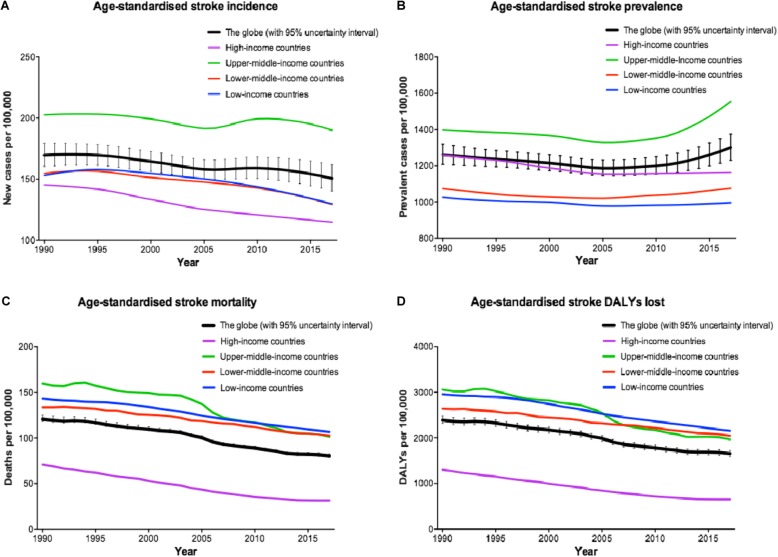
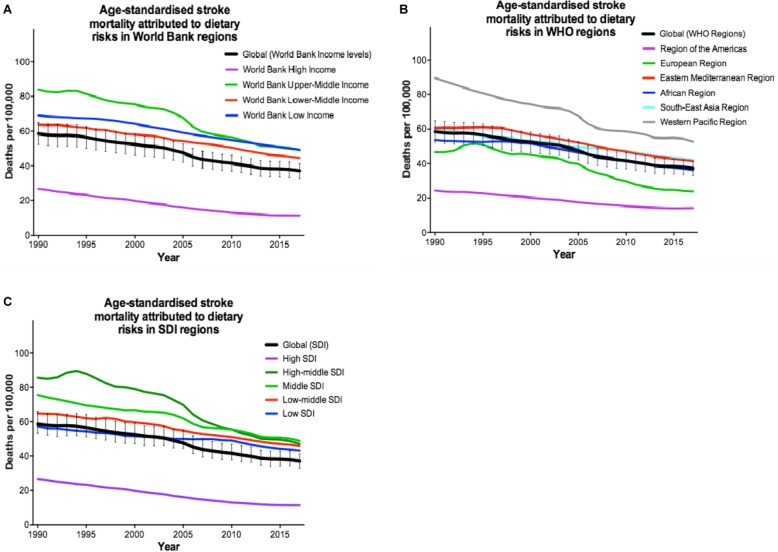
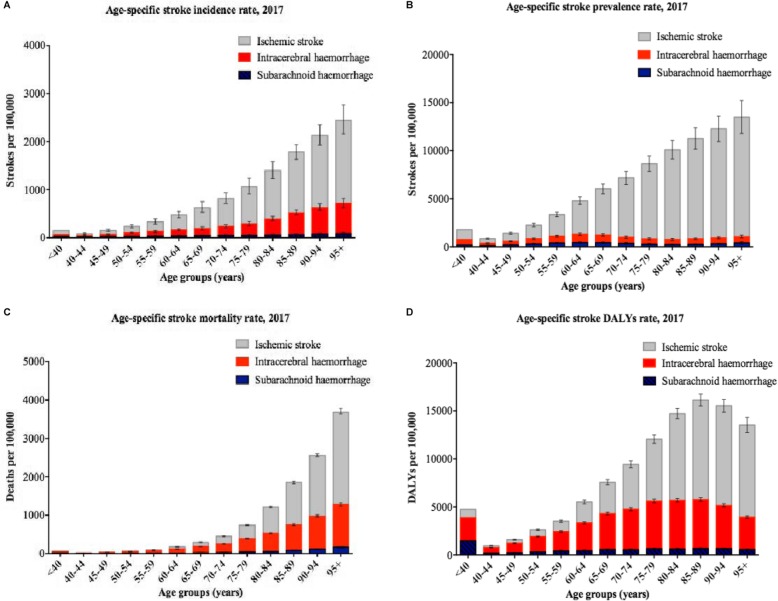
Verification
Claims the paper makes
The claims and statistics of this paper haven’t been checked yet.
Free: it reads the open-access text and checks the first 5 claims that cite a source we can check. Create a free account to check every claim.
Claims other papers make about this one
Each is checked against this paper’s own text: does it say what the citing paper says it does?
The cited source says what the claim attributes to it.
In the citing paper
“despite the fact that ischemic stroke is most prevalent in older individuals [24, 95] and is strongly linked to systemic diseases, such as hypertension, hypercholesterolemia, obesity, and diabetes mellitus [14].”
From Microglia and monocytes in inflammatory CNS disease: integrating phenotype and function (2022) · cites this paper as [14]
The check wasn’t confident either way, so it gives no verdict — never disputed.
In the citing paper
“Furthermore, patients may face restrictions regarding therapeutic resources because speech therapy requires substantial time and effort by clinicians or speech-language pathologists (SLPs) [16].”
From Smartphone-Based Speech Therapy for Poststroke Dysarthria: Pilot Randomized Controlled Trial Evaluating Efficacy and Feasibility (2024) · cites this paper as [16]
Experimental — accuracy not yet measuredThe check wasn’t confident either way, so it gives no verdict — never disputed.
In the citing paper
“Traditional speech therapy is effective but often poses challenges in terms of accessibility and patient adherence.”
From Smartphone-Based Speech Therapy for Poststroke Dysarthria: Pilot Randomized Controlled Trial Evaluating Efficacy and Feasibility (2024) · cites this paper as [16]
Experimental — accuracy not yet measured
Self-check
Percentages, sums and reported differences re-computed from the paper’s own numbers.
The self-check needs the paper’s full text.
Citations
Cites
James, S. L., Abate, D., Abate, K. H., Abay, S. M., Abbafati, C., Abbasi, N., Abbastabar, H., Abd-Allah, F., Abdela, J., Abdelalim, A., et al. (2018) · The Lancet · doi:10.1016/s0140-6736(18)32279-7 · Cited by 13,867
Vos, T., Abajobir, A. A., Abate, K. H., Abbafati, C., Abbas, K. M., Abd-Allah, F., Abdulkader, R. S., Abdulle, A. M., Abebo, T. A., Abera, S. F., et al. (2017) · The Lancet · doi:10.1016/s0140-6736(17)32154-2 · Cited by 13,220
Wang, H., Naghavi, M., Allen, C., Barber, R. M., Bhutta, Z. A., Carter, A., Casey, D. C., Charlson, F. J., Chen, A. Z., Coates, M. M., et al. (2016) · The Lancet · doi:10.1016/s0140-6736(16)31012-1 · Cited by 6,596
Feigin, V. L., Nichols, E., Alam, T., Bannick, M. S., Beghi, E., Blake, N., Culpepper, W. J., Dorsey, E. R., Elbaz, A., Ellenbogen, R. G., et al. (2019) · The Lancet Neurology · doi:10.1016/s1474-4422(18)30499-x · Cited by 5,644
Feigin, V. L., Forouzanfar, M. H., Krishnamurthi, R., Mensah, G. A., Connor, M., Bennett, D. A., Moran, A. E., Sacco, R. L., Anderson, L., Truelsen, T., et al. (2014) · The Lancet · doi:10.1016/s0140-6736(13)61953-4 · Cited by 3,899
Feigin, V. L., Abajobir, A. A., Abate, K. H., Abd-Allah, F., Abdulle, A. M., Abera, S. F., Abyu, G. Y., Ahmed, M. B., Aichour, A. N., Aichour, I., et al. (2017) · The Lancet Neurology · doi:10.1016/s1474-4422(17)30299-5 · Cited by 2,275
Self-citationSex differences in stroke: epidemiology, clinical presentation, medical care, and outcomes
Reeves, M. J., Bushnell, C. D., Howard, G., Gargano, J. W., Duncan, P. W., Lynch, G., Khatiwoda, A., & Lisabeth, L. (2008) · The Lancet Neurology · doi:10.1016/s1474-4422(08)70193-5 · Cited by 1,362
Dicker, D., Nguyen, G., Abate, D., Abate, K. H., Abay, S. M., Abbafati, C., Abbasi, N., Abbastabar, H., Abd-Allah, F., Abdela, J., et al. (2018) · The Lancet · doi:10.1016/s0140-6736(18)31891-9 · Cited by 1,209
Sex Differences in Stroke Epidemiology: A Systematic Review
Appelros, P., Stegmayr, B., & Terént, A. (2009) · Stroke · doi:10.1161/strokeaha.108.540781 · Cited by 1,027
Cited by
Items 101–200 of 601
Radu, R. A., Terecoasă, E., Tiu, C., Ghiță, C. I. V., Nicula, A. I., Marinescu, A. N., & Popescu, B. O. (2021) · Medicina · doi:10.3390/medicina57060622 · Cited by 23
Association of Cardiovascular Disease Risk and Health-Related Behaviors in Stroke Patients
Lalo, R., Zekja, I., & Kamberi, F. (2023) · International Journal of Environmental Research and Public Health · doi:10.3390/ijerph20043693 · Cited by 22
Niering, M., & Seifert, J. (2024) · Journal of NeuroEngineering and Rehabilitation · doi:10.1186/s12984-024-01338-5 · Cited by 22
Chen, W., Zheng, J., Shen, G., Ji, X., Sun, L., Li, X., Xu, F., & Gu, J. (2021) · Frontiers in Neurology · doi:10.3389/fneur.2021.666311 · Cited by 22
Kamdee, K., Panadsako, N., Mueangson, O., Nuinoon, M., Janwan, P., Poonsawat, W., Pongpanitanont, P., Kitkumthorn, N., Thongsroy, J., & Chunglok, W. (2021) · Biomedical Reports · doi:10.3892/br.2021.1454 · Cited by 22
Research progress of active compounds from traditional Chinese medicine in the treatment of stroke
Yin, X., Li, S., Wang, J., Wang, M., & Yang, J. (2025) · European Journal of Medicinal Chemistry · doi:10.1016/j.ejmech.2025.117599 · Cited by 21
Clinical experience: Outcomes of mesenchymal stem cell transplantation in five stroke patients
Erçelen, N., Karasu, N., Kahyaoglu, B., Çerezci, Ö., Akduman, R. C., Ercelen, D., Erturk, G., Gulay, G. R., Alpaydin, N., Boyraz, G., et al. (2023) · Frontiers in Medicine · doi:10.3389/fmed.2023.1051831 · Cited by 21
Biswas, R., Wijeratne, T., Zeleňák, K., Huasen, B. B., Iacobucci, M., Killingsworth, M. C., Beran, R. G., Gebreyohanns, M., Sekhar, A., Khurana, D., et al. (2025) · CNS Drugs · doi:10.1007/s40263-025-01161-z · Cited by 21
Zhou, F., Hou, D., Wang, Y., & Yu, D. (2020) · Medicine · doi:10.1097/md.0000000000021953 · Cited by 21
Klochikhina, O., Шпрах, В. В., Stakhovskaya, L. V., Полунина, О. С., & Полунина, Е. А. (2021) · S S Korsakov Journal of Neurology and Psychiatry · doi:10.17116/jnevro202112103222 · Cited by 21
Kim, Y., Kim, M., Kim, J., & Song, T.-J. (2024) · Journal of Medical Internet Research · doi:10.2196/56417 · Cited by 20
“Furthermore, patients may face restrictions regarding therapeutic resources because speech therapy requires substantial time and effort by clinicians or speech-language pathologists (SLPs) [16].”
Wu, Y., Xu, J., Wang, X., Li, H. Y., Wu, F., Ruan, J., Chen, D., Sheng, J., Zhu, D., Liu, J., et al. (2025) · Advanced Functional Materials · doi:10.1002/adfm.202520000 · Cited by 20
Incidence and Prevalence of Stroke and its Risk Factors in the Philippines: A Systematic Review
Collantes, M. E., Zuñiga, Y. M. H., & Uezono, D. R. (2021) · Acta Medica Philippina · doi:10.47895/amp.vi0.1753 · Cited by 20
Nowrin, I., Mehareen, J., Bhattacharyya, D. S., & Saif‐Ur‐Rahman, K. (2023) · Health Sciences Review · doi:10.1016/j.hsr.2023.100123 · Cited by 19
Metabolomic Profiles of Men and Women Ischemic Stroke Patients
Poupore, N. S., Chosed, R. J., Arce, S., Rainer, R., Goodwin, R. L., & Nathaniel, T. I. (2021) · Diagnostics · doi:10.3390/diagnostics11101786 · Cited by 19
Yunhui, X., Hao, G. U., Qing, Z., Dejie, L. I., Gong, Y., Xie, J., & Shi, G. (2022) · PubMed · doi:10.19852/j.cnki.jtcm.2022.03.001 · Cited by 19
Physical function, depressive symptoms, and quality of life with post-acute stroke care
Yao, S.-C., Hsieh, S., Lee, J.-D., Chu, T., & Fan, J. (2023) · Collegian Journal of the Royal College of Nursing Australia · doi:10.1016/j.colegn.2023.01.001 · Cited by 18
Comparison of artery diameters in the Aachen minipig serving as a human intracranial in vivo model
Dorn, C., Bender, L., Sichtermann, T., Minkenberg, J. G., Franko, M., Jazi, E. Y., Wiesmann, M., Stockero, A., May, R., Ridwan, H., et al. (2023) · Laboratory Animals · doi:10.1177/00236772231169809 · Cited by 18
Cho, J., Lee, S., Kook, Y. H., Park, J.-Y., Heo, W. D., Lee, C. J., & Kim, H.-I. (2025) · Science Advances · doi:10.1126/sciadv.adn7577 · Cited by 18
Tabbalat, A., Dargham, S. R., Suwaidi, J. M. S. A., Aboulsoud, S. H., Jerdi, S. A., & Khalil, C. A. (2021) · Scientific Reports · doi:10.1038/s41598-021-87320-w · Cited by 18
Zhui, L., Yang, H., Zhang, W., Wang, J., Zhao, Y., & Cheng, J. (2021) · BMJ Open · doi:10.1136/bmjopen-2020-042926 · Cited by 18
Wolf, S., Holm, S. E., Ingwersen, T., Bartling, C., Bender, G., Birke, G., Meyer, A., Nolte, A., Ottes, K., Pade, O., et al. (2022) · Annals of Medicine · doi:10.1080/07853890.2022.2059557 · Cited by 18
Ahn, H., Lee, S., Choi, E., Han, K.-D., Rhee, T., Kwon, S., Kim, S., Oh, S., & Lip, G. Y. H. (2022) · Frontiers in Cardiovascular Medicine · doi:10.3389/fcvm.2022.906844 · Cited by 18
Apor, A. D. A. O., Pagaling, G. T., Espiritu, A. I., & Jamora, R. D. G. (2020) · Journal of Stroke and Cerebrovascular Diseases · doi:10.1016/j.jstrokecerebrovasdis.2020.105481 · Cited by 18
Understanding Return to Work After Stroke Internationally: A Scoping Review
Green, T., McGovern, H. T., & Hinkle, J. L. (2021) · Journal of Neuroscience Nursing · doi:10.1097/jnn.0000000000000603 · Cited by 18
Prevalência e fatores associados ao acidente vascular cerebral em idosos no Brasil, 2019Preprint
Francisco, P. M. S. B., Santos, A. P. S., de Assumpção, D., & Bacurau, A. G. D. M. (2023) · doi:10.1590/scielopreprints.6199 · Cited by 18
Machine learning models for outcome prediction in thrombectomy for large anterior vessel occlusion
Samani, O. S., Warnat‐Herresthal, S., Savchuk, I., Bode, F. J., Nitsch, L., Stösser, S., Ebrahimi, T., von Danwitz, N. M., Asperger, H., Layer, J., et al. (2024) · Annals of Clinical and Translational Neurology · doi:10.1002/acn3.52185 · Cited by 17
Andalibi, M. S. S., Ardanı, A. R., Amiri, A., Morovatdar, N., Talebi, A. H., Azarpazhooh, M. R., & Mokhber, N. (2021) · Neuroepidemiology · doi:10.1159/000514401 · Cited by 17
Self-citationPark, H., Choi, J.-H., Nam, M.-H., & Seo, Y. (2022) · International Journal of Molecular Sciences · doi:10.3390/ijms23031177 · Cited by 17
Yang, D., Bian, Y., Zeng, Z., Cui, Y., Wang, Y., & Yu, C. (2020) · International Journal of Environmental Research and Public Health · doi:10.3390/ijerph17228628 · Cited by 17
Hu, Y., Qiu, X., Ji, C., Wang, F., He, M., He, L., & Chen, L. (2023) · Frontiers in Psychology · doi:10.3389/fpsyg.2023.1150369 · Cited by 16
Wang, Z., Hu, Y., Yu, C., & Peng, F. (2023) · Public Health · doi:10.1016/j.puhe.2023.07.034 · Cited by 16
Impact of Poverty on Stroke Recurrence: A Population-Based Study
Becker, C. J., Sucharew, H. J., Robinson, D., Stamm, B. J., Royan, R., Nobel, L., Stanton, R. J., Jasne, A. S., Woo, D., Rosa, F. D. L. R. L., et al. (2024) · Neurology · doi:10.1212/wnl.0000000000209423 · Cited by 16
From Gut to Brain: Unraveling the Intricate Link Between Microbiome and Stroke
Raghani, N. R., Postwala, H. I., Shah, Y. B., Chorawala, M. R., & Parekh, P. S. (2024) · Probiotics and Antimicrobial Proteins · doi:10.1007/s12602-024-10295-3 · Cited by 16
Partial prior transfer learning based on self-attention CNN for EEG decoding in stroke patients
Ma, J., Ma, W., Zhang, J., Li, Y., Yang, B., & Shan, C. (2024) · Scientific Reports · doi:10.1038/s41598-024-79202-8 · Cited by 16
Integrated analysis of the prevalence and influencing factors of poststroke dysphagia
Wen, X., Fan, B., Zhan, J., Wen, H., Ban, H., Yang, Y., Tao, C., Li, C., Li, K., & Lu, L. (2025) · European journal of medical research · doi:10.1186/s40001-024-02263-y · Cited by 16
Abdu, H., Tadese, F., & Seyoum, G. (2022) · BMC Neurology · doi:10.1186/s12883-022-02916-7 · Cited by 16
Klochihina, O. A., Шпрах, В. В., Stakhovskaya, L. V., & Полунина, Е. А. (2020) · S S Korsakov Journal of Neurology and Psychiatry · doi:10.17116/jnevro202012012237 · Cited by 15
A cohort study on the relationship between education level and high‐risk population of stroke
Yu, Y., Lei, D., He, Q., & Chen, W. (2021) · Ibrain · doi:10.1002/j.2769-2795.2021.tb00082.x · Cited by 15
The Place of Botulinum Toxin in Spastic Hemiplegic Shoulder Pain after Stroke: A Scoping Review
Struyf, P., Triccas, L. T., Schillebeeckx, F., & Struyf, F. (2023) · International Journal of Environmental Research and Public Health · doi:10.3390/ijerph20042797 · Cited by 15
Edakkattil, S., Abraham, S. V., Panattil, N. J., Gafoor, F. A., Jacob, L., & Liu, R. (2024) · Annals of Indian Academy of Neurology · doi:10.4103/aian.aian_1091_23 · Cited by 15
Nam, J. S., Heo, S., Kim, Y. W., Lee, S. C., Yang, S. N., & Yoon, S. Y. (2024) · Stroke · doi:10.1161/strokeaha.123.046008 · Cited by 15
Njohjam, M. N., Niakam, F. T., & Ngoule, M. O. (2025) · BMC Family Practice · doi:10.1186/s12875-025-02842-w · Cited by 15
Demographic Disparities in Stroke Occurrence: Insights From an Integrative Review of Emerging Trends
Bereda, G. (2025) · Brain and Behavior · doi:10.1002/brb3.70575 · Cited by 15
Guo, W., Katiyar, S. A., Davis, S., & Nefti‐Meziani, S. (2025) · Machines · doi:10.3390/machines13111020 · Cited by 15
Gururaj, S., Bird, M., Borschmann, K., Eng, J. J., Watkins, C. L., Walker, M. F., Solomon, J. M., & the SRRR2 KT working group (2021) · Disability and Rehabilitation · doi:10.1080/09638288.2021.1910737 · Cited by 15
Youens, D., Katzenellenbogen, J. M., Ragavan, R. S., Sodhi‐Berry, N., Carson, J., Zemedikun, D. T., Thrift, A. G., Feigin, V. L., & Nedkoff, L. (2023) · Neuroepidemiology · doi:10.1159/000534242 · Cited by 15
Effects of N-Pep-12 dietary supplementation on neurorecovery after ischemic stroke
Balea, M., Bîrle, C., Costin, C., Marton, J., Mureșanu, I. A., Jemna, N., Popa, L. L., Slăvoacă, D., Roșu, O. V., Stan, A. D., et al. (2020) · Neurological Sciences · doi:10.1007/s10072-020-04707-9 · Cited by 15
He, C., Wang, W., Chen, Q., Shen, Z., Pan, E., Sun, Z., Lou, P., & Zhang, X. (2021) · Acta Diabetologica · doi:10.1007/s00592-021-01758-y · Cited by 15
A meta‐analysis of prospective cohort studies of flavonoid subclasses and stroke risk
Li, X., Wang, C., Yang, T., Fan, Z., & Guo, X. (2022) · Phytotherapy Research · doi:10.1002/ptr.7376 · Cited by 15
Sharma, T., Airao, V., Buch, P., Vaishnav, D. J., & Parmar, S. K. (2020) · PharmaNutrition · doi:10.1016/j.phanu.2020.100217 · Cited by 14
Herath, H. M. M. T. B., Rodrigo, C., Alahakoon, A. M. B. D., Ambawatte, S. B., Senanayake, S., Senanayake, B., & Fernando, A. (2021) · BMC Neurology · doi:10.1186/s12883-021-02475-3 · Cited by 14
Complementary medicine use in stroke survivors: a US nationally representative survey
Kohl-Heckl, W. K., Koch, A. K., & Cramer, H. (2022) · BMC Complementary Medicine and Therapies · doi:10.1186/s12906-022-03525-0 · Cited by 14
Nowrin, I., Bhattacharyya, D. S., & Saif‐Ur‐Rahman, K. (2022) · BMJ Open · doi:10.1136/bmjopen-2022-063181 · Cited by 14
A case management intervention in stroke care: Evaluation of a quasi-experimental study
Düvel, J. A., Elkenkamp, S., Gensorowsky, D., Brinkmeier, M., Galle, G., Miethe, J., & Greiner, W. (2024) · Zeitschrift für Evidenz Fortbildung und Qualität im Gesundheitswesen · doi:10.1016/j.zefq.2024.03.008 · Cited by 14
Zheng, K., Lin, L., Cui, P., Liu, T., Chen, L., Yang, C., & Jiang, W. (2020) · Frontiers in Genetics · doi:10.3389/fgene.2020.608517 · Cited by 15
Goulart, T. O. (2023) · Digital Library of Theses and Dissertations (Universidade de São Paulo) · doi:10.11606/d.17.2023.tde-10112023-163501 · Cited by 14
Shakova, F. M., Kirova, Y. I., Silachev, D. N., Romanova, G. A., & Morozov, S. G. (2021) · Brain Sciences · doi:10.3390/brainsci11030325 · Cited by 13
“This study was performed on a model of photochemically induced thrombosis of prefrontal cortex blood vessels, mimicking the pathogenesis of acute ischemic stroke, which accounts for 85% of acute cerebrovascular disease incidence, according to recent estimates [1].”
BackgroundMethodHasani, W. S. R., Musa, K. I., Cheng, K. Y., & Dass, S. C. (2024) · BMC Public Health · doi:10.1186/s12889-024-19103-7 · Cited by 15
Microglia and bradykinin cross talk in poststroke cognitive impairment in diabetes
Barić, A., & Radmilović, M. D. (2021) · American Journal of Physiology-Cell Physiology · doi:10.1152/ajpcell.00402.2020 · Cited by 13
Popoola, O. A., Ovbiagele, B. I., Arulogun, O., Akinyemi, J. O., Akinyemi, R., Uvere, E., Akpa, O. M., Salami, A. A., Taiwo, O. J., Olaniyan, O. A., et al. (2021) · Neuroepidemiology · doi:10.1159/000518885 · Cited by 13
Aung, N., Hiengkaew, V., Tretriluxana, J., Bryant, M. S., & Bovonsunthonchai, S. (2022) · Journal of Rehabilitation Medicine · doi:10.2340/jrm.v54.1390 · Cited by 13
Hao, T., Chen, C., Shen, Y., Zhang, Y., & Liang, F. (2022) · Metabolic Brain Disease · doi:10.1007/s11011-022-01066-6 · Cited by 13
dos Reis, M. F., & Chaoubah, A. (2023) · International Journal of Cardiovascular Sciences · doi:10.36660/ijcs.20220116 · Cited by 13
Population-based stroke risk profile from a West-African community
Onwuakagba, I. U., Okoye, E. C., Kanu, F. C., Kalu, C. M., Akaeme, D. C., Obaji, O. C., & Akosile, C. O. (2023) · eNeurologicalSci · doi:10.1016/j.ensci.2023.100483 · Cited by 13
Peer mentoring for people with acquired brain injury – a systematic review
Pérez, B. D. D., Morris, R. P. G., Craven, K., & Radford, K. (2024) · Brain Injury · doi:10.1080/02699052.2024.2310779 · Cited by 13
Ganasegeran, K., Ch’ng, A. S. H., Aziz, Z. A., & Looi, I. (2020) · Scientific Reports · doi:10.1038/s41598-020-68335-1 · Cited by 13
Hemoglobin level is associated with severe stroke among stroke patients in Saudi Arabia.
Alharbi, N., Alrasheedi, M. S., & Alshammari, S. (2020) · PubMed Central · Cited by 13
Win, A. S. S., Thein, M. K., Tun, K. S., & Myint, T. W. (2020) · JBI Evidence Synthesis · doi:10.11124/jbies-20-00254 · Cited by 13
Hookah Smoking: A Potentially Risk Factor for First-Ever Ischemic Stroke
Tabrizi, R., Borhani‐Haghighi, A., Lankarani, K. B., Heydari, S. T., Bayat, M., Vakili, S., Maharlouei, N., Hassanzadeh, J., Zafarmand, S. S., Owjfard, M., et al. (2020) · Journal of Stroke and Cerebrovascular Diseases · doi:10.1016/j.jstrokecerebrovasdis.2020.105138 · Cited by 13
Self-citationHuang, L.-X., Wu, X., Liu, Y., Guo, X., Liu, C.-C., Cai, W., Wang, S., & Luo, B. (2024) · Heliyon · doi:10.1016/j.heliyon.2024.e27948 · Cited by 12
Lee, D. (2024) · Journal of the Korean Society of Physical Medicine · doi:10.13066/kspm.2024.19.3.103 · Cited by 12
Xia, R., Cai, M., Wang, Z., Liu, X., Pei, J., Zaid, M., & Xu, W. (2024) · PLOS Global Public Health · doi:10.1371/journal.pgph.0003920 · Cited by 12
Stroke mortality in the United States from 1968 to 2023: A CDC WONDER analysis
Waqas, S. A., Aamir, J., Ali, D., Imran, Z., Salim, H., Hassan, A., Khan, S., Greene, S. J., & Ahmed, R. (2025) · International Journal of Stroke · doi:10.1177/17474930251384043 · Cited by 12
Cho, J., Ryu, S., Lee, S., Kim, J., Park, J., Kwon, H.-S., & Kim, H.-I. (2022) · Translational Stroke Research · doi:10.1007/s12975-022-01059-8 · Cited by 12
Stroke symptoms, risk factors awareness and personal decision making in Chile. A national survey
Navia, V. H., Mazzon, E., Olavarría, V. V., Almeida, J., Brunser, A. M., Lavados, P. M., Hoffmeister, L., & Venturelli, P. M. (2022) · Journal of Stroke and Cerebrovascular Diseases · doi:10.1016/j.jstrokecerebrovasdis.2022.106795 · Cited by 12
Gil-Pagés, M., Sánchez, J. S., Sánchez-Carrión, R., Tormos, J. M., Cantallops, A. E., & García‐Molina, A. (2022) · Brain Injury · doi:10.1080/02699052.2022.2140832 · Cited by 12
Russian study on brain aneurysm surgery: a continuation (RIHA II)
Krylov, V. V., Shatokhin, T. A., Шетова, И. М., Éliava, S. S., Belousova, O. B., Airapetian, A., Alekseev, A. G., Asratyan, S. A., Bakharev, E. Y., Vorobyov, I. A., et al. (2024) · Burdenko s Journal of Neurosurgery · doi:10.17116/neiro2024880117 · Cited by 12
Choi, M., Sempungu, J. K., Lee, E. H., & Lee, Y. H. (2024) · BJPsych Open · doi:10.1192/bjo.2024.26 · Cited by 12
Yang, N., & Hartanto, Y. B. (2024) · The Egyptian Journal of Neurology Psychiatry and Neurosurgery · doi:10.1186/s41983-024-00838-4 · Cited by 12
Radu, R. A., Terecoasă, E., Tiu, C., Ghiță, C. I. V., Purcaru, L. I., Marinescu, A. N., & Bajenaru, O. A. (2020) · Journal of Medicine and Life · doi:10.25122/jml-2020-0042 · Cited by 12
Xiang, R., Zhai, X., Zhang, Q., & Wang, Z. (2021) · Frontiers in Nutrition · doi:10.3389/fnut.2021.728641 · Cited by 12
Ding, W., Chen, J., Liu, J., Lin, B., Li, S., Li, F., Guo, J., Li, Y., & Li, J. (2022) · BMC Neurology · doi:10.1186/s12883-022-02597-2 · Cited by 14
Chen, P.-T., & Chiu, E. (2024) · American Journal of Occupational Therapy · doi:10.5014/ajot.2024.050288 · Cited by 12
Shahid, S., Marsool, A. D. M., Sajjad, M. A., Saifullah, M., Alam, M. S., Ahmed, S. I., Ahmed, R., & Sultan, F. (2025) · Global Epidemiology · doi:10.1016/j.gloepi.2025.100211 · Cited by 11
Espiritu, A. I., & Jose, M. C. Z. S. (2021) · The Neurologist · doi:10.1097/nrl.0000000000000357 · Cited by 11
Changes in oral health status with dental intervention during the acute to subacute stages of stroke
Sakai, A., Matsuo, K., Sekimoto, Y., Hidaka, R., & Yoshihara, A. (2023) · Gerodontology · doi:10.1111/ger.12706 · Cited by 11
Fedor, B. A., Sander, N. H., MacLaren, M., Liddle, L. J., MacLellan, C. L., & Colbourne, F. (2023) · Translational Stroke Research · doi:10.1007/s12975-023-01205-w · Cited by 11
Rink, J. S., Szabo, K., Hoyer, C., Saver, J. L., Nour, M., Audebert, H. J., Kunz, W. G., Froelich, M. F., Heinzl, A., Tschalzev, A., et al. (2024) · European Journal of Neurology · doi:10.1111/ene.16514 · Cited by 11
Luo, X., Zhou, J., Zhang, Y., Liu, Y.-Y., Li, J., Zheng, Z., Tong, F., & Feng, F. (2020) · Medicine · doi:10.1097/md.0000000000021040 · Cited by 11
Jeong, S., Cho, S., & Kong, S. Y. (2022) · Diabetology & Metabolic Syndrome · doi:10.1186/s13098-022-00882-1 · Cited by 11
Woolsey, A., Arsang‐Jang, S., Spence, J. D., Hackam, D. G., & Azarpazhooh, M. R. (2022) · Atherosclerosis · doi:10.1016/j.atherosclerosis.2022.08.013 · Cited by 11
Self-citationEffects of mobility dose on discharge disposition in critically ill stroke patients
Mazwi, N., Lissak, I. A., Wongtangman, K., Platzbecker, K., Albrecht, L., Teja, B. J., Xu, X., Morteo, N. M., Sparling, T. L., Latronico, N., et al. (2023) · PM&R · doi:10.1002/pmrj.13039 · Cited by 11
Abeysekera, I., Silva, R. D., Silva, D., Piumika, L., Jayathilaka, R., & Rajamanthri, L. (2024) · BMC Public Health · doi:10.1186/s12889-024-18250-1 · Cited by 11
Kim, Y., Kim, M., Kim, J., & Song, T.-J. (2024) · Frontiers in Neurology · doi:10.3389/fneur.2024.1305297 · Cited by 10
Shen, D., Li, J., Teng, S., Li, M., & Tang, X. (2024) · Journal of Clinical Nursing · doi:10.1111/jocn.17627 · Cited by 10
Comer, A., Northcott, S., Behn, N., Roper, A., Devane, N., & Hilari, K. (2025) · International Journal of Language & Communication Disorders · doi:10.1111/1460-6984.70018 · Cited by 10
Yang, X., Zhao, J., Tian, H. M., Nie, X., Zheng, L., Liu, X., Wei, Z. Z., Ding, Y., & Liu, L. (2025) · CNS Neuroscience & Therapeutics · doi:10.1111/cns.70409 · Cited by 10
Jaberi, N., Kavosi, Z., Hooshmandi, E., Moradi, N., Keshavarz, K., & Borhani‐Haghighi, A. (2021) · Stroke Research and Treatment · doi:10.1155/2021/5534873 · Cited by 10
Mameletzi, D. N., Anifanti, M., Baotić, K., Bernetti, A., Budinčević, H., Črnac, P., Deligiannis, A. P., Dennehy, Z., Ferrari, A., Forgione, D., et al. (2021) · BioMed Research International · doi:10.1155/2021/9202716 · Cited by 10
Metadata
- Authors
- Avan, A., Digaleh, H., Di Napoli, M., Stranges, S., Behrouz, R., Shojaeianbabaei, G., Amiri, A., Tabrizi, R., Mokhber, N., Spence, J. D., & Azarpazhooh, M. R.
- Affiliations
- Mashhad University of Medical Sciences (IR)
- Shahid Beheshti University (IR)
- Western University (CA)
- Shiraz University (IR)
- Corresponding author
- Azarpazhooh, Mahmoud Reza
- ORCID
- Venue
- BMC Medicine
- Published
- 2019-10-24
- Volume
- 17
- Issue
- 1
- Pages
- 191-191
- ISSN
- 1741-7015 (ISSN-L)
- PMC
- PMC6813111
- OpenAlex
- W2981488777
- Cited by
- 514
- References
- 36
- Citations by year
- 2026: 38 · 2025: 83 · 2024: 105 · 2023: 71 · 2022: 90 · 2021: 85 · 2020: 40 · 2019: 1
- FWCI
- 41.09
- Type
- journal article
- Language
- en
- Open access
- gold
- doi.org
- Licence
- cc-by
- creativecommons.org/licenses/by/4.0/ (tdm)
- creativecommons.org/licenses/by/4.0/ (vor)
- Locations
- BMC Medicine (publishedVersion, cc-by)
- Europe PMC (PubMed Central) (publishedVersion, cc-by)
- PubMed Central (publishedVersion, cc-by)
- PubMed (publishedVersion)
- DOAJ (DOAJ: Directory of Open Access Journals) (submittedVersion, cc-by-sa)
- Scholarship@Western (Western University) (submittedVersion)
- Topics
- Health Sciences › Medicine › Clinical Neurology › Acute Ischemic Stroke Management
- Health Sciences › Medicine › Cardiology and Cardiovascular Medicine › Cardiovascular Health and Risk Factors
- Social Sciences › Health › Health disparities and outcomes
- Keywords
- socioeconomic status, stroke, stroke incidence, stroke prevalence, stroke mortality, disability-adjusted life years, modifiable risk factors, attributable risk, socioeconomic inequalities in health, middle-income countries, global burden of disease, risk factor control, stroke prevention, age and sex differences, income inequality, Global Burden of Disease Study 2017
- MeSH terms
- Global Burden of Disease, Adult, Aged, Child, Preschool, Female, Persons with Disabilities, Humans, Male, Risk Factors, Social Class, Global Health, Incidence, Prevalence, Survival Rate, Quality-Adjusted Life Years, Stroke
About these checks
Registry, retraction, Cites and statistics results are computed, not judged, with one exception: a printed reference that no index lists is read once by a model before it counts as a citation error. Claims are extracted by a model and kept only when their quote appears verbatim in the text; each cited source is then checked, with a model’s help, for whether it says what the claim relies on. Those verdicts can be wrong — read the claim’s quote and the cited source before relying on one.
Statistics and arithmetic are recomputed, not judged.
Confidence bands are shown only for fields calibrated on our annotated test set. None is calibrated yet, so no band is shown.
What counts as a claim ›How we measure confidence ›How we check this ›
Are you an author, or do you see a problem with this page? Request a review
Data sources
Bibliographic data: Semantic Scholar, OpenAlex, Crossref.
Contains information from the Semantic Scholar Academic Graph Datasets, made available under the ODC Attribution License (ODC-BY 1.0).
Semantic Scholar’s data is described in: Kinney, R., et al. (2023). The Semantic Scholar Open Data Platform. arXiv:2301.10140.
