

Association between patterns of alcohol consumption (beverage type, frequency and consumption with food) and risk of adverse health outcomes: a prospective cohort study
Open accessThe DOI matches its Crossref record; 37 of the 39 references it cites were found in a registry or an index.
Abstract
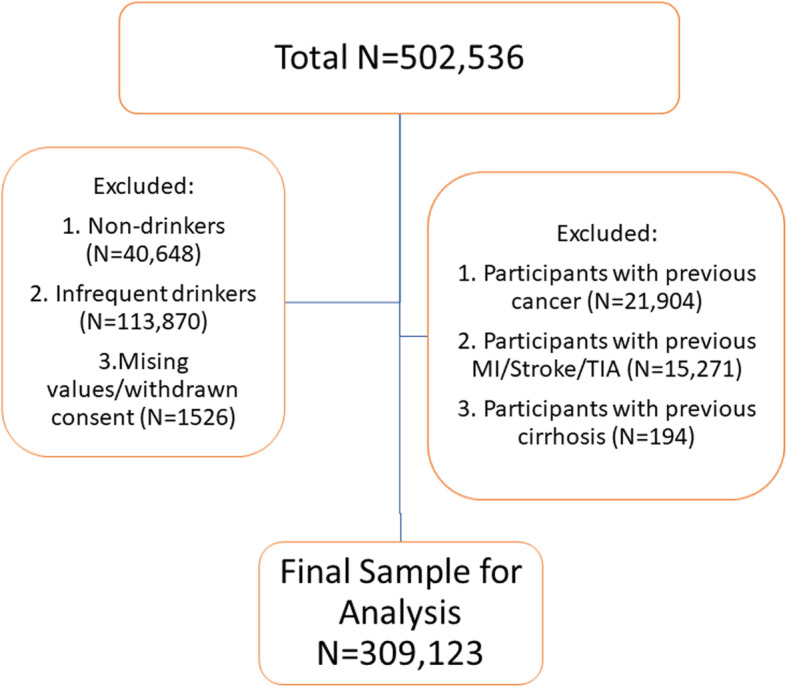
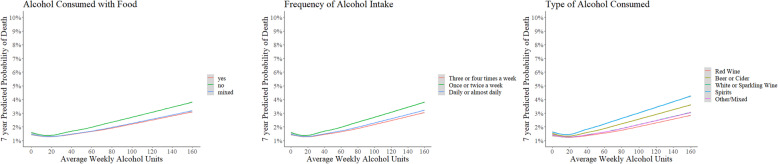
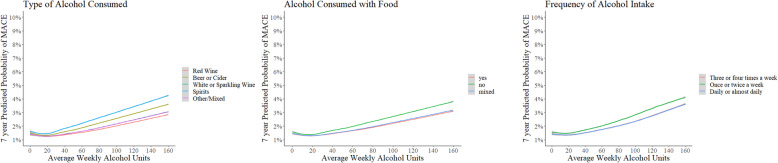
Background: Alcohol consumption is a leading contributor to death and disability worldwide, but previous research has not examined the effects of different patterns of alcohol consumption. The study objective was to understand the relationship between different alcohol consumption patterns and adverse health outcomes risk, adjusting for average amount consumed among regular drinkers. Methods: This was a prospective cohort study of UK Biobank (UKB) participants . Abstainers, infrequent alcohol consumers or those with previous cancer, myocardial infarction (MI), stroke or liver cirrhosis were excluded. We used beverage type, consumption with food and consumption frequency as exposures and adjusted for potential confounding. All-cause mortality, major cardiovascular events-MACE (MI/stroke/cardiovascular death), accidents/injuries, liver cirrhosis, all-cause and alcohol-related cancer incidence over 9-year median follow-up period were outcomes of interest. Results: The final sample size for analysis was N = 309,123 (61.5% of UKB sample). Spirit drinking was associated with higher adjusted mortality (hazard ratio (HR) 1.25; 95% confidence intervals (CI) 1.14–1.38), MACE (HR 1.31; 95% CI 1.15–1.50), cirrhosis (HR 1.48; 95% CI 1.08–2.03) and accident/injuries (HR 1.10; 95% CI 1.03–1.19) risk compared to red wine drinking, after adjusting for the average weekly alcohol consumption amounts. Beer/cider drinkers were also at a higher risk of mortality (HR 1.18; 95% CI 1.10–1.27), MACE (HR 1.16; 95% CI 1.05–1.27), cirrhosis (HR 1.36; 95% CI 1.06–1.74) and accidents/injuries (HR 1.11; 95% CI 1.06–1.17). Alcohol consumption without food was associated with higher adjusted mortality (HR 1.10; 95% CI 1.02–1.17) risk, compared to consumption with food. Alcohol consumption over 1–2 times/week had higher adjusted mortality (HR 1.09; 95% CI 1.03–1.16) and MACE (HR 1.14; 95% CI 1.06–1.23) risk, compared to 3–4 times/week, adjusting for the amount of alcohol consumed. Conclusion: Red wine drinking, consumption with food and spreading alcohol intake over 3–4 days were associated with lower risk of mortality and vascular events among regular alcohol drinkers, after adjusting for the effects of average amount consumed. Selection bias and residual confounding are important possible limitations. These findings, if replicated and validated, have the potential to influence policy and practice advice on less harmful patterns of alcohol consumption.
Overview
The claims and statistics of this paper haven’t been checked yet.
Free: it reads the open-access text and checks the first 5 claims that cite a source we can check. Create a free account to check every claim.
Integrity signals
Registry
Cites
Statistics
Figures
Verification
Claims the paper makes
The claims and statistics of this paper haven’t been checked yet.
Free: it reads the open-access text and checks the first 5 claims that cite a source we can check. Create a free account to check every claim.
Claims other papers make about this one
Each is checked against this paper’s own text: does it say what the citing paper says it does?
The check wasn’t confident either way, so it gives no verdict — never disputed.
In the citing paper
“Although most studies define HED for women as either 40 g or 60 g of absolute alcohol on a single occasion [7, 30], we chose the higher threshold (60 g of absolute alcohol amounts to ≥ five standard drinks) as this is more commonly used in South Africa [6].”
From Associations Between Patterns of Alcohol Use and Viral Load Suppression Amongst Women Living with HIV in South Africa (2021) · cites this paper as [30]
Experimental — accuracy not yet measured
Self-check
Percentages, sums and reported differences re-computed from the paper’s own numbers.
The self-check needs the paper’s full text.
Citations
Cites
Wickham, H. (2016) · Use R! · doi:10.1007/978-3-319-24277-4 · Cited by 33,115
Whelton, P. K., Carey, R. M., Aronow, W. S., Casey, D. E., Collins, K. J., Dennison Himmelfarb, C., DePalma, S. M., Gidding, S., Jamerson, K. A., Jones, D. W., et al. (2018) · Journal of the American College of Cardiology · doi:10.1016/j.jacc.2017.11.006 · Cited by 6,616
mediation:R Package for Causal Mediation Analysis
Tingley, D., Yamamoto, T., Hirose, K., Keele, L., & Imai, K. (2014) · Journal of Statistical Software · doi:10.18637/jss.v059.i05 · Cited by 4,155 · cited 1×
“This analysis was performed using the “mediation package” [31].”
MethodGriswold, M. G., Fullman, N., Hawley, C., Arian, N., Zimsen, S. R. M., Tymeson, H. D., Venkateswaran, V., Tapp, A. D., Forouzanfar, M. H., Salama, J. S., et al. (2018) · The Lancet · doi:10.1016/s0140-6736(18)31310-2 · Cited by 3,524 · cited 1×
“Background Alcohol consumption is one of the leading risk factors for death and disability-adjusted life years (DALY) globally, based on findings from the recent Global Burden of Disease Study that included data from 195 countries [1].”
BackgroundStringhini, S., Carmeli, C., Jokela, M., Avendaño, M., Muennig, P., Guida, F., Ricceri, F., d'Errico, A., Barros, H., Bochud, M., et al. (2017) · The Lancet · doi:10.1016/s0140-6736(16)32380-7 · Cited by 1,319 · cited 1×
“The models in our study were adjusted for the effect of major determinants of health and well-being to minimise the risk of residual confounding [39]; however, it still remains a possibility.”
MethodTownsend, P. (1987) · Journal of Social Policy · doi:10.1017/s0047279400020341 · Cited by 1,294
The relationship between different dimensions of alcohol use and the burden of disease—an update
Rehm, J., Gmel, G. E., Gmel, G., Hasan, O. S. M., Imtiaz, S., Popova, S., Probst, C., Roerecke, M., Room, R., Samokhvalov, A. V., et al. (2017) · Addiction · doi:10.1111/add.13757 · Cited by 1,204 · cited 1×
“A review of 255 systematic reviews and meta-analyses has suggested the need for further research into the health risks associated with different patterns of alcohol consumption (beyond average amount), such as frequency of consumption, consumption of alcohol with or without food and type of alcoholic beverage [2].”
BackgroundWood, A. M., Kaptoge, S., Butterworth, A. S., Willeit, P., Warnakula, S., Bolton, T., Paige, E., Paul, D. S., Sweeting, M., Burgess, S., et al. (2018) · The Lancet · doi:10.1016/s0140-6736(18)30134-x · Cited by 1,188 · cited 1×
“Previous research has suggested that wine drinking (compared to beer or spirit drinking) is associated with lower risk of all-cause mortality [3, 8, 9] and cardiovascular events [3, 8, 10].”
BackgroundKaptoge, S., Pennells, L., De Bacquer, D., Cooney, M. T., Kavousi, M., Stevens, G., Riley, L. M., Savin, S., Khan, T., Altay, S., et al. (2019) · The Lancet Global Health · doi:10.1016/s2214-109x(19)30318-3 · Cited by 1,167
Time-to-Event Analysis of Longitudinal Follow-up of a Survey: Choice of the Time-scale
Korn, E. L., Graubard, B. I., & Midthune, D. (1997) · American Journal of Epidemiology · doi:10.1093/oxfordjournals.aje.a009034 · Cited by 1,007 · cited 1×
“In each of these models, age was used as the underlying time variable [25].”
Method
Research works printed but not linked: 5
- UK Department of Health UK Chief Medical Officers’ Low Risk Drinking Guidelines 2016
- WHO WHO BMI Classification 2004
- National Clinical Guideline Centre (UK). Lipid Modification: Cardiovascular Risk Assessment and the Modification of Blood Lipids for the Primary andSecondary Prevention of Cardiovascular Disease. London: National Institute for Health and Care Excellence (UK); 2014. PMID: 25340243. 25340243
- WHO. International Statistical Classification of Diseases and Related Health Problems (International Classification of Diseases)(ICD) 10th Revision - Version: 2010. Vol. 1, Occupational Health. 2010. p. 1–201.
- Therneau T Package: “survival” 2015
Cited by
Healthy Lifestyle and Cancer Risk: Modifiable Risk Factors to Prevent Cancer
Marino, P., Mininni, M., Deiana, G., Marino, G., Divella, R., Bochicchio, I., Giuliano, A., Lapadula, S., Lettini, A. R., & Sanseverino, F. (2024) · Nutrients · doi:10.3390/nu16060800 · Cited by 240
“In support of these data, studies carried out in countries that use the Mediterranean diet as an eating style have revealed that the moderate consumption of red wine during meals is an important factor in reducing the risk of developing cancer and protecting against cardiovascular diseases [98,99].”
ResultPetermann-Rocha, F. E., Gray, S. R., Forrest, E. H., Welsh, P. I., Sattar, N. A., Celis-Morales, C. A., Ho, F. K. W., & Pell, J. P. (2022) · Journal of Hepatology · doi:10.1016/j.jhep.2022.01.010 · Cited by 145
Gagnon, É., Mitchell, P. L., Manikpurage, H. D., Abner, E., Taba, N., Esko, T., Ghodsian, N., Thériault, S., Mathieu, P., & Arsenault, B. J. (2023) · Journal of Translational Medicine · doi:10.1186/s12967-022-03799-5 · Cited by 122
Alcohol, Drinking Pattern, and Chronic Disease
Barbería-Latasa, M., Gea, A., & Martínez‐González, M. Á. (2022) · Nutrients · doi:10.3390/nu14091954 · Cited by 121
“Specifically, wine consumption, particularly in Mediterranean countries, has been postulated as a key feature of the Mediterranean diet with strong cardio-protective properties [77,78] due to the abundance of polyphenols in red wine with postulated antioxidant or anti-inflammatory effects [79–82].”
BackgroundAlcohol Consumption and Cardiovascular Disease Risk: Placing New Data in Context
Hoek, A. G., van Oort, S., Mukamal, K. J., & Beulens, J. W. J. (2022) · Current Atherosclerosis Reports · doi:10.1007/s11883-022-00992-1 · Cited by 108
Qin, P., Ho, F. K. W., Celis-Morales, C. A., & Pell, J. P. (2025) · Cardiovascular Diabetology · doi:10.1186/s12933-025-02721-9 · Cited by 94
“These measures were converted into an estimate of their average number of UK units of alcohol (1 unit = 8 g of ethanol) consumed weekly [11].”
Social connection and mortality in UK Biobank: a prospective cohort analysis
Foster, H. M. E., Gill, J. M. R., Mair, F. S., Celis-Morales, C. A., Jani, B., Nicholl, B. I., Lee, D., & O’Donnell, C. A. (2023) · BMC Medicine · doi:10.1186/s12916-023-03055-7 · Cited by 71
“…≤ 35 [females] and > vs. ≤ 50 [males] weekly units of alco-hol—previously identified cut-offs for high risk drinking in England and UK Biobank), [37, 38] and self-reported physical activity levels ( vs. ≥ 450 MET [metabolic equivalent of task] min per week as per UK physical activity…”
Self-citationHealth Effects of Red Wine Consumption: A Narrative Review of an Issue That Still Deserves Debate
Lombardo, M., Feraco, A., Camajani, E., Caprio, M., & Armani, A. (2023) · Nutrients · doi:10.3390/nu15081921 · Cited by 71
Hu, F. B., Drescher, G., Trichopoulou, A. D., Willett, W. C., & Martínez‐González, M. Á. (2025) · American Journal of Clinical Nutrition · doi:10.1016/j.ajcnut.2025.04.036 · Cited by 67
“Numerous large and well-conducted prospective cohort studies have demonstrated an inverse association be-tween moderate alcohol intake and reduced CVD risk, particularly for wine consumed with meals [45,46].”
Liu, Z., Song, C., Suo, C., Fan, H. X., Zhang, T., Li, J., & Chen, X. (2022) · BMC Medicine · doi:10.1186/s12916-022-02622-8 · Cited by 61
Myers, B., Lombard, C., Joska, J. A., Abdullah, F., Naledi, T., Lund, C., Petersen Williams, P., Stein, D. J., & Sorsdahl, K. R. (2021) · AIDS and Behavior · doi:10.1007/s10461-021-03263-3 · Cited by 47
“’s [23] approach and allow for meaningful comparisons, and guided by recent literature demonstrating that patterns of alcohol use representing varying frequency and quantity of alcohol consumption have differential effects on health outcomes [30], we used these two indicators to define four past-month alcohol consumpt…”
MethodShould we remove wine from the Mediterranean diet?: a narrative review
Martínez‐González, M. Á. (2023) · American Journal of Clinical Nutrition · doi:10.1016/j.ajcnut.2023.12.020 · Cited by 48
Effect of the Mediterranean diet in cardiovascular prevention
Martínez‐González, M. Á., & Hernández, A. (2024) · Revista Española de Cardiología (English Edition) · doi:10.1016/j.rec.2024.01.006 · Cited by 54
“66,67,69 Large cohorts have concluded that ‘healthy’ patterns of moderate drinking reduce CVD, diabetes, and all-cause mortality, particularly in participants 50 to 70 years old.”
BackgroundAssociations between smoking and alcohol consumption with blood pressure in a middle-aged population
Vallée, A. (2023) · Tobacco Induced Diseases · doi:10.18332/tid/162440 · Cited by 46
Efecto de la dieta mediterránea en la prevención cardiovascular
Martínez‐González, M. Á., & Hernández, A. (2024) · Revista Española de Cardiología · doi:10.1016/j.recesp.2024.01.013 · Cited by 46
Chen, L., Ferreira, M. L., Nassar, N., Preen, D. B., Hopper, J. L., Li, S., Bui, M., Beckenkamp, P. R., Shi, B., Arden, N., et al. (2021) · EClinicalMedicine · doi:10.1016/j.eclinm.2021.101202 · Cited by 39
“Based on one previous study, alcohol consumption was measured as alcohol intake frequency (daily or almost daily, three or four times a week, once or twice a week, one to three times a month, special occasions only and never; regular referred to the first three categories) [19].”
BackgroundLogie, C. H., Okumu, M., Malama, K., Mwima, S., Hakiza, R., Kiera, U. M., & Kyambadde, P. (2022) · BMJ Global Health · doi:10.1136/bmjgh-2021-006583 · Cited by 39
Petermann-Rocha, F. E., Zhou, Z., Mathers, J. C., Celis-Morales, C. A., Raubenheimer, D., Sattar, N. A., Pell, J. P., Forrest, E. H., & Ho, F. K. W. (2024) · Nature Communications · doi:10.1038/s41467-024-51314-9 · Cited by 30
Two years on, a perspective on MAFLD
Eslam, M., & George, J. (2023) · eGastroenterology · doi:10.1136/egastro-2023-100019 · Cited by 32
“16 17 In addition, does an alcohol diagnosis consider interindividual variability in response to alcohol consumption based on age, sex, pharmacokinetics, ethnicity or genetic susceptibility or take into account new evidence that some gut bacteria produce alcohol contributing to liver damage in…”
Cardiovascular Effects of Chocolate and Wine—Narrative Review
Sperkowska, B., Murawska, J., Przybylska, A., Gackowski, M., Kruszewski, S. P., Durmowicz, M., & Rutkowska, D. (2021) · Nutrients · doi:10.3390/nu13124269 · Cited by 28
Cubas-Basterrechea, G., Elío, I., Alonso, G., Otero, L., Gutiérrez-Bardeci, L., Puente, J. A., & Muñoz, P. (2022) · Nutrients · doi:10.3390/nu14214536 · Cited by 28
“These characteristics of fish indicate that it should be included in a healthy diet, as it was shown to have beneficial effects on Nutrients 2022, 14, 4536 11 of 17 the variables included in MetS [62] and in the prevention of CVD [63]; however, only half of the individuals studied (50.4”
BackgroundInfluentialChu, W., Lynskey, N., Iain-Ross, J., Pell, J. P., Sattar, N. A., Ho, F. K. W., Welsh, P. I., Celis-Morales, C. A., & Petermann-Rocha, F. E. (2023) · International Journal of Environmental Research and Public Health · doi:10.3390/ijerph20032421 · Cited by 26
“In addition, all analyses were performed excluding people who self-reported drinking more than 14 units of alcohol/week using the methodology reported by Jani et al. [43].”
MethodSirtoli, R., Balboa‐Castillo, T., Fernández‐Rodríguez, R., Rodrigues, R., Morales, G. I., Garrido‐Miguel, M., Valencia-Marín, Y., Guidoni, C. M., & Mesas, A. E. (2022) · International Journal of Mental Health and Addiction · doi:10.1007/s11469-022-00763-8 · Cited by 32
“…other authors have proposed the inclusion of multidimensional aspects of the alcohol intake pattern, such as the type of beverage (i.e., distilled or fermented) and whether the alcohol consumption was with meals or binge-eating episodes (Gea et al., 2014; Jani et al., 2021; Morales et al., 2021).”
BackgroundAssociation between tobacco smoking and alcohol consumption with arterial stiffness
Vallée, A. (2023) · Journal of Clinical Hypertension · doi:10.1111/jch.14669 · Cited by 24
Schaefer, S. M., Kaiser, A., Behrendt, I., Eichner, G., & Faßhauer, M. (2022) · British Journal Of Nutrition · doi:10.1017/s000711452200040x · Cited by 24
“wine consumers up to around 20 weekly alcohol units(13).”
BackgroundFong, M., Scott, S., Albani, V., Adamson, A., & Kaner, E. (2021) · Nutrients · doi:10.3390/nu13092927 · Cited by 24
“[165] found a 10% higher risk of mortality with alcohol drinking without food compared to alcohol drinking with food amongst 38–73 year-olds.”
BackgroundGu, D., Wang, D., Zhu, Q., Luo, L., & Zhang, T. (2024) · Archives of Public Health · doi:10.1186/s13690-024-01245-0 · Cited by 24
“Former drinking and former smoking were defined as participants who didn’t drink or smoke during the past 12 months [25].”
BackgroundAkagi, Y., Kabayama, M., Gondo, Y., Masui, Y., Yasumoto, S., Klinpudtan, N., Srithumsuk, W., Godai, K., Ikebe, K., Akasaka, H., et al. (2022) · BMC Geriatrics · doi:10.1186/s12877-022-02852-8 · Cited by 19
Sun, X., Ho, J. E., Gao, H., Εvangelou, Ε., Yao, C., Huan, T., Hwang, S., Courchesne, P. L., Larson, M. G., Levy, D. A., et al. (2021) · Journal of Nutrition · doi:10.1093/jn/nxab186 · Cited by 29
Sexual behaviors, cannabis, alcohol and monkeypox infection
Vallée, A. (2023) · Frontiers in Public Health · doi:10.3389/fpubh.2022.1054488 · Cited by 20
McEvoy, L. K., Bergstrom, J., Tu, X., Garduno, A. C., Cummins, K. M., Franz, C. E., Lyons, M. J., Reynolds, C. A., Kremen, W. S., Panizzon, M. S., et al. (2022) · Nutrients · doi:10.3390/nu14112183 · Cited by 18
“We were also unable to control for differences in pattern of alcohol intake (frequency of drinking, drinking with meals, drinking alone) that may affect associations with health outcomes [58].”
BackgroundWysokińska, M., & Kołota, A. (2022) · International Journal of Environmental Research and Public Health · doi:10.3390/ijerph192315425 · Cited by 20
“The choice and preferences of alcoholic beverages are related to many factors, including risky one-time alcohol use [109], daily alcohol consumption [109,110], health status, age and gender [111–114].”
BackgroundBarbería-Latasa, M., Bes‐Rastrollo, M., Pérez-Araluce, R., Martínez‐González, M. Á., & Gea, A. (2022) · Nutrients · doi:10.3390/nu14245310 · Cited by 17
Shao, L., Chen, Y., Zhao, Z., & Luo, S. (2024) · Medicine · doi:10.1097/md.0000000000038857 · Cited by 18
“[25] Moreover, the difference in the impact of alcohol consumption based on gender remains to be elucidated.”
BackgroundWine consumption, Mediterranean diet, and cardiovascular risk in two Spanish cohorts
Martínez‐González, M. Á., Bes‐Rastrollo, M., Sayón-Orea, C., Ruiz‐Canela, M., Timiraos, J., Toledo, E., Sorlí, J. V., Salas‐Salvadó, J., Gómez‐Gracia, E., Fiol, M., et al. (2025) · European Heart Journal · doi:10.1093/eurheartj/ehaf1081 · Cited by 15
Alcohol Drinking, Apolipoprotein Polymorphisms and the Risk of Cardiovascular Diseases
Ceci, F. M., Ceccanti, M., Petrella, C., Vitali, M., Messina, M. P., Chaldakov, G. N., Greco, A., Ralli, M., Lucarelli, M., Angeloni, A., et al. (2021) · Current Neurovascular Research · doi:10.2174/1567202618666210406123503 · Cited by 16
Consumption of Red Versus White Wine and Cancer Risk: A Meta-Analysis of Observational Studies
Lim, R. K., Rhee, J., Hoang, M., Qureshi, A. A., & Cho, E. (2025) · Nutrients · doi:10.3390/nu17030534 · Cited by 14
“…alcohol consumption patterns and health outcomes found no significant increase in the overall cancer risk and alcohol-related cancer (colon, rectum, breast, liver, esophagus, and larynx) incidence with white wine consumption compared to that of red wine, which is in line with our findings [71].”
Vallée, A. (2022) · Journal of Clinical Hypertension · doi:10.1111/jch.14571 · Cited by 15
Long-Term Health Outcomes of Regular, Moderate Red Wine Consumption
Wojtowicz, J. S. (2023) · Cureus · doi:10.7759/cureus.46786 · Cited by 16
Vallée, A. (2023) · Public Health · doi:10.1016/j.puhe.2023.05.014 · Cited by 14
Patterns of buyer behavior and brand metrics in a “high loyalty” category: Liquor
Dawes, J. G. (2023) · Journal of Consumer Behaviour · doi:10.1002/cb.2198 · Cited by 11
Vieiros, M., Almeida-Toledano, L., Serra-Delgado, M., Navarro‐Tapia, E., Ramos-Triguero, A., Muñoz, C., Martínez, L., Marchei, E., Gómez‐Roig, M. D., García‐Algar, Ó., et al. (2025) · Biomedicine & Pharmacotherapy · doi:10.1016/j.biopha.2025.118138 · Cited by 10
Situated drinking: The association between eating and alcohol consumption in Great Britain
Warde, A., Sasso, A., Holmes, J., Alava, M. H., Stevely, A. K., & Meier, P. S. (2023) · Nordic Studies on Alcohol and Drugs · doi:10.1177/14550725231157222 · Cited by 10
“Jani et al. (2021) argue that alcohol accompanying meals has less harmful effects, especially with respect to wine, suggesting that meals may be a context for drinking in moderation.”
Alcohol-related liver disease: also a question of what you drink?
Jung, F., Sánchez, V., Brandt, A., & Bergheim, I. (2023) · Exploration of Digestive Diseases · doi:10.37349/edd.2023.00022 · Cited by 10
“…as myocardial infarcts suggested that spirit drinking as well as beer and cider drinkers were at higher risk of liver cirrhosis (spirits: HR 1.48; 95% CI 1.08–2.03; beer/cider: 1.36; 95% CI 1.06–1.74) compared to red wine drinkers after adjusting for the average weekly alcohol consumption [42].”
BackgroundInfluentialGalán, I., Fontán, J., Ortíz, C., López‐Cuadrado, T., Téllez-Plaza, M., & García‐Esquinas, E. (2024) · Addictive Behaviors · doi:10.1016/j.addbeh.2024.108108 · Cited by 10
Xie, Z., Zhang, Z., Bi, K., Huang, S., Zhao, M., & Du, J. (2025) · Journal of Affective Disorders · doi:10.1016/j.jad.2025.03.134 · Cited by 9
Is coffee, tea, and red wine consumption beneficial for individuals with hypertension?
Zhang, S., Xiang, B., Su, X., Zhou, Y., Zhao, Y., & Zhou, X. (2024) · Postgraduate Medical Journal · doi:10.1093/postmj/qgae039 · Cited by 10
Homens lusófonos, consumo de álcool e riscos de câncer: Sob a influência cultural da masculinidade
Zanchetta, M. S., Felipe, I. C. V., Spezani, R. D. S., Finamore, V., & Bergeron, C. (2021) · Research Society and Development · doi:10.33448/rsd-v10i7.16530 · Cited by 8
Llamosas‐Falcón, L., Tran, A., Jiang, H., & Rehm, J. T. (2022) · Drug and Alcohol Review · doi:10.1111/dar.13563 · Cited by 8
Fermented Beverages Revisited: From Terroir to Customized Functional Products
Paramithiotis, S., Patra, J. K., Kotseridis, Y., & Dimopoulou, M. (2024) · Fermentation · doi:10.3390/fermentation10010057 · Cited by 11
Zyambo, C. M., Phiri, M. M., Zulu, R., Mukupa, M., Mabanti, K., Matenga, T. F. L., Rizzo, A., Hainze, A., Ogwell, A., Menda, D. M., et al. (2025) · Frontiers in Public Health · doi:10.3389/fpubh.2025.1444304 · Cited by 10
Surma, S., & Gajos, G. (2024) · Polskie Archiwum Medycyny Wewnętrznej · doi:10.20452/pamw.16708 · Cited by 7
Álvarez-Mon, M. Á., Martínez‐Urbistondo, D., Barbería-Latasa, M., Ruiz, Z. V., Ruiz‐Canela, M., Bes‐Rastrollo, M., & Martínez‐González, M. Á. (2026) · Nutrients · doi:10.3390/nu18030529 · Cited by 7
“Over a median follow-up of nine years, they found that participants who primarily drank red wine, consumed alcohol with meals, and spread their intake over 3–4 days per week had lower risks of mortality, cardiovascular events, and liver cirrhosis [10].”
Drumright, L. N., Nance, R. M., Ruderman, S. A., Ma, J., Whitney, B. M., Hahn, A. W., Fredericksen, R. J., Luu, B., Lober, W. B., Moore, R. D., et al. (2023) · HIV Medicine · doi:10.1111/hiv.13466 · Cited by 6
“Other studies have demonstrated associations with increased risk of renal damage [62], cirrhosis [63], cancer [64], and all-cause mortality [64, 65].”
BackgroundKosti, R. I., Lorenzo, C. D., Panagiotakos, D. B., Sandeman, G., Frittella, N., Iasiello, B., Teissèdre, P., & Restani, P. (2021) · OENO One · doi:10.20870/oeno-one.2021.55.4.4757 · Cited by 10
Alcohol Consumption and Risk of Age-Related Macular Degeneration and Geographic Atrophy Progression
Duic, C., Vance, E., Agrón, E., & Keenan, T. D. L. (2024) · Ophthalmology Retina · doi:10.1016/j.oret.2024.11.006 · Cited by 6
Wang, W., Tian, Z., Wang, Q., Song, Q., Chen, Y., Song, Y., Wang, Y., Hou, W., & Sun, C. (2025) · Molecular Nutrition & Food Research · doi:10.1002/mnfr.70154 · Cited by 6
Barbería-Latasa, M., Martínez‐Urbistondo, D., & Martínez‐González, M. Á. (2025) · Medicina · doi:10.3390/medicina61101777 · Cited by 5
Fraile-Navarro, D., Azcoaga-Lorenzo, A., Agrawal, U., Jani, B., Fagbamigbe, A., Currie, D., Baldacchino, A., & Sullivan, F. (2022) · BMJ Open · doi:10.1136/bmjopen-2021-054376 · Cited by 4
Self-citationRomac, D., Muslić, L., Burić, D. J., Orban, M., Đogaš, V. G., & Milanović, S. M. (2022) · Healthcare · doi:10.3390/healthcare10071260 · Cited by 5
“There is evidence to suggest that other dimensions of alcohol consumption, beyond the amount of alcohol consumed, may influence the risk of adverse health outcomes, hence the need for further research into the health risks associated with different patterns of alcohol consumption [19].”
BackgroundInfluentialAssociations of alcohol drinking with incident dementia: a prospective study from the UK Biobank
Chen, Y., Yin, X., Wang, X., Zheng, X., Yang, X., Zhou, J., Shi, M., & Zhang, Y. (2025) · European Journal of Epidemiology · doi:10.1007/s10654-025-01304-y · Cited by 5
“Drinking types were categorized into six groups: beer/cider, champagne/white wine, fortified wine, red wine, spirits, and mixed [20].”
Sun, S., Wang, Y., Hou, H., Chen, L., Niu, Y., Shao, Y., & Zhang, X. (2025) · PLoS ONE · doi:10.1371/journal.pone.0319026 · Cited by 4
“As scholars delve deeper into this issue, increasing attention is being given to the relationship between the quantity of alcohol consumed, the type of alcoholic beverages, and the development of chronic diseases [34–36].”
Zheng, W., Liang, Y., Lee, W. S., & Ko, Y. (2023) · International Journal of Environmental Research and Public Health · doi:10.3390/ijerph20043369 · Cited by 5
“Interestingly, we found a positive association between alcohol intake and SRH, where this finding is consistent with several findings that more frequent alcohol intake was associated with good health [75], though not all [52,76,77].”
ResultLiao, J., Li, X., Wang, L., Chen, M., Quan, F., & Xi, Z. (2024) · Heliyon · doi:10.1016/j.heliyon.2024.e30416 · Cited by 3
“Additionally, previous studies have shown that women usually consume less alcohol than men, so there may also be gender differences in drinking criteria [46].”
BackgroundYoon, J. S., Kim, J., Hong, E. H., & Hwang, S. (2026) · Diabetes Research and Clinical Practice · doi:10.1016/j.diabres.2026.113351 · Cited by 3
Alcohol use and cognitive aging in middle-aged men: The Vietnam Era Twin Study of Aging
Garduno, A. C., Laughlin, G. A., Bergstrom, J., Tu, X. M., Cummins, K. M., Franz, C. E., Elman, J. A., Lyons, M. J., Reynolds, C. A., Neale, M. C., et al. (2022) · Journal of the International Neuropsychological Society · doi:10.1017/s1355617722000169 · Cited by 5
“Prior studies have shown that consuming alcohol on several days per week, rather than restricting alcohol intake to 1 or 2 days, is associated with better health outcomes (Jani et al., 2021), including cognitive outcomes (Richard et al.”
BackgroundComment on ‘Estimates of Non-Alcoholic Food-Derived Ethanol and Methanol in Human’
Jones, A. W. (2021) · Journal of Analytical Toxicology · doi:10.1093/jat/bkab112 · Cited by 3
O’Farrell, F., Jiang, X., Aljifri, S., & Pazoki, R. (2022) · Nutrients · doi:10.3390/nu14142943 · Cited by 3
“They found that the consumption of spirits had the highest risk of a cardiovascular events, followed by beer/cider in second position, and white/red wine demonstrating the lowest risk of cardiovascular events [6].”
BackgroundRos, E., Pérez‐Martínez, P., Estruch, R., López‐Miranda, J., Ferrer, C. S. I., Delgado‐Lista, J., Gómez-Delgado, F., Solà, R., & Pascual, V. (2024) · Clínica e Investigación en Arteriosclerosis · doi:10.1016/j.arteri.2024.10.001 · Cited by 6
Han, Y., Shaw, V. R., Byun, J., Thrift, A. P., Zhu, C., Li, D., Hatia, R. I., Kelley, R. K., Cleary, S. P., Lok, A. S.-F., et al. (2025) · International Journal of Cancer · doi:10.1002/ijc.70136 · Cited by 3
“28 To validate whether the observed genetic association of HCC with 64 pleiotropic and polygenic traits is truly due to direct biological effects or confounded by genetically driven alcohol behavior, we implemented a sensitivity analysis by excluding the alcohol-associated loci.”
InfluentialQin, P., Ho, F. K. W., Celis-Morales, C. A., & Pell, J. P. (2025) · BMC Medicine · doi:10.1186/s12916-025-04546-5 · Cited by 2
“…deprivation index (analysed as tertiles: low, moderate, high), smoking status (never, former, current), average weekly units of alcohol consumed [27, 28], physical activity (low, moderate, high) [29], sedentary behavior (hours per day), body mass index (BMI, kg/m 2 ), waist circumference (WC,…”
Qin, P., Ho, F., Celis-Morales, C., & Pell, J. (2025) · Nutrients · doi:10.3390/nu17243895 · Cited by 2
“The average number of units of alcohol consumed weekly for participants was estimated using the questions regarding whether they consumed alcohol, frequency of consumption, and the typical weekly/monthly consumption of different types of alcoholic drinks [20].”
Cheng, X., Wang, J., Wang, J., Yin, J., Xing, X., & Cai, G. (2026) · BMC Musculoskeletal Disorders · doi:10.1186/s12891-026-09495-5 · Cited by 2
“Alcohol consumption was categorized into four levels: never (special occasions only and never), low (once to three times a month), medium (once or twice a week and three to four times a week), and high (daily or almost daily) [23].”
Esposito, S., Castelnuovo, A. F. D., Costanzo, S., Gialluisi, A., Pepe, A., Ruggiero, E., Curtis, A. D., Magnacca, S., Persichillo, M., Casanovas-Garriga, F., et al. (2026) · International Journal of Public Health · doi:10.3389/ijph.2026.1609410 · Cited by 2
聂启文, Guo, W., Wang, Z., Li, H., & Li, H. (2026) · Cardiovascular Drugs and Therapy · doi:10.1007/s10557-026-07929-9 · Cited by 3
Kasse, T., Elias, A., Lonsako, A. A., & Agegnehu, Y. (2024) · Frontiers in Public Health · doi:10.3389/fpubh.2024.1456235 · Cited by 2
RetractedSui, Y., Zhang, R., Liu, G., Liu, Y., Du, Y., Zhang, Y., Fu, S., Nie, Z., Qin, H., & Ma, L. (2025) · International Journal of Cardiology · doi:10.1016/j.ijcard.2025.133644 · Cited by 2
Chen, W., Cai, Y., Sun, X., Liu, B., Ying, J., Qian, Y., Li, J., He, Z., Wen, C., Mao, Y., et al. (2024) · The Journal of Rheumatology · doi:10.3899/jrheum.2024-0065 · Cited by 2
Culture of masculinity, alcohol consumption and risk to cancer: an international survey
Zanchetta, M. S., Finamore, V., Felipe, I. C. V., Bergeron, C., & Nazzal, A. (2023) · Research Society and Development · doi:10.33448/rsd-v12i6.42217 · Cited by 1
“Worldwide, 237 million men suffer from alcohol-use disorder (WHO, 2018), and disorder-related hazards are well analyzed (Jani et al., 2021; Rehm & Shield, 2021).”
BackgroundZhang, N., Zhang, Y., Wei, J., Xiang, Y., Hu, Y., & Xiao, X. (2024) · 四川大学学报:医学版 · doi:10.12182/20240560503 · Cited by 1
Byun, J., Kim, H.-S., Han, Y., Thrift, A. P., Lin, S. M., Xiao, X., Lim, H., Jun, G., DeSantis, S. M., El‐Serag, H. B., et al. (2024) · Liver international communications. · doi:10.1002/lci2.70002 · Cited by 1
Weber, S., König, D., Waldhoer, T., Stubbs, B., Lichtenstein, T., Trojer, A., Sommer, L., Vyssoki, B., Trimmel, M., Friedrich, F., et al. (2025) · European Psychiatry · doi:10.1192/j.eurpsy.2025.2417 · Cited by 1
“The responses were classified into the following three groups: Alcohol consumption on more than 3 days a week, less than 3 days a week and not at all – similar to previous studies [20, 21].”
Declines in alcohol consumption in Russia, 2008–2020, are accompanied by decreases in alcohol harm
Радаев, В., & Roshchina, Y. M. (2025) · Alcoholism Clinical and Experimental Research · doi:10.1111/acer.70130 · Cited by 1
Physical activity, air pollution, and incident long-term conditions: a prospective cohort study
Huang, M., Olsen, J., Trost, S. G., Celis-Morales, C. A., Pell, J. P., & Ho, F. K. W. (2025) · BMC Medicine · doi:10.1186/s12916-025-04338-x · Cited by 1
“Age, sex, ethnicity, smoking status, alcohol consumption [32], and diet quality [33] were all based on self-report.”
Keyes, C. A., Murray, S., & Gavin, J. (2026) · International Journal of Injury Control and Safety Promotion · doi:10.1080/17457300.2026.2690600 · Cited by 1
“Research has linked alcohol consumption - especially high risk, heavy, and binge drinking patterns - to an increased risk of mortality (Jani et al., 2021), especially violent and accidental deaths (Alpert et al., 2022).”
Beyond alcohol: reassessing wine in the context of the Mediterranean diet and drinking patterns
Martínez‐González, M. Á., Bes‐Rastrollo, M., & Estruch, R. (2026) · European Heart Journal · doi:10.1093/eurheartj/ehag696 · Cited by 1
Red wine and Resveratrol, their effect on human health
Karampatea, A., & Parthena, K. (2023) · SCIREA Journal of Agriculture · doi:10.54647/agriculture210323 · Cited by 2
MetALD: The Outcome of Living Under the Shadow of Alcohol for 4 Decades
Méndez‐Sánchez, N., & Ramírez-Mejía, M. M. (2024) · Clinical Gastroenterology and Hepatology · doi:10.1016/j.cgh.2024.05.009 · Cited by 1
Bokan, G., Kovačević, M., Zdravković, N., Bokonjić, D., Kovačević, M., Prodanović, V., & Mavija, Z. (2025) · Cureus · doi:10.7759/cureus.78274 · Cited by 2
Dong, X., Zhang, L., Kang, N., Zhang, H., Liao, W., Liu, X., Liu, P., Yin, L., & Wang, C. (2025) · BMC Public Health · doi:10.1186/s12889-025-21545-6 · Cited by 1
Management of alcohol use disorder in alcohol-related liver disease
Abusuliman, M., Milgrom, Y., Mellinger, J. L., & Parker, R. (2025) · Frontline Gastroenterology · doi:10.1136/flgastro-2025-103095 · Cited by 2
(2022) · International Journal of Biology Pharmacy and Allied Sciences · doi:10.31032/ijbpas/2022/11.1.2004
Bruehlman, A., Deyo, B. M. F., Jordan Mills, D., & Brown, R. (2023) · American Public Health Association eBooks · doi:10.2105/9780875533377ch10
EL VINO: ¿ES REALMENTE SALUDABLE?
Estruch, R. (2023) · Clínica e Investigación en Arteriosclerosis · doi:10.1016/j.arteri.2023.11.001
Estruch, R. (2023) · Clínica e Investigación en Arteriosclerosis (English Edition) · doi:10.1016/j.artere.2023.11.002
Alcohol removing influences sulforaphane concentration in broccoli sprouts supplemented beers
Sánchez‐Bravo, P., Giménez, M. J., Domínguez‐Perles, R., Zapata, P. J., & García‐Viguera, C. (2024) · Acta Horticulturae · doi:10.17660/actahortic.2024.1387.44
Machine Learning Approaches to Predict Alcohol Consumption from Biomarkers in the UK BiobankPreprint
Hassan, M. F., Gentry, A. E., Prom‐Wormley, E. C., Peterson, R. E., & Webb, B. T. (2024) · medRxiv · doi:10.1101/2024.12.22.24319486 · Cited by 2
Ros, E., Pérez‐Martínez, P., Estruch, R., López‐Miranda, J., Ferrer, C. S. I., Delgado‐Lista, J., Gómez-Delgado, F., Solà, R., & Pascual, V. (2024) · Clínica e Investigación en Arteriosclerosis (English Edition) · doi:10.1016/j.artere.2024.100741
Villanueva, Y. S. P., Reyes-Sánchez, C., Cisneros, M. A. L., Martínez-Aguilera, P., Yáñez-Castillo, B. G., & Guzmán-Ramírez, V. (2025) · Horizon Interdisciplinary Journal · doi:10.56935/hij.v3i1.41
Wu, C., Wang, Y., Tang, J., Xu, J., Mak, J. K. L., & Xue, Q. (2025) · The Journals of Gerontology Series A · doi:10.1093/gerona/glaf096
Metadata
- Authors
- Jani, B. D., McQueenie, R., Nicholl, B. I., Field, R., Hanlon, P., Gallacher, K. I., Mair, F. S., & Lewsey, J.
- Affiliations
- University of Glasgow (GB)
- Corresponding author
- Jani, Bhautesh Dinesh
- ORCID
- Venue
- BMC Medicine
- Published
- 2021-01-12
- Volume
- 19
- Issue
- 1
- Pages
- 8-8
- ISSN
- 1741-7015 (ISSN-L)
- PMC
- PMC7802201
- OpenAlex
- W3112509457
- Cited by
- 124
- References
- 39
- Citations by year
- 2026: 25 · 2025: 22 · 2024: 22 · 2023: 21 · 2022: 24 · 2021: 10
- FWCI
- 12.83
- Type
- journal article
- Language
- en
- Open access
- gold
- doi.org
- Licence
- cc-by
- creativecommons.org/licenses/by/4.0/ (tdm)
- creativecommons.org/licenses/by/4.0/ (vor)
- Locations
- BMC Medicine (publishedVersion, cc-by)
- Europe PMC (PubMed Central) (publishedVersion, other-oa)
- PubMed Central (publishedVersion, cc-by)
- PubMed (publishedVersion)
- ENLIGHTEN (Jurnal Bimbingan dan Konseling Islam) (acceptedVersion, cc-by-sa)
- HRB National Drugs Library (Health Research Board) (submittedVersion)
- DOAJ (DOAJ: Directory of Open Access Journals) (submittedVersion, cc-by-sa)
- Funders
- Chief Scientist Office, Scottish Government Health and Social Care Directorate
- Topics
- Health Sciences › Medicine › Pathology and Forensic Medicine › Alcohol Consumption and Health Effects
- Health Sciences › Medicine › Epidemiology › Substance Abuse Treatment and Outcomes
- Health Sciences › Medicine › Public Health, Environmental and Occupational Health › Nutritional Studies and Diet
- Keywords
- alcohol consumption patterns, red wine, drinking frequency, all-cause mortality, major adverse cardiovascular events, liver cirrhosis, alcohol-related cancer, accidents and injuries, alcohol-related harm, UK Biobank, prospective cohort
- MeSH terms
- Adult, Aged, Alcohol Drinking, Eating, Humans, Male, Middle Aged, Myocardial Infarction, Neoplasms, Prospective Studies, Risk Factors, Wine, Cohort Studies, Incidence, Proportional Hazards Models, Stroke
About these checks
Registry, retraction, Cites and statistics results are computed, not judged, with one exception: a printed reference that no index lists is read once by a model before it counts as a citation error. Claims are extracted by a model and kept only when their quote appears verbatim in the text; each cited source is then checked, with a model’s help, for whether it says what the claim relies on. Those verdicts can be wrong — read the claim’s quote and the cited source before relying on one.
Statistics and arithmetic are recomputed, not judged.
Confidence bands are shown only for fields calibrated on our annotated test set. None is calibrated yet, so no band is shown.
What counts as a claim ›How we measure confidence ›How we check this ›
Are you an author, or do you see a problem with this page? Request a review
Data sources
Bibliographic data: Semantic Scholar, OpenAlex, Crossref.
Contains information from the Semantic Scholar Academic Graph Datasets, made available under the ODC Attribution License (ODC-BY 1.0).
Semantic Scholar’s data is described in: Kinney, R., et al. (2023). The Semantic Scholar Open Data Platform. arXiv:2301.10140.
