

Current and novel polymeric biomaterials for neural tissue engineering
Open accessThe DOI matches its Crossref record; 229 of the 231 references it cites were found in a registry or an index.
Abstract
The nervous system is a crucial component of the body and damages to this system, either by of injury or disease, can result in serious or potentially lethal consequences. Restoring the damaged nervous system is a great challenge due to the complex physiology system and limited regenerative capacity.Polymers, either synthetic or natural in origin, have been extensively evaluated as a solution for restoring functions in damaged neural tissues. Polymers offer a wide range of versatility, in particular regarding shape and mechanical characteristics, and their biocompatibility is unmatched by other biomaterials, such as metals and ceramics. Several studies have shown that polymers can be shaped into suitable support structures, including nerve conduits, scaffolds, and electrospun matrices, capable of improving the regeneration of damaged neural tissues. In general, natural polymers offer the advantage of better biocompatibility and bioactivity, while synthetic or non-natural polymers have better mechanical properties and structural stability. Often, combinations of the two allow for the development of polymeric conduits able to mimic the native physiological environment of healthy neural tissues and, consequently, regulate cell behaviour and support the regeneration of injured nervous tissues.Currently, most of neural tissue engineering applications are in pre-clinical study, in particular for use in the central nervous system, however collagen polymer conduits aimed at regeneration of peripheral nerves have already been successfully tested in clinical trials.This review highlights different types of natural and synthetic polymers used in neural tissue engineering and their advantages and disadvantages for neural regeneration.
Overview
The claims and statistics of this paper haven’t been checked yet.
Free: it reads the open-access text and checks the first 5 claims that cite a source we can check. Create a free account to check every claim.
Integrity signals
Registry
Cites
Statistics
Figures
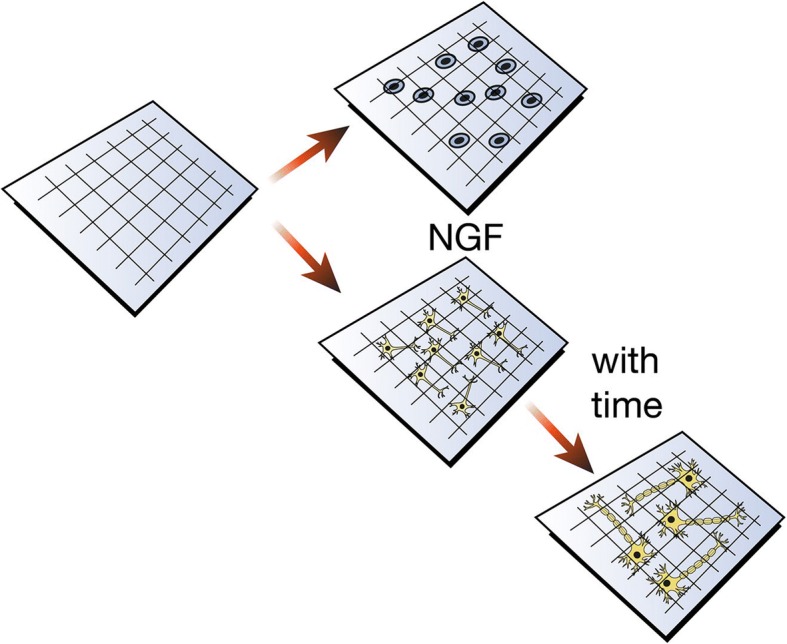
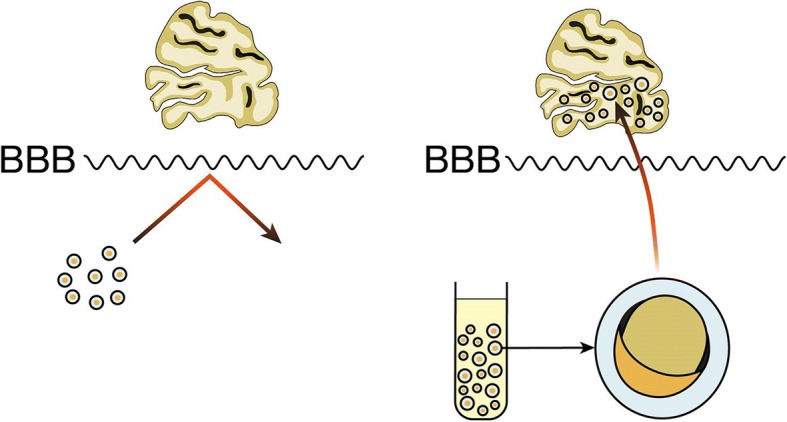
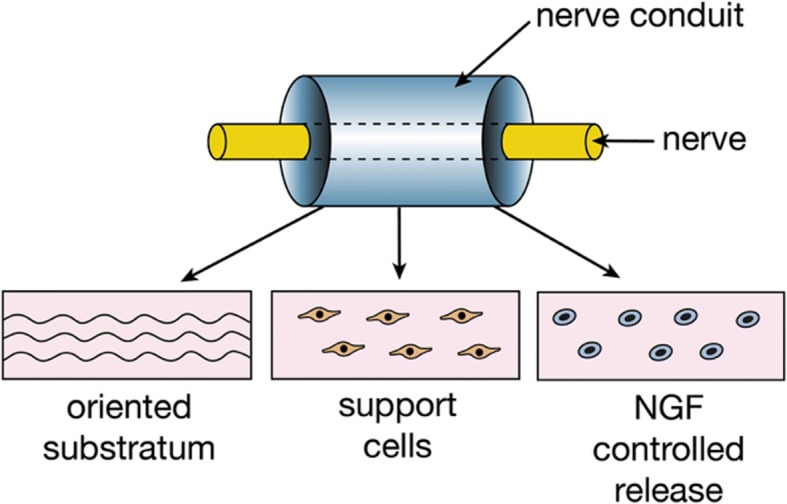
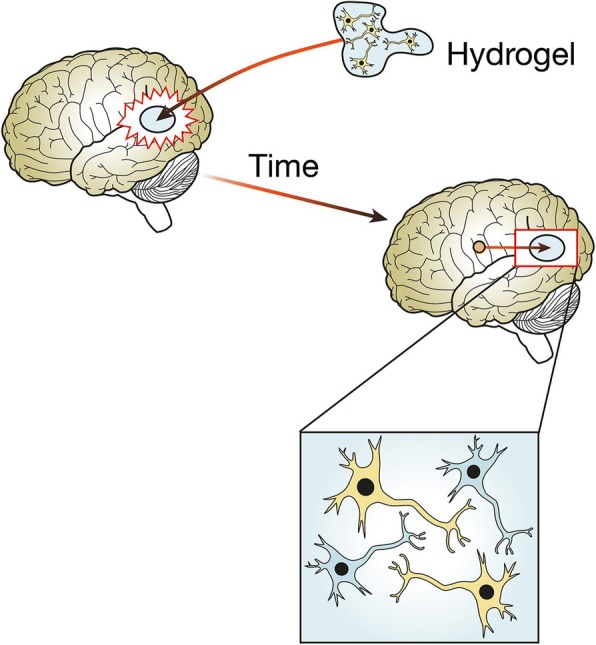
Verification
Claims the paper makes
The claims and statistics of this paper haven’t been checked yet.
Free: it reads the open-access text and checks the first 5 claims that cite a source we can check. Create a free account to check every claim.
Claims other papers make about this one
Each is checked against this paper’s own text: does it say what the citing paper says it does?
The check wasn’t confident either way, so it gives no verdict — never disputed.
In the citing paper
“3D models include neurospheroids [120], organ-on-a-chip devices [121], and engineered brain tissue [122], mimicking the brain’s complexity; however, they are more difficult to engineer and maintain [123].”
From Alzheimer's Disease: Treatment Strategies and Their Limitations. (2022) · cites this paper as [122]
Experimental — accuracy not yet measured
Self-check
Percentages, sums and reported differences re-computed from the paper’s own numbers.
The self-check needs the paper’s full text.
Citations
Cites
Items 201–229 of 229
Liu, S., & Ho, P. C. (2017) · Journal of Pharmacy and Pharmacology · doi:10.1111/jphp.12797 · Cited by 41
Cavernous nerve regeneration by biodegradable alginate gel sponge sheet placement without sutures
Matsuura, S., Obara, T., Tsuchiya, N., Suzuki, Y., & Habuchi, T. (2006) · Urology · doi:10.1016/j.urology.2006.09.051 · Cited by 38
Diogo, C. C., Camassa, J. A., Pereira, J. E., Costa, L. M. D., Filipe, V., Couto, P. A., Geuna, S., Maurício, A. C., & Varejão, A. S. (2017) · Neurological Research · doi:10.1080/01616412.2017.1331873 · Cited by 38
Wang, S., Ghezzi, C. E., White, J. D., & Kaplan, D. L. (2015) · Journal of Biomedical Materials Research Part A · doi:10.1002/jbm.a.35465 · Cited by 37
Extracellular matrices, artificial neural scaffolds and the promise of neural regeneration
Grandhi, R., Ricks, C., Shin, S., & Becker, C. J. (2014) · Neural Regeneration Research · doi:10.4103/1673-5374.141778 · Cited by 36
Johnson, T. L., & Koria, P. (2016) · BioDrugs · doi:10.1007/s40259-016-0159-4 · Cited by 36
Song, W.-Q., & Meng, Z.-Y. (2017) · Neural Regeneration Research · doi:10.4103/1673-5374.205100 · Cited by 35
REPAIR OF FACIAL NERVE WITH ALGINATE SPONGE WITHOUT SUTURING: AN EXPERIMENTAL STUDY IN CATS
Wu, S., Suzuki, Y., Tanihara, M., Ohnishi, K., Endo, K., & Nishimura, Y. (2002) · Scandinavian Journal of Plastic and Reconstructive Surgery and Hand Surgery · doi:10.1080/028443102753718005 · Cited by 33
Porous chitosan scaffold and ngf promote neuronal differentiation of neural stem cells in vitro.
Yi, X., Jin, G., Tian, M., Mao, W., & Qin, J. (2011) · PubMed · Cited by 33
A flexible polyaniline-based bioelectronic patch
Cui, C., Faraji, N., Lauto, A., Travaglini, L., Tonkin, J. N., Mahns, D. A., Humphrey, E. J., Terracciano, C. M., Gooding, J. J., Seidel, J., et al. (2018) · Biomaterials Science · doi:10.1039/c7bm00880e · Cited by 30
Yang, Y., Shen, C., Huang, T., Chang, S., Cheng, H., & Liu, B. (2010) · Journal of Biomedical Materials Research Part B Applied Biomaterials · doi:10.1002/jbm.b.31705 · Cited by 28
Choi, S., Park, J., Lee, K., Lee, S., & Jeon, W. B. (2013) · Journal of Biomedical Materials Research Part B Applied Biomaterials · doi:10.1002/jbm.b.32950 · Cited by 26
Sciatic nerve repair by reinforced nerve conduits made of gelatin–tricalcium phosphate composites
Yang, Y., Shen, C., Cheng, H., & Liu, B. (2010) · Journal of Biomedical Materials Research Part A · doi:10.1002/jbm.a.32973 · Cited by 25
McGowan, J. W. D., Shao, Q., Vig, P. J. S., & Bidwell, G. L. (2016) · Drug Design Development and Therapy · doi:10.2147/dddt.s106216 · Cited by 25
Peripheral nerve injuries: Long term follow-up results of rehabilitation
Adıgüzel, E., Yaşar, E., Tecer, D., Güzelküçük, Ü., Taşkaynatan, M. A., Kesikburun, S., & Özgül, A. (2016) · Journal of Back and Musculoskeletal Rehabilitation · doi:10.3233/bmr-160681 · Cited by 23
New Challenges in CNS Repair: The Immune and Nervous Connection
Lombardi, V. (2012) · Current Immunology Reviews · doi:10.2174/157339512798991272 · Cited by 20
Biopolymeric Nanoparticles for Targeted Drug Delivery to Brain Tumors
Elzoghby, A. O., Freag, M. S., & Elkhodairy, K. A. (2018) · Elsevier eBooks · doi:10.1016/b978-0-12-812218-1.00007-5 · Cited by 20
Evaluation of the Biocompatibility of Polypyrrole Implanted Subdurally in GAERS
Bauquier, S. H., McLean, K. J., Jiang, J. L., Boston, R., Lai, A., Yue, Z., Moulton, S. E., Halliday, A. J., Wallace, G. G., & Cook, M. J. (2016) · Macromolecular Bioscience · doi:10.1002/mabi.201600334 · Cited by 18
Nagesetti, A., Srinivasan, S., & McGoron, A. J. (2017) · Journal of Photochemistry and Photobiology B Biology · doi:10.1016/j.jphotobiol.2017.07.020 · Cited by 18
Yang, R., Xu, C., Wang, T., Wang, Y., Wang, J., Quan, D., & Deng, D. Y. B. (2017) · RSC Advances · doi:10.1039/c7ra06614g · Cited by 18
Neural Engineering From Advanced Biomaterials to 3D Fabrication Techniques
Zhang, L. G., Kaplan, D. L., & Publishing, S. I. (2016) · Cited by 18
Ludwig, K. A., Miriani, R. M., Langhals, N. B., Marzullo, T. C., & Kipke, D. R. (2011) · Journal of Neural Engineering · doi:10.1088/1741-2560/8/4/046009 · Cited by 17
Flexible 3D carbon nanotubes cuff electrodes as a peripheral nerve interface
Tian, P. W., Yi, W., Chen, C., Hu, J., Qi, J., Zhang, B., & Cheng, M. M. (2018) · Biomedical Microdevices · doi:10.1007/s10544-018-0268-6 · Cited by 17
Farzamfar, S., Esmailpour, F., Rahmati, M., Vaez, A., Mirzaii, M., Garmabi, B., Shayannia, A., Ebrahimi, E., Vahedi, H., & Salehi, M. (2017) · Shahroud Journal of Medical Sciences · doi:10.22100/ijhs.v3i2.236 · Cited by 16
Kondyurin, A. V., Tsoutas, K., Latour, Q.-X., Higgins, M. J., Moulton, S. E., McKenzie, D. R., & Bilek, M. (2017) · ACS Biomaterials Science & Engineering · doi:10.1021/acsbiomaterials.7b00369 · Cited by 15
Gennari, C. G. M., Cilurzo, F., Mitro, N., Caruso, D., Minghetti, P., & Magnaghi, V. (2017) · Regenerative Medicine · doi:10.2217/rme-2017-0102 · Cited by 15
Silk-Based Bioinks for 3D Bioprinting
Midha, S., & Ghosh, S. (2017) · Springer eBooks · doi:10.1007/978-981-10-3701-6_15 · Cited by 10
Development of Schwann cell-seeded multichannel scaffolds for peripheral nerve regeneration
Kim, M. S., Kim, J., & Hyun, J. K. (2017) · Journal of the Neurological Sciences · doi:10.1016/j.jns.2017.08.1726 · Cited by 9
Nanomedicine: A New Approach for Treatment Neuropsychiatric Diseases
Wang, C., & Xue, X. (2017) · Advances in Materials · doi:10.11648/j.am.20170603.12 · Cited by 5
Research works printed but not linked: 2
- 48. Kulkarni VS, Butte KD, Rathod SS. Natural Polymers -a Comprehensive Review. IJRPBS. 2012;3:1597-613.
- 137. Mahanta B, Mary SA, Bhaduri A, Giridev VR, Electrospun PVA. Keratin Nanofibrous Scaffold and its Application in Neural Repair. Trends Biomater Artif Organs. 2014;28:188-96.
Cited by
Smart Hydrogels in Tissue Engineering and Regenerative Medicine
Mantha, S., Pillai, S., Khayambashi, P., Upadhyay, A., Zhang, Y., Tao, O., Pham, H. M., & Tran, S. D. (2019) · Materials · doi:10.3390/ma12203323 · Cited by 857
Alzheimer's Disease: Treatment Strategies and Their Limitations.
Passeri, E., Elkhoury, K., Morsink, M., Broersen, K., Linder, M., Tamayol, A., Malaplate, C., Yen, F. T., & Arab-Tehrany, E. (2022) · International Journal of Molecular Sciences · doi:10.3390/ijms232213954 · Cited by 689
“3D models include neurospheroids [120], organ-on-a-chip devices [121], and engineered brain tissue [122], mimicking the brain’s complexity; however, they are more difficult to engineer and maintain [123].”
BackgroundEl-Husseiny, H. M., Mady, E. A., Hamabe, L., Abugomaa, A., Shimada, K., Yoshida, T., Tanaka, T., Yokoi, A., Elbadawy, M., & Tanaka, R. (2022) · Materials Today Bio · doi:10.1016/j.mtbio.2021.100186 · Cited by 533
“Recently, several in vivo studies utilizing various hydrogel-based scaffolds are conducted to address different yet difficult to treat neurological conditions [375].”
BackgroundAlginate and its application to tissue engineering
Sahoo, D. R., & Biswal, T. (2021) · SN Applied Sciences · doi:10.1007/s42452-020-04096-w · Cited by 517
Fabrication of Biomedical Scaffolds Using Biodegradable Polymers.
Kirillova, A., Yeazel, T. R., Asheghali, D., Petersen, S. R., Dort, S., Gall, K., & Becker, M. L. (2021) · Chemical Reviews · doi:10.1021/acs.chemrev.0c01200 · Cited by 368
Metadata
- Authors
- Boni, R., Ali, A., Shavandi, A., & Clarkson, A. N.
- Affiliations
- University of Otago (NZ)
- Université Libre de Bruxelles (BE)
- Brain Research New Zealand (NZ)
- Corresponding author
- Ali, Azam
- Venue
- Journal of Biomedical Science
- Published
- 2018-12
- Volume
- 25
- Issue
- 1
- Pages
- 90-90
- ISSN
- 1021-7770 (ISSN-L)
- 1423-0127
- PMC
- PMC6300901
- OpenAlex
- W2906020898
- Cited by
- 439
- References
- 231
- Citations by year
- 2026: 27 · 2025: 51 · 2024: 75 · 2023: 91 · 2022: 73 · 2021: 54 · 2020: 53 · 2019: 14
- FWCI
- 3.92
- Type
- journal article
- Language
- en
- Open access
- diamond
- doi.org
- Licence
- cc-by
- creativecommons.org/licenses/by/4.0/ (tdm)
- Locations
- Journal of Biomedical Science (publishedVersion, cc-by)
- Europe PMC (PubMed Central) (publishedVersion, other-oa)
- PubMed Central (publishedVersion, cc-by)
- PubMed (publishedVersion)
- Dépôt institutionnel de l'Université libre de Bruxelles (Université Libre de Bruxelles) (submittedVersion, other-oa)
- DOAJ (DOAJ: Directory of Open Access Journals) (submittedVersion, cc-by-sa)
- Topics
- Life Sciences › Neuroscience › Cellular and Molecular Neuroscience › Nerve injury and regeneration
- Health Sciences › Medicine › Surgery › Tissue Engineering and Regenerative Medicine
- Life Sciences › Neuroscience › Cellular and Molecular Neuroscience › Neuroscience and Neural Engineering
- Keywords
- neural tissue engineering, polymeric biomaterials, natural polymers, synthetic polymers, nerve conduits, scaffolds, peripheral nerve regeneration, central nervous system injury, biocompatibility, nerve regeneration
- MeSH terms
- Animals, Humans, Nerve Regeneration, Nerve Tissue, Polymers, Tissue Engineering
About these checks
Registry, retraction, Cites and statistics results are computed, not judged, with one exception: a printed reference that no index lists is read once by a model before it counts as a citation error. Claims are extracted by a model and kept only when their quote appears verbatim in the text; each cited source is then checked, with a model’s help, for whether it says what the claim relies on. Those verdicts can be wrong — read the claim’s quote and the cited source before relying on one.
Statistics and arithmetic are recomputed, not judged.
Confidence bands are shown only for fields calibrated on our annotated test set. None is calibrated yet, so no band is shown.
What counts as a claim ›How we measure confidence ›How we check this ›
Are you an author, or do you see a problem with this page? Request a review
Data sources
Bibliographic data: Semantic Scholar, OpenAlex, Crossref.
Contains information from the Semantic Scholar Academic Graph Datasets, made available under the ODC Attribution License (ODC-BY 1.0).
Semantic Scholar’s data is described in: Kinney, R., et al. (2023). The Semantic Scholar Open Data Platform. arXiv:2301.10140.
