

Liraglutide improves metabolic parameters and carotid intima-media thickness in diabetic patients with the metabolic syndrome: an 18-month prospective study
Open accessThe DOI matches its Crossref record; 46 of the 46 references it cites were found in a registry or an index.
Abstract
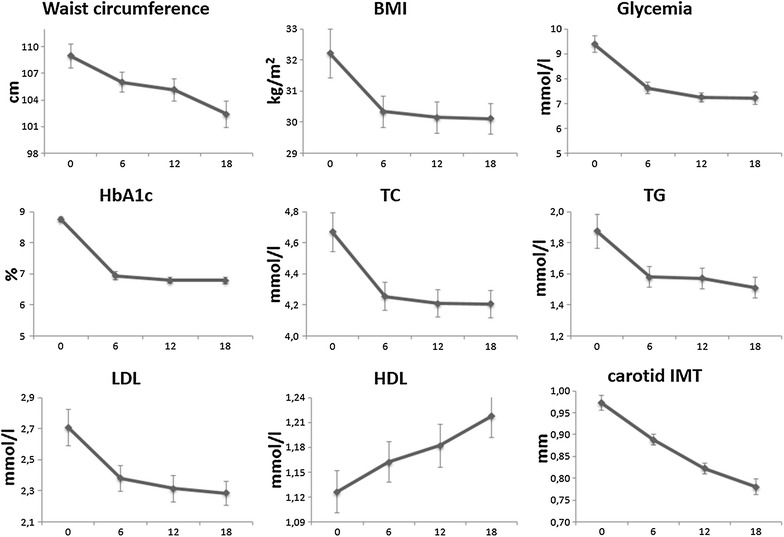
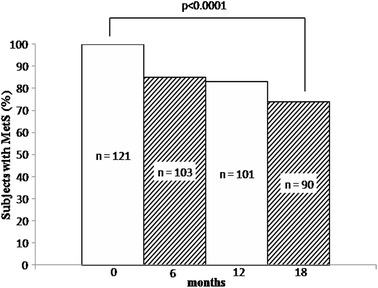
Background: Liraglutide, a GLP-1 analogue, exerts several beneficial non-glycemic effects in patients with type-2 diabetes (T2DM), such as those on body weight, blood pressure, plasma lipids and inflammation markers. However, the effects of liraglutide on cardiovascular (CV) risk markers in subjects with the metabolic syndrome (MetS) are still largely unknown. We herein explored its effects on various cardio-metabolic risk markers of the MetS in subjects with T2DM. Methods: We performed an 18-month prospective, real-world study. All subjects had T2DM and the MetS based on the AHA/NHLBI criteria. Subjects with a history of a major CV event were excluded. One hundred-twenty-one subjects (71 men and 50 women; mean age: 62 ± 9 years) with T2DM and the MetS, who were naïve to incretin-based therapies and treated with metformin only, were included. Liraglutide (1.2 mg/day) was added to metformin (1500–3000 mg/day) for the entire study. Fasting plasma samples for metabolic parameters were collected and carotid-intima media thickness (cIMT) was assessed by B-mode real-time ultrasound at baseline and every 6 months thereafter. Results: There was a significant reduction in waist circumference, body mass index, fasting glycemia, HbA1c, total- and LDL-cholesterol, triglycerides, and cIMT during the 18-month follow-up. Correlation analysis showed a significant association between changes in cIMT and triglycerides (r = 0.362; p < 0.0001). The MetS prevalence significantly reduced during the study, and the 26% of subjects no longer fulfilled the criteria for the MetS after 18 months. Conclusions: Liraglutide improves cardio-metabolic risk factors in subjects with the MetS in a real-world study. Trial Registration ClinicalTrials.gov: NCT01715428.
Overview
The claims and statistics of this paper haven’t been checked yet.
Free: it reads the open-access text and checks the first 5 claims that cite a source we can check. Create a free account to check every claim.
Integrity signals
Registry
Cites
Statistics
Figures
Verification
Claims the paper makes
The claims and statistics of this paper haven’t been checked yet.
Free: it reads the open-access text and checks the first 5 claims that cite a source we can check. Create a free account to check every claim.
Claims other papers make about this one
Each is checked against this paper’s own text: does it say what the citing paper says it does?
The cited source says what the claim attributes to it.
In the citing paper
“For instance, in an 18-month prospective, real-world study conducted in 121 patients with T2DM and metabolic syndrome, liraglutide treatment was associated with a significant reduction in carotid intima-media thickness, a surrogate marker of subclinical atherosclerosis, from a mean of 0.97 mm at baseline to 0.78 mm at 18 months [55].”
From Protection against stroke with glucagon-like peptide-1 receptor agonists: a comprehensive review of potential mechanisms (2022) · cites this paper as [55]
Self-check
Percentages, sums and reported differences re-computed from the paper’s own numbers.
The self-check needs the paper’s full text.
Citations
Cites
Alberti, K. G. M. M., Eckel, R. H., Grundy, S. M., Zimmet, P. Z., Cleeman, J. I., Donato, K. A., Fruchart, J.-C., James, W. P. T., Loria, C. M., & Smith, S. C. (2009) · Circulation · doi:10.1161/circulationaha.109.192644 · Cited by 14,860 · cited 1×
“The presence of abnormal metabolic parameters such as central obesity, dyslipidemia, and hypertension further increase the risk of CVD in both T2DM and MetS [13], which remains elevated despite intensive pharmacological treatment [14].”
Background(2013) · European Heart Journal · doi:10.1093/eurheartj/eht151 · Cited by 13,655
Liraglutide and Cardiovascular Outcomes in Type 2 Diabetes
Marso, S. P., Daniels, G. H., Brown-Frandsen, K., Kristensen, P., Mann, J. F. E., Nauck, M. A., Nissen, S. E., Pocock, S., Poulter, N. R., Ravn, L. S., et al. (2016) · New England Journal of Medicine · doi:10.1056/nejmoa1603827 · Cited by 7,629 · cited 2×
“The recently published liraglutide CV outcome study reported that liraglutide was able to reduce death from CV causes, nonfatal myocardial infarction and nonfatal stroke in patients with T2DM [28].”
Background(2003) · Journal of Hypertension · doi:10.1097/00004872-200306000-00001 · Cited by 3,027
Mancia, G., Rosei, E. A., Cífková, R., DeBacker, G., Erdine, S. E., Fagard, R., Farsang, C., Heagerty, A. M., Kawecka-Jaszcs, K., Kiowski, W., et al. (2003) · Lirias · doi:10.1097/01.hjh.0000059051.65882.32 · Cited by 2,601
Buse, J. B., Rosenstock, J., Sesti, G., Schmidt, W. E., Montanya, E., Brett, J. H., Zychma, M., & Blonde, L. (2009) · The Lancet · doi:10.1016/s0140-6736(09)60659-0 · Cited by 1,503
Seaquist, E. R., Anderson, J., Childs, B., Cryer, P., Dagogo-Jack, S., Fish, L., Heller, S. R., Rodriguez, H., Rosenzweig, J., & Vigersky, R. (2013) · Diabetes Care · doi:10.2337/dc12-2480 · Cited by 1,389 · cited 1×
“Fifteen subjects reported symptomatic hypoglycemia; however, no severe hypoglycemic episodes (based on the joint American Diabetes Association and the Endocrine Society definition) were recorded [11].”
BackgroundAstrup, A., Rössner, S., Van Gaal, L., Rissanen, A., Niskanen, L., Al Hakim, M., Madsen, J., Rasmussen, M. F., & Lean, M. E. (2009) · The Lancet · doi:10.1016/s0140-6736(09)61375-1 · Cited by 1,163 · cited 4×
“[2] reported a significant reduction in body weight after 20 weeks of liraglutide therapy in obese non-diabetic subjects with a dose of 3.”
BackgroundInfluentialZinman, B., Gerich, J., Buse, J. B., Lewin, A., Schwartz, S., Raskin, P., Hale, P. M., Zdravkovic, M., Blonde, L., & the LEAD-4 Study Investigators (2009) · Diabetes Care · doi:10.2337/dc08-2124 · Cited by 848 · cited 1×
“The LEAD studies similarly showed a non-significant increase in HDL-C with liraglutide administration [21, 22].”
Backgroundon behalf of the NN8022-1807 Investigators, Astrup, A., Carraro, R., Finer, N., Harper, A., Kunesova, M., Lean, M. E. J., Niskanen, L., Rasmussen, M. F., Rissanen, A., et al. (2012) · International Journal of Obesity · doi:10.1038/ijo.2011.158 · Cited by 757 · cited 3×
“Liraglutide decreases the prevalence of both MetS and prediabetes in obese, nondiabetic individuals [2, 8], suggesting that this antidiabetic drug might be beneficial in patients with the MetS.”
BackgroundNoyan-Ashraf, M. H., Momen, M. A., Ban, K., Sadi, A.-M., Zhou, Y.-Q., Riazi, A. M., Baggio, L. L., Henkelman, R. M., Husain, M., & Drucker, D. J. (2009) · Diabetes · doi:10.2337/db08-1193 · Cited by 575 · cited 1×
“Evidence from pre-clinical studies suggests that liraglutide may have beneficial effects on atherosclerotic plaque formation, progression and its stability [25], in addition to cardioprotective effects leading to improved outcomes and enhanced survival after acute myocardial infarction [26].”
BackgroundZinman, B., Gerich, J. E., Buse, J. B., Lewin, A., Schwartz, S. E., Raskin, P., Hale, P. M., Zdravkovic, M. D., & Blonde, L. (2010) · Diabetes Care · Cited by 290
Schernthaner, G., Matthews, D. R., Charbonnel, B., Hanefeld, M., & Brunetti, P. (2004) · The Journal of Clinical Endocrinology & Metabolism · doi:10.1210/jc.2003-030861 · Cited by 268 · cited 1×
“However, previous studies have shown that metformin therapy has little or no impact on cIMT [38, 39], and at best, only a modest effect on waist circumference, weight or BMI [40, 41], and lipids [42, 43].”
Grundy, S. M. (2005) · Arteriosclerosis, Thrombosis, and Vascular Biology · doi:10.1161/01.atv.0000189155.75833.c7 · Cited by 247 · cited 2×
“Patients and methods We recruited 121 consecutive subjects (71 men and 50 women, mean age 62 ± 9 years) with the MetS, as diagnosed by the American Heart Association and the National Heart, Lung and Blood Institute (AHA/NHLBI) criteria [10], who were referred for a clinical evaluation to the Unit of Diabetes and Cardi…”
BackgroundMethodSun, F., Wu, S., Wang, J., Guo, S., Chai, S., Yang, Z., Li, L., Zhang, Y., Ji, L., & Zhan, S. (2015) · Clinical Therapeutics · doi:10.1016/j.clinthera.2014.11.008 · Cited by 232
Gaspari, T., Welungoda, I., Widdop, R. E., Simpson, R. W., & Dear, A. E. (2013) · Diabetes and Vascular Disease Research · doi:10.1177/1479164113481817 · Cited by 148 · cited 1×
“Evidence from pre-clinical studies suggests that liraglutide may have beneficial effects on atherosclerotic plaque formation, progression and its stability [25], in addition to cardioprotective effects leading to improved outcomes and enhanced survival after acute myocardial infarction [26].”
BackgroundKatakami, N., Yamasaki, Y., Hayaishi-Okano, R., Ohtoshi, K., Kaneto, H., Matsuhisa, M., Kosugi, K., & Hori, M. (2004) · Diabetologia · doi:10.1007/s00125-004-1547-8 · Cited by 129 · cited 1×
“However, previous studies have shown that metformin therapy has little or no impact on cIMT [38, 39], and at best, only a modest effect on waist circumference, weight or BMI [40, 41], and lipids [42, 43].”
Montanya, E., & Sesti, G. (2009) · Clinical Therapeutics · doi:10.1016/j.clinthera.2009.11.034 · Cited by 127 · cited 1×
“It exerts several glycemic and non-glycemic effects, including the regulation of glucose levels by stimulating glucose-dependent insulin secretion and the suppression of glucagon secretion [1].”
BackgroundGLP-1 analogues as a new treatment option for hypothalamic obesity in adults: report of nine cases
Zoicas, F., Droste, M., Mayr, B., Buchfelder, M., & Schöfl, C. (2013) · European Journal of Endocrinology · doi:10.1530/eje-12-0997 · Cited by 122 · cited 1×
“Liraglutide’s benefit was noted even in non-diabetic subjects [2, 8] and in those at high CV risk [16].”
BackgroundBenefits of Liraglutide Treatment in Overweight and Obese Older Individuals With Prediabetes
Kim, S. H., Abbasi, F., Lamendola, C., Liu, A., Ariel, D., Schaaf, P., Grove, K., Tomasso, V., Ochoa, H., Liu, Y. V., et al. (2013) · Diabetes Care · doi:10.2337/dc13-0354 · Cited by 118 · cited 4×
“The presence of abnormal metabolic parameters such as central obesity, dyslipidemia, and hypertension further increase the risk of CVD in both T2DM and MetS [13], which remains elevated despite intensive pharmacological treatment [14].”
BackgroundInfluentialRizzo, M., Abate, N., Chandalia, M., Rizvi, A. A., Giglio, R. V., Nikolic, D., Marino Gammazza, A., Barbagallo, I., Isenovic, E. R., Banach, M., et al. (2015) · The Journal of Clinical Endocrinology & Metabolism · doi:10.1210/jc.2014-2291 · Cited by 113 · cited 1×
“Additionally, antioxidative markers may be inversely associated with TG levels in early preclinical atherosclerosis even with normal levels of plasma cholesterol [34], and our group has previously demonstrated that liraglutide is able to reduce markers of oxidative stress in patients with T2DM [35].”
BackgroundSelf-citationCorrado, E., Rizzo, M., Tantillo, R., Muratori, I., Bonura, F., Vitale, G., & Novo, S. (2006) · Stroke · doi:10.1161/01.str.0000198813.56398.14 · Cited by 110
Self-citationRizzo, M., Chandalia, M., Patti, A. M., Di Bartolo, V., Rizvi, A. A., Montalto, G., & Abate, N. (2014) · Cardiovascular Diabetology · doi:10.1186/1475-2840-13-49 · Cited by 107
Self-citationRizzo, M., Rizvi, A. A., Spinas, G. A., Rini, G. B., & Berneis, K. (2009) · Expert Opinion on Investigational Drugs · doi:10.1517/14728220903241633 · Cited by 83 · cited 1×
“The significant cardio-metabolic effect that we report with the use of liraglutide in the MetS is even higher than what was reported in most of the published studies with the use of this drug in T2DM patients [37].”
ResultSelf-citationCorrado, E., Rizzo, M., Coppola, G., Muratori, I., Carella, M., & Novo, S. (2008) · Coronary Artery Disease · doi:10.1097/mca.0b013e3282f3fbde · Cited by 81 · cited 1×
“Since cIMT is a surrogate marker of early, subclinical atherosclerosis [30], our findings showing regression of cIMT with the use of liraglutide in MetS patients seem to be congruent with the emerging CV actions of liraglutide.”
ResultSelf-citationQamar, A., Khetarpal, S. A., Khera, A. V., Qasim, A., Rader, D. J., & Reilly, M. P. (2015) · Arteriosclerosis, Thrombosis, and Vascular Biology · doi:10.1161/atvbaha.115.305415 · Cited by 76 · cited 1×
“It is known that TG-metabolism plays a central role in CVD risk [31] and higher TG levels in T2DM subjects are associated with less favorable cardio-metabolic phenotypes and subclinical atherosclerosis [32], that may lead to increased CVD mortality [33].”
BackgroundSong, X., Jia, H., Jiang, Y., Wang, L., Zhang, Y., Mu, Y., & Liu, Y. (2015) · Scientific Reports · doi:10.1038/srep10202 · Cited by 76
Sönmez, A., Yılmaz, M. İ., Sağlam, M., Ünal, H. U., Gök, M., Çetinkaya, H., Karaman, M., Haymana, C., Eyileten, T., Oğuz, Y., et al. (2015) · Lipids in Health and Disease · doi:10.1186/s12944-015-0031-4 · Cited by 75 · cited 1×
“It is known that TG-metabolism plays a central role in CVD risk [31] and higher TG levels in T2DM subjects are associated with less favorable cardio-metabolic phenotypes and subclinical atherosclerosis [32], that may lead to increased CVD mortality [33].”
BackgroundSelf-citationSahin, Y., Unluhizarci, K., Yilmazsoy, A., Yikilmaz, A., Aygen, E., & Kelestimur, F. (2007) · Clinical Endocrinology · doi:10.1111/j.1365-2265.2007.02985.x · Cited by 67 · cited 1×
“However, previous studies have shown that metformin therapy has little or no impact on cIMT [38, 39], and at best, only a modest effect on waist circumference, weight or BMI [40, 41], and lipids [42, 43].”
Li, C.-J., Li, J., Zhang, Q.-M., Lv, L., Chen, R., Lv, C.-F., Yu, P., & Yu, D.-M. (2012) · Cardiovascular Diabetology · doi:10.1186/1475-2840-11-142 · Cited by 64 · cited 1×
“In this context, there is evidence that the addition of liraglutide to insulin is able to reduce waist circumference more than just increasing the insulin dosage in obese T2DM patients [17].”
BackgroundOxidative stress and triglycerides as predictors of subclinical atherosclerosis in prediabetes
Al-Aubaidy, H. A., & Jelinek, H. F. (2014) · Redox Report · doi:10.1179/1351000213y.0000000080 · Cited by 64 · cited 1×
“Additionally, antioxidative markers may be inversely associated with TG levels in early preclinical atherosclerosis even with normal levels of plasma cholesterol [34], and our group has previously demonstrated that liraglutide is able to reduce markers of oxidative stress in patients with T2DM [35].”
BackgroundKim, S., Choi, Y. J., Huh, B. W., Park, S. W., Lee, E. J., Cho, Y.-W., & Huh, K. B. (2014) · The Journal of Clinical Endocrinology & Metabolism · doi:10.1210/jc.2013-4133 · Cited by 56 · cited 2×
“However, in this latter study [36], coexistence of NAFLD and insulin resistance seemed to be an independent predictor of increased cIMT.”
BackgroundFontbonne, A., Diouf, I., Baccara-Dinet, M., Eschwege, E., & Charles, M.-A. (2009) · Diabetes & Metabolism · doi:10.1016/j.diabet.2009.03.005 · Cited by 53 · cited 1×
“However, previous studies have shown that metformin therapy has little or no impact on cIMT [38, 39], and at best, only a modest effect on waist circumference, weight or BMI [40, 41], and lipids [42, 43].”
Miselli, M.-A., Nora, E. D., Passaro, A., Tomasi, F., & Zuliani, G. (2014) · Cardiovascular Diabetology · doi:10.1186/s12933-014-0135-6 · Cited by 45
Sun, F., Wu, S., Guo, S., Yu, K., Yang, Z., Li, L., Zhang, Y., Ji, L., & Zhan, S. (2015) · Endocrine · doi:10.1007/s12020-014-0373-0 · Cited by 44 · cited 1×
“Several studies have shown that liraglutide has a positive effect on anthropometric parameters, in particular on body weight (as seen in the LEAD [Liraglutide Effect and Action in Diabetes] studies (reviewed in [3]) and waist circumference [15].”
BackgroundInoue, K., Maeda, N., Fujishima, Y., Fukuda, S., Nagao, H., Yamaoka, M., Hirata, A., Nishizawa, H., Funahashi, T., & Shimomura, I. (2014) · Diabetology & Metabolic Syndrome · doi:10.1186/1758-5996-6-95 · Cited by 42
Burgmaier, M., Heinrich, C., & Marx, N. (2013) · Diabetic Medicine · doi:10.1111/j.1464-5491.2012.03746.x · Cited by 40 · cited 1×
“blood pressure (BP) and plasma lipids [3], thus improving the cardio-metabolic profile of patients with T2DM [4, 5].”
BackgroundRizzo, M., Nikolić, D., Banach, M., Giglio, R. V., Patti, A. M., Bartolo, V. D., Tamburello, A., Zabbara, A., Pecoraro, G., Montalto, G., et al. (2013) · Clinical Lipidology · doi:10.2217/clp.13.8 · Cited by 34 · cited 4×
“Several studies have shown that liraglutide has a positive effect on anthropometric parameters, in particular on body weight (as seen in the LEAD [Liraglutide Effect and Action in Diabetes] studies (reviewed in [3]) and waist circumference [15].”
BackgroundResultSelf-citationPlutzky, J., Garber, A., Falahati, A., Toft, A. D., & Poulter, N. R. (2009) · Canadian Journal of Diabetes · doi:10.1016/s1499-2671(09)33072-5 · Cited by 33
The effect of comprehensive lifestyle intervention or metformin on obesity in young women☆
Lim, S., Norman, R., Clifton, P., & Noakes, M. (2010) · Nutrition, Metabolism and Cardiovascular Diseases · doi:10.1016/j.numecd.2009.10.006 · Cited by 31 · cited 8×
“We found that the reduction in HbA1c was significantly correlated with changes in body weight (r = 0.203; p = 0.025), waist circumference (r = 0.272; p = 0.003), BMI (r = 0.187; p = 0.040), fasting glycemia (r = 0.407; p < 0.0001), HDL-C (r = −0.225; p = 0.013) and TG (r = 0.192; p = 0.035).”
InfluentialAndo, T., Haraguchi, A., Matsunaga, T., Natsuda, S., Yamasaki, H., Usa, T., & Kawakami, A. (2014) · Internal Medicine · doi:10.2169/internalmedicine.53.1646 · Cited by 31 · cited 1×
“Similar beneficial effects of liraglutide on metabolic parameters were also seen in obese individuals with prediabetes who were at high risk for progression to T2DM and the development of cardiovascular disease (CVD) [6], as well as in subjects who had hypothalamic pituitary injury followed by hyperphagia, in whom sev…”
BackgroundKim, J., Choi, E., Mun, H.-S., Min, P., Yoon, Y. W., Lee, B. K., Hong, B., Rim, S., & Kwon, H. M. (2013) · Cardiovascular Diabetology · doi:10.1186/1475-2840-12-140 · Cited by 28 · cited 1×
“studies have shown that assessing the number of markers of MetS is more useful than the binary definition of MetS for predicting the atherosclerotic burden [24].”
BackgroundEsteghamati, A., Ghasemiesfe, M., Mousavizadeh, M., Noshad, S., & Nakhjavani, M. (2013) · Journal of Diabetes Investigation · doi:10.1111/jdi.12157 · Cited by 27 · cited 8×
“We found that the reduction in HbA1c was significantly correlated with changes in body weight (r = 0.203; p = 0.025), waist circumference (r = 0.272; p = 0.003), BMI (r = 0.187; p = 0.040), fasting glycemia (r = 0.407; p < 0.0001), HDL-C (r = −0.225; p = 0.013) and TG (r = 0.192; p = 0.035).”
InfluentialBuysschaert, M., D’Hooge, D., & Preumont, V. (2015) · Diabetes & Metabolic Syndrome Clinical Research & Reviews · doi:10.1016/j.dsx.2015.05.001 · Cited by 25 · cited 8×
“We found that the reduction in HbA1c was significantly correlated with changes in body weight (r = 0.203; p = 0.025), waist circumference (r = 0.272; p = 0.003), BMI (r = 0.187; p = 0.040), fasting glycemia (r = 0.407; p < 0.0001), HDL-C (r = −0.225; p = 0.013) and TG (r = 0.192; p = 0.035).”
BackgroundInfluentialThe metabolic syndrome influences the response to incretin-based therapies
Fadini, G. P., de Kreutzenberg, S. V., Gjini, R., & Avogaro, A. (2011) · Acta Diabetologica · doi:10.1007/s00592-011-0296-7 · Cited by 20 · cited 3×
“In the latter study, MetS patients had a better response to exenatide treatment than those without the MetS [9].”
BackgroundResultInfluentialKostapanos, M. S., Katsiki, N., Elisaf, M., & Mikhailidis, D. P. (2012) · Current Vascular Pharmacology · doi:10.2174/157016112799305085 · Cited by 11 · cited 1×
“The presence of abnormal metabolic parameters such as central obesity, dyslipidemia, and hypertension further increase the risk of CVD in both T2DM and MetS [13], which remains elevated despite intensive pharmacological treatment [14].”
Background
Cited by
GLP-1 receptor agonists in the treatment of type 2 diabetes - state-of-the-art
Nauck, M. A., Quast, D. R., Wefers, J., & Meier, J. J. (2021) · Molecular Metabolism · doi:10.1016/j.molmet.2020.101102 · Cited by 1,647
“, exenatide [155] and liraglutide [156]) and possible migration into plaques (liraglutide [157]).”
BackgroundThe Discovery and Development of Liraglutide and Semaglutide
Knudsen, L. B., & Lau, J. (2019) · Frontiers in Endocrinology · doi:10.3389/fendo.2019.00155 · Cited by 970
Glucagon-like peptide 1 receptor agonists: cardiovascular benefits and mechanisms of action
Ussher, J. R., & Drucker, D. J. (2023) · Nature Reviews Cardiology · doi:10.1038/s41569-023-00849-3 · Cited by 577
Rakipovski, G., Rolin, B., Nøhr, J., Klewe, I., Frederiksen, K. S., Augustin, R., Hecksher-Sørensen, J., Ingvorsen, C., Polex-Wolf, J., & Knudsen, L. B. (2018) · JACC: Basic to Translational Science · doi:10.1016/j.jacbts.2018.09.004 · Cited by 509
“0279), a surrogate marker for subclinical atherosclerosis (10) (Figure 1B).”
BackgroundSposito, A. C., Berwanger, O., de Carvalho, L. S. F., & Saraiva, J. F. K. (2018) · Cardiovascular Diabetology · doi:10.1186/s12933-018-0800-2 · Cited by 171
Metadata
- Authors
- Rizzo, M., Rizvi, A. A., Patti, A. M., Nikolic, D., Giglio, R. V., Castellino, G., Li Volti, G., Caprio, M., Montalto, G., Provenzano, V., Genovese, S., & Ceriello, A.
- Affiliations
- University of South Carolina (US)
- University of Palermo (IT)
- San Raffaele University of Rome (IT)
- Istituto di Biomedicina e di Immunologia Molecolare Alberto Monroy (IT)
- MultiMedica (IT)
- Centro de Investigación Biomédica en Red Diabetes y Enfermedades Metabólicas Asociadas (ES)
- ORCID
- Venue
- Cardiovascular Diabetology
- Published
- 2016-12
- Volume
- 15
- Issue
- 1
- Pages
- 162-162
- ISSN
- 1475-2840 (ISSN-L)
- PMC
- PMC5135832
- OpenAlex
- W2558288750
- Cited by
- 135
- References
- 46
- Citations by year
- 2026: 9 · 2025: 7 · 2024: 15 · 2023: 15 · 2022: 19 · 2021: 18 · 2020: 17 · 2019: 15 · 2018: 14 · 2017: 6
- FWCI
- 11.68
- Type
- journal article
- Language
- en
- Open access
- gold
- doi.org
- Licence
- cc-by
- creativecommons.org/licenses/by/4.0 (tdm)
- creativecommons.org/licenses/by/4.0 (vor, 2 d)
- Locations
- Cardiovascular Diabetology (publishedVersion, cc-by)
- Europe PMC (PubMed Central) (publishedVersion, cc-by)
- PubMed Central (publishedVersion, cc-by)
- PubMed (publishedVersion)
- Nova Science Publishers (Nova Science Publishers, Inc.) (submittedVersion, other-oa)
- CINECA IRIS Institutional Research Information System (University of Bari Aldo Moro) (submittedVersion)
- Funders
- Novo Nordisk
- Topics
- Health Sciences › Medicine › Endocrinology, Diabetes and Metabolism › Diabetes Treatment and Management
- Health Sciences › Medicine › Endocrinology, Diabetes and Metabolism › Diabetes, Cardiovascular Risks, and Lipoproteins
- Health Sciences › Medicine › Cardiology and Cardiovascular Medicine › Cardiovascular Function and Risk Factors
- Keywords
- liraglutide, GLP-1 receptor agonists, type 2 diabetes, metabolic syndrome, carotid intima-media thickness, cardiovascular risk factors, metformin, triglycerides, dyslipidemia, weight loss, HbA1c, cardiovascular risk reduction
- MeSH terms
- Liraglutide, Aged, Carotid Artery Diseases, Diabetes Mellitus, Type 2, Drug Therapy, Combination, Female, Humans, Hypoglycemic Agents, Italy, Male, Metformin, Middle Aged, Predictive Value of Tests, Prospective Studies, Risk Factors, Biomarkers, Prevalence, Treatment Outcome, Echocardiography, Doppler, Color, Metabolic Syndrome, Incretins, Carotid Intima-Media Thickness
About these checks
Registry, retraction, Cites and statistics results are computed, not judged, with one exception: a printed reference that no index lists is read once by a model before it counts as a citation error. Claims are extracted by a model and kept only when their quote appears verbatim in the text; each cited source is then checked, with a model’s help, for whether it says what the claim relies on. Those verdicts can be wrong — read the claim’s quote and the cited source before relying on one.
Statistics and arithmetic are recomputed, not judged.
Confidence bands are shown only for fields calibrated on our annotated test set. None is calibrated yet, so no band is shown.
What counts as a claim ›How we measure confidence ›How we check this ›
Are you an author, or do you see a problem with this page? Request a review
Data sources
Bibliographic data: Semantic Scholar, OpenAlex, Crossref.
Contains information from the Semantic Scholar Academic Graph Datasets, made available under the ODC Attribution License (ODC-BY 1.0).
Semantic Scholar’s data is described in: Kinney, R., et al. (2023). The Semantic Scholar Open Data Platform. arXiv:2301.10140.
