

Liraglutide improves metabolic parameters and carotid intima-media thickness in diabetic patients with the metabolic syndrome: an 18-month prospective study
Open accessThe DOI matches its Crossref record; 46 of the 46 references it cites were found in a registry or an index.
Abstract
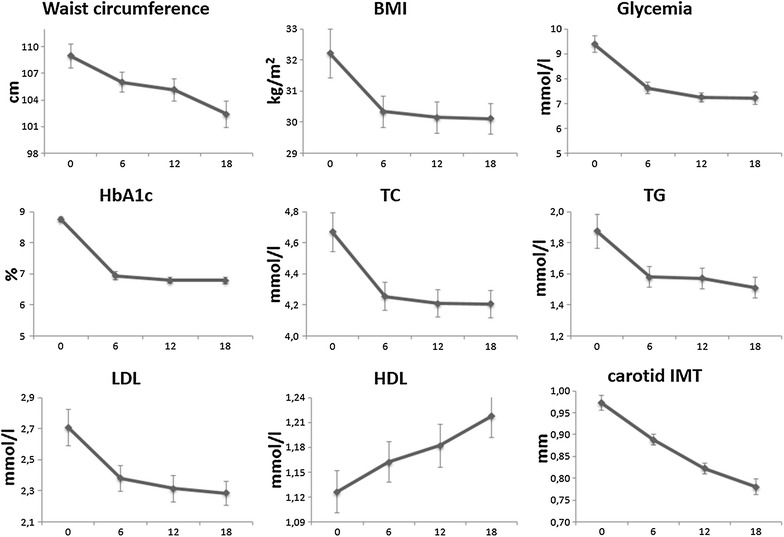
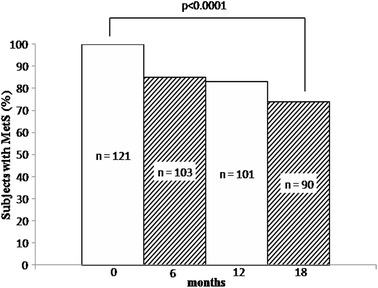
Background: Liraglutide, a GLP-1 analogue, exerts several beneficial non-glycemic effects in patients with type-2 diabetes (T2DM), such as those on body weight, blood pressure, plasma lipids and inflammation markers. However, the effects of liraglutide on cardiovascular (CV) risk markers in subjects with the metabolic syndrome (MetS) are still largely unknown. We herein explored its effects on various cardio-metabolic risk markers of the MetS in subjects with T2DM. Methods: We performed an 18-month prospective, real-world study. All subjects had T2DM and the MetS based on the AHA/NHLBI criteria. Subjects with a history of a major CV event were excluded. One hundred-twenty-one subjects (71 men and 50 women; mean age: 62 ± 9 years) with T2DM and the MetS, who were naïve to incretin-based therapies and treated with metformin only, were included. Liraglutide (1.2 mg/day) was added to metformin (1500–3000 mg/day) for the entire study. Fasting plasma samples for metabolic parameters were collected and carotid-intima media thickness (cIMT) was assessed by B-mode real-time ultrasound at baseline and every 6 months thereafter. Results: There was a significant reduction in waist circumference, body mass index, fasting glycemia, HbA1c, total- and LDL-cholesterol, triglycerides, and cIMT during the 18-month follow-up. Correlation analysis showed a significant association between changes in cIMT and triglycerides (r = 0.362; p < 0.0001). The MetS prevalence significantly reduced during the study, and the 26% of subjects no longer fulfilled the criteria for the MetS after 18 months. Conclusions: Liraglutide improves cardio-metabolic risk factors in subjects with the MetS in a real-world study. Trial Registration ClinicalTrials.gov: NCT01715428.
Overview
The claims and statistics of this paper haven’t been checked yet.
Free: it reads the open-access text and checks the first 5 claims that cite a source we can check. Create a free account to check every claim.
Integrity signals
Registry
Cites
Statistics
Figures
Verification
Claims the paper makes
The claims and statistics of this paper haven’t been checked yet.
Free: it reads the open-access text and checks the first 5 claims that cite a source we can check. Create a free account to check every claim.
Claims other papers make about this one
Each is checked against this paper’s own text: does it say what the citing paper says it does?
The cited source says what the claim attributes to it.
In the citing paper
“For instance, in an 18-month prospective, real-world study conducted in 121 patients with T2DM and metabolic syndrome, liraglutide treatment was associated with a significant reduction in carotid intima-media thickness, a surrogate marker of subclinical atherosclerosis, from a mean of 0.97 mm at baseline to 0.78 mm at 18 months [55].”
From Protection against stroke with glucagon-like peptide-1 receptor agonists: a comprehensive review of potential mechanisms (2022) · cites this paper as [55]
Self-check
Percentages, sums and reported differences re-computed from the paper’s own numbers.
The self-check needs the paper’s full text.
Citations
Cites
Alberti, K. G. M. M., Eckel, R. H., Grundy, S. M., Zimmet, P. Z., Cleeman, J. I., Donato, K. A., Fruchart, J.-C., James, W. P. T., Loria, C. M., & Smith, S. C. (2009) · Circulation · doi:10.1161/circulationaha.109.192644 · Cited by 14,860 · cited 1×
“The presence of abnormal metabolic parameters such as central obesity, dyslipidemia, and hypertension further increase the risk of CVD in both T2DM and MetS [13], which remains elevated despite intensive pharmacological treatment [14].”
Background(2013) · European Heart Journal · doi:10.1093/eurheartj/eht151 · Cited by 13,655
Liraglutide and Cardiovascular Outcomes in Type 2 Diabetes
Marso, S. P., Daniels, G. H., Brown-Frandsen, K., Kristensen, P., Mann, J. F. E., Nauck, M. A., Nissen, S. E., Pocock, S., Poulter, N. R., Ravn, L. S., et al. (2016) · New England Journal of Medicine · doi:10.1056/nejmoa1603827 · Cited by 7,629 · cited 2×
“The recently published liraglutide CV outcome study reported that liraglutide was able to reduce death from CV causes, nonfatal myocardial infarction and nonfatal stroke in patients with T2DM [28].”
Background(2003) · Journal of Hypertension · doi:10.1097/00004872-200306000-00001 · Cited by 3,027
Mancia, G., Rosei, E. A., Cífková, R., DeBacker, G., Erdine, S. E., Fagard, R., Farsang, C., Heagerty, A. M., Kawecka-Jaszcs, K., Kiowski, W., et al. (2003) · Lirias · doi:10.1097/01.hjh.0000059051.65882.32 · Cited by 2,601
Buse, J. B., Rosenstock, J., Sesti, G., Schmidt, W. E., Montanya, E., Brett, J. H., Zychma, M., & Blonde, L. (2009) · The Lancet · doi:10.1016/s0140-6736(09)60659-0 · Cited by 1,503
Seaquist, E. R., Anderson, J., Childs, B., Cryer, P., Dagogo-Jack, S., Fish, L., Heller, S. R., Rodriguez, H., Rosenzweig, J., & Vigersky, R. (2013) · Diabetes Care · doi:10.2337/dc12-2480 · Cited by 1,389 · cited 1×
“Fifteen subjects reported symptomatic hypoglycemia; however, no severe hypoglycemic episodes (based on the joint American Diabetes Association and the Endocrine Society definition) were recorded [11].”
BackgroundAstrup, A., Rössner, S., Van Gaal, L., Rissanen, A., Niskanen, L., Al Hakim, M., Madsen, J., Rasmussen, M. F., & Lean, M. E. (2009) · The Lancet · doi:10.1016/s0140-6736(09)61375-1 · Cited by 1,163 · cited 4×
“[2] reported a significant reduction in body weight after 20 weeks of liraglutide therapy in obese non-diabetic subjects with a dose of 3.”
BackgroundInfluentialZinman, B., Gerich, J., Buse, J. B., Lewin, A., Schwartz, S., Raskin, P., Hale, P. M., Zdravkovic, M., Blonde, L., & the LEAD-4 Study Investigators (2009) · Diabetes Care · doi:10.2337/dc08-2124 · Cited by 848 · cited 1×
“The LEAD studies similarly showed a non-significant increase in HDL-C with liraglutide administration [21, 22].”
Backgroundon behalf of the NN8022-1807 Investigators, Astrup, A., Carraro, R., Finer, N., Harper, A., Kunesova, M., Lean, M. E. J., Niskanen, L., Rasmussen, M. F., Rissanen, A., et al. (2012) · International Journal of Obesity · doi:10.1038/ijo.2011.158 · Cited by 757 · cited 3×
“Liraglutide decreases the prevalence of both MetS and prediabetes in obese, nondiabetic individuals [2, 8], suggesting that this antidiabetic drug might be beneficial in patients with the MetS.”
Background
Cited by
GLP-1 receptor agonists in the treatment of type 2 diabetes - state-of-the-art
Nauck, M. A., Quast, D. R., Wefers, J., & Meier, J. J. (2021) · Molecular Metabolism · doi:10.1016/j.molmet.2020.101102 · Cited by 1,647
“, exenatide [155] and liraglutide [156]) and possible migration into plaques (liraglutide [157]).”
BackgroundThe Discovery and Development of Liraglutide and Semaglutide
Knudsen, L. B., & Lau, J. (2019) · Frontiers in Endocrinology · doi:10.3389/fendo.2019.00155 · Cited by 970
Glucagon-like peptide 1 receptor agonists: cardiovascular benefits and mechanisms of action
Ussher, J. R., & Drucker, D. J. (2023) · Nature Reviews Cardiology · doi:10.1038/s41569-023-00849-3 · Cited by 577
Rakipovski, G., Rolin, B., Nøhr, J., Klewe, I., Frederiksen, K. S., Augustin, R., Hecksher-Sørensen, J., Ingvorsen, C., Polex-Wolf, J., & Knudsen, L. B. (2018) · JACC: Basic to Translational Science · doi:10.1016/j.jacbts.2018.09.004 · Cited by 509
“0279), a surrogate marker for subclinical atherosclerosis (10) (Figure 1B).”
BackgroundSposito, A. C., Berwanger, O., de Carvalho, L. S. F., & Saraiva, J. F. K. (2018) · Cardiovascular Diabetology · doi:10.1186/s12933-018-0800-2 · Cited by 171
GLP-1 receptor agonists and reduction of cardiometabolic risk: Potential underlying mechanisms
Rizzo, M., Nikolic, D., Patti, A. M., Mannina, C., Montalto, G., McAdams, B. S., Rizvi, A. A., & Cosentino, F. (2018) · Biochimica et Biophysica Acta (BBA) - Molecular Basis of Disease · doi:10.1016/j.bbadis.2018.05.012 · Cited by 152
Self-citationMetabolic syndrome, autoimmunity and rheumatic diseases
Medina, G., Lastra, O. L. V., Peralta-Amaro, A. L., Jiménez-Arellano, M. P., Saavedra, M. Á., Cruz-Domínguez, M. P., & Jara, L. J. (2018) · Pharmacological Research · doi:10.1016/j.phrs.2018.01.009 · Cited by 143
Nauck, M. A., & Quast, D. R. (2021) · Frontiers in Endocrinology · doi:10.3389/fendo.2021.645566 · Cited by 112
Salvatore, T., Galiero, R., Caturano, A., Vetrano, E., Loffredo, G., Rinaldi, L., Catalini, C., Gjeloshi, K., Albanese, G., Di Martino, A., et al. (2022) · Biomedicines · doi:10.3390/biomedicines10092274 · Cited by 98
“Apart from HbA1c, these drugs have been shown to modestly reduce systolic blood pressure, decrease small dense LDL particles, and to correct relevant CV risk factors associated with T2DM such as obesity [189,190].”
BackgroundCaruso, I., Cignarelli, A., Sorice, G. P., Natalicchio, A., Perrini, S., Laviola, L., & Giorgino, F. (2022) · Metabolites · doi:10.3390/metabo12020183 · Cited by 86
“2 mg/day to metformin was able to improve cardio-metabolic risk factors in 121 individuals with type 2 diabetes and metabolic syndrome after 18 months [10].”
BackgroundLiraglutide dictates macrophage phenotype in apolipoprotein E null mice during early atherosclerosis
Bruen, R., Curley, S., Kajani, S., Crean, D., O’Reilly, M. E., Lucitt, M. B., Godson, C. G., McGillicuddy, F. C., & Belton, O. (2017) · Cardiovascular Diabetology · doi:10.1186/s12933-017-0626-3 · Cited by 81
“who found significant reduction in waist circumference and intima-media thickness in carotid arteries in patients after an 18 month follow up [40].”
BackgroundMcLean, B. A., Wong, C. K., Kaur, K. D., Seeley, R. J., & Drucker, D. J. (2021) · JCI Insight · doi:10.1172/jci.insight.153732 · Cited by 84
“open-label observational studies of several hundred people with T2D treated with liraglutide (45) or exenatide once weekly (46) detected reduction in carotid intima media thickness, as assessed by carotid Doppler examination.”
BackgroundNikolic, D., Giglio, R. V., Rizvi, A. A., Patti, A. M., Montalto, G., Maranta, F., Cianflone, D., Stoian, A. P., & Rizzo, M. (2021) · Diabetes Therapy · doi:10.1007/s13300-020-00962-3 · Cited by 81
Self-citationAnholm, C., Kumarathurai, P., Pedersen, L. R., Samkani, A., Walzem, R. L., Nielsen, O. W., Kristiansen, O. P., Fenger, M., Madsbad, S., Sajadieh, A., et al. (2019) · Atherosclerosis · doi:10.1016/j.atherosclerosis.2019.07.007 · Cited by 75
Peng, W., Zhou, R., Sun, Z.-F., Long, J.-W., & Gong, Y.-Q. (2022) · Aging and disease · doi:10.14336/ad.2021.0928 · Cited by 71
“Liraglutide can significantly reduce LDL-C, TG, and CIMT levels in T2DM and metabolic syndrome [122].”
BackgroundVergès, B., Aboyans, V., Angoulvant, D., Boutouyrie, P., Cariou, B., Hyafil, F., Mohammedi, K., & Amarenco, P. (2022) · Cardiovascular Diabetology · doi:10.1186/s12933-022-01686-3 · Cited by 72
Effects of bariatric surgery on lipid-lipoprotein profile
Piché, M., Tardif, I., Auclair, A., & Poirier, P. (2020) · Metabolism · doi:10.1016/j.metabol.2020.154441 · Cited by 78
Lim, S. K., Kim, K. M., & Nauck, M. A. (2018) · Trends in Endocrinology and Metabolism · doi:10.1016/j.tem.2018.01.011 · Cited by 77
Thomas, M. C., Coughlan, M. T., & Cooper, M. E. (2023) · Cell Metabolism · doi:10.1016/j.cmet.2023.01.004 · Cited by 56
Castellino, G., Nikolić, D., Magán‐Fernández, A., Malfa, G. A., Chianetta, R., Patti, A. M., Amato, A., Montalto, G., Toth, P. P., Banach, M., et al. (2019) · Nutrients · doi:10.3390/nu11112580 · Cited by 63
Self-citationKolovou, G. D., Watts, G. F., Mikhailidis, D. P., Pérez-Martínez, P., Mora, S., Bilianou, H., Panotopoulos, G., Katsiki, N., Ooi, T. C., Lopez-Miranda, J., et al. (2019) · Current Vascular Pharmacology · doi:10.2174/1570161117666190507110519 · Cited by 61
Impact of Glucose-Lowering Medications on Cardiovascular and Metabolic Risk in Type 2 Diabetes
Patti, A. M., Rizvi, A. A., Giglio, R. V., Stoian, A. P., Ligi, D., & Mannello, F. (2020) · Journal of Clinical Medicine · doi:10.3390/jcm9040912 · Cited by 59
“Moreover, further studies demonstrated that liraglutide reduced CIMT also in subjects with metabolic syndrome, highlighting that its prevalence may be significantly reduced of about 26% in these subjects ( p 0.0001) [18].”
BackgroundInfluentialSelf-citationRen, Y., Chen, Y., Zheng, W., Kong, W., Liao, Y., Zhang, J., Wang, M., & Zeng, T. (2025) · Diabetes, Obesity and Metabolism · doi:10.1111/dom.16366 · Cited by 59
Effect of liraglutide on expression of inflammatory genes in type 2 diabetes
Zobel, E. H., Ripa, R. S., von Scholten, B. J., Rotbain Curovic, V., Kjaer, A., Hansen, T. W., Rossing, P., & Størling, J. (2021) · Scientific Reports · doi:10.1038/s41598-021-97967-0 · Cited by 59
Patti, A. M., Nikolic, D., Magan-Fernandez, A., Giglio, R. V., Castellino, G., Chianetta, R., Citarrella, R., Corrado, E., Provenzano, F., Provenzano, V., et al. (2019) · Diabetes Research and Clinical Practice · doi:10.1016/j.diabres.2019.02.006 · Cited by 56
Self-citationSachinidis, A., Nikolic, D., Stoian, A. P., Papanas, N., Tarar, O., Rizvi, A. A., & Rizzo, M. (2020) · Metabolism · doi:10.1016/j.metabol.2020.154343 · Cited by 58
Self-citationNovel Therapeutical Approaches to Managing Atherosclerotic Risk
Giglio, R. V., Pantea Stoian, A., Al-Rasadi, K., Banach, M., Patti, A. M., Ciaccio, M., Rizvi, A. A., & Rizzo, M. (2021) · International Journal of Molecular Sciences · doi:10.3390/ijms22094633 · Cited by 54
Self-citationFuture perspectives of the pharmacological management of diabetic dyslipidemia
Patti, A. M., Giglio, R. V., Παπάνας, Ν., Rizzo, M., & Rizvi, A. A. (2019) · Expert Review of Clinical Pharmacology · doi:10.1080/17512433.2019.1567328 · Cited by 58
Self-citationGiglio, R. V., Nikolić, D., Volti, G. L., Stoian, A. P., Banerjee, Y., Magán‐Fernández, A., Castellino, G., Patti, A. M., Chianetta, R., Castracani, C. C., et al. (2020) · Metabolites · doi:10.3390/metabo10100391 · Cited by 55
“Therefore, the modulation of miRNA expression might contribute to the reduction in CV risk observed in T2DM patients treated with liraglutide [48,49].”
BackgroundSelf-citationBretón‐Romero, R., Weisbrod, R. M., Feng, B., Holbrook, M., Ko, D., Stathos, M. M., Zhang, J., Fetterman, J. L., & Hamburg, N. M. (2018) · Journal of the American Heart Association · doi:10.1161/jaha.118.009379 · Cited by 54
Time-dependent effect of GLP-1 receptor agonists on cardiovascular benefits: a real-world study
Piccini, S., Favacchio, G., Panico, C., Morenghi, E., Folli, F., Mazziotti, G., Lania, A. G., & Mirani, M. (2023) · Cardiovascular Diabetology · doi:10.1186/s12933-023-01800-z · Cited by 49
Vekić, J., Zeljković, A., Stefanović, A., Giglio, R. V., Ciaccio, M., & Rizzo, M. (2021) · International Journal of Molecular Sciences · doi:10.3390/ijms222212409 · Cited by 56
Self-citationRizvi, A. A., Stoian, A. P., Janež, A., & Rizzo, M. (2021) · Biomedicines · doi:10.3390/biomedicines9111579 · Cited by 55
“In summary, the direct action of GLP1-RAs on sdLDL, as exemplified by liraglutide, is most likely due to their modulation of the pathophysiological alterations responsible for the proatherogenic activity of lipoprotein subfractions [51].”
BackgroundSelf-citationUssher, J. R., Greenwell, A. A., Nguyen, M.-A., & Mulvihill, E. E. (2022) · Diabetes · doi:10.2337/dbi20-0049 · Cited by 50
“For example, the DPP-4–cleaved GLP-1 peptide GLP-1(9-36), which was originally thought to be inactive, may have direct vascular effects that improve cardiac function (22, 71).”
BackgroundInfluentialBertoccini, L., & Baroni, M. G. (2020) · Advances in Experimental Medicine and Biology · doi:10.1007/5584_2020_494 · Cited by 49
Park, J. H., Kim, J. Y., Choi, J. H., Park, H. S., Shin, H.-Y., Lee, J. M., Kim, J.-W., Ko, H.-J., Chon, S., Kim, B. K., et al. (2021) · International Journal of Obesity · doi:10.1038/s41366-021-00739-z · Cited by 48
Wei, J., Yang, B., Wang, R., Ye, H., Wang, Y., Wang, L., & Zhang, X. (2022) · Frontiers in Endocrinology · doi:10.3389/fendo.2022.1007980 · Cited by 44
Anson, M., Henney, A. E., Broadwell, N., Zhao, S. S., Ibarburu, G. H., Lip, G. Y. H., Wilding, J. P. H., Cuthbertson, D. J., & Alam, U. (2024) · eClinicalMedicine · doi:10.1016/j.eclinm.2024.102777 · Cited by 44
“Moreover, improvement in cardiovascular risk factors, including lipid pro fi le and carotid-intima media thickness, with potent GLP-1 RA treatment is well established, 36 and may contribute to the reduced risk of MACE, and speci fi cally cerebral infarction, established in our study.”
BackgroundNovel GLP-1-based Medications for Type 2 Diabetes and Obesity
Son, J. W., le Roux, C. W., Blüher, M., Nauck, M. A., & Lim, S. (2026) · Endocrine Reviews · doi:10.1210/endrev/bnaf036 · Cited by 40
The interplay between nonalcoholic fatty liver disease and atherosclerotic cardiovascular disease
Finney, A. C., Das, S., Kumar, D., McKinney, M. P., Cai, B., Yurdagul, A., & Rom, O. (2023) · Frontiers in Cardiovascular Medicine · doi:10.3389/fcvm.2023.1116861 · Cited by 40
Pang, Y., Yuan, X., Guo, J., Wang, X., Yang, M., Zhu, J., & Wang, J. (2018) · Journal of Periodontal Research · doi:10.1111/jre.12607 · Cited by 39
The Role of Endothelium in COVID-19
Ionescu, M., Stoian, A. P., Rizzo, M., Şerban, D., Nuzzo, D., Mazilu, L., Suceveanu, A., Dascălu, A. M., & Parepa, I. R. (2021) · International Journal of Molecular Sciences · doi:10.3390/ijms222111920 · Cited by 43
Self-citationNikolic, D., Patti, A. M., Giglio, R. V., Chianetta, R., Castellino, G., Magán-Fernández, A., Citarrella, R., Papanas, N., Janez, A., Stoian, A. P., et al. (2022) · Diabetes Therapy · doi:10.1007/s13300-022-01217-z · Cited by 38
“The reduction in total and LDL cholesterol is consistent with the known actions of liraglutide [7], although this improvement reached statistical significance in the group of obese subjects only.”
BackgroundResultSelf-citationLin, D. S., Yu, A., Lo, H.-Y., Lien, C.-W., Lee, J., & Chen, W. (2022) · Diabetologia · doi:10.1007/s00125-022-05772-9 · Cited by 40
“Treatment with liraglutide has also been reported to reduce carotid intima–media thickness in people living with diabetes and the metabolic syndrome [35].”
BackgroundPatoulias, D., Popovic, D. S., Stoian, A. P., Janež, A., Sahebkar, A., & Rizzo, M. (2023) · Journal of Diabetes and its Complications · doi:10.1016/j.jdiacomp.2023.108529 · Cited by 41
Self-citationCardiovascular effects of incretins: focus on glucagon-like peptide-1 receptor agonists
Madsbad, S., & Holst, J. J. (2022) · Cardiovascular Research · doi:10.1093/cvr/cvac112 · Cited by 39
Salamah, H. M., Marey, A., Abugdida, M., Abualkhair, K. A., Elshenawy, S., Elhassan, W. A. F., Naguib, M. M., Malnev, D., Durrani, J., Bailey, R., et al. (2024) · Diabetology & Metabolic Syndrome · doi:10.1186/s13098-024-01371-3 · Cited by 36
Wu, S., Cipriani, A., Yang, Z., Yang, J., Cai, T., Xu, Y., Quan, X., Zhang, Y., Chai, S., Sun, F., et al. (2018) · Expert Opinion on Drug Safety · doi:10.1080/14740338.2018.1424826 · Cited by 38
“Moreover, incretin-based therapies have been shown to significantly reduce carotid intimamedia thickness [37], levels of albuminuria [36,38], epicardial adipose tissue [39,40], and several cardiovascular risk biomarkers [36,37] in patients with T2DM.”
BackgroundDyslipidaemia in type 2 diabetes mellitus: bad for the heart
Katsiki, N., Tentolouris, N., & Mikhailidis, D. P. (2017) · Current Opinion in Cardiology · doi:10.1097/hco.0000000000000407 · Cited by 38
Zhang, J., Xian, T.-Z., Wu, M.-X., Li, C., Pan, Q., & Guo, L.-X. (2020) · Cardiovascular Diabetology · doi:10.1186/s12933-020-01014-7 · Cited by 32
Zhang, Y., Yuan, X., Wu, Y., Pei, M., Yang, M., Wu, X., Pang, Y., & Wang, J. (2020) · Journal of Dentistry · doi:10.1016/j.jdent.2020.103310 · Cited by 35
Koska, J., Migrino, R. Q., Chan, K. C., Cooper-Cox, K., & Reaven, P. D. (2021) · Diabetes Care · doi:10.2337/dc20-2014 · Cited by 31
Patti, A. M., Giglio, R. V., Allotta, A., Bruno, A., Bella, T. D., Stoian, A. P., Ciaccio, M., & Rizzo, M. (2023) · Biomedicines · doi:10.3390/biomedicines11051362 · Cited by 36
Self-citationGlucagon-Like Peptide-1 Based Therapies: A New Horizon in Obesity Management
Son, J. W., & Lim, S. (2024) · Endocrinology and Metabolism · doi:10.3803/enm.2024.1940 · Cited by 33
“periments, it has been reported that GLP-1 may be effective in improving inflammation [27,28], postprandial hyperlipidemia [29,30], endothelial cell dysfunction [31], and oxidative stress [32], as well as protecting β-cells [33,34].”
BackgroundMahé, G., Aboyans, V., Cosson, E., Mohammedi, K., Sarlon-Bartoli, G., Lanéelle, D., Mirault, T., & Darmon, P. (2024) · Cardiovascular Diabetology · doi:10.1186/s12933-024-02325-9 · Cited by 34
Glucagon-Like Peptide 1 Receptor Agonists – Potential Game Changers in the Treatment of Glaucoma?
Mouhammad, Z. A., Vohra, R., Horwitz, A., Thein, A., Andreasen, J. R., Cvenkel, B., Williams, P. A., Azuara‐Blanco, A., & Kolko, M. (2022) · Frontiers in Neuroscience · doi:10.3389/fnins.2022.824054 · Cited by 36
Yang, M., Luo, Y., Liu, T., Zhong, X., Yan, J., Huang, Q., Tao, J., He, Q., Guo, M., & Hu, Y. (2018) · Clinical Therapeutics · doi:10.1016/j.clinthera.2018.08.014 · Cited by 31
Belli, M., Barone, L., Bellia, A., Sergi, D., Lecis, D., Prandi, F. R., Milite, M., Galluccio, C., Muscoli, S., Romeo, F., et al. (2022) · International Journal of Molecular Sciences · doi:10.3390/ijms232314598 · Cited by 29
Janić, M., Rizzo, M., Cosentino, F., Stoian, A. P., Lunder, M., Šabović, M., & Janež, A. (2022) · Diabetes Therapy · doi:10.1007/s13300-022-01226-y · Cited by 28
Self-citationChen, X.-M., Zhang, W.-Q., Tian, Y., Wang, L.-F., Chen, C.-C., & Qiu, C.-M. (2018) · Cardiovascular Diabetology · doi:10.1186/s12933-018-0701-4 · Cited by 25
Xia, J., Li, Q., Liu, Y., Ren, Q., Gao, J., Tian, Y., Li, J., Zhang, B., Sun, H., & Liu, S. (2020) · Frontiers in Pharmacology · doi:10.3389/fphar.2020.00372 · Cited by 28
Giorgino, F., Caruso, I., Moellmann, J., & Lehrke, M. (2020) · Metabolism · doi:10.1016/j.metabol.2019.154045 · Cited by 26
Zhang, L., Li, C., Zhu, Q., Li, N., & Zhou, H. (2019) · Experimental and Therapeutic Medicine · doi:10.3892/etm.2019.7388 · Cited by 29
Metabolic Syndrome: From Molecular Mechanisms to Novel Therapies
Rizvi, A. A., Stoian, A. P., & Rizzo, M. (2021) · International Journal of Molecular Sciences · doi:10.3390/ijms221810038 · Cited by 30
“In the last 18 months the MetS has received particular attention, since diabetes, obesity, and hypertension have been shown to be significantly associated with an increased risk for more severe forms of COVID-19 and related deaths [19].”
BackgroundSelf-citationBjørnholm, K. D., Skovsted, G. F., Mitgaard‐Thomsen, A., Rakipovski, G., Tveden‐Nyborg, P., Lykkesfeldt, J., & Povlsen, G. K. (2020) · Basic & Clinical Pharmacology & Toxicology · doi:10.1111/bcpt.13486 · Cited by 24
Kolovou, G. D., Watts, G. F., Mikhailidis, D. P., Pérez‐Martínez, P., Mora, S., Bilianou, H. I., Panotopoulos, G., Katsiki, N., Ooi, T. C., López‐Miranda, J., et al. (2019) · Current Vascular Pharmacology · doi:10.2174/1570161117666190503123911 · Cited by 23
Katakami, N., Mita, T., Irie, Y., Takahara, M., Matsuoka, T., Gosho, M., Watada, H., Shimomura, I., & Collaborators, O. B. O. T. S. P. S. O. I.-M. T. E. (. (2018) · Cardiovascular Diabetology · doi:10.1186/s12933-018-0666-3 · Cited by 22
Subclinical vascular disease in patients with diabetes is associated with insulin resistance
Adeva‐Andany, M. M., Funcasta-Calderón, R., Fernández‐Fernández, C., Ameneiros-Rodríguez, E., & Domínguez-Montero, A. (2019) · Diabetes & Metabolic Syndrome Clinical Research & Reviews · doi:10.1016/j.dsx.2019.05.025 · Cited by 23
Wu, Z., Deng, W., Ye, Y., Xu, J., Han, D., Zheng, Y., & Zheng, Q. (2024) · Frontiers in Endocrinology · doi:10.3389/fendo.2024.1378291 · Cited by 27
Zeng, J., Hu, K., Wang, Z., Huang, Y.-C., Zhang, Y., Peng, H., & Ma, S. (2025) · ACS Pharmacology & Translational Science · doi:10.1021/acsptsci.5c00086 · Cited by 20
Galatou, E., Mourelatou, E. A., Hatziantoniou, S., & Vizirianakis, I. S. (2022) · Antioxidants · doi:10.3390/antiox11061060 · Cited by 19
LDL-Cholesterol versus Glucose in Microvascular and Macrovascular Disease
Emanuelsson, F., & Benn, M. (2020) · Clinical Chemistry · doi:10.1093/clinchem/hvaa242 · Cited by 19
Use of Novel Antidiabetic Agents in Patients with Type 2 Diabetes and COVID-19: A Critical Review
Popovic, D. S., Παπάνας, Ν., Stoian, A. P., Rizvi, A. A., Janež, A., & Rizzo, M. (2021) · Diabetes Therapy · doi:10.1007/s13300-021-01170-3 · Cited by 18
“Endogenous GLP-1 harbours anti-inflammatory properties [28, 29, 59].”
Self-citationRefaie, A. F. A., Baldassini, L., Mondillo, C., Ceccarelli, E., Tarquini, R., Gennari, L., Gonnelli, S., & Caffarelli, C. (2024) · Endocrine · doi:10.1007/s12020-024-04085-8 · Cited by 18
“In agreement with some previous reports, our study highlighted that one-year treatment with GLP-1RAs determined a statistically signi fi cant reduction in carotid IMT, a surrogate marker of atherosclerosis [28, 29].”
Central administration of coagonist of GLP-1 and glucagon receptors improves dyslipidemia
PATEL, V. G., Joharapurkar, A. A., Kshirsagar, S. G., Sutariya, B., Patel, M. S., Patel, H., Pandey, D., Patel, D. N., Bahekar, R. H., & Jain, M. R. (2017) · Biomedicine & Pharmacotherapy · doi:10.1016/j.biopha.2017.12.068 · Cited by 18
Xue, S., Han, H., Rui, S., Yang, M., Huang, Y., Zhan, B., Geng, S., Liu, H., Chen, C., Yang, G., et al. (2021) · Oxidative Medicine and Cellular Longevity · doi:10.1155/2021/6657658 · Cited by 17
Biology and Clinical Use of Glucagon-Like Peptide-1 Receptor Agonists in Vascular Protection
Yau, K., Odutayo, A., Dash, S., & Cherney, D. Z. I. (2023) · Canadian Journal of Cardiology · doi:10.1016/j.cjca.2023.07.007 · Cited by 22
Yanai, H., Adachi, H., Hakoshima, M., & Katsuyama, H. (2023) · Cardiology Research · doi:10.14740/cr1459 · Cited by 14
“There was a significant reduction in cIMT by the 18-month treatment using GLP-1RA, liraglutide, in diabetic patients with the metabolic syndrome [22].”
Theofilis, P., Oikonomou, E. K., Lazaros, G. A., Vogiatzi, G., Anastasiou, Μ., Mystakidi, V. C., Goliopoulou, A., Christoforatou, E., Bourouki, E., Vavouranaki, G., et al. (2021) · Nutrition Metabolism and Cardiovascular Diseases · doi:10.1016/j.numecd.2021.12.013 · Cited by 15
Akbari, A., Hadizadeh, S., & Heidary, L. (2024) · Journal of Diabetes Research · doi:10.1155/2024/3212795 · Cited by 12
ROLE OF LIRAGLUTIDE IN A MAJOR COMPLICATION OF DIABETES: A CRITICAL REVIEW OF CLINICAL STUDIES
Gupta, G., Dahiya, R., Singh, M., Tiwari, J. P., Sah, S. K., Ashwathanarayana, M., Krishna, G., & Dua, K. (2018) · Bulletin of Pharmaceutical Research · doi:10.21276/bpr.2018.8.1.4 · Cited by 13
Positioning Metabolism as a Central Player in the Diabetic Heart
Mereweather, L. J., Aparicio, C. N. M., & Heather, L. C. (2020) · Journal of Lipid and Atherosclerosis · doi:10.12997/jla.2020.9.1.92 · Cited by 11
Talebi, S. S., Rezaie, S., Hajmiri, M. S., Zamanirafe, M., Ranjbar, A., Moridi, H., Mirjalili, M., & Mehrpooya, M. (2024) · Naunyn-Schmiedeberg s Archives of Pharmacology · doi:10.1007/s00210-024-03219-z · Cited by 10
“For instance, both exenatide and liraglutide have demonstrated potential for reducing cardiovascular risk by improving metabolic parameters in patients with type 2 diabetes mellitus (Rizzo et al. 2016; Patti et al. 2019a, b).”
Liraglutide for the prevention of major adverse cardiovascular events in diabetic patients
Madsbad, S. (2019) · Expert Review of Cardiovascular Therapy · doi:10.1080/14779072.2019.1615444 · Cited by 12
Wang, S., Wang, J., Zhang, R., Zhao, A., Zheng, X., Yan, D., Jiang, F., Jia, W. P., Hu, C., & Jia, W. (2019) · Cardiovascular Diabetology · doi:10.1186/s12933-019-0808-2 · Cited by 11
Mirroring the CANTOS revolution: is anti-inflammatory therapy for diabetes just around the corner?
Tenenbaum, A., & Fisman, E. Z. (2017) · Cardiovascular Diabetology · doi:10.1186/s12933-017-0573-z · Cited by 11
“Particularly, antiinflammatory properties were demonstrated for unsaturated fatty acids [29, 30], acetylsalicylic acid [31], healthy diet [32, 33], sodium-glucose co-transporter 2 (SGLT2) inhibitors [34], glucagon-like peptide-1 (GLP-1) receptors agonists [35] and statins [36].”
BackgroundDiabetes and Stroke: Impact of Novel Therapies for the Treatment of Type 2 Diabetes Mellitus
Vieira, I. H., Carvalho, T., Saraiva, J. C., Gomes, L., & Paiva, I. (2024) · Biomedicines · doi:10.3390/biomedicines12051102 · Cited by 9
“Beneficial effects on atherosclerotic plaque have been supported by several preclinical studies [45,46], as well as by data suggesting that liraglutide decreases the medial thickness of the carotid intimal layer [47].”
BackgroundRECAP study group, Tsukamoto, S., Kobayashi, K., Toyoda, M., Tone, A., Kawanami, D., Suzuki, D., Tsuriya, D., Machimura, H., Shimura, H., et al. (2024) · Diabetes Obesity and Metabolism · doi:10.1111/dom.15652 · Cited by 11
“44,45 Because a proportion of the renoprotective effect of SGLT2 inhibitors may be attributable to changes in renal haemodynamics, it is possible that improving the renal microvascular environment with prior GLP-1RA administration enhances the therapeutic effect of additional SGLT2 inhibitors, for…”
Mechanisms of Non-alcoholic Fatty Liver Disease and Beneficial Effects of Semaglutide: A Review
Alfawaz, S. A., Burzangi, A. S., & Esmat, A. (2024) · Cureus · doi:10.7759/cureus.67080 · Cited by 16
“Glucagon-like peptide-1 (GLP-1) receptor agonists could present favorable therapeutic possibilities in managing NAFLD due to their advantageous impacts on blood sugar levels and weight reduction [102,103].”
BackgroundAn Overview of Prospective Drugs for Type 1 and Type 2 Diabetes
Wu, P., Liu, Z., Jiang, X., & Fang, H. (2019) · Current Drug Targets · doi:10.2174/1389450120666191031104653 · Cited by 9
Rizvi, A. A., Janež, A., & Rizzo, M. (2021) · International Journal of Molecular Sciences · doi:10.3390/ijms222212311 · Cited by 8
Self-citationThe role of atherogenic lipoproteins in diabetes: Molecular aspects and clinical significance
Banerjee, Y., Patti, A. M., Giglio, R. V., Ciaccio, M., Vichithran, S., Faisal, S., Stoian, A. P., Rizvi, A. A., & Rizzo, M. (2023) · Journal of Diabetes and its Complications · doi:10.1016/j.jdiacomp.2023.108517 · Cited by 8
Self-citationSong, R., Qian, H., Wang, Y., Li, Q., Li, D., Chen, J., Yang, J., Zhong, J., Yang, H., Min, X., et al. (2022) · Journal of Diabetes Research · doi:10.1155/2022/4554996 · Cited by 10
“An 18-month prospective study found that waist circumference, body mass index, fasting blood glucose, glycosylated hemoglobin, total cholesterol and low-density lipoprotein cholesterol, triglycerides, and carotid artery intima-media thickness all improved after 18 months of liraglutide treatment in overweight and obes…”
Glucagon-Like Peptide 1 Receptor Agonists, Carotid Atherosclerosis, and Cardiovascular Outcomes
Marquis‐Gravel, G., & Tardif, J. (2021) · Diabetes Care · doi:10.2337/dci20-0076 · Cited by 7
“Nevertheless, a previous study without a placebo group found that liraglutide, a GLP-1 RA that demonstrated cardiovascular benefits (1), significantly reduced carotid intimamedia thickness (15).”
BackgroundFras, Z., Jug, B., Penson, P. E., & Rizzo, M. (2021) · Metabolites · doi:10.3390/metabo11090611 · Cited by 8
Self-citationCeriello, A., Rizvi, A. A., & Rizzo, M. (2021) · Advances in Therapy · doi:10.1007/s12325-021-01942-0 · Cited by 7
Self-citationYahyavi, A., Nikoo, M. Z., Hussein, L., Katara, A., Perez, J. A., & Shishehbor, M. H. (2025) · Vascular Medicine · doi:10.1177/1358863x251393107 · Cited by 6
“24,25 These clinical effects are supported by in vitro findings indicating that GLP-1 receptor activation modulates key components of the inflammatory cascade, including cytokine production, adhesion molecule expression, and chemokine signaling.”
Shi, L., Hao, M., Qu, G., Xu, Y., Cui, Z., Geng, L., & Kuang, H. (2023) · Balkan Medical Journal · doi:10.4274/balkanmedj.galenos.2023.2023-8-44 · Cited by 6
“8,10 Additionally, GLP-1 possesses a direct/indirect protective role in VSMCs, 2 macrophages, 11 and other cardiovascular-associated complications.”
BackgroundAsemi, Z., Salami, R., Salami, M., Mafi, A., Aarabi, M. H., & Vakili, O. (2022) · Current Molecular Pharmacology · doi:10.2174/1874467215666220829102020 · Cited by 7
Practice pearl: liraglutide and cardiovascular and renal events in type 2 diabetes
Guthrie, R. M. (2018) · Postgraduate Medicine · doi:10.1080/00325481.2018.1430446 · Cited by 6
“One 18-month study showed that liraglutide improved metabolic parameters and carotid intimal thickening in type 2 patients [26].”
Background
Metadata
- Authors
- Rizzo, M., Rizvi, A. A., Patti, A. M., Nikolic, D., Giglio, R. V., Castellino, G., Li Volti, G., Caprio, M., Montalto, G., Provenzano, V., Genovese, S., & Ceriello, A.
- Affiliations
- University of South Carolina (US)
- University of Palermo (IT)
- San Raffaele University of Rome (IT)
- Istituto di Biomedicina e di Immunologia Molecolare Alberto Monroy (IT)
- MultiMedica (IT)
- Centro de Investigación Biomédica en Red Diabetes y Enfermedades Metabólicas Asociadas (ES)
- ORCID
- Venue
- Cardiovascular Diabetology
- Published
- 2016-12
- Volume
- 15
- Issue
- 1
- Pages
- 162-162
- ISSN
- 1475-2840 (ISSN-L)
- PMC
- PMC5135832
- OpenAlex
- W2558288750
- Cited by
- 135
- References
- 46
- Citations by year
- 2026: 9 · 2025: 7 · 2024: 15 · 2023: 15 · 2022: 19 · 2021: 18 · 2020: 17 · 2019: 15 · 2018: 14 · 2017: 6
- FWCI
- 11.68
- Type
- journal article
- Language
- en
- Open access
- gold
- doi.org
- Licence
- cc-by
- creativecommons.org/licenses/by/4.0 (tdm)
- creativecommons.org/licenses/by/4.0 (vor, 2 d)
- Locations
- Cardiovascular Diabetology (publishedVersion, cc-by)
- Europe PMC (PubMed Central) (publishedVersion, cc-by)
- PubMed Central (publishedVersion, cc-by)
- PubMed (publishedVersion)
- Nova Science Publishers (Nova Science Publishers, Inc.) (submittedVersion, other-oa)
- CINECA IRIS Institutional Research Information System (University of Bari Aldo Moro) (submittedVersion)
- Funders
- Novo Nordisk
- Topics
- Health Sciences › Medicine › Endocrinology, Diabetes and Metabolism › Diabetes Treatment and Management
- Health Sciences › Medicine › Endocrinology, Diabetes and Metabolism › Diabetes, Cardiovascular Risks, and Lipoproteins
- Health Sciences › Medicine › Cardiology and Cardiovascular Medicine › Cardiovascular Function and Risk Factors
- Keywords
- liraglutide, GLP-1 receptor agonists, type 2 diabetes, metabolic syndrome, carotid intima-media thickness, cardiovascular risk factors, metformin, triglycerides, dyslipidemia, weight loss, HbA1c, cardiovascular risk reduction
- MeSH terms
- Liraglutide, Aged, Carotid Artery Diseases, Diabetes Mellitus, Type 2, Drug Therapy, Combination, Female, Humans, Hypoglycemic Agents, Italy, Male, Metformin, Middle Aged, Predictive Value of Tests, Prospective Studies, Risk Factors, Biomarkers, Prevalence, Treatment Outcome, Echocardiography, Doppler, Color, Metabolic Syndrome, Incretins, Carotid Intima-Media Thickness
About these checks
Registry, retraction, Cites and statistics results are computed, not judged, with one exception: a printed reference that no index lists is read once by a model before it counts as a citation error. Claims are extracted by a model and kept only when their quote appears verbatim in the text; each cited source is then checked, with a model’s help, for whether it says what the claim relies on. Those verdicts can be wrong — read the claim’s quote and the cited source before relying on one.
Statistics and arithmetic are recomputed, not judged.
Confidence bands are shown only for fields calibrated on our annotated test set. None is calibrated yet, so no band is shown.
What counts as a claim ›How we measure confidence ›How we check this ›
Are you an author, or do you see a problem with this page? Request a review
Data sources
Bibliographic data: Semantic Scholar, OpenAlex, Crossref.
Contains information from the Semantic Scholar Academic Graph Datasets, made available under the ODC Attribution License (ODC-BY 1.0).
Semantic Scholar’s data is described in: Kinney, R., et al. (2023). The Semantic Scholar Open Data Platform. arXiv:2301.10140.
