

The DOI matches its Crossref record; 124 of the 124 references it cites were found in a registry or an index.
Regulation of visceral and epicardial adipose tissue for preventing cardiovascular injuries associated to obesity and diabetes
Open accessAbstract
Nowadays, obesity is seriously increasing in most of the populations all over the world, and is associated with the development and progression of high-mortality diseases such as type-2 diabetes mellitus (T2DM) and its subsequent cardiovascular pathologies. Recent data suggest that both body fat distribution and adipocyte phenotype, can be more determinant for fatal outcomes in obese patients than increased general adiposity. In particular, visceral adiposity is significantly linked to long term alterations on different cardiac structures, and in developed forms of myocardial diseases such as hypertensive and ischaemic heart diseases, and diabetic cardiomyopathy. Interestingly, this depot may be also related to epicardial fat accumulation through secretion of lipids, adipokines, and pro-inflammatory and oxidative factors from adipocytes. Thus, visceral adiposity and its white single-lipid-like adipocytes, are risk factors for different forms of heart disease and heart failure, mainly in higher degree obese subjects. However, under specific stimuli, some of these adipocytes can transdifferentiate to brown multi-mitochondrial-like adipocytes with anti-inflammatory and anti-apoptotic proprieties. Accordingly, in order to improve potential cardiovascular abnormalities in obese and T2DM patients, several therapeutic strategies have been addressed to modulate the visceral and epicardial fat volume and phenotypes. In addition to lifestyle modifications, specific genetic manipulations in adipose tissue and administration of PPARγ agonists or statins, have improved fat volume and phenotype, and cardiovascular failures. Furthermore, incretin stimulation reduced visceral and epicardial fat thickness whereas increased formation of brown adipocytes, alleviating insulin resistance and associated cardiovascular pathologies.
Overview
The claims and statistics of this paper haven’t been checked yet.
Run the check — free, no account needed. It reads the open-access text and checks the sources it cites.
Integrity signals
Registry
Cites
Statistics
Figures
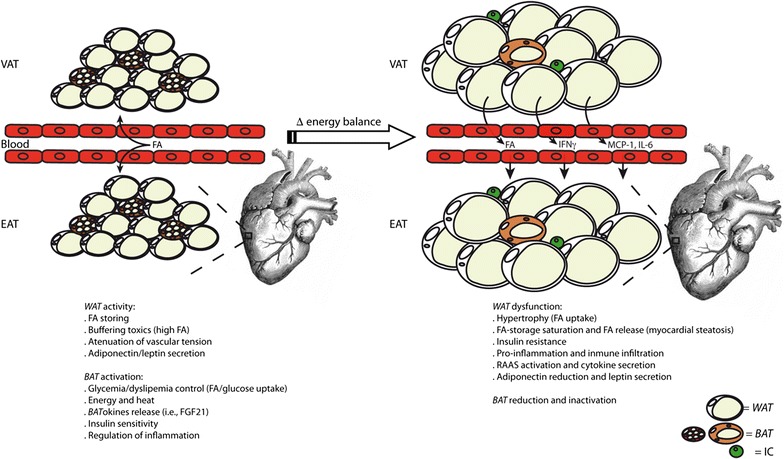
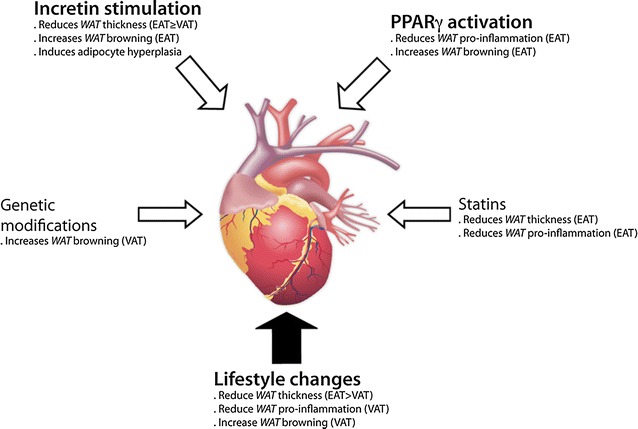
Verification
Claims the paper makes
The claims and statistics of this paper haven’t been checked yet.
Run the check — free, no account needed. It reads the open-access text and checks the sources it cites.
Claims other papers make about this one
Each is checked against this paper’s own text: does it say what the citing paper says it does?
In the citing paper
“More specifically, treatments ameliorating the altered composition and distribution of fat stores may produce the best results [117].”
From Dysregulated epicardial adipose tissue as a risk factor and potential therapeutic target of heart failure with preserved ejection fraction in diabetes (2022) · cites this paper as [117]
Self-check
Percentages, sums and reported differences re-computed from the paper’s own numbers.
The self-check needs the paper’s full text.
Citations
Cites
Child abuse: Adolescent records vs. adult recall
Femina, D. D., Yeager, C. A., & Lewis, D. O. (1990) · Child Abuse & Neglect · doi:10.1016/0145-2134(90)90033-p · Cited by 8,820
Brown Adipose Tissue: Function and Physiological Significance
CANNON, B., & NEDERGAARD, J. (2004) · Physiological Reviews · doi:10.1152/physrev.00015.2003 · Cited by 6,433
Mechanisms of fatty acid-induced inhibition of glucose uptake.
Boden, G., Chen, X., Ruiz, J., White, J. V., & Rossetti, L. (1994) · Journal of Clinical Investigation · doi:10.1172/jci117252 · Cited by 3,720
European Guidelines for Obesity Management in Adults
Yumuk, V., Tsigos, C., Fried, M., Schindler, K., Busetto, L., Micic, D., & Toplak, H. (2015) · Obesity Facts · doi:10.1159/000442721 · Cited by 3,432
Fox, C. S., Massaro, J. M., Hoffmann, U., Pou, K. M., Maurovich-Horvat, P., Liu, C.-Y., Vasan, R. S., Murabito, J. M., Meigs, J. B., Cupples, L. A., et al. (2007) · Circulation · doi:10.1161/circulationaha.106.675355 · Cited by 2,882 · cited 1×
“However, excessive VAT was more pathogenic than overloaded subcutaneous fat, since VAT closely linked to cardiometabolic abnormalities [12].”
BackgroundExcess Deaths Associated With Underweight, Overweight, and Obesity
Flegal, K. M. (2005) · JAMA · doi:10.1001/jama.293.15.1861 · Cited by 2,811
Pathophysiology of human visceral obesity: an update
Tchernof, A., & Després, J.-P. (2013) · Physiological Reviews · doi:10.1152/physrev.00033.2011 · Cited by 2,583 · cited 1×
“The main etiological factors include age, gender, sex and growth hormones, the endocannabinoid and hypothalamus–pituitary–adrenal systems, glucocorticoids, nutritional factors, and physical activity [23].”
BackgroundPrdm16 determines the thermogenic program of subcutaneous white adipose tissue in mice
Seale, P., Conroe, H. M., Estall, J. L., Kajimura, S., Frontini, A., Ishibashi, J., Cohen, P., Cinti, S., & Spiegelman, B. M. (2010) · Journal of Clinical Investigation · doi:10.1172/jci44271 · Cited by 1,273 · cited 1×
“Transgenic overexpression of PRDM-16 in subcutaneous WAT protected mice from diet-induced obesity and insulin resistance [84].”
BackgroundWang, Y., Rimm, E. B., Stampfer, M. J., Willett, W. C., & Hu, F. B. (2005) · American Journal of Clinical Nutrition · doi:10.1093/ajcn/81.3.555 · Cited by 1,130 · cited 1×
“In this sense, VAT accumulation has been correlated with increasing incidence of T2DM, T2DM-associated chronic low-grade inflammation, atherogenic dyslipidemia, and hypertension [13, 14].”
BackgroundThe effects of LY2405319, an FGF21 analog, in obese human subjects with type 2 diabetes
Gaich, G., Chien, J. Y., Fu, H., Glass, L. C., Deeg, M. A., Holland, W. L., Kharitonenkov, A., Bumol, T., Schilske, H. K., & Moller, D. E. (2013) · Cell Metabolism · doi:10.1016/j.cmet.2013.08.005 · Cited by 885 · cited 1×
“Also, administration of FGF21 in humans improved hyperlipidemia by lowering plasma TAG and LDL-C levels, while increasing HDL-C levels [61].”
Background
Research works printed but not linked: 1
- Quintero-Castillo D, Luz-Araujo H, Guerra-Velázquez M, Reyna-Villasmil E, Santos Bolívar J, Torres-Cepeda D, et al. Lipid profile in obese and non-obese women with polycystic ovary syndrome treated with metformin. Endocrinol Nutr Organo Soc Espanola Endocrinol Nutr. 2010;57:262–7.
Cited by
Sorted by citations
Association between insulin resistance and the development of cardiovascular disease
Ormazábal, V., Nair, S., Elfeky, O. W. M., Aguayo, C. R., Salomón, C., & Zuñiga, F. A. (2018) · Cardiovascular Diabetology · doi:10.1186/s12933-018-0762-4 · Cited by 2,432
“Visceral adipose tissue (VAT) has been closely linked to an increasing incidence of insulin resistance [56], T2DM, and a higher risk of cardiovascular disease [59, 60].”
BackgroundPicon‐Ruiz, M., Morata‐Tarifa, C., Valle‐Goffin, J. J., Friedman, E. R., & Slingerland, J. M. (2017) · CA A Cancer Journal for Clinicians · doi:10.3322/caac.21405 · Cited by 932
Packer, M. (2018) · Journal of the American College of Cardiology · doi:10.1016/j.jacc.2018.03.509 · Cited by 656
“It has been hypothesized that the action of statins on the inflammatory state in perivascular adipose tissue contributes importantly to the ability of this class of drugs to reduce the risk of coronary atherosclerotic ischemic events (149).”
BackgroundThe effect of dapagliflozin treatment on epicardial adipose tissue volume
Sato, T., Aizawa, Y., Yuasa, S., Kishi, S., Fuse, K., Fujita, S., Ikeda, Y., Kitazawa, H., Takahashi, M., Sato, M., et al. (2018) · Cardiovascular Diabetology · doi:10.1186/s12933-017-0658-8 · Cited by 397
“In addition, significant weight loss in obese patients has been associated with noteworthy reduction in the EAT volume [23, 24].”
BackgroundObesity cardiomyopathy: evidence, mechanisms, and therapeutic implications
Ren, J. T., Wu, N. N., Wang, S., Sowers, J. R., & Zhang, Y. (2021) · Physiological Reviews · doi:10.1152/physrev.00030.2020 · Cited by 388
da Silva, A., Caldas, A., Hermsdorff, H. H., Bersch-Ferreira, Â., Torreglosa, C., Weber, B., & Bressan, J. (2019) · Cardiovascular Diabetology · doi:10.1186/s12933-019-0893-2 · Cited by 234
“Also, the overweight is a risk factor for CVD [35], and we showed that the BMI is associated with the TyG index, which is associated with CAD [36].”
BackgroundPerivascular Adipose Tissue Regulates Vascular Function by Targeting Vascular Smooth Muscle Cells
Chang, L., Garcia-Barrio, M. T., & Chen, Y. E. (2020) · Arteriosclerosis Thrombosis and Vascular Biology · doi:10.1161/atvbaha.120.312464 · Cited by 162
Epicardial fat tissue in patients with diabetes mellitus: a systematic review and meta-analysis
Li, Y., Liu, B., Li, Y., Jing, X., Deng, S., Yan, Y., & She, Q. (2019) · Cardiovascular Diabetology · doi:10.1186/s12933-019-0807-3 · Cited by 129
Pathophysiology of Type 2 Diabetes in Children and Adolescents
Valaiyapathi, B., Gower, B. A., & Ashraf, A. P. (2019) · Current Diabetes Reviews · doi:10.2174/1573399814666180608074510 · Cited by 160
Adipokines and Inflammation: Focus on Cardiovascular Diseases
Feijóo‐Bandín, S., Aragón‐Herrera, A., Moraña‐Fernández, S., Anido‐Varela, L., Tarazón, E., Roselló‐Lletí, E., Portolés, M., Moscoso, I., Gualillo, O., González‐Juanatey, J. R., et al. (2020) · International Journal of Molecular Sciences · doi:10.3390/ijms21207711 · Cited by 127
“Epicardial adipose tissue (EAT) dysfunction is associated with the release of pro-inflammatory adipokines and the infiltration of immune cells and with the decrease in the production of anti-inflammatory adipokines, contributing to the development of metabolic syndrome [18].”
BackgroundTang, Y., Yang, L., Liu, H., Song, Y.-J., Yang, Q.-Q., Liu, Y., Qian, S., & Tang, Q. (2023) · Cell Reports · doi:10.1016/j.celrep.2022.111948 · Cited by 111
Cardiovascular Benefits of Exercise Training in Postmenopausal Hypertension
Lin, Y.-Y., & Lee, S. (2018) · International Journal of Molecular Sciences · doi:10.3390/ijms19092523 · Cited by 102
“Myocardial steatosis and accumulation of fat in epicardial adipose tissue enhance the development of insulin resistance and type II diabetes mellitus, hypertension, and dyslipidemia, all of which also lead to more cardiovascular risk in women after menopause [13,17,18].”
BackgroundSasso, F. C., Pafundi, P. C., Marfella, R., Calabrò, P., Piscione, F., Furbatto, F., Esposito, G., Galiero, R., Gragnano, F., Rinaldi, L., et al. (2019) · Cardiovascular Diabetology · doi:10.1186/s12933-019-0826-0 · Cited by 99
Wu, L., Wang, K., Wang, W., Zheng, W., Wang, P., Liu, L., & Wang, D. W. (2018) · Aging Cell · doi:10.1111/acel.12763 · Cited by 94
Abdominal subcutaneous adipose tissue: a favorable adipose depot for diabetes?
Chen, P., Hou, X., Hu, G., Wei, L., Jiao, L., Wang, H., Chen, S., Wu, J., Bao, Y., & Jia, W. (2018) · Cardiovascular Diabetology · doi:10.1186/s12933-018-0734-8 · Cited by 80
“Han et al. documented that higher leg fat to total fat ratio was associated with decreased risk of CVD assessed by atherosclerotic cardiovascular disease risk equations [53].”
BackgroundInfluentialWen, Z., Li, J., Fu, Y., Zheng, Y., Ma, M., & Wang, C. (2020) · Obesity · doi:10.1002/oby.22932 · Cited by 76
“emic cardiomyopathy, diabetic cardiomyopathy, and so on (23,24).”
BackgroundEpicardial adipose tissue: an emerging biomarker of cardiovascular complications in type 2 diabetes?
Christensen, R. H., von Scholten, B. J., Lehrskov, L. L., Rossing, P. R., & Jørgensen, P. G. (2020) · Therapeutic Advances in Endocrinology and Metabolism · doi:10.1177/2042018820928824 · Cited by 72
Dongiovanni, P., Paolini, E., Corsini, A., Sirtori, C. R., & Ruscica, M. (2021) · European Journal of Clinical Investigation · doi:10.1111/eci.13519 · Cited by 73
Incretin Hormones in Obesity and Related Cardiometabolic Disorders: The Clinical Perspective
Michałowska, J., Miller‐Kasprzak, E., & Bogdański, P. (2021) · Nutrients · doi:10.3390/nu13020351 · Cited by 77
“Both animal and human studies showed that GLP-1RA reduces white adipose tissue (WAT) thickness, enhances WAT browning and induces adipocyte hyperplasia [6].”
BackgroundGawalko, M. M., Saljic, A., Li, N., Abu-Taha, I., Jespersen, T., Linz, D., Nattel, S., Heijman, J., Fender, A. C., & Dobrev, D. (2022) · Cardiovascular Research · doi:10.1093/cvr/cvac093 · Cited by 68
Overexpression of miR‐22 attenuates oxidative stress injury in diabetic cardiomyopathy via Sirt 1
Tang, Q.-H., Len, Q., Liu, Z., & Wang, W. (2017) · Cardiovascular Therapeutics · doi:10.1111/1755-5922.12318 · Cited by 68
Ragino, Y. I., Stakhneva, E. M., Polonskaya, Y. V., & Kashtanova, E. V. (2020) · Biomolecules · doi:10.3390/biom10030374 · Cited by 70
Proteomics of epicardial adipose tissue in patients with heart failure
Zhao, L., Guo, Z., Wang, P., Zheng, M., Yang, X., Liu, Y., Ma, Z., Chen, M., & Yang, X. (2019) · Journal of Cellular and Molecular Medicine · doi:10.1111/jcmm.14758 · Cited by 65
Rotkvić, P. G., Planinić, Z., Pršo, A.-M. L., Šikić, J., Galić, E., & Rotkvić, L. (2021) · International Journal of Molecular Sciences · doi:10.3390/ijms22115973 · Cited by 64
“It can be protective regarding myocardial stress and inflammation, but in diabetes it becomes dysfunctional, and subjected to the maladaptive adipocyte biology characterized by hypertrophy, increased inflammation, and lipolysis, promoting cardiovascular injuries and myocardial steatosis [96].”
BackgroundVasamsetti, S. B., Natarajan, N., Sadaf, S., Florentin, J., & Dutta, P. (2022) · The Journal of Physiology · doi:10.1113/jp282728 · Cited by 69
“…cytokines such as adiponectin in the context of myocardial infarction-induced insulin resistance. hypertension, type 2 diabetes and insulin resistance (IR) are associated with the accumulation of visceral adipose tissue (VAT) and subcutaneous fat (Gonzalez et al., 2017; Lee et al., 2016).”
BackgroundInfluentialSalvatore, T., Galiero, R., Caturano, A., Vetrano, E., Rinaldi, L., Coviello, F., Di Martino, A., Albanese, G., Colantuoni, S., Medicamento, G., et al. (2022) · Biomolecules · doi:10.3390/biom12020176 · Cited by 62
“More specifically, treatments ameliorating the altered composition and distribution of fat stores may produce the best results [117].”
BackgroundThe evolving view of thermogenic fat and its implications in cancer and metabolic diseases
Yin, X., Chen, Y., Ruze, R., Xu, R., Song, J., Wang, C., & Xu, Q. (2022) · Signal Transduction and Targeted Therapy · doi:10.1038/s41392-022-01178-6 · Cited by 72
“Finally, thermogenic fat can cause a decline in the incidence of CVD and associated adverse events by reducing glucose and lipid levels.(214) According to the characteristics of thermogenic fat, it can be speculated that stimulating the browning of adipose tissue in a specific region can be protective for cardiovascul…”
BackgroundLi, L., Li, R., Zhu, R., Chen, B., Tian, Y., Zhang, H., Xia, B., Jia, Q., Wang, L., Zhao, D., et al. (2020) · Food & Function · doi:10.1039/d0fo01116a · Cited by 62
Maeda, M., Oba, K., Yamaguchi, S., Arasaki, O., Sata, M., Masuzaki, H., & Shimabukuro, M. (2018) · The American Journal of Cardiology · doi:10.1016/j.amjcard.2018.08.005 · Cited by 57
SGLT2 Inhibitors: Cardiovascular Benefits Beyond HbA1c—Translating Evidence into Practice
Ali, A., Bain, S. C., Hicks, D., Jones, P. N., Patel, D., Evans, M., Fernando, K., James, J., Milne, N., Viljoen, A., et al. (2019) · Diabetes Therapy · doi:10.1007/s13300-019-0657-8 · Cited by 54
Incretin Hormones, Obesity and Gut Microbiota
Angelini, G., Russo, S., & Mingrone, G. (2024) · Peptides · doi:10.1016/j.peptides.2024.171216 · Cited by 47
“Several studies show that gastrointestinal hormones, namely incretins, may play a vital role in the pathogenesis of obesity and its comorbidities, as they are responsible for the regulation of body weight, maintenance of energy balance and glucose homeostasis [3,4].”
BackgroundVISCERAL ADIPOSITY AS A GLOBAL FACTOR OF CARDIOVASCULAR RISK
Chumakova, G. A., Kuznetsova, Т. Y., Druzhilov, М. A., & Veselovskaya, N. G. (2018) · Russian Journal of Cardiology · doi:10.15829/1560-4071-2018-5-7-14 · Cited by 43
The roles of epicardial adipose tissue in heart failure
Song, Y., Song, F., Wu, C., Hong, Y., & Li, G. (2020) · Heart Failure Reviews · doi:10.1007/s10741-020-09997-x · Cited by 43
Li, C., Qin, D., Hu, J., Yang, Y., Hu, D., & Yu, B. (2022) · Frontiers in Immunology · doi:10.3389/fimmu.2022.947147 · Cited by 44
“Since the subcutaneous adipose tissue cannot store excess fat, overloaded fat accumulates, particularly in the visceral adipose tissue (70).”
BackgroundOba, K., Maeda, M., Maimaituxun, G., Yamaguchi, S., Arasaki, O., Fukuda, D., Yagi, S., Hirata, Y., Nishio, S., Iwase, T., et al. (2018) · Circulation Journal · doi:10.1253/circj.cj-18-0021 · Cited by 41
Epicardial Adipose Tissue in Cardiovascular Disease
Berg, G. A., Miksztowicz, V., Morales, C., & Barchuk, M. (2019) · Advances in experimental medicine and biology · doi:10.1007/978-3-030-11488-6_9 · Cited by 41
Colom, C., Viladés, D., Pérez‐Cuellar, M., Leta, R., Rivas-Urbina, A., Carreras, G., Ordóñez‐Llanos, J., Pérez, A., & Sánchez‐Quesada, J. L. (2018) · Cardiovascular Diabetology · doi:10.1186/s12933-018-0794-9 · Cited by 39
Yu, W., Zhang, Y., Lu, Y., Ouyang, Z., Peng, J., Tu, Y., & He, B. (2024) · Journal of Functional Foods · doi:10.1016/j.jff.2024.106627 · Cited by 41
Obesity: An emerging driver of head and neck cancer
Wang, K., Yu, X., Tang, Y.-J., Tang, Y., & Liang, X.-H. (2019) · Life Sciences · doi:10.1016/j.lfs.2019.116687 · Cited by 38
Wang, P., Fan, Y., Gao, H., & Wang, B. (2024) · Diabetes Research and Clinical Practice · doi:10.1016/j.diabres.2024.111958 · Cited by 35
Role of adipokines (omentin and visfatin) in coronary artery disease
Ali, S., Alam, R., Ahsan, H., & Khan, S. (2022) · Nutrition Metabolism and Cardiovascular Diseases · doi:10.1016/j.numecd.2022.11.023 · Cited by 32
Wang, X., Hui, T., Wang, M., Liu, H., Li, R., & Song, Z. (2019) · Oncology Research and Treatment · doi:10.1159/000496548 · Cited by 30
Zhang, X., Hu, C., Wu, H., Ma, Z., & Tang, Q. (2020) · Acta Pharmacologica Sinica · doi:10.1038/s41401-020-00557-5 · Cited by 30
“In contrast to the extensive effects of visceral adipose tissue (VAT) on the whole body, epicardial fat is physically next to the myocardium and shares the same microcirculation that is important for cardiac regulation [93].”
BackgroundTranscatheter Bariatric Embolotherapy for Weight Reduction in Obesity
Reddy, V. Y., Neužil, P., Musikantow, D. R., Šrámková, P., Rosen, R. J., Kipshidze, N. N., Kipshidze, N. N., & Fried, M. (2020) · Journal of the American College of Cardiology · doi:10.1016/j.jacc.2020.09.550 · Cited by 30
Chen, Z., Zhang, M., Xu, Q., Liu, M., Liu, M., Yin, R., Liu, X., Dai, Y., Gao, X., Gong, J., et al. (2024) · Phytomedicine · doi:10.1016/j.phymed.2024.156187 · Cited by 29
Eberhard, M., Stocker, D., Meyer, M. F., Kebernik, J., Stähli, B. E., Frauenfelder, T., Maisano, F., Ruschitzka, F. T., Nietlispach, F., Nguyen‐Kim, T. D. L., et al. (2019) · International Journal of Cardiology · doi:10.1016/j.ijcard.2019.01.068 · Cited by 30
Galmes-Panades, A. M., Konieczna, J., Varela-Mato, V., Abete, I., Babió, N., Fiol, M., Fernández, J. A. D. P., Casas, R. M., Olbeyra, R. P., Ruiz‐Canela, M., et al. (2021) · BMC Medicine · doi:10.1186/s12916-020-01847-9 · Cited by 28
Chen, Z., Cheang, I., Zhu, X., Qu, Q., Chen, S., Xing, Y., Zhou, Y., Zhang, H., & Li, X. (2025) · Diabetes Obesity and Metabolism · doi:10.1111/dom.16346 · Cited by 29
Kang, J., Kim, Y.-C., Park, J. J., Kim, S., Kang, S., Cho, Y. J., Yoon, Y. E., Oh, I., Yoon, C., Suh, J., et al. (2018) · Cardiovascular Diabetology · doi:10.1186/s12933-017-0650-3 · Cited by 28
“Especially in patients with coronary artery disease, EAT can release free fatty acid in the proximity of coronaries arteries, which disturbs vascular homeostasis and endothelial function [6].”
BackgroundInfluentialZeller, J., Krüger, C., Lamounier‐Zepter, V., Sag, S. J. M., Strack, C., Mohr, M., Loew, T. H., Schmitz, G., Maier, L. S., Fischer, M., et al. (2019) · ESC Heart Failure · doi:10.1002/ehf2.12409 · Cited by 27
Adipose Tissue Composition in Obesity and After Bariatric Surgery
Adami, G. F., Carbone, F., Montecucco, F., Camerini, G. B., & Cordera, R. (2019) · Obesity Surgery · doi:10.1007/s11695-019-04030-z · Cited by 26
Pregnancy-induced Cardiovascular Pathologies: Importance of Structural Components and Lipids
Aleksenko, L., & Quaye, I. K. (2020) · The American Journal of the Medical Sciences · doi:10.1016/j.amjms.2020.05.014 · Cited by 26
Hypertension, BMI, and cardiovascular and cerebrovascular diseases
Qiao, W., Zhang, X., Kan, B., Vuong, A. M., Xue, S., Zhang, Y., Li, B., Zhao, Q., Guo, D., Shen, X., et al. (2021) · Open Medicine · doi:10.1515/med-2021-0014 · Cited by 27
“First, adipokines are highly deregulated under obesity and may control cardiovascular homeostasis [33,34].”
BackgroundKim, Y. H., Jeong, M.-K., Park, H., & Park, S. K. (2021) · International Journal of Environmental Research and Public Health · doi:10.3390/ijerph18062935 · Cited by 30
Wingo, B. C., Young, H., & Motl, R. W. (2017) · Disability and health journal · doi:10.1016/j.dhjo.2017.10.003 · Cited by 27
Chiu, Y., Chou, W.-L., Ko, M.-C., Liao, J.-C., & Huang, T. (2025) · The Journal of Nutritional Biochemistry · doi:10.1016/j.jnutbio.2025.109920 · Cited by 26
Mariani, S., Giorgio, M. R. D., Rossi, E., Tozzi, R., Contini, S., Bauleo, L., Cipriani, F., Toscano, R., Basciani, S., Bárbaro, G., et al. (2020) · Nutrients · doi:10.3390/nu12113506 · Cited by 25
Effects of Exendin-4 on human adipose tissue inflammation and ECM remodelling
Pastel, E., Joshi, S., Knight, B., Liversedge, N., Ward, R., & Kos, K. (2016) · Nutrition and Diabetes · doi:10.1038/nutd.2016.44 · Cited by 25
Sugiura, T., Dohi, Y., Takagi, Y., Yoshikane, N., Ito, M., Suzuki, K. S., Nagami, T., Iwase, M., Seo, Y., & Ohte, N. (2019) · Hypertension Research · doi:10.1038/s41440-019-0362-z · Cited by 26
Wang, X., Ba, T., Cheng, Y., Zhang, P., & Chang, X. (2021) · Nutrition · doi:10.1016/j.nut.2021.111285 · Cited by 24
Cianci, R., Franza, L., Massaro, M. G., Borriello, R., Tota, A., Pallozzi, M., Vito, F., & Gambassi, G. (2022) · Current Medicinal Chemistry · doi:10.2174/0929867329666220105121124 · Cited by 24
Mubarik, S., Wang, F., Malik, S. S., Shi, F., Wang, Y., Nawsherwan, N., & Yu, C. (2020) · International Journal of Environmental Research and Public Health · doi:10.3390/ijerph17041367 · Cited by 24
Selegiline reduces adiposity induced by high‐fat, high‐sucrose diet in male rats
Nagy, C. T., Koncsos, G., Varga, Z. V., Baranyai, T., Tuza, S., Kassai, F., Ernyey, A. J., Gyertyán, I., Király, K. P., Oláh, A., et al. (2018) · British Journal of Pharmacology · doi:10.1111/bph.14437 · Cited by 23
“Visceral adiposity is a major risk factor for cardiovascular disease and for diabetes (Gonzalez et al., 2017).”
BackgroundGum Arabic modifies anti-inflammatory cytokine in mice fed with high fat diet induced obesity
Ahmed, A. A., Essa, M. E. A., Mollica, A., Stefanucci, A., Zengin, G., & Ahmed, H. (2020) · Bioactive Carbohydrates and Dietary Fibre · doi:10.1016/j.bcdf.2020.100258 · Cited by 28
The genetics of bipolar disorder with obesity and type 2 diabetes
Miola, A., Filippis, E. D., Veldić, M., Ho, A. M., Winham, S. J., Mendoza, M., Romo‐Nava, F., Núñez, N. A., Gardea‐Resendez, M., Prieto, M. L., et al. (2022) · Journal of Affective Disorders · doi:10.1016/j.jad.2022.06.084 · Cited by 26
Beneficial effects of Apelin-13 on metabolic diseases and exercise
Wen, R., Huang, R., Xu, K., Cheng, Y., & Yi, X. (2023) · Frontiers in Endocrinology · doi:10.3389/fendo.2023.1285788 · Cited by 23
Obesity-related hypertension and chronic kidney disease: from evaluation to management
Jung, M., & Ihm, S. (2023) · Kidney Research and Clinical Practice · doi:10.23876/j.krcp.23.072 · Cited by 24
Dai, H., Wang, H., Wang, F., Qian, P., Gao, Q., Zhou, Y., & Zhou, Y. (2022) · Acta Diabetologica · doi:10.1007/s00592-021-01840-5 · Cited by 21
“Obesity is an important health problem and is associated with many chronic diseases such as T2DM and cardiovascular diseases [41, 42].”
BackgroundLiraglutide suppresses obesity and promotes browning of white fat via miR-27b in vivo and in vitro
Wang, X., Chen, S., Lv, D., Li, Z., Ren, L., Zhu, H., Xie, X., & Liu, Y. (2021) · Journal of International Medical Research · doi:10.1177/03000605211055059 · Cited by 18
Tan, J. T. M., Nankivell, V. A., Bilu, C., Shemesh, T., Nicholls, S. J., Zimmet, P., Kronfeld‐Schor, N., Brown, A. D. H., & Bursill, C. A. (2019) · International Journal of Molecular Sciences · doi:10.3390/ijms20246291 · Cited by 19
“Recent data suggest that both body fat distribution and adipocyte phenotype are more likely to increase fatal outcomes in obese patients than a higher general adiposity [2].”
BackgroundHogea, T., Suciu, B. A., Ivănescu, A. D., Carașcă, C., Chinezu, L., Arbănași, E. M., Russu, E., Kaller, R., Arbănași, E. M., Mureșan, A. V., et al. (2023) · Diagnostics · doi:10.3390/diagnostics13010142 · Cited by 17
Bai, J., Gao, C., Li, X., Pan, H., Wang, S., Shi, Z., & Zhang, T. (2023) · Cardiovascular Diabetology · doi:10.1186/s12933-023-01926-0 · Cited by 18
“[36] found that VAT may also be associated with epicardial fat accumulation by secreting lipids, fat factors, and proinflammatory and oxidative factors from adipocytes.”
BackgroundCannabis and Myocardial Infarction: Risk Factors and Pathogenetic Insights.
Lee, J., Sharma, N., Kazi, F., Youssef, I., Myers, A. K., Marmur, J. D., Salifu, M. O., & McFarlane, S. I. (2017) · PubMed · Cited by 17
Baloğlu, İ., Türkmen, K., Selçuk, N. Y., Tonbul, H. Z., Özçiçek, A., Hamur, H., Iyısoy, M. S., & Akbaş, E. M. (2019) · Experimental and Clinical Endocrinology & Diabetes · doi:10.1055/a-0892-4290 · Cited by 17
Petra, C. V., Albu, A., Pamfil, C. A. M., Tamas, M. M., Vesa, Ș. C., & Rednic, S. (2019) · Medical Ultrasonography · doi:10.11152/mu-2001 · Cited by 17
“Therefore, we designed the present study to evaluate and compare these two parameters, along with other CVD risk factors in patients with RA.”
BackgroundInfluentialEpicardial Adipose Tissue—A Novel Therapeutic Target in Obesity Cardiomyopathy
Wiszniewski, K., Grudniewska, A., Szabłowska‐Gadomska, I., Pilichowska‐Paszkiet, E., Zaborska, B., Zgliczyński, W., Dudek, P., Bik, W., Sota, M., & Mrozikiewicz‐Rakowska, B. (2025) · International Journal of Molecular Sciences · doi:10.3390/ijms26167963 · Cited by 22
Hu, Y., Zheng, J., Ye, X., Song, Y., & Wu, X. (2022) · Diabetes Metabolic Syndrome and Obesity · doi:10.2147/dmso.s345507 · Cited by 16
Interplay between epicardial adipose tissue, metabolic and cardiovascular diseases
Bornachea, O., Vea, À., & Llorente‐Cortés, V. (2018) · Clínica e Investigación en Arteriosclerosis · doi:10.1016/j.arteri.2018.03.003 · Cited by 18
Li, S., Wu, T., Chien, M., Mersmann, H. J., & Chen, C. (2019) · Biochimica et Biophysica Acta (BBA) - Molecular and Cell Biology of Lipids · doi:10.1016/j.bbalip.2019.03.004 · Cited by 16
Adiponectin inhibits D‑gal‑induced cardiomyocyte senescence via AdipoR1/APPL1
Liu, R., Meng, J., & Lou, D. (2021) · Molecular Medicine Reports · doi:10.3892/mmr.2021.12358 · Cited by 16
Role of Distinct Fat Depots in Metabolic Regulation and Pathological Implications
Sahu, B., Tikoo, O., Pati, B., Senapati, U., & Bal, N. C. (2022) · Reviews of physiology, biochemistry and pharmacology · doi:10.1007/112_2022_73 · Cited by 15
Karampetsou, N., Tzani, A. I., Doulamis, I. P., Bletsa, E., Minia, A., Pliaka, V., Tsolakos, N., Oikonomou, E. K., Tousoulis, D., Kontzoglou, K., et al. (2021) · Current Vascular Pharmacology · doi:10.2174/1570161119666211029110813 · Cited by 14
Mitochondrial Homeostasis Mediates Lipotoxicity in the Failing Myocardium
Kretzschmar, T., Wu, J. M. F., & Schulze, P. C. (2021) · International Journal of Molecular Sciences · doi:10.3390/ijms22031498 · Cited by 15
Çekici, Y., Kaya, B. C., & Elkan, H. (2020) · Obesity Surgery · doi:10.1007/s11695-020-05121-y · Cited by 14
“At the other end of the spectrum, decreased VAT has been associated with a reduction in CVD risk [23].”
BackgroundAnche, P., Maiya, A. G., Kamath, S. U., Shastry, B. A., & Ravishankar, R. (2020) · Current Diabetes Reviews · doi:10.2174/1573399816666200211102917 · Cited by 18
Ouyang, X., Peng, L., Huang, Z., Wang, T., Wang, J., Wu, H., Zhong, J., Wu, B., Wu, L., Li, Y., et al. (2024) · Cardiovascular Diabetology · doi:10.1186/s12933-024-02438-1 · Cited by 13
“Subcutaneous adipose tissue (SAT) and visceral adipose tissue (VAT) play distinct roles in predicting the risk of cardiovascular complications in diabetes [20, 21].”
BackgroundCao, W., Xu, Y., Shen, Y., Hu, T., Xiao, Y., Wang, Y., Ma, X., & Bao, Y. (2022) · International Journal of Obesity · doi:10.1038/s41366-022-01160-w · Cited by 13
“Numerous cohort studies have shown that VFA, rather than SFA, is closely related to diabetes and cardiovascular events [18, 19].”
BackgroundIsakova, J. T., Talaibekova, E., Vinnikov, D. V., Aldasheva, N., Mirrakhimov, E. M., & Aldashev, A. A. (2018) · BMC Endocrine Disorders · doi:10.1186/s12902-018-0242-6 · Cited by 10
“In general, genetic predisposition is a well-studied risk factor for obesity [15], which in turn, especially its abdominal form, is a major risk factor for type 2 diabetes, essential hypertension and MS [1, 16, 17].”
BackgroundGolia, N., Krishan, K., & Kashyap, J. R. (2020) · Cureus · doi:10.7759/cureus.7948 · Cited by 10
“This results from the effect of increased lipid emission, pro-inflammatory factors, and adipokines from adipose tissues [28].”
BackgroundZhang, L., Ruan, X., Jü, R., Qin, S., Wang, B., Dou, Z., Xu, X., & Mueck, A. O. (2020) · Gynecological Endocrinology · doi:10.1080/09513590.2020.1836147 · Cited by 10
He, W., Lin, A., & Wang, C. (2022) · Hormone and Metabolic Research · doi:10.1055/a-1939-7355 · Cited by 10
“As a global health challenge, obesity is highly associated with type2 diabetes mellitus (T2DM), vascular disease, and other complications [1].”
BackgroundTargeting obesity for therapeutic intervention in heart failure patients
Sato, R., & von Haehling, S. (2024) · Expert Review of Cardiovascular Therapy · doi:10.1080/14779072.2024.2363395 · Cited by 10
“In addition to these anatomical effects, EAP is involved in the development and progression of HFpEF through its metabolic effects [46].”
BackgroundInfluence of modern antidiabetic therapy on body weight in patients with type 2 diabetes mellitus
Салухов, В. В., Ilyinskaya, Т. A., & Minakov, A. A. (2022) · Endocrinology News Opinions Training · doi:10.33029/2304-9529-2022-11-1-39-52 · Cited by 12
A systematic review of imaging studies of human brown adipose tissue
Santhanam, P., Rowe, S. P., Solnes, L. B., Quainoo, B., & Ahima, R. S. (2021) · Annals of the New York Academy of Sciences · doi:10.1111/nyas.14579 · Cited by 9
“The exclusion criteria were: (1) articles outside the scope of interest; (2) studies performed on animal models; and (3) review articles, case reports, editorials or letters, comments, or conference proceedings.”
BackgroundGirona, J., Soler, O., Samino, S., Junza, A., Martínez-Micaelo, N., García‐Altares, M., Ràfols, P., Esteban, Y., Yanes, Ó., Correig, X., et al. (2024) · International Journal of Molecular Sciences · doi:10.3390/ijms25052702 · Cited by 10
“Functional alterations of epicardial adipose tissue found in obese and diabetic patients have been linked to both vascular and myocardial dysfunction [7,8].”
BackgroundStrategies and methods for the correction of obesity and associated cardiovascular risk
Kuznetsova, Т. Y., Druzhilov, М. A., Chumakova, G. A., & Veselovskaya, N. G. (2019) · Russian Journal of Cardiology · doi:10.15829/1560-4071-2019-4-61-67 · Cited by 10
Castellano‐Castillo, D., Denechaud, P., Moreno‐Indias, I., Tinahones, F. J., Fajas, L., Queipo‐Ortuño, M. I., & Cardona, F. (2018) · PLoS ONE · doi:10.1371/journal.pone.0192314 · Cited by 9
Quality of life and its relationship with different anthropometric indicators in adults with obesity
Tozetto, W. R., Leonel, L. D. S., Benedet, J., & Duca, G. F. D. (2021) · Fisioterapia em Movimento · doi:10.1590/fm.2021.34102 · Cited by 9
Relationship between adipose tissue distribution and arterial stiffness in HFpEF
Hu, W., Zhang, H., Liu, Z., Duan, Q., Liu, J., Dong, Q., You, L., Wen, X., & Zhang, D. (2022) · Nutrition · doi:10.1016/j.nut.2022.111726 · Cited by 9
Wang, W., Wu, L., Du, X., Zhang, F., Ullah, S. H., Lei, T., Li, D., & Yan, X. (2019) · Acta Biochimica et Biophysica Sinica · doi:10.1093/abbs/gmz009 · Cited by 9
Metadata
- Authors
- González, N., Moreno-Villegas, Z., González-Bris, A., Egido, J., & Lorenzo, Ó.
- Affiliations
- Centro de Investigación Biomédica en Red Diabetes y Enfermedades Metabólicas Asociadas (ES)
- Hospital Universitario Fundación Jiménez Díaz (ES)
- Corresponding author
- Lorenzo, Ó.
- Venue
- Cardiovascular Diabetology
- Published
- 2017-04-04
- Volume
- 16
- Issue
- 1
- Pages
- 44-44
- ISSN
- 1475-2840 (ISSN-L)
- PMC
- PMC5379721
- OpenAlex
- W2604392184
- Cited by
- 211
- References
- 124
- Citations by year
- 2026: 15 · 2025: 12 · 2024: 28 · 2023: 14 · 2022: 29 · 2021: 30 · 2020: 29 · 2019: 22 · 2018: 24 · 2017: 5
- FWCI
- 3.08
- Type
- journal article
- Language
- en
- Open access
- gold
- doi.org
- Licence
- cc-by
- Locations
- Cardiovascular Diabetology (publishedVersion, cc-by)
- PubMed Central (publishedVersion, cc-by)
- PubMed (publishedVersion)
- DOAJ (DOAJ: Directory of Open Access Journals) (submittedVersion)
- Funders
- Banco de Santander-Universidad Autónoma (CEAL-AL/2015-17)
- Esteve Laboratories (2017)
- ISCarlos III (PI14/00386, PIE13/00051)
- Topics
- Health Sciences › Medicine › Cardiology and Cardiovascular Medicine › Cardiovascular Disease and Adiposity
- Health Sciences › Medicine › Endocrinology, Diabetes and Metabolism › Adipokines, Inflammation, and Metabolic Diseases
- Health Sciences › Medicine › Physiology (medical) › Adipose Tissue and Metabolism
- Keywords
- visceral adipose tissue, epicardial adipose tissue, obesity, type 2 diabetes, cardiovascular disease, diabetic cardiomyopathy, adipocyte phenotype, brown adipocytes, adipokines, PPARγ agonists, statins, incretin-based therapy, insulin resistance, heart failure, body fat distribution
- MeSH terms
- Adipose Tissue, Adipose Tissue, Brown, Cardiovascular Diseases, Diabetes Mellitus, Type 2, Humans, Obesity, Pericardium, Intra-Abdominal Fat, Incretins
About these checks
Registry, retraction, Cites and statistics results are computed, not judged, with one exception: a printed reference that no index lists is read once by a model before it counts as a citation error. Claims are extracted by a model and kept only when their quote appears verbatim in the text; each cited source is then checked, with a model’s help, for whether it says what the claim relies on. Those verdicts can be wrong — read the claim’s quote and the cited source before relying on one.
Statistics and arithmetic are recomputed, not judged.
Confidence bands are shown only for fields calibrated on our annotated test set. None is calibrated yet, so no band is shown.
What counts as a claim ›How we measure confidence ›How we check this ›
Are you an author, or do you see a problem with this page? Request a review
