

The DOI matches its Crossref record; 124 of the 124 references it cites were found in a registry or an index.
Regulation of visceral and epicardial adipose tissue for preventing cardiovascular injuries associated to obesity and diabetes
Open accessAbstract
Nowadays, obesity is seriously increasing in most of the populations all over the world, and is associated with the development and progression of high-mortality diseases such as type-2 diabetes mellitus (T2DM) and its subsequent cardiovascular pathologies. Recent data suggest that both body fat distribution and adipocyte phenotype, can be more determinant for fatal outcomes in obese patients than increased general adiposity. In particular, visceral adiposity is significantly linked to long term alterations on different cardiac structures, and in developed forms of myocardial diseases such as hypertensive and ischaemic heart diseases, and diabetic cardiomyopathy. Interestingly, this depot may be also related to epicardial fat accumulation through secretion of lipids, adipokines, and pro-inflammatory and oxidative factors from adipocytes. Thus, visceral adiposity and its white single-lipid-like adipocytes, are risk factors for different forms of heart disease and heart failure, mainly in higher degree obese subjects. However, under specific stimuli, some of these adipocytes can transdifferentiate to brown multi-mitochondrial-like adipocytes with anti-inflammatory and anti-apoptotic proprieties. Accordingly, in order to improve potential cardiovascular abnormalities in obese and T2DM patients, several therapeutic strategies have been addressed to modulate the visceral and epicardial fat volume and phenotypes. In addition to lifestyle modifications, specific genetic manipulations in adipose tissue and administration of PPARγ agonists or statins, have improved fat volume and phenotype, and cardiovascular failures. Furthermore, incretin stimulation reduced visceral and epicardial fat thickness whereas increased formation of brown adipocytes, alleviating insulin resistance and associated cardiovascular pathologies.
Overview
The claims and statistics of this paper haven’t been checked yet.
Run the check — free, no account needed. It reads the open-access text and checks the sources it cites.
Integrity signals
Registry
Cites
Statistics
Figures
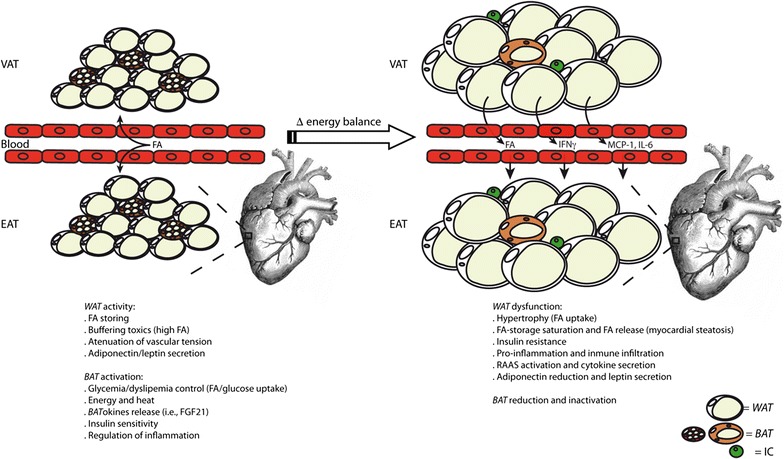
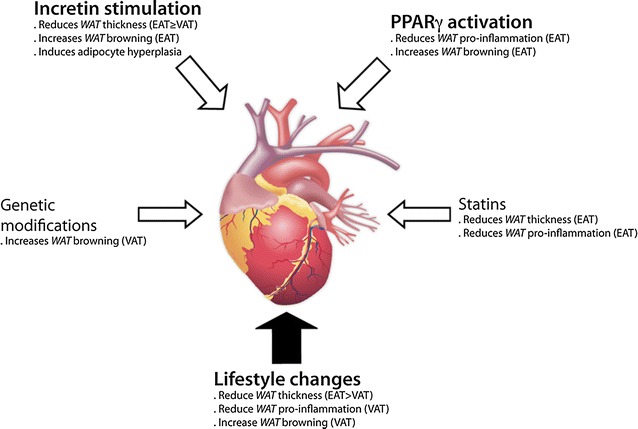
Verification
Claims the paper makes
The claims and statistics of this paper haven’t been checked yet.
Run the check — free, no account needed. It reads the open-access text and checks the sources it cites.
Claims other papers make about this one
Each is checked against this paper’s own text: does it say what the citing paper says it does?
In the citing paper
“More specifically, treatments ameliorating the altered composition and distribution of fat stores may produce the best results [117].”
From Dysregulated epicardial adipose tissue as a risk factor and potential therapeutic target of heart failure with preserved ejection fraction in diabetes (2022) · cites this paper as [117]
Self-check
Percentages, sums and reported differences re-computed from the paper’s own numbers.
The self-check needs the paper’s full text.
Citations
Cites
Child abuse: Adolescent records vs. adult recall
Femina, D. D., Yeager, C. A., & Lewis, D. O. (1990) · Child Abuse & Neglect · doi:10.1016/0145-2134(90)90033-p · Cited by 8,820
Brown Adipose Tissue: Function and Physiological Significance
CANNON, B., & NEDERGAARD, J. (2004) · Physiological Reviews · doi:10.1152/physrev.00015.2003 · Cited by 6,433
Mechanisms of fatty acid-induced inhibition of glucose uptake.
Boden, G., Chen, X., Ruiz, J., White, J. V., & Rossetti, L. (1994) · Journal of Clinical Investigation · doi:10.1172/jci117252 · Cited by 3,720
European Guidelines for Obesity Management in Adults
Yumuk, V., Tsigos, C., Fried, M., Schindler, K., Busetto, L., Micic, D., & Toplak, H. (2015) · Obesity Facts · doi:10.1159/000442721 · Cited by 3,432
Fox, C. S., Massaro, J. M., Hoffmann, U., Pou, K. M., Maurovich-Horvat, P., Liu, C.-Y., Vasan, R. S., Murabito, J. M., Meigs, J. B., Cupples, L. A., et al. (2007) · Circulation · doi:10.1161/circulationaha.106.675355 · Cited by 2,882 · cited 1×
“However, excessive VAT was more pathogenic than overloaded subcutaneous fat, since VAT closely linked to cardiometabolic abnormalities [12].”
BackgroundExcess Deaths Associated With Underweight, Overweight, and Obesity
Flegal, K. M. (2005) · JAMA · doi:10.1001/jama.293.15.1861 · Cited by 2,811
Pathophysiology of human visceral obesity: an update
Tchernof, A., & Després, J.-P. (2013) · Physiological Reviews · doi:10.1152/physrev.00033.2011 · Cited by 2,583 · cited 1×
“The main etiological factors include age, gender, sex and growth hormones, the endocannabinoid and hypothalamus–pituitary–adrenal systems, glucocorticoids, nutritional factors, and physical activity [23].”
BackgroundPrdm16 determines the thermogenic program of subcutaneous white adipose tissue in mice
Seale, P., Conroe, H. M., Estall, J. L., Kajimura, S., Frontini, A., Ishibashi, J., Cohen, P., Cinti, S., & Spiegelman, B. M. (2010) · Journal of Clinical Investigation · doi:10.1172/jci44271 · Cited by 1,273 · cited 1×
“Transgenic overexpression of PRDM-16 in subcutaneous WAT protected mice from diet-induced obesity and insulin resistance [84].”
BackgroundWang, Y., Rimm, E. B., Stampfer, M. J., Willett, W. C., & Hu, F. B. (2005) · American Journal of Clinical Nutrition · doi:10.1093/ajcn/81.3.555 · Cited by 1,130 · cited 1×
“In this sense, VAT accumulation has been correlated with increasing incidence of T2DM, T2DM-associated chronic low-grade inflammation, atherogenic dyslipidemia, and hypertension [13, 14].”
BackgroundThe effects of LY2405319, an FGF21 analog, in obese human subjects with type 2 diabetes
Gaich, G., Chien, J. Y., Fu, H., Glass, L. C., Deeg, M. A., Holland, W. L., Kharitonenkov, A., Bumol, T., Schilske, H. K., & Moller, D. E. (2013) · Cell Metabolism · doi:10.1016/j.cmet.2013.08.005 · Cited by 885 · cited 1×
“Also, administration of FGF21 in humans improved hyperlipidemia by lowering plasma TAG and LDL-C levels, while increasing HDL-C levels [61].”
BackgroundBordicchia, M., Liu, D., Amri, E.-Z., Ailhaud, G., Dessì-Fulgheri, P., Zhang, C., Takahashi, N., Sarzani, R., & Collins, S. (2012) · Journal of Clinical Investigation · doi:10.1172/jci59701 · Cited by 872 · cited 1×
“BAT stimulation by cold, adrenergic signaling and activators such as thyroid hormones, retinoid, leptin, BMPs, and natriuretic peptides, enhances fatty acid availability for mitochondrial degradation [58, 59] (Fig.”
BackgroundLee, M., Wu, Y., & Fried, S. K. (2012) · Molecular Aspects of Medicine · doi:10.1016/j.mam.2012.10.001 · Cited by 861 · cited 1×
“bAT expresses also UCP-1 in humans and is mainly sited in inguinal and neck regions to function for adaptive thermogenesis [10].”
BackgroundBrown Adipose Tissue Improves Whole-Body Glucose Homeostasis and Insulin Sensitivity in Humans
Chondronikola, M., Volpi, E., Børsheim, E., Porter, C. C., Annamalai, P., Enerbäck, S., Lidell, M. E., Saraf, M. K., Labbé, S. M., Hurren, N. M., et al. (2014) · Diabetes · doi:10.2337/db14-0746 · Cited by 803 · cited 1×
“Moreover, BAT activation could improve insulin sensitivity via increasing glucose oxidation and lessening body fat mass [80].”
BackgroundDifferent Metabolic Responses of Human Brown Adipose Tissue to Activation by Cold and Insulin
Orava, J., Nuutila, P., Lidell, M. E., Oikonen, V., Noponen, T., Viljanen, T., Scheinin, M., Taittonen, M. T., Niemi, T. S., Enerbäck, S., et al. (2011) · Cell Metabolism · doi:10.1016/j.cmet.2011.06.012 · Cited by 745 · cited 4×
“In this regard, the expression of insulin-sensitive glucose transporter Glut4 has been demonstrated higher in BAT, compared to WAT [59], and specific cytokines discharged from BAT and termed “BATokines”, possess glucosesensitivity proprieties.”
BackgroundInfluentialAdipokines Mediate Inflammation and Insulin Resistance
Kwon, H., & Pessin, J. E. (2013) · Frontiers in Endocrinology · doi:10.3389/fendo.2013.00071 · Cited by 723
Allison, D. B., Gadde, K. M., Garvey, W. T., Peterson, C. A., Schwiers, M. L., Najarian, T., Tam, P. Y., Troupin, B., & Day, W. W. (2012) · Obesity · doi:10.1038/oby.2011.330 · Cited by 711 · cited 1×
“In overweight and obese/T2DM subjects, phentermine + topiramate (meta-amphetamine/monosaccharide) ameliorated body weight and obesity-associated cardio-metabolic conditions, such as blood pressure, total cholesterol and glycated haemoglobin levels [105].”
BackgroundRubino, F., Gagner, M., Gentileschi, P., Kini, S. U., Fukuyama, S., Feng, J. J., & Diamond, E. (2004) · Annals of Surgery · doi:10.1097/01.sla.0000133117.12646.48 · Cited by 638 · cited 1×
“Intriguingly, the underlying mechanisms of weight loss after bariatric interventions could be more dependent on alteration in gut hormone production [74], neural signalling [75], and glucose/lipid metabolism [76], than those mechanisms related with nutrient absorption.”
BackgroundGreenstein, A. S., Khavandi, K., Withers, S., Sonoyama, K., Clancy, O., Jeziorska, M., Laing, I., Yates, A. P., Pemberton, P. W., Malik, R. A., et al. (2009) · Circulation · doi:10.1161/circulationaha.108.821181 · Cited by 616 · cited 1×
“, reducing cell hyperpolarization and ROS production) mechanisms [27, 28].”
BackgroundGLP-1 agonism stimulates brown adipose tissue thermogenesis and browning through hypothalamic AMPK
Beiroa, D., Imbernon, M., Gallego, R., Senra, A., Herranz, D., Villarroya, F., Serrano, M., Fernø, J., Salvador, J., Escalada, J., et al. (2014) · Diabetes · doi:10.2337/db14-0302 · Cited by 602 · cited 3×
“Also, in obese rodents, exenatide induced a decrease of WAT in VAT and prompted plasma clearance of triacylglycerol and glucose, following BAT activation [112, 113].”
BackgroundWei, Y., & Mojsov, S. (1995) · FEBS Letters · doi:10.1016/0014-5793(94)01430-9 · Cited by 450
Szczepaniak, L. S., Dobbins, R. L., Metzger, G. J., Sartoni‐D'Ambrosia, G., Arbique, D., Vongpatanasin, W., Unger, R. H., & Victor, R. G. (2003) · Magnetic Resonance in Medicine · doi:10.1002/mrm.10372 · Cited by 441 · cited 2×
“0% organ mass in healthy lean individuals [54].”
BackgroundBrown fat activation reduces hypercholesterolaemia and protects from atherosclerosis development
Berbée, J. F. P., Boon, M. R., Khedoe, P. P. S. J., Bartelt, A., Schlein, C., Worthmann, A., Kooijman, S., Hoeke, G., Mol, I. M., John, C., et al. (2015) · Nature Communications · doi:10.1038/ncomms7356 · Cited by 440
Peirce, V. J., Carobbio, S., & Vidal‐Puig, A. (2014) · Nature · doi:10.1038/nature13477 · Cited by 430 · cited 1×
“In physiological conditions, the presence of WAT and BAT in various stores of adipose tissue suggests a direct transformation of differentiated pre-adipocytes (Myf5− and Myf5+, for WAT and BAT, respectively) into mature cells with different morphological and functional characteristics according with location [6].”
BackgroundThe role of leptin/adiponectin ratio in metabolic syndrome and diabetes
López-Jaramillo, P., Gómez-Arbeláez, D., López-López, J., López-López, C., Martínez-Ortega, J., Gómez-Rodríguez, A., & Triana-Cubillos, S. (2014) · Hormone Molecular Biology and Clinical Investigation · doi:10.1515/hmbci-2013-0053 · Cited by 405
Bjørndal, B., Burri, L., Staalesen, V., Skorve, J., & Berge, R. K. (2011) · Journal of Obesity · doi:10.1155/2011/490650 · Cited by 395 · cited 1×
“WAT is found in gluteofemoral (found in the lowerbody parts), subcutaneous (immediately below the dermis), and visceral locations [8] (Table 1).”
BackgroundProduction of Chemokines by Perivascular Adipose Tissue
Henrichot, E., Juge-Aubry, C. E., Pernin, A., Pache, J., Velebit, V., Dayer, J., Meda, P., Chizzolini, C., & Meier, C. A. (2005) · Arteriosclerosis Thrombosis and Vascular Biology · doi:10.1161/01.atv.0000188508.40052.35 · Cited by 383 · cited 1×
“In addition, EAT can release FFA in the proximity and around the coronaries arteries (perivascular fat), modulating vascular responsiveness to vasoactive agents [48].”
BackgroundFree fatty acid elevation impairs insulin-mediated vasodilation and nitric oxide production.
Steinberg, H. O., Paradisi, G., Brechtel, G., Crowder, K., Cronin, J., & Baron, A. (2000) · Diabetes · doi:10.2337/diabetes.49.7.1231 · Cited by 381 · cited 1×
“Also, EAT can discharge FFA into the bloodstream, disturbing vascular homeostasis and endothelial dysfunction, and leading to CAD and hypoxia [51, 52].”
BackgroundMcLaughlin, T., Sherman, A., Tsao, P., Gonzalez, O., Yee, G., Lamendola, C., Reaven, G. M., & Cushman, S. W. (2007) · Diabetologia · doi:10.1007/s00125-007-0708-y · Cited by 364 · cited 1×
“0 mm in control patients, and this accumulation disturbed insulin resistance in a similar fashion as central fat [35].”
BackgroundIshibashi, J., & Seale, P. (2010) · Science · doi:10.1126/science.1190816 · Cited by 356
Korner, J., Inabnet, W., Febres, G., Conwell, I. M., McMahon, D. J., Salas, R., Taveras, C., Schrope, B., & Bessler, M. (2009) · International Journal of Obesity · doi:10.1038/ijo.2009.79 · Cited by 338 · cited 1×
“Intriguingly, the underlying mechanisms of weight loss after bariatric interventions could be more dependent on alteration in gut hormone production [74], neural signalling [75], and glucose/lipid metabolism [76], than those mechanisms related with nutrient absorption.”
BackgroundObesity and Body Fat Distribution Induce Endothelial Dysfunction by Oxidative Stress
Perticone, F., Ceravolo, R., Candigliota, M., Ventura, G., Iacopino, S., Sinopoli, F., & Mattioli, P. L. (2001) · Diabetes · doi:10.2337/diabetes.50.1.159 · Cited by 336
Sacks, H. S., Fain, J. N., Holman, B., Cheema, P. S., Chary, A., Parks, F., Karas, J. G., Optican, R. J., Bahouth, S. W., Garrett, E., et al. (2009) · The Journal of Clinical Endocrinology & Metabolism · doi:10.1210/jc.2009-0571 · Cited by 331 · cited 1×
“In this regard, specific BAT genes such as PR domain containing-16 (PRDM-16), PPAR-γ coactivator 1-α (PGC1α), and UCP-1, are more expressed in EAT than in other fat locations [32].”
BackgroundFitzgibbons, T. P., & Czech, M. P. (2014) · Journal of the American Heart Association · doi:10.1161/jaha.113.000582 · Cited by 331 · cited 4×
“Finally, due to anatomic proximity of EAT and myocardium and absence of a dividing fascial plane, EAT may also play a key role in myocardial steatosis [24].”
BackgroundInfluentialMeisinger, C., Döring, A., Thorand, B., Heier, M., & Löwel, H. (2006) · American Journal of Clinical Nutrition · doi:10.1093/ajcn/84.3.483 · Cited by 289 · cited 1×
“In this sense, VAT accumulation has been correlated with increasing incidence of T2DM, T2DM-associated chronic low-grade inflammation, atherogenic dyslipidemia, and hypertension [13, 14].”
BackgroundThreshold Values of High-risk Echocardiographic Epicardial Fat Thickness
Iacobellis, G., Willens, H. J., Bárbaro, G., & Sharma, A. M. (2008) · Obesity · doi:10.1038/oby.2008.6 · Cited by 287 · cited 1×
“5 mm in men and women, respectively) may be of help for cardiometabolic risk stratification in obese and T2DM subjects [38].”
BackgroundBrown Adipose Tissue Transplantation Reverses Obesity in Ob/Ob Mice
Liu, X., Wang, S., You, Y., Meng, M., Zheng, Z., Dong, M., Lin, J., Zhao, Q., Zhang, C., Yuan, X., et al. (2015) · Endocrinology · doi:10.1210/en.2014-1598 · Cited by 272 · cited 1×
“BAT transplantation additionally improved glucose tolerance and decreased insulin resistance, contributing to reduction of liver steatosis and body weight [91].”
BackgroundLipid-Overloaded Enlarged Adipocytes Provoke Insulin Resistance Independent of Inflammation
Kim, J. I., Huh, J. Y., Sohn, J. H., Choe, S. S., Lee, Y. S., Lim, C. Y., Jo, A., Park, S. B., Han, W., & Kim, J. B. (2015) · Molecular and Cellular Biology · doi:10.1128/mcb.01321-14 · Cited by 272 · cited 1×
“Hypertrophic but not hyperplastic adipocytes, were associated with insulin resistance [21].”
BackgroundZagorodnyuk, V. P., Chen, B. N., & Brookes, S. J. (2001) · The Journal of Physiology · doi:10.1111/j.1469-7793.2001.00255.x · Cited by 267 · cited 1×
“Intriguingly, the underlying mechanisms of weight loss after bariatric interventions could be more dependent on alteration in gut hormone production [74], neural signalling [75], and glucose/lipid metabolism [76], than those mechanisms related with nutrient absorption.”
BackgroundPatel, V. B., Mori, J., McLean, B. A., Basu, R., Das, S. K., Ramprasath, T., Parajuli, N., Penninger, J. M., Grant, M. B., Lopaschuk, G. D., et al. (2015) · Diabetes · doi:10.2337/db15-0399 · Cited by 260 · cited 2×
“In addition, the local RAAS is activated in EAT and contributes to vasoconstriction, inflammation, and following cardiovascular injury [53] (Fig.”
BackgroundUCP1 is essential for adaptive adrenergic nonshivering thermogenesis
Golozoubova, V., Cannon, B., & Nedergaard, J. (2006) · American Journal of Physiology-Endocrinology and Metabolism · doi:10.1152/ajpendo.00387.2005 · Cited by 255 · cited 1×
“Certain adipocyte-specific branch FFA released from BAT diminished adipose tissue inflammation and improved glucose tolerance in obese mice [59, 60].”
BackgroundLiraglutide causes large and rapid epicardial fat reduction
Iacobellis, G., Mohseni, M., Bianco, S. D., & Banga, P. K. (2017) · Obesity · doi:10.1002/oby.21718 · Cited by 251 · cited 1×
“In obese/T2DM individuals, liraglutide, but not metformin, reduced 29 and 36% EAT at 3 and 6 months, respectively, after administration [111].”
BackgroundMitochondria in White, Brown, and Beige Adipocytes
Čedíková, M., Kripnerová, M., Dvořáková, J., Pitule, P., Grundmanova, M., Babuška, V., Müllerová, D., & Kuncová, J. (2016) · Stem Cells International · doi:10.1155/2016/6067349 · Cited by 249 · cited 2×
“However, the heterogeneity of fat composition [white (WAT), brown (BAT) and beige/brite/brown-like (bAT) adipose tissues] and the distribution of these depots, can be more crucial for the development of cardiometabolic disruptions [4, 5].”
BackgroundSubstantial changes in epicardial fat thickness after weight loss in severely obese subjects
Iacobellis, G., Singh, N., Wharton, S., & Sharma, A. M. (2008) · Obesity · doi:10.1038/oby.2008.251 · Cited by 238 · cited 3×
“correlates with the volume of EAT, and thus, significant weight loss in obese patients has been associated with noteworthy reduction in the EAT volume [25].”
BackgroundInfluentialLuxuskonsumption, diet-induced thermogenesis and brown fat: the case in favour
Rothwell, N. J., & Stock, M. J. (1983) · Clinical Science · doi:10.1042/cs0640019 · Cited by 229 · cited 1×
“1% of body weight, which is five times lower than that of mouse [92], and BAT seems less prone to be activated, at least by cold exposure, in obese than in lean subjects [93].”
BackgroundAdult Epicardial Fat Exhibits Beige Features
Sacks, H. S., Fain, J. N., Bahouth, S. W., Ojha, S., Frontini, A., Budge, H., Cinti, S., & Symonds, M. E. (2013) · The Journal of Clinical Endocrinology & Metabolism · doi:10.1210/jc.2013-1265 · Cited by 218 · cited 1×
“Thus, EAT can protect against myocardial stress, hypertension and local inflammation, and may even function as a BAT store by protecting adjacent tissues from hypothermia because of its small thermogenic adipocytes [31].”
BackgroundIncrease in Brown Adipose Tissue Activity after Weight Loss in Morbidly Obese Subjects
Vijgen, G. H. E. J., Bouvy, N. D., Teule, G. J. J., Brans, B. T., Hoeks, J., Schrauwen, P., & Lichtenbelt, W. D. V. M. (2012) · The Journal of Clinical Endocrinology & Metabolism · doi:10.1210/jc.2012-1289 · Cited by 218 · cited 1×
“Moreover, activation of BAT has been observed in 40% patients following 1 year of laparoscopic adjustable gastric banding surgery [90].”
BackgroundAdipose Tissue Immune Response: Novel Triggers and Consequences for Chronic Inflammatory Conditions
Ghigliotti, G., Barisione, C., Garibaldi, S., Fabbi, P., Brunelli, C., Spallarossa, P., Altieri, P., Rosa, G., Spinella, G., Palombo, D., et al. (2014) · Inflammation · doi:10.1007/s10753-014-9914-1 · Cited by 205 · cited 1×
“Adipocyte tissue in EAT undergoes FFA uptake, macrophage infiltration, and endothelial cell activation at the heart [34].”
BackgroundHernández, A. V., Usmani, A., Rajamanickam, A., & Moheet, A. A. (2011) · American Journal of Cardiovascular Drugs · doi:10.2165/11587580-000000000-00000 · Cited by 203
Type 1 Diabetes Genetic Risk Score: A Novel Tool to Discriminate Monogenic and Type 1 Diabetes
Patel, K., Oram, R. A., Flanagan, S. E., Franco, E. D., Colclough, K., Shepherd, M. H., Ellard, S., Weedon, M. N., & Hattersley, A. T. (2016) · Diabetes · doi:10.2337/db15-1690 · Cited by 201
Rabkin, S. W. (2014) · Metabolic Syndrome and Related Disorders · doi:10.1089/met.2013.0107 · Cited by 197 · cited 9×
“Also, EAT can discharge FFA into the bloodstream, disturbing vascular homeostasis and endothelial dysfunction, and leading to CAD and hypoxia [51, 52].”
BackgroundInfluentialAbdominal Obesity Is an Independent Risk Factor for Chronic Heart Failure in Older People
Nicklas, B. J., Cesari, M., Penninx, B. W. J. H., Kritchevsky, S. B., Ding, J., Newman, A. B., Kitzman, D. W., Kanaya, A. M., Pahor, M., & Harris, T. B. (2006) · Journal of the American Geriatrics Society · doi:10.1111/j.1532-5415.2005.00624.x · Cited by 195 · cited 1×
“The Health ABC [18] and Cardiovascular Health [19] studies demonstrated a positive relationship between VAT and HF, independently of BMI, waist circumference and the waist-hip ratio, as anthropometric surrogates values for predicting VAT accumulation [20].”
BackgroundEpicardial and pericardial fat: Close, but very different
Iacobellis, G. (2009) · Obesity · doi:10.1038/oby.2008.575 · Cited by 194
Low brown adipose tissue activity in endurance-trained compared with lean sedentary men
Vosselman, M. J., Hoeks, J., Brans, B., Pallubinsky, H., Nascimento, E. B. M., van der Lans, A. A. J. J., Broeders, E. P. M., Mottaghy, F. M., Schrauwen, P., & van Marken Lichtenbelt, W. D. (2015) · International Journal of Obesity · doi:10.1038/ijo.2015.130 · Cited by 193 · cited 1×
“However, other researchers have demonstrated no change or even decreased BAT activity after exercise [88, 89].”
BackgroundAerobic exercise training reduces epicardial fat in obese men
Kim, M.-K., Tomita, T., Kim, M.-J., Sasai, H., Maeda, S., & Tanaka, K. (2008) · Journal of Applied Physiology · doi:10.1152/japplphysiol.90756.2008 · Cited by 186 · cited 1×
“Also, aerobic exercise training significantly increased adiponectin secretion independently of the dietary glycemic index and inversely correlated with VAT shortening [69].”
BackgroundAlexopoulos, N. A., Melek, B. H., Arepalli, C. D., Hartlage, G. R., Chen, Z., Kim, S., Stillman, A. E., & Raggi, P. (2013) · Journal of the American College of Cardiology · doi:10.1016/j.jacc.2012.12.051 · Cited by 185 · cited 1×
“In fact, EAT thickness and inflammation were reduced in T2DM subjects and hyperlipidemic post-menopausal women after atorvastatin administration, independently of lipid lowering or CAD progression [106, 107].”
BackgroundGeerling, J. J., Boon, M. R., van der Zon, G. C., van den Berg, S. A. A., van den Hoek, A. M., Lombès, M., Princen, H. M. G., Havekes, L. M., Rensen, P. C. N., & Guigas, B. (2013) · Diabetes · doi:10.2337/db13-0194 · Cited by 173 · cited 1×
“Pharmacological reduction of the WAT/BAT ratio The most noteworthy treatment for T2DM, metformin, decreased VAT volume, activated BAT and selectively enhanced clearance of VLDL lipoproteins into BAT in obese mice [95] (Table 2).”
BackgroundVendrell, J., El Bekay, R., Peral, B., García-Fuentes, E., Megia, A., Macias-Gonzalez, M., Real, J. F., Jimenez-Gomez, Y., Escoté, X., Pachón, G., et al. (2011) · Endocrinology · doi:10.1210/en.2011-1070 · Cited by 173 · cited 2×
“GLP-1R at the VAT and subcutaneous stores was found elevated in obese and T2DM patients with insulin resistance, where it participated in the overexpression of adiponectin [117, 118].”
BackgroundOnakpoya, I. J., Heneghan, C. J., & Aronson, J. K. (2016) · BMC Medicine · doi:10.1186/s12916-016-0735-y · Cited by 171 · cited 1×
“Thus, only five anti-obesity drugs have been approved by the FDA for long-term treatments [101], but their role in VAT, and overall EAT, is rather unknown.”
BackgroundSalgado‐Somoza, A., Teijeira‐Fernández, E., Fernández, Á. L., González‐Juanatey, J. R., & Eirás, S. (2010) · American Journal of Physiology-Heart and Circulatory Physiology · doi:10.1152/ajpheart.00120.2010 · Cited by 167 · cited 1×
“, cardiomyopathy and CAD), suggesting that EAT suffers greater oxidative stress due to myocardial stress [43].”
BackgroundCharacterising metabolically healthy obesity in weight-discordant monozygotic twins
Naukkarinen, J., Heinonen, S., Hakkarainen, A., Lundbom, J., Vuolteenaho, K., Saarinen, L., Hautaniemi, S., Rodrı́guez, A., Frühbeck, G., Pajunen, P., et al. (2013) · Diabetologia · doi:10.1007/s00125-013-3066-y · Cited by 146 · cited 1×
“Metabolically healthy obese individuals showed more but smaller-sized adipocytes than obese patients with metabolic disorders [36].”
BackgroundPrevalence of Overweight and Obesity in Adolescents: A Systematic Review
Bibiloni, M. D. M., Pons, A., & Tur, J. A. (2013) · ISRN Obesity · doi:10.1155/2013/392747 · Cited by 141 · cited 1×
“In addition, this dread is not restricted to adulthood, since at least 41 million children are obese or overweight [1].”
BackgroundMicrobiota and epigenetic regulation of inflammatory mediators in type 2 diabetes and obesity
Remely, M., Aumueller, E., Jahn, D., Hippe, B., Brath, H., & Haslberger, A. G. (2014) · Beneficial Microbes · doi:10.3920/bm2013.006 · Cited by 141
Epicardial adipose tissue has a unique transcriptome modified in severe coronary artery disease
McAninch, E. A., Fonseca, T. L., Poggioli, R., Panos, A. L., Salerno, T. A., Deng, Y., Li, Y., Bianco, A. C., & Iacobellis, G. (2015) · Obesity · doi:10.1002/oby.21059 · Cited by 130 · cited 10×
“Also, EAT can discharge FFA into the bloodstream, disturbing vascular homeostasis and endothelial dysfunction, and leading to CAD and hypoxia [51, 52].”
BackgroundInfluentialFuruhashi, M., Fuseya, T., Murata, M., Hoshina, K., Ishimura, S., Mita, T., Watanabe, Y. S., Omori, A., Matsumoto, M., Sugaya, T., et al. (2016) · Arteriosclerosis Thrombosis and Vascular Biology · doi:10.1161/atvbaha.116.307225 · Cited by 124
Du, Y., Ji, Q., Cai, L., Huang, F.-J., Lai, Y., Liu, Y., Yu, J., Han, B., Zhu, E., Zhang, J., et al. (2016) · Cardiovascular Diabetology · doi:10.1186/s12933-016-0406-5 · Cited by 122 · cited 10×
“Also, EAT can discharge FFA into the bloodstream, disturbing vascular homeostasis and endothelial dysfunction, and leading to CAD and hypoxia [51, 52].”
BackgroundInfluentialSacks, H. S., Fain, J. N., Cheema, P., Bahouth, S. W., Garrett, E., Wolf, R. Y., Wolford, D., & Samaha, J. (2011) · Diabetes Care · doi:10.2337/dc10-2083 · Cited by 121
Epicardial Fat: Physiological, Pathological, and Therapeutic Implications
Salazar, J. J., Luzardo, E., Mejías, J. C., Rojas, J., Ferreira, A. M., Rivas-Ríos, J. R., & Bermúdez, V. (2016) · Cardiology Research and Practice · doi:10.1155/2016/1291537 · Cited by 115 · cited 1×
“, reducing cell hyperpolarization and ROS production) mechanisms [27, 28].”
BackgroundRabkin, S. W., & Campbell, H. (2015) · Obesity Reviews · doi:10.1111/obr.12270 · Cited by 114 · cited 2×
“, Rouxen-Y gastric bypass or sleeve gastrectomy) in decreasing EAT, is controversial, with a certain variability in the grade of EAT shrinking among the studies [73].”
BackgroundGinsenoside Rb1 promotes browning through regulation of PPARγ in 3T3-L1 adipocytes
Mu, Q., Fang, X., Li, X., Zhao, D., Mo, F., Jiang, G., Yu, N., Zhang, Y., Guo, Y., Fu, M., et al. (2015) · Biochemical and Biophysical Research Communications · doi:10.1016/j.bbrc.2015.09.064 · Cited by 114 · cited 1×
“Also, steroid glycosides as ginsenoside Rb1 improved glucose and lipid metabolisms and reduced body weight in obese animals by up-regulating PRDM-16, PGC1α, and UCP-1 expression and WAT browning [83].”
BackgroundPark, J.-H., Park, Y. S., Kim, Y. J., Lee, I. S., Kim, J. H., Lee, J.-H., Choi, S. W., Jeong, J.-O., & Seong, I.-W. (2010) · Journal of Cardiovascular Ultrasound · doi:10.4250/jcu.2010.18.4.121 · Cited by 114 · cited 1×
“In fact, EAT thickness and inflammation were reduced in T2DM subjects and hyperlipidemic post-menopausal women after atorvastatin administration, independently of lipid lowering or CAD progression [106, 107].”
BackgroundXiao, L., Yang, X., Lin, Y., Li, S., Jiang, J., Qian, S., Tang, Q., He, R., & Li, X. (2015) · International Journal of Obesity · doi:10.1038/ijo.2015.145 · Cited by 111 · cited 1×
“, IFNγ) that enhanced the pro-inflammatory response of infiltrated immune cells, such as dendritic cells, macrophages, Tand B-cells, and eosinophils [41].”
BackgroundMorano, S., Romagnoli, E., Filardi, T., Nieddu, L., Mandosi, E., Fallarino, M., Turinese, I., Dagostino, M. P., Lenzi, A., & Carnevale, V. (2015) · Acta Diabetologica · doi:10.1007/s00592-014-0710-z · Cited by 110 · cited 2×
“Another GLP-1R agonist (exenatide), reduced EAT and subcutaneous and liver fat in T2DM patients, in a similar fashion than liraglutide [110].”
BackgroundUncoupling protein 1 binds one nucleotide per monomer and is stabilized by tightly bound cardiolipin
Lee, Y., Willers, C., Kunji, E. R. S., & Crichton, P. G. (2015) · Proceedings of the National Academy of Sciences · doi:10.1073/pnas.1503833112 · Cited by 97 · cited 1×
“BAT generates non-shivering thermogenesis and energy dissipation by oxidation of glucose and fatty acids, and activation of the mitochondrial transporter uncoupling protein-1 (UCP1), which deviate electron transfer from ATP synthesis to dissipate protons across the inner mitochondrial membrane, producing heat [7].”
BackgroundBrown adipose tissue: Updates in cellular and molecular biology
Bargut, T. C. L., Águila, M. B., & Mandarim‐de‐Lacerda, C. A. (2016) · Tissue and Cell · doi:10.1016/j.tice.2016.08.001 · Cited by 96 · cited 1×
“BAT in obese/T2DM mice was also less vascularized than in wild type, and their brown adipocytes were larger, unilocular, and mostly UCP1-negative [66].”
BackgroundLima-Martínez, M. M., Paoli, M., Rodney, M., Balladares, N., Contreras, M., D’Marco, L., & Iacobellis, G. (2016) · Endocrine · doi:10.1007/s12020-015-0710-y · Cited by 92 · cited 1×
“In this line, sitagliptin, a DPP-4 inhibitor that avoid GLP-1 degradation, reduced also EAT (15%) in parallel to VAT and more intensively than BMI and waist circumference, in T2DM individuals [114].”
BackgroundGarcía-Ruiz, E., Reynés, B., Díaz‐Rúa, R., Ceresi, E., Oliver, P., & Palou, A. (2015) · International Journal of Obesity · doi:10.1038/ijo.2015.112 · Cited by 92
Inoue, K., Maeda, N., Kashine, S., Fujishima, Y., Kozawa, J., Hiuge-Shimizu, A., Okita, K., Imagawa, A., Funahashi, T., & Shimomura, I. (2011) · Cardiovascular Diabetology · doi:10.1186/1475-2840-10-109 · Cited by 89 · cited 1×
“In particular, liraglutide shrink subcutaneous fat [109] and EAT (13%) in T2DM subjects after 12 weeks of treatment [110] (Table 2).”
Ramírez, E., Klett‐Mingo, M., Ares-Carrasco, S., Picatoste, B., Ferrarini, A., Rupérez, F. J., Caro‐Vadillo, A., Barbas, C., Egido, J., Tuñón, J., et al. (2013) · Cardiovascular Diabetology · doi:10.1186/1475-2840-12-172 · Cited by 85 · cited 1×
“Myocardial steatosis promotes also hypoxia and apoptosis, which strength inflammation [55].”
BackgroundGlucagon-like peptide 1 regulates adipogenesis in 3T3-L1 preadipocytes
YANG, J., REN, J., SONG, J., LIU, F., WU, C., WANG, X., GONG, L., LI, W., XIAO, F., YAN, F., et al. (2013) · International Journal of Molecular Medicine · doi:10.3892/ijmm.2013.1350 · Cited by 84 · cited 1×
“Finally, GLP-1 also triggered in vitro pre-adipocyte differentiation to stimulate adipocyte hyperplasia and insulin sensitivity [119].”
BackgroundControl of Brown Adipose Tissue Glucose and Lipid Metabolism by PPARγ
Festuccia, W. T., Blanchard, P.-G., & Deshaies, Y. (2011) · Frontiers in Endocrinology · doi:10.3389/fendo.2011.00084 · Cited by 81 · cited 1×
“Despite its small relative size, BAT is highly vascularized and constitutes an important glucose, fatty acid, and triacylglycerol-clearing organ, and such function could potentially be used to alleviate dyslipidaemias, hyperglycemia, and insulin resistance [57].”
BackgroundCardioprotective proteins upregulated in the liver in response to experimental myocardial ischemia
Liu, S. Q., Tefft, B. J., Roberts, D., Zhang, L., Ren, Y., Li, Y. C., Huang, Y., Zhang, D., Phillips, H. R., & Wu, Y. H. (2012) · American Journal of Physiology-Heart and Circulatory Physiology · doi:10.1152/ajpheart.00362.2012 · Cited by 78
Predictors of Whole-Body Insulin Sensitivity Across Ages and Adiposity in Adult Humans
Lalia, A. Z., Dasari, S., Johnson, M. L., Robinson, M. M., Konopka, A. R., Distelmaier, K., Port, J. D., Glavin, M., Esponda, R. R., Nair, K. S., et al. (2015) · The Journal of Clinical Endocrinology & Metabolism · doi:10.1210/jc.2015-2892 · Cited by 78 · cited 1×
“VAT was also an independent negative marker of peripheral insulin sensitivity [15], which associated with components of the metabolic syndrome (i.”
BackgroundBurgeiro, A., Fuhrmann, A., Cherian, S., Espinoza, D., Jarak, I., Carvalho, R. A., Loureiro, M., Patrício, M., Antunes, M., & Carvalho, E. (2016) · American Journal of Physiology-Endocrinology and Metabolism · doi:10.1152/ajpendo.00384.2015 · Cited by 76 · cited 1×
“In this regard, glucose and lipid metabolisms have been shown impaired in EAT of both diabetic and non-diabetic patients with HF [44].”
BackgroundUSF1 deficiency activates brown adipose tissue and improves cardiometabolic health
Laurila, P., Soronen, J., Kooijman, S., Forsström, S., Boon, M. R., Surakka, I. L., Kaiharju, E., Coomans, C. P., van den Berg, S. A. A., Autio, A. K., et al. (2016) · Science Translational Medicine · doi:10.1126/scitranslmed.aad0015 · Cited by 76 · cited 4×
“Laurila et al. demonstrated that lacking upstream stimulatory factor 1 (USF1) activated BAT in obese/T2DM mice, and promoted protection against dyslipidaemia, obesity, insulin resistance, and atherosclerosis.”
BackgroundInfluentialComparison of epicardial, abdominal and regional fat compartments in response to weight loss
Kim, M.-K., Tanaka, K., Kim, M.-J., Matuso, T., Endo, T., Tomita, T., Maeda, S., & Ajisaka, R. (2009) · Nutrition Metabolism and Cardiovascular Diseases · doi:10.1016/j.numecd.2009.01.010 · Cited by 72 · cited 1×
“Interestingly, EAT shrink in a higher proportion than overall adiposity, and this was significantly associated with cardio-protection [67, 68].”
BackgroundmiR-125b affects mitochondrial biogenesis and impairs brite adipocyte formation and function
Giroud, M., Pisani, D. F., Karbiener, M., Barquissau, V., Ghandour, R. A., Tews, D., Fischer‐Posovszky, P., Chambard, J., Knippschild, U., Niemi, T. S., et al. (2016) · Molecular Metabolism · doi:10.1016/j.molmet.2016.06.005 · Cited by 70 · cited 1×
“In addition, injections of an miR-125b-5p inhibitor directly into WAT increased β3-adrenoceptor-mediated induction of UCP-1 and BAT browning [85].”
BackgroundMauras, N., DelGiorno, C., Hossain, J., Bird, K., Killen, K., Merinbaum, D., WELTMAN, A. L., Damaso, L. C., & Balagopal, P. (2012) · Journal of Pediatric Endocrinology and Metabolism · doi:10.1515/jpem-2011-0450 · Cited by 69 · cited 1×
“However, weight loss could not be achieved in all populations, and fat liver and markers of inflammation and thrombosis were not alleviated [97].”
BackgroundVisceral adiposity and left ventricular remodeling: The Multi-Ethnic Study of Atherosclerosis
Abbasi, S. A., Hundley, W. G., Bluemke, D. A., Jerosch‐Herold, M., Blankstein, R., Petersen, S. E., Rider, O. J., Lima, J. A. C., Allison, M., Murthy, V. L., et al. (2015) · Nutrition Metabolism and Cardiovascular Diseases · doi:10.1016/j.numecd.2015.03.016 · Cited by 68 · cited 1×
“The Multi-Ethnic Study of Atherosclerosis (MESA) reported that VAT independently associated with augmented left ventricular concentricity and hypertrophy [17].”
Hypothalamic GLP-1: the control of BAT thermogenesis and browning of white fat
López, M., Diéguez, C., & Nogueiras, R. (2014) · Adipocyte · doi:10.4161/21623945.2014.983752 · Cited by 63 · cited 1×
“Also, in obese rodents, exenatide induced a decrease of WAT in VAT and prompted plasma clearance of triacylglycerol and glucose, following BAT activation [112, 113].”
BackgroundDPP-4 inhibitors in diabetic complications: role of DPP-4 beyond glucose control
Bae, E. J. (2016) · Archives of Pharmacal Research · doi:10.1007/s12272-016-0813-x · Cited by 57 · cited 1×
“In addition, DDP4 inhibitors may also contribute to this action by their GLP-1-independent anti-inflammatory properties [120].”
BackgroundObesity drug sibutramine (Meridia): hypertension and cardiac arrhythmias.
Wooltorton, E. (2002) · Europe PMC (PubMed Central) · Cited by 55
Combination therapy with naltrexone and bupropion for obesity reduces total and visceral adiposity
Smith, S. R., Fujioka, K., Gupta, A. K., Billes, S. K., Burns, C., Kim, D., Dunayevich, E., & Greenway, F. L. (2013) · Diabetes, Obesity and Metabolism · doi:10.1111/dom.12095 · Cited by 55 · cited 1×
“amphetamine) demonstrated a reduction of body weight and VAT, and improved cardiovascular and metabolic parameters, such as blood pressure, lipids and glycaemia [104].”
BackgroundFranssens, B. T., Hoogduin, H. M., Leiner, T., van der Graaf, Y., & Visseren, F. L. J. (2017) · Journal of Magnetic Resonance Imaging · doi:10.1002/jmri.25594 · Cited by 55 · cited 1×
“Non‐pharmacological stimulation of BAT Supraclavicular BAT was associated with less obesity and a more favourable metabolic profile in patients with cardiovascular diseases [77], meanwhile severe BAT lipoatrophy aggravated the atherosclerotic process in insulin receptor knockout mice [78].”
BackgroundShimasaki, T., Masaki, T., Mitsutomi, K., Ueno, D., Gotoh, K., Chiba, S., Kakuma, T., & Yoshimatsu, H. (2013) · PLoS ONE · doi:10.1371/journal.pone.0063626 · Cited by 52 · cited 2×
“GLP-1R at the hypothalamus was crucial for BAT thermogenesis and WAT browning, as well as control of food intake [112, 115].”
BackgroundDifferential Effects of Bariatric Surgery Versus Exercise on Excessive Visceral Fat Deposits
Wu, F.-Z., Huang, Y.-L., Wu, C. C., Wang, Y.-C., Pan, H.-J., Huang, C.-K., Yeh, L., & Wu, M.-T. (2016) · Medicine · doi:10.1097/md.0000000000002616 · Cited by 51
Liu, C., Redheuil, A. B., Ouwerkerk, R., Lima, J. A. C., & Bluemke, D. A. (2010) · Magnetic Resonance in Medicine · doi:10.1002/mrm.22289 · Cited by 50 · cited 1×
“Imaging acquisition during breath holding and interference of heart beats, water content and fat droplets from parenchymal cells, as well as the biophysical cardiac properties (relaxation times) and field inhomogeneity, can lead to confounding effects and high noise for diagnosis [39].”
BackgroundDallongeville, J., Bhatt, D. L., Steg, P. G., Ravaud, P., Wilson, P. W. F., Eagle, K. A., Goto, S., Mas, J., Montalescot, G., & (for the REACH Registry Investigators) (2011) · European Journal of Preventive Cardiology · doi:10.1177/1741826710394305 · Cited by 49
Distel, E., Penot, G., Cadoudal, T., Balguy, I., Durant, S., & Benelli, C. (2012) · Biochimie · doi:10.1016/j.biochi.2012.04.014 · Cited by 49
Hadi, H. E., Frascati, A., Granzotto, M., Silvestrin, V., Ferlini, E., Vettor, R., & Rossato, M. (2016) · Physiological Measurement · doi:10.1088/0967-3334/37/12/n118 · Cited by 49 · cited 1×
“1% of body weight, which is five times lower than that of mouse [92], and BAT seems less prone to be activated, at least by cold exposure, in obese than in lean subjects [93].”
BackgroundThermogenic capacity and brown fat in rats exercise-trained by running
Wickler, S. J., Stern, J. S., Glick, Z., & Horwitz, B. A. (1987) · Metabolism · doi:10.1016/0026-0495(87)90067-9 · Cited by 47
Lifestyle-Induced Decrease in Fat Mass Improves Adiponectin Secretion in Obese Adults
KELLY, K. R., NAVANEETHAN, S. D., SOLOMON, T. P. J., HAUS, J. M., COOK, M., BARKOUKIS, H., & KIRWAN, J. P. (2014) · Medicine & Science in Sports & Exercise · doi:10.1249/mss.0000000000000200 · Cited by 45 · cited 1×
“Interestingly, EAT shrink in a higher proportion than overall adiposity, and this was significantly associated with cardio-protection [67, 68].”
BackgroundEpicardial and Pericardial Fat Volume Correlate with the Severity of Coronary Artery Stenosis
Aslanabadi, N., Salehi, R., Javadrashid, A., Tarzamani, M. K., Khodadad, B., Enamzadeh, E., & Montazerghaem, H. (2014) · Journal of Cardiovascular and Thoracic Research · doi:10.15171/jcvtr.2014.018 · Cited by 39 · cited 1×
“EAT may turn into an adverse lipotoxic, pro-thrombotic, and pro-inflammatory organ, being considered a risk factor for CAD and CAD severity [49].”
BackgroundContribution of Maladaptive Adipose Tissue Expansion to Development of Cardiovascular Disease
Jia, G., Jia, Y., & Sowers, J. R. (2016) · Comprehensive physiology · doi:10.1002/cphy.c160014 · Cited by 38
Adiposity and Incident Heart Failure in Older Adults: the Cardiovascular Health Study
Djoussé, L., Bartz, T. M., Ix, J. H., Zieman, S. J., Delaney, J. A., Mukamal, K. J., Gottdiener, J. S., Siscovick, D. S., & Kizer, J. R. (2011) · Obesity · doi:10.1038/oby.2011.320 · Cited by 37 · cited 1×
“The Health ABC [18] and Cardiovascular Health [19] studies demonstrated a positive relationship between VAT and HF, independently of BMI, waist circumference and the waist-hip ratio, as anthropometric surrogates values for predicting VAT accumulation [20].”
BackgroundFandiño‐Vaquero, R., Fernández‐Trasancos, Á., Álvarez, E., Ahmad, S., Oliveira, A. L., Adrio, B., Fernández, Á. L., González‐Juanatey, J. R., & Eirás, S. (2014) · Atherosclerosis · doi:10.1016/j.atherosclerosis.2014.05.921 · Cited by 33 · cited 9×
“Also, EAT can discharge FFA into the bloodstream, disturbing vascular homeostasis and endothelial dysfunction, and leading to CAD and hypoxia [51, 52].”
BackgroundInfluentialHong, J.-Y., Park, K.-Y., Kim, B.-J., Hwang, W.-M., Kim, D.-H., & Lim, D.-M. (2016) · Endocrinology and Metabolism · doi:10.3803/enm.2016.31.1.80 · Cited by 33 · cited 1×
“They also improved cardiovascular and metabolic parameters, such as blood pressure, lipids and glycaemia [108].”
BackgroundAuclair, A., Martin, J., Bastien, M., Bonneville, N., Biertho, L. D., Marceau, S., Hould, F., Biron, S., Lebel, S., Lescelleur, O., et al. (2015) · Obesity Surgery · doi:10.1007/s11695-015-1973-3 · Cited by 31 · cited 1×
“However, the heterogeneity of fat composition [white (WAT), brown (BAT) and beige/brite/brown-like (bAT) adipose tissues] and the distribution of these depots, can be more crucial for the development of cardiometabolic disruptions [4, 5].”
BackgroundGoldani, H., Adami, F. S., Antunes, M. T., da Rosa, L. H. T., Fassina, P., Grave, M. T. Q., & Bosco, S. M. D. (2015) · PubMed · doi:10.3305/nh.2015.32.4.9589 · Cited by 30 · cited 4×
“VAT was also an independent negative marker of peripheral insulin sensitivity [15], which associated with components of the metabolic syndrome (i.e., hyperglycemia, hypertriglyceridemia, and low HDL-C) [16].”
InfluentialZheng, L., Zhang, Y., Han, J., Sun, Z., Zhou, S., Zhao, W.-T., & Wang, L. (2015) · Journal of Diabetes and its Complications · doi:10.1016/j.jdiacomp.2015.01.006 · Cited by 30 · cited 1×
“Finally, the nerve growth factor (NGF) promoted pro-survival in ischemic cardiomyocytes and diabetic isolated hearts [63].”
BackgroundIgnacio, D., Fortunato, R. S., Louzada, R. A. N., Silvestre, D. H., Nigro, M., Frankenfeld, T. G. P., Werneck‐de‐Castro, J. P., & de Carvalho, D. P. (2012) · Hormone and Metabolic Research · doi:10.1055/s-0032-1314875 · Cited by 30
Renes, J., Rosenow, A., Roumans, N. J. T., Noben, J., & Mariman, E. C. M. (2014) · Biochimica et Biophysica Acta (BBA) - Proteins and Proteomics · doi:10.1016/j.bbapap.2014.04.023 · Cited by 26 · cited 1×
“In in vitro assays, a low-calorie diet triggered changes in the secretome of human adipocytes by decreasing secretion of WATreleased pro-inflammatory adipokines [70] (Fig.”
BackgroundHenderson, D. C., Fan, X., Sharma, B., Copeland, P. M., Borba, C. P. C., Freudenreich, O., Cather, C., Evins, A. E., & GOFF, D. C. (2009) · Journal of Psychiatric Practice · doi:10.1097/01.pra.0000358312.99233.ef · Cited by 26 · cited 1×
“The Health ABC [18] and Cardiovascular Health [19] studies demonstrated a positive relationship between VAT and HF, independently of BMI, waist circumference and the waist-hip ratio, as anthropometric surrogates values for predicting VAT accumulation [20].”
BackgroundEffects of Exendin-4 on human adipose tissue inflammation and ECM remodelling
Pastel, E., Joshi, S., Knight, B., Liversedge, N., Ward, R., & Kos, K. (2016) · Nutrition and Diabetes · doi:10.1038/nutd.2016.44 · Cited by 25 · cited 1×
“GLP-1R at the VAT and subcutaneous stores was found elevated in obese and T2DM patients with insulin resistance, where it participated in the overexpression of adiponectin [117, 118].”
BackgroundMaghbooli, Z., & Hossein‐Nezhad, A. (2015) · BioMed Research International · doi:10.1155/2015/926567 · Cited by 22 · cited 1×
“In this line, a bunch of fortytwo pro-apoptotic genes (including TNFα and p53) were upregulated in EAT from patients with cardiovascular injuries [56].”
BackgroundHigh prevalence of cardiovascular disease in South Asians: Central role for brown adipose tissue?
Boon, M. R., Bakker, L. E. H., van der Linden, R. A. D., van Ouwerkerk, A. F., de Goeje, P. L., Counotte, J., Jazet, I. M., & Rensen, P. C. N. (2015) · Critical Reviews in Clinical Laboratory Sciences · doi:10.3109/10408363.2014.1003634 · Cited by 20 · cited 1×
“In some South Asians populations, the lower amount of BAT can explain their frequent metabolic and cardiovascular disorders such as obesity, insulin resistance, T2DM, and dyslipidemia [65].”
BackgroundChun, H., Suh, E., Byun, A. R., Park, H. R., & Shim, K. W. (2015) · Cardiovascular Diabetology · doi:10.1186/s12933-015-0210-7 · Cited by 20
Severe Brown Fat Lipoatrophy Aggravates Atherosclerotic Process in Male Mice
Gómez‐Hernández, A., Beneit, N., Escribano, Ó., Díaz-Castroverde, S., García-Gómez, G., Fernández, S., & Benito, M. (2016) · Endocrinology · doi:10.1210/en.2016-1148 · Cited by 19 · cited 1×
“Non‐pharmacological stimulation of BAT Supraclavicular BAT was associated with less obesity and a more favourable metabolic profile in patients with cardiovascular diseases [77], meanwhile severe BAT lipoatrophy aggravated the atherosclerotic process in insulin receptor knockout mice [78].”
BackgroundDietary factors evoke thermogenesis in adipose tissues
Sakamoto, T., Takahashi, N., Goto, T., & Kawada, T. (2014) · Obesity Research & Clinical Practice · doi:10.1016/j.orcp.2013.12.002 · Cited by 17 · cited 1×
“A potential increase of BAT volume and activity has been postulated with dietary compounds such as vitamin-A and fish oil [86], or exercise training [87].”
BackgroundKitterer, D., Latus, J., Henes, J., Birkmeier, S., Backes, M., Braun, N., Sechtem, U. P., Alscher, M. D., Mahrholdt, H., & Greulich, S. (2015) · Cardiovascular Diabetology · doi:10.1186/s12933-015-0289-x · Cited by 16 · cited 1×
“Also, rheumatic patients treated with steroids, which are known to imitate some effects of metabolic syndrome, develop thickening of EAT [37].”
BackgroundSkårn, S. N., Eggesbø, H. B., Flaa, A., Kjeldsen, S. E., Rostrup, M., Brunborg, C., Reims, H. M., & Aksnes, T. A. (2015) · European Journal of Internal Medicine · doi:10.1016/j.ejim.2015.11.027 · Cited by 12 · cited 1×
“subcutaneous fat volumes, from young towards middle age healthy men [11].”
BackgroundApovian, C., Palmer, K., Fain, R., Perdomo, C., & Rubino, D. (2016) · Diabetes, Obesity and Metabolism · doi:10.1111/dom.12690 · Cited by 12
Dicker, D., Herskovitz, P. I., Katz, M., Atar, E., & Bachar, G. N. (2010) · PubMed · Cited by 8
Quintero-Castillo, D., Luz-Araujo, H., Guerra-Velásquez, M., Reyna‐Villasmil, E., Bolívar, J. S., Torres-Cepeda, D., Mejía-Montilla, J., & Reyna-Villasmil, N. (2010) · Endocrinología y Nutrición · doi:10.1016/j.endonu.2010.04.001 · Cited by 7
Metabolic Changes After Roux-N-Y Bariatric Surgery In Hispanics.
de Lamadrid, J. H.-G., Nieves-Rivera, J. J., Mora, L., Corretjer, L., Altieri, P. I., Suárez, A., Banchs, H. L., Muñiz, J., Soto, M. I., Escobales, N., et al. (2015) · PubMed · Cited by 1
Research works printed but not linked: 1
- Quintero-Castillo D, Luz-Araujo H, Guerra-Velázquez M, Reyna-Villasmil E, Santos Bolívar J, Torres-Cepeda D, et al. Lipid profile in obese and non-obese women with polycystic ovary syndrome treated with metformin. Endocrinol Nutr Organo Soc Espanola Endocrinol Nutr. 2010;57:262–7.
Cited by
Sorted by citations
Association between insulin resistance and the development of cardiovascular disease
Ormazábal, V., Nair, S., Elfeky, O. W. M., Aguayo, C. R., Salomón, C., & Zuñiga, F. A. (2018) · Cardiovascular Diabetology · doi:10.1186/s12933-018-0762-4 · Cited by 2,432
“Visceral adipose tissue (VAT) has been closely linked to an increasing incidence of insulin resistance [56], T2DM, and a higher risk of cardiovascular disease [59, 60].”
BackgroundPicon‐Ruiz, M., Morata‐Tarifa, C., Valle‐Goffin, J. J., Friedman, E. R., & Slingerland, J. M. (2017) · CA A Cancer Journal for Clinicians · doi:10.3322/caac.21405 · Cited by 932
Packer, M. (2018) · Journal of the American College of Cardiology · doi:10.1016/j.jacc.2018.03.509 · Cited by 656
“It has been hypothesized that the action of statins on the inflammatory state in perivascular adipose tissue contributes importantly to the ability of this class of drugs to reduce the risk of coronary atherosclerotic ischemic events (149).”
BackgroundThe effect of dapagliflozin treatment on epicardial adipose tissue volume
Sato, T., Aizawa, Y., Yuasa, S., Kishi, S., Fuse, K., Fujita, S., Ikeda, Y., Kitazawa, H., Takahashi, M., Sato, M., et al. (2018) · Cardiovascular Diabetology · doi:10.1186/s12933-017-0658-8 · Cited by 397
“In addition, significant weight loss in obese patients has been associated with noteworthy reduction in the EAT volume [23, 24].”
BackgroundObesity cardiomyopathy: evidence, mechanisms, and therapeutic implications
Ren, J. T., Wu, N. N., Wang, S., Sowers, J. R., & Zhang, Y. (2021) · Physiological Reviews · doi:10.1152/physrev.00030.2020 · Cited by 388
Metadata
- Authors
- González, N., Moreno-Villegas, Z., González-Bris, A., Egido, J., & Lorenzo, Ó.
- Affiliations
- Centro de Investigación Biomédica en Red Diabetes y Enfermedades Metabólicas Asociadas (ES)
- Hospital Universitario Fundación Jiménez Díaz (ES)
- Corresponding author
- Lorenzo, Ó.
- Venue
- Cardiovascular Diabetology
- Published
- 2017-04-04
- Volume
- 16
- Issue
- 1
- Pages
- 44-44
- ISSN
- 1475-2840 (ISSN-L)
- PMC
- PMC5379721
- OpenAlex
- W2604392184
- Cited by
- 211
- References
- 124
- Citations by year
- 2026: 15 · 2025: 12 · 2024: 28 · 2023: 14 · 2022: 29 · 2021: 30 · 2020: 29 · 2019: 22 · 2018: 24 · 2017: 5
- FWCI
- 3.08
- Type
- journal article
- Language
- en
- Open access
- gold
- doi.org
- Licence
- cc-by
- Locations
- Cardiovascular Diabetology (publishedVersion, cc-by)
- PubMed Central (publishedVersion, cc-by)
- PubMed (publishedVersion)
- DOAJ (DOAJ: Directory of Open Access Journals) (submittedVersion)
- Funders
- Banco de Santander-Universidad Autónoma (CEAL-AL/2015-17)
- Esteve Laboratories (2017)
- ISCarlos III (PI14/00386, PIE13/00051)
- Topics
- Health Sciences › Medicine › Cardiology and Cardiovascular Medicine › Cardiovascular Disease and Adiposity
- Health Sciences › Medicine › Endocrinology, Diabetes and Metabolism › Adipokines, Inflammation, and Metabolic Diseases
- Health Sciences › Medicine › Physiology (medical) › Adipose Tissue and Metabolism
- Keywords
- visceral adipose tissue, epicardial adipose tissue, obesity, type 2 diabetes, cardiovascular disease, diabetic cardiomyopathy, adipocyte phenotype, brown adipocytes, adipokines, PPARγ agonists, statins, incretin-based therapy, insulin resistance, heart failure, body fat distribution
- MeSH terms
- Adipose Tissue, Adipose Tissue, Brown, Cardiovascular Diseases, Diabetes Mellitus, Type 2, Humans, Obesity, Pericardium, Intra-Abdominal Fat, Incretins
About these checks
Registry, retraction, Cites and statistics results are computed, not judged, with one exception: a printed reference that no index lists is read once by a model before it counts as a citation error. Claims are extracted by a model and kept only when their quote appears verbatim in the text; each cited source is then checked, with a model’s help, for whether it says what the claim relies on. Those verdicts can be wrong — read the claim’s quote and the cited source before relying on one.
Statistics and arithmetic are recomputed, not judged.
Confidence bands are shown only for fields calibrated on our annotated test set. None is calibrated yet, so no band is shown.
What counts as a claim ›How we measure confidence ›How we check this ›
Are you an author, or do you see a problem with this page? Request a review
