

Empagliflozin influences blood viscosity and wall shear stress in subjects with type 2 diabetes mellitus compared with incretin-based therapy
Open accessThe DOI matches its Crossref record; 41 of the 42 references it cites were found in a registry or an index.
Abstract
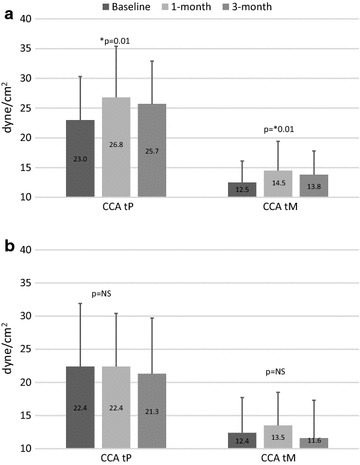
BACKGROUND: Cardiovascular protection following empagliflozin therapy is not entirely attributable to the glucose lowering effect. Increased hematocrit might influence the shear stress that is the main force acting on the endothelium, regulating its anti-atherogenic function. OBJECTIVE: We designed the study with the aim of investigating the effect of empagliflozin on blood viscosity and shear stress in the carotid arteries. A secondary endpoint was the effect of empagliflozin on carotid artery wall thickness. METHODS: The study was a non-randomized, open, prospective cohort study including 35 type 2 diabetic outpatients who were offered empagliflozin or incretin-based therapy (7 liraglutide, 8 sitagliptin) in combination with insulin and metformin. Blood viscosity, shear stress and carotid wall thickness were measured at baseline and at 1 and 3 months of treatment. Blood viscosity was measured with a viscometer, and shear stress was calculated using a validated formula. Intima-media thickness (IMT) of the carotid artery was detected by ultrasound and was measured with dedicated software. RESULTS: Blood viscosity (4.87 ± 0.57 vs 5.32 ± 0.66 cP, p < 0.02) and shear stress significantly increased in the Empagliflozin group while no change was detected in the Control group (4.66 ± 0.56 vs 4.98 ± 0.73 cP, p = NS). IMT significantly decreased in the Empagliflozin group after 1 and 3 months (baseline: 831 ± 156, 1-month 793 ± 150, 3-month 766 ± 127 μm; p < 0.0001), while in the liraglutide group, IMT significantly decreased only after 3 months (baseline 879 ± 120; 1-month 861 ± 163; 3-month 802 ± 114 μm; p < 0.001). In the sitagliptin group, IMT remained almost unchanged (baseline 901 ± 135; 1-month 902 ± 129; 3-month 880 ± 140 μm; p = NS). CONCLUSIONS: This study is the first to describe a direct effect of empagliflozin on blood viscosity and wall shear stress. Furthermore, IMT was markedly reduced early on in the Empagliflozin group.
Overview
The claims and statistics of this paper haven’t been checked yet.
Free: it reads the open-access text and checks the first 5 claims that cite a source we can check. Create a free account to check every claim.
Integrity signals
Registry
Cites
Statistics
Figures
Verification
Claims the paper makes
The claims and statistics of this paper haven’t been checked yet.
Free: it reads the open-access text and checks the first 5 claims that cite a source we can check. Create a free account to check every claim.
Claims other papers make about this one
Each is checked against this paper’s own text: does it say what the citing paper says it does?
The cited source says what the claim attributes to it.
In the citing paper
“In a previous study including diabetic patients, a three-month treatment with empagliflozin resulted in a significant regression of complex intima media thickness (cIMT) by 7.9%; p < 0.0001. Interestingly, this effect was significant just after one month of empagliflozin therapy [34].”
From Neuroprotective effect of SGLT2 inhibitors. (2021) · cites this paper as [34]
Self-check
Percentages, sums and reported differences re-computed from the paper’s own numbers.
The self-check needs the paper’s full text.
Citations
Cites
Empagliflozin, Cardiovascular Outcomes, and Mortality in Type 2 Diabetes
Zinman, B., Wanner, C., Lachin, J. M., Fitchett, D., Bluhmki, E., Hantel, S., Mattheus, M., Devins, T., Johansen, O. E., Woerle, H. J., et al. (2015) · New England Journal of Medicine · doi:10.1056/nejmoa1504720 · Cited by 12,315
Canagliflozin and Cardiovascular and Renal Events in Type 2 Diabetes
Neal, B., Perkovic, V., Mahaffey, K. W., de Zeeuw, D., Fulcher, G., Erondu, N., Shaw, W., Law, G., Desai, M., & Matthews, D. R. (2017) · New England Journal of Medicine · doi:10.1056/nejmoa1611925 · Cited by 7,830
Liraglutide and Cardiovascular Outcomes in Type 2 Diabetes
Marso, S. P., Daniels, G. H., Brown-Frandsen, K., Kristensen, P., Mann, J. F. E., Nauck, M. A., Nissen, S. E., Pocock, S., Poulter, N. R., Ravn, L. S., et al. (2016) · New England Journal of Medicine · doi:10.1056/nejmoa1603827 · Cited by 7,629
O'Leary, D. H., Polak, J. F., Kronmal, R. A., Manolio, T. A., Burke, G. L., & Wolfson, S. K. (1999) · New England Journal of Medicine · doi:10.1056/nejm199901073400103 · Cited by 4,685
Effect of Sitagliptin on Cardiovascular Outcomes in Type 2 Diabetes
Green, J. B., Bethel, M. A., Armstrong, P. W., Buse, J. B., Engel, S. S., Garg, J., Josse, R., Kaufman, K. D., Koglin, J., Korn, S., et al. (2015) · New England Journal of Medicine · doi:10.1056/nejmoa1501352 · Cited by 2,577
Inzucchi, S. E., Zinman, B., Fitchett, D., Wanner, C., Ferrannini, E., Schumacher, M., Schmoor, C., Ohneberg, K., Johansen, O. E., George, J. T., et al. (2018) · Diabetes Care · doi:10.2337/dc17-1096 · Cited by 740 · cited 1×
“mediators of the reduction in risk of CV death with empagliflozin vs placebo [27].”
BackgroundSodium-Glucose Cotransport Inhibition With Dapagliflozin in Type 2 Diabetes
List, J. F., Woo, V., Morales, E., Tang, W., & Fiedorek, F. T. (2009) · Diabetes Care · doi:10.2337/dc08-1863 · Cited by 698
Flow activates an endothelial potassium channel to release an endogenous nitrovasodilator.
Cooke, J. P., Rossitch, E., Andon, N. A., Loscalzo, J., & Dzau, V. J. (1991) · Journal of Clinical Investigation · doi:10.1172/jci115481 · Cited by 533
Chilton, R., Tikkanen, I., Cannon, C. P., Crowe, S., Woerle, H. J., Broedl, U. C., & Johansen, O. E. (2015) · Diabetes, Obesity and Metabolism · doi:10.1111/dom.12572 · Cited by 507
Lytvyn, Y., Bjornstad, P., Udell, J. A., Lovshin, J. A., & Cherney, D. Z. I. (2017) · Circulation · doi:10.1161/circulationaha.117.030012 · Cited by 459 · cited 1×
“SGLT2 inhibitors have recently been demonstrated to markedly reduce cardiovascular mortality with highly significant reduction in admissions for heart failure and end-stage renal disease, despite modest effects on long-term glycemic control [1, 2, 6].”
Background
Research works printed but not linked: 2
- Standard Italiani per la cura del Diabete Mellito 2016. vol. 5, p. 91–117. http://www.standarditaliani.it. Accessed 20 June 2016.
- Schou M Gullestad L Fitchett D Zinman B Inzucchi SE Hehnke U von Eynatten M George J Johansen OE Wanner C Empagliflozin exerts short- and long-term effects on plasma volume in patients with type 2 diabetes: insight from EMPA-REG OUTCOME Circulation 2017 136 A15997
Cited by
Li, C., Zhang, J., Xue, M., Li, X., Han, F., Liu, X., Xu, L., Lu, Y., Cheng, Y., Li, T., et al. (2019) · Cardiovascular Diabetology · doi:10.1186/s12933-019-0816-2 · Cited by 580
Neuroprotective effect of SGLT2 inhibitors.
Pawlos, A., Broncel, M., Woźniak, E., & Gorzelak-Pabiś, P. (2021) · Molecules · doi:10.3390/molecules26237213 · Cited by 304
“CIMT Regression n/a n/a Yes [33] Yes [34] /”
BackgroundBosch, A., Ott, C., Jung, S., Striepe, K., Karg, M. V., Kannenkeril, D., Dienemann, T., & Schmieder, R. E. (2019) · Cardiovascular Diabetology · doi:10.1186/s12933-019-0839-8 · Cited by 125
Fuchigami, A., Shigiyama, F., Kitazawa, T., Okada, Y., Ichijo, T., Higa, M., Hiyoshi, T., Inoue, I., Iso, K., Yoshii, H., et al. (2020) · Cardiovascular Diabetology · doi:10.1186/s12933-019-0977-z · Cited by 133
Atherosclerosis in diabetes mellitus: novel mechanisms and mechanism-based therapeutic approaches
Khan, A. W., & Jandeleit-Dahm, K. A. M. (2025) · Nature Reviews Cardiology · doi:10.1038/s41569-024-01115-w · Cited by 107
“In addition, intima–media thickness was markedly decreased early after initiation of empagliflozin treatment compared with incretin-based therapy 15 .”
Ma, S., He, L., Zhang, G., Zuo, Q., Wang, Z., Zhai, J., Zhang, T., Wang, Y., Ma, H., & Guo, Y. (2022) · Naunyn-Schmiedeberg s Archives of Pharmacology · doi:10.1007/s00210-022-02243-1 · Cited by 73
“…is much evidence of the extra-glycemic benefits of SGLT2i, such as weight loss; decrease in blood pressure, uric acid levels, and TGs; increase in haematocrit and blood viscosity; and slowdown of kidney and heart disease progression (Irace et al. 2018; Lahnwong et al. 2018; Ndibalema et al. 2020).”
BackgroundHerrington, W. G., Savarese, G., Haynes, R., Marx, N., Mellbin, L., Lund, L. H., Dendale, P., Seferovic, P., Rosano, G., Staplin, N., et al. (2021) · European Journal of Heart Failure · doi:10.1002/ejhf.2286 · Cited by 63
Katakami, N., Mita, T., Yoshii, H., Shiraiwa, T., Yasuda, T., Okada, Y., Torimoto, K., Umayahara, Y., Kaneto, H., Osonoi, T., et al. (2020) · Cardiovascular Diabetology · doi:10.1186/s12933-020-01079-4 · Cited by 68
Diabetes-Driven Atherosclerosis: Updated Mechanistic Insights and Novel Therapeutic Strategies
Karakasis, P., Theofilis, P., Patoulias, D., Vlachakis, P. K., Antoniadis, A. P., & Fragakis, N. (2025) · International Journal of Molecular Sciences · doi:10.3390/ijms26052196 · Cited by 72
“Furthermore, treatment with empagliflozin was associated with a significant and early reduction in intima–media thickness, highlighting its potential role in mitigating vascular pathology independently of glycemic control [41].”
Endothelial function and dysfunction: Impact of sodium-glucose cotransporter 2 inhibitors
Ugusman, A., Kumar, J., & Aminuddin, A. (2021) · Pharmacology & Therapeutics · doi:10.1016/j.pharmthera.2021.107832 · Cited by 64
Soares, R. N., Ramirez‐Perez, F. I., Cabral-Amador, F. J., Morales‐Quinones, M., Foote, C. A., Ghiarone, T., Sharma, N., Power, G. J., Smith, J. A. H., Rector, R. S., et al. (2022) · GeroScience · doi:10.1007/s11357-022-00563-x · Cited by 67
“Changes in blood viscosity and blood pressure have also been described as potential mechanisms behind the positive effects of SGLT2 inhibitors on the vasculature [72, 73].”
BackgroundSavarese, G., Butler, J., Lund, L. H., Bhatt, D. L., & Anker, S. D. (2021) · Cardiovascular Research · doi:10.1093/cvr/cvab271 · Cited by 48
Is the Retinol-Binding Protein 4 a Possible Risk Factor for Cardiovascular Diseases in Obesity?
Rychter, A. M., Skrzypczak-Zielińska, M., Zielińska, A., Eder, P., Souto, E. B., Zawada, A. E., Ratajczak, A. E., Dobrowolska, A., & Krela‐Kaźmierczak, I. (2020) · International Journal of Molecular Sciences · doi:10.3390/ijms21155229 · Cited by 38
Hodrea, J., Saeed, A., Molnár, Á., Fintha, A., Bárczi, A., Wagner, L. J., Szabo, A. J., Fekete, A., & Balogh, D. B. (2022) · PLoS ONE · doi:10.1371/journal.pone.0263285 · Cited by 38
“Empagliflozin reduced IMT, while ipra-gliflozin and tofogliflozin had no statistically significant alterations in IMT [28–30].”
The effect of sodium-glucose co-transporter-2 inhibitors on markers of subclinical atherosclerosis
Stachteas, P., Karakasis, P., Patoulias, D., Clemenza, F., Fragakis, N., & Rizzo, M. (2023) · Annals of Medicine · doi:10.1080/07853890.2024.2304667 · Cited by 36
“Similar were the findings reported by irace et al. [57], who concluded that treat-ment with empagliflozin was associated with a significant reduction in indices of SA after 1 and 3 months (ccA-iMt = 0.793 ± 0.15 mm and 0.766 ± 0.127 mm; p < .0001 respectively compared to baseline measurements:…”
ResultInfluentialTanaka, A., Sata, M., Okada, Y., Teragawa, H., Eguchi, K., Shimabukuro, M., Taguchi, I., Matsunaga, K., Kanzaki, Y., Yoshida, H., et al. (2022) · European Heart Journal - Cardiovascular Pharmacotherapy · doi:10.1093/ehjcvp/pvac059 · Cited by 34
Vascular and metabolic effects of SGLT2i and GLP-1 in heart failure patients
Correale, M., Lamacchia, O., Ciccarelli, M., Dattilo, G., Tricarico, L., & Brunetti, N. D. (2021) · Heart Failure Reviews · doi:10.1007/s10741-021-10157-y · Cited by 33
Gunawan, P. Y., Gunawan, P. A., & Hariyanto, T. I. (2024) · Diabetes Therapy · doi:10.1007/s13300-024-01538-1 · Cited by 32
Correale, M., Mazzeo, P., Mallardi, A., Leopizzi, A., Tricarico, L., Fortunato, M., Magnesa, M., Tucci, S., Maiellaro, P., Pastore, G., et al. (2021) · Cardiovascular Drugs and Therapy · doi:10.1007/s10557-021-07254-3 · Cited by 32
Irace, C., Cutruzzolà, A., Parise, M., Fiorentino, R., Frazzetto, M., Gnasso, C., Casciaro, F., & Gnasso, A. (2019) · Diabetes and Vascular Disease Research · doi:10.1177/1479164119883540 · Cited by 30
Self-citationIbrahim, N. E., & Januzzi, J. L. (2020) · Clinical Chemistry · doi:10.1093/clinchem/hvaa277 · Cited by 19
Evidence from routine clinical practice: EMPRISE provides a new perspective on CVOTs
Schernthaner, G., Karasik, A., Abraitienė, A., As, A., Gaál, Z., Gumprecht, J., Janež, A., Kaser, S., Lalic, K. S., Mankovsky, B., et al. (2019) · Cardiovascular Diabetology · doi:10.1186/s12933-019-0920-3 · Cited by 20
Huang, R., Mills, K., Romero, J., Li, Y., Hu, Z., Cao, Y., Huang, H., Xu, Y., & Jiang, L. (2019) · Cardiovascular Diabetology · doi:10.1186/s12933-019-0817-1 · Cited by 20
Aklilu, A. M., Kumar, S., Yamamoto, Y., Moledina, D. G., Sinha, F., Testani, J. M., & Wilson, F. P. (2023) · Kidney360 · doi:10.34067/kid.0000000000000250 · Cited by 18
“47,48 In injury models, perhaps through reduction of oxidative stress, SGLT2is have been shown to reduce infarct size within hours in ischemia reperfusion animal models of MI. 49 Furthermore, a recent study using diabetic and nondiabetic mouse models has further shown renoprotective effects via…”
BackgroundSodium-Glucose Cotransporter 2 (SGLT2) Inhibitors: Harms or Unexpected Benefits?
Andreea, M. M., Surabhi, S., Popescu, R.-I., Ciobotaru, L. M., Nicolae, C., Emil, T., & Tiberiu, N. I. (2023) · Medicina · doi:10.3390/medicina59040742 · Cited by 19
“Remarkably, this benefit was already significant after just one month of empagliflozin medication [80].”
BackgroundKatakami, N., Mita, T., Maeda, N., Sato, Y., Watada, H., Shimomura, I., & The UTOPIA Study Investigators (2022) · Cardiovascular Diabetology · doi:10.1186/s12933-022-01451-6 · Cited by 16
“The present study was a post hoc analysis based on data obtained from the UTOPIA trial, which was a multicenter prospective, randomized, open-label, blindedendpoint study conducted to evaluate the efficacy of tofogliflozin in preventing the progression of atherosclerosis in patients with T2DM.”
BackgroundInfluentialSodium-Glucose Cotransporter-2 Inhibitors in Vascular Biology: Cellular and Molecular Mechanisms
Xiao, L., Nie, X., Cheng, Y., & Wang, N. (2021) · Cardiovascular Drugs and Therapy · doi:10.1007/s10557-021-07216-9 · Cited by 16
“A small, nonrandomized study reported that empagliflozin significantly decreased carotid IMT in T2DM patients [81].”
BackgroundSinha, B., & Ghosal, S. (2019) · Diabetes Therapy · doi:10.1007/s13300-019-0597-3 · Cited by 15
Shi, B., Wang, H., Wan, X., Guo, Y., Liu, S., & Gong, Q. (2022) · Spectrochimica Acta Part A Molecular and Biomolecular Spectroscopy · doi:10.1016/j.saa.2022.121375 · Cited by 15
Cannarella, R., Rubulotta, M., Cannarella, V., Vignera, S. L., & Calogero, A. E. (2025) · European Journal of Internal Medicine · doi:10.1016/j.ejim.2025.06.010 · Cited by 16
Ferrannini, G., Savarese, G., & Rydén, L. (2021) · Diabetes Research and Clinical Practice · doi:10.1016/j.diabres.2021.108796 · Cited by 14
Mechanistic effects of SGLT2 inhibition on blood pressure in diabetes
Yaribeygi, H., Atkin, S. L., & Sahebkar, A. (2019) · Diabetes & Metabolic Syndrome Clinical Research & Reviews · doi:10.1016/j.dsx.2019.03.031 · Cited by 16
Shear Stress and Metabolic Disorders—Two Sides of the Same Plaque
Jiang, M., Ding, H., Huang, Y., & Wang, L. (2022) · Antioxidants and Redox Signaling · doi:10.1089/ars.2021.0126 · Cited by 13
“Clinical studies showed that the antidiabetic drug, SGLT2 inhibitor, increased blood viscosity and wall shear stress, while reducing intima-media thickness in diabetic patients (71).”
Katakami, N., Mita, T., Yoshii, H., Shiraiwa, T., Yasuda, T., Okada, Y., Kurozumi, A., Hatazaki, M., Kaneto, H., Osonoi, T., et al. (2023) · Cardiovascular Diabetology · doi:10.1186/s12933-023-01879-4 · Cited by 13
“reported a significant decrease in carotid IMT after only 3 months of treatment with empagliflozin, another SGLT2 inhibitor [25].”
BackgroundBiomechanical Forces and Atherosclerosis: From Mechanism to Diagnosis and Treatment
Genkel, V. V., Kuznetcova, A. S., & Иосифович, Ш. И. (2019) · Current Cardiology Reviews · doi:10.2174/1573403x15666190730095153 · Cited by 17
Empagliflozin in Adults with Chronic Kidney Disease (CKD): Current Evidence and Place in Therapy
Colbert, G. B., Madariaga, H. M., Gaddy, A. R., Elrggal, M. E., & Lerma, E. V. (2023) · Therapeutics and Clinical Risk Management · doi:10.2147/tcrm.s398163 · Cited by 12
“9% and was obvious at just one month.(32) Decreased cerebral atherosclerosis could improve cognitive impairment progression and may play a role in dementia.”
BackgroundYounis, A., Arous, T., Klempfner, R., Kharsa, A., McNitt, S. A., Schleede, S., Polonsky, B., Abdallah, Z., Buttar, R., Bodurian, C., et al. (2023) · Journal of Cardiovascular Electrophysiology · doi:10.1111/jce.15996 · Cited by 12
Akbari, A., Hadizadeh, S., & Heidary, L. (2024) · Journal of Diabetes Research · doi:10.1155/2024/3212795 · Cited by 12
Liu, T., Lin, Y., Yu, T., Wu, J., & Lai, C. (2025) · Diabetes Research and Clinical Practice · doi:10.1016/j.diabres.2025.112197 · Cited by 11
Schwarz, Y., Klein, P., & Lev-Shalem, L. (2023) · Acta Diabetologica · doi:10.1007/s00592-023-02174-0 · Cited by 13
“Whether this protection is conferred by hemodynamic change [12], shear stress reduction [18], or improvement of systemic and myocardial oxygen delivery is yet to be determined [13].”
Blood rheological properties and methods of their measurement
Pryzwan, T., Dolibog, P., Kierszniok, K., & Pietrzyk, B. (2024) · Annales Academiae Medicae Silesiensis · doi:10.18794/aams/175727 · Cited by 11
Kristensen, D. K., Mose, F. H., Buus, N. H., Duus, C. L., Mårup, F. H., Bech, J. N., & Nielsen, S. F. (2024) · Diabetes Obesity and Metabolism · doi:10.1111/dom.16097 · Cited by 10
SGLT2i treatment during AKI and its association with major adverse kidney events
Alcantar-Vallin, L., Zaragoza, J. J., Díaz-Villavicencio, B., Hernández-Morales, K., Camacho-Guerrero, J. R., Pérez-Venegas, M. A., Carmona, E. J., Gonzalez, A. N. O., Murguía-Soto, C., Chávez-Alonso, G., et al. (2024) · Frontiers in Pharmacology · doi:10.3389/fphar.2024.1356991 · Cited by 10
Balleza-Alejandri, L. R., Páez, F. G., Campos, E. G., Becerra, C. G. R., Muñoz, E., González, S. P., Ramos-Zavala, M. G., Reynoso-Roa, A. S., Suárez-Rico, D. O., Beltrán-Ramírez, A., et al. (2024) · Journal of Cardiovascular Development and Disease · doi:10.3390/jcdd11060182 · Cited by 8
“…and increasing shear stress and blood viscosity; it has also been reported that SGLT2i can lead to a reduction in the monocyte/high-density lipoprotein (HDL) ratio (MHR), decreasing the inflammation and oxidative stress, thus leading to both renoprotective and cardioprotective effects [14,23].”
BackgroundInagaki, N., Nishimoto, T., Nishiya, Y., & Nitta, D. (2022) · Expert Opinion on Drug Safety · doi:10.1080/14740338.2022.2107200 · Cited by 7
“a decrease in intima-media thickness [42], further consid-”
BackgroundImpact of SGLT-2 Inhibitors on Biomarkers of Heart Failure
Darwish, D., Kumar, P., Urs, K., & Dave, S. (2025) · Cells · doi:10.3390/cells14120919 · Cited by 6
“In one prospective cohort study, 35 patients with T2DM were offered empagliflozin or incretin-based therapy (liraglutide or sitagliptin) in combination with insulin and metformin [127].”
Gitto, M., Vrachatis, D. A., Condorelli, G., Papathanasiou, K. A., Reimers, B., Deftereos, S. G., & Stefanini, G. G. (2021) · Cardiovascular & Hematological Agents in Medicinal Chemistry · doi:10.2174/1871525719666210809121016 · Cited by 5
Salim, K. S., Ubaid, H. A., Hwaidi, E. H., Qassim, W. J., Kadhim, A. J., Ahmed, S. A., Yazdanparast, E., Ghorbani, S. H., & Chenari, H. A. (2024) · International Journal of Diabetes in Developing Countries · doi:10.1007/s13410-024-01429-y · Cited by 4
“Through inhibiting SGLT2 pumping in the proximal part of nephrons, canagliflozin prevents the reabsorption of excreted glucose into the blood and in a pathway independent of insulin; it causes a decrease in blood sugar [14].”
Newer and novel antidiabetic drug classes across the cardiovascular–kidney–metabolic continuum
Stefanakis, K., Karakasis, P., Vasdeki, D., Popovic, D. S., Patoulias, D., Rizzo, M., & Mantzoros, C. S. (2026) · Endocrine Reviews · doi:10.1210/endrev/bnag022 · Cited by 6
Longo, M., Caruso, P., Scappaticcio, L., Maiorino, M. I., Bellastella, G., Capuano, A., Esposito, K., & Giugliano, D. (2024) · Diabetes Obesity and Metabolism · doi:10.1111/dom.15451 · Cited by 4
Son, M., Lee, Y. S., Hong, A. R., Yoon, J. H., Kim, H. K., Kang, H., & Yang, S. H. (2020) · Cardiovascular Drugs and Therapy · doi:10.1007/s10557-020-07067-w · Cited by 4
Neuroprotective strategies for cognitive decline in type 2 diabetes
Cimini, F. A., Cuenca‐Royo, A., Gomis‐González, M., Forcano, L., Barchetta, I., Barone, E., Cavallo, M. G., & de la Torre, R. (2026) · Trends in Endocrinology and Metabolism · doi:10.1016/j.tem.2026.04.003 · Cited by 3
Ertuğrul, D. T., Kan, E., TURA, Ç. B., Tugtekin, H. B., Ayakta, H., ÇELEBİOĞLU, M., Yılmaz, C., ÜTEBAY, O., Yetkin, İ., The DAPATURK Study Group, et al. (2021) · International Journal of Diabetes in Developing Countries · doi:10.1007/s13410-021-00954-4 · Cited by 3
Jiménez, D. L., Huelgas, R. G., Romero, A. J. F., Chozas, J. M. L., de Isla, L. P., & Miramontes‐González, J. P. (2018) · Revista Clínica Española · doi:10.1016/j.rce.2018.09.021 · Cited by 3
Jiménez, D. L., Huelgas, R. G., Romero, A. J. F., Chozas, J. M. L., de Isla, L. P., & Miramontes‐González, J. P. (2019) · Revista Clínica Española (English Edition) · doi:10.1016/j.rceng.2019.01.001 · Cited by 3
Blood viscosity – The unifying cardiovascular disease risk biomarker
Finlayson, E. (2026) · Microvascular Research · doi:10.1016/j.mvr.2026.104904 · Cited by 2
(Diaconu), C.-T. V., Chitu, M.-C., Salmen, T., Stoian, A. P., & Guja, C. (2026) · Diagnostics · doi:10.3390/diagnostics16111607 · Cited by 3
“While liraglutide was associated with a reduction in cIMT, this effect became evident only after 3 months and was less pronounced compared to empagliflozin, which induced an earlier and greater decrease in cIMT [32].”
Golubovskaia, D. P., Каретникова, В. Н., Олейник, И. Р., & Барбараш, О. Л. (2022) · Rational Pharmacotherapy in Cardiology · doi:10.20996/1819-6446-2022-10-08 · Cited by 3
Huang, Y., Yu, X., & Li, C. (2025) · CNS Drugs · doi:10.1007/s40263-025-01230-3 · Cited by 1
Patoulias, D., Katsimardou, A., Kalogirou, M., Karagiannis, A. I., & Doumas, M. N. (2019) · Digestive and Liver Disease · doi:10.1016/j.dld.2019.10.016 · Cited by 1
Sewage sludge treatment by membrane anaerobic system (MAS)
Musliha, M. (2010) · UMP Institutional Repository (Universiti Malaysia Pahang)
SGLT2 Inhibitors and Mechanism of Cardiovascular Benefits in Type 2 Diabetes
Nandave, M. (2024) · Springer eBooks · doi:10.1007/978-981-97-7568-2_2 · Cited by 1
Plasma volume status in type 2 diabetes and its association with antidiabetic therapy
Cutruzzolà, A., Vescio, F., Massaro, M. R., Torcasio, G., Gnasso, A., & Irace, C. (2025) · Cardiovascular Diabetology · doi:10.1186/s12933-025-03015-w
“The same mechanism seems responsible for the improvement we observed in individuals treated with SGLT2i in local hemodynamics and peripheral vascular function [20–22].”
Self-citationKatakami, N., Mita, T., Yoshii, H., Shiraiwa, T., Yasuda, T., Okada, Y., Kurozumi, A., Hatazaki, M., Kaneto, H., Osonoi, T., et al. (2023) · Figshare · doi:10.6084/m9.figshare.23564988
Katakami, N., Mita, T., Yoshii, H., Shiraiwa, T., Yasuda, T., Okada, Y., Kurozumi, A., Hatazaki, M., Kaneto, H., Osonoi, T., et al. (2023) · Figshare · doi:10.6084/m9.figshare.23564976
Katakami, N., Mita, T., Yoshii, H., Shiraiwa, T., Yasuda, T., Okada, Y., Kurozumi, A., Hatazaki, M., Kaneto, H., Osonoi, T., et al. (2023) · Figshare · doi:10.6084/m9.figshare.23564979
Katakami, N., Mita, T., Yoshii, H., Shiraiwa, T., Yasuda, T., Okada, Y., Kurozumi, A., Hatazaki, M., Kaneto, H., Osonoi, T., et al. (2023) · Figshare · doi:10.6084/m9.figshare.23564985
Katakami, N., Mita, T., Yoshii, H., Shiraiwa, T., Yasuda, T., Okada, Y., Kurozumi, A., Hatazaki, M., Kaneto, H., Osonoi, T., et al. (2023) · Figshare · doi:10.6084/m9.figshare.23564991
Katakami, N., Mita, T., Maeda, N., Sato, Y., Watada, H., & Shimomura, I. (2022) · Figshare · doi:10.6084/m9.figshare.19128727
Katakami, N., Mita, T., Yoshii, H., Shiraiwa, T., Yasuda, T., Okada, Y., Kurozumi, A., Hatazaki, M., Kaneto, H., Osonoi, T., et al. (2023) · Figshare · doi:10.6084/m9.figshare.23564982
Katakami, N., Mita, T., Yoshii, H., Shiraiwa, T., Yasuda, T., Okada, Y., Kurozumi, A., Hatazaki, M., Kaneto, H., Osonoi, T., et al. (2023) · Figshare · doi:10.6084/m9.figshare.23564973
Haemorheological Aspects of Peripheral Vascular Diseases
Biró, K., Koltai, K., Fendrik, K., Tóth, K., & Késmárky, G. (2026) · Springer eBooks · doi:10.1007/978-3-031-82232-2_6
Nakatani, Y., Banba, N., Ono, S., Turumi, T., Hoshiai, M., Sugiyama, T., Tomoe, T., Tamiya, H., Otani, N., 杉村, 浩., et al. (2026) · Journal of Diabetes Investigation · doi:10.1111/jdi.70344
“Empagli fl ozin has been reported to increase whole-blood viscosity at arterial shear rates, concomitant with a rise in hematocrit 22 .”
Sani, H. S., Aghaei, S., Kalantari, S., Madadi, R., Kalantari, Z., & Maafi, A. A. (2026) · PubMed Central · doi:10.30476/ijms.2026.109620.4497
“While empagliflozin demonstrated consistent CIMT regression in multiple studies, 17, 19, 29 ipragliflozin had a neutral effect on the CCA IMT status in the PROTECT study, 22 tofogliflozin had a neutral effect on mean, left, and right grey-scale median CCA values in the UTOPIA trial, 21 and…”
SGLT2 Inhibitors as Endothelial Protectors: Mechanisms of Vascular Restoration in Type 2 Diabetes
Okojie, O., Checa-Ros, A., & D’Marco, L. (2026) · Metabolites · doi:10.3390/metabo16110824
Metadata
- Authors
- Irace, C., Casciaro, F., Scavelli, F. B., Oliverio, R., Cutruzzolà, A., Cortese, C., & Gnasso, A.
- Affiliations
- Magna Graecia University (IT)
- University of Rome Tor Vergata (IT)
- Corresponding author
- Irace, Concetta
- Venue
- Cardiovascular Diabetology
- Published
- 2018-04-09
- Volume
- 17
- Issue
- 1
- Pages
- 52-52
- ISSN
- 1475-2840 (ISSN-L)
- PMC
- PMC5891980
- OpenAlex
- W2799739525
- Cited by
- 74
- References
- 42
- Citations by year
- 2026: 7 · 2025: 7 · 2024: 9 · 2023: 14 · 2022: 9 · 2021: 11 · 2020: 5 · 2019: 10 · 2018: 1
- FWCI
- 5.37
- Type
- journal article
- Language
- en
- Open access
- gold
- doi.org
- Licence
- cc-by
- creativecommons.org/licenses/by/4.0/ (tdm)
- Locations
- Cardiovascular Diabetology (publishedVersion, cc-by)
- Europe PMC (PubMed Central) (publishedVersion, other-oa)
- PubMed Central (publishedVersion, cc-by)
- PubMed (publishedVersion)
- DOAJ (DOAJ: Directory of Open Access Journals) (submittedVersion)
- Topics
- Health Sciences › Medicine › Endocrinology, Diabetes and Metabolism › Diabetes Treatment and Management
- Health Sciences › Medicine › Hematology › Blood properties and coagulation
- Health Sciences › Medicine › Endocrinology, Diabetes and Metabolism › Diabetes, Cardiovascular Risks, and Lipoproteins
- Keywords
- empagliflozin, blood viscosity, wall shear stress, type 2 diabetes, carotid intima-media thickness, incretin-based therapy, liraglutide, sitagliptin, endothelial function, atherosclerosis, cardioprotection, hematocrit, carotid artery wall thickness, SGLT2 inhibitors
- MeSH terms
- Sitagliptin Phosphate, Liraglutide, Sodium-Glucose Transporter 2 Inhibitors, Aged, Benzhydryl Compounds, Blood Viscosity, Diabetes Mellitus, Type 2, Female, Glucosides, Humans, Male, Middle Aged, Prospective Studies, Regional Blood Flow, Stress, Mechanical, Time Factors, Treatment Outcome, Carotid Artery, Common, Incretins, Carotid Intima-Media Thickness
About these checks
Registry, retraction, Cites and statistics results are computed, not judged, with one exception: a printed reference that no index lists is read once by a model before it counts as a citation error. Claims are extracted by a model and kept only when their quote appears verbatim in the text; each cited source is then checked, with a model’s help, for whether it says what the claim relies on. Those verdicts can be wrong — read the claim’s quote and the cited source before relying on one.
Statistics and arithmetic are recomputed, not judged.
Confidence bands are shown only for fields calibrated on our annotated test set. None is calibrated yet, so no band is shown.
What counts as a claim ›How we measure confidence ›How we check this ›
Are you an author, or do you see a problem with this page? Request a review
Data sources
Bibliographic data: Semantic Scholar, OpenAlex, Crossref.
Contains information from the Semantic Scholar Academic Graph Datasets, made available under the ODC Attribution License (ODC-BY 1.0).
Semantic Scholar’s data is described in: Kinney, R., et al. (2023). The Semantic Scholar Open Data Platform. arXiv:2301.10140.
