

Empagliflozin influences blood viscosity and wall shear stress in subjects with type 2 diabetes mellitus compared with incretin-based therapy
Open accessThe DOI matches its Crossref record; 41 of the 42 references it cites were found in a registry or an index.
Abstract
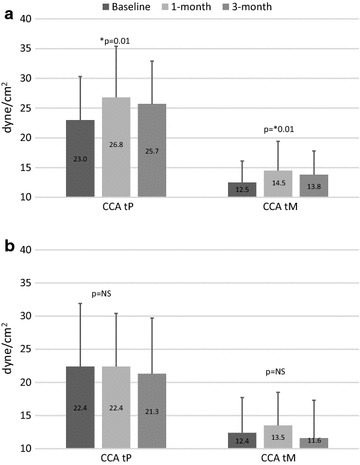
BACKGROUND: Cardiovascular protection following empagliflozin therapy is not entirely attributable to the glucose lowering effect. Increased hematocrit might influence the shear stress that is the main force acting on the endothelium, regulating its anti-atherogenic function. OBJECTIVE: We designed the study with the aim of investigating the effect of empagliflozin on blood viscosity and shear stress in the carotid arteries. A secondary endpoint was the effect of empagliflozin on carotid artery wall thickness. METHODS: The study was a non-randomized, open, prospective cohort study including 35 type 2 diabetic outpatients who were offered empagliflozin or incretin-based therapy (7 liraglutide, 8 sitagliptin) in combination with insulin and metformin. Blood viscosity, shear stress and carotid wall thickness were measured at baseline and at 1 and 3 months of treatment. Blood viscosity was measured with a viscometer, and shear stress was calculated using a validated formula. Intima-media thickness (IMT) of the carotid artery was detected by ultrasound and was measured with dedicated software. RESULTS: Blood viscosity (4.87 ± 0.57 vs 5.32 ± 0.66 cP, p < 0.02) and shear stress significantly increased in the Empagliflozin group while no change was detected in the Control group (4.66 ± 0.56 vs 4.98 ± 0.73 cP, p = NS). IMT significantly decreased in the Empagliflozin group after 1 and 3 months (baseline: 831 ± 156, 1-month 793 ± 150, 3-month 766 ± 127 μm; p < 0.0001), while in the liraglutide group, IMT significantly decreased only after 3 months (baseline 879 ± 120; 1-month 861 ± 163; 3-month 802 ± 114 μm; p < 0.001). In the sitagliptin group, IMT remained almost unchanged (baseline 901 ± 135; 1-month 902 ± 129; 3-month 880 ± 140 μm; p = NS). CONCLUSIONS: This study is the first to describe a direct effect of empagliflozin on blood viscosity and wall shear stress. Furthermore, IMT was markedly reduced early on in the Empagliflozin group.
Overview
The claims and statistics of this paper haven’t been checked yet.
Free: it reads the open-access text and checks the first 5 claims that cite a source we can check. Create a free account to check every claim.
Integrity signals
Registry
Cites
Statistics
Figures
Verification
Claims the paper makes
The claims and statistics of this paper haven’t been checked yet.
Free: it reads the open-access text and checks the first 5 claims that cite a source we can check. Create a free account to check every claim.
Claims other papers make about this one
Each is checked against this paper’s own text: does it say what the citing paper says it does?
The cited source says what the claim attributes to it.
In the citing paper
“In a previous study including diabetic patients, a three-month treatment with empagliflozin resulted in a significant regression of complex intima media thickness (cIMT) by 7.9%; p < 0.0001. Interestingly, this effect was significant just after one month of empagliflozin therapy [34].”
From Neuroprotective effect of SGLT2 inhibitors. (2021) · cites this paper as [34]
Self-check
Percentages, sums and reported differences re-computed from the paper’s own numbers.
The self-check needs the paper’s full text.
Citations
Cites
Empagliflozin, Cardiovascular Outcomes, and Mortality in Type 2 Diabetes
Zinman, B., Wanner, C., Lachin, J. M., Fitchett, D., Bluhmki, E., Hantel, S., Mattheus, M., Devins, T., Johansen, O. E., Woerle, H. J., et al. (2015) · New England Journal of Medicine · doi:10.1056/nejmoa1504720 · Cited by 12,315
Canagliflozin and Cardiovascular and Renal Events in Type 2 Diabetes
Neal, B., Perkovic, V., Mahaffey, K. W., de Zeeuw, D., Fulcher, G., Erondu, N., Shaw, W., Law, G., Desai, M., & Matthews, D. R. (2017) · New England Journal of Medicine · doi:10.1056/nejmoa1611925 · Cited by 7,830
Liraglutide and Cardiovascular Outcomes in Type 2 Diabetes
Marso, S. P., Daniels, G. H., Brown-Frandsen, K., Kristensen, P., Mann, J. F. E., Nauck, M. A., Nissen, S. E., Pocock, S., Poulter, N. R., Ravn, L. S., et al. (2016) · New England Journal of Medicine · doi:10.1056/nejmoa1603827 · Cited by 7,629
O'Leary, D. H., Polak, J. F., Kronmal, R. A., Manolio, T. A., Burke, G. L., & Wolfson, S. K. (1999) · New England Journal of Medicine · doi:10.1056/nejm199901073400103 · Cited by 4,685
Effect of Sitagliptin on Cardiovascular Outcomes in Type 2 Diabetes
Green, J. B., Bethel, M. A., Armstrong, P. W., Buse, J. B., Engel, S. S., Garg, J., Josse, R., Kaufman, K. D., Koglin, J., Korn, S., et al. (2015) · New England Journal of Medicine · doi:10.1056/nejmoa1501352 · Cited by 2,577
Inzucchi, S. E., Zinman, B., Fitchett, D., Wanner, C., Ferrannini, E., Schumacher, M., Schmoor, C., Ohneberg, K., Johansen, O. E., George, J. T., et al. (2018) · Diabetes Care · doi:10.2337/dc17-1096 · Cited by 740 · cited 1×
“mediators of the reduction in risk of CV death with empagliflozin vs placebo [27].”
BackgroundSodium-Glucose Cotransport Inhibition With Dapagliflozin in Type 2 Diabetes
List, J. F., Woo, V., Morales, E., Tang, W., & Fiedorek, F. T. (2009) · Diabetes Care · doi:10.2337/dc08-1863 · Cited by 698
Flow activates an endothelial potassium channel to release an endogenous nitrovasodilator.
Cooke, J. P., Rossitch, E., Andon, N. A., Loscalzo, J., & Dzau, V. J. (1991) · Journal of Clinical Investigation · doi:10.1172/jci115481 · Cited by 533
Chilton, R., Tikkanen, I., Cannon, C. P., Crowe, S., Woerle, H. J., Broedl, U. C., & Johansen, O. E. (2015) · Diabetes, Obesity and Metabolism · doi:10.1111/dom.12572 · Cited by 507
Lytvyn, Y., Bjornstad, P., Udell, J. A., Lovshin, J. A., & Cherney, D. Z. I. (2017) · Circulation · doi:10.1161/circulationaha.117.030012 · Cited by 459 · cited 1×
“SGLT2 inhibitors have recently been demonstrated to markedly reduce cardiovascular mortality with highly significant reduction in admissions for heart failure and end-stage renal disease, despite modest effects on long-term glycemic control [1, 2, 6].”
BackgroundBaker, W. L., Smyth, L. R., Riche, D. M., Bourret, E. M., Chamberlin, K. W., & White, W. B. (2014) · Journal of the American Society of Hypertension · doi:10.1016/j.jash.2014.01.007 · Cited by 452
SGLT-2 inhibitors and cardiovascular risk: Proposed pathways and review of ongoing outcome trials
Inzucchi, S. E., Zinman, B., Wanner, C., Ferrari, R., Fitchett, D., Hantel, S., Espadero, R.-M., Woerle, H.-J., Broedl, U. C., & Johansen, O. E. (2015) · Diabetes and Vascular Disease Research · doi:10.1177/1479164114559852 · Cited by 399 · cited 1×
“Additional advantages have been described, including body weight reduction due to loss of calories through urine and blood pressure reduction due to transient osmotic diuresis and inhibition of the renin–angiotensin system [5].”
BackgroundGnasso, A., Carallo, C., Irace, C., Spagnuolo, V., De Novara, G., Mattioli, P. L., & Pujia, A. (1996) · Circulation · doi:10.1161/01.cir.94.12.3257 · Cited by 308 · cited 5×
“In our laboratory, the coefficient of variation for blood and plasma viscosity was < 3% (2% at shear rate 225/s) and ~ 1% for micro-hematocrit [11].”
BackgroundMethodInfluentialSelf-citationHabibi, J., Aroor, A. R., Sowers, J. R., Jia, G., Hayden, M. R., Garro, M., Barron, B., Mayoux, E., Rector, R. S., Whaley-Connell, A., et al. (2017) · Cardiovascular Diabetology · doi:10.1186/s12933-016-0489-z · Cited by 262
Gnasso, A., Irace, C., Carallo, C., De Franceschi, M. S., Motti, C., Mattioli, P. L., & Pujia, A. (1997) · Stroke · doi:10.1161/01.str.28.5.993 · Cited by 256
Self-citationSano, M., Takei, M., Shiraishi, Y., & Suzuki, Y. (2016) · Journal of Clinical Medicine Research · doi:10.14740/jocmr2760w · Cited by 252 · cited 1×
“An effect consistently described during treatment with SGLT2 inhibitors has been the increase in hematocrit and hemoglobin, thereby improving the ability to transport blood oxygen [10].”
BackgroundTamariz, L. J., Young, J. H., Pankow, J. S., Yeh, H.-C., Schmidt, M. I., Astor, B., & Brancati, F. L. (2008) · American Journal of Epidemiology · doi:10.1093/aje/kwn243 · Cited by 224
Espeland, M. A., O'Leary, D. H., Terry, J. G., Morgan, T., Evans, G., & Mudra, H. (2005) · Current Controlled Trials in Cardiovascular Medicine · doi:10.1186/1468-6708-6-3 · Cited by 222
Devineni, D., Morrow, L., Hompesch, M., Skee, D., Vandebosch, A., Murphy, J., Ways, K., & Schwartz, S. (2012) · Diabetes, Obesity and Metabolism · doi:10.1111/j.1463-1326.2012.01558.x · Cited by 220
Mita, T., Katakami, N., Shiraiwa, T., Yoshii, H., Onuma, T., Kuribayashi, N., Osonoi, T., Kaneto, H., Kosugi, K., Umayahara, Y., et al. (2016) · Diabetes Care · doi:10.2337/dc15-2145 · Cited by 136
Pfeifer, M., Townsend, R. R., Davies, M. J., Vijapurkar, U., & Ren, J. (2017) · Cardiovascular Diabetology · doi:10.1186/s12933-017-0511-0 · Cited by 131
Irace, C., Cortese, C., Fiaschi, E., Carallo, C., Farinaro, E., & Gnasso, A. (2004) · Stroke · doi:10.1161/01.str.0000111597.34179.47 · Cited by 121
Self-citationSala-Vila, A., Romero-Mamani, E.-S., Gilabert, R., Núñez, I., de la Torre, R., Corella, D., Ruiz-Gutiérrez, V., López-Sabater, M.-C., Pintó, X., Rekondo, J., et al. (2014) · Arteriosclerosis, Thrombosis, and Vascular Biology · doi:10.1161/atvbaha.113.302327 · Cited by 114
Braamskamp, M. J. A. M., Langslet, G., McCrindle, B. W., Cassiman, D., Francis, G. A., Gagne, C., Gaudet, D., Morrison, K. M., Wiegman, A., Turner, T., et al. (2017) · Circulation · doi:10.1161/circulationaha.116.025158 · Cited by 101
Vázquez, B. Y. S., Martini, J., Negrete, A. C., Tsai, A. G., Forconi, S., Cabrales, P., Johnson, P. C., & Intaglietta, M. (2010) · Clinical Hemorheology and Microcirculation · doi:10.3233/ch-2010-1261 · Cited by 93 · cited 1×
“even demonstrated cardiovascular benefits associated with moderate increases in blood viscosity [24].”
BackgroundSGLT2 inhibitors: a novel choice for the combination therapy in diabetic kidney disease
Zou, H., Zhou, B., & Xu, G. (2017) · Cardiovascular Diabetology · doi:10.1186/s12933-017-0547-1 · Cited by 91 · cited 1×
“The new medications inhibit the reabsorption of glucose by the kidney, specifically blocking the sodium–glucose co-transporter protein 2 (SGLT2) located in the proximal tubule [3].”
BackgroundLorenz, M. W., Price, J. F., Robertson, C., Bots, M. L., Polak, J. F., Poppert, H., Kavousi, M., Dörr, M., Stensland, E., Ducimetiere, P., et al. (2015) · Diabetes Care · doi:10.2337/dc14-2732 · Cited by 88 · cited 1×
“However, the IMT reduction observed in the present study, in a period of only 3 months, was higher than the expected annual progression in diabetic subjects, thus suggesting possible relevant clinical effects [36].”
BackgroundBlood Viscosity in Subjects With Normoglycemia and Prediabetes
Irace, C., Carallo, C., Scavelli, F. B., Franceschi, M. S. D., Esposito, T., & Gnasso, A. (2013) · Diabetes Care · doi:10.2337/dc13-1374 · Cited by 81 · cited 1×
“Increased hematocrit level seems to have negative impact on glucose metabolism, that is, an increased risk of developing diabetes or prediabetes [21, 22].”
BackgroundSelf-citationOguma, T., Nakayama, K., Kuriyama, C., Matsushita, Y., Yoshida, K., Hikida, K., Obokata, N., Tsuda-Tsukimoto, M., Saito, A., Arakawa, K., et al. (2015) · Journal of Pharmacology and Experimental Therapeutics · doi:10.1124/jpet.115.225508 · Cited by 79 · cited 1×
“A small percentage of SGLT1 (10%) is still present in the latter part of renal proximal tubule [4].”
BackgroundClinical potential of sodium-glucose cotransporter 2 inhibitors in the management of type 2 diabetes
Babu, A., Kim, & Babu, A. (2012) · Diabetes, Metabolic Syndrome and Obesity: Targets and Therapy · doi:10.2147/dmso.s22545 · Cited by 72
Byrkjeland, R., Stensæth, K.-H., Anderssen, S., Njerve, I. U., Arnesen, H., Seljeflot, I., & Solheim, S. (2016) · Cardiovascular Diabetology · doi:10.1186/s12933-016-0336-2 · Cited by 66 · cited 1×
“Lipid-lowering drugs and non-pharmacological treatments have been shown to reduce IMT or slow its progression over relatively long periods of time [37, 38].”
BackgroundHuman common carotid wall shear stress as a function of age and gender: a 12-year follow-up study
Irace, C., Carallo, C., Franceschi, M. S. D., Scicchitano, F., Milano, M., Tripolino, C., Scavelli, F. B., & Gnasso, A. (2011) · AGE · doi:10.1007/s11357-011-9318-1 · Cited by 62 · cited 2×
“Again, a range or threshold value for common carotid wall shear stress has not been established, but the available evidence suggests a potentially beneficial effect of an increase in wall shear stress of the entity observed in the present study [15].”
BackgroundMethodSelf-citationStroke paradox with SGLT-2 inhibitors: a play of chance or a viscosity-mediated reality?
Imprialos, K. P., Boutari, C., Stavropoulos, K., Doumas, M. N., & Karagiannis, A. I. (2016) · Journal of Neurology Neurosurgery & Psychiatry · doi:10.1136/jnnp-2016-314704 · Cited by 60
Shah, N. K., Deeb, W. E., Choksi, R., & Epstein, B. J. (2012) · Pharmacotherapy: The Journal of Human Pharmacology and Drug Therapy · doi:10.1002/phar.1010 · Cited by 53
Carallo, C., Tripolino, C., Franceschi, M. S. D., Irace, C., Xu, X. Y., & Gnasso, A. (2016) · Atherosclerosis · doi:10.1016/j.atherosclerosis.2016.05.048 · Cited by 45
Self-citationHematocrit and Stroke: A Forgotten and Neglected Link?
Stavropoulos, K., Imprialos, K. P., Boutari, C., Doumas, M. N., & Bouloukou, S. (2017) · Seminars in Thrombosis and Hemostasis · doi:10.1055/s-0037-1602663 · Cited by 33 · cited 1×
“The relationship between hematocrit, diabetes mellitus and cardiovascular diseases is very complex [20].”
BackgroundOn behalf of the UTOPIA study investigators, Katakami, N., Mita, T., Yoshii, H., Shiraiwa, T., Yasuda, T., Okada, Y., Umayahara, Y., Kaneto, H., Osonoi, T., et al. (2017) · Diabetes Therapy · doi:10.1007/s13300-017-0292-1 · Cited by 32 · cited 1×
“Two ongoing studies will provide important information on the effect of SGLT2 inhibitors on IMT [39, 40].”
BackgroundGeng, D.-F., Jin, D., Wu, W., Fang, C., & Wang, J. (2011) · Atherosclerosis · doi:10.1016/j.atherosclerosis.2011.05.004 · Cited by 30
Irace, C., Gnasso, A., Cirillo, F., Leonardo, G., Ciamei, M., Crivaro, A., Renzulli, A., & Cotrufo, M. F. (2002) · Stroke · doi:10.1161/01.str.0000032103.59213.bc · Cited by 30 · cited 1×
“In a previous study of subjects undergoing aortic valve replacement, after a procedure that induced prompt modification of shear stress comparable to that observed in the present study, we found carotid IMT reduction up to 122 μm after 1 month [31].”
ResultSelf-citationOn behalf of the PROTECT Study Investigators, Tanaka, A., Murohara, T., Taguchi, I., Eguchi, K., Suzuki, M., Kitakaze, M., Sato, Y., Ishizu, T., Higashi, Y., et al. (2016) · Cardiovascular Diabetology · doi:10.1186/s12933-016-0449-7 · Cited by 27 · cited 1×
“Two ongoing studies will provide important information on the effect of SGLT2 inhibitors on IMT [39, 40].”
BackgroundNo effect on the short-term of a decrease in blood viscosity on insulin resistance
Gnasso, A., Cacia, M. A., Cortese, C., Succurro, E., Andreozzi, F., Carallo, C., & Irace, C. (2017) · Clinical Hemorheology and Microcirculation · doi:10.3233/ch-170288 · Cited by 5 · cited 1×
“However, we have recently demonstrated that a sudden reduction of hematocrit and blood viscosity, occurring following blood donation, has no effect on insulin resistance in healthy subjects [23].”
BackgroundSelf-citation
Research works printed but not linked: 2
- Standard Italiani per la cura del Diabete Mellito 2016. vol. 5, p. 91–117. http://www.standarditaliani.it. Accessed 20 June 2016.
- Schou M Gullestad L Fitchett D Zinman B Inzucchi SE Hehnke U von Eynatten M George J Johansen OE Wanner C Empagliflozin exerts short- and long-term effects on plasma volume in patients with type 2 diabetes: insight from EMPA-REG OUTCOME Circulation 2017 136 A15997
Cited by
Li, C., Zhang, J., Xue, M., Li, X., Han, F., Liu, X., Xu, L., Lu, Y., Cheng, Y., Li, T., et al. (2019) · Cardiovascular Diabetology · doi:10.1186/s12933-019-0816-2 · Cited by 580
Neuroprotective effect of SGLT2 inhibitors.
Pawlos, A., Broncel, M., Woźniak, E., & Gorzelak-Pabiś, P. (2021) · Molecules · doi:10.3390/molecules26237213 · Cited by 304
“CIMT Regression n/a n/a Yes [33] Yes [34] /”
BackgroundBosch, A., Ott, C., Jung, S., Striepe, K., Karg, M. V., Kannenkeril, D., Dienemann, T., & Schmieder, R. E. (2019) · Cardiovascular Diabetology · doi:10.1186/s12933-019-0839-8 · Cited by 125
Fuchigami, A., Shigiyama, F., Kitazawa, T., Okada, Y., Ichijo, T., Higa, M., Hiyoshi, T., Inoue, I., Iso, K., Yoshii, H., et al. (2020) · Cardiovascular Diabetology · doi:10.1186/s12933-019-0977-z · Cited by 133
Atherosclerosis in diabetes mellitus: novel mechanisms and mechanism-based therapeutic approaches
Khan, A. W., & Jandeleit-Dahm, K. A. M. (2025) · Nature Reviews Cardiology · doi:10.1038/s41569-024-01115-w · Cited by 107
“In addition, intima–media thickness was markedly decreased early after initiation of empagliflozin treatment compared with incretin-based therapy 15 .”
Metadata
- Authors
- Irace, C., Casciaro, F., Scavelli, F. B., Oliverio, R., Cutruzzolà, A., Cortese, C., & Gnasso, A.
- Affiliations
- Magna Graecia University (IT)
- University of Rome Tor Vergata (IT)
- Corresponding author
- Irace, Concetta
- Venue
- Cardiovascular Diabetology
- Published
- 2018-04-09
- Volume
- 17
- Issue
- 1
- Pages
- 52-52
- ISSN
- 1475-2840 (ISSN-L)
- PMC
- PMC5891980
- OpenAlex
- W2799739525
- Cited by
- 74
- References
- 42
- Citations by year
- 2026: 7 · 2025: 7 · 2024: 9 · 2023: 14 · 2022: 9 · 2021: 11 · 2020: 5 · 2019: 10 · 2018: 1
- FWCI
- 5.37
- Type
- journal article
- Language
- en
- Open access
- gold
- doi.org
- Licence
- cc-by
- creativecommons.org/licenses/by/4.0/ (tdm)
- Locations
- Cardiovascular Diabetology (publishedVersion, cc-by)
- Europe PMC (PubMed Central) (publishedVersion, other-oa)
- PubMed Central (publishedVersion, cc-by)
- PubMed (publishedVersion)
- DOAJ (DOAJ: Directory of Open Access Journals) (submittedVersion)
- Topics
- Health Sciences › Medicine › Endocrinology, Diabetes and Metabolism › Diabetes Treatment and Management
- Health Sciences › Medicine › Hematology › Blood properties and coagulation
- Health Sciences › Medicine › Endocrinology, Diabetes and Metabolism › Diabetes, Cardiovascular Risks, and Lipoproteins
- Keywords
- empagliflozin, blood viscosity, wall shear stress, type 2 diabetes, carotid intima-media thickness, incretin-based therapy, liraglutide, sitagliptin, endothelial function, atherosclerosis, cardioprotection, hematocrit, carotid artery wall thickness, SGLT2 inhibitors
- MeSH terms
- Sitagliptin Phosphate, Liraglutide, Sodium-Glucose Transporter 2 Inhibitors, Aged, Benzhydryl Compounds, Blood Viscosity, Diabetes Mellitus, Type 2, Female, Glucosides, Humans, Male, Middle Aged, Prospective Studies, Regional Blood Flow, Stress, Mechanical, Time Factors, Treatment Outcome, Carotid Artery, Common, Incretins, Carotid Intima-Media Thickness
About these checks
Registry, retraction, Cites and statistics results are computed, not judged, with one exception: a printed reference that no index lists is read once by a model before it counts as a citation error. Claims are extracted by a model and kept only when their quote appears verbatim in the text; each cited source is then checked, with a model’s help, for whether it says what the claim relies on. Those verdicts can be wrong — read the claim’s quote and the cited source before relying on one.
Statistics and arithmetic are recomputed, not judged.
Confidence bands are shown only for fields calibrated on our annotated test set. None is calibrated yet, so no band is shown.
What counts as a claim ›How we measure confidence ›How we check this ›
Are you an author, or do you see a problem with this page? Request a review
Data sources
Bibliographic data: Semantic Scholar, OpenAlex, Crossref.
Contains information from the Semantic Scholar Academic Graph Datasets, made available under the ODC Attribution License (ODC-BY 1.0).
Semantic Scholar’s data is described in: Kinney, R., et al. (2023). The Semantic Scholar Open Data Platform. arXiv:2301.10140.
