

The DOI matches its Crossref record; 42 of the 42 references it cites were found in a registry or an index.
Effect of liraglutide on cardiac function in patients with type 2 diabetes mellitus: randomized placebo-controlled trial
Open accessAbstract
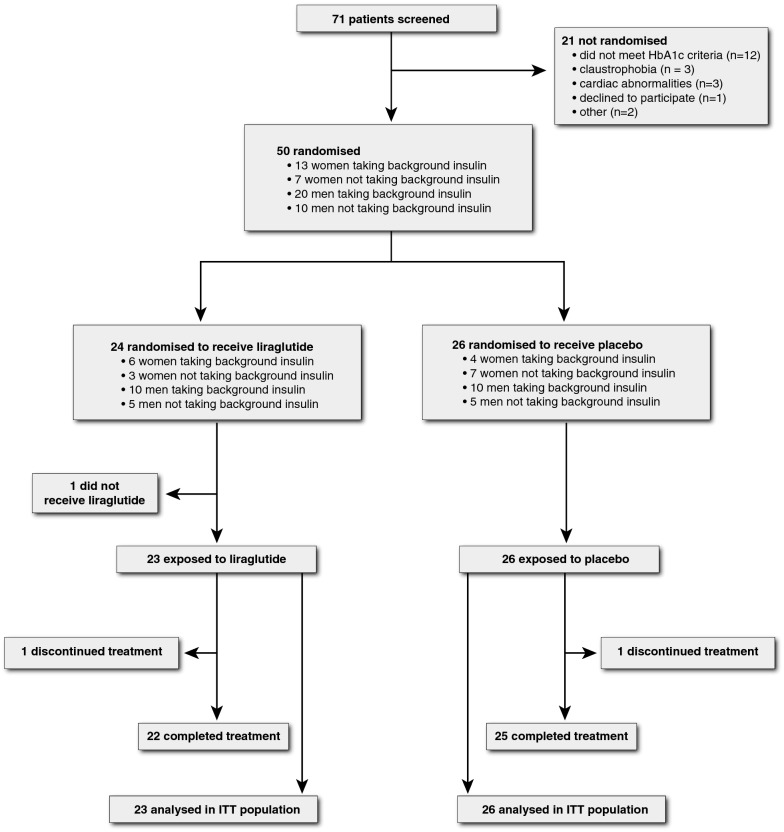
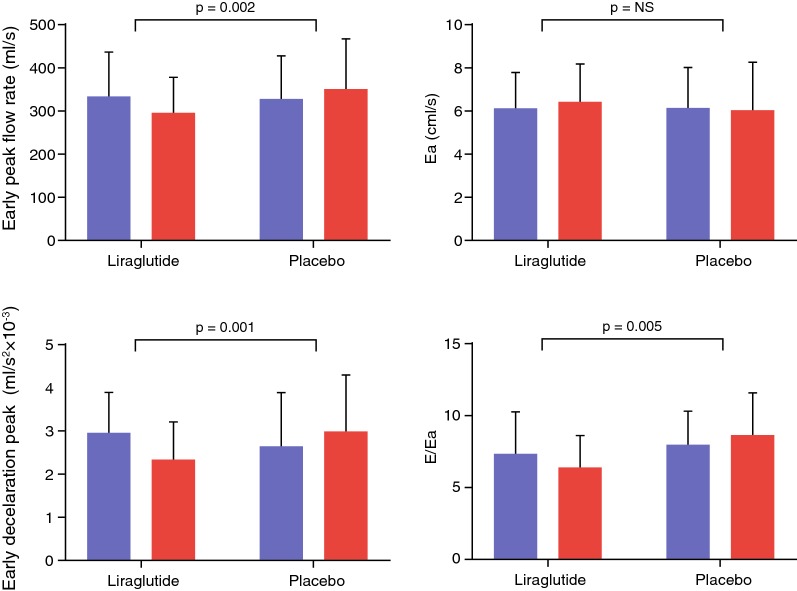
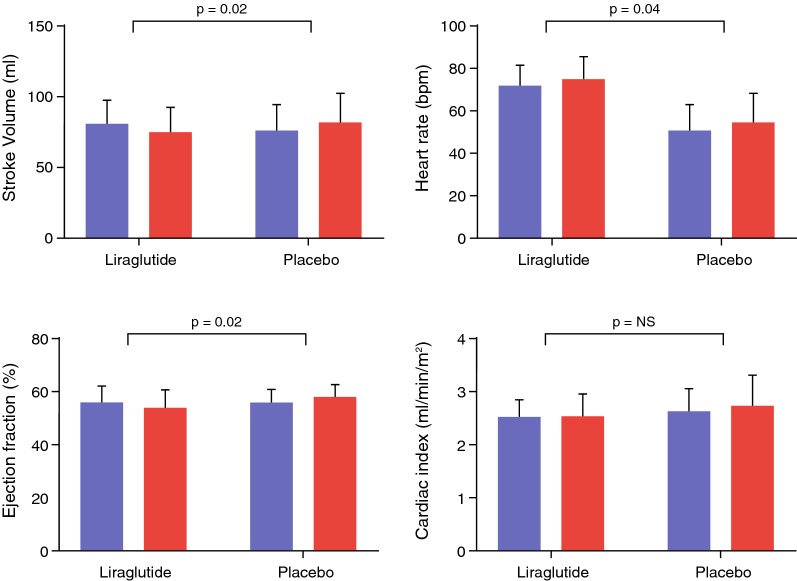
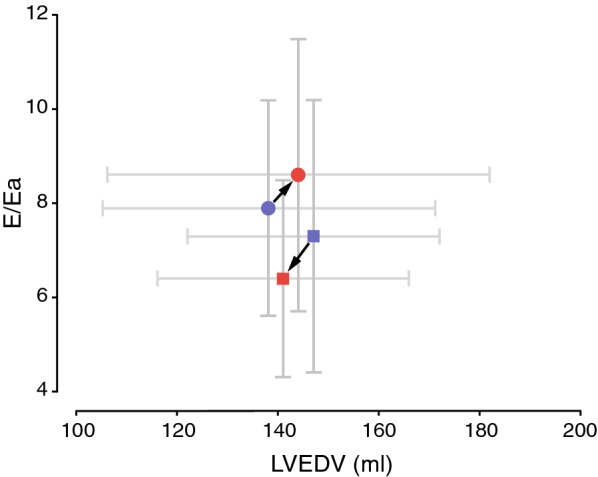
Abstract Background Liraglutide is an antidiabetic agent with cardioprotective effect. The purpose of this study is to test efficacy of liraglutide to improve diabetic cardiomyopathy in patients with diabetes mellitus type 2 (DM2) without cardiovascular disease. Methods Patients with DM2 were randomly assigned to receive liraglutide 1.8 mg/day or placebo in this double-blind trial of 26 weeks. Primary outcome measures were LV diastolic function (early (E) and late (A) transmitral peak flow rate, E/A ratio, early deceleration peak (Edec), early peak mitral annular septal tissue velocity (Ea) and estimated LV filling pressure (E/Ea), and systolic function (stroke volume, ejection fraction, cardiac output, cardiac index and peak ejection rate) assessed with CMR. Intention-to-treat analysis of between-group differences was performed using ANCOVA. Mean estimated treatment differences (95% confidence intervals) are reported. Results 23 patients were randomized to liraglutide and 26 to placebo. As compared with placebo, liraglutide significantly reduced E (− 56 mL/s (− 91 to − 21)), E/A ratio (− 0.17 (− 0.27 to − 0.06)), Edec (− 0.9 mL/s 2 * 10 −3 (− 1.3 to − 0.2)) and E/Ea (− 1.8 (− 3.0 to − 0.6)), without affecting A (3 mL/s (− 35 to 41)) and Ea (0.4 cm/s (− 0.9 to 1.4)). Liraglutide reduced stroke volume (− 9 mL (− 16 to − 2)) and ejection fraction (− 3% (− 6 to − 0.1)), but did not change cardiac output (− 0.4 L/min (− 0.9 to 0.2)), cardiac index (− 0.1 L/min/m 2 (− 0.4 to 0.1)) and peak ejection rate (− 46 mL/s (− 95 to 3)). Conclusions Liraglutide reduced early LV diastolic filling and LV filling pressure, thereby unloading the left ventricle. LV systolic function reduced and remained within normal range. Future studies are needed to investigate if liraglutide-induced left ventricular unloading slows progression of diabetic cardiomyopathy into symptomatic stages. Trial registration ClinicalTrials.gov: NCT01761318.
Overview
The claims and statistics of this paper haven’t been checked yet.
Run the check — free, no account needed. It reads the open-access text and checks the sources it cites.
Integrity signals
Registry
Cites
Statistics
Figures
Verification
Claims the paper makes
The claims and statistics of this paper haven’t been checked yet.
Run the check — free, no account needed. It reads the open-access text and checks the sources it cites.
Claims other papers make about this one
Each is checked against this paper’s own text: does it say what the citing paper says it does?
In the citing paper
“Among these, a study with liraglutide demonstrated a reduction in LV filling pressure and an improvement in diastolic function, both parameters relevant for progression of diabetic cardiomyopathy and symptomatic HFpEF [171].”
From Dysregulated epicardial adipose tissue as a risk factor and potential therapeutic target of heart failure with preserved ejection fraction in diabetes (2022) · cites this paper as [171]
Self-check
Percentages, sums and reported differences re-computed from the paper’s own numbers.
The self-check needs the paper’s full text.
Citations
Cites
2013 ACCF/AHA Guideline for the Management of Heart Failure
Yancy, C. W., Jessup, M., Bozkurt, B., Butler, J., Casey, D. E., Drazner, M. H., Fonarow, G. C., Geraci, S. A., Horwich, T., Januzzi, J. L., et al. (2013) · Journal of the American College of Cardiology · doi:10.1016/j.jacc.2013.05.019 · Cited by 12,536
Liraglutide and Cardiovascular Outcomes in Type 2 Diabetes
Marso, S. P., Daniels, G. H., Brown-Frandsen, K., Kristensen, P., Mann, J. F. E., Nauck, M. A., Nissen, S. E., Pocock, S., Poulter, N. R., Ravn, L. S., et al. (2016) · New England Journal of Medicine · doi:10.1056/nejmoa1603827 · Cited by 7,629
Burden of Systolic and Diastolic Ventricular Dysfunction in the Community
Redfield, M. M., Jacobsen, S. J., Burnett, J. C. J., Mahoney, D. W., Bailey, K. R., & Rodeheffer, R. J. (2003) · JAMA · doi:10.1001/jama.289.2.194 · Cited by 2,989
Margulies, K. B., Hernandez, A. F., Redfield, M. M., Givertz, M. M., Oliveira, G. H., Cole, R., Mann, D. L., Whellan, D. J., Kiernan, M. S., Felker, G. M., et al. (2016) · JAMA · doi:10.1001/jama.2016.10260 · Cited by 706
MacDonald, M. R., Petrie, M. C., Varyani, F., Ostergren, J., Michelson, E. L., Young, J. B., Solomon, S. D., Granger, C. B., Swedberg, K., Yusuf, S., et al. (2008) · European Heart Journal · doi:10.1093/eurheartj/ehn153 · Cited by 694
Sokos, G. G., Nikolaidis, L. A., Mankad, S. V., Elahi, D., & Shannon, R. P. (2006) · Journal of Cardiac Failure · doi:10.1016/j.cardfail.2006.08.211 · Cited by 654
Petersen, S. E., Aung, N., Sanghvi, M. M., Zemrak, F., Fung, K., Paiva, J. M., Francis, J. M., Khanji, M. Y., Lukaschuk, E. I., Lee, A. M., et al. (2016) · Journal of Cardiovascular Magnetic Resonance · doi:10.1186/s12968-017-0327-9 · Cited by 601
Jorsal, A., Kistorp, C., Holmager, P., Tougaard, R. S., Nielsen, R., Hänselmann, A., Nilsson, B., Møller, J. E., Hjort, J., Rasmussen, J., et al. (2017) · European Journal of Heart Failure · doi:10.1002/ejhf.657 · Cited by 592
Nauck, M. A., Meier, J. J., Cavender, M. A., Abd El Aziz, M., & Drucker, D. J. (2017) · Circulation · doi:10.1161/circulationaha.117.028136 · Cited by 582
Rakipovski, G., Rolin, B., Nøhr, J., Klewe, I., Frederiksen, K. S., Augustin, R., Hecksher-Sørensen, J., Ingvorsen, C., Polex-Wolf, J., & Knudsen, L. B. (2018) · JACC: Basic to Translational Science · doi:10.1016/j.jacbts.2018.09.004 · Cited by 509
Effect of Obesity and Overweight on Left Ventricular Diastolic Function
Russo, C., Jin, Z., Homma, S., Rundek, T., Elkind, M. S. V., Sacco, R. L., & Di Tullio, M. R. (2011) · Journal of the American College of Cardiology · doi:10.1016/j.jacc.2010.10.042 · Cited by 361
Cardiovascular Actions of Incretin-Based Therapies
Ussher, J. R., & Drucker, D. J. (2014) · Circulation Research · doi:10.1161/circresaha.114.301958 · Cited by 358
Liu, J. E., Palmieri, V., Roman, M. J., Bella, J., Fabsitz, R. R., Howard, B. V., Welty, T. K., Lee, E. T., & Devereux, R. B. (2001) · Journal of the American College of Cardiology · doi:10.1016/s0735-1097(01)01230-x · Cited by 350
GLP-1 Receptor Expression Within the Human Heart
Baggio, L. L., Yusta, B., Mulvihill, E. E., Cao, X., Streutker, C. J., Butany, J., Cappola, T. P., Margulies, K. B., & Drucker, D. J. (2018) · Endocrinology · doi:10.1210/en.2018-00004 · Cited by 312
Heart failure: a cardiovascular outcome in diabetes that can no longer be ignored
McMurray, J. J. V., Gerstein, H. C., Holman, R. R., & Pfeffer, M. A. (2014) · The Lancet Diabetes & Endocrinology · doi:10.1016/s2213-8587(14)70031-2 · Cited by 305
Hammer, S., Snel, M., Lamb, H. J., Jazet, I. M., van der Meer, R. W., Pijl, H., Meinders, E. A., Romijn, J. A., Roos, A., & Smit, J. W. A. (2008) · Journal of the American College of Cardiology · doi:10.1016/j.jacc.2008.04.068 · Cited by 263
van der Meer, R. W., Rijzewijk, L. J., de Jong, H. W. A. M., Lamb, H. J., Lubberink, M., Romijn, J. A., Bax, J. J., Roos, A., Kamp, O., Paulus, W. J., et al. (2009) · Circulation · doi:10.1161/circulationaha.108.803916 · Cited by 234
Cardiovascular Phenotype in HFpEF Patients With or Without Diabetes
Lindman, B. R., Dávila-Román, V. G., Mann, D. L., McNulty, S., Semigran, M. J., Lewis, G. D., de las Fuentes, L., Joseph, S. M., Vader, J., Hernandez, A. F., et al. (2014) · Journal of the American College of Cardiology · doi:10.1016/j.jacc.2014.05.030 · Cited by 209
Koska, J., Sands, M., Burciu, C., D’Souza, K. M., Raravikar, K., Liu, J., Truran, S., Franco, D. A., Schwartz, E. A., Schwenke, D. C., et al. (2015) · Diabetes · doi:10.2337/db14-0976 · Cited by 174
Feasibility of tissue magnetic resonance imaging
Paelinck, B. P., Roos, A., Bax, J. J., Bosmans, J. M., van der Geest, R. J., Dhondt, D., Parizel, P. M., Vrints, C. J., & Lamb, H. J. (2005) · Journal of the American College of Cardiology · doi:10.1016/j.jacc.2004.12.051 · Cited by 152
Changes in Diastolic Dysfunction in Diabetes Mellitus Over Time
From, A. M., Scott, C. G., & Chen, H. H. (2009) · The American Journal of Cardiology · doi:10.1016/j.amjcard.2009.01.358 · Cited by 152
Liu, J. E., Robbins, D. C., Palmieri, V., Bella, J. N., Roman, M. J., Fabsitz, R. R., Howard, B. V., Welty, T. K., Lee, E. T., & Devereux, R. B. (2003) · Journal of the American College of Cardiology · doi:10.1016/s0735-1097(03)00403-0 · Cited by 149
Effect of Selective Heart Rate Slowing in Heart Failure With Preserved Ejection Fraction
Pal, N., Sivaswamy, N., Mahmod, M., Yavari, A., Rudd, A. E., Singh, S., Dawson, D. K., Francis, J. M., Dwight, J. S., Watkins, H. C., et al. (2015) · Circulation · doi:10.1161/circulationaha.115.017119 · Cited by 148
Lambadiari, V., Pavlidis, G., Kousathana, F., Varoudi, M., Vlastos, D., Maratou, E., Georgiou, D., Andreadou, I., Parissis, J., Triantafyllidi, H., et al. (2018) · Cardiovascular Diabetology · doi:10.1186/s12933-017-0646-z · Cited by 146
Skov, J., Pedersen, M., Holst, J. J., Madsen, B., Goetze, J. P., Rittig, S., Jonassen, T., Frøkiær, J., Dejgaard, A., & Christiansen, J. S. (2016) · Diabetes, Obesity and Metabolism · doi:10.1111/dom.12651 · Cited by 128
Bizino, M. B., Jazet, I. M., de Heer, P., van Eyk, H. J., Dekkers, I. A., Rensen, P. C. N., Paiman, E. H. M., Lamb, H. J., & Smit, J. W. (2020) · Diabetologia · doi:10.1007/s00125-019-05021-6 · Cited by 123
Self-citationHeart failure preserved ejection fraction (HFpEF): an integrated and strategic review
Lekavich, C. L., Barksdale, D. J., Neelon, V. J., & Wu, J. R. (2015) · Heart Failure Reviews · doi:10.1007/s10741-015-9506-7 · Cited by 93
Wang, Y., Liang, C., Gopal, D. M., Ayalon, N., Donohue, C., Santhanakrishnan, R., Sandhu, H., Perez, A. J., Downing, J., Gokce, N., et al. (2015) · Circulation Heart Failure · doi:10.1161/circheartfailure.114.002026 · Cited by 90
Liraglutide dictates macrophage phenotype in apolipoprotein E null mice during early atherosclerosis
Bruen, R., Curley, S., Kajani, S., Crean, D., O'Reilly, M. E., Lucitt, M. B., Godson, C., McGillicuddy, F. C., & Belton, O. (2017) · Cardiovascular Diabetology · doi:10.1186/s12933-017-0626-3 · Cited by 85
Jarnert, C., Landstedt‐Hallin, L., Malmberg, K., Melcher, A., Öhrvik, J., Persson, H., & Rydén, L. (2009) · European Journal of Heart Failure · doi:10.1093/eurjhf/hfn018 · Cited by 74
CMR for Assessment of Diastolic Function
Westenberg, J. J. M. (2011) · Current Cardiovascular Imaging Reports · doi:10.1007/s12410-011-9070-z · Cited by 65
Zhang, D.-P., Xu, L., Wang, L., Wang, H.-J., & Jiang, F. (2020) · Cardiovascular Diabetology · doi:10.1186/s12933-020-0987-x · Cited by 65
Longato, E., Camillo, B. D., Sparacino, G., Tramontan, L., Avogaro, A., & Fadini, G. P. (2020) · Cardiovascular Diabetology · doi:10.1186/s12933-020-01049-w · Cited by 58
Brandts, A., Bertini, M., van Dijk, E., Delgado, V., Marsan, N. A., van der Geest, R. J., Siebelink, H. J., Roos, A., Bax, J. J., & Westenberg, J. J. M. (2011) · Journal of Magnetic Resonance Imaging · doi:10.1002/jmri.22424 · Cited by 57
Kushima, H., Mori, Y., Koshibu, M., Hiromura, M., Kohashi, K., Terasaki, M., Fukui, T., & Hirano, T. (2017) · Cardiovascular Diabetology · doi:10.1186/s12933-017-0603-x · Cited by 48
Yang, C., Yang, C., Ou, H., & Kuo, S. (2020) · Cardiovascular Diabetology · doi:10.1186/s12933-020-01053-0 · Cited by 47
Paiman, E. H. M., van Eyk, H. J., van Aalst, M., Bizino, M. B., van der Geest, R. J., Westenberg, J. J. M., Geelhoed-Duijvestijn, P. H. L. M., Kharagjitsingh, A. V., Rensen, P. C. N., Smit, J. W. A., et al. (2019) · Journal of Magnetic Resonance Imaging · doi:10.1002/jmri.27009 · Cited by 42
Improved diastolic function in type 2 diabetes after a six month liraglutide treatment
Saponaro, F., Sonaglioni, A., Rossi, A., Montefusco, L., Lombardo, M., Adda, G., & Arosio, M. (2016) · Diabetes Research and Clinical Practice · doi:10.1016/j.diabres.2016.04.046 · Cited by 41
Johannessen, K.-A., Cerqueira, M. D., Veith, R. C., & Stratton, J. R. (1991) · The American Journal of Cardiology · doi:10.1016/0002-9149(91)90015-d · Cited by 40
Jørgensen, P. G., Jensen, M. T., Mensberg, P., Storgaard, H., Nyby, S., Jensen, J. S., Knop, F. K., & Vilsbøll, T. (2017) · Diabetes Obesity and Metabolism · doi:10.1111/dom.12900 · Cited by 36
Nyström, T., Santos‐Pardo, I., Hedberg, F., Wardell, J., Witt, N., Cao, Y., Bojö, L., Nilsson, B., & JENDLE, J. H. (2017) · Frontiers in Endocrinology · doi:10.3389/fendo.2017.00325 · Cited by 25
Bizino, M. B., Tao, Q., Amersfoort, J., Siebelink, H. J., Boogaard, P. J. V. D., van der Geest, R. J., & Lamb, H. J. (2018) · European Radiology · doi:10.1007/s00330-018-5361-y · Cited by 25
Cited by
Sorted by citations
Tan, Y., Zhang, Z., Zheng, C., Wintergerst, K. A., Keller, B. B., & Cai, L. (2020) · Nature Reviews Cardiology · doi:10.1038/s41569-020-0339-2 · Cited by 862
Withaar, C., Meems, L. M. G., Markousis-Mavrogenis, G., Boogerd, C. J., Silljé, H. H. W., Schouten, E. M., Dokter, M. M., Voors, A. A., Westenbrink, B. D., Lam, C. S. P., et al. (2021) · Cardiovascular Research · doi:10.1093/cvr/cvaa256 · Cited by 223
Autophagy in the diabetic heart: A potential pharmacotherapeutic target in diabetic cardiomyopathy
Dewanjee, S., Vallamkondu, J., Kalra, R. S., John, A. A., Reddy, P. H., & Kandimalla, R. J. L. (2021) · Ageing Research Reviews · doi:10.1016/j.arr.2021.101338 · Cited by 178
Khan, M. S., Fonarow, G. C., McGuire, D. K., Hernandez, A. F., Vaduganathan, M., Rosenstock, J., Handelsman, Y., Verma, S., Anker, S. D., McMurray, J. J. V., et al. (2020) · Circulation · doi:10.1161/circulationaha.120.045888 · Cited by 139
Bizino, M. B., Jazet, I. M., de Heer, P., van Eyk, H. J., Dekkers, I. A., Rensen, P. C. N., Paiman, E. H. M., Lamb, H. J., & Smit, J. W. (2020) · Diabetologia · doi:10.1007/s00125-019-05021-6 · Cited by 123
Self-citation
Metadata
- Authors
- Bizino, M. B., Jazet, I. M., Westenberg, J. J. M., van Eyk, H. J., Paiman, E. H. M., Smit, J. W. A., & Lamb, H. J.
- Affiliations
- Leiden University Medical Center (NL)
- Corresponding author
- Bizino, Maurice B.
- Venue
- Cardiovascular Diabetology
- Published
- 2019-04-30
- Volume
- 18
- Issue
- 1
- Pages
- 55-55
- ISSN
- 1475-2840 (ISSN-L)
- PMC
- PMC6492440
- OpenAlex
- W2946264273
- Cited by
- 137
- References
- 42
- Citations by year
- 2026: 8 · 2025: 12 · 2024: 21 · 2023: 20 · 2022: 26 · 2021: 18 · 2020: 25 · 2019: 7
- FWCI
- 15.41
- Type
- journal article
- Language
- en
- Update notices
- correction (2019-08-09)
- Open access
- gold
- doi.org
- Locations
- Cardiovascular Diabetology (publishedVersion, cc-by)
- Europe PMC (PubMed Central) (publishedVersion, cc-by)
- PubMed Central (publishedVersion, cc-by)
- PubMed (publishedVersion)
- Radboud Repository (Radboud University) (submittedVersion, other-oa)
- Data Archiving and Networked Services (DANS) (submittedVersion)
- Leiden Repository (Leiden University) (submittedVersion)
- DOAJ (DOAJ: Directory of Open Access Journals) (submittedVersion, cc-by-sa)
- Radboud Repository (Radboud University) (submittedVersion)
- Funders
- Novo Nordisk (NA)
- Topics
- Health Sciences › Medicine › Endocrinology, Diabetes and Metabolism › Diabetes Treatment and Management
- Health Sciences › Medicine › Cardiology and Cardiovascular Medicine › Cardiovascular Function and Risk Factors
- Health Sciences › Medicine › Cardiology and Cardiovascular Medicine › Heart Failure Treatment and Management
- Keywords
- liraglutide, type 2 diabetes, diabetic cardiomyopathy, left ventricular diastolic function, left ventricular filling pressure, left ventricular systolic function, cardiac magnetic resonance, GLP-1 receptor agonists, cardioprotection, stroke volume, ejection fraction, cardiac unloading, cardiovascular risk reduction
- MeSH terms
- Liraglutide, Adolescent, Adult, Aged, Blood Glucose, Diabetes Mellitus, Type 2, Double-Blind Method, Female, Humans, Hypoglycemic Agents, Magnetic Resonance Imaging, Male, Middle Aged, Netherlands, Stroke Volume, Time Factors, Biomarkers, Ventricular Function, Left, Treatment Outcome, Ventricular Pressure, Ventricular Dysfunction, Left, Recovery of Function, Young Adult, Diabetic Cardiomyopathies
About these checks
Registry, retraction, Cites and statistics results are computed, not judged, with one exception: a printed reference that no index lists is read once by a model before it counts as a citation error. Claims are extracted by a model and kept only when their quote appears verbatim in the text; each cited source is then checked, with a model’s help, for whether it says what the claim relies on. Those verdicts can be wrong — read the claim’s quote and the cited source before relying on one.
Statistics and arithmetic are recomputed, not judged.
Confidence bands are shown only for fields calibrated on our annotated test set. None is calibrated yet, so no band is shown.
What counts as a claim ›How we measure confidence ›How we check this ›
Are you an author, or do you see a problem with this page? Request a review
