

Improvement of glycemic control and reduction of major cardiovascular events in 18 cardiovascular outcome trials: an updated meta-regression
Open accessThe DOI matches its Crossref record; 49 of the 49 references it cites were found in a registry or an index.
Abstract
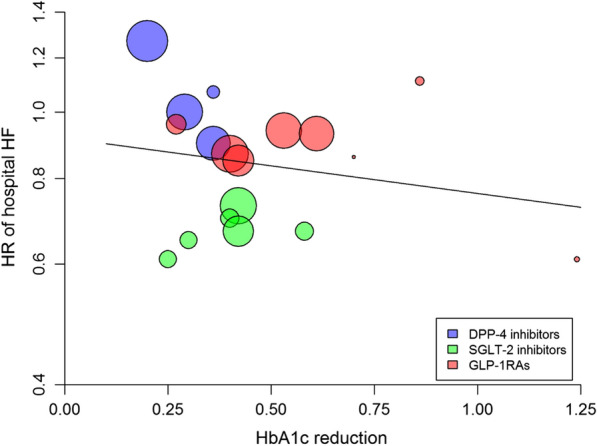
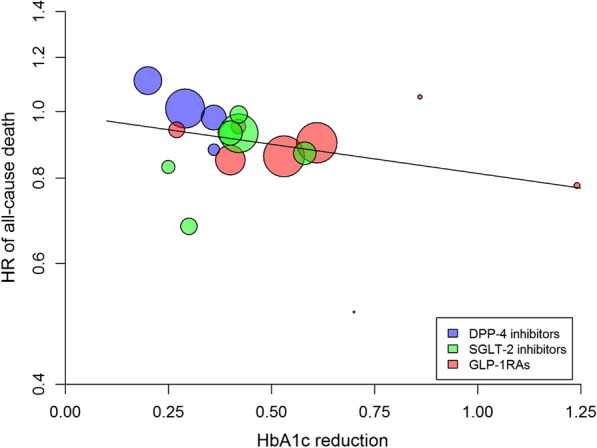
Background: Besides providing reassurance about cardiovascular (CV) safety of newer diabetes drugs, cardiovascular outcome trials (CVOTs) have also shown encouraging benefits on some CV endpoints. The contribution of the better glycemic control in the reduction of major cardiovascular events (MACE) remains an open question. The aim of this study is to evaluate the associations between the reduction of HbA1c and risk of MACE, MACE components, hospitalization for heart failure (HF) and all-cause death in CVOTs. Methods: An electronic search up to July 2021 was conducted to determine eligible trials. Systematic review identified eighteen CVOTs reporting prespecified CV outcomes. Pooled summary estimates and 95% confidence intervals (CI) were calculated according to the random effects model using the Paule-Mandel method; restricted maximum likelihood estimators were used to estimate model parameters in the metaregression. Results: The eighteen CVOTs evaluated 161,156 patients and included four trials with dipeptidyl-peptidase-4 inhibitors (DPP-4i), eight trials with glucagon-like peptide-1 receptor agonists (GLP-1RA) and six trials with sodium-glucose cotransporter-2 inhibitors (SGLT-2i). Random-effects model meta-analysis showed an association between treatment and risk of MACE (hazard ratio [HR] 0.90; 95% CI 0.86, 0.94, P < 0.001), with significant heterogeneity between studies (I 2 = 45.2%, Q statistic P = 0.040). In meta-regression, there was an association between the reduction in HbA1c at the end of the trial and the HR reduction for MACE (beta = − 0.298, P = 0.007), with significant heterogeneity (I 2 = 40%, Q statistic P = 0.04); this association was totally driven by the risk reduction of non-fatal stroke, which explained 100% of between-study variance (beta = − 0.531, R 2 = 100%), without heterogeneity (I 2 = 24%, Q statistic P = 0.206). There was no association between the reduction in HbA1c and the HR for heart failure or all-cause death. Conclusions: The reduction of HbA1c in eighteen CVOTs was significantly associated with reduction of non-fatal stroke, explaining all (R 2 = 100%) of the between-study variance. While the contribution of glucose lowering in some CV benefits of newer agents does not influence their indications for the patient with type 2 diabetes, it may hopefully facilitate their use.
Overview
The claims and statistics of this paper haven’t been checked yet.
Free: it reads the open-access text and checks the first 5 claims that cite a source we can check. Create a free account to check every claim.
Integrity signals
Registry
Cites
Statistics
Figures
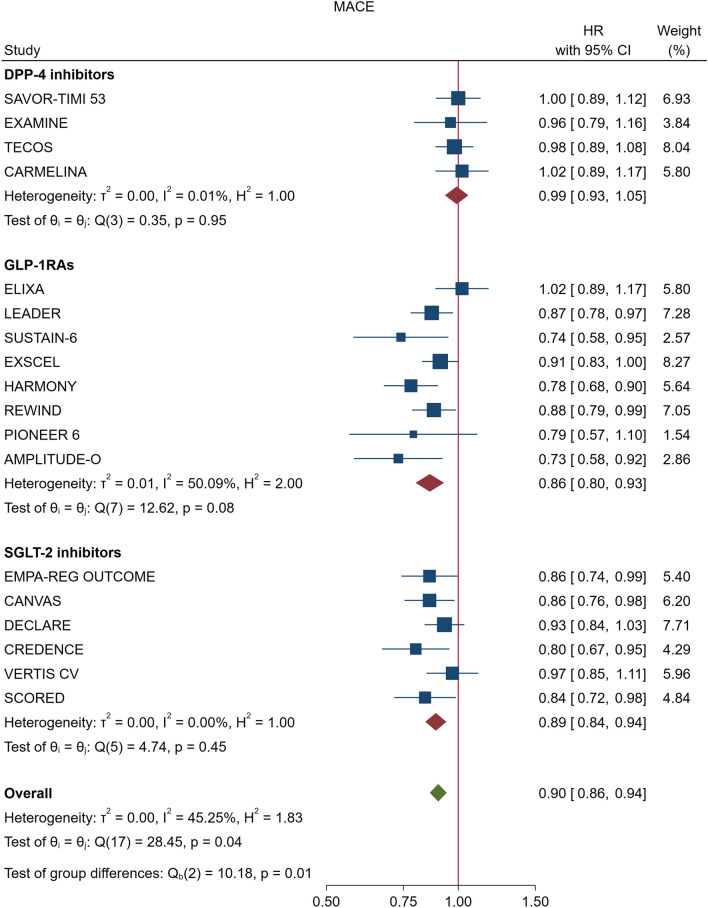
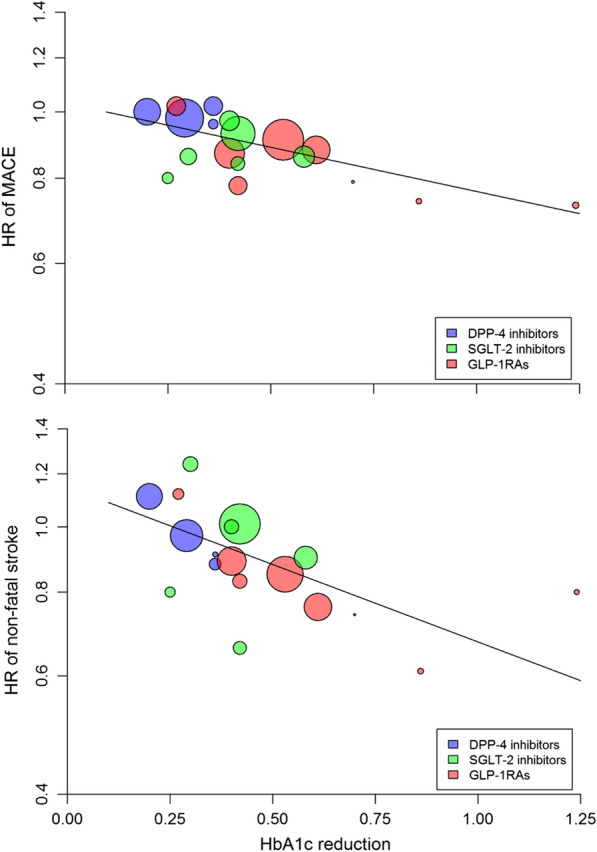
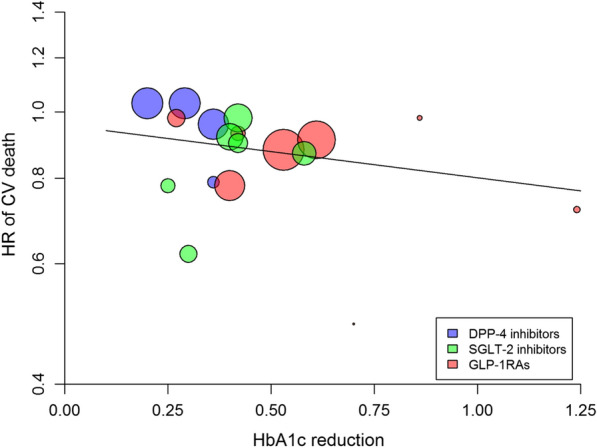
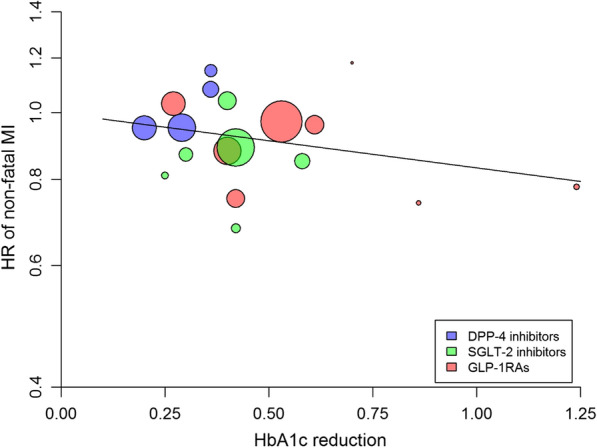
Verification
Claims the paper makes
The claims and statistics of this paper haven’t been checked yet.
Free: it reads the open-access text and checks the first 5 claims that cite a source we can check. Create a free account to check every claim.
Claims other papers make about this one
Each is checked against this paper’s own text: does it say what the citing paper says it does?
The source backs part of the claim, not all of it — or backs it for a different population, condition or comparison.
In the citing paper
“Furthermore, meta-regression analysis of GLP-1RA CVOTs demonstrates a linear relationship between HbA1c reduction and stroke reduction.60,61”
From Benefits of GLP-1 (Glucagon-Like Peptide 1) Receptor Agonists for Stroke Reduction in Type 2 Diabetes: A Call to Action for Neurologists (2022) · cites this paper as [61]
Experimental — accuracy not yet measuredIn the citing paper
“For every 1% reduction in HbA1c (e.g., from 8 to 7%), the risk of non-fatal stroke decreased by 41% [20].”
From Protection against stroke with glucagon-like peptide-1 receptor agonists: a comprehensive review of potential mechanisms (2022) · cites this paper as [20]
In the citing paper
“In a meta-regression analysis of 18 CVOTs, including 8 with GLP-1RAs, a significant association between HbA1c reduction and major adverse cardiovascular events (including cardiovascular mortality, non-fatal myocardial infarction [MI], heart failure, and non-fatal stroke) was shown; this finding was almost driven by the association between HbA1c reduction and non-fatal stroke.”
From Protection against stroke with glucagon-like peptide-1 receptor agonists: a comprehensive review of potential mechanisms (2022) · cites this paper as [20]
Self-check
Percentages, sums and reported differences re-computed from the paper’s own numbers.
The self-check needs the paper’s full text.
Citations
Cites
Bias in meta-analysis detected by a simple, graphical test
Egger, M., Smith, G. D., Schneider, M., & Minder, C. (1997) · BMJ · doi:10.1136/bmj.315.7109.629 · Cited by 56,722 · cited 1×
“Publication bias was assessed visually with funnel plots and with the Egger test [19].”
MethodThe Cochrane Collaboration's tool for assessing risk of bias in randomised trials
Higgins, J. P. T., Altman, D. G., Gotzsche, P. C., Juni, P., Moher, D., Oxman, A. D., Savovic, J., Schulz, K. F., Weeks, L., Sterne, J. A. C., et al. (2011) · BMJ · doi:10.1136/bmj.d5928 · Cited by 33,817
Liberati, A., Altman, D. G., Tetzlaff, J., Mulrow, C., Gøtzsche, P. C., Ioannidis, J. P. A., Clarke, M., Devereaux, P. J., Kleijnen, J., & Moher, D. (2009) · PLoS Medicine · doi:10.1371/journal.pmed.1000100 · Cited by 28,164 · cited 1×
“Search strategy and eligibility criteria We conducted this systematic review and meta-analysis based on Preferred Reporting Items for Systematic Reviews and Meta-analyses (PRISMA) guidelines [15].”
MethodCochrane Handbook for Systematic Reviews of Interventions: Cochrane Book Series
(2008) · doi:10.1002/9780470712184 · Cited by 25,048 · cited 1×
“The number of studies included in the meta-regression is higher than the minimum of 10 recommended by the Cochrane Collaboration Handbook [48]; moreover, all the CVOTs were powered to assess MACE outcome.”
MethodDermyshi, E., Wang, Y., Yan, C., Hong, W., Qiu, G., Gong, X., & Zhang, T. (2017) · Neonatology · doi:10.1159/000454668 · Cited by 24,451
Empagliflozin, Cardiovascular Outcomes, and Mortality in Type 2 Diabetes
Zinman, B., Wanner, C., Lachin, J. M., Fitchett, D., Bluhmki, E., Hantel, S., Mattheus, M., Devins, T., Johansen, O. E., Woerle, H. J., et al. (2015) · New England Journal of Medicine · doi:10.1056/nejmoa1504720 · Cited by 12,315
Liberati, A., Altman, D. G., Tetzlaff, J., Mulrow, C., Gøtzsche, P. C., Ioannidis, J. P. A., Clarke, M., Devereaux, P. J., Kleijnen, J., & Moher, D. (2009) · Annals of Internal Medicine · doi:10.7326/0003-4819-151-4-200908180-00136 · Cited by 10,349
Canagliflozin and Cardiovascular and Renal Events in Type 2 Diabetes
Neal, B., Perkovic, V., Mahaffey, K. W., de Zeeuw, D., Fulcher, G., Erondu, N., Shaw, W., Law, G., Desai, M., & Matthews, D. R. (2017) · New England Journal of Medicine · doi:10.1056/nejmoa1611925 · Cited by 7,830
Liraglutide and Cardiovascular Outcomes in Type 2 Diabetes
Marso, S. P., Daniels, G. H., Brown-Frandsen, K., Kristensen, P., Mann, J. F. E., Nauck, M. A., Nissen, S. E., Pocock, S., Poulter, N. R., Ravn, L. S., et al. (2016) · New England Journal of Medicine · doi:10.1056/nejmoa1603827 · Cited by 7,629
Research works printed but not linked: 1
- Deeks JJ, Higgins JPT, Altman DG; the Cochrane Statistical Methods Group. Cochrane Handbook for Systematic Reviews of interventions. Version 6.1, 2020. Chapter 10: Analysing data and undertaking meta-analyses. Specify characteristics in advance. https://training.cochrane.org/handbook/current/chapter-10#section-10-11-4. Accessed 30 July 2021
Cited by
Giugliano, D., Longo, M., Signoriello, S., Maiorino, M. I., Solerte, B., Chiodini, P., & Esposito, K. (2022) · Cardiovascular Diabetology · doi:10.1186/s12933-022-01474-z · Cited by 153
“Although past meta-analyses reported substantial reductions in MACE with DPP-4 inhibitors [23], their conclusions were based on studies with small sample sizes and limited numbers of cardiovascular events, which have not been confirmed by the four CVOTs specifically designed to assess the CV safety of DPP-4 inhibitors.”
ResultSelf-citationWilson, S. M., Mone, P., Kansakar, U., Jankauskas, S. S., Donkor, K., Adebayo, A., Varzideh, F., Eacobacci, M., Gambardella, J., Lombardi, A., et al. (2022) · Cardiovascular Diabetology · doi:10.1186/s12933-022-01460-5 · Cited by 153
Cardiovascular Considerations After Cancer Therapy
Blaes, A. H., Nohria, A., Armenian, S. H., Bergom, C. R., Thavendiranathan, P., Barac, A., Sanchez‐Petitto, G., Desai, S., Zullig, L. L., Morgans, A. K., et al. (2025) · JACC CardioOncology · doi:10.1016/j.jaccao.2024.06.006 · Cited by 100
Glycaemic control is still central in the hierarchy of priorities in type 2 diabetes management
Khunti, K., Zaccardi, F., Amod, A., Aroda, V. R., Montoya, P. A., Colagiuri, S., Mohan, V., & Chan, J. C. N. (2024) · Diabetologia · doi:10.1007/s00125-024-06254-w · Cited by 93
Goldenberg, R. M., Cheng, A. Y. Y., Fitzpatrick, T., Gilbert, J. D., Verma, S., & Hopyan, J. J. (2022) · Stroke · doi:10.1161/strokeaha.121.038151 · Cited by 82
Vergès, B., Aboyans, V., Angoulvant, D., Boutouyrie, P., Cariou, B., Hyafil, F., Mohammedi, K., & Amarenco, P. (2022) · Cardiovascular Diabetology · doi:10.1186/s12933-022-01686-3 · Cited by 72
“, from 8 to 7%), the risk of non-fatal stroke decreased by 41% [20].”
BackgroundGLP-1 agonist to treat obesity and prevent cardiovascular disease: what have we achieved so far
Pedrosa, M. R., Franco, D. R., Gieremek, H. W., Vidal, C. M., Bronzeri, F., de Cassia Rocha, A., de Carvalho Cara, L. G., Fogo, S. L., & Eliaschewitz, F. G. (2022) · Current Atherosclerosis Reports · doi:10.1007/s11883-022-01062-2 · Cited by 68
Caruso, P., Maiorino, M. I., Longo, M., Porcellini, C., Matrone, R., Selvaggio, L. D., Gicchino, M., Carbone, C., Scappaticcio, L., Bellastella, G., et al. (2024) · JAMA Network Open · doi:10.1001/jamanetworkopen.2024.1545 · Cited by 67
Self-citationWallach, J. D., Yoon, S., Doernberg, H., Glick, L. R., Ciani, O., Taylor, R. S., Mooghali, M., Ramachandran, R., & Ross, J. S. (2024) · JAMA · doi:10.1001/jama.2024.4175 · Cited by 63
Bouchi, R., Kondo, T., Ohta, Y., Goto, A., Tanaka, D., Satoh, H., Yabe, D., Nishimura, R., Harada, N., Kamiya, H., et al. (2022) · Journal of Diabetes Investigation · doi:10.1111/jdi.13960 · Cited by 60
Wei, J., Yang, B., Wang, R., Ye, H., Wang, Y., Wang, L., & Zhang, X. (2022) · Frontiers in Endocrinology · doi:10.3389/fendo.2022.1007980 · Cited by 44
Kunutsor, S. K., Zaccardi, F., Balasubramanian, V. G., Gillies, C., Aroda, V. R., Seidu, S., Davies, M. J., & Khunti, K. (2024) · Diabetes Obesity and Metabolism · doi:10.1111/dom.15500 · Cited by 48
“In a recent analysis of 18 placebo-controlled CVOTs of newer glucose-lowering agents, Maiorino and colleagues 17 evaluated the associations between HbA1c reductions and the risk of a number of outcomes, namely MACE, MACE components, HHF and all-cause mortality.”
BackgroundResultInfluentialNewer glucose‐lowering drugs reduce the risk of late‐onset seizure and epilepsy: A meta‐analysis
Sindhu, U., Sharma, A., Zawar, I., & Punia, V. (2024) · Epilepsia Open · doi:10.1002/epi4.13091 · Cited by 36
Glycemic Control and the Heart: The Tale of Diabetic Cardiomyopathy Continues
Longo, M., Scappaticcio, L., Cirillo, P., Maio, A., Carotenuto, R. M., Maiorino, M. I., Bellastella, G., & Esposito, K. (2022) · Biomolecules · doi:10.3390/biom12020272 · Cited by 34
“However, a recent meta-analysis of the eight CVOTs with GLP-1RAs so far conducted, including 60,080 participants, demonstrated that GLP-1RAs reduced the risk of MACE by 14%, the risk of cardiovascular death by 13%, and the risk of hospitalization for HF by 10% [99].”
BackgroundSelf-citationChook, C. Y. B., Cheung, Y. M., Ma, K. Y., Leung, F. P., Zhu, H., Niu, Q. J., Wong, W. T., & Chen, Z. (2023) · Frontiers in Nutrition · doi:10.3389/fnut.2023.1060226 · Cited by 32
Khunti, K., & Aroda, V. R. (2022) · Diabetes Care · doi:10.2337/dci21-0064 · Cited by 27
Hasebe, M., Yoshiji, S., Keidai, Y., Minamino, H., Murakami, T., Tanaka, D., Fujita, Y., Harada, N., Hamasaki, A., & Inagaki, N. (2023) · Cardiovascular Diabetology · doi:10.1186/s12933-023-01773-z · Cited by 27
“Glycemic control, bodyweight reduction, and major adverse cardiovascular events In our study, antihyperglycemic therapies reduced MACE risk by 9%, which is almost identical to the MACE risk reduction reported by the previous meta-analyses of cardiovascular outcome trials with intensive glycemic control [54] and those…”
ResultBouchi, R., Kondo, T., Ohta, Y., Goto, A., Tanaka, D., Satoh, H., Yabe, D., Nishimura, R., Harada, N., Kamiya, H., et al. (2022) · Diabetology International · doi:10.1007/s13340-022-00605-x · Cited by 23
“overseas due to the paucity of data from Japan on this issue, these comorbidities appear to be a valid indication for the use of SGLT2 inhibitors and GLP-1 receptor agonists, with the caveat that the reduction seen in cardiovascular events in these trials may be accounted for in part by that in HbA1c with these agents…”
BackgroundBouchi, R., Kondo, T., Ohta, Y., Goto, A., Tanaka, D., Satoh, H., Yabe, D., Nishimura, R., Harada, N., Kamiya, H., et al. (2024) · Journal of Diabetes Investigation · doi:10.1111/jdi.14202 · Cited by 22
“These comorbidities appear to be a valid indication for the use of SGLT2 inhibitors and GLP-1 receptor agonists, with the caveat that the reduction seen in cardiovascular events in these trials might be accounted for in part by that in HbA1c 66 .”
BackgroundInfluentialBouchi, R., Kondo, T., Ohta, Y., Goto, A., Tanaka, D., Satoh, H., Yabe, D., Nishimura, R., Harada, N., Kamiya, H., et al. (2024) · Diabetology International · doi:10.1007/s13340-024-00723-8 · Cited by 21
“These comorbidities appear to be a valid indication for the use of SGLT2 inhibitors and GLP-1 receptor agonists, with the caveat that the reduction seen in cardiovascular events in these trials may be accounted for in part by that in HbA1c [66].”
Longo, M., Meo, I. D., Caruso, P., Muscio, M. F., Scappaticcio, L., Maio, A., Maiorino, M. I., Bellastella, G., Signoriello, G., Knop, F. K., et al. (2023) · Diabetes Research and Clinical Practice · doi:10.1016/j.diabres.2023.110688 · Cited by 20
Self-citationWong, H. J., Lin, N., Teo, Y. H., Yeo, B. S. Y., Toh, K. Z. X., Teo, Y. N., Chan, M. Y., Yeo, L. L. L., Poh, K. K., Kong, W. K. F., et al. (2024) · Diabetes Obesity and Metabolism · doi:10.1111/dom.16136 · Cited by 20
“35,36 Endogenous hyperinsulinemia is known to cause weight gain and obesity, drivers of insulin resistance and precursors to the development of T2DM.”
Intragastric Balloon Significantly Improves Metabolic Parameters at 6 Months: a Meta-Analysis
Shah, R. H., Vedantam, S., Kumar, S., Amin, S., Pearlman, M. Y., & Bhalla, S. (2023) · Obesity Surgery · doi:10.1007/s11695-022-06437-7 · Cited by 19
Role of Intraoperative Neurophysiological Monitoring in Preventing Stroke After Cardiac Surgery
Fleseriu, C. M., Sultan, I. S., Brown, J. A., Mina, A. I., Frenchman, J. A., Crammond, D. J., Balzer, J. R., Anetakis, K., Subramaniam, K., Shandal, V., et al. (2023) · The Annals of Thoracic Surgery · doi:10.1016/j.athoracsur.2023.01.004 · Cited by 18
Hao, Z., Xiao, H., Shao, H., & Feng, H. (2022) · Journal of Diabetes Research · doi:10.1155/2022/4126995 · Cited by 17
“The safety outcomes of the study were consistent with those of previous studies [42].”
ResultDo Statins Counteract the Effect of Antidiabetic Drugs? Results of the SCEAD Study
Tarım, B. A., Fıcı, F., Tengiz, İ., Avunduk, S., Ozcan, Y., Faikoğlu, G., Arı, E., Robles, N. R., & Grassi, G. M. (2023) · Yonsei Medical Journal · doi:10.3349/ymj.2022.0287 · Cited by 17
“Indeed, lowering low-density lipoproteins-cholesterol (LDL-C) by 1–3 mmol/L and glycated hemoglobin A1c (HbA1c) by 1% is associated with 21%–50% and 26% risk reductions in major cardiovascular events, respectively.(6-9) However, several studies and meta-analyses(10-13) have shown that statins may have a pro-diabetogen…”
BackgroundShuja, S. H., Shuja, M. H., Shaukat, A., Hannat, R., Ahmed, I., Adam, S., Abdelkhalek, A., Changez, M. I. K., Ullah, I., Ahmed, R., et al. (2025) · The American Journal of Cardiology · doi:10.1016/j.amjcard.2025.09.039 · Cited by 16
Pleiotropic effects of GLP‐1 receptor agonists on peripheral artery disease: Is there any hope?
Caruso, P., Maiorino, M. I., Bellastella, G., Esposito, K., & Giugliano, D. (2023) · Diabetes/Metabolism Research and Reviews · doi:10.1002/dmrr.3627 · Cited by 13
“Cardiovascular outcome trials (CVOTs) involving GLP‐1 receptor agonists (GLP‐1RAs) have conquered the attention of scientists and clinicians with the unexpected promise of cardio‐renal benefits beyond their cardiovascular safety.(1) In addition to their glucose‐lowering effect, GLP‐1RAs are associated with weight loss…”
BackgroundSelf-citationGao, Y., Shi, R., Li, Y., Guo, Y., Xu, H., Shi, K., & Yang, Z. (2023) · Cardiovascular Diabetology · doi:10.1186/s12933-023-01785-9 · Cited by 12
Scheen, A. J. (2023) · Diabetes & Metabolism · doi:10.1016/j.diabet.2023.101508 · Cited by 12
Rajagopal, D., Rashid, S. A., Prasad, M., & Fareed, M. (2024) · Cureus · doi:10.7759/cureus.65910 · Cited by 12
“These drugs are thought to lower the risk of stroke by enhancing neuroprotection and diminishing cerebral atherosclerosis [26].”
BackgroundStroke in the Patient With Type 2 Diabetes
Jerkins, T. W., & Bell, D. S. H. (2025) · Endocrine Practice · doi:10.1016/j.eprac.2025.01.010 · Cited by 11
Caruso, P., Angelino, S., Matrone, R., Scappaticcio, L., Longo, M., Volatile, A., Petrizzo, M., Pontillo, A., Caputo, M., Carbone, C., et al. (2025) · Diabetes Obesity and Metabolism · doi:10.1111/dom.16594 · Cited by 11
“8 Moreover, evidence of GLP-1RAs benefits on peripheral vascular perfusion is emerging.”
Self-citationThree new categories of hypoglycaemic agents and various cardiovascular diseases: A meta‐analysis
Liao, X., Li, W., Peng, Z., Yu, H., & Tan, J. (2021) · Journal of Clinical Pharmacy and Therapeutics · doi:10.1111/jcpt.13588 · Cited by 10
Guo, X., Sang, C., Tang, R., Jiang, C., Li, S., Liu, N., Long, D., Du, X., Dong, J., & Ma, C. (2023) · Diabetes Obesity and Metabolism · doi:10.1111/dom.15043 · Cited by 10
“Most studies were conducted in patients with T2DM, therefore, cardiovascular protection may be attributable to good control of blood glucose.(28) Moreover, GLP-1RAs induce weight loss and the reduction of visceral adipose tissue.”
BackgroundDiallo, A., Villard, O., Carlos‐Bolumbu, M., Duc, P., & Galtier, F. (2025) · Diabetes Obesity and Metabolism · doi:10.1111/dom.16561 · Cited by 9
Li, H. (2021) · Journal of Diabetes Investigation · doi:10.1111/jdi.13726 · Cited by 8
Lim, S. J., Moon, J.-Y., Jeong, K. H., Ko, G. J., Choi, Y., & Hwang, H. S. (2024) · Journal of Diabetes · doi:10.1111/1753-0407.13601 · Cited by 7
Pharmacological Management of Diabesity: Current and Emerging Therapies
Galasso, M., Caporusso, M., Volatile, A., Verde, L., Esposito, K., Giorgino, F., Perrini, S., Colao, A., Barrea, L., & Muscogiuri, G. (2026) · Current Obesity Reports · doi:10.1007/s13679-025-00681-5 · Cited by 6
“A meta-analysis of 18 trials involving 161,156 patients with T2DM demonstrated that SGLT2i therapy significantly improved glycemic control, resulting in a mean reduction in HbA1c of − 0.39% [ 26].”
InfluentialSelf-citationChen, Y., Loucks, A., Sullivan, S. D., Pearson, S. D., Kent, D., & Yeung, K. (2023) · Value in Health · doi:10.1016/j.jval.2023.02.004 · Cited by 6
Tang, T., Guo, M., Yu, H., Huang, L., Li, S., Zhang, Y., & Lou, Y. (2025) · Diabetes Research and Clinical Practice · doi:10.1016/j.diabres.2025.112320 · Cited by 5
The Role of Nondiabetic Hyperglycemia in Critically Ill Patients with Acute Ischemic Stroke
Shih, H.-S., Wang, W., Yang, L., Chang, S., Chen, P., & Jhou, H. (2022) · Journal of Clinical Medicine · doi:10.3390/jcm11175116 · Cited by 5
“A similar current was also noted in other cardiovascular diseases, such as acute coronary syndrome [39,40] and small-vessel disease, especially non-fatal lacunar stroke [41,42], which showed long-term protective effects and even regenerative potential with strict glycemic control.”
ResultAshraf, M. T., Ali, A., Ahmed, N., Khan, M. K., & Usman, M. (2024) · American Journal of Therapeutics · doi:10.1097/mjt.0000000000001689 · Cited by 4
Zareini, B., Sørensen, K. K., Pedersen‐Bjergaard, U., Fosbøl, E. L., Køber, L., & Torp-Pedersen, C. T. (2024) · Journal of Diabetes · doi:10.1111/1753-0407.13560 · Cited by 4
“This was also seen in the meta-regression analyses by Maior-ino et al. 12 The lack of association between HbA1c reduction and the risk of nonfatal myocardial infarction is not entirely understood and needs further investigation.”
InfluentialTirzepatide for the Treatment of Heart Failure in Type 2 Diabetes Mellitus: (SUR)PASS, or Not?
Patoulias, D., Dimosiari, A., & Fragakis, N. (2023) · Future Cardiology · doi:10.2217/fca-2022-0112 · Cited by 4
Diallo, A., Villard, O., Carlos‐Bolumbu, M., Renard, É., & Galtier, F. (2023) · Diabetes Obesity and Metabolism · doi:10.1111/dom.15335 · Cited by 4
Jacob, S., Eckel, R. H., & Krentz, A. J. (2025) · Cardiovascular Endocrinology & Metabolism · doi:10.1097/xce.0000000000000346 · Cited by 4
Cardiovascular Effects of Diabetes Mellitus: A Review of Pathophysiology and Management
Elsaka, O. (2024) · Journal of Clinical and Preventive Cardiology · doi:10.4103/jcpc.jcpc_8_24 · Cited by 3
Lu, Y., Zhang, R., Yang, J., Liu, D., Wu, Q., Long, X., Cheng, D., Guo, J., Li, Q., Zhang, Y., et al. (2025) · BMJ Open · doi:10.1136/bmjopen-2025-106756 · Cited by 3
Silverii, G. A., Velardi, V., Marinelli, C., Lax, A., Monami, M., & Mannucci, E. (2026) · Diabetes Obesity and Metabolism · doi:10.1111/dom.71128 · Cited by 3
Open questions on basal insulin therapy in T2D: a Delphi consensus
Delphi Board, Alberto, A., Roberto, A., Angelo, A., Baggiore, C., cesare, B., Bonadonna, R. C., Giuseppe, C. S. M., Andrea, D. P., Lorenzo, D. C., et al. (2024) · Acta Diabetologica · doi:10.1007/s00592-024-02285-2 · Cited by 3
“This statement is largely supported by current literature on the beneficial effects of reducing HbA1c on cardiovascular risk [14–16], including the more recent evidence on the role of glucose control in mediating the benefits of innovative drugs in the cardiovascular outcome trials (CVOTs) [17].”
BackgroundSelf-citationMijajlovic, M. D., Bornstein, N. M., & Aleksić, V. (2025) · Therapeutic Advances in Neurological Disorders · doi:10.1177/17562864251326769 · Cited by 4
“62 These findings suggest that GLP-1RA agents, especially those with longer half-lives, might be particularly effective in preventing major adverse cardiovascular events and possibly reducing stroke risk.”
Nguyen, T. T. D., Chen, H., Lin, H., Ou, H., & Wang, C. (2025) · Diabetes Obesity and Metabolism · doi:10.1111/dom.16215 · Cited by 2
“41 Specifically, HbA1c reduction significantly lowers the risk of non-fatal strokes but does not have a significant impact on non-fatal myocardial infarction or hospitalizations for heart failure.”
Calliari, L. E., Sepúlveda, Á. C., Coronel-Restrepo, N., Kabakian, L., Lamounier, R. N., Picasso, E., PROIETTI, A. E., Rincón, A. R., & Yepez-Rodríguez, A. E. (2025) · Diabetology & Metabolic Syndrome · doi:10.1186/s13098-025-01702-y · Cited by 2
“Improving glycemic control is also an essential component of interventions to reduce the risk of cardiovascular events and other complications related to diabetes [27, 28].”
Zhao, L., Meng, J., Bai, X., Zhang, D., Yang, X., Yu, Y., Cai, G., & Liu, X. (2024) · European journal of medical research · doi:10.1186/s40001-024-01955-9 · Cited by 2
“3 Forest plot for the analysis of the effect of DDP-4i on TNF-alpha concentrations of TNF-alpha when comparing DPP-4i with other active agents in T2DM [33].”
Nascimento, T., Espírito‐Santo, M., Gonçalves, A., Pinto, E. A. M., Sousa‐Coelho, A. L. D., & Estêvão, M. D. (2024) · Diabetology · doi:10.3390/diabetology5030024 · Cited by 2
“Consequently, attaining optimal glycaemic control is a current recommendation in the individualized treatment to all persons with T2DM [56].”
BackgroundBao, Y., Han, L., Du, L., & Ji, L. (2024) · Obesity · doi:10.1002/oby.24030 · Cited by 1
Ohara, M., Yokoyama, H., Seino, H., Fujikawa, T., Kohata, Y., Takahashi, N., Irie, S., Terasaki, M., Mori, Y., Fukui, T., et al. (2025) · Diabetology & Metabolic Syndrome · doi:10.1186/s13098-025-01691-y · Cited by 1
Li, L., Cui, S., Chow, J., Wu, Y., Yu, Q., Zhong, Y., Wang, Z., Liu, H., Ali, S. S. A., Hu, X., et al. (2026) · Journal of Evidence-Based Medicine · doi:10.1111/jebm.70128 · Cited by 1
Caro, I., Sargurupremraj, M., Yang, C., Akinleye, C. A., Trégouët, D., Akinyemi, R., Shigemizu, D., Coker, M. M., Akinyemi, J. O., Tiwari, H. K., et al. (2026) · Neurology Genetics · doi:10.1212/nxg.0000000000200425 · Cited by 1
“Evidence suggests that lower HbA1c levels correlate with reduced stroke risk, 5,46 implying that improved glycemic control may be a key protective pathway.”
Prehospital Care of Coronary Artery Disease and Its Major Risk Factors in Geropsychiatric Inpatients
Manu, P., Grudnikoff, E., Constantin, D.-A., Rogozea, L. M., Rucsanda, A. I., Leaşu, F., & Dinu, E. A. (2022) · American Journal of Therapeutics · doi:10.1097/mjt.0000000000001527
Uno scompenso per due, col terzo incomodo
Fadini, G. P. (2022) · il Diabete · doi:10.30682/ildia2203b
Zhou, L., Zhang, Y., Huang, Z., Xu, T., & Li, Y. (2023) · Research Square · doi:10.21203/rs.3.rs-3179827/v1
AVC, nouveaux traitements : place des agonistes du récepteur du GLP-1
Vergès, B. L. (2024) · Médecine des Maladies Métaboliques · doi:10.1016/j.mmm.2024.07.005
Zheng, Z., Zhang, R., Shi, S., He, J., Feng, L., Guan, C. D., Song, L., Zhu, C., Yin, D., Li, J., et al. (2024) · Diabetes Research and Clinical Practice · doi:10.1016/j.diabres.2024.111866
Wu, Q., He, X., Tong, X., Li, Y., & Wang, X. (2024) · medRxiv · doi:10.1101/2024.11.05.24316797
Aberle, J., Blüher, M., Laudes, M., Merkel, M., & Sandow, P. (2024) · Diabetologie und Stoffwechsel · doi:10.1055/a-2435-6818
“Meta-Analysen von vier Placebo-kontrollierten Studien zeigen, dass die Wirkstoffe das Risiko für MACE nicht beeinflussen [68, 69].”
Practices and Insights for Diabetes Mellitus Testing in Sri Lanka, Singapore and the Philippines.
Siriwardhana, I. D., Guan, T. J., Pineda-Cortel, M. R., Vasikaran, S. D., & Banerjee, M. (2025) · PubMed Central
Sun, F., Zhang, M., Pan, Q., Shen, P., Sun, Y., Lin, H., Zhan, S., & Guo, L. (2025) · Diabetes Obesity and Metabolism · doi:10.1111/dom.70237
“17 20 Obesity is a core driver of insulin resistance and beta-cell dysfunction and presents a major risk factor for T2D.”
Zhao, L., Meng, J., Bai, X., Zhang, D., Yang, X., Yang, Y., Cai, G., & Liu, X. (2024) · Figshare · doi:10.6084/m9.figshare.26289566
Zhao, L., Meng, J., Bai, X., Zhang, D., Yang, X., Yang, Y., Cai, G., & Liu, X. (2024) · Figshare · doi:10.6084/m9.figshare.26289106
Hasebe, M., Yoshiji, S., Keidai, Y., Minamino, H., Murakami, T., Tanaka, D., Fujita, Y., Harada, N., Hamasaki, A., & Inagaki, N. (2024) · Figshare · doi:10.6084/m9.figshare.26575994
Giugliano, D., Longo, M., Signoriello, S., Maiorino, M. I., Solerte, B., Chiodini, P., & Esposito, K. (2022) · Figshare · doi:10.6084/m9.figshare.19373457
Self-citationDual GIP/GLP-1 Receptor Agonists for Type 2 Diabetes: Efficacy and Metabolic Benefits
Nsubuga, E. (2026) · International Academic Association Journal of Scientific Research. · doi:10.59298/iaajsr/2026/1315564
Evaluation of Recurrence of Ischemic Heart Disease According to the Type of Stent Implanted
Rincon, S. E., Rodríguez, R. M. D. M. C., Torres, M. V. G., Castellanos, D. S. G., & Matiz, S. F. (2026) · Repositorio Institucional Universidad El Bosque
Association between glucagon-like peptide-1 receptor agonist use and ischemic stroke severity
Chen, H. A., Lakhani, D. A., Yaddanapudi, S., Latifikhereshky, S., Rai, P., Kakadiya, J., Malhotra, A., Colasurdo, M., & Gandhi, D. (2026) · Journal of the Neurological Sciences · doi:10.1016/j.jns.2026.126106
GLP-1 Receptor Agonists, Stroke, and Cognitive Outcomes: Systematic Review and Meta-RegressionPreprint
Danielli, M., Sibal, R., Collett, G., Awan, H., Sharma, C., Steckelmacher, J., Kennedy, C., & Gupta, A. K. (2026) · medRxiv · doi:10.64898/2026.09.18.26363449
Chook, C. Y. B., Cheung, Y. M., Ma, K. Y., Leung, F. P., Zhu, H., Niu, Q. J., Wong, W. T., & Chen, Z.-Y. (2023) · doi:10.3389/fnut.2023.1060226.s002
Metadata
- Authors
- Maiorino, M. I., Longo, M., Scappaticcio, L., Bellastella, G., Chiodini, P., Esposito, K., & Giugliano, D.
- Affiliations
- University of Campania "Luigi Vanvitelli" (IT)
- Corresponding author
- Maiorino, Maria Ida
- ORCID
- Venue
- Cardiovascular Diabetology
- Published
- 2021-10-18
- Volume
- 20
- Issue
- 1
- Pages
- 210-210
- ISSN
- 1475-2840 (ISSN-L)
- PMC
- PMC8522255
- OpenAlex
- W3205244879
- Cited by
- 72
- References
- 49
- Citations by year
- 2026: 5 · 2025: 12 · 2024: 24 · 2023: 14 · 2022: 15 · 2021: 2
- FWCI
- 2.11
- Type
- journal article
- Language
- en
- Open access
- gold
- doi.org
- Licence
- cc-by
- creativecommons.org/licenses/by/4.0 (tdm)
- creativecommons.org/licenses/by/4.0 (vor)
- Locations
- Cardiovascular Diabetology (publishedVersion, cc-by)
- PubMed Central (publishedVersion, cc-by)
- PubMed (publishedVersion)
- DOAJ (DOAJ: Directory of Open Access Journals) (submittedVersion, cc-by-sa)
- Archivio Istituzionale della Ricerca - Università degli Studi della Campania "Luigi Vanvitelli" (submittedVersion)
- Topics
- Health Sciences › Medicine › Endocrinology, Diabetes and Metabolism › Diabetes Treatment and Management
- Health Sciences › Medicine › Endocrinology, Diabetes and Metabolism › Diabetes, Cardiovascular Risks, and Lipoproteins
- Health Sciences › Medicine › Cardiology and Cardiovascular Medicine › Heart Failure Treatment and Management
- Keywords
- glycemic control, HbA1c reduction, major adverse cardiovascular events, cardiovascular outcome trials, DPP-4 inhibitors, GLP-1 receptor agonists, SGLT2 inhibitors, type 2 diabetes, non-fatal stroke, heart failure hospitalization, all-cause mortality, study heterogeneity
- MeSH terms
- Glucagon-Like Peptide-1 Receptor, Sodium-Glucose Transporter 2 Inhibitors, Glycemic Control, Glucagon-Like Peptide-1 Receptor Agonists, Aged, Blood Glucose, Cardiovascular Diseases, Cause of Death, Diabetes Mellitus, Type 2, Female, Glycated Hemoglobin, Hospitalization, Humans, Male, Middle Aged, Risk Factors, Time Factors, Biomarkers, Randomized Controlled Trials as Topic, Treatment Outcome, Risk Assessment, Incretins, Dipeptidyl-Peptidase IV Inhibitors, Protective Factors
About these checks
Registry, retraction, Cites and statistics results are computed, not judged, with one exception: a printed reference that no index lists is read once by a model before it counts as a citation error. Claims are extracted by a model and kept only when their quote appears verbatim in the text; each cited source is then checked, with a model’s help, for whether it says what the claim relies on. Those verdicts can be wrong — read the claim’s quote and the cited source before relying on one.
Statistics and arithmetic are recomputed, not judged.
Confidence bands are shown only for fields calibrated on our annotated test set. None is calibrated yet, so no band is shown.
What counts as a claim ›How we measure confidence ›How we check this ›
Are you an author, or do you see a problem with this page? Request a review
Data sources
Bibliographic data: Semantic Scholar, OpenAlex, Crossref.
Contains information from the Semantic Scholar Academic Graph Datasets, made available under the ODC Attribution License (ODC-BY 1.0).
Semantic Scholar’s data is described in: Kinney, R., et al. (2023). The Semantic Scholar Open Data Platform. arXiv:2301.10140.
