

Improvement of glycemic control and reduction of major cardiovascular events in 18 cardiovascular outcome trials: an updated meta-regression
Open accessThe DOI matches its Crossref record; 49 of the 49 references it cites were found in a registry or an index.
Abstract
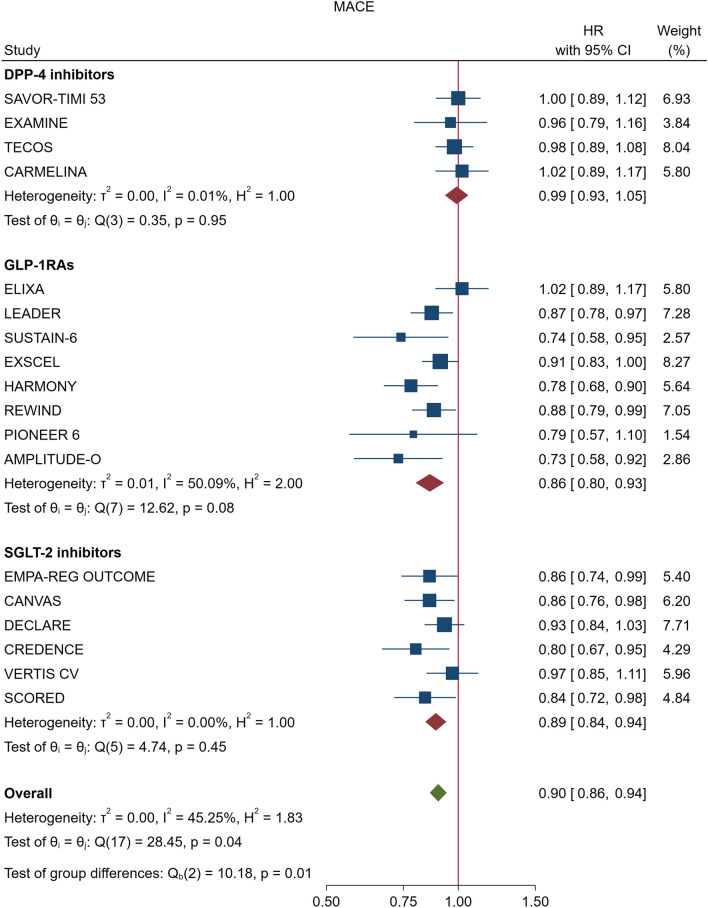
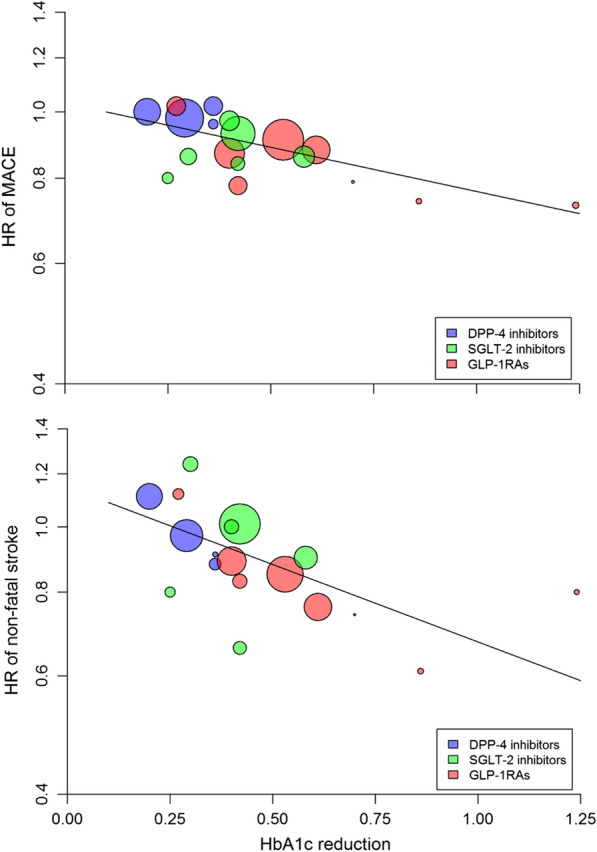
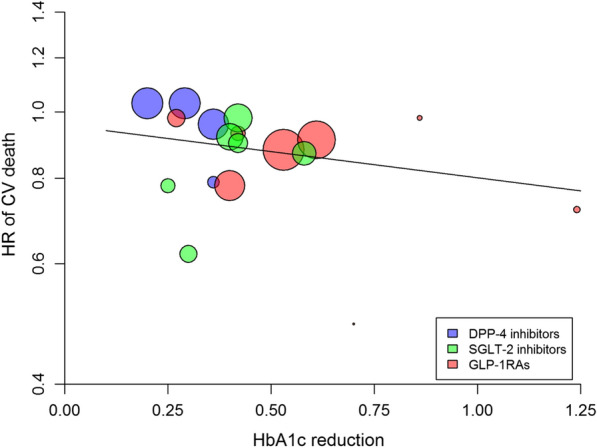
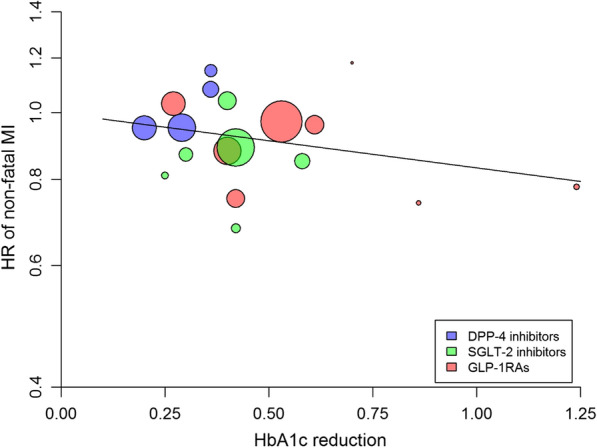
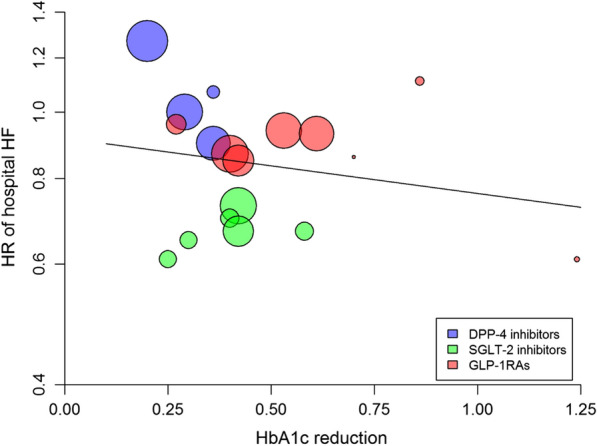
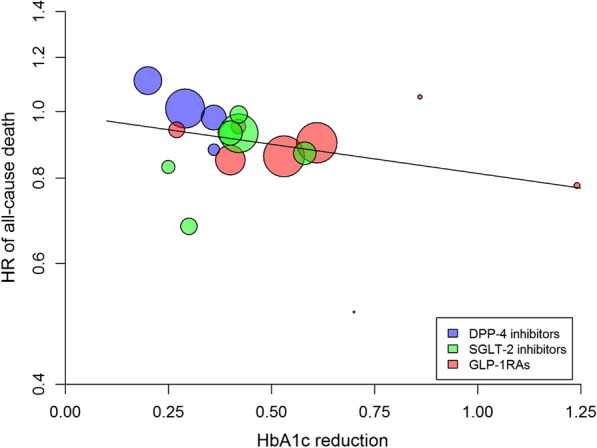
Background: Besides providing reassurance about cardiovascular (CV) safety of newer diabetes drugs, cardiovascular outcome trials (CVOTs) have also shown encouraging benefits on some CV endpoints. The contribution of the better glycemic control in the reduction of major cardiovascular events (MACE) remains an open question. The aim of this study is to evaluate the associations between the reduction of HbA1c and risk of MACE, MACE components, hospitalization for heart failure (HF) and all-cause death in CVOTs. Methods: An electronic search up to July 2021 was conducted to determine eligible trials. Systematic review identified eighteen CVOTs reporting prespecified CV outcomes. Pooled summary estimates and 95% confidence intervals (CI) were calculated according to the random effects model using the Paule-Mandel method; restricted maximum likelihood estimators were used to estimate model parameters in the metaregression. Results: The eighteen CVOTs evaluated 161,156 patients and included four trials with dipeptidyl-peptidase-4 inhibitors (DPP-4i), eight trials with glucagon-like peptide-1 receptor agonists (GLP-1RA) and six trials with sodium-glucose cotransporter-2 inhibitors (SGLT-2i). Random-effects model meta-analysis showed an association between treatment and risk of MACE (hazard ratio [HR] 0.90; 95% CI 0.86, 0.94, P < 0.001), with significant heterogeneity between studies (I 2 = 45.2%, Q statistic P = 0.040). In meta-regression, there was an association between the reduction in HbA1c at the end of the trial and the HR reduction for MACE (beta = − 0.298, P = 0.007), with significant heterogeneity (I 2 = 40%, Q statistic P = 0.04); this association was totally driven by the risk reduction of non-fatal stroke, which explained 100% of between-study variance (beta = − 0.531, R 2 = 100%), without heterogeneity (I 2 = 24%, Q statistic P = 0.206). There was no association between the reduction in HbA1c and the HR for heart failure or all-cause death. Conclusions: The reduction of HbA1c in eighteen CVOTs was significantly associated with reduction of non-fatal stroke, explaining all (R 2 = 100%) of the between-study variance. While the contribution of glucose lowering in some CV benefits of newer agents does not influence their indications for the patient with type 2 diabetes, it may hopefully facilitate their use.
Overview
The claims and statistics of this paper haven’t been checked yet.
Free: it reads the open-access text and checks the first 5 claims that cite a source we can check. Create a free account to check every claim.
Integrity signals
Registry
Cites
Statistics
Figures
Verification
Claims the paper makes
The claims and statistics of this paper haven’t been checked yet.
Free: it reads the open-access text and checks the first 5 claims that cite a source we can check. Create a free account to check every claim.
Claims other papers make about this one
Each is checked against this paper’s own text: does it say what the citing paper says it does?
The source backs part of the claim, not all of it — or backs it for a different population, condition or comparison.
In the citing paper
“Furthermore, meta-regression analysis of GLP-1RA CVOTs demonstrates a linear relationship between HbA1c reduction and stroke reduction.60,61”
From Benefits of GLP-1 (Glucagon-Like Peptide 1) Receptor Agonists for Stroke Reduction in Type 2 Diabetes: A Call to Action for Neurologists (2022) · cites this paper as [61]
Experimental — accuracy not yet measuredIn the citing paper
“For every 1% reduction in HbA1c (e.g., from 8 to 7%), the risk of non-fatal stroke decreased by 41% [20].”
From Protection against stroke with glucagon-like peptide-1 receptor agonists: a comprehensive review of potential mechanisms (2022) · cites this paper as [20]
In the citing paper
“In a meta-regression analysis of 18 CVOTs, including 8 with GLP-1RAs, a significant association between HbA1c reduction and major adverse cardiovascular events (including cardiovascular mortality, non-fatal myocardial infarction [MI], heart failure, and non-fatal stroke) was shown; this finding was almost driven by the association between HbA1c reduction and non-fatal stroke.”
From Protection against stroke with glucagon-like peptide-1 receptor agonists: a comprehensive review of potential mechanisms (2022) · cites this paper as [20]
Self-check
Percentages, sums and reported differences re-computed from the paper’s own numbers.
The self-check needs the paper’s full text.
Citations
Cites
Bias in meta-analysis detected by a simple, graphical test
Egger, M., Smith, G. D., Schneider, M., & Minder, C. (1997) · BMJ · doi:10.1136/bmj.315.7109.629 · Cited by 56,722 · cited 1×
“Publication bias was assessed visually with funnel plots and with the Egger test [19].”
MethodThe Cochrane Collaboration's tool for assessing risk of bias in randomised trials
Higgins, J. P. T., Altman, D. G., Gotzsche, P. C., Juni, P., Moher, D., Oxman, A. D., Savovic, J., Schulz, K. F., Weeks, L., Sterne, J. A. C., et al. (2011) · BMJ · doi:10.1136/bmj.d5928 · Cited by 33,817
Liberati, A., Altman, D. G., Tetzlaff, J., Mulrow, C., Gøtzsche, P. C., Ioannidis, J. P. A., Clarke, M., Devereaux, P. J., Kleijnen, J., & Moher, D. (2009) · PLoS Medicine · doi:10.1371/journal.pmed.1000100 · Cited by 28,164 · cited 1×
“Search strategy and eligibility criteria We conducted this systematic review and meta-analysis based on Preferred Reporting Items for Systematic Reviews and Meta-analyses (PRISMA) guidelines [15].”
MethodCochrane Handbook for Systematic Reviews of Interventions: Cochrane Book Series
(2008) · doi:10.1002/9780470712184 · Cited by 25,048 · cited 1×
“The number of studies included in the meta-regression is higher than the minimum of 10 recommended by the Cochrane Collaboration Handbook [48]; moreover, all the CVOTs were powered to assess MACE outcome.”
MethodDermyshi, E., Wang, Y., Yan, C., Hong, W., Qiu, G., Gong, X., & Zhang, T. (2017) · Neonatology · doi:10.1159/000454668 · Cited by 24,451
Empagliflozin, Cardiovascular Outcomes, and Mortality in Type 2 Diabetes
Zinman, B., Wanner, C., Lachin, J. M., Fitchett, D., Bluhmki, E., Hantel, S., Mattheus, M., Devins, T., Johansen, O. E., Woerle, H. J., et al. (2015) · New England Journal of Medicine · doi:10.1056/nejmoa1504720 · Cited by 12,315
Liberati, A., Altman, D. G., Tetzlaff, J., Mulrow, C., Gøtzsche, P. C., Ioannidis, J. P. A., Clarke, M., Devereaux, P. J., Kleijnen, J., & Moher, D. (2009) · Annals of Internal Medicine · doi:10.7326/0003-4819-151-4-200908180-00136 · Cited by 10,349
Canagliflozin and Cardiovascular and Renal Events in Type 2 Diabetes
Neal, B., Perkovic, V., Mahaffey, K. W., de Zeeuw, D., Fulcher, G., Erondu, N., Shaw, W., Law, G., Desai, M., & Matthews, D. R. (2017) · New England Journal of Medicine · doi:10.1056/nejmoa1611925 · Cited by 7,830
Liraglutide and Cardiovascular Outcomes in Type 2 Diabetes
Marso, S. P., Daniels, G. H., Brown-Frandsen, K., Kristensen, P., Mann, J. F. E., Nauck, M. A., Nissen, S. E., Pocock, S., Poulter, N. R., Ravn, L. S., et al. (2016) · New England Journal of Medicine · doi:10.1056/nejmoa1603827 · Cited by 7,629
Semaglutide and Cardiovascular Outcomes in Patients with Type 2 Diabetes
Marso, S. P., Bain, S. C., Consoli, A., Eliaschewitz, F. G., Jódar, E., Leiter, L. A., Lingvay, I., Rosenstock, J., Seufert, J., Warren, M. L., et al. (2016) · New England Journal of Medicine · doi:10.1056/nejmoa1607141 · Cited by 6,900
Dapagliflozin and Cardiovascular Outcomes in Type 2 Diabetes
Wiviott, S. D., Raz, I., Bonaca, M. P., Mosenzon, O., Kato, E. T., Cahn, A., Silverman, M. G., Zelniker, T. A., Kuder, J. F., Murphy, S. A., et al. (2019) · New England Journal of Medicine · doi:10.1056/nejmoa1812389 · Cited by 6,382
Canagliflozin and Renal Outcomes in Type 2 Diabetes and Nephropathy
Perkovic, V., Jardine, M. J., Neal, B., Bompoint, S., Heerspink, H. J. L., Charytan, D. M., Edwards, R., Agarwal, R., Bakris, G., Bull, S., et al. (2019) · New England Journal of Medicine · doi:10.1056/nejmoa1811744 · Cited by 6,189
Cosentino, F., Grant, P. J., Aboyans, V., Bailey, C. J., Ceriello, A., Delgado, V., Federici, M., Filippatos, G., Grobbee, D. E., Hansen, T. B., et al. (2020) · European Heart Journal · doi:10.1093/eurheartj/ehz486 · Cited by 4,763
Saxagliptin and cardiovascular outcomes in patients with type 2 diabetes mellitus
Scirica, B. M., Bhatt, D. L., Braunwald, E., Steg, P. G., Davidson, J., Hirshberg, B., Ohman, P., Frederich, R., Wiviott, S. D., Hoffman, E. B., et al. (2013) · New England Journal of Medicine · doi:10.1056/nejmoa1307684 · Cited by 3,470
Gerstein, H. C., Colhoun, H. M., Dagenais, G. R., Diaz, R., Lakshmanan, M., Pais, P., Probstfield, J., Riesmeyer, J. S., Riddle, M. C., Rydén, L., et al. (2019) · The Lancet · doi:10.1016/s0140-6736(19)31149-3 · Cited by 3,163
A Nonparametric “Trim and Fill” Method of Accounting for Publication Bias in Meta-Analysis
Duval, S., & Tweedie, R. (2000) · Journal of the American Statistical Association · doi:10.1080/01621459.2000.10473905 · Cited by 2,955 · cited 1×
“The trim-andfill method [20] was used to estimate the effect of publication bias, if any.”
MethodEffect of Sitagliptin on Cardiovascular Outcomes in Type 2 Diabetes
Green, J. B., Bethel, M. A., Armstrong, P. W., Buse, J. B., Engel, S. S., Garg, J., Josse, R., Kaufman, K. D., Koglin, J., Korn, S., et al. (2015) · New England Journal of Medicine · doi:10.1056/nejmoa1501352 · Cited by 2,577
Alogliptin after acute coronary syndrome in patients with type 2 diabetes
White, W. B., Cannon, C. P., Heller, S. R., Nissen, S. E., Bergenstal, R. M., Bakris, G. L., Perez, A. T., Fleck, P. R., Mehta, C. R., Kupfer, S., et al. (2013) · New England Journal of Medicine · doi:10.1056/nejmoa1305889 · Cited by 2,502
Lixisenatide in Patients with Type 2 Diabetes and Acute Coronary Syndrome
Pfeffer, M. A., Claggett, B., Diaz, R., Dickstein, K., Gerstein, H. C., Køber, L. V., Lawson, F. C., Ping, L., Wei, X., Lewis, E. F., et al. (2015) · New England Journal of Medicine · doi:10.1056/nejmoa1509225 · Cited by 2,409
Effects of once-weekly exenatide on cardiovascular outcomes in type 2 diabetes
Holman, R. R., Bethel, M. A., Mentz, R. J., Thompson, V. P., Lokhnygina, Y., Buse, J. B., Chan, J. C., Choi, J., Gustavson, S. M., Iqbal, N., et al. (2017) · New England Journal of Medicine · doi:10.1056/nejmoa1612917 · Cited by 2,162
Oral Semaglutide and Cardiovascular Outcomes in Patients with Type 2 Diabetes
Husain, M., Birkenfeld, A. L., Donsmark, M., Dungan, K., Eliaschewitz, F. G., Franco, D. R., Jeppesen, O. K., Lingvay, I., Mosenzon, O., Pedersen, S. D., et al. (2019) · New England Journal of Medicine · doi:10.1056/nejmoa1901118 · Cited by 1,997
Hernandez, A. F., Green, J. B., Janmohamed, S., D'Agostino, R. B., Granger, C. B., Jones, N. P., Leiter, L. A., Rosenberg, A. E., Sigmon, K. N., Somerville, M. C., et al. (2018) · The Lancet · doi:10.1016/s0140-6736(18)32261-x · Cited by 1,829
Advanced methods in meta‐analysis: multivariate approach and meta‐regression
van Houwelingen, H. C., Arends, L. R., & Stijnen, T. (2002) · Statistics in Medicine · doi:10.1002/sim.1040 · Cited by 1,580 · cited 1×
“Restricted maximum likelihood estimators were used to estimate model variables [21].”
MethodCardiovascular outcomes with ertugliflozin in type 2 diabetes
Cannon, C. P., Pratley, R., Dagogo-Jack, S., Mancuso, J., Huyck, S., Masiukiewicz, U., Charbonnel, B., Frederich, R., Gallo, S., Cosentino, F., et al. (2020) · New England Journal of Medicine · doi:10.1056/nejmoa2004967 · Cited by 1,514
Controlling the risk of spurious findings from meta-regression
Higgins, J. P. T., & Thompson, S. G. (2004) · Statistics in Medicine · doi:10.1002/sim.1752 · Cited by 1,267 · cited 1×
“A permutation test (using 1000 reallocations) was used for assessing the true statistical significance of an observed meta-regression finding [22].”
MethodSotagliflozin in patients with diabetes and chronic kidney disease
Bhatt, D. L., Szarek, M., Pitt, B., Cannon, C. P., Leiter, L. A., McGuire, D. K., Lewis, J. B., Riddle, M. C., Inzucchi, S. E., Kosiborod, M. N., et al. (2021) · New England Journal of Medicine · doi:10.1056/nejmoa2030186 · Cited by 1,205
Rosenstock, J., Perkovic, V., Johansen, O. E., Cooper, M. E., Kahn, S. E., Marx, N., Alexander, J. H., Pencina, M., Toto, R. D., Wanner, C., et al. (2019) · JAMA · doi:10.1001/jama.2018.18269 · Cited by 1,084
9. Pharmacologic Approaches to Glycemic Treatment: Standards of Medical Care in Diabetes—2021
American Diabetes Association (2021) · Diabetes Care · doi:10.2337/dc21-s009 · Cited by 972
Cardiovascular and renal outcomes with efpeglenatide in type 2 diabetes
Gerstein, H. C., Sattar, N., Rosenstock, J., Ramasundarahettige, C., Pratley, R., Lopes, R. D., Lam, C. S. P., Khurmi, N. S., Heenan, L., Del Prato, S., et al. (2021) · New England Journal of Medicine · doi:10.1056/nejmoa2108269 · Cited by 829
Zelniker, T. A., Wiviott, S. D., Raz, I., Im, K., Goodrich, E. L., Furtado, R. H. M., Bonaca, M. P., Mosenzon, O., Kato, E. T., Cahn, A., et al. (2019) · Circulation · doi:10.1161/circulationaha.118.038868 · Cited by 781
Trends in diabetes treatment and control in U.S. adults, 1999-2018
Fang, M., Wang, D., Coresh, J., & Selvin, E. (2021) · New England Journal of Medicine · doi:10.1056/nejmsa2032271 · Cited by 690 · cited 1×
“1% for both GLP-1RA and SGLT-2i in the last NHANES wave) [11] could also have been a consequence of the lack of enthusiasm of diabetes specialists who are still reluctant to admit that antihyperglycemic drugs may only work independently of blood glucose regulation.”
BackgroundSolerte, S. B., D’Addio, F., Trevisan, R., Lovati, E., Rossi, A., Pastore, I., Dell’Acqua, M., Ippolito, E., Scaranna, C., Bellante, R., et al. (2020) · Diabetes Care · doi:10.2337/dc20-1521 · Cited by 244
Langan, D., Higgins, J. P. T., & Simmonds, M. (2017) · Research Synthesis Methods · doi:10.1002/jrsm.1198 · Cited by 149 · cited 1×
“Pooled summary estimates and 95% CI for CV efficacy outcomes were calculated according to a random-effects model using the Paule-Mandel method [18].”
MethodDavis, S. N., Duckworth, W., Emanuele, N., Hayward, R. A., Wiitala, W. L., Thottapurathu, L., Reda, D. J., & Reaven, P. D. (2019) · Diabetes Care · doi:10.2337/dc18-1144 · Cited by 126 · cited 2×
“Reduced risk of hypoglycemia observed with these drugs may also have played a role, as severe hypoglycemic episodes within the previous 3 months were associated with increased risk for MACE in the Veterans Affairs Diabetes Trial [40].”
BackgroundGiugliano, D., Maiorino, M. I., Bellastella, G., Chiodini, P., & Esposito, K. (2019) · Journal of the American Heart Association · doi:10.1161/jaha.119.012356 · Cited by 99 · cited 1×
“Although intensive glycemic control has an imperfect role in reducing the CV burden of patients with type 2 diabetes, it can reduce the risk of MACE by 9% [38], which is not quite dissimilar to the overall reduction of MACE (10%) found in the present meta-analysis.”
ResultSelf-citationBellastella, G., Maiorino, M. I., Longo, M., Scappaticcio, L., Chiodini, P., Esposito, K., & Giugliano, D. (2020) · Stroke · doi:10.1161/strokeaha.119.027557 · Cited by 83
Self-citationHan, T., Ma, S., Sun, C., Zhang, H., Qu, G., Chen, Y., Cheng, C., Chen, E. L., Ahmed, M. A., Kim, K. Y., et al. (2021) · Archives of Medical Research · doi:10.1016/j.arcmed.2021.08.002 · Cited by 60 · cited 4×
“Solerte SB, D’Addio F, Trevisan R, et al. Sitagliptin treatment at the time of hospitalization was associated with reduced mortality in patients with type 2 diabetes and COVID-19: a multicenter, case-control, retrospective.”
BackgroundInfluentialGiugliano, D., Longo, M., Maiorino, M. I., Bellastella, G., Chiodini, P., Solerte, S. B., & Esposito, K. (2020) · Diabetes Research and Clinical Practice · doi:10.1016/j.diabres.2020.108114 · Cited by 59
Self-citationTreating type 2 diabetes in COVID-19 patients: the potential benefits of injective therapies
Longo, M., Caruso, P., Maiorino, M. I., Bellastella, G., Giugliano, D., & Esposito, K. (2020) · Cardiovascular Diabetology · doi:10.1186/s12933-020-01090-9 · Cited by 59 · cited 4×
“Solerte SB, D’Addio F, Trevisan R, et al. Sitagliptin treatment at the time of hospitalization was associated with reduced mortality in patients with type 2 diabetes and COVID-19: a multicenter, case-control, retrospective.”
BackgroundInfluentialSelf-citationGiugliano, D., Bellastella, G., Longo, M., Scappaticcio, L., Maiorino, M. I., Chiodini, P., & Esposito, K. (2020) · Diabetes, Obesity and Metabolism · doi:10.1111/dom.14047 · Cited by 43 · cited 2×
“The inclusion of VERTIS, SCORED and AMPLITUDE-O trials in the qualitative synthesis confirm and extend results coming from our previous meta-analysis [4], corroborating the robustness of these findings.”
MethodResultSelf-citationThe residual cardiorenal risk in type 2 diabetes
Giugliano, D., Maiorino, M. I., Bellastella, G., & Esposito, K. (2021) · Cardiovascular Diabetology · doi:10.1186/s12933-021-01229-2 · Cited by 43 · cited 2×
“SGLT-2i, as compared with GLP1RA, removed more risk for both kidney outcomes and HF, whereas DPP-4i have no clinically important benefits on these outcomes [44].”
BackgroundSelf-citationGiugliano, D., Maiorino, M. I., Longo, M., Bellastella, G., Chiodini, P., & Esposito, K. (2019) · Endocrine · doi:10.1007/s12020-019-01931-y · Cited by 35
Self-citationPatoulias, D., & Doumas, M. N. (2021) · Endocrinology and Metabolism · doi:10.3803/enm.2021.1048 · Cited by 29
Cha, J., Kim, H., Ko, Y., Choi, D., Lee, J., Yoon, C., Chae, I., Yu, C. W., Lee, S., Lee, S. R., et al. (2020) · Cardiovascular Diabetology · doi:10.1186/s12933-020-01072-x · Cited by 26 · cited 1×
“Diabetes continues to be a relevant cause of disability worldwide, despite the availability of glucose-lowering drugs which have proved to be protective against major cardiovascular events in people at high risk of vascular complications [42, 43].”
BackgroundChatterjee, S., Sharma, A., Lichstein, E., & Mukherjee, D. (2012) · Current Vascular Pharmacology · doi:10.2174/157016113804547548 · Cited by 23
Carlsson, S., Andersson, T., Talbäck, M., & Feychting, M. (2021) · Cardiovascular Diabetology · doi:10.1186/s12933-021-01320-8 · Cited by 23 · cited 1×
“Diabetes continues to be a relevant cause of disability worldwide, despite the availability of glucose-lowering drugs which have proved to be protective against major cardiovascular events in people at high risk of vascular complications [42, 43].”
BackgroundCardiovascular outcome trials of diabetes drugs: lessons learned
Taylor, S. I., & Leslie, B. R. (2018) · Journal of Clinical Investigation · doi:10.1172/jci99820 · Cited by 11 · cited 1×
“All the CVOTs were designed to reach glycemic equipoise between groups, for minimizing the confounding effect of different glycemic control, and for not exposing participants to the increased risk of microvascular complications, a likely consequence of the suboptimal glycemic control [8].”
Background
Research works printed but not linked: 1
- Deeks JJ, Higgins JPT, Altman DG; the Cochrane Statistical Methods Group. Cochrane Handbook for Systematic Reviews of interventions. Version 6.1, 2020. Chapter 10: Analysing data and undertaking meta-analyses. Specify characteristics in advance. https://training.cochrane.org/handbook/current/chapter-10#section-10-11-4. Accessed 30 July 2021
Cited by
Giugliano, D., Longo, M., Signoriello, S., Maiorino, M. I., Solerte, B., Chiodini, P., & Esposito, K. (2022) · Cardiovascular Diabetology · doi:10.1186/s12933-022-01474-z · Cited by 153
“Although past meta-analyses reported substantial reductions in MACE with DPP-4 inhibitors [23], their conclusions were based on studies with small sample sizes and limited numbers of cardiovascular events, which have not been confirmed by the four CVOTs specifically designed to assess the CV safety of DPP-4 inhibitors.”
ResultSelf-citationWilson, S. M., Mone, P., Kansakar, U., Jankauskas, S. S., Donkor, K., Adebayo, A., Varzideh, F., Eacobacci, M., Gambardella, J., Lombardi, A., et al. (2022) · Cardiovascular Diabetology · doi:10.1186/s12933-022-01460-5 · Cited by 153
Cardiovascular Considerations After Cancer Therapy
Blaes, A. H., Nohria, A., Armenian, S. H., Bergom, C. R., Thavendiranathan, P., Barac, A., Sanchez‐Petitto, G., Desai, S., Zullig, L. L., Morgans, A. K., et al. (2025) · JACC CardioOncology · doi:10.1016/j.jaccao.2024.06.006 · Cited by 100
Glycaemic control is still central in the hierarchy of priorities in type 2 diabetes management
Khunti, K., Zaccardi, F., Amod, A., Aroda, V. R., Montoya, P. A., Colagiuri, S., Mohan, V., & Chan, J. C. N. (2024) · Diabetologia · doi:10.1007/s00125-024-06254-w · Cited by 93
Goldenberg, R. M., Cheng, A. Y. Y., Fitzpatrick, T., Gilbert, J. D., Verma, S., & Hopyan, J. J. (2022) · Stroke · doi:10.1161/strokeaha.121.038151 · Cited by 82
Metadata
- Authors
- Maiorino, M. I., Longo, M., Scappaticcio, L., Bellastella, G., Chiodini, P., Esposito, K., & Giugliano, D.
- Affiliations
- University of Campania "Luigi Vanvitelli" (IT)
- Corresponding author
- Maiorino, Maria Ida
- ORCID
- Venue
- Cardiovascular Diabetology
- Published
- 2021-10-18
- Volume
- 20
- Issue
- 1
- Pages
- 210-210
- ISSN
- 1475-2840 (ISSN-L)
- PMC
- PMC8522255
- OpenAlex
- W3205244879
- Cited by
- 72
- References
- 49
- Citations by year
- 2026: 5 · 2025: 12 · 2024: 24 · 2023: 14 · 2022: 15 · 2021: 2
- FWCI
- 2.11
- Type
- journal article
- Language
- en
- Open access
- gold
- doi.org
- Licence
- cc-by
- creativecommons.org/licenses/by/4.0 (tdm)
- creativecommons.org/licenses/by/4.0 (vor)
- Locations
- Cardiovascular Diabetology (publishedVersion, cc-by)
- PubMed Central (publishedVersion, cc-by)
- PubMed (publishedVersion)
- DOAJ (DOAJ: Directory of Open Access Journals) (submittedVersion, cc-by-sa)
- Archivio Istituzionale della Ricerca - Università degli Studi della Campania "Luigi Vanvitelli" (submittedVersion)
- Topics
- Health Sciences › Medicine › Endocrinology, Diabetes and Metabolism › Diabetes Treatment and Management
- Health Sciences › Medicine › Endocrinology, Diabetes and Metabolism › Diabetes, Cardiovascular Risks, and Lipoproteins
- Health Sciences › Medicine › Cardiology and Cardiovascular Medicine › Heart Failure Treatment and Management
- Keywords
- glycemic control, HbA1c reduction, major adverse cardiovascular events, cardiovascular outcome trials, DPP-4 inhibitors, GLP-1 receptor agonists, SGLT2 inhibitors, type 2 diabetes, non-fatal stroke, heart failure hospitalization, all-cause mortality, study heterogeneity
- MeSH terms
- Glucagon-Like Peptide-1 Receptor, Sodium-Glucose Transporter 2 Inhibitors, Glycemic Control, Glucagon-Like Peptide-1 Receptor Agonists, Aged, Blood Glucose, Cardiovascular Diseases, Cause of Death, Diabetes Mellitus, Type 2, Female, Glycated Hemoglobin, Hospitalization, Humans, Male, Middle Aged, Risk Factors, Time Factors, Biomarkers, Randomized Controlled Trials as Topic, Treatment Outcome, Risk Assessment, Incretins, Dipeptidyl-Peptidase IV Inhibitors, Protective Factors
About these checks
Registry, retraction, Cites and statistics results are computed, not judged, with one exception: a printed reference that no index lists is read once by a model before it counts as a citation error. Claims are extracted by a model and kept only when their quote appears verbatim in the text; each cited source is then checked, with a model’s help, for whether it says what the claim relies on. Those verdicts can be wrong — read the claim’s quote and the cited source before relying on one.
Statistics and arithmetic are recomputed, not judged.
Confidence bands are shown only for fields calibrated on our annotated test set. None is calibrated yet, so no band is shown.
What counts as a claim ›How we measure confidence ›How we check this ›
Are you an author, or do you see a problem with this page? Request a review
Data sources
Bibliographic data: Semantic Scholar, OpenAlex, Crossref.
Contains information from the Semantic Scholar Academic Graph Datasets, made available under the ODC Attribution License (ODC-BY 1.0).
Semantic Scholar’s data is described in: Kinney, R., et al. (2023). The Semantic Scholar Open Data Platform. arXiv:2301.10140.
