

Engineering the oleaginous yeast Yarrowia lipolytica to produce the aroma compound β-ionone
Open accessThe DOI matches its Crossref record; 56 of the 56 references it cites were found in a registry or an index.
Abstract
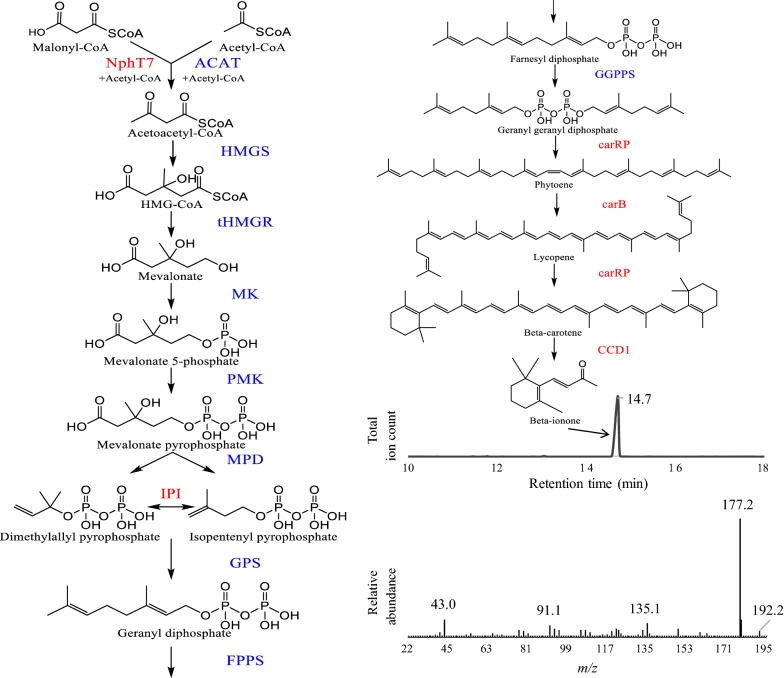
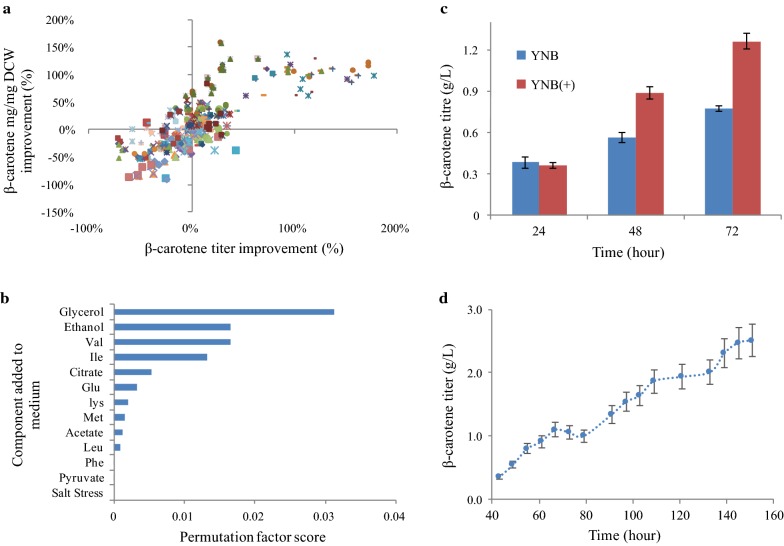
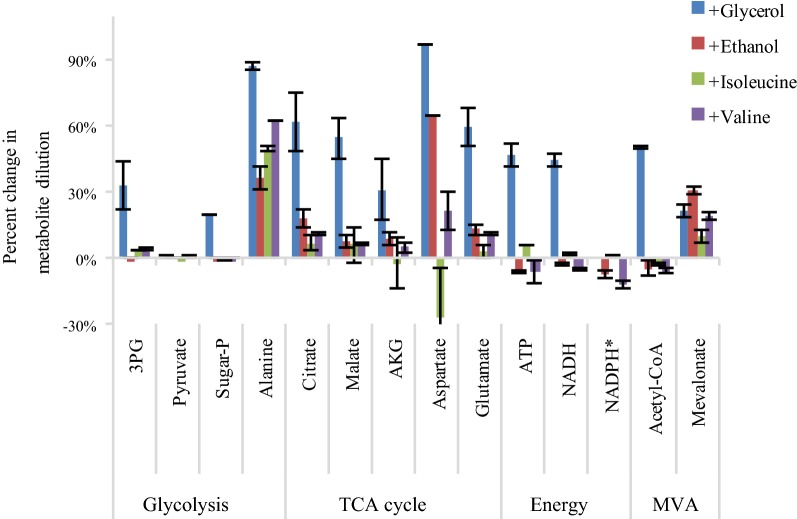
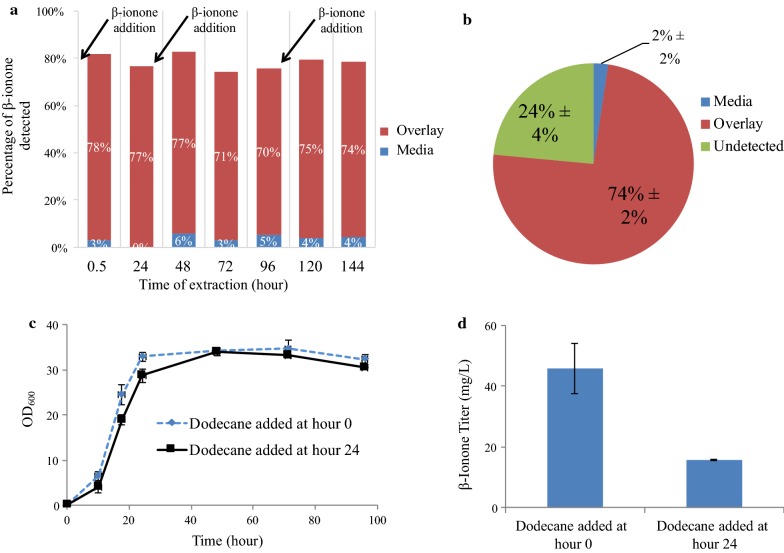
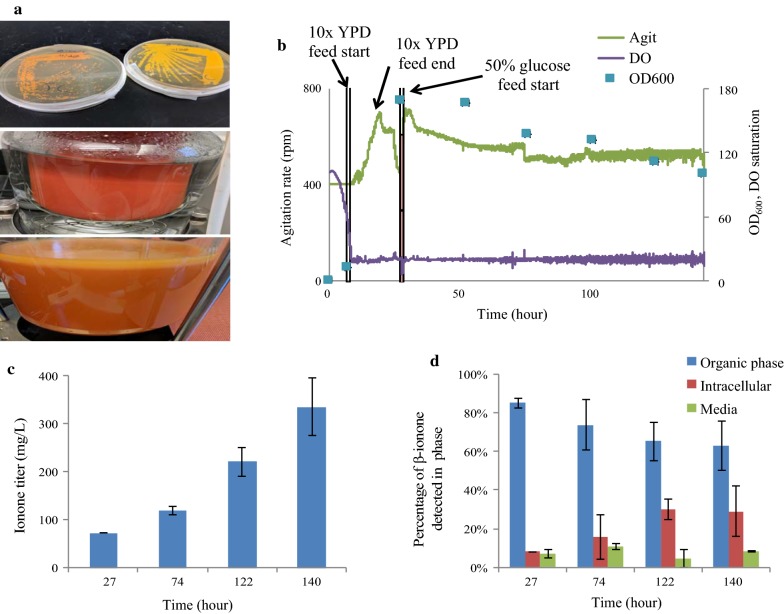
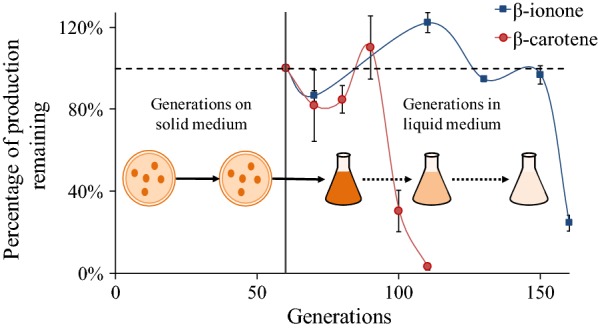
β-Ionone is a fragrant terpenoid that generates a pleasant floral scent and is used in diverse applications as a cosmetic and flavoring ingredient. A growing consumer desire for natural products has increased the market demand for natural β-ionone. To date, chemical extraction from plants remains the main approach for commercial natural β-ionone production. Unfortunately, changing climate and geopolitical issues can cause instability in the β-ionone supply chain. Microbial fermentation using generally recognized as safe (GRAS) yeast offers an alternative method for producing natural β-ionone. Yarrowia lipolytica is an attractive host due to its oleaginous nature, established genetic tools, and large intercellular pool size of acetyl-CoA (the terpenoid backbone precursor). A push–pull strategy via genome engineering was applied to a Y. lipolytica PO1f derived strain. Heterologous and native genes in the mevalonate pathway were overexpressed to push production to the terpenoid backbone geranylgeranyl pyrophosphate, while the carB and biofunction carRP genes from Mucor circinelloides were introduced to pull flux towards β-carotene (i.e., ionone precursor). Medium tests combined with machine learning based data analysis and 13 C metabolite labeling investigated influential nutrients for the β-carotene strain that achieved > 2.5 g/L β-carotene in a rich medium. Further introduction of the carotenoid cleavage dioxygenase 1 (CCD1) from Osmanthus fragrans resulted in the β-ionone production. Utilization of in situ dodecane trapping avoided ionone loss from vaporization (with recovery efficiencies of ~ 76%) during fermentation operations, which resulted in titers of 68 mg/L β-ionone in shaking flasks and 380 mg/L in a 2 L fermenter. Both β-carotene medium tests and β-ionone fermentation outcomes indicated the last enzymatic step CCD1 (rather than acetyl-CoA supply) as the key bottleneck. We engineered a GRAS Y. lipolytica platform for sustainable and economical production of the natural aroma β-ionone. Although β-carotene could be produced at high titers by Y. lipolytica , the synthesis of β-ionone was relatively poor, possibly due to low CCD1 activity and non-specific CCD1 cleavage of β-carotene. In addition, both β-carotene and β-ionone strains showed decreased performances after successive sub-cultures. For industrial application, β-ionone fermentation efforts should focus on both CCD enzyme engineering and strain stability improvement.
Overview
The claims and statistics of this paper haven’t been checked yet.
Free: it reads the open-access text and checks the first 5 claims that cite a source we can check. Create a free account to check every claim.
Integrity signals
Registry
Cites
Statistics
Figures
Verification
Claims the paper makes
The claims and statistics of this paper haven’t been checked yet.
Free: it reads the open-access text and checks the first 5 claims that cite a source we can check. Create a free account to check every claim.
Claims other papers make about this one
Each is checked against this paper’s own text: does it say what the citing paper says it does?
The source backs part of the claim, not all of it — or backs it for a different population, condition or comparison.
In the citing paper
“While large-scale production of beta-ionone using this method has been explored [51,52], there is still much potential for further exploitation.”
From Innovative Approaches to an Eco-Friendly Cosmetic Industry: A Review of Sustainable Ingredients (2024) · cites this paper as [52]
Experimental — accuracy not yet measured
Self-check
Percentages, sums and reported differences re-computed from the paper’s own numbers.
The self-check needs the paper’s full text.
Citations
Cites
Scikit-learn: Machine Learning in Python
Pedregosa, F., Varoquaux, G., Gramfort, A., Michel, V., Thirion, B., Grisel, O., Blondel, M., Müller, A., Nothman, J., Louppe, G., et al. (2012) · arXiv · doi:10.48550/arxiv.1201.0490 · Cited by 71,016 · cited 1×
“Machine learning of shaking tube data Machine learning was performed in the Anaconda JupyterLab Python environment with the Scikit-learn packaging [51].”
MethodGreedy function approximation: A gradient boosting machine
Friedman, J. H. (2001) · The Annals of Statistics · doi:10.1214/aos/1013203451 · Cited by 30,731
The Elements of Statistical Learning
Hastie, T., Tibshirani, R., & Friedman, J. (2009) · Springer Series in Statistics · doi:10.1007/978-0-387-84858-7 · Cited by 25,970
The Elements of Statistical Learning
Hastie, T., Friedman, J., & Tibshirani, R. (2001) · Springer Series in Statistics · doi:10.1007/978-0-387-21606-5 · Cited by 24,162
The Merck Index: An Encyclopedia of Chemicals, Drugs, and Biologicals
(1990) · Annals of Internal Medicine · doi:10.7326/0003-4819-113-6-487_2 · Cited by 4,500
The function of terpene natural products in the natural world
Gershenzon, J., & Dudareva, N. (2007) · Nature Chemical Biology · doi:10.1038/nchembio.2007.5 · Cited by 2,167
Engineering a mevalonate pathway in Escherichia coli for production of terpenoids
Martin, V. J. J., Pitera, D. J., Withers, S. T., Newman, J. D., & Keasling, J. D. (2003) · Nature Biotechnology · doi:10.1038/nbt833 · Cited by 1,725
The merck index: An encyclopedia of chemicals, drugs and biologicals
Bennett, G. (1992) · Journal of Hazardous Materials · doi:10.1016/0304-3894(92)87022-8 · Cited by 938
Tai, M., & Stephanopoulos, G. (2013) · Metabolic Engineering · doi:10.1016/j.ymben.2012.08.007 · Cited by 678
Metabolic Burden: Cornerstones in Synthetic Biology and Metabolic Engineering Applications
Wu, G., Yan, Q., Jones, J. A., Tang, Y. J., Fong, S. S., & Koffas, M. A. G. (2016) · Trends in Biotechnology · doi:10.1016/j.tibtech.2016.02.010 · Cited by 666
Self-citation
Cited by
Engineering Robust Production Microbes for Large-Scale Cultivation
Wehrs, M., Tanjore, D., Eng, T., Lievense, J., Pray, T. R., & Mukhopadhyay, A. (2019) · Trends in Microbiology · doi:10.1016/j.tim.2019.01.006 · Cited by 279
“The target compound and pathway may further impact phenotypic drift and loss of performance [58].”
BackgroundIdentifying and engineering the ideal microbial terpenoid production host
Moser, S., & Pichler, H. (2019) · Applied Microbiology and Biotechnology · doi:10.1007/s00253-019-09892-y · Cited by 170
Advanced Strategies for Production of Natural Products in Yeast
Chen, R., Yang, S., Zhang, L., & Zhou, Y. J. (2020) · iScience · doi:10.1016/j.isci.2020.100879 · Cited by 166
β-Ionone: Its Occurrence and Biological Function and Metabolic Engineering
Paparella, A., Shaltiel-Harpaza, L., & Ibdah, M. (2021) · Plants · doi:10.3390/plants10040754 · Cited by 155
Helmy, M., Smith, D. J., & Selvarajoo, K. (2020) · Metabolic Engineering Communications · doi:10.1016/j.mec.2020.e00149 · Cited by 151
“Although several hundreds, or even thousands, of fold increase has been achieved at test tube or fl ask level by engineering microbes (Czajka et al., 2018), the achievement at large industrial scale bioreactors are far from reality.”
Yarrowia lipolytica: more than an oleaginous workhorse
Miller, K. K., & Alper, H. S. (2019) · Applied Microbiology and Biotechnology · doi:10.1007/s00253-019-10200-x · Cited by 139
Can Machine Learning Revolutionize Directed Evolution of Selective Enzymes?
Li, G., Dong, Y., & Reetz, M. T. (2019) · Advanced Synthesis & Catalysis · doi:10.1002/adsc.201900149 · Cited by 129
Production of plant natural products through engineered Yarrowia lipolytica
Akram, M., Feng, X., Rasool, A., Sun, W., & Li, C. (2020) · Biotechnology Advances · doi:10.1016/j.biotechadv.2020.107555 · Cited by 120
Algae as a Source of Natural Flavors in Innovative Foods
Francezon, N., Tremblay, A., Mouget, J.-L., Pasetto, P., & Beaulieu, L. (2021) · Journal of Agricultural and Food Chemistry · doi:10.1021/acs.jafc.1c04409 · Cited by 108
Lu, Y., Yang, Q., Lin, Z., & Yang, X. (2020) · Microbial Cell Factories · doi:10.1186/s12934-020-01309-0 · Cited by 109
“In this work, we applied a different modular integration approach that allowed for evaluation of different units of the genes along the whole pathway, and used the CRISPR–Cas9 technique, which is more convenient than the Cre-loxP technique [30].”
BackgroundMethodResultInfluentialGenetic and bioprocess engineering to improve squalene production in Yarrowia lipolytica
Liu, H., Wang, F., Deng, L., & Xu, P. (2020) · Bioresource Technology · doi:10.1016/j.biortech.2020.123991 · Cited by 100
“, 2019) and aromatic polyketides (Czajka et al., 2018; Lv et al., 2019b) et al.”
BackgroundAdvanced Strategies for the Synthesis of Terpenoids in Yarrowia lipolytica
Li, Z., Wang, Y., Wang, L., Shi, T., Sun, X., & Huang, H. (2021) · Journal of Agricultural and Food Chemistry · doi:10.1021/acs.jafc.1c00350 · Cited by 98
Self-citationInnovative Approaches to an Eco-Friendly Cosmetic Industry: A Review of Sustainable Ingredients
Sasounian, R., Martinez, R. M., Lopes, A. M., Giarolla, J., Rosado, C., Magalhães, W. V., Velasco, M. V. R., & Baby, A. R. (2024) · Clean Technologies · doi:10.3390/cleantechnol6010011 · Cited by 96
“183 While large-scale production of beta-ionone using this method has been explored [51,52], there is still much potential for further exploitation. microorganism that is capable of producing beta-ionone through genetic manipulation.”
MethodLiang, M., He, Y., Liu, D., & Jiang, J. (2021) · Critical Reviews in Biotechnology · doi:10.1080/07388551.2021.1873242 · Cited by 98
“fragrans 68mg/L b-ionone in flask, and 380mg/L in a 2-L bioreactor [166]”
MethodYarrowia lipolytica Strains Engineered for the Production of Terpenoids
Arnesen, J. A., Kildegaard, K. R., Pastor, M. C., Jayachandran, S., Kristensen, M., & Borodina, I. (2020) · Frontiers in Bioengineering and Biotechnology · doi:10.3389/fbioe.2020.00945 · Cited by 93
Recent advances in lipid metabolic engineering of oleaginous yeasts
Chattopadhyay, A., Mitra, M., & Maiti, M. K. (2021) · Biotechnology Advances · doi:10.1016/j.biotechadv.2021.107722 · Cited by 82
Czajka, J. J., Oyetunde, T., & Tang, Y. (2021) · Metabolic Engineering · doi:10.1016/j.ymben.2021.07.003 · Cited by 76
Self-citationMetabolic Engineering of Yarrowia lipolytica for Terpenoid Production: Tools and Strategies
Zhang, T.-L., Yu, H., & Ye, L. (2023) · ACS Synthetic Biology · doi:10.1021/acssynbio.2c00569 · Cited by 67
Yang, M., Huang, J., Zhou, R., Qi, Q., Peng, C., Zhang, L., Jin, Y., & Wu, C. (2021) · LWT · doi:10.1016/j.lwt.2021.111170 · Cited by 63
Revolutionizing enzyme engineering through artificial intelligence and machine learning
Singh, N., Malik, S., Gupta, A., & Srivastava, K. R. (2021) · Emerging Topics in Life Sciences · doi:10.1042/etls20200257 · Cited by 64
Metabolic engineering of Yarrowia lipolytica for terpenoids production: advances and perspectives
Zhang, G., Wang, H., Zhang, Z., Verstrepen, K. J., Wang, Q., & Dai, Z. (2021) · Critical Reviews in Biotechnology · doi:10.1080/07388551.2021.1947183 · Cited by 68
A Golden-Gate Based Cloning Toolkit to Build Violacein Pathway Libraries in Yarrowia lipolytica
Tong, Y., Zhou, J., Zhang, L., & Xu, P. (2021) · ACS Synthetic Biology · doi:10.1021/acssynbio.0c00469 · Cited by 58
Engineering Saccharomyces cerevisiae for the Overproduction of β-Ionone and Its Precursor β-Carotene
López, J., Bustos, D., Camilo, C., Arenas, N., Saa, P. A., & Agosin, E. E. (2020) · Frontiers in Bioengineering and Biotechnology · doi:10.3389/fbioe.2020.578793 · Cited by 59
“, 2018); while in the oleaginous yeast Yarrowia lipolytica its accumulation reached up to 60 mg/L and 380 mg/L of β-ionone in the same scales, respectively (Czajka et al., 2018).”
BackgroundWerner, N., Ramírez‐Sarmiento, C. A., & Agosin, E. E. (2019) · Food Chemistry · doi:10.1016/j.foodchem.2019.125089 · Cited by 56
Naz, T., Ullah, S., Nazir, Y., Li, S., Iqbal, B., Liu, Q., Mohamed, H., & Song, Y. (2023) · Journal of Fungi · doi:10.3390/jof9050578 · Cited by 62
Machine learning for the advancement of genome-scale metabolic modeling
Kundu, P., Beura, S., Mondal, S., Das, A. K., & Ghosh, A. (2024) · Biotechnology Advances · doi:10.1016/j.biotechadv.2024.108400 · Cited by 57
Chaudhary, R., Nawaz, A., Fouillaud, M., Dufossé, L., Haq, I. U., & Mukhtar, H. (2024) · Microbiology Research · doi:10.3390/microbiolres15010018 · Cited by 60
“Microbial fermentation using GRAS species, such as Y. lipolytica , is an effective approach for β -Ionone production as it is oleaginous, economically viable, and a sustainable natural aroma compound [154].”
Integrating Enzyme and Metabolic Engineering Tools for Enhanced α-Ionone Production
Chen, X., Shukal, S., & Zhang, C. (2019) · Journal of Agricultural and Food Chemistry · doi:10.1021/acs.jafc.9b00860 · Cited by 48
Yukawa, T., Bamba, T., Guirimand, G. G. Y., Matsuda, M., Hasunuma, T., & Kondo, A. (2020) · Biotechnology and Bioengineering · doi:10.1002/bit.27560 · Cited by 46
“…an iron–sulfur protein from the IlvD/EDD family (Andberg et al., 2016), and functional expression of prokaryotic iron–sulfur proteins, including XylD, in S. cerevisiae is challenging (Bamba et al., 2019; Carlsen et al., 2013; Czajka et al., 2018; Partow, Siewers, Daviet, Schalk, & Nielsen, 2012).”
BackgroundWorland, A. M., Czajka, J. J., Li, Y., Wang, Y., Tang, Y., & Su, W. (2020) · Current Opinion in Biotechnology · doi:10.1016/j.copbio.2020.02.020 · Cited by 53
Self-citationYang, M., Huang, J., Zhou, R., Qi, Q., Peng, C., Zhang, L., Jin, Y., Wu, C., & Tang, Q. (2020) · Food Research International · doi:10.1016/j.foodres.2020.109753 · Cited by 44
Li, W., & Fan, D. (2020) · Applied Microbiology and Biotechnology · doi:10.1007/s00253-020-10455-9 · Cited by 43
“They can be considered potential hosts to achieve economic and sustainable production of terpenoids (Moser and Pichler 2019; Wriessnegger and Pichler, 2013; Sonntag et al. 2015; Czajka et al. 2018).”
BackgroundMetabolic engineering strategies to overcome precursor limitations in isoprenoid biosynthesis
Zu, Y., Prather, K. L. J., & Stephanopoulos, G. N. (2020) · Current Opinion in Biotechnology · doi:10.1016/j.copbio.2020.07.005 · Cited by 42
Lipid production by oleaginous yeasts
Chattopadhyay, A., & Maiti, M. K. (2021) · Advances in applied microbiology · doi:10.1016/bs.aambs.2021.03.003 · Cited by 48
Guo, Q., Peng, Q., Li, Y., Yan, F., Wang, Y., Ye, C., & Shi, T. (2023) · Critical Reviews in Biotechnology · doi:10.1080/07388551.2023.2166809 · Cited by 36
“In general, these two yeasts were used as hosts for the heterologous production of some important caro-tene-derived compounds such as vitamin A [22,23], astaxanthin [24 – 26] and b -ionone [27 – 32].”
BackgroundSelf-citationTimmins, J. J. B., Kroukamp, H., Paulsen, I. T., & Pretorius, I. S. (2020) · Molecules · doi:10.3390/molecules25122779 · Cited by 37
Xie, Y., Chen, S., & Xiong, X. (2021) · Frontiers in Microbiology · doi:10.3389/fmicb.2021.699235 · Cited by 32
Lin, P., Zhang, L., Du, G., Chen, J., Zhang, J., & Peng, Z. (2025) · Journal of Agricultural and Food Chemistry · doi:10.1021/acs.jafc.5c00088 · Cited by 32
Czajka, J. J., Kambhampati, S., Tang, Y., Wang, Y., & Allen, D. K. (2020) · iScience · doi:10.1016/j.isci.2020.100854 · Cited by 30
Self-citationWorland, A. M., Czajka, J. J., Xing, Y., Harper, W. F., Moore, A., Xiao, Z., Han, Z., Wang, Y., Su, W., & Tang, Y. (2020) · Metabolic Engineering Communications · doi:10.1016/j.mec.2020.e00130 · Cited by 33
“…are naturally occurring compounds that have many diverse and industrially relevant applications, including in pharmaceuticals, food, and fuel, and have been previously been engineered for production in Y. lipolytica (Cao et al., 2016; Czajka et al., 2018; Wang et al., 2018; Zhang et al., 2017).”
BackgroundMethodSelf-citationEngineering of Yarrowia lipolytica for terpenoid production
Arnesen, J. A., & Borodina, I. (2022) · Metabolic Engineering Communications · doi:10.1016/j.mec.2022.e00213 · Cited by 32
Xu, J. P., Martien, J. I., Gilbertson, C., Ma, J., Amador‐Noguez, D., & Park, J. O. (2020) · Current Opinion in Biotechnology · doi:10.1016/j.copbio.2020.02.018 · Cited by 28
Xu, M., Xie, W., Luo, Z., Li, C., Hua, Q., & Xu, J. (2023) · Synthetic and Systems Biotechnology · doi:10.1016/j.synbio.2023.04.002 · Cited by 25
Li, Y., Han, Z. Y., Wang, M., Yan, Y., Ma, R., Wang, H., & Deng, W. (2025) · Food Research International · doi:10.1016/j.foodres.2025.116180 · Cited by 24
Liang, M., Wu, F.-C., Liang, Z., Chen, H., & Jiang, J. (2020) · Algal Research · doi:10.1016/j.algal.2020.101901 · Cited by 24
Qi, Z., Tong, X., Zhang, X., Lin, H., Bu, S., & Zhao, L. (2022) · Bioprocess and Biosystems Engineering · doi:10.1007/s00449-022-02707-x · Cited by 23
Zhao, R., Sengupta, A., Tan, A. X., Whelan, R., Pinkerton, T., Menasalvas, J., Eng, T., Mukhopadhyay, A., Jun, Y., Pakrasi, H. B., et al. (2022) · Scientific Reports · doi:10.1038/s41598-022-26437-y · Cited by 24
Self-citationWorland, A. M., Han, Z., Maruwan, J., Wang, Y., Du, Z., Tang, Y., Su, W., & Roell, G. W. (2024) · Metabolic Engineering · doi:10.1016/j.ymben.2024.06.010 · Cited by 25
Self-citationChattopadhyay, A., & Maiti, M. K. (2020) · Applied Microbiology and Biotechnology · doi:10.1007/s00253-020-10443-z · Cited by 22
De Novo Synthesis of Dihydro-β-ionone through Metabolic Engineering and Bacterium-Yeast Coculture
Qi, Z., Tong, X., Ke, K., Wang, X., Pei, J., Bu, S., & Zhao, L. (2024) · Journal of Agricultural and Food Chemistry · doi:10.1021/acs.jafc.3c07291 · Cited by 21
Metabolic Engineering of Candida tropicalis for the De Novo Synthesis of β-Ionone
Xu, J., Xia, Y., Shi, Y., Zhu, M., Zhang, H., Gui, X., Shen, W., Yang, H., & Chen, X. (2024) · ACS Synthetic Biology · doi:10.1021/acssynbio.4c00286 · Cited by 21
Chen, S., Lu, Y., Wang, W., Hu, Y., Wang, J., Tang, S., Lin, C. S. K., & Yang, X. (2022) · Frontiers in Microbiology · doi:10.3389/fmicb.2022.960558 · Cited by 30
“, 2018) and Yarrowia lipolytica (Czajka et al., 2018; Lu et al., 2020) have been engineered to heterologously biosynthesize β-ionone.”
BackgroundMethodResultThe apocarotenoid production in microbial biofactories: An overview
Varghese, R., Buragohain, T., Banerjee, I., Mukherjee, R., Penshanwar, S. N., Agasti, S., & Ramamoorthy, S. (2023) · Journal of Biotechnology · doi:10.1016/j.jbiotec.2023.07.009 · Cited by 23
Lupish, B., Hall, J., Schwartz, C., Ramesh, A., Morrison, C. L., & Wheeldon, I. R. (2022) · Biotechnology and Bioengineering · doi:10.1002/bit.28219 · Cited by 22
“Despite these successes, a number of technical challenges must be overcome before Y. lipolytica can be more widely used in industrial bioprocessing (Czajka et al., 2018; Sabra et al., 2017).”
BackgroundKant, G., Pandey, A., Hasan, A., Bux, F., Kumari, S., & Srivastava, S. (2024) · Process Biochemistry · doi:10.1016/j.procbio.2024.01.027 · Cited by 22
Characterization of Volatile Organic Compounds and Aroma Sensory Properties in Yunnan Cigar
Wu, Y.-P., Zhang, H., Wang, W., Kong, G., Li, Z., Zhang, T., Wang, M., Yang, D. J., Zhang, C., Li, Y., et al. (2024) · Journal of Analytical Methods in Chemistry · doi:10.1155/2024/9583022 · Cited by 18
“In Yunnan cigar tobacco, we have detected various ketone aroma compounds such as megastigmatrienones, ionone derivatives (foral) [31], geranylacetone (fruit-like) [32], farnesylacetone (sweet and green) [33], and acetophenone (sweet and orange aroma) [34].”
BackgroundJung, J.-H., Ponnusamy, V. K., Kumar, G., Igliński, B., Kumar, V., & Piechota, G. (2024) · Chemical Engineering Journal · doi:10.1016/j.cej.2024.157679 · Cited by 19
Advances in the biosynthesis of β-carotene and its derivatives in yeast
Zhou, T., Park, Y. K., & Ledesma‐Amaro, R. (2025) · Bioresource Technology · doi:10.1016/j.biortech.2025.132936 · Cited by 21
Fate of carotenoids in yeasts: synthesis and cleavage
Zhang, Q.-W., Kong, C.-L., & Tao, Y. (2022) · Critical Reviews in Food Science and Nutrition · doi:10.1080/10408398.2022.2048352 · Cited by 21
Zhou, Q., Jiao, L., Li, W., Hu, Z., Li, Y., Zhang, H., Yang, M., Xu, L., & Yan, Y. (2021) · International Journal of Molecular Sciences · doi:10.3390/ijms221910739 · Cited by 17
Luo, Z., Shi, J.-T., Chen, X., Chen, J., Liu, F., Wei, L., & Hua, Q. (2023) · Bioresources and Bioprocessing · doi:10.1186/s40643-023-00697-6 · Cited by 18
“Indeed, cells perform better in glycerol-containing media than in glucose-containing media (Czajka et al. 2018; Jacob-sen et al. 2020).”
BackgroundQi, Z., Tong, X., Zhang, Y., Jia, S., Fang, X., & Zhao, L. (2023) · Journal of Agricultural and Food Chemistry · doi:10.1021/acs.jafc.3c06459 · Cited by 22
Yang, K., Zhao, G., Li, H., Tian, X., Xu, L., Yan, J., Xie, X., Yan, Y., & Yang, M. (2024) · Journal of Hazardous Materials · doi:10.1016/j.jhazmat.2024.134954 · Cited by 16
Arroyo-Avirama, A. F., Carreño-Guzmán, S., Llanes, J. L., Gajardo‐Parra, N. F., Santiago, R., Held, C., Palomar, J. F., & Canales, R. I. (2023) · ACS Sustainable Chemistry & Engineering · doi:10.1021/acssuschemeng.3c01739 · Cited by 16
Arroyo-Avirama, A. F., Gajardo‐Parra, N. F., Espinoza-Carmona, V., Garrido, J. M., Held, C., & Canales, R. I. (2022) · Journal of Chemical & Engineering Data · doi:10.1021/acs.jced.1c00975 · Cited by 14
Progress in the Metabolic Engineering of Yarrowia lipolytica for the Synthesis of Terpenes
Liu, S.-C., Xu, L., Sun, Y., Yuan, L., Xu, H., Song, X., & Sun, L. (2024) · BioDesign Research · doi:10.34133/bdr.0051 · Cited by 15
Efficient production of Pseudoionone with multipathway engineering in Escherichia coli
Jiang, R., Chen, X., Lian, J., Huang, L., Cai, J., & Xu, Z. (2019) · Journal of Applied Microbiology · doi:10.1111/jam.14245 · Cited by 11
“Dodecane is a relatively nonvolatile compound that has previously been used as an organic overlay to trap volatile terpenoids during cell fermentations, including isoprene (Liu et al. 2018), abisabolol (Han et al. 2016), limonene (Cao et al. 2016) and b-ionone (Czajka et al. 2018).”
BackgroundMethodGong, X., Fan, L., Liang, Y., Han, X., & Wen, M. (2022) · Frontiers in Microbiology · doi:10.3389/fmicb.2022.1011297 · Cited by 10
“Moreover, previous paper has suggested that the CCDs catalyzed reaction was the limiting step for β-ionone biosynthesis (Czajka et al., 2018).”
BackgroundResultInfluentialThe effect of β-ionone on bacterial cells: the use of specific lux-biosensors
Александрович, П. В., Sidorova, D. E., Koksharova, O. A., Khmel, I. A., Gnuchikh, E. Y., & Melkina, O. E. (2024) · Research in Microbiology · doi:10.1016/j.resmic.2024.104214 · Cited by 9
Worland, A. M., Xu, V., Duran, M. F., Gitman, P., Hunter‐Cevera, K. R., Klemm, C., Sun, Y., Sanchis, D. R., Ledesma‐Amaro, R., Pomraning, K., et al. (2025) · Trends in biotechnology · doi:10.1016/j.tibtech.2025.08.019 · Cited by 12
Self-citationZhang, M., Guo, D., Sun, Z., Wu, G., Han, P., Shi, Y., Zhao, R., Liu, L., Zhang, H., & Li, X. (2025) · Industrial Crops and Products · doi:10.1016/j.indcrop.2025.121236 · Cited by 9
Long, Z., Li, K., Xue, Y., Sun, Y., Li, J., Su, Z., Sun, J., Liu, Q., Liu, H., & Wei, T. (2023) · Biotechnology Letters · doi:10.1007/s10529-023-03355-1 · Cited by 10
Shi, J.-T., Wu, Y., Sun, R.-Z., Hua, Q., & Wei, L. (2024) · Biotechnology Letters · doi:10.1007/s10529-024-03534-8 · Cited by 10
“Worldwide, the use of β-ionone reaches 100–1000 metric tons annually and the market demand is expected to continue to grow due to its anticancer activity (Czajka et al. 2018).”
Qi, Z., Fan, X., Zhu, C., Chang, D., Pei, J., & Zhao, L. (2021) · Chemistry & Biodiversity · doi:10.1002/cbdv.202100735 · Cited by 15
Tong, Y., Zhou, J., Zhang, L., & Xu, P. (2019) · bioRxiv (Cold Spring Harbor Laboratory) · doi:10.1101/687012 · Cited by 9
Lin, P., Du, G., Chen, J., Zhang, J., & Peng, Z. (2025) · Biotechnology Advances · doi:10.1016/j.biotechadv.2025.108708 · Cited by 11
Cloning and Characterization of a Novel Carotenoid Cleavage Dioxygenase 1 from Helianthus annuus
Qi, Z., Tong, X., Bu, S., Pei, J., & Zhao, L. (2021) · Chemistry & Biodiversity · doi:10.1002/cbdv.202100694 · Cited by 8
Guo, S., Li, Y., Zhu, B., Zhang, Q., Yang, Z., Jia, Y. P., Zhou, Q., Zhang, Z., & Li, D. (2024) · Frontiers in Bioengineering and Biotechnology · doi:10.3389/fbioe.2024.1510075 · Cited by 7
Dong, C., Zhang, Y., Ni, Z., Shen, M., Lin, F., Wang, X., Shi, Y., Miao, Y., Guo, J., & Wang, R. (2025) · The Crop Journal · doi:10.1016/j.cj.2025.03.011 · Cited by 9
Microbial Production of Bioactive Compounds
Cabanillas-Bojórquez, L. Á., Valdez-Baro, O., Gutiérrez‐Grijalva, E. P., & Heredia, J. B. (2023) · Interdisciplinary biotechnological advances · doi:10.1007/978-981-99-1737-2_10 · Cited by 6
Makopa, T. P., Ncube, T., Alwasel, S. H., Boekhout, T., & Zhou, N. (2024) · Yeast · doi:10.1002/yea.3935 · Cited by 7
“In addition, the complexity of VOCs from insect derived yeasts has been tapped into for flavorants, perfumes, biosurfactants and antimicrobial products (Czajka et al., 2018; Gupta et al., 2015; Rau et al., 2005).”
BackgroundLong, Z., Duan, N., Xue, Y., Wang, M., Li, J., Su, Z., Liu, Q., Mao, D., & Wei, T. (2021) · Catalysts · doi:10.3390/catal11111257 · Cited by 6
Timmins, J. J. B., Kroukamp, H., Walker, R. S. K., Pretorius, I. S., & Paulsen, I. T. (2022) · Fermentation · doi:10.3390/fermentation8080395 · Cited by 6
Ke, K., Zhang, Y., Wang, X., Luo, Z., Chen, Y., Fang, X., & Zhao, L. (2025) · Biology · doi:10.3390/biology14070752 · Cited by 6
“Among plant-derived volatile carotenoid derivatives, β -ionone has garnered particular attention due to its distinctive properties and applications [5].”
Yang, D., Huang, J., Wu, Y., Jiang, L., Zhang, C., Qi, Z., Wu, D., Wang, J., & Ma, X. (2025) · Journal of Agricultural and Food Chemistry · doi:10.1021/acs.jafc.5c08549 · Cited by 5
Metagenomic Insights of Yarrowia lipolytica in Food Industry
Bankar, A. V., Jadhav, L., & Phalke, V. (2020) · Springer eBooks · doi:10.1007/978-981-15-8562-3_8 · Cited by 6
Artificial Intelligence for Microbial Isolation and Cultivation: Progress and Challenges
Li, M. L. M., Yao, X., Zhang, M., & Hu, B. (2026) · Microorganisms · doi:10.3390/microorganisms14030654 · Cited by 4
“Czajka et al. (2018) [19] used ML-assisted engineering to modify Yarrowia lipolytica for β -ionone production, improving yields by over 10-fold.”
Ke, K., Guo, L., Qi, Z., Dou, D., Ma, H., Fang, X., & Zhao, L. (2024) · Molecular Catalysis · doi:10.1016/j.mcat.2024.114561 · Cited by 3
Wang, Y., Wu, J., Wang, N., Zhang, B., Dong, J., Liu, Y., Zhao, M., & Fu, B. (2025) · Food Research International · doi:10.1016/j.foodres.2025.118250 · Cited by 2
Self-citationAtkinson, E., Stan, G.-B. V., & Ledesma‐Amaro, R. (2026) · Microbial Cell Factories · doi:10.1186/s12934-025-02899-3 · Cited by 2
“It is a non-conventional oleaginous yeast that has been used for the expression of several useful heterologous proteins [1] and the production of high-value compounds such as organic acids [2], aromas [3, 4], carotenoids [5], and lipid precursors for biofuels [6–8].”
Zheng, Y., Huaxia, C., Bi, J., & Xue, F. (2026) · Journal of Agricultural and Food Chemistry · doi:10.1021/acs.jafc.5c08719 · Cited by 6
C13-apocarotenoids biosynthesis with engineered microbes
Huang, J., Lou, J., Cao, J., Wu, D., & Wang, J. (2024) · Biotechnology and Bioprocess Engineering · doi:10.1007/s12257-024-00030-8 · Cited by 2
“Czajka et al. [11] integrated the genes coding the needed enzymes of the MVA and downstream β-carotene biosynthetic pathways into the genome of Y. lipolytica , and the resulting strain produced β-carotene at ~ 2.5 g/L in a 2-”
InfluentialWu, J., Li, H., & Zhou, J. (2022) · Elsevier eBooks · doi:10.1016/b978-0-323-88504-1.00013-3 · Cited by 1
Multi-strategy engineering of Saccharomyces cerevisiae for enhanced β-ionone biosynthesis
Lin, P., Xu, S., Chen, J., Zhang, J., & Peng, Z. (2026) · Chemical Engineering Journal · doi:10.1016/j.cej.2026.175214 · Cited by 1
Syukri, D., Rini, R., Wellyalina, Yanti, N. R., & Jaswandi (2021) · Indian Journal of Agricultural Research · doi:10.18805/ijare.a-649 · Cited by 2
“The conversion of β -carotene to β -ionone and dhA can be carried out chemically (oxidation) or enzymatically (Czajka et al ., 2018; Perveen et al ., 2019).”
Microbial Production of Flavors and Fragrances by Yarrowia lipolytica
Braga, A., & Belo, I. (2022) · Springer eBooks · doi:10.1007/978-3-030-81403-8_7-1 · Cited by 1
Demonstration and industrial scale-up
Ramadoss, G., Shanmugam, S. R., & Selvaraj, T. K. R. (2023) · Elsevier eBooks · doi:10.1016/b978-0-12-816109-8.00025-8 · Cited by 3
Zhou, Q., Jiao, L., Li, W., Hu, Z., Li, Y., Zhang, H., Xu, L., & Yan, Y. (2020) · bioRxiv (Cold Spring Harbor Laboratory) · doi:10.1101/2020.12.30.424803 · Cited by 1
Nonconventional yeast cell factories for the biosynthesis of plant-derived bioactive terpenoids
Guo, Q., & Shi, T. (2024) · Elsevier eBooks · doi:10.1016/b978-0-443-15558-1.00012-6
Specific Response of Bacterial Cells to the Action of β-Ionone
Sidorova, D. E., Melkina, O. E., Koksharova, O. A., Vagner, E. N., Khmel, I. A., & Александрович, П. В. (2024) · Microbiology · doi:10.1134/s0026261723604268
Metadata
- Authors
- Czajka, J. J., Nathenson, J. A., Benites, V. T., Baidoo, E. E. K., Cheng, Q., Wang, Y., & Tang, Y. J.
- Affiliations
- Washington University in St. Louis (US)
- Lawrence Berkeley National Laboratory (US)
- Monsanto (United States) (US)
- Corresponding author
- Wang, Yechun
- Tang, Yinjie J.
- Venue
- Microbial Cell Factories
- Published
- 2018-09-01
- Volume
- 17
- Issue
- 1
- Pages
- 136-136
- ISSN
- 1475-2859 (ISSN-L)
- PMC
- PMC6119263
- OpenAlex
- W2889216082
- Cited by
- 109
- References
- 56
- Citations by year
- 2026: 7 · 2025: 13 · 2024: 21 · 2023: 11 · 2022: 11 · 2021: 17 · 2020: 21 · 2019: 8
- FWCI
- 4.09
- Type
- journal article
- Language
- en
- Open access
- gold
- doi.org
- Licence
- cc-by
- creativecommons.org/licenses/by/4.0/ (tdm)
- creativecommons.org/licenses/by/4.0/ (vor)
- Locations
- Microbial Cell Factories (publishedVersion, cc-by)
- Europe PMC (PubMed Central) (publishedVersion, other-oa)
- PubMed Central (publishedVersion, cc-by)
- PubMed (publishedVersion)
- DOAJ (DOAJ: Directory of Open Access Journals) (submittedVersion, cc-by-sa)
- eScholarship (California Digital Library) (submittedVersion)
- eScholarship (California Digital Library) (submittedVersion, cc-by)
- Funders
- Directorate for Biological Sciences (MCB1616619)
- Directorate for Engineering (IIP1722313)
- Topics
- Life Sciences › Biochemistry, Genetics and Molecular Biology › Molecular Biology › Microbial Metabolic Engineering and Bioproduction
- Life Sciences › Biochemistry, Genetics and Molecular Biology › Molecular Biology › Plant biochemistry and biosynthesis
- Life Sciences › Biochemistry, Genetics and Molecular Biology › Biotechnology › Biochemical and biochemical processes
- Keywords
- β-ionone, Yarrowia lipolytica, oleaginous yeast, terpenoid biosynthesis, beta-carotene, CCD1, mevalonate pathway, geranylgeranyl pyrophosphate, Mucor circinelloides, carB, aroma production
- MeSH terms
- Yarrowia, Norisoprenoids, Metabolic Engineering
About these checks
Registry, retraction, Cites and statistics results are computed, not judged, with one exception: a printed reference that no index lists is read once by a model before it counts as a citation error. Claims are extracted by a model and kept only when their quote appears verbatim in the text; each cited source is then checked, with a model’s help, for whether it says what the claim relies on. Those verdicts can be wrong — read the claim’s quote and the cited source before relying on one.
Statistics and arithmetic are recomputed, not judged.
Confidence bands are shown only for fields calibrated on our annotated test set. None is calibrated yet, so no band is shown.
What counts as a claim ›How we measure confidence ›How we check this ›
Are you an author, or do you see a problem with this page? Request a review
Data sources
Bibliographic data: Semantic Scholar, OpenAlex, Crossref.
Contains information from the Semantic Scholar Academic Graph Datasets, made available under the ODC Attribution License (ODC-BY 1.0).
Semantic Scholar’s data is described in: Kinney, R., et al. (2023). The Semantic Scholar Open Data Platform. arXiv:2301.10140.
