

Engineering the oleaginous yeast Yarrowia lipolytica to produce the aroma compound β-ionone
Open accessThe DOI matches its Crossref record; 56 of the 56 references it cites were found in a registry or an index.
Abstract
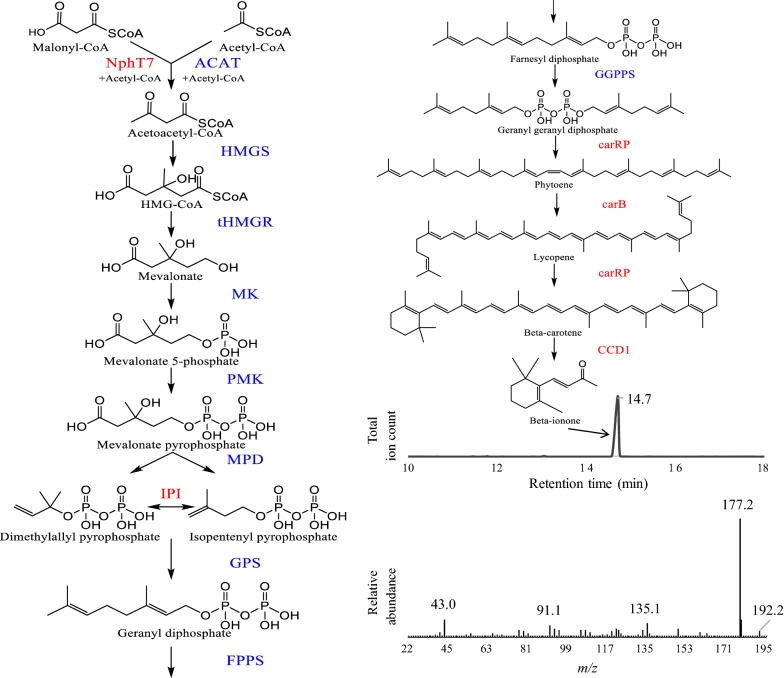
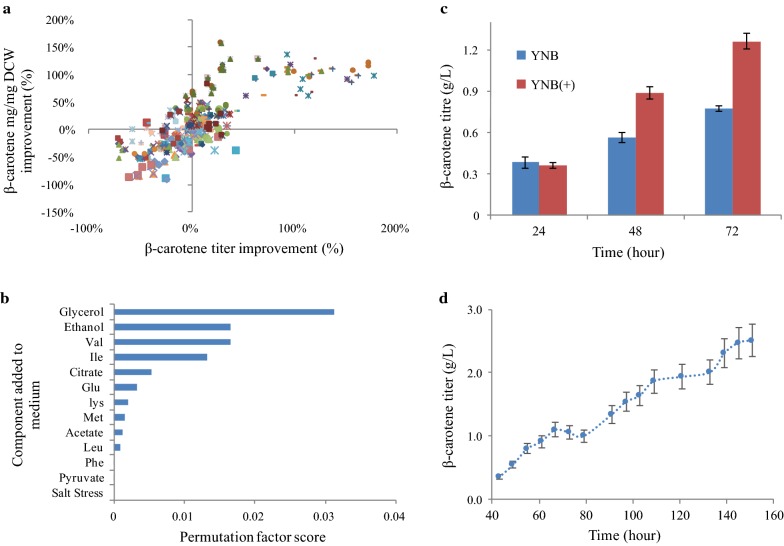
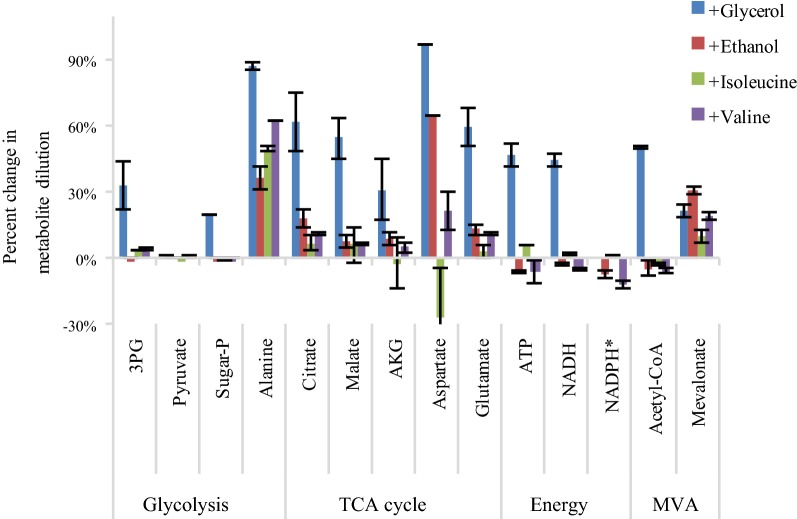
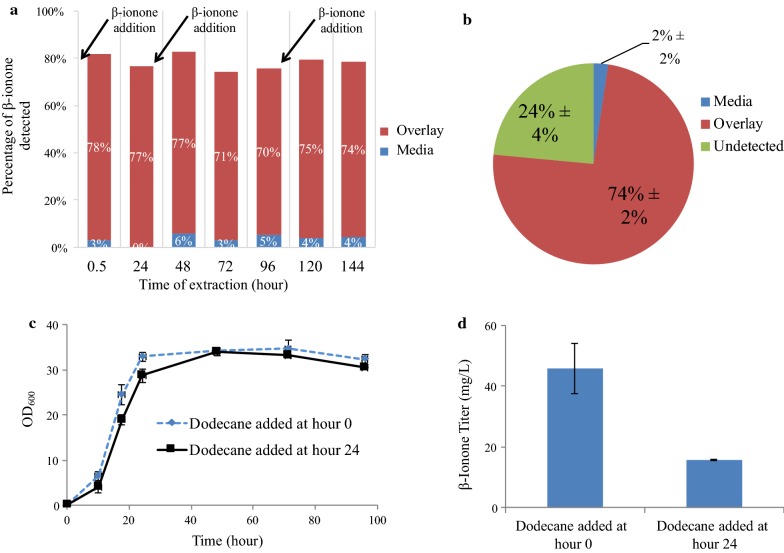
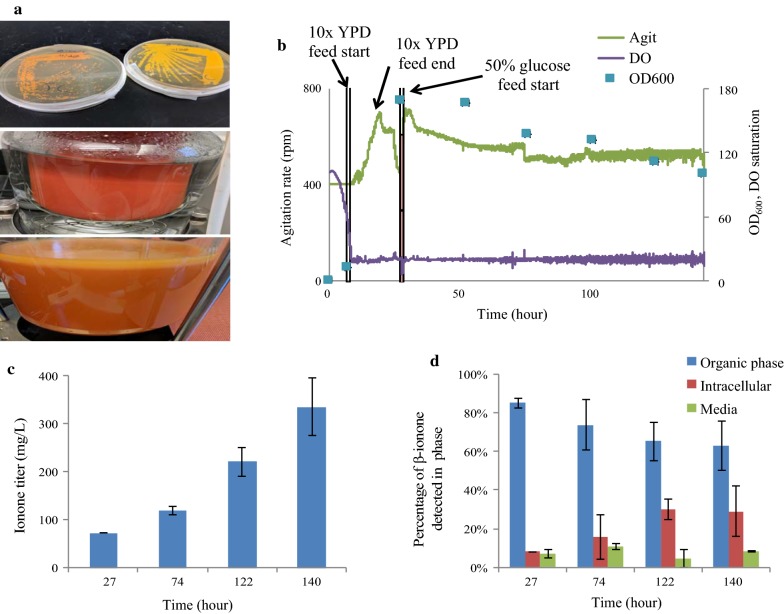
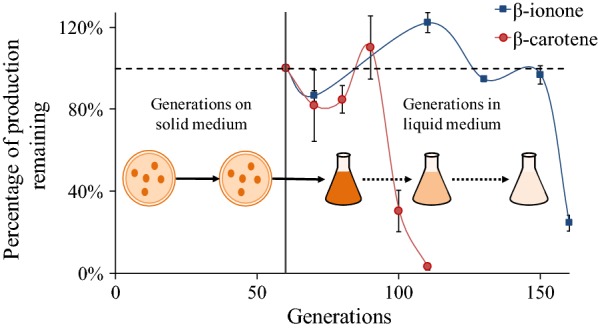
β-Ionone is a fragrant terpenoid that generates a pleasant floral scent and is used in diverse applications as a cosmetic and flavoring ingredient. A growing consumer desire for natural products has increased the market demand for natural β-ionone. To date, chemical extraction from plants remains the main approach for commercial natural β-ionone production. Unfortunately, changing climate and geopolitical issues can cause instability in the β-ionone supply chain. Microbial fermentation using generally recognized as safe (GRAS) yeast offers an alternative method for producing natural β-ionone. Yarrowia lipolytica is an attractive host due to its oleaginous nature, established genetic tools, and large intercellular pool size of acetyl-CoA (the terpenoid backbone precursor). A push–pull strategy via genome engineering was applied to a Y. lipolytica PO1f derived strain. Heterologous and native genes in the mevalonate pathway were overexpressed to push production to the terpenoid backbone geranylgeranyl pyrophosphate, while the carB and biofunction carRP genes from Mucor circinelloides were introduced to pull flux towards β-carotene (i.e., ionone precursor). Medium tests combined with machine learning based data analysis and 13 C metabolite labeling investigated influential nutrients for the β-carotene strain that achieved > 2.5 g/L β-carotene in a rich medium. Further introduction of the carotenoid cleavage dioxygenase 1 (CCD1) from Osmanthus fragrans resulted in the β-ionone production. Utilization of in situ dodecane trapping avoided ionone loss from vaporization (with recovery efficiencies of ~ 76%) during fermentation operations, which resulted in titers of 68 mg/L β-ionone in shaking flasks and 380 mg/L in a 2 L fermenter. Both β-carotene medium tests and β-ionone fermentation outcomes indicated the last enzymatic step CCD1 (rather than acetyl-CoA supply) as the key bottleneck. We engineered a GRAS Y. lipolytica platform for sustainable and economical production of the natural aroma β-ionone. Although β-carotene could be produced at high titers by Y. lipolytica , the synthesis of β-ionone was relatively poor, possibly due to low CCD1 activity and non-specific CCD1 cleavage of β-carotene. In addition, both β-carotene and β-ionone strains showed decreased performances after successive sub-cultures. For industrial application, β-ionone fermentation efforts should focus on both CCD enzyme engineering and strain stability improvement.
Overview
The claims and statistics of this paper haven’t been checked yet.
Free: it reads the open-access text and checks the first 5 claims that cite a source we can check. Create a free account to check every claim.
Integrity signals
Registry
Cites
Statistics
Figures
Verification
Claims the paper makes
The claims and statistics of this paper haven’t been checked yet.
Free: it reads the open-access text and checks the first 5 claims that cite a source we can check. Create a free account to check every claim.
Claims other papers make about this one
Each is checked against this paper’s own text: does it say what the citing paper says it does?
The source backs part of the claim, not all of it — or backs it for a different population, condition or comparison.
In the citing paper
“While large-scale production of beta-ionone using this method has been explored [51,52], there is still much potential for further exploitation.”
From Innovative Approaches to an Eco-Friendly Cosmetic Industry: A Review of Sustainable Ingredients (2024) · cites this paper as [52]
Experimental — accuracy not yet measured
Self-check
Percentages, sums and reported differences re-computed from the paper’s own numbers.
The self-check needs the paper’s full text.
Citations
Cites
Scikit-learn: Machine Learning in Python
Pedregosa, F., Varoquaux, G., Gramfort, A., Michel, V., Thirion, B., Grisel, O., Blondel, M., Müller, A., Nothman, J., Louppe, G., et al. (2012) · arXiv · doi:10.48550/arxiv.1201.0490 · Cited by 71,016 · cited 1×
“Machine learning of shaking tube data Machine learning was performed in the Anaconda JupyterLab Python environment with the Scikit-learn packaging [51].”
MethodGreedy function approximation: A gradient boosting machine
Friedman, J. H. (2001) · The Annals of Statistics · doi:10.1214/aos/1013203451 · Cited by 30,731
The Elements of Statistical Learning
Hastie, T., Tibshirani, R., & Friedman, J. (2009) · Springer Series in Statistics · doi:10.1007/978-0-387-84858-7 · Cited by 25,970
The Elements of Statistical Learning
Hastie, T., Friedman, J., & Tibshirani, R. (2001) · Springer Series in Statistics · doi:10.1007/978-0-387-21606-5 · Cited by 24,162
The Merck Index: An Encyclopedia of Chemicals, Drugs, and Biologicals
(1990) · Annals of Internal Medicine · doi:10.7326/0003-4819-113-6-487_2 · Cited by 4,500
The function of terpene natural products in the natural world
Gershenzon, J., & Dudareva, N. (2007) · Nature Chemical Biology · doi:10.1038/nchembio.2007.5 · Cited by 2,167
Engineering a mevalonate pathway in Escherichia coli for production of terpenoids
Martin, V. J. J., Pitera, D. J., Withers, S. T., Newman, J. D., & Keasling, J. D. (2003) · Nature Biotechnology · doi:10.1038/nbt833 · Cited by 1,725
The merck index: An encyclopedia of chemicals, drugs and biologicals
Bennett, G. (1992) · Journal of Hazardous Materials · doi:10.1016/0304-3894(92)87022-8 · Cited by 938
Tai, M., & Stephanopoulos, G. (2013) · Metabolic Engineering · doi:10.1016/j.ymben.2012.08.007 · Cited by 678
Metabolic Burden: Cornerstones in Synthetic Biology and Metabolic Engineering Applications
Wu, G., Yan, Q., Jones, J. A., Tang, Y. J., Fong, S. S., & Koffas, M. A. G. (2016) · Trends in Biotechnology · doi:10.1016/j.tibtech.2016.02.010 · Cited by 666
Self-citationPhysiology and genetics of the dimorphic fungus Yarrowia lipolytica
Barth, G., & Gaillardin, C. M. (1997) · FEMS Microbiology Reviews · doi:10.1016/s0168-6445(97)00002-8 · Cited by 551
Plant Terpenoids: Biosynthesis and Ecological Functions
Cheng, A., Lou, Y., Mao, Y., Lu, S., Wang, L., & Chen, X. (2007) · Journal of Integrative Plant Biology · doi:10.1111/j.1744-7909.2007.00395.x · Cited by 489
Larroude, M., Celinska, E., Back, A., Thomas, S., Nicaud, J., & Ledesma‐Amaro, R. (2018) · Biotechnology and Bioengineering · doi:10.1002/bit.26473 · Cited by 339
Food vs. Fuel: Diversion of Crops Could Cause More Hunger
Tenenbaum, D. J. (2008) · Environmental Health Perspectives · doi:10.1289/ehp.116-a254 · Cited by 322
Fickers, P., Le Dall, M. T., Gaillardin, C., Thonart, P., & Nicaud, J. M. (2003) · Journal of Microbiological Methods · doi:10.1016/j.mimet.2003.07.003 · Cited by 278
Modular Engineering of l -Tyrosine Production in Escherichia coli
Juminaga, D., Baidoo, E. E. K., Redding-Johanson, A. M., Batth, T. S., Burd, H., Mukhopadhyay, A., Petzold, C. J., & Keasling, J. D. (2012) · Applied and Environmental Microbiology · doi:10.1128/aem.06017-11 · Cited by 273
Self-citationDavies, F. K., Work, V. H., Beliaev, A. S., & Posewitz, M. C. (2014) · Frontiers in Bioengineering and Biotechnology · doi:10.3389/fbioe.2014.00021 · Cited by 272
Gao, S., Tong, Y., Zhu, L., Ge, M., Zhang, Y., Chen, D., Jiang, Y., & Yang, S. (2017) · Metabolic Engineering · doi:10.1016/j.ymben.2017.04.004 · Cited by 260
Multiple-copy integration in the yeast Yarrowia lipolytica
Le Dall, M.-T., Nicaud, J.-M., & Gaillardin, C. (1994) · Current Genetics · doi:10.1007/bf00326302 · Cited by 230
Biotechnology of flavours—the next generation
Berger, R. G. (2009) · Biotechnology Letters · doi:10.1007/s10529-009-0083-5 · Cited by 220
Microbial Cell Factories for the Production of Terpenoid Flavor and Fragrance Compounds
Schempp, F. M., Drummond, L., Buchhaupt, M., & Schrader, J. (2018) · Journal of Agricultural and Food Chemistry · doi:10.1021/acs.jafc.7b00473 · Cited by 218
Yaegashi, J., Kirby, J., Ito, M., Sun, J., Dutta, T., Mirsiaghi, M., Sundstrom, E. R., Rodriguez, A., Baidoo, E., Tanjore, D., et al. (2017) · Biotechnology for Biofuels · doi:10.1186/s13068-017-0927-5 · Cited by 218
Self-citationImproving carotenoids production in yeast via adaptive laboratory evolution
Reyes, L. H., Gomez, J. M., & Kao, K. C. (2014) · Metabolic Engineering · doi:10.1016/j.ymben.2013.11.002 · Cited by 214
Metabolic engineering of Yarrowia lipolytica for industrial applications
Zhu, Q., & Jackson, E. N. (2015) · Current Opinion in Biotechnology · doi:10.1016/j.copbio.2015.08.010 · Cited by 200
Goto, T., Takahashi, N., Hirai, S., & Kawada, T. (2010) · PPAR Research · doi:10.1155/2010/483958 · Cited by 192
Use of Terpenoids as Natural Flavouring Compounds in Food Industry
Caputi, L., & Aprea, E. (2011) · Recent Patents on Food, Nutrition & Agriculturee · doi:10.2174/2212798411103010009 · Cited by 185
Terpenoids As Therapeutic Drugs and Pharmaceutical Agents
Wang, G., Tang, W., & Bidigare, R. R. (2007) · Natural Products · doi:10.1007/978-1-59259-976-9_9 · Cited by 183
Genome and metabolic engineering in non-conventional yeasts: Current advances and applications
Löbs, A., Schwartz, C., & Wheeldon, I. R. (2017) · Synthetic and Systems Biotechnology · doi:10.1016/j.synbio.2017.08.002 · Cited by 172
Metabolic engineering of oleaginous yeast Yarrowia lipolytica for limonene overproduction
Cao, X., Lv, Y.-B., Chen, J., Imanaka, T., Wei, L.-J., & Hua, Q. (2016) · Biotechnology for Biofuels · doi:10.1186/s13068-016-0626-7 · Cited by 170
Duncan, R. E., Lau, D., El-Sohemy, A., & Archer, M. C. (2004) · Biochemical Pharmacology · doi:10.1016/j.bcp.2004.06.022 · Cited by 163
Mono and diterpene production in Escherichia coli
Reiling, K. K., Yoshikuni, Y., Martin, V. J. J., Newman, J., Bohlmann, J., & Keasling, J. D. (2004) · Biotechnology and Bioengineering · doi:10.1002/bit.20128 · Cited by 155
Water Solubility, Vapor Pressure, and Activity Coefficients of Terpenes and Terpenoids
Fichan, I., Larroche, C., & Gros, J.-B. (1998) · Journal of Chemical & Engineering Data · doi:10.1021/je980070+ · Cited by 140
Beekwilder, J., van Rossum, H. M., Koopman, F., Sonntag, F., Buchhaupt, M., Schrader, J., Hall, R. D., Bosch, D., Pronk, J. T., van Maris, A. J. A., et al. (2014) · Journal of Biotechnology · doi:10.1016/j.jbiotec.2013.12.016 · Cited by 131
Hollinshead, W. D., Rodriguez, S., Martín, H. G., Wang, G., Baidoo, E. E. K., Sale, K. L., Keasling, J. D., Mukhopadhyay, A., & Tang, Y. (2016) · Biotechnology for Biofuels · doi:10.1186/s13068-016-0630-y · Cited by 121
Self-citationBröker, J. N., Müller, B., van Deenen, N., Prüfer, D., & Gronover, C. S. (2018) · Applied Microbiology and Biotechnology · doi:10.1007/s00253-018-9154-7 · Cited by 107
A “plug‐n‐play” modular metabolic system for the production of apocarotenoids
Zhang, C., Chen, X., Lindley, N. D., & Too, H. (2017) · Biotechnology and Bioengineering · doi:10.1002/bit.26462 · Cited by 105
Koch, B., Schmidt, C. C., & Daum, G. (2014) · FEMS Microbiology Reviews · doi:10.1111/1574-6976.12069 · Cited by 99
Okamura, E., Tomita, T., Sawa, R., Nishiyama, M., & Kuzuyama, T. (2010) · Proceedings of the National Academy of Sciences · doi:10.1073/pnas.1000532107 · Cited by 93
López, J., Essus, K., Kim, I.-K., Pereira, R., Herzog, J., Siewers, V., Nielsen, J., & Agosin, E. (2015) · Microbial Cell Factories · doi:10.1186/s12934-015-0273-x · Cited by 90
Liu, J., Sun, X., Dong, H., Sun, C., Sun, W., Chen, B., Song, Y., & Yang, B. (2008) · International Journal of Cancer · doi:10.1002/ijc.23453 · Cited by 84
Rico, J. J. R., Pardo, E., & Orejas, M. (2010) · Applied and Environmental Microbiology · doi:10.1128/aem.02987-09 · Cited by 84
Cataldo, V. F., López, J., Cárcamo, M., & Agosin, E. (2016) · Applied Microbiology and Biotechnology · doi:10.1007/s00253-016-7583-8 · Cited by 77
Heterologous biosynthesis of (+)-nootkatone in unconventional yeast Yarrowia lipolytica
Guo, X., Sun, J., Li, D., & Lü, W. (2018) · Biochemical Engineering Journal · doi:10.1016/j.bej.2018.05.023 · Cited by 77
Modular optimization of multi-gene pathways for fumarate production
Chen, X., Zhu, P., & Liu, L. (2015) · Metabolic Engineering · doi:10.1016/j.ymben.2015.07.007 · Cited by 67
Murén, E., Öyen, M., Barmark, G., & Ronne, H. (2000) · Yeast · doi:10.1002/1097-0061(20010130)18:2<97::aid-yea652>3.0.co;2-u · Cited by 65
Fragrance material review on β-ionone
Lalko, J., Lapczynski, A., McGinty, D., Bhatia, S. P., Letizia, C. S., & Api, A. M. (2007) · Food and Chemical Toxicology · doi:10.1016/j.fct.2007.09.052 · Cited by 62
Modular pathway engineering for the microbial production of branched-chain fatty alcohols
Jiang, W. J., Qiao, J. B., Bentley, G. J., Liu, D., & Zhang, F. (2017) · Biotechnology for Biofuels · doi:10.1186/s13068-017-0936-4 · Cited by 60
Engineering yeast for utilization of alternative feedstocks
Yaguchi, A., Spagnuolo, M., & Blenner, M. (2018) · Current Opinion in Biotechnology · doi:10.1016/j.copbio.2017.12.003 · Cited by 51
Metabolism of carotenoids and apocarotenoids during ripening of raspberry fruit.
Beekwilder, J., Meer, I. M. V. D., Simic, A., Uitdewilligen, J. G. A. M. L., van Arkel, J., de Vos, R. C. H., Jonker, H. H., Verstappen, F. W. A., Bouwmeester, H. J., Sibbesen, O., et al. (2008) · PubMed · Cited by 44
Gao, S., Tong, Y., Zhu, L., Ge, M., Jiang, Y., Chen, D., & Yang, S. (2017) · Biotechnology Letters · doi:10.1007/s10529-017-2318-1 · Cited by 41
Czajka, J. J., Wang, Q., Wang, Y., & Tang, Y. (2017) · Applied Microbiology and Biotechnology · doi:10.1007/s00253-017-8489-9 · Cited by 40
Self-citationEnzymatic production and in situ separation of natural β-ionone from β-carotene
Nacke, C., Hüttmann, S., Etschmann, M. M. W., & Schrader, J. (2012) · Journal of Industrial Microbiology & Biotechnology · doi:10.1007/s10295-012-1182-1 · Cited by 34
A Method for Determining the Weight of an Individual Yeast Cell
Haddad, S. A., & Lindegren, C. C. (1953) · Applied Microbiology · doi:10.1128/am.1.3.153-156.1953 · Cited by 33
Czech, A., Smolczyk, A., Ognik, K., & Kiesz, M. (2016) · Annals of Animal Science · doi:10.1515/aoas-2016-0034 · Cited by 33
Oxidative Stress and Antioxidant Herbs and Spices in Cancer Prevention
Shobha, R. I., Rajeshwari, C. U., & Andallu, B. (2014) · Elsevier eBooks · doi:10.1016/b978-0-12-405205-5.00009-x · Cited by 9
The Mass Spectra Analysis for α-Ionone and β-Ionone
Walwil, A. M. (2017) · International Journal of Chemistry · doi:10.5539/ijc.v9n3p61 · Cited by 5
Cited by
Engineering Robust Production Microbes for Large-Scale Cultivation
Wehrs, M., Tanjore, D., Eng, T., Lievense, J., Pray, T. R., & Mukhopadhyay, A. (2019) · Trends in Microbiology · doi:10.1016/j.tim.2019.01.006 · Cited by 279
“The target compound and pathway may further impact phenotypic drift and loss of performance [58].”
BackgroundIdentifying and engineering the ideal microbial terpenoid production host
Moser, S., & Pichler, H. (2019) · Applied Microbiology and Biotechnology · doi:10.1007/s00253-019-09892-y · Cited by 170
Advanced Strategies for Production of Natural Products in Yeast
Chen, R., Yang, S., Zhang, L., & Zhou, Y. J. (2020) · iScience · doi:10.1016/j.isci.2020.100879 · Cited by 166
β-Ionone: Its Occurrence and Biological Function and Metabolic Engineering
Paparella, A., Shaltiel-Harpaza, L., & Ibdah, M. (2021) · Plants · doi:10.3390/plants10040754 · Cited by 155
Helmy, M., Smith, D. J., & Selvarajoo, K. (2020) · Metabolic Engineering Communications · doi:10.1016/j.mec.2020.e00149 · Cited by 151
“Although several hundreds, or even thousands, of fold increase has been achieved at test tube or fl ask level by engineering microbes (Czajka et al., 2018), the achievement at large industrial scale bioreactors are far from reality.”
Metadata
- Authors
- Czajka, J. J., Nathenson, J. A., Benites, V. T., Baidoo, E. E. K., Cheng, Q., Wang, Y., & Tang, Y. J.
- Affiliations
- Washington University in St. Louis (US)
- Lawrence Berkeley National Laboratory (US)
- Monsanto (United States) (US)
- Corresponding author
- Wang, Yechun
- Tang, Yinjie J.
- Venue
- Microbial Cell Factories
- Published
- 2018-09-01
- Volume
- 17
- Issue
- 1
- Pages
- 136-136
- ISSN
- 1475-2859 (ISSN-L)
- PMC
- PMC6119263
- OpenAlex
- W2889216082
- Cited by
- 109
- References
- 56
- Citations by year
- 2026: 7 · 2025: 13 · 2024: 21 · 2023: 11 · 2022: 11 · 2021: 17 · 2020: 21 · 2019: 8
- FWCI
- 4.09
- Type
- journal article
- Language
- en
- Open access
- gold
- doi.org
- Licence
- cc-by
- creativecommons.org/licenses/by/4.0/ (tdm)
- creativecommons.org/licenses/by/4.0/ (vor)
- Locations
- Microbial Cell Factories (publishedVersion, cc-by)
- Europe PMC (PubMed Central) (publishedVersion, other-oa)
- PubMed Central (publishedVersion, cc-by)
- PubMed (publishedVersion)
- DOAJ (DOAJ: Directory of Open Access Journals) (submittedVersion, cc-by-sa)
- eScholarship (California Digital Library) (submittedVersion)
- eScholarship (California Digital Library) (submittedVersion, cc-by)
- Funders
- Directorate for Biological Sciences (MCB1616619)
- Directorate for Engineering (IIP1722313)
- Topics
- Life Sciences › Biochemistry, Genetics and Molecular Biology › Molecular Biology › Microbial Metabolic Engineering and Bioproduction
- Life Sciences › Biochemistry, Genetics and Molecular Biology › Molecular Biology › Plant biochemistry and biosynthesis
- Life Sciences › Biochemistry, Genetics and Molecular Biology › Biotechnology › Biochemical and biochemical processes
- Keywords
- β-ionone, Yarrowia lipolytica, oleaginous yeast, terpenoid biosynthesis, beta-carotene, CCD1, mevalonate pathway, geranylgeranyl pyrophosphate, Mucor circinelloides, carB, aroma production
- MeSH terms
- Yarrowia, Norisoprenoids, Metabolic Engineering
About these checks
Registry, retraction, Cites and statistics results are computed, not judged, with one exception: a printed reference that no index lists is read once by a model before it counts as a citation error. Claims are extracted by a model and kept only when their quote appears verbatim in the text; each cited source is then checked, with a model’s help, for whether it says what the claim relies on. Those verdicts can be wrong — read the claim’s quote and the cited source before relying on one.
Statistics and arithmetic are recomputed, not judged.
Confidence bands are shown only for fields calibrated on our annotated test set. None is calibrated yet, so no band is shown.
What counts as a claim ›How we measure confidence ›How we check this ›
Are you an author, or do you see a problem with this page? Request a review
Data sources
Bibliographic data: Semantic Scholar, OpenAlex, Crossref.
Contains information from the Semantic Scholar Academic Graph Datasets, made available under the ODC Attribution License (ODC-BY 1.0).
Semantic Scholar’s data is described in: Kinney, R., et al. (2023). The Semantic Scholar Open Data Platform. arXiv:2301.10140.
