

Insecticide resistance in Anopheles stephensi in Somali Region, eastern Ethiopia
Open accessPublished version of a preprint
The DOI matches its Crossref record; 38 of the 38 references it cites were found in a registry or an index.
Abstract
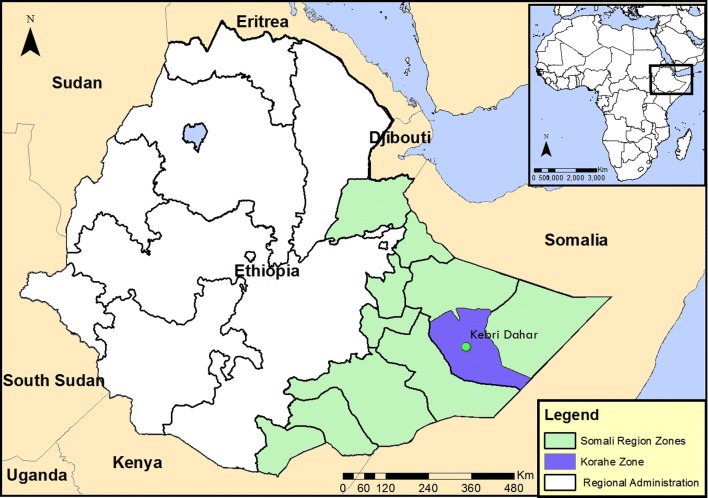
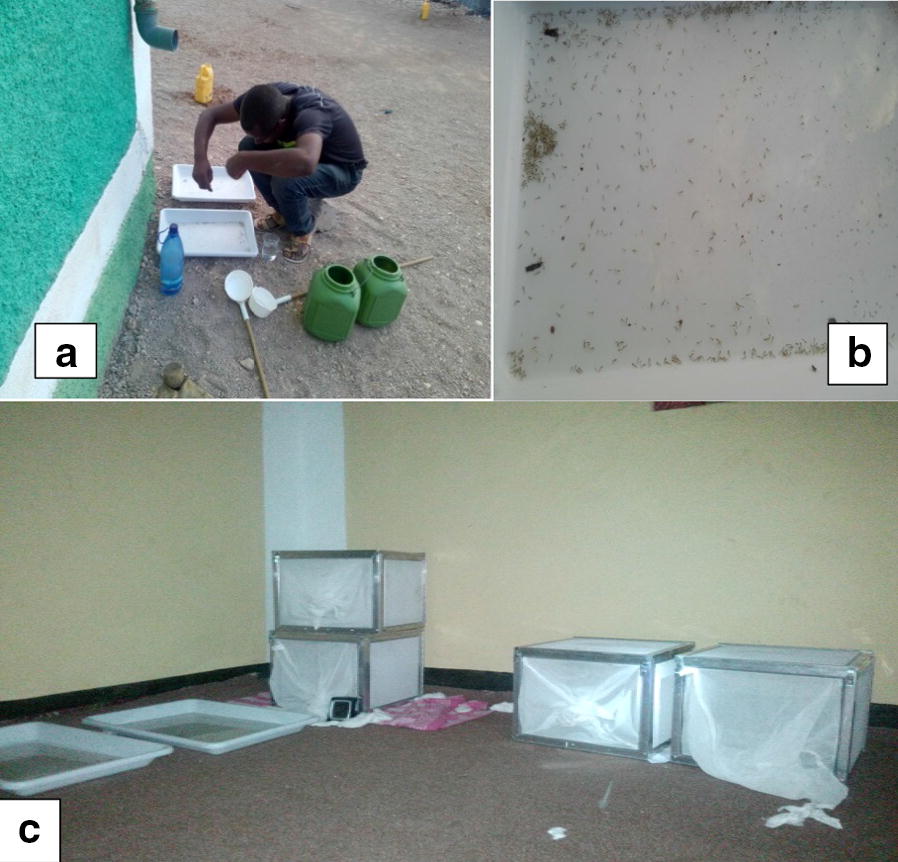
Background: The movement of malaria vectors into new areas is a growing concern in the efforts to control malaria. The recent report of Anopheles stephensi in eastern Ethiopia has raised the necessity to understand the insecticide resistance status of the vector in the region to better inform vector-based interventions. The aim of this study was to evaluate insecticide resistance in An. stephensi in eastern Ethiopia using two approaches: (1) World Health Organization (WHO) bioassay tests in An. stephensi; and (2) genetic analysis of insecticide resistance genes in An. stephensi in eastern Ethiopia. Methods: Mosquito larvae and pupae were collected from Kebri Dehar. Insecticide susceptibility of An. stephensi was tested with malathion 5%, bendiocarb 0.1%, propoxur 0.1%, deltamethrin 0.05%, permethrin 0.75%, pirimiphos-methyl 0.25% and DDT 4%, according to WHO standard protocols. In this study, the knockdown resistance locus ( kdr ) in the voltage gated sodium channel ( vgsc ) and ace1R locus in the acetylcholinesterase gene ( ace - 1 ) were analysed in An. stephensi . Results: All An. stephensi samples were resistant to carbamates, with mortality rates of 23% and 21% for bendiocarb and propoxur, respectively. Adult An. stephensi was also resistant to pyrethroid insecticides with mortality rates 67% for deltamethrin and 53% for permethrin. Resistance to DDT and malathion was detected in An. stephensi with mortality rates of 32% as well as An. stephensi was resistance to pirimiphos-methyl with mortality rates 14%. Analysis of the insecticide resistance loci revealed the absence of kdr L1014F and L1014S mutations and the ace1R G119S mutation. Conclusion: Overall, these findings support that An. stephensi is resistant to several classes of insecticides, most notably pyrethroids. However, the absence of the kdr L1014 gene may suggest non-target site resistance mechanisms. Continuous insecticide resistance monitoring should be carried out in the region to confirm the documented resistance and exploring mechanisms conferring resistance in An. stephensi in Ethiopia.
Overview
The claims and statistics of this paper haven’t been checked yet.
Free: it reads the open-access text and checks the first 5 claims that cite a source we can check. Create a free account to check every claim.
Integrity signals
Registry
Cites
Statistics
Figures
Verification
Claims the paper makes
The claims and statistics of this paper haven’t been checked yet.
Free: it reads the open-access text and checks the first 5 claims that cite a source we can check. Create a free account to check every claim.
Claims other papers make about this one
Each is checked against this paper’s own text: does it say what the citing paper says it does?
The source backs part of the claim, not all of it — or backs it for a different population, condition or comparison.
In the citing paper
“The species in Ethiopia was highly resistant to DDT, malathion, pirimiphos-methyl, bendiocarb, propoxur, deltamethrin, and permethrin [54].”
From Evolution of insecticide resistance and its mechanisms in Anopheles stephensi in the WHO Eastern Mediterranean Region (2020) · cites this paper as [54]
Experimental — accuracy not yet measuredThe source backs part of the claim, not all of it — or backs it for a different population, condition or comparison.
In the citing paper
“Recently, An. stephensi expanded its distribution range into Sri Lanka and the Horn of Africa, where it has been detected in Djibouti, Ethiopia and Sudan [49–54].”
From Evolution of insecticide resistance and its mechanisms in Anopheles stephensi in the WHO Eastern Mediterranean Region (2020) · cites this paper as [54]
Experimental — accuracy not yet measuredThe cited source says what the claim attributes to it.
In the citing paper
“Mortality after exposure to the discriminating concentrations of DDT, malathion, pirimiphos-methyl, bendiocarb, propoxur, permethrin and deltamethrin were 32%, 32%, 14%, 23%, 21%, 53% and 67%, respectively, revealing relatively high resistance to all those insecticides [54].”
From Evolution of insecticide resistance and its mechanisms in Anopheles stephensi in the WHO Eastern Mediterranean Region (2020) · cites this paper as [54]
The cited source says what the claim attributes to it.
In the citing paper
“The site insensitivity resistance mechanisms in An. stephensi from Ethiopia was studied but no kdr or ace1 traits were detected, this may imply the involvement of metabolic mechanisms [54].”
From Evolution of insecticide resistance and its mechanisms in Anopheles stephensi in the WHO Eastern Mediterranean Region (2020) · cites this paper as [54]
The cited source says what the claim attributes to it.
In the citing paper
“In this invasion, the mosquito takes its insecticide resistance heritage with it as in studies on the insecticide resistance in An. stephensi in Ethiopia and Sri Lanka, the species was resistant to major groups of insecticides [54, 55].”
From Evolution of insecticide resistance and its mechanisms in Anopheles stephensi in the WHO Eastern Mediterranean Region (2020) · cites this paper as [54]
Self-check
Percentages, sums and reported differences re-computed from the paper’s own numbers.
The self-check needs the paper’s full text.
Citations
Cites
A Method of Computing the Effectiveness of an Insecticide
Abbott, W. S. (1925) · Journal of Economic Entomology · doi:10.1093/jee/18.2.265a · Cited by 16,134
Murray, C. J. L., Vos, T., Lozano, R., Naghavi, M., Flaxman, A. D., Michaud, C., Ezzati, M., Shibuya, K., Salomon, J. A., Abdalla, S., et al. (2012) · The Lancet · doi:10.1016/s0140-6736(12)61689-4 · Cited by 8,888
A supplement to the Anophelinae of Africa south of the Sahara (Afrotropical Region).
Gillies, M. T., & Coetzee, M. (1987) · IHI Repository · Cited by 1,836
Insecticide Resistance in Insect Vectors of Human Disease
Hemingway, J., & Ranson, H. (2000) · Annual Review of Entomology · doi:10.1146/annurev.ento.45.1.371 · Cited by 1,558
Insecticide Resistance in Mosquitoes: Impact, Mechanisms, and Research Directions
Liu, N. (2015) · Annual Review of Entomology · doi:10.1146/annurev-ento-010814-020828 · Cited by 1,064
Ranson, H., Jensen, B., Vulule, J. M., Wang, X., Hemingway, J., & Collins, F. H. (2000) · Insect Molecular Biology · doi:10.1046/j.1365-2583.2000.00209.x · Cited by 645
Insecticide resistance in mosquito vectors
Weill, M., Lutfalla, G., Mogensen, K., Chandre, F., Berthomieu, A., Berticat, C., Pasteur, N., Philips, A., Fort, P., & Raymond, M. (2003) · Nature · doi:10.1038/423136b · Cited by 515
David, J.-P., Ismail, H. M., Chandor-Proust, A., & Paine, M. J. I. (2013) · Philosophical Transactions of the Royal Society B: Biological Sciences · doi:10.1098/rstb.2012.0429 · Cited by 399
Insecticide Control of Vector-Borne Diseases: When Is Insecticide Resistance a Problem?
Rivero, A., Vézilier, J., Weill, M., Read, A. F., & Gandon, S. (2010) · PLoS Pathogens · doi:10.1371/journal.ppat.1001000 · Cited by 395
Malaria epidemiology and interventions in Ethiopia from 2001 to 2016
Taffese, H. S., Hemming-Schroeder, E., Koepfli, C., Tesfaye, G., Lee, M.-C., Kazura, J., Yan, G.-Y., & Zhou, G.-F. (2018) · Infectious Diseases of Poverty · doi:10.1186/s40249-018-0487-3 · Cited by 268
Research works printed but not linked: 6
- WHO World malariar 2018 2018 Geneva World Health Organization
- WHO World malaria report 2017 2017 Geneva World Health Organization
- Ghebreyesus A Deressa W Witten K Getachew A Seboxa T Berhane Y Haile Marim D Kloos H Malaria Epidemiology and ecology of health and disease in Ethiopia 2006 Addis Ababa Shama Books 556 576
- WHO Vector alert: Anopheles stephensi invasion and spread: Horn of Africa, the Republic of the Sudan and surrounding geographical areas, and Sri Lanka 2019 Geneva World Health Organization
- Institute Ethiopian Public Health Ethiopia National Malaria Indicator Survey 2015 2016 Ethiopia Addis Ababa
- WHO Indoor residual spraying: an operational manual for indoor residual spraying (IRS) for malaria transmission control and elimination 2015 2 Geneva World Health Organization
Cited by
Emiru, T., Getachew, D., Murphy, M., Sedda, L., Ejigu, L. A., Bulto, M. G., Byrne, I., Demisse, M., Abdo, M., Chali, W., et al. (2023) · Nature Medicine · doi:10.1038/s41591-023-02641-9 · Cited by 162
“Considering the very high level of resistance of An. stephensi to the major insecticides in Ethiopia 18,54 , the repellent effect of the aerosol sprays is one explanation for the protective association observed in this study 55 .”
BackgroundChakraborty, M., Ramaiah, A., Adolfi, A., Halas, P., Kaduskar, B., Ngo, L. T., Jayaprasad, S., Paul, K., Whadgar, S., Srinivasan, S., et al. (2021) · BMC Biology · doi:10.1186/s12915-021-00963-z · Cited by 129
Balkew, M., Mumba, P., Yohannes, G., Abiy, E., Getachew, D., Yared, S., Worku, A., Gebresilassie, A., Tadesse, F. G., Gadisa, E., et al. (2021) · Malaria Journal · doi:10.1186/s12936-021-03801-3 · Cited by 117
Self-citationDoumbe-Belisse, P., Kopya, E., Ngadjeu, C. S., Sonhafouo-Chiana, N., Talipouo, A., Djamouko-Djonkam, L., Awono-Ambene, H. P., Wondji, C. S., Njiokou, F., & Antonio-Nkondjio, C. (2021) · Malaria Journal · doi:10.1186/s12936-021-03891-z · Cited by 118
Role of Anopheles stephensi Mosquitoes in Malaria Outbreak, Djibouti, 2019
de Santi, V. P., Khaireh, B. A., Chiniard, T., Pradines, B., Taudon, N., Larréché, S., Mohamed, A. B., de Laval, F., Berger, F., Gala, F., et al. (2021) · Emerging Infectious Diseases · doi:10.3201/eid2706.204557 · Cited by 93
“An. stephensi mosquitoes are well-established in Djibouti and have been observed in Sudan and Ethiopia (13).”
BackgroundInvasive Anopheles stephensi in Africa: insights from Asia
Taylor, R., Messenger, L. A., Abeku, T. A., Clarke, S. E., Yadav, R. S., & Lines, J. (2024) · Trends in Parasitology · doi:10.1016/j.pt.2024.06.008 · Cited by 79
Enayati, A., Hanafi-Bojd, A. A., Sedaghat, M. M., Zaim, M., & Hemingway, J. (2020) · Malaria Journal · doi:10.1186/s12936-020-03335-0 · Cited by 62
Morphological identification and genetic characterization of Anopheles stephensi in Somaliland
Ali, S., Samake, J. N., Spear, J., & Carter, T. E. (2022) · Parasites & Vectors · doi:10.1186/s13071-022-05339-y · Cited by 52
“The PCR analyses and sequencing were conducted using previously published protocols [10].”
BackgroundMethodSelf-citationHamlet, A., Dengela, D., Tongren, J. E., Tadesse, F. G., Bousema, T., Sinka, M., Seyoum, A., Irish, S. R., Armistead, J. S., & Churcher, T. (2022) · BMC Medicine · doi:10.1186/s12916-022-02324-1 · Cited by 60
“stephensi captured in Ethiopia [17, 18] suggest that pyrethroid-only ITNs (already in use across the country) will have a limited efficacy for control of malaria transmitted by A.”
BackgroundThe Phylodynamic and Spread of the Invasive Asian Malaria Vectors, Anopheles stephensi, in Sudan
Abubakr, M., Sami, H., Mahdi, I., Altahir, O., Abdelbagi, H., Mohamed, N. S., & Ahmed, A. (2022) · Biology · doi:10.3390/biology11030409 · Cited by 47
Al-Eryani, S. M., Irish, S. R., Carter, T. E., Lenhart, A., Aljasari, A., Montoya, L. F., Awash, A. A., Mohammed, E., Ali, S., Esmail, M. A., et al. (2023) · Malaria Journal · doi:10.1186/s12936-023-04545-y · Cited by 57
Self-citationPotential of Essential Oil-Based Anticholinesterase Insecticides against Anopheles Vectors: A Review
Rants’o, T. A., Koekemoer, L. L., Panayides, J., & van Zyl, R. L. (2022) · Molecules · doi:10.3390/molecules27207026 · Cited by 52
Genetic diversity of Anopheles stephensi in Ethiopia provides insight into patterns of spread
Carter, T. E., Yared, S., Getachew, D., Spear, J., Choi, S. H., Samake, J. N., Mumba, P., Dengela, D., Yohannes, G., Chibsa, S., et al. (2021) · Parasites & Vectors · doi:10.1186/s13071-021-05097-3 · Cited by 48
Self-citationRyan, S. J., Lippi, C. A., Villena, O. C., Singh, A., Murdock, C. C., & Johnson, L. R. (2023) · Malaria Journal · doi:10.1186/s12936-023-04531-4 · Cited by 48
“stephensi, such as acquired insecticide resistance [19] and greater range of thermal tolerance compared to An.”
BackgroundKorlević, P., McAlister, E., Mayho, M., Makunin, A., Flicek, P., & Lawniczak, M. (2021) · Genome Biology and Evolution · doi:10.1093/gbe/evab226 · Cited by 48
Muhammed, M., Dugassa, S., Belina, M., Zohdy, S., Irish, S. R., & Gebresilassie, A. (2022) · Malaria Journal · doi:10.1186/s12936-022-04320-5 · Cited by 47
“stephensi were reported to be resisted by adults [12, 23], thus, this bioassay did not have any synthetic insecticide as a positive control.”
BackgroundWhittaker, C., Hamlet, A., Sherrard-Smith, E., Winskill, P., Cuomo-Dannenburg, G., Walker, P. G. T., Sinka, M., Pironon, S., Kumar, A., Ghani, A., et al. (2023) · Proceedings of the National Academy of Sciences · doi:10.1073/pnas.2216142120 · Cited by 43
“Stephensi (55–57), and recent populations assayed in Ethiopia showed resistance to all four major insecticide classes (34, 58), suggesting that IRS might have a lower impact than suggested here.”
Ahn, J., Sinka, M., Irish, S., & Zohdy, S. (2023) · Scientific Reports · doi:10.1038/s41598-023-27439-0 · Cited by 38
Alipanah, H., Abdollahi, A., Firooziyan, S., Zarenezhad, E., Jafari, M., & Osanloo, M. (2022) · Interdisciplinary Perspectives on Infectious Diseases · doi:10.1155/2022/1616149 · Cited by 40
“Furthermore, excessive use of insecticides has led to resistance in mosquito populations and environmental pollution [36, 37].”
BackgroundTeshome, A., Erko, B., Golassa, L., Yohannes, G., Irish, S. R., Zohdy, S., Yoshimizu, M. H., & Dugassa, S. (2023) · Malaria Journal · doi:10.1186/s12936-023-04649-5 · Cited by 32
“stephensi from other areas in Ethiopia has been reported to be resistant to most of the insecticides used for indoor residual spraying (IRS) and long-lasting insecticidal nets (LLINs) [1, 13].”
BackgroundYared, S., Gebresilassie, A., Aklilu, E., Abdulahi, E., Kirstein, O. D., González‐Olvera, G., Che‐Mendoza, A., Bibiano-Marín, W., Waymire, E., Lines, J., et al. (2023) · The Lancet Planetary Health · doi:10.1016/s2542-5196(23)00250-4 · Cited by 29
“22,23,25,26 The evidence gathered so far shows that in the rainy season, An stephensi larvae are found in a wide array of small and large artificial containers, ranging from large water cisterns to car tyres and buckets.”
Self-citationFactors enhancing the transmission of mosquito-borne arboviruses in Africa
Ngouanet, S. A., Wanji, S., Yadouléton, A., Demanou, M., Djouaka, R., & Nanfack-Minkeu, F. (2022) · VirusDisease · doi:10.1007/s13337-022-00795-7 · Cited by 28
“Nevertheless, many vector species of public health importance have already developed resistance to one or more insecticides [48, 77, 84, 85].”
BackgroundCarter, T. E., Gebresilassie, A., Hansel, S., Damodaran, L., Montgomery, C., Bonnell, V. A., López, K., Janies, D. A., & Yared, S. (2022) · American Journal of Tropical Medicine and Hygiene · doi:10.4269/ajtmh.20-1357 · Cited by 26
“Mosquitoes were collected as larvae and laboratory-reared for testing for resistance to insecticides as previously detailed.(18) An.”
BackgroundMethodSelf-citationSamake, J. N., Athinya, D. K., Milanoi, S., Ramaita, E., Muchoki, M., Omondi, S., Abong’o, B., Matoke-Muhia, D., Mbogo, C. M., Keitany, K., et al. (2025) · Scientific Reports · doi:10.1038/s41598-025-04682-1 · Cited by 25
“However, a more detailed examination of the Kenyan samples revealed the presence of three distinct clades, previously described in the literature [2].”
Functional Coatings by Natural and Synthetic Agents for Insect Control and Their Applications
Coetzee, D., Militký, J., & Venkataraman, M. (2022) · Coatings · doi:10.3390/coatings12040476 · Cited by 24
First detection of Anopheles stephensi in Ghana using molecular surveillance
Afrane, Y. A., Abdulai, A., Mohammed, A. R., Akuamoah-Boateng, Y., Owusu-Asenso, C. M., Sraku, I. K., Yanney, S. A., Malm, K., & Lobo, N. F. (2023) · doi:10.1101/2023.12.01.569589 · Cited by 22
Teshome, A., Erko, B., Golassa, L., Yohannes, G., Irish, S. R., Zohdy, S., & Dugassa, S. (2023) · Malaria Journal · doi:10.1186/s12936-023-04475-9 · Cited by 22
“Anopheles stephensi in Ethiopia is resistant to most insecticides used in current malaria vector control tools, insecticide treated bed-nets (ITN) and indoor residual spraying (IRS) [7, 9], so larviciding might be an effective control method [7].”
BackgroundAcford-Palmer, H., Phelan, J. E., Tadesse, F. G., Kristan, M., Collins, E. L., Spadar, A., Walker, T., Bousema, T., Messenger, L. A., Clark, T. G., et al. (2023) · Scientific Reports · doi:10.1038/s41598-023-32336-7 · Cited by 21
Urban malaria in sub-Saharan Africa: a scoping review of epidemiologic studies
Merga, H., Degefa, T., Birhanu, Z., Tadele, A., Lee, M.-C., Yan, G., & Yewhalaw, D. (2025) · Malaria Journal · doi:10.1186/s12936-025-05368-9 · Cited by 20
Liang, Y., Liu, J., Wu, Y., Wu, Y., & Xi, Z. (2024) · PLoS neglected tropical diseases · doi:10.1371/journal.pntd.0012523 · Cited by 19
Gao, H., Hu, W., Cui, C., Wang, Y., Zheng, Y., Jacobs‐Lorena, M., & Wang, S. (2025) · PLoS Pathogens · doi:10.1371/journal.ppat.1013431 · Cited by 20
Samake, J. N., Yared, S., Getachew, D., Mumba, P. P., Dengela, D., Yohannes, G., Chibsa, S., Choi, S. H., Spear, J., Irish, S. R., et al. (2022) · Infection Genetics and Evolution · doi:10.1016/j.meegid.2022.105235 · Cited by 19
“Recent insecticide resistance surveillance in Ethiopia revealed pyrethroid resistance in the An. stephensi populations (Balkew et al., 2021; PMI, 2020; Yared et al., 2020).”
Self-citationMerga, H., Degefa, T., Birhanu, Z., Abiy, E., Lee, M., Yan, G., & Yewhalaw, D. (2024) · Malaria Journal · doi:10.1186/s12936-024-05126-3 · Cited by 19
Woldesenbet, D., Tegegne, Y., Mussema, A., Tamene, E., Mohamed, K., Abebe, W., Mekuria, M., Bogale, K., Geremew, H., Shifa, M. M., et al. (2025) · Frontiers in Malaria · doi:10.3389/fmala.2025.1492444 · Cited by 19
Wolbachia 16S rRNA haplotypes detected in wild Anopheles stephensi in eastern Ethiopia
Waymire, E., Duddu, S., Yared, S., Getachew, D., Dengela, D., Bordenstein, S. R., Balkew, M., Zohdy, S., Irish, S. R., & Carter, T. E. (2022) · Parasites & Vectors · doi:10.1186/s13071-022-05293-9 · Cited by 17
“stephensi to pyrethroids, carbamates, and organophosphates, suggesting the need for alternative methods of vector control to prevent the prevalence of malaria from increasing [8, 9].”
BackgroundMethodSelf-citationGenomics of urban adaptation and exaptation in mosquitoes and consequences for vectorial capacity
Fifer, J. E., Amoa‐Bosompem, M., Nelson, D., Terner, E. R., Clifford, A. J., Tan, S., & Rose, N. H. (2025) · Current Opinion in Insect Science · doi:10.1016/j.cois.2025.101384 · Cited by 18
“Intriguingly, An. stephensi in Somalia shows resistance to several insecticides in the absence of target-site resistance alleles, potentially reflecting a similar history of niche divergence [28].”
Dykes, C. L., Sharma, G., Behera, A. K., Kapoor, N., Paine, M. J. I., Donnelly, M. J., & Singh, O. P. (2022) · Scientific Reports · doi:10.1038/s41598-022-21522-8 · Cited by 16
Moustapha, L. M., Sanda, A., Mukhtar, M. M., Muhammad, A., Einoi, H. K., Aliyu, Y. Y., Adamu, S., Moudalabi, T. M., Lawali, I. Y., Moussa, A.-H. D., et al. (2025) · Scientific Reports · doi:10.1038/s41598-025-07389-5 · Cited by 15
“Anopheles stephensi is known to exhibit high resistance to multiple classes of public health insecticides commonly used in vector control 15,16,26 .”
Yared, S., Dengela, D., Mumba, P. P., Chibsa, S., Zohdy, S., Irish, S. R., Yoshimizu, M. H., Balkew, M., Akuno, A., Perkins, T. A., et al. (2025) · Malaria Journal · doi:10.1186/s12936-025-05589-y · Cited by 15
Self-citationAnopheles stephensi: a guest to watch in urban Africa
Kweka, E. J. (2022) · Tropical Diseases Travel Medicine and Vaccines · doi:10.1186/s40794-022-00165-7 · Cited by 15
“In An. stephensi, the insecticides resistance has been reported in Sudan and Ethiopia [8, 19, 20].”
BackgroundInfluentialPlanetary health approaches to understand and control vector-borne diseases
Finch, E., Batista, M. L., Alcayna, T., Lee, S. A., Fletcher, I. K., & Lowe, R. (2023) · Wageningen Academic Publishers eBooks · doi:10.1163/9789004688650 · Cited by 15
Urban malaria and population mobility in sub-Saharan Africa: systematic review and meta-analysis
Merga, H., Degefa, T., Birhanu, Z., Lee, M., Yan, G., & Yewhalaw, D. (2025) · Malaria Journal · doi:10.1186/s12936-025-05508-1 · Cited by 14
Bionomics of Anopheles stephensi across the urban–rural landscapes of Eastern Ethiopia
Degefa, T., Zhong, D., Lee, M., Merga, H., Abiy, E., Wang, X., Zhou, G., Kifle, T., Yewhalaw, D., & Yan, G. (2025) · Malaria Journal · doi:10.1186/s12936-025-05527-y · Cited by 14
“In many parts of Ethiopia, An. stephensi is resistant to almost all classes of insecticides used for malaria vector control [26, 38, 47].”
InfluentialThe origin, history, and resistance architecture of an invasive urban malaria mosquito in Africa
Dennis, T. P. W., Sulieman, J. E., Nouredayem, M., Ashine, T., Ebstie, Y. A., Eyasu, A., Simma, E. A., Zemene, E., Negash, N., Yigeremu, A., et al. (2026) · Science · doi:10.1126/science.adx6925 · Cited by 14
Cannabis sativa: A look at protozoa, helminths, insect vectors, and pests
Guerra, R. O., Neto, J. R. D. C., da Silva, P. E. F., Borges, Y. L. L., Franco, P. I. R., Machado, J. R., & da Silva, M. V. (2023) · Fitoterapia · doi:10.1016/j.fitote.2023.105467 · Cited by 14
Osanloo, M., Firoozian, S., Zarenezhad, E., Montaseri, Z., & Satvati, S. (2022) · Interdisciplinary Perspectives on Infectious Diseases · doi:10.1155/2022/1645485 · Cited by 13
“In addition, the spread of the species to Sudan, Somalia, Laos, Cambodia, Vietnam, and the Maldives has also raised concerns among public health officials [5, 6].”
BackgroundZhong, D., Degefa, T., Zhou, G., Lee, M., Wang, X., Chen, J., Yewhalaw, D., & Yan, G. (2024) · Genes · doi:10.3390/genes15121603 · Cited by 13
Akirso, A., Tamiru, G., Eligo, N., Lindtjørn, B., & Massebo, F. (2024) · Parasitology Research · doi:10.1007/s00436-024-08121-4 · Cited by 13
“Additionally, this species has developed resistance to various insecticides such as DDT, pirimiphos-methyl, propoxur, bendiocarb, and deltamethrin (Yared et al. 2020), which makes it challenging to prevent its spread to new locations.”
BackgroundSamano, A., Kumar, N., Liao, Y., Ishtiaq, F., & Chakraborty, M. (2025) · Molecular Biology and Evolution · doi:10.1093/molbev/msaf140 · Cited by 12
“Thus, both GST duplication alleles could be linked to the DDT resistance observed in Asian and African populations of An . stephensi (Raghavendra et al. 2017; Yared et al. 2020).”
Abadi, Y. S., Sanei-Dehkordi, A., Paksa, A., Gorouhi, M. A., & Vatandoost, H. (2021) · Journal of arthropod-borne diseases · doi:10.18502/jad.v15i1.6484 · Cited by 11
Challenges to Malaria Elimination in Ethiopia by 2030: A Review
Adugna, T. (2025) · Journal of Tropical Medicine · doi:10.1155/jotm/3144857 · Cited by 10
“Recently, various reports [26, 51] indicated the ability of A. stephensi resistance to the four classes of insecticides commonly used for malaria control in Ethiopia (Table 1).”
Vectorial drivers of malaria transmission in Jabi Tehnan district, Amhara Regional State, Ethiopia
Belay, A. K., Asale, A., Sole, C. L., Kinya, F., Yusuf, A. A., Torto, B., Mutero, C. M., & Tchouassi, D. P. (2024) · Scientific Reports · doi:10.1038/s41598-024-64436-3 · Cited by 10
“In Ethiopia, surveillance efforts have revealed emerging threats to malaria control including widespread pyrethroid resistance as in An. arabiensis, and likewise in the recently introduced vector An. stephensi 10,11 .”
BackgroundAmorim, Q. S., Rodovalho, C. D. M., Loureiro, A. C., Serravale, P., Bellinato, D. F., Guimarães, P., Corbel, V., Martins, A. J., & Lima, J. B. P. (2025) · Malaria Journal · doi:10.1186/s12936-025-05385-8 · Cited by 10
Anopheles stephensi: The emerging vector of malaria in the Republic of Djibouti, Horn of Africa
Govoétchan, R., Ibrahim, M. M., Sovi, A., Omar, H., Boulhan, A., & Darar, H. Y. (2023) · International Journal of Biosciences (IJB) · doi:10.12692/ijb/22.1.8-17 · Cited by 9
Leveraging Earth observation data for surveillance of vector-borne diseases in changing environments
Fornace, K., Johnson, E., Moreno, M., Hardy, A., & Carrasco‐Escobar, G. (2023) · Wageningen Academic Publishers eBooks · doi:10.3920/9789004688650_013 · Cited by 9
Acford-Palmer, H., Tadesse, F. G., Mańko, E., Phelan, J. E., Higgins, M., Osborne, A. A., Kristan, M., Walker, T., Bousema, T., Messenger, L. A., et al. (2025) · Scientific Reports · doi:10.1038/s41598-025-95814-0 · Cited by 8
Dugassa, S., Kebede, T., Abdulatif, B., Assefa, G., Solomon, H., Getachew, D., Lelisa, K., & Gebresilassie, A. (2025) · Parasites & Vectors · doi:10.1186/s13071-025-06765-4 · Cited by 8
“In the field evaluation, various water storage containers such as barrels, geometric plastic reservoirs, overhead water containers and jerry cans in Awash Sebat Kilo and Metahara were devoid of An. stephensi larvae and pupae, contrasting with prior studies [11, 33, 34].”
A quantitative and systematic analysis of Anopheles stephensi bionomics and control approaches
Mwema, T., Zohdy, S., Sundaram, M., Lepczyk, C. A., Narine, L. L., & Willoughby, J. R. (2024) · Acta Tropica · doi:10.1016/j.actatropica.2024.107431 · Cited by 8
“…chemicals used in both the native (Enayati et al., 2020; Eshghy and Janbakhsh, 1976; Gorouhi et al., 2018; Safi et al., 2019; Vatandoost and Hanafi-Bojd, 2012) and invasive range (Ahmed et al., 2022; Ali et al., 2022; Balkew et al., 2021; Govoetchan et al., 2023; Yared et al., 2020).”
Nikpour, F., Vatandoost, H., Hanafi‐Bojd, A. A., Raeisi, A., Mirolyaie, A., Mojahedi, A., Yaryan, M., Banar, A., Kaveh, F., Abbasi, M. A., et al. (2024) · Tropical Medicine & International Health · doi:10.1111/tmi.14028 · Cited by 8
“…Ethiopia, one of the African countries where invasive malaria vector, An . ste-phensi , was recently discovered, resistance to all 4 groups of insecticides has been reported, which is exactly in line with the results of our study Except for the organophosphorus group, which was sensitive [42, 43].”
Saberi, N., Raeisi, A., Gorouhi, M. A., Vatandoost, H., Mashayekhi, M., Nikpour, F., Bozorgomid, F., Foroushani, A. R., & Hanafi‐Bojd, A. A. (2021) · Journal of Medical Entomology · doi:10.1093/jme/tjab214 · Cited by 8
Assada, M., Al-Hadi, M., Esmail, M. A., Al-Jurban, J., Alkawri, A., Shamsan, A., Terreri, P., Samake, J. N., Aljasari, A., Awash, A. A., et al. (2024) · Emerging Infectious Diseases · doi:10.3201/eid3007.240331 · Cited by 7
“With growing evidence of An. stephensi mosquito resistance to mul - tiple classes of insecticides ( 3 , 4 ), its association with a recent malaria outbreak ( 5 ), and genomic evidence that outbreak sites may also be central locations for An. stephensi mosquito travel to new areas ( 6 ), con - cerns…”
BackgroundSelf-citationAlemayehu, G., Gebresilassie, A., Woldetsadik, D., Gebre, S. H., Megersa, M., Damme, P. V., & Yared, S. (2024) · Pharmacological Research - Natural Products · doi:10.1016/j.prenap.2024.100122 · Cited by 7
“Recent studies have shown that an Asian malaria vector, Anopheles stephesni, was present in the region; it is most likely the urban malaria vector in the area [19, 20].”
Self-citationTadesse, S., Abay, S. M., Mekonen, E., Ejigu, A., Ebstie, Y. A., Haileselassie, W., & Engidawork, E. (2025) · Malaria Journal · doi:10.1186/s12936-025-05443-1 · Cited by 7
“Thus, malaria vector control will be at risk without proper insecticide management and development of new chemicals [7, 8].”
Balkew, M., Mumba, P. P., Yohannes, G., Abiy, E., Getachew, D., Yared, S., Worku, A., Gebresilassie, A., Tadesse, F. G., Gadisa, E., et al. (2021) · Research Square · doi:10.21203/rs.3.rs-499226/v1 · Cited by 7
Self-citationYewhalaw, D., Erena, E., Degefa, T., Kifle, Y. G., Zemene, E., & Simma, E. A. (2025) · Scientific Reports · doi:10.1038/s41598-024-80019-8 · Cited by 6
Abiy, E., Degefa, T., Balkew, M., Merga, H., Alemayehu, E., Mitiku, A., Lee, M., Yan, G., & Yewhalaw, D. (2025) · Scientific Reports · doi:10.1038/s41598-025-15798-9 · Cited by 6
“Previous studies in Kebri Dehar and Eastern Ethiopia indicated that An.stephensi was highly resistant to pyrethroids, DDT, pirimiphos-methyl and carbamates 13,14 ,but pre-exposure to piperonylbutoxide (PBO) increases susceptibility to pyrethroids 8,44 .”
InfluentialInsecticide Resistance Status of Malaria Vectors in a Malarious Area, Southeast of Iran
Nejati, J., Moosa‐Kazemi, S. H., Oshaghi, M. A., Badzohre, A., Pirmohammadi, M., Saeidi, Z., Naseri-Karimi, N., Parkhideh, S. Z., & Vatandoost, H. (2022) · Journal of arthropod-borne diseases · doi:10.18502/jad.v15i3.9815 · Cited by 6
“Published Online: Sep 30, 2021 propoxur, deltamethrin, permethrin, DDT, malathion and pirimiphos-methyl in Somali region (18).”
BackgroundKhan, J., Zhang, D., Gholizadeh, S., Deng, Y., Aziz, A., Chen, J., Shah, P. T., Lv, Z., & Chen, T. (2025) · Tropical Medicine and Infectious Disease · doi:10.3390/tropicalmed10040109 · Cited by 5
“Recent reports from Africa highlight the species’ rapid adaptation to new environments, raising concerns about its potential to undermine malaria control in urban regions [18].”
Investigation of the efficacy of essential oils used in pest control
Uçkun, A. A., & Karakoyun, S. (2023) · Journal of Entomology and Zoology Studies · doi:10.22271/j.ento.2023.v11.i1c.9154 · Cited by 5
Gebresilassie, A., Aklilu, E., Yared, S., Abdulahi, E., Darasa, K. A., habib, A. A., Witka, W. N., Ahmed, H. O., Hagezom, D., Kassa, T., et al. (2025) · Parasites & Vectors · doi:10.1186/s13071-025-07100-7 · Cited by 4
Self-citationExpanding the transgene expression toolbox of the malaria vector Anopheles stephensi
Southworth, J., González, E., Nevard, K., Larrosa‐Godall, M., Alphey, L., & Anderson, M. A. E. (2024) · Insect Molecular Biology · doi:10.1111/imb.12953 · Cited by 4
Moin, S. (2021) · JOURNAL OF COMMUNICABLE DISEASES · doi:10.24321/0019.5138.202151 · Cited by 4
Sanei-Dehkordi, A., Paksa, A., Gorouhi, M. A., Soleimani-Ahmadi, M., Jaberhashemi, S. A., & Abadi, Y. S. (2024) · Malaria Journal · doi:10.1186/s12936-024-05042-6 · Cited by 4
“These researchers have suggested that the resistance to pyrethroids observed in the species may be due to metabolic or other mechanisms [14].”
BackgroundHiggins, M., Kristan, M., Collins, E. L., Messenger, L. A., Dombrowski, J. G., Vanheer, L. N., Nolder, D., DRAKELEY, C. J., Stone, W. J., Mahamar, A., et al. (2024) · Scientific Reports · doi:10.1038/s41598-024-71129-4 · Cited by 5
Ayana, G. M., Jalilian, A., Ashine, T., Molla, E., Hailemeskel, E., Yemane, D. H., Yirgu, H., Negash, N., Teferi, N., Teshome, D., et al. (2024) · Malaria Journal · doi:10.1186/s12936-024-05189-2 · Cited by 5
Merga, H., Degefa, T., Birhanu, Z., Abiy, E., Lee, M., Yan, G., & Yewhalaw, D. (2025) · BMC Infectious Diseases · doi:10.1186/s12879-025-11841-2 · Cited by 3
“If left uncontrolled, its spread across the Horn of Africa, coupled with rapid and poorly planned urbanization, could escalate the risk of malaria outbreaks in African cities [6, 10, 11, 13, 26–28].”
Moin, S. (2021) · JOURNAL OF COMMUNICABLE DISEASES · doi:10.24321/0019.5138.202109 · Cited by 3
González‐Olvera, G., Yared, S., Aklilu, E., Gebresilassie, A., Bibiano-Marín, W., Che‐Mendoza, A., Kirstein, O. D., Vazquez‐Prokopec, G. M., & Manrique-Saide, P. C. (2023) · Journal of the American Mosquito Control Association · doi:10.2987/23-7141 · Cited by 3
Self-citationAnopheles stephensi and the risk of increased urban malaria in South Africa
Kaiser, M., Dahan-Moss, Y., Koekemoer, L. L., Shandukani, M., Yewhalaw, D., & Brooke, B. D. (2025) · South African Journal of Science · doi:10.17159/sajs.2025/18359 · Cited by 3
“27,35,36”
Insecticide Resistance in Vectors of Medically Important Parasitic Infections
Kaura, T., Sharma, N., & Mewara, A. (2022) · IntechOpen eBooks · doi:10.5772/intechopen.100583 · Cited by 3
Barasa, S., Aemro, M., Abebe, W., Daka, D., Addisu, B., Tamene, E., Woldesenbet, D., & Zeleke, A. J. (2025) · Scientific Reports · doi:10.1038/s41598-025-96370-3 · Cited by 2
“According to Chanyalew T, Balkew M, Yared, and their colleagues, permethrin, alphacypermethrin, and deltamethrin all demonstrate comparable degrees of resistance of this study 9,52,53 .”
Munywoki, D. N., MWANGANGI, J. M., Moise, I. K., Kokwaro, E. D., Odero, J. O., & Muturi, E. J. (2025) · Medical and Veterinary Entomology · doi:10.1111/mve.70042 · Cited by 2
Badzohre, A., Oshaghi, M. A., Enayati, A., Moosa‐Kazemi, S. H., Nikookar, S. H., Talebzadeh, F., Naseri-Karimi, N., Hanafi‐Bojd, A. A., & Vatandoost, H. (2024) · Journal of arthropod-borne diseases · doi:10.18502/jad.v17i3.14987 · Cited by 2
“Resistance of An. stephensi to different insecticides classes has been reported in the Horn of Africa and Asia (4, 9, 17, 18).”
BackgroundTraditional/Indigenous Education of Ethiopia
Kassaye, W. (2024) · Curriculum studies worldwide · doi:10.1007/978-3-031-68286-5_3 · Cited by 2
Hajibeygi, R., Hejripour, Z., Taghavi, N., Shahali, H., Zarei, S., Nouri, M., Mirahmadi, H., Tabatabaei, S. M., Solgi, R., & Darvishi, M. (2023) · Journal of Vector Borne Diseases · doi:10.4103/0972-9062.383648 · Cited by 2
Rao, S., Samake, J. N., Rafferty, C., Mumba, P., Chibsa, S., Balkew, M., Khaireh, B. A., Guelleh, S. K., Ibrahim, M. M., Abdi, A. A., et al. (2026) · Parasites & Vectors · doi:10.1186/s13071-026-07532-9 · Cited by 1
Conclusion: Will Deserts Transform into Malaria Hotspots Tomorrow?
Tyagi, B. K. (2023) · Springer eBooks · doi:10.1007/978-981-19-7693-3_25
Burnett, A. I., Izurieta, R., Hoare, I., Choudhari, N., Casanova, J., Yost, B., Mbogo, C. M., MWANGANGI, J. M., Rono, M. K., Masys, A. J., et al. (2023) · American Journal of Entomology · doi:10.11648/j.aje.20230704.11
Birmeka, M., & Taye, M. (2024) · International Journal of Mosquito Research · doi:10.22271/23487941.2024.v11.i4a.787
Geleta, M., Simma, E. A., & Yewhalaw, D. (2025) · Research Square · doi:10.21203/rs.3.rs-7704930/v1
Beyena, T., Lelisa, K., & Mendefro, B. (2026) · Malaria Journal · doi:10.1186/s12936-026-05916-x
“Anopheles stephensi , initially identified in 2016 in the Somalia region of Ethiopia, has not been reported to spread eastward from its original region [16, 18, 19].”
Teshome, A., Erko, B., Golassa, L., Yohannes, G., Irish, S. R., Zohdy, S., & Dugassa, S. (2023) · Figshare · doi:10.6084/m9.figshare.22603493
Ryan, S. J., Lippi, C. A., Villena, O. C., Singh, A., Murdock, C. C., & Johnson, L. R. (2023) · Figshare · doi:10.6084/m9.figshare.22624522
Waymire, E., Duddu, S., Yared, S., Getachew, D., Dengela, D., Bordenstein, S. R., Balkew, M., Zohdy, S., Irish, S. R., & Carter, T. E. (2022) · Figshare · doi:10.6084/m9.figshare.19863066
Self-citationCarter, T. E., Yared, S., Getachew, D., Spear, J., Choi, S. H., Samake, J. N., Mumba, P., Dengela, D., Yohannes, G., Chibsa, S., et al. (2021) · Figshare · doi:10.6084/m9.figshare.17163236
Self-citationMatera, M., Nolden, M., Horstmann, S., Nimmo, D. D., Paine, M. J. I., & Weetman, D. (2026) · Current Research in Parasitology and Vector-Borne Diseases · doi:10.1016/j.crpvbd.2026.100347
“…appear to be more attributable to metabolic resistance, with both cytochrome P450s and esterases implicated and mutations in the sodium channel and acetylcholinesterase target sites, which are common in Anopheles gambiae , rare or absent, respectively (Enayati et al., 2020; Yared et al., 2020).”
Orogun, Y. G., Ogunlana, O. O., Taiwo, D. I., & Fadare, O. A. (2026) · Journal of arthropod-borne diseases · doi:10.18502/jad.v19i3.20889
“(34)”
Yehwalaw, D., Erena, E., Degefa, T., Zemene, E., Simma, E. A., & Kifle, Y. G. (2025) · Maryland Shared Open Access Repository (USMAI Consortium) · doi:10.13016/m2xujk-avgb
Etude de l’hémozoïne des gamétocytes de Plasmodium falciparum et impact de la ganaplacide
Omorou, R. (2023) · theses.fr (ABES) · doi:10.70675/720f7c2bzb3cfz440cz949dz402cd0670aec
Metadata
- Authors
- Yared, S., Gebressielasie, A., Damodaran, L., Bonnell, V., Lopez, K., Janies, D., & Carter, T. E.
- Affiliations
- Jigjiga University (ET)
- Addis Ababa University (ET)
- University of Georgia (US)
- Pennsylvania State University (US)
- University of North Carolina at Charlotte (US)
- Baylor University (US)
- Corresponding author
- Yared, Solomon
- Venue
- Malaria Journal
- Published
- 2020-05-12
- Volume
- 19
- Issue
- 1
- Pages
- 180-180
- ISSN
- 1475-2875 (ISSN-L)
- PMC
- PMC7216317
- OpenAlex
- W3028509029
- Cited by
- 111
- References
- 37
- Citations by year
- 2026: 8 · 2025: 26 · 2024: 20 · 2023: 23 · 2022: 17 · 2021: 15 · 2020: 2
- FWCI
- 10.67
- Type
- journal article
- Language
- en
- Open access
- gold
- doi.org
- Licence
- cc-by
- creativecommons.org/licenses/by/4.0 (tdm)
- creativecommons.org/licenses/by/4.0 (vor)
- Locations
- Malaria Journal (publishedVersion, cc-by)
- Research Square (acceptedVersion, cc-by)
- PubMed Central (publishedVersion, cc-by)
- PubMed (publishedVersion)
- DOAJ (DOAJ: Directory of Open Access Journals) (submittedVersion, cc-by-sa)
- Funders
- Jigjiga University, Research Directorate
- Topics
- Health Sciences › Medicine › Public Health, Environmental and Occupational Health › Malaria Research and Control
- Life Sciences › Biochemistry, Genetics and Molecular Biology › Molecular Biology › Insect Resistance and Genetics
- Life Sciences › Immunology and Microbiology › Parasitology › Vector-borne infectious diseases
- Keywords
- Anopheles stephensi, insecticide resistance, malaria vectors, pyrethroid resistance, kdr mutation, carbamate resistance, deltamethrin, permethrin, non-target-site resistance, vector control, Somali region
- MeSH terms
- Mosquito Vectors, Animals, Anopheles, Ethiopia, Female, Insecticide Resistance, Insecticides, Mosquito Control
About these checks
Registry, retraction, Cites and statistics results are computed, not judged, with one exception: a printed reference that no index lists is read once by a model before it counts as a citation error. Claims are extracted by a model and kept only when their quote appears verbatim in the text; each cited source is then checked, with a model’s help, for whether it says what the claim relies on. Those verdicts can be wrong — read the claim’s quote and the cited source before relying on one.
Statistics and arithmetic are recomputed, not judged.
Confidence bands are shown only for fields calibrated on our annotated test set. None is calibrated yet, so no band is shown.
What counts as a claim ›How we measure confidence ›How we check this ›
Are you an author, or do you see a problem with this page? Request a review
Data sources
Bibliographic data: Semantic Scholar, OpenAlex, Crossref.
Contains information from the Semantic Scholar Academic Graph Datasets, made available under the ODC Attribution License (ODC-BY 1.0).
Semantic Scholar’s data is described in: Kinney, R., et al. (2023). The Semantic Scholar Open Data Platform. arXiv:2301.10140.
