

Aurora kinase targeting in lung cancer reduces KRAS-induced transformation
Open accessThe DOI matches its Crossref record; 69 of the 69 references it cites were found in a registry or an index.
Abstract
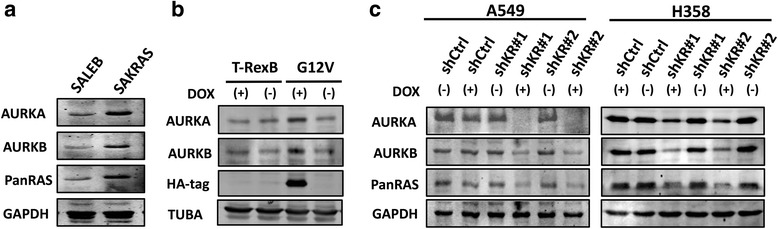
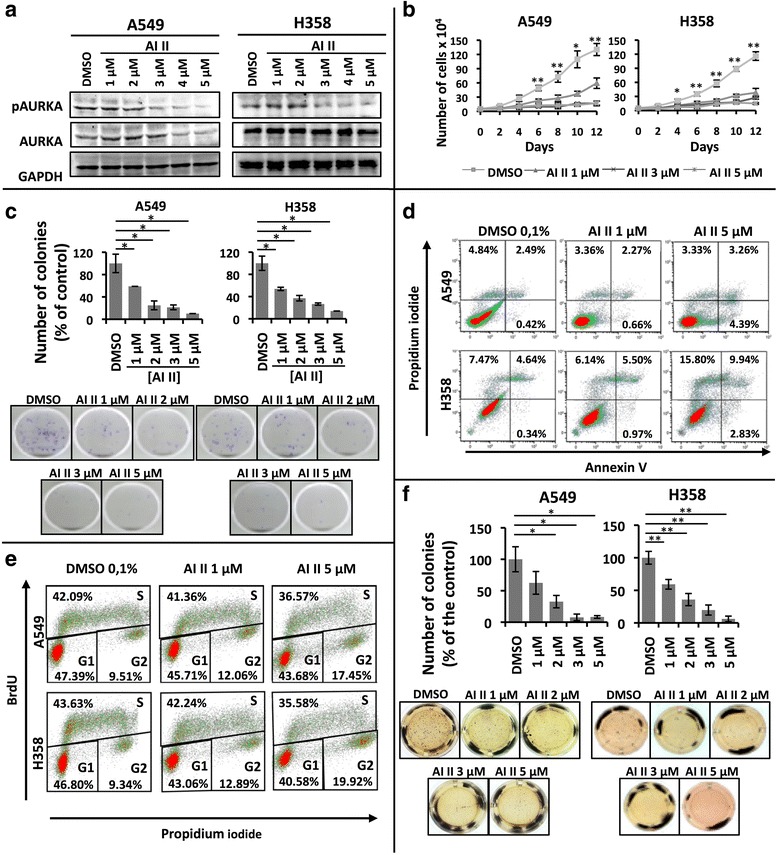
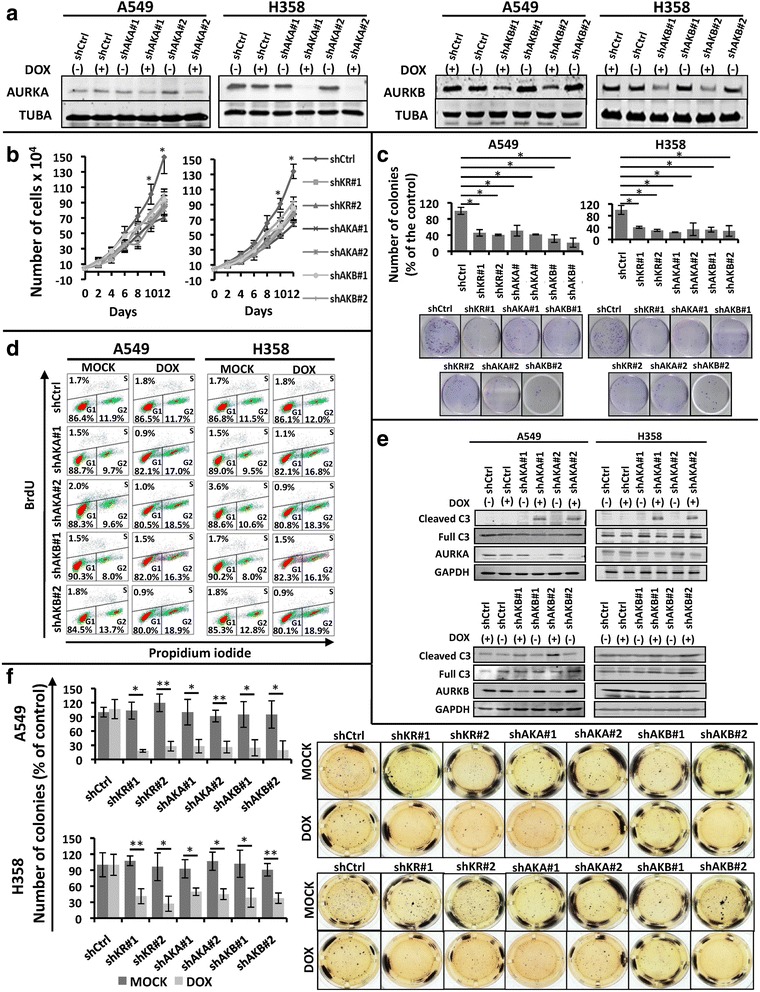
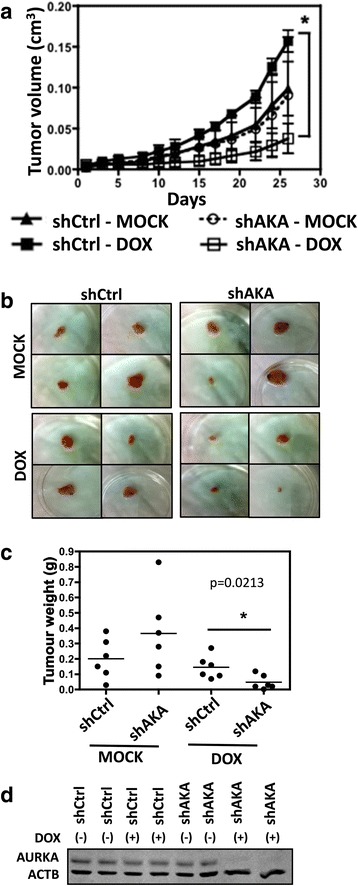
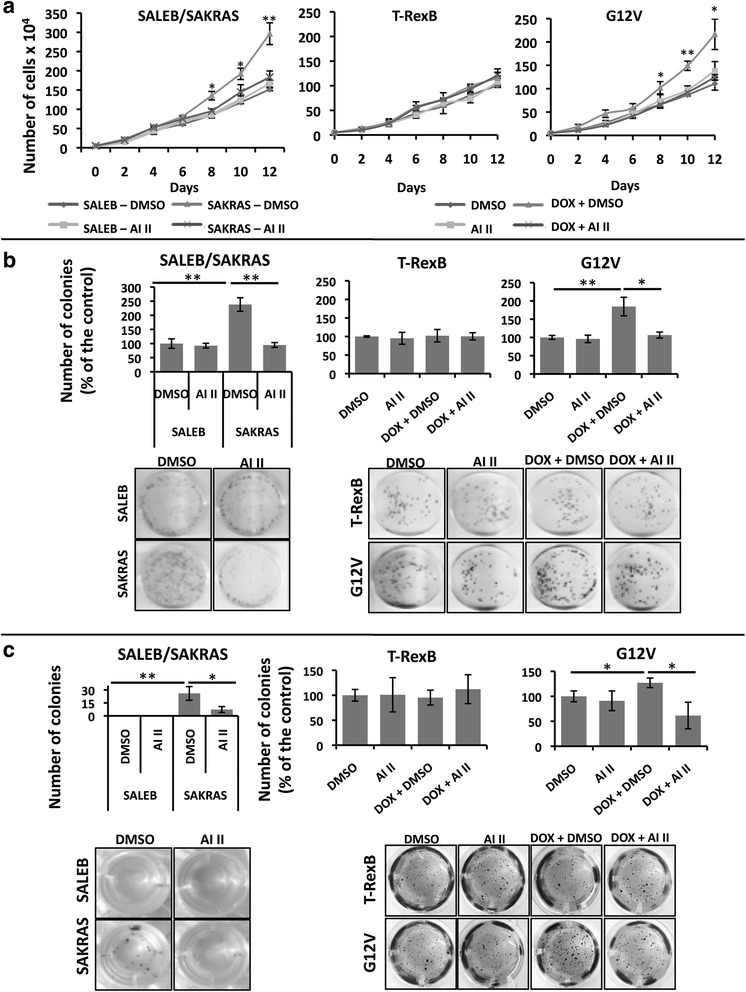
Background: Activating mutations in KRAS are prevalent in lung cancer and have been causally linked to the oncogenic process. However, therapies targeted to oncogenic RAS have been ineffective to date and identification of KRAS targets that impinge on the oncogenic phenotype is warranted. Based on published studies showing that mitotic kinases Aurora A (AURKA) and B (AURKB) cooperate with oncogenic RAS to promote malignant transformation and that AURKA phosphorylates RAS effector pathway components, the aim of this study was to investigate whether AURKA and AURKB are KRAS targets in lung cancer and whether targeting these kinases might be therapeutically beneficial. Methods: In order to determine whether oncogenic KRAS induces Aurora kinase expression, we used qPCR and western blotting in three different lung cell-based models of gain- or loss-of-function of KRAS. In order to determine the functional role of these kinases in KRAS-induced transformation, we generated KRAS-positive A549 and H358 cells with stable and inducible shRNA-mediated knockdown of AURKA or AURKB and evaluated transformation in vitro and tumor growth in vivo. In order to validate AURKA and/or AURKB as therapeutically relevant KRAS targets in lung cancer, we treated A549 and H358 cells, as well as two different lung cell based models of gain-of-function of KRAS with a dual Aurora kinase inhibitor and performed functional in vitro assays. Results: We determined that KRAS positively regulates AURKA and AURKB expression. Furthermore, in KRAS-positive H358 and A549 cell lines, inducible knockdown of AURKA or AURKB, as well as treatment with a dual AURKA/AURKB inhibitor, decreased growth, viability, proliferation, transformation, and induced apoptosis in vitro. In addition, inducible shRNA-mediated knockdown of AURKA in A549 cells decreased tumor growth in vivo. More importantly, dual pharmacological inhibiton of AURKA and AURKB reduced growth, viability, transformation, and induced apoptosis in vitro in an oncogenic KRAS-dependent manner, indicating that Aurora kinase inhibition therapy can specifically target KRAS-transformed cells. Conclusions: Our results support our hypothesis that Aurora kinases are important KRAS targets in lung cancer and suggest Aurora kinase inhibition as a novel approach for KRAS-induced lung cancer therapy.
Overview
The claims and statistics of this paper haven’t been checked yet.
Free: it reads the open-access text and checks the first 5 claims that cite a source we can check. Create a free account to check every claim.
Integrity signals
Registry
Cites
Statistics
Figures
Verification
Claims the paper makes
The claims and statistics of this paper haven’t been checked yet.
Free: it reads the open-access text and checks the first 5 claims that cite a source we can check. Create a free account to check every claim.
Claims other papers make about this one
Each is checked against this paper’s own text: does it say what the citing paper says it does?
The source backs part of the claim, not all of it — or backs it for a different population, condition or comparison.
In the citing paper
“On one hand, aberrant activation of KRAS and downstream MAPK/ERK signaling promotes AURKA overexpression [129–131].”
From Differential Response and Resistance to KRAS-Targeted Therapy (2025) · cites this paper as [129]
Experimental — accuracy not yet measured
Self-check
Percentages, sums and reported differences re-computed from the paper’s own numbers.
The self-check needs the paper’s full text.
Citations
Cites
Siegel, R. L., Miller, K. D., & Jemal, A. (2015) · CA: A Cancer Journal for Clinicians · doi:10.3322/caac.21254 · Cited by 11,853
Hypoxia-mediated selection of cells with diminished apoptotic potential in solid tumours
Graeber, T. G., Osmanian, C., Jacks, T., Housman, D. E., Koch, C. J., Lowe, S. W., & Giaccia, A. J. (1996) · Nature · doi:10.1038/379088a0 · Cited by 2,300 · cited 1×
“In addition, hypoxia is known to select cells that have lost their apoptotic potential [66], so it is also likely that an initial apoptotic response to AURKA inhibition might have occurred, leading to expansion of apoptotic resistant cells and failure to detect apoptotic cells at the endpoint.”
BackgroundDrugging the undruggable RAS: Mission Possible?
Cox, A. D., Fesik, S. W., Kimmelman, A. C., Luo, J., & Der, C. J. (2014) · Nature Reviews Drug Discovery · doi:10.1038/nrd4389 · Cited by 1,997 · cited 2×
“Considering that targeting traditional KRAS effectors has so far had limited success [1, 4], the identification of novel KRAS targets that impinge on the oncogenic phenotype is warranted in order to increase the possibilities of combinatorial therapy design and achieve therapeutic efficacy.”
BackgroundRAS oncogenes: weaving a tumorigenic web
Pylayeva-Gupta, Y., Grabocka, E., & Bar-Sagi, D. (2011) · Nature Reviews Cancer · doi:10.1038/nrc3106 · Cited by 1,789 · cited 1×
“Targeting KRAS downstream effectors has also been challenging, as KRAS regulates a multitude of effectors that contribute to the oncogenic phenotype [2, 3].”
BackgroundTumour amplified kinase STK15/BTAK induces centrosome amplification, aneuploidy and transformation
Zhou, H., Kuang, J., Zhong, L., Kuo, W.-L., Gray, J., Sahin, A., Brinkley, B., & Sen, S. (1998) · Nature Genetics · doi:10.1038/2496 · Cited by 1,276 · cited 2×
“In addition, both kinases have been implicated in promoting oncogenesis [20–25].”
BackgroundResultHarrington, E. A., Bebbington, D., Moore, J., Rasmussen, R. K., Ajose-Adeogun, A. O., Nakayama, T., Graham, J. A., Demur, C., Hercend, T., Diu-Hercend, A., et al. (2004) · Nature Medicine · doi:10.1038/nm1003 · Cited by 965
Stephen, A. G., Esposito, D., Bagni, R. K., & McCormick, F. (2014) · Cancer Cell · doi:10.1016/j.ccr.2014.02.017 · Cited by 795 · cited 1×
“Considering that targeting traditional KRAS effectors has so far had limited success [1, 4], the identification of novel KRAS targets that impinge on the oncogenic phenotype is warranted in order to increase the possibilities of combinatorial therapy design and achieve therapeutic efficacy.”
BackgroundEngelman, J. A., & Jänne, P. A. (2008) · Clinical Cancer Research · doi:10.1158/1078-0432.ccr-07-2248 · Cited by 703
Structural Basis of Aurora-A Activation by TPX2 at the Mitotic Spindle
Bayliss, R., Sardon, T., Vernos, I., & Conti, E. (2003) · Molecular Cell · doi:10.1016/s1097-2765(03)00392-7 · Cited by 636 · cited 1×
“for AURKA activity [44, 45].”
Roles of Aurora Kinases in Mitosis and Tumorigenesis
Fu, J., Bian, M., Jiang, Q., & Zhang, C. (2007) · Molecular Cancer Research · doi:10.1158/1541-7786.mcr-06-0208 · Cited by 614 · cited 2×
“This is consistent with the fact that AURKA and AURKB are master regulators of mitosis [10, 11], and that Aurora kinase inhibition is known to promote cell cycle arrest and apoptosis [14, 15].”
BackgroundResultPhosphorylation by aurora kinase A induces Mdm2-mediated destabilization and inhibition of p53
Katayama, H., Sasai, K., Kawai, H., Yuan, Z.-M., Bondaruk, J., Suzuki, F., Fujii, S., Arlinghaus, R. B., Czerniak, B. A., & Sen, S. (2004) · Nature Genetics · doi:10.1038/ng1279 · Cited by 588 · cited 1×
“In addition, these kinases have been shown to promote genetic instability leading to aneuploidy [21, 26–29] and to block p53 function, thereby preventing cell apoptosis [30, 31].”
BackgroundA Novel Mechanism for Activation of the Protein Kinase Aurora A
Eyers, P. A., Erikson, E., Chen, L. G., & Maller, J. L. (2003) · Current Biology · doi:10.1016/s0960-9822(03)00166-0 · Cited by 369 · cited 1×
“for AURKA activity [44, 45].”
Ota, T., Suto, S., Katayama, H. G., Han, Z.-B., Suzuki, F., Maeda, M., Tanino, M., Terada, Y., & Tatsuka, M. (2002) · PubMed · Cited by 351
Wang, X., Zhou, Y.-X., Qiao, W., Tominaga, Y., Ouchi, M., Ouchi, T., & Deng, C.-X. (2006) · Oncogene · doi:10.1038/sj.onc.1209707 · Cited by 261 · cited 1×
“Aurora A expression can transform cells and induce tumor formation in mice [24, 26] and Aurora B overexpression promotes lung carcinogenesis and increased invasiveness in vivo [25].”
BackgroundImmortalization and transformation of primary human airway epithelial cells by gene transfer
Lundberg, A. S., Randell, S. H., Stewart, S. A., Elenbaas, B., Hartwell, K. A., Brooks, M. W., Fleming, M. D., Olsen, J. C., Miller, S. W., Weinberg, R. A., et al. (2002) · Oncogene · doi:10.1038/sj.onc.1205550 · Cited by 258
Divergent Roles for RalA and RalB in Malignant Growth of Human Pancreatic Carcinoma Cells
Lim, K.-H., O'Hayer, K., Adam, S. J., Kendall, S. D., Campbell, P. M., Der, C. J., & Counter, C. M. (2006) · Current Biology · doi:10.1016/j.cub.2006.10.023 · Cited by 250 · cited 1×
“Targeting KRAS indirectly through its downstream effectors is also complicated by the number and crosstalk of pathways regulated by KRAS that contribute to the malignant phenotype [46, 47].”
Backgroundden Hollander, J., Rimpi, S., Doherty, J. R., Rudelius, M., Buck, A., Hoellein, A., Kremer, M., Graf, N., Scheerer, M., Hall, M. A., et al. (2010) · Blood · doi:10.1182/blood-2009-11-251074 · Cited by 242 · cited 4×
“Finally, both kinases have been proposed to mediate the oncogenic effects of MYC [49], an oncogenic transcription factor known to be positively regulated by RAS [48].”
BackgroundResultInfluentialAurora kinase inhibitors: Progress towards the clinic
Kollareddy, M., Zheleva, D., Dzubak, P., Brahmkshatriya, P. S., Lepsik, M., & Hajduch, M. (2012) · Investigational New Drugs · doi:10.1007/s10637-012-9798-6 · Cited by 242 · cited 1×
“The potential for clinical translation is further underscored by the fact that different Aurora kinase inhibitors, including alisertib and danusertib are undergoing phase II/III clinical trials for different malignancies [15, 59, 67, 68], even though very few combination trials using these drugs are currently ongoing.”
BackgroundALK Inhibition for Non-Small Cell Lung Cancer: From Discovery to Therapy in Record Time
Gerber, D. E., & Minna, J. D. (2010) · Cancer Cell · doi:10.1016/j.ccr.2010.11.033 · Cited by 220 · cited 1×
“genic events that are infrequent in lung cancer [6, 7].”
BackgroundEGFR-mutated lung cancer: a paradigm of molecular oncology
Zhang, Z., Stiegler, A. L., Boggon, T. J., Kobayashi, S., & Halmos, B. (2010) · Oncotarget · doi:10.18632/oncotarget.186 · Cited by 197
Aurora B kinase phosphorylates and instigates degradation of p53
Gully, C. P., Velazquez-Torres, G., Shin, J.-H., Fuentes-Mattei, E., Wang, E., Carlock, C., Chen, J., Rothenberg, D., Adams, H. P., Choi, H. H., et al. (2012) · Proceedings of the National Academy of Sciences · doi:10.1073/pnas.1110287109 · Cited by 189 · cited 1×
“In addition, these kinases have been shown to promote genetic instability leading to aneuploidy [21, 26–29] and to block p53 function, thereby preventing cell apoptosis [30, 31].”
BackgroundSmith, S. L., Bowers, N. L., Betticher, D. C., Gautschi, O., Ratschiller, D., Hoban, P. R., Booton, R., Santibáñez-Koref, M. F., & Heighway, J. (2005) · British Journal of Cancer · doi:10.1038/sj.bjc.6602779 · Cited by 153 · cited 2×
“Interestingly, AURKA and AURKB expression levels have been used as diagnostic and prognostic markers in lung cancer [16–19, 52], suggesting that these kinases play a role in lung oncogenesis.”
BackgroundWang, G., Jiang, Q., & Zhang, C. (2014) · Journal of Cell Science · doi:10.1242/jcs.151753 · Cited by 150
Zhang, D., Hirota, T., Marumoto, T., Shimizu, M., Kunitoku, N., Sasayama, T., Arima, Y., Feng, L., Suzuki, M., Takeya, M., et al. (2004) · Oncogene · doi:10.1038/sj.onc.1208153 · Cited by 147
Li, J. J., Weroha, S. J., Lingle, W. L., Papa, D., Salisbury, J. L., & Li, S. A. (2004) · Proceedings of the National Academy of Sciences · doi:10.1073/pnas.0408273101 · Cited by 142 · cited 1×
“Aurora A expression can transform cells and induce tumor formation in mice [24, 26] and Aurora B overexpression promotes lung carcinogenesis and increased invasiveness in vivo [25].”
BackgroundHayama, S., Daigo, Y., Yamabuki, T., Hirata, D., Kato, T., Miyamoto, M., Ito, T., Tsuchiya, E., Kondo, S., & Nakamura, Y. (2007) · Cancer Research · doi:10.1158/0008-5472.can-06-4705 · Cited by 134
Heron, N. M., Anderson, M., Blowers, D. P., Breed, J., Eden, J. M., Green, S., Hill, G. B., Johnson, T., Jung, F. H., McMiken, H. H. J., et al. (2005) · Bioorganic & Medicinal Chemistry Letters · doi:10.1016/j.bmcl.2005.11.053 · Cited by 128
Aurora-A Phosphorylates, Activates, and Relocalizes the Small GTPase RalA
Lim, K.-H., Brady, D. C., Kashatus, D. F., Ancrile, B. B., Der, C. J., Cox, A. D., & Counter, C. M. (2010) · Molecular and Cellular Biology · doi:10.1128/mcb.00916-08 · Cited by 126 · cited 5×
“Lim KH, OHayer K, Adam SJ, Kendall SD, Campbell PM, Der CJ, et al. Divergent roles for RalA and RalB in malignant growth of human pancreatic carcinoma cells.”
BackgroundInfluentialVischioni, B., Oudejans, J. J., Vos, W., Rodriguez, J. A., & Giaccone, G. (2006) · Molecular Cancer Therapeutics · doi:10.1158/1535-7163.mct-06-0301 · Cited by 126 · cited 2×
“Interestingly, AURKA and AURKB expression levels have been used as diagnostic and prognostic markers in lung cancer [16–19, 52], suggesting that these kinases play a role in lung oncogenesis.”
BackgroundCancer Targets in the Ras Pathway
Rodriguez‐Viciana, P., Tetsu, O., ODA, K., Okada, J., Rauen, K. A., & McCormick, F. P. (2005) · Cold Spring Harbor Symposia on Quantitative Biology · doi:10.1101/sqb.2005.70.044 · Cited by 115 · cited 2×
“Discussion In spite of recent studies that provide new promising strategies for targeting KRAS directly [1–4], effective therapies for KRAS-induced malignancies, including KRAS-induced lung cancer, are still unavailable.”
BackgroundAurora at the pole and equator: overlapping functions of Aurora kinases in the mitotic spindle
Hochegger, H., Hégarat, N., & Pereira-Leal, J. B. (2013) · Open Biology · doi:10.1098/rsob.120185 · Cited by 112 · cited 2×
“This is consistent with the fact that AURKA and AURKB are master regulators of mitosis [10, 11], and that Aurora kinase inhibition is known to promote cell cycle arrest and apoptosis [14, 15].”
BackgroundResultTatsuka, M., Sato, S., Kitajima, S., Suto, S., Kawai, H., Miyauchi, M., Ogawa, I., Maeda, M., Ota, T., & Takata, T. (2004) · Oncogene · doi:10.1038/sj.onc.1208293 · Cited by 106 · cited 2×
“Because both AURKA and AURKB can cooperate with RAS to promote malignant transformation [28, 32–37], and because AURKA can activate the RAS downstream effector RalA [39], we hypothesized that KRAS could promote Aurora kinase expression, as part of its oncogenic activity.”
BackgroundAntineoplastic effects of an Aurora B kinase inhibitor in breast cancer
Gully, C., Zhang, F., Chen, J., Yeung, J. A., Velázquez-Torres, G., Wang, E., Yeung, S. J., & Lee, M. (2010) · Molecular Cancer · doi:10.1186/1476-4598-9-42 · Cited by 106 · cited 2×
“These results are consistent with other studies showing that these kinases are important for cancer cell growth, viability and in vivo tumorigenicity [37, 53–56].”
BackgroundResultDeregulated Aurora‐B induced tetraploidy promotes tumorigenesis
Nguyen, H. G., Makitalo, M., Yang, D., Chinnappan, D., St.Hilaire, C., & Ravid, K. (2009) · The FASEB Journal · doi:10.1096/fj.09-130963 · Cited by 101 · cited 1×
“In addition, these kinases have been shown to promote genetic instability leading to aneuploidy [21, 26–29] and to block p53 function, thereby preventing cell apoptosis [30, 31].”
BackgroundIzar, B., Zhou, H., Heist, R. S., Azzoli, C. G., Muzikansky, A., Scribner, E. E. F., Bernardo, L. A., Dias-Santagata, D. C., Iafrate, A. J., & Lanuti, M. D. (2014) · Journal of Thoracic Oncology · doi:10.1097/jto.0000000000000266 · Cited by 98 · cited 1×
“with poor prognosis and therapy resistance [8, 9].”
Chromosome Instability Modulated by BMI1–AURKA Signaling Drives Progression in Head and Neck Cancer
Chou, C.-H., Yang, N.-K., Liu, T.-Y., Tai, S.-K., Hsu, D. S.-S., Chen, Y.-W., Chen, Y.-J., Chang, C.-C., Tzeng, C.-H., & Yang, M.-H. (2013) · Cancer Research · doi:10.1158/0008-5472.can-12-2397 · Cited by 94 · cited 2×
“In addition, both kinases have been implicated in promoting oncogenesis [20–25].”
BackgroundResultAurora kinase inhibitor patents and agents in clinical testing: an update (2011 – 2013)
Cheung, C. H. A., Sarvagalla, S., Lee, J. Y.-C., Huang, Y.-C., & Coumar, M. S. (2014) · Expert Opinion on Therapeutic Patents · doi:10.1517/13543776.2014.931374 · Cited by 91
Aurora B: A New Prognostic Marker and Therapeutic Target in Cancer
Portella, G., Passaro, C., & Chieffi, P. (2011) · Current Medicinal Chemistry · doi:10.2174/092986711794480203 · Cited by 89 · cited 3×
“Even though these kinases are being investigated as therapeutic targets, and specific Aurora kinase inhibitors have been developed and are undergoing clinical trials for different malignancies [14, 15, 38], it is not known whether these kinases are KRAS targets in lung oncogenesis, or if targeting these kinases could…”
BackgroundResultZhou, N., Singh, K., Mir, M. C., Parker, Y., Lindner, D. J., Dreicer, R., Ecsedy, J., Zhang, Z., Teh, B. T., Almasan, A., et al. (2013) · Clinical Cancer Research · doi:10.1158/1078-0432.ccr-12-2383 · Cited by 89 · cited 2×
“These results are consistent with other studies showing that these kinases are important for cancer cell growth, viability and in vivo tumorigenicity [37, 53–56].”
BackgroundResultTakeshita, M., Koga, T., Takayama, K., Ijichi, K., Yano, T., Maehara, Y., Nakanishi, Y., & Sueishi, K. (2013) · Lung Cancer · doi:10.1016/j.lungcan.2012.12.018 · Cited by 87
Aurora-B/AIM-1 kinase activity is involved in Ras-mediated cell transformation
Kanda, A., Kawai, H., Suto, S., Kitajima, S., Sato, S., Takata, T., & Tatsuka, M. (2005) · Oncogene · doi:10.1038/sj.onc.1208884 · Cited by 81 · cited 2×
“Because both AURKA and AURKB can cooperate with RAS to promote malignant transformation [28, 32–37], and because AURKA can activate the RAS downstream effector RalA [39], we hypothesized that KRAS could promote Aurora kinase expression, as part of its oncogenic activity.”
BackgroundDanusertib, an aurora kinase inhibitor
Meulenbeld, H. J., Mathijssen, R. H. J., Verweij, J., de Wit, R., & Jonge, M. J. D. (2012) · Expert Opinion on Investigational Drugs · doi:10.1517/13543784.2012.652303 · Cited by 78 · cited 1×
“The potential for clinical translation is further underscored by the fact that different Aurora kinase inhibitors, including alisertib and danusertib are undergoing phase II/III clinical trials for different malignancies [15, 59, 67, 68], even though very few combination trials using these drugs are currently ongoing.”
BackgroundProgress in the Development of Selective Inhibitors of Aurora Kinases
Mortlock, A. A., Keen, N., Jung, F. H., Heron, N. M., Foote, K. M., Wilkinson, R. W., & Green, S. (2005) · Current Topics in Medicinal Chemistry · doi:10.2174/1568026054637719 · Cited by 77
Oke, A., Pearce, D., Wilkinson, R. W., Crafter, C., Odedra, R., Cavenagh, J. D., Fitzgibbon, J., Lister, A. T., Joel, S., & Bonnet, D. A. (2009) · Cancer Research · doi:10.1158/0008-5472.can-08-3203 · Cited by 72
Patel, A. V., Eaves, D. W., Jessen, W. J., Rizvi, T. A., Ecsedy, J., Qian, M. G., Aronow, B. J., Perentesis, J. P., Serra, E., Cripe, T. P., et al. (2012) · Clinical Cancer Research · doi:10.1158/1078-0432.ccr-12-1072 · Cited by 72 · cited 4×
“Tatsuka M, Sato S, Kitajima S, Suto S, Kawai H, Miyauchi M, et al. Overexpression of Aurora-A potentiates HRAS-mediated oncogenic transformation and is implicated in oral carcinogenesis.”
BackgroundInfluentialAurora kinase A inhibitors: promising agents in antitumoral therapy
Malumbres, M., & de Castro, I. P. (2014) · Expert Opinion on Therapeutic Targets · doi:10.1517/14728222.2014.956085 · Cited by 71 · cited 4×
“Even though these kinases are being investigated as therapeutic targets, and specific Aurora kinase inhibitors have been developed and are undergoing clinical trials for different malignancies [14, 15, 38], it is not known whether these kinases are KRAS targets in lung oncogenesis, or if targeting these kinases could…”
BackgroundResultInfluentialLIMK2 is a crucial regulator and effector of Aurora-A-kinase-mediated malignancy
Johnson, E. O., Chang, K., Ghosh, S., Chelvam, V., Giger, K., Low, P. S., & Shah, K. (2012) · Journal of Cell Science · doi:10.1242/jcs.092304 · Cited by 68 · cited 1×
“LIMK2 by AURKA [64].”
Bachireddy, P., Bendapudi, P. K., & Felsher, D. W. (2005) · Clinical Cancer Research · doi:10.1158/1078-0432.ccr-05-0534 · Cited by 66 · cited 2×
“Finally, both kinases have been proposed to mediate the oncogenic effects of MYC [49], an oncogenic transcription factor known to be positively regulated by RAS [48].”
BackgroundResultIacono, M. L., Monica, V., Saviozzi, S., Ceppi, P., Bracco, E., Papotti, M. G., & Scagliotti, G. V. (2011) · Journal of Translational Medicine · doi:10.1186/1479-5876-9-100 · Cited by 66
Sourisseau, T., Maniotis, D., McCarthy, A., Tang, C., Lord, C. J., Ashworth, A., & Linardopoulos, S. (2010) · EMBO Molecular Medicine · doi:10.1002/emmm.201000068 · Cited by 65 · cited 1×
“Aurora kinases A and B belong to a new family of serine/threonine kinases, which are essential regulators of mitosis [10, 11] and have been recently implicated in DNA repair [12, 13].”
BackgroundAurora kinase A mediates c‐Myc's oncogenic effects in hepatocellular carcinoma
Lu, L.-F., Han, H., Tian, Y., Li, W., Zhang, J., Feng, M., & Li, Y. (2014) · Molecular Carcinogenesis · doi:10.1002/mc.22223 · Cited by 58 · cited 1×
“These results are also supported by the observation that AURKA and AURKB are required for in vivo maintenance of MYC-induced tumors [49, 50].”
ResultDoes the tumor microenvironment influence radiation-induced apoptosis?
Hunter, A., Hendrikse, A. S., Renan, M. J., & Abratt, R. P. (2006) · APOPTOSIS · doi:10.1007/s10495-006-9789-1 · Cited by 50
Phosphorylation of FADD by the kinase CK1α promotes KRAS G12D -induced lung cancer
Bowman, B. M., Sebolt, K. A., Hoff, B. A., Boes, J. L., Daniels, D. L., Heist, K. A., Galbán, C. J., Patel, R. M., Zhang, J., Beer, D. G., et al. (2015) · Science Signaling · doi:10.1126/scisignal.2005607 · Cited by 48 · cited 1×
“[51] reported that KRAS can induce phosphorylation of FADD by CK1α, and that phosphorylated FADD is, not only required for KRASinduced lung tumorigenesis, but also that it interacts with AURKA.”
BackgroundBiran, A., Brownstein, M., Haklai, R., & Kloog, Y. (2010) · International Journal of Cancer · doi:10.1002/ijc.25367 · Cited by 48 · cited 2×
“Because both AURKA and AURKB can cooperate with RAS to promote malignant transformation [28, 32–37], and because AURKA can activate the RAS downstream effector RalA [39], we hypothesized that KRAS could promote Aurora kinase expression, as part of its oncogenic activity.”
BackgroundMuñoz-Barrera, M., & Monje-Casas, F. (2014) · Proceedings of the National Academy of Sciences · doi:10.1073/pnas.1408017111 · Cited by 46 · cited 1×
“In addition, these kinases have been shown to promote genetic instability leading to aneuploidy [21, 26–29] and to block p53 function, thereby preventing cell apoptosis [30, 31].”
BackgroundLet7a inhibits the growth of endometrial carcinoma cells by targeting Aurora‐B
Liu, P., Qi, M., Ma, C., Lao, G., Liu, Y., Liu, Y., & Liu, Y. (2013) · FEBS Letters · doi:10.1016/j.febslet.2013.05.065 · Cited by 38 · cited 2×
“These results are consistent with other studies showing that these kinases are important for cancer cell growth, viability and in vivo tumorigenicity [37, 53–56].”
BackgroundResultYang, G. S., Mercado‐Uribe, I., Multani, A. S., Sen, S., Shih, I., Wong, K., Gershenson, D. M., & Liu, J. (2013) · International Journal of Cancer · doi:10.1002/ijc.28032 · Cited by 38
IKK is a therapeutic target in KRAS-induced lung cancer with disrupted p53 activity
Basseres, D. S., Ebbs, A., Cogswell, P. C., & Baldwin, A. S. (2014) · Genes & Cancer · doi:10.18632/genesandcancer.5 · Cited by 35 · cited 1×
“doxycycline administration [41].”
Self-citationTseng, Y.-S., Lee, J. C., Huang, C. F., & Liu, H. (2009) · BMC Cancer · doi:10.1186/1471-2407-9-435 · Cited by 32 · cited 2×
“Because both AURKA and AURKB can cooperate with RAS to promote malignant transformation [28, 32–37], and because AURKA can activate the RAS downstream effector RalA [39], we hypothesized that KRAS could promote Aurora kinase expression, as part of its oncogenic activity.”
BackgroundYeh, C., Yen, C., Chen, Y., Cheng, C., Huang, S., Chang, T.-W., Yao, F.-Y., Lin, Y., Wen, Y.-S., Chiang, K., et al. (2014) · Oncotarget · doi:10.18632/oncotarget.1705 · Cited by 27 · cited 1×
“Different studies have shown that Aurora targeting reduces cell transformation in vitro and tumorigenicity in vivo [50, 53–63], even though these studies did not evaluate Aurora kinase targeting in KRAS-driven oncogenesis.”
BackgroundRequirements for Aurora-A in Tissue Regeneration and Tumor Development in Adult Mammals
de Castro, I. P., Aguirre‐Portolés, C., Fernández‐Miranda, G., Cañamero, M., Cowley, D. O., Dyke, T. V., & Malumbres, M. (2013) · Cancer Research · doi:10.1158/0008-5472.can-13-0586 · Cited by 27 · cited 1×
“Different studies have shown that Aurora targeting reduces cell transformation in vitro and tumorigenicity in vivo [50, 53–63], even though these studies did not evaluate Aurora kinase targeting in KRAS-driven oncogenesis.”
BackgroundWang, X., Dong, L., Xie, J., Tong, T., & Zhan, Q. (2009) · Cancer Biology & Therapy · doi:10.4161/cbt.8.19.9550 · Cited by 26 · cited 2×
“These results are consistent with other studies showing that these kinases are important for cancer cell growth, viability and in vivo tumorigenicity [37, 53–56].”
BackgroundResultOhtaki, Y., Shimizu, K., Kakegawa, S., Nagashima, T., 中野, 哲., Atsumi, J., Enokida, Y., Igai, H., Ibe, T., Sugano, M., et al. (2013) · Molecular and Clinical Oncology · doi:10.3892/mco.2013.237 · Cited by 20 · cited 1×
“with poor prognosis and therapy resistance [8, 9].”
Jiang, Z., Jiang, J., Yang, H., Ge, Z., Wang, Q., Zhang, L., Wu, C., & Wang, J. (2014) · Oncology Reports · doi:10.3892/or.2014.2986 · Cited by 19 · cited 1×
“Different studies have shown that Aurora targeting reduces cell transformation in vitro and tumorigenicity in vivo [50, 53–63], even though these studies did not evaluate Aurora kinase targeting in KRAS-driven oncogenesis.”
BackgroundAlférez, D., Goodlad, R. A., Odedra, R., Sini, P., Crafter, C., Ryan, A. J., Wedge, S. R., WRIGHT, N. A., Anderson, E., & Wilkinson, R. W. (2012) · International Journal of Oncology · doi:10.3892/ijo.2012.1580 · Cited by 11
Xia, R., Chen, S., Chen, Y., Zhang, W., Zhu, R., & Deng, A. (2015) · OncoTargets and Therapy · doi:10.2147/ott.s81328 · Cited by 9 · cited 1×
“Interestingly, AURKA and AURKB expression levels have been used as diagnostic and prognostic markers in lung cancer [16–19, 52], suggesting that these kinases play a role in lung oncogenesis.”
BackgroundZhou, L., Xiong, X., LONG, X. H., Liu, Z., HUANG, S. H., & Zhang, W. (2014) · Oncology Letters · doi:10.3892/ol.2014.2464 · Cited by 8
RasV12 induces Survivin/AuroraB pathway conferring tumor cell apoptosis resistance
Hadj-Slimane, R., Pamonsinlapatham, P., Herbeuval, J., Garbay, C., Lepelletier, Y., & Raynaud, F. (2010) · Cellular Signalling · doi:10.1016/j.cellsig.2010.03.013 · Cited by 7 · cited 2×
“Because both AURKA and AURKB can cooperate with RAS to promote malignant transformation [28, 32–37], and because AURKA can activate the RAS downstream effector RalA [39], we hypothesized that KRAS could promote Aurora kinase expression, as part of its oncogenic activity.”
Background(2015) · Science Signaling · doi:10.1126/scisignal.aab0552 · Cited by 5
Cited by
The current state of the art and future trends in RAS-targeted cancer therapies
Punekar, S. R., Velcheti, V., Neel, B. G., & Wong, K.-K. (2022) · Nature Reviews Clinical Oncology · doi:10.1038/s41571-022-00671-9 · Cited by 549
Aurora‐A Kinase: A Potent Oncogene and Target for Cancer Therapy
Yan, M., Wang, C., He, B., Yang, M., Tong, M., Long, Z., Liu, B., Peng, F., Xu, L., Zhang, Y., et al. (2016) · Medicinal Research Reviews · doi:10.1002/med.21399 · Cited by 293
Wang-Bishop, L., Chen, Z., Gomaa, A. R., Lockhart, A. C., Salaria, S. N., Wang, J., Lewis, K. B., Ecsedy, J., Washington, K. M., Beauchamp, R. D., et al. (2018) · Gastroenterology · doi:10.1053/j.gastro.2018.10.030 · Cited by 95
Nuclear localisation of Aurora-A: its regulation and significance for Aurora-A functions in cancer
Naso, F. D., Boi, D., Ascanelli, C., Pamfil, G., Lindon, C., Paiardini, A., & Guarguaglini, G. (2021) · Oncogene · doi:10.1038/s41388-021-01766-w · Cited by 74
Targeting KRAS mutations: orchestrating cancer evolution and therapeutic challenges
Choucair, K., Imtiaz, H., Uddin, M. H., Nagasaka, M., Al-Hallak, M. N., Philip, P. A., El-Rayes, B., Pasche, B., & Azmi, A. S. (2025) · Signal Transduction and Targeted Therapy · doi:10.1038/s41392-025-02473-8 · Cited by 83
“283,284 In these cell lines, the knockdown of AURKA or AURKA/AURKB inhibition resulted in antitumor activity.”
Metadata
- Authors
- dos Santos, E. O., Carneiro-Lobo, T. C., Aoki, M. N., Levantini, E., & Bassères, D. S.
- Affiliations
- Universidade de São Paulo (BR)
- Beth Israel Deaconess Medical Center (US)
- Corresponding author
- Levantini, Elena
- Venue
- Molecular Cancer
- Published
- 2016-02-03
- Volume
- 15
- Issue
- 1
- Pages
- 12-12
- ISSN
- 1476-4598 (ISSN-L)
- PMC
- PMC4739397
- OpenAlex
- W2256178229
- Cited by
- 64
- References
- 69
- Citations by year
- 2026: 3 · 2025: 11 · 2024: 9 · 2023: 4 · 2022: 5 · 2021: 5 · 2020: 6 · 2019: 7 · 2018: 6 · 2017: 7 · 2016: 1
- FWCI
- 3.64
- Type
- journal article
- Language
- en
- Update notices
- correction (2024-03-09)
- Open access
- gold
- doi.org
- Licence
- cc-by
- creativecommons.org/licenses/by/4.0 (tdm)
- creativecommons.org/licenses/by/4.0 (vor)
- Locations
- Molecular Cancer (publishedVersion, cc-by)
- PubMed Central (publishedVersion, cc-by)
- PubMed (publishedVersion)
- Portuguese National Funding Agency for Science, Research and Technology (RCAAP Project by FCT) (publishedVersion)
- Digital Access to Scholarship at Harvard (DASH) (Harvard University) (submittedVersion, cc-by)
- Funders
- Fundação de Amparo à Pesquisa do Estado de São Paulo (2010/52685-9, 2012/13774-1, 2011/06709-6, 2011/15037-1)
- Flight Attendant Medical Research Institute (YCSA 072165, YCSA 052409, CIA 103063)
- Conselho Nacional de Desenvolvimento Científico e Tecnológico (166803/2013-8)
- Topics
- Life Sciences › Biochemistry, Genetics and Molecular Biology › Molecular Biology › Protein Kinase Regulation and GTPase Signaling
- Life Sciences › Biochemistry, Genetics and Molecular Biology › Cell Biology › Microtubule and mitosis dynamics
- Health Sciences › Medicine › Pulmonary and Respiratory Medicine › Lung Cancer Treatments and Mutations
- Keywords
- Aurora kinases, AURKA, Aurora B kinase, KRAS, lung cancer, oncogenic Ras, malignant transformation, mitotic kinases, shRNA knockdown, apoptosis, tumor growth, KRAS-targeted therapy
- MeSH terms
- Animals, Cell Transformation, Neoplastic, Lung Neoplasms, Male, Mice, Inbred BALB C, Mice, Nude, Phenotype, Proto-Oncogene Proteins p21(ras), Xenograft Model Antitumor Assays, RNA, Small Interfering, Cell Line, Tumor, Protein Kinase Inhibitors, Cell Proliferation, Gene Knockdown Techniques, Molecular Targeted Therapy, Aurora Kinase A, Aurora Kinase B
About these checks
Registry, retraction, Cites and statistics results are computed, not judged, with one exception: a printed reference that no index lists is read once by a model before it counts as a citation error. Claims are extracted by a model and kept only when their quote appears verbatim in the text; each cited source is then checked, with a model’s help, for whether it says what the claim relies on. Those verdicts can be wrong — read the claim’s quote and the cited source before relying on one.
Statistics and arithmetic are recomputed, not judged.
Confidence bands are shown only for fields calibrated on our annotated test set. None is calibrated yet, so no band is shown.
What counts as a claim ›How we measure confidence ›How we check this ›
Are you an author, or do you see a problem with this page? Request a review
Data sources
Bibliographic data: Semantic Scholar, OpenAlex, Crossref.
Contains information from the Semantic Scholar Academic Graph Datasets, made available under the ODC Attribution License (ODC-BY 1.0).
Semantic Scholar’s data is described in: Kinney, R., et al. (2023). The Semantic Scholar Open Data Platform. arXiv:2301.10140.
