

Aurora kinase targeting in lung cancer reduces KRAS-induced transformation
Open accessThe DOI matches its Crossref record; 69 of the 69 references it cites were found in a registry or an index.
Abstract
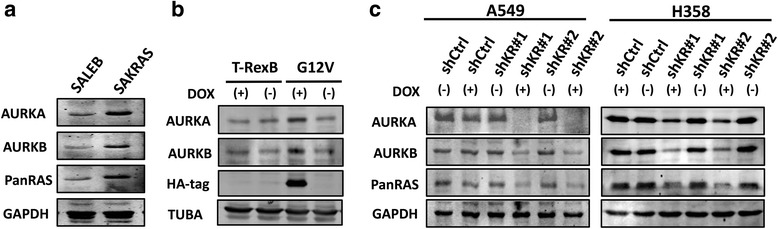
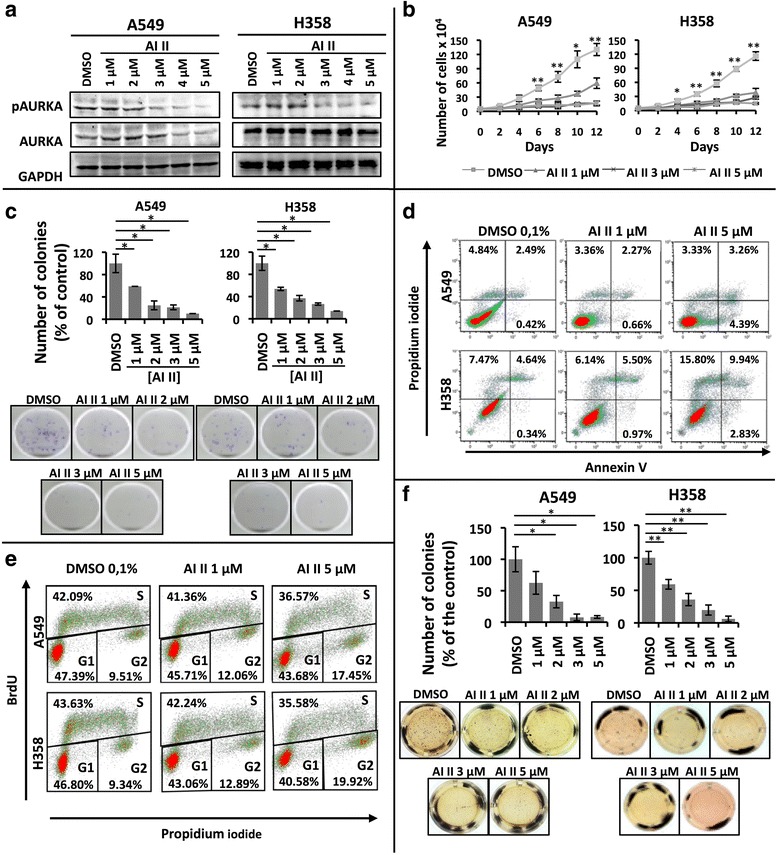
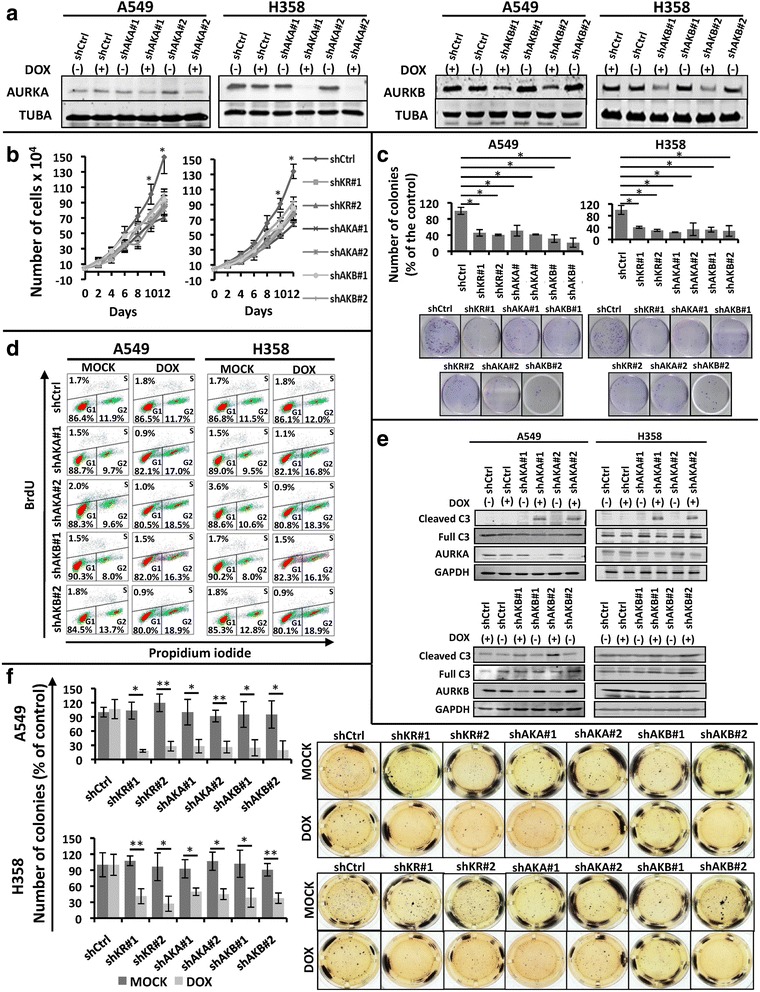
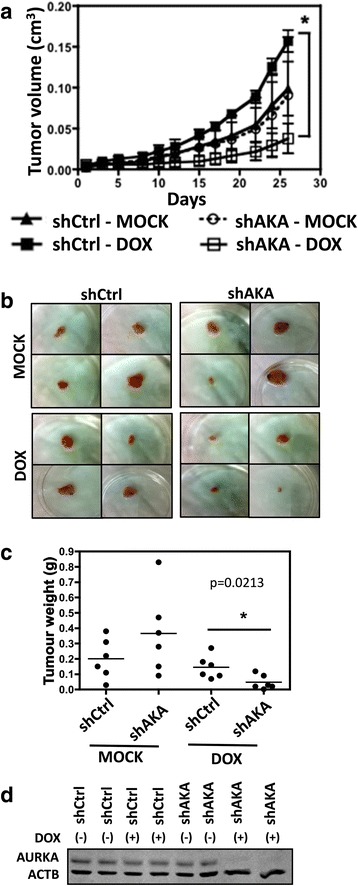
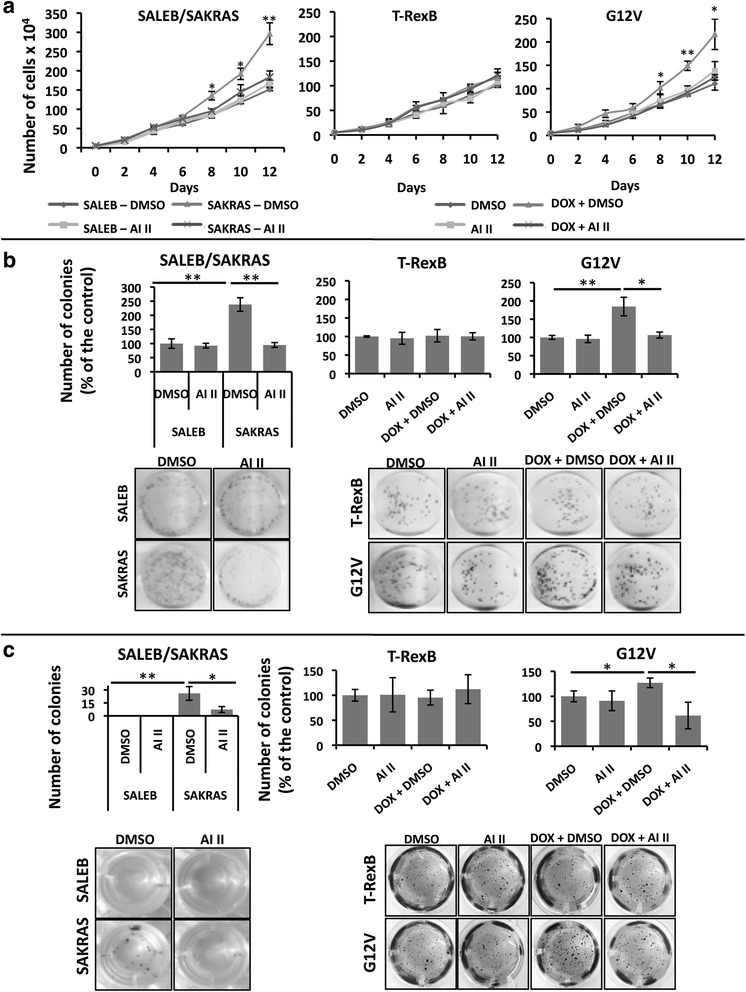
Background: Activating mutations in KRAS are prevalent in lung cancer and have been causally linked to the oncogenic process. However, therapies targeted to oncogenic RAS have been ineffective to date and identification of KRAS targets that impinge on the oncogenic phenotype is warranted. Based on published studies showing that mitotic kinases Aurora A (AURKA) and B (AURKB) cooperate with oncogenic RAS to promote malignant transformation and that AURKA phosphorylates RAS effector pathway components, the aim of this study was to investigate whether AURKA and AURKB are KRAS targets in lung cancer and whether targeting these kinases might be therapeutically beneficial. Methods: In order to determine whether oncogenic KRAS induces Aurora kinase expression, we used qPCR and western blotting in three different lung cell-based models of gain- or loss-of-function of KRAS. In order to determine the functional role of these kinases in KRAS-induced transformation, we generated KRAS-positive A549 and H358 cells with stable and inducible shRNA-mediated knockdown of AURKA or AURKB and evaluated transformation in vitro and tumor growth in vivo. In order to validate AURKA and/or AURKB as therapeutically relevant KRAS targets in lung cancer, we treated A549 and H358 cells, as well as two different lung cell based models of gain-of-function of KRAS with a dual Aurora kinase inhibitor and performed functional in vitro assays. Results: We determined that KRAS positively regulates AURKA and AURKB expression. Furthermore, in KRAS-positive H358 and A549 cell lines, inducible knockdown of AURKA or AURKB, as well as treatment with a dual AURKA/AURKB inhibitor, decreased growth, viability, proliferation, transformation, and induced apoptosis in vitro. In addition, inducible shRNA-mediated knockdown of AURKA in A549 cells decreased tumor growth in vivo. More importantly, dual pharmacological inhibiton of AURKA and AURKB reduced growth, viability, transformation, and induced apoptosis in vitro in an oncogenic KRAS-dependent manner, indicating that Aurora kinase inhibition therapy can specifically target KRAS-transformed cells. Conclusions: Our results support our hypothesis that Aurora kinases are important KRAS targets in lung cancer and suggest Aurora kinase inhibition as a novel approach for KRAS-induced lung cancer therapy.
Overview
The claims and statistics of this paper haven’t been checked yet.
Free: it reads the open-access text and checks the first 5 claims that cite a source we can check. Create a free account to check every claim.
Integrity signals
Registry
Cites
Statistics
Figures
Verification
Claims the paper makes
The claims and statistics of this paper haven’t been checked yet.
Free: it reads the open-access text and checks the first 5 claims that cite a source we can check. Create a free account to check every claim.
Claims other papers make about this one
Each is checked against this paper’s own text: does it say what the citing paper says it does?
The source backs part of the claim, not all of it — or backs it for a different population, condition or comparison.
In the citing paper
“On one hand, aberrant activation of KRAS and downstream MAPK/ERK signaling promotes AURKA overexpression [129–131].”
From Differential Response and Resistance to KRAS-Targeted Therapy (2025) · cites this paper as [129]
Experimental — accuracy not yet measured
Self-check
Percentages, sums and reported differences re-computed from the paper’s own numbers.
The self-check needs the paper’s full text.
Citations
Cites
Siegel, R. L., Miller, K. D., & Jemal, A. (2015) · CA: A Cancer Journal for Clinicians · doi:10.3322/caac.21254 · Cited by 11,853
Hypoxia-mediated selection of cells with diminished apoptotic potential in solid tumours
Graeber, T. G., Osmanian, C., Jacks, T., Housman, D. E., Koch, C. J., Lowe, S. W., & Giaccia, A. J. (1996) · Nature · doi:10.1038/379088a0 · Cited by 2,300 · cited 1×
“In addition, hypoxia is known to select cells that have lost their apoptotic potential [66], so it is also likely that an initial apoptotic response to AURKA inhibition might have occurred, leading to expansion of apoptotic resistant cells and failure to detect apoptotic cells at the endpoint.”
BackgroundDrugging the undruggable RAS: Mission Possible?
Cox, A. D., Fesik, S. W., Kimmelman, A. C., Luo, J., & Der, C. J. (2014) · Nature Reviews Drug Discovery · doi:10.1038/nrd4389 · Cited by 1,997 · cited 2×
“Considering that targeting traditional KRAS effectors has so far had limited success [1, 4], the identification of novel KRAS targets that impinge on the oncogenic phenotype is warranted in order to increase the possibilities of combinatorial therapy design and achieve therapeutic efficacy.”
BackgroundRAS oncogenes: weaving a tumorigenic web
Pylayeva-Gupta, Y., Grabocka, E., & Bar-Sagi, D. (2011) · Nature Reviews Cancer · doi:10.1038/nrc3106 · Cited by 1,789 · cited 1×
“Targeting KRAS downstream effectors has also been challenging, as KRAS regulates a multitude of effectors that contribute to the oncogenic phenotype [2, 3].”
BackgroundTumour amplified kinase STK15/BTAK induces centrosome amplification, aneuploidy and transformation
Zhou, H., Kuang, J., Zhong, L., Kuo, W.-L., Gray, J., Sahin, A., Brinkley, B., & Sen, S. (1998) · Nature Genetics · doi:10.1038/2496 · Cited by 1,276 · cited 2×
“In addition, both kinases have been implicated in promoting oncogenesis [20–25].”
BackgroundResultHarrington, E. A., Bebbington, D., Moore, J., Rasmussen, R. K., Ajose-Adeogun, A. O., Nakayama, T., Graham, J. A., Demur, C., Hercend, T., Diu-Hercend, A., et al. (2004) · Nature Medicine · doi:10.1038/nm1003 · Cited by 965
Stephen, A. G., Esposito, D., Bagni, R. K., & McCormick, F. (2014) · Cancer Cell · doi:10.1016/j.ccr.2014.02.017 · Cited by 795 · cited 1×
“Considering that targeting traditional KRAS effectors has so far had limited success [1, 4], the identification of novel KRAS targets that impinge on the oncogenic phenotype is warranted in order to increase the possibilities of combinatorial therapy design and achieve therapeutic efficacy.”
BackgroundEngelman, J. A., & Jänne, P. A. (2008) · Clinical Cancer Research · doi:10.1158/1078-0432.ccr-07-2248 · Cited by 703
Structural Basis of Aurora-A Activation by TPX2 at the Mitotic Spindle
Bayliss, R., Sardon, T., Vernos, I., & Conti, E. (2003) · Molecular Cell · doi:10.1016/s1097-2765(03)00392-7 · Cited by 636 · cited 1×
“for AURKA activity [44, 45].”
Roles of Aurora Kinases in Mitosis and Tumorigenesis
Fu, J., Bian, M., Jiang, Q., & Zhang, C. (2007) · Molecular Cancer Research · doi:10.1158/1541-7786.mcr-06-0208 · Cited by 614 · cited 2×
“This is consistent with the fact that AURKA and AURKB are master regulators of mitosis [10, 11], and that Aurora kinase inhibition is known to promote cell cycle arrest and apoptosis [14, 15].”
BackgroundResult
Cited by
The current state of the art and future trends in RAS-targeted cancer therapies
Punekar, S. R., Velcheti, V., Neel, B. G., & Wong, K.-K. (2022) · Nature Reviews Clinical Oncology · doi:10.1038/s41571-022-00671-9 · Cited by 549
Aurora‐A Kinase: A Potent Oncogene and Target for Cancer Therapy
Yan, M., Wang, C., He, B., Yang, M., Tong, M., Long, Z., Liu, B., Peng, F., Xu, L., Zhang, Y., et al. (2016) · Medicinal Research Reviews · doi:10.1002/med.21399 · Cited by 293
Wang-Bishop, L., Chen, Z., Gomaa, A. R., Lockhart, A. C., Salaria, S. N., Wang, J., Lewis, K. B., Ecsedy, J., Washington, K. M., Beauchamp, R. D., et al. (2018) · Gastroenterology · doi:10.1053/j.gastro.2018.10.030 · Cited by 95
Nuclear localisation of Aurora-A: its regulation and significance for Aurora-A functions in cancer
Naso, F. D., Boi, D., Ascanelli, C., Pamfil, G., Lindon, C., Paiardini, A., & Guarguaglini, G. (2021) · Oncogene · doi:10.1038/s41388-021-01766-w · Cited by 74
Targeting KRAS mutations: orchestrating cancer evolution and therapeutic challenges
Choucair, K., Imtiaz, H., Uddin, M. H., Nagasaka, M., Al-Hallak, M. N., Philip, P. A., El-Rayes, B., Pasche, B., & Azmi, A. S. (2025) · Signal Transduction and Targeted Therapy · doi:10.1038/s41392-025-02473-8 · Cited by 83
“283,284 In these cell lines, the knockdown of AURKA or AURKA/AURKB inhibition resulted in antitumor activity.”
The role of Aurora-A in human cancers and future therapeutics.
Lin, X., Xiang, X., Hao, L., Wang, T., Lai, Y., Abudoureyimu, M., Zhou, H., Feng, B., Chu, X., & Wang, R. (2020) · PubMed Central · Cited by 83
Aurora B expression modulates paclitaxel response in non-small cell lung cancer
Al-Khafaji, A. S., Davies, M. P. A., Risk, J. M., Marcus, M. W., Koffa, M. D., Gosney, J. R., Shaw, R., Field, J. K., & Liloglou, T. (2017) · British Journal of Cancer · doi:10.1038/bjc.2016.453 · Cited by 57
“A phase-III randomised trial showed that KRAS mutations decrease response of NSCLC to therapy involving paclitaxel, carboplatin and erlotinib (Eberhard et al, 2005).”
BackgroundPromising Therapy in Lung Cancer: Spotlight on Aurora Kinases
Galetta, D., & Cortes‐Dericks, L. (2020) · Cancers · doi:10.3390/cancers12113371 · Cited by 57
“[67] investigated the relationship among KRAS, AURKA, and AURKB in lung cancer cells and evaluated the role of inhibition of Aurora kinases can lead to real therapeutic benefit.”
BackgroundZhang, H., Bao, J., Zhao, S., Huo, Z., & Li, B. (2020) · Archives of Medical Science · doi:10.5114/aoms.2019.91351 · Cited by 49
“found that in lung cancer, AURKA was targeted by mutation of KRAS (kirsten rat sarcoma viral oncogene) and would promote tumor progression [21].”
BackgroundIntegrated analysis reveals key genes with prognostic value in lung adenocarcinoma
Song, Y., Tan, J., Xin-huai, G., & Wang, L. (2018) · Cancer Management and Research · doi:10.2147/cmar.s168636 · Cited by 47
“Another recent study showed that AURKB was an important KRAS target in lung cancer, suggesting that AURKB inhibition could be a novel approach for KRAS-driven lung cancer therapy.(25) Moreover, Al-Khafaji et al(26) revealed that AURKB activity is an important modulator of taxane response in NSCLC cells.”
BackgroundSingle-cell metabolite analysis on a microfluidic chip
Wang, C., Hu, W., Guan, L., Yang, X., & Liang, Q. (2021) · Chinese Chemical Letters · doi:10.1016/j.cclet.2021.10.006 · Cited by 46
Gomes-Filho, S. M., dos Santos, E. O., Bertoldi, E. R. M., Scalabrini, L. C., Heidrich, V., Dazzani, B., Levantini, E., Reis, E. M. R., & Bassères, D. S. D. S. (2020) · Cellular Oncology · doi:10.1007/s13402-020-00498-5 · Cited by 50
“Recently, we have shown that in lung cancer oncogenic KRAS promotes AURKA expression and that targeting AURKA not only reduces KRAS-driven tumor growth, but also reduces lung cell transformation and promotes lung cell death in a KRAS-dependent manner [27].”
BackgroundSelf-citationCisplatin‐resistant cancer cells are sensitive to Aurora kinase A inhibition by alisertib
Wang, L., Arras, J., Katsha, A. M., Hamdan, S. A., Belkhiri, A., Ecsedy, J., & El-Rifai, W. M. (2017) · Molecular Oncology · doi:10.1002/1878-0261.12066 · Cited by 41
“…the cap-dependent dual luciferase reporter assays, cells were transfected with 1 lg of a dual-renilla-fireflyluciferase pcDNA3-rLuc-PolioIRES-fLuc reporter (a kind gift from John Blenis, Harvard Medical School), to measure cap-dependent/cap-independent translation (Dos Santos et al., 2016).”
MethodNavarro-Serer, B., Childers, E. P., Hermance, N. M., Mercadante, D. L., & Manning, A. L. (2019) · Oncotarget · doi:10.18632/oncotarget.26714 · Cited by 38
Sirt1 protects from K‐Ras‐driven lung carcinogenesis
Costa‐Machado, L. F., Martín‐Hernández, R., Sánchez‐Luengo, M. Á., Hess, K., Vales‐Villamarín, C., Barradas, M., Lynch, C. J., de la Nava, D., Díaz‐Ruiz, A., de Cabo, R., et al. (2018) · EMBO Reports · doi:10.15252/embr.201643879 · Cited by 36
“Interestingly, Aurkb has been shown to act as a target of K-Ras signaling, and its disruption reverted K-Ras-mediated tumorigenesis in lung cells [57].”
Chen, M., Zhu, H., Li, J., Luo, D., Zhang, J., Liu, W., & Wang, J. (2024) · Annals of Medicine · doi:10.1080/07853890.2023.2282184 · Cited by 31
“Moreover, overexpression of K/H-Ras (G12V mutant) resulted in a significant increase in the AURKA nuclear/cytoplasmic ratio in mouse embryonic fibroblasts [25], while the K-Ras G12V mutant was also shown to be able to increase Aurora-A expression in ovarian, pancreatic and lung cancer cells [36–38].”
Backgroundde Souza, V. B., & Kawano, D. F. (2019) · Biochimica et Biophysica Acta (BBA) - General Subjects · doi:10.1016/j.bbagen.2019.129448 · Cited by 29
Couto, P. P., Bastos‐Rodrigues, L., Schayek, H., Melo, F. M., Cardenas, R. G. C. D. C. L., de Miranda, D. M., Vilhena, A., Bale, A. E., Friedman, E., & Marco, L. A. D. (2017) · Carcinogenesis · doi:10.1093/carcin/bgx089 · Cited by 27
“It has been implicated in tumorigenesis as its overexpression has been found in various epithelial malignant tumors such as gastrointestinal (25) in addition to LC (24), AURKA and AURKB inhibition have been shown to be KRAS targets in LC (26).”
BackgroundHuang, M., Feng, X., Su, D., Wang, G., Wang, C., Tang, M., Paulucci-Holthauzen, A. A., Hart, T., & Chen, J. (2020) · Oncogene · doi:10.1038/s41388-020-1296-2 · Cited by 25
Hellerstedt, B. A., Vogelzang, N. J., Kluger, H. M., Yasenchak, C. A., Aftab, D. T., Ramies, D. A., Gordon, M. S., & Lara, P. N. (2018) · Clinical Lung Cancer · doi:10.1016/j.cllc.2018.10.006 · Cited by 25
Hsieh, C.-H., Cheung, C. H. Y., Liu, Y., Hou, C.-L., Hsu, C., Huang, C.-T., Yang, T., Chen, S., Chen, C., Hsu, W., et al. (2019) · Journal of Proteome Research · doi:10.1021/acs.jproteome.9b00245 · Cited by 24
TBX2subfamily suppression in lung cancer pathogenesis: a high-potential marker for early detection
Khalil, A., Sivakumar, S., Lucas, F. A. S., McDowell, T. L., Lang, W., Tabata, K., Fujimoto, J., Yatabe, Y., Spira, A. E., Scheet, P. A., et al. (2017) · Oncotarget · doi:10.18632/oncotarget.19938 · Cited by 21
“This analysis underscored canonical tumor promoting genes (e.g. cell cycle promoting genes such as CDK1 and BUB1) that were upregulated in LUADs relative to normal lung tissues and concomitantly downstream of down-regulated TBX2 with the same gene-network (Figure 2B).”
BackgroundUnweaving the mitotic spindle: A focus on Aurora kinase inhibitors in lung cancer
Stefani, A., Piro, G., Schietroma, F., Strusi, A., Vita, E., Fiorani, S., Barone, D., Monaca, F., Sparagna, I., Valente, G., et al. (2022) · Frontiers in Oncology · doi:10.3389/fonc.2022.1026020 · Cited by 19
Joint Transcriptomic Analysis of Lung Cancer and Other Lung Diseases
Otálora-Otálora, B. A., Florez, M., López-Kleine, L., Cañas, A., Urrego, D. M. G., & Rojas, A. P. (2019) · Frontiers in Genetics · doi:10.3389/fgene.2019.01260 · Cited by 16
“Van De Ven, W. J. M. (1991). The 7B2 protein as marker for neuroendocrine”
BackgroundLiu, H., Daylan, A. E. C., Yang, J., Tanwar, A., Borczuk, A., Zhang, D., Chau, V., Li, S., Ge, X., Halmos, B., et al. (2024) · Cancers · doi:10.3390/cancers16162805 · Cited by 15
“AURKA has been implicated in the tumorigenesis of KRAS mutant NSCLC as well [46], which encouraged the combinatory use of the AURKA inhibitor, VIC-1911, with sotorasib for KRAS G12C mutant NSCLC [47].”
BackgroundDoello, S., Liang, Z., Cho, I. K., Kim, J. B., & Li, Q. X. (2018) · Journal of Agricultural and Food Chemistry · doi:10.1021/acs.jafc.8b00491 · Cited by 15
Identifying General Tumor and Specific Lung Cancer Biomarkers by Transcriptomic Analysis
Otálora-Otálora, B. A., Osuna-Garzón, D. A., Carvajal-Parra, M. S., Cañas, A., Montecino, M. A., López-Kleine, L., & Rojas, A. P. (2022) · Biology · doi:10.3390/biology11071082 · Cited by 12
“AURKA is positively regulated by KRAS, but, if it is negatively regulated, it is related with decreases in growth, viability, transformation, proliferation, and apoptosis [91].”
BackgroundHuang, J., Zhang, Q., Shen, J., Chen, X., & Ma, S. (2021) · Aging · doi:10.18632/aging.202517 · Cited by 13
“Researches showed that AURKB is an important target for KRAS, therefore has the potential to serve as a target of KRASinduced lung cancer [11].”
BackgroundTeli, G., Maji, L., Pal, R., Maheshwari, N., Matada, G. S. P., Chawla, P. A., & Chawla, V. (2024) · Bioorganic Chemistry · doi:10.1016/j.bioorg.2024.107976 · Cited by 10
Zhao, H., Owen, S., Davies, E. L., Jiang, W. G., & Martin, T. A. (2017) · World Journal of Oncology · doi:10.14740/wjon1062w · Cited by 10
“This suggested that Aurora kinases were important KRAS targets in lung cancer and Aurora kinases inhibition therapy may specially target KRAS-transformed cells [32].”
BackgroundTherapeutic Potential of Regorafenib—A Multikinase Inhibitor in Pulmonary Hypertension
Veeroju, S., Kojonazarov, B. K., Weiß, A., Ghofrani, H. A., Weißmann, N., Grimminger, F., Seeger, W., Novoyatleva, T., & SCHERMULY, R. T. (2021) · International Journal of Molecular Sciences · doi:10.3390/ijms22031502 · Cited by 9
Review of biomarker systems as an alternative for early diagnosis of ovarian carcinoma
Srivastava, A., Gupta, A., & Patidar, S. (2021) · Clinical & Translational Oncology · doi:10.1007/s12094-021-02604-x · Cited by 9
Modulation of epigenetic factors during the early stages of HIV-1 infection in CD4+ T cells in vitro
Nunes, J. M., Furtado, M. N., Nunes, E. R. D. M., Sucupira, M. C. A., Diaz, R. S., & Janini, L. M. (2018) · Virology · doi:10.1016/j.virol.2018.07.026 · Cited by 10
Zhang, X., Lei, Y., Chen, X. '., He, J., Liu, Z., Zhu, W., Xu, Y., & Jin, X. (2024) · Biochemical Pharmacology · doi:10.1016/j.bcp.2024.116155 · Cited by 8
Lee, J. Y., Yang, H., Kim, D., Kyaw, K. Z., Hu, R., Fan, Y., & Lee, S. K. (2022) · Pharmaceuticals · doi:10.3390/ph15060698 · Cited by 8
Differential Response and Resistance to KRAS-Targeted Therapy
Liu, Z., Lenz, H., Yu, J., & Zhang, L. (2025) · Molecular Carcinogenesis · doi:10.1002/mc.23908 · Cited by 7
“On one hand, aberrant activation of KRAS and downstream MAPK/ ERK signaling promotes AURKA overexpression [132 – 134].”
Kurup, S., Gesinski, D., Assaad, K., & Reynolds, A. J. (2024) · Bioorganic & Medicinal Chemistry Letters · doi:10.1016/j.bmcl.2024.129612 · Cited by 8
Bao, L., Zhao, Y., Liu, C., Cao, Q., Huang, Y., Chen, K., & Song, Z. (2020) · Journal of Cancer · doi:10.7150/jca.38379 · Cited by 7
“Although some of previous studies displayed that AURKB may play a key role in the tumorigenesis and progression of several types of cancer[7-10], the study of this gene in ccRCC had not been elucidated.”
ResultAlisertib exerts KRAS allele‑specific anticancer effects on colorectal cancer cell lines
Ren, B., 高卓维, Zheng, K., Yang, Y., Su, P., Luo, Q., Feng, J., Zhentao, L., Geng, Y., Ju, Y., et al. (2023) · Experimental and Therapeutic Medicine · doi:10.3892/etm.2023.11942 · Cited by 6
Post-transcriptional control drives Aurora kinase A expression in human cancers
Cacioppo, R., Rad, D., Pagani, G., Gandellini, P., & Lindon, C. (2024) · PLOS ONE · doi:10.1371/journal.pone.0310625 · Cited by 3
“A polyadenylation signal (PAS), which is found 10–30 nucleotides upstream, as well as UGUA and U-rich motifs usually precede the cleavage site, whereas U-and GU-rich motifs usually follow; these elements altogether form the C/P site [26].”
BackgroundLi, Y., Zhou, L., Li, H., Sun, G., Xu, S., Tang, X., Wan, L., Zhang, L., & Tang, M. (2025) · American Journal of Respiratory Cell and Molecular Biology · doi:10.1165/rcmb.2025-0174oc · Cited by 3
Pinto, B. F., Silva, J. P. N., Silva, P. M. A., Sarmento, B. F. C. C., Carvalho‐Tavares, J., & Bousbaa, H. (2026) · Pharmaceutics · doi:10.3390/pharmaceutics18040402 · Cited by 4
The Kinome of Human Alveolar Type II and Basal Cells, and Its Reprogramming in Lung Cancer
Leach, S. M., Finigan, J. H., Vasu, V. T., Mishra, R., Ghosh, M., Foster, D. G., Mason, R. J., Kośmider, B., Farias‐Hesson, E., & Kern, J. A. (2019) · American Journal of Respiratory Cell and Molecular Biology · doi:10.1165/rcmb.2018-0283oc · Cited by 3
Liu, M., Yu, X., Qu, C., & Xu, S. (2023) · Medicina · doi:10.3390/medicina59030547 · Cited by 3
Hefni, D., ANANDA, Z., & Putra, P. P. (2025) · International Journal of Applied Pharmaceutics · doi:10.22159/ijap.2025.v17s1.08 · Cited by 2
Wang, G., Huang, J., Chen, H., Jiang, C., Jiang, L., Feng, W., & Tian, G. (2025) · Discover Oncology · doi:10.1007/s12672-025-02090-5 · Cited by 2
Konde, M. V., Inchanalkar, S., Deshpande, N., Sherkhane, T., Virmani, M., Singh, K., & Balasubramanian, N. (2025) · Biology Open · doi:10.1242/bio.061884 · Cited by 2
“Constitutively active RAS is also seen to promote AURKA expression in cancer cells (dos Santos et al., 2016).”
Sato, M., Yamamoto, Y., Moriwaki, T., Fukuda, K., & Tsuchiya, K. (2025) · Biochemistry and Biophysics Reports · doi:10.1016/j.bbrep.2025.102073 · Cited by 1
Huang, S., Tu, X., Zhang, S., Li, B., Pan, C., Wei, F., & Xiao, Q. (2025) · Journal of Molecular Liquids · doi:10.1016/j.molliq.2025.128809 · Cited by 1
Bioinformatics analysis identifies AURKB as a prognostic biomarker across multiple human cancers
Xie, H., Wu, A., Xie, M., Chen, S., Huang, Y., Wen, H., Li, H., Fu, Z., & Zheng, W. (2026) · Discover Oncology · doi:10.1007/s12672-025-04105-7 · Cited by 1
KRAS mutated lung adenocarcinoma responds to pan-ERBB and Aurora kinase inhibitors
Uras, I. Z., Trkulja, M. V., Salama, A. K. A. A., Horvath, J., Asnani, K., Trenk, C., Kubicek, S., Bilban, M., Moll, H. P., & Casanova, E. (2026) · npj Precision Oncology · doi:10.1038/s41698-025-01242-8 · Cited by 1
Correction: Aurora kinase targeting in lung cancer reduces KRAS-induced transformation
dos Santos, E. O., Carneiro-Lobo, T., Aoki, M. N., Levantini, E., & Bassères, D. S. D. S. (2024) · Molecular Cancer · doi:10.1186/s12943-024-01964-6 · Cited by 1
Self-citationScalabrini, L. C. (2017) · Digital Library of Theses and Dissertations (Universidade de São Paulo) · doi:10.11606/d.46.2017.tde-11042017-082202 · Cited by 1
Investigação das quinases Aurora A e Aurora B na tumorigenicidade mediada pelo oncogene KRAS
dos Santos, E. O. (2017) · Digital Library of Theses and Dissertations (Universidade de São Paulo) · doi:10.11606/t.46.2017.tde-21062017-103949 · Cited by 1
BrdU Antibody, DNA Antibody, RNA Antibody and Hybrid DNA:RNA Antibody
Johnson, M. (2019) · Materials and Methods · doi:10.13070/mm.en.9.2845
Identificação de alvos da KRAS oncogênica com potencial terapêutico para câncer de pâncreas
Filho, S. M. G. (2019) · Digital Library of Theses and Dissertations (Universidade de São Paulo) · doi:10.11606/t.46.2019.tde-26042022-080615 · Cited by 1
Scalabrini, L. C. (2022) · Digital Library of Theses and Dissertations (Universidade de São Paulo) · doi:10.11606/t.46.2022.tde-02122022-155942 · Cited by 1
Wang, G., Huang, J., Chen, H., Jiang, C., Jiang, L., Zhang, S., Li, Y., Pei, J., Li, L., Li, C., et al. (2023) · Research Square · doi:10.21203/rs.3.rs-3453897/v1
Wang, G., Huang, J., Chen, H., Li, Y., Pei, J., Li, L., Li, C., & Tian, G. (2023) · Research Square · doi:10.21203/rs.3.rs-3612712/v1
Zhang, L., Pan, Z., Song, W., Wang, W., Fu, L., Li, J., He, R., Wang, Q., Wang, Y., Zhang, S., et al. (2024) · Research Square · doi:10.21203/rs.3.rs-4717976/v1
Current progress in targeting mitotic kinases in PDAC
Barlow, T. M. A., Rooman, I., & Ballet, S. (2025) · RSC Medicinal Chemistry · doi:10.1039/d5md00162e
Ligand- and integrin-independent mechano-sensitive EGFR activation in lung cancer cells
Shaikh, A. R., Mohan, A., Collins, M., Santis, G., & Parsons, M. (2025) · Journal of Cell Science · doi:10.1242/jcs.264107
KRAS、BRAF変異大腸癌細胞に対するAURKA阻害薬とMEK阻害薬の併用による相乗的抗腫瘍効果の検討
Masashi, S., 昌志, 佐., & マサシ, サ. (2026) · Institutional Repositories DataBase (IRDB) · doi:10.15068/0002022930
Metadata
- Authors
- dos Santos, E. O., Carneiro-Lobo, T. C., Aoki, M. N., Levantini, E., & Bassères, D. S.
- Affiliations
- Universidade de São Paulo (BR)
- Beth Israel Deaconess Medical Center (US)
- Corresponding author
- Levantini, Elena
- Venue
- Molecular Cancer
- Published
- 2016-02-03
- Volume
- 15
- Issue
- 1
- Pages
- 12-12
- ISSN
- 1476-4598 (ISSN-L)
- PMC
- PMC4739397
- OpenAlex
- W2256178229
- Cited by
- 64
- References
- 69
- Citations by year
- 2026: 3 · 2025: 11 · 2024: 9 · 2023: 4 · 2022: 5 · 2021: 5 · 2020: 6 · 2019: 7 · 2018: 6 · 2017: 7 · 2016: 1
- FWCI
- 3.64
- Type
- journal article
- Language
- en
- Update notices
- correction (2024-03-09)
- Open access
- gold
- doi.org
- Licence
- cc-by
- creativecommons.org/licenses/by/4.0 (tdm)
- creativecommons.org/licenses/by/4.0 (vor)
- Locations
- Molecular Cancer (publishedVersion, cc-by)
- PubMed Central (publishedVersion, cc-by)
- PubMed (publishedVersion)
- Portuguese National Funding Agency for Science, Research and Technology (RCAAP Project by FCT) (publishedVersion)
- Digital Access to Scholarship at Harvard (DASH) (Harvard University) (submittedVersion, cc-by)
- Funders
- Fundação de Amparo à Pesquisa do Estado de São Paulo (2010/52685-9, 2012/13774-1, 2011/06709-6, 2011/15037-1)
- Flight Attendant Medical Research Institute (YCSA 072165, YCSA 052409, CIA 103063)
- Conselho Nacional de Desenvolvimento Científico e Tecnológico (166803/2013-8)
- Topics
- Life Sciences › Biochemistry, Genetics and Molecular Biology › Molecular Biology › Protein Kinase Regulation and GTPase Signaling
- Life Sciences › Biochemistry, Genetics and Molecular Biology › Cell Biology › Microtubule and mitosis dynamics
- Health Sciences › Medicine › Pulmonary and Respiratory Medicine › Lung Cancer Treatments and Mutations
- Keywords
- Aurora kinases, AURKA, Aurora B kinase, KRAS, lung cancer, oncogenic Ras, malignant transformation, mitotic kinases, shRNA knockdown, apoptosis, tumor growth, KRAS-targeted therapy
- MeSH terms
- Animals, Cell Transformation, Neoplastic, Lung Neoplasms, Male, Mice, Inbred BALB C, Mice, Nude, Phenotype, Proto-Oncogene Proteins p21(ras), Xenograft Model Antitumor Assays, RNA, Small Interfering, Cell Line, Tumor, Protein Kinase Inhibitors, Cell Proliferation, Gene Knockdown Techniques, Molecular Targeted Therapy, Aurora Kinase A, Aurora Kinase B
About these checks
Registry, retraction, Cites and statistics results are computed, not judged, with one exception: a printed reference that no index lists is read once by a model before it counts as a citation error. Claims are extracted by a model and kept only when their quote appears verbatim in the text; each cited source is then checked, with a model’s help, for whether it says what the claim relies on. Those verdicts can be wrong — read the claim’s quote and the cited source before relying on one.
Statistics and arithmetic are recomputed, not judged.
Confidence bands are shown only for fields calibrated on our annotated test set. None is calibrated yet, so no band is shown.
What counts as a claim ›How we measure confidence ›How we check this ›
Are you an author, or do you see a problem with this page? Request a review
Data sources
Bibliographic data: Semantic Scholar, OpenAlex, Crossref.
Contains information from the Semantic Scholar Academic Graph Datasets, made available under the ODC Attribution License (ODC-BY 1.0).
Semantic Scholar’s data is described in: Kinney, R., et al. (2023). The Semantic Scholar Open Data Platform. arXiv:2301.10140.
