

Wnt signaling in colorectal cancer: pathogenic role and therapeutic target
Open accessThe DOI matches its Crossref record; 276 of the 276 references it cites were found in a registry or an index.
Abstract
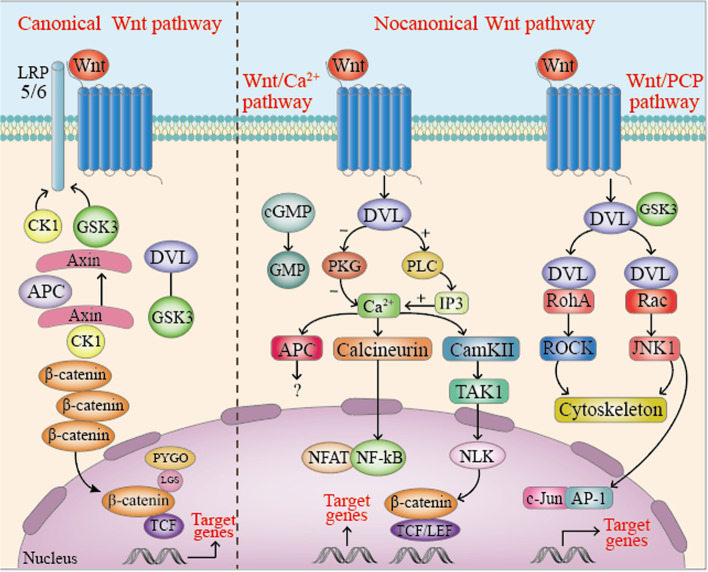
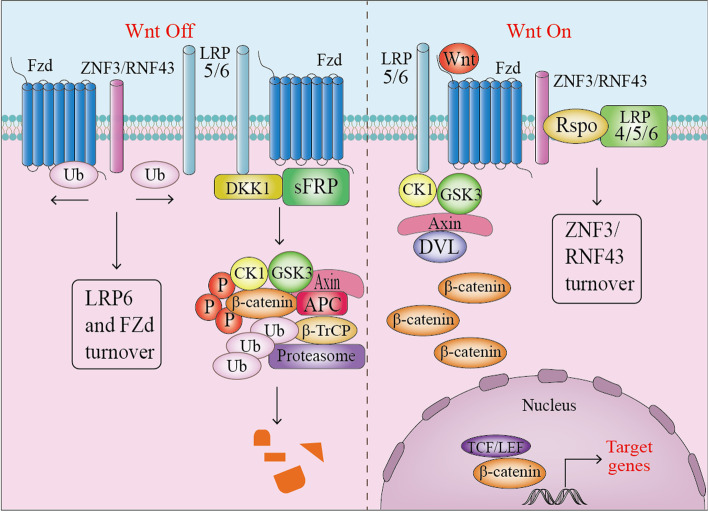
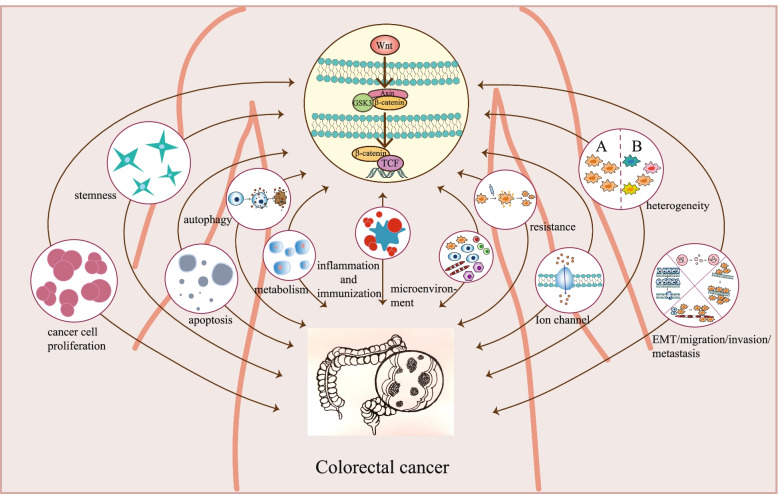
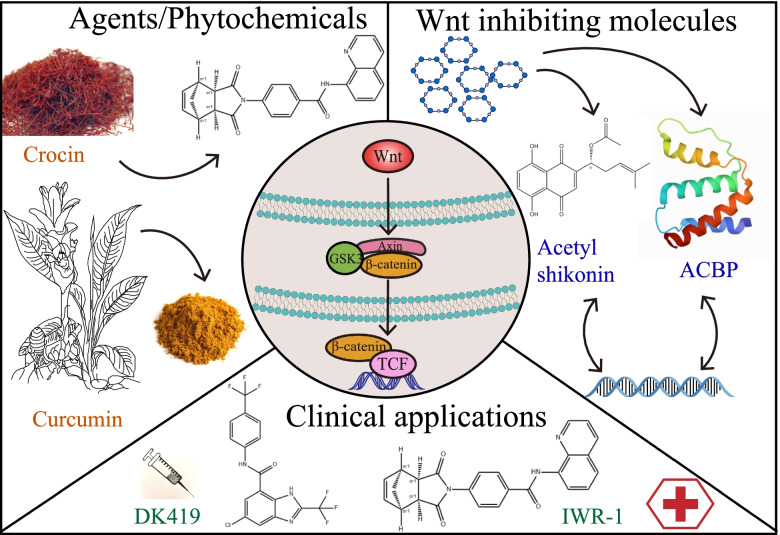
Background: The Wnt signaling pathway is a complex network of protein interactions that functions most commonly in embryonic development and cancer, but is also involved in normal physiological processes in adults. The canonical Wnt signaling pathway regulates cell pluripotency and determines the differentiation fate of cells during development. The canonical Wnt signaling pathway (also known as the Wnt/β-catenin signaling pathway) is a recognized driver of colon cancer and one of the most representative signaling pathways. As a functional effector molecule of Wnt signaling, the modification and degradation of β-catenin are key events in the Wnt signaling pathway and the development and progression of colon cancer. Therefore, the Wnt signaling pathway plays an important role in the pathogenesis of diseases, especially the pathogenesis of colorectal cancer (CRC). Objective: Inhibit the Wnt signaling pathway to explore the therapeutic targets of colorectal cancer. Methods: Based on studying the Wnt pathway, master the biochemical processes related to the Wnt pathway, and analyze the relevant targets when drugs or inhibitors act on the Wnt pathway, to clarify the medication ideas of drugs or inhibitors for the treatment of diseases, especially colorectal cancer. Results: Wnt signaling pathways include: Wnt/β-catenin or canonical Wnt signaling pathway, planar cell polarity (Wnt-PCP) pathway and Wnt-Ca 2+ signaling pathway. The Wnt signaling pathway is closely related to cancer cell proliferation, stemness, apoptosis, autophagy, metabolism, inflammation and immunization, microenvironment, resistance, ion channel, heterogeneity, EMT/migration/invasion/metastasis. Drugs/phytochemicals and molecular preparations for the Wnt pathway of CRC treatment have now been developed. Wnt inhibitors are also commonly used clinically for the treatment of CRC. Conclusion: The development of drugs/phytochemicals and molecular inhibitors targeting the Wnt pathway can effectively treat colorectal cancer clinically.
Overview
The claims and statistics of this paper haven’t been checked yet.
Free: it reads the open-access text and checks the first 5 claims that cite a source we can check. Create a free account to check every claim.
Integrity signals
Registry
Cites
Statistics
Figures
Verification
Claims the paper makes
The claims and statistics of this paper haven’t been checked yet.
Free: it reads the open-access text and checks the first 5 claims that cite a source we can check. Create a free account to check every claim.
Claims other papers make about this one
Each is checked against this paper’s own text: does it say what the citing paper says it does?
The source backs part of the claim, not all of it — or backs it for a different population, condition or comparison.
In the citing paper
“Multiple agents targeting both canonical and the β-catenin-independent non-canonical Wnt signaling including v-ATPase inhibitors and anti-RSPO antibody are undergoing clinical trials in CRC and other malignancies [119,120].”
From Recent Advances in Therapeutic Strategies to Improve Colorectal Cancer Treatment (2024) · cites this paper as [120]
Experimental — accuracy not yet measured
Self-check
Percentages, sums and reported differences re-computed from the paper’s own numbers.
The self-check needs the paper’s full text.
Citations
Cites
4 retracted
Items 201–276 of 276
Zhou, J., Xiao, D., Qiu, T., Li, J., & Liu, Z. (2020) · Technology in Cancer Research & Treatment · doi:10.1177/1533033820977525 · Cited by 29
KHDRBS3 promotes multi‐drug resistance and anchorage‐independent growth in colorectal cancer
Ukai, S., Sakamoto, N., Taniyama, D., Harada, K., Honma, R., Maruyama, R., Naka, K., Hinoi, T., Takakura, Y., Shimizu, W., et al. (2021) · Cancer Science · doi:10.1111/cas.14805 · Cited by 29
Saponaro, C., Sergio, S., Coluccia, A., Luca, M. D., Regina, G. L., Mologni, L., Famiglini, V., Naccarato, V., Bonetti, D., Gautier, C., et al. (2018) · Oncogene · doi:10.1038/s41388-018-0170-y · Cited by 28
Signorile, M. L., Grossi, V., Franco, S. D., Forte, G., Disciglio, V., Fasano, C., Sanese, P., Marco, K. D., Susca, F. C., Mangiapane, L. R., et al. (2021) · Cell Death and Disease · doi:10.1038/s41419-021-03572-4 · Cited by 28
Wang, P., Chou, F., Bloomston, M., Vonau, M., Saji, M., Espinosa, A. V., & Pinzone, J. J. (2008) · Journal of Surgical Research · doi:10.1016/j.jss.2008.05.032 · Cited by 27
Phosphoprotein phosphatase-2A docks to Dishevelled and counterregulates Wnt3a/β-catenin signaling
Yokoyama, N. N., & Malbon, C. C. (2007) · Journal of Molecular Signaling · doi:10.1186/1750-2187-2-12 · Cited by 27
Tu, X., Hong, D., Jiang, Y., Lou, Z., Wang, K., Jiang, Y., & Jin, L. (2018) · Gene · doi:10.1016/j.gene.2018.12.008 · Cited by 27
Huang, D., Xiao, F., Hao, H., Hua, F., Luo, Z., Huang, Z., Li, Q., Chen, S., Cheng, X., Zhang, X., et al. (2020) · Cell Communication and Signaling · doi:10.1186/s12964-020-00660-4 · Cited by 27
Jiang, S., Li, Q., Liu, Y., Zhang, H., Wang, Q., Chen, Y., Shi, X., Li, J., Zhang, H., Zhang, Y., et al. (2021) · BMC Cancer · doi:10.1186/s12885-021-07898-2 · Cited by 27
CEACAM1 controls the EMT switch in murine mammary carcinomain vitroandin vivo
Wegwitz, F., Lenfert, E., Gerstel, D., von Ehrenstein, L., Einhoff, J., Schmídt, G., Logsdon, M., Brandner, J. M., Tiegs, G., Beauchemin, N., et al. (2016) · Oncotarget · doi:10.18632/oncotarget.11650 · Cited by 26
Fatty acid recognition in the Frizzled receptor family
Nile, A. H., & Hannoush, R. N. (2018) · Journal of Biological Chemistry · doi:10.1074/jbc.rev118.005205 · Cited by 26
Zhang, W., Peng, C., Yan, J., Chen, P., Jiang, C., Sang, S., Yuan, Y., Hong, Y., & Yao, M. (2021) · Phytomedicine · doi:10.1016/j.phymed.2021.153844 · Cited by 26
Shen, J., Cai, W., Ma, Y., Xu, R., Huo, Z., Li, S., Qiu, X., Zhang, Y., Li, A., Cao, W., et al. (2020) · Nanoscale Research Letters · doi:10.1186/s11671-020-03451-5 · Cited by 25
Li, H., Dang, C., Tai, X., Li, X., Meng, Y., Ma, S., & Zhang, J. (2021) · Scientific Reports · doi:10.1038/s41598-021-94388-x · Cited by 25
Li, Y., Xing, B., Wang, Y., Yu, S., Zhao, H., Lv, Q., & Lü, C. (2021) · Journal of Cell Communication and Signaling · doi:10.1007/s12079-021-00625-3 · Cited by 25
Self-citationSi, X., Jia, H., Liu, N., Li, J., Pan, L., Wang, J., & Wu, Z. (2022) · Molecular Nutrition & Food Research · doi:10.1002/mnfr.202100955 · Cited by 25
Rao, C., Lin, S., Ruan, W., Wen, H., Wu, D.-J., & Deng, H. (2014) · PLoS ONE · doi:10.1371/journal.pone.0085340 · Cited by 24
Yang, Z., Ji, L., Jiang, G., Liu, R., Liu, Z., Yang, Y., Ma, Q., & Zhao, H. (2018) · BioScience Trends · doi:10.5582/bst.2017.01288 · Cited by 23
Self-citationWang, Y., Bai, W., Wang, M., Yu, T., & Zhang, W. (2018) · Journal of Nanoscience and Nanotechnology · doi:10.1166/jnn.2019.16402 · Cited by 23
Z-Ajoene Inhibits Growth of Colon Cancer by Promotion of CK1α Dependent β-Catenin Phosphorylation
Li, H., Jeong, J. H., Kwon, S. W., Lee, S. K., Lee, H. J., & Ryu, J. (2020) · Molecules · doi:10.3390/molecules25030703 · Cited by 23
Ren, L., Zhou, J., Liang, S., & Wang, X. (2022) · Archives of Toxicology · doi:10.1007/s00204-021-03213-x · Cited by 23
Siraj, A. K., Parvathareddy, S. K., Pratheeshkumar, P., Divya, S. P., Ahmed, S. O., Melosantos, R., Begum, R., Concepcion, R., Al-Sanea, N. A., Ashari, L. H. S., et al. (2019) · Biomedicine & Pharmacotherapy · doi:10.1016/j.biopha.2019.109572 · Cited by 22
Pseudevernia furfuracea inhibits migration and invasion of colorectal carcinoma cell lines
Šeklić, D., Jovanović, M., Virijević, K. D., Grujić, J., Živanović, M., & Marković, S. (2021) · Journal of Ethnopharmacology · doi:10.1016/j.jep.2021.114758 · Cited by 22
Han, H., Li, Y., Qin, W., Wang, L., Yin, H., Su, B., & Yuan, X. (2022) · Cancer Cell International · doi:10.1186/s12935-022-02460-x · Cited by 22
Qi, Y., Yao, G., Zhang, M., Guo, G., Hu, Y., Jiang, J., Cheng, L., Shi, J., Li, H., Zhang, Y., et al. (2015) · Carcinogenesis · doi:10.1093/carcin/bgv003 · Cited by 21
Wu, D., Liu, S., Gao, Y., Lu, D., Hong, Y. J., Chen, Y., Dong, P., Wang, D., Li, T., Li, H., et al. (2019) · Journal of Cellular and Molecular Medicine · doi:10.1111/jcmm.14065 · Cited by 21
Kim, J., Choi, K.-W., Lee, J., Lee, J., Lee, S., Sun, R., & Kim, J. (2021) · International Journal of Biological Sciences · doi:10.7150/ijbs.58612 · Cited by 21
Ozawa, M. (2015) · Biology Open · doi:10.1242/bio.013938 · Cited by 20
Kajino‐Sakamoto, R., Fujishita, T., Taketo, M. M., & Aoki, M. (2020) · Oncogene · doi:10.1038/s41388-020-01541-3 · Cited by 20
Kawazoe, M., Kaneko, K., & Nanki, T. (2021) · Clinical Rheumatology · doi:10.1007/s10067-020-05554-x · Cited by 20
Sun, C., Zhu, F., & Qi, L. (2021) · Frontiers in Oncology · doi:10.3389/fonc.2021.622073 · Cited by 20
Dholakia, J., Scalise, C. B., Katre, A. A., Goldsberry, W. N., Meza‐Perez, S., Randall, T. D., Norian, L. A., Novak, L., & Arend, R. C. (2021) · Gynecologic Oncology · doi:10.1016/j.ygyno.2021.09.026 · Cited by 20
Wang, J., Qiu, X., Xu, T., Sheng, Z., & Yao, L. (2019) · Blood Purification · doi:10.1159/000496219 · Cited by 19
Liu, T., Liu, B., Liu, Y., Feng, X., Jiang, X., Long, J., Gao, Q., & Yang, Z. (2021) · Cancer Cell International · doi:10.1186/s12935-021-01991-z · Cited by 19
HDAC1 controls CIP2A transcription in human colorectal cancer cells
Balliu, M., Cellai, C., Lulli, M., Laurenzana, A., Torre, E., Vannucchi, A. M., & Paoletti, F. (2016) · Oncotarget · doi:10.18632/oncotarget.8406 · Cited by 18
Büchert, M., Rohde, F., Eissmann, M. F., Tebbutt, N. C., Williams, B., Tan, C. W., Owen, A., Hirokawa, Y., Gnann, A., Orend, G., et al. (2015) · Disease Models & Mechanisms · doi:10.1242/dmm.019844 · Cited by 18
Sun, H., Xu, D.-Y., Sun, Y., Xue, T., Zhang, C.-X., Zhang, Z.-X., Lin, W., & Li, K. (2017) · Biochemical and Biophysical Research Communications · doi:10.1016/j.bbrc.2017.06.089 · Cited by 18
Kang, Q., Gong, J., Wang, M., Wang, Q., Chen, F., & Cheng, K. (2020) · Journal of Agricultural and Food Chemistry · doi:10.1021/acs.jafc.0c00226 · Cited by 18
Han, T., Gao, M., Wang, X., Li, W., Zhuo, J., Qu, Z., & Chen, Y. (2021) · Experimental and Molecular Pathology · doi:10.1016/j.yexmp.2021.104639 · Cited by 18
Montorsi, L., Parenti, S., Losi, L., Ferrarini, F., Gemelli, C., Rossi, A., Manco, G., Ferrari, S., Calabretta, B., Tagliafico, E., et al. (2016) · Cell Death and Disease · doi:10.1038/cddis.2016.163 · Cited by 17
β-Catenin Regulation in Sporadic Colorectal Carcinogenesis: Not as Simple as APC
Fredericks, E., Dealtry, G., & Roux, S. (2018) · Canadian Journal of Gastroenterology and Hepatology · doi:10.1155/2018/4379673 · Cited by 17
Lv, S., Zhang, J., He, Y., Liu, Q., Wang, Z., Liu, B., Shi, L., & Wu, Y. (2019) · Clinical and Experimental Pharmacology and Physiology · doi:10.1111/1440-1681.13185 · Cited by 17
Mu, H., Mu, L., & Gao, J. (2020) · Biochemical and Biophysical Research Communications · doi:10.1016/j.bbrc.2020.09.125 · Cited by 17
Song, Q., Han, Z., Wu, X., Wang, Y., Zhou, L., Yang, L., Liu, N., Sui, H. X., Cai, J., Ji, Q., et al. (2021) · Frontiers in Cell and Developmental Biology · doi:10.3389/fcell.2021.650067 · Cited by 17
Ren, T., Fan, X., Wang, M., Duan, F., Wei, C., Li, R., Jiang, Z., Wang, Y., Yao, X., Chen, M., et al. (2019) · International Journal of Oncology · doi:10.3892/ijo.2019.4940 · Cited by 16
Tong, X., Zhuang, Z., Wang, X., Yang, X., Bai, L., Su, L., Wei, P., & Su, X. (2021) · Biomedicine & Pharmacotherapy · doi:10.1016/j.biopha.2020.111209 · Cited by 16
Raisch, J., Côté-Biron, A., Langlois, M., Leblanc, C., & Rivard, N. (2021) · Cells · doi:10.3390/cells10071792 · Cited by 16
Muto, Y., Suzuki, K., Kato, T., Tsujinaka, S., Ichida, K., Takayama, Y., Fukui, T., Kakizawa, N., Watanabe, F., Saito, M., et al. (2016) · International Journal of Oncology · doi:10.3892/ijo.2016.3583 · Cited by 15
A mechanistic study of Toxoplasma gondii ROP18 inhibiting differentiation of C17.2 neural stem cells
Zhang, X., Su, R., Cheng, Z., Zhu, W., Li, Y., Wang, Y., Du, J., Cai, Y., Luo, Q., Shen, J., et al. (2017) · Parasites & Vectors · doi:10.1186/s13071-017-2529-2 · Cited by 15
Regulatory Mechanism of ITGBL1 in the Metastasis of Colorectal Cancer
Qi, L., Song, F., & Ding, Y. (2020) · Frontiers in Oncology · doi:10.3389/fonc.2020.00259 · Cited by 15
Zhang, Z., Yue, L., Wang, Y., Jiang, Y., Xiang, L., Cheng, Y., Ju, D., & Chen, Y. (2020) · BMC Complementary Medicine and Therapies · doi:10.1186/s12906-020-03009-z · Cited by 15
Park, K.-R., Lee, J. Y., Cho, M., Hong, J. T., & Yun, H. (2021) · International Journal of Molecular Sciences · doi:10.3390/ijms22136899 · Cited by 15
Greenow, K. R., Zverev, M., May, S., Kendrick, H. D., Williams, G. T., Phesse, T. J., & Parry, L. (2018) · Oncotarget · doi:10.18632/oncotarget.26335 · Cited by 14
Zhao, H., Liu, Y., Huang, X., Liu, X., Chen, F., Zhang, X., Liu, F., Lu, X.-Y., Wang, Y., & Liu, D. (2019) · Journal of Ethnopharmacology · doi:10.1016/j.jep.2019.111936 · Cited by 14
Self-citation8-prenylgenistein exerts osteogenic effects via ER α and Wnt-dependent signaling pathway
Qiu, Z.-C., Zhang, Y., Xiao, H.-H., Poon, C. C., Li, X.-L., Cui, J., Wong, M., Yao, X., & Wong, M. (2020) · Experimental Cell Research · doi:10.1016/j.yexcr.2020.112186 · Cited by 14
Identification of DK419, a potent inhibitor of Wnt/β-catenin signaling and colorectal cancer growth
Wang, J., Mook, R. A., Ren, X.-R., Zhang, Q., Jing, G., Lu, M., Spasojević, I., Lyerly, H. K., Hsu, D. S., & Chen, W. (2018) · Bioorganic & Medicinal Chemistry · doi:10.1016/j.bmc.2018.09.016 · Cited by 13
Heng, W. S., & Cheah, S. (2021) · Molecules · doi:10.3390/molecules26020399 · Cited by 13
Yang, M., Wei, Z., Feng, M., Zhu, Y., Chen, Y., & Zhu, D. (2021) · Frontiers in Oncology · doi:10.3389/fonc.2021.603556 · Cited by 13
Zhang, W., Peng, C., Shen, X., Yuan, Y., Zhang, W., Yang, C., & Yao, M. (2021) · Molecules · doi:10.3390/molecules26133843 · Cited by 13
Lee, A. M. C., Bowen, J. M., Su, Y., Plews, E., Chung, R., Keefe, D. M. K., & Xian, C. J. (2018) · Journal of Cellular Biochemistry · doi:10.1002/jcb.27705 · Cited by 12
Wang, L., Deng, K., Gong, L., Zhou, L., Sayed, S., Li, H., Sun, Q., Su, Z., Wang, Z., Liu, S., et al. (2020) · Pharmacological Research · doi:10.1016/j.phrs.2020.104955 · Cited by 11
Extracts from Pulsatilla patens target cancer-related signaling pathways in HeLa cells
Łaska, G., Maciejewska‐Turska, M., Sieniawska, E., Świątek, Ł., Pasco, D. S., & Balachandran, P. (2021) · Scientific Reports · doi:10.1038/s41598-021-90136-3 · Cited by 11
Zhang, J., Li, Q., Sun, Q., Wang, B., Cui, Y., Lou, C., Yao, Y., & Zhang, Y. (2021) · Journal of Cancer · doi:10.7150/jca.63608 · Cited by 11
Shin, W., Lee, S.-K., Hwang, J.-H., Park, J.-C., Cho, Y.-H., Ro, E. J., Song, Y., Seo, H. R., & Choi, K.-Y. (2018) · Experimental & Molecular Medicine · doi:10.1038/s12276-018-0102-5 · Cited by 10
Downregulation of Ascl2 promotes cell apoptosis by enhancing autophagy in colorectal cancer cells
Wang, H., Ye, T., Cai, Y., Chen, W., Xie, H., & Ke, C. (2021) · Journal of Gastrointestinal Oncology · doi:10.21037/jgo-21-183 · Cited by 10
Chen, B., Sun, H., Xu, S., & Mo, Q. (2022) · Molecular Biotechnology · doi:10.1007/s12033-022-00448-6 · Cited by 10
Li, Z., Yan, Z., Xu, C., Dong, Y., Xiong, Y., & Dai, Y.-Y. (2018) · Human Cell · doi:10.1007/s13577-018-0207-0 · Cited by 9
Zeng, X., Liao, H., & Wang, F. (2021) · Cytotechnology · doi:10.1007/s10616-021-00458-3 · Cited by 9
Li, Y., Yang, C.-N., Kuo, M. Y., Lai, W.-T., Wu, T., & Lin, B. (2021) · Annals of Surgical Oncology · doi:10.1245/s10434-021-10322-5 · Cited by 9
Yan, C., Li, S., An, F.-Y., Liu, Y., Xia, P.-F., Ma, Z., Niu, Y.-Q., & Liu, P.-Y. (2018) · PubMed · doi:10.12047/j.cjap.5603.2018.043 · Cited by 8
Wen, B., Sun, H., Songqi, H., et al. (2014) · PubMed · Cited by 6
Zheng, Q., Lin, Y., Chen, P., & Fan, Y.-P. (2018) · PubMed · doi:10.26355/eurrev_201806_15258 · Cited by 6
Ma, K.-Q., Zhang, M.-C., Wu, X.-K., Yang, P., & Yin, C. (2020) · Bioorganic & Medicinal Chemistry · doi:10.1016/j.bmc.2020.115929 · Cited by 6
文彬, 孙海涛, 贺松其, 程旸, 贾文燕, 樊尔艳, & Jie, P. M. (2014) · 南方医科大学学报 · Cited by 6
Cuschieri, A., & Calleja‐Agius, J. (2020) · Molecular Biology Reports · doi:10.1007/s11033-020-05921-6 · Cited by 5
Shi, W., Liu, Y., Xie, J.-D., Shi, Z., Tu, C.-X., & Xie, Z.-F. (2014) · China Journal of Chinese Materia Medica · doi:10.4268/cjcmm20141625 · Cited by 3
Cited by
Jomova, K., Alomar, S. Y., Alwasel, S. H., Nepovimova, E., Kuca, K., & Valko, M. (2024) · Archives of Toxicology · doi:10.1007/s00204-024-03696-4 · Cited by 1,445
“GPx2 was identified as a target of the Wnt signaling pathway and plays an important role in normal physiological processes, embryonal development, and pathological processes such as cancer (Zhao et al. 2022).”
BackgroundChen, B., Yu, P., Chan, W. N., Xie, F., Zhang, Y., Liang, L., Leung, K. T., Lo, K. W., Yu, J., Tse, G. M. K., et al. (2024) · Signal Transduction and Targeted Therapy · doi:10.1038/s41392-023-01679-y · Cited by 420
Wnt/β-catenin signaling pathway in carcinogenesis and cancer therapy
Song, P., Gao, Z., Bao, Y., Chen, L., Huang, Y., Liu, Y., Dong, Q., & Wei, X. (2024) · Journal of Hematology & Oncology · doi:10.1186/s13045-024-01563-4 · Cited by 382
“Non-steroidal anti-inflammatory drugs have also been found to block cancer signaling pathways by inhibiting the activation of Wnt/β-catenin and reducing expression of its target genes via inhibition of β-catenin-mediated transcription [355].”
BackgroundZhang, B., Shi, H., & Wang, H. (2023) · Journal of Multidisciplinary Healthcare · doi:10.2147/jmdh.s410301 · Cited by 347
“Cancer is a genetic disorder and several types of cancers have been identified; 54,55 therefore, it is no surprise that AI advancements have helped oncology in particular.”
Zhao, H., Ren, S., Yang, H., Tang, S., Guo, C., Liu, M., Tao, Q., Ming, T., & Xu, H. (2022) · Biomedicine & Pharmacotherapy · doi:10.1016/j.biopha.2022.113559 · Cited by 225
Self-citation
Metadata
- Authors
- Zhao, H., Ming, T., Tang, S., Ren, S., Yang, H., Liu, M., Tao, Q., & Xu, H.
- Affiliations
- Chengdu University of Traditional Chinese Medicine (CN)
- Corresponding author
- Xu, Haibo
- Venue
- Molecular Cancer
- Published
- 2022-07-14
- Volume
- 21
- Issue
- 1
- Pages
- 144-144
- ISSN
- 1476-4598 (ISSN-L)
- PMC
- PMC9281132
- OpenAlex
- W4285391272
- Cited by
- 857
- References
- 275
- Citations by year
- 2026: 151 · 2025: 276 · 2024: 245 · 2023: 169 · 2022: 15
- FWCI
- 18.63
- Type
- journal article
- Language
- en
- Open access
- gold
- doi.org
- Licence
- cc-by
- creativecommons.org/licenses/by/4.0 (tdm)
- creativecommons.org/licenses/by/4.0 (vor)
- Locations
- Molecular Cancer (publishedVersion, cc-by)
- PubMed Central (publishedVersion, cc-by)
- PubMed (publishedVersion)
- DOAJ (DOAJ: Directory of Open Access Journals) (submittedVersion, cc-by-sa)
- Funders
- National Natural Science Foundation of China (81173598, 81573813)
- Chengdu University of Traditional Chinese Medicine (GJJJ2021003)
- Chengdu University
- Sichuan Provincial Administration of Traditional Chinese Medicine (2021XYCZ007, 2021MS447)
- Health Commission of Sichuan Province (21PJ107)
- Topics
- Life Sciences › Biochemistry, Genetics and Molecular Biology › Molecular Biology › Wnt/β-catenin signaling in development and cancer
- Health Sciences › Medicine › Oncology › Colorectal Cancer Treatments and Studies
- Health Sciences › Medicine › Oncology › Cancer Cells and Metastasis
- Keywords
- Wnt signaling, colorectal cancer, Wnt/β-catenin signaling, β-catenin degradation, therapeutic target, Wnt inhibitors, cancer stemness, epithelial-mesenchymal transition, drug resistance, tumor microenvironment, phytochemicals
- MeSH terms
- Cell Movement, Colonic Neoplasms, Humans, Colorectal Neoplasms, Cell Line, Tumor, Cell Proliferation, beta Catenin, Epithelial-Mesenchymal Transition, Tumor Microenvironment, Wnt Signaling Pathway
About these checks
Registry, retraction, Cites and statistics results are computed, not judged, with one exception: a printed reference that no index lists is read once by a model before it counts as a citation error. Claims are extracted by a model and kept only when their quote appears verbatim in the text; each cited source is then checked, with a model’s help, for whether it says what the claim relies on. Those verdicts can be wrong — read the claim’s quote and the cited source before relying on one.
Statistics and arithmetic are recomputed, not judged.
Confidence bands are shown only for fields calibrated on our annotated test set. None is calibrated yet, so no band is shown.
What counts as a claim ›How we measure confidence ›How we check this ›
Are you an author, or do you see a problem with this page? Request a review
Data sources
Bibliographic data: Semantic Scholar, OpenAlex, Crossref.
Contains information from the Semantic Scholar Academic Graph Datasets, made available under the ODC Attribution License (ODC-BY 1.0).
Semantic Scholar’s data is described in: Kinney, R., et al. (2023). The Semantic Scholar Open Data Platform. arXiv:2301.10140.
