

Wnt signaling in colorectal cancer: pathogenic role and therapeutic target
Open accessThe DOI matches its Crossref record; 276 of the 276 references it cites were found in a registry or an index.
Abstract
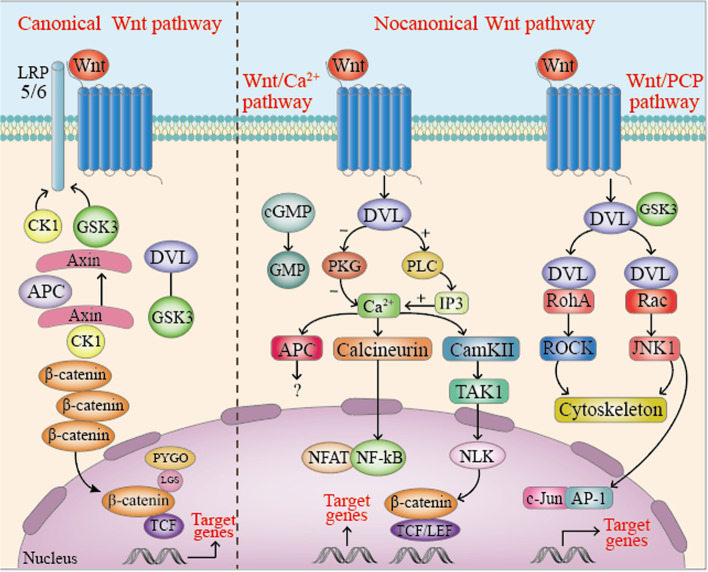
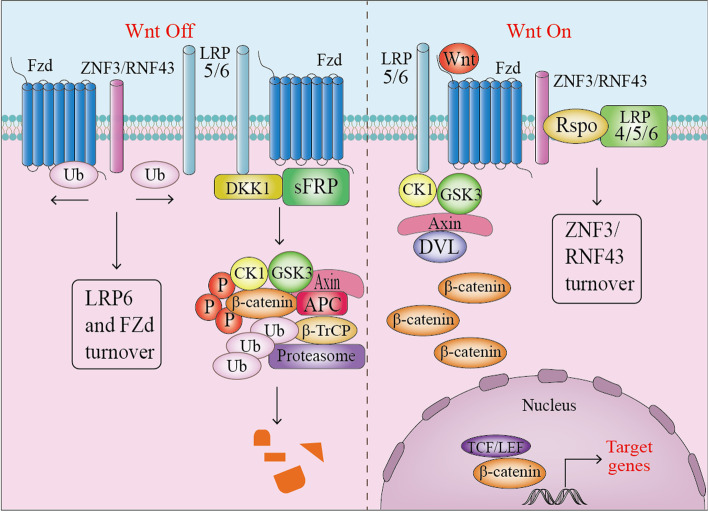
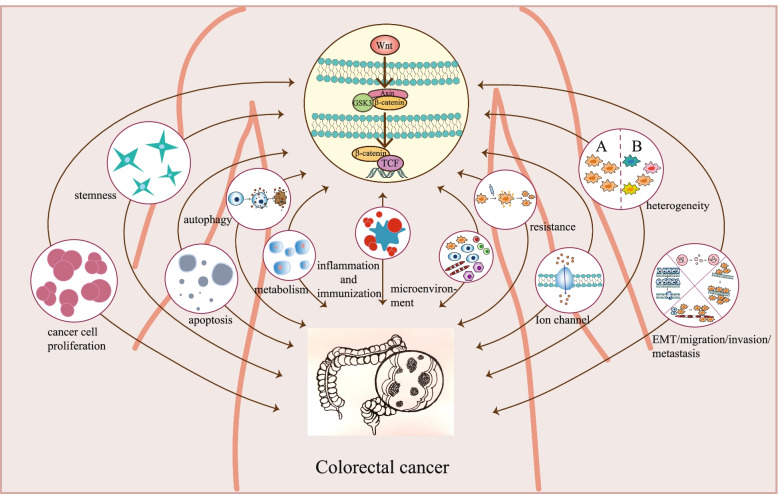
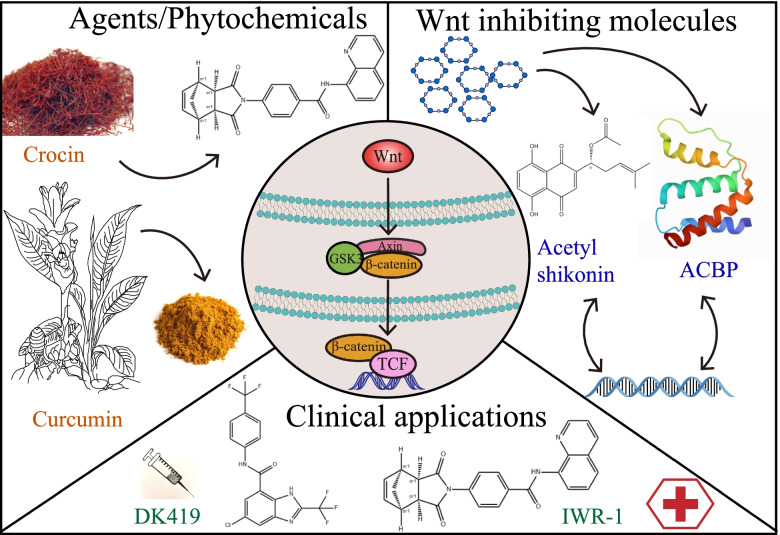
Background: The Wnt signaling pathway is a complex network of protein interactions that functions most commonly in embryonic development and cancer, but is also involved in normal physiological processes in adults. The canonical Wnt signaling pathway regulates cell pluripotency and determines the differentiation fate of cells during development. The canonical Wnt signaling pathway (also known as the Wnt/β-catenin signaling pathway) is a recognized driver of colon cancer and one of the most representative signaling pathways. As a functional effector molecule of Wnt signaling, the modification and degradation of β-catenin are key events in the Wnt signaling pathway and the development and progression of colon cancer. Therefore, the Wnt signaling pathway plays an important role in the pathogenesis of diseases, especially the pathogenesis of colorectal cancer (CRC). Objective: Inhibit the Wnt signaling pathway to explore the therapeutic targets of colorectal cancer. Methods: Based on studying the Wnt pathway, master the biochemical processes related to the Wnt pathway, and analyze the relevant targets when drugs or inhibitors act on the Wnt pathway, to clarify the medication ideas of drugs or inhibitors for the treatment of diseases, especially colorectal cancer. Results: Wnt signaling pathways include: Wnt/β-catenin or canonical Wnt signaling pathway, planar cell polarity (Wnt-PCP) pathway and Wnt-Ca 2+ signaling pathway. The Wnt signaling pathway is closely related to cancer cell proliferation, stemness, apoptosis, autophagy, metabolism, inflammation and immunization, microenvironment, resistance, ion channel, heterogeneity, EMT/migration/invasion/metastasis. Drugs/phytochemicals and molecular preparations for the Wnt pathway of CRC treatment have now been developed. Wnt inhibitors are also commonly used clinically for the treatment of CRC. Conclusion: The development of drugs/phytochemicals and molecular inhibitors targeting the Wnt pathway can effectively treat colorectal cancer clinically.
Overview
The claims and statistics of this paper haven’t been checked yet.
Free: it reads the open-access text and checks the first 5 claims that cite a source we can check. Create a free account to check every claim.
Integrity signals
Registry
Cites
Statistics
Figures
Verification
Claims the paper makes
The claims and statistics of this paper haven’t been checked yet.
Free: it reads the open-access text and checks the first 5 claims that cite a source we can check. Create a free account to check every claim.
Claims other papers make about this one
Each is checked against this paper’s own text: does it say what the citing paper says it does?
The source backs part of the claim, not all of it — or backs it for a different population, condition or comparison.
In the citing paper
“Multiple agents targeting both canonical and the β-catenin-independent non-canonical Wnt signaling including v-ATPase inhibitors and anti-RSPO antibody are undergoing clinical trials in CRC and other malignancies [119,120].”
From Recent Advances in Therapeutic Strategies to Improve Colorectal Cancer Treatment (2024) · cites this paper as [120]
Experimental — accuracy not yet measured
Self-check
Percentages, sums and reported differences re-computed from the paper’s own numbers.
The self-check needs the paper’s full text.
Citations
Cites
4 retracted
RETRACTED: Phytosomal curcumin inhibits tumor growth in colitis‐associated colorectal cancer
Marjaneh, R. M., Rahmani, F., Hassanian, S. M., Rezaei, N., Hashemzehi, M., Bahrami, A., Ariakia, F., Fiuji, H., Sahebkar, A., Avan, A., et al. (2018) · Journal of Cellular Physiology · doi:10.1002/jcp.26538 · Cited by 200
RetractedAmerizadeh, F., Rezaei, N., Rahmani, F., Hassanian, S. M., Moradi‐Marjaneh, R., Fiuji, H., Boroumand, N., Tirkani, A. N., Ghayour‐Mobarhan, M., Ferns, G. A., et al. (2018) · Journal of Cellular Biochemistry · doi:10.1002/jcb.27367 · Cited by 97
RetractedSun, J., Zhang, T., Cheng, M., Hong, L., Zhang, C., Xie, M., Sun, P., Fan, R., Wang, Z., Wang, L., et al. (2019) · Journal of Experimental & Clinical Cancer Research · doi:10.1186/s13046-019-1098-y · Cited by 65
RetractedHuang, T., Zhang, Q., Ren, W., Yan, B., Liang, Y., Tang, T., Lin, H. L., & Zhang, Y. (2020) · Cell Biology International · doi:10.1002/cbin.11358 · Cited by 52
RetractedWnt/β-Catenin Signaling, Disease, and Emerging Therapeutic Modalities
Nusse, R., & Clevers, H. (2017) · Cell · doi:10.1016/j.cell.2017.05.016 · Cited by 4,342
Targeting the Wnt/β-catenin signaling pathway in cancer
Zhang, Y., & Wang, X. (2020) · Journal of Hematology & Oncology · doi:10.1186/s13045-020-00990-3 · Cited by 1,431
Wnt signaling in development and tissue homeostasis
Steinhart, Z., & Angers, S. (2018) · Development · doi:10.1242/dev.146589 · Cited by 821
Wnt/β-catenin signaling in cancer stemness and malignant behavior
Fodde, R., & Brabletz, T. (2007) · Current Opinion in Cell Biology · doi:10.1016/j.ceb.2007.02.007 · Cited by 785
Hu, J. L., Wang, W., Lan, X. L., Zeng, Z. C., Liang, Y. S., Yan, Y. R., Song, F. Y., Wang, F. F., Zhu, X. H., Liao, W. J., et al. (2019) · Molecular Cancer · doi:10.1186/s12943-019-1019-x · Cited by 773 · cited 1×
“In terms of mechanism, the increased expression of miR-92a-3p activates the Wnt/β-catenin pathway, inhibits mitochondrial apoptosis by directly inhibiting FBXW7 and MOAP1, and promotes the stem cell, EMT, and metastasis of colorectal cancer cells [128].”
BackgroundWnt signaling in breast cancer: biological mechanisms, challenges and opportunities
Xu, X., Zhang, M., Xu, F., & Jiang, S. (2020) · Molecular Cancer · doi:10.1186/s12943-020-01276-5 · Cited by 588
Cited by
Jomova, K., Alomar, S. Y., Alwasel, S. H., Nepovimova, E., Kuca, K., & Valko, M. (2024) · Archives of Toxicology · doi:10.1007/s00204-024-03696-4 · Cited by 1,445
“GPx2 was identified as a target of the Wnt signaling pathway and plays an important role in normal physiological processes, embryonal development, and pathological processes such as cancer (Zhao et al. 2022).”
BackgroundChen, B., Yu, P., Chan, W. N., Xie, F., Zhang, Y., Liang, L., Leung, K. T., Lo, K. W., Yu, J., Tse, G. M. K., et al. (2024) · Signal Transduction and Targeted Therapy · doi:10.1038/s41392-023-01679-y · Cited by 420
Wnt/β-catenin signaling pathway in carcinogenesis and cancer therapy
Song, P., Gao, Z., Bao, Y., Chen, L., Huang, Y., Liu, Y., Dong, Q., & Wei, X. (2024) · Journal of Hematology & Oncology · doi:10.1186/s13045-024-01563-4 · Cited by 382
“Non-steroidal anti-inflammatory drugs have also been found to block cancer signaling pathways by inhibiting the activation of Wnt/β-catenin and reducing expression of its target genes via inhibition of β-catenin-mediated transcription [355].”
BackgroundZhang, B., Shi, H., & Wang, H. (2023) · Journal of Multidisciplinary Healthcare · doi:10.2147/jmdh.s410301 · Cited by 347
“Cancer is a genetic disorder and several types of cancers have been identified; 54,55 therefore, it is no surprise that AI advancements have helped oncology in particular.”
Zhao, H., Ren, S., Yang, H., Tang, S., Guo, C., Liu, M., Tao, Q., Ming, T., & Xu, H. (2022) · Biomedicine & Pharmacotherapy · doi:10.1016/j.biopha.2022.113559 · Cited by 225
Self-citationColorectal Cancer: From Risk Factors to Oncogenesis
Ionescu, V. A., Gheorghe, G., Bacalbasa, N., Chiotoroiu, A. L., & Diaconu, C. (2023) · Medicina · doi:10.3390/medicina59091646 · Cited by 202
Integrin signaling in cancer: bidirectional mechanisms and therapeutic opportunities
Li, S., Sampson, C., Liu, C., Piao, H., & Liu, H. (2023) · Cell Communication and Signaling · doi:10.1186/s12964-023-01264-4 · Cited by 191
Apigenin: A Bioflavonoid with a Promising Role in Disease Prevention and Treatment
Allemailem, K. S., Almatroudi, A., Alharbi, H. O., Alsuhaymi, N., Alsugoor, M. H., Aldakheel, F. M., Khan, A. A., & Rahmani, A. H. (2024) · Biomedicines · doi:10.3390/biomedicines12061353 · Cited by 184
Wu, X., Que, H., Li, Q., & Wei, X. (2025) · Molecular Cancer · doi:10.1186/s12943-025-02363-1 · Cited by 176
Role of Epithelial to Mesenchymal Transition in Colorectal Cancer
Lu, J., Kornmann, M., & Traub, B. (2023) · International Journal of Molecular Sciences · doi:10.3390/ijms241914815 · Cited by 167
Wnt/β-Catenin Signaling Pathway in the Development and Progression of Colorectal Cancer
He, K., & Gan, W.-J. (2023) · Cancer Management and Research · doi:10.2147/cmar.s411168 · Cited by 167
NF-κB signaling pathway in tumor microenvironment
Cao, Y., Yi, Y., Han, C., & Shi, B. (2024) · Frontiers in Immunology · doi:10.3389/fimmu.2024.1476030 · Cited by 165
Curcumin: An epigenetic regulator and its application in cancer
Ming, T., Tao, Q., Tang, S., Zhao, H., Yang, H., Liu, M., Ren, S., & Xu, H. (2022) · Biomedicine & Pharmacotherapy · doi:10.1016/j.biopha.2022.113956 · Cited by 160
Self-citationExosomal circular RNAs: A chief culprit in cancer chemotherapy resistance
Guo, X., Gao, C., Yang, D., & Li, S. (2023) · Drug Resistance Updates · doi:10.1016/j.drup.2023.100937 · Cited by 156
Multi drug resistance in Colorectal Cancer- approaches to overcome, advancements and future success
Ashique, S., Bhowmick, M., Pal, R., Khatoon, H., Kumar, P., Sharma, H., Garg, A., Kumar, S., & Das, U. (2024) · Advances in Cancer Biology - Metastasis · doi:10.1016/j.adcanc.2024.100114 · Cited by 139
Linke, J. A., Munn, L. L., & Jain, R. K. (2024) · Nature reviews. Cancer · doi:10.1038/s41568-024-00745-z · Cited by 132
Zheng, Z., Wieder, T., Mauerer, B., Schäfer, L., Kesselring, R., & Braumüller, H. (2023) · International Journal of Molecular Sciences · doi:10.3390/ijms241411673 · Cited by 132
Tumor microenvironment and cancer metastasis: molecular mechanisms and therapeutic implications
Avcı, Ç. B., Bağca, B. G., Nikanfar, M., Takanlou, L. S., Takanlou, M. S., & Nourazarian, A. (2024) · Frontiers in Pharmacology · doi:10.3389/fphar.2024.1442888 · Cited by 118
Das, M., Dash, R., & Mishra, S. K. (2023) · International Journal of Environmental Research and Public Health · doi:10.3390/ijerph20032131 · Cited by 104
Sun, L., Xing, J., Zhou, X., Song, X., & Gao, S. (2024) · Biomedicine & Pharmacotherapy · doi:10.1016/j.biopha.2024.116685 · Cited by 102
Epigenetic regulation in lung cancer
Ramazi, S., Dadzadi, M., Sahafnejad, Z., & Allahverdi, A. (2023) · MedComm · doi:10.1002/mco2.401 · Cited by 97
Zhao, H., Tang, S., Tao, Q., Ming, T., Lei, J., Liang, Y., Peng, Y., Wang, M., Liu, M., Yang, H., et al. (2023) · Journal of Agricultural and Food Chemistry · doi:10.1021/acs.jafc.2c06775 · Cited by 92
Self-citationWnt signaling in cancer: from biomarkers to targeted therapies and clinical translation
Tufail, M., Jiang, C., & Li, N. (2025) · Molecular Cancer · doi:10.1186/s12943-025-02306-w · Cited by 91
Ming, T., Lei, J., Peng, Y., Wang, M., Liang, Y., Tang, S., Tao, Q., Wang, M., Tang, X., He, Z., et al. (2024) · Phytotherapy Research · doi:10.1002/ptr.8258 · Cited by 88
Self-citationNSUN2 promotes colorectal cancer progression by enhancing SKIL mRNA stabilization
Zou, S., Huang, Y., Yang, Z., Zhang, J., Meng, M., Zhang, Y., Feng, J., Sun, R., Li, W., Wang, W., et al. (2024) · Clinical and Translational Medicine · doi:10.1002/ctm2.1621 · Cited by 86
Cancer chemoprevention: signaling pathways and strategic approaches
Ren, J., Yan, G., Yang, L., Kong, L., Guan, Y., Sun, H., Liu, C., Liu, L., Han, Y., & Wang, X. (2025) · Signal Transduction and Targeted Therapy · doi:10.1038/s41392-025-02167-1 · Cited by 84
Molecular and immune landscape of hepatocellular carcinoma to guide therapeutic decision-making
Dhanasekaran, R., Suzuki, H., Lemaitre, L., Kubota, N., & Hoshida, Y. (2023) · Hepatology · doi:10.1097/hep.0000000000000513 · Cited by 82
Namini, M. S., Daneshimehr, F., Beheshtizadeh, N., Mansouri, V., Ai, J., Jahromi, H. K., & Ebrahimi‐Barough, S. (2023) · Stem Cell Research & Therapy · doi:10.1186/s13287-023-03467-5 · Cited by 81
El‐Tanani, M., Rabbani, S. A., Satyam, S. M., Rangraze, I. R., Wali, A. F., El‐Tanani, Y., & Aljabali, A. A. A. (2025) · Cancers · doi:10.3390/cancers17030382 · Cited by 79
Recent Advances in Therapeutic Strategies to Improve Colorectal Cancer Treatment
Gmeiner, W. H. (2024) · Cancers · doi:10.3390/cancers16051029 · Cited by 78
“Multiple agents targeting both canonical and the β -catenin-independent non-canonical Wnt signaling including v-ATPase inhibitors and anti-RSPO antibody are undergoing clinical trials in CRC and other malignancies [119,120].”
BackgroundHuang, C., Zhou, Y., Feng, X., Wang, J., Li, Y., & Yao, X. (2023) · ACS Nano · doi:10.1021/acsnano.3c00668 · Cited by 77
Inflammation-Driven Colorectal Cancer Associated with Colitis: From Pathogenesis to Changing Therapy
Nardone, O. M., Zammarchi, I., Santacroce, G., Ghosh, S., & Iacucci, M. (2023) · Cancers · doi:10.3390/cancers15082389 · Cited by 76
Liao, W., Wen, Y., Wang, J., Zhao, M., Lv, S., Chen, N., Li, Y., Wan, L., Zheng, Q., Mou, Y., et al. (2022) · Journal of Ethnopharmacology · doi:10.1016/j.jep.2022.115885 · Cited by 76
Berberine is a suppressor of Hedgehog signaling cascade in colorectal cancer
Sun, Q., Tao, Q., Ming, T., Tang, S., Zhao, H., Liu, M., Yang, H., Ren, S., Lei, J., Liang, Y., et al. (2023) · Phytomedicine · doi:10.1016/j.phymed.2023.154792 · Cited by 74
Self-citationMishra, M., Ahmed, R., Das, D. K., Pramanik, D. D., Dash, S. K., & Pramanik, A. (2024) · ACS Biomaterials Science & Engineering · doi:10.1021/acsbiomaterials.4c00606 · Cited by 69
COX 2-inhibitors; a thorough and updated survey into combinational therapies in cancers
Rodrigues, P., Bangali, H., Hammoud, A., Mustafa, Y. F., Al‐Hetty, H. R. A. K., Alkhafaji, A. T., Deorari, M. M., Al‐Taee, M. M., Zabibah, R. S., & Alsalamy, A. (2024) · Medical Oncology · doi:10.1007/s12032-023-02256-7 · Cited by 69
Wnt/β-Catenin signaling pathway in hepatocellular carcinoma: pathogenic role and therapeutic target
Zhao, Z., Cui, T., Wei, F., Zhou, Z., Sun, Y., Gao, C., Xu, X., & Zhang, H. (2024) · Frontiers in Oncology · doi:10.3389/fonc.2024.1367364 · Cited by 68
Gharib, E., & Robichaud, G. A. (2024) · International Journal of Molecular Sciences · doi:10.3390/ijms25179463 · Cited by 65
Yu, Z., Gao, R., Lv, C., Geng, X., Ren, Y., Zhang, J., Ren, J., Wang, H., Ai, F., Wang, Z.-Y., et al. (2024) · Acta Pharmacologica Sinica · doi:10.1038/s41401-024-01250-7 · Cited by 65
Li, Z., Yang, Z., Liu, W., Zhu, W., Yin, L., Han, Z., Xian, Y., Wen, J., Tang, H., Lin, X., et al. (2023) · Journal of Translational Medicine · doi:10.1186/s12967-023-04120-8 · Cited by 62
NF-κB and apoptosis: colorectal cancer progression and novel strategies for treatment
Sadati, S., Khalaji, A., Bonyad, A., Khoshdooz, S., Kolbadi, K. S. H., Bahrami, A., Moeinfar, M. S., Morshedi, M. M., Ghamsaraian, A., Eterafi, M., et al. (2025) · European journal of medical research · doi:10.1186/s40001-025-02734-w · Cited by 62
Saeed, A., Park, R., Pathak, H. B., Al-Bzour, A. N., Dai, J., Phadnis, M. A., Al-Rajabi, R. M. T., Kasi, A., Baranda, J. C., Sun, W., et al. (2024) · Nature Communications · doi:10.1038/s41467-024-45960-2 · Cited by 61
Obesity-Associated Colorectal Cancer
Gonzalez-Gutierrez, L., Motiño, O., Barriuso, D., de la Puente-Aldea, J., Alvarez-Frutos, L., Kroemer, G., Palacios, R., & Senovilla, L. (2024) · International Journal of Molecular Sciences · doi:10.3390/ijms25168836 · Cited by 60
Lu, X., Jin, J., Wu, Y., Lin, J., Zhang, X., Lu, S., Zhang, J., Zhang, C., Ren, M., Chen, H., et al. (2024) · Bioactive Materials · doi:10.1016/j.bioactmat.2024.09.022 · Cited by 60
An orally administered gene editing nanoparticle boosts chemo-immunotherapy in colorectal cancer
Zhao, K., Yu, Y., Jin, X., Pan, T. S., Zhang, S., Yang, C.-H., Rao, Z., & Zhang, X. (2025) · Nature Nanotechnology · doi:10.1038/s41565-025-01904-5 · Cited by 59
Fang, H., Dai, W., Gu, R., Zhang, Y., Li, J., Luo, W., Tong, S., Han, L., Wang, Y., Jiang, C., et al. (2024) · Journal of Hematology & Oncology · doi:10.1186/s13045-024-01643-5 · Cited by 59
Hashemi, M., Abbaszadeh, S., Rashidi, M., Amini, N., Anaraki, K. T., Motahhary, M., Khalilipouya, E., Nashtifani, A. H., Shafiei, S., Farani, M. R., et al. (2023) · Environmental Research · doi:10.1016/j.envres.2023.116458 · Cited by 56
Barathan, M., Zulpa, A. K., Ng, S. L., Lokanathan, Y., Ng, M. H., & Law, J. X. (2024) · International Journal of Molecular Sciences · doi:10.3390/ijms25137470 · Cited by 55
Kunachowicz, D., Król-Kulikowska, M., Raczycka, W., Sleziak, J., Błażejewska, M., & Kulbacka, J. (2024) · Cancers · doi:10.3390/cancers16081500 · Cited by 54
Dongsar, T. S., Dongsar, T. T., Molugulu, N., Annadurai, S., Wahab, S., Gupta, N., & Kesharwani, P. (2023) · Environmental Research · doi:10.1016/j.envres.2023.116455 · Cited by 54
Stem Cells in Cancer: From Mechanisms to Therapeutic Strategies
Haddadin, L., & Sun, X. S. (2025) · Cells · doi:10.3390/cells14070538 · Cited by 52
Different Roles of Apoptosis and Autophagy in the Development of Human Colorectal Cancer
Orlandi, G., Roncucci, L., Carnevale, G., & Sena, P. (2023) · International Journal of Molecular Sciences · doi:10.3390/ijms241210201 · Cited by 52
Watanabe, R., Miura, N., Kurata, M., Kitazawa, R., Kikugawa, T., & Saika, T. (2023) · International Journal of Molecular Sciences · doi:10.3390/ijms24108955 · Cited by 51
Zhao, Q., Zong, H., Zhu, P., Su, C., Tang, W., Chen, Z., & Jin, S. (2024) · Experimental Hematology and Oncology · doi:10.1186/s40164-024-00474-x · Cited by 50
Microbiota composition and its impact on DNA methylation in colorectal cancer
Angulo, M. G., Ayala‐Madrigal, M. D. L. L., Moreno-Ortíz, J. M., Peregrina-Sandoval, J., & García-Ayala, F. D. (2023) · Frontiers in Genetics · doi:10.3389/fgene.2023.1037406 · Cited by 50
Dai, X., Chen, W., Qiao, Y., Chen, X., Chen, Y., Zhang, K., Zhang, Q., Duan, X., Li, X., Zhao, J., et al. (2023) · Cancer Letters · doi:10.1016/j.canlet.2023.216596 · Cited by 50
Chandra, J., Molugulu, N., Annadurai, S., Wahab, S., Karwasra, R., Singh, S., Shukla, R., & Kesharwani, P. (2023) · Environmental Research · doi:10.1016/j.envres.2023.116506 · Cited by 49
Słoka, J., Madej, M., & Strzałka‐Mrozik, B. (2023) · Molecules · doi:10.3390/molecules28135081 · Cited by 49
Curcumin and its anti‐colorectal cancer potential: From mechanisms of action to autophagy
Brockmueller, A., de Porras, V. R., & Shakibaei, M. (2024) · Phytotherapy Research · doi:10.1002/ptr.8220 · Cited by 47
p53 in colorectal cancer: from a master player to a privileged therapy target
Yan, S., Zhan, F., He, Y., Zhu, Y., & Ma, Z. (2025) · Journal of Translational Medicine · doi:10.1186/s12967-025-06566-4 · Cited by 44
El-Hack, M. E. A., Kamal, M., Altaie, H. A. A., Youssef, I. M., Algarni, E. H. A., Almohmadi, N. H., Abukhalil, M. H., Khafaga, A. F., Alqhtani, A. H., & Swelum, A. A. (2023) · Toxicon · doi:10.1016/j.toxicon.2023.107309 · Cited by 44
Rahimi, A. R., Baghernejadan, Z., Hazrati, A., Malekpour, K., Samimi, L. N., Najafi, A., Falak, R., & Khorramdelazad, H. (2025) · Biomedicine & Pharmacotherapy · doi:10.1016/j.biopha.2025.118014 · Cited by 43
The involvement of ROS-regulated programmed cell death in hepatocellular carcinoma
Cai, H., Meng, Z., & Yu, F. (2024) · Critical Reviews in Oncology/Hematology · doi:10.1016/j.critrevonc.2024.104361 · Cited by 42
The possible role of Wnt/β‐catenin signalling in vitiligo treatment
Lin, X., Meng, X., & Lin, J. (2023) · Journal of the European Academy of Dermatology and Venereology · doi:10.1111/jdv.19022 · Cited by 42
Microbiome modulation in inflammatory diseases: Progress to microbiome genetic engineering
Mousavinasab, F., karimi, R., Taheri, S., Ahmadvand, F., Sanaaee, S., Najafi, S., Halvaii, M. S., Haghgoo, A., Zamany, M., Majidpoor, J., et al. (2023) · Cancer Cell International · doi:10.1186/s12935-023-03095-2 · Cited by 41
El‐Sayed, D. S. (2023) · Journal of Molecular Modeling · doi:10.1007/s00894-023-05501-y · Cited by 41
Budi, H. S., & Farhood, B. (2023) · Environmental Research · doi:10.1016/j.envres.2023.116432 · Cited by 41
Wang, W., Gao, X., Liu, L., Guo, S., Duan, J., & Xiao, P. (2025) · Journal of Pharmaceutical Analysis · doi:10.1016/j.jpha.2025.101195 · Cited by 41
Cystic Fibrosis and Cancer: Unraveling the Complex Role of CFTR Gene in Cancer Susceptibility
Parisi, G. F., Papale, M. R., Pecora, G., Rotolo, N., Manti, S., Russo, G. M., & Leonardi, S. (2023) · Cancers · doi:10.3390/cancers15174244 · Cited by 41
Albahri, G., Badran, A., Baki, Z. A., Alamé, M., Hijazi, A., Daou, A., & Baydoun, E. (2024) · Pharmaceuticals · doi:10.3390/ph17050574 · Cited by 40
Samant, C., Kale, R. R., Pai, K. S. R., Nandakumar, K., & Bhonde, M. (2024) · Biochemical and Biophysical Research Communications · doi:10.1016/j.bbrc.2024.150348 · Cited by 39
Ngum, J. A., Tatang, F. J., Toumeni, M. H., Nguengo, S. N., Simo, U. S. F., Mezajou, C. F., Kameni, C., Ngongang, N. N., Tchinda, M. F., Dongmo, F. F. D., et al. (2023) · Frontiers in Pharmacology · doi:10.3389/fphar.2023.1144836 · Cited by 39
Albadari, N. G., Xie, Y., & Li, W. (2024) · Frontiers in Pharmacology · doi:10.3389/fphar.2023.1340401 · Cited by 38
Chalcones and Gastrointestinal Cancers: Experimental Evidence
Michalková, R., Kello, M., Čižmáriková, M., Bardelčíková, A., Mirossay, L., & Mojžíš, J. (2023) · International Journal of Molecular Sciences · doi:10.3390/ijms24065964 · Cited by 38
Smail, S. W., Bergsten, P., Taha, K. O., Yashooa, R. K., Hawezy, D. J., Abbas, M. A., & Shekha, M. S. (2025) · Frontiers in Pharmacology · doi:10.3389/fphar.2025.1695200 · Cited by 38
Singh, S. P., Gouri, V., & Samant, M. (2023) · Medical Oncology · doi:10.1007/s12032-023-02204-5 · Cited by 37
Thymoquinone: A Promising Therapeutic Agent for the Treatment of Colorectal Cancer
Kurowska, N., Madej, M., & Strzałka‐Mrozik, B. (2023) · Current Issues in Molecular Biology · doi:10.3390/cimb46010010 · Cited by 37
Modulating and Imaging Macrophage Reprogramming for Cancer Immunotherapy
Wang, J., Lu, Y., Zhang, R., Cai, Z., Fan, Z. M., Xu, Y., Liu, Z., & Zhang, Z. (2024) · Phenomics · doi:10.1007/s43657-023-00154-6 · Cited by 37
Exploring the Key Signaling Pathways and ncRNAs in Colorectal Cancer
Lee, Y. J., Kim, W. R., Park, E. G., Lee, D. H., Kim, J., Shin, H. J., Jeong, H.-S., Roh, H.-Y., & Kim, H. (2024) · International Journal of Molecular Sciences · doi:10.3390/ijms25084548 · Cited by 37
IGF1 drives Wnt-induced joint damage and is a potential therapeutic target for osteoarthritis
Escribano-Núñez, A., Cornelis, F. M. F., Roover, A. D., Sermon, A., Cailotto, F., Lories, R. J. U., & Monteagudo, S. (2024) · Nature Communications · doi:10.1038/s41467-024-53604-8 · Cited by 36
Li, L., Wang, L., & Zhang, L. (2024) · Journal of Agricultural and Food Chemistry · doi:10.1021/acs.jafc.3c07536 · Cited by 36
Early Onset Colorectal Cancer: Molecular Underpinnings Accelerating Occurrence
Zinkeng, A., Taylor, F. L., Cheong, S. H., Song, H., & Merchant, J. L. (2024) · Cellular and Molecular Gastroenterology and Hepatology · doi:10.1016/j.jcmgh.2024.101425 · Cited by 35
Bacterial infection and microbiota in carcinogenesis and tumor development
Li, Q. (2023) · Frontiers in Cellular and Infection Microbiology · doi:10.3389/fcimb.2023.1294082 · Cited by 34
Shapaer, T., Chen, Y., Pan, Y., Wu, Z., Tang, T., Zhao, Z., & Zeng, X. (2024) · Discover Oncology · doi:10.1007/s12672-024-01321-5 · Cited by 34
Xiang, Z., Wang, Y., Ma, X., Song, S., He, Y., Zhou, J., Feng, L.-H., Yang, S., Wu, Y., Yu, B., et al. (2024) · Advanced Science · doi:10.1002/advs.202405758 · Cited by 34
Zamani, M., Tavakkoli, N., & Soltani, N. (2023) · Diamond and Related Materials · doi:10.1016/j.diamond.2023.109954 · Cited by 34
The Roles of Zinc Finger Proteins in Colorectal Cancer
Iyer, A. S., Shaik, M. R., Raufman, J., & Xie, G. (2023) · International Journal of Molecular Sciences · doi:10.3390/ijms241210249 · Cited by 33
Huang, Y., Chan, S., Chen, S., Liu, X., Li, M., Zheng, L., Dong, Z., Yang, Z., Liu, Z., Zhou, D., et al. (2024) · Journal of Translational Medicine · doi:10.1186/s12967-024-04934-0 · Cited by 33
Rojas-Pirela, M., Andrade-Alviárez, D., Rojas, V., Marcos, M., Salete-Granado, D., Chacón-Arnaude, M., Pérez-Nieto, M. Á., Kemmerling, U., Concepción, J. L., Michels, P. A. M., et al. (2025) · Open Biology · doi:10.1098/rsob.240239 · Cited by 32
Song, X.-H., Yang, L., Zheng, X., Zhu, Q., Liao, X.-L., Liu, K., Zhang, W., Peng, Q., Zhu, Y., Zhao, L.-Y., et al. (2023) · MedComm · doi:10.1002/mco2.342 · Cited by 32
Xu, P., He, J., Xu, T., Wang, W., Wu, B., Chen, R., Wang, H., Yang, Q., Wu, W. H., & Sun, D. (2025) · Theranostics · doi:10.7150/thno.113474 · Cited by 32
Tang, S., Wang, M., Peng, Y., Liang, Y., Lei, J., Tao, Q., Ming, T., Shen, Y., Zhang, C., Guo, J., et al. (2024) · Frontiers in Pharmacology · doi:10.3389/fphar.2024.1290888 · Cited by 32
Self-citationHan, Q., Li, J., Li, Z. Y., Aishajiang, R., & Yu, D. N. (2025) · Materials Today Bio · doi:10.1016/j.mtbio.2025.101601 · Cited by 32
Biomarker Identification through Proteomics in Colorectal Cancer
Martín‐García, D., García‐Aranda, M., & Redondo, M. (2024) · International Journal of Molecular Sciences · doi:10.3390/ijms25042283 · Cited by 31
WNT5A: a double-edged sword in colorectal cancer progression
Tufail, M., & Wu, C. (2023) · Mutation Research/Reviews in Mutation Research · doi:10.1016/j.mrrev.2023.108465 · Cited by 31
The Impact of Cancer Stem Cells in Colorectal Cancer
Radu, P., Zurzu, M., Tigora, A., Paic, V., Bratucu, M., Garofil, D., Surlin, V., Munteanu, A. C., Coman, I. S., Popa, F., et al. (2024) · International Journal of Molecular Sciences · doi:10.3390/ijms25084140 · Cited by 30
Targeting anticancer immunity in oral cancer: Drugs, products, and nanoparticles
Qin, L., & Wu, J. (2023) · Environmental Research · doi:10.1016/j.envres.2023.116751 · Cited by 30
Natural compounds: Wnt pathway inhibitors with therapeutic potential in lung cancer
Shen, X., Gao, C., Li, H., Liu, C., Wang, L., Li, Y., Liu, R., Sun, C., & Zhuang, J. (2023) · Frontiers in Pharmacology · doi:10.3389/fphar.2023.1250893 · Cited by 30
Ma, X., Xu, M., Zhang, X., Wang, X., Su, K., Xu, Z., Wang, X., & Yang, Y. (2023) · Cell Biology International · doi:10.1002/cbin.12072 · Cited by 30
Tang, Y., Feng, X., Lü, Q., Cui, C., Yu, M., Wen, Z., Luan, Y., Dong, L., Hu, Z., Zhang, R., et al. (2023) · Mucosal Immunology · doi:10.1016/j.mucimm.2023.12.002 · Cited by 29
Metadata
- Authors
- Zhao, H., Ming, T., Tang, S., Ren, S., Yang, H., Liu, M., Tao, Q., & Xu, H.
- Affiliations
- Chengdu University of Traditional Chinese Medicine (CN)
- Corresponding author
- Xu, Haibo
- Venue
- Molecular Cancer
- Published
- 2022-07-14
- Volume
- 21
- Issue
- 1
- Pages
- 144-144
- ISSN
- 1476-4598 (ISSN-L)
- PMC
- PMC9281132
- OpenAlex
- W4285391272
- Cited by
- 857
- References
- 275
- Citations by year
- 2026: 151 · 2025: 276 · 2024: 245 · 2023: 169 · 2022: 15
- FWCI
- 18.63
- Type
- journal article
- Language
- en
- Open access
- gold
- doi.org
- Licence
- cc-by
- creativecommons.org/licenses/by/4.0 (tdm)
- creativecommons.org/licenses/by/4.0 (vor)
- Locations
- Molecular Cancer (publishedVersion, cc-by)
- PubMed Central (publishedVersion, cc-by)
- PubMed (publishedVersion)
- DOAJ (DOAJ: Directory of Open Access Journals) (submittedVersion, cc-by-sa)
- Funders
- National Natural Science Foundation of China (81173598, 81573813)
- Chengdu University of Traditional Chinese Medicine (GJJJ2021003)
- Chengdu University
- Sichuan Provincial Administration of Traditional Chinese Medicine (2021XYCZ007, 2021MS447)
- Health Commission of Sichuan Province (21PJ107)
- Topics
- Life Sciences › Biochemistry, Genetics and Molecular Biology › Molecular Biology › Wnt/β-catenin signaling in development and cancer
- Health Sciences › Medicine › Oncology › Colorectal Cancer Treatments and Studies
- Health Sciences › Medicine › Oncology › Cancer Cells and Metastasis
- Keywords
- Wnt signaling, colorectal cancer, Wnt/β-catenin signaling, β-catenin degradation, therapeutic target, Wnt inhibitors, cancer stemness, epithelial-mesenchymal transition, drug resistance, tumor microenvironment, phytochemicals
- MeSH terms
- Cell Movement, Colonic Neoplasms, Humans, Colorectal Neoplasms, Cell Line, Tumor, Cell Proliferation, beta Catenin, Epithelial-Mesenchymal Transition, Tumor Microenvironment, Wnt Signaling Pathway
About these checks
Registry, retraction, Cites and statistics results are computed, not judged, with one exception: a printed reference that no index lists is read once by a model before it counts as a citation error. Claims are extracted by a model and kept only when their quote appears verbatim in the text; each cited source is then checked, with a model’s help, for whether it says what the claim relies on. Those verdicts can be wrong — read the claim’s quote and the cited source before relying on one.
Statistics and arithmetic are recomputed, not judged.
Confidence bands are shown only for fields calibrated on our annotated test set. None is calibrated yet, so no band is shown.
What counts as a claim ›How we measure confidence ›How we check this ›
Are you an author, or do you see a problem with this page? Request a review
Data sources
Bibliographic data: Semantic Scholar, OpenAlex, Crossref.
Contains information from the Semantic Scholar Academic Graph Datasets, made available under the ODC Attribution License (ODC-BY 1.0).
Semantic Scholar’s data is described in: Kinney, R., et al. (2023). The Semantic Scholar Open Data Platform. arXiv:2301.10140.
