

Gamma delta T-cell-based immune checkpoint therapy: attractive candidate for antitumor treatment
Open accessThe DOI matches its Crossref record; 250 of the 250 references it cites were found in a registry or an index.
Abstract
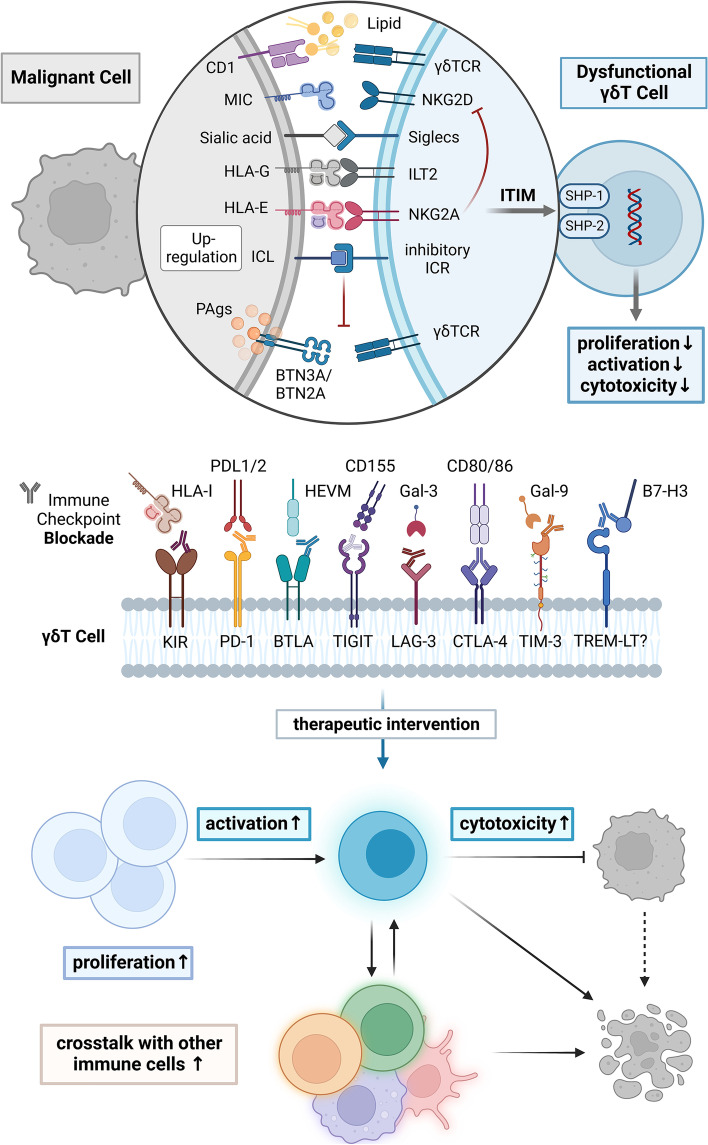
As a nontraditional T-cell subgroup, γδT cells have gained popularity in the field of immunotherapy in recent years. They have extraordinary antitumor potential and prospects for clinical application. Immune checkpoint inhibitors (ICIs), which are efficacious in tumor patients, have become pioneer drugs in the field of tumor immunotherapy since they were incorporated into clinical practice. In addition, γδT cells that have infiltrated into tumor tissues are found to be in a state of exhaustion or anergy, and there is upregulation of many immune checkpoints (ICs) on their surface, suggesting that γδT cells have a similar ability to respond to ICIs as traditional effector T cells. Studies have shown that targeting ICs can reverse the dysfunctional state of γδT cells in the tumor microenvironment (TME) and exert antitumor effects by improving γδT-cell proliferation and activation and enhancing cytotoxicity. Clarification of the functional state of γδT cells in the TME and the mechanisms underlying their interaction with ICs will solidify ICIs combined with γδT cells as a good treatment option.
Overview
The claims and statistics of this paper haven’t been checked yet.
Free: it reads the open-access text and checks the first 5 claims that cite a source we can check. Create a free account to check every claim.
Integrity signals
Registry
Cites
Statistics
Figures
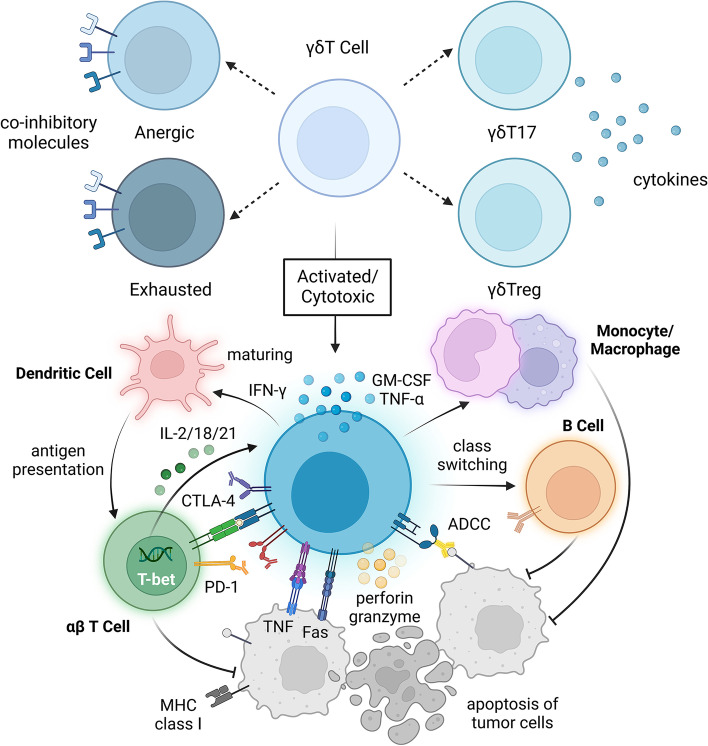
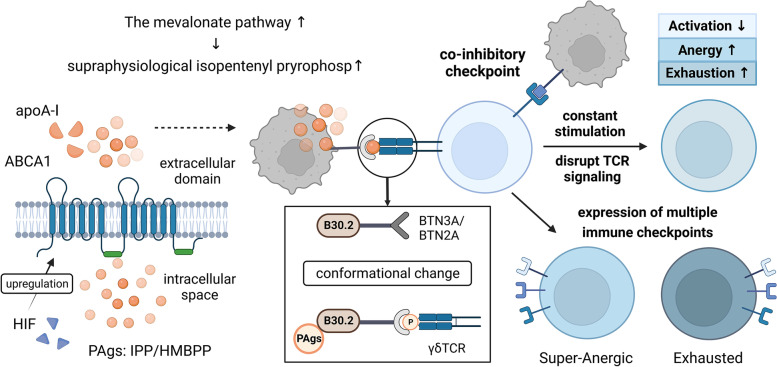
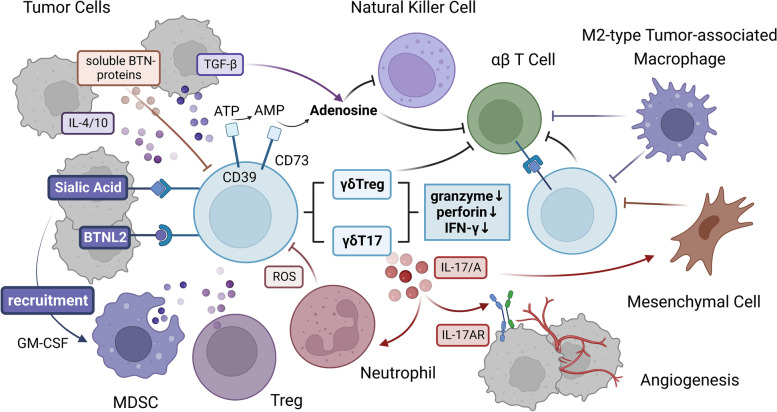
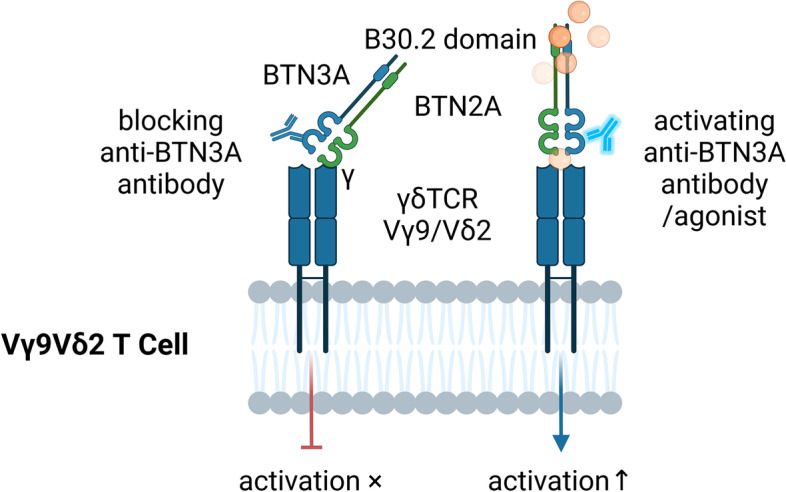
Verification
Claims the paper makes
The claims and statistics of this paper haven’t been checked yet.
Free: it reads the open-access text and checks the first 5 claims that cite a source we can check. Create a free account to check every claim.
Claims other papers make about this one
Each is checked against this paper’s own text: does it say what the citing paper says it does?
The source backs part of the claim, not all of it — or backs it for a different population, condition or comparison.
In the citing paper
“Recent studies reported the existence of a fragile Tregs phenotype in the TME that produces IFN-γ and exhibits anti-tumor effects [30, 42–44].”
From Potential anti-tumor effects of regulatory T cells in the tumor microenvironment: a review (2024) · cites this paper as [43]
Experimental — accuracy not yet measured
Self-check
Percentages, sums and reported differences re-computed from the paper’s own numbers.
The self-check needs the paper’s full text.
Citations
Cites
Understanding the tumor immune microenvironment (TIME) for effective therapy
Binnewies, M., Roberts, E. W., Kersten, K., Chan, V., Fearon, D. F., Merad, M., Coussens, L. M., Gabrilovich, D. I., Ostrand-Rosenberg, S., Hedrick, C. C., et al. (2018) · Nature Medicine · doi:10.1038/s41591-018-0014-x · Cited by 6,145 · cited 1×
“To facilitate the immune escape of tumor cells, ICRs can inhibit cell activation by competing for ligands that bind to activated receptors [26, 27].”
BackgroundImmune-Related Adverse Events Associated with Immune Checkpoint Blockade
Postow, M. A., Sidlow, R., & Hellmann, M. D. (2018) · New England Journal of Medicine · doi:10.1056/nejmra1703481 · Cited by 4,849
Molecular and cellular insights into T cell exhaustion
Wherry, E. J., & Kurachi, M. (2015) · Nature Reviews Immunology · doi:10.1038/nri3862 · Cited by 4,652
Wherry, E. J. (2011) · Nature Immunology · doi:10.1038/ni.2035 · Cited by 4,062
The prognostic landscape of genes and infiltrating immune cells across human cancers
Gentles, A. J., Newman, A. M., Liu, C. L., Bratman, S. V., Feng, W., Kim, D., Nair, V. S., Xu, Y., Khuong, A., Hoang, C. D., et al. (2015) · Nature Medicine · doi:10.1038/nm.3909 · Cited by 3,118
Glycosylation in cancer: mechanisms and clinical implications
Pinho, S. S., & Reis, C. A. (2015) · Nature Reviews Cancer · doi:10.1038/nrc3982 · Cited by 3,083
PD-1 expression by tumour-associated macrophages inhibits phagocytosis and tumour immunity
Gordon, S. R., Maute, R. L., Dulken, B. W., Hutter, G., George, B. M., McCracken, M. N., Gupta, R., Tsai, J. M., Sinha, R., Corey, D., et al. (2017) · Nature · doi:10.1038/nature22396 · Cited by 2,247
Bagchi, S., Yuan, R., & Engleman, E. G. (2021) · Annual Review of Pathology: Mechanisms of Disease · doi:10.1146/annurev-pathol-042020-042741 · Cited by 2,189 · cited 2×
“To facilitate the immune escape of tumor cells, ICRs can inhibit cell activation by competing for ligands that bind to activated receptors [26, 27].”
BackgroundNoman, M. Z., Desantis, G., Janji, B., Hasmim, M., Karray, S., Dessen, P., Bronte, V., & Chouaib, S. (2014) · Journal of Experimental Medicine · doi:10.1084/jem.20131916 · Cited by 2,166
PD-L1 regulates the development, maintenance, and function of induced regulatory T cells
Francisco, L. M., Salinas, V. H., Brown, K. E., Vanguri, V. K., Freeman, G. J., Kuchroo, V. K., & Sharpe, A. H. (2009) · Journal of Experimental Medicine · doi:10.1084/jem.20090847 · Cited by 2,079
Cited by
γδ T cells: origin and fate, subsets, diseases and immunotherapy
Hu, Y., Hu, Q., Li, Y., Lu, L., Xiang, Z., Yin, Z., Kabelitz, D., & Wu, Y. (2023) · Signal Transduction and Targeted Therapy · doi:10.1038/s41392-023-01653-8 · Cited by 382
CTLs heterogeneity and plasticity: implications for cancer immunotherapy
Peng, S., Lin, A., Jiang, A., Zhang, C., Zhang, J., Cheng, Q., Luo, P., & Bai, Y. (2024) · Molecular Cancer · doi:10.1186/s12943-024-01972-6 · Cited by 108
“Blocking TIM-3 increases the killing effect of Vγ9 + Vδ2 + T cells on colon cancer cells by activating the ERK1/2 pathway and upregulating perforin and granzyme B expression [152].”
BackgroundSelf-citationPotential anti-tumor effects of regulatory T cells in the tumor microenvironment: a review
Li, Y., Zhang, C., Jiang, A., Lin, A., Liu, Z., Cheng, X., Wang, W., Cheng, Q., Zhang, J., Wei, T., et al. (2024) · Journal of Translational Medicine · doi:10.1186/s12967-024-05104-y · Cited by 105
Self-citationTumor-Associated Macrophages: Polarization, Immunoregulation, and Immunotherapy
Saeed, A. F. U. H. (2025) · Cells · doi:10.3390/cells14100741 · Cited by 113
“The study by Gao et al. [245] demonstrated that BTNL2 stimulates γδ T17 cells to release IL-17A and bring in myeloid suppressor cells, leading to a rise in the quantity of TME mesenchymal stem cells, M2 macrophages, and TAMs.”
Lin, A., Huang, L., Jiang, A., Zhu, L., Mou, W., Li, Y., Zhang, C., Liu, Z., Zhang, J., Cheng, Q., et al. (2025) · BMC Medicine · doi:10.1186/s12916-025-04183-y · Cited by 46
Self-citationThe metabolic dialogue between intratumoural microbes and cancer: implications for immunotherapy
Situ, Y., Zhang, P., Zhang, C., Jiang, A., Zhang, N., Zhu, L., Mou, W., Liu, Z., Wong, H. Z. H., Zhang, J., et al. (2025) · eBioMedicine · doi:10.1016/j.ebiom.2025.105708 · Cited by 45
Self-citationT cell exhaustion in human cancers
Kang, K., Lin, X., Chen, P., Liu, H., Liu, F., Xiong, W., Li, G., Yi, M., Li, X., Wang, H., et al. (2024) · Biochimica et Biophysica Acta (BBA) - Reviews on Cancer · doi:10.1016/j.bbcan.2024.189162 · Cited by 56
Natural Killer Cell Immune Checkpoints and Their Therapeutic Targeting in Cancer Treatment
Lin, A., Ye, P., Li, Z., Jiang, A., Liu, Z., Cheng, Q., Zhang, J., & Luo, P. (2025) · Research · doi:10.34133/research.0723 · Cited by 75
“TME represents a highly complex and dynamically evolving ecosystem comprising extracellular matrix, vascular endothelial cells, stromal cells, immune cells, and malignant cells [ 168 , 169 ].”
Self-citationT cells in abdominal aortic aneurysm: immunomodulation and clinical application
Gong, W., Tian, Y., & Li, L. (2023) · Frontiers in Immunology · doi:10.3389/fimmu.2023.1240132 · Cited by 47
Gamma/delta T cells as cellular vehicles for anti-tumor immunity
Wang, C. Q., Lim, P. Y., & Tan, A. H. (2024) · Frontiers in Immunology · doi:10.3389/fimmu.2023.1282758 · Cited by 42
Exosome-derived proteins in gastric cancer progression, drug resistance, and immune response
Wang, J., Zhang, H., Li, J., Ni, X., Yan, W., Chen, Y., & Shi, T. (2024) · Cellular & Molecular Biology Letters · doi:10.1186/s11658-024-00676-5 · Cited by 43
Zhang, H., Li, S., Liu, S. M., Liao, Y., Liu, H., Yang, M., & Chen, P. (2025) · Molecular Cancer · doi:10.1186/s12943-025-02491-8 · Cited by 52
Novel potential therapeutic targets of alopecia areata
Xu, W., Wan, S., Xie, B., & Song, X. (2023) · Frontiers in Immunology · doi:10.3389/fimmu.2023.1148359 · Cited by 40
γδ T cells and the PD-1/PD-L1 axis: a love–hate relationship in the tumor microenvironment
Liu, J., Wu, M., Yang, Y., Wang, Z., He, S., Tian, X., & Wang, H. (2024) · Journal of Translational Medicine · doi:10.1186/s12967-024-05327-z · Cited by 34
“Targeted modulation of ICPs can ameliorate the impaired functionality of exhausted γδ T cells within the TME, thereby exerting antitumor effects through enhanced proliferation, activation and cytotoxicity [79].”
BackgroundGamma delta T cells and their immunotherapeutic potential in cancer
Cieslak, S. G., & Shahbazi, R. (2025) · Biomarker Research · doi:10.1186/s40364-025-00762-6 · Cited by 38
“It is also important to note that αβ T cells can facilitate γδ T cell function through the release of IL-2 and activation of the transcription factor T-bet [72].”
InfluentialRevesz, I. A., Joyce, P. M., Ebert, L. M., & Prestidge, C. A. (2024) · Clinical & Translational Immunology · doi:10.1002/cti2.1492 · Cited by 30
Zhang, L., Zhao, J., Su, C., Wu, J., Jiang, L., Chi, H., & Wang, Q. (2025) · Frontiers in Immunology · doi:10.3389/fimmu.2025.1573686 · Cited by 29
“For example, the Kynurenine pathway in tryptophan metabolism directly promotes immune escape by activating Treg cells and inhibiting CD8+ T cell activity (45, 46, 75).”
Uncovering the mysteries of human gamma delta T cells: from origins to novel therapeutics
Biały, S., & Bogunia‐Kubik, K. (2025) · Frontiers in Immunology · doi:10.3389/fimmu.2025.1543454 · Cited by 28
Decoding the mechanisms behind second primary cancers
Zeng, M., Lin, A., Jiang, A., Qiu, Z., Zhang, H., Chen, S., Xu, M., Liu, Z., Cheng, Q., Zhang, J., et al. (2025) · Journal of Translational Medicine · doi:10.1186/s12967-025-06151-9 · Cited by 24
Self-citationFalgàs, A., Lázaro‐Gorines, R., Zanetti, S. R., Rubio-Pérez, L., Martínez-Moreno, A., Vinyoles, M., Guerrero-Murillo, M., Fernández‐Fuentes, N., Roca-Ho, H., Tirado, N., et al. (2025) · Blood · doi:10.1182/blood.2024025440 · Cited by 22
γδT cells, a key subset of T cell for cancer immunotherapy
Lv, J., Liu, Z., Ren, X., Song, S., Zhang, Y., & Wang, Y. (2025) · Frontiers in Immunology · doi:10.3389/fimmu.2025.1562188 · Cited by 28
“Targeting adenosine A2A receptors (A2AR inhibitors) signi fi cantly boosted gd T cell cytotoxicity, leading to improved tumor regression in breast cancer models (126).”
Self-citationInflammation in Abdominal Aortic Aneurysm: Cause or Comorbidity?
Zhu, J., Meganathan, I., MacAruthur, R., & Kassiri, Z. (2024) · Canadian Journal of Cardiology · doi:10.1016/j.cjca.2024.08.274 · Cited by 38
Fotie, J., Matherne, C. M., Mather, J. B., Wroblewski, J. E., Johnson, K., Boudreaux, L. G., & Perez, A. A. (2023) · International Journal of Molecular Sciences · doi:10.3390/ijms242316854 · Cited by 19
Applications and prospects of microneedles in tumor drug delivery
Zhang, Q., Liu, X., & He, J. B. (2024) · Journal of Materials Chemistry B · doi:10.1039/d3tb02646a · Cited by 19
Huang, L., Li, H., Zhang, C., Chen, Q., Liu, Z., Zhang, J., Luo, P., & Wei, T. (2024) · Clinical and Translational Medicine · doi:10.1002/ctm2.1620 · Cited by 20
Self-citationLin, A., Xiong, M., Tang, B., Jiang, A., Shen, J., Liu, Z., Cheng, Q., Zhang, J., & Luo, P. (2025) · Hepatology International · doi:10.1007/s12072-025-10838-y · Cited by 21
“They secrete various growth factors, cytokines, and ECM proteins, which promote tumor cell proliferation, drug resistance, invasion, and metastasis, while sustaining the malignant phenotype of tumor cells [54, 55].”
Self-citationGut microbiota-mediated IL-22 alleviates metabolic inflammation
Wang, K., Zhou, M., Si, H., & Ma, J. (2023) · Life Sciences · doi:10.1016/j.lfs.2023.122229 · Cited by 19
Perez-Medina, M., Benito-Lopez, J. J., Aguilar‐Cázares, D., & López-González, J. S. (2025) · International Journal of Molecular Sciences · doi:10.3390/ijms26104821 · Cited by 17
“Through the promotion of γδ CD73+ T cells, tumor cells hinder the activity of immune effector cells and the maintenance of the cancer–immunity cycle, as the tumor cells killed through ICD act as essential fuel for this cycle [57].”
Chimeric antigen receptor natural killer cells: a promising antitumor immunotherapy
Wang, Y., Jin, S., Zhuang, Q., Liu, N., Chen, R., Adam, S. A., Jin, J., & Sun, J. (2023) · MedComm · doi:10.1002/mco2.422 · Cited by 17
Function of gamma delta (γδ) T cell in cancer with special emphasis on cervical cancer
Patra, S., Ghosal, S., Shand, H., Mondal, R., Rath, A., Jana, S. K., & Ghorai, S. (2023) · Human Immunology · doi:10.1016/j.humimm.2023.110724 · Cited by 15
Broadening the horizon: potential applications of CAR-T cells beyond current indications
Karsten, H., Matrisch, L., Cichutek, S., Fiedler, W., Alsdorf, W. H., & Block, A. (2023) · Frontiers in Immunology · doi:10.3389/fimmu.2023.1285406 · Cited by 17
“T cells have further been shown to impact the TME and potentially show lower rates of on-target-off-tumor effects (250).”
BackgroundYe, Z., Cheng, P., Huang, Q., Hu, J., Huang, L., & Hu, G. (2024) · Frontiers in Immunology · doi:10.3389/fimmu.2024.1388176 · Cited by 15
Wang, Y., Tsukamoto, Y., Hori, M., & Iha, H. (2024) · International Journal of Molecular Sciences · doi:10.3390/ijms25137156 · Cited by 16
“For example, gamma-delta T17 cells, predominantly secreting IL-17, can exhibit two distinct properties: immune promotion or immune suppression [50–52].”
BackgroundLiu, J., Wu, M., Yang, Y., Mei, X., Wang, L., Wang, J., Wang, Z., He, S., Liu, H., Jiang, H., et al. (2024) · Cell Communication and Signaling · doi:10.1186/s12964-024-01834-0 · Cited by 18
“It is speculated that chronic BTN3A1 binding with γδ TCRs in the TME may cause γδ T cell dysfunction [21], although this is unconfirmed.”
BackgroundChoi, H., Kim, T., Jeun, S., & Ahn, S. (2023) · Cancer Letters · doi:10.1016/j.canlet.2023.216335 · Cited by 16
Wen, R., Li, B., Wu, F., Mao, J., Azad, T., Wang, Y., Zhu, J., Zhou, X. Y., Xie, H., Qiu, X., et al. (2025) · Autoimmunity Reviews · doi:10.1016/j.autrev.2025.103859 · Cited by 16
Maietta, I., González‐Fernández, Á., & Simón‐Vázquez, R. (2025) · Advanced Drug Delivery Reviews · doi:10.1016/j.addr.2025.115638 · Cited by 14
TCRdb 2.0: an updated T-cell receptor sequence database
Yue, T., Chen, S., Shen, W., Liao, Y., Lei, Q., & Guo, A. (2025) · Nucleic Acids Research · doi:10.1093/nar/gkaf876 · Cited by 18
“In the study, we focused on the TCR beta, gamma, and delta chains due to their relative significance [ 14–16 ], while excluding the alpha chain.”
Fang, X., Yan, S., He, L., & Deng, C. (2025) · Frontiers in Immunology · doi:10.3389/fimmu.2025.1735763 · Cited by 17
Autoimmunity and Carcinogenesis: Their Relationship under the Umbrella of Autophagy
Műzes, G., & Sípos, F. (2023) · Biomedicines · doi:10.3390/biomedicines11041130 · Cited by 15
“Moreover, immune checkpoint inhibition induces antitumor effects by enhancing the proliferation, activation, and cytotoxic effect of γδT cells [331,332].”
BackgroundWei, J., Guo, F., Song, Y., Feng, T., Wang, Y., Xu, K., Song, J., Kaysar, E., Abdukayyum, R., Lin, F., et al. (2024) · Cellular & Molecular Biology Letters · doi:10.1186/s11658-024-00585-7 · Cited by 11
“Their activation does not require binding to major histocompatibility complex (MHC) or antigen presenting cell (APC) presentation [3, 4].”
BackgroundZhu, J., Zhang, J., Lou, Y., Zheng, Y., Zheng, X., Cen, W., Ye, L., & Zhang, Q. (2024) · Frontiers in Immunology · doi:10.3389/fimmu.2024.1416443 · Cited by 15
Self-citationNguyen, K., Jin, Y., Howell, M., Hsiao, C. C., Wiemer, A. J., & Vinogradova, O. (2023) · The Journal of Immunology · doi:10.4049/jimmunol.2200949 · Cited by 12
FBXO5 acts as a novel prognostic biomarker for patients with cervical cancer
Jiang, S., Zheng, J., Cui, Z., Li, Y., Wu, Q., Cai, X., Zheng, C., & Sun, Y. (2023) · Frontiers in Cell and Developmental Biology · doi:10.3389/fcell.2023.1200197 · Cited by 11
“The effector T-cells encourage tumor cell death, and their release of lysis factors is essential for the development of anti-tumor immunity (Jiang et al., 2018).”
BackgroundYan, B., Chen, Q., Wang, D., Ding, L., Qu, J., Du, R., Shi, W., Kahlert, U. D., & Yu, Z. (2025) · Frontiers in Immunology · doi:10.3389/fimmu.2025.1562070 · Cited by 10
Wang, X., Cheng, M., Chen, S., Zhang, C., Ling, R., Qiu, S., Chen, K., Zhou, B., Li, Q., Lei, W., et al. (2025) · Nature Communications · doi:10.1038/s41467-025-59050-4 · Cited by 15
Chen, Z., He, Y., Ding, C., Chen, J., Gu, Y., Xiao, M., & Li, Q. (2023) · OncoTargets and Therapy · doi:10.2147/ott.s427942 · Cited by 10
“40,41 Furthermore, chemotherapy can also increase the expression of PD-L1, the ligand that interacts with the PD-1 receptor, making cancer cells more vulnerable to PD-1 immunotherapy.”
BackgroundThe therapeutic role of γδT cells in TNBC
Li, W., Zhao, X., Ren, C., Gao, S., Han, Q., Lu, M. M., & Li, X. (2024) · Frontiers in Immunology · doi:10.3389/fimmu.2024.1420107 · Cited by 11
“Consequently, this interference inhibits the proliferation and activation of gd T cells, leading to a reduction in their cytotoxicity (136).”
BackgroundCircadian rhythms as a modulator of gut microbiota-tumor microenvironment crosstalk
Xu, Q., Lin, A., Jiang, A., Chen, L., Zhu, L., Mou, W., Liu, Z., Zhang, J., Cheng, Q., Miao, K., et al. (2025) · Cellular and Molecular Life Sciences · doi:10.1007/s00018-025-05935-y · Cited by 12
“Tumor cells can exploit the TME to promote angiogenesis and induce immune tolerance via cellular signaling factors and recruitment of suppressive immune cells [22–24].”
Self-citationHao, Q., Li, R., Li, H., Rui, S., You, L., Zhang, L., Zhao, Y., Li, P., Li, Y., Kong, X., et al. (2024) · Advanced Science · doi:10.1002/advs.202306364 · Cited by 12
Liu, K., Hoover, A. R., Wang, L., Sun, Y., Valerio, T. I., Furrer, C. L., Adams, J. P., Yang, J., Li, M., & Chen, W. R. (2024) · Cancer Letters · doi:10.1016/j.canlet.2024.217267 · Cited by 9
Zhang, W., Wang, J., Ji, J., Wang, P., Yuan, G., Fang, S., Liu, F., Jin, G., & Zhang, J. (2025) · Cellular Signalling · doi:10.1016/j.cellsig.2025.111823 · Cited by 8
Self-citationWang, X., Jin, Y., Xu, L., Tao, S., Wu, Y., & Ao, C. (2024) · Cancer Control · doi:10.1177/10732748241274228 · Cited by 9
The role of cancer‐associated fibroblasts in the tumour microenvironment of urinary system
Hong, R., Yu, P., Zhang, X., Su, P. C., Liang, H., Dong, D. F., Wang, X., & Wang, K. (2025) · Clinical and Translational Medicine · doi:10.1002/ctm2.70299 · Cited by 8
Hajdara, A., Çakır, U., Érsek, B., Silló, P., Széky, B., Barna, G., Faqi, S., Gyöngy, M., Kárpáti, S., Németh, K., et al. (2023) · International Journal of Molecular Sciences · doi:10.3390/ijms241612893 · Cited by 9
The capability of heterogeneous γδ T cells in cancer treatment
Yan, W., Chard, L. S., Lemoine, N. R., Wang, Y., Wang, Y., & Wang, P. (2023) · Frontiers in Immunology · doi:10.3389/fimmu.2023.1285801 · Cited by 9
Role of ADAM10/17-Mediated Cleavage of LAG3 in the Impairment of Immunosuppression in Psoriasis
Yu, Z., Tang, X., Chen, Z., Hu, Y., Zhang, S., Guo, C., Gu, J., Shi, Y., & Gong, Y. (2024) · Journal of Investigative Dermatology · doi:10.1016/j.jid.2024.10.606 · Cited by 7
Qin, Y., Xu, J., Wang, Q., & Shi, J. (2025) · Virulence · doi:10.1080/21505594.2025.2542466 · Cited by 10
“…peripheral blood lymphocytes and express a T cell receptor (TCR) composed of γ and δ chains, which exhibit limited diversity and enable recognition of non-peptide antigens independent of classical major histocompatibility complex (MHC) restriction or antigen-presenting cell (APC) involvement [35].”
Altwaijry, N., Othman, I. M. M., Anwar, M. M., Nosier, S. S., Saleh, A., Tashkandi, N. Y., & Nossier, E. S. (2026) · RSC Advances · doi:10.1039/d6ra00253f · Cited by 7
Diverse Subsets of γδT Cells and Their Specific Functions Across Liver Diseases
Zhan, C., Peng, C., Wei, H., Wei, K., Ou, Y., & Zhang, Z. (2025) · International Journal of Molecular Sciences · doi:10.3390/ijms26062778 · Cited by 10
Research progress on gene mutations and drug resistance in leukemia
Ma, X., Xu, J., Wang, Y., Fleishman, J. S., Bing, H., Yu, B., Li, Y., Bo, L., Zhang, S., Chen, Z., et al. (2024) · Drug Resistance Updates · doi:10.1016/j.drup.2024.101195 · Cited by 10
Du, F., Ju, J., Zheng, F., Gao, S., & Yuan, P. (2025) · Cancer Innovation · doi:10.1002/cai2.70013 · Cited by 8
“The study of distinct cell functions within the immune microenvironment, such as cytotoxic T lymphocytes [7] and gamma delta T cells [18], has gained momentum.”
Harnessing Self-Assembling Peptides on γδ T Cells to Enhance Anti-Tumor Immunity
Liang, J., Fang, Y., Wu, B., Kong, N., Li, S., Cheng, J., Xu, Y., & Wang, H. (2025) · Polymer science & technology. · doi:10.1021/polymscitech.5c00053 · Cited by 8
“Secondly, γδ T cells have the capacity to secrete a range of cytokines, including interferon-gamma (IFN-γ ), 5 tumor necrosis factor-alpha (TNF-α ), 6 and granulocyte-macrophage colony stimulating factor (GM-CSF), 6 among others.”
Nattress, C. B., O’Sullivan, R., Fowler, D. W., Hutton, C., Vlckova, P., Sufi, J., Buschhaus, M. J., Basiarz, E., Zapatero, M. R., Rodriguez, F. C., et al. (2025) · Cancer Research · doi:10.1158/0008-5472.can-25-1890 · Cited by 9
“Surprisingly, CRC PDOs also exerted a reduction in stIL15-γδ T cell checkpoint receptor expression (Figure 3d), which may be due to reduced TCR activation [68] following the immunomodulation that contributed towards poor AIC.”
Gamma Delta T Cells in the Tumour Microenvironment: A Double‐Edged Sword
Hayati, M. J., Khojini, J. Y., Khara, F., Heydari, A., Vousooghi, N., Abootorabi, S. M. S., Barkhordar, M., & Mousavi, M. J. (2025) · Immunology · doi:10.1111/imm.70035 · Cited by 8
“Combining γδ T cell treatment with PD-1 inhibition has shown promising re-sults in preclinical investigations, including increased anti-tumour efficacy and higher survival rates [56].”
InfluentialOncogenic and immunological values of RBM34 in osteosarcoma and its pan-cancer analysis.
Zhang, W., He, R. L., Cao, W., Li, D., Zheng, Q., & Zhang, Y. (2023) · PubMed Central · Cited by 10
Nörenberg, J., Vida, P., Bösmeier, I., Forró, B., Nörenberg, A., Buda, Á., Simon, D., Erdő-Bonyár, S., Jáksó, P., Kovács, K. A., et al. (2024) · Frontiers in Immunology · doi:10.3389/fimmu.2024.1382424 · Cited by 7
“In this context, its ITL2-mediated inhibitory effects on V g 9V d 2 cells are well known [reviewed in (56)], and similar effects can be expected in the decidual microenvironment.”
BackgroundResearch Progress of γδT Cells in Tumor Immunotherapy
Li, Y., Mo, X.-P., Yao, H., & Xiong, Q. (2024) · Cancer Control · doi:10.1177/10732748241284863 · Cited by 6
Management of metastatic melanoma with combinations including PD-1 inhibitors
Maul, L. V., Ramelyte, E., Dummer, R., & Mangana, J. (2025) · Expert Opinion on Biological Therapy · doi:10.1080/14712598.2025.2485315 · Cited by 10
“CTLs, including γδT cells, are essential for antitumor immunity, though their function varies across tumors [25,26].”
Zhao, J., Wang, X., Zhang, H., Zhang, Q., Bo, D.-Y., Zhong, H., Jiao, L.-Y., Yuan, H., & Lu, G. (2025) · Bioconjugate Chemistry · doi:10.1021/acs.bioconjchem.5c00001 · Cited by 6
Fan, B., Fan, B., Sun, N., Zou, H., & Gu, X. (2024) · The FASEB Journal · doi:10.1096/fj.202301353rr · Cited by 6
Allogeneic B7-H3–Targeted CAR Vδ1T-cell Therapy in Advanced Solid Tumors: A Phase I Study
Liu, C., Li, J., Liu, D., Zhang, P., Zhang, M., Xue, R., Gong, J., Liu, L., Tao, M., Cheng, S., et al. (2026) · Clinical Cancer Research · doi:10.1158/1078-0432.ccr-25-4600 · Cited by 6
Rachma, B., Pamungkas, R. P., Sandra, D. Y., Sutanto, H., & Fetarayani, D. (2025) · Clinical Immunology Communications · doi:10.1016/j.clicom.2025.11.004 · Cited by 6
SLC7A2-Mediated Lysine Catabolism Inhibits Immunosuppression in Triple Negative Breast Cancer
Sun, Y., Li, Y., Jiang, C., Liu, C., & Song, Y. (2024) · Critical Reviews in Eukaryotic Gene Expression · doi:10.1615/critreveukaryotgeneexpr.2024052503 · Cited by 4
Peng, S., Jia, K., Peng, M., Chen, Y., Lin, A., Luo, P., Wang, J., Wang, Y., & Bai, Y. (2025) · International Journal of Surgery · doi:10.1097/js9.0000000000002526 · Cited by 6
Self-citationNon-Classical HLA Class 1b and Hepatocellular Carcinoma
Re, V. D., Tornesello, M. L., Racanelli, V., Prete, M., & Steffan, A. (2023) · Biomedicines · doi:10.3390/biomedicines11061672 · Cited by 4
The Bidirectional Interplay between T Cell–Based Immunotherapies and the Tumor Microenvironment
Pherez-Farah, A., Boncompagni, G., Chudnovskiy, A., & Pasqual, G. (2025) · Cancer Immunology Research · doi:10.1158/2326-6066.cir-24-0857 · Cited by 6
Ding, Y., Wang, D., Yan, D., Fan, J., Ding, Z., & Xue, L. (2025) · Frontiers in Immunology · doi:10.3389/fimmu.2025.1575084 · Cited by 7
“However, clinical practice has shown that only approximately 20-30% of patients demonstrate durable responses to immune checkpoint inhibitor therapy, with most patients developing primary or acquired resistance (21, 22).”
Comprehensive pan-cancer analysis of KRT6A as a prognostic and immune biomarker
Lv, Y., Liu, X., Xiao, Z., Zhan, X., Tang, W., Sun, Q., Wang, Q., Zhang, R., Ping, W., & Zhang, N. (2025) · Scientific Reports · doi:10.1038/s41598-025-19599-y · Cited by 3
Zhuang, S., Deng, X., Fu, F., & Zhang, Z. (2025) · Discover Oncology · doi:10.1007/s12672-025-04040-7 · Cited by 3
“In addition, recent reviews highlight the functional plasticity of γδ T cells and regulatory T cells in shaping the tumor immune landscape and influencing responses to immune checkpoint blockade, underscoring the need to consider these subsets in therapeutic design [41, 42].”
Huang, G. S., Zhang, X.-X., Huang, L., Un, H., Lin, R., Chen, J., Wang, Z.-R., & Long, L. (2026) · Journal of Translational Medicine · doi:10.1186/s12967-026-07924-6 · Cited by 3
“And Cluster 13, characterized by high TRDC expression (encoding TCR δ chain, a γδ T-cell hallmark) [12, 13], was identified as GDT cells capable of MHC-independent antigen recognition.”
Reprogramming ferroptosis in MDSCs: For state-dependent immunotherapy combinations
Li, Y., & Zhao, Y. (2026) · Biochimica et Biophysica Acta (BBA) - Reviews on Cancer · doi:10.1016/j.bbcan.2026.189571 · Cited by 3
Wojciechowicz, K., Kuncewicz, K., Rutkowski, J., Jassem, J., Wardowska, A., & Spodzieja, M. (2024) · Frontiers in Immunology · doi:10.3389/fimmu.2024.1362152 · Cited by 3
Huang, F., Su, Z., Huang, Y., Huang, Y., Zhou, C., Feng, S., Xiong, Q., Xie, X., Liu, C., & Yu, C. (2024) · Arthritis Research & Therapy · doi:10.1186/s13075-024-03341-6 · Cited by 4
Self-citationThe Tumor Microenvironment and Tumor-infiltrating Lymphocytes in Solid Tumor: A Comprehensive Review
Sun, Z., Qiu, L., Zhao, X. H., & Jiao, S.-C. (2024) · Oncology Advances · doi:10.14218/ona.2023.00043 · Cited by 3
“43”
Expression of γδ T cells and lymphocyte subsets in newly diagnosed multiple myeloma patients
Huang, J., Pu, P.-T., Wang, X., Sun, R.-X., Zhao, X., Feng, L.-Y., & Xu, Z. (2024) · LabMed discovery. · doi:10.1016/j.lmd.2024.100009 · Cited by 3
Wu, R., Li, D., Zhang, S., Wang, J., Yu, Q., Feng, D., & Han, P. (2025) · Frontiers in Immunology · doi:10.3389/fimmu.2025.1572108 · Cited by 5
“Compared to traditional treatments, targeted therapy offers higher speci fi city and lower toxic side effects, making it a promising avenue for future cancer treatment (7, 8).”
Allogeneic double-negative T-cell therapy for acute myeloid leukemia
Tin, E., Lee, J., & Zhang, L. (2025) · Current Opinion in Pharmacology · doi:10.1016/j.coph.2025.102537 · Cited by 4
Effects of Huaier extract and autophagy factors on cholangiocarcinoma
Yang, C., Wang, Y., Zhang, Y., Liu, Y., & Wu, X. (2025) · Medicine · doi:10.1097/md.0000000000043421 · Cited by 3
Gheitasi, M., Safdel, S., Patra, S. K., Zandvakili, R., Nemati, M., Saha, B., & Jafarzadeh, A. (2024) · Human Immunology · doi:10.1016/j.humimm.2024.110836 · Cited by 4
Li, H., Zhang, J., Zhang, Y., Li, Z., Han, Y., & Lun, Y. (2025) · Journal of Cellular and Molecular Medicine · doi:10.1111/jcmm.70671 · Cited by 4
Self-citationWang, C., Qian, Y., & Zhang, M. (2025) · Biochemistry and Cell Biology · doi:10.1139/bcb-2025-0041 · Cited by 4
BEND4: a novel prognostic biomarker in diffuse large B-cell lymphoma
Wang, Y., Zhang, Z., Xi, L.-Y., Wang, H., & Dong, F. (2025) · Discover Oncology · doi:10.1007/s12672-025-02519-x · Cited by 2
Keren, A., Goldstein, N., Bertolini, M., Kassem, R., Štrbo, N., Paus, R., & Gilhar, A. (2026) · Journal of Investigative Dermatology · doi:10.1016/j.jid.2025.12.033 · Cited by 3
Schröter, P. E., Steppich, K., Carrera, L. F., Song, Z., Klein, S., Souleiman, R., Urbanek‐Quaing, M., Lietzau, A., Schnieders, A., Freyer, E., et al. (2026) · Gut · doi:10.1136/gutjnl-2025-337640 · Cited by 4
Heterogeneity of γδ T-cell subsets and their clinical correlation in patients with AML
Jiang, S., Zheng, S., Yao, C., Ning, D., Zou, S., Zhan, J., Lan, T., Yi, T., Jin, Z., & Wu, X. (2025) · Frontiers in Immunology · doi:10.3389/fimmu.2025.1552235 · Cited by 4
Pan, Y., Lee, Y.-J., Kim, J. H., Song, M. J., Kwack, K., Park, S., Sin, S.-I., Chung, J. H., & Park, K. (2025) · Frontiers in Immunology · doi:10.3389/fimmu.2025.1554801 · Cited by 2
“IFN-g in fl uences T-cell immune responses and plays a crucial role in tumor immune surveillance and control as an immune-related cytokine (60). iNOS generates nitric oxide and is involved in in fl ammation and cell death processes as an inducible nitric oxide synthase (61).”
Chen, Z., Zhang, J., Zhang, L., Liu, Y., Zhang, T., Sang, X., Xu, Y., & Lu, X. (2025) · International Journal of Immunopathology and Pharmacology · doi:10.1177/03946320251343943 · Cited by 2
Self-citationLu, C., Li, M., Yang, H., Liu, Z., Zhang, J., Cheng, Q., Lin, A., Wang, S., & Luo, P. (2025) · MedComm – Future Medicine · doi:10.1002/mef2.70025 · Cited by 2
Self-citationKe, C., Li, M., Zhang, C., Huang, Q., Deng, Y., & Cheng, J. (2025) · Medicine · doi:10.1097/md.0000000000042724 · Cited by 3
“[18] Processes such as the Epithelial-Mesenchymal Transition, often induced by TME signaling, further enhance tumor cell motility and invasiveness, contributing significantly to metastasis and resistance.”
Metadata
- Authors
- Gao, Z., Bai, Y., Lin, A., Jiang, A., Zhou, C., Cheng, Q., Liu, Z., Chen, X., Zhang, J., & Luo, P.
- Affiliations
- Zhujiang Hospital (CN)
- University of Electronic Science and Technology of China (CN)
- Second Military Medical University (CN)
- Central South University (CN)
- First Affiliated Hospital of Zhengzhou University (CN)
- Corresponding author
- Chen, Xin
- Zhang, Jian
- Luo, Peng
- ORCID
- Venue
- Molecular Cancer
- Published
- 2023-02-15
- Volume
- 22
- Issue
- 1
- Pages
- 31-31
- ISSN
- 1476-4598 (ISSN-L)
- PMC
- PMC9930367
- OpenAlex
- W4321003785
- Semantic Scholar
- 2694483920392bee46728baf61f6b442829fdcdf
- Cited by
- 138
- References
- 250
- Citations by year
- 2026: 21 · 2025: 57 · 2024: 41 · 2023: 19
- FWCI
- 4.51
- Type
- journal article
- Language
- en
- Open access
- gold
- doi.org
- Licence
- cc-by
- creativecommons.org/licenses/by/4.0 (tdm)
- creativecommons.org/licenses/by/4.0 (vor)
- Locations
- Molecular Cancer (publishedVersion, cc-by)
- PubMed Central (publishedVersion, cc-by)
- PubMed (publishedVersion)
- DOAJ (DOAJ: Directory of Open Access Journals) (submittedVersion, cc-by-sa)
- Funders
- National Natural Science Foundation of China (81871859, 2018A030313846, 82172811, 81802257, 82172750, 81772457, 2021A1515012593)
- Natural Science Foundation of Guangdong Province (81802257, 82172811, 2021A1515012593, 82172750, 2018A030313846, 81871859, 81772457)
- Science and Technology Planning Project of Guangdong Province (2019A030317020)
- Basic and Applied Basic Research Foundation of Guangdong Province (2022A1515111212)
- Topics
- Health Sciences › Medicine › Oncology › Cancer Immunotherapy and Biomarkers
- Life Sciences › Immunology and Microbiology › Immunology › T-cell and B-cell Immunology
- Life Sciences › Immunology and Microbiology › Immunology › Immunotherapy and Immune Responses
- Keywords
- γδ T cells, immune checkpoint inhibitors, antitumor immunity, tumor microenvironment, T cell exhaustion, T cell anergy, cytotoxicity, cancer immunotherapy
- MeSH terms
- Humans, Immunotherapy, Neoplasms, T-Lymphocytes, Tumor Microenvironment
About these checks
Registry, retraction, Cites and statistics results are computed, not judged, with one exception: a printed reference that no index lists is read once by a model before it counts as a citation error. Claims are extracted by a model and kept only when their quote appears verbatim in the text; each cited source is then checked, with a model’s help, for whether it says what the claim relies on. Those verdicts can be wrong — read the claim’s quote and the cited source before relying on one.
Statistics and arithmetic are recomputed, not judged.
Confidence bands are shown only for fields calibrated on our annotated test set. None is calibrated yet, so no band is shown.
What counts as a claim ›How we measure confidence ›How we check this ›
Are you an author, or do you see a problem with this page? Request a review
Data sources
Bibliographic data: Semantic Scholar, OpenAlex, Crossref.
Contains information from the Semantic Scholar Academic Graph Datasets, made available under the ODC Attribution License (ODC-BY 1.0).
Semantic Scholar’s data is described in: Kinney, R., et al. (2023). The Semantic Scholar Open Data Platform. arXiv:2301.10140.
