

Gamma delta T-cell-based immune checkpoint therapy: attractive candidate for antitumor treatment
Open accessThe DOI matches its Crossref record; 250 of the 250 references it cites were found in a registry or an index.
Abstract
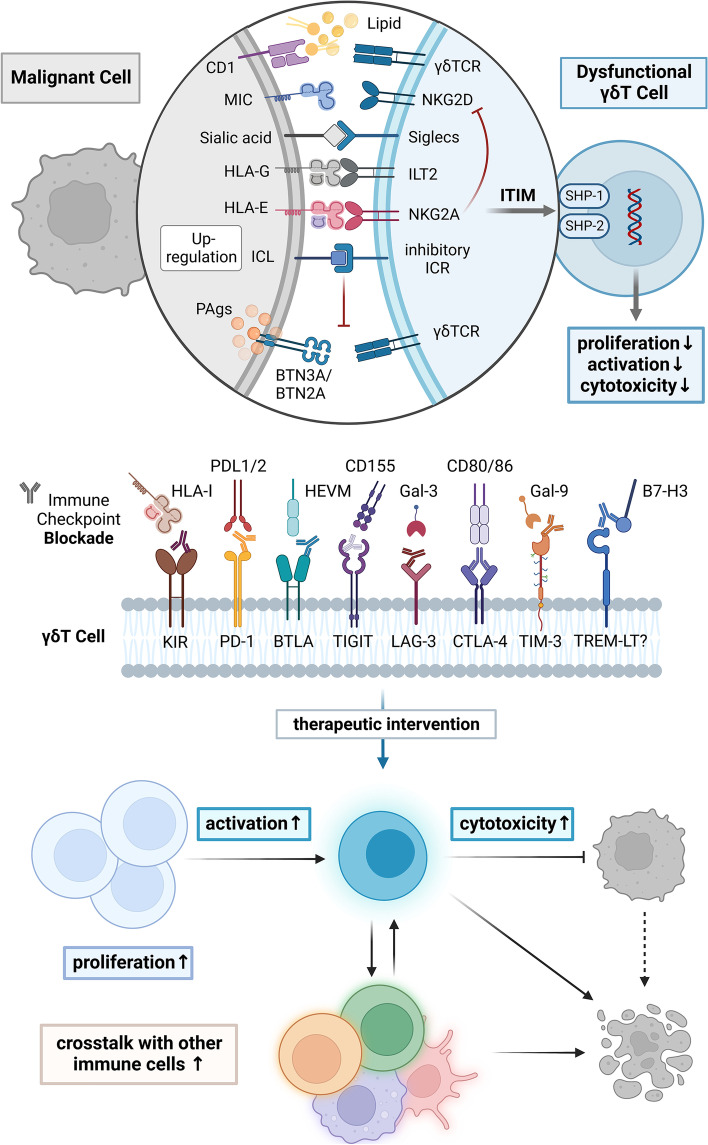
As a nontraditional T-cell subgroup, γδT cells have gained popularity in the field of immunotherapy in recent years. They have extraordinary antitumor potential and prospects for clinical application. Immune checkpoint inhibitors (ICIs), which are efficacious in tumor patients, have become pioneer drugs in the field of tumor immunotherapy since they were incorporated into clinical practice. In addition, γδT cells that have infiltrated into tumor tissues are found to be in a state of exhaustion or anergy, and there is upregulation of many immune checkpoints (ICs) on their surface, suggesting that γδT cells have a similar ability to respond to ICIs as traditional effector T cells. Studies have shown that targeting ICs can reverse the dysfunctional state of γδT cells in the tumor microenvironment (TME) and exert antitumor effects by improving γδT-cell proliferation and activation and enhancing cytotoxicity. Clarification of the functional state of γδT cells in the TME and the mechanisms underlying their interaction with ICs will solidify ICIs combined with γδT cells as a good treatment option.
Overview
The claims and statistics of this paper haven’t been checked yet.
Free: it reads the open-access text and checks the first 5 claims that cite a source we can check. Create a free account to check every claim.
Integrity signals
Registry
Cites
Statistics
Figures
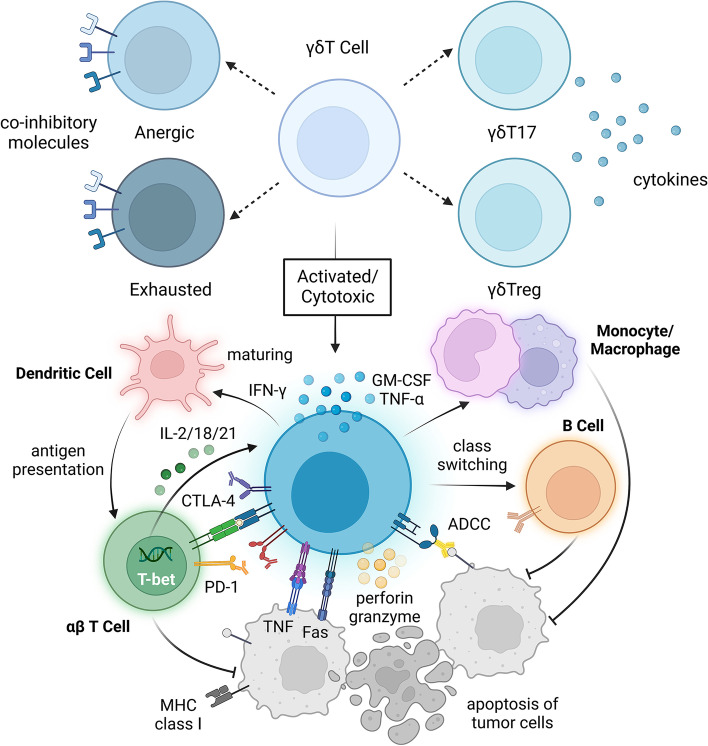
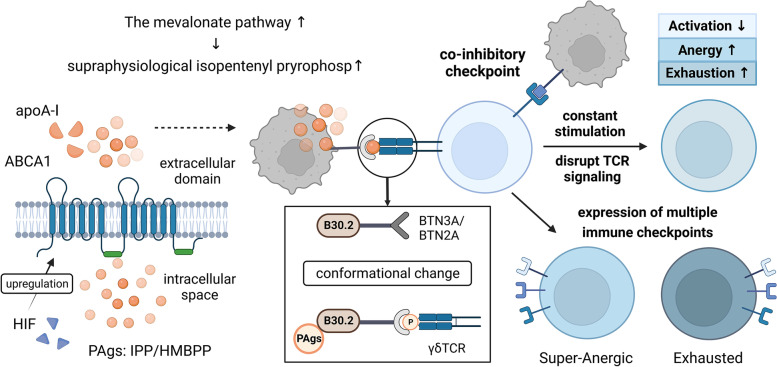
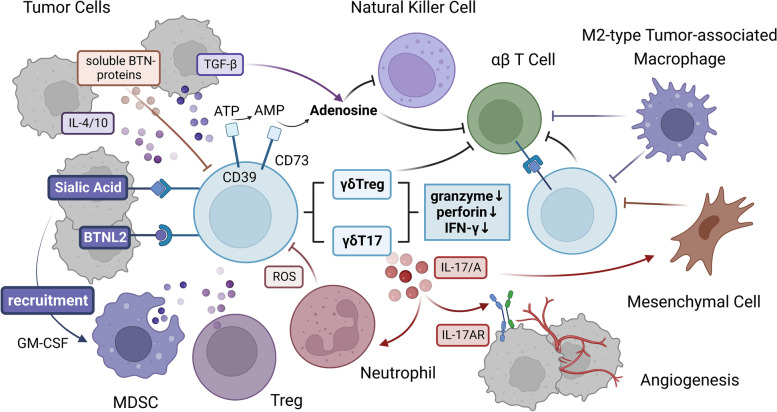
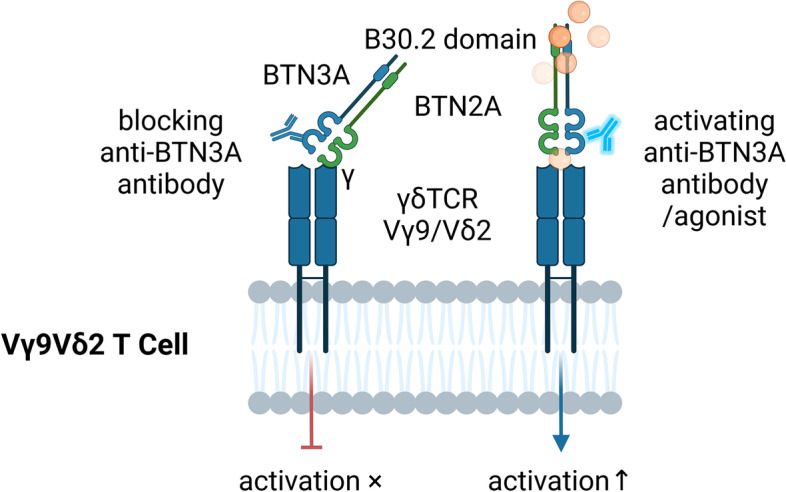
Verification
Claims the paper makes
The claims and statistics of this paper haven’t been checked yet.
Free: it reads the open-access text and checks the first 5 claims that cite a source we can check. Create a free account to check every claim.
Claims other papers make about this one
Each is checked against this paper’s own text: does it say what the citing paper says it does?
The source backs part of the claim, not all of it — or backs it for a different population, condition or comparison.
In the citing paper
“Recent studies reported the existence of a fragile Tregs phenotype in the TME that produces IFN-γ and exhibits anti-tumor effects [30, 42–44].”
From Potential anti-tumor effects of regulatory T cells in the tumor microenvironment: a review (2024) · cites this paper as [43]
Experimental — accuracy not yet measured
Self-check
Percentages, sums and reported differences re-computed from the paper’s own numbers.
The self-check needs the paper’s full text.
Citations
Cites
Understanding the tumor immune microenvironment (TIME) for effective therapy
Binnewies, M., Roberts, E. W., Kersten, K., Chan, V., Fearon, D. F., Merad, M., Coussens, L. M., Gabrilovich, D. I., Ostrand-Rosenberg, S., Hedrick, C. C., et al. (2018) · Nature Medicine · doi:10.1038/s41591-018-0014-x · Cited by 6,145 · cited 1×
“To facilitate the immune escape of tumor cells, ICRs can inhibit cell activation by competing for ligands that bind to activated receptors [26, 27].”
BackgroundImmune-Related Adverse Events Associated with Immune Checkpoint Blockade
Postow, M. A., Sidlow, R., & Hellmann, M. D. (2018) · New England Journal of Medicine · doi:10.1056/nejmra1703481 · Cited by 4,849
Molecular and cellular insights into T cell exhaustion
Wherry, E. J., & Kurachi, M. (2015) · Nature Reviews Immunology · doi:10.1038/nri3862 · Cited by 4,652
Wherry, E. J. (2011) · Nature Immunology · doi:10.1038/ni.2035 · Cited by 4,062
The prognostic landscape of genes and infiltrating immune cells across human cancers
Gentles, A. J., Newman, A. M., Liu, C. L., Bratman, S. V., Feng, W., Kim, D., Nair, V. S., Xu, Y., Khuong, A., Hoang, C. D., et al. (2015) · Nature Medicine · doi:10.1038/nm.3909 · Cited by 3,118
Glycosylation in cancer: mechanisms and clinical implications
Pinho, S. S., & Reis, C. A. (2015) · Nature Reviews Cancer · doi:10.1038/nrc3982 · Cited by 3,083
PD-1 expression by tumour-associated macrophages inhibits phagocytosis and tumour immunity
Gordon, S. R., Maute, R. L., Dulken, B. W., Hutter, G., George, B. M., McCracken, M. N., Gupta, R., Tsai, J. M., Sinha, R., Corey, D., et al. (2017) · Nature · doi:10.1038/nature22396 · Cited by 2,247
Bagchi, S., Yuan, R., & Engleman, E. G. (2021) · Annual Review of Pathology: Mechanisms of Disease · doi:10.1146/annurev-pathol-042020-042741 · Cited by 2,189 · cited 2×
“To facilitate the immune escape of tumor cells, ICRs can inhibit cell activation by competing for ligands that bind to activated receptors [26, 27].”
BackgroundNoman, M. Z., Desantis, G., Janji, B., Hasmim, M., Karray, S., Dessen, P., Bronte, V., & Chouaib, S. (2014) · Journal of Experimental Medicine · doi:10.1084/jem.20131916 · Cited by 2,166
PD-L1 regulates the development, maintenance, and function of induced regulatory T cells
Francisco, L. M., Salinas, V. H., Brown, K. E., Vanguri, V. K., Freeman, G. J., Kuchroo, V. K., & Sharpe, A. H. (2009) · Journal of Experimental Medicine · doi:10.1084/jem.20090847 · Cited by 2,079
Cited by
Items 101–139 of 139
Zhang, C., Zhang, X., Dai, S., & Yang, W. (2025) · Frontiers in Genetics · doi:10.3389/fgene.2024.1522484 · Cited by 1
γδ T cells and head and neck squamous cell carcinoma
Peng, J., Qiu, H., Bu, L., & Wu, Q. (2025) · International review of cytology · doi:10.1016/bs.ircmb.2025.03.005 · Cited by 1
Multimerin-1 modulates macrophage M2 polarization and enhances tumor cell stemness in glioblastoma
Huang, C., Yu, X., Zhou, Y.-Z., Zhang, X., Dong, C.-M., & Bao, W. (2025) · Neurological Research · doi:10.1080/01616412.2025.2520060 · Cited by 1
“For example, studies have demonstrated that innate immune cells such as macrophages and neutrophils can be reprogrammed to adopt tumor-promoting phenotypes, contributing to T cell exclusion and therapy failure [21].”
Thanigaimalai, A., Ravindran, D. M., Balaji, S., Bhuvaneswari, B., & SriSanjhanaa, C. (2025) · Frontiers in Dental Medicine · doi:10.3389/fdmed.2025.1700665 · Cited by 2
“They can tip toward either side of balance when approaching tumor progression: tumorigenic or anti-tumorigenic (5).”
Regulatory T cells sabotage anti-tumor γδ T cells by creating IL-2–deficient environments
Blanco-Domínguez, R., Vaz-Pinto, A. M., Barros, L., Lopes, N., Henriques-Alves, B., Carreira, M., Labão‐Almeida, C., Ribot, J. C., Bernardes, G. J. L., Silva‐Santos, B., et al. (2026) · The Journal of Experimental Medicine · doi:10.1084/jem.20252133 · Cited by 3
“Previous studies have mostly focused on cell-intrinsic inhibitory pathways, particularly immune checkpoints like PD-1, LAG-3, or TIM-3 (Hoeres et al., 2019; Gao et al., 2023).”
Mandal, S., Hasan, S. R., Dhali, A., & Maji, M. (2026) · Cancers · doi:10.3390/cancers18111723 · Cited by 1
“However, their abundance and functional roles appear highly heterogeneous across PDAC cohorts, suggesting that tumour-intrinsic and microenviron-mental cues may influence their recruitment and activity [13–15].”
Hung, M., Lin, H., Li, Y.-H., Cho, D., Chiu, S., Pan, C., Huang, S.-W., Fang, H.-Y., Chen, Y.-W., Kan, K., et al. (2026) · International Immunopharmacology · doi:10.1016/j.intimp.2026.117115 · Cited by 2
Dong, W., Wang, G., Li, S., Chai, Y., Wang, Q., Li, Y., Fei, Q., Zong, Y., Geng, J., Liu, P., et al. (2025) · bioRxiv (Cold Spring Harbor Laboratory) · doi:10.1101/2025.03.31.646454 · Cited by 1
Dong, W., Wang, G., Li, S., Chai, Y., Wang, Q., Li, Y., Fei, Q., Zong, Y., Geng, J., Liu, P., et al. (2025) · eLife · doi:10.7554/elife.106862.1 · Cited by 1
Research Progress on Energy Metabolism Regulating the Activation of γδT Cells
白, 金. (2024) · Pharmacy Information · doi:10.12677/pi.2024.134038
Li, Y., Chen, D., Xu, Y., Ding, Q., Xu, X., Li, Y., Mi, Y., & Chen, Y. (2024) · Journal of Clinical Pathology · doi:10.1136/jcp-2024-209603 · Cited by 1
Liu, R., Zhao, H., Lu, Z., Zeng, L., Shi, H., Wu, L., Wang, J., Zhong, F., Liu, C., Zhang, Y., et al. (2024) · Clinical and Experimental Medicine · doi:10.1007/s10238-024-01403-2
“In recent years, ICIs, as a promising anticancer tool, have significantly improved the clinical prognosis of cancer patients alongside surgical, radiotherapeutic and chemotherapeutic approaches [10].”
Allograft persistence: The next frontier for allogeneic γδ T cell therapy
Fowler, D. W., & Fisher, J. P. H. (2024) · Elsevier eBooks · doi:10.1016/b978-0-443-21766-1.00001-1
Lin, A., Huang, L., Jiang, A., Zhu, L., Mou, W., Li, Y., Zhang, C., Liu, Z., Zhang, J., Cheng, Q., et al. (2024) · SSRN Electronic Journal · doi:10.2139/ssrn.5006814
Self-citationGilhar, A., Keren, A., Goldstein, N., Bertolini, M., Kassem, R., Zeltzer, A. A., Štrbo, N., & Paus, R. (2024) · Research Square · doi:10.21203/rs.3.rs-5342172/v1
Characterisation of Cytotoxicity-Related Receptors on γδ T Cells in Chronic Lymphocytic Leukaemia
Zarobkiewicz, M. K., Lehman, N., Morawska, I., Michalski, A., Kowalska, W., Szymańska, A., Tomczak, W., & Bojarska-Junak, A. A. (2025) · Cells · doi:10.3390/cells14060451
“LAG-3 is one of the novel checkpoint molecules expressed by T cells, its expression on γδ T lymphocytes is linked with their exhaustion and dysfunction in cancer [13].”
Dong, W., Wang, G., Li, S., Chai, Y., Wang, Q., Li, Y., Fei, Q., Zong, Y., Geng, J., Liu, P., et al. (2025) · eLife · doi:10.7554/elife.106862
Hwang, J. W., Kim, G., Lee, Y., Ali, M. A., Cho, J., & Yoon, S. S. (2025) · Scientific Reports · doi:10.1038/s41598-025-20581-x
“In addition, the population of γδ T cells, which are generally considered cytotoxic and anti-tumor lymphocytes 28,29 , also significantly increased in the AIT01 lysate treatment, reaching 8.58% (Fig.”
InfluentialWang, L., Yang, Y., Feng, Y.-B., Zhao, H., Hong, Q., Chen, F., Chen, L., Sun, L., Lu, X., Sun, F., et al. (2025) · Molecular Immunology · doi:10.1016/j.molimm.2025.10.013
Self-citationWei, J., Guo, F., Song, Y., Feng, T., Wang, Y., Xu, K., Song, J., Kaysar, E., Abdukayyum, R., Lin, F., et al. (2024) · Figshare · doi:10.6084/m9.figshare.26719755
Wei, J., Guo, F., Song, Y., Feng, T., Wang, Y., Xu, K., Song, J., Kaysar, E., Abdukayyum, R., Lin, F., et al. (2024) · Figshare · doi:10.6084/m9.figshare.25815090
Wei, J., Guo, F., Song, Y., Feng, T., Wang, Y., Xu, K., Song, J., Kaysar, E., Abdukayyum, R., Lin, F., et al. (2024) · Figshare · doi:10.6084/m9.figshare.25815619
Wei, J., Guo, F., Song, Y., Feng, T., Wang, Y., Xu, K., Song, J., Kaysar, E., Abdukayyum, R., Lin, F., et al. (2024) · Figshare · doi:10.6084/m9.figshare.26719752
Wei, J., Guo, F., Song, Y., Feng, T., Wang, Y., Xu, K., Song, J., Kaysar, E., Abdukayyum, R., Lin, F., et al. (2024) · Figshare · doi:10.6084/m9.figshare.26719758
Wei, J., Guo, F., Song, Y., Feng, T., Wang, Y., Xu, K., Song, J., Kaysar, E., Abdukayyum, R., Lin, F., et al. (2024) · Figshare · doi:10.6084/m9.figshare.26719749
Immunomodulation des lymphocytes Vγ9Vδ2 dans les leucémies aigües
Floch, A.-C. L. (2023) · theses.fr (ABES) · doi:10.70675/b4e332efz0a66z4c9az85eaz8eea012e9839
Pan, Y., Yang, H., Shao, J., Qiang, X., & Wang, Q. (2026) · Human Vaccines & Immunotherapeutics · doi:10.1080/21645515.2026.2654318 · Cited by 1
From guardians to traitors: molecular mechanisms of tumor-induced T cell betrayal
Ye, P., 匡洪宇, Lin, A., Tang, B., Wang, Q., Zhang, H., Wong, H. Z. H., Zhang, J., Cheng, Q., Glaviano, A., et al. (2026) · Molecular Cancer · doi:10.1186/s12943-026-02669-8
“Mouse γδ T cells also demonstrate dual roles, exhibiting both anti-tumor and pro-tumor functions at different stages of tumor development [25, 26].”
Self-citationPan-Cancer Analysis Identifies GNPNAT1 as a Potential Prognostic Biomarker and Immune-Related Factor
Liu, Y., Wu, T., Wang, Y., Cheng, J., Zhao, Y., Kou, H., Liu, S., & Zhang, Y. (2026) · Frontiers in Bioscience-Landmark · doi:10.31083/fbl51401
Wu, Y.-H., Bai, L.-Y., Yang, H.-R., Chang, K.-P., & Jeng, L.-B. (2026) · World Journal of Gastrointestinal Oncology · doi:10.4251/wjgo.v18.i6.117904
Zhou, H., Chen, W., Wang, D., Wang, Z., Li, J. P., Zhang, Y., Sun, Y., Zhang, C., Jiang, H., Mei, L., et al. (2026) · Genes & Diseases · doi:10.1016/j.gendis.2026.102308
Harnessing skin-resident γδ T cells for immunotherapy in cutaneous squamous cell carcinoma
Nasi, G., Schoeftner, L. C., Ronacher, L., Sophianidis, A., Feiser, J., Aleksandrova, T., Nussbaumer, O., Hutton, A. J., Zauner, R., Moser-Waxenecker, J., et al. (2026) · Science Advances · doi:10.1126/sciadv.aec7215
BTN3A1 regulate the function of Vγ9Vδ2 T cells through TCR signaling pathway in ovarian cancer
Liu, J., Wang, Y., Wu, M., & Wang, H. N. (2026) · Journal of Ovarian Research · doi:10.1186/s13048-026-02180-0
“However, its application in solid tumors is still limited due to lack of functional persistence, an exhaustion phenotype, and impaired during transport to the tumor microenvironment (TME) [10].”
Yang, Z., Li, L., He, Z., Chen, H. H., Wen, Z., Zhang, Z., Liu, H., Liu, L., & Chen, Y. (2026) · ACS Nano · doi:10.1021/acsnano.6c06272 · Cited by 1
Lipid metabolism in γδ T-cell activation: Implications for immunotherapy in ovarian cancer
Stirblyte, K., Ghanem, Y. K., Bates, M., Gray, S. G., Saadeh, F. A., Martin, C. M., O’Toole, S. A., O’Leary, J. J., Doherty, D. G., & Mohamed, B. M. (2026) · Translational Oncology · doi:10.1016/j.tranon.2026.102953
“In contrast, V δ 1 T-cells are enriched in tissues and are often the predominant γδ T-cell subset within solid tumors, including OC [59,60].”
Fatty acid metabolism in glioma: a review of novel targets and therapeutic strategies
Zhou, X., Wang, D., Zhang, W., & Li, G. (2026) · Chinese Neurosurgical Journal · doi:10.1186/s41016-026-00442-w
“Cytotoxic T lymphocytes (CTLs), macrophages, and dendritic cells are important immune components of the GBM TME; however, these cells commonly become exhausted or functionally impaired, which promotes immunosuppression and supports GBM progression and drug resistance [35, 36].”
Advances in γδ T cell-mediated immune surveillance in cervical cancer
Wang, J., Xu, X., & Li, Q. (2026) · Frontiers in Oncology · doi:10.3389/fonc.2026.1919105
“Chronic antigenic stimulation has been associated with an exhausted phenotype in V d 2 T cells, characterized by increased PD-1 expression, reduced CD107a mobilization, and impaired production of IFN-g and TNF-a (22, 23).”
InfluentialHuang, P., Wu, W., Min, Y., Zhang, Y., Tao, Y., Liu, Z., Wei, Z., & Peng, X. (2026) · Experimental Hematology and Oncology · doi:10.1186/s40164-026-00848-3
“Common agonists used for in vitro expansion, such as aminobisphosphonates, have shown suboptimal pharmacokinetic profiles and potential off-target effects in patients [93].”
InfluentialSelf-citation
Metadata
- Authors
- Gao, Z., Bai, Y., Lin, A., Jiang, A., Zhou, C., Cheng, Q., Liu, Z., Chen, X., Zhang, J., & Luo, P.
- Affiliations
- Zhujiang Hospital (CN)
- University of Electronic Science and Technology of China (CN)
- Second Military Medical University (CN)
- Central South University (CN)
- First Affiliated Hospital of Zhengzhou University (CN)
- Corresponding author
- Chen, Xin
- Zhang, Jian
- Luo, Peng
- ORCID
- Venue
- Molecular Cancer
- Published
- 2023-02-15
- Volume
- 22
- Issue
- 1
- Pages
- 31-31
- ISSN
- 1476-4598 (ISSN-L)
- PMC
- PMC9930367
- OpenAlex
- W4321003785
- Cited by
- 138
- References
- 250
- Citations by year
- 2026: 21 · 2025: 57 · 2024: 41 · 2023: 19
- FWCI
- 4.51
- Type
- journal article
- Language
- en
- Open access
- gold
- doi.org
- Licence
- cc-by
- creativecommons.org/licenses/by/4.0 (tdm)
- creativecommons.org/licenses/by/4.0 (vor)
- Locations
- Molecular Cancer (publishedVersion, cc-by)
- PubMed Central (publishedVersion, cc-by)
- PubMed (publishedVersion)
- DOAJ (DOAJ: Directory of Open Access Journals) (submittedVersion, cc-by-sa)
- Funders
- National Natural Science Foundation of China (81871859, 2018A030313846, 82172811, 81802257, 82172750, 81772457, 2021A1515012593)
- Natural Science Foundation of Guangdong Province (81802257, 82172811, 2021A1515012593, 82172750, 2018A030313846, 81871859, 81772457)
- Science and Technology Planning Project of Guangdong Province (2019A030317020)
- Basic and Applied Basic Research Foundation of Guangdong Province (2022A1515111212)
- Topics
- Health Sciences › Medicine › Oncology › Cancer Immunotherapy and Biomarkers
- Life Sciences › Immunology and Microbiology › Immunology › T-cell and B-cell Immunology
- Life Sciences › Immunology and Microbiology › Immunology › Immunotherapy and Immune Responses
- Keywords
- γδ T cells, immune checkpoint inhibitors, antitumor immunity, tumor microenvironment, T cell exhaustion, T cell anergy, cytotoxicity, cancer immunotherapy
- MeSH terms
- Humans, Immunotherapy, Neoplasms, T-Lymphocytes, Tumor Microenvironment
About these checks
Registry, retraction, Cites and statistics results are computed, not judged, with one exception: a printed reference that no index lists is read once by a model before it counts as a citation error. Claims are extracted by a model and kept only when their quote appears verbatim in the text; each cited source is then checked, with a model’s help, for whether it says what the claim relies on. Those verdicts can be wrong — read the claim’s quote and the cited source before relying on one.
Statistics and arithmetic are recomputed, not judged.
Confidence bands are shown only for fields calibrated on our annotated test set. None is calibrated yet, so no band is shown.
What counts as a claim ›How we measure confidence ›How we check this ›
Are you an author, or do you see a problem with this page? Request a review
Data sources
Bibliographic data: Semantic Scholar, OpenAlex, Crossref.
Contains information from the Semantic Scholar Academic Graph Datasets, made available under the ODC Attribution License (ODC-BY 1.0).
Semantic Scholar’s data is described in: Kinney, R., et al. (2023). The Semantic Scholar Open Data Platform. arXiv:2301.10140.
