

Evaluation of a fentanyl drug checking service for clients of a supervised injection facility, Vancouver, Canada
Open accessThe DOI matches its Crossref record; 29 of the 29 references it cites were found in a registry or an index.
Abstract
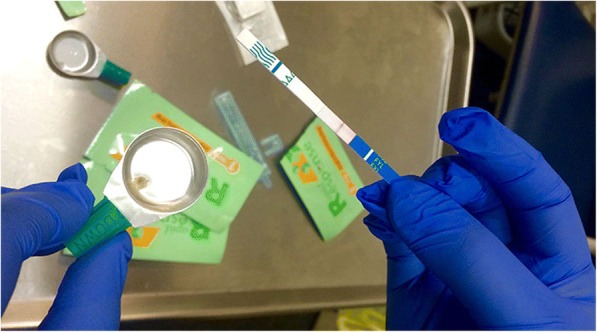
BACKGROUND: British Columbia, Canada, is experiencing a public health emergency related to opioid overdoses driven by consumption of street drugs contaminated with illicitly manufactured fentanyl. This cross-sectional study evaluates a drug checking intervention for the clients of a supervised injection facility (SIF) in Vancouver. METHODS: Insite is a facility offering supervised injection services in Vancouver's Downtown East Side, a community with high levels of injection drug use and associated harms, including overdose deaths. During July 7, 2016, to June 21, 2017, Insite clients were offered an opportunity to check their drugs for fentanyl using a test strip designed to test urine for fentanyl. Results of the drug check were recorded along with information including the substance checked, whether the client intended to dispose of the drug or reduce the dose and whether they experienced an overdose. Logistic regression models were constructed to assess the associations between drug checking results and dose reduction or drug disposal. Crude odds ratios (OR) and 95% confidence intervals (CI) were reported. RESULTS: About 1% of the visits to Insite during the study resulted in a drug check. Out of 1411 drug checks conducted by clients, 1121 (79.8%) were positive for fentanyl. Although most tests were conducted post-consumption, following a positive pre-consumption drug check, 36.3% (n = 142) of participants reported planning to reduce their drug dose while only 11.4% (n = 50) planned to dispose of their drug. While the odds of intended dose reduction among those with a positive drug check was significantly higher than those with a negative result (OR = 9.36; 95% CI 4.25-20.65), no association was observed between drug check results and intended drug disposal (OR = 1.60; 95% CI 0.79-3.26). Among all participants, intended dose reduction was associated with significantly lower odds of overdose (OR = 0.41; 95% CI 0.18-0.89). CONCLUSIONS: Although only a small proportion of visits resulted in a drug check, a high proportion (~ 80%) of the drugs checked were contaminated with fentanyl. Drug checking at harm reduction facilities such as SIFs might be a feasible intervention that could contribute to preventing overdoses in the context of the current overdose emergency.
Overview
The claims and statistics of this paper haven’t been checked yet.
Free: it reads the open-access text and checks the first 5 claims that cite a source we can check. Create a free account to check every claim.
Integrity signals
Registry
Cites
Statistics
Figures
Verification
Claims the paper makes
The claims and statistics of this paper haven’t been checked yet.
Free: it reads the open-access text and checks the first 5 claims that cite a source we can check. Create a free account to check every claim.
Claims other papers make about this one
Each is checked against this paper’s own text: does it say what the citing paper says it does?
The source backs part of the claim, not all of it — or backs it for a different population, condition or comparison.
In the citing paper
“Analysis of drug checking results from multiple studies indicate the presence of FASH”
From “I probably got a minute”: Perceptions of fentanyl test strip use among people who use stimulants (2021) · cites this paper as Karamouzian et al., 2018
Experimental — accuracy not yet measuredThe check wasn’t confident either way, so it gives no verdict — never disputed.
In the citing paper
“evidence suggests that treatment outcomes for StUD are impacted by racial-, ethnic-, and gender-related disparities.[206][207][208][209][210]”
From The ASAM/AAAP Clinical Practice Guideline on the Management of Stimulant Use Disorder (2024) · cites this paper as [208]
Experimental — accuracy not yet measured
Self-check
Percentages, sums and reported differences re-computed from the paper’s own numbers.
The self-check needs the paper’s full text.
Citations
Cites
The Prescription Opioid and Heroin Crisis: A Public Health Approach to an Epidemic of Addiction
Kolodny, A., Courtwright, D. T., Hwang, C. S., Kreiner, P., Eadie, J. L., Clark, T. W., & Alexander, G. C. (2015) · Annual Review of Public Health · doi:10.1146/annurev-publhealth-031914-122957 · Cited by 1,388
Fentanyl, fentanyl analogs and novel synthetic opioids: A comprehensive review
Armenian, P., Vo, K. T., Barr-Walker, J., & Lynch, K. L. (2018) · Neuropharmacology · doi:10.1016/j.neuropharm.2017.10.016 · Cited by 710 · cited 1×
“period, they may inform efforts aimed at monitoring and reducing risks in the local drug supply in jurisdictions across North America that are experiencing increased rates of overdose with illicit fentanyl [4, 6, 29].”
BackgroundSupervised injection services: What has been demonstrated? A systematic literature review
Potier, C., Laprévote, V., Dubois-Arber, F., Cottencin, O., & Rolland, B. (2014) · Drug and Alcohol Dependence · doi:10.1016/j.drugalcdep.2014.10.012 · Cited by 495
Interventions to reduce harm associated with adolescent substance use
Toumbourou, J., Stockwell, T., Neighbors, C., Marlatt, G., Sturge, J., & Rehm, J. (2007) · The Lancet · doi:10.1016/s0140-6736(07)60369-9 · Cited by 479 · cited 1×
“services have been shown to be effective in reaching young people who use drugs for recreational purposes and persuading them to change their behaviour positively [19], they have also been criticized for creating an unjustified feeling of safety about illicit drugs while the absence of unexpected or potent components…”
BackgroundA review: Fentanyl and non-pharmaceutical fentanyls
Suzuki, J., & El-Haddad, S. (2017) · Drug and Alcohol Dependence · doi:10.1016/j.drugalcdep.2016.11.033 · Cited by 445
Deaths Involving Fentanyl, Fentanyl Analogs, and U-47700 — 10 States, July–December 2016
O’Donnell, J. K., Halpin, J., Mattson, C. L., Goldberger, B. A., & Gladden, R. M. (2017) · MMWR. Morbidity and Mortality Weekly Report · doi:10.15585/mmwr.mm6643e1 · Cited by 387 · cited 1×
“10 states in the second half of 2016 [7].”
Harper, L., Powell, J., & Pijl, E. M. (2017) · Harm Reduction Journal · doi:10.1186/s12954-017-0179-5 · Cited by 337
Kennedy, M. C., Karamouzian, M., & Kerr, T. (2017) · Current HIV/AIDS Reports · doi:10.1007/s11904-017-0363-y · Cited by 256
Self-citationDrug testing in Europe: monitoring results of the Trans European Drug Information (TEDI) project
Brunt, T. M., Nagy, C., Bücheli, A., Martins, D., Ugarte, M., Beduwe, C., & Ventura Vilamala, M. (2017) · Drug Testing and Analysis · doi:10.1002/dta.1954 · Cited by 178
Attendance at Supervised Injecting Facilities and Use of Detoxification Services
Wood, E., Tyndall, M. W., Zhang, R., Stoltz, J.-A., Lai, C., Montaner, J. S. G., & Kerr, T. (2006) · New England Journal of Medicine · doi:10.1056/nejmc052939 · Cited by 168
Self-citation
Research works printed but not linked: 4
- BC Coroners Service Fentanyl-detected illicit drug overdose deaths, 2012-2017 2017 19 22
- Sage C Harm reduction and drug checking; a wrap-around service for festivals. Case Study: Shambhala Music Festival 2016
- Sherman S Green T Fentanyl Overdose Reduction Checking Analysis Study (FORECAST) 2018 Baltimore Bloomberg American Health Initiative
- Deeks JJ Higgins JP Statistical algorithms in review manager 5. Statistical Methods Group of The Cochrane Collaboration 2010 1 11
Cited by
Items 101–200 of 211
Collins, A. B., Macon, E. C., Levin, S., Wunsch, C., & Wightman, R. (2024) · International Journal of Drug Policy · doi:10.1016/j.drugpo.2024.104391 · Cited by 16
Cruz, S. L., Bencomo-Cruz, M., Medina-Mora, M. E., Vázquez-Quiroz, F., & Fleiz, C. (2023) · Harm Reduction Journal · doi:10.1186/s12954-023-00905-8 · Cited by 15
Puljević, C., Tscharke, B. J., Leslie, E. M., Francis, C., Verhagen, R., O'Brien, J. W., Bade, R., Nadarajan, D., Measham, F. C., Stowe, M. J., et al. (2024) · The Science of The Total Environment · doi:10.1016/j.scitotenv.2024.170934 · Cited by 14
Bach, H., Jenkins, V., Aledhaim, A., Moayedi, S., Schenkel, S. M., & Kim, H. (2019) · Clinical Toxicology · doi:10.1080/15563650.2019.1657583 · Cited by 14
Mitra, S., Boyd, J., Wood, E., Grant, C. C., Milloy, M., DeBeck, K., Kerr, T. H., & Hayashi, K. (2020) · International Journal of Drug Policy · doi:10.1016/j.drugpo.2020.102864 · Cited by 15
“Some studies have demonstrated willingness to use and feasibility of the services in detecting fentanyl contaminated substances (Bardwell et al., 2019; Karamouzian et al., 2018b; Kennedy et al., 2018; Krieger et al., 2018; Peiper et al., Int J Drug Policy.”
BackgroundSelf-citationTowards cross-Canada monitoring of the unregulated street drug supply
Biggar, E., Papamihali, K., Leclerc, P., Hyshka, E., Graham, B. M., Taylor, M., Payer, D. E., Maloney‐Hall, B., & Buxton, J. A. (2021) · BMC Public Health · doi:10.1186/s12889-021-11757-x · Cited by 20
Goldman, J. A., Krieger, M. S., Buxton, J. A., Lysyshyn, M., Sherman, S. G., Green, T. C., Bernstein, E., Hadland, S. E., & Marshall, B. D. L. (2019) · Substance Abuse · doi:10.1080/08897077.2019.1616245 · Cited by 14
Self-citationFour decades of overdose prevention centres: lessons for the future from a realist review
Keemink, J. R., Stevens, A., Shirley‐Beavan, S., Khadjesari, Z., & Shorter, G. W. (2025) · Harm Reduction Journal · doi:10.1186/s12954-025-01178-z · Cited by 14
“They can be a site for the provision of other services, including the checking of the contents of drugs that people intend to use [24, 25].”
Nosyk, B., Min, J., Pearce, L., Zhou, H., Homayra, F., Wang, L., Piske, M., McCarty, D. W., Gardner, G., O’Briain, W., et al. (2022) · Drug and Alcohol Dependence · doi:10.1016/j.drugalcdep.2022.109375 · Cited by 17
Karamouzian, M., Cui, Z., Hayashi, K., DeBeck, K., Reddon, H., Buxton, J. A., & Kerr, T. H. (2024) · International Journal of Drug Policy · doi:10.1016/j.drugpo.2023.104301 · Cited by 19
Self-citationMcLeod, K., Slaunwhite, A., Zhao, B., Moe, J., Purssell, R. A., Gan, W., Xavier, C. G., Kuo, M. E., Mill, C., Buxton, J. A., et al. (2020) · Drug and Alcohol Dependence · doi:10.1016/j.drugalcdep.2020.108381 · Cited by 12
Dolan, S. B., Johnson, M. W., Dunn, K. E., & Huhn, A. S. (2021) · Experimental and Clinical Psychopharmacology · doi:10.1037/pha0000486 · Cited by 16
Volatile drug use and overdose during the first year of the COVID-19 pandemic in the United States
Schneider, K. E., Martin, E. M., Allen, S. T., Morris, M., Haney, K., Saloner, B. K., & Sherman, S. G. (2024) · International Journal of Drug Policy · doi:10.1016/j.drugpo.2024.104371 · Cited by 11
The utility of visual appearance in predicting the composition of street opioids
McCrae, K., Wood, E., Lysyshyn, M., Tobias, S., Wilson, D., Arredondo, J., & Ti, L. (2021) · Substance Abuse · doi:10.1080/08897077.2020.1864569 · Cited by 11
“Early evidence suggests that this harm reduction measure may be useful; several studies suggest a high willingness to use drug checking services among people who use opioids, and preliminary evidence suggests that this population of PWUD may adopt overdose risk reduction measures as a result of drug checking including…”
BackgroundSelf-citationSwartz, J. A., Mackesy‐Amiti, M. E., Jimenez, A. D., Robison, L., & Prete, E. (2023) · Pilot and Feasibility Studies · doi:10.1186/s40814-023-01321-2 · Cited by 12
“(10, 15, 20-22) To date, however, and to the best of our knowledge, evaluations of take-home fentanyl (and/or benzodiazepine) test strip use and potential effects on overdose risk reduction have relied almost exclusively on soliciting retrospective accounts from study participants for some preceding time period, usual…”
BackgroundCharacterizing Methamphetamine Use Among People Who Use Opioids: A Systematic Review
Cui, Z., Norton, A., & Karamouzian, M. (2023) · International Journal of Mental Health and Addiction · doi:10.1007/s11469-023-01134-7 · Cited by 11
“…synthetic opioids (e.g., fentanyl) in the unregulated drug supply (BC Coroners Service, 2020; Ellis et al., 2018; Hoopsick & Andrew Yockey, 2023; Karamouzian et al., 2018; National Institute on Drug Abuse, 2021), individuals may also use methamphetamine as an overdose prevention strategy and…”
Self-citationGozdzialski, L., Wallace, B. B., Noda, I., & Hore, D. K. (2022) · Spectrochimica Acta Part A Molecular and Biomolecular Spectroscopy · doi:10.1016/j.saa.2022.121684 · Cited by 10
Development of a neural network model to predict the presence of fentanyl in community drug samples
Ti, L., Grant, C. J., Tobias, S., Hore, D. K., Laing, R. R., & Marshall, B. D. L. (2023) · PLoS ONE · doi:10.1371/journal.pone.0288656 · Cited by 9
Jiao, S., Bungay, V., Jenkins, E., & Gagnon, M. (2024) · Harm Reduction Journal · doi:10.1186/s12954-024-01088-6 · Cited by 9
Kennedy, L., & Coelho, M. (2019) · Theoretical Criminology · doi:10.1177/1362480619841907 · Cited by 10
“, 2018), reducing the dose or using less (Karamouzian et al., 2018; Krieger et al., 2018; Peiper et al., 2019), and seeking treatment (Carroll et al.”
BackgroundReddon, H., DeBeck, K., Socias, M. E., Lake, S., Dong, H., Hayashi, K., & Milloy, M. (2021) · Cannabis and Cannabinoid Research · doi:10.1089/can.2019.0104 · Cited by 15
“59,61 In our setting, belief in the positive potential of cannabis to address the overdose crisis has led to the establishment of two community-led interventions to distribute no-cost cannabis to people at risk of opioid overdose.”
Understanding overdose incidents in Canadian federal custody
McKendy, L., Biro, S. M., Miron, M., & Keown, L. A. (2021) · International Journal of Drug Policy · doi:10.1016/j.drugpo.2021.103131 · Cited by 11
King, C. A., Cook, R., Wheelock, H., Korthuis, P. T., Leahy, J. M., Goff, A., Morris, C. D., & Englander, H. L. (2021) · International Journal of Drug Policy · doi:10.1016/j.drugpo.2021.103525 · Cited by 9
Young, S., Hayashi, K., Grant, C. J., Milloy, M., DeBeck, K., Wood, E., & Fairbairn, N. S. (2021) · Drug and Alcohol Dependence · doi:10.1016/j.drugalcdep.2021.109006 · Cited by 9
The availability of fentanyl test strips in Georgia community pharmacies
Rawal, S., Khail, J. W., Stone, R. H., & Young, H. N. (2023) · Journal of the American Pharmacists Association · doi:10.1016/j.japh.2023.12.015 · Cited by 9
An examination of harm reduction strategies in Oxycodone and Adderall buyer feedback on AlphaBay
Logie, K., Pugliese, K., & Acevedo, A. (2023) · Criminology & Public Policy · doi:10.1111/1745-9133.12652 · Cited by 9
Notta, D., Black, B., Chu, T., Joe, R. S., & Lysyshyn, M. (2019) · Drug and Alcohol Dependence · doi:10.1016/j.drugalcdep.2018.12.016 · Cited by 13
Self-citationDrug Policies and Development: Conflict and Coexistence
Buxton, J., Chinery-Hesse, M., & Tinasti, K. (2020) · Brill | Nijhoff eBooks · doi:10.1163/9789004440494 · Cited by 12
Bonn, M., Kerr, T., Boyd, J., Rudzinski, K., McNeil, R., & Ivsins, A. (2025) · International Journal of Drug Policy · doi:10.1016/j.drugpo.2025.104982 · Cited by 8
Self-citationJiao, S., Bungay, V., Jenkins, E., & Gagnon, M. (2023) · Harm Reduction Journal · doi:10.1186/s12954-023-00871-1 · Cited by 9
Watson, D. P., Ray, B. R., Phalen, P. L., Clarke, S. E. D., Taylor, L., Swartz, J. A., & Gastala, N. (2023) · Journal of Medical Toxicology · doi:10.1007/s13181-023-00979-7 · Cited by 8
“Prior research in this area has demonstrated considerable discrepancies between client expected and actual fentanyl exposure as verified by biological testing [22–26].”
Falzon, D., Parkes, T., Carver, H., Masterton, W., Wallace, B. B., Craik, V., Measham, F. C., Sumnall, H. R., Gittins, R., Hunter, C., et al. (2023) · PLoS ONE · doi:10.1371/journal.pone.0292812 · Cited by 9
Sweileh, W. M. (2024) · Harm Reduction Journal · doi:10.1186/s12954-024-01048-0 · Cited by 7
“Articles investigating fentanyl-related concerns and risks associated with fentanyl use emerge as notable research topics in the recently published articles [56, 57].”
BackgroundPage, R., JAUNCEY, M. E., Brett, J., Wood, W., & Roxburgh, A. (2024) · Drug and Alcohol Review · doi:10.1111/dar.13909 · Cited by 8
Opioid-related deaths in Northern Ontario in the early COVID-19 pandemic period
Nunn, A., Perri, A. M., Gordon, H., Harding, J., Loo, C. K. J., & Tuinema, J. (2024) · Canadian Journal of Public Health · doi:10.17269/s41997-024-00906-5 · Cited by 7
“…including OAT, take-home naloxone programs, supervised consumption sites, and drug checking services, and considering safer supply of medical-grade opioids as evidence emerges (Ivsins et al., 2020; Karamouzian et al., 2018; Kennedy et al., 2019; Mattick et al., 2009; McDonald & Strang, 2016).”
Santelices, C., Matsumoto, A., Boulad, M., & Stopka, T. J. (2023) · Substance Use & Misuse · doi:10.1080/10826084.2023.2231067 · Cited by 9
CAMPBELL, N. D. (2021) · Contemporary Drug Problems · doi:10.1177/00914509211038352 · Cited by 7
“This resistant practice began at the Insite Safe Injection Facility in Vancouver, British Columbia, Canada, but has now been adopted widely in North America (Karamouzian et al., 2018; McGowan et al., 2018).”
BackgroundInfluentialForbes, T. P., & Burks, R. M. (2022) · Elsevier eBooks · doi:10.1016/b978-0-12-823677-2.00060-x · Cited by 7
Sieben Schlüsselstrategien für Europa zur Vorbereitung auf eine Opioidkrise
Stöver, H., Steimle, L., & Moazen, B. (2024) · Suchttherapie · doi:10.1055/a-2301-7224 · Cited by 1
Crepeault, H., Tobias, S., Angelucci, J., Dubland, S., Lysyshyn, M., Wood, E., & Ti, L. (2025) · Drug and Alcohol Dependence · doi:10.1016/j.drugalcdep.2025.112631 · Cited by 9
Self-citationPayne, E. R., Thomas, G. J., Fallico, M., Clear, A., Gogia, M., & Zamboni, L. M. (2024) · Journal of Public Health Management and Practice · doi:10.1097/phh.0000000000002061 · Cited by 6
“5 , 7 , 11 , 12 Despite their success and proliferation in other countries, state-supported DCP are uncommon in the United States.”
Utilization of drug checking services in Austria: a cross-sectional online survey
Karden, A., Schiffler, T., Feichtinger, C., Strizek, J., McDermott, D. T., & Grabovac, I. (2025) · Harm Reduction Journal · doi:10.1186/s12954-025-01168-1 · Cited by 5
Bowles, J. M., Mansoor, M., Werb, D., Kerr, T. H., & Bardwell, G. (2023) · Journal of Substance Use and Addiction Treatment · doi:10.1016/j.josat.2023.209185 · Cited by 6
Self-citationProhibitionist Drug Policy in South Africa—Reasons and Effects
Scheibe, A. P., Shelly, S., & Versfeld, A. (2020) · Brill | Nijhoff eBooks · doi:10.1163/9789004440494_016 · Cited by 6
Verdenik, M., Rolando, S., & Sande, M. (2024) · Drugs Education Prevention and Policy · doi:10.1080/09687637.2024.2412995 · Cited by 5
“…substances, drug checking services 1 (DCS) have been introduced in several European countries, including Slovenia (Brunt, 2017; Sande & Šabić, 2018) as well as in North, South and Central America and Australia (Betzler et al., 2021; Harm Reduction International, 2022; Karamouzian et al., 2018).”
InfluentialKhezri, M., Kimball, S., Weng, C., McKnight, C., & Jarlais, D. C. D. (2025) · Drug and Alcohol Review · doi:10.1111/dar.14093 · Cited by 4
Winiker, A. K., Sisson, L. N., Schneider, K. E., Rouhani, S., Martin, E. M., Nestadt, D. F., Silberzahn, B. E., Zhang, L., Footer, K. H. A., & Sherman, S. G. (2025) · Health Promotion International · doi:10.1093/heapro/daaf125 · Cited by 4
Mini-review: Harm reduction strategies among people who intentionally use fentanyl
Paredes, J., Sandhu, A., Huo, S., & Timberlake, D. S. (2025) · Addictive Behaviors Reports · doi:10.1016/j.abrep.2025.100615 · Cited by 5
Grifell, M., Fuster, G. M., Ventura, M., Galindo, L., Carbón, X., Hart, C. L., Pérez, V., & Colom, F. (2021) · JMIR Research Protocols · doi:10.2196/24433 · Cited by 5
SOS-EW: System for Overdose Spike Early Warning Using Drug Mover’s Distance-Based Hawkes Processes
Chiang, W.-H., Yuan, B., Li, H., Wang, B., Bertozzi, A. L., Carter, J. G., Ray, B. R., & Mohler, G. (2020) · Communications in computer and information science · doi:10.1007/978-3-030-43823-4_43 · Cited by 4
Pocuca, N., Dakin, B. C., Puljević, C., Francis, C., Stjepanović, D., Barnett, A., & Hides, L. M. (2025) · Drug and Alcohol Review · doi:10.1111/dar.14073 · Cited by 3
“…drug checking has been associated with increased harm reduction behaviours, including drug disposal or consumption of a smaller dose of the drug [13–15 Despite the clear benefits of drug checking services and the fact that some drug checking services are well-attended (e.g., the Substance Drug…”
InfluentialPuljević, C., Pocuca, N., Dakin, B. C., Barratt, M. J., Francis, C., Stjepanović, D., Gill, S., Davey, G., & Hides, L. M. (2025) · Drug and Alcohol Review · doi:10.1111/dar.70003 · Cited by 3
From trash to results: shortcomings and benefits of paraphernalia-based drug checking in Finland
Kaskela, T., Nahkuri, J., Kankaanpää, A., Pelander, A., Gunnar, T., Harviainen, J. T., & Tourunen, J. (2025) · Harm Reduction Journal · doi:10.1186/s12954-025-01330-9 · Cited by 3
“At the community level, the information received from the DCS is shared with other PWUD and people who sell drugs [13, 16].”
Williams, S., King, T., Papamihali, K., & Buxton, J. A. (2021) · PLoS ONE · doi:10.1371/journal.pone.0251112 · Cited by 3
“Rates of mortality and morbidity associated with opioid overdose continue to increase in North America as a result of a contaminated and unpredictable illicit drug supply [1, 2].”
BackgroundWillyard, C. (2019) · Nature · doi:10.1038/d41586-019-02689-z · Cited by 3
Dunn, K. E., Bird, H. E., & Durgin, C. J. (2023) · Oxford University Press eBooks · doi:10.1093/oxfordhb/9780197618431.013.13 · Cited by 3
Implementation of a Police-Led Fentanyl Test Strip Distribution Program in Two US States
Larson, M. J., Silcox, J., Olson, R., Cummins, E., Lopes-McCoy, V., Nong, T., & Green, T. C. (2025) · Substance Use & Misuse · doi:10.1080/10826084.2025.2497946 · Cited by 4
“As of April 2021, federal funds can be used to purchase FTS (Karamouzian et al., 2018; SAMHSA, 2021); however, some states still consider FTS drug paraphernalia and thus distributing them is illegal (Davis et al., 2022).”
Stage-Based Treatment Approaches for Substance Use Disorders
Mancini, M. A. (2020) · Springer eBooks · doi:10.1007/978-3-030-59659-0_11 · Cited by 3
Addressing fentanyl‐related harms: maximizing the efficiency of innovative interventions
May, T., Buhociu, M., & Holloway, K. R. (2020) · Addiction · doi:10.1111/add.15323 · Cited by 3
Bailey, K., Strathdee, S. A., Bazzi, A. R., Stamos-Buesig, T., Godvin, M., Vera, A., Abramovitz, D. A., Vera, C. F., Patterson, T. L., Davidson, P. J., et al. (2025) · BMC Public Health · doi:10.1186/s12889-025-24460-y · Cited by 2
“A Canadian study found that risk of overdose was significantly lower among participants who intended to use smaller quantities of drugs following positive FTS test results [13].”
Extended biphenarene-based sensor array for discriminating fentanyl analogs in complex systems
Chen, L., Tian, C., Jiang, K., Zhang, Z., Gao, D., Lin, S., Chen, J., Li, C., & Meng, Q. (2025) · Chinese Chemical Letters · doi:10.1016/j.cclet.2025.111961 · Cited by 2
Piloting a Point-of-Care Drug-Checking Service at Syringe Service Programs in New York City
Estrada, Y., Helmy, H. L., Jordan, A. E., Trinidad, A. J., Gomez, L. D., Zaidi, I., Sauer, J., & Harocopos, A. (2025) · Substance Use & Addiction Journal · doi:10.1177/29767342251376805 · Cited by 3
Aliyari, E., Brown, C., Boheemen, M. V., Wardlaw, L., Storm, T., Hopkins, A. M., Ezepue, S., Dewar, D., Sodtke, L., McNab, K., et al. (2026) · Harm Reduction Journal · doi:10.1186/s12954-026-01403-3 · Cited by 2
“…provides participants with real-time (within 5 to 15 min) critical information about major active substances and filling agents in their samples, allowing participants to make more informed decisions about their potential consumption-related behaviors prior to, during, or after consumption [6, 7].”
The Implementation of Drug Checking Services for People Who Use Drugs: A Systematic ReviewPreprint
Maghsoudi, N., Tanguay, J., Scarfone, K. M., Rammohan, I., Ziegler, C. P., Werb, D., & Scheim, A. I. (2022) · Qeios · doi:10.32388/txe86u.2 · Cited by 4
Upstream Overdose Prevention: Why the US Should Pilot a Safer, Regulated Drug Supply
Rife, T., Hill, K., Zagorski, C. M., Butner, J. L., Sue, K. L., Davis, C. S., & Incze, M. A. (2026) · Substance Use & Addiction Journal · doi:10.1177/29767342261462675 · Cited by 2
“60,62 Operational Readiness: Workforce, Financing, and Sustainability Implementation strategies should address: (1) staffing models (clinical prescribers, pharmacists, nurses, peer workers), training and clinical support for dose titration and safety, and workflows that do not reproduce punitive…”
Coulaud, P.-J., Chayama, K. L., Schwartz, C., Purdie, A., Lysyshyn, M., Ti, L., & Knight, R. (2024) · Harm Reduction Journal · doi:10.1186/s12954-024-01004-y · Cited by 3
“…has been helpful for informing the implementation of drug checking interventions for some groups of PWUD (e.g., people who inject drugs) [21, 35], less attention has focused on how drug checking can be adapted to address the needs of other key populations, including sexual and gender…”
BackgroundSelf-citationClinical laboratory techniques for detecting drugs of abuse: Feasibility in developing nations
Igharo, O. G., Akpata, C. B. N., AIKPITANYI-IDUITUA, G. A., Ime-Idim, T. J., & Ero, O. E. (2024) · Scientia Africana · doi:10.4314/sa.v23i2.31 · Cited by 1
L’analyse des drogues comme outil de réduction des risques : méthodes, enjeux et perspectives
Papias, E., Roux, P., Pélissier‐Alicot, A., & Fabresse, N. (2025) · Annales de Toxicologie Analytique · doi:10.1016/j.toxac.2025.01.094 · Cited by 1
Verdenik, M., Kvaternik, I., Hren, J., & Sande, M. (2026) · Drugs Education Prevention and Policy · doi:10.1080/09687637.2026.2619697 · Cited by 1
Wood, T. (2019) · York University Digital Library (York University) · Cited by 1
The insanity of addiction treatment in America
Proctor, S. L., Lipsey, J., & Rigg, K. K. (2021) · Addiction Research & Theory · doi:10.1080/16066359.2021.2007888 · Cited by 2
“…impact of fentanyl test strips on overdose rates, a pilot study involving people who use drugs in Vancouver found that over one-third intended to limit their use (i.e. use less) when test strips indicated the presence of fentanyl, which in turn, lowered risk of overdose (Karamouzian et al. 2018).”
BackgroundDrogues et santé : perspectives de personnes qui consomment par injection à Montréal
Poliquin, H., Bertrand, K., & Perreault, M. (2021) · Drogues santé et société · doi:10.7202/1085168ar · Cited by 3
“…), les services de « drug checking » pour vérifier à l’aide de bandelettes si les substances ont été adultérées et diminuer les risques de sur-doses (Karamouzian et al., 2018), les services d’hébergement qui acceptent et supervisent la consommation d’alcool ( managed alcohol programs )…”
The Effectiveness and Efficacy of Prescribed Diacetylmorphine (Heroin) in Reducing Drug-related Harm
Bowles, J. M., Maghsoudi, N., Young, S., Griffiths, S., & Kolla, G. (2023) · BENTHAM SCIENCE PUBLISHERS eBooks · doi:10.2174/9789815079241123010007 · Cited by 1
Armbrecht, E. S., Guzauskas, G. F., Hansen, R. N., Pandey, R. K., Fazioli, K., Chapman, R., Pearson, S. D., & Rind, D. M. (2020) · HRB National Drugs Library (Health Research Board) · Cited by 15
Silcox, J., Rapisarda, S. S., Chase, E., Huntington, N., Raeke, S., Consigli, A., del Pozo, B., & Green, T. C. (2026) · medRxiv · doi:10.64898/2026.05.08.26352755 · Cited by 1
HCV Elimination and the Opioid Crisis – Joint Epidemics, Joint Solutions: Results of a Pilot Program
Holeksa, J., Magel, T., & Conway, B. (2019) · Future Virology · doi:10.2217/fvl-2018-0206
Polysubstance use patterns among people with opioid use disorder in Vancouver, Canada
Karamouzian, M. (2021) · cIRcle (University of British Columbia) · doi:10.14288/1.0402658 · Cited by 1
Self-citationBoulad, M., Matsumoto, A., Santelices, C., & Stopka, T. J. (2021) · Research Square · doi:10.21203/rs.3.rs-1152519/v1
“Research has also shown that FTS provide valuable information to people who use opioids (18-20), and while sensitive and easy to use in the eld, the information obtained from them is fairly limited insofar as they only report on the presence or absence of fentanyl and some analogues (21).”
BackgroundKameg, B., Lepore, M., Burkart, R., & Mitchell, A. M. (2023) · Archives of Psychiatric Nursing · doi:10.1016/j.apnu.2023.04.014
Kameg, B., Lepore, M., Burkart, R., & Mitchell, A. M. (2023) · Journal of Addictions Nursing · doi:10.1097/jan.0000000000000557
The Implementation of Supervised Consumption Site: Effectiveness and Challenges
Ball, A. Z. (2023) · Journal of Education Humanities and Social Sciences · doi:10.54097/ehss.v22i.13394
“Karamouzian et al. helps reveal that drug checking helps increase the efficiency supervised injection facilities (SIFs) [9].”
BackgroundGoh, B. Y., Williams, E. C., Wettemann, C., Fockele, C. E., Frohe, T. M., Williams, G., Holland, N., Rourke, R., Pitcher, R., Oliphant-Wells, T., et al. (2025) · Journal of Substance Use and Addiction Treatment · doi:10.1016/j.josat.2025.209747 · Cited by 1
Orlando, L. R., Jordán, H. C., & Santos, A. M. R. (2025) · Harm Reduction Journal · doi:10.1186/s12954-025-01318-5
Figgatt, M. C., Kibuuka, J., Smith, P. M., Wood, T. E., Muwonge, T. R., Mudiope, P., Komuhangi, L., Nakitende, M., Nambi, F., Kadama, H., et al. (2025) · Drug and Alcohol Dependence · doi:10.1016/j.drugalcdep.2025.112970
Falzon, D., Carver, H., Masterton, W., Wallace, B. B., Sumnall, H. R., Measham, F. C., Craik, V., Gittins, R., Aston, E., Watson, K., et al. (2024) · Figshare · doi:10.6084/m9.figshare.26668803
Carver, H., Falzon, D., Masterton, W., Wallace, B., Aston, E., Measham, F. C., Hunter, C., Sumnall, H., Gittins, R., Raeburn, F., et al. (2023) · Figshare · doi:10.6084/m9.figshare.23797340
Falzon, D., Carver, H., Masterton, W., Wallace, B. B., Sumnall, H. R., Measham, F. C., Craik, V., Gittins, R., Aston, E., Watson, K., et al. (2024) · Figshare · doi:10.6084/m9.figshare.26668800
Falzon, D., Carver, H., Masterton, W., Wallace, B. B., Sumnall, H. R., Measham, F. C., Craik, V., Gittins, R., Aston, E., Watson, K., et al. (2024) · Figshare · doi:10.6084/m9.figshare.26668806
Grace Rose, C., Kulbokas, V., Carkovic, E., Lee, T. A., & Pickard, A. S. (2024) · Figshare · doi:10.6084/m9.figshare.26614957
Lockwood, T.-L. E., Vervoordt, A., & Lieberman, M. (2021) · Figshare · doi:10.6084/m9.figshare.14431985
Shin, S. S., LaForge, K., Stack, E., Pope, J., Leichtling, G. J., Larsen, J. E., Leahy, J. M., Seaman, A., Hoover, D. B., Chisholm, L., et al. (2022) · Figshare · doi:10.6084/m9.figshare.20291013
Speed, K. A., Gehring, N. D., Launier, K., O’Brien, D. C., Campbell, S., & Hyshka, E. (2020) · Figshare · doi:10.6084/m9.figshare.13065433
Speed, K. A., Gehring, N. D., Launier, K., O’Brien, D. C., Campbell, S., & Hyshka, E. (2020) · Figshare · doi:10.6084/m9.figshare.13065436
Lockwood, T.-L. E., Vervoordt, A., & Lieberman, M. (2021) · Figshare · doi:10.6084/m9.figshare.14431982
Speed, K. A., Gehring, N. D., Launier, K., O’Brien, D. C., Campbell, S., & Hyshka, E. (2020) · Figshare · doi:10.6084/m9.figshare.13065427
Carver, H., Falzon, D., Masterton, W., Wallace, B., Aston, E. V., Measham, F. C., Hunter, C., Sumnall, H., Gittins, R., Raeburn, F., et al. (2023) · Figshare · doi:10.6084/m9.figshare.23797343
Metadata
- Authors
- Karamouzian, M., Dohoo, C., Forsting, S., McNeil, R., Kerr, T., & Lysyshyn, M.
- Affiliations
- University of British Columbia (CA)
- Public Health Agency of Canada (CA)
- Vancouver Coastal Health (CA)
- Corresponding author
- Lysyshyn, Mark
- Venue
- Harm Reduction Journal
- Published
- 2018-09-10
- Volume
- 15
- Issue
- 1
- Pages
- 46-46
- ISSN
- 1477-7517 (ISSN-L)
- PMC
- PMC6131768
- OpenAlex
- W2891271377
- Cited by
- 209
- References
- 29
- Citations by year
- 2026: 11 · 2025: 21 · 2024: 24 · 2023: 32 · 2022: 21 · 2021: 34 · 2020: 37 · 2019: 21 · 2018: 7
- FWCI
- 19.33
- Type
- journal article
- Language
- en
- Open access
- gold
- doi.org
- Licence
- cc-by
- creativecommons.org/licenses/by/4.0/ (tdm)
- Locations
- Harm Reduction Journal (publishedVersion, cc-by)
- Europe PMC (PubMed Central) (publishedVersion, other-oa)
- PubMed Central (publishedVersion, cc-by)
- PubMed (publishedVersion)
- cIRcle (University of British Columbia) (submittedVersion, cc-by)
- DOAJ (DOAJ: Directory of Open Access Journals) (submittedVersion, cc-by-sa)
- Research Information System of Ardabil University of Medical Sciences (Ardabil University of Medical Sciences) (submittedVersion)
- Open Collections
- Funders
- Vancouver Coastal Health
- Topics
- Health Sciences › Medicine › Epidemiology › HIV, Drug Use, Sexual Risk
- Health Sciences › Medicine › Public Health, Environmental and Occupational Health › Opioid Use Disorder Treatment
- Health Sciences › Medicine › Epidemiology › Substance Abuse Treatment and Outcomes
- Keywords
- drug checking, fentanyl, supervised injection facilities, opioid overdose prevention, illicitly manufactured fentanyl, drug contamination, dose reduction, drug disposal, harm reduction, Insite
- MeSH terms
- Analgesics, Opioid, British Columbia, Cross-Sectional Studies, Heroin, Drug Contamination, Fentanyl, Humans, Naloxone, Narcotic Antagonists, Opioid-Related Disorders, Reagent Strips, Illicit Drugs, Substance Abuse, Intravenous, Needle-Exchange Programs, Harm Reduction, Drug Overdose
About these checks
Registry, retraction, Cites and statistics results are computed, not judged, with one exception: a printed reference that no index lists is read once by a model before it counts as a citation error. Claims are extracted by a model and kept only when their quote appears verbatim in the text; each cited source is then checked, with a model’s help, for whether it says what the claim relies on. Those verdicts can be wrong — read the claim’s quote and the cited source before relying on one.
Statistics and arithmetic are recomputed, not judged.
Confidence bands are shown only for fields calibrated on our annotated test set. None is calibrated yet, so no band is shown.
What counts as a claim ›How we measure confidence ›How we check this ›
Are you an author, or do you see a problem with this page? Request a review
Data sources
Bibliographic data: Semantic Scholar, OpenAlex, Crossref.
Contains information from the Semantic Scholar Academic Graph Datasets, made available under the ODC Attribution License (ODC-BY 1.0).
Semantic Scholar’s data is described in: Kinney, R., et al. (2023). The Semantic Scholar Open Data Platform. arXiv:2301.10140.
