

Evaluation of a fentanyl drug checking service for clients of a supervised injection facility, Vancouver, Canada
Open accessThe DOI matches its Crossref record; 29 of the 29 references it cites were found in a registry or an index.
Abstract
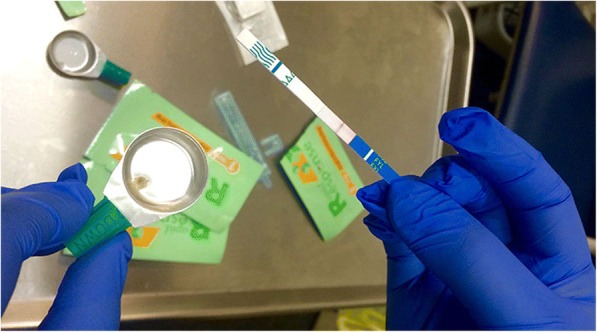
BACKGROUND: British Columbia, Canada, is experiencing a public health emergency related to opioid overdoses driven by consumption of street drugs contaminated with illicitly manufactured fentanyl. This cross-sectional study evaluates a drug checking intervention for the clients of a supervised injection facility (SIF) in Vancouver. METHODS: Insite is a facility offering supervised injection services in Vancouver's Downtown East Side, a community with high levels of injection drug use and associated harms, including overdose deaths. During July 7, 2016, to June 21, 2017, Insite clients were offered an opportunity to check their drugs for fentanyl using a test strip designed to test urine for fentanyl. Results of the drug check were recorded along with information including the substance checked, whether the client intended to dispose of the drug or reduce the dose and whether they experienced an overdose. Logistic regression models were constructed to assess the associations between drug checking results and dose reduction or drug disposal. Crude odds ratios (OR) and 95% confidence intervals (CI) were reported. RESULTS: About 1% of the visits to Insite during the study resulted in a drug check. Out of 1411 drug checks conducted by clients, 1121 (79.8%) were positive for fentanyl. Although most tests were conducted post-consumption, following a positive pre-consumption drug check, 36.3% (n = 142) of participants reported planning to reduce their drug dose while only 11.4% (n = 50) planned to dispose of their drug. While the odds of intended dose reduction among those with a positive drug check was significantly higher than those with a negative result (OR = 9.36; 95% CI 4.25-20.65), no association was observed between drug check results and intended drug disposal (OR = 1.60; 95% CI 0.79-3.26). Among all participants, intended dose reduction was associated with significantly lower odds of overdose (OR = 0.41; 95% CI 0.18-0.89). CONCLUSIONS: Although only a small proportion of visits resulted in a drug check, a high proportion (~ 80%) of the drugs checked were contaminated with fentanyl. Drug checking at harm reduction facilities such as SIFs might be a feasible intervention that could contribute to preventing overdoses in the context of the current overdose emergency.
Overview
The claims and statistics of this paper haven’t been checked yet.
Free: it reads the open-access text and checks the first 5 claims that cite a source we can check. Create a free account to check every claim.
Integrity signals
Registry
Cites
Statistics
Figures
Verification
Claims the paper makes
The claims and statistics of this paper haven’t been checked yet.
Free: it reads the open-access text and checks the first 5 claims that cite a source we can check. Create a free account to check every claim.
Claims other papers make about this one
Each is checked against this paper’s own text: does it say what the citing paper says it does?
The source backs part of the claim, not all of it — or backs it for a different population, condition or comparison.
In the citing paper
“Analysis of drug checking results from multiple studies indicate the presence of FASH”
From “I probably got a minute”: Perceptions of fentanyl test strip use among people who use stimulants (2021) · cites this paper as Karamouzian et al., 2018
Experimental — accuracy not yet measuredThe check wasn’t confident either way, so it gives no verdict — never disputed.
In the citing paper
“evidence suggests that treatment outcomes for StUD are impacted by racial-, ethnic-, and gender-related disparities.[206][207][208][209][210]”
From The ASAM/AAAP Clinical Practice Guideline on the Management of Stimulant Use Disorder (2024) · cites this paper as [208]
Experimental — accuracy not yet measured
Self-check
Percentages, sums and reported differences re-computed from the paper’s own numbers.
The self-check needs the paper’s full text.
Citations
Cites
The Prescription Opioid and Heroin Crisis: A Public Health Approach to an Epidemic of Addiction
Kolodny, A., Courtwright, D. T., Hwang, C. S., Kreiner, P., Eadie, J. L., Clark, T. W., & Alexander, G. C. (2015) · Annual Review of Public Health · doi:10.1146/annurev-publhealth-031914-122957 · Cited by 1,388
Fentanyl, fentanyl analogs and novel synthetic opioids: A comprehensive review
Armenian, P., Vo, K. T., Barr-Walker, J., & Lynch, K. L. (2018) · Neuropharmacology · doi:10.1016/j.neuropharm.2017.10.016 · Cited by 710 · cited 1×
“period, they may inform efforts aimed at monitoring and reducing risks in the local drug supply in jurisdictions across North America that are experiencing increased rates of overdose with illicit fentanyl [4, 6, 29].”
BackgroundSupervised injection services: What has been demonstrated? A systematic literature review
Potier, C., Laprévote, V., Dubois-Arber, F., Cottencin, O., & Rolland, B. (2014) · Drug and Alcohol Dependence · doi:10.1016/j.drugalcdep.2014.10.012 · Cited by 495
Interventions to reduce harm associated with adolescent substance use
Toumbourou, J., Stockwell, T., Neighbors, C., Marlatt, G., Sturge, J., & Rehm, J. (2007) · The Lancet · doi:10.1016/s0140-6736(07)60369-9 · Cited by 479 · cited 1×
“services have been shown to be effective in reaching young people who use drugs for recreational purposes and persuading them to change their behaviour positively [19], they have also been criticized for creating an unjustified feeling of safety about illicit drugs while the absence of unexpected or potent components…”
BackgroundA review: Fentanyl and non-pharmaceutical fentanyls
Suzuki, J., & El-Haddad, S. (2017) · Drug and Alcohol Dependence · doi:10.1016/j.drugalcdep.2016.11.033 · Cited by 445
Deaths Involving Fentanyl, Fentanyl Analogs, and U-47700 — 10 States, July–December 2016
O’Donnell, J. K., Halpin, J., Mattson, C. L., Goldberger, B. A., & Gladden, R. M. (2017) · MMWR. Morbidity and Mortality Weekly Report · doi:10.15585/mmwr.mm6643e1 · Cited by 387 · cited 1×
“10 states in the second half of 2016 [7].”
Harper, L., Powell, J., & Pijl, E. M. (2017) · Harm Reduction Journal · doi:10.1186/s12954-017-0179-5 · Cited by 337
Kennedy, M. C., Karamouzian, M., & Kerr, T. (2017) · Current HIV/AIDS Reports · doi:10.1007/s11904-017-0363-y · Cited by 256
Self-citationDrug testing in Europe: monitoring results of the Trans European Drug Information (TEDI) project
Brunt, T. M., Nagy, C., Bücheli, A., Martins, D., Ugarte, M., Beduwe, C., & Ventura Vilamala, M. (2017) · Drug Testing and Analysis · doi:10.1002/dta.1954 · Cited by 178
Attendance at Supervised Injecting Facilities and Use of Detoxification Services
Wood, E., Tyndall, M. W., Zhang, R., Stoltz, J.-A., Lai, C., Montaner, J. S. G., & Kerr, T. (2006) · New England Journal of Medicine · doi:10.1056/nejmc052939 · Cited by 168
Self-citationAmlani, A., McKee, G., Khamis, N., Raghukumar, G., Tsang, E., & Buxton, J. A. (2015) · Harm Reduction Journal · doi:10.1186/s12954-015-0088-4 · Cited by 134
Ecstasy pill testing: harm minimization gone too far?
Winstock, A. R., Wolff, K., & Ramsey, J. (2001) · Addiction · doi:10.1046/j.1360-0443.2001.96811397.x · Cited by 132 · cited 1×
“services have been shown to be effective in reaching young people who use drugs for recreational purposes and persuading them to change their behaviour positively [19], they have also been criticized for creating an unjustified feeling of safety about illicit drugs while the absence of unexpected or potent components…”
BackgroundRichert, T., & Johnson, B. (2015) · Harm Reduction Journal · doi:10.1186/s12954-015-0037-2 · Cited by 129
Paix, A., Coleman, A. P., Lees, J., Grigson, J., Brooksbank, M., Thorne, D., & Ashby, M. D. (1995) · Pain · doi:10.1016/0304-3959(95)00084-6 · Cited by 124
Hondebrink, L., Lonkhuyzen, J. J. N., van der Gouwe, D., & Brunt, T. M. (2014) · Drug and Alcohol Dependence · doi:10.1016/j.drugalcdep.2014.11.033 · Cited by 117
Hayashi, K., Milloy, M.-J., Lysyshyn, M., DeBeck, K., Nosova, E., Wood, E., & Kerr, T. (2018) · Drug and Alcohol Dependence · doi:10.1016/j.drugalcdep.2017.10.020 · Cited by 102
Self-citationHungerbuehler, I., Buecheli, A., & Schaub, M. (2011) · Harm Reduction Journal · doi:10.1186/1477-7517-8-16 · Cited by 82
Jones, J. D., Campbell, A. N. C., Metz, V. E., & Comer, S. D. (2017) · Addictive Behaviors · doi:10.1016/j.addbeh.2017.03.008 · Cited by 78
Klar, S. A., Brodkin, E., Gibson, E., Padhi, S., Predy, C., Green, C., & Lee, V. (2016) · MMWR. Morbidity and Mortality Weekly Report · doi:10.15585/mmwr.mm6537a6 · Cited by 70
Expected and actual fentanyl exposure among persons seeking opioid withdrawal management
Kenney, S. R., Anderson, B. J., Conti, M. T., Bailey, G. L., & Stein, M. D. (2018) · Journal of Substance Abuse Treatment · doi:10.1016/j.jsat.2018.01.005 · Cited by 67
Kennedy, M. C., Scheim, A., Rachlis, B., Mitra, S., Bardwell, G., Rourke, S., & Kerr, T. (2018) · Drug and Alcohol Dependence · doi:10.1016/j.drugalcdep.2017.12.026 · Cited by 58 · cited 17×
“These differences which should be interpreted with an eye to the small sample size and social desirability bias of the survey results in London and Rhode Island highlight the need for further research on whether willingness to use drug checking services at harm reduction facilities could predict future service uptake…”
BackgroundResultInfluentialSelf-citationDrug checking as a harm reduction tool for recreational drug users: opportunities and challenges.
Brunt, T. M. (2017) · Cited by 53
Risk of fentanyl overdose among clients of the Sydney Medically Supervised Injecting Centre
Latimer, J., Ling, S., Flaherty, I., JAUNCEY, M. E., & Salmon, A. M. (2016) · International Journal of Drug Policy · doi:10.1016/j.drugpo.2016.08.004 · Cited by 38
Lessons from INSITE, Vancouver's supervised injection facility: 2003–2012
Boyd, N. (2013) · Drugs Education Prevention and Policy · doi:10.3109/09687637.2012.755495 · Cited by 25
Drug Checking: Monitoring the Contents of New Synthetic Drugs
Schroers, A. (2002) · Journal of Drug Issues · doi:10.1177/002204260203200219 · Cited by 16
The Rise of Overdose Deaths Involving Fentanyl and the Value of Early Warning
Young, M. M., Pirie, T., Buxton, J. A., & Hosein, S. F. (2015) · The Canadian Journal of Addiction · doi:10.1097/02024458-201512000-00004 · Cited by 14
Drug residues in used syringes in Switzerland: A comparative study
Lefrançois, E., Augsburger, M. P., & Esseiva, P. (2017) · Drug Testing and Analysis · doi:10.1002/dta.2335 · Cited by 13 · cited 1×
“While previous studies have analysed the residual content of used syringes in syringe-exchange facilities [30], we believe our study is the first of its kind to examine a legal government-sanctioned drug checking service at a SIF, which is a unique setting for studying drug checking services as it allows for observing…”
BackgroundRising Fentanyl-related Overdose Deaths in British Columbia
Jafari, S., Buxton, J. A., & Joe, R. S. (2015) · The Canadian Journal of Addiction · doi:10.1097/02024458-201504000-00002 · Cited by 12
A public health approach to opioid addiction in North America
Karamouzian, M., & Kerr, T. H. (2018) · The Lancet · doi:10.1016/s0140-6736(18)30057-6 · Cited by 3
Self-citation
Research works printed but not linked: 4
- BC Coroners Service Fentanyl-detected illicit drug overdose deaths, 2012-2017 2017 19 22
- Sage C Harm reduction and drug checking; a wrap-around service for festivals. Case Study: Shambhala Music Festival 2016
- Sherman S Green T Fentanyl Overdose Reduction Checking Analysis Study (FORECAST) 2018 Baltimore Bloomberg American Health Initiative
- Deeks JJ Higgins JP Statistical algorithms in review manager 5. Statistical Methods Group of The Cochrane Collaboration 2010 1 11
Cited by
Harper, L., Powell, J., & Pijl, E. M. (2017) · Harm Reduction Journal · doi:10.1186/s12954-017-0179-5 · Cited by 337
Drug checking services for people who use drugs: a systematic review
Maghsoudi, N., Tanguay, J., Scarfone, K., Rammohan, I., Ziegler, C., Werb, D., & Scheim, A. I. (2022) · Addiction · doi:10.1111/add.15734 · Cited by 261
Tackling the overdose crisis: The role of safe supply
Ivsins, A., Boyd, J., Beletsky, L., & McNeil, R. (2020) · International Journal of Drug Policy · doi:10.1016/j.drugpo.2020.102769 · Cited by 212
“Harm reduction strategies (e.g., naloxone distribution, low-barrier supervised consumption service, drug checking technologies) have rapidly expanded in Canada in efforts to curb overdose fatalities (Fairbairn, Coffin & Walley, 2017; Karamouzian et al., 2018; Wallace, Pagan & Pauly, 2019).”
BackgroundSelf-citationUse of rapid fentanyl test strips among young adults who use drugs
Krieger, M. S., Goedel, W. C., Buxton, J. A., Lysyshyn, M., Bernstein, E., Sherman, S. G., Rich, J. D., Hadland, S. E., Green, T. C., & Marshall, B. D. L. (2018) · International Journal of Drug Policy · doi:10.1016/j.drugpo.2018.09.009 · Cited by 187
Self-citationGoldman, J. E., Waye, K. M., Periera, K. A., Krieger, M. S., Yedinak, J. L., & Marshall, B. D. L. (2019) · Harm Reduction Journal · doi:10.1186/s12954-018-0276-0 · Cited by 183
Metadata
- Authors
- Karamouzian, M., Dohoo, C., Forsting, S., McNeil, R., Kerr, T., & Lysyshyn, M.
- Affiliations
- University of British Columbia (CA)
- Public Health Agency of Canada (CA)
- Vancouver Coastal Health (CA)
- Corresponding author
- Lysyshyn, Mark
- Venue
- Harm Reduction Journal
- Published
- 2018-09-10
- Volume
- 15
- Issue
- 1
- Pages
- 46-46
- ISSN
- 1477-7517 (ISSN-L)
- PMC
- PMC6131768
- OpenAlex
- W2891271377
- Cited by
- 209
- References
- 29
- Citations by year
- 2026: 11 · 2025: 21 · 2024: 24 · 2023: 32 · 2022: 21 · 2021: 34 · 2020: 37 · 2019: 21 · 2018: 7
- FWCI
- 19.33
- Type
- journal article
- Language
- en
- Open access
- gold
- doi.org
- Licence
- cc-by
- creativecommons.org/licenses/by/4.0/ (tdm)
- Locations
- Harm Reduction Journal (publishedVersion, cc-by)
- Europe PMC (PubMed Central) (publishedVersion, other-oa)
- PubMed Central (publishedVersion, cc-by)
- PubMed (publishedVersion)
- cIRcle (University of British Columbia) (submittedVersion, cc-by)
- DOAJ (DOAJ: Directory of Open Access Journals) (submittedVersion, cc-by-sa)
- Research Information System of Ardabil University of Medical Sciences (Ardabil University of Medical Sciences) (submittedVersion)
- Open Collections
- Funders
- Vancouver Coastal Health
- Topics
- Health Sciences › Medicine › Epidemiology › HIV, Drug Use, Sexual Risk
- Health Sciences › Medicine › Public Health, Environmental and Occupational Health › Opioid Use Disorder Treatment
- Health Sciences › Medicine › Epidemiology › Substance Abuse Treatment and Outcomes
- Keywords
- drug checking, fentanyl, supervised injection facilities, opioid overdose prevention, illicitly manufactured fentanyl, drug contamination, dose reduction, drug disposal, harm reduction, Insite
- MeSH terms
- Analgesics, Opioid, British Columbia, Cross-Sectional Studies, Heroin, Drug Contamination, Fentanyl, Humans, Naloxone, Narcotic Antagonists, Opioid-Related Disorders, Reagent Strips, Illicit Drugs, Substance Abuse, Intravenous, Needle-Exchange Programs, Harm Reduction, Drug Overdose
About these checks
Registry, retraction, Cites and statistics results are computed, not judged, with one exception: a printed reference that no index lists is read once by a model before it counts as a citation error. Claims are extracted by a model and kept only when their quote appears verbatim in the text; each cited source is then checked, with a model’s help, for whether it says what the claim relies on. Those verdicts can be wrong — read the claim’s quote and the cited source before relying on one.
Statistics and arithmetic are recomputed, not judged.
Confidence bands are shown only for fields calibrated on our annotated test set. None is calibrated yet, so no band is shown.
What counts as a claim ›How we measure confidence ›How we check this ›
Are you an author, or do you see a problem with this page? Request a review
Data sources
Bibliographic data: Semantic Scholar, OpenAlex, Crossref.
Contains information from the Semantic Scholar Academic Graph Datasets, made available under the ODC Attribution License (ODC-BY 1.0).
Semantic Scholar’s data is described in: Kinney, R., et al. (2023). The Semantic Scholar Open Data Platform. arXiv:2301.10140.
