

Responsiveness and minimal important change for the quick-DASH in patients with shoulder disorders
Open accessThe DOI matches its Crossref record; 23 of the 23 references it cites were found in a registry or an index.
Abstract
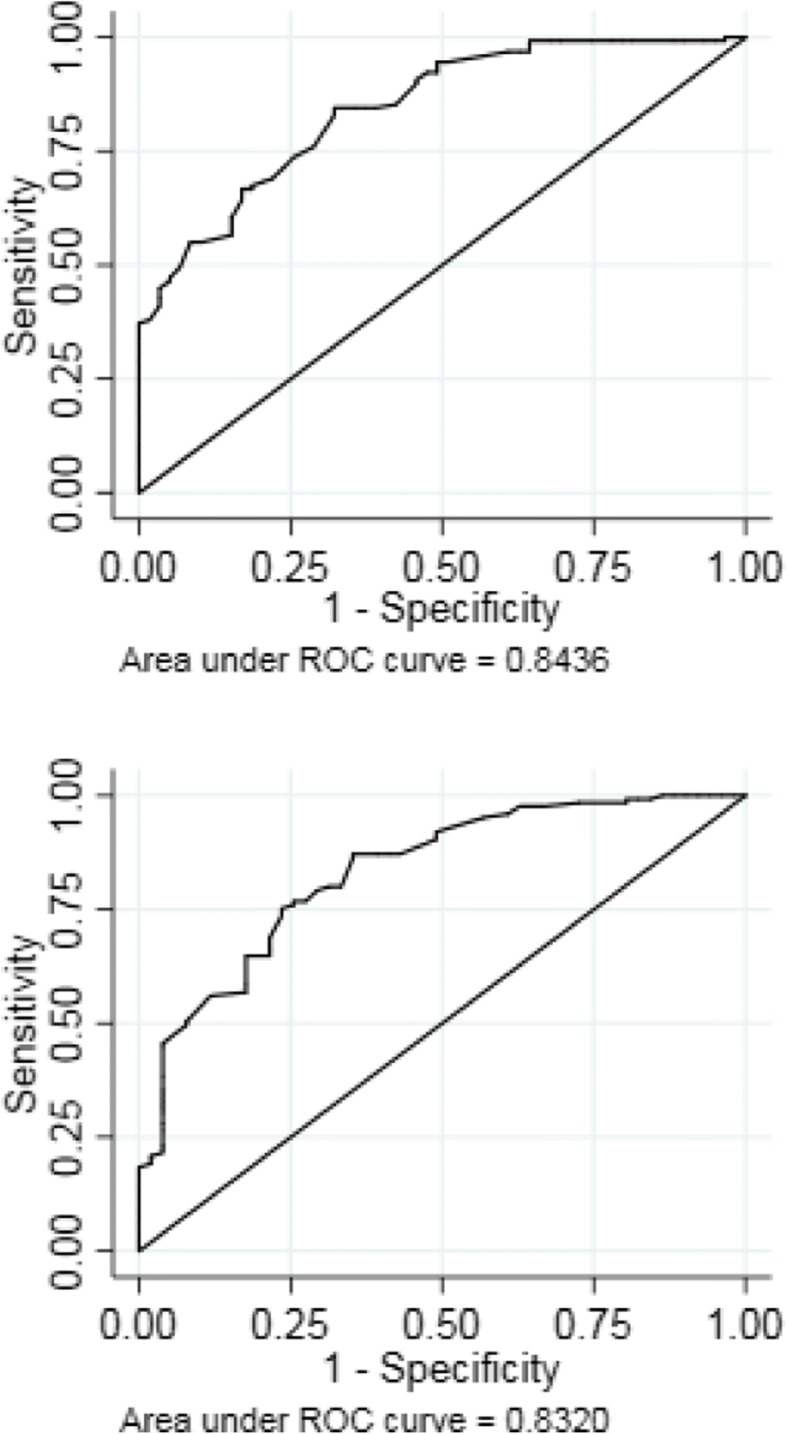
BACKGROUND: Responsiveness and minimal important change (MIC) are central measurement properties when interpreting scores from health questionnaires. The aim of the study was to evaluate the responsiveness and MIC of the Danish version of the shortened version the Disabilities of the Arm, Shoulder and Hand questionnaire (Quick-DASH) in patients with shoulder disorders referred to primary care physiotherapy treatment. METHODS: The study included 261 patients who completed questionnaires at baseline and 3 and 6 months follow up. Absolute and relative change scores was analysed using receiver-operating-characteristics (ROC) curve analysis with the Patient Global Impression of Change (PGIC) as external anchor. RESULTS: At both 3 and 6 months follow up, the Area under the Curve (ROC AUC) exceeded 0.70 and MIC was 9.1 and 13.6 at 3 and 6 months respectively. CONCLUSION: The Danish version of the Quick-DASH demonstrated adequate ability to measure changes in disability over 3 and 6 months in patients with shoulder disorders undergoing primary care physiotherapy treatment.
Overview
The claims and statistics of this paper haven’t been checked yet.
Free: it reads the open-access text and checks the first 5 claims that cite a source we can check. Create a free account to check every claim.
Integrity signals
Registry
Cites
Statistics
Figures
Verification
Claims the paper makes
The claims and statistics of this paper haven’t been checked yet.
Free: it reads the open-access text and checks the first 5 claims that cite a source we can check. Create a free account to check every claim.
Self-check
Percentages, sums and reported differences re-computed from the paper’s own numbers.
The self-check needs the paper’s full text.
Citations
Cites
Quality criteria were proposed for measurement properties of health status questionnaires
Terwee, C. B., Bot, S. D. M., de Boer, M. R., van der Windt, D. A. W. M., Knol, D. L., Dekker, J., Bouter, L. M., & de Vet, H. C. W. (2007) · Journal of Clinical Epidemiology · doi:10.1016/j.jclinepi.2006.03.012 · Cited by 10,764
Hudak, P. L., Amadio, P. C., Bombardier, C., Beaton, D., Cole, D. C., Davis, A. M., HAWKER, G. A., Katz, J. N., Mäkelä, M., Marx, R. G., et al. (1996) · American Journal of Industrial Medicine · doi:10.1002/(sici)1097-0274(199606)29:6<584::aid-ajim2>3.0.co;2-k · Cited by 5,133
Hudak, P. L., Amadio, P. C., Bombardier, C., Beaton, D., Cole, D., Davis, A., Hawker, G., Katz, J. N., Makela, M., Marx, R. G., et al. (1996) · American Journal of Industrial Medicine · doi:10.1002/(sici)1097-0274(199606)29:6<602::aid-ajim4>3.0.co;2-l · Cited by 5,025
Revicki, D., Hays, R. D., Cella, D., & Sloan, J. (2008) · Journal of Clinical Epidemiology · doi:10.1016/j.jclinepi.2007.03.012 · Cited by 2,362
Ostelo, R. W. J. G., Deyo, R. A., Stratford, P., Waddell, G., Croft, P., Von Korff, M., Bouter, L. M., & de Vet, H. C. (2008) · Spine · doi:10.1097/brs.0b013e31815e3a10 · Cited by 2,009
Mokkink, L. B., Terwee, C. B., Knol, D. L., Stratford, P. W., Alonso, J., Patrick, D. L., Bouter, L. M., & de Vet, H. C. (2010) · BMC Medical Research Methodology · doi:10.1186/1471-2288-10-22 · Cited by 1,834
DEVELOPMENT OF THE QUICKDASH: COMPARISON OF THREE ITEM-REDUCTION APPROACHES
BEATON, D. E., WRIGHT, J. G., & KATZ, J. N. (2005) · The Journal of Bone and Joint Surgery-American Volume · doi:10.2106/00004623-200505000-00015 · Cited by 1,523 · cited 5×
“A major advantage of this questionnaire is that it can be used for any upper extremity evaluation meaning versatility for clinicians and researchers [2].”
BackgroundMethodInfluentialGlobal Rating of Change Scales: A Review of Strengths and Weaknesses and Considerations for Design
Kamper, S. J., Maher, C. G., & Mackay, G. (2009) · Journal of Manual & Manipulative Therapy · doi:10.1179/jmt.2009.17.3.163 · Cited by 1,458
Franchignoni, F., Vercelli, S., Giordano, A., Sartorio, F., Bravini, E., & Ferriero, G. (2014) · Journal of Orthopaedic & Sports Physical Therapy · doi:10.2519/jospt.2014.4893 · Cited by 924
Development of the QuickDASH: Comparison of Three Item-Reduction Approaches
Roizen, M. F. (2006) · Yearbook of Anesthesiology and Pain Management · doi:10.1016/s1073-5437(08)70279-1 · Cited by 742
Research works printed but not linked: 1
- Danish National Committee on Biomedical Research Ethics. Act on research ethics review of health research projects. 2013; Available at: http://www.nvk. dk/english/act-on-research. Accessed 05/03, 2018.
Cited by
Su, F., Allahabadi, S., Bongbong, D. N., Feeley, B. T., & Lansdown, D. A. (2021) · Current Reviews in Musculoskeletal Medicine · doi:10.1007/s12178-020-09684-2 · Cited by 91
Galardini, L., Coppari, A., Pellicciari, L., Ugolini, A., Piscitelli, D., Porta, F. L., Bravini, E., & Vercelli, S. (2024) · Physical Therapy · doi:10.1093/ptj/pzae033 · Cited by 89
“Only 3 studies 38,41,44 used a follow-up of 6 months.”
InfluentialPak, S. S., Janela, D., Freitas, N., Costa, F. M. T. A., Moulder, R. G., Jr., Molinos, M., Areias, A. C., Bento, V., Cohen, S. P., Yanamadala, V., et al. (2023) · Journal of Medical Internet Research · doi:10.2196/49236 · Cited by 96
“The odds of being a responder for QuickDASH were calculated using logistic regression analysis, considering a 33% minimal clinically important difference (MCID) [47,48].”
Budtz, C. R., Mose, S., & Christiansen, D. H. (2020) · BMC Health Services Research · doi:10.1186/s12913-020-05100-0 · Cited by 40
“Clinical factors: Pain intensity was assessed as average pain the preceding week on a NPRS scale ranging from 0 “No pain” to 10 “worst pain imaginable” [21–23], and disability which included region-specific disability questionnaires (RMQ [26], NDI [24] and Quick-DASH [25]).”
MethodInfluentialSelf-citationChristiansen, D. H., & Hjort, J. (2021) · Journal of physiotherapy · doi:10.1016/j.jphys.2021.02.015 · Cited by 32
Self-citationRysstad, T., Grotle, M., Klokk, L. P., & Tveter, A. T. (2020) · BMC Musculoskeletal Disorders · doi:10.1186/s12891-020-03289-z · Cited by 30
“85, which is slightly higher than the result in our study [11, 30, 35, 55].”
BackgroundResultChristiansen, D. H., McCray, G., Winding, T. N., Andersen, J. H., Nielsen, K. J., Karstens, S., & Hill, J. C. (2020) · Health and Quality of Life Outcomes · doi:10.1186/s12955-020-01455-4 · Cited by 31
Self-citationAlnahdi, A. H. (2021) · Musculoskeletal Science and Practice · doi:10.1016/j.msksp.2021.102372 · Cited by 23
Areias, A. C., Costa, F., Janela, D., Molinos, M., Moulder, R. G., Lains, J., Scheer, J. K., Bento, V., Yanamadala, V., & Correia, F. D. (2022) · Healthcare · doi:10.3390/healthcare10122349 · Cited by 15
Sheehy, L., Bharadwaj, L., Nissen, K., & Estey, J. L. (2025) · Clinical Interventions in Aging · doi:10.2147/cia.s498272 · Cited by 19
Janela, D., Costa, F., Molinos, M., Moulder, R. G., Lains, J., Bento, V., Scheer, J. K., Yanamadala, V., Cohen, S. P., & Correia, F. D. (2022) · International Journal of Environmental Research and Public Health · doi:10.3390/ijerph19159198 · Cited by 8
“To account for possible flooring effects, response to treatment was evaluated considering both an absolute MCIC of 12 points [51,52], and also a relative 30% mean change threshold as suggested in prior upper limb research [53,54].”
MethodRønnow, M. M., Stæhr, T. A. B., & Christiansen, D. H. (2021) · BMC Musculoskeletal Disorders · doi:10.1186/s12891-021-04612-y · Cited by 14
“6 points, and a worst case scenario where the MIC was subtracted from the predicted change scores [31].”
BackgroundSelf-citationFailla, M. J., Mintken, P. E., McDevitt, A. W., & Michener, L. A. (2022) · Journal of Manual & Manipulative Therapy · doi:10.1080/10669817.2022.2137350 · Cited by 10
“A 33% change in QDASH scale score is recommended for use as MCID because it accounts for baseline score [30].”
MethodCouppé, C., Døssing, S., Bülow, P. M., Siersma, V., Zilmer, C. K., Bang, C. W., Hoeffner, R., Kracht, M., Hogg, P., Edström, G., et al. (2022) · The American Journal of Sports Medicine · doi:10.1177/03635465221110214 · Cited by 14
“The QuickDASH (11 instead of 30 items) was also used, which has been shown to be valid and has a minimal clinically important difference of 14 points.(8,52) Pain Rating (NRS).”
MethodResultAlessandro de, S. I. R. E., Moggio, L., Marotta, N., Fortunato, F., Spałek, R., Inzitari, M. T., Paolucci, T., & Ammendolia, A. (2022) · Healthcare · doi:10.3390/healthcare10101869 · Cited by 10
“of disability; 100 = maximum disability) [55];”
Gerg, M. J., Hazak, K., Carrie, B. R., Melendez, N., & Jewell, V. (2022) · Work · doi:10.3233/wor-211059 · Cited by 11
Agger, N., Desmeules, F., & Christiansen, D. H. (2023) · BMJ Open Sport & Exercise Medicine · doi:10.1136/bmjsem-2023-001770 · Cited by 4
Self-citationGonzález-Rubino, J. B., Viñolo-Gil, M. J., García‐Muñoz, C., & Martín‐Valero, R. (2022) · BMJ Open · doi:10.1136/bmjopen-2022-063305 · Cited by 4
Agostini, F., Alessandro de, S. I. R. E., Savina, A., Iudicelli, G., Fisicaro, A., Camponogara, G., Narciso, M., Fricano, A., Conti, M., Longo, U. G., et al. (2025) · Journal of Clinical Medicine · doi:10.3390/jcm14176291 · Cited by 3
“Data collection, organization, and charting were done using Excel, while the T -test was performed using SPSS. Version 31 For Minimally Clinically Important Differences (MCID), we drew inspiration from relevant publications on the subject [27–29].”
Daghiani, M., Negahban, H., Mostafaee, N., Ebrahimzadeh, M. A., Moradi, A., Kachooei, A. R., & Saidi, A. (2022) · PubMed Central · doi:10.22038/abjs.2022.64227.3082 · Cited by 3
Gupta, A., Wang, T., Ravi, S. P., Richards, D. J., Cooper, E. A., & Jiménez, F. (2023) · Dermatologic Surgery · doi:10.1097/dss.0000000000003788 · Cited by 2
Aldaihan, M. M., & Alnahdi, A. H. (2023) · Healthcare · doi:10.3390/healthcare11182507 · Cited by 4
“…who received physical therapy care for upper extremity musculoskeletal disorders) [18], Danish (AUC = 0.84, 0.83; in patients who received physical therapy care for shoulder pain) [19], and the Norwegian version (AUC = 0.75; in patients who received physical therapy care for shoulder pain) [20].”
BackgroundInfluentialNazary‐Moghadam, S., Zarei-Moghadam, F., Zeinalzadeh, A., Ebrahimzadeh, M. A., Moradi, A., Emadzadeh, M., & Hasson, S. (2024) · Journal of Bodywork and Movement Therapies · doi:10.1016/j.jbmt.2024.04.008 · Cited by 4
Virani, S., Abdelghafour, K. M., Assiotis, A., Yeoh, C., Rumian, A. P., & Uppal, H. S. (2024) · Journal of Clinical Orthopaedics and Trauma · doi:10.1016/j.jcot.2024.102886 · Cited by 2
Chamogeorgakis, G., Karanasios, S., Theotokatos, G., Vasilogeorgis, I., & Korakakis, V. (2023) · Cureus · doi:10.7759/cureus.40029 · Cited by 3
“It contains 11 items that are scored using a five-point Likert scale ranging from 1 (no difficulty at all) to 5 (unable to do) and at least 10 out of the 11 items must be completed for the final score to be calculated [23].”
MethodNordqvist, J. M., Holmgren, T. M., Adolfsson, L., Öberg, B. E., & Johansson, K. M. (2021) · JSES International · doi:10.1016/j.jseint.2021.01.008 · Cited by 1
“In the implementation study, the following questionwas asked to the patient: “Since the beginning of the treatment in this study, how would you describe the changes (if any) in activity limitations and symptoms related to your shoulder?” The scale used was a 5-point Likert scale with alternative answers: recovered (1)…”
MethodPinho, A. B., de Freitas, M. M., & Fontes, C. J. F. (2022) · Revista Brasileira de Ortopedia · doi:10.1055/s-0042-1742342 · Cited by 1
Ratajczak, K., Szczęsny, G., & Tomaszewski, W. (2023) · Medicina · doi:10.3390/medicina59030575 · Cited by 1
Comparison between Two Methods to Evaluate Function in Postoperative Breast Cancer Survivors
Back, B. B. H., Zomkowski, K., Cunha, N. D. S., Santos, G. M., Sacomori, C., & Sperandio, F. F. (2020) · PM&R · doi:10.1002/pmrj.12491 · Cited by 1
“However, the mean between the scores showed a large interval between the minimum and maximum values, exceeding the interval of the minimally important clinical difference in the DASH.17,19,20 An inverse relationship was found at 3 months postoperatively for the items “push open a heavy door” and “use a knife to cut fo…”
BackgroundBenhissen, Z., Konzelmann, M., Vuistiner, P., Léger, B., Lüthi, F., Devilliers, H., Hilfiker, R., & Benaïm, C. (2021) · Annals of Physical and Rehabilitation Medicine · doi:10.1016/j.rehab.2021.101533 · Cited by 1
Valoración funcional de la mano
Pérez‐Mármol, J. M. (2020) · Universidad Internacional de Andalucía eBooks · doi:10.56451/10334/6161
ヒューマンミメティック技術を考える( 人間をまねる : ヒューマンミメティック最前線)
井口, 信., 清水, 博., 杉山, 幸., 中村, 雄., 松島, 克., 吉川, 弘., 三輪, 敬., & 河合, 正. (1989) · 精密工学会誌
(2023) · International Journal of Biology Pharmacy and Allied Sciences · doi:10.31032/ijbpas/2023/12.5.7098
Glover, M. A., Restrepo, A., Recker, A. J., Beck, E. C., Bullock, G. S., Trasolini, N. A., & Waterman, B. R. (2023) · Arthroscopy Sports Medicine and Rehabilitation · doi:10.1016/j.asmr.2023.100840
Study on therapeutic management of carpal tunnel syndrome
(2024) · Discobolul · doi:10.35189/dpeskj.2024.63.1.4
“…are rated on a 5-point Likert scale ranging from "No difficulty/Not at all/None" (1p), "Slightly/Mild difficulty" (2p), "Moderate difficulty/Moderately" (3p), "Severe difficulty/Quite a bit/Very limited" (4p), "Unable/Extremely/So much difficulty that I can’t sleep" (5p) (Budtz et al., 2018).”
Arensman, R. M., Haan, E. J. A., Terluin, B., Terwee, C. B., Wittink, H. M., & Kiers, H. (2025) · Advances in Patient-Reported Outcomes · doi:10.1016/j.apro.2025.100198 · Cited by 1
Rønnow, M. M., Stæhr, T. A. B., & Christiansen, D. H. (2021) · Figshare · doi:10.6084/m9.figshare.16528713
Self-citationRønnow, M. M., Stæhr, T. A. B., & Christiansen, D. H. (2021) · Figshare · doi:10.6084/m9.figshare.16528707
Self-citationRønnow, M. M., Stæhr, T. A. B., & Christiansen, D. H. (2021) · Figshare · doi:10.6084/m9.figshare.16528710
Self-citationEftekhar, S., Mostafaee, N., Negahban, H., & Ebrahimzadeh, S. (2026) · Physiotherapy Theory and Practice · doi:10.1080/09593985.2026.2615402
“Our findings aligned with those who also observed that the Quick DASH effectively measures changes in disability in patients with shoulder disorders undergoing physiotherapy (Budtz, Andersen, de Vos Andersen Nb, and Christiansen, 2018; Dale and Strain-Riggs, 2013).”
Work related musculoskeletal disorders among female physiotherapists in Bangladesh
Kakuli, S. A., Jahan, F. M., & Islam, M. W. (2026) · International Journal of Community Medicine and Public Health · doi:10.18203/2394-6040.ijcmph20262218
Metadata
- Authors
- Budtz, C. R., Andersen, J. H., de Vos Andersen, N.-B., & Christiansen, D. H.
- Affiliations
- Regional Hospital West Jutland (DK)
- Aarhus University (DK)
- Corresponding author
- Budtz, Cecilie Rud
- Venue
- Health and Quality of Life Outcomes
- Published
- 2018-12
- Volume
- 16
- Issue
- 1
- Pages
- 226-226
- ISSN
- 1477-7525 (ISSN-L)
- PMC
- PMC6288952
- OpenAlex
- W2905514820
- Cited by
- 41
- References
- 22
- Citations by year
- 2026: 2 · 2025: 3 · 2024: 4 · 2023: 8 · 2022: 9 · 2021: 9 · 2020: 5
- FWCI
- 3.64
- Type
- journal article
- Language
- en
- Open access
- gold
- doi.org
- Licence
- cc-by
- creativecommons.org/licenses/by/4.0/ (tdm)
- Locations
- Health and Quality of Life Outcomes (publishedVersion, cc-by)
- Europe PMC (PubMed Central) (publishedVersion, cc-by)
- PubMed Central (publishedVersion, cc-by)
- PubMed (publishedVersion)
- DOAJ (DOAJ: Directory of Open Access Journals) (submittedVersion, cc-by-sa)
- Funders
- Practise Research Foundation of Danish Physiotherapists (X)
- Topics
- Health Sciences › Medicine › Surgery › Shoulder Injury and Treatment
- Health Sciences › Health Professions › Physical Therapy, Sports Therapy and Rehabilitation › Musculoskeletal pain and rehabilitation
- Social Sciences › Economics, Econometrics and Finance › Economics and Econometrics › Health Systems, Economic Evaluations, Quality of Life
- Keywords
- QuickDASH, minimal important change, responsiveness, shoulder disorders, patient-reported outcome measures, Danish version, primary care physiotherapy, disability assessment, Patient Global Impression of Change
- MeSH terms
- Adult, Aged, Denmark, Disability Evaluation, Female, Health Surveys, Humans, Male, Middle Aged, Musculoskeletal Diseases, Quality of Life, ROC Curve, Shoulder, Reproducibility of Results
About these checks
Registry, retraction, Cites and statistics results are computed, not judged, with one exception: a printed reference that no index lists is read once by a model before it counts as a citation error. Claims are extracted by a model and kept only when their quote appears verbatim in the text; each cited source is then checked, with a model’s help, for whether it says what the claim relies on. Those verdicts can be wrong — read the claim’s quote and the cited source before relying on one.
Statistics and arithmetic are recomputed, not judged.
Confidence bands are shown only for fields calibrated on our annotated test set. None is calibrated yet, so no band is shown.
What counts as a claim ›How we measure confidence ›How we check this ›
Are you an author, or do you see a problem with this page? Request a review
Data sources
Bibliographic data: Semantic Scholar, OpenAlex, Crossref.
Contains information from the Semantic Scholar Academic Graph Datasets, made available under the ODC Attribution License (ODC-BY 1.0).
Semantic Scholar’s data is described in: Kinney, R., et al. (2023). The Semantic Scholar Open Data Platform. arXiv:2301.10140.
