

Effects of hyperandrogenism on metabolic abnormalities in patients with polycystic ovary syndrome: a meta-analysis
Open accessThe DOI matches its Crossref record; 31 of the 32 references it cites were found in a registry or an index.
Abstract
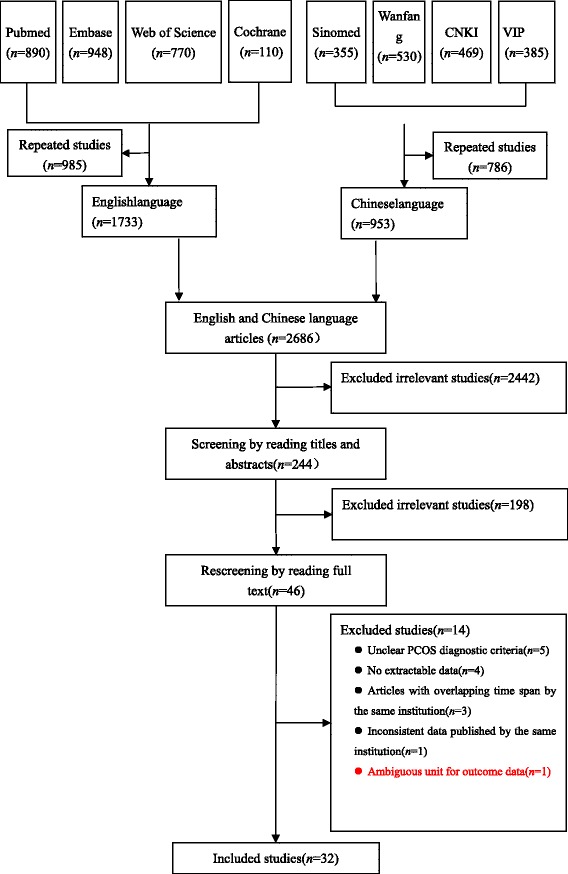
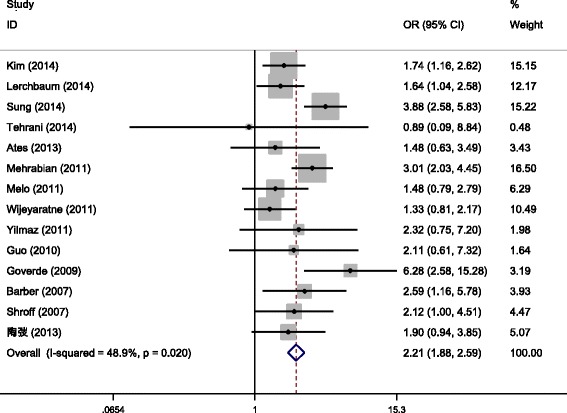
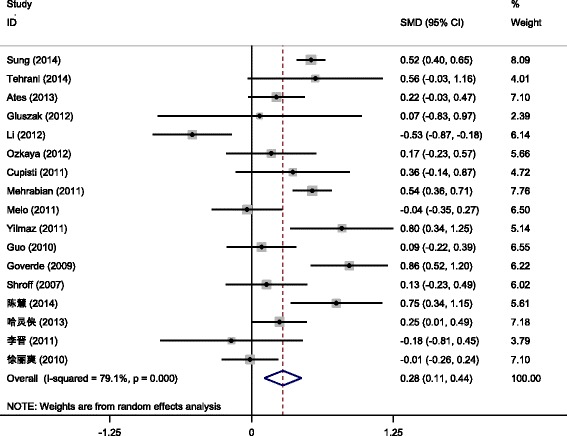
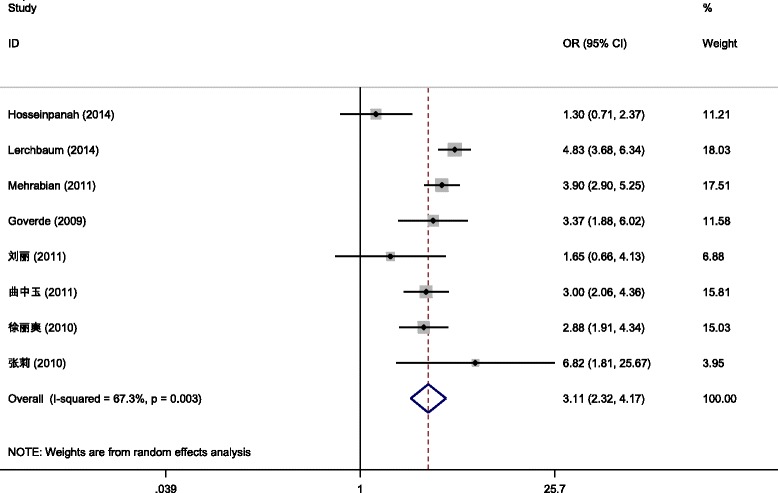
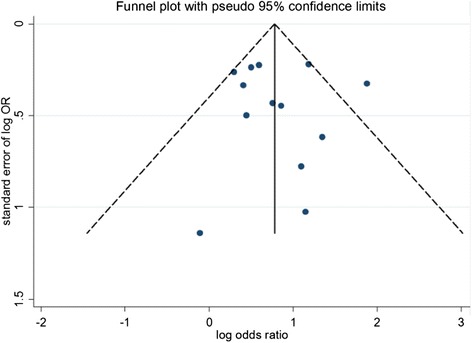
BACKGROUND: The study evaluated the effect of hyperandrogenism (HA) in polycystic ovary syndrome (PCOS) on metabolic parameters. METHODS: We searched PubMed, EMBASE, Cochrane, Web of Science, Chinese Biomedical Database (CBM), China National Knowledge Infrastructure (CNKI), WanFang data and VIP for clinical observational studies. The study evaluated PCOS patients with or without HA on metabolic parameters was included. Prevalence of metabolic syndrome, indexes of insulin resistance (IR) including homeostasis model assessment IR index (HOMA-IR), incidence of IR, biomarkers of serum lipid metabolism such as total cholesterol (TC), triglyceride (TG), high density lipoprotein (HDL), and low density lipoprotein (LDL). RESULTS: Of 4457 identified trials, 32 observational studies were included for the final analysis comprising 9556 female with PCOS. 6482 cases were having HA, and the others were negative. There were significant differences in the incidence of metabolic syndrome, HOMA-IR, rate of IR, TC level and HDL level between PCOS patients with or without HA, except for LDL level. No significant publication bias was found as P value of Egger's test was 0.82. CONCLUSIONS: HA play an important role in metabolic disorders in PCOS patients. The incidence of metabolic syndrome, IR indexes, and most biomarkers of serum lipid metabolism were significantly different between patients with and without HA.
Overview
The claims and statistics of this paper haven’t been checked yet.
Free: it reads the open-access text and checks the first 5 claims that cite a source we can check. Create a free account to check every claim.
Integrity signals
Registry
Cites
Statistics
Figures
Verification
Claims the paper makes
The claims and statistics of this paper haven’t been checked yet.
Free: it reads the open-access text and checks the first 5 claims that cite a source we can check. Create a free account to check every claim.
Claims other papers make about this one
Each is checked against this paper’s own text: does it say what the citing paper says it does?
In the citing paper
“Previous studies have associated the androgenic phenotype with more severe metabolic alterations [32,33].”
From Controversies in the Pathogenesis, Diagnosis and Treatment of PCOS: Focus on Insulin Resistance, Inflammation, and Hyperandrogenism (2022) · cites this paper as [33]
Self-check
Percentages, sums and reported differences re-computed from the paper’s own numbers.
The self-check needs the paper’s full text.
Citations
Cites
(2014) · Medical Entomology and Zoology · Cited by 17,633
Green, P. H. R., & Jones, R. (2006) · Cited by 2,453
Teede, H., Deeks, A., & Moran, L. (2010) · BMC Medicine · doi:10.1186/1741-7015-8-41 · Cited by 1,565 · cited 1×
“Studies revealed different degrees of obesity, dyslipidemia, insulin resistance (IR), abnormal glucose metabolism, metabolic syndrome (MetS), and other metabolic abnormalities [2, 3] in PCOS patients.”
Jones, H., Sprung, V. S., Pugh, C. J. A., Daousi, C., Irwin, A., Aziz, N., Adams, V. L., Thomas, E. L., Bell, J. D., Kemp, G. J., et al. (2012) · The Journal of Clinical Endocrinology & Metabolism · doi:10.1210/jc.2012-1382 · Cited by 256 · cited 2×
“Jones 2012 [16] United Kingdom 29 (19/10) 28 2003 Rotterdam criteria Cross-sectional –”
BackgroundBarber, T. M., Wass, J. A. H., McCarthy, M. I., & Franks, S. (2007) · Clinical Endocrinology · doi:10.1111/j.1365-2265.2007.02764.x · Cited by 254 · cited 2×
“Barber 2007 [27] United Kingdom 309 (267/42) 33.”
BackgroundDunaif, A. (1995) · The American Journal of Medicine · doi:10.1016/s0002-9343(99)80057-6 · Cited by 236 · cited 1×
“The incidence of PCOS is as high as 5 % ~ 10 % in women of childbearing age [1] (the prevalence is 5.”
BackgroundRisk of metabolic complications in the new PCOS phenotypes based on the Rotterdam criteria
Shroff, R., Syrop, C. H., Davis, W., Van Voorhis, B. J., & Dokras, A. (2007) · Fertility and Sterility · doi:10.1016/j.fertnstert.2007.01.032 · Cited by 214 · cited 2×
“Shroff 2007 [28] Yes Yes Yes Unclear Unclear No No Yes No Yes”
BackgroundCota, G. F., de Sousa, M. R., Fereguetti, T. O., & Rabello, A. (2013) · PLoS Neglected Tropical Diseases · doi:10.1371/journal.pntd.0002195 · Cited by 189
Wijeyaratne, C. N., Seneviratne, R. D. A., Dahanayake, S., Kumarapeli, V., Palipane, E., Kuruppu, N., Yapa, C., Seneviratne, R. D. A., & Balen, A. H. (2011) · Human Reproduction · doi:10.1093/humrep/deq310 · Cited by 141 · cited 2×
“Wijeyaratne 2011 [22] Sri Lanka 469 (374/95) 25 2003 Rotterdam criteria Cross-sectional a”
BackgroundGoverde, A. J., van Koert, A. J. B., Eijkemans, M. J., Knauff, E. A. H., Westerveld, H. E., Fauser, B. C. J. M., & Broekmans, F. J. (2008) · Human Reproduction · doi:10.1093/humrep/den433 · Cited by 135 · cited 2×
“Goverde 2009 [26] Netherlands 157 (101/56) 29 (17 ~ 43) 2003 Rotterdam criteria Cross-sectional a, b, c, f”
Background
Research works printed but not linked: 8
- Chen H, Yang ZF, Zhan WW, La DD, Chen C. Ultrasonographic features of polycystic ovary syndrome and their correlation with endocrinology index. J Diagn Concepts Pract. 2014;13(2):171–5.
- Li YC Relationship of lipid metabolism disturbance with body weight, insulin resistance and androgen level in patients with polycystic ovary syndrome Matern Child Health Care China 2014 29 354 6
- Ha LX Shi YH Zhao JL Chen ZJ Lipid metabolism characteristics in polycystic ovary syndrome patientswith different androgen levelsin Ningxia J Shandong University (Med Sci) 2013 51 88 91
- Li J Xu C Zhang HJ Hong J Ning G Li XY Correlation of obesity with hyperandrogenism and insulin resistance in patients with polycystic ovary syndrome Chin J Endocrinol Metab 2011 27 733 5
- Liu L Shao JB Zhang HP Shen XL Metabolism characteristics in patients with different phenotypes of polycystic ovary syndrome Clin Educ Gen Pract 2011 9 505 7
- Qu ZY Shi YH Chen ZJ Relationship between hyperandrogenism and non-alcoholic fatty liver disease of polycystic ovary syndrome Reprod Contracept 2011 31 14 7
- Xu LS Zhang YF Zhang HY Xue FX Han YK Glucose metabolism characteristics in patients with different phenotypes of polycystic ovary syndrome Prog Obstet Gynecol 2010 19 333 5
- Zhang L Zhang Y Correlation of androgen level with insulin resistance in patients with polycystic ovary syndrome Exp Lab Med 2010 28 239 40
Cited by
Items 101–106 of 106
Ge, H., Chang, H., Sun, Z.-X., Guan, M.-X., Yu, J.-N., Li, A.-Q., Meng-yi, Z., Gao, J., & Wu, X. K. (2026) · Frontiers in Nutrition · doi:10.3389/fnut.2026.1819555
“Meanwhile, FHD might exacerbate the interplay between IR and hyperandrogenism, promote triglyceride synthesis, aggravate lipid metabolism disorders, and ultimately lead to elevated TC and LDL levels and reduced HDL levels (48, 49).”
El‐Sehrawy, A. A. M. A., Aljumaili, O. I., Baig, M. R., Nematov, O. N., Sapaev, I. B., Badr, I. H., Smerat, A., & Basunduwah, T. S. (2026) · Clinica Chimica Acta · doi:10.1016/j.cca.2026.121197
Bu, Z., Ge, X., Sun, J., & Wang, K. (2026) · BMC Pregnancy and Childbirth · doi:10.1186/s12884-026-09718-6
“A recent systematic review of 9,556 PCOS women demonstrated the pivotal role of hyper-androgenism in adverse metabolic outcomes [22].”
Minato, S., Yamamoto, Y., Noguchi, H., Arata, M., Tamura, K., Aoki, H., Takeda, A., Takahashi, A., Purevdorj, T., Shinohara, A., et al. (2026) · Journal of Clinical Medicine · doi:10.3390/jcm15176710
“In addition, a meta-analysis found that the incidence of metabolic syndrome is significantly higher in women with PMOS than in those without hyperandrogenism [42].”
O papel da dosagem hormonal na investigação da síndrome dos ovários policísticos
Soares, J. M., & de Medeiros, S. F. (2019) · Femina · doi:10.61622/0100-7254472201903
Pugalendhi, M. A., & Sankarganesh, D. (2026) · Frontiers in Endocrinology · doi:10.3389/fendo.2026.1906736
“This, in turn, hampers glucose metabolism, alters the action of peripheral and intrahepatic insulin, and increases the release offree fatty acids (FFAs), thereby resulting in insulin resistance (IR) and other metabolic comorbidities (27).”
Metadata
- Authors
- Yang, R., Yang, S., Li, R., Liu, P., Qiao, J., & Zhang, Y.
- Affiliations
- Peking University Third Hospital (CN)
- Chinese Academy of Medical Sciences & Peking Union Medical College (CN)
- Corresponding author
- Li, Rong
- Venue
- Reproductive Biology and Endocrinology
- Published
- 2016-10-18
- Volume
- 14
- Issue
- 1
- Pages
- 67-67
- ISSN
- 1477-7827 (ISSN-L)
- PMC
- PMC5069996
- OpenAlex
- W2534765630
- Cited by
- 106
- References
- 32
- Citations by year
- 2026: 10 · 2025: 7 · 2024: 5 · 2023: 21 · 2022: 9 · 2021: 16 · 2020: 8 · 2019: 10 · 2018: 12 · 2017: 7 · 2016: 1
- FWCI
- 1.44
- Type
- journal article
- Language
- en
- Open access
- gold
- doi.org
- Licence
- cc-by
- Locations
- Reproductive Biology and Endocrinology (publishedVersion, cc-by)
- PubMed Central (publishedVersion, cc-by)
- PubMed (publishedVersion)
- Topics
- Health Sciences › Medicine › Reproductive Medicine › Ovarian function and disorders
- Health Sciences › Medicine › Endocrinology, Diabetes and Metabolism › Diabetes, Cardiovascular Risks, and Lipoproteins
- Life Sciences › Biochemistry, Genetics and Molecular Biology › Genetics › Genetic and Kidney Cyst Diseases
- Keywords
- hyperandrogenism, polycystic ovary syndrome, metabolic syndrome, insulin resistance, HOMA-IR, serum lipid metabolism, total cholesterol, HDL cholesterol, triglycerides, LDL cholesterol
- MeSH terms
- China, Clinical Trials as Topic, Female, Humans, Insulin Resistance, Polycystic Ovary Syndrome, Hyperandrogenism, Metabolic Syndrome, Lipid Metabolism, Observational Studies as Topic
About these checks
Registry, retraction, Cites and statistics results are computed, not judged, with one exception: a printed reference that no index lists is read once by a model before it counts as a citation error. Claims are extracted by a model and kept only when their quote appears verbatim in the text; each cited source is then checked, with a model’s help, for whether it says what the claim relies on. Those verdicts can be wrong — read the claim’s quote and the cited source before relying on one.
Statistics and arithmetic are recomputed, not judged.
Confidence bands are shown only for fields calibrated on our annotated test set. None is calibrated yet, so no band is shown.
What counts as a claim ›How we measure confidence ›How we check this ›
Are you an author, or do you see a problem with this page? Request a review
Data sources
Bibliographic data: Semantic Scholar, OpenAlex, Crossref.
Contains information from the Semantic Scholar Academic Graph Datasets, made available under the ODC Attribution License (ODC-BY 1.0).
Semantic Scholar’s data is described in: Kinney, R., et al. (2023). The Semantic Scholar Open Data Platform. arXiv:2301.10140.
