

Efficacy, safety and recurrence of new progestins and selective progesterone receptor modulator for the treatment of endometriosis: a comparison study in mice
Open accessThe DOI matches its Crossref record; 79 of the 80 references it cites were found in a registry or an index.
Abstract
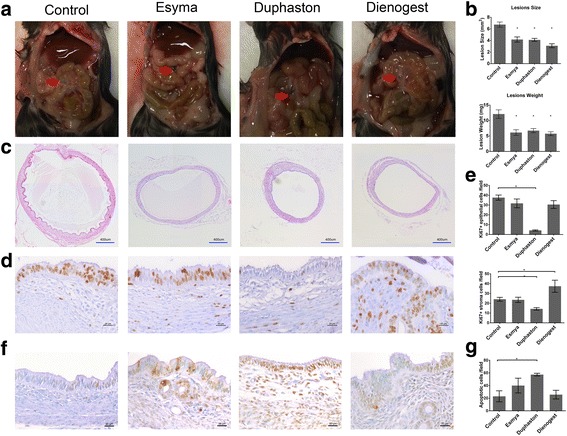
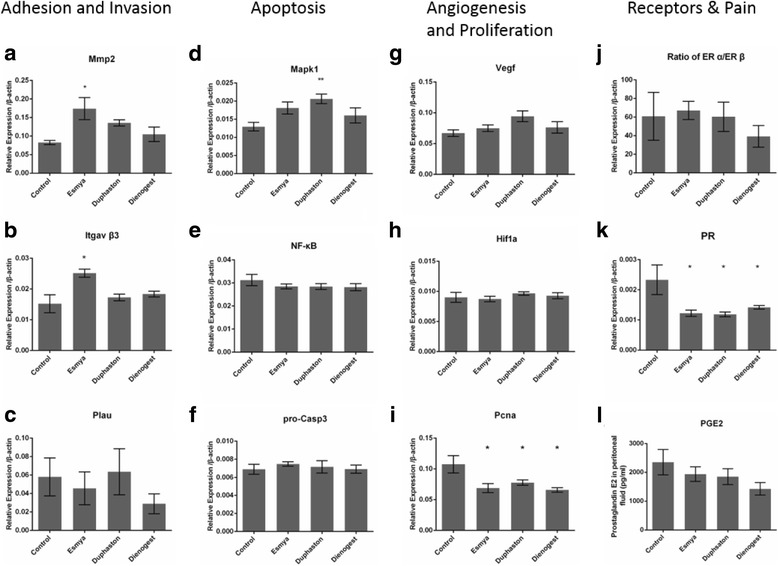
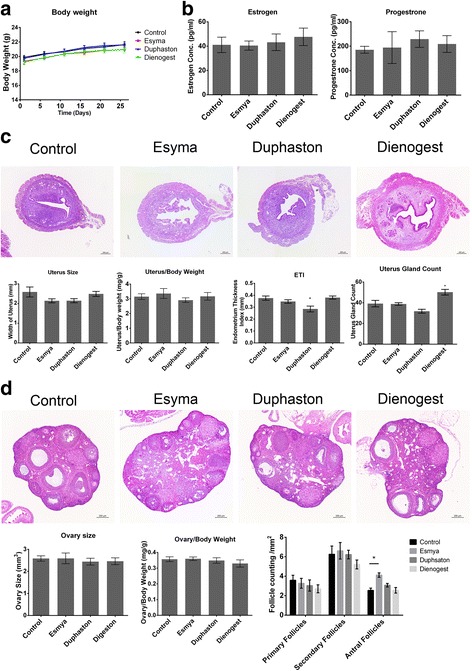
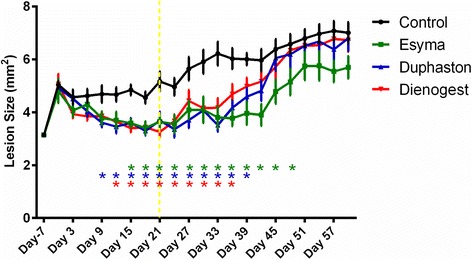
BACKGROUND: Current medical treatments for endometriosis are very limited. Progestin and selective progesterone receptor modulators (SPRM) are developed but their efficacy, safety, mechanism and recurrence in endometriosis are not fully studied. METHODS: In order to compare therapeutic, side effects and therapeutic actions of Esmya, Duphaston and Dienogest in endometriosis. Experimental endometriosis was induced by either intraperitoneal or subcutaneous mouse endometrium transplantation. Lesion size, weight and histology at the end of intervention were compared. Expression of related markers in the endometriotic lesions were examined. Body, uterus and ovary weights, endometrial glands and thickness (ETI), and follicle count were measured. For recurrent study, lesion growth before and after intervention was monitored. RESULTS: After Esmya, Duphaston, Dienogest treatment, lesion size and weight were significantly decreased. Proliferation Pcna expression was significantly decreased in all groups, but proliferation cells were significantly decreased only in Duphaston group. Apoptosis Mapk1 expression and TUNEL-positive cells were significantly increased in Duphaston group. Adhesion Mmp2 and Itgavβ3 expression were significantly increased in Esmya group. Plau, Hif1α and Vegfa expression, peritoneal fluid PGE2 levels, and ERα and ERβ expression were not affected; while PR expression was significantly lower in all groups. Endometrial gland count in uterus was significantly increased in Dienogest group, ETI was significantly decreased in Duphaston group, and AFC were significantly increased in Esmya group. Upon treatment cessation, lesion growth rebound quickly in Dienogest and Duphaston groups, but slowly in Esmya group. CONCLUSION: Esmya, Duphaston and Dienogest are effective anti-endometriosis drugs targeting proliferation, apoptosis and adhesion. Esmya, Duphaston and Dienogest are all well tolerable, although endometrial glandular hyperplasia was found in Dienogest, endometrial atrophy in Duphaston, follicle accumulation in Esmya.
Overview
The claims and statistics of this paper haven’t been checked yet.
Free: it reads the open-access text and checks the first 5 claims that cite a source we can check. Create a free account to check every claim.
Integrity signals
Registry
Cites
Statistics
Figures
Verification
Claims the paper makes
The claims and statistics of this paper haven’t been checked yet.
Free: it reads the open-access text and checks the first 5 claims that cite a source we can check. Create a free account to check every claim.
Claims other papers make about this one
Each is checked against this paper’s own text: does it say what the citing paper says it does?
The source backs part of the claim, not all of it — or backs it for a different population, condition or comparison.
In the citing paper
“UPA decreases lesion size, attenuates cell proliferation, and induces apoptosis in murine endometriosis models (Huniadi et al., 2013;Liang et al., 2018).”
From Endometriosis and nuclear receptors (2019) · cites this paper as Liang et al., 2018
Experimental — accuracy not yet measured
Self-check
Percentages, sums and reported differences re-computed from the paper’s own numbers.
The self-check needs the paper’s full text.
Citations
Cites
The Ki-67 protein: From the known and the unknown
Scholzen, T., & Gerdes, J. (2000) · Journal of Cellular Physiology · doi:10.1002/(sici)1097-4652(200003)182:3<311::aid-jcp1>3.0.co;2-9 · Cited by 4,646 · cited 1×
“Although cells proliferation markers Pcna and Ki67 specifically correlated with each other [55, 56], Ki67 positive cells in endometriotic lesions were significantly decreased in Duphaston group only.”
BackgroundThe ImageJ ecosystem: An open platform for biomedical image analysis
Schindelin, J., Rueden, C. T., Hiner, M. C., & Eliceiri, K. W. (2015) · Molecular Reproduction and Development · doi:10.1002/mrd.22489 · Cited by 2,636 · cited 1×
“Briefly, the area of endometrium (Ae) and uterus cavity (Auc) was measured using Image J [44].”
MethodSampson, J. A. (1927) · American Journal of Obstetrics and Gynecology · doi:10.1016/s0002-9378(15)30003-x · Cited by 2,334 · cited 1×
“characteristics of endometriotic lesions [4, 7].”
ESHRE guideline: management of women with endometriosis
Dunselman, G. A. J., Vermeulen, N., Becker, C., Calhaz-Jorge, C., D'Hooghe, T., De Bie, B., Heikinheimo, O., Horne, A. W., Kiesel, L., Nap, A., et al. (2014) · Human Reproduction · doi:10.1093/humrep/det457 · Cited by 2,211 · cited 1×
“Current available treatment of endometriosis, including removal surgery and hormonal medication [11], are still not ideal for reproductive women who would like to preserve their fecundity without any side-effect and recurrence.”
BackgroundPCNA, the Maestro of the Replication Fork
Moldovan, G.-L., Pfander, B., & Jentsch, S. (2007) · Cell · doi:10.1016/j.cell.2007.05.003 · Cited by 1,796 · cited 1×
“Although cells proliferation markers Pcna and Ki67 specifically correlated with each other [55, 56], Ki67 positive cells in endometriotic lesions were significantly decreased in Duphaston group only.”
BackgroundHall, P. A., Levison, D. A., Woods, A. L., Yu, C. C. ‐., Kellock, D. B., Watkins, J. A., Barnes, D. M., Gillett, C. E., Camplejohn, R., Dover, R., et al. (1990) · The Journal of Pathology · doi:10.1002/path.1711620403 · Cited by 1,438 · cited 1×
“Proliferating cell nuclear antigen (Pcna) is a protein associated with cell proliferation [42].”
BackgroundMitogen-activated protein kinases in apoptosis regulation
Wada, T., & Penninger, J. M. (2004) · Oncogene · doi:10.1038/sj.onc.1207556 · Cited by 1,432 · cited 1×
“Unlike caspase related apoptosis, Mapks involved in the pathophysiological process of endometrium decidualisation [52] and upregulated NF-κB p105 [53, 54].”
Background(1927) · PubMed Central · Cited by 1,008
Manual Hematoxylin and Eosin Staining of Mouse Tissue Sections
Cardiff, R. D., Miller, C. H., & Munn, R. J. (2014) · Cold Spring Harbor Protocols · doi:10.1101/pdb.prot073411 · Cited by 922 · cited 1×
“every 10th section to confirm the microscopic structures in the lesions, uterus and ovary [34].”
BackgroundBcl-2 prolongs cell survival after Bax-induced release of cytochrome c
Rossé, T., Olivier, R., Monney, L., Rager, M., Conus, S., Fellay, I., Jansen, B., & Borner, C. (1998) · Nature · doi:10.1038/35160 · Cited by 870 · cited 1×
“It has been shown that ulipristal acetate increased Bax/Bcl-2 ratio and cytochrome c expression [50] which activated capase-3 and increased apoptosis in the endometriotic lesions [51].”
BackgroundAnti-Mullerian Hormone Attenuates the Effects of FSH on Follicle Development in the Mouse Ovary
Durlinger, A. L. L., Gruijters, M. J. G., Kramer, P., Karels, B., Kumar, T. R., Matzuk, M. M., Rose, U. M., de Jong, F. H., Uilenbroek, J. T. J., Grootegoed, J. A., et al. (2001) · Endocrinology · doi:10.1210/en.142.11.4891 · Cited by 772
Methods for quantifying follicular numbers within the mouse ovary
Myers, M., Britt, K. L., Wreford, N. G. M., Ebling, F. J. P., & Kerr, J. B. (2004) · Reproduction · doi:10.1530/rep.1.00095 · Cited by 757 · cited 1×
“Follicle classification was based on morphological criteria: primary follicles were defined as follicles which contain oocyte surrounded by single layer of granulosa cells; secondary follicles were defined as follicles which contain oocyte with 2 or more layers of granulosa cells, and antral follicles were defined as…”
MethodRecurrence of endometriosis and its control
Guo, S.-W. (2009) · Human Reproduction Update · doi:10.1093/humupd/dmp007 · Cited by 719 · cited 1×
“5% at 2 years and 40–50% at 5 years [78].”
Ulipristal Acetate versus Placebo for Fibroid Treatment before Surgery
Donnez, J., Tatarchuk, T. F., Bouchard, P., Puscasiu, L., Zakharenko, N. F., Ivanova, T., Ugocsai, G., Mara, M., Jilla, M. P., Bestel, E., et al. (2012) · New England Journal of Medicine · doi:10.1056/nejmoa1103182 · Cited by 680
High prevalence of endometriosis in infertile women with normal ovulation and normospermic partners
Meuleman, C., Vandenabeele, B., Fieuws, S., Spiessens, C., Timmerman, D., & D'Hooghe, T. (2009) · Fertility and Sterility · doi:10.1016/j.fertnstert.2008.04.056 · Cited by 606
De Graaff, A. A., D'Hooghe, T. M., Dunselman, G. A. J., Dirksen, C. D., Hummelshoj, L., WERF EndoCost Consortium, Simoens, S., Bokor, A., Brandes, I., Brodszky, V., et al. (2013) · Human Reproduction · doi:10.1093/humrep/det284 · Cited by 473 · cited 1×
“pelvic pain, dysmenorrhea, dyspareunia and infertility [8], which have significant impacts on both general and mental health of afflicted individuals [9, 10].”
BackgroundBacci, M., Capobianco, A., Monno, A., Cottone, L., Di Puppo, F., Camisa, B., Mariani, M., Brignole, C., Ponzoni, M., Ferrari, S., et al. (2009) · The American Journal of Pathology · doi:10.2353/ajpath.2009.081011 · Cited by 458 · cited 1×
“The IP endometriosis model was established with minor modifications as described before [27, 28].”
MethodIsolation of Mouse Peritoneal Cavity Cells
Ray, A., & Dittel, B. N. (2010) · Journal of Visualized Experiments · doi:10.3791/1488 · Cited by 433 · cited 1×
“Peritoneal fluid was collected as method described before with some modifications [47].”
MethodKähäri, V.-M., & Saarialho-Kere, U. (1999) · Annals of Medicine · doi:10.3109/07853899909019260 · Cited by 408
NF-κB and cell-cycle regulation: the cyclin connection
JOYCE, D., ALBANESE, C., STEER, J., FU, M., BOUZAHZAH, B., & PESTELL, R. (2001) · Cytokine & Growth Factor Reviews · doi:10.1016/s1359-6101(00)00018-6 · Cited by 393
Regulation of NF-κB Activation by MAP Kinase Cascades
Schulze-Osthoff, K., Ferrari, D., Riehemann, K., & Wesselborg, S. (1997) · Immunobiology · doi:10.1016/s0171-2985(97)80025-3 · Cited by 385
Strowitzki, T., Marr, J., Gerlinger, C., Faustmann, T., & Seitz, C. (2010) · Human Reproduction · doi:10.1093/humrep/dep469 · Cited by 381
Endometriosis: The pathophysiology as an estrogen-dependent disease
Kitawaki, J., Kado, N., Ishihara, H., Koshiba, H., Kitaoka, Y., & Honjo, H. (2002) · The Journal of Steroid Biochemistry and Molecular Biology · doi:10.1016/s0960-0760(02)00260-1 · Cited by 370
Olive, D. L., & Pritts, E. A. (2001) · New England Journal of Medicine · doi:10.1056/nejm200107263450407 · Cited by 340
Chwalisz, K., Perez, M. C., DeManno, D., Winkel, C., Schubert, G., & Elger, W. (2005) · Endocrine Reviews · doi:10.1210/er.2005-0001 · Cited by 310 · cited 1×
“effects probably due to different effects of SPRMs and progestin [62].”
BackgroundZeitoun, K., Takayama, K., Sasano, H., Suzuki, T., Moghrabi, N., Andersson, S., Johns, A., Meng, L., Putman, M., Carr, B., et al. (1998) · The Journal of Clinical Endocrinology & Metabolism · doi:10.1210/jcem.83.12.5301 · Cited by 308
Management of endometriomas in women requiring IVF: to touch or not to touch
Garcia-Velasco, J. A., & Somigliana, E. (2008) · Human Reproduction · doi:10.1093/humrep/den398 · Cited by 281 · cited 1×
“It affects around 10% of reproductive women, and up to 24–50% of infertile women [1, 2].”
BackgroundFuldeore, M. J., & Soliman, A. M. (2017) · Gynecologic and Obstetric Investigation · doi:10.1159/000452660 · Cited by 266 · cited 1×
“pelvic pain, dysmenorrhea, dyspareunia and infertility [8], which have significant impacts on both general and mental health of afflicted individuals [9, 10].”
BackgroundProgestins for symptomatic endometriosis: a critical analysis of the evidence
Vercellini, P., Cortesi, I., & Crosignani, P. G. (1997) · Fertility and Sterility · doi:10.1016/s0015-0282(97)00193-3 · Cited by 232 · cited 2×
“Some common side effects of progestin include, but not limit to hot flushes, irregular uterine bleeding, headache and weight gain [21, 57].”
BackgroundSivridis, E., Giatromanolaki, A., Gatter, K. C., Harris, A. L., Koukourakis, M. I., & for the Tumor and Angiogenesis Research Group (2002) · Cancer · doi:10.1002/cncr.10774 · Cited by 218
Efficacy and safety of repeated use of ulipristal acetate in uterine fibroids
Donnez, J., Hudecek, R., Donnez, O., Matule, D., Arhendt, H.-J., Zatik, J., Kasilovskiene, Z., Dumitrascu, M. C., Fernandez, H., Barlow, D. H., et al. (2015) · Fertility and Sterility · doi:10.1016/j.fertnstert.2014.10.038 · Cited by 216 · cited 2×
“SPRMs have similar side effects, like hot flushes, headache and nausea, but SPRMs significantly reduce abnormal uterine bleeding in uterine fibroid [58].”
BackgroundCasper, R. F. (2017) · Fertility and Sterility · doi:10.1016/j.fertnstert.2017.01.003 · Cited by 205 · cited 1×
“Dienogest is another progestin derived from 19- nortestosterone [18], which have been used to relief symptoms of endometriosis [20].”
Integrin-mediated activation of latent transforming growth factor β
Sheppard, D. (2005) · Cancer and Metastasis Reviews · doi:10.1007/s10555-005-5131-6 · Cited by 204 · cited 1×
“Integrins αV β3 (Itgav β3) is an adhesion molecule that functions in both cell–cell and cell–substratum adhesion [37].”
BackgroundBrache, V., Cochon, L., Jesam, C., Maldonado, R., Salvatierra, A. M., Levy, D. P., Gainer, E., & Croxatto, H. B. (2010) · Human Reproduction · doi:10.1093/humrep/deq157 · Cited by 171 · cited 1×
“The accumulation of antral follicles may be related to delay in follicular rupture induced by ulipristal acetate [49, 77].”
BackgroundAnti-angiogenic treatment strategies for the therapy of endometriosis
Laschke, M. W., & Menger, M. D. (2012) · Human Reproduction Update · doi:10.1093/humupd/dms026 · Cited by 153
Brache, V., Cochón, L., Deniaud, M., & Croxatto, H. B. (2013) · Contraception · doi:10.1016/j.contraception.2013.05.010 · Cited by 146 · cited 2×
“Esmya as a new generation SPRM has been used to treat uterine fibroids and as an emergency contraceptive [48, 49], but it is not yet used for treatment of endometriosis.”
BackgroundPossible Pathophysiological Roles of Mitogen‐Activated Protein Kinases (MAPKs) in Endometriosis
Yoshino, O., Osuga, Y., Hirota, Y., Koga, K., Hirata, T., Harada, M., Morimoto, C., Yano, T., Nishii, O., Tsutsumi, O., et al. (2004) · American Journal of Reproductive Immunology · doi:10.1111/j.1600-0897.2004.00231.x · Cited by 133 · cited 1×
“Unlike caspase related apoptosis, Mapks involved in the pathophysiological process of endometrium decidualisation [52] and upregulated NF-κB p105 [53, 54].”
BackgroundThe role of NF-κB/IκB proteins in cancer: implications for novel treatment strategies
Schwartz, S. A., Hernandez, A., & Mark Evers, B. (1999) · Surgical Oncology · doi:10.1016/s0960-7404(00)00012-8 · Cited by 132
Wang, C. C., Xu, H., Man, G. C. W., Zhang, T., Chu, K. O., Chu, C. Y., Cheng, J. T. Y., Li, G., He, Y., Qin, L., et al. (2012) · Angiogenesis · doi:10.1007/s10456-012-9299-4 · Cited by 125 · cited 1×
“C57BL/6 mice were used to establish SC endometriosis mouse model as described before [30, 31].”
MethodSelf-citationAnti-angiogenic effects of green tea catechin on an experimental endometriosis mouse model
Xu, H., Lui, W. T., Chu, C. Y., Ng, P. S., Wang, C. C., & Rogers, M. S. (2008) · Human Reproduction · doi:10.1093/humrep/den417 · Cited by 122 · cited 2×
“The endometriotic lesion growth was determined by measuring longest length and perpendicular width of the lesions every 3 days in SC model and at the end of intervention in IP model using caliper as described before [31].”
MethodSelf-citationTheories on the pathogenesis of endometriosis
van der Linden, P. J. Q. (1996) · Human Reproduction · doi:10.1093/humrep/11.suppl_3.53 · Cited by 116
Overton, C. E., Lindsay, P., Johal, B., Collins, S. A., Siddle, N., Shaw, R. W., & Barlow, D. H. (1994) · Fertility and Sterility · doi:10.1016/s0015-0282(16)56991-x · Cited by 105
Life after a diagnosis with endometriosis ‐ a 15 years follow‐up study
FAGERVOLD, B., JENSSEN, M., HUMMELSHOJ, L., & MOEN, M. H. (2009) · Acta Obstetricia et Gynecologica Scandinavica · doi:10.1080/00016340903108308 · Cited by 104 · cited 1×
“pelvic pain, dysmenorrhea, dyspareunia and infertility [8], which have significant impacts on both general and mental health of afflicted individuals [9, 10].”
BackgroundOkada, H. (2001) · Molecular Human Reproduction · doi:10.1093/molehr/7.4.341 · Cited by 104 · cited 2×
“In contrast to the previous publication [22], Dienogest significantly increased Ki67 cells in the stromal cells but significantly decreased Pcna expression in endometriotic lesions.”
BackgroundResultMetalloproteases and urokinase in angiogenesis and tumor progression.
Rabbani, S. A. (1998) · PubMed · Cited by 99
In vivo mechanisms of uterine myoma volume reduction with ulipristal acetate treatment
Courtoy, G. E., Donnez, J., Marbaix, É., & Dolmans, M. (2015) · Fertility and Sterility · doi:10.1016/j.fertnstert.2015.04.025 · Cited by 94 · cited 1×
“Esmya can reduce the volume of uterine fibroid by inhibiting proliferation and increasing apoptosis [16, 17].”
BackgroundGoteri, G., Lucarini, G., Montik, N., Zizzi, A., Stramazzotti, D., Fabris, G., Tranquilli, A. L., & Ciavattini, A. (2009) · International Journal of Gynecological Pathology · doi:10.1097/pgp.0b013e318182c2be · Cited by 88
Klipping, C., Duijkers, I., Remmers, A., Faustmann, T., Zurth, C., Klein, S., & Schuett, B. (2012) · The Journal of Clinical Pharmacology · doi:10.1177/0091270011423664 · Cited by 83 · cited 2×
“Although Dienogest can be used as contraceptive medication, Dienogest showed no significant effect on endometrium in short term treatment in our study and ovulation inhibition could be reversed by stopping intervention in another study [74].”
BackgroundEndometrial preparation with Dienogest before hysteroscopic surgery: a systematic review
Laganà, A. S., Vitale, S. G., Muscia, V., Rossetti, P., Buscema, M., Triolo, O., Rapisarda, A. M. C., Giunta, L., Palmara, V. I., Granese, R., et al. (2016) · Archives of Gynecology and Obstetrics · doi:10.1007/s00404-016-4244-1 · Cited by 77
Whitaker, L. H. R., Murray, A. A., Matthews, R., Shaw, G., Williams, A. R. W., Saunders, P. T. K., & Critchley, H. O. D. (2017) · Human Reproduction · doi:10.1093/humrep/dew359 · Cited by 77 · cited 1×
“Due to the progesterone antagonist effect of SPRMs, it is well known that ulipristal acetate can induce the progesterone receptor modulator associated endometrial changes (PEAC) [67], but no significant change in endometrial morphology was observed in Esmya group in our study.”
Mouse Model of Surgically-induced Endometriosis by Auto-transplantation of Uterine Tissue
Pelch, K. E., Sharpe-Timms, K. L., & Nagel, S. C. (2012) · Journal of Visualized Experiments · doi:10.3791/3396 · Cited by 75 · cited 2×
“It has been reported that both of IP and SC model exhibits similar development of endometriosis in respect with the cyst-like growth, and glandular and epithelial structures of the lesions [27, 29].”
BackgroundMethodSurgery versus hormonal therapy for deep endometriosis: is it a choice of the physician?
Berlanda, N., Somigliana, E., Frattaruolo, M. P., Buggio, L., Dridi, D., & Vercellini, P. (2017) · European Journal of Obstetrics & Gynecology and Reproductive Biology · doi:10.1016/j.ejogrb.2016.07.513 · Cited by 74
Successful heterotransplantation of human endometrium in SCID mice.
Aoki, D., Katsuki, Y., Shimizu, A., Kakinuma, C., & Nozawa, S. (1994) · PubMed · Cited by 71
Dienogest, a synthetic steroid, suppresses both embryonic and tumor-cell-induced angiogenesis
Nakamura, M., Katsuki, Y., Shibutani, Y., & Oikawa, T. (1999) · European Journal of Pharmacology · doi:10.1016/s0014-2999(99)00765-7 · Cited by 63
Signorile, P. G., & Baldi, A. (2015) · The International Journal of Biochemistry & Cell Biology · doi:10.1016/j.biocel.2014.12.019 · Cited by 53 · cited 1×
“All the pharmacological treatments used are able to control the symptoms but not effectively treating the condition [79].”
BackgroundMakabe, T., Koga, K., Miyashita‐Ishiwata, M., Takeuchi, A., Sue, F., Taguchi, A., Urata, Y., Izumi, G., Takamura, M., Harada, M., et al. (2016) · Journal of Reproductive Immunology · doi:10.1016/j.jri.2016.12.002 · Cited by 51
Metoclopramide-Induced Hyperprolactinemia Affects Mouse Endometrial Morphology
Rossi, A. G. Z., Soares, J. M., Motta, E. L. A., Simões, M. D. J., Oliveira-Filho, R. M., Haidar, M. A., de Lima, G. R., & Baracat, E. C. (2002) · Gynecologic and Obstetric Investigation · doi:10.1159/000068380 · Cited by 49 · cited 1×
“Endometrium thickness index (ETI) was evaluated as the method described before with some modifications [43].”
MethodNagata, C., Yanagida, S., Okamoto, A., Morikawa, A., Sugimoto, K., Okamoto, S., Ochiai, K., & Tanaka, T. (2012) · Journal of obstetrics and gynaecology research · doi:10.1111/j.1447-0756.2011.01778.x · Cited by 44 · cited 1×
“Ulipristal acetate can control irregular bleeding by inducing amenorrhea [58, 63, 64] while Dienogest may cause irregular uterine bleeding unless cyclic administration or combine estradiol valerate treatment [65, 66].”
BackgroundOliveira, C. R. P., Salvatori, R., Nóbrega, L. M. A., Carvalho, E. O. M., Menezes, M., Farias, C. T., Britto, A. V. D. O., Pereira, R. M. C., & Aguiar-Oliveira, M. H. (2008) · Clinical Endocrinology · doi:10.1111/j.1365-2265.2007.03148.x · Cited by 44 · cited 1×
“Ovaries was considered as ellipsoid and the ovary size was measured and calculated according to formula [33]: 1/6 π × length × width × thickness (mm(3)).”
MethodRelationship between sonographic endometrial thickness and progestin-induced withdrawal bleeding
Nakamura, S., Douchi, T., Oki, T., Ijuin, H., YAMAMOTO, S., & NAGATA, Y. (1996) · Obstetrics and Gynecology · doi:10.1016/0029-7844(96)00016-6 · Cited by 41
Jesam, C., Cochón, L., Salvatierra, A. M., Williams, A. R. W., Kapp, N., Levy-Gompel, D., & Brache, V. (2016) · Contraception · doi:10.1016/j.contraception.2015.12.015 · Cited by 38
Effect and safety of high-dose dienogest (20 mg/day) in the treatment of women with endometriosis
Schindler, A. E., Henkel, A., Moore, C., & Oettel, M. (2010) · Archives of Gynecology and Obstetrics · doi:10.1007/s00404-009-1301-z · Cited by 36
Huniadi, C. A., Pop, O. L., Antal, T. A., & Stamatian, F. (2013) · European Journal of Obstetrics & Gynecology and Reproductive Biology · doi:10.1016/j.ejogrb.2013.03.022 · Cited by 35 · cited 2×
“It has been shown that ulipristal acetate increased Bax/Bcl-2 ratio and cytochrome c expression [50] which activated capase-3 and increased apoptosis in the endometriotic lesions [51].”
BackgroundMethodEsber, N., Billan, F. L., Resche-Rigon, M., Loosfelt, H., Lombès, M., & Chabbert‐Buffet, N. (2015) · PLoS ONE · doi:10.1371/journal.pone.0140795 · Cited by 32 · cited 1×
“Esmya can reduce the volume of uterine fibroid by inhibiting proliferation and increasing apoptosis [16, 17].”
BackgroundEfficacy of Dienogest in Thinning the Endometrium Before Hysteroscopic Surgery
Kodama, M., Onoue, M., Otsuka, H., Yada-Hashimoto, N., Saeki, N., Kodama, T., Wakasa, T., & Funato, T. (2013) · Journal of Minimally Invasive Gynecology · doi:10.1016/j.jmig.2013.04.020 · Cited by 31
Study of dienogest for dysmenorrhea and pelvic pain associated with endometriosis
Kim, S. A., Um, M. J., Kim, H. K., Kim, S. J., Moon, S. J., & Jung, H. (2016) · Obstetrics & Gynecology Science · doi:10.5468/ogs.2016.59.6.506 · Cited by 30
Endrikat, J., Parke, S., Trummer, D., Serrani, M., Duijkers, I. J. M., & Klipping, C. (2012) · Contraception · doi:10.1016/j.contraception.2012.07.008 · Cited by 27 · cited 1×
“fective progestins that can be used as oral contraceptive with different ovulation inhibitory effects [75, 76].”
BackgroundMicks, E., & Jensen, J. T. (2012) · Advances in Therapy · doi:10.1007/s12325-012-0071-3 · Cited by 18 · cited 1×
“Ulipristal acetate can control irregular bleeding by inducing amenorrhea [58, 63, 64] while Dienogest may cause irregular uterine bleeding unless cyclic administration or combine estradiol valerate treatment [65, 66].”
BackgroundYlänen, K., Laatikainen, T., Lähteenmäki, P., & Moo-Young, A. J. (2003) · Acta Obstetricia Et Gynecologica Scandinavica · doi:10.1034/j.1600-0412.2003.00054.x · Cited by 18 · cited 1×
“Some common side effects of progestin include, but not limit to hot flushes, irregular uterine bleeding, headache and weight gain [21, 57].”
BackgroundHistology and ultrastructure of human endometriotic tissues treated with dydrogesterone (Duphaston)
Cornillie, F. J., Puttemans, P., & Brosens, I. A. (1987) · European Journal of Obstetrics & Gynecology and Reproductive Biology · doi:10.1016/0028-2243(87)90008-6 · Cited by 16 · cited 1×
“There is no conclusive evidence to support its therapeutic use in endometriosis [13, 19].”
BackgroundBergeron, C., & Fox, H. (2000) · Gynecological Endocrinology · doi:10.3109/09513590009167694 · Cited by 15
Quéreux, C., Pornel, B., Bergeron, C., & Ferenczy, A. S. (2005) · Maturitas · doi:10.1016/j.maturitas.2005.05.015 · Cited by 14
Histomorphological changes in endometriosis in a patient treated with ulipristal: A case report
Bateman, J., Bougie, O., Singh, S. S., & Islam, S. (2016) · Pathology - Research and Practice · doi:10.1016/j.prp.2016.10.010 · Cited by 13
Use of the new progestogens in contraception and gynaecology
Mansour, D. (2006) · The Obstetrician & Gynaecologist · doi:10.1576/toag.8.4.229.27272 · Cited by 11 · cited 2×
“Dienogest is another progestin derived from 19- nortestosterone [18], which have been used to relief symptoms of endometriosis [20].”
BackgroundUse of Ulipristal Acetate for the Management of Fibroid-Related Acute Abnormal Uterine Bleeding
Arendas, K., & Leyland, N. A. (2016) · Journal of Obstetrics and Gynaecology Canada · doi:10.1016/j.jogc.2015.11.005 · Cited by 10 · cited 1×
“Ulipristal acetate can control irregular bleeding by inducing amenorrhea [58, 63, 64] while Dienogest may cause irregular uterine bleeding unless cyclic administration or combine estradiol valerate treatment [65, 66].”
BackgroundPreoperative dienogest to improve the surgical field of view in resectoscopic surgery
Tsuchiya, T., Katagiri, Y., Maemura, T., Hayata, E., Fukuda, Y., Kitamura, M., & Morita, M. (2015) · Gynecology and Minimally Invasive Therapy · doi:10.1016/j.gmit.2015.01.011 · Cited by 8 · cited 2×
“However, the exact mechanism of Dienogest on endometriotic lesion growth and development is still unclear and the controversial effect on endometrium thickness has been noted [26].”
BackgroundApplication of ulipristal acetate in female patients with uterine fibroids.
Grzechocińska, B., Gadomska, H., Zyguła, A., & Wielgoś, M. (2014) · PubMed · Cited by 6
Matytsina, L., & Matytsina, L. (2015) · BMJ Case Reports · doi:10.1136/bcr-2014-209015 · Cited by 4 · cited 1×
“Ulipristal acetate can control irregular bleeding by inducing amenorrhea [58, 63, 64] while Dienogest may cause irregular uterine bleeding unless cyclic administration or combine estradiol valerate treatment [65, 66].”
BackgroundClaassen, V., Morsink, L., & de Wachter, A. M. (1971) · European Journal of Endocrinology · doi:10.1530/acta.0.0670551 · Cited by 3 · cited 3×
“fective progestins that can be used as oral contraceptive with different ovulation inhibitory effects [75, 76].”
Background
Research works printed but not linked: 1
- Rockville Guidance for industry: estimating the maximum safe starting dose in initial clinical trials for therapeutics in adult healthy volunteers Center for Drug Evaluation and Research (CDER) 2005
Cited by
Endometriosis and nuclear receptors
Yilmaz, B. D., & Bulun, S. E. (2019) · Human Reproduction Update · doi:10.1093/humupd/dmz005 · Cited by 243
“UPA decreases lesion size, attenuates cell proliferation, and induces apoptosis in murine endometriosis models (Huniadi et al., 2013; Liang et al., 2018).”
BackgroundReis, F. M., Coutinho, L. M., Vannuccini, S., Batteux, F., Chapron, C., & Petraglia, F. (2020) · Human Reproduction Update · doi:10.1093/humupd/dmaa009 · Cited by 166
“and development of endometriotic implants in mice (Liang et al., 2018).”
BackgroundInfluentialSelective Progesterone Receptor Modulators—Mechanisms and Therapeutic Utility
Islam, M. S., Afrin, S., Jones, S. I., & Segars, J. (2020) · Endocrine Reviews · doi:10.1210/endrev/bnaa012 · Cited by 143
“The antiendometriosis effect of UPA has been reported in female Wistar albino rats (329) and female C57BL/6 mice (330).”
BackgroundNew Therapeutics in Endometriosis: A Review of Hormonal, Non-Hormonal, and Non-Coding RNA Treatments
Brichant, G., Laraki, I., Henry, L., Munaut, C., & Nisolle, M. (2021) · International Journal of Molecular Sciences · doi:10.3390/ijms221910498 · Cited by 113
The role of mitogen‐activated protein kinase signaling pathway in endometriosis
Bora, G., & Yaba, A. (2021) · Journal of obstetrics and gynaecology research · doi:10.1111/jog.14710 · Cited by 80
Metadata
- Authors
- Liang, B., Wu, L., Xu, H., Cheung, C. W., Fung, W. Y., Wong, S. W., & Wang, C. C.
- Affiliations
- Chinese University of Hong Kong (HK)
- Corresponding author
- Wang, Chi Chiu
- Venue
- Reproductive Biology and Endocrinology
- Published
- 2018-04-03
- Volume
- 16
- Issue
- 1
- Pages
- 32-32
- ISSN
- 1477-7827 (ISSN-L)
- PMC
- PMC5883298
- OpenAlex
- W2796429112
- Cited by
- 41
- References
- 80
- Citations by year
- 2026: 3 · 2025: 4 · 2024: 3 · 2023: 2 · 2022: 6 · 2021: 14 · 2020: 4 · 2019: 4 · 2018: 1
- FWCI
- 6.13
- Type
- journal article
- Language
- en
- Open access
- gold
- doi.org
- Licence
- cc-by
- creativecommons.org/licenses/by/4.0/ (tdm)
- Locations
- Reproductive Biology and Endocrinology (publishedVersion, cc-by)
- PubMed Central (publishedVersion, cc-by)
- PubMed (publishedVersion)
- DOAJ (DOAJ: Directory of Open Access Journals) (submittedVersion, cc-by-sa)
- Topics
- Health Sciences › Medicine › Reproductive Medicine › Endometriosis Research and Treatment
- Health Sciences › Medicine › Obstetrics and Gynecology › Ectopic Pregnancy Diagnosis and Management
- Health Sciences › Medicine › Obstetrics and Gynecology › Endometrial and Cervical Cancer Treatments
- Keywords
- endometriosis, progestins, selective progesterone receptor modulators, dienogest, endometriosis recurrence, endometriotic lesion growth, apoptosis, cell proliferation, adhesion molecules, follicle count, mouse model of endometriosis
- MeSH terms
- Animals, Atrophy, Dydrogesterone, Endometrial Hyperplasia, Endometriosis, Endometrium, Female, Mice, Inbred C57BL, Nandrolone, Norpregnadienes, Progestins, Receptors, Progesterone, Recurrence, Apoptosis, Cell Proliferation, Mice
About these checks
Registry, retraction, Cites and statistics results are computed, not judged, with one exception: a printed reference that no index lists is read once by a model before it counts as a citation error. Claims are extracted by a model and kept only when their quote appears verbatim in the text; each cited source is then checked, with a model’s help, for whether it says what the claim relies on. Those verdicts can be wrong — read the claim’s quote and the cited source before relying on one.
Statistics and arithmetic are recomputed, not judged.
Confidence bands are shown only for fields calibrated on our annotated test set. None is calibrated yet, so no band is shown.
What counts as a claim ›How we measure confidence ›How we check this ›
Are you an author, or do you see a problem with this page? Request a review
Data sources
Bibliographic data: Semantic Scholar, OpenAlex, Crossref.
Contains information from the Semantic Scholar Academic Graph Datasets, made available under the ODC Attribution License (ODC-BY 1.0).
Semantic Scholar’s data is described in: Kinney, R., et al. (2023). The Semantic Scholar Open Data Platform. arXiv:2301.10140.
