

An integrated multi-tissue approach for endometriosis candidate biomarkers: a systematic review
Open accessThe DOI matches its Crossref record; 139 of the 140 references it cites were found in a registry or an index.
Abstract
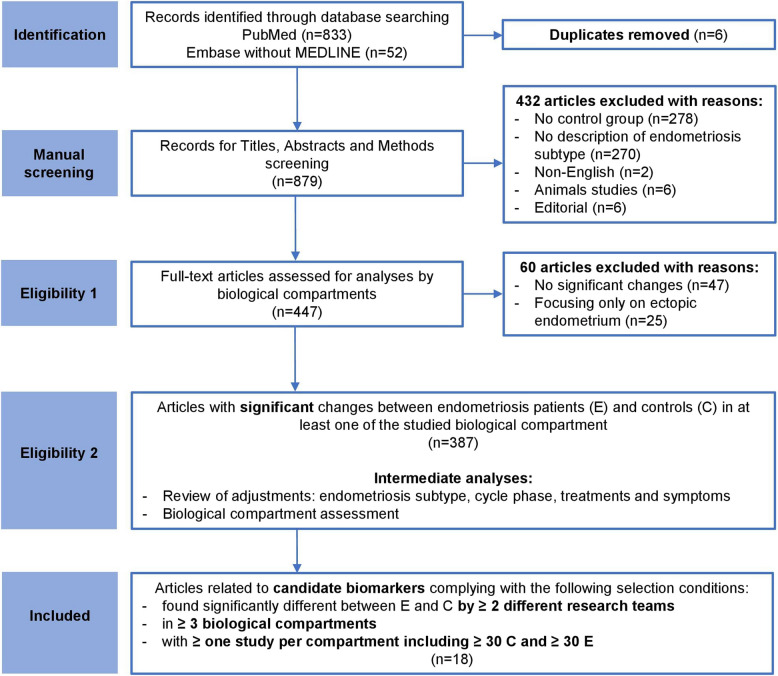
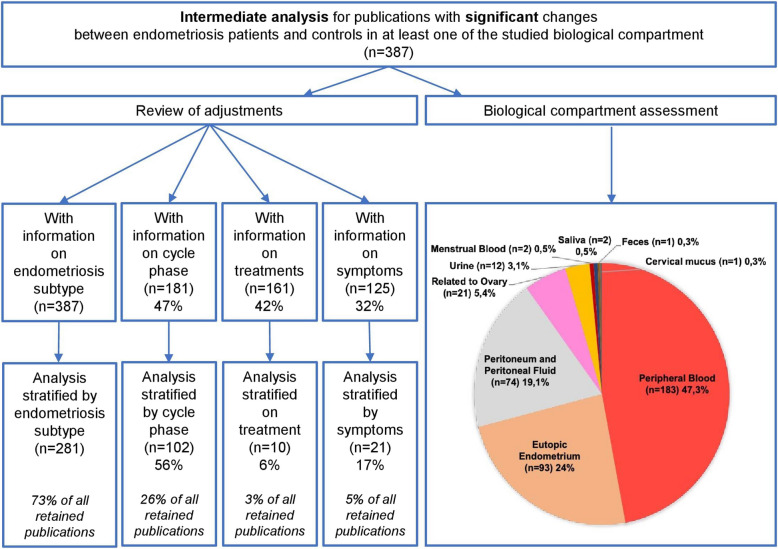
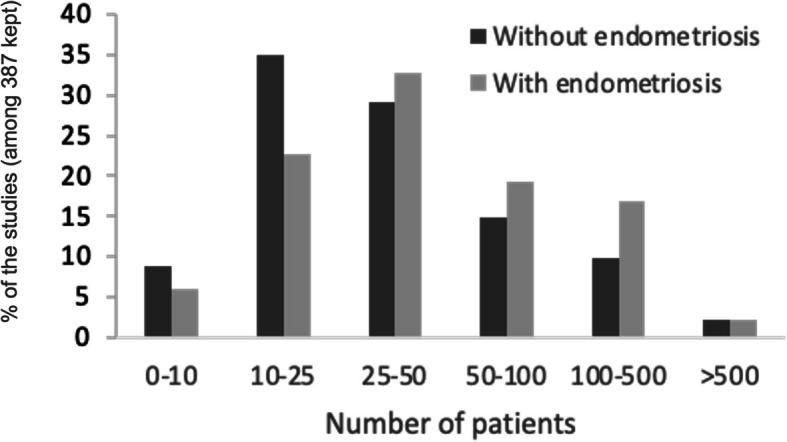
Biomarker identification could help in deciphering endometriosis pathophysiology in addition to their use in the development of non invasive diagnostic and prognostic approaches, that are essential to greatly improve patient care. Despite extensive efforts, no single potential biomarker or combination has been clinically validated for endometriosis. Many studies have investigated endometriosis-associated biological markers in specific tissues, but an integrative approach across tissues is lacking. The aim of this review is to propose a comprehensive overview of identified biomarkers based on tissue or biological compartment, while taking into account endometriosis phenotypes (superficial, ovarian or deep, or rASRM stages), menstrual cycle phases, treatments and symptoms. We searched PubMed and Embase databases for articles matching the following criteria: 'endometriosis' present in the title and the associated term 'biomarkers' found as Medical Subject Headings (MeSH) terms or in all fields. We restricted to publications in English and on human populations. Relevant articles published between 01 January 2005 (when endometriosis phenotypes start to be described in papers) and 01 September 2022 were critically analysed and discussed. Four hundred forty seven articles on endometriosis biomarkers that included a control group without endometriosis and provided specific information on endometriosis phenotypes are included in this review. Presence of information or adjustment controlling for menstrual cycle phase, symptoms and treatments is highlighted, and the results are further summarized by biological compartment. The 9 biological compartments studied for endometriosis biomarker research are in order of frequency: peripheral blood, eutopic endometrium, peritoneal fluid, ovaries, urine, menstrual blood, saliva, feces and cervical mucus. Adjustments of results on disease phenotypes, cycle phases, treatments and symptoms are present in 70%, 29%, 3% and 6% of selected articles, respectively. A total of 1107 biomarkers were identified in these biological compartments. Of these, 74 were found in several biological compartments by at least two independent research teams and only 4 (TNF-a, MMP-9, TIMP-1 and miR-451) are detected in at least 3 tissues with cohorts of 30 women or more. Integrative analysis is a crucial step to highlight potential pitfalls behind the lack of success in the search for clinically relevant endometriosis biomarkers, and to illuminate the physiopathology of this disease. Graphical Abstract
Overview
The claims and statistics of this paper haven’t been checked yet.
Free: it reads the open-access text and checks the first 5 claims that cite a source we can check. Create a free account to check every claim.
Integrity signals
Registry
Cites
Statistics
Figures
Verification
Claims the paper makes
The claims and statistics of this paper haven’t been checked yet.
Free: it reads the open-access text and checks the first 5 claims that cite a source we can check. Create a free account to check every claim.
Claims other papers make about this one
Each is checked against this paper’s own text: does it say what the citing paper says it does?
The source backs part of the claim, not all of it — or backs it for a different population, condition or comparison.
In the citing paper
“Proposed blood biomarkers for endometriosis include the glycoprotein CA-125, inflammatory cytokines (eg, IL-6, IL-8, TNF-α, and MCP-1 [CCL2]), and the pro-angiogenic factor VEGF.22,23 However, these markers lack specificity and have not been validated in larger studies.”
From Steroid hormone profiling reveals altered adrenal androgen production in endometriosis (2026) · cites this paper as [22]
Experimental — accuracy not yet measured
Self-check
Percentages, sums and reported differences re-computed from the paper’s own numbers.
The self-check needs the paper’s full text.
Citations
Cites
The PRISMA 2020 statement: An updated guideline for reporting systematic reviews
Page, M. J., McKenzie, J. E., Bossuyt, P. M., Boutron, I., Hoffmann, T. C., Mulrow, C. D., Shamseer, L., Tetzlaff, J. M., Akl, E. A., Brennan, S. E., et al. (2021) · BMJ · doi:10.1136/bmj.n71 · Cited by 108,283
Zondervan, K. T., Becker, C. M., & Missmer, S. A. (2020) · New England Journal of Medicine · doi:10.1056/nejmra1810764 · Cited by 2,249
Endometriosis is a chronic systemic disease: Clinical challenges and novel innovations
Taylor, H. S., Kotlyar, A. M., & Flores, V. A. (2021) · The Lancet · doi:10.1016/s0140-6736(21)00389-5 · Cited by 1,425 · cited 2×
“Endo-metriosis is increasingly considered as a systemic disease rather than a pelvic pathology [5].”
BackgroundAngiogenesis and Inflammation in Peritoneal Dialysis: The Role of Adipocytes
Shi, J., Yu, M., & Sheng, M. (2017) · Kidney and Blood Pressure Research · doi:10.1159/000476017 · Cited by 1,403
Rethinking mechanisms, diagnosis and management of endometriosis
Chapron, C., Marcellin, L., Borghese, B., & Santulli, P. (2019) · Nature Reviews Endocrinology · doi:10.1038/s41574-019-0245-z · Cited by 1,084 · cited 1×
“Currently, patient management practices promote non-invasive diagnostic methods such as transvaginal ultrasonography and magnetic resonance imaging (MRI) [3].”
Self-citationEndometriosis: Etiology, pathobiology, and therapeutic prospects
Saunders, P. T. K., & Horne, A. W. (2021) · Cell · doi:10.1016/j.cell.2021.04.041 · Cited by 961 · cited 1×
“…with a wide range of symptoms and consequences: pelvic pain, severe pain during periods (dysmenorrhea), painful sex, painful urination (dysuria) and/or defecation (dyschesia), altern-ance of diarrhea/constipation, heavy menstrual bleeding, mood disorders, chronic fatigue and infertility [4].”
World Endometriosis Society consensus on the classification of endometriosis
Johnson, N. P., Hummelshoj, L., Adamson, G. D., Keckstein, J., Taylor, H. S., Abrao, M. S., Bush, D., Kiesel, L., Tamimi, R., Sharpe-Timms, K. L., et al. (2017) · Human Reproduction · doi:10.1093/humrep/dew293 · Cited by 664 · cited 3×
“A more accurate classification like ERZIAN scoring may allow for better discrimination between different disease phenotypes [2].”
InfluentialBlood biomarkers for the non-invasive diagnosis of endometriosis
Nisenblat, V., Bossuyt, P. M., Shaikh, R., Farquhar, C., Jordan, V., Scheffers, C. S., Mol, B. W. J., Johnson, N., & Hull, M. L. (2016) · Cochrane Database of Systematic Reviews · doi:10.1002/14651858.cd012179 · Cited by 376
Vitonis, A. F., Vincent, K., Rahmioglu, N., Fassbender, A., Buck Louis, G. M., Hummelshoj, L., Giudice, L. C., Stratton, P., Adamson, G. D., Becker, C. M., et al. (2014) · Fertility and Sterility · doi:10.1016/j.fertnstert.2014.07.1244 · Cited by 236 · cited 1×
“Access to these parameters will require harmonisation of data collection methods following recommendations of the EPHect project [139].”
Combination of the non-invasive tests for the diagnosis of endometriosis
Nisenblat, V., Prentice, L., Bossuyt, P. M., Farquhar, C., Hull, M. L., & Johnson, N. (2016) · Cochrane Database of Systematic Reviews · doi:10.1002/14651858.cd012281 · Cited by 224
Research works printed but not linked: 1
- Sahraei SS, Davoodi Asl F, Kalhor N, Sheykhhasan M, Fazaeli H, Moud SS, et al. A Comparative Study of Gene Expression in Menstrual Blood-Derived Stromal Cells between Endometriosis and Healthy Women. Xu H, éditeur. BioMed Research International. 2022;2022:1‑11. Disponible sur: https://www.hindawi.com/journals/bmri/2022/7053521/ PMC8766185 35059465 · DOI
Cited by
Endometriosis: Improvements and challenges in diagnosis and symptom management
Saunders, P. T. K., Whitaker, L. H. R., & Horne, A. W. (2024) · Cell Reports Medicine · doi:10.1016/j.xcrm.2024.101596 · Cited by 51
Nociplastic Pain in Endometriosis: A Scoping Review
Gentles, A., Goodwin, E., Bedaiwy, Y., Marshall, N., & Yong, P. J. (2024) · Journal of Clinical Medicine · doi:10.3390/jcm13247521 · Cited by 32
“Additionally, although recent evidence supports the use of biomarker identification in endometriosis pathology [113], we did not capture biomarker measures of nociplastic pain in this review.”
ACOG Clinical Practice Guideline No. 11: Diagnosis of Endometriosis
(2026) · Obstetrics and Gynecology · doi:10.1097/aog.0000000000006181 · Cited by 38
Diagnostic Value of Menstrual Blood Lipidomics in Endometriosis: A Pilot Study
Starodubtseva, N. L., Chagovets, V., Tokareva, A., Равилевна, Д. М., Kukaev, E., Novoselova, A., Евгеньевич, Ф. В., Pavlovich, S. V., & Sukhikh, G. T. (2024) · Biomolecules · doi:10.3390/biom14080899 · Cited by 22
Wang, F., Mu, G., Yu, Z., Qin, Z.-S., Zhao, X., Shi, Z.-A., Fan, X. D., Liu, L., Chen, Y., & Zhou, J. F. (2025) · Current Issues in Molecular Biology · doi:10.3390/cimb47020127 · Cited by 17
“The choice of biological sample type significantly influences expression patterns, as evidenced in endometriosis where miR-451 shows contrasting expression between plasma and lesion tissues [12].”
InfluentialKaspute, G., Bareikiene, E., Prentice, U., Uzielienė, I., Ramašauskaitė, D., & Ivaškienė, T. (2024) · Medicina · doi:10.3390/medicina60111866 · Cited by 17
Brennan, K., Vaičiulevičiūtė, R., Uzielienė, I., Pachaleva, J., Kasilovskienė, Ž., Piešinienė, L., Bernotienė, E., & Gee, M. M. M. (2025) · Scientific Reports · doi:10.1038/s41598-025-95818-w · Cited by 18
Al Hussaini, H. A. D., Alatawi, E. S. E., Shabani, J. A. J., Edhrabooh, M. I. H., Alhawaj, S. A. A., Almahfoodh, M. S., Alsamiri, H. Y., AlMaatoug, A. R., Hayderali, M. I. M., & Almousa, M. R. (2024) · Cureus · doi:10.7759/cureus.75590 · Cited by 9
Endometriosis: A new perspective on epigenetics and oxidative stress
Guan, Y., Chen, Y., Lin, R., Mo, T., Li, S., Cao, Y., Yin, T., Diao, L., & Li, Y. (2025) · Journal of Reproductive Immunology · doi:10.1016/j.jri.2025.104462 · Cited by 7
Endometriosis in Menopausal Women—A New Age Is Coming? Literature Review
Dinu, M.-D., Hamoud, B. H., Amza, M., Gorecki, G.-P., Sima, R., Gică, N., & Pleș, L. (2024) · Life · doi:10.3390/life14040485 · Cited by 13
“Moreover, when the transvaginal ultrasound scan is not conclusive, MRI has been proven to be useful for diagnosing endometrioma in the presence of an adnexal mass. MRI can also be used to explore the involvement of the ureter and to evaluate the anatomy in the case of expanded pelvic adhesions [39].”
BackgroundPrecision Therapeutic and Preventive Molecular Strategies for Endometriosis-Associated Infertility
Limam, I., Abdelkarim, M., Berjeb, K. K., Khrouf, M., Féki, A., Braham, M., & Chakroun, N. F. (2025) · International Journal of Molecular Sciences · doi:10.3390/ijms26167706 · Cited by 13
“Recent developments in high-throughput omics technologies—including proteomics, transcriptomics, and metabolomics—have accelerated the discovery of clinically relevant biomarkers [227].”
Identification of candidate microRNA biomarkers of endometriosis in different bodily fluids
Lyu, S., Li, Q., Gu, Z., Yan, H., Tang, X., Yl, D., Li, X. G., Wu, Y., Zhang, C., Xu, Y., et al. (2026) · Scientific Reports · doi:10.1038/s41598-026-37277-5 · Cited by 6
“In addition, most studies focus on a single biofluid --- most commonly blood or saliva --- which may limit the robustness and reproducibility of the findings 17 .”
Cosgriff, L., Mukker, A., Ford, C., & Tavcar, J. (2025) · International Journal of Gynecology & Obstetrics · doi:10.1002/ijgo.70412 · Cited by 9
“8,21,22 Additional limitations to the dissemination of this technology include a lack of independently validated studies, a strong dependence on laboratory techniques and quality control protocols, and variations in biomarker levels with hormonal and menstrual fluctuations.”
InfluentialMenstrual Effluent in the Pathogenesis and Diagnosis of Endometriosis—A Systematic Review
Watrowski, R., Kostov, S. G., Tsoneva, E., Schäfer, S. D., Sparić, R., Palumbo, M., Günther, V., Akšam, S. S., Yordanov, A. D., Chieppa, P., et al. (2026) · Diagnostics · doi:10.3390/diagnostics16050677 · Cited by 7
Omenge, H., Kempa, P. A., Jeong, J.-W., So, K. A., & Kim, T. H. (2026) · Endocrine Reviews · doi:10.1210/endrev/bnag019 · Cited by 8
Malik, H., Zamouri, S., Akkawi, S., Mehra, S., Mouaki, R., Sathyapalan, T., Nandakumar, M., Butler, A. E., & Atkin, S. L. (2025) · International Journal of Molecular Sciences · doi:10.3390/ijms26136485 · Cited by 4
“…for the condition [40] and, while there have been over 400 articles with control groups, only four (TNF-a, MMP-9, TIMP-1, and miR-451) are reported to be detected in at least three tissues [40], suggesting that further research on endothelial proteins needs to be explored in endometriosis.”
Derbaly, S. A. E., Mohamed, O. A., Ghanaym, N. M., Azmy, R. M., AbdElgayed, A. M., & Abbas, M. A. (2024) · Archives of Biochemistry and Biophysics · doi:10.1016/j.abb.2024.110152 · Cited by 4
Single-cell characterization of menstrual fluid at homeostasis and in endometriosisPreprint
Schwalie, P. C., Bafligil, C., Russeil, J., Zachara, M., Biočanin, M., Alpern, D., Aasna, E., Deplancke, B., Canny, G., & Gonçalves, Â. (2024) · eLife · doi:10.7554/elife.99558 · Cited by 3
Sanchez, S., Vegter, E. L., Parnas, M., Song, Y., Fazleabas, A. T., & Saha, D. (2025) · bioRxiv (Cold Spring Harbor Laboratory) · doi:10.1101/2025.06.03.657650 · Cited by 4
“In addition, we can achieve a sufficient sensitivity and specificity in comparison to other proposed biomarkers 16,23,24,26 .”
Brown, T. C., Banerjee, P., Dyce, P. W., Falkenberg, S. M., Rodning, S. P. P., & Diniz, W. J. S. (2026) · Frontiers in Genetics · doi:10.3389/fgene.2026.1794156 · Cited by 2
“Moreover, circulating biomarkers may provide insights into the functional status of other tissues, including reproductive organs (Brulport et al., 2024; Fujiwara, 2009).”
Do we want to know the enormity of women's severe menstrual disorders and chronic pelvic pain?
Canis, M. J. (2024) · Journal of Gynecology Obstetrics and Human Reproduction · doi:10.1016/j.jogoh.2024.102784 · Cited by 2
Kisspeptin and Endometriosis—Is There a Link?
Męczekalski, B., Nowicka, A., Bochynska, S., Szczęsnowicz, A., Bala, G., & Szeliga, A. (2024) · Journal of Clinical Medicine · doi:10.3390/jcm13247683 · Cited by 3
“At present Can In a recent systematic review, researchers comprehensively analyzed the available literature on endometriosis and its potential biomarkers [50].”
Tiniakou, I., Bafligil, C., Pérez-Moraga, R., Harden, S. L., Ribeiro-Volturo, S., Santana, A., Manzano, R. N., Suárez, M. A. S., Valle, M. T., Martínez-Zamora, M. Á., et al. (2026) · Communications Medicine · doi:10.1038/s43856-026-01641-3 · Cited by 2
“Even among these, sensitivity and speci fi city vary substantially depending on patient phenotype, menstrual cycle phase, and comorbidities, underscoring the complexity andheterogeneityofendometriosis 68,69 .”
Steroid hormone profiling reveals altered adrenal androgen production in endometriosis
Simitsidellis, I., Ainslie, R. J., Taylor, A. E., Gilligan, L. C., Shaheen, F., Blanke, S., Anderson, C., Hapangama, D., Arlt, W., Horne, A. W., et al. (2026) · European Journal of Endocrinology · doi:10.1093/ejendo/lvag109 · Cited by 1
“22,23 However, these markers lack specificity and have not been validated in larger studies.”
Li, H., Yang, M., Zhu, H., Wen, Z., He, Y., Li, R., Liu, L., Xing, J., & Yi, J. (2026) · International Immunopharmacology · doi:10.1016/j.intimp.2026.116393 · Cited by 1
Gomez, L. M. R., Alom, K. M., Nadalini, A., Hnit, S. S. T., Clark, B., Lyu, N., Hirani, R., Sloan‐Dennison, S., Laing, S., Rathmell, C., et al. (2026) · ACS Sensors · doi:10.1021/acssensors.5c04674 · Cited by 2
Marczuk, K. M., Mamala, M. B., Szuster, E., & Murawski, M. (2026) · Journal of Clinical Medicine · doi:10.3390/jcm15082891 · Cited by 1
“A transcriptomics-guided approach has highlighted several promising biomarkers for fluorescent imaging, paving the way for enhanced intraoperative detection and treatment of endometriosis [113,114].”
Stem cell therapy-based approaches in experimental endometriosis: a systematic review
Suárez-Carrasco, I., de Pedro, M. A., Pulido, M., Álvarez, V., Sanchez-Margallo, F. M., & López, E. (2026) · Reproductive Biology and Endocrinology · doi:10.1186/s12958-026-01553-w · Cited by 1
“Moreover, most of the analysed molecules have also been evaluated in clinical studies, showing significantly elevated expression levels in patients with endometriosis compared to healthy controls [50–53].”
Bai, S., Zhou, Z., & Zhan, H. (2026) · Diagnostics · doi:10.3390/diagnostics16111648 · Cited by 2
Qiao, J., Xiao, Y., Cheng, Y., Xu, W., Shu, J., & Li, S. (2026) · Clinical and Translational Medicine · doi:10.1002/ctm2.70717 · Cited by 1
“177 Therapeutically, the field remains at an early stage.”
Santhamma, B., Chacon, J. A., Deemer, E. M., Stary, D., Hernandez, S. A., Subramani, R., Lakshmanaswamy, R., Nickisch, K. J., Batra, S., & Nair, H. B. B. (2026) · Cancer Letters · doi:10.1016/j.canlet.2026.218845 · Cited by 1
Single-cell characterization of menstrual fluid at homeostasis and in endometriosisPreprint
Schwalie, P. C., Bafligil, C., Russeil, J., Zachara, M., Biočanin, M., Alpern, D., Aasna, E., Deplancke, B., Canny, G., & Gonçalves, Â. (2024) · eLife · doi:10.7554/elife.99558.1 · Cited by 6
Simitsidellis, I., Ainslie, R. J., Taylor, A., Gilligan, L. C., Shaheen, F., Blanke, S., Anderson, C., Hapangama, D. K., Arlt, W., Horne, A. W., et al. (2025) · medRxiv · doi:10.1101/2025.05.24.25328281 · Cited by 1
Single-cell characterization of menstrual fluid at homeostasis and in endometriosisPreprint
Schwalie, P. C., Bafligil, C., Russeil, J., Zachara, M., Biočanin, M., Alpern, D., Aasna, E., Deplancke, B., Canny, G., & Gonçalves, Â. (2024) · medRxiv · doi:10.1101/2024.05.06.24306766 · Cited by 1
Endometriosis: pathophysiology, market analysis, and research landscape
Bill, T., & Eva, S. (2024) · Journal of Applied Biotechnology & Bioengineering · doi:10.15406/jabb.2024.11.00366 · Cited by 1
Die Rolle von Blut- und Speicheltests für die Diagnostik von Endometriose
Psilopatis, I. (2025) · Frauenheilkunde up2date · doi:10.1055/a-2295-2312
Turgay, B., Özmen, B., Kılıçkıran, H., Şükür, Y. E., Sönmezer, M., Berker, B., Atabekoğlu, C. S., & Aytaç, R. (2025) · Frontiers in Endocrinology · doi:10.3389/fendo.2025.1624717
Dewi, R., Siregar, T. N., Sutriana, A., Wahyuni, S., & Armansyah, T. (2025) · Journal of Medicinal Plants · doi:10.61882/jmp.24.93.68
Fertility preservation in endometriosis: current strategies and outcomes
Bourdon, M., Fornelli, G., Maignien, C., Parpex, G., Marcellin, L., Melka, L., Patrat, C., Chapron, C., & Santulli, P. (2025) · Minerva Obstetrics and Gynecology · doi:10.23736/s2724-606x.25.05766-5
Self-citationTranscriptome profiling to identify blood biomarkers for peritoneal endometriosisPreprint
Pušić, M. N., Vižintin, A., Režen, T., Frangež, H. B., Wenzl, R. J., & Rižner, T. L. (2025) · medRxiv · doi:10.64898/2025.12.23.25342915
Velho, R. V., Schüßler, C. F., Strey, L., Weigel, S., Thomsen, S., Ebert, F., Pohl, J., Mechsner, S., & Maares, M. (2026) · International Journal of Molecular Sciences · doi:10.3390/ijms27021010 · Cited by 2
“…publications have reported elevated CA 125 levels in the serum and peritoneal fluid of patients with EM, these studies often included relatively small patient cohorts, and numerous other investigations have highlighted substantial variability and methodological limitations in these findings [30].”
Marcellin, L., Maignien, C., Bourdon, M., Chapron, C., & Santulli, P. (2026) · Elsevier eBooks · doi:10.1016/b978-0-443-13825-6.00298-3
Self-citationPATHOGENESIS OF ENDOMETRIOSIS: AN UMBRELLA REVIEW OF RECENT SYSTEMATIC REVIEWS AND META-ANALYSES
Dorota, A., Żywiec, W., Dorota, M., Karaban, K., Maryniak, N., & Rzeszutek, J. (2026) · International Journal of Innovative Technologies in Social Science · doi:10.31435/ijitss.1(49).2026.4983
Chernyak, M. M. (2026) · Український медичний часопис · doi:10.32471/umj.1680-3051.276765
Xu, H., Jiang, H., & Ma, C. (2026) · Clinical and Experimental Obstetrics & Gynecology · doi:10.31083/ceog47790
Paterson, E. S. J., Scheck, S. M., McDowell, S., Gill, R., Bedford, N., Girling, J. E., & Henry, C. E. (2026) · Journal of Endometriosis and Pelvic Pain Disorders · doi:10.1177/22840265261458937
Bing, X., Yao, J., Han, M., & Zhang, Y. (2026) · Molecular Biology Reports · doi:10.1007/s11033-026-12256-1
“For example, CCL2 and CCL5 may increase in endometriosis or pelvic inflammatory disease, which reduces their value as stand-alone cancer markers [42].”
The immune system and endometriosis
Munshi, H., Khan, T. F., Anand, S., & Gajbhiye, R. (2026) · Elsevier eBooks · doi:10.1016/b978-0-443-21987-0.00002-x
EDIL3 promotes apoptosis resistance through an integrin αvβ5-KLF2-CDC20 axis in endometriosis
Zhang, D., Zhu, J., Wu, P., Huang, Y., Wang, X., Peng, C., Zhou, Y., & Xue, Q. (2026) · Current Molecular Pharmacology · doi:10.1016/j.cmp.2026.09.004
EARLY DETECTION OF ENDOMETRIOSIS – A LITERATURE REVIEW OF DIAGNOSTIC METHODS AND FUTURE PERSPECTIVES
Harpula, I., Bębenek, N., Baljon, B., Bogdan, J., Ramotowski, R., Brzezicki, P., Frączkiewicz, P., Barszcz, G., Błądek, M., Drygała, K., et al. (2026) · International Journal of Innovative Technologies in Social Science · doi:10.31435/ijitss.3(51).2026.6129
Abuzar, W., Zubair, H., & Sajid, A. (2026) · INNOVAPATH · doi:10.63501/73tmpg67
“Step 2: Perform phenotype-sensitive imaging Expert TVUS should generally represent the first-line imaging approach where feasible, with MRI used when ultrasound is inconclusive, negative despite persistent symptoms, technically unsuitable, or when detailed anatomical mapping is required [1,4,8,10].”
InfluentialEndometriosis at the Molecular Crossroads: Pathways, Targets, and Emerging Therapeutic Strategies
Toczek, J., Major, K., Stojko, R., & Sadłocha, M. (2026) · Current Issues in Molecular Biology · doi:10.3390/cimb48101001
“This ambition is realistic in principle given the mechanistic heterogeneity documented throughout this review, but for every application described above, it remains substantially ahead of the validated biomarker infrastructure needed to put it into everyday practice [26,54].”
Influential
Metadata
- Authors
- Brulport, A., Bourdon, M., Vaiman, D., Drouet, C., Pocate-Cheriet, K., Bouzid, K., Marcellin, L., Santulli, P., Abo, C., Jeljeli, M., Chouzenoux, S., Chapron, C., Batteux, F., Berthelot, C., & Doridot, L.
- Affiliations
- Centre National de la Recherche Scientifique (FR)
- Corresponding author
- Brulport, Axelle
- ORCID
- Venue
- Reproductive Biology and Endocrinology
- Published
- 2024-02-10
- Volume
- 22
- Issue
- 1
- Pages
- 21-21
- ISSN
- 1477-7827 (ISSN-L)
- PMC
- PMC10858544
- OpenAlex
- W4391722388
- Semantic Scholar
- 8b0f4082cc8eff6872529df834aa956b9357177f
- Cited by
- 52
- References
- 140
- Citations by year
- 2026: 26 · 2025: 13 · 2024: 13
- FWCI
- 3.64
- Type
- journal article
- Language
- en
- Open access
- gold
- doi.org
- Licence
- cc-by
- creativecommons.org/licenses/by/4.0 (tdm)
- creativecommons.org/licenses/by/4.0 (vor)
- Locations
- Reproductive Biology and Endocrinology (publishedVersion, cc-by)
- PubMed Central (publishedVersion, cc-by)
- PubMed (publishedVersion)
- HAL (submittedVersion, cc-by)
- DOAJ (DOAJ: Directory of Open Access Journals) (submittedVersion)
- Funders
- European Research Council (ERC) under the European Union’s Horizon 2020 research and innovation programme (grant agreement No 851360)
- Topics
- Health Sciences › Medicine › Reproductive Medicine › Endometriosis Research and Treatment
- Health Sciences › Medicine › Obstetrics and Gynecology › Ectopic Pregnancy Diagnosis and Management
- Health Sciences › Medicine › Obstetrics and Gynecology › Gynecological conditions and treatments
- Keywords
- endometriosis, biomarkers, endometriosis phenotypes, superficial endometriosis, deep infiltrating endometriosis, endometrioma, peripheral blood biomarkers, eutopic endometrium, peritoneal fluid, urinary biomarkers, menstrual blood, saliva, feces, cervical mucus, menstrual cycle phases, treatment effects, endometriosis pathophysiology
- MeSH terms
- Endometriosis, Endometrium, Female, Humans, Prognosis, Biomarkers
About these checks
Registry, retraction, Cites and statistics results are computed, not judged, with one exception: a printed reference that no index lists is read once by a model before it counts as a citation error. Claims are extracted by a model and kept only when their quote appears verbatim in the text; each cited source is then checked, with a model’s help, for whether it says what the claim relies on. Those verdicts can be wrong — read the claim’s quote and the cited source before relying on one.
Statistics and arithmetic are recomputed, not judged.
Confidence bands are shown only for fields calibrated on our annotated test set. None is calibrated yet, so no band is shown.
What counts as a claim ›How we measure confidence ›How we check this ›
Are you an author, or do you see a problem with this page? Request a review
Data sources
Bibliographic data: Semantic Scholar, OpenAlex, Crossref.
Contains information from the Semantic Scholar Academic Graph Datasets, made available under the ODC Attribution License (ODC-BY 1.0).
Semantic Scholar’s data is described in: Kinney, R., et al. (2023). The Semantic Scholar Open Data Platform. arXiv:2301.10140.
