

New immunotherapy approaches for colorectal cancer: focusing on CAR-T cell, BiTE, and oncolytic viruses
Open accessThe DOI matches its Crossref record; 84 of the 84 references it cites were found in a registry or an index.
Abstract
Colorectal cancer is one of the most common causes of mortality worldwide. There are several potential risk factors responsible for the initiation and progression of colorectal cancer, including age, family history, a history of inflammatory bowel disease, and lifestyle factors such as physical activity and diet. For decades, there has been a vast amount of study on treatment approaches for colorectal cancer, which has led to conventional therapies such as chemotherapy, surgery, etc. Considering the high prevalence and incidence rate, scholars believe there is an urgent need for an alternative, more efficacious treatment with fewer adverse effects than the abovementioned treatments. Immunotherapy has emerged as a potential treatment alternative in a few years and has become one of the fastest-evolving therapeutic methods. Immunotherapy works by activating or enhancing the immune system’s power to identify and attack cancerous cells. This review summarizes the most crucial new immunotherapy methods under investigation for colorectal cancer treatment, including Immune checkpoint inhibitors, CAR-T cell therapy, BiTEs, Tumor-infiltrating lymphocytes, and Oncolytic virus therapy. Furthermore, this study discusses the application of combination therapy, precision medicine, biomarker discovery, overcoming resistance, and immune-related adverse effects.
Overview
The claims and statistics of this paper haven’t been checked yet.
Free: it reads the open-access text and checks the first 5 claims that cite a source we can check. Create a free account to check every claim.
Integrity signals
Registry
Cites
Statistics
Figures
Verification
Claims the paper makes
The claims and statistics of this paper haven’t been checked yet.
Free: it reads the open-access text and checks the first 5 claims that cite a source we can check. Create a free account to check every claim.
Self-check
Percentages, sums and reported differences re-computed from the paper’s own numbers.
The self-check needs the paper’s full text.
Citations
Cites
PD-1 and PD-L1 Immune Checkpoint Blockade to Treat Breast Cancer
Hartkopf, A. D., Taran, F.-A., Wallwiener, M., Walter, C. B., Krämer, B., Grischke, E.-M., & Brucker, S. Y. (2016) · Breast Care · doi:10.1159/000453569 · Cited by 30,845
Safety, activity, and immune correlates of anti–PD-1 antibody in cancer
Topalian, S. L., Hodi, F. S., Brahmer, J. R., Gettinger, S. N., Smith, D. C., McDermott, D. F., Powderly, J. D., Carvajal, R. D., Sosman, J. A., Atkins, M. B., et al. (2012) · New England Journal of Medicine · doi:10.1056/nejmoa1200690 · Cited by 12,628 · cited 1×
“Studies with immunomodulatory therapies show a high association between immunotherapy targets like PD-L1 and tumor-infiltrating T cells in response to this treatment combination [67].”
BackgroundCAR-T cell therapy: current limitations and potential strategies
Sterner, R. C., & Sterner, R. M. (2021) · Blood Cancer Journal · doi:10.1038/s41408-021-00459-7 · Cited by 2,926
Diagnosis and Treatment of Metastatic Colorectal Cancer: A Review
Biller, L. H., & Schrag, D. (2021) · JAMA · doi:10.1001/jama.2021.0106 · Cited by 2,604
Immunotherapy in colorectal cancer: Rationale, challenges and potential
Ganesh, K., Stadler, Z. K., Cercek, A., Mendelsohn, R. B., Shia, J., Segal, N. H., & Diaz, L. A. (2019) · Nature Reviews Gastroenterology & Hepatology · doi:10.1038/s41575-019-0126-x · Cited by 1,954 · cited 1×
“Ongoing clinical trials are examining the safety and efficacy of these new approaches, and the results of these studies may provide new treat-ment options for colorectal cancer patients who do not respond to current therapies [80].”
BackgroundCXCL9, CXCL10, CXCL11/CXCR3 axis for immune activation - a target for novel cancer therapy
Tokunaga, R., Zhang, W., Naseem, M., Puccini, A., Berger, M. D., Soni, S., McSkane, M., Baba, H., & Lenz, H.-J. (2018) · Cancer Treatment Reviews · doi:10.1016/j.ctrv.2017.11.007 · Cited by 1,627 · cited 1×
“Consequently, equipping OV with CXCL10 might be a tempting tactic to get around resistance to anti-PD1 therapy [62].”
BackgroundHerpes simplex virus infections
Whitley, R. J., & Roizman, B. (2001) · The Lancet · doi:10.1016/s0140-6736(00)04638-9 · Cited by 1,366
Le, D. T., Kim, T. W., Van Cutsem, E., Geva, R., Jäger, D., Hara, H., Burge, M., O’Neil, B., Kavan, P., Yoshino, T., et al. (2020) · Journal of Clinical Oncology · doi:10.1200/jco.19.02107 · Cited by 1,005 · cited 1×
“Patients with MSI-H/dMMR mCRC who received treatment with the anti-PD-1 drugs pembrolizumab or nivolumab experienced long-lasting anticancer effects, which led the Food and Drug Administration (FDA) to approve these medicines for use in MSI-H/dMMR CRC patients [15].”
BackgroundDiaz, L. A., Shiu, K.-K., Kim, T.-W., Jensen, B. V., Jensen, L. H., Punt, C., Smith, D., Garcia-Carbonero, R., Benavides, M., Gibbs, P., et al. (2022) · The Lancet Oncology · doi:10.1016/s1470-2045(22)00197-8 · Cited by 945
Effect of Colonoscopy Screening on Risks of Colorectal Cancer and Related Death
Bretthauer, M., Løberg, M., Wieszczy, P., Kalager, M., Emilsson, L., Garborg, K., Rupinski, M., Dekker, E., Spaander, M., Bugajski, M., et al. (2022) · New England Journal of Medicine · doi:10.1056/nejmoa2208375 · Cited by 817
High-grade glioma: ESMO Clinical Practice Guidelines for diagnosis, treatment and follow-up
Stupp, R., Brada, M., van den Bent, M. J., Tonn, J.-C., & Pentheroudakis, G. (2014) · Annals of Oncology · doi:10.1093/annonc/mdu050 · Cited by 772
Casali, P. G., Bielack, S., Abecassis, N., Aro, H. T., Bauer, S., Biagini, R., Bonvalot, S., Boukovinas, I., Bovee, J. V. M. G., Brennan, B., et al. (2018) · Annals of Oncology · doi:10.1093/annonc/mdy310 · Cited by 617
Therapy with oncolytic viruses: progress and challenges
Shalhout, S. Z., Miller, D. M., Emerick, K. S., & Kaufman, H. L. (2023) · Nature Reviews Clinical Oncology · doi:10.1038/s41571-022-00719-w · Cited by 584
Increasing Incidence of Early-Onset Colorectal Cancer
Sinicrope, F. A. (2022) · New England Journal of Medicine · doi:10.1056/nejmra2200869 · Cited by 534
Recognition of CD1d-restricted antigens by natural killer T cells
Rossjohn, J., Pellicci, D. G., Patel, O., Gapin, L., & Godfrey, D. I. (2012) · Nature Reviews Immunology · doi:10.1038/nri3328 · Cited by 460
Colorectal Cancer Immunotherapy: Options and Strategies
Johdi, N. A., & Sukor, N. F. (2020) · Frontiers in Immunology · doi:10.3389/fimmu.2020.01624 · Cited by 452
Phase I Escalating-Dose Trial of CAR-T Therapy Targeting CEA+ Metastatic Colorectal Cancers
Zhang, C., Wang, Z., Yang, Z., Wang, M., Li, S., Li, Y., Zhang, R., Xiong, Z., Wei, Z., Shen, J., et al. (2017) · Molecular Therapy · doi:10.1016/j.ymthe.2017.03.010 · Cited by 451
Oncolytic viruses as engineering platforms for combination immunotherapy
Twumasi-Boateng, K., Pettigrew, J. L., Kwok, Y. Y. E., Bell, J. C., & Nelson, B. H. (2018) · Nature Reviews Cancer · doi:10.1038/s41568-018-0009-4 · Cited by 417
An NK-like CAR T cell transition in CAR T cell dysfunction
Good, C. R., Aznar, M. A., Kuramitsu, S., Samareh, P., Agarwal, S., Donahue, G., Ishiyama, K., Wellhausen, N., Rennels, A. K., Ma, Y., et al. (2021) · Cell · doi:10.1016/j.cell.2021.11.016 · Cited by 396
Combination immunotherapy: a road map
Ott, P. A., Hodi, F. S., Kaufman, H. L., Wigginton, J. M., & Wolchok, J. D. (2017) · Journal for ImmunoTherapy of Cancer · doi:10.1186/s40425-017-0218-5 · Cited by 374
Preparing for CAR T cell therapy: patient selection, bridging therapies and lymphodepletion
Amini, L., Silbert, S. K., Maude, S. L., Nastoupil, L. J., Ramos, C. A., Brentjens, R. J., Sauter, C. S., Shah, N. N., & Abou-el-Enein, M. (2022) · Nature Reviews Clinical Oncology · doi:10.1038/s41571-022-00607-3 · Cited by 335
Parikh, A. R., Szabolcs, A., Allen, J. N., Clark, J. W., Wo, J. Y., Raabe, M., Thel, H., Hoyos, D., Mehta, A., Arshad, S., et al. (2021) · Nature Cancer · doi:10.1038/s43018-021-00269-7 · Cited by 294
Structure, organization, and function of glycosphingolipids in membrane
Hakomori, S. (2003) · Current Opinion in Hematology · doi:10.1097/00062752-200301000-00004 · Cited by 283
Oncolytic Viruses and the Immune System: The Dynamic Duo
Lemos de Matos, A., Franco, L. S., & McFadden, G. (2020) · Molecular Therapy - Methods & Clinical Development · doi:10.1016/j.omtm.2020.01.001 · Cited by 269
Elbadawy, M., Usui, T., Yamawaki, H., & Sasaki, K. (2019) · International Journal of Molecular Sciences · doi:10.3390/ijms20092340 · Cited by 234
EpCAM and its potential role in tumor-initiating cells
Imrich, S., Hachmeister, M., & Gires, O. (2012) · Cell Adhesion & Migration · doi:10.4161/cam.18953 · Cited by 202
Tumor Infiltrating Lymphocyte (TIL) Therapy for Solid Tumor Treatment: Progressions and Challenges
Zhao, Y., Deng, J., Rao, S., Guo, S., Shen, J., Du, F., Wu, X., Chen, Y., Li, M., Chen, M., et al. (2022) · Cancers · doi:10.3390/cancers14174160 · Cited by 197
Alfajaro, M., Kim, J.-Y., Barbé, L., et al. (2018) · HAL (Le Centre pour la Communication Scientifique Directe) · doi:10.1128/jvi · Cited by 183
(2021) · doi:10.1158/1078-0432.ccr-20-4175 · Cited by 172
Lutterbuese, R., Raum, T., Kischel, R., Hoffmann, P., Mangold, S., Rattel, B., Friedrich, M., Thomas, O., Lorenczewski, G., Rau, D., et al. (2010) · Proceedings of the National Academy of Sciences · doi:10.1073/pnas.1000976107 · Cited by 166
Shi, T., Song, X., Wang, Y., Liu, F., & Wei, J. (2020) · Frontiers in Immunology · doi:10.3389/fimmu.2020.00683 · Cited by 161
PD-1/PD-L1 immune checkpoint inhibitors in glioblastoma: clinical studies, challenges and potential
Yang, T., Kong, Z., & Ma, W. (2020) · Human Vaccines & Immunotherapeutics · doi:10.1080/21645515.2020.1782692 · Cited by 152
PD-L1 blockade restores CAR T cell activity through IFN-γ-regulation of CD163+ M2 macrophages
Yamaguchi, Y., Gibson, J., Ou, K., Lopez, L. S., Ng, R. H., Leggett, N. A., Jönsson, V. D., Zarif, J. C., Lee, P. P., Wang, X., et al. (2022) · Journal for ImmunoTherapy of Cancer · doi:10.1136/jitc-2021-004400 · Cited by 149
Magee, M. S., Abraham, T. S., Baybutt, T. R., Flickinger, J. C., Ridge, N. A., Marszalowicz, G. P., Prajapati, P., Hersperger, A. R., Waldman, S. A., & Snook, A. E. (2018) · Cancer Immunology Research · doi:10.1158/2326-6066.cir-16-0362 · Cited by 143 · cited 1×
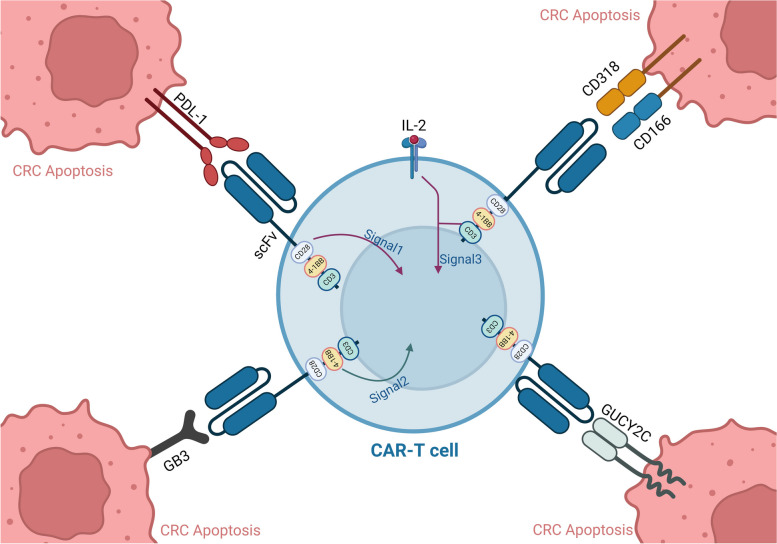
“As a result, they have discovered a CAR-T cell therapy strategy that is human GUCY2C-specific and may be created to treat mCRC that represents GUCY2C [33].”
BackgroundALCAM/CD166: cancer-related issues.
Weidle, U. H., Eggle, D., Klostermann, S., & Swart, G. W. M. (2010) · PubMed · Cited by 134
Oncolytic virotherapy as immunotherapy
Melcher, A., Harrington, K., & Vile, R. (2021) · Science · doi:10.1126/science.abk3436 · Cited by 133 · cited 1×
“By tumor cell death and the consequent release of tumor antigens, pexaVec therapy creates a proinflammatory tumor environment ideal for immunotherapy [66].”
BackgroundChen, J., Zhu, T., Jiang, G., Zeng, Q., Li, Z., & Huang, X. (2023) · Molecular Cancer · doi:10.1186/s12943-023-01830-x · Cited by 130
Cortellini, A., Bersanelli, M., Santini, D., Buti, S., Tiseo, M., Cannita, K., Perrone, F., Giusti, R., De Tursi, M., Zoratto, F., et al. (2020) · European Journal of Cancer · doi:10.1016/j.ejca.2019.12.031 · Cited by 127
Saleh, R., Toor, S. M., Khalaf, S., & Elkord, E. (2019) · Vaccines · doi:10.3390/vaccines7040149 · Cited by 125
Jílková, Z. M., Aspord, C., & Decaens, T. (2019) · Cancers · doi:10.3390/cancers11101554 · Cited by 124
Immunohistochemistry of Carcino-Embryonic Antigen in the Embryo, Fetus and Adult
Nap, M., Møllgård, K., Burtin, P., & Fleuren, G. J. (1988) · Tumor Biology · doi:10.1159/000217555 · Cited by 122
Gonzalez-Exposito, R., Semiannikova, M., Griffiths, B., Khan, K., Barber, L. J., Woolston, A., Spain, G., von Loga, K., Challoner, B., Patel, R., et al. (2019) · Journal for ImmunoTherapy of Cancer · doi:10.1186/s40425-019-0575-3 · Cited by 120
Loupakis, F., Depetris, I., Biason, P., Intini, R., Prete, A. A., Leone, F., Lombardi, P., Filippi, R., Spallanzani, A., Cascinu, S., et al. (2020) · The Oncologist · doi:10.1634/theoncologist.2019-0611 · Cited by 111
T-cell-based immunotherapy in colorectal cancer
Feng, M., Zhao, Z., Yang, M., Ji, J., & Zhu, D. (2021) · Cancer Letters · doi:10.1016/j.canlet.2020.10.040 · Cited by 107
Li, X., Lu, M., Yuan, M., Ye, J., Zhang, W., Xu, L., Wu, X., Hui, B., Yang, Y., Wei, B., et al. (2022) · OncoImmunology · doi:10.1080/2162402x.2022.2118210 · Cited by 106
Osada, T., Patel, S. P., Hammond, S. A., Osada, K., Morse, M. A., & Lyerly, H. K. (2015) · Cancer Immunology Immunotherapy · doi:10.1007/s00262-015-1671-y · Cited by 101
Presti, D., Dall’Olio, F. G., Besse, B., Ribeiro, J. M., Meglio, A. D., & Soldato, D. (2022) · Critical Reviews in Oncology/Hematology · doi:10.1016/j.critrevonc.2022.103773 · Cited by 99
Immune Checkpoint Inhibitors in Cancer Therapy—How to Overcome Drug Resistance?
Lao, Y., Shen, D., Zhang, W., He, R., & Jiang, M. (2022) · Cancers · doi:10.3390/cancers14153575 · Cited by 94
Enyindah-Asonye, G., Li, Y., Ruth, J. H., Spassov, D. S., Hebron, K. E., Zijlstra, A., Moasser, M. M., Wang, B., Singer, N. G., Cui, H., et al. (2017) · Proceedings of the National Academy of Sciences · doi:10.1073/pnas.1704008114 · Cited by 91
Herpes Simplex Virus 1 γ 1 34.5 Protein Inhibits STING Activation That Restricts Viral Replication
Pan, S., Liu, X., Ma, Y., Cao, Y., & He, B. (2018) · Journal of Virology · doi:10.1128/jvi.01015-18 · Cited by 90
Cohen, R., Bennouna, J., Meurisse, A., Tournigand, C., De La Fouchardière, C., Tougeron, D., Borg, C., Mazard, T., Chibaudel, B., Garcia-Larnicol, M.-L., et al. (2020) · Journal for ImmunoTherapy of Cancer · doi:10.1136/jitc-2020-001499 · Cited by 81
Osada, T., Hsu, D., Hammond, S., Hobeika, A., Devi, G., Clay, T. M., Lyerly, H. K., & Morse, M. A. (2010) · British Journal of Cancer · doi:10.1038/sj.bjc.6605364 · Cited by 75
Monge, C., Xie, C., Myojin, Y., Coffman, K., Hrones, D. M., Wang, S., Hernandez, J. M., Wood, B. J., Levy, E. B., Juburi, I., et al. (2023) · Journal for ImmunoTherapy of Cancer · doi:10.1136/jitc-2022-005640 · Cited by 75
Li, F., Zhao, S., Cheng, W., Hu, Y., Xu, T., Xin, X., Zhu, T., Shang, L., Ke, S., Zhou, J., et al. (2022) · Frontiers in Immunology · doi:10.3389/fimmu.2022.958082 · Cited by 72
Klein, O., Kee, D., Markman, B., Carlino, M. S., Underhill, C. R., Palmer, J., Power, D., Cebon, J. S., & Behren, A. (2021) · Cancer Cell · doi:10.1016/j.ccell.2021.04.005 · Cited by 70
Wu, T., Li, G., Liang, C., et al. (2016) · Antiviral Research · doi:10.1016/j.antiviral.2016.03.002 · Cited by 70
Cetuximab, its clinical use and future perspectives
Rivera, F., Vega-Villegas, M. E., & López-Brea, M. (2008) · Anti-Cancer Drugs · doi:10.1097/cad.0b013e3282f23287 · Cited by 69
Loi, S., Winer, E. P., Lipatov, O. N., Im, S., Gonçalvès, A., Cortés, J., Lee, K. S., Schmid, P., Testa, L., Witzel, I., et al. (2020) · Cancer Research · doi:10.1158/1538-7445.sabcs19-pd5-03 · Cited by 68
The Role of Immune Checkpoint Inhibitors in Colorectal Adenocarcinoma
Almquist, D., Ahn, D. H., & Bekaii‐Saab, T. (2020) · BioDrugs · doi:10.1007/s40259-020-00420-3 · Cited by 66
Toulmonde, M., Cousin, S., Kind, M., Guégan, J., Bessede, A., Loarer, F. L., Perret, R. E., Cantarel, C., Bellera, C. A., & Italiano, A. (2022) · Journal of Hematology & Oncology · doi:10.1186/s13045-022-01370-9 · Cited by 56
CDCP1 overexpression drives prostate cancer progression and can be targeted in vivo
Alajati, A., D’Ambrosio, M., Troiani, M., Mosole, S., Pellegrini, L., Chen, J., Revandkar, A., Bolis, M., Theurillat, J.-P. P., Guccini, I., et al. (2020) · Journal of Clinical Investigation · doi:10.1172/jci131133 · Cited by 47
Stimmer, L., Dehay, S., Némati, F., et al. (2014) · BMC Cancer · doi:10.1186/1471-2407-14-916 · Cited by 45
Guanylate cyclase C as a target for prevention, detection, and therapy in colorectal cancer
Aka, A. A., Rappaport, J. A., Pattison, A. M., Sato, T., Snook, A. E., & Waldman, S. A. (2017) · Expert Review of Clinical Pharmacology · doi:10.1080/17512433.2017.1292124 · Cited by 39
BiTE: A new class of antibodies that recruit T-cells
Baeuerle, P. A., Reinhardt, C., & Kufer, P. (2008) · Drugs of the Future · doi:10.1358/dof.2008.033.02.1172578 · Cited by 37
Novel lectin-based chimeric antigen receptors target Gb3-positive tumour cells
Meléndez, A. V., Cárdenas, R. M.-H. V., Lagies, S., Strietz, J., Šiukštaitė, L., Thomas, O. S., Tomisch, J., Weber, W., Kammerer, B., Römer, W., et al. (2022) · Cellular and Molecular Life Sciences · doi:10.1007/s00018-022-04524-7 · Cited by 35
Waaijer, S. J. H., Warnders, F. J., Stienen, S., Friedrich, M., Sternjak, A., Cheung, H. K., van Scheltinga, A. G. T. T., Schröder, C. P., de Vries, E. G. E., & Hooge, M. N. L. (2018) · Clinical Cancer Research · doi:10.1158/1078-0432.ccr-18-0786 · Cited by 34
Oncolytic virus driven T-cell-based combination immunotherapy platform for colorectal cancer
Crupi, M. J. F., Taha, Z., Janssen, T. J. A., Petryk, J., Boulton, S., Alluqmani, N., Jirovec, A., Kassas, O., Khan, S., Vallati, S., et al. (2022) · Frontiers in Immunology · doi:10.3389/fimmu.2022.1029269 · Cited by 34
Golubovskaya, V., Sienkiewicz, J., Sun, J., Huang, Y., Hu, L., Zhou, H., Harto, H., Xu, S., Berahovich, R., Bodmer, W., et al. (2023) · Cancers · doi:10.3390/cancers15102860 · Cited by 31 · cited 2×
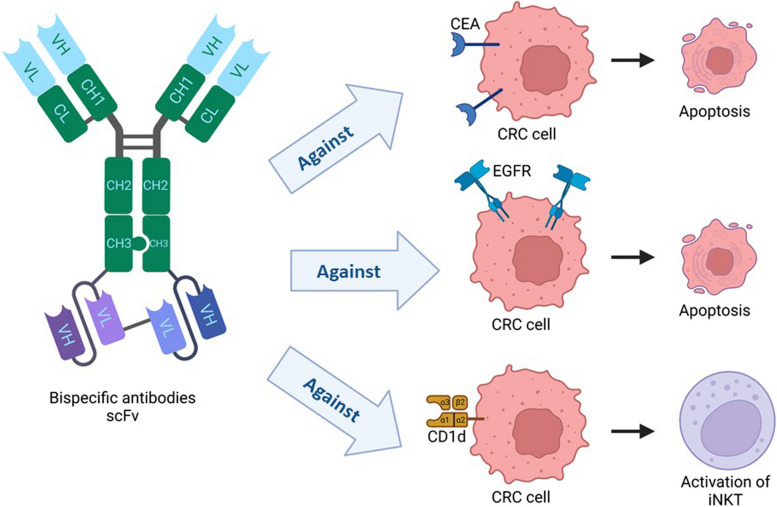
“…cytotoxicity against CRC cells [38] EGFR Mice lysis of KRAS-and BRAF-mutated CRC lines [39] EpCAM Mice Blocked xenograft tumor growth [40] CEA/BiTE BALB/c mice Targeting CEA + Tumor cells [41] Cd1d/BiTE C57BL/6J (B6) mice Activated invariant natural killer T cells (iNKT cells) [42]…”
BackgroundCD166-specific CAR-T cells potently target colorectal cancer cells
He, S., Li, S., Guo, J., Zeng, X., Liang, D., Zhu, Y., Li, Y., Yang, D., & Zhao, X. (2023) · Translational Oncology · doi:10.1016/j.tranon.2022.101575 · Cited by 30 · cited 1×
“The full-length ectodomain sequence of CD6, which binds CD166 via the SCRC3 domain and CD318 via the SCRC1 domain, was used to build CARs for colo-rectal cancer [27].”
MethodZhang, N., Li, J., Yu, J., Wan, Y., Zhang, C., Zhang, H., & Cao, Y. (2022) · Virus Research · doi:10.1016/j.virusres.2022.198979 · Cited by 30
Qian, S., Villarejo‐Campos, P., Castellano, I. G., Hernández‐Villafranca, S., García‐Olmo, D., González-Soares, S., Guadalajara, H., Jiménez-Galanes, S., & Qian, C. (2022) · Frontiers in Immunology · doi:10.3389/fimmu.2022.841425 · Cited by 21
Ahamadi, M., Kast, J., Chen, P., Huang, X., Dutta, S., & Upreti, V. V. (2022) · CPT Pharmacometrics & Systems Pharmacology · doi:10.1002/psp4.12898 · Cited by 21
Oncolytic adenovirus H101 ameliorate the efficacy of anti‐PD ‐1 monotherapy in colorectal cancer
Huang, L., Zhao, H., Shan, M., Chen, H., Xu, B., He, Y., Zhao, Y. Q., Liu, Z., Chen, J., & Xu, Q. (2022) · Cancer Medicine · doi:10.1002/cam4.4845 · Cited by 20
Hancock, B., McGuire, K. L., Tsuji, S., et al. (2016) · Anticancer Research · doi:10.21873/anticanres.11218 · Cited by 18
Immune Checkpoint Inhibitor-Based Combination Therapy for Colorectal Cancer: An Overview
Li, J., & Xu, X. (2023) · International Journal of General Medicine · doi:10.2147/ijgm.s408349 · Cited by 18
Zhang, J., He, Q., Mao, D., Wang, C., Huang, L., Wang, M., & Zhang, J. (2023) · Frontiers in Oncology · doi:10.3389/fonc.2023.1159802 · Cited by 17
Kharkwal, S. S., Johndrow, C. T., Veerapen, N., et al. (2021) · Cancer Research · doi:10.1158/0008-5472.can-20-2219 · Cited by 15
CD318 is a target of chimeric antigen receptor T cells for the treatment of colorectal cancer
Li, M., Li, S., Zhao, R., Lv, J., Zheng, D., Qin, L., Li, S., Wu, Q., Long, Y., Tang, Z., et al. (2022) · Clinical and Experimental Medicine · doi:10.1007/s10238-022-00967-1 · Cited by 15
Jílková, Z. M., Aspord, C., & Decaens, T. (2020) · Cancers · doi:10.3390/cancers12092673 · Cited by 14
Chai, C., Zhang, J., Zhou, Y., et al. (2022) · Animals · doi:10.3390/ani12182416 · Cited by 7
Grenier, S. F., Khan, M. W., Reil, K. A., Sawaged, S., Tsuji, S., Giacalone, M. J., Tian, M., & McGuire, K. L. (2023) · International Journal of Molecular Sciences · doi:10.3390/ijms24129993 · Cited by 6
Xu, M. Q., Tsunedomi, R., Kiyotani, K., Tomochika, S., Furuya, K., NAKAJIMA, M., MATSUI, H., Tokumitsu, Y., Shindo, Y., Yoshida, S., et al. (2023) · Anticancer Research · doi:10.21873/anticanres.16197 · Cited by 5
Association of Tumor-Infiltrating Lymphocytes With Survival in Stages II and III Colorectal Cancer
Vitorino, M., Eiriz, I., Tomás, T. C., et al. (2022) · Cureus · doi:10.7759/cureus.31144 · Cited by 4
Chen, J., Zhu, T., Jiang, G., et al. (2023) · Research Square · doi:10.21203/rs.3.rs-2557966/v1 · Cited by 2
Cited by
Mechanisms and Strategies to Overcome Drug Resistance in Colorectal Cancer
Haynes, J., & Manogaran, P. (2025) · International Journal of Molecular Sciences · doi:10.3390/ijms26051988 · Cited by 82
“Another emerging type of immunotherapy is oncolytic virus therapy, which uses oncolytic viruses to selectively kill tumor cells while sparing healthy cells [185].”
Influential
Metadata
- Authors
- Kamrani, A., Nasiri, H., Hassanzadeh, A., Ahmadian Heris, J., Mohammadinasab, R., Sadeghvand, S., Sadeghi, M., Valedkarimi, Z., Hosseinzadeh, R., Shomali, N., & Akbari, M.
- Affiliations
- Tabriz University of Medical Sciences (IR)
- Tehran University of Medical Sciences (IR)
- Corresponding author
- Shomali, Navid
- Akbari, Morteza
- ORCID
- Venue
- Cell Communication and Signaling
- Published
- 2024-01-19
- Volume
- 22
- Issue
- 1
- Pages
- 56-56
- ISSN
- 1478-811X (ISSN-L)
- PMC
- PMC10799490
- OpenAlex
- W4391023176
- Cited by
- 50
- References
- 84
- Citations by year
- 2026: 14 · 2025: 20 · 2024: 14
- FWCI
- 2.57
- Type
- journal article
- Language
- en
- Open access
- gold
- doi.org
- Licence
- cc-by
- creativecommons.org/licenses/by/4.0 (tdm)
- creativecommons.org/licenses/by/4.0 (vor)
- Locations
- Cell Communication and Signaling (publishedVersion, cc-by)
- PubMed Central (publishedVersion, cc-by)
- PubMed (publishedVersion)
- DOAJ (DOAJ: Directory of Open Access Journals) (submittedVersion, cc-by-sa)
- Topics
- Health Sciences › Medicine › Oncology › Cancer Immunotherapy and Biomarkers
- Health Sciences › Medicine › Oncology › Colorectal Cancer Treatments and Studies
- Life Sciences › Immunology and Microbiology › Immunology › Immunotherapy and Immune Responses
- Keywords
- colorectal cancer, immunotherapy, CAR T-cell therapy, bispecific T-cell engagers, oncolytic virotherapy, immune checkpoint inhibitors, tumor-infiltrating lymphocytes, combination therapy, precision medicine, biomarker discovery, treatment resistance
- MeSH terms
- Humans, Immunotherapy, Neoplasms, T-Lymphocytes, Colorectal Neoplasms, Immunotherapy, Adoptive, Oncolytic Viruses
About these checks
Registry, retraction, Cites and statistics results are computed, not judged, with one exception: a printed reference that no index lists is read once by a model before it counts as a citation error. Claims are extracted by a model and kept only when their quote appears verbatim in the text; each cited source is then checked, with a model’s help, for whether it says what the claim relies on. Those verdicts can be wrong — read the claim’s quote and the cited source before relying on one.
Statistics and arithmetic are recomputed, not judged.
Confidence bands are shown only for fields calibrated on our annotated test set. None is calibrated yet, so no band is shown.
What counts as a claim ›How we measure confidence ›How we check this ›
Are you an author, or do you see a problem with this page? Request a review
Data sources
Bibliographic data: Semantic Scholar, OpenAlex, Crossref.
Contains information from the Semantic Scholar Academic Graph Datasets, made available under the ODC Attribution License (ODC-BY 1.0).
Semantic Scholar’s data is described in: Kinney, R., et al. (2023). The Semantic Scholar Open Data Platform. arXiv:2301.10140.
