

Social cognitive theory mediators of physical activity in a lifestyle program for cancer survivors and carers: findings from the ENRICH randomized controlled trial
Open accessThe DOI matches its Crossref record; 79 of the 79 references it cites were found in a registry or an index.
Abstract
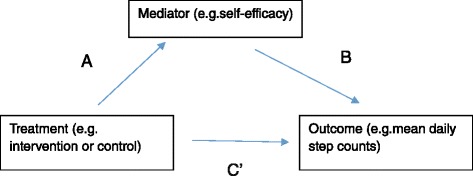
BACKGROUND: Despite increasing numbers of cancer survivors and evidence that diet and physical activity improves the health of cancer survivors, most do not meet guidelines. Some social cognitive theory (SCT)-based interventions have increased physical activity behavior, however few have used objective physical activity measures. The Exercise and Nutrition Routine Improving Cancer Health (ENRICH) randomized controlled trial reported a significant intervention effect for the primary outcome of pedometer-assessed step counts at post-test (8-weeks) and follow-up (20-weeks). The aim of this study was to test whether the SCT constructs operationalized in the ENRICH intervention were mediators of physical activity behavior change. METHODS: Randomized controlled trial with 174 cancer survivors and carers assessed at baseline, post-test (8-weeks), and follow-up (20-weeks). Participants were randomized to the ENRICH six session face-to-face healthy lifestyle program, or to a wait-list control. Hypothesized SCT mediators of physical activity behavior change (self-efficacy, behavioral goal, outcome expectations, impediments, and social expectations) were assessed using valid and reliable scales. Mediation was assessed using the Preacher and Hayes SPSS INDIRECT macro. RESULTS: At eight weeks, there was a significant intervention effect on behavioral goal (A = 9.12, p = 0.031) and outcome expectations (A = 0.25, p = 0.042). At 20 weeks, the intervention had a significant effect on self-efficacy (A = 0.31, p = 0.049) and behavioral goal (A = 13.15, p = 0.011). Only changes in social support were significantly associated with changes in step counts at eight weeks (B = 633.81, p = 0.023). Behavioral goal was the only SCT construct that had a significant mediating effect on step counts, and explained 22 % of the intervention effect at 20 weeks (AB = 397.9, 95 % CI 81.5-1025.5). CONCLUSIONS: SCT constructs had limited impact on objectively-assessed step counts in a multiple health behavior change intervention for cancer survivors and their carers. Behavioral goal measured post-intervention was a significant mediator of pedometer-assessed step counts at 3-months after intervention completion, and explained 22 % of the intervention effect. Future research should examine the separate impact of goals and planning, as well as examining mediators of behavior maintenance in physical activity interventions targeting cancer survivors. TRIAL REGISTRATION: Australian and New Zealand Clinical Trials registry ANZCTRN1260901086257 .
Overview
The claims and statistics of this paper haven’t been checked yet.
Free: it reads the open-access text and checks the first 5 claims that cite a source we can check. Create a free account to check every claim.
Integrity signals
Registry
Cites
Statistics
Figures
Verification
Claims the paper makes
The claims and statistics of this paper haven’t been checked yet.
Free: it reads the open-access text and checks the first 5 claims that cite a source we can check. Create a free account to check every claim.
Self-check
Percentages, sums and reported differences re-computed from the paper’s own numbers.
The self-check needs the paper’s full text.
Citations
Cites
Podsakoff, P. M., MacKenzie, S. B., Lee, J.-Y., & Podsakoff, N. P. (2003) · Journal of Applied Psychology · doi:10.1037/0021-9010.88.5.879 · Cited by 82,194 · cited 1×
“This is known as common method variance, and refers to the “variance that is attributable to the measurement method rather than to the constructs the measures are assumed to represent” [66].”
Preacher, K. J., & Hayes, A. F. (2008) · Behavior Research Methods · doi:10.3758/brm.40.3.879 · Cited by 34,117 · cited 3×
“Mediation was assessed using the Preacher and Hayes SPSS INDIRECT macro.”
MethodInfluentialToxicity and response criteria of the Eastern Cooperative Oncology Group
Oken, M. M., Creech, R. H., Tormey, D. C., Horton, J., Davis, T. E., McFadden, E. T., & Carbone, P. P. (1982) · AMERICAN JOURNAL OF CLINICAL ONCOLOGY · doi:10.1097/00000421-198212000-00014 · Cited by 11,647 · cited 1×
“or up and about more than 50 % of waking hours”) [40].”
BackgroundHuman agency in social cognitive theory.
Bandura, A. (1989) · American Psychologist · doi:10.1037/0003-066x.44.9.1175 · Cited by 8,263 · cited 1×
“The outcome expectations are the perceived positive and negative effects of the behavior, which are directly influenced by self-efficacy [33, 35].”
BackgroundMichie, S., Richardson, M., Johnston, M., Abraham, C., Francis, J., Hardeman, W., Eccles, M. P., Cane, J., & Wood, C. E. (2013) · Annals of Behavioral Medicine · doi:10.1007/s12160-013-9486-6 · Cited by 7,629 · cited 1×
“Future studies should use a taxonomy of behavior change techniques to develop the ‘active ingredients’ of an intervention [71, 72].”
MethodHealth Promotion by Social Cognitive Means
Bandura, A. (2004) · Health Education & Behavior · doi:10.1177/1090198104263660 · Cited by 7,238 · cited 7×
“Social cognitive theory (SCT) offers principles on how to predict and change health behavior [33].”
BackgroundMethodInfluentialWebb, T. L., & Sheeran, P. (2006) · Psychological Bulletin · doi:10.1037/0033-2909.132.2.249 · Cited by 3,732 · cited 1×
“A metaanalysis of behavior change interventions has concluded that a medium-to-large change in intention leads to a small-to-medium change in behavior [48, 49].”
BackgroundHealth promotion from the perspective of Social Cognitive Theory
Bandura, A. (1998) · Psychology & Health · doi:10.1080/08870449808407422 · Cited by 3,087 · cited 1×
“The category of ‘goals’ is broad, and for the purpose of this paper, the term goal or behavioral goal may be defined as “detailed planning of what the person will do, including definition of the behavior specifying frequency, intensity or duration” [26], and includes both proximal and distal goals [34].”
BackgroundExercise, physical activity, and self-determination theory: A systematic review
Teixeira, P. J., Carraça, E. V., Markland, D., Silva, M. N., & Ryan, R. M. (2012) · International Journal of Behavioral Nutrition and Physical Activity · doi:10.1186/1479-5868-9-78 · Cited by 2,963 · cited 1×
“As this was a highly motivated sample, it would be interesting to assess other constructs which may have been important, such as motivation, habit, or PA planning [32, 67, 68].”
BackgroundPredicting and Changing Behavior
Fishbein, M., & Ajzen, I. (2011) · doi:10.4324/9780203838020 · Cited by 2,807
Cited by
Hayes, S. C., & Hofmann, S. G. (2021) · World Psychiatry · doi:10.1002/wps.20884 · Cited by 260
Interventions for promoting habitual exercise in people living with and beyond cancer
Turner, R. R., Steed, L., Quirk, H., Greasley, R. U., Saxton, J. M., Taylor, S. J., Rosario, D. J., Thaha, M. A., & Bourke, L. (2018) · Cochrane Database of Systematic Reviews · doi:10.1002/14651858.cd010192.pub3 · Cited by 227
Mönninghoff, A., Kramer, J. N., Hess, A. J., Ismailova, K., Teepe, G. W., Tudor Car, L., Müller-Riemenschneider, F., & Kowatsch, T. (2021) · Journal of Medical Internet Research · doi:10.2196/26699 · Cited by 183
“All but one study [40] reported end-of-intervention results, 33 studies reported short-term follow-up results [40-72], and only 8 studies reported long-term”
BackgroundResultInfluentialAerobic physical exercise for adult patients with haematological malignancies
Bergenthal, N., Will, A., Streckmann, F., Wolkewitz, K.-D., Monsef, I., Engert, A., Elter, T., & Skoetz, N. (2014) · Cochrane Database of Systematic Reviews · doi:10.1002/14651858.cd009075.pub2 · Cited by 166
Aerobic physical exercise for adult patients with haematological malignancies
Knips, L., Bergenthal, N., Streckmann, F., Monsef, I., Elter, T., & Skoetz, N. (2019) · Cochrane Database of Systematic Reviews · doi:10.1002/14651858.cd009075.pub3 · Cited by 109
Hoedjes, M., Nijman, I., & Hinnen, C. (2022) · Cancers · doi:10.3390/cancers14082026 · Cited by 55
“In the different included studies, as well as in different theories and models of health behavior change, different terminology may be used to describe similar concepts, such as perceived behavioral control (e.g., defined as “the extent to which a person feels able to perform the behavior” in the Theory of Planned Beh…”
BackgroundInfluentialWelch, V. A., Petkovic, J., Simeon, R., Presseau, J., Gagnon, D., Hossain, A., Pardo, J. P., Pottie, K. C., Rader, T., Sokolovski, A., et al. (2018) · Cochrane Database of Systematic Reviews · doi:10.1002/14651858.cd012932 · Cited by 62
Theory of Planned Behaviour and Health Belief Model: females’ intention on breast cancer screening
Chin, J. H., & Mansori, S. (2019) · Cogent Psychology · doi:10.1080/23311908.2019.1647927 · Cited by 40
Win, K. T., Roberts, M., & B, H. O.-K. A. (2018) · Informatics for Health and Social Care · doi:10.1080/17538157.2018.1511565 · Cited by 41
“Goal-setting can be self-set, assigned, or collaborative.(32,33) Therefore, including goal-setting, having an attainable goal, conducting self-monitoring, and providing feedback have been recognized as requirements for behavior change support.”
BackgroundMediating Mechanisms in a Physical Activity Intervention: A Test of Habit Formation
Kaushal, N., Rhodes, R. E., Meldrum, J. T., & Spence, J. C. (2018) · Journal of Sport and Exercise Psychology · doi:10.1123/jsep.2017-0307 · Cited by 45
Romeo, A., Edney, S. M., Plotnikoff, R. C., Olds, T., Vandelanotte, C., Ryan, J. C., Curtis, R., & Maher, C. A. (2021) · BMC Public Health · doi:10.1186/s12889-020-10100-0 · Cited by 48
“This is in contrast to previous physical activity interventions which emphasised the social-cognitive theory through the incorporation of educational modules [22, 23, 25].”
BackgroundResultGao, Z., Ryu, S., Zhou, W., Adams, K. T., Hassan, M. A. S., Zhang, R., Blaes, A. H., Wolfson, J. A., & Sun, J. (2023) · Journal of sport and health science/Journal of Sport and Health Science · doi:10.1016/j.jshs.2023.07.002 · Cited by 36
“…by corroborating the postulation that multi-component PA interventions are effective at promoting PA in clinical populations, including CS. 4,9,33,57 Specifically, empirical evidence has suggested that health wearables and exercise apps, in partnership with social media programs, could help to…”
BackgroundResultInfluentialFinlay, A., Wittert, G., & Short, C. E. (2018) · Journal of Cancer Survivorship · doi:10.1007/s11764-018-0694-8 · Cited by 33
Ellis, K. R., Raji, D., Olaniran, M. O., Alick, C. L., Nichols, D., & Allicock, M. A. (2021) · Journal of Cancer Survivorship · doi:10.1007/s11764-021-01013-x · Cited by 36
“6%, n=4) [43, 45, 48, 52, 58], via Internet or other web-based platforms (14.”
BackgroundCraike, M. J., Gaskin, C. J., Mohebbi, M., Courneya, K. S., & Livingston, P. M. (2018) · Annals of Behavioral Medicine · doi:10.1093/abm/kax055 · Cited by 33
“This intervention included intensive sessions on goal setting and weekly monitoring of goals using a pedometer and diary [47].”
MethodOh, J., Kang, H., Sudarshan, S., & Lee, J. A. (2019) · Health Communication · doi:10.1080/10410236.2019.1654172 · Cited by 29
Rogers, L. Q., Carter, S. J., Williams, G. R., & Courneya, K. S. (2018) · Springer eBooks · doi:10.1007/978-3-319-77432-9_15 · Cited by 22
Mediators of physical activity outcomes in a peer‐led intervention for breast cancer survivors
Pinto, B. M., DUNSIGER, S. I., DeScenza, V. R., & Stein, K. (2023) · Psycho-Oncology · doi:10.1002/pon.6107 · Cited by 20
“One randomized control trial examined SCT mediators of a PA lifestyle program for cancer survivors and found that change in social support was associated with changes in objectively assessed step count at 8‐weeks (yet no constructs had significant mediation effects at 8‐weeks).(22) As indicated above, studies have sho…”
ResultPekmezi, D., Fontaine, K. R., Rogers, L. Q., Pisu, M., Martin, M. Y., Schoenberger, Y., Oster, R. A., Kenzik, K. M., Ivankova, N. V., & Demark‐Wahnefried, W. (2022) · BMC Cancer · doi:10.1186/s12885-022-09519-y · Cited by 21
Busse, M. E., Latchem-Hastings, J., Button, K., Poile, V., Davies, F., Halloran, R. O., Stensland, B., Tallantyre, E. C., Lowe, R., Wood, F., et al. (2021) · BMJ Open · doi:10.1136/bmjopen-2020-045378 · Cited by 18
Gavin, K. L., Welch, W. A., Conroy, D. E., Keadle, S. K., Pellegrini, C. A., Cottrell, A., Nielsen, A. M., Solk, P., Siddique, J., & Phillips, S. M. (2019) · Cancer Causes & Control · doi:10.1007/s10552-019-01153-7 · Cited by 15
Vahedian-Shahroodi, M., Sany, S. B. T., Khaboshan, Z. H., Esmaeily, H., Jafari, A., & Tajfard, M. (2021) · Public Health Nutrition · doi:10.1017/s1368980021002664 · Cited by 16
“This result was consis-tence with previous studies that found an increase in individual ’ s awareness that could be made to a higher stage of change and commitments to modify the level of PA (30,32) and healthy nutrition behaviours (24,33) .”
Healthy Lifestyle Behaviours, Levels of Self Efficacy Among University Students and Affected Factors
Örnek, Ö. K., & Kürklü, A. (2017) · Turkiye Klinikleri Journal of Nursing Sciences · doi:10.5336/nurses.2016-54198 · Cited by 19
Busse, M. E., Playle, R., Latchem-Hastings, J., Button, K., Lowe, R., Barlow, C., Lloyd, B. J., Andrew, D.-Y., Poile, V., Dawes, H., et al. (2021) · Multiple Sclerosis and Related Disorders · doi:10.1016/j.msard.2021.103388 · Cited by 12
Murawski, B., Plotnikoff, R. C., Lubans, D. R., Rayward, A. T., Brown, W. J., Vandelanotte, C., & Duncan, M. J. (2020) · Psychology and Health · doi:10.1080/08870446.2020.1756288 · Cited by 13
Self-citationHashemian, M., Abdolkarimi, M., & Nasirzadeh, M. (2022) · Journal of Education and Health Promotion · doi:10.4103/jehp.jehp_47_21 · Cited by 8
Flores-Vázquez, A. S., Vizmanos-Lamotte, B., Martínez, M. B. A., Corona-Figueroa, B. A., Flores-Vázquez, L. E., & Ojeda, G. M. (2020) · Journal of Nutrition Education and Behavior · doi:10.1016/j.jneb.2020.01.002 · Cited by 7
Hashemian, M., Abdolkarimi, M., Asadollahi, Z., & Nasirzadeh, M. (2021) · Journal of Education and Community Health · doi:10.52547/jech.8.2.111 · Cited by 8
Motivators and Barriers to Walking in Older Adults With Peripheral Artery Disease
Caldieraro-Bentley, A. J., & Kelechi, T. J. (2017) · Journal of Gerontological Nursing · doi:10.3928/00989134-20170908-01 · Cited by 8
Rogers, L. Q., Pekmezi, D., Schoenberger, Y., Fontaine, K. R., Ivankova, N. V., Kinsey, A. W., Hoenemeyer, T. W., Martin, M. Y., Pisu, M., Farrell, D. W., et al. (2023) · Digital Health · doi:10.1177/20552076231182805 · Cited by 12
Raising cervical cancer awareness: Analysing the incremental efficacy of Short Message Service
de Lemos, M. S., Rothes, I., Oliveira, F., & Soares, L. (2017) · Health Education Journal · doi:10.1177/0017896917728306 · Cited by 10
“This effect is a promising result since research shows that outcome expectations seem to play the larger role in influencing initial motivation and decision to engage in a health practice (e.g. Eastman and Marzillier, 1984; Maddux et al., 1986; Stacey et al., 2016; Strecher et al., 1986).”
ResultWelch, V. A., Petkovic, J., Simeon, R., Presseau, J., Gagnon, D., Hossain, A., Pardo, J. P., Pottie, K. C., Rader, T., Sokolovski, A., et al. (2018) · Campbell Systematic Reviews · doi:10.1002/cl2.213 · Cited by 9
Heart Failure Family Caregivers’ Perspectives of Physical Activity Engagement: A Qualitative Study
Baker, C. L., Coats, H., Jankowski, C. M., & Baik, D. (2023) · Western Journal of Nursing Research · doi:10.1177/01939459231186339 · Cited by 6
Strain Among Caregivers of Older Adults Diagnosed With Breast Cancer
Overcash, J. A., Fugett, S., Tan, A., Ginther, J., & Williams, N. O. (2019) · Oncology nursing forum · doi:10.1188/19.onf.e185-e201 · Cited by 7
Correlates of light physical activity among cancer survivors
Johnson, R., Fallon, E. A., & Berg, C. J. (2019) · Psycho-Oncology · doi:10.1002/pon.5008 · Cited by 5
“MVPA, moderate‐to‐vigorous physical activity; PCP, primary care provider. ose reporting at least some MVPA.”
BackgroundInfluentialFrom Package to Process: An Evidence-based Approach to Processes of Change in Psychotherapy
Ciarrochi, J., Hayes, S. C., Hayes, L., Sahdra, B. K., Ferrari, M., Yap, K., & Hofmann, S. G. (2021) · Elsevier eBooks · doi:10.1016/b978-0-12-818697-8.00085-6 · Cited by 7
Fischer, X., Donath, L., Zahner, L., Faude, O., & Gerber, M. (2019) · Journal of Behavioral Medicine · doi:10.1007/s10865-019-00112-6 · Cited by 7
Exercise and oncology: The role of physical activity in disease prevention and health promotion
Gao, Z., & Trinh, L. (2023) · Journal of sport and health science/Journal of Sport and Health Science · doi:10.1016/j.jshs.2023.09.003 · Cited by 5
Suh, S. R., & Lee, J. H. (2021) · Journal of Korean Academy of Psychiatric and Mental Health Nursing · doi:10.12934/jkpmhn.2021.30.3.278 · Cited by 3
Packel, L. B., Dychtwald, D., Pontiggia, L., Deutsch, J. M., & Milliron, B. (2022) · Rehabilitation Oncology · doi:10.1097/01.reo.0000000000000318 · Cited by 4
Kaur, H., Pavela, G., Pekmezi, D., Rogers, L. Q., Cole, W., Parrish, K. B., Sayer, R. D., Wyatt, H. R., & Demark‐Wahnefried, W. (2023) · Nutrients · doi:10.3390/nu15234918 · Cited by 5
“However, DUET is not the only study that did not achieve significant improvements in self-efficacy and failed to show mediation; other investigators have found similar results [58,59].”
ResultWurz, A. J., Price, J., & Brunet, J. (2021) · Supportive Care in Cancer · doi:10.1007/s00520-020-05974-0 · Cited by 7
Nigg, C. R., Zurkinden, N. L. A., Beck, D., Bisang, X. J. B., Charbonnet, B., Dütschler, B., Felder, T. M. O., Ganic, T., Grunder, L. P., Gürber, M. P., et al. (2021) · Health Psychology Bulletin · doi:10.5334/hpb.25 · Cited by 3
Edney, S. M., Olds, T., Ryan, J. C., Plotnikoff, R. C., Vandelanotte, C., Curtis, R., & Maher, C. A. (2019) · Journal of Physical Activity and Health · doi:10.1123/jpah.2018-0585 · Cited by 3
Lai, B. W., Chaviano, K., Richman, J., Ahmad, M., Wright, A., Young, R., Davis, D., Rimmer, J. H., Madan‐Swain, A., & Chewning, J. H. (2024) · JMIR Research Protocols · doi:10.2196/64879 · Cited by 4
Webber‐Ritchey, K. J., Taylor‐Piliae, R. E., & Loescher, L. J. (2018) · Research and theory for nursing practice · doi:10.1891/0000-000y.32.1.63 · Cited by 2
Bloom, E. L., Bogart, A., Dubowitz, T., Collins, R. L., Ghosh‐Dastidar, B., Gary‐Webb, T. L., & Troxel, W. (2021) · Annals of Behavioral Medicine · doi:10.1093/abm/kaab029 · Cited by 2
Franco, S. F., Carraça, E. V., Nobre, I., Rodrigues, B., Ilharco, V., Kahlert, L., & Silva, M. N. (2025) · Pilot and Feasibility Studies · doi:10.1186/s40814-024-01587-0 · Cited by 2
“Furthermore, the development of this intervention was also informed by previous research and intervention models with proven results (such as [39, 40, 47, 48]), as well as well-studied BCTs [36, 37], strengthening its potential efficacy.”
InfluentialLiu, Y., Yu, L. J., Cao, H., Yang, Z., Wang, Z., Qiao, S., Shen, X., Ye, Y., & Xie, J. (2025) · Supportive Care in Cancer · doi:10.1007/s00520-025-09994-6 · Cited by 2
“According to Social Cognitive Theory [55], increased self-efficacy can strengthen patients’ motivation and persistence in engaging with rehabilitation exercises, thereby promoting positive behavioral changes that improve cardiorespiratory fitness and emotional well-being.”
La promotion de l’activité physique passe nécessairement par une prise en compte de la motivation
Chevance, G., Romain, A. J., & Bernard, P. (2017) · Psycho-Oncologie · doi:10.1007/s11839-017-0615-5 · Cited by 1
Ahmadi, S., Gilbert, J., Marcotte, M., Guimarães, R. D. F., & Mathieu, M.-E. (2024) · Sports Medicine and Health Science · doi:10.1016/j.smhs.2024.03.007 · Cited by 4
Relationship between cognitive factors and healthy spine-related behavior among pupilsPreprint
Akbari-Chehrehbargh, Z., Tavafian, S. S., & Montazeri, A. (2019) · Research Square · doi:10.21203/rs.2.14659/v1 · Cited by 1
Psychosocial Mediators of a Group-based Physical Activity Intervention in Older Adults
Baruth, M., & Schlaff, R. A. (2017) · Health Science Journal · doi:10.21767/1791-809x.1000521
“Self-efficacy, [10,16,20] Social support, [10] goal setting, [16,19] and behavioral processes [15,21] have been found to mediate change in physical activity behavior in some studies, although other studies have not Research Article”
BackgroundResult(2021) · Physis Revista de Saúde Coletiva · doi:10.1590/s0103-73312021310136
Şahin, A., & Arıkan, D. (2022) · Sakarya Üniversitesi Holistik Sağlık Dergisi · doi:10.54803/sauhsd.1192864
การพัฒนาโปรแกรมการลดพฤติกรรมเนือยนิ่งในพนักงานออฟฟิศตามโครงสร้างของทฤษฎีกระบวนการรับรู้ทางสังคม
มาพงษ์, ร. (2020) · Chula Digiverse · doi:10.58837/chula.the.2020.998
Şura, K. A. Y. A., & Esin, M. (2024) · Rehabilitation Oncology · doi:10.1097/01.reo.0000000000000375
Filho, B. A. B. D. S., Tritany, É. F., & Struchiner, C. J. (2025) · Editora FIOCRUZ eBooks · doi:10.7476/9786557082911.0003
A Importância do Relato Teórico nas Pesquisas
Filho, B. A. B. D. S., Tritany, É. F., & Struchiner, C. J. (2025) · Editora FIOCRUZ eBooks · doi:10.7476/9786557082911.0009
Da Teoria aos Modelos Teóricos na Ciência da Saúde
Filho, B. A. B. D. S., Tritany, É. F., & Struchiner, C. J. (2025) · Editora FIOCRUZ eBooks · doi:10.7476/9786557082911.0004
Arana, G. A. C. (2025) · Editora FIOCRUZ eBooks · doi:10.7476/9786557082911.0001
Conexões entre Teorias para a Elaboração de Modelos Teóricos
Filho, B. A. B. D. S., Tritany, É. F., & Struchiner, C. J. (2025) · Editora FIOCRUZ eBooks · doi:10.7476/9786557082911.0005
Filho, B. A. B. D. S., Tritany, É. F., & Struchiner, C. J. (2025) · Editora FIOCRUZ eBooks · doi:10.7476/9786557082911.0002
A Teoria dos Pressupostos da Qualidade Científica
Filho, B. A. B. D. S., Tritany, É. F., & Struchiner, C. J. (2025) · Editora FIOCRUZ eBooks · doi:10.7476/9786557082911.0006
Modelos teóricos: como elaborar, utilizar e relatar em estudos epidemiológicos
Filho, B. A. B. D. S., Tritany, É. F., & Struchiner, C. J. (2025) · Editora FIOCRUZ eBooks · doi:10.7476/9786557082911
Uma Breve Análise sobre a Utilização de Modelos Teóricos na Produção Científica
Filho, B. A. B. D. S., Tritany, É. F., & Struchiner, C. J. (2025) · Editora FIOCRUZ eBooks · doi:10.7476/9786557082911.0008
Uma Proposta Teórico-Metodológica para a Elaboração de Modelos Teóricos
Filho, B. A. B. D. S., Tritany, É. F., & Struchiner, C. J. (2025) · Editora FIOCRUZ eBooks · doi:10.7476/9786557082911.0007
Uso do Checklist para Relato Teórico em Estudos Epidemiológicos (CRT-EE)
Filho, B. A. B. D. S., Tritany, É. F., & Struchiner, C. J. (2025) · Editora FIOCRUZ eBooks · doi:10.7476/9786557082911.0010
Reflexões e Recomendações para Pesquisadores, Avaliadores e Editores
Filho, B. A. B. D. S., Tritany, É. F., & Struchiner, C. J. (2025) · Editora FIOCRUZ eBooks · doi:10.7476/9786557082911.0011
Romeo, A., Edney, S. M., Plotnikoff, R. C., Olds, T., Vandelanotte, C., Ryan, J., Curtis, R., & Maher, C. A. (2021) · Figshare · doi:10.6084/m9.figshare.13544392
Lee, M. M.-S., Lin, W. Y.-Y., Lo, E. M.-K., & Wang, K. (2026) · Geriatric Nursing Asia · doi:10.1016/j.ymgna.2026.100001
Ye, Q., Liu, Q., Li, X., Peng, J., Li, N., Deng, Q., Hu, J., Yong, C., Li, S., Wang, Y., et al. (2026) · International Journal of Behavioral Medicine · doi:10.1007/s12529-026-10461-7 · Cited by 1
Zhao, G., Zainuddin, Z. A., Zhao, Z., & Li, X. (2026) · Psycho-Oncologie · doi:10.18282/po5547
Tan, L. Y. C., Tay, M. R. J., Wu, L., Goh, J. Q., & Wong, C. J. (2026) · Healthcare · doi:10.3390/healthcare14162648
“Within Bandura’s Social Cognitive Theory (SCT) framework [20], self-efficacy is regarded as the most influential personal determinant of behavior change [21] and ESE refers to an individual’s confidence in their ability to exercise despite competing demands and barriers [22].”
Metadata
- Authors
- Stacey, F. G., James, E. L., Chapman, K., & Lubans, D. R.
- Affiliations
- Hunter Medical Research Institute (AU)
- Cancer Council NSW (AU)
- University of Newcastle Australia (AU)
- Corresponding author
- Stacey, F. G.
- Venue
- International Journal of Behavioral Nutrition and Physical Activity
- Published
- 2016-04-14
- Volume
- 13
- Issue
- 1
- Pages
- 49-49
- ISSN
- 1479-5868 (ISSN-L)
- PMC
- PMC4831117
- OpenAlex
- W2337863152
- Cited by
- 74
- References
- 79
- Citations by year
- 2026: 4 · 2025: 14 · 2024: 3 · 2023: 6 · 2022: 5 · 2021: 15 · 2020: 3 · 2019: 9 · 2018: 9 · 2017: 5
- FWCI
- 4.14
- Type
- journal article
- Language
- en
- Open access
- gold
- doi.org
- Licence
- cc-by
- Locations
- International Journal of Behavioral Nutrition and Physical Activity (publishedVersion, cc-by)
- PubMed Central (publishedVersion, cc-by)
- PubMed (publishedVersion)
- Figshare (submittedVersion, cc-by)
- NOVA (University of Newcastle Australia) (submittedVersion, cc-by)
- Funders
- Department of Health and Ageing, Australian Government (G0190125)
- Topics
- Health Sciences › Medicine › Oncology › Cancer survivorship and care
- Social Sciences › Psychology › Applied Psychology › Behavioral Health and Interventions
- Health Sciences › Medicine › Public Health, Environmental and Occupational Health › Physical Activity and Health
- Keywords
- social cognitive theory, physical activity, cancer survivors, caregivers, mediation analysis, behavioral objectives, self-efficacy, outcome expectations, social support, pedometer step counts, healthy lifestyle intervention, exercise and nutrition, objective physical activity measurement, social expectations, cancer survivorship
- MeSH terms
- Aged, Australia, Cognition, Diet, Female, Goals, Health Promotion, Humans, Life Style, Male, Middle Aged, Neoplasms, New Zealand, Psychological Theory, Social Support, Health Behavior, Exercise, Walking, Caregivers, Survivors, Self Efficacy, Intention, Actigraphy, Social Theory
About these checks
Registry, retraction, Cites and statistics results are computed, not judged, with one exception: a printed reference that no index lists is read once by a model before it counts as a citation error. Claims are extracted by a model and kept only when their quote appears verbatim in the text; each cited source is then checked, with a model’s help, for whether it says what the claim relies on. Those verdicts can be wrong — read the claim’s quote and the cited source before relying on one.
Statistics and arithmetic are recomputed, not judged.
Confidence bands are shown only for fields calibrated on our annotated test set. None is calibrated yet, so no band is shown.
What counts as a claim ›How we measure confidence ›How we check this ›
Are you an author, or do you see a problem with this page? Request a review
Data sources
Bibliographic data: Semantic Scholar, OpenAlex, Crossref.
Contains information from the Semantic Scholar Academic Graph Datasets, made available under the ODC Attribution License (ODC-BY 1.0).
Semantic Scholar’s data is described in: Kinney, R., et al. (2023). The Semantic Scholar Open Data Platform. arXiv:2301.10140.
