

Social cognitive theory mediators of physical activity in a lifestyle program for cancer survivors and carers: findings from the ENRICH randomized controlled trial
Open accessThe DOI matches its Crossref record; 79 of the 79 references it cites were found in a registry or an index.
Abstract
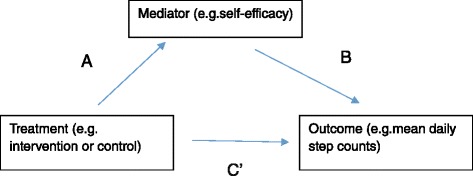
BACKGROUND: Despite increasing numbers of cancer survivors and evidence that diet and physical activity improves the health of cancer survivors, most do not meet guidelines. Some social cognitive theory (SCT)-based interventions have increased physical activity behavior, however few have used objective physical activity measures. The Exercise and Nutrition Routine Improving Cancer Health (ENRICH) randomized controlled trial reported a significant intervention effect for the primary outcome of pedometer-assessed step counts at post-test (8-weeks) and follow-up (20-weeks). The aim of this study was to test whether the SCT constructs operationalized in the ENRICH intervention were mediators of physical activity behavior change. METHODS: Randomized controlled trial with 174 cancer survivors and carers assessed at baseline, post-test (8-weeks), and follow-up (20-weeks). Participants were randomized to the ENRICH six session face-to-face healthy lifestyle program, or to a wait-list control. Hypothesized SCT mediators of physical activity behavior change (self-efficacy, behavioral goal, outcome expectations, impediments, and social expectations) were assessed using valid and reliable scales. Mediation was assessed using the Preacher and Hayes SPSS INDIRECT macro. RESULTS: At eight weeks, there was a significant intervention effect on behavioral goal (A = 9.12, p = 0.031) and outcome expectations (A = 0.25, p = 0.042). At 20 weeks, the intervention had a significant effect on self-efficacy (A = 0.31, p = 0.049) and behavioral goal (A = 13.15, p = 0.011). Only changes in social support were significantly associated with changes in step counts at eight weeks (B = 633.81, p = 0.023). Behavioral goal was the only SCT construct that had a significant mediating effect on step counts, and explained 22 % of the intervention effect at 20 weeks (AB = 397.9, 95 % CI 81.5-1025.5). CONCLUSIONS: SCT constructs had limited impact on objectively-assessed step counts in a multiple health behavior change intervention for cancer survivors and their carers. Behavioral goal measured post-intervention was a significant mediator of pedometer-assessed step counts at 3-months after intervention completion, and explained 22 % of the intervention effect. Future research should examine the separate impact of goals and planning, as well as examining mediators of behavior maintenance in physical activity interventions targeting cancer survivors. TRIAL REGISTRATION: Australian and New Zealand Clinical Trials registry ANZCTRN1260901086257 .
Overview
The claims and statistics of this paper haven’t been checked yet.
Free: it reads the open-access text and checks the first 5 claims that cite a source we can check. Create a free account to check every claim.
Integrity signals
Registry
Cites
Statistics
Figures
Verification
Claims the paper makes
The claims and statistics of this paper haven’t been checked yet.
Free: it reads the open-access text and checks the first 5 claims that cite a source we can check. Create a free account to check every claim.
Self-check
Percentages, sums and reported differences re-computed from the paper’s own numbers.
The self-check needs the paper’s full text.
Citations
Cites
Podsakoff, P. M., MacKenzie, S. B., Lee, J.-Y., & Podsakoff, N. P. (2003) · Journal of Applied Psychology · doi:10.1037/0021-9010.88.5.879 · Cited by 82,194 · cited 1×
“This is known as common method variance, and refers to the “variance that is attributable to the measurement method rather than to the constructs the measures are assumed to represent” [66].”
Preacher, K. J., & Hayes, A. F. (2008) · Behavior Research Methods · doi:10.3758/brm.40.3.879 · Cited by 34,117 · cited 3×
“Mediation was assessed using the Preacher and Hayes SPSS INDIRECT macro.”
MethodInfluentialToxicity and response criteria of the Eastern Cooperative Oncology Group
Oken, M. M., Creech, R. H., Tormey, D. C., Horton, J., Davis, T. E., McFadden, E. T., & Carbone, P. P. (1982) · AMERICAN JOURNAL OF CLINICAL ONCOLOGY · doi:10.1097/00000421-198212000-00014 · Cited by 11,647 · cited 1×
“or up and about more than 50 % of waking hours”) [40].”
BackgroundHuman agency in social cognitive theory.
Bandura, A. (1989) · American Psychologist · doi:10.1037/0003-066x.44.9.1175 · Cited by 8,263 · cited 1×
“The outcome expectations are the perceived positive and negative effects of the behavior, which are directly influenced by self-efficacy [33, 35].”
BackgroundMichie, S., Richardson, M., Johnston, M., Abraham, C., Francis, J., Hardeman, W., Eccles, M. P., Cane, J., & Wood, C. E. (2013) · Annals of Behavioral Medicine · doi:10.1007/s12160-013-9486-6 · Cited by 7,629 · cited 1×
“Future studies should use a taxonomy of behavior change techniques to develop the ‘active ingredients’ of an intervention [71, 72].”
MethodHealth Promotion by Social Cognitive Means
Bandura, A. (2004) · Health Education & Behavior · doi:10.1177/1090198104263660 · Cited by 7,238 · cited 7×
“Social cognitive theory (SCT) offers principles on how to predict and change health behavior [33].”
BackgroundMethodInfluentialWebb, T. L., & Sheeran, P. (2006) · Psychological Bulletin · doi:10.1037/0033-2909.132.2.249 · Cited by 3,732 · cited 1×
“A metaanalysis of behavior change interventions has concluded that a medium-to-large change in intention leads to a small-to-medium change in behavior [48, 49].”
BackgroundHealth promotion from the perspective of Social Cognitive Theory
Bandura, A. (1998) · Psychology & Health · doi:10.1080/08870449808407422 · Cited by 3,087 · cited 1×
“The category of ‘goals’ is broad, and for the purpose of this paper, the term goal or behavioral goal may be defined as “detailed planning of what the person will do, including definition of the behavior specifying frequency, intensity or duration” [26], and includes both proximal and distal goals [34].”
BackgroundExercise, physical activity, and self-determination theory: A systematic review
Teixeira, P. J., Carraça, E. V., Markland, D., Silva, M. N., & Ryan, R. M. (2012) · International Journal of Behavioral Nutrition and Physical Activity · doi:10.1186/1479-5868-9-78 · Cited by 2,963 · cited 1×
“As this was a highly motivated sample, it would be interesting to assess other constructs which may have been important, such as motivation, habit, or PA planning [32, 67, 68].”
BackgroundPredicting and Changing Behavior
Fishbein, M., & Ajzen, I. (2011) · doi:10.4324/9780203838020 · Cited by 2,807
American College of Sports Medicine Roundtable on Exercise Guidelines for Cancer Survivors
Schmitz, K. H., Courneya, K. S., Matthews, C., Demark-Wahnefried, W., GALVÃO, D. A., Pinto, B. M., IRWIN, M. L., WOLIN, K. Y., SEGAL, R. J., LUCIA, A., et al. (2010) · Medicine & Science in Sports & Exercise · doi:10.1249/mss.0b013e3181e0c112 · Cited by 2,781
A taxonomy of behavior change techniques used in interventions
Abraham, C., & Michie, S. (2008) · Health Psychology · doi:10.1037/0278-6133.27.3.379 · Cited by 2,525 · cited 1×
“The category of ‘goals’ is broad, and for the purpose of this paper, the term goal or behavioral goal may be defined as “detailed planning of what the person will do, including definition of the behavior specifying frequency, intensity or duration” [26], and includes both proximal and distal goals [34].”
BackgroundGlanz, K., & Bishop, D. B. (2010) · Annual Review of Public Health · doi:10.1146/annurev.publhealth.012809.103604 · Cited by 2,336
Effective techniques in healthy eating and physical activity interventions: A meta-regression.
Michie, S., Abraham, C., Whittington, C., McAteer, J., & Gupta, S. (2009) · Health Psychology · doi:10.1037/a0016136 · Cited by 2,229 · cited 1×
“There is some consistent evidence for specific behavior change constructs (eg self-regulatory behaviors) [54, 73, 74], and these specific behavior change constructs offer a promising way to develop potential future models of behavior change that should be tested in RCTs.”
BackgroundBray, F., Jemal, A., Grey, N., Ferlay, J., & Forman, D. (2012) · The Lancet Oncology · doi:10.1016/s1470-2045(12)70211-5 · Cited by 2,223 · cited 1×
“There are an estimated 28 million people worldwide living with cancer who were diagnosed in the previous five years [2].”
BackgroundDoes tailoring matter? Meta-analytic review of tailored print health behavior change interventions
Noar, S. M., Benac, C. N., & Harris, M. S. (2007) · Psychological Bulletin · doi:10.1037/0033-2909.133.4.673 · Cited by 2,136
Improving the reporting of pragmatic trials: An extension of the CONSORT statement
Zwarenstein, M., Treweek, S., Gagnier, J. J., Altman, D. G., Tunis, S., Haynes, B., Oxman, A. D., Moher, D., & groups, F. T. C. A. P. T. I. H. (. (2008) · BMJ · doi:10.1136/bmj.a2390 · Cited by 1,813 · cited 2×
“The reporting of the trial conformed to the Consolidated Standards of Reporting Trials (CONSORT) guidelines for pragmatic RCTs [39].”
MethodMichie, S., Ashford, S., Sniehotta, F. F., Dombrowski, S. U., Bishop, A., & French, D. P. (2011) · Psychology & Health · doi:10.1080/08870446.2010.540664 · Cited by 1,756 · cited 2×
“Construct Intervention strategies Behavior change techniques from the CALO-RE taxonomy [42] Description of scale Range; number of items Sources Cronbach alpha α”
BackgroundMethodSpeck, R. M., Courneya, K. S., Mâsse, L. C., Duval, S., & Schmitz, K. H. (2010) · Journal of Cancer Survivorship · doi:10.1007/s11764-009-0110-5 · Cited by 1,352
The IMAGE Study Group, Greaves, C. J., Sheppard, K. E., Abraham, C., Hardeman, W., Roden, M., Evans, P. H., & Schwarz, P. (2011) · BMC Public Health · doi:10.1186/1471-2458-11-119 · Cited by 1,163 · cited 1×
“There is some consistent evidence for specific behavior change constructs (eg self-regulatory behaviors) [54, 73, 74], and these specific behavior change constructs offer a promising way to develop potential future models of behavior change that should be tested in RCTs.”
BackgroundBlanchard, C. M., Courneya, K. S., & Stein, K. (2008) · Journal of Clinical Oncology · doi:10.1200/jco.2007.14.6217 · Cited by 1,021
Are interventions theory-based? Development of a theory coding scheme.
Michie, S., & Prestwich, A. (2010) · Health Psychology · doi:10.1037/a0016939 · Cited by 855 · cited 1×
“Future studies should use a taxonomy of behavior change techniques to develop the ‘active ingredients’ of an intervention [71, 72].”
MethodPhysical Activity, Biomarkers, and Disease Outcomes in Cancer Survivors: A Systematic Review
Ballard-Barbash, R., Friedenreich, C. M., Courneya, K. S., Siddiqi, S. M., McTiernan, A., & Alfano, C. M. (2012) · JNCI Journal of the National Cancer Institute · doi:10.1093/jnci/djs207 · Cited by 831
Physical activity for cancer survivors: meta-analysis of randomised controlled trials
Fong, D. Y. T., Ho, J. W. C., Hui, B. P. H., Lee, A. M., Macfarlane, D. J., Leung, S. S. K., Cerin, E., Chan, W. Y. Y., Leung, I. P. F., Lam, S. H. S., et al. (2012) · BMJ · doi:10.1136/bmj.e70 · Cited by 782
Ashford, S., Edmunds, J., & French, D. P. (2010) · British Journal of Health Psychology · doi:10.1348/135910709x461752 · Cited by 673 · cited 1×
“Ashford and colleagues reviewed 27 trials and found that half of the studies had included identification of PA barriers, and that this construct was significantly associated with lower self-efficacy [59].”
Backgroundde Moor, J. S., Mariotto, A. B., Parry, C., Alfano, C. M., Padgett, L., Kent, E. E., Forsythe, L., Scoppa, S., Hachey, M., & Rowland, J. H. (2013) · Cancer Epidemiology, Biomarkers & Prevention · doi:10.1158/1055-9965.epi-12-1356 · Cited by 670 · cited 1×
“Background The number of cancer survivors is increasing due to the aging population and improvements in early detection and cancer treatments [1].”
BackgroundOlander, E. K., Fletcher, H., Williams, S., Atkinson, L., Turner, A., & French, D. P. (2013) · International Journal of Behavioral Nutrition and Physical Activity · doi:10.1186/1479-5868-10-29 · Cited by 590 · cited 1×
“Behavior change techniques that prompt self-monitoring of behavioral outcomes and plan social support/social change have been associated with higher self-efficacy, and higher effect size for PA behavior change [63].”
BackgroundThe use of theory in health behavior research from 2000 to 2005: a systematic review
Painter, J. E., Borba, C. P. C., Hynes, M., Mays, D., & Glanz, K. (2008) · Annals of Behavioral Medicine · doi:10.1007/s12160-008-9042-y · Cited by 556
Psychosocial Care for Family Caregivers of Patients With Cancer
Northouse, L., Williams, A.-L., Given, B., & McCorkle, R. (2012) · Journal of Clinical Oncology · doi:10.1200/jco.2011.39.5798 · Cited by 527 · cited 1×
“Carers of cancer survivors share many of the same behavioral risk factors as survivors [20, 21], and also experience poor physical and psychosocial health [22], however they are rarely targeted in interventions.”
BackgroundHome-Based Physical Activity Intervention for Breast Cancer Patients
Pinto, B. M., Frierson, G. M., Rabin, C., Trunzo, J. J., & Marcus, B. H. (2005) · Journal of Clinical Oncology · doi:10.1200/jco.2005.03.080 · Cited by 460 · cited 1×
“However, in contrast to our results, other interventions based on SCT have reported that self-efficacy was the most commonly reported construct that influenced the results of the intervention [10, 52, 53].”
ResultA meta-analytic review of the effect of implementation intentions on physical activity
Bélanger-Gravel, A., Godin, G., & Amireault, S. (2013) · Health Psychology Review · doi:10.1080/17437199.2011.560095 · Cited by 413 · cited 2×
“A metaanalysis of behavior change interventions has concluded that a medium-to-large change in intention leads to a small-to-medium change in behavior [48, 49].”
BackgroundStacey, F. G., James, E. L., Chapman, K., Courneya, K. S., & Lubans, D. R. (2015) · Journal of Cancer Survivorship · doi:10.1007/s11764-014-0413-z · Cited by 411 · cited 1×
“However, the studies were heterogeneous and there were no specific SCT constructs, or specific intervention delivery modes that were related to intervention efficacy, and results did not differ if the intervention targeted single or multiple health behavior interventions [25].”
BackgroundSelf-citationLubans, D. R., Foster, C., & Biddle, S. J. H. (2008) · Preventive Medicine · doi:10.1016/j.ypmed.2008.07.011 · Cited by 388
Self-citationHayes, S. C., Spence, R. R., Galvão, D. A., & Newton, R. U. (2009) · Journal of Science and Medicine in Sport · doi:10.1016/j.jsams.2009.03.002 · Cited by 314
Demark-Wahnefried, W., Clipp, E. C., Lipkus, I. M., Lobach, D., Snyder, D. C., Sloane, R., Peterson, B., Macri, J. M., Rock, C. L., McBride, C. M., et al. (2007) · Journal of Clinical Oncology · doi:10.1200/jco.2007.10.7094 · Cited by 285
Theory-comparison and multiple-behavior research: common themes advancing health behavior research
Nigg, C. R. (2002) · Health Education Research · doi:10.1093/her/17.5.670 · Cited by 279
Rhodes, R. E., & Pfaeffli, L. A. (2010) · International Journal of Behavioral Nutrition and Physical Activity · doi:10.1186/1479-5868-7-37 · Cited by 277 · cited 5×
“As this was a highly motivated sample, it would be interesting to assess other constructs which may have been important, such as motivation, habit, or PA planning [32, 67, 68].”
BackgroundResultInfluentialUpdated evidence in support of diet and exercise interventions in cancer survivors
Pekmezi, D. W., & Demark-Wahnefried, W. (2011) · Acta Oncologica · doi:10.3109/0284186x.2010.529822 · Cited by 270
Beyond behavioural intentions: Planning mediates between intentions and physical activity
Scholz, U., Schüz, B., Ziegelmann, J. P., Lippke, S., & Schwarzer, R. (2008) · British Journal of Health Psychology · doi:10.1348/135910707x216062 · Cited by 247
Determinants of exercise adherence and maintenance among cancer survivors: A systematic review
Kampshoff, C. S., Jansen, F., van Mechelen, W., May, A. M., Brug, J., Chinapaw, M. J., & Buffart, L. M. (2014) · International Journal of Behavioral Nutrition and Physical Activity · doi:10.1186/1479-5868-11-80 · Cited by 205
Social Support and the Theory of Planned Behavior in the Exercise Domain
Courneya, K. S., Plotnikoff, R. C., Hotz, S. B., & Birkett, N. J. (2000) · American Journal of Health Behavior · doi:10.5993/ajhb.24.4.6 · Cited by 202
Health behaviors of cancer survivors: data from an Australian population-based survey
Eakin, E. G., Youlden, D. R., Baade, P. D., Lawler, S. P., Reeves, M. M., Heyworth, J. S., & Fritschi, L. (2007) · Cancer Causes & Control · doi:10.1007/s10552-007-9033-5 · Cited by 192
Lifestyle Factors in Cancer Survivorship
Ligibel, J. (2012) · Journal of Clinical Oncology · doi:10.1200/jco.2012.42.0638 · Cited by 183 · cited 1×
“However, in contrast to our results, other interventions based on SCT have reported that self-efficacy was the most commonly reported construct that influenced the results of the intervention [10, 52, 53].”
ResultCerin, E., Barnett, A., & Baranowski, T. (2009) · Journal of Nutrition Education and Behavior · doi:10.1016/j.jneb.2009.03.129 · Cited by 176 · cited 1×
“It is important to test for mediators in successful interventions to find out why they worked [70].”
BackgroundAnderson, E. S., Winett, R. A., Wojcik, J. R., & Williams, D. M. (2010) · Journal of Health Psychology · doi:10.1177/1359105309342297 · Cited by 175 · cited 4×
“Similar to other studies, we found that outcome expectations and impediments were not mediators of PA [32, 54].”
BackgroundResultInfluentialHutchison, A. J., Breckon, J. D., & Johnston, L. H. (2009) · Health Education & Behavior · doi:10.1177/1090198108318491 · Cited by 170
Ayotte, B. J., Margrett, J. A., & Hicks-Patrick, J. (2010) · Journal of Health Psychology · doi:10.1177/1359105309342283 · Cited by 162 · cited 1×
“Alternatively, trials that have assessed PA by selfreport have found that SCT constructs explain a greater amount of variance [65].”
BackgroundSpark, L. C., Reeves, M. M., Fjeldsoe, B. S., & Eakin, E. (2012) · Journal of Cancer Survivorship · doi:10.1007/s11764-012-0246-6 · Cited by 162
Plotnikoff, R. C., Blanchard, C., Hotz, S. B., & Rhodes, R. (2001) · Measurement in Physical Education and Exercise Science · doi:10.1207/s15327841mpee0504_01 · Cited by 159
Australian Ovarian Cancer Study Group, Beesley, V. L., Australian Ovarian Cancer Study—Quality of Life Study Investigators, Price, M. A., & Webb, P. M. (2010) · Supportive Care in Cancer · doi:10.1007/s00520-010-1035-2 · Cited by 157 · cited 1×
“Carers of cancer survivors share many of the same behavioral risk factors as survivors [20, 21], and also experience poor physical and psychosocial health [22], however they are rarely targeted in interventions.”
BackgroundWiedemann, A. U., Schüz, B., Sniehotta, F., Scholz, U., & Schwarzer, R. (2009) · Psychology & Health · doi:10.1080/08870440801958214 · Cited by 153 · cited 1×
“Recent literature has posited that planning is an important mediator between intentions and behavior [50, 51], and may help overcome the intention-behavior gap.”
BackgroundChronic Disease Self-Management: A Model for Tertiary Prevention
LORIG, K. (1996) · American Behavioral Scientist · doi:10.1177/0002764296039006005 · Cited by 118
Ligibel, J. A., Meyerhardt, J., Pierce, J. P., Najita, J., Shockro, L., Campbell, N., Newman, V. A., Barbier, L., Hacker, E., Wood, M., et al. (2012) · Breast Cancer Research and Treatment · doi:10.1007/s10549-011-1882-7 · Cited by 117
Wang, Y.-J., Boehmke, M., Wu, Y.-W. B., Dickerson, S. S., & Fisher, N. (2011) · Cancer Nursing · doi:10.1097/ncc.0b013e3181e4588d · Cited by 116 · cited 1×
“However, in contrast to our results, other interventions based on SCT have reported that self-efficacy was the most commonly reported construct that influenced the results of the intervention [10, 52, 53].”
ResultReviewing the Benefits of Physical Activity During Cancer Survivorship
Sabiston, C. M., & Brunet, J. (2012) · American Journal of Lifestyle Medicine · doi:10.1177/1559827611407023 · Cited by 103
Reduced Barriers Mediated Physical Activity Maintenance Among Breast Cancer Survivors
Rogers, L. Q., Markwell, S., Hopkins-Price, P., Vicari, S., Courneya, K. S., Hoelzer, K., & Verhulst, S. (2011) · Journal of Sport and Exercise Psychology · doi:10.1123/jsep.33.2.235 · Cited by 84
Miller, R., Brown, W., & Tudor-Locke, C. (2006) · Journal of Physical Activity and Health · doi:10.1123/jpah.3.3.257 · Cited by 82 · cited 1×
“These activities were converted to sex-specific step counts using previously reported values [43] and were added to the total step count value.”
MethodFrench, D. (2013) · British Journal of Health Psychology · doi:10.1111/bjhp.12038 · Cited by 82 · cited 1×
“There may have been cross-over or contamination between the individual construct measures, and it may be difficult to separate the individual effects of self-efficacy and outcome expectations [69].”
BackgroundShort, C. E., James, E. L., Stacey, F., & Plotnikoff, R. C. (2013) · Journal of Cancer Survivorship · doi:10.1007/s11764-013-0296-4 · Cited by 78
Self-citationDesign of FRESH START: A Randomized Trial of Exercise and Diet among Cancer Survivors
DEMARK-WAHNEFRIED, W., CLIPP, E. C., MCBRIDE, C., LOBACH, D. F., LIPKUS, I., PETERSON, B., CLUTTER SNYDER, D., SLOANE, R., ARBANAS, J., & KRAUS, W. E. (2003) · Medicine & Science in Sports & Exercise · doi:10.1249/01.mss.0000053704.28156.0f · Cited by 77
The BASES Expert Statement on Exercise and Cancer Survivorship
Campbell, A., Stevinson, C., & Crank, H. (2012) · Journal of Sports Sciences · doi:10.1080/02640414.2012.671953 · Cited by 76
Physical activity for cancer survivors: meta-analysis of randomised controlled trials
Ligibel, J. A. (2012) · Breast Diseases A Year Book Quarterly · doi:10.1016/j.breastdis.2012.09.019 · Cited by 75
Koring, M., Richert, J., Parschau, L., Ernsting, A., Lippke, S., & Schwarzer, R. (2011) · Psychology Health & Medicine · doi:10.1080/13548506.2011.608809 · Cited by 69 · cited 2×
“Recent literature has posited that planning is an important mediator between intentions and behavior [50, 51], and may help overcome the intention-behavior gap.”
BackgroundJames, E. L., Stacey, F. G., Chapman, K., Boyes, A. W., Burrows, T., Girgis, A., Asprey, G., Bisquera, A., & Lubans, D. R. (2015) · BMC Cancer · doi:10.1186/s12885-015-1775-y · Cited by 62 · cited 4×
“Participants (n = 174) were randomized and 133 completed baseline data collection [36].”
BackgroundMethodSelf-citationLubans, D. R., Morgan, P. J., Callister, R., Collins, C. E., & Plotnikoff, R. C. (2010) · Journal of Adolescent Health · doi:10.1016/j.jadohealth.2009.12.015 · Cited by 60 · cited 1×
“Similar to other trials that used objective PA measures [54, 61, 64], changes in the SCT constructs explained a small amount of variance in PA.”
ResultSelf-citationBerry, N., Miller, M., Woodman, R. J., Coveney, J., Dollman, J., Mackenzie, C., & Koczwara, B. (2014) · The Medical Journal of Australia · doi:10.5694/mja13.10701 · Cited by 56
AVERY, K. N. L., Donovan, J., Horwood, J. P., & Lane, J. A. (2012) · Cancer Causes & Control · doi:10.1007/s10552-012-9995-9 · Cited by 55
Resistance exercise interventions during and following cancer treatment: a systematic review
Focht, B. C., Clinton, S. K., Devor, S. T., Garver, M. J., Lucas, A. R., Thomas‐Ahner, J. M., & Grainer, E. (2013) · The Journal of Supportive Oncology · doi:10.12788/j.suponc.0002 · Cited by 54
Changes in social-cognitive variables are associated with stage transitions in physical activity
Parschau, L., Richert, J., Koring, M., Ernsting, A., Lippke, S., & Schwarzer, R. (2011) · Health Education Research · doi:10.1093/her/cyr085 · Cited by 38 · cited 2×
“As this was a highly motivated sample, it would be interesting to assess other constructs which may have been important, such as motivation, habit, or PA planning [32, 67, 68].”
BackgroundJames, E. L., Stacey, F., Chapman, K., Lubans, D. R., Asprey, G., Sundquist, K., Boyes, A., & Girgis, A. (2011) · BMC Public Health · doi:10.1186/1471-2458-11-236 · Cited by 38 · cited 1×
“The methods and primary analysis have been described in detail elsewhere [36, 38].”
MethodSelf-citationLubans, D. R., Plotnikoff, R. C., Jung, M. E., Eves, N. D., & Sigal, R. J. (2011) · Psychology and Health · doi:10.1080/08870446.2011.613471 · Cited by 36 · cited 1×
“Response shift theory has been offered as an explanation for null findings in previous PA interventions targeting clinical populations [60, 61].”
BackgroundSelf-citationResistance exercise interventions during and following cancer treatment: a systematic review
Focht, B., Clinton, S. K., Devor, S., Garver, M. J., Lucas, A. R., Thomas‐Ahner, J. M., & Grainger, E. M. (2013) · The Journal of Supportive Oncology · doi:10.12788/j.suponc.002 · Cited by 36
Chronic disease self-management
Katterl, R., & Kalucy, E. C. (2009) · Flinders Academic Commons (Flinders University) · Cited by 30
Petrick, J. L., Foraker, R. E., Kucharska‐Newton, A., Reeve, B. B., Platz, E. A., Stearns, S. C., Han, X., Windham, B. G., & Irwin, D. E. (2014) · Cancer Causes & Control · doi:10.1007/s10552-014-0421-3 · Cited by 29 · cited 1×
“Cancer survivors are at-risk of secondary cancers, other co-morbidities (like diabetes and cardiovascular disease), and poor physical and psychosocial health [3].”
BackgroundSpink, K. S., & Nickel, D. (2010) · Journal of Health Psychology · doi:10.1177/1359105309342308 · Cited by 29 · cited 1×
“Trials have supported links between self-regulatory efficacy and intentions [62]; self-efficacy and planning [50]; and intentions and barriers [48].”
BackgroundLubans, D. R., Mundey, C. M., Lubans, N. J., & Lonsdale, C. C. (2013) · Journal of Aging and Physical Activity · doi:10.1123/japa.21.1.20 · Cited by 21 · cited 1×
“Participants were provided with a workbook (which contained program notes, activities, and handouts), an open pedometer and a GymstickTM (a lightweight graphite shaft, with elastic tubing and foot straps that provide resistance to exercise all major muscle groups) [41].”
MethodSelf-citationTesting mediator variables in a physical activity intervention for women with type 2 diabetes
Plotnikoff, R. C., Lubans, D. R., Penfold, C. M., & Courneya, K. S. (2013) · Psychology of sport and exercise · doi:10.1016/j.psychsport.2013.09.004 · Cited by 19
Self-citationInformal carers: a focus on the real caregivers of people with cancer
Kotronoulas, G., Wengström, Y., & Kearney, N. (2012) · University of Surrey Open Research repository · Cited by 13
Romero, A., Borges, C. A., & Villar, B. (2015) · Revista Brasileira de Atividade Física & Saúde · doi:10.12820/rbafs.v.20n1p26 · Cited by 7
Cited by
Hayes, S. C., & Hofmann, S. G. (2021) · World Psychiatry · doi:10.1002/wps.20884 · Cited by 260
Interventions for promoting habitual exercise in people living with and beyond cancer
Turner, R. R., Steed, L., Quirk, H., Greasley, R. U., Saxton, J. M., Taylor, S. J., Rosario, D. J., Thaha, M. A., & Bourke, L. (2018) · Cochrane Database of Systematic Reviews · doi:10.1002/14651858.cd010192.pub3 · Cited by 227
Mönninghoff, A., Kramer, J. N., Hess, A. J., Ismailova, K., Teepe, G. W., Tudor Car, L., Müller-Riemenschneider, F., & Kowatsch, T. (2021) · Journal of Medical Internet Research · doi:10.2196/26699 · Cited by 183
“All but one study [40] reported end-of-intervention results, 33 studies reported short-term follow-up results [40-72], and only 8 studies reported long-term”
BackgroundResultInfluentialAerobic physical exercise for adult patients with haematological malignancies
Bergenthal, N., Will, A., Streckmann, F., Wolkewitz, K.-D., Monsef, I., Engert, A., Elter, T., & Skoetz, N. (2014) · Cochrane Database of Systematic Reviews · doi:10.1002/14651858.cd009075.pub2 · Cited by 166
Aerobic physical exercise for adult patients with haematological malignancies
Knips, L., Bergenthal, N., Streckmann, F., Monsef, I., Elter, T., & Skoetz, N. (2019) · Cochrane Database of Systematic Reviews · doi:10.1002/14651858.cd009075.pub3 · Cited by 109
Metadata
- Authors
- Stacey, F. G., James, E. L., Chapman, K., & Lubans, D. R.
- Affiliations
- Hunter Medical Research Institute (AU)
- Cancer Council NSW (AU)
- University of Newcastle Australia (AU)
- Corresponding author
- Stacey, F. G.
- Venue
- International Journal of Behavioral Nutrition and Physical Activity
- Published
- 2016-04-14
- Volume
- 13
- Issue
- 1
- Pages
- 49-49
- ISSN
- 1479-5868 (ISSN-L)
- PMC
- PMC4831117
- OpenAlex
- W2337863152
- Cited by
- 74
- References
- 79
- Citations by year
- 2026: 4 · 2025: 14 · 2024: 3 · 2023: 6 · 2022: 5 · 2021: 15 · 2020: 3 · 2019: 9 · 2018: 9 · 2017: 5
- FWCI
- 4.14
- Type
- journal article
- Language
- en
- Open access
- gold
- doi.org
- Licence
- cc-by
- Locations
- International Journal of Behavioral Nutrition and Physical Activity (publishedVersion, cc-by)
- PubMed Central (publishedVersion, cc-by)
- PubMed (publishedVersion)
- Figshare (submittedVersion, cc-by)
- NOVA (University of Newcastle Australia) (submittedVersion, cc-by)
- Funders
- Department of Health and Ageing, Australian Government (G0190125)
- Topics
- Health Sciences › Medicine › Oncology › Cancer survivorship and care
- Social Sciences › Psychology › Applied Psychology › Behavioral Health and Interventions
- Health Sciences › Medicine › Public Health, Environmental and Occupational Health › Physical Activity and Health
- Keywords
- social cognitive theory, physical activity, cancer survivors, caregivers, mediation analysis, behavioral objectives, self-efficacy, outcome expectations, social support, pedometer step counts, healthy lifestyle intervention, exercise and nutrition, objective physical activity measurement, social expectations, cancer survivorship
- MeSH terms
- Aged, Australia, Cognition, Diet, Female, Goals, Health Promotion, Humans, Life Style, Male, Middle Aged, Neoplasms, New Zealand, Psychological Theory, Social Support, Health Behavior, Exercise, Walking, Caregivers, Survivors, Self Efficacy, Intention, Actigraphy, Social Theory
About these checks
Registry, retraction, Cites and statistics results are computed, not judged, with one exception: a printed reference that no index lists is read once by a model before it counts as a citation error. Claims are extracted by a model and kept only when their quote appears verbatim in the text; each cited source is then checked, with a model’s help, for whether it says what the claim relies on. Those verdicts can be wrong — read the claim’s quote and the cited source before relying on one.
Statistics and arithmetic are recomputed, not judged.
Confidence bands are shown only for fields calibrated on our annotated test set. None is calibrated yet, so no band is shown.
What counts as a claim ›How we measure confidence ›How we check this ›
Are you an author, or do you see a problem with this page? Request a review
Data sources
Bibliographic data: Semantic Scholar, OpenAlex, Crossref.
Contains information from the Semantic Scholar Academic Graph Datasets, made available under the ODC Attribution License (ODC-BY 1.0).
Semantic Scholar’s data is described in: Kinney, R., et al. (2023). The Semantic Scholar Open Data Platform. arXiv:2301.10140.
