

Pasos Hacia La Salud: a randomized controlled trial of an internet-delivered physical activity intervention for Latinas
Open accessThe DOI matches its Crossref record; 62 of the 63 references it cites were found in a registry or an index; none of the 38 sources its claims cite is checked for support yet.
Abstract
BACKGROUND: Internet access has grown markedly in Latinos during the past decade. However, there have been no Internet-based physical activity interventions designed for Latinos, despite large disparities in lifestyle-related conditions, such as obesity and diabetes, particularly in Latina women. The current study tested the efficacy of a 6-month culturally adapted, individually tailored, Spanish-language Internet-based physical activity intervention. METHODS: Inactive Latinas (N = 205) were randomly assigned to the Tailored Physical Activity Internet Intervention or the Wellness Contact Control Internet Group. Participants in both groups received emails on a tapered schedule over 6 months to alert them to new content on the website. The primary outcome was minutes/week of moderate to vigorous physical activity (MVPA) at 6 months as measured by the 7-Day Physical Activity Recall; activity was also measured by accelerometers. Data were collected between 2011 and 2014 and analyzed in 2015 at the University of California, San Diego. RESULTS: Increases in minutes/week of MVPA were significantly greater in the Intervention Group compared to the Control Group (mean difference = 50.00, SE = 9.5, p < 0.01). Increases in objectively measured MVPA were also significantly larger in the Intervention Group (mean differences = 31.0, SE = 10.7, p < .01). The Intervention Group was also significantly more likely to meet national physical activity guidelines at 6 months (OR = 3.12, 95% CI 1.46-6.66, p < .05). CONCLUSION: Findings from the current study suggest that this Internet-delivered individually tailored intervention successfully increased MVPA in Latinas compared to a Wellness Contact Control Internet Group. TRIAL REGISTRATION: NCT01834287.
Overview
CoChat Summary
## TL;DR
This randomized controlled trial found that a 6-month Spanish-language, culturally adapted, individually tailored Internet physical activity intervention increased moderate-to-vigorous physical activity (MVPA) more than a wellness-contact control among inactive Latinas. The intervention also improved self-efficacy and cognitive/behavioral processes of change, and 31.4% of intervention participants met physical activity guidelines at 6 months versus 12.6% of controls.
## Key findings
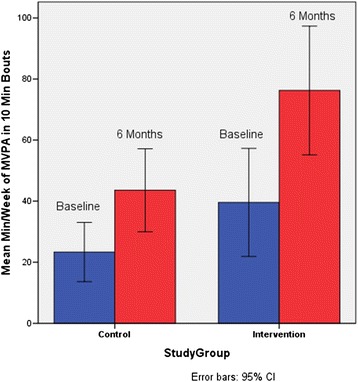
- Self-reported MVPA increased more in the intervention group than the control group at 6 months: mean difference = 50.00 min/week (SE = 9.5, p < 0.01).
- Objectively measured MVPA also favored the intervention: mean difference = 31.0 min/week (SE = 10.7, p < .01).
- Meeting national physical activity guidelines at 6 months was more likely in the intervention group: 31.4% vs 12.6%; OR = 3.12 (95% CI 1.46–6.66, p < .05).
- Intervention participants showed greater increases in psychosocial targets: self-efficacy (.42 vs -0.13, p < .001), cognitive processes (0.64 vs 0.05, p < .001), and behavioral processes (0.92 vs 0.25, p < .001); enjoyment showed only a trend (p = 0.08).
## Methods
- Randomized controlled trial of a 6-month Spanish-language, culturally and linguistically adapted, individually tailored Internet physical activity intervention versus a Spanish-language wellness contact control group.
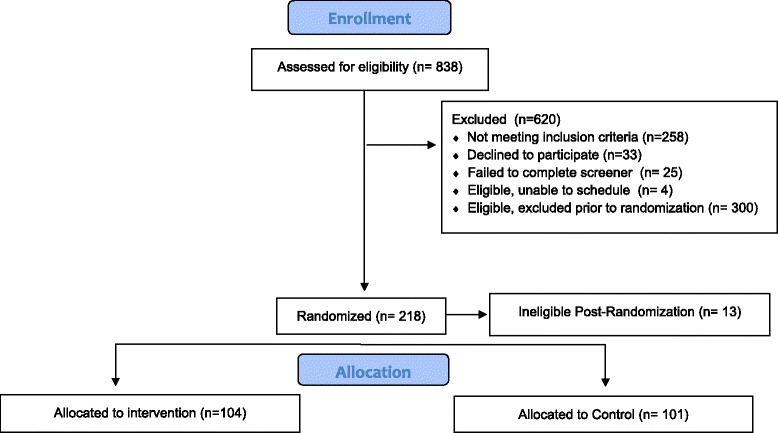
- Sample: 205 inactive Latinas; intervention N = 104, control N = 101; eligibility required ages 18–65, insufficient activity (< 60 min/week MVPA), BMI < 45 kg/m2, Spanish fluency, and Internet access.
- Primary analysis used linear mixed-effects regression for MVPA (self-report and accelerometer), with intent-to-treat analysis; guideline attainment was analyzed with logistic regression/GEE, and correlations between self-report and accelerometer MVPA were also computed.
## Limitations
- The paper states the sample was mostly healthy Mexican American women with some degree of health literacy and advanced education, so results may not generalize to other Latina subgroups, Latino men, or other ethnic groups.
- The paper notes the study was powered using a self-report measure, even though accelerometry was added as an additional primary outcome.
- Evident from the text: follow-up outcomes are reported at 6 months only in this paper, and the authors say a separate analysis of maintenance effects is forthcoming.
Model-written summary. Check it against the paper before relying on it.
Integrity signals
Registry
Cites
Statistics
Figures
Verification
Claims the paper makes
0 Valid · 0 Not valid · 15 Not checked · 32 Own results and interpretations
A result the paper reports from its own data — it cites no other source for it, so there is none to check. The quote shows it is in the paper.
In the paper
“On average, participants in the Intervention Group increased their min/week of MVPA from 8.0 (SD = 15.0), Median = 0 at baseline to 112.8 (SD = 97.1), Median = 100 min/week at 6 months”
§ Pasos Hacia La Salud: a randomized controlled trial of an internet-delivered physical activity intervention for Latinas > Results
plainstates a cause- Asserted: passes — The authors put it forward as true.
- Checkable: passes — It can be checked against evidence.
- Load-bearing: passes — The paper’s conclusions depend on it.
- Based: passes — The paper gives a reason why it holds.
A result the paper reports from its own data — it cites no other source for it, so there is none to check. The quote shows it is in the paper.
In the paper
“There were no significant differences between Intervention and Control with respect to changes in social support (friends), social support (family), social support (rewards and punishments), perceived stress, or depression (p’s > .05).”
§ Pasos Hacia La Salud: a randomized controlled trial of an internet-delivered physical activity intervention for Latinas > Results
plain- Asserted: passes — The authors put it forward as true.
- Checkable: passes — It can be checked against evidence.
- Load-bearing: unclear — It is unclear whether the paper’s conclusions depend on it.
- Based: passes — The paper gives a reason why it holds.
A result the paper reports from its own data — it cites no other source for it, so there is none to check. The quote shows it is in the paper.
In the paper
“and a trend for enjoyment (13.37(23.81) vs. 7.09(21.39),p = 0.08) from baseline to 6 months.”
§ Pasos Hacia La Salud: a randomized controlled trial of an internet-delivered physical activity intervention for Latinas > Results
hedgedstates an association- Asserted: passes — The authors put it forward as true.
- Checkable: passes — It can be checked against evidence.
- Load-bearing: unclear — It is unclear whether the paper’s conclusions depend on it.
- Based: passes — The paper gives a reason why it holds.
A result the paper reports from its own data — it cites no other source for it, so there is none to check. The quote shows it is in the paper.
In the paper
“Intervention participants showed greater increases in self-efficacy (.42 (1.03) vs. -0.13(0.92), p < .001)”
§ Pasos Hacia La Salud: a randomized controlled trial of an internet-delivered physical activity intervention for Latinas > Results
plainstates a cause- Asserted: passes — The authors put it forward as true.
- Checkable: passes — It can be checked against evidence.
- Load-bearing: passes — The paper’s conclusions depend on it.
- Based: passes — The paper gives a reason why it holds.
A result the paper reports from its own data — it cites no other source for it, so there is none to check. The quote shows it is in the paper.
In the paper
“behavioral processes (0.92(1.00) vs 0.25(0.75), p < .001)”
§ Pasos Hacia La Salud: a randomized controlled trial of an internet-delivered physical activity intervention for Latinas > Results
plainstates a cause- Asserted: passes — The authors put it forward as true.
- Checkable: passes — It can be checked against evidence.
- Load-bearing: passes — The paper’s conclusions depend on it.
- Based: passes — The paper gives a reason why it holds.
23 more claims
Create a free account to see all 47 claims and to verify the 38 references still open.
- It may state two separate claims as one. 16
- Probably not a substantial claim. 6
Claims other papers make about this one
Each is checked against this paper’s own text: does it say what the citing paper says it does?
The source backs part of the claim, not all of it — or backs it for a different population, condition or comparison.
In the citing paper
“study participants in the two interventions that did not show a significant difference in the depression symptoms experienced a limited user acceptance of the eHealth interventions (48, 49) compared to study participants in the other studies included in this review.”
From Efficacy of eHealth interventions to reduce depression symptoms in individuals with obesity: a systematic review of randomized controlled trials (2024) · cites this paper as [48]
Experimental — accuracy not yet measuredThe cited source says what the claim attributes to it.
In the citing paper
“Results from two of the six included studies (48, 49) showed no significant group differences in depression symptoms.”
From Efficacy of eHealth interventions to reduce depression symptoms in individuals with obesity: a systematic review of randomized controlled trials (2024) · cites this paper as [48]
Citations
Cites
The CES-D Scale: A Self-Report Depression Scale for Research in the General Population
Radloff, L. S. (1977) · Applied Psychological Measurement · doi:10.1177/014662167700100306 · Cited by 53,267
A Global Measure of Perceived Stress
Cohen, S., Kamarck, T., & Mermelstein, R. (1983) · Journal of Health and Social Behavior · doi:10.2307/2136404 · Cited by 32,807 · cited 2×
“The PSS is validated and has been used in many studies examining the association between stress and health and has an internal consistency of 0.86 in this sample [43].”
Influential(1985) · Medical Entomology and Zoology · Cited by 19,180
The Physical Activity Guidelines for Americans
Piercy, K. L., Troiano, R. P., Ballard, R. M., Carlson, S. A., Fulton, J. E., Galuska, D. A., George, S. M., & Olson, R. D. (2018) · JAMA · doi:10.1001/jama.2018.14854 · Cited by 9,755
Heart Disease and Stroke Statistics—2023 Update: A Report From the American Heart Association
Tsao, C. W., Aday, A. W., Almarzooq, Z. I., Anderson, C. A. M., Arora, P., Avery, C. L., Baker-Smith, C. M., Beaton, A. Z., Boehme, A. K., Buxton, A. E., et al. (2023) · Circulation · doi:10.1161/cir.0000000000001123 · Cited by 8,300
Physical Activity in the United States Measured by Accelerometer
TROIANO, R. P., BERRIGAN, D., DODD, K. W., MÂSSE, L. C., TILERT, T., & MCDOWELL, M. (2008) · Medicine & Science in Sports & Exercise · doi:10.1249/mss.0b013e31815a51b3 · Cited by 7,638 · cited 1×
“national guidelines [2–8] and lower compared to non-Latino whites [5–8].”
Heart Disease and Stroke Statistics—2013 Update: A Report From the American Heart Association
Go, A. S., Mozaffarian, D., Roger, V. L., Benjamin, E. J., Berry, J. D., Borden, W. B., Bravata, D. M., Dai, S., Ford, E. S., Fox, C. S., et al. (2013) · Circulation · doi:10.1161/cir.0b013e31828124ad · Cited by 5,292
(1988) · Cited by 4,111
Calibration of the Computer Science and Applications, Inc. accelerometer
FREEDSON, P. S., MELANSON, E., & SIRARD, J. (1998) · Medicine & Science in Sports & Exercise · doi:10.1097/00005768-199805000-00021 · Cited by 3,825
Prince, S. A., Adamo, K. B., Hamel, M., Hardt, J., Connor Gorber, S., & Tremblay, M. (2008) · International Journal of Behavioral Nutrition and Physical Activity · doi:10.1186/1479-5868-5-56 · Cited by 3,162
Research works printed but not linked: 2
- US Department of Health and Human Services Early release of selected estimates based on data from the national health interview survey, 2013 2014 Washington, DC US Department of Health and Human Services
- Zickuhr K Smith A Digital differences 2012
Cited by
Cheng, C., Beauchamp, A., Elsworth, G. R., & Osborne, R. H. (2020) · Journal of Medical Internet Research · doi:10.2196/18476 · Cited by 220
“• Health literacy assessed by the Short Test of Functional Health Literacy • Focus groups • Social cognitive theory • Transtheoretical model Marcus et al (2016) [71]”
BackgroundMethodInfluentialSocial cognitive theory-based health promotion in primary care practice: A scoping review
Islam, K. F., Awal, A., Mazumder, H., Munni, U. R., Majumder, K., Afroz, K., Tabassum, M. N., & Hossain, M. M. (2023) · Heliyon · doi:10.1016/j.heliyon.2023.e14889 · Cited by 207
Lewis, B. A., Napolitano, M. A., Buman, M. P., Williams, D. M., & Nigg, C. R. (2017) · Journal of Behavioral Medicine · doi:10.1007/s10865-016-9797-8 · Cited by 194
“However, one recent study by Marcus et al. (2016) did find that inactive Latinas randomly assigned to a culturally competent Internet-based intervention increased their physical activity levels relative to a wellness control.”
Promoting Physical Activity among Underserved Populations
Mendoza-Vasconez, A. S., Linke, S., Muñoz, M. A., Pekmezi, D., Ainsworth, M. C., Cano, M., Williams, V., Marcus, B. H., & Larsen, B. A. (2016) · Current Sports Medicine Reports · doi:10.1249/jsr.0000000000000276 · Cited by 131
“Study results revealed significantly greater increases in PA for the intervention group, compared with the control group (55).”
MethodResultSelf-citationPatnode, C. D., Redmond, N., Iacocca, M. O., & Henninger, M. (2022) · JAMA · doi:10.1001/jama.2022.7408 · Cited by 89
“Sample size, median (IQR) [range] 314 (200-710) [32-48 835] Follow-up at 12 mo or closest, median (IQR) [range], % 86 (77-91) [38-100] Population selectionb”
Arsenijevic, J., Tummers, L. G., & Bosma, N. S. (2020) · Journal of Medical Internet Research · doi:10.2196/11613 · Cited by 89
“Our results also show that Web-based platforms are usually developed as exclusive tools for vulnerable groups—for example, for the gay population or Hispanic minorities [17,99,100].”
BackgroundCotie, L. M., Prince, S. A., Elliott, C. G., Ziss, M. C., McDonnell, L. A., Mullen, K. A., Hiremath, S., Pipe, A. L., Reid, R. D., & Reed, J. L. (2018) · Obesity Reviews · doi:10.1111/obr.12700 · Cited by 66
“self-report and objective] (39,43,48,52,55,62,72) and eight reported on more than one intervention (41,44,45,63,66,82,85,87)).”
BackgroundBalci, S., Spanhel, K., Sander, L., & Baumeister, H. (2022) · npj Digital Medicine · doi:10.1038/s41746-022-00569-x · Cited by 60
Hartman, S. J., DUNSIGER, S. I., Bock, B. C., Larsen, B. A., Linke, S., Pekmezi, D., Marquez, B., Gans, K. M., Mendoza-Vasconez, A. S., & Marcus, B. H. (2016) · Journal of Behavioral Medicine · doi:10.1007/s10865-016-9800-4 · Cited by 49
“For full details on cohort retention please see Marcus et al., 2016.”
Self-citationSystematic Review of Physical Activity Interventions in Hispanic Adults
Loya, J. (2018) · Hispanic Health Care International · doi:10.1177/1540415318809427 · Cited by 46
“Duration of Studies The follow-up period ranged from 3 to 24 months; however, most (62%) studies had follow-up periods between 3 and 6 months (Babamoto et al., 2009; Coleman et al., 2012; Duggan et al., 2014; Eakin et al., 2007; King et al., 2013; Marcus et al., 2013; Marcus et al., 2016; Marshall et al., 2013; McEwen…”
BackgroundMethodInfluentialJoseph, R. P., Royse, K. E., & Benitez, T. J. (2019) · Journal of Physical Activity and Health · doi:10.1123/jpah.2018-0103 · Cited by 47
Larsen, B. A., Benitez, T. J., Cano, M., DUNSIGER, S. I., Marcus, B. H., Mendoza-Vasconez, A. S., Sallis, J. F., & ZIVE, M. M. (2018) · Journal of Medical Internet Research · doi:10.2196/jmir.9206 · Cited by 46
“These findings are contrary to the results from previous studies among adult Latina women, who have mostly increased walking as a result of similar interventions [33,42], although walking was still a popular activity in our study.”
ResultSelf-citationDigital Health Technology Use Among Spanish Speakers in the US: A Scoping Review
Higashi, R. T., Thakur, B., Repasky, E. C., Casillas, A., Steitz, B. D., Hogan, T. P., Lehmann, C. U., Peterson, E. D., Návar, A. M., & Turer, R. W. (2025) · JAMA Network Open · doi:10.1001/jamanetworkopen.2025.10386 · Cited by 44
Lindsay, A. C., Wasserman, M., Muñoz, M. A., Wallington, S. F., & Greaney, M. L. (2018) · JMIR Public Health and Surveillance · doi:10.2196/publichealth.8159 · Cited by 40
“Given the increased availability and use of the Internet by Latino parents of various socioeconomic and educational levels [102,103], online interventions (eHealth) [104-106] may offer a viable way to provide health information and professional support to Latino parents regarding PA parenting practices that encourage,…”
Pinto, B. M., DUNSIGER, S. I., Kindred, M. M., & Mitchell, S. (2021) · Annals of Behavioral Medicine · doi:10.1093/abm/kaab078 · Cited by 32
Self-citationPowell‐Wiley, T. M., Brewer, L. C., Burke, L. E., Hernández, R., Kaar, J. L., Kepper, M. M., Kline, C. E., Lopez, K. N., Roberson, S. L., Spees, C., et al. (2025) · Circulation · doi:10.1161/cir.0000000000001314 · Cited by 38
Masri, A. E., Kolt, G. S., & George, E. S. (2019) · Ethnicity and Health · doi:10.1080/13557858.2019.1658183 · Cited by 41
“(Benitez et al. 2015; Marcus et al. 2016) and one study was accessed through a specific”
BackgroundMethodInfluentialPsychometrics of the self-efficacy for physical activity scale among a Latina women sample
Mendoza-Vasconez, A. S., Marquez, B., Benitez, T. J., & Marcus, B. H. (2018) · BMC Public Health · doi:10.1186/s12889-018-5998-0 · Cited by 45
Self-citationA Latino Patient-Centered, Evidence-Based Approach to Diabetes Prevention
Rosas, L. G., Lv, N., Lewis, M. A., Venditti, E. M., Ζavella, P., Luna, V., & Ma, J. (2018) · The Journal of the American Board of Family Medicine · doi:10.3122/jabfm.2018.03.170280 · Cited by 31
Interventions for improving health literacy in migrants
Baumeister, A., Aldin, A., Chakraverty, D., Hübner, C., Adams, A., Monsef, I., Skoetz, N., Kalbe, E., & Woopen, C. (2023) · Cochrane Database of Systematic Reviews · doi:10.1002/14651858.cd013303.pub2 · Cited by 36
Linke, S., DUNSIGER, S. I., Gans, K. M., Hartman, S. J., Pekmezi, D., Larsen, B. A., Mendoza-Vasconez, A. S., & Marcus, B. H. (2019) · Journal of Medical Internet Research · doi:10.2196/13063 · Cited by 27
“The setting, sample, and primary outcomes are described in further detail in previously published manuscripts [13,14].”
Self-citationLarsen, B. A., Marcus, B. H., Pekmezi, D., Hartman, S. J., & Gilmer, T. (2017) · Journal of Medical Internet Research · doi:10.2196/jmir.6257 · Cited by 22
“As reported elsewhere [13], MVPA increased from baseline to 6 months in both conditions.”
BackgroundSelf-citationEgocentric networks and physical activity outcomes in Latinas
Marquez, B., Norman, G. J., Fowler, J. H., Gans, K. M., & Marcus, B. H. (2018) · PLoS ONE · doi:10.1371/journal.pone.0199139 · Cited by 21
Self-citationLarsen, B. A., Greenstadt, E., Olesen, B., Marcus, B. H., Godino, J., & Zive, M. (2021) · JMIR Formative Research · doi:10.2196/26195 · Cited by 14
“The results showed that MVPA was significantly higher in the intervention group than in the control group over the 6-month intervention [13], and the increase was maintained 6 months later [14].”
BackgroundSelf-citationMarcus, B. H., DUNSIGER, S. I., Pekmezi, D., Benitez, T. J., Larsen, B. A., & Meyer, D. M. (2021) · Journal of Behavioral Medicine · doi:10.1007/s10865-021-00246-6 · Cited by 20
Self-citationRandomized Trial of a Physical Activity Intervention for Latino Men: Activo
Larsen, B. A., Benitez, T. J., Mendoza-Vasconez, A. S., Hartman, S. J., Linke, S., Pekmezi, D., DUNSIGER, S. I., Nodora, J., Gans, K. M., & Marcus, B. H. (2020) · American Journal of Preventive Medicine · doi:10.1016/j.amepre.2020.03.007 · Cited by 17
Self-citationThe Time Is Now for eHealth Research With Latinos
Rodriquez, E. J., & Pérez‐Stable, E. J. (2017) · American Journal of Public Health · doi:10.2105/ajph.2017.304055 · Cited by 16
A systematic review on eHealth technology personalization approaches
ten Klooster, I., Kip, H., van Gemert‐Pijnen, J. E. W. C., Crutzen, R., & Kelders, S. M. (2024) · iScience · doi:10.1016/j.isci.2024.110771 · Cited by 25
Arredondo, E. M., Haughton, J., Ayala, G. X., Slymen, D. J., Sallis, J. F., Perez, L. G., SERRANO, N. H., Ryan, S., Valdivia, R., Lopez, N. V., et al. (2022) · International Journal of Behavioral Nutrition and Physical Activity · doi:10.1186/s12966-022-01329-6 · Cited by 14
Benitez, T. J., Artigas, E., Larsen, B. A., Joseph, R. P., Pekmezi, D., Marquez, B., Whitworth, J. W., & Marcus, B. H. (2023) · International Journal of Behavioral Medicine · doi:10.1007/s12529-023-10183-0 · Cited by 15
“Further iterations of the intervention [16, 19, 23–25] have been conducted to achieve greater PA (e.g., by targeting key theoretical constructs associated with PA change) and leverage the use of technology (Internet and text messaging), including Activas II [16–18] and Pasos II [19].”
Self-citationBenitez, T. J., DUNSIGER, S. I., Pekmezi, D., Larsen, B. A., Mendoza-Vasconez, A. S., Linke, S., Bock, B. C., Gans, K. M., Hartman, S. J., & Marcus, B. H. (2020) · Contemporary Clinical Trials · doi:10.1016/j.cct.2020.106081 · Cited by 14
“Participants were recruited using methods that had proven to be successful in our previous studies [26, 29] (e.”
MethodSelf-citationRecommendations for a Culturally Salient Web-Based Physical Activity Program for African Americans
Kariuki, J. K., Gibbs, B. B., Davis, K. K., Mecca, L. P., Hayman, L. L., & Burke, L. E. (2019) · Translational Journal of the American College of Sports Medicine · doi:10.1249/tjx.0000000000000077 · Cited by 12
“Despite the paucity of data, preliminary studies exploring the therapeutic potential of web-based PA interventions designed for minorities suggest they can be efficacious and cost-effective in promoting adherence to PA goals (16,17).”
BackgroundLarsen, B. A., Greenstadt, E., Olesen, B., Osuna, L., Godino, J., Marcus, B. H., DUNSIGER, S. I., Meyer, D. M., & Zive, M. (2022) · Trials · doi:10.1186/s13063-022-06105-2 · Cited by 12
“Marcus BH, Dunsiger SI, Pekmezi DW, Larsen BA, Bock BC, Gans KM, et al. The Seamos Saludables study: a randomized controlled physical activity trial of Latinas.”
BackgroundInfluentialSelf-citationWeight and weight control behaviors of Latinas and their social ties.
Marquez, B., Norman, G. J., Fowler, J. H., Gans, K. M., & Marcus, B. H. (2018) · Health Psychology · doi:10.1037/hea0000597 · Cited by 12
“The main outcome of the random- ized controlled trial was minutes per week of moderate-tovigorous physical activity (Marcus et al., 2016).”
BackgroundSelf-citationmHealth Technology and CVD Risk Reduction
Cajita, M., Zheng, Y., Kariuki, J. K., Vuckovic, K. M., & Burke, L. E. (2021) · Current Atherosclerosis Reports · doi:10.1007/s11883-021-00927-2 · Cited by 13
“…2060 steps/day, P<0.001) MVPA: Combined IG1 and IG2 had a significantly higher MVPA per day compared to CG (mean difference, 18.2 min/day, P < 0.001) Marcus et al. (2016) [23] USA 2-arm RCT, 6-mo intervention N = 205 IG: n=104 CG: n=101 Age: 39.2 (10.5) years 100% Female 51.7% White BMI 28.8…”
InfluentialThe STAR-MAMA RCT: Bilingual Mobile Health Coaching for Postpartum Weight Loss
Horwitz, M. E. M., Edwards, C. V., Athavale, P., McCloskey, L., Cabral, H., Benjamin, E. J., & Handley, M. A. (2023) · American Journal of Preventive Medicine · doi:10.1016/j.amepre.2023.03.021 · Cited by 10
Collins, T. C., Lu, L., Valverde, M. G., Silva, M. X., & Parra-Medina, D. M. (2019) · Preventive Medicine Reports · doi:10.1016/j.pmedr.2019.100965 · Cited by 12
“One of the two studies included objective measures for PA (Marcus et al., 2016).”
BackgroundLopez‐Pentecost, M., Perkin, S., Freylersythe, S. G., Rossi, P., Rolle, L. D., George, S. M. S., & Crane, T. E. (2023) · Nutrients · doi:10.3390/nu15224799 · Cited by 10
“…including telephone calls [24,25], smartphone applications [26], online websites [27,36], email communication [27], or a combination of these [27,36], and have demonstrated their utility at addressing limitations of other conventional intervention approaches, particularly, barriers known to…”
BackgroundMethodInfluentialNelson, A., Ayers, E., Sun, F., & Zhang, A. (2020) · Research on Social Work Practice · doi:10.1177/1049731519899991 · Cited by 13
Walker, T. J., Heredia, N. I., & Reininger, B. M. (2019) · Hispanic Journal of Behavioral Sciences · doi:10.1177/0739986319854144 · Cited by 13
“Conclusions This is the first known study to assess the validity and reliability of the Spanish-language version of the Social Support for Exercise Scale despite its common use in previous studies (Craven et al., 2018; Hartman et al., 2011; Keller et al., 2014; Marcus et al., 2016; B. Marquez et al., 2016; D. X. Marqu…”
MethodInfluentialKatz, L. B., Aparicio, M., Cameron, H., & Ceppa, F. (2022) · Diabetes Spectrum · doi:10.2337/ds20-0101 · Cited by 13
“Numeracy score, n (%)* 1–8 9–16 17–24 25–32 33–40 41–48 3 (4) 9 (11) 24 (30) 18 (23) 16 (20) 9 (11) 2 (5) 2 (5) 10 (27) 10 (27) 11 (30) 2 (5) 5 (4) 11 (9) 34 (29) 28 (24) 27 (23) 11 (9)”
BackgroundPhysical Activity Intervention Effects on Sedentary Time in Spanish-Speaking Latinas
Hartman, S. J., Pekmezi, D., DUNSIGER, S. I., & Marcus, B. H. (2020) · Journal of Physical Activity and Health · doi:10.1123/jpah.2019-0112 · Cited by 9
Self-citationKocol, D., Bäuerle, A., Schadendorf, T., Geiger, S., Krakowczyk, J. B., Skoda, E.-M., & Teufel, M. (2024) · Frontiers in Psychiatry · doi:10.3389/fpsyt.2024.1296433 · Cited by 7
von Ash, T., DUNSIGER, S. I., Williams, D. M., Larsen, B. A., Bohlen, L. C., Pekmezi, D., Mendoza-Vasconez, A. S., Benitez, T. J., Bock, B. C., Hartman, S. J., et al. (2024) · American Journal of Preventive Medicine · doi:10.1016/j.amepre.2024.03.006 · Cited by 8
Self-citationHirsch, K. E., & Blomquist, K. K. (2020) · Current Obesity Reports · doi:10.1007/s13679-020-00373-2 · Cited by 10
Gans, K. M., Dulin, A., Palomo, V., Benitez, T. J., DUNSIGER, S. I., Dionne, L. A., Champion, G., Edgar, R., & Marcus, B. H. (2020) · JMIR Research Protocols · doi:10.2196/23690 · Cited by 7
“In our recently completed intervention with Latinas [15], the mean change in total MVPA was 42.”
BackgroundMethodInfluentialSelf-citationBhundoo, A. K., Pillay, J. D., & Wilke, J. (2025) · Journal of Medical Internet Research · doi:10.2196/64856 · Cited by 14
“We therefore reinforce the need for additional studies to fully gauge the long-term effects of OE [41,53,54].”
Carson, J., Greenstadt, E., Olivera, B., DUNSIGER, S. I., Zive, M., Higgins, M., Godino, J., Marcus, B. H., Meyer, D. M., & Larsen, B. A. (2025) · JMIR mhealth and uhealth · doi:10.2196/71623 · Cited by 9
“Previous findings from our randomized controlled trials with adult Latina populations suggested that tailored technology-based interventions can be feasible and effective for increasing MVPA in adults [20,51-54].”
Self-citationNaqvi, J. B., Olesen, B., Greenstadt, E., Carson, J., Marcus, B. H., Godino, J., Zive, M., Meyer, D. M., Higgins, M., Osuna, L., et al. (2024) · Contemporary Clinical Trials · doi:10.1016/j.cct.2024.107716 · Cited by 5
Self-citationLong-term physical activity outcomes in the Seamos Activas II trial
Marcus, B. H., Larsen, B. A., Linke, S., Hartman, S. J., Pekmezi, D., Benitez, T. J., Sallis, J. F., Mendoza-Vasconez, A. S., & DUNSIGER, S. I. (2021) · Preventive Medicine Reports · doi:10.1016/j.pmedr.2021.101628 · Cited by 9
Self-citationBenitez, T. J., Brown, N. I., Marcus, B. H., Sanchez, A., von Ash, T., & Joseph, R. P. (2024) · American Journal of Lifestyle Medicine · doi:10.1177/15598276241246734 · Cited by 5
Self-citationMendoza-Vasconez, A. S., Benitez, T. J., DUNSIGER, S. I., Gans, K. M., Hartman, S. J., Linke, S., Larsen, B. A., Pekmezi, D., & Marcus, B. H. (2022) · Trials · doi:10.1186/s13063-022-06575-4 · Cited by 7
Self-citationLorenzo, E., Page, J., Wong, R., & Lyons, E. (2025) · International Journal of Behavioral Nutrition and Physical Activity · doi:10.1186/s12966-025-01783-y · Cited by 4
“Mean ages ranged from 28.4 [42] to 44.6 years old [43] and most studies included a wide age range for inclusion, 18–67 [52] and 18–65 years [40, 44, 46, 49, 51].”
InfluentialReininger, B. M., Mitchell-Bennett, L. A., Lee, M., Yeh, P. G., Xu, T., Davé, A. C., Park, S. K., & Toro, A. G. O.-D. (2022) · International Journal of Environmental Research and Public Health · doi:10.3390/ijerph19084514 · Cited by 5
“The lowest rate of PA engagement are seen in those in poverty [8,45], with NCDs like obesity [46], and being of a female sex [46].”
BackgroundDulin, A., DUNSIGER, S. I., Benitez, T. J., Larsen, B. A., Marcus, B. H., Champion, G., & Gans, K. M. (2023) · Journal of Medical Internet Research · doi:10.2196/39310 · Cited by 4
“Latina women [25,26].”
Self-citationIncreases in Muscle-Strengthening Activities Among Latinas in Seamos Saludables
Benitez, T. J., DUNSIGER, S. I., Marquez, B., Larsen, B. A., Pekmezi, D., & Marcus, B. H. (2022) · Health Education & Behavior · doi:10.1177/10901981221074908 · Cited by 3
“While a select number of interventions for Latinas have incorporated strategies to overcome general PA barriers (Arredondo et al., 2017; Koniak-Griffin et al., 2015; Marcus et al., 2013, 2015, 2016), outcomes have focused primarily on aerobic MVPA in this area.”
BackgroundSelf-citationUse of Web-Based Parent–Adolescent Health Promotion Program Among Puerto Ricans
Villarruel, A. M., Varas‐Díaz, N., Hanlon, A. L., Díaz, E. B., Lozano, A. J., & DiNapoli, L. (2018) · Nursing Research · doi:10.1097/nnr.0000000000000306 · Cited by 2
“…of decreased substance use, reductions in unsafe sex among adolescents aged 15 years or less, and increased physical activity as measured in minutes per week of moderate to vigorous physical activity (Estrada et al., 2015; Marcus et al., 2015, 2016; Marsiglia, Ayers, Baldwin-White, & Booth, 2016).”
Bohlen, L. C., DUNSIGER, S. I., von Ash, T., Larsen, B. A., Pekmezi, D., Marquez, B., Benitez, T. J., Mendoza-Vasconez, A. S., Hartman, S. J., Williams, D. M., et al. (2024) · Journal of Medical Internet Research · doi:10.2196/51708 · Cited by 6
“Successful PA interventions for Latina women have made linguistic adaptations for this population and further sought to address these barriers through remote intervention delivery approaches (eg, mail, phone, or web delivery) [13,14].”
InfluentialSelf-citationHeredia, N. I., Park, S. K., Lee, M., Mitchell-Bennett, L. A., Yeh, P. G., Gowen, R. M. Z., Rodriguez, A., Lee, M., & Reininger, B. M. (2024) · Journal of Physical Activity and Health · doi:10.1123/jpah.2023-0575 · Cited by 2
Lapse, Relapse, and Recovery in Physical Activity Interventions for Latinas: a Survival Analysis
Mendoza-Vasconez, A. S., Arredondo, E. M., Larsen, B. A., Crespo, N. C., Hurst, S., & Marcus, B. H. (2021) · International Journal of Behavioral Medicine · doi:10.1007/s12529-020-09943-z · Cited by 3
“1 3 found that increases in self-report and accelerometer-measured PA were significantly greater for the intervention arm, compared with the control arm [28, 29].”
MethodResultSelf-citationLopez‐Pentecost, M., Perkin, S., Freylersythe, S. G., Rossi, P., Rolle, L. D., George, S. M. S., & Crane, T. E. (2023) · doi:10.2196/preprints.47093 · Cited by 2
Loya, J. (2021) · MOspace Institutional Repository (University of Missouri) · doi:10.32469/10355/88130 · Cited by 1
A review of healthy weight behavior maintenance in Hispanic women
García, D. S. (2018) · Health Care For Women International · doi:10.1080/07399332.2017.1421197
“Yet, only one study group assessed their participants’ selfefficacy over time, at post-intervention (Marcus et al., 2016), finding a significant increase in the level of self-efficacy at 6 months (p D .”
BackgroundReininger, B. M., Mitchell-Bennett, L. A., Lee, M., Yeh, P. G., Xu, T., Davé, A. C., Park, S. K., & Toro, A. G. O.-D. (2021) · Research Square · doi:10.21203/rs.3.rs-431499/v1
Larsen, B. A., Greenstadt, E., Olesen, B., Osuna, L., Godino, J., Marcus, B. H., DUNSIGER, S. I., Meyer, D. M., & Zive, M. (2022) · Research Square · doi:10.21203/rs.3.rs-1255215/v1
Self-citationBhundoo, A. K., Pillay, J. D., & Wilke, J. (2024) · doi:10.2196/preprints.64856
Carson, J. R., Greenstadt, E., Olivera, B., DUNSIGER, S. I., Zive, M., Higgins, M., Godino, J., Marcus, B. H., Meyer, D. M., & Larsen, B. A. (2025) · doi:10.2196/preprints.71623
Self-citationTransculturalization and Globalization of Lifestyle Medicine
Oliveira-Gomes, D. D., Nieto-Martínez, R. E., Gonzalez-Rivas, J. P., & Mechanick, J. I. (2025) · Springer eBooks · doi:10.1007/978-3-031-82888-1_34
von Ash, T., O’Hagan, B., Gupta-Louis, S. K., DUNSIGER, S. I., Toure, F., Bohlen, L. C., Benitez, T. J., Murphy, C. M., Pindus, D. M., Brown, C. S., et al. (2025) · AJPM Focus · doi:10.1016/j.focus.2025.100465 · Cited by 1
Self-citationLarsen, B. A., Pekmezi, D., Hartman, S. J., DUNSIGER, S. I., Gilmer, T., Groessl, E. J., & Marcus, B. H. (2025) · Journal of Medical Internet Research · doi:10.2196/76739
“Thus, in the Pasos Hacia La Salud study, we tested a web-based, PA intervention in Spanish with 205 Latinas and found significantly greater increase in weekly minutes of moderate-to-vigorous PA (MVPA) compared to a control condition [7,8].”
Self-citationArredondo, E. M., Haughton, J., Ayala, G. X., Slymen, D. J., Sallis, J. F., Perez, L. G., Serrano, N., Ryan, S., Valdivia, R., Lopez, N. V., et al. (2022) · Figshare · doi:10.6084/m9.figshare.20408782
Arredondo, E. M., Haughton, J., Ayala, G. X., Slymen, D. J., Sallis, J. F., Perez, L. G., Serrano, N., Ryan, S., Valdivia, R., Lopez, N. V., et al. (2022) · Figshare · doi:10.6084/m9.figshare.20408779
Yang, Z., Sun, M., Wang, W. W., Zhang, X., Lu, B., Qi, Y., Zhang, S., Pan, L., Zhou, Z., Yang, N., et al. (2026) · Journal of Medical Internet Research · doi:10.2196/preprints.101766
Nguyen, R. (2026) · Journal of Racial and Ethnic Health Disparities · doi:10.1007/s40615-026-03104-w
von Ash, T., DUNSIGER, S. I., O’Hagan, B., Onu, M. C., Gupta-Louis, S. K., Bohlen, L. C., Benitez, T. J., & Marcus, B. H. (2026) · International Journal of Behavioral Medicine · doi:10.1007/s12529-026-10480-4
Self-citationRevens, K. E., Ordonez, S. G., Caro, L., Clark, K., Chandler, J. R., & Bellar, D. M. (2026) · Ethnicity and Health · doi:10.1080/13557858.2026.2729319
Expanding social networks through physical activity: implications for cardiometabolic health
Marquez, B., Zhang, X., Pekmezi, D., & Marcus, B. H. (2026) · Annals of Behavioral Medicine · doi:10.1093/abm/kaag063
Self-citation
Metadata
- Authors
- Marcus, B. H., Hartman, S. J., Larsen, B. A., Pekmezi, D., Dunsiger, S. I., Linke, S., Marquez, B., Gans, K. M., Bock, B. C., Mendoza-Vasconez, A. S., Noble, M. L., & Rojas, C.
- Affiliations
- University of California San Diego (US)
- University of Alabama at Birmingham (US)
- Brown University (US)
- Corresponding author
- Marcus, Bess H.
- ORCID
- Venue
- International Journal of Behavioral Nutrition and Physical Activity
- Published
- 2016-05-28
- Volume
- 13
- Issue
- 1
- Pages
- 62-62
- ISSN
- 1479-5868 (ISSN-L)
- PMC
- PMC4884436
- OpenAlex
- W2399057681
- Semantic Scholar
- 9ad0473144085c0ca1873c56d2125ffdac215c5a
- Cited by
- 77
- References
- 63
- Citations by year
- 2026: 5 · 2025: 9 · 2024: 8 · 2023: 6 · 2022: 11 · 2021: 9 · 2020: 7 · 2019: 7 · 2018: 10 · 2017: 2 · 2016: 3
- FWCI
- 5.90
- Type
- journal article
- Language
- en
- Open access
- gold
- doi.org
- Licence
- cc-by
- creativecommons.org/licenses/by/4.0/ (tdm)
- creativecommons.org/licenses/by/4.0/ (vor)
- Locations
- International Journal of Behavioral Nutrition and Physical Activity (publishedVersion, cc-by)
- Europe PMC (PubMed Central) (publishedVersion, cc-by)
- PubMed Central (publishedVersion, cc-by)
- PubMed (publishedVersion)
- eScholarship (California Digital Library) (submittedVersion, cc-by)
- eScholarship (California Digital Library) (submittedVersion)
- Funders
- National Institutes of Health (5R01CA159954)
- Topics
- Health Sciences › Medicine › Public Health, Environmental and Occupational Health › Physical Activity and Health
- Health Sciences › Health Professions › General Health Professions › Mobile Health and mHealth Applications
- Social Sciences › Psychology › Applied Psychology › Digital Mental Health Interventions
- Keywords
- online intervention, physical activity, Hispanic women, culturally tailored interventions, Spanish-language intervention, personalized interventions, moderate-to-vigorous physical activity, physical inactivity, physical activity guidelines, obesity, diabetes mellitus
- MeSH terms
- Adult, Female, Health Promotion, Hispanic or Latino, Humans, Language, Middle Aged, Motor Activity, Obesity, Health Behavior, Exercise, Odds Ratio, Treatment Outcome, Telemedicine, Internet, Electronic Mail, Cultural Competency, Health Status Disparities
About these checks
Registry, retraction, Cites and statistics results are computed, not judged, with one exception: a printed reference that no index lists is read once by a model before it counts as a citation error. Claims are extracted by a model and kept only when their quote appears verbatim in the text; each cited source is then checked, with a model’s help, for whether it says what the claim relies on. Those verdicts can be wrong — read the claim’s quote and the cited source before relying on one.
A language model drew the claims from the paper on 2026-10-11, under version 3 of the claim definition (model deepseek-v4.1-flash, prompt extract-v3).
A second model labelled each claim on 2026-10-11 (model jev-1.13-20260917, definition revision gold-guideline-v0.2).
Statistics and arithmetic are recomputed, not judged.
Confidence bands are shown only for fields calibrated on our annotated test set. None is calibrated yet, so no band is shown.
What counts as a claim ›How we measure confidence ›How we check this ›
Are you an author, or do you see a problem with this page? Request a review
Data sources
Bibliographic data: Semantic Scholar, OpenAlex, Crossref.
Contains information from the Semantic Scholar Academic Graph Datasets, made available under the ODC Attribution License (ODC-BY 1.0).
Semantic Scholar’s data is described in: Kinney, R., et al. (2023). The Semantic Scholar Open Data Platform. arXiv:2301.10140.
