

Effectiveness of prescribing physical activity in parks to improve health and wellbeing - the park prescription randomized controlled trial
Open accessThe DOI matches its Crossref record; 41 of the 41 references it cites were found in a registry or an index.
Abstract
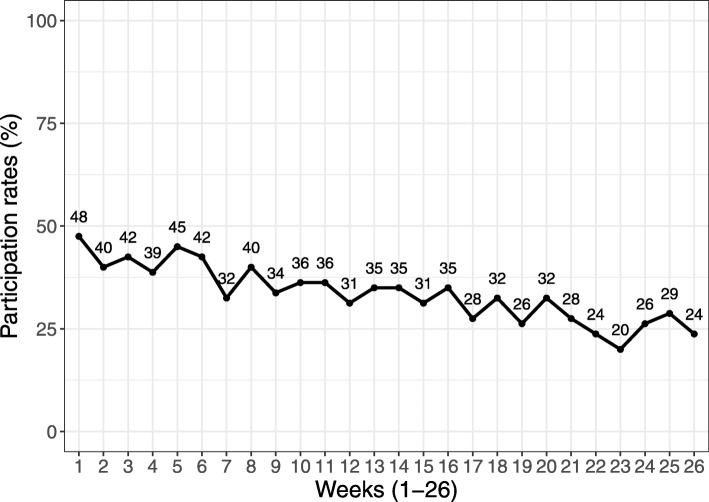
Background: Programs promoting population health through physical activity (PA) and exposure to nature are popular, but few have been evaluated in randomized-controlled trials (RCTs). Objective: To investigate the effectiveness of a park prescription intervention (PPI) for improving total moderate-to-vigorous PA (MVPA), other PA related behaviors, quality of life (QoL) and cardio-metabolic health among adults. Methods: Healthy individuals aged 40 to 65 years were recruited through community health screenings and randomly assigned to 1) PPI: face-to-face Park Prescription + invitation to weekly exercise sessions in parks, or 2) control: standard PA materials. After the six-month intervention, participants completed accelerometer assessments, questionnaires on health behaviors and QoL, and health screenings. Independent sample t-tests were used to compare outcomes between groups, with secondary analysis adjusted for co-variates via multiple linear regression. A p-value <0.05 was considered statistically significant. Results: Eighty participants were allocated to each group. Participants with mean age of 51.1 (Standard Deviation: 6.3) years were predominantly female (79%) and of Chinese ethnicity (81%). Participation in the group exercise started at 48% and declined to 24% by week 26. At six-months, 145 (91%) participants attended health screenings for outcome measure collection, and 126 (79%) provided valid accelerometer data. Time spent in MVPA favored the PPI group but this difference was not statistically significant (4.4 (− 43.8, 52.7) minutes/week; when removing 2 extreme outliers 26.8 (− 9.7, 63.4) minutes/week). Time spent in parks (147.5 (2.1, 292.9) minutes/month), PA in parks (192.5 (59.5, 325.5) minutes/month), and recreational PA (48.7 (1.4, 96.0) minutes/week) were significantly greater in the PPI group. PPI also significantly improved psychological QoL (4.0 (0.0, 8.0). Discussion: PPI improved park use, PA in parks, recreational PA, and psychological QoL but not total MVPA. Future RCTs’ are warranted to investigate PPI in different target populations and to provide further evidence for improvements in health outcomes. Trial registration: ClinicalTrials.gov NCT02615392, 26 November 2015.
Overview
The claims and statistics of this paper haven’t been checked yet.
Free: it reads the open-access text and checks the first 5 claims that cite a source we can check. Create a free account to check every claim.
Integrity signals
Registry
Cites
Statistics
Figures
Verification
Claims the paper makes
The claims and statistics of this paper haven’t been checked yet.
Free: it reads the open-access text and checks the first 5 claims that cite a source we can check. Create a free account to check every claim.
Self-check
Percentages, sums and reported differences re-computed from the paper’s own numbers.
The self-check needs the paper’s full text.
Citations
Cites
SPIRIT 2013 explanation and elaboration: guidance for protocols of clinical trials
Chan, A.-W., Tetzlaff, J. M., Gotzsche, P. C., Altman, D. G., Mann, H., Berlin, J. A., Dickersin, K., Hrobjartsson, A., Schulz, K. F., Parulekar, W. R., et al. (2013) · BMJ · doi:10.1136/bmj.e7586 · Cited by 6,251 · cited 4×
“Future RCTs’ are warranted to investigate PPI in different target populations and to provide further evidence for improvements in health outcomes.”
MethodInfluentialThe pandemic of physical inactivity: global action for public health
Kohl, H. W., Craig, C. L., Lambert, E. V., Inoue, S., Alkandari, J. R., Leetongin, G., & Kahlmeier, S. (2012) · The Lancet · doi:10.1016/s0140-6736(12)60898-8 · Cited by 2,985
Revision of the Physical Activity Readiness Questionnaire (PAR-Q).
Thomas, S. G., Reading, J., & Shephard, R. J. (1992) · PubMed · Cited by 2,347
Intention-to-treat concept: A review
Gupta, S. (2011) · Perspectives in Clinical Research · doi:10.4103/2229-3485.83221 · Cited by 1,921
Epidemic obesity and type 2 diabetes in Asia
Yoon, K.-H., Lee, J.-H., Kim, J.-W., Cho, J. H., Choi, Y.-H., Ko, S.-H., Zimmet, P., & Son, H.-Y. (2006) · The Lancet · doi:10.1016/s0140-6736(06)69703-1 · Cited by 1,580
The health benefits of urban green spaces: a review of the evidence
Lee, A. C. K., & Maheswaran, R. (2011) · Journal of Public Health · doi:10.1093/pubmed/fdq068 · Cited by 1,551
Arem, H., Moore, S. C., Patel, A., Hartge, P., Berrington de Gonzalez, A., Visvanathan, K., Campbell, P. T., Freedman, M., Weiderpass, E., Adami, H. O., et al. (2015) · JAMA Internal Medicine · doi:10.1001/jamainternmed.2015.0533 · Cited by 1,498 · cited 1×
“Recreational PA is also known to be associated with positive cardio-metabolic outcomes [46].”
BackgroundNature Contact and Human Health: A Research Agenda
Frumkin, H., Bratman, G. N., Breslow, S. J., Cochran, B., Kahn Jr, P. H., Lawler, J. J., Levin, P. S., Tandon, P. S., Varanasi, U., Wolf, K. L., et al. (2017) · Environmental Health Perspectives · doi:10.1289/ehp1663 · Cited by 1,237 · cited 1×
“Thus, it was repeatedly emphasized that understanding the mechanisms of exposure to nature and human health requires robust evidence through rigorous evaluations of interventions [13, 14, 16, 18, 19].”
BackgroundUrban Green Space and Its Impact on Human Health
Kondo, M., Fluehr, J., McKeon, T., & Branas, C. (2018) · International Journal of Environmental Research and Public Health · doi:10.3390/ijerph15030445 · Cited by 1,187
Morbidity is related to a green living environment
Maas, J., Verheij, R. A., de Vries, S., Spreeuwenberg, P., Schellevis, F. G., & Groenewegen, P. P. (2009) · Journal of Epidemiology and Community Health · doi:10.1136/jech.2008.079038 · Cited by 1,133
Research works printed but not linked: 7
- 1. Ministry_of_Health. Diabetes: The War Continues Singapore: Ministry of Health. 2017.
- 3. Goh L, Pang J. Obesity in Singapore, prevention and control. Singap Fam Phys. 2012;38(1):8–13.
- 9. Egorov AI, Mudu P, Braubach M, Martuzzi M. Urban green spaces and health. Copenhagen: WHO Regional Office for Europe; 2016.
- 12. Organization WH. Global action plan on physical activity 2018–2030: more active people for a healthier world. 2018.
- 22. ACSM. American College of Sports Medicine’s guidelines for exercise testing and prescription. Philadelphia: Lippincott Williams & Wilkins; 2013.
- 31. National_Parks_Board. Gardens, Parks and Nature Singapore: National Parks. 2020.
- 36. StataCorp. Stata: Release 12. Statistical Software. College Station: StataCorp LP; 2011.
Cited by
Items 101–108 of 108
Effects of green exercise on mental health in older adults: a systematic review and meta-analysis
Wang, X. Y., Yang, X., Yu, Y., & Dong, D. (2026) · Frontiers in Public Health · doi:10.3389/fpubh.2026.1848669
Ogeh, K. T., Emilimor, P. N., Ekokogbe, O. O., & Ogbinaka, E. (2026) · TURKISH JOURNAL OF FOREST SCIENCE · doi:10.32328/turkjforsci.1817618
More than green: Lessons for valuing green spaces for health and wellbeing
Gomes, A., Luxmoore, S., Morley, J. G., Shaw, R., & Goodwin, I. (2026) · Wellbeing Space and Society · doi:10.1016/j.wss.2026.100435
Physical Activity in Urban Areas: Where and When?
(2026) · Frontiers research topics · doi:10.3389/978-2-8325-8381-4
Zhou, S., & Chen, S. (2026) · International Conference on Intelligent Engineering and Next-Gen Healthcare Systems (IEHNS) · doi:10.1109/iehns68708.2026.11606771
Examining barriers to participation in Kansas parks and recreation: a delphi method approach
Peat, E. S. (2026) · K-State Research Exchange (Kansas State University)
Rashid, M. A. M., & Siddiky, M. R. (2026) · Research Square · doi:10.21203/rs.3.rs-10749580/v1
Schultz, C. L., Bocarro, J. N., Hipp, J. A., Bennett, G. J., & Floyd, M. F. (2022) · doi:10.3389/fdgth.2022.932533.s001
Metadata
- Authors
- Müller-Riemenschneider, F., Petrunoff, N., Yao, J., Ng, A., Sia, A., Ramiah, A., Wong, M., Han, J., Tai, B. C., & Uijtdewilligen, L.
- Affiliations
- National University of Singapore (SG)
- National Parks Board (SG)
- Khoo Teck Puat Hospital (SG)
- Venue
- International Journal of Behavioral Nutrition and Physical Activity
- Published
- 2020-03-17
- Volume
- 17
- Issue
- 1
- Pages
- 42-42
- ISSN
- 1479-5868 (ISSN-L)
- PMC
- PMC7079356
- OpenAlex
- W3011820459
- Cited by
- 99
- References
- 41
- Citations by year
- 2026: 12 · 2025: 16 · 2024: 18 · 2023: 15 · 2022: 20 · 2021: 14 · 2020: 3
- FWCI
- 5.20
- Type
- journal article
- Language
- en
- Open access
- gold
- doi.org
- Licence
- cc-by
- creativecommons.org/licenses/by/4.0/ (tdm)
- creativecommons.org/licenses/by/4.0/ (vor)
- Locations
- International Journal of Behavioral Nutrition and Physical Activity (publishedVersion, cc-by)
- PubMed Central (publishedVersion, cc-by)
- PubMed (publishedVersion)
- National University of Singapore (submittedVersion)
- DOAJ (DOAJ: Directory of Open Access Journals) (submittedVersion, cc-by-sa)
- Funders
- National Parks Board of Singapore (N/A)
- National University of Singapore (N/A)
- Topics
- Social Sciences › Urban Studies › Urban Green Space and Health
- Health Sciences › Medicine › Public Health, Environmental and Occupational Health › Physical Activity and Health
- Social Sciences › Business, Management and Accounting › Tourism, Leisure and Hospitality Management › Recreation, Leisure, Wilderness Management
- Keywords
- physical activity, nature exposure, park use, leisure-time physical activity, moderate-to-vigorous physical activity, quality of life, cardiometabolic health, group exercise, middle-aged and older adults, health promotion interventions, exercise adherence, health screening, accelerometer-measured activity, Chinese adults, community health screening, social determinants of health
- MeSH terms
- Parks, Recreational, Adult, Aged, Female, Health Promotion, Humans, Male, Middle Aged, Quality of Life, Exercise
About these checks
Registry, retraction, Cites and statistics results are computed, not judged, with one exception: a printed reference that no index lists is read once by a model before it counts as a citation error. Claims are extracted by a model and kept only when their quote appears verbatim in the text; each cited source is then checked, with a model’s help, for whether it says what the claim relies on. Those verdicts can be wrong — read the claim’s quote and the cited source before relying on one.
Statistics and arithmetic are recomputed, not judged.
Confidence bands are shown only for fields calibrated on our annotated test set. None is calibrated yet, so no band is shown.
What counts as a claim ›How we measure confidence ›How we check this ›
Are you an author, or do you see a problem with this page? Request a review
Data sources
Bibliographic data: Semantic Scholar, OpenAlex, Crossref.
Contains information from the Semantic Scholar Academic Graph Datasets, made available under the ODC Attribution License (ODC-BY 1.0).
Semantic Scholar’s data is described in: Kinney, R., et al. (2023). The Semantic Scholar Open Data Platform. arXiv:2301.10140.
