

Elutriated lymphocytes for manufacturing chimeric antigen receptor T cells
Open accessThe DOI matches its Crossref record; 16 of the 16 references it cites were found in a registry or an index.
Abstract
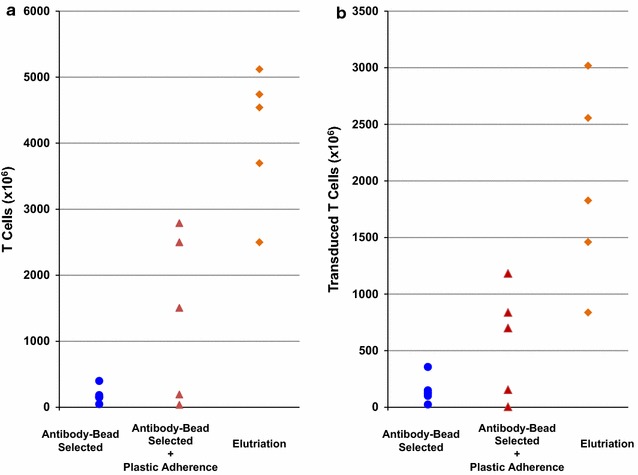
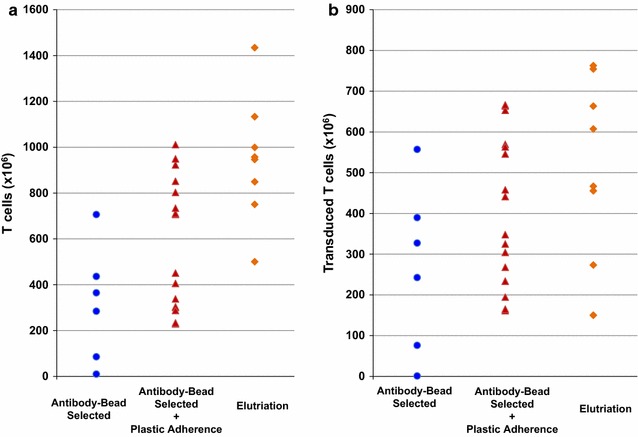
BACKGROUND: Clinical trials of Chimeric Antigen Receptor (CAR) T cells manufactured from autologous peripheral blood mononuclear cell (PBMC) concentrates for the treatment of hematologic malignancies have been promising, but CAR T cell yields have been variable. This variability is due in part to the contamination of the PBMC concentrates with monocytes and granulocytes. METHODS: Counter-flow elutriation allows for the closed system separation of lymphocytes from monocytes and granulocytes. We investigated the use of PBMC concentrates enriched for lymphocytes using elutriation for manufacturing 8 CD19- and 5 GD2-CAR T cell products. RESULTS: When compared to PBMC concentrates, lymphocyte-enriched elutriation fractions contained greater proportions of CD3+ and CD56+ cells and reduced proportions of CD14+ and CD15+ cells. All 13 CAR T cell products manufactured using the elutriated lymphocytes yielded sufficient quantities of transduced CAR T cells to meet clinical dose criteria. The GD2-CAR T cell products contained significantly more T cells and transduced T cells than the CD19-CAR T cell products. A comparison of the yields of CAR T cells produced from elutriated lymphocytes with the yields of CAR T cells previous produced from cells isolated from PBMC concentrates by anti-CD3/CD28 bead selection or by anti-CD3/CD28 bead selection plus plastic adherence found that greater quantities of GD2-CAR T cells were produced from elutriated lymphocytes, but not CD19-CAR T cells. CONCLUSIONS: Enrichment of PBMC concentrates for lymphocytes using elutriation increased the quantity of GD2-CAR T cells produced. These results provide further evidence that CAR T cell expansion is inhibited by monocytes and granulocytes.
Overview
The claims and statistics of this paper haven’t been checked yet.
Free: it reads the open-access text and checks the first 5 claims that cite a source we can check. Create a free account to check every claim.
Integrity signals
Registry
Cites
Statistics
Figures
Verification
Claims the paper makes
The claims and statistics of this paper haven’t been checked yet.
Free: it reads the open-access text and checks the first 5 claims that cite a source we can check. Create a free account to check every claim.
Claims other papers make about this one
Each is checked against this paper’s own text: does it say what the citing paper says it does?
In the citing paper
“Furthermore, the CAR T-cell manufacturing process can be affected by the presence of non-CAR T cells, particularly suppressive myeloid cells.41-43”
From Tumor interferon signaling and suppressive myeloid cells are associated with CAR T-cell failure in large B-cell lymphoma (2021) · cites this paper as [42]
Self-check
Percentages, sums and reported differences re-computed from the paper’s own numbers.
The self-check needs the paper’s full text.
Citations
Cites
Chimeric Antigen Receptor T Cells for Sustained Remissions in Leukemia
Maude, S. L., Frey, N., Shaw, P. A., Aplenc, R., Barrett, D. M., Bunin, N. J., Chew, A., Gonzalez, V. E., Zheng, Z., Lacey, S. F., et al. (2014) · New England Journal of Medicine · doi:10.1056/nejmoa1407222 · Cited by 5,413
Chimeric antigen receptor–modified T cells in chronic lymphoid leukemia
Porter, D. L., Levine, B. L., Kalos, M., Bagg, A., & June, C. H. (2011) · New England Journal of Medicine · doi:10.1056/nejmoa1103849 · Cited by 3,565
Chimeric Antigen Receptor–Modified T Cells for Acute Lymphoid Leukemia
Grupp, S. A., Kalos, M., Barrett, D., Aplenc, R., Porter, D. L., Rheingold, S. R., Teachey, D. T., Chew, A., Hauck, B., Wright, J. F., et al. (2013) · New England Journal of Medicine · doi:10.1056/nejmoa1215134 · Cited by 3,509
Lee, D. W., Kochenderfer, J. N., Stetler-Stevenson, M., Cui, Y. K., Delbrook, C., Feldman, S. A., Fry, T. J., Orentas, R., Sabatino, M., Shah, N. N., et al. (2015) · The Lancet · doi:10.1016/s0140-6736(14)61403-3 · Cited by 2,898 · cited 1×
“Clinical results of the first 21 of the patients receiving CD19-CAR T cell therapy have previously been reported [1].”
Self-citationPorter, D. L., Hwang, W.-T., Frey, N. V., Lacey, S. F., Shaw, P. A., Loren, A. W., Bagg, A., Marcucci, K. T., Shen, A., Gonzalez, V., et al. (2015) · Science Translational Medicine · doi:10.1126/scitranslmed.aac5415 · Cited by 1,729
Ali, S. A., Shi, V., Maric, I., Wang, M., Stroncek, D. F., Rose, J. J., Brudno, J. N., Stetler-Stevenson, M., Feldman, S. A., Hansen, B. G., et al. (2016) · Blood · doi:10.1182/blood-2016-04-711903 · Cited by 757 · cited 1×
“Preliminary studies of B cell maturation antigen (BCMA)-CAR T cells to treat multiple myeloma have also been promising [9].”
Self-citationChimeric Antigen Receptor T Cells against CD19 for Multiple Myeloma
Garfall, A. L., Maus, M. V., Hwang, W.-T., Lacey, S. F., Mahnke, Y. D., Melenhorst, J. J., Zheng, Z., Vogl, D. T., Cohen, A. D., Weiss, B. M., et al. (2015) · New England Journal of Medicine · doi:10.1056/nejmoa1504542 · Cited by 624
Brudno, J. N., Somerville, R. P. T., Shi, V., Rose, J. J., Halverson, D. C., Fowler, D. H., Gea-Banacloche, J. C., Pavletic, S. Z., Hickstein, D. D., Lu, T. L., et al. (2016) · Journal of Clinical Oncology · doi:10.1200/jco.2015.64.5929 · Cited by 605
Kochenderfer, J. N., Yu, Z., Frasheri, D., Restifo, N. P., & Rosenberg, S. A. (2010) · Blood · doi:10.1182/blood-2010-01-265041 · Cited by 391
Fibrocytes represent a novel MDSC subset circulating in patients with metastatic cancer
Zhang, H., Maric, I., DiPrima, M. J., Khan, J., Orentas, R. J., Kaplan, R. N., & Mackall, C. L. (2013) · Blood · doi:10.1182/blood-2012-08-449413 · Cited by 163 · cited 1×
“Most patients treated with GD2-CAR T cells had osteosacrcoma who are known to have circulating myeloid-derived suppressor cells (MDSCs) [14].”
Self-citation
Cited by
Fry, T. J., Shah, N. N., Orentas, R. J., Stetler-Stevenson, M., Yuan, C. M., Ramakrishna, S., Wolters, P., Martin, S., Delbrook, C., Yates, B., et al. (2018) · Nature Medicine · doi:10.1038/nm.4441 · Cited by 1,335
“In cases where substantial numbers of myeloid cells were present in the apheresis products, elutriation and/or plastic adherence 53 was performed based on evidence that such cells inhibited expansion 54 .”
Self-citationMechanisms of resistance to CAR T cell therapy
Shah, N. N., & Fry, T. J. (2019) · Nature Reviews Clinical Oncology · doi:10.1038/s41571-019-0184-6 · Cited by 959
Self-citationShah, N. N., Highfill, S. L., Shalabi, H., Yates, B., Jin, J., Wolters, P. L., Ombrello, A., Steinberg, S. M., Martin, S., Delbrook, C., et al. (2020) · Journal of Clinical Oncology · doi:10.1200/jco.19.03279 · Cited by 421
Self-citationScalable Manufacturing of CAR T Cells for Cancer Immunotherapy
Abou-el-Enein, M., Elsallab, M., Feldman, S. A., Fesnak, A. D., Heslop, H. E., Marks, P., Till, B. G., Bauer, G., & Savoldo, B. (2021) · Blood Cancer Discovery · doi:10.1158/2643-3230.bcd-21-0084 · Cited by 321
Jain, M. D., Zhao, H., Wang, X., Atkins, R., Menges, M., Reid, K., Spitler, K., Faramand, R., Bachmeier, C., Dean, E. A., et al. (2021) · Blood · doi:10.1182/blood.2020007445 · Cited by 297
Li, J., Li, W., Huang, K., Zhang, Y., Kupfer, G., & Zhao, Q. (2018) · Journal of Hematology & Oncology · doi:10.1186/s13045-018-0568-6 · Cited by 246
MDSC targeting with Gemtuzumab ozogamicin restores T cell immunity and immunotherapy against cancers
Fultang, L., Panetti, S., Ng, M., Collins, P., Graef, S., Rizkalla, N., Booth, S., Lenton, R., Noyvert, B., Shannon-Lowe, C., et al. (2019) · EBioMedicine · doi:10.1016/j.ebiom.2019.08.025 · Cited by 169
Manufacturing chimeric antigen receptor T cells: issues and challenges
Roddie, C., O'Reilly, M., Dias Alves Pinto, J., Vispute, K., & Lowdell, M. (2019) · Cytotherapy · doi:10.1016/j.jcyt.2018.11.009 · Cited by 168
Immune determinants of CAR-T cell expansion in solid tumor patients receiving GD2 CAR-T cell therapy
Kaczanowska, S., Murty, T., Alimadadi, A., Contreras, C. F., Duault, C., Subrahmanyam, P. B., Reynolds, W. D., Gutierrez, N. A., Baskar, R., Wu, C. J., et al. (2023) · Cancer Cell · doi:10.1016/j.ccell.2023.11.011 · Cited by 134
“…selection process prior to manufacturing changed from bead selection to elutriation + ACK lysis for the last four treated patients to reduce myeloid populations during the manufacturing culture process, 23 which resulted in improved GD2 CAR-T expansion during manufacturing (Figures S1A and S1B).”
MethodSelf-citationAutomated Manufacturing of Potent CD20-Directed Chimeric Antigen Receptor T Cells for Clinical Use
Lock, D., Mockel-Tenbrinck, N., Drechsel, K., Barth, C., Mauer, D., Schaser, T., Kolbe, C., Al Rawashdeh, W., Brauner, J., Hardt, O., et al. (2017) · Human Gene Therapy · doi:10.1089/hum.2017.111 · Cited by 115
“S6) as well as T cell expansion, as shown here in accordance with Stroncek et al. 30 Furthermore, a CD4/CD8 selection avoided the risk of enriching and consequently genetically engineering for instance malignant B cells, which could lead to an indisputable safety risk for ACT.”
The Landscape of CAR-T Cell Clinical Trials against Solid Tumors—A Comprehensive Overview
Schaft, N. (2020) · Cancers · doi:10.3390/cancers12092567 · Cited by 99
Tipanee, J., Samara-Kuko, E., Gevaert, T., Chuah, M. K., & VandenDriessche, T. (2022) · Molecular Therapy · doi:10.1016/j.ymthe.2022.06.006 · Cited by 76
GMP-Compliant Manufacturing of TRUCKs: CAR T Cells targeting GD2 and Releasing Inducible IL-18
Glienke, W., Dragon, A. C., Zimmermann, K., Martyniszyn, A., Mertens, M., Abken, H., Rössig, C., Altvater, B., Aleksandrova, K., Arseniev, L., et al. (2022) · Frontiers in Immunology · doi:10.3389/fimmu.2022.839783 · Cited by 85
“CD4 and CD8 enrichment also decreases contaminating cells such as monocytes, which inhibit CAR T cell expansion (39).”
BackgroundGee, A. P. (2018) · Best Practice & Research Clinical Haematology · doi:10.1016/j.beha.2018.01.002 · Cited by 75
Improving CAR T cell therapy by optimizing critical quality attributes
Reddy, O. L., Stroncek, D. F., & Panch, S. R. (2020) · Seminars in Hematology · doi:10.1053/j.seminhematol.2020.07.005 · Cited by 80
Self-citationNoaks, E., Peticone, C., Kotsopoulou, E., & Bracewell, D. G. (2021) · Molecular Therapy - Methods & Clinical Development · doi:10.1016/j.omtm.2021.02.002 · Cited by 62
Chimeric Antigen Receptor-T Cells: A Pharmaceutical Scope
Hernández-López, A., Téllez‐González, M. A., Mondragón‐Terán, P., & Meneses‐Acosta, A. (2021) · Frontiers in Pharmacology · doi:10.3389/fphar.2021.720692 · Cited by 54
GD2-targeting therapy: a comparative analysis of approaches and promising directions
Philippova, J., Shevchenko, J. A., & Sennikov, S. V. (2024) · Frontiers in Immunology · doi:10.3389/fimmu.2024.1371345 · Cited by 60
Targeting Cancer Stem Cells by Genetically Engineered Chimeric Antigen Receptor T Cells
Alhabbab, R. Y. (2020) · Frontiers in Genetics · doi:10.3389/fgene.2020.00312 · Cited by 53
Advances in automated cell washing and concentration
Li, A., Kusuma, G. D., Driscoll, D., Smith, N., Wall, D. M., Levine, B. L., James, D., & Lim, R. (2021) · Cytotherapy · doi:10.1016/j.jcyt.2021.04.003 · Cited by 49
Enhanced clinical-scale manufacturing of TCR transduced T-cells using closed culture system modules
Jin, J., Gkitsas-Long, N., Fellowes, V. S., Ren, J., Feldman, S. A., Hinrichs, C. S., Stroncek, D. F., & Highfill, S. L. (2018) · Journal of Translational Medicine · doi:10.1186/s12967-018-1384-z · Cited by 50
“Culture flasks were utilized to aid in the removal of tumor-induced monocytes, which are known to inhibit T-cell activation and expansion [18, 19].”
Self-citationWang, X., Bórquez-Ojeda, O., Stefanski, J., Du, F., Qu, J., Chaudhari, J., Thummar, K., Zhu, M., Shen, L., Hall, M. J., et al. (2021) · Molecular Therapy — Methods & Clinical Development · doi:10.1016/j.omtm.2021.06.014 · Cited by 51
“Stroncek et al.(24,25) also reported similar challenges and remedies in the context of their CD19 and GD2 CAR T cell manufacturing runs.”
ResultMechanisms of resistance to CAR T cell therapies
Singh, N., Orlando, E. J., Xu, J., Xu, J., Binder, Z. A., Collins, M. A., O’Rourke, D. M., & Melenhorst, J. J. (2019) · Seminars in Cancer Biology · doi:10.1016/j.semcancer.2019.12.002 · Cited by 50
Elavia, N., Panch, S. R., McManus, A., Bikkani, T., Szymanski, J., Highfill, S. L., Jin, P., Brudno, J., Kochenderfer, J., & Stroncek, D. F. (2019) · Transfusion · doi:10.1111/trf.15287 · Cited by 43
“While CAR T cells are, in general, clinically effective, not all eligible patients receive CAR T-cell therapies; for some patients, initial attempts to manufacture CAR T cells have failed.(7,8) When autologous CAR T cells are manufactured, peripheral blood mononuclear cells (PBMNCs) collected by apheresis are typicall…”
BackgroundResultSelf-citationLee, S. Y., Lee, D. H., Sun, W., Cervantes-Contreras, F., Basom, R., Wu, F., Liu, S., Rai, R., Mirzaei, H. R., O’Steen, S., et al. (2023) · Journal for ImmunoTherapy of Cancer · doi:10.1136/jitc-2023-007803 · Cited by 48
Self-citationEyles, J. E., Vessillier, S., Jones, A., Stacey, G., Schneider, C. K., & Price, J. (2018) · Journal of Chemical Technology & Biotechnology · doi:10.1002/jctb.5829 · Cited by 36
Expanding CAR-T cell immunotherapy horizons through microfluidics
Kim, H., Kim, S., Lim, H., & Chung, A. J. (2024) · Lab on a Chip · doi:10.1039/d3lc00622k · Cited by 34
CAR T cell therapy: newer approaches to counter resistance and cost
Yadav, R. K., Ali, A., Kumar, S., Sharma, A., Baghchi, B., Singh, P., Das, S., Singh, C., & Sharma, S. (2020) · Heliyon · doi:10.1016/j.heliyon.2020.e03779 · Cited by 35
Purification of Lymphocytes by Acoustic Separation in Plastic Microchannels
Lissandrello, C. A., Dubay, R., Kotz, K. T., & Fiering, J. O. (2018) · SLAS TECHNOLOGY · doi:10.1177/2472630317749944 · Cited by 28
Neurological Complications of CAR T Cell Therapy
Landry, K. K., & Thomas, A. A. (2020) · Current Oncology Reports · doi:10.1007/s11912-020-00935-6 · Cited by 27
From clinical proof-of-concept to commercialization of CAR T cells
Calmels, B., Mfarrej, B. G., & Chabannon, C. (2018) · Drug Discovery Today · doi:10.1016/j.drudis.2018.01.024 · Cited by 29
Wang, H., Tsao, S.-T., Gu, M., Fu, C., He, F., Xiu, L., Zhang, M., Li, N., & Hu, H. (2022) · Journal of Translational Medicine · doi:10.1186/s12967-022-03833-6 · Cited by 24
“used plastic adherence to deplete CD14 + cells and measured the CAR transduction efficiency for GD2 CAR-T production but not for the CD19 CAR-T production [24, 28].”
BackgroundMethodBiondi, A., Magnani, C. F., Tettamanti, S., Gaipa, G., & Biagi, E. (2017) · Journal of Autoimmunity · doi:10.1016/j.jaut.2017.08.003 · Cited by 21
Suematsu, M., Yagyu, S., Nagao, N., Kubota, S., Shimizu, Y., Tanaka, M., Nakazawa, Y., & Imamura, T. (2022) · Frontiers in Immunology · doi:10.3389/fimmu.2022.770132 · Cited by 24
Wang, Z., Sargent, E. H., & Kelley, S. O. (2021) · Analytical Chemistry · doi:10.1021/acs.analchem.0c04202 · Cited by 20
Improving CAR T-cells: The next generation
Marple, A., Bonifant, C. L., & Shah, N. N. (2020) · Seminars in Hematology · doi:10.1053/j.seminhematol.2020.07.002 · Cited by 20
Self-citationLigon, J. A., Wessel, K. M., Shah, N. N., & Glod, J. W. (2022) · Frontiers in Immunology · doi:10.3389/fimmu.2022.846346 · Cited by 16
“A subsequent trial (NCT02107963) utilized a third-generation GD2-CART with lymphodepletion, and demonstrated good expansion (46).”
MethodSelf-citationInvariant NKT cells metabolically adapt to the acute myeloid leukaemia environment
Stavrou, V., Fultang, L., Booth, S., Simone, D. D., Bartnik, A., Scarpa, U., Gneo, L., Panetti, S., Potluri, S., Almowaled, M., et al. (2022) · Cancer Immunology Immunotherapy · doi:10.1007/s00262-022-03268-4 · Cited by 18
“Clinical trials of T cell therapies remain suboptimal outside of B-cell malignancies, due to poor T cell persistence and activation and the impact of MDSCs [26, 27].”
BackgroundDeng, B., Pan, J., Liu, Z., Liu, S., Chen, Y., Qu, X., Zhang, Y., Lin, Y., Zhang, Y., Yu, X., et al. (2021) · Molecular Therapy — Methods & Clinical Development · doi:10.1016/j.omtm.2021.10.006 · Cited by 15
Overcoming the challenges of primary resistance and relapse after CAR-T cell therapy
Dreyzin, A., Rankin, A. W., Luciani, K., Gavrilova, T., & Shah, N. N. (2024) · Expert Review of Clinical Immunology · doi:10.1080/1744666x.2024.2349738 · Cited by 18
“Contamination of T-cell products by other cells such as monocytes and macrophages may contribute to this lack of in vitro expansion, but this has been improved with techniques such as elutriation [35] and CD4/CD8 selection [36].”
MethodSelf-citationStrachan, B. C., Xia, H., Vörös, E., Gifford, S. C., & Shevkoplyas, S. S. (2019) · Cytotherapy · doi:10.1016/j.jcyt.2018.12.004 · Cited by 16
“several washing steps to remove the mildly-toxic medium after the separation [10, 11], and those gathered via elutriation must still undergo a chemical lyse step to remove the majority of residual RBCs, followed by similar washing [12, 13].”
BackgroundBai, Z., Su, G., & Fan, R. (2021) · Genomics Proteomics & Bioinformatics · doi:10.1016/j.gpb.2021.02.004 · Cited by 17
“For CAR-T cell therapy, failures of cell product manufacturing [74], limited in vivo CAR-T cell proliferation or persistence [75], and loss or modulation of the target antigens [76] are among the most commonly cited reasons for primary resistance to effective outcomes.”
BackgroundCD19 CAR-T cell therapy for relapsed or refractory diffuse large B cell lymphoma: Why does it fail?
Kinoshita, H., Bollard, C. M., & Toner, K. (2023) · Seminars in Hematology · doi:10.1053/j.seminhematol.2023.11.007 · Cited by 19
Abhishek, K., Titus, A. S. C. L. S., Dinh, M. T. P., Mukhamedshin, A., Mohan, C., Gifford, S. C., & Shevkoplyas, S. S. (2023) · Lab on a Chip · doi:10.1039/d2lc00817c · Cited by 14
Enhancing CAR T cell efficacy: the next step toward a clinical revolution?
Namuduri, M., & Brentjens, R. J. (2020) · Expert Review of Hematology · doi:10.1080/17474086.2020.1753501 · Cited by 14
“Utilizing different groups of cytokines for better expansion [129] and elutriation [130], by which, separation of lymphocytes”
MethodCAR T Cell Nanosymbionts: Revealing the Boundless Potential of a New Dyad
Baena, J. C., Pérez, L. M., Toro-Pedroza, A., Kitawaki, T., & Loukanov, A. R. (2024) · International Journal of Molecular Sciences · doi:10.3390/ijms252313157 · Cited by 15
Paroder, M., Le, N., Pham, H. P., & Thibodeaux, S. R. (2019) · Advances in Cell and Gene Therapy · doi:10.1002/acg2.75 · Cited by 17
Considerations in T Cell Therapy Product Development for B Cell Leukemia and Lymphoma Immunotherapy
Fesnak, A. D., Hanley, P. J., & Levine, B. L. (2017) · Current Hematologic Malignancy Reports · doi:10.1007/s11899-017-0395-9 · Cited by 11
Phase I CAR-T Clinical Trials Review
Bulsara, S., Wu, M.-F., & Wang, T. (2022) · Anticancer Research · doi:10.21873/anticanres.16076 · Cited by 11
Zalka, C. V. (2012) · Digital Commons - East Tennessee State University (East Tennessee State University) · Cited by 23
CAR assembly line: Taking CAR T-cell manufacturing to the next level
Wang, J., & Caimi, P. F. (2024) · Best Practice & Research Clinical Haematology · doi:10.1016/j.beha.2024.101595 · Cited by 12
Strategy to prevent epitope masking in CAR.CD19+ B-cell leukemia blasts
Quintarelli, C., Guercio, M., Manni, S., Boffa, I., Sinibaldi, M., Cecca, S. D., Caruso, S., Abbaszadeh, Z., Camera, A., Cembrola, B., et al. (2021) · Journal for ImmunoTherapy of Cancer · doi:10.1136/jitc-2020-001514 · Cited by 10
Bridging process diversity in cell therapies toward standardization of manufacturing workflows
Costa, M. H. G., Carrondo, M. J. T., Alves, P. M., & Serra, M. (2026) · Cytotherapy · doi:10.1016/j.jcyt.2025.102041 · Cited by 13
Approaches of T Cell Activation and Differentiation for CAR-T Cell Therapies
Schwab, R. D., Bedoya, D. M., King-Peoples, T. R., Levine, B. L., & Posey, A. D. (2019) · Methods in molecular biology · doi:10.1007/978-1-0716-0146-4_15 · Cited by 10
Improving cell viability using counterflow centrifugal elutriation
Li, A., Barabadi, M., McDonald, H., Chan, S. T., Krause, M., Ooi, J. D., Kusuma, G. D., James, D., & Lim, R. (2022) · Cytotherapy · doi:10.1016/j.jcyt.2022.01.008 · Cited by 8
Overcoming resistance to anti‐CD19 CAR T‐cell therapy in B‐cell malignancies
Yang, X., Wei, J., & Zhou, J. (2022) · Hematological Oncology · doi:10.1002/hon.3036 · Cited by 7
Mukhamedshin, A., Reddington, R. C., Dinh, M. T. P., Abhishek, K., Iqbal, M., Manheim, M., Gifford, S. C., & Shevkoplyas, S. S. (2023) · Bioengineering & Translational Medicine · doi:10.1002/btm2.10602 · Cited by 6
“18,19 Separation methods utilizing natural differences in cell density and size (such as density gradient centrifugation 20 or elutriation 14 ) do not rely on cell labeling and therefore are often simpler, faster, and less expensive than antibody-based approaches using magnetic or fluorescent cell…”
MethodAdvances in T-cell Immunotherapies
Stroncek, D. F., Reddy, O. L., Highfill, S. L., & Panch, S. R. (2019) · Hematology/Oncology Clinics of North America · doi:10.1016/j.hoc.2019.05.006 · Cited by 7
Self-citationElsemary, M. T., Maritz, M. F., Smith, L. E., Warkiani, M. E., & Thierry, B. (2024) · Cytotherapy · doi:10.1016/j.jcyt.2024.05.005 · Cited by 8
“Current T-cell enrichment methods used in contemporary CAR-T cell manufacturing have their own advantages and limitations [24,25].”
MethodDiagnostic Flow Cytometry in the Era of Targeted Therapies
Obiorah, I. E., & Courville, E. L. (2023) · Surgical pathology clinics · doi:10.1016/j.path.2023.01.006 · Cited by 6
Pu, L., Wang, H., Wu, F., An, F., Xiao, H., Wang, Y., Liang, X., & Zhai, Z. (2024) · Scandinavian Journal of Immunology · doi:10.1111/sji.13352 · Cited by 5
Al-Janabi, I. I. (2024) · Al-Rafidain Journal of Medical Sciences · doi:10.54133/ajms.v6i2.726 · Cited by 3
Santis, G. C. D., Langhi, D. M., Feitoza, A., Mendrone, A., Kutner, J. M., Covas, D. T., Couto, S. C. F., Cunha, R., Orellana, M. D., & Rizzo, S. R. C. P. (2021) · Hematology Transfusion and Cell Therapy · doi:10.1016/j.htct.2021.09.005 · Cited by 3
“An alternative to the mentioned methods is immunomagnetic separation in which it is possible to retain the cells of interest and eliminate all other cells that do not express the marker of the cell to be retained (CD4+/CD8+, in case of CART).(6,7) The contamination by NK cells may be a problem, so some authors recomme…”
MethodStipulations of cell and gene therapy and the ties to biomanufacturing
Allisha, J., Das, J., Dunnigan, T., Sharfstein, S. T., & Datta, P. (2025) · Biotechnology Progress · doi:10.1002/btpr.3521 · Cited by 3
“109,110 113 Critical process-related parameters can affect successful mammalian cell isolation, including aseptic technique skills, duration and deviation in the process, input materials (media and buffer composition), and shear stress to the cells.”
Mechanisms of Resistance and Relapse After CAR-T Cell Therapy
Selli, M. E., Dalal, P., Neelapu, S. S., & Singh, N. (2022) · Cancer drug discovery and develogment/Cancer drug discovery and development · doi:10.1007/978-3-030-87849-8_12 · Cited by 4
Stroncek, D. F., Mathew, A. J., & McKenna, D. H. (2019) · Transfusion · doi:10.1111/trf.14832 · Cited by 2
“lymphocytes are used for the starting material.(6,7) Variability in the starting cellular material appears to be less of a factor when manufacturing MSCs since most clinical trials of MSCs for immunomodulation and regenerative applications make use of cells collected from healthy third-party donors.”
MethodSelf-citationCAR T-Cell: Cell Processing Laboratory Considerations
Stroncek, D., Panch, S. R., Jin, P., & Highfill, S. L. (2019) · Elsevier eBooks · doi:10.1016/b978-0-323-66181-2.00003-2 · Cited by 4
Self-citationElsemary, M. T., Maritz, M. F., Smith, L. E., Warkiani, M. E., & Thierry, B. (2026) · Medical Oncology · doi:10.1007/s12032-026-03276-9 · Cited by 2
“57–68% recovery from fresh apheresis derived samples [67].”
Shalabi, H., Khuu, H. M., Fry, T. J., & Shah, N. N. (2018) · Elsevier eBooks · doi:10.1016/b978-0-12-812512-0.00012-9 · Cited by 2
Self-citationAdvances in Cell-based Therapeutic Process Development
Gretzinger, S. (2020) · Repository KITopen (Karlsruhe Institute of Technology) · doi:10.5445/ir/1000105111
Chimeric antigen receptor T-cell therapy in hematopoietic and nonhematopoietic malignancies
Ahmad, F. (2020) · Biomedical and Biotechnology Research Journal (BBRJ) · doi:10.4103/bbrj.bbrj_64_20
Exploring the mechanisms of CD19 CAR T-cell failure and salvage strategies in B-cell lymphoma
Yang, F., Liu, R., & Hu, K. (2022) · Hematology and Oncology Discovery · doi:10.15212/hod-2022-0004 · Cited by 1
“CAR T-cell production can be optimised by selection and enrichment of T-cells before production of CAR T-cells [32-34].”
BackgroundData from Scalable Manufacturing of CAR T Cells for Cancer Immunotherapy
Abou‐El‐Enein, M., Elsallab, M., Feldman, S. A., Fesnak, A. D., Heslop, H. E., Marks, P. W., Till, B. G., Bauer, G., & Savoldo, B. (2023) · doi:10.1158/2643-3230.c.6550449
CAR T‑cell immunotherapy: A safe and potent living drug technique for cancer treatment (Review)
Ahmad, A., Haneef, M., Khan, S., Khan, F., Ahmad, N., Khan, S. A., & Jaswani, S. (2023) · World Academy of Sciences Journal · doi:10.3892/wasj.2023.200
Adeniran, A., Handy, S., & Baki, A. (2024) · Springer eBooks · doi:10.1007/978-3-031-62007-2_9
Studying Interactions between Myeloid Cells and CAR T Cells In Vitro and In Vivo
Yun, K., Sakemura, R. L., Huynh, T., Kimball, B. L., Siegler, E. L., & Kenderian, S. S. (2025) · Journal of Visualized Experiments · doi:10.3791/68013
Wang, H., Tsao, S.-T., Gu, M., Fu, C., He, F., Li, X., Zhang, M., Li, N., & Hu, H.-M. (2023) · Figshare · doi:10.6084/m9.figshare.22607252
Wang, H., Tsao, S.-T., Gu, M., Fu, C., He, F., Li, X., Zhang, M., Li, N., & Hu, H.-M. (2023) · Figshare · doi:10.6084/m9.figshare.22607249
A comparison of two manufacturing methods in the phase I COBALT study of CD19CAR T for LBCL
Roddie, C., Dias, J., Cheung, G. W.-K., O'Reilly, M. A., Abbasian, M., Cadiñanos-Garai, A., Vispute, K., Bosshard‐Carter, L., Mitsikakou, M., Mehra, V., et al. (2026) · Molecular Therapy Advances · doi:10.1016/j.omta.2026.201695
Research progress on the role of CD14 in osteoarthritis
Yang, L., & Xing, S. (2026) · Frontiers in Immunology · doi:10.3389/fimmu.2026.1824403
“…− targeted CAR − T to eliminate pathogenic macrophages in the joint, given that CD14 + cells are considered “ contaminating ” components and OA is a chronic degenerative disease, off − target toxicity must be carefully considered, and tumor experience should not be directly extrapolated (87, 88).”
Metadata
- Authors
- Stroncek, D. F., Lee, D. W., Ren, J., Sabatino, M., Highfill, S., Khuu, H., Shah, N. N., Kaplan, R. N., Fry, T. J., & Mackall, C. L.
- Affiliations
- National Institutes of Health (US)
- University of Virginia (US)
- National Institutes of Health Clinical Center (US)
- Parker Institute for Cancer Immunotherapy (US)
- Corresponding author
- Stroncek, David F.
- ORCID
- Venue
- Journal of Translational Medicine
- Published
- 2017-03-16
- Volume
- 15
- Issue
- 1
- Pages
- 59-59
- ISSN
- 1479-5876 (ISSN-L)
- PMC
- PMC5353875
- OpenAlex
- W2599193187
- Cited by
- 80
- References
- 16
- Citations by year
- 2026: 4 · 2025: 2 · 2024: 9 · 2023: 10 · 2022: 11 · 2021: 11 · 2020: 10 · 2019: 11 · 2018: 7 · 2017: 4
- FWCI
- 3.86
- Type
- journal article
- Language
- en
- Open access
- gold
- doi.org
- Licence
- cc-by
- Locations
- Journal of Translational Medicine (publishedVersion, cc-by)
- PubMed Central (publishedVersion, cc-by)
- PubMed (publishedVersion)
- Funders
- National Institutes of Health
- National Cancer Institute
- NIH Clinical Center
- Topics
- Health Sciences › Medicine › Oncology › CAR-T cell therapy research
- Life Sciences › Immunology and Microbiology › Immunology › Immunotherapy and Immune Responses
- Life Sciences › Immunology and Microbiology › Immunology › T-cell and B-cell Immunology
- Keywords
- chimeric antigen receptor T cells, CD19 CAR T cells, GD2 CAR T cells, hematologic malignancies
- MeSH terms
- Cell Adhesion, Child, Humans, Receptors, Antigen, T-Cell, T-Lymphocytes, Transduction, Genetic, Antigens, CD, Lymphocyte Count, Young Adult
About these checks
Registry, retraction, Cites and statistics results are computed, not judged, with one exception: a printed reference that no index lists is read once by a model before it counts as a citation error. Claims are extracted by a model and kept only when their quote appears verbatim in the text; each cited source is then checked, with a model’s help, for whether it says what the claim relies on. Those verdicts can be wrong — read the claim’s quote and the cited source before relying on one.
Statistics and arithmetic are recomputed, not judged.
Confidence bands are shown only for fields calibrated on our annotated test set. None is calibrated yet, so no band is shown.
What counts as a claim ›How we measure confidence ›How we check this ›
Are you an author, or do you see a problem with this page? Request a review
Data sources
Bibliographic data: Semantic Scholar, OpenAlex, Crossref.
Contains information from the Semantic Scholar Academic Graph Datasets, made available under the ODC Attribution License (ODC-BY 1.0).
Semantic Scholar’s data is described in: Kinney, R., et al. (2023). The Semantic Scholar Open Data Platform. arXiv:2301.10140.
