

Transforming growth factor beta (TGF-β) in adolescent chronic fatigue syndrome
Open accessThe DOI matches its Crossref record; 53 of the 53 references it cites were found in a registry or an index.
Abstract
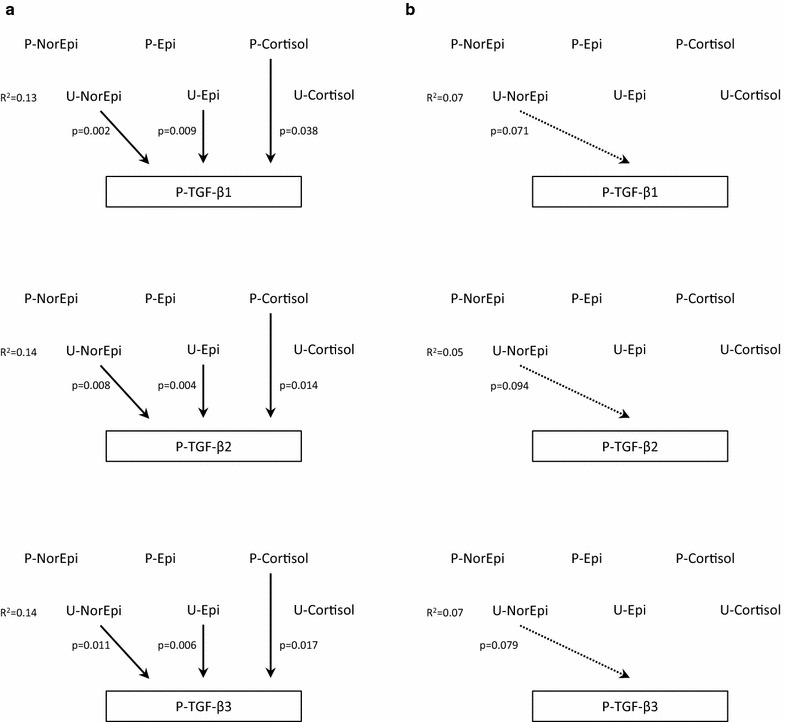
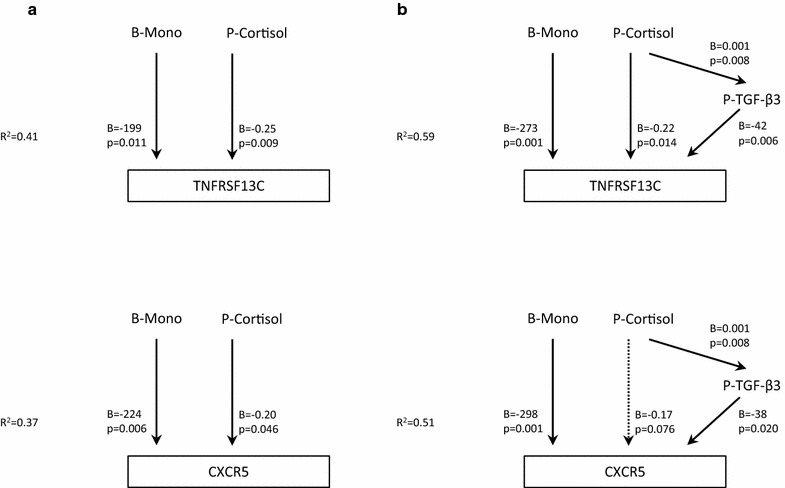
Background: Chronic fatigue syndrome (CFS) is a prevalent and disabling condition among adolescent. The disease mechanisms are unknown. Previous studies have suggested elevated plasma levels of several cytokines, but a recent meta-analysis of 38 articles found that of 77 different cytokines measured in plasma, transforming growth factor beta (TGF-β) was the only one that was elevated in patients compared to controls in a sufficient number of articles. In the present study we therefore compared the plasma levels of the three TGF-β isoforms in adolescent CFS patients and healthy controls. In addition, the study explored associations between TGF-β levels, neuroendocrine markers, clinical markers and differentially expressed genes within the CFS group. Methods: CFS patients aged 12–18 years (n = 120) were recruited nation-wide to a single referral center as part of the NorCAPITAL project (ClinicalTrials ID: NCT01040429). A broad case definition of CFS was applied, requiring 3 months of unexplained, disabling chronic/relapsing fatigue of new onset, whereas no accompanying symptoms were necessary. Healthy controls (n = 68) were recruited from local schools. The three isoforms of TGF-β (TGF-β1, TGF-β2, TGF-β3) were assayed using multiplex technology. Neuroendocrine markers encompassed plasma and urine levels of catecholamines and cortisol, as well as heart rate variability indices. Clinical markers consisted of questionnaire scores for symptoms of post-exertional malaise, inflammation, fatigue, depression and trait anxiety, as well as activity recordings. Whole blood gene expression was assessed by RNA sequencing in a subgroup of patients (n = 29) and controls (n = 18). Results: Plasma levels of all three isoforms of TGF-β were equal in the CFS patients and the healthy controls. Subgrouping according to the Fukuda and Canada 2003 criteria of CFS did not reveal differential results. Within the CFS group, all isoforms of TGF-β were associated with plasma cortisol, urine norepinephrine and urine epinephrine, and this association pattern was related to fatigue score. Also, TGF-β3 was related to expression of the B cell annotated genes TNFRSF13C and CXCR5. Conclusions: Plasma levels of all TGF-β isoforms were not altered in adolescent CFS. However, the TGF-β isoforms were associated with neuroendocrine markers, an association related to fatigue score. Furthermore, TGF-β3 might partly mediate an association between plasma cortisol and B cell gene expression. Trial registration Clinical Trials NCT01040429
Overview
The claims and statistics of this paper haven’t been checked yet.
Free: it reads the open-access text and checks the first 5 claims that cite a source we can check. Create a free account to check every claim.
Integrity signals
Registry
Cites
Statistics
Figures
Verification
Claims the paper makes
The claims and statistics of this paper haven’t been checked yet.
Free: it reads the open-access text and checks the first 5 claims that cite a source we can check. Create a free account to check every claim.
Claims other papers make about this one
Each is checked against this paper’s own text: does it say what the citing paper says it does?
The source backs part of the claim, not all of it — or backs it for a different population, condition or comparison.
In the citing paper
“Chronic fatigue syndrome in adolescents has been researched in a clinical trial that observed no significant differences in plasma samples, while TGF-β isoforms showed a relation to fatigue score [223].”
From Selected biomarkers of depression: what are the effects of cytokines and inflammation (2022) · cites this paper as [223]
Experimental — accuracy not yet measured
Self-check
Percentages, sums and reported differences re-computed from the paper’s own numbers.
The self-check needs the paper’s full text.
Citations
Cites
STAR: ultrafast universal RNA-seq aligner
Dobin, A., Davis, C. A., Schlesinger, F., Drenkow, J., Zaleski, C., Jha, S., Batut, P., Chaisson, M., & Gingeras, T. R. (2013) · Bioinformatics · doi:10.1093/bioinformatics/bts635 · Cited by 51,709
The Chronic Fatigue Syndrome: A Comprehensive Approach to Its Definition and Study
Fukuda, K., Straus, S. E., Hickie, I., Sharpe, M. C., Dobbins, J. G., Komaroff, A., & and International Chronic Fatigue Syndrome Study Group. (1994) · Annals of Internal Medicine · doi:10.7326/0003-4819-121-12-199412150-00009 · Cited by 4,969 · cited 1×
“Subgrouping of the participants according to the Fukuda case definition [35] and Canada 2003 case definition [33] was performed post hoc, based on questionnaire results (cf.”
MethodThe Subread aligner: fast, accurate and scalable read mapping by seed-and-vote
Liao, Y., Smyth, G. K., & Shi, W. (2013) · Nucleic Acids Research · doi:10.1093/nar/gkt214 · Cited by 3,064
Development of a fatigue scale
Chalder, T., Berelowitz, G., Pawlikowska, T., Watts, L., Wessely, S., Wright, D., & Wallace, E. P. (1993) · Journal of Psychosomatic Research · doi:10.1016/0022-3999(93)90081-p · Cited by 3,032 · cited 1×
“The Chalder Fatigue Questionnaire (CFQ) total sum score is applied in the present study [41]; total range is from 0 to 33, where higher scores imply more severe fatigue.”
MethodCarruthers, B. M., Jain, A. K., De Meirleir, K. L., Peterson, D. L., Klimas, N. G., Lerner, A. M., Bested, A. C., Flor-Henry, P., Joshi, P., Powles, A. C. P., et al. (2003) · Journal of Chronic Fatigue Syndrome · doi:10.1300/j092v11n01_02 · Cited by 1,180 · cited 3×
“Subgrouping of the participants according to the Fukuda case definition [35] and Canada 2003 case definition [33] was performed post hoc, based on questionnaire results (cf.”
BackgroundMethodCount-based differential expression analysis of RNA sequencing data using R and Bioconductor
Anders, S., McCarthy, D. J., Chen, Y., Okoniewski, M., Smyth, G. K., Huber, W., & Robinson, M. D. (2013) · Nature Protocols · doi:10.1038/nprot.2013.099 · Cited by 1,146
Grant, P. M., Ryan, C. G., Tigbe, W. W., & Granat, M. H. (2006) · British Journal of Sports Medicine · doi:10.1136/bjsm.2006.030262 · Cited by 681
Regulation of the Immune Response by TGF-β: From Conception to Autoimmunity and Infection
Sanjabi, S., Oh, S. A., & Li, M. O. (2017) · Cold Spring Harbor Perspectives in Biology · doi:10.1101/cshperspect.a022236 · Cited by 621
Beyond Myalgic Encephalomyelitis/Chronic Fatigue Syndrome: Redefining an Illness
(2015) · Military Medicine · doi:10.7205/milmed-d-15-00085 · Cited by 416
Burleson Daviss, W., Birmaher, B., Melhem, N. A., Axelson, D. A., Michaels, S. M., & Brent, D. A. (2006) · Journal of Child Psychology and Psychiatry · doi:10.1111/j.1469-7610.2006.01646.x · Cited by 370
EBV Persistence—Introducing the Virus
Thorley-Lawson, D. A. (2015) · Current Topics in Microbiology and Immunology · doi:10.1007/978-3-319-22822-8_8 · Cited by 333
Regulation of the latent-lytic switch in Epstein–Barr virus
Kenney, S. C., & Mertz, J. E. (2014) · Seminars in Cancer Biology · doi:10.1016/j.semcancer.2014.01.002 · Cited by 281
Hypothalamic-pituitary-adrenal axis dysfunction in chronic fatigue syndrome
Papadopoulos, A. S., & Cleare, A. J. (2012) · Nature Reviews Endocrinology · doi:10.1038/nrendo.2011.153 · Cited by 280
Brenu, E. W., van Driel, M. L., Staines, D. R., Ashton, K. J., Ramos, S. B., Keane, J., Klimas, N. G., & Marshall-Gradisnik, S. M. (2011) · Journal of Translational Medicine · doi:10.1186/1479-5876-9-81 · Cited by 251
Martínez-Martínez, L.-A., Mora, T., Vargas, A., Fuentes-Iniestra, M., & Martínez-Lavín, M. (2014) · JCR: Journal of Clinical Rheumatology · doi:10.1097/rhu.0000000000000089 · Cited by 224
Chronic fatigue syndrome, the immune system and viral infection
Bansal, A. S., Bradley, A. S., Bishop, K. N., Kiani-Alikhan, S., & Ford, B. (2012) · Brain, Behavior, and Immunity · doi:10.1016/j.bbi.2011.06.016 · Cited by 221
Plasma cytokines in women with chronic fatigue syndrome
Fletcher, M. A., Zeng, X. R., Barnes, Z., Levis, S., & Klimas, N. G. (2009) · Journal of Translational Medicine · doi:10.1186/1479-5876-7-96 · Cited by 205
The State-Trait Anxiety Inventory: A systematic evaluation.
Kendall, P. C. (1976) · Journal of Consulting and Clinical Psychology · doi:10.1037//0022-006x.44.3.406 · Cited by 199
Regulation of Innate and Adaptive Immunity by TGFβ
Kelly, A., Houston, S. A., Sherwood, E., Casulli, J., & Travis, M. A. (2017) · Advances in immunology · doi:10.1016/bs.ai.2017.01.001 · Cited by 163
Adolescent Chronic Fatigue Syndrome: Prevalence, Incidence, and Morbidity
Nijhof, S. L., Maijer, K., Bleijenberg, G., Uiterwaal, C. S. P. M., Kimpen, J. L. L., & van de Putte, E. M. (2011) · Pediatrics · doi:10.1542/peds.2010-1147 · Cited by 162 · cited 1×
“Similar observations have been reported in a study of neuroendocrine regulatory systems [29], and are also in line with findings of a relationship between HPA axis dynamics and clinical symptoms [50, 51].”
ResultChronic fatigue syndrome and circulating cytokines: A systematic review
Blundell, S., Ray, K. K., Buckland, M., & White, P. D. (2015) · Brain, Behavior, and Immunity · doi:10.1016/j.bbi.2015.07.004 · Cited by 159 · cited 4×
“Of even more importance is that the only cytokine from the meta-analysis of 38 articles and 77 cytokines [18] shown to be a possible mediator discriminating CFS patients from controls, namely the TGF-β, fail to be shown in the present study, leaving no systemic cytokines left for this purpose.”
BackgroundMethodResultInfluentialBiomarkers for chronic fatigue
Klimas, N. G., Broderick, G., & Fletcher, M. A. (2012) · Brain, Behavior, and Immunity · doi:10.1016/j.bbi.2012.06.006 · Cited by 158
Role of adaptive and innate immune cells in chronic fatigue syndrome/myalgic encephalomyelitis
Brenu, E. W., Huth, T. K., Hardcastle, S. L., Fuller, K., Kaur, M., Johnston, S., Ramos, S. B., Staines, D. R., & Marshall-Gradisnik, S. M. (2014) · International Immunology · doi:10.1093/intimm/dxt068 · Cited by 118
Crawley, E. M., Emond, A. M., & Sterne, J. A. C. (2011) · BMJ Open · doi:10.1136/bmjopen-2011-000252 · Cited by 115
Association of peripheral inflammatory markers with chronic fatigue in a population-based sample
Raison, C. L., Lin, J.-M. S., & Reeves, W. C. (2008) · Brain Behavior and Immunity · doi:10.1016/j.bbi.2008.11.005 · Cited by 114
Can sustained arousal explain the Chronic Fatigue Syndrome?
Wyller, V. B., Eriksen, H. R., & Malterud, K. (2009) · Behavioral and Brain Functions · doi:10.1186/1744-9081-5-10 · Cited by 110
Self-citationThe role of hypocortisolism in chronic fatigue syndrome
Nijhof, S. L., Rutten, J. M. T. M., Uiterwaal, C. S. P. M., Bleijenberg, G., Kimpen, J. L. L., & van de Putte, E. M. (2014) · Psychoneuroendocrinology · doi:10.1016/j.psyneuen.2014.01.017 · Cited by 107
Curriu, M., Carrillo, J., Massanella, M., Rigau, J., Alegre, J., Puig, J., Garcia-Quintana, A. M., Castro-Marrero, J., Negredo, E., Clotet, B., et al. (2013) · Journal of Translational Medicine · doi:10.1186/1479-5876-11-68 · Cited by 105
Maes, M., Twisk, F. N. M., & Ringel, K. (2012) · Psychotherapy and Psychosomatics · doi:10.1159/000336803 · Cited by 97
Sulheim, D., Fagermoen, E., Winger, A., Andersen, A. M., Godang, K., Müller, F., Rowe, P. C., Saul, J. P., Skovlund, E., Øie, M. G., et al. (2014) · JAMA Pediatrics · doi:10.1001/jamapediatrics.2013.4647 · Cited by 74
Self-citationPhysical and Functional Impact of Chronic Fatigue Syndrome/Myalgic Encephalomyelitis in Childhood
Kennedy, G., Underwood, C., & Belch, J. J. F. (2010) · PEDIATRICS · doi:10.1542/peds.2009-2644 · Cited by 74
Bradley, A. S., Ford, B., & Bansal, A. S. (2013) · Clinical and Experimental Immunology · doi:10.1111/cei.12043 · Cited by 73
Ebbinghaus, M., Gajda, M. R., Boettger, M. K., Schaible, H., & Bräuer, R. (2011) · Annals of the Rheumatic Diseases · doi:10.1136/ard.2011.150318 · Cited by 69
Postinfective Fatigue Syndrome Is Not Associated with Altered Cytokine Production
Ute, V.-C., Cameron, B., Pavlovic, D. H., Singletary, K., Davenport, T., Vernon, S., Reeves, W. C., Hickie, I., Wakefield, D., Lloyd, A. R., et al. (2007) · Clinical Infectious Diseases · doi:10.1086/520990 · Cited by 67
Wyller, V. B., Due, R., Saul, J. P., Amlie, J., & Thaulow, E. (2007) · The American Journal of Cardiology · doi:10.1016/j.amjcard.2006.10.067 · Cited by 60
Self-citationNguyen, C. B., Alsøe, L., Lindvall, J. M., Sulheim, D., Fagermoen, E., Winger, A., Kaarbø, M., Nilsen, H., & Wyller, V. B. (2017) · Journal of Translational Medicine · doi:10.1186/s12967-017-1201-0 · Cited by 59 · cited 6×
“Recently, whole blood gene expression of immune annotated genes in CFS was demonstrated to be strongly associated with neuroendocrine markers of altered HPAaxis and autonomic nervous activity [13].”
BackgroundMethodInfluentialSelf-citationMissen, A., Hollingworth, W., Eaton, N., & Crawley, E. (2012) · Child: Care, Health and Development · doi:10.1111/j.1365-2214.2011.01298.x · Cited by 57
Iempridee, T., Das, S., Xu, M., & Mertz, J. E. (2011) · Journal of Virology · doi:10.1128/jvi.01197-10 · Cited by 56
Disturbed Adrenal Function in Adolescents with Chronic Fatigue Syndrome
Segal, T. Y., Hindmarsh, P. C., & Viner, R. M. (2005) · Journal of Pediatric Endocrinology and Metabolism · doi:10.1515/jpem.2005.18.3.295 · Cited by 54
Enhanced Vagal Withdrawal During Mild Orthostatic Stress in Adolescents with Chronic Fatigue
Wyller, V. B., Barbieri, R., Thaulow, E., & Saul, J. P. (2008) · Annals of Noninvasive Electrocardiology · doi:10.1111/j.1542-474x.2007.00202.x · Cited by 47
Self-citationHall, D. L., Lattie, E. G., Antoni, M. H., FLETCHER, M. A., Czaja, S. J., Perdomo, D. M., & Klimas, N. G. (2014) · Psychoneuroendocrinology · doi:10.1016/j.psyneuen.2014.06.021 · Cited by 46
Wyller, V. B., Barbieri, R., & Saul, J. P. (2011) · European Journal of Applied Physiology · doi:10.1007/s00421-010-1670-9 · Cited by 45
Self-citationVangeel, E., Van Den Eede, F., Hompes, T., Izzi, B., Del Favero, J., Moorkens, G., Lambrechts, D., Freson, K., & Claes, S. (2015) · Psychosomatic Medicine · doi:10.1097/psy.0000000000000224 · Cited by 44
Wyller, V. B., Vitelli, V., Sulheim, D., Fagermoen, E., Winger, A., Godang, K., & Bollerslev, J. (2016) · Journal of Translational Medicine · doi:10.1186/s12967-016-0873-1 · Cited by 41
Self-citationMensah, F., Bansal, A., Berkovitz, S., Sharma, A., Reddy, V, Leandro, M. J., & Cambridge, G. (2016) · Clinical and Experimental Immunology · doi:10.1111/cei.12749 · Cited by 34
Plasma cytokine expression in adolescent chronic fatigue syndrome
Wyller, V. B., Sørensen, Ø., Sulheim, D., Fagermoen, E., Ueland, T., & Mollnes, T. E. (2014) · Brain Behavior and Immunity · doi:10.1016/j.bbi.2014.12.025 · Cited by 30
Self-citationTransforming Growth Factor-β1 and Cortisol in Differentially Reared Primates
Smith, E. L., Batuman, O., Trost, R. C., Coplan, J. D., & Rosenblum, L. A. (2002) · Brain Behavior and Immunity · doi:10.1006/brbi.2001.0629 · Cited by 26
Catecholamines Can Induce Pulmonary Remodeling in Rats
Raßler, B., Marx, G., Schierle, K., & Zimmer, H. (2012) · Cellular Physiology and Biochemistry · doi:10.1159/000343304 · Cited by 24
Asprusten, T. T., Fagermoen, E., Sulheim, D., Skovlund, E., Sørensen, Ø., Mollnes, T. E., & Wyller, V. B. (2015) · Acta Paediatrica · doi:10.1111/apa.12950 · Cited by 16
Self-citationFagermoen, E., Sulheim, D., Winger, A., Andersen, A. M., Gjerstad, J., Godang, K., Rowe, P. C., Saul, J. P., Skovlund, E., & Wyller, V. B. (2015) · BMC Pediatrics · doi:10.1186/s12887-015-0428-2 · Cited by 14
Self-citationYanagawa, Y., Hiraide, S., & Iizuka, K. (2016) · Microbiology and Immunology · doi:10.1111/1348-0421.12344 · Cited by 12
Coplan, J. D., Gopinath, S., Abdallah, C. G., Margolis, J., Chen, W., Scharf, B., Rosenblum, L. A., Batuman, O., & Smith, E. L. (2017) · Chronic Stress · doi:10.1177/2470547016688693 · Cited by 10
Hoch, H., Hering, L., Crowley, S. D., et al. (2015) · Journal of Hypertension · doi:10.1097/01.hjh.0000467668.84403.99 · Cited by 3
Research works printed but not linked: 3
- Royal College of Paediatrics and Child Health Evidence based guidelines for the management of CFS/ME (chronic fatigue syndrome/myalgic encephalopathy) in children and young adults 2004 London Royal College of Paediatrics and Child Health
- HumanMine Database, University of Cambridge, UK. https://www.humanmine.org. Accessed 23 Feb 2017.
- Hoch H Hering L Crowley S Zhang J Yang G Rump LC Vonend O Steqbauer J 9A.05: sympathetic nervous system drives renal inflammation by alpha(2a)-adrenoceptors J Hypertens 2015 33 Suppl 1 e188
Cited by
Selected biomarkers of depression: what are the effects of cytokines and inflammation
Harsanyi, S., Kupcova, I., Danisovic, L., & Klein, M. (2022) · International Journal of Molecular Sciences · doi:10.3390/ijms24010578 · Cited by 299
VanElzakker, M. B., Brumfield, S. A., & Mejia, P. S. L. (2019) · Frontiers in Neurology · doi:10.3389/fneur.2018.01033 · Cited by 139
The clinical value of cytokines in chronic fatigue syndrome
Yang, T., Yang, Y., Wang, D., Li, C., Qu, Y., Guo, J., Shi, T., Wang, B., Sun, Z., & Asakawa, T. (2019) · Journal of Translational Medicine · doi:10.1186/s12967-019-1948-6 · Cited by 113
VanElzakker, M. B., Brumfield, S. A., & Mejia, P. S. L. (2020) · Frontiers in Neurology · doi:10.3389/fneur.2020.00863 · Cited by 81
Myalgic encephalomyelitis or chronic fatigue syndrome: how could the illness develop?
Morris, G., Maes, M. H. J., Berk, M., & Puri, B. K. (2019) · Metabolic Brain Disease · doi:10.1007/s11011-019-0388-6 · Cited by 80
Metadata
- Authors
- Wyller, V. B., Nguyen, C. B., Ludviksen, J. A., & Mollnes, T. E.
- Affiliations
- University of Oslo (NO)
- Akershus University Hospital (NO)
- Oslo University Hospital (NO)
- Corresponding author
- Wyller, Vegard Bruun
- Venue
- Journal of Translational Medicine
- Published
- 2017-12
- Volume
- 15
- Issue
- 1
- Pages
- 245-245
- ISSN
- 1479-5876 (ISSN-L)
- PMC
- PMC5716371
- OpenAlex
- W2773866496
- Semantic Scholar
- e62a83f74e4312527f7cd6600a60899271957d66
- Cited by
- 20
- References
- 53
- Citations by year
- 2026: 1 · 2025: 1 · 2024: 1 · 2023: 4 · 2022: 4 · 2021: 2 · 2020: 1 · 2019: 5 · 2018: 1
- FWCI
- 1.57
- Type
- journal article
- Language
- en
- Open access
- gold
- doi.org
- Licence
- cc-by
- creativecommons.org/licenses/by/4.0 (tdm)
- creativecommons.org/licenses/by/4.0 (vor, 3 d)
- Locations
- Journal of Translational Medicine (publishedVersion, cc-by)
- Europe PMC (PubMed Central) (publishedVersion, cc-by)
- PubMed Central (publishedVersion, cc-by)
- PubMed (publishedVersion)
- DOAJ (DOAJ: Directory of Open Access Journals) (submittedVersion)
- NORA - Norwegian Open Research Archives (submittedVersion, cc-by-nc-nd)
- NORA - Norwegian Open Research Archives (submittedVersion, cc-by)
- Funders
- Norges Forskningsråd
- Helse Sør-Øst RHF
- Universitetet i Oslo
- Helse Nord RHF
- Topics
- Health Sciences › Medicine › Psychiatry and Mental health › Fibromyalgia and Chronic Fatigue Syndrome Research
- Health Sciences › Medicine › Clinical Neurology › Long-Term Effects of COVID-19
- Health Sciences › Medicine › Cardiology and Cardiovascular Medicine › Cardiovascular Syncope and Autonomic Disorders
- Keywords
- chronic fatigue syndrome, adolescents, TGF-beta, TGF-beta isoforms, plasma cytokines, neuroendocrine markers, cortisol, catecholamines, heart rate variability, post-exertional malaise, whole blood gene expression, TNFRSF13C, CXCR5, B cells, fatigue, depression, trait anxiety, Fukuda criteria
- MeSH terms
- Adolescent, Demography, Female, Humans, Male, Neurosecretory Systems, RNA, Messenger, Biomarkers, Fatigue Syndrome, Chronic, Linear Models, Case-Control Studies, Transforming Growth Factor beta, Protein Isoforms
About these checks
Registry, retraction, Cites and statistics results are computed, not judged, with one exception: a printed reference that no index lists is read once by a model before it counts as a citation error. Claims are extracted by a model and kept only when their quote appears verbatim in the text; each cited source is then checked, with a model’s help, for whether it says what the claim relies on. Those verdicts can be wrong — read the claim’s quote and the cited source before relying on one.
Statistics and arithmetic are recomputed, not judged.
Confidence bands are shown only for fields calibrated on our annotated test set. None is calibrated yet, so no band is shown.
What counts as a claim ›How we measure confidence ›How we check this ›
Are you an author, or do you see a problem with this page? Request a review
Data sources
Bibliographic data: Semantic Scholar, OpenAlex, Crossref.
Contains information from the Semantic Scholar Academic Graph Datasets, made available under the ODC Attribution License (ODC-BY 1.0).
Semantic Scholar’s data is described in: Kinney, R., et al. (2023). The Semantic Scholar Open Data Platform. arXiv:2301.10140.
