

Sex and interleukin-6 are prognostic factors for autoimmune toxicity following treatment with anti-CTLA4 blockade
Open accessThe DOI matches its Crossref record; 48 of the 48 references it cites were found in a registry or an index.
Abstract
BACKGROUND: Ipilimumab is a licensed immunotherapy for metastatic melanoma patients and, in the US, as adjuvant treatment for high risk melanoma radically resected. The use of ipilimumab is associated with a typical but unpredictable pattern of side effects. The purpose of this study was to identify clinical features and blood biomarkers capable of predicting ipilimumab related toxicity. METHODS: We performed a prospective study aimed at analyzing potential clinical and biological markers associated with immune-related toxicity in patients treated with ipilimumab (3 mg/kg, q3w). We enrolled 140 consecutive melanoma patients treated with ipilimumab for metastatic disease. The following prospectively collected data were utilized: patient characteristics, previous therapies, level of circulating biomarkers associated with tumour burden or immune-inflammation status (lactic dehydrogenase, C-reactive protein, β2-microglobulin, vascular endothelial growth factor, interleukin-2, interleukin-6, S-100, alkaline phosphatase, transaminases) and blood cells subsets (leukocyte and lymphocyte subpopulations). Logistic regression was used for multivariate analysis of data. RESULTS: Out of 140 patients, 36 (26%) experienced a severe adverse event, 33 (24%) discontinued treatment for severe toxicity. Among the immune-profile biomarkers analyzed, only interleukin-6 was associated with the risk of toxicity. Female patients had a further increase of immune-related adverse events. Low baseline interleukin-6 serum levels (OR = 2.84, 95% CI 1.34-6.03, P = 0.007) and sex female (OR = 1.5, 95% CI 1.06-2.16 P = 0.022) and were significant and independent risk factors for immune related adverse events. CONCLUSIONS: Baseline IL6 serum levels and female sex were significantly and independently associated with higher risk of severe toxicity and could be exploited in clinical practice to personalize toxicity surveillance in patients treated with ipilimumab.
Overview
The claims and statistics of this paper haven’t been checked yet.
Free: it reads the open-access text and checks the first 5 claims that cite a source we can check. Create a free account to check every claim.
Integrity signals
Registry
Cites
Statistics
Figures
Verification
Claims the paper makes
The claims and statistics of this paper haven’t been checked yet.
Free: it reads the open-access text and checks the first 5 claims that cite a source we can check. Create a free account to check every claim.
Claims other papers make about this one
Each is checked against this paper’s own text: does it say what the citing paper says it does?
In the citing paper
“and increased IL-6 levels in patients with metastatic melanoma treated with ipilimumab (CTLA-4 antibody) are also associated with irAEs (Valpione et al., 2018).”
From Hallmarks of response, resistance, and toxicity to immune checkpoint blockade (2021) · cites this paper as Valpione et al., 2018
Self-check
Percentages, sums and reported differences re-computed from the paper’s own numbers.
The self-check needs the paper’s full text.
Citations
Cites
Adverse Renal Effects of Immune Checkpoint Inhibitors: A Narrative Review
Wanchoo, R., Karam, S., Uppal, N. N., Barta, V. S., Deray, G., Devoe, C., Launay-Vacher, V., Jhaveri, K. D., & on behalf of Cancer and Kidney International Network Workgroup on Immune Checkpoint Inhibitors (2017) · American Journal of Nephrology · doi:10.1159/000455014 · Cited by 15,256
Combined Nivolumab and Ipilimumab or Monotherapy in Untreated Melanoma
Larkin, J., Chiarion-Sileni, V., Gonzalez, R., Grob, J. J., Cowey, C. L., Lao, C. D., Schadendorf, D., Dummer, R., Smylie, M., Rutkowski, P., et al. (2015) · New England Journal of Medicine · doi:10.1056/nejmoa1504030 · Cited by 8,157
Self-citationMutational heterogeneity in cancer and the search for new cancer-associated genes
Lawrence, M. S., Stojanov, P., Polak, P., Kryukov, G. V., Cibulskis, K., Sivachenko, A., Carter, S. L., Stewart, C., Mermel, C. H., Roberts, S. A., et al. (2013) · Nature · doi:10.1038/nature12213 · Cited by 5,461
(2012) · Hepatogastroenterology · doi:10.5754/hge12469 · Cited by 3,178
Tivol, E. A., Borriello, F., Schweitzer, A. N., Lynch, W. P., Bluestone, J. A., & Sharpe, A. H. (1995) · Immunity · doi:10.1016/1074-7613(95)90125-6 · Cited by 2,914 · cited 1×
“In fact, the pattern of immune deregulation occurring in individuals or animals with CTLA4 constitutive impairment does not completely match with the most frequent AEs described for anti-CTLA4 antibodies, thus suggesting a toxicity mechanism for these drugs that is not limited to CTLA4 inhibition [23, 24].”
BackgroundNivolumab and ipilimumab versus ipilimumab in untreated melanoma
Postow, M. A., Chesney, J., Pavlick, A. C., Robert, C., Grossmann, K., McDermott, D., Linette, G. P., Meyer, N., Giguere, J. K., Agarwala, S. S., et al. (2015) · New England Journal of Medicine · doi:10.1056/nejmoa1414428 · Cited by 2,781
Estimating the error rate of a prediction rule: improvement on cross-validation
Efron, B. (1983) · Journal of the American Statistical Association · doi:10.1080/01621459.1983.10477973 · Cited by 2,300 · cited 1×
“Statistical analysis We used logistic regression analysis, corrected for the bias in prediction error estimates [17], to examine the association between toxicity and above mentioned biomarkers.”
MethodProlonged Survival in Stage III Melanoma with Ipilimumab Adjuvant Therapy
Eggermont, A. M. M., Chiarion-Sileni, V., Grob, J.-J., Dummer, R., Wolchok, J. D., Schmidt, H., Hamid, O., Robert, C., Ascierto, P. A., Richards, J. M., et al. (2016) · New England Journal of Medicine · doi:10.1056/nejmoa1611299 · Cited by 1,318 · cited 1×
“Of note, the diffusion of checkpoint inhibitors based immunotherapy for a growing number of cancers [40], the use of combination checkpoint inhibitors like ipilimumab plus nivolumab (with a significant risk of immune toxicity) [41–43], coupled with the implementation of ipilimumab for the adjuvant therapy of melanoma…”
BackgroundSelf-citationEggermont, A. M. M., Chiarion-Sileni, V., Grob, J.-J., Dummer, R., Wolchok, J. D., Schmidt, H., Hamid, O., Robert, C., Ascierto, P. A., Richards, J. M., et al. (2015) · The Lancet Oncology · doi:10.1016/s1470-2045(15)70122-1 · Cited by 1,262 · cited 1×
“Of note, the diffusion of checkpoint inhibitors based immunotherapy for a growing number of cancers [40], the use of combination checkpoint inhibitors like ipilimumab plus nivolumab (with a significant risk of immune toxicity) [41–43], coupled with the implementation of ipilimumab for the adjuvant therapy of melanoma…”
BackgroundSelf-citationCyclooxygenase-Dependent Tumor Growth through Evasion of Immunity
Zelenay, S., van der Veen, A. G., Böttcher, J. P., Snelgrove, K. J., Rogers, N., Acton, S. E., Chakravarty, P., Girotti, M. R., Marais, R., Quezada, S. A., et al. (2015) · Cell · doi:10.1016/j.cell.2015.08.015 · Cited by 1,128
Combined Nivolumab and Ipilimumab or Monotherapy in Untreated Melanoma
(2015) · New England Journal of Medicine · doi:10.1056/nejmc1509660 · Cited by 872
Freeman-Keller, M., Kim, Y., Cronin, H., Richards, A., Gibney, G., & Weber, J. S. (2016) · Clinical Cancer Research · doi:10.1158/1078-0432.ccr-15-1136 · Cited by 863 · cited 1×
“In contrast, there appears to be a correlation between severe AEs and outcome for melanoma patients treated with anti-PD1s [26], which calls for further investigation in this field.”
BackgroundAutosomal dominant immune dysregulation syndrome in humans with CTLA4 mutations
Schubert, D., Bode, C., Kenefeck, R., Hou, T. Z., Wing, J. B., Kennedy, A., Bulashevska, A., Petersen, B.-S., Schäffer, A. A., Grüning, B. A., et al. (2014) · Nature Medicine · doi:10.1038/nm.3746 · Cited by 832 · cited 1×
“In fact, the pattern of immune deregulation occurring in individuals or animals with CTLA4 constitutive impairment does not completely match with the most frequent AEs described for anti-CTLA4 antibodies, thus suggesting a toxicity mechanism for these drugs that is not limited to CTLA4 inhibition [23, 24].”
BackgroundInterleukin-6 and its receptors: a highly regulated and dynamic system
Wolf, J., Rose-John, S., & Garbers, C. (2014) · Cytokine · doi:10.1016/j.cyto.2014.05.024 · Cited by 618 · cited 1×
“IL6 is an acute phase cytokine usually secreted during infections or tissue damage and its production is rapidly switched off after healing [27], but an aberrant production has been associated with several aspects of cancer biology [28].”
BackgroundMartens, A., Wistuba-Hamprecht, K., Foppen, M. G., Yuan, J., Postow, M. A., Wong, P., Romano, E., Khammari, A., Dreno, B., Capone, M., et al. (2016) · Clinical Cancer Research · doi:10.1158/1078-0432.ccr-15-2412 · Cited by 541 · cited 2×
“As consequence, although the role of the biomarkers that we investigated is unknown in contexts of combination immunotherapy and anti-PD1 drugs, the present study could have a clinical relevance in a large patient population and, to our knowledge, is one of the first planned to look for predictors of immune-toxicity […”
BackgroundSex hormones influence on the immune system: basic and clinical aspects in autoimmunity
Cutolo, M., Sulli, A., Capellino, S., Villaggio, B., Montagna, P., Seriolo, B., & Straub, R. H. (2004) · Lupus · doi:10.1191/0961203304lu1094oa · Cited by 407 · cited 1×
“Interestingly, no sex effect was observed in immunotherapy prognostic studies; nonetheless, the prognosis of primary melanoma is different for the two sexs, in favor of female patients, and the impact of the endocrine system on immune regulation in patients with melanoma is yet to be explored [37].”
BackgroundCorrecting for Optimistic Prediction in Small Data Sets
Smith, G. C. S., Seaman, S. R., Wood, A. M., Royston, P., & White, I. R. (2014) · American Journal of Epidemiology · doi:10.1093/aje/kwu140 · Cited by 352 · cited 1×
“The predictive effect of the model was then validated using bootstrap methodology (200 replications), as advised for small datasets [18].”
MethodBerman, D., Parker, S. M., Siegel, J., Chasalow, S. D., Weber, J. S., Galbraith, S. M., Targan, S. R., & Wang, H. L. (2010) · PubMed · Cited by 258
Diagnostic and prognostic biomarkers in melanoma.
Weinstein, D. M., Leininger, J., Hamby, C. V., & Safai, B. (2014) · PubMed Central · Cited by 228
Bharti, R., Dey, G., & Mandal, M. (2016) · Cancer Letters · doi:10.1016/j.canlet.2016.02.048 · Cited by 228 · cited 1×
“IL6 is an acute phase cytokine usually secreted during infections or tissue damage and its production is rapidly switched off after healing [27], but an aberrant production has been associated with several aspects of cancer biology [28].”
BackgroundMcDermott, D., Haanen, J., Chen, T.-T., Lorigan, P., & O'Day, S. (2013) · Annals of Oncology · doi:10.1093/annonc/mdt291 · Cited by 219 · cited 1×
“Apparently, the occurrence of a severe AE does not compromise the activity and efficacy of ipilimumab treatment, but can potentially be fatal and prolong exposure to immunosuppressant therapies (mainly corticosteroids) used to counterbalance the excessive immune upregulation by negative checkpoint inhibitors [7].”
BackgroundPart I: Vaccines for solid tumours
Mocellin, S., Mandruzzato, S., Bronte, V., Lise, M., & Nitti, D. (2004) · The Lancet Oncology · doi:10.1016/s1470-2045(04)01610-9 · Cited by 196 · cited 1×
“, interferon alpha and interleukin-2) basically failed to significantly improve patient survival [3, 4].”
BackgroundSansone, P., Ceccarelli, C., Berishaj, M., Chang, Q., Rajasekhar, V. K., Perna, F., Bowman, R. L., Vidone, M., Daly, L., Nnoli, J., et al. (2016) · Nature Communications · doi:10.1038/ncomms10442 · Cited by 176
Lebbé, C., Weber, J. S., Maio, M., Neyns, B., Harmankaya, K., Hamid, O., O'Day, S. J., Konto, C., Cykowski, L., McHenry, M. B., et al. (2014) · Annals of Oncology · doi:10.1093/annonc/mdu441 · Cited by 153 · cited 1×
“The major effect is the increase of survival, with approximately one in six patients experiencing long-term survival [5].”
BackgroundGogas, H., Eggermont, A. M. M., Hauschild, A., Hersey, P., Mohr, P., Schadendorf, D., Spatz, A., & Dummer, R. (2009) · Annals of Oncology · doi:10.1093/annonc/mdp251 · Cited by 143
Trial Watch: Immunomodulatory monoclonal antibodies for oncological indications
Buqué, A., Bloy, N., Aranda, F., Castoldi, F., Eggermont, A., Cremer, I., Fridman, W. H., Fucikova, J., Galon, J., Marabelle, A., et al. (2015) · OncoImmunology · doi:10.1080/2162402x.2015.1008814 · Cited by 136 · cited 1×
“Of note, the diffusion of checkpoint inhibitors based immunotherapy for a growing number of cancers [40], the use of combination checkpoint inhibitors like ipilimumab plus nivolumab (with a significant risk of immune toxicity) [41–43], coupled with the implementation of ipilimumab for the adjuvant therapy of melanoma…”
BackgroundCorrection to Lancet Oncol 2015; 16: 522–30
Eggermont, A. M. M., Chiarion‐Sileni, V., & Grob, J. (2015) · The Lancet Oncology · doi:10.1016/s1470-2045(15)70271-8 · Cited by 128
Self-citationKim, M. S., Lee, W. S., Jeong, J., Kim, S., & Jin, W. (2015) · Oncotarget · doi:10.18632/oncotarget.5522 · Cited by 112
C-Reactive Protein As a Marker of Melanoma Progression
Fang, S., Wang, Y., Sui, D., Liu, H., Ross, M. I., Gershenwald, J. E., Cormier, J. N., Royal, R. E., Lucci, A., Schacherer, C. W., et al. (2015) · Journal of Clinical Oncology · doi:10.1200/jco.2014.58.0209 · Cited by 85
Zou, M., Zhang, X., & Xu, C. (2015) · Cellular Oncology · doi:10.1007/s13402-015-0251-7 · Cited by 72
The Use of Cytokines and Chemokines in the Cancer Immunotherapy
Amedei, A., Prisco, D., & D’Elios, M. M. (2013) · Recent Patents on Anti-Cancer Drug Discovery · doi:10.2174/1574892811308020002 · Cited by 71 · cited 1×
“, interferon alpha and interleukin-2) basically failed to significantly improve patient survival [3, 4].”
BackgroundIL6 Mediates Immune and Colorectal Cancer Cell Cross-talk via miR-21 and miR-29b
Patel, S. A. A., & Gooderham, N. J. (2015) · Molecular Cancer Research · doi:10.1158/1541-7786.mcr-15-0147 · Cited by 57
Serum interleukin-6 as a prognostic biomarker in patients with metastatic melanoma
Hoejberg, L., Bastholt, L., Johansen, J. S., Christensen, I. J., Gehl, J., & Schmidt, H. (2012) · Melanoma Research · doi:10.1097/cmr.0b013e3283550aa5 · Cited by 57 · cited 2×
“In particular, blood was analyzed, within 2 h from phlebotomy, for melanoma tumour burden surrogates (LDH, S-100 [8, 9]), acute phase proteins and cytokines associated with immune reaction, inflammation or autoimmune disease activity (CRP [10], beta-2 microglobulin [11, 12], VEGF [13], IL2 [14, 15], IL6 [16]).”
MethodIpilimumab in 2nd line treatment of patients with advanced melanoma: a cost-effectiveness analysis
Barzey, V., Atkins, M. B., Garrison, L. P., Asukai, Y., Kotapati, S., & Penrod, J. R. (2012) · Journal of Medical Economics · doi:10.3111/13696998.2012.739226 · Cited by 56
Bozkaya, H., Bozdayi, M. A., Türkyïlmaz, R., Sarioğlu, M., Çetınkaya, H., Cinar, K., Köse, K., Yurdaydın, C., & Uzunalımoǧlu, Ö. (2000) · PubMed · Cited by 55
Valpione, S., Martinoli, C., Fava, P., D, S. M. M., Campana, L. G., Quaglino, P., Ferrucci, P. F., Pigozzo, J., Astrua, C., Testori, A., et al. (2015) · European Journal of Cancer · doi:10.1016/j.ejca.2015.06.130 · Cited by 53 · cited 1×
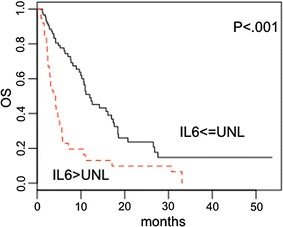
“Remarkably, we found that metastatic melanoma patients with normal IL6 serum levels had longer survival after ipilimumab treatment, although IL6 baseline concentration didn’t retain it’s significance when we analyzed its prognostic value for survival in a multivariate analysis that also identified baseline LDH and neu…”
BackgroundSelf-citationPrizment, A. E., Linabery, A. M., Lutsey, P. L., Selvin, E., Nelson, H. H., Folsom, A. R., Church, T. R., Drake, C. G., Platz, E. A., & Joshu, C. (2016) · Cancer Epidemiology, Biomarkers & Prevention · doi:10.1158/1055-9965.epi-15-0849 · Cited by 53 · cited 1×
“In particular, blood was analyzed, within 2 h from phlebotomy, for melanoma tumour burden surrogates (LDH, S-100 [8, 9]), acute phase proteins and cytokines associated with immune reaction, inflammation or autoimmune disease activity (CRP [10], beta-2 microglobulin [11, 12], VEGF [13], IL2 [14, 15], IL6 [16]).”
MethodAhmad, S. S., Qian, W., Ellis, S. G., Mason, E. F., Khattak, M. A., Gupta, A., Shaw, H. M., Quinton, A., Kovarikova, J., Thillai, K., et al. (2015) · Melanoma Research · doi:10.1097/cmr.0000000000000185 · Cited by 53 · cited 1×
“, outside clinical trials) describe even higher toxicity rates, G3–4 AEs being observed in up to 30% of patients [6].”
BackgroundEconomic Burden Associated with Adverse Events in Patients with Metastatic Melanoma
Arondekar, B. V., Curkendall, S. M., Monberg, M., Mirakhur, B., Oglesby, A. K., Lenhart, G. M., & Meyer, N. M. (2015) · Journal of Managed Care & Specialty Pharmacy · doi:10.18553/jmcp.2015.21.2.158 · Cited by 49 · cited 1×
“Moreover, AE management represents an important economic burden [20] which adds to the already high drug costs.”
BackgroundSomatic Mutations and Immunotherapy Outcome with CTLA-4 Blockade in Melanoma
Boussiotis, V. A. (2014) · New England Journal of Medicine · doi:10.1056/nejme1413061 · Cited by 47 · cited 1×
“Background Melanoma is a highly immunogenic tumor, as a consequence of the high somatic mutation rate and expression of neoantigens characterizing this malignancy [1, 2].”
BackgroundRoth, I. M., Campbell, H., Cortés-Rubio, C. N., Vennin, C., Wilson, M., Wiles, A. K., Williams, G., Woolley, A. G., Timpson, P., Berridge, M. V., et al. (2016) · Oncogene · doi:10.1038/onc.2016.45 · Cited by 46
Beta2-Microglobulin Can Be a Disease Activity Marker in Systemic Lupus Erythematosus
Kim, H., Jeon, J., Yoon, J.-M., & Suh, C. (2010) · The American Journal of the Medical Sciences · doi:10.1097/maj.0b013e3181d26dfb · Cited by 42 · cited 1×
“In particular, blood was analyzed, within 2 h from phlebotomy, for melanoma tumour burden surrogates (LDH, S-100 [8, 9]), acute phase proteins and cytokines associated with immune reaction, inflammation or autoimmune disease activity (CRP [10], beta-2 microglobulin [11, 12], VEGF [13], IL2 [14, 15], IL6 [16]).”
MethodThe SRF-YAP-IL6 axis promotes breast cancer stemness
Kim, T., & Lim, D. (2016) · Cell Cycle · doi:10.1080/15384101.2016.1161994 · Cited by 21
Bender, C., Dimitrakopoulou‐Strauss, A., Enk, A., & Hassel, J. C. (2016) · Annals of Oncology · doi:10.1093/annonc/mdw128 · Cited by 15 · cited 1×
“A subgroup of patients who underwent treatment with anti-PD1 antibodies after severe toxicity from ipilimumab did not experience significant reactivation of AEs, with no evidence of cross-linking autoimmune toxicity, as previously suggested [39].”
Giacomo, A. M. D., Grimaldi, A. M., Ascierto, P. A., Queirolo, P., Vecchio, M. D., Ridolfi, R., Rosa, F. D., Galitiis, F. D., Testori, A., Cognetti, F., et al. (2013) · Journal of Clinical Oncology · doi:10.1200/jco.2013.31.15_suppl.9065 · Cited by 14 · cited 1×
“However, the study performed on all the patients of the Ipilimumab Italian Expanded Access Program found no association between effectiveness and occurrence of any AEs [25], this finding being confirmed in our cohort.”
ResultSelf-citationSedighi, S. (2014) · JOURNAL OF CLINICAL AND DIAGNOSTIC RESEARCH · doi:10.7860/jcdr/2014/7903.4602 · Cited by 9 · cited 9×
“LDH was measured by means of the kinetic method optimized according to the German Society of Clinical Chemistry (Roche Cobas 8000 c720, Cobas Core and ISE 1800), CRP was measured with nephelometric method (Siemens Vista), beta2-microglobulin was measured with immunonephelometric method (Siemens Vista), VEGF was measur…”
MethodInfluentialAgostino, N. M., Saraceni, C., Kincaid, H. M., Shi, W., Nevala, W. K., Markovic, S. N., & Nair, S. (2015) · SpringerPlus · doi:10.1186/s40064-015-0951-5 · Cited by 9 · cited 5×
“LDH was measured by means of the kinetic method optimized according to the German Society of Clinical Chemistry (Roche Cobas 8000 c720, Cobas Core and ISE 1800), CRP was measured with nephelometric method (Siemens Vista), beta2-microglobulin was measured with immunonephelometric method (Siemens Vista), VEGF was measur…”
MethodInfluentialSelf-Recognition and Tumor Response to Immunotherapy
Ernstoff, M. S. (2005) · Journal of Clinical Oncology · doi:10.1200/jco.2005.95.029 · Cited by 7 · cited 1×
“Consistently with the hypothesis of a mainly cytotoxic lymphocyte mediated toxicity [38], we identified no correlation between auto-antibodies and AEs.”
Background
Cited by
Schneider, B. J., Naidoo, J., Santomasso, B. D., Lacchetti, C., Adkins, S., Anadkat, M., Atkins, M. B., Brassil, K. J., Caterino, J. M., Chau, I., et al. (2021) · Journal of Clinical Oncology · doi:10.1200/jco.21.01440 · Cited by 2,372
The evolving landscape of biomarkers for checkpoint inhibitor immunotherapy
Havel, J. J., Chowell, D., & Chan, T. A. (2019) · Nature Reviews Cancer · doi:10.1038/s41568-019-0116-x · Cited by 2,286
Hallmarks of response, resistance, and toxicity to immune checkpoint blockade
Morad, G., Helmink, B. A., Sharma, P., & Wargo, J. A. (2021) · Cell · doi:10.1016/j.cell.2021.09.020 · Cited by 1,648
Brahmer, J. R., Abu-Sbeih, H., Ascierto, P. A., Brufsky, J., Cappelli, L. C., Cortazar, F. B., Gerber, D. E., Hamad, L., Hansen, E., Johnson, D. B., et al. (2021) · Journal for ImmunoTherapy of Cancer · doi:10.1136/jitc-2021-002435 · Cited by 917
Immune-related adverse events of immune checkpoint inhibitors: a review
Yin, Q., Wu, L., Han, L., Zheng, X., Tong, R., Li, L., Bai, L., & Bian, Y. (2023) · Frontiers in Immunology · doi:10.3389/fimmu.2023.1167975 · Cited by 446
“There is also evidence that lower baseline IL-6 levels are significantly associated with the development of irAEs (62).”
Background
Metadata
- Authors
- Valpione, S., Pasquali, S., Campana, L. G., Piccin, L., Mocellin, S., Pigozzo, J., & Chiarion-Sileni, V.
- Affiliations
- University of Padua (IT)
- Istituto Oncologico Veneto (IT)
- Corresponding author
- Valpione, Sara
- Venue
- Journal of Translational Medicine
- Published
- 2018-04-11
- Volume
- 16
- Issue
- 1
- Pages
- 94-94
- ISSN
- 1479-5876 (ISSN-L)
- PMC
- PMC5896157
- OpenAlex
- W2797107996
- Cited by
- 201
- References
- 48
- Citations by year
- 2026: 17 · 2025: 27 · 2024: 20 · 2023: 34 · 2022: 35 · 2021: 29 · 2020: 27 · 2019: 7 · 2018: 4
- FWCI
- 6.30
- Type
- journal article
- Language
- en
- Open access
- gold
- doi.org
- Licence
- cc-by
- creativecommons.org/licenses/by/4.0/ (tdm)
- Locations
- Journal of Translational Medicine (publishedVersion, cc-by)
- Europe PMC (PubMed Central) (publishedVersion, other-oa)
- PubMed Central (publishedVersion, cc-by)
- PubMed (publishedVersion)
- DOAJ (DOAJ: Directory of Open Access Journals) (submittedVersion, cc-by-sa)
- Research Explorer (The University of Manchester) (submittedVersion, cc-by)
- Padua Research Archive (University of Padova) (submittedVersion, cc-by)
- Funders
- European Society for Medical Oncology (Clinical Research Fellowship grant 2015-2016)
- Topics
- Health Sciences › Medicine › Oncology › Cancer Immunotherapy and Biomarkers
- Life Sciences › Immunology and Microbiology › Immunology › Immunotherapy and Immune Responses
- Health Sciences › Medicine › Oncology › Cutaneous Melanoma Detection and Management
- Keywords
- ipilimumab, CTLA-4 blockade, immune-related adverse events, interleukin-6, sex differences, melanoma, prognostic factors, immunotoxicity, immune checkpoint inhibitors
- MeSH terms
- Adult, Aged, Aged, 80 and over, Female, Humans, Immunotherapy, Male, Middle Aged, Prognosis, Risk Factors, Sex Characteristics, Biomarkers, Tumor, Autoimmunity, Interleukin-6, Cluster Analysis, Kaplan-Meier Estimate, CTLA-4 Antigen
About these checks
Registry, retraction, Cites and statistics results are computed, not judged, with one exception: a printed reference that no index lists is read once by a model before it counts as a citation error. Claims are extracted by a model and kept only when their quote appears verbatim in the text; each cited source is then checked, with a model’s help, for whether it says what the claim relies on. Those verdicts can be wrong — read the claim’s quote and the cited source before relying on one.
Statistics and arithmetic are recomputed, not judged.
Confidence bands are shown only for fields calibrated on our annotated test set. None is calibrated yet, so no band is shown.
What counts as a claim ›How we measure confidence ›How we check this ›
Are you an author, or do you see a problem with this page? Request a review
Data sources
Bibliographic data: Semantic Scholar, OpenAlex, Crossref.
Contains information from the Semantic Scholar Academic Graph Datasets, made available under the ODC Attribution License (ODC-BY 1.0).
Semantic Scholar’s data is described in: Kinney, R., et al. (2023). The Semantic Scholar Open Data Platform. arXiv:2301.10140.
