

Long term impact of CTLA4 blockade immunotherapy on regulatory and effector immune responses in patients with melanoma
Open accessThe DOI matches its Crossref record; 54 of the 54 references it cites were found in a registry or an index.
Abstract
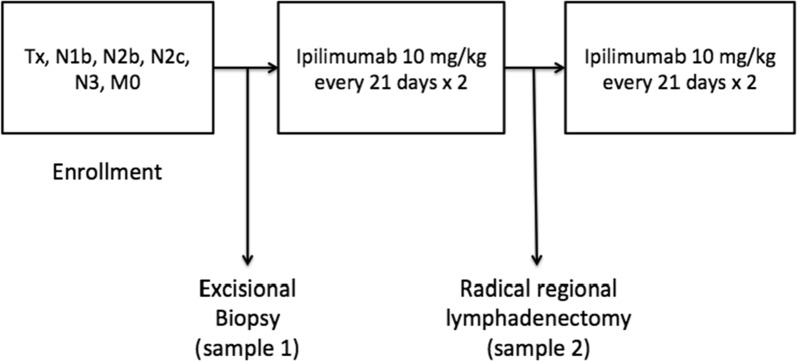
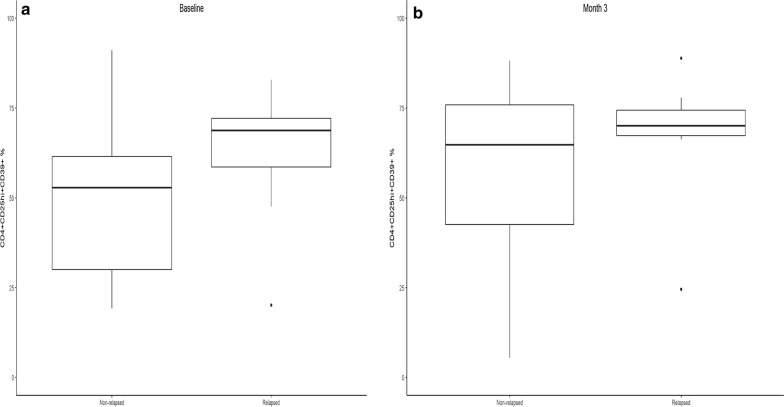
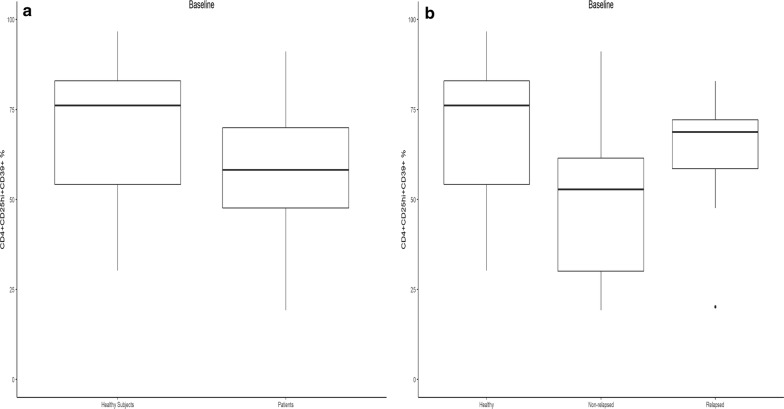
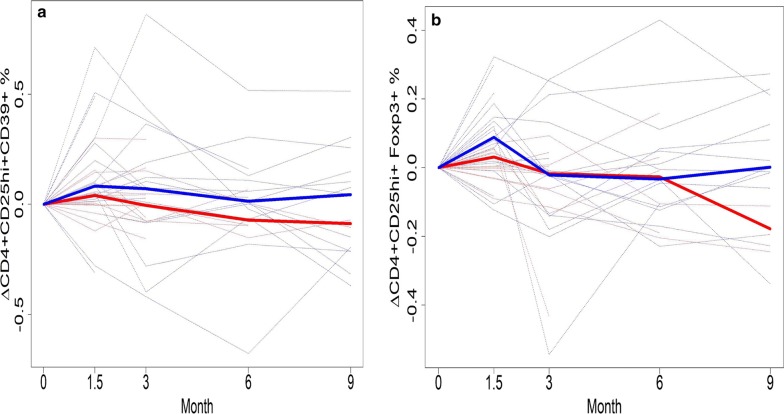
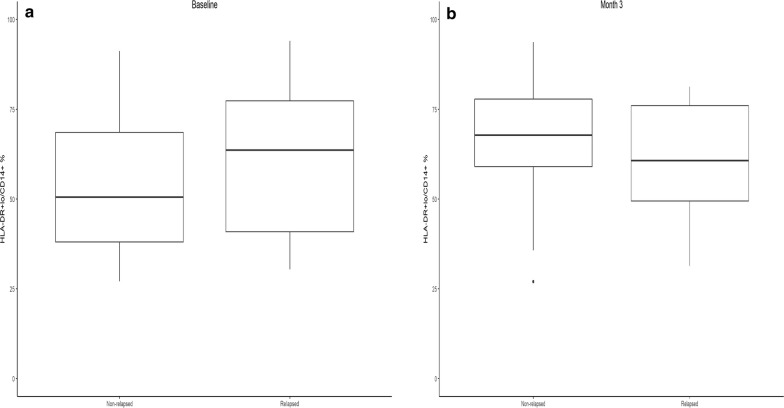
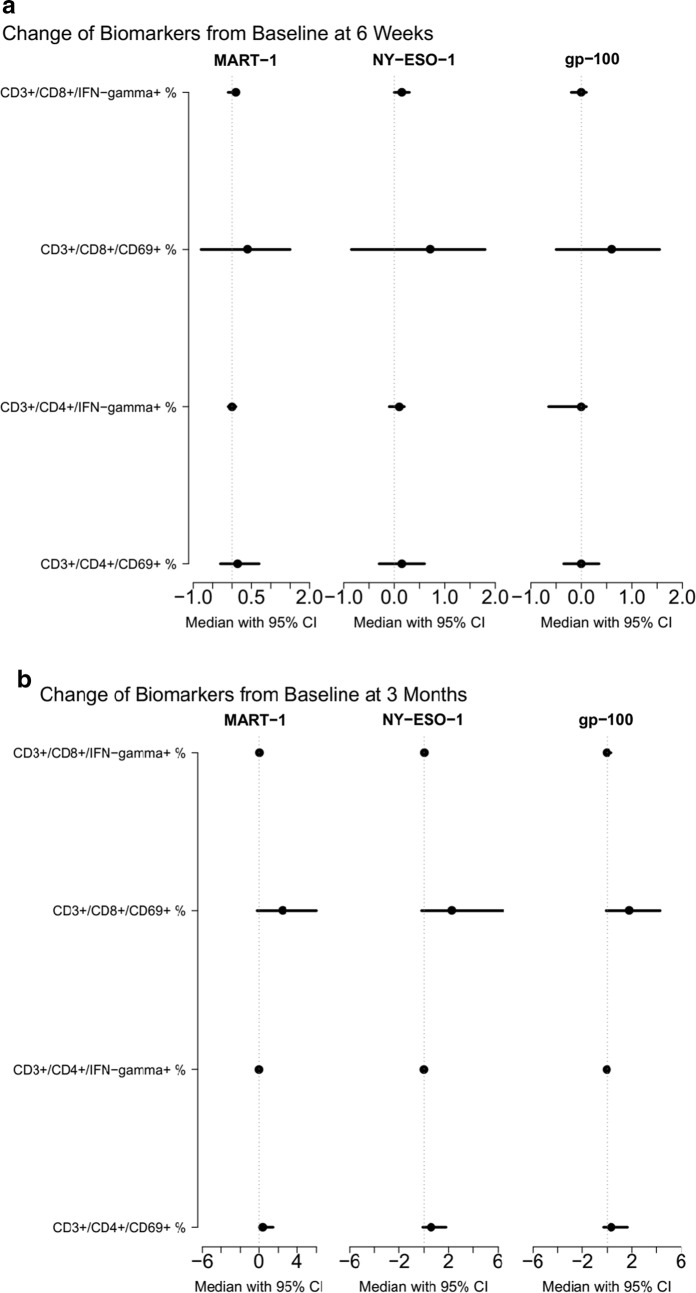
BACKGROUND: We previously reported early on-treatment significant modulation in circulating regulatory T cell (Treg), myeloid derived suppressor cells (MDSC) and antigen-specific type I CD4+ and CD8+ T cells that correlated with clinical outcome in regionally advanced melanoma patients treated with neoadjuvant ipilimumab. Here, we investigated the long term immunologic impact of CTLA4 blockade. METHODS: Patients were treated with ipilimumab given at 10 mg/kg IV every 3 weeks for 2 doses bracketing surgery. Blood specimens were collected at baseline and during treatment for up to 9 months. We tested immune responses at 3, 6, and 9 months utilizing multicolor flow cytometry. We compared frequencies of circulating Treg and MDSC on-study to baseline levels, as well as frequencies of CD4+ and CD8+ T cells specific to shared tumor-associated antigens (Gp-100, MART-1, NY-ESO-1). RESULTS: Levels of Treg significantly increased when measured at 6 weeks following ipilimumab but returned to baseline by 3 months, with no significant difference in Treg levels between relapsed and relapse-free groups at 3, 6 or 9 months. However, lower baseline levels of circulating Treg (CD4+CD25hi+CD39+) were significantly associated with better relapse free survival (RFS) (p = 0.04). Levels of circulating monocytic HLA-DR+/loCD14+ MDSC were lower at baseline in the relapse-free group and further decreased at 6 weeks, though the differences did not reach statistical significance including measurements at 3, 6 or 9 months. We detected evidence of type I (interferon-γ producing), activated (CD69+) CD4+ and CD8+ antigen-specific T cell immunity against cancer-testis (NY-ESO-1) as well as melanocytic lineage (MART-1, gp100) antigens in the absence of therapeutic vaccination. These responses were significantly boosted at 6 weeks and persisted at 3, 6 and 9 months following the initiation of ipilimumab. CONCLUSIONS: Lower Treg levels at baseline are significantly associated with RFS and increased Treg frequency after CTLA4 blockade was only transient. Lower MDSC was also associated with RFS and MDSC levels were further decreased after ipilimumab. Tumor specific effector immune responses are boosted with CTLA4 blockade and tend to be durable. Trial registration ClinicalTrials.gov Identifier: NCT00972933.
Overview
The claims and statistics of this paper haven’t been checked yet.
Free: it reads the open-access text and checks the first 5 claims that cite a source we can check. Create a free account to check every claim.
Integrity signals
Registry
Cites
Statistics
Figures
Verification
Claims the paper makes
The claims and statistics of this paper haven’t been checked yet.
Free: it reads the open-access text and checks the first 5 claims that cite a source we can check. Create a free account to check every claim.
Claims other papers make about this one
Each is checked against this paper’s own text: does it say what the citing paper says it does?
In the citing paper
“MDSCs were shown to be targeted and depleted by ICB, resulting in an increased Teff to MDSC ratio (Retseck et al., 2018).”
From Hallmarks of response, resistance, and toxicity to immune checkpoint blockade (2021) · cites this paper as Retseck et al., 2018
Self-check
Percentages, sums and reported differences re-computed from the paper’s own numbers.
The self-check needs the paper’s full text.
Citations
Cites
Improved Survival with Ipilimumab in Patients with Metastatic Melanoma
Hodi, F. S., O'Day, S. J., McDermott, D. F., Weber, R. W., Sosman, J. A., Haanen, J. B., Gonzalez, R., Robert, C., Schadendorf, D., Hassel, J. C., et al. (2010) · New England Journal of Medicine · doi:10.1056/nejmoa1003466 · Cited by 15,155
Myeloid-derived-suppressor cells as regulators of the immune system
Gabrilovich, D. I., & Nagaraj, S. (2009) · Nature Reviews Immunology · doi:10.1038/nri2506 · Cited by 6,753
CTLA-4 Control over Foxp3 + Regulatory T Cell Function
Wing, K., Onishi, Y., Prieto-Martin, P., Yamaguchi, T., Miyara, M., Fehervari, Z., Nomura, T., & Sakaguchi, S. (2008) · Science · doi:10.1126/science.1160062 · Cited by 2,956
Lymphoproliferative Disorders with Early Lethality in Mice Deficient in Ctla-4
Waterhouse, P., Penninger, J. M., Timms, E., Wakeham, A., Shahinian, A., Lee, K. P., Thompson, C. B., Griesser, H., & Mak, T. W. (1995) · Science · doi:10.1126/science.270.5238.985 · Cited by 2,766
Balch, C. M., Soong, S.-J., Gershenwald, J. E., Thompson, J. F., Reintgen, D. S., Cascinelli, N., Urist, M., McMasters, K. M., Ross, M. I., Kirkwood, J. M., et al. (2001) · Journal of Clinical Oncology · doi:10.1200/jco.2001.19.16.3622 · Cited by 2,388
Read, S., Malmström, V., & Powrie, F. (2000) · The Journal of Experimental Medicine · doi:10.1084/jem.192.2.295 · Cited by 2,205
Schadendorf, D., Hodi, F. S., Robert, C., Weber, J. S., Margolin, K., Hamid, O., Patt, D., Chen, T.-T., Berman, D. M., & Wolchok, J. D. (2015) · Journal of Clinical Oncology · doi:10.1200/jco.2014.56.2736 · Cited by 2,141
Kirkwood, J. M., Strawderman, M. H., Ernstoff, M. S., Smith, T. J., Borden, E. C., & Blum, R. H. (1996) · Journal of Clinical Oncology · doi:10.1200/jco.1996.14.1.7 · Cited by 2,094
The Nature of Myeloid-Derived Suppressor Cells in the Tumor Microenvironment
Kumar, V., Patel, S., Tcyganov, E., & Gabrilovich, D. I. (2016) · Trends in Immunology · doi:10.1016/j.it.2016.01.004 · Cited by 2,008
Phan, G. Q., Yang, J. C., Sherry, R. M., Hwu, P., Topalian, S. L., Schwartzentruber, D. J., Restifo, N. P., Haworth, L. R., Seipp, C. A., Freezer, L. J., et al. (2003) · Proceedings of the National Academy of Sciences · doi:10.1073/pnas.1533209100 · Cited by 1,575
Research works printed but not linked: 1
- Nishikawa H Sakaguchi S Regulatory T cells in cancer immunotherapy Cur Opin Immunol 2014 27 1 7 10.1016/j.coi.2013.12.005 24413387 · DOI · Paper page
Cited by
Hallmarks of response, resistance, and toxicity to immune checkpoint blockade
Morad, G., Helmink, B. A., Sharma, P., & Wargo, J. A. (2021) · Cell · doi:10.1016/j.cell.2021.09.020 · Cited by 1,648
Hiam-Galvez, K. J., Allen, B. M., & Spitzer, M. H. (2021) · Nature Reviews Cancer · doi:10.1038/s41568-021-00347-z · Cited by 1,400
Moesta, A. K., Li, X.-Y., & Smyth, M. J. (2020) · Nature Reviews Immunology · doi:10.1038/s41577-020-0376-4 · Cited by 322
Existing and Emerging Biomarkers for Immune Checkpoint Immunotherapy in Solid Tumors
Arora, S., Velichinskii, R., Lesh, R. W., Ali, U., Kubiak, M., Bansal, P., Borghaei, H., Edelman, M. J., & Boumber, Y. (2019) · Advances in Therapy · doi:10.1007/s12325-019-01051-z · Cited by 196
CD39 Regulation and Functions in T Cells
Timperi, E., & Barnaba, V. (2021) · International Journal of Molecular Sciences · doi:10.3390/ijms22158068 · Cited by 186
On the mechanism of anti-CD39 immune checkpoint therapy
Allard, D., Allard, B., & Stagg, J. (2020) · Journal for ImmunoTherapy of Cancer · doi:10.1136/jitc-2019-000186 · Cited by 142
Enhancing clinical and immunological effects of anti-PD-1 with belapectin, a galectin-3 inhibitor
Curti, B. D., Koguchi, Y., Leidner, R. S., Rolig, A. S., Sturgill, E. R., Sun, Z., Wu, Y., Rajamanickam, V., Bernard, B. M., Hilgart-Martiszus, I., et al. (2021) · Journal for ImmunoTherapy of Cancer · doi:10.1136/jitc-2021-002371 · Cited by 108
The impact of hypoxia on immune state in cancer
Mortezaee, K., & Majidpoor, J. (2021) · Life Sciences · doi:10.1016/j.lfs.2021.120057 · Cited by 107
Han, X., Wang, R., Xu, J., Chen, Q., Liang, C., Chen, J., Zhao, J., Chu, J., Fan, Q., Archibong, E., et al. (2019) · Biomaterials · doi:10.1016/j.biomaterials.2019.119490 · Cited by 92
Myeloid Cells as Clinical Biomarkers for Immune Checkpoint Blockade
Peranzoni, E., Ingangi, V., Masetto, E., Pinton, L., & Marigo, I. (2020) · Frontiers in Immunology · doi:10.3389/fimmu.2020.01590 · Cited by 86
Implications of CD39 in immune-related diseases
Zeng, J., Ning, Z., Zhang, H., Dong, G., Zhang, J., Shi, H., Yan, F., Zhao, M., Wang, C., Ma, Q., et al. (2020) · International Immunopharmacology · doi:10.1016/j.intimp.2020.107055 · Cited by 51
Neoadjuvant immunotherapy of locoregionally advanced solid tumors
Tarhini, A. A., Eads, J. R., Moore, K. N., Tatard-Leitman, V. M., Wright, J., Forde, P. M., & Ferris, R. L. (2022) · Journal for ImmunoTherapy of Cancer · doi:10.1136/jitc-2022-005036 · Cited by 42
Self-citationBaltussen, J. C., Welters, M. J. P., Verdegaal, E. M. E., Kapiteijn, E., Schrader, A. M. R., Slingerland, M., Liefers, G., van der Burg, S. H., Portielje, J. E. A., & de Glas, N. A. (2021) · Cancers · doi:10.3390/cancers13246366 · Cited by 34
Ezdoglian, A. A., Tsang-A-Sjoe, M. W. P., Khodadust, F., Burchell, G. L., Jansen, G., de Gruijl, T. D., Labots, M., & van der Laken, C. J. (2025) · Cancer and Metastasis Reviews · doi:10.1007/s10555-025-10246-6 · Cited by 32
Xiao, B.-L., Wang, X.-L., Xia, H.-F., Zhang, L., Wang, K.-M., Chen, Z.-K., Zhong, Y., Jiang, H.-G., Zhou, F., Wang, W., et al. (2022) · Cancer Immunology Research · doi:10.1158/2326-6066.cir-22-0277 · Cited by 31
Neoadjuvant therapy of locally/regionally advanced melanoma
Khunger, A., Buchwald, Z. S., Lowe, M., Khan, M. K., Delman, K. A., & Tarhini, A. A. (2019) · Therapeutic Advances in Medical Oncology · doi:10.1177/1758835919866959 · Cited by 29
Self-citationKrishnamurthy, N., Nishizaki, D., Lippman, S. M., Miyashita, H., Nesline, M., Pabla, S., Conroy, J. M., DePietro, P., Kato, S., & Kurzrock, R. (2024) · Therapeutic Advances in Medical Oncology · doi:10.1177/17588359231220510 · Cited by 28
Cheng, Y., Han, X., Lai, X., & Wei, X. (2024) · Phytomedicine · doi:10.1016/j.phymed.2024.156093 · Cited by 25
Targeting T regulatory (T reg ) cells in immunotherapy-resistant cancers
Spiliopoulou, P., Kaur, P., Hammett, T., Conza, G. D., & Lahn, M. (2024) · Cancer Drug Resistance · doi:10.20517/cdr.2023.46 · Cited by 24
Cutaneous Melanoma – A Review of Systemic Therapies
Lee, K., & Nathan, P. (2020) · Acta Dermato Venereologica · doi:10.2340/00015555-3496 · Cited by 24
Khan, B., Qahwaji, R. M., Alfaifi, M. S., & Mobashir, M. (2024) · Pharmaceutics · doi:10.3390/pharmaceutics16060732 · Cited by 20
Zhu, H., Roelands, J. P., Ahmed, E. I., Stouten, I., Hoorntje, R., van Vlierberghe, R. L. P., Ijsselsteijn, M. E., Lei, X., de Miranda, N. F. C. C., Tollenaar, R. A. �. �., et al. (2024) · Frontiers in Immunology · doi:10.3389/fimmu.2024.1293618 · Cited by 19
Cd39 (Entpd1) in Tumors: A Potential Therapeutic Target and Prognostic Biomarker
Li, C., Zhang, L., Jin, Q., Jiang, H., & Wu, C. (2023) · Biomarkers in Medicine · doi:10.2217/bmm-2023-0202 · Cited by 15
Khunger, A., Sarikonda, G., Tsau, J., Pahuja, A., Alfonso, Z., Gao, J., Laing, C., Vaupel, C., Dakappagari, N. K., & Tarhini, A. A. (2021) · Translational Oncology · doi:10.1016/j.tranon.2021.101014 · Cited by 17
Self-citationLerch, M., & Ramanathan, S. (2025) · Seminars in Immunology · doi:10.1016/j.smim.2025.101956 · Cited by 13
Li, T., Liu, T., Zhao, Z., Pan, Y., Xu, X., Zhang, Y., Zhan, S., Zhou, S., Zhu, W., Guo, H., et al. (2022) · Frontiers in Immunology · doi:10.3389/fimmu.2022.911325 · Cited by 13
Song, X., Kelley, R. K., GREEN, M. L., Standifer, N. E., Lim, K., Zhou, D., Dunyak, J., Negro, A., Kurland, J. F., Ren, S., et al. (2023) · Clinical Pharmacology & Therapeutics · doi:10.1002/cpt.2992 · Cited by 12
Zhu, Y., Cheng, H., Zhong, M.-H., Hu, Y., Li, Q., Gao, X., & Liu, S. (2021) · Journal of Cancer Research and Therapeutics · doi:10.4103/jcrt.jcrt_1669_21 · Cited by 11
Wu, J., Li, L., Chen, J., Liu, Y., Xu, J., & Peng, Z. (2020) · Gland Surgery · doi:10.21037/gs-20-359 · Cited by 9
The exploitation of enzyme-based cancer immunotherapy
Chandan, G., Saini, A. K., Kumari, R., Chakrabarti, S., Mittal, A., Sharma, A. K., & Saini, R. V. (2022) · Human Cell · doi:10.1007/s13577-022-00821-2 · Cited by 8
“To Anticipate”: Neoadjuvant Therapy in Melanoma with a Focus on Predictive Biomarkers
Garutti, M., Buriolla, S., Bertoli, E., Vitale, M. G., Rossi, E., Schinzari, G., Minisini, A. M., & Puglisi, F. (2020) · Cancers · doi:10.3390/cancers12071941 · Cited by 7
Neoadjuvant Therapy in Melanoma: Where Are We Now?
Saad, M., & Tarhini, A. A. (2023) · Current Oncology Reports · doi:10.1007/s11912-023-01369-6 · Cited by 7
Self-citationTreatment of Stage III Resectable Melanoma—Adjuvant and Neoadjuvant Approaches
Tarhini, A. A., Castellano, E., & Eljilany, I. (2024) · The Cancer Journal · doi:10.1097/ppo.0000000000000706 · Cited by 7
Self-citationClinical updates in neoadjuvant immunotherapy for melanoma before surgery
Saad, M., Castellano, E., & Tarhini, A. A. (2023) · Expert Review of Clinical Immunology · doi:10.1080/1744666x.2023.2248392 · Cited by 7
Self-citationYu, C., Shi, C., Zhou, H., Li, N., Ma, R., Liu, S., Tang, Z., Zhang, X., Lei, Z., & Qin, H. (2025) · Cellular Oncology · doi:10.1007/s13402-025-01143-9 · Cited by 6
Tarbe, M., Miles, J. J., Edwards, E. S. J., Miles, K. M., Sewell, A. K., Baker, B. M., & Quideau, S. (2020) · ChemMedChem · doi:10.1002/cmdc.202000038 · Cited by 5
Martínez-Vila, C., González‐Navarro, E. A., Teixidó, C., Martin, R., Aya, F., Juan, M., & Arance, A. M. (2024) · International Journal of Molecular Sciences · doi:10.3390/ijms25179506 · Cited by 5
Wei, Y., Ge, H., Qi, Y., Zeng, C., Sun, X., Mo, H., & Ma, F. (2025) · Clinical and Translational Medicine · doi:10.1002/ctm2.70255 · Cited by 5
Indini, A., Lombardo, M., Sidoni, A., Gianatti, A., Mandalà, M., & Massi, D. (2022) · Advances in Anatomic Pathology · doi:10.1097/pap.0000000000000375 · Cited by 5
TP53 Signature Score Predicts Prognosis and Immune Response in Triple-negative Breast Cancer
Onishi, M., YAMAGUCHI, S., WEN, X., Han, M. Y., Kido, H., Aruga, T., Horiguchi, S., & Kato, S. (2023) · Anticancer Research · doi:10.21873/anticanres.16326 · Cited by 5
Role of myeloid cells in the tumor microenvironment
Balakrishnan, A., Vig, M., & Dubey, S. (2022) · Journal of Cancer Metastasis and Treatment · doi:10.20517/2394-4722.2022.33 · Cited by 4
de Wolf, A. C. M. T., Herberts, C. A., & Hoefnagel, M. H. N. (2020) · Frontiers in Medicine · doi:10.3389/fmed.2020.00091 · Cited by 5
Silva, L., Almeida, L., Al‐Naimi, F., Nascimento, D. C., Krol, A. L., Damasceno, L. E. A., Echchannaoui, H., Alves-Filho, J. C., Berod, L., & Sparwasser, T. D. (2025) · European Journal of Immunology · doi:10.1002/eji.70035 · Cited by 3
Liu, X., Liu, S., Jiang, Z., Yang, C., Yang, X., Li, J., & Liu, H. (2023) · Immunotherapy · doi:10.2217/imt-2023-0105 · Cited by 3
Targeted therapies induced depigmentation: a review
Wang, Z., Wang, M., Wang, T., Yan, X., Yue, Z., & Sun, Y. (2025) · Frontiers in Immunology · doi:10.3389/fimmu.2025.1625738 · Cited by 2
[Progress in Clinical Researches of PD-1/PD-L1 Checkpoint Inhibitor for Non-small Cell Lung Cancer].
Wu, S., Hu, C., Wu, F., Wu, Y., & Liu, P. (2019) · 中国肺癌杂志 · doi:10.3779/j.issn.1009-3419.2019.07.06 · Cited by 2
Tang, N., Lai, X., Wen, W., Wu, Y., & Xiong, X. (2026) · Clinical and Experimental Medicine · doi:10.1007/s10238-026-02078-7 · Cited by 1
Krüger, J., Wellbrock, J., Witt, M., Kruppa, N., Muschhammer, J., Bokemeyer, C., Modemann, F., Fiedler, W., Behrmann, L., & Brauneck, F. (2024) · International Journal of Molecular Sciences · doi:10.3390/ijms252111412 · Cited by 1
Spin, Vibrations and Radiation in Superconducting Junctions
Padurariu, C. (2013) · PubMed Central · doi:10.4233/uuid:9176368d-b081-43d6-a1c6-1a70f15d8850
TP53 signature score predicts prognosis and immune response in triple-negative breast cancerPreprint
Onishi, M., Yamaguchi, S., Wen, X., Han, M. Y., Kido, H., Aruga, T., Horiguchi, S., & Kato, S. (2022) · Research Square · doi:10.21203/rs.3.rs-1233460/v1
Angell, C. D., Sun, S. H., Lapurga, G., Benner, B. N., Quiroga, D. M., Savardekar, H., DiVincenzo, M. J., Abood, D., Stiff, A. R., Duggan, M. C., et al. (2025) · Melanoma Research · doi:10.1097/cmr.0000000000001023
Yang, L., Chen, C., Yu, C., Liu, S., Tang, Z., & Qin, H. (2026) · European journal of medical research · doi:10.1186/s40001-026-04916-6
Metadata
- Authors
- Retseck, J., Nasr, A., Lin, Y., Lin, H., Mendiratta, P., Butterfield, L. H., & Tarhini, A. A.
- Affiliations
- UPMC Hillman Cancer Center (US)
- Cleveland Clinic (US)
- University of Pittsburgh (US)
- Corresponding author
- Tarhini, Ahmad A.
- Venue
- Journal of Translational Medicine
- Published
- 2018-07-04
- Volume
- 16
- Issue
- 1
- Pages
- 184-184
- ISSN
- 1479-5876 (ISSN-L)
- PMC
- PMC6033230
- OpenAlex
- W2810002197
- Cited by
- 51
- References
- 54
- Citations by year
- 2026: 2 · 2025: 7 · 2024: 8 · 2023: 6 · 2022: 7 · 2021: 8 · 2020: 9 · 2019: 4
- FWCI
- 1.97
- Type
- journal article
- Language
- en
- Open access
- gold
- doi.org
- Licence
- cc-by
- creativecommons.org/licenses/by/4.0 (tdm)
- creativecommons.org/licenses/by/4.0 (vor)
- Locations
- Journal of Translational Medicine (publishedVersion, cc-by)
- Europe PMC (PubMed Central) (publishedVersion, other-oa)
- PubMed Central (publishedVersion, cc-by)
- PubMed (publishedVersion)
- DOAJ (DOAJ: Directory of Open Access Journals) (submittedVersion, cc-by-sa)
- Funders
- Foundation for the National Institutes of Health (P50 CA121973, P30 CA047904)
- Bristol-Myers Squibb (CA184-082)
- Topics
- Health Sciences › Medicine › Oncology › Cancer Immunotherapy and Biomarkers
- Life Sciences › Immunology and Microbiology › Immunology › T-cell and B-cell Immunology
- Life Sciences › Immunology and Microbiology › Immunology › Immunotherapy and Immune Responses
- Keywords
- CTLA-4 blockade, ipilimumab, melanoma, regulatory T cells, myeloid-derived suppressor cells, tumor-infiltrating lymphocytes, antigen-specific T cells, NY-ESO-1, Melan-A, gp100, cancer-testis antigens, interferon-gamma, CD69, relapse-free survival, neoadjuvant immunotherapy
- MeSH terms
- Ipilimumab, Adult, Aged, Aged, 80 and over, Female, Humans, Immunity, Immunotherapy, Male, Melanoma, Middle Aged, Time Factors, Neoadjuvant Therapy, T-Lymphocytes, Regulatory, CTLA-4 Antigen
About these checks
Registry, retraction, Cites and statistics results are computed, not judged, with one exception: a printed reference that no index lists is read once by a model before it counts as a citation error. Claims are extracted by a model and kept only when their quote appears verbatim in the text; each cited source is then checked, with a model’s help, for whether it says what the claim relies on. Those verdicts can be wrong — read the claim’s quote and the cited source before relying on one.
Statistics and arithmetic are recomputed, not judged.
Confidence bands are shown only for fields calibrated on our annotated test set. None is calibrated yet, so no band is shown.
What counts as a claim ›How we measure confidence ›How we check this ›
Are you an author, or do you see a problem with this page? Request a review
Data sources
Bibliographic data: Semantic Scholar, OpenAlex, Crossref.
Contains information from the Semantic Scholar Academic Graph Datasets, made available under the ODC Attribution License (ODC-BY 1.0).
Semantic Scholar’s data is described in: Kinney, R., et al. (2023). The Semantic Scholar Open Data Platform. arXiv:2301.10140.
