

Regulatory T cells and M2 macrophages present diverse prognostic value in gastric cancer patients with different clinicopathologic characteristics and chemotherapy strategies
Open accessThe DOI matches its Crossref record; 45 of the 45 references it cites were found in a registry or an index.
Abstract
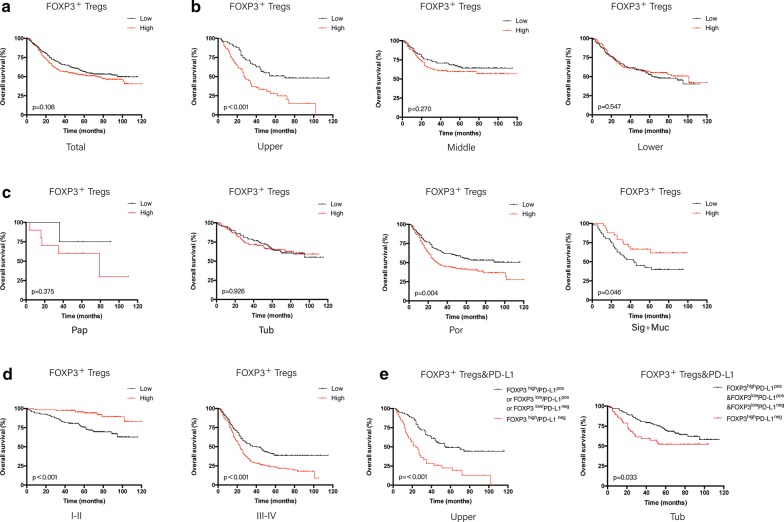
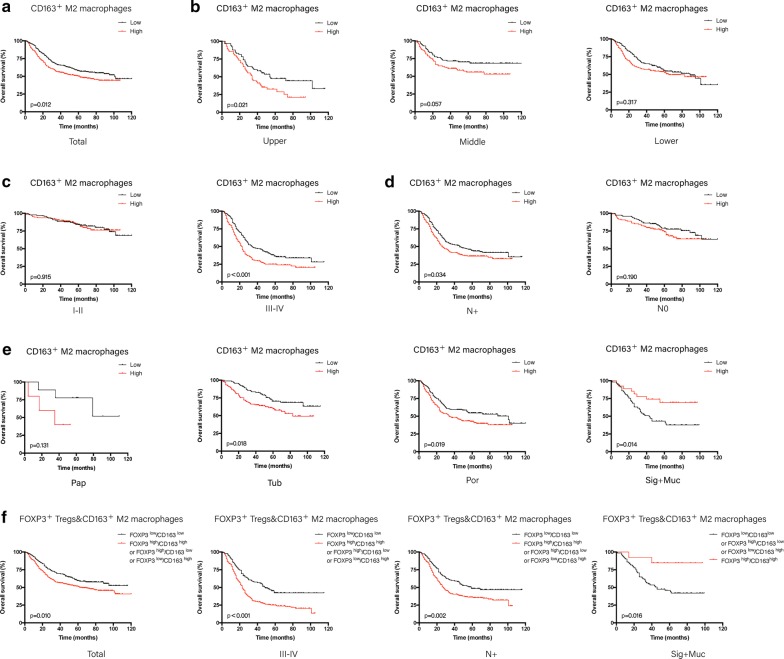
BACKGROUND: Gastric cancer (GC) remains a refractory cancer worldwide. Currently, exploring the differences of the immune status in GC patients with different subgroups might provide promising immunotherapeutic approaches for the treatment of GC. METHODS: In this study, a total of 598 surgically resected FFPE primary gastric cancer samples were assessed for FOXP3, CD163, CD3, CD8, and PD-L1 markers. The correlations between the immune markers expression and clinicopathological features and prognosis were investigated retrospectively. RESULTS: Treg indicates better prognosis in stage I-II patients, while the converse outcome was noted in stage III-IV patients. Our data also confirmed different prognostic value in different pathological classifications, chemotherapy strategies, and locations, with or without lymph node metastasis. Also, M2 macrophages indicated poor prognosis in general. However, high M2 macrophage infiltration suggests a favorable prognosis in signet ring cell carcinoma and mucinous adenocarcinoma. Moreover, the prognostic value of the two indices when they are combined is reported. CONCLUSIONS: These results suggested that different immune statuses are exhibited in different subgroups of GC, which may direct further understanding of the immune status of GC as well as provide a further theoretical basis and potential targets for GC immunotherapy.
Overview
The claims and statistics of this paper haven’t been checked yet.
Free: it reads the open-access text and checks the first 5 claims that cite a source we can check. Create a free account to check every claim.
Integrity signals
Registry
Cites
Statistics
Figures
Verification
Claims the paper makes
The claims and statistics of this paper haven’t been checked yet.
Free: it reads the open-access text and checks the first 5 claims that cite a source we can check. Create a free account to check every claim.
Claims other papers make about this one
Each is checked against this paper’s own text: does it say what the citing paper says it does?
The cited source says what the claim attributes to it.
In the citing paper
“In a retrospective study of gastric cancer, tumors were categorized by TNM staging. Researchers discovered that patients with high FoxP3+ Tregs infiltration during the early stages (I–II) had a greater chance of surviving for 5 years, while those in stages III–IV had a worse prognosis [148].”
From Potential anti-tumor effects of regulatory T cells in the tumor microenvironment: a review (2024) · cites this paper as [148]
The cited source says what the claim attributes to it.
In the citing paper
“This study showed that FoxP3+ Tregs is an independent and favorable prognostic factor in early stages of gastric cancer.”
From Potential anti-tumor effects of regulatory T cells in the tumor microenvironment: a review (2024) · cites this paper as [148]
Self-check
Percentages, sums and reported differences re-computed from the paper’s own numbers.
The self-check needs the paper’s full text.
Citations
Cites
Bray, F., Ferlay, J., Soerjomataram, I., Siegel, R. L., Torre, L. A., & Jemal, A. (2018) · CA: A Cancer Journal for Clinicians · doi:10.3322/caac.21492 · Cited by 84,109 · cited 1×
“Background Gastric cancer (GC) remains a refractory cancer worldwide, and it still ranks the fifth most common cancer and the third leading cause of cancer death [1].”
BackgroundPD-1 and PD-L1 Immune Checkpoint Blockade to Treat Breast Cancer
Hartkopf, A. D., Taran, F.-A., Wallwiener, M., Walter, C. B., Krämer, B., Grischke, E.-M., & Brucker, S. Y. (2016) · Breast Care · doi:10.1159/000453569 · Cited by 30,845
The blockade of immune checkpoints in cancer immunotherapy
Pardoll, D. M. (2012) · Nature Reviews Cancer · doi:10.1038/nrc3239 · Cited by 13,838
Control of Regulatory T Cell Development by the Transcription Factor Foxp3
Hori, S., Nomura, T., & Sakaguchi, S. (2003) · Science · doi:10.1126/science.1079490 · Cited by 8,187
Allemani, C., Matsuda, T., Di Carlo, V., Harewood, R., Matz, M., Nikšić, M., Bonaventure, A., Valkov, M., Johnson, C. J., Estève, J., et al. (2018) · The Lancet · doi:10.1016/s0140-6736(17)33326-3 · Cited by 6,145
Regulatory T Cells and Immune Tolerance
Sakaguchi, S., Yamaguchi, T., Nomura, T., & Ono, M. (2008) · Cell · doi:10.1016/j.cell.2008.05.009 · Cited by 5,325
The Role of Tumoral FOXP3 on Cell Proliferation, Migration, and Invasion in Gastric Cancer
Zhang, L., Xu, J., Zhang, X., Zhang, Y., Wang, L., Huang, X., & Xu, Z. (2017) · Cellular Physiology and Biochemistry · doi:10.1159/000479442 · Cited by 4,088
Self-citationJapanese classification of gastric carcinoma: 3rd English edition
Japanese Gastric Cancer Association (2011) · Gastric Cancer · doi:10.1007/s10120-011-0041-5 · Cited by 3,455
Mechanism-driven biomarkers to guide immune checkpoint blockade in cancer therapy
Topalian, S. L., Taube, J. M., Anders, R. A., & Pardoll, D. M. (2016) · Nature Reviews Cancer · doi:10.1038/nrc.2016.36 · Cited by 2,733
Kang, Y.-K., Boku, N., Satoh, T., Ryu, M.-H., Chao, Y., Kato, K., Chung, H. C., Chen, J.-S., Muro, K., Kang, W. K., et al. (2017) · The Lancet · doi:10.1016/s0140-6736(17)31827-5 · Cited by 2,252
Cited by
Gambardella, V., Castillo, J., Tarazona, N., Gimeno-Valiente, F., Martínez-Ciarpaglini, C., Cabeza-Segura, M., Roselló, S., Roda, D., Huerta, M., Cervantes, A., et al. (2020) · Cancer Treatment Reviews · doi:10.1016/j.ctrv.2020.102015 · Cited by 335
Rihawi, K., Ricci, A. D., Rizzo, A., Brocchi, S., Marasco, G., Pastore, L. V., Llimpe, F. L. R., Golfieri, R., & Renzulli, M. (2021) · International Journal of Molecular Sciences · doi:10.3390/ijms22083805 · Cited by 166
“demonstrated that M2 macrophage infiltration was found to be lower in signet ring cell carcinoma and mucinous adenocarcinoma, suggesting a potential positive prognostic factor [50].”
BackgroundPotential anti-tumor effects of regulatory T cells in the tumor microenvironment: a review
Li, Y., Zhang, C., Jiang, A., Lin, A., Liu, Z., Cheng, X., Wang, W., Cheng, Q., Zhang, J., Wei, T., et al. (2024) · Journal of Translational Medicine · doi:10.1186/s12967-024-05104-y · Cited by 105
Wang, Y., Li, J., Nakahata, S., & Iha, H. (2024) · International Journal of Molecular Sciences · doi:10.3390/ijms25137346 · Cited by 98
“A retrospective analysis in gastric cancer reveals that high Foxp3 + Treg infiltration in stages I–II is associated with higher five-year survival rates, contrasting with poorer outcomes in stages III–IV [255].”
ResultChen, Y., Zhang, C., Peng, Z., Qi, C., Gong, J., Zhang, X., Li, J., & Shen, L. (2021) · Frontiers in Oncology · doi:10.3389/fonc.2021.589022 · Cited by 53
“CD163+ M2 macrophages are also independent significant poor prognostic factors in GC (43).”
BackgroundGao, Y., Tan, Y.-J., & Fang, J. (2025) · Nature Reviews Clinical Oncology · doi:10.1038/s41571-025-01026-w · Cited by 55
“In a retrospective study in the setting of gastric cancer, T reg cell infiltration was associated with better prognosis in patients with stage I–II tumours, whereas the converse correlation was observed in those with stage III–IV disease 144 .”
Regulatory T cells in gastric cancer: Key controllers from pathogenesis to therapy
Negură, I., Tanasa, M. P., & Danciu, M. (2023) · Cancer Treatment Reviews · doi:10.1016/j.ctrv.2023.102629 · Cited by 50
Mao, M., Yu, Q., Huang, R., Lu, Y., Wang, Z., & Liao, L. (2020) · Cancer Medicine · doi:10.1002/cam4.2801 · Cited by 48
Rong, X., Jin-yu, L., Liu, Y., Wang, Z., Zeng, D., Li, Y., Li, S., Wu, J., Shen, Z., Shi, M., et al. (2022) · Frontiers in Oncology · doi:10.3389/fonc.2021.802257 · Cited by 37
“Tregs (47), macrophage M2 (47), and CAF infiltration correlate with antitumor immune responses in GC (48).”
BackgroundWan, L., Wu, C., Luo, S., & Xie, X. (2022) · Disease Markers · doi:10.1155/2022/3610038 · Cited by 44
Yang, Y., Tian, W., Su, L., Li, P., Gong, X., Shi, L. D., Zhang, Q., Zhao, B., & Zhao, H. (2021) · Frontiers in Oncology · doi:10.3389/fonc.2021.743540 · Cited by 36
“Respectively, the association between tumor-infiltrating immune cells (TIICs) and sensitivity of nCRT got extensive attention (11, 12).”
BackgroundImmunology and immunotherapy in gastric cancer
Xu, X., Chen, J., Li, W., Feng, C., Liu, Q., Gao, W., & He, M. S. (2023) · Clinical and Experimental Medicine · doi:10.1007/s10238-023-01104-2 · Cited by 32
“And higher M2-like macrophages may herald a good prognosis in signet ring cell carcinoma and mucinous adenocarcinoma [36].”
BackgroundPrognostic value of CD163+ macrophages in solid tumor malignancies: A scoping review
Mathiesen, H., Juul‐Madsen, K., Tramm, T., Vorup‐Jensen, T., Møller, H. J., Etzerodt, A., & Andersen, M. N. (2025) · Immunology Letters · doi:10.1016/j.imlet.2025.106970 · Cited by 31
Immunosuppressive Phenotype of Esophagus Tumors Stroma
Kovaleva, O. V., Rashidova, M. A., Samoilova, D. V., Алексеевна, П. П., Mochalnikova, V. V., & Gratchev, A. N. (2020) · Analytical Cellular Pathology · doi:10.1155/2020/5424780 · Cited by 23
Zhu, Q., Zhang, R., Lu, F., Zhang, X., Zhang, D. D., Zhang, Y., Chen, E., Han, F., & Zha, D. (2023) · Journal of Cancer Research and Clinical Oncology · doi:10.1007/s00432-023-05281-1 · Cited by 20
“Moreover, tumor-associated inflammation increases angiogenesis, promotes metastatic spread, inhibits local immunosuppression, and affects genomic stability (Hughes et al. 2015; Liu et al. 2019).”
BackgroundResearch progress on tumour‑associated macrophages in gastric cancer (Review)
Zhou, Z., Yang, Z., Wang, J., Wang, Q., Zhang, H., & Ju, X. (2021) · Oncology Reports · doi:10.3892/or.2021.7986 · Cited by 20
Yang, Z., Li, Y., Zeng, Y., Li, Y., Chen, H., Yin, S., Zhang, F., & Wang, Y. (2021) · Archiv für Pathologische Anatomie und Physiologie und für Klinische Medicin · doi:10.1007/s00428-021-03137-y · Cited by 21
From Helicobacter pylori infection to gastric cancer: Current evidence on the immune response
Gonçalves, V. L. D. S., Santos, M. L. C., Luz, M. S., Marques, H. S., de Brito, B. B., da Silva, F. A. F., Souza, C. L., Oliveira, M. V., & de Melo, F. F. (2022) · World Journal of Clinical Oncology · doi:10.5306/wjco.v13.i3.186 · Cited by 29
Wang, C., Fan, X., Sun, X., Xu, Y., Sun, Y., & Liu, J. (2025) · Frontiers in Immunology · doi:10.3389/fimmu.2025.1706744 · Cited by 20
Guo, Y., Liu, X., Xu, D., Huang, C., Wang, Z., Xia, X., Zhu, C., Xu, J., Zhang, Z., Shen, Y., et al. (2020) · Frontiers in Oncology · doi:10.3389/fonc.2020.01406 · Cited by 19
“The cutoffs were as follows: 17/mm2 for CD8, 25/mm2 for FOXP3, and 20/mm2 for CD163 (23, 24).”
BackgroundSelf-citationSong, H., Yao, X., Zheng, Y., & Zhou, L. (2024) · Biochemical Pharmacology · doi:10.1016/j.bcp.2024.116253 · Cited by 19
TAMs and PD-1 Networking in Gastric Cancer: A Review of the Literature
Yerolatsite, M., Torounidou, N., Gogadis, A., Kapoulitsa, F., Ntellas, P., Lampri, E. S., Tolia, M., Batistatou, A. K., Katsanos, K. H., & Mauri, D. (2023) · Cancers · doi:10.3390/cancers16010196 · Cited by 19
“Conversely, the low expression of PD-L1 correlates with low TAM infiltration [38–45].”
BackgroundGreen, B. L., Gamble, L. A., Diggs, L. P., Nousome, D., Patterson, J. C., Joughin, B. A., Gasmi, B., Lux, S. C., Samaranayake, S. G., Miettinen, M., et al. (2023) · Molecular Cancer Research · doi:10.1158/1541-7786.mcr-23-0122 · Cited by 14
Incorporating Immunotherapy in the Management of Gastric Cancer: Molecular and Clinical Implications
Agnarelli, A., Vella, V., Samuels, M. E., Papanastasopoulos, P., & Giamas, G. (2022) · Cancers · doi:10.3390/cancers14184378 · Cited by 15
“, including 598 surgically resected primary GC samples, PD-L1 expression was identified as a positive prognostic factor in this large cohort of patients [143].”
BackgroundWang, Y., Sun, H., Zhu, N., Wu, X., Sui, Z., Gong, L., & Yu, Z. (2021) · Frontiers in Oncology · doi:10.3389/fonc.2021.640080 · Cited by 18
“Several studies have shown that tumorinfiltrating immune cell subsets, such as CD8 T cells, DCs, and memory T cells, are increased in cancer patients and usually associated with a good prognosis, while immunosuppressive cell populations, regulatory T cells, and MDSCs exhibit the opposite trend (9, 41, 42).”
BackgroundRoles of Plasmacytoid Dendritic Cells in Gastric Cancer
Yang, J., Liu, X., Cheng, Y., Zhang, J., Ji, F., & Ling, Z. (2022) · Frontiers in Oncology · doi:10.3389/fonc.2022.818314 · Cited by 14
“Xiaosun Liu et al. 2019 Peripheral blood from 41 GC patients Both ICOS+Foxp3+ Treg cells and pDCs in peripheral blood and tumor tissue could predict poor clinical outcome in GC patients.”
BackgroundSelf-citationZhu, X., Xie, X., Zhao, Q., Zhang, L., Li, C., & Zhao, D. (2020) · BioMed Research International · doi:10.1155/2020/4673153 · Cited by 14
A Four−Gene-Based Risk Score With High Prognostic Value in Gastric Cancer
Zhang, B., Li, Y., Liu, Y., & Chen, Y. (2021) · Frontiers in Oncology · doi:10.3389/fonc.2021.584213 · Cited by 11
Hu, S., Liu, H., Zhang, J., Li, S., Zhou, H., & Gao, Y. (2021) · Scientific Reports · doi:10.1038/s41598-021-00043-w · Cited by 11
Zhu, Y.-Y., & Zhang, X. (2019) · PeerJ · doi:10.7717/peerj.7918 · Cited by 10
Liu, X., Xu, D., Zhou, C., Zhong, Y., Geng, H., Huang, C. L., Shen, Y., Xia, X., Wang, C., Zhu, C., et al. (2024) · Journal of Translational Medicine · doi:10.1186/s12967-024-05867-4 · Cited by 12
Self-citationÇalık, M., Çalık, İ., Artaş, G., & Özercan, İ. H. (2021) · Gastroenterology Research and Practice · doi:10.1155/2021/7249726 · Cited by 8
“demonstrated that patients with high CD8 TILs have a longer 5-year survival than those with low CD8 TILs [37].”
BackgroundResultAccordino, G., Lettieri, S., Bortolotto, C., Benvenuti, S., Gallotti, A., Gattoni, E., Agustoni, F., Pozzi, E., Rinaldi, P., Primiceri, C., et al. (2020) · Cancers · doi:10.3390/cancers12082105 · Cited by 7
“Overall, high expression of PD-L1 associated to CD8+, CD3+ and CD57+ TILs and low densities of FOXP3+ TILs represent favorable prognostic factors [133].”
BackgroundPrognostic significance and immune characteristics of GPR27 in gastric cancer
Pan, J., & Gao, Y. (2023) · Aging · doi:10.18632/aging.205023 · Cited by 6
CHST1 as a prognostic-related biomarker in gastric cancer correlating with immune infiltration
Gui, L., Yu, J.-H., Tan, J.-N., Zhong, G., Wang, Y., Zhong, L., Su, J.-J., Hou, D., Yang, B. J., Han, F., et al. (2025) · Heliyon · doi:10.1016/j.heliyon.2025.e42124 · Cited by 8
“This correlation was most pronounced for M2 macrophages, which are considered potent promoters of oncogenesis [34,35] and are involved in pro-angiogenesis and immunosuppressive signaling, especially in the context of diffuse GC subtypes [36,37].”
Prognostic Role of Receptor Tyrosine Kinase–Like Orphan Receptors in Intestinal-Type Gastric Cancer
Nema, R., Patel, P., & Kumar, A. (2021) · Asian Pacific Journal of Cancer Prevention · doi:10.31557/apjcp.2021.22.7.2125 · Cited by 9
“M2φ has been shown to promote the progression of GC with peritoneal dissemination and associate with poor prognosis of the patients (Yamaguchi et al., 2016; Liu et al., 2019).”
BackgroundWang, Y., Ji, C., Liu, J., Wang, Y., Song, N., & Cao, P. (2020) · International Immunopharmacology · doi:10.1016/j.intimp.2020.106710 · Cited by 6
Review: Gastric cancer: Basic aspects
Resende, C., Gomes, C. P., & Machado, J. C. (2020) · Helicobacter · doi:10.1111/hel.12739 · Cited by 5
Xu, J., Gao, Y. J., Ding, Y., Feng, Y., Chen, J., Zhang, S., Song, X., & Qiao, S. (2024) · Frontiers in Oncology · doi:10.3389/fonc.2024.1373820 · Cited by 8
Self-citationXie, H., Liang, J., He, H., Zhuo, Z., & Li, J.-X. (2025) · Scientific Reports · doi:10.1038/s41598-025-05346-w · Cited by 3
Comparing immunotherapies to other frequently used treatments of gastric cancer
Basile, D., Simionato, F., Calvetti, L., Cappetta, A., Pesavento, A., Mongillo, M., Roviello, G., Rosati, G., Rossi, G., & Aprile, G. (2021) · Expert Review of Clinical Pharmacology · doi:10.1080/17512433.2021.1938546 · Cited by 3
Pereira, M. A., Ramos, M. F. K. P., Dias, A., Cardili, L., de Moraes, R. D. R., Ribeiro, R. R. E., Alves, V. A. F., Zilberstein, B., de Mello, E. S., & Ribeiro, U. (2022) · Chinese Journal of Cancer Research · doi:10.21147/j.issn.1000-9604.2022.06.09 · Cited by 3
Liu, X., Guo, Y., Huang, C., Xu, D., Zhu, C., Xu, J., Zhang, Z., Shen, Y., Zhao, W., & Zhao, G. (2020) · PubMed Central · Cited by 6
Self-citationLC3B in Malignant Cells Correlates With Immune Infiltrate in Hypopharyngeal Squamous Cell Carcinoma
Gao, S., Chen, J., Han, X., Wei, D., Wu, Z., & Gao, C. (2020) · Technology in Cancer Research & Treatment · doi:10.1177/1533033820970664 · Cited by 2
“Tumor invasive CD8þT lymphocytes play an important role in the anti-tumor immune response and have prognostic value for various tumor types.(26) At present, no such studies have been reported in HSCC.”
BackgroundExpression of CD68+ Tumor associated macrophages in relation to β-catenin in carcinoma stomach
Sharma, N., Panigrahi, R., Pradhan, P., Parida, S., & Sahoo, S. R. (2023) · Indian Journal of Pathology and Microbiology · doi:10.4103/ijpm.ijpm_535_22 · Cited by 2
Li, X., Qu, X., Wang, N., Li, S., Zhao, X., Lin, K., & Shi, Y. (2024) · Discover Oncology · doi:10.1007/s12672-024-01221-8 · Cited by 1
Immune response to Helicobacter pylori infection and gastric cancer development
de Brito, B. B., Lemos, F. F. B., Carneiro, C. D. M., Viana, A. S., Barreto, N. M. P. V., Assis, G. A. D. S., Braga, B. D. C., Santos, M. L. C., da Silva, F. A. F., Marques, H. S., et al. (2021) · World Journal of Meta-Analysis · doi:10.13105/wjma.v9.i3.257 · Cited by 2
Research Progress of Tumor-Associated Macrophages in Gastric Cancer
仝, 建. (2023) · Advances in Clinical Medicine · doi:10.12677/acm.2023.134741 · Cited by 1
New Approaches in Gastric Cancer Immunotherapy
Mousavi, P., Ahmadi, A., Behzadifar, S., Mohammadnejad, J., & Hosseini, S. M. (2024) · IntechOpen eBooks · doi:10.5772/intechopen.1005783 · Cited by 1
Cheng, N., Wang, B., Xu, J., Wang, Z., & Xue, L. (2025) · Human Pathology · doi:10.1016/j.humpath.2025.105930
Self-citationTrailin, A. V., Ali, E., Pavlov, S., Ye, W., Červenková, L., Vyčítal, O., Ambrożkiewicz, F., Jiřík, M., Daum, O., Liška, V., et al. (2026) · Cancer Medicine · doi:10.1002/cam4.71989
“Different prognosis conferred by Tregs in synchronous and metachronous pCRC is in line with reported prognostic associations of local Tregs in different clinical stages of gastric cancer [56].”
Zhou, P., Wang, D., Zhang, H., Zhang, F., Li, Z., & Xi, H. (2026) · Frontiers in Oncology · doi:10.3389/fonc.2026.1882680
“The S/F ratio can further stratify clinical outcomes among patients with high M2 TAM in fi ltration, which indicates its incremental predictive value independent of TAMs (58, 59).”
Lu, S., Li, Y., Peng, H., Gao, X., Xu, Z., Zhou, H., Guo, J., & Yang, N. (2026) · Journal of Cardiothoracic Surgery · doi:10.1186/s13019-026-04601-z
“However, previous researches suggest that the polarization of M2 cells is conducive to the formation of an immunosuppressive TME[32] and is related to the poor prognosis of various tumors [33, 34].”
Su, X., Zhu, Y., Song, X., Yun, Z., He, Y., Wu, Y., & Gao, C. (2026) · Biochemical Pharmacology · doi:10.1016/j.bcp.2026.118386
Metadata
- Authors
- Liu, X., Xu, D., Huang, C., Guo, Y., Wang, S., Zhu, C., Xu, J., Zhang, Z., Shen, Y., Zhao, W., & Zhao, G.
- Affiliations
- Shanghai Jiao Tong University (CN)
- Corresponding author
- Zhao, Wenyi
- Zhao, Gang
- Venue
- Journal of Translational Medicine
- Published
- 2019-06-07
- Volume
- 17
- Issue
- 1
- Pages
- 192-192
- ISSN
- 1479-5876 (ISSN-L)
- PMC
- PMC6554965
- OpenAlex
- W2948260356
- Cited by
- 53
- References
- 45
- Citations by year
- 2026: 3 · 2025: 6 · 2024: 7 · 2023: 8 · 2022: 6 · 2021: 12 · 2020: 10 · 2019: 1
- FWCI
- 5.33
- Type
- journal article
- Language
- en
- Open access
- gold
- doi.org
- Licence
- cc-by
- creativecommons.org/licenses/by/4.0/ (tdm)
- creativecommons.org/licenses/by/4.0/ (vor)
- Locations
- Journal of Translational Medicine (publishedVersion, cc-by)
- PubMed Central (publishedVersion, cc-by)
- PubMed (publishedVersion)
- DOAJ (DOAJ: Directory of Open Access Journals) (submittedVersion, cc-by-sa)
- Funders
- Science and Technology Commission of Shanghai Municipality (17ZR1416800)
- Foundation of Shanghai Municipal Commission of Health and Family Planning (2017BR043, 201740049)
- Shanghai Hospital Development Center (SHDC12016236)
- Health and Family Planning Committee of Pudong New Area (PW2017D-1)
- School of Medicine, Shanghai Jiao Tong University (YG2016QN48)
- National Natural Science Foundation of China (31872740)
- Topics
- Health Sciences › Medicine › Oncology › Gastric Cancer Management and Outcomes
- Health Sciences › Medicine › Oncology › Cancer Immunotherapy and Biomarkers
- Life Sciences › Immunology and Microbiology › Immunology › Immune cells in cancer
- Keywords
- gastric cancer, regulatory T cells, M2 macrophages, tumor immune microenvironment, prognostic factors, Foxp3, CD163, PD-L1, signet ring cell carcinoma, mucinous adenocarcinoma, lymph node metastasis, tumor stage, chemotherapy response, immunotherapy targets
- MeSH terms
- Adenocarcinoma, Adult, Aged, Aged, 80 and over, Female, Humans, Lymphatic Metastasis, Macrophages, Male, Middle Aged, Predictive Value of Tests, Prognosis, Retrospective Studies, Stomach Neoplasms, Biomarkers, Tumor, Survival Analysis, Lymphocytes, Tumor-Infiltrating, T-Lymphocytes, Regulatory, Tumor Microenvironment
About these checks
Registry, retraction, Cites and statistics results are computed, not judged, with one exception: a printed reference that no index lists is read once by a model before it counts as a citation error. Claims are extracted by a model and kept only when their quote appears verbatim in the text; each cited source is then checked, with a model’s help, for whether it says what the claim relies on. Those verdicts can be wrong — read the claim’s quote and the cited source before relying on one.
Statistics and arithmetic are recomputed, not judged.
Confidence bands are shown only for fields calibrated on our annotated test set. None is calibrated yet, so no band is shown.
What counts as a claim ›How we measure confidence ›How we check this ›
Are you an author, or do you see a problem with this page? Request a review
Data sources
Bibliographic data: Semantic Scholar, OpenAlex, Crossref.
Contains information from the Semantic Scholar Academic Graph Datasets, made available under the ODC Attribution License (ODC-BY 1.0).
Semantic Scholar’s data is described in: Kinney, R., et al. (2023). The Semantic Scholar Open Data Platform. arXiv:2301.10140.
