

Circulating tumor cells as a response monitor in stage IV non-small cell lung cancer
Open accessThe DOI matches its Crossref record; 53 of the 53 references it cites were found in a registry or an index.
Abstract
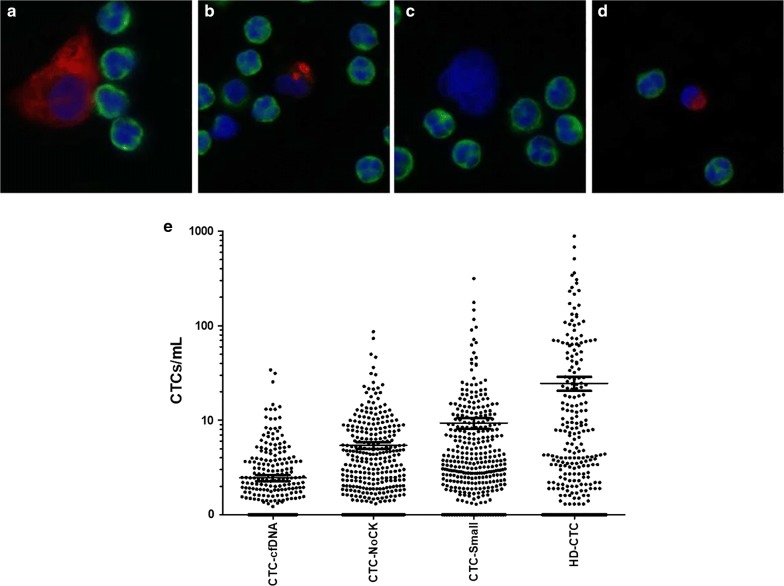
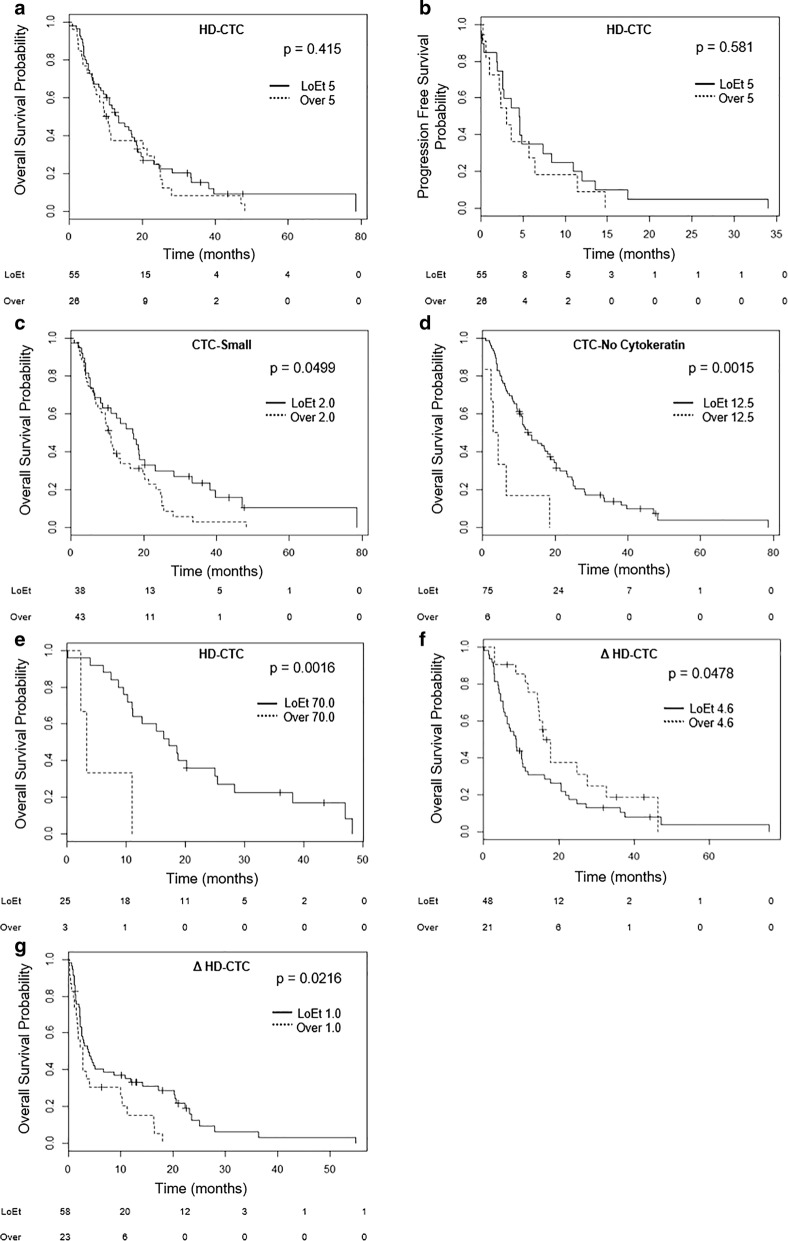
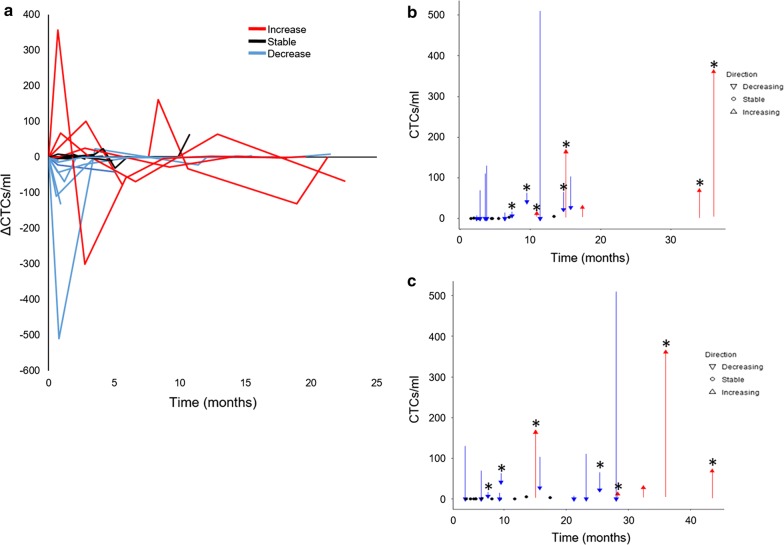
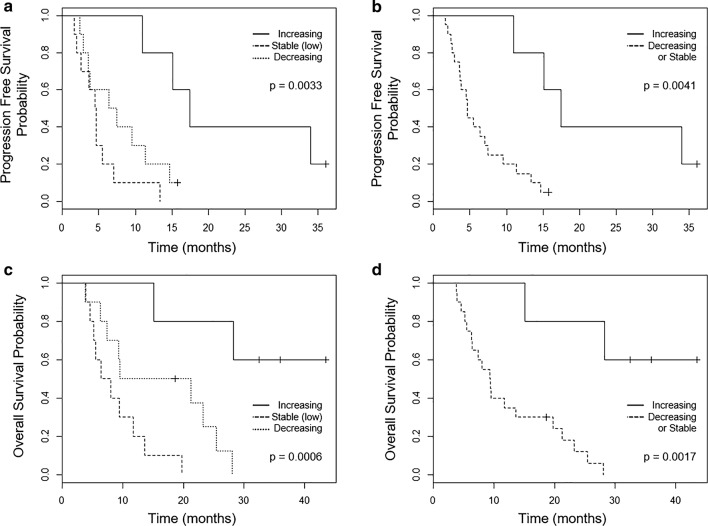
BACKGROUND: Monitoring circulating tumor cells (CTC) has been shown to be prognostic in most solid malignancies. There is no CTC assay in clinical use for lung cancer therapy monitoring due to inconclusive clinical utility data. Limited data has been published outside of the standard CTC enumerations, regarding clinical significance of phenotypic heterogeneity of CTCs in late stage NSCLC and its ability to correlate with treatment outcomes. METHODS: In 81 patients with stage IV NSCLC, multiple timepoints for CTC analysis were collected after initiation of treatment across 139 lines of therapy using single cell high definition diagnostic pathology imaging of all nucleated cells from 362 peripheral blood samples as a liquid biopsy. RESULTS: We analyzed the subset of 25 patients with complete time series data, totaling 117 blood samples, to determine the significance of HD-CTC kinetics during the initiation of treatment. These kinetics follow three distinct patterns: an increase in HD-CTCs with therapy (mean + 118.40 HD-CTCs/mL), unchanged HD-CTCs numbers (stable; mean 0.54 HD-CTCs/mL), and a decrease in HD-CTCs numbers (mean - 81.40 HD-CTCs/mL). Patients with an increasing CTC count during the first 3 months post initiation of new treatment had a better PFS and OS compared to the other groups. There was weak correlation between the absolute number of HD-CTCs at a single time point of therapy and patient outcomes (OS p value = 0.0754). In the whole cohort of 81 patients, HD-CTCs were detected in 51 (63%) patients at initiation of therapy with a median of 2.20 (range 0-509.20) and a mean of 26.21 HD-CTCs/mL (± 15.64). CONCLUSIONS: CTCs are identifiable in most patients with stage IV NSCLC. While absolute HD-CTC counts do not correlate with prognosis, the changes in CTC counts were predictive of survival in patients with metastatic lung cancer receiving chemotherapy. The level and dynamics of CTCs indicate very different biological and pharmacological phenomena at different stages of disease and timepoints of treatment, highlighting the complex role of CTCs in cancer research and clinical management.
Overview
The claims and statistics of this paper haven’t been checked yet.
Free: it reads the open-access text and checks the first 5 claims that cite a source we can check. Create a free account to check every claim.
Integrity signals
Registry
Cites
Statistics
Figures
Verification
Claims the paper makes
The claims and statistics of this paper haven’t been checked yet.
Free: it reads the open-access text and checks the first 5 claims that cite a source we can check. Create a free account to check every claim.
Claims other papers make about this one
Each is checked against this paper’s own text: does it say what the citing paper says it does?
The source backs part of the claim, not all of it — or backs it for a different population, condition or comparison.
In the citing paper
“The implication of CTCs is well established in tumor cell dormancy, as a major cause of metastatic outgrowth, multi drug resistance (MDR) and cancer relapse [144].”
From Tumor microenvironment complexity and therapeutic implications at a glance (2020) · cites this paper as [144]
Experimental — accuracy not yet measured
Self-check
Percentages, sums and reported differences re-computed from the paper’s own numbers.
The self-check needs the paper’s full text.
Citations
Cites
Paclitaxel–Carboplatin Alone or with Bevacizumab for Non–Small-Cell Lung Cancer
Sandler, A., Gray, R., Perry, M. C., Brahmer, J., Schiller, J. H., Dowlati, A., Lilenbaum, R., & Johnson, D. H. (2006) · New England Journal of Medicine · doi:10.1056/nejmoa061884 · Cited by 5,761
First-Line Crizotinib versus Chemotherapy in ALK -Positive Lung Cancer
Solomon, B. J., Mok, T., Kim, D.-W., Wu, Y.-L., Nakagawa, K., Mekhail, T., Felip, E., Cappuzzo, F., Paolini, J., Usari, T., et al. (2014) · New England Journal of Medicine · doi:10.1056/nejmoa1408440 · Cited by 3,190
Cohen, S. J., Punt, C. J. A., Iannotti, N., Saidman, B. H., Sabbath, K. D., Gabrail, N. Y., Picus, J., Morse, M., Mitchell, E., Miller, M. C., et al. (2008) · Journal of Clinical Oncology · doi:10.1200/jco.2007.15.8923 · Cited by 1,841
Fukuoka, M., Wu, Y.-L., Thongprasert, S., Sunpaweravong, P., Leong, S.-S., Sriuranpong, V., Chao, T.-Y., Nakagawa, K., Chu, D.-T., Saijo, N., et al. (2011) · Journal of Clinical Oncology · doi:10.1200/jco.2010.33.4235 · Cited by 1,581
Hayes, D. F., Cristofanilli, M., Budd, G. T., Ellis, M. J., Stopeck, A., Miller, M. C., Matera, J., Allard, W. J., Doyle, G. V., & Terstappen, L. W. W. M. (2006) · Clinical Cancer Research · doi:10.1158/1078-0432.ccr-05-2821 · Cited by 1,030
Krebs, M. G., Sloane, R., Priest, L., Lancashire, L., Hou, J.-M., Greystoke, A., Ward, T. H., Ferraldeschi, R., Hughes, A., Clack, G., et al. (2011) · Journal of Clinical Oncology · doi:10.1200/jco.2010.28.7045 · Cited by 868
Frequent EpCam protein expression in human carcinomas
Went, P. T. H., Lugli, A., Meier, S., Bundi, M., Mirlacher, M., Sauter, G., & Dirnhofer, S. (2004) · Human Pathology · doi:10.1016/j.humpath.2003.08.026 · Cited by 819
Isolation and retrieval of circulating tumor cells using centrifugal forces
Hou, H. W., Warkiani, M. E., Khoo, B. L., Li, Z. R., Soo, R. A., Tan, D. S.-W., Lim, W.-T., Han, J., Bhagat, A. A. S., & Lim, C. T. (2013) · Scientific Reports · doi:10.1038/srep01259 · Cited by 736
Scher, H. I., Lu, D., Schreiber, N. A., Louw, J., Graf, R. P., Vargas, H. A., Johnson, A., Jendrisak, A., Bambury, R., Danila, D., et al. (2016) · JAMA Oncology · doi:10.1001/jamaoncol.2016.1828 · Cited by 641
Size-selective collection of circulating tumor cells using Vortex technology
Sollier, E., Go, D. E., Che, J., Gossett, D. R., O'Byrne, S., Weaver, W. M., Kummer, N., Rettig, M., Goldman, J., Nickols, N., et al. (2014) · Lab Chip · doi:10.1039/c3lc50689d · Cited by 498
Cited by
Tumor microenvironment complexity and therapeutic implications at a glance
Baghban, R., Roshangar, L., Jahanban-Esfahlan, R., Seidi, K., Ebrahimi-Kalan, A., Jaymand, M., Kolahian, S., Javaheri, T., & Zare, P. (2020) · Cell Communication and Signaling · doi:10.1186/s12964-020-0530-4 · Cited by 1,784
“The implication of CTCs is well established in tumor cell dormancy, as a major cause of metastatic outgrowth, multi drug resistance (MDR) and cancer relapse [144] .”
BackgroundBui, T. M., Wiesolek, H. L., & Sumagin, R. (2020) · Journal of Leukocyte Biology · doi:10.1002/jlb.2mr0220-549r · Cited by 957
Zeinali, M., Lee, M. C., Nadhan, A., Mathur, A., Hedman, C., Lin, E., Harouaka, R. A., Wicha, M. S., Zhao, L., Palanisamy, N., et al. (2020) · Cancers · doi:10.3390/cancers12010127 · Cited by 97
“However, the majority of patients will develop resistance to TKIs within a few months/years [45,46].”
BackgroundLabel-free detection of rare circulating tumor cells by image analysis and machine learning
Wang, S., Zhou, Y., Qin, X., Nair, S., Huang, X., & Liu, Y. (2020) · Scientific Reports · doi:10.1038/s41598-020-69056-1 · Cited by 86
Circulating tumour cells in the -omics era: how far are we from achieving the ‘singularity’?
Visal, T. H., den Hollander, P., Cristofanilli, M., & Mani, S. A. (2022) · British Journal of Cancer · doi:10.1038/s41416-022-01768-9 · Cited by 79
Current and future applications of liquid biopsy in non-small-cell lung cancer—a narrative review
Tomasik, B., Skrzypski, M. T., Bieńkowski, M., Dziadziuszko, R., & Jassem, J. (2023) · Translational Lung Cancer Research · doi:10.21037/tlcr-22-742 · Cited by 56
“A prospective study including stage IV NSCLC identified CTCs in most subjects (118).”
BackgroundKalinke, L., Thakrar, R. M., & Janes, S. M. (2020) · Molecular Oncology · doi:10.1002/1878-0261.12864 · Cited by 55
Microfluidic‐Assisted CTC Isolation and In Situ Monitoring Using Smart Magnetic Microgels
Seyfoori, A., Ebrahimi, S. A. S., Samandari, M., Samiei, E., Stefanek, E., Garnis, C., & Akbari, M. (2023) · Small · doi:10.1002/smll.202205320 · Cited by 52
Chai, S., Matsumoto, N., Storgard, R., Peng, C.-C., Aparicio, A. M., Ormseth, B., Rappard, K. E., Cunningham, K., Kolatkar, A. R., Nevarez, R., et al. (2021) · Molecular Cancer Research · doi:10.1158/1541-7786.mcr-21-0383 · Cited by 50
Self-citationGerdtsson, A. S., Setayesh, S. M., Malihi, P. D., Velasco, C. R., Carlsson, A., Nevarez, R., Matsumoto, N., Gerdtsson, E., Zurita, A. J., Logothetis, C. J., et al. (2021) · Cancers · doi:10.3390/cancers13051056 · Cited by 48
Self-citationLi, S., Zhang, C., Pang, G., & Wang, P. (2020) · Frontiers in Immunology · doi:10.3389/fimmu.2020.603157 · Cited by 46
Electrospun nanofibers for 3-D cancer models, diagnostics, and therapy
Erickson, A. E., Chiarelli, P. A., Huang, J., Levengood, S. K. L., & Zhang, M. (2022) · Nanoscale Horizons · doi:10.1039/d2nh00328g · Cited by 39
Zhang, B., Stewart, C. A., Wang, Q., Cardnell, R. J., Rocha, P., Fujimoto, J., Soto, L. M. S., Wang, R., Novegil, V. Y., Ansell, P. J., et al. (2022) · British Journal of Cancer · doi:10.1038/s41416-022-01811-9 · Cited by 35
“Longitudinal monitoring of CTCs could potentially be used to monitor SCLC disease status, as reported in other tumour types such as non-small cell lung cancer and melanoma [34, 35].”
Significance of circulating tumor cells in lung cancer: a narrative review
Hamilton, G., Rath, B., & Stickler, S. (2023) · Translational Lung Cancer Research · doi:10.21037/tlcr-22-712 · Cited by 34
“%) patients were positive for high definition (HD)-CTCs with a median of 2.20 (mean 26.21±15.64) (169).”
InfluentialPrimary tumor and metastasis—sectioning the different steps of the metastatic cascade
Popper, H. (2020) · Translational Lung Cancer Research · doi:10.21037/tlcr-20-175 · Cited by 32
“At this moment the number of CTC will allow a prognosis in patients, who underwent surgery for their lung carcinomas: high numbers of CTC predict early recurrence (1,94,164).”
Kapeleris, J., Warkiani, M. E., Kulasinghe, A., Vela, I., Kenny, L., Ladwa, R., O'Byrne, K. J., & Punyadeera, C. (2022) · Frontiers in Oncology · doi:10.3389/fonc.2022.859152 · Cited by 31
“In a prospective study with stage IV NSCLC patients (n = 81), 63% of patients initiating therapy had a change in CTC counts and was predictive of survival in patients receiving chemotherapy (89, 90).”
BackgroundDeutsch, T. M., Stefanović, S., Feißt, M., Fischer, C., Riedel, F., Fremd, C., Domschke, C., Pantel, K., Hartkopf, A. D., Sütterlin, M., et al. (2020) · Cancers · doi:10.3390/cancers12041055 · Cited by 27
Reduzzi, C., Nicolò, E., Singhal, S., Venetis, K., Franco, A. O., de Miguel‐Pérez, D., Dipasquale, A., Gouda, M. A., Saldanha, E. F., Kasi, P. M., et al. (2024) · Critical Reviews in Oncology/Hematology · doi:10.1016/j.critrevonc.2024.104483 · Cited by 26
Russo, T. D. B., Pepe, F., Gristina, V., Gottardo, A., Russo, G., Scimone, C., Palumbo, L., Busuito, G., Incorvaia, L., Guerry, J. A., et al. (2025) · Future Oncology · doi:10.1080/14796694.2025.2542051 · Cited by 25
Responsive Role of Nanomedicine in the Tumor Microenvironment and Cancer Drug Resistance
Sa, P., Sahoo, S. K., & Dilnawaz, F. (2022) · Current Medicinal Chemistry · doi:10.2174/0929867329666220922111336 · Cited by 24
Pathology of circulating tumor cells and the available capture tools (Review)
Guan, Y., Xu, F., Tian, J., Chen, H., Yang, C., Huang, S., Gao, K., Wan, Z., Li, M., He, M., et al. (2020) · Oncology Reports · doi:10.3892/or.2020.7533 · Cited by 23
Insights into brain metastasis: Recent advances in circulating tumor cell research
Klotz, R. V., & Yu, M. (2020) · Cancer Reports · doi:10.1002/cnr2.1239 · Cited by 22
Narayan, S., Courcoubetis, G., Mason, J. M., Naghdloo, A., Kolenčík, D., Patterson, S. D., Kühn, P., & Shishido, S. N. (2022) · Cancers · doi:10.3390/cancers14194891 · Cited by 19
“Most early-generation liquid-biopsy platforms employ enrichment-based approaches that detect a limited CTC population in the peripheral blood (PB) of CRC patients [25–27] and overlook other cellular subtypes with nuanced survival implications [16,28].”
BackgroundSelf-citationGuan, Y., Xu, F., Tian, J., Wang, Y., Guo, N., Wan, Z., He, M., Gao, M., Gao, K., & Chong, T. (2022) · Urologic Oncology Seminars and Original Investigations · doi:10.1016/j.urolonc.2021.12.021 · Cited by 17
Han, J., Lu, C., Shen, M.-Z., Sun, X., Mo, X.-D., & Yang, G. (2022) · ACS Omega · doi:10.1021/acsomega.2c01153 · Cited by 17
Mir, R., Javid, J., Ullah, M. F., Alrdahe, S. S., Albalawi, I. A., Mustafa, S. K., Jalal, M. M., Altayar, M. A., Albalawi, A. D., Abunab, M. K., et al. (2025) · Medical Oncology · doi:10.1007/s12032-025-02945-5 · Cited by 15
“They are key players in metastatic dissemination, multidrug resistance (MDR) [74], and cancer recurrence [75].”
Chelakkot, C., Ryu, J., Kim, M. Y., Kim, J.-S., Kim, D., Hwang, J., Park, S. H., Ko, S. B., Park, J. W., Jung, M. Y., et al. (2020) · Micromachines · doi:10.3390/mi11060560 · Cited by 15
“However, such technologies fail to detect small-sized CTCs ranging from 6 μm to 8 μm or those with a small nucleus [18], which are similar in size to leukocytes [19,20].”
BackgroundKolenčík, D., Narayan, S., Thiele, J.-A., McKinley, D., Gerdtsson, A. S., Welter, L. M., Hošek, P., Ostašov, P., Vyčítal, O., Brůha, J., et al. (2022) · Cancers · doi:10.3390/cancers14030642 · Cited by 13
“In a cohort of Stage IV non-small cell lung cancer (NSCLC) patients, longitudinally collected PB samples analyzed by HDSCA showed a similar switch in survival implications depending on the time-points used for CTC kinetics analysis in relation to treatment initiation [24].”
MethodSelf-citationPapadaki, M. A., Μαλά, Α., Merodoulaki, A. C., Vassilakopoulou, M., Mavroudis, D., & Agelaki, S. (2022) · Cancers · doi:10.3390/cancers14163903 · Cited by 13
Chen, X., Zhou, F., Li, X., Yang, G., Zhao, C., Li, W., Wu, F., Yu, J., Gao, G., Li, J., et al. (2020) · Annals of Translational Medicine · doi:10.21037/atm-19-4680 · Cited by 12
“CTCs as a non-invasive source that reflects the molecular underpinnings of the originating tumors represent a valuable resource for predicting treatment efficacy (19-22), including in advanced NSCLC patients treated with targeted therapy, chemotherapy or immunotherapy.”
BackgroundHirotsu, A., Kikuchi, H., Yamada, H., Ozaki, Y., Haneda, R., Kawata, S., Murakami, T., Matsumoto, T., Hiramatsu, Y., Kamiya, K., et al. (2022) · Lab on a Chip · doi:10.1039/d2lc00166g · Cited by 12
Chen, Y., Yang, Y., Feng, J., Carrier, A. J., Tyagi, D., Yu, X., Wang, C.-G., Oakes, K. D., & Zhang, X. (2022) · Acta Biomaterialia · doi:10.1016/j.actbio.2022.09.001 · Cited by 12
FlowCell-enriched circulating tumor cells as a predictor of lung cancer metastasis
Lu, Y., Zheng, Y., Wang, Y., Gu, D., Zhang, J., Liu, F., Chen, K., & Guo, L. (2021) · Human Cell · doi:10.1007/s13577-021-00500-8 · Cited by 8
“1 3 A cohort consisting 25 patients revealed that the changes in CTC counts were predictive of survival in patients with metastatic lung cancer receiving chemotherapy [19].”
BackgroundPotential of multifunctional electrospun nanofibers in cancer management
AL-Attabi, A., Abdulhadi, M. A., Al-Ameer, L. R., Hussein, M. D. N., Abdulameer, S. J., Zabibah, R. S., & Fadhil, A. A. (2024) · International Journal of Materials Research (formerly Zeitschrift fuer Metallkunde) · doi:10.1515/ijmr-2023-0125 · Cited by 8
Lung Cancer - Modern Multidisciplinary Management
Park, H. S.-M. (2020) · IntechOpen eBooks · doi:10.5772/intechopen.92053 · Cited by 7
Li, S., Wu, M., Wang, H., Hsu, P., Fang, Y., Wang, C.-L., Chu, H.-C., Lin, H.-C., Lee, L., Wu, C.-Y., et al. (2022) · International Journal of Molecular Sciences · doi:10.3390/ijms231810661 · Cited by 7
Jou, H., Ho, H.-C., Huang, K.-Y., Chen, C., Chen, S.-W., Lo, P.-H., Huang, P., Huang, C.-E., & Chen, M. (2022) · International Journal of Molecular Sciences · doi:10.3390/ijms232315139 · Cited by 7
“Research on single-cell analyses can help researchers to understand the phenotypes and characteristics of CTCs at single-cell level and help the physicians realize cellular heterogeneity as well the mechanism of tumor evolution and treatment resistance, which is helpful in the decision-making in cancer treatment [11].”
BackgroundIdentification of Cancer-Associated Circulating Cells in Anal Cancer Patients
Carter, T. J., Jeyaneethi, J., Kumar, J., Karteris, E., Glynne‐Jones, R., & Hall, M. (2020) · Cancers · doi:10.3390/cancers12082229 · Cited by 7
“Furthermore, an increase in CC numbers in patients during the first three months of treatment for lung cancer was associated with a better progression-free and overall survival [34].”
BackgroundCirculating Molecular Biomarkers for the Diagnosis and Monitoring of NSCLC—A Review
Jelski, W., Okrasinska, S., Rutkowska, W., & Mroczko, B. (2025) · International Journal of Molecular Sciences · doi:10.3390/ijms262110278 · Cited by 5
Gebuza, M., Górczyńska, J., Paczos, W., Pieczara, S., Rekiel, K., Urbanowicz, P., Kulbacki, M., Novickij, V., & Kulbacka, J. (2025) · Archives of Biochemistry and Biophysics · doi:10.1016/j.abb.2025.110599 · Cited by 4
Volovetsky, A. B., Novikova, V., Boloban, A., Rzhevskiy, A. S., Kapitannikova, A. Y., Ovchinnikova, E. G., Klejmentjeva, T. P., Grishin, V., Pigareva, Y., Zvyagin, A. V., et al. (2025) · Micromachines · doi:10.3390/mi16040470 · Cited by 4
“…[25], however, there is data that changes in CTC counts after the first course of drug therapy were linked to patient survival, with higher survival rates in patients whose CTC counts increased during the initial three months, possibly reflecting the impact of chemotherapy on tumor tissue [26].”
Representation learning enables robust single cell phenotyping in whole slide liquid biopsy imaging
Naghdloo, A., Tessone, D., Nagaraju, R. M., Zhang, B., Kang, J., Li, S., Oberai, A. A., Hicks, J. B., & Kühn, P. (2025) · Scientific Reports · doi:10.1038/s41598-025-20514-8 · Cited by 4
Self-citationEinloth, K. R., Gayfield, S., McMaster, T., Didier, A. J., Dworkin, L. D., & Creeden, J. F. (2023) · Bioimpacts · doi:10.34172/bi.2023.27521 · Cited by 4
Bai, L., Courcoubetis, G., Mason, J. M., Hicks, J. B., Nieva, J. J., Kühn, P., & Shishido, S. N. (2024) · Discover Oncology · doi:10.1007/s12672-024-00984-4 · Cited by 4
Self-citationYao, H., Wang, Z., Yang, J., Xu, X., & Song, Y. (2021) · Annals of Translational Medicine · doi:10.21037/atm-21-6346 · Cited by 3
“In NSCLC, it has been found that CTC count is correlated with tumor metastasis (15,32).”
Shishido, S. N., Shah, A., Mason, J. M., Scarpa, J. R., Amar, D., Desiderio, D. P., Pedoto, A. C., CAMILLI, A. D., Guaran, C., Jackson, J. C., et al. (2025) · British Journal of Anaesthesia · doi:10.1016/j.bja.2025.08.004 · Cited by 2
Self-citationFu, X., Tao, L., & Zhang, X. (2021) · Molecular Therapy — Methods & Clinical Development · doi:10.1016/j.omtm.2021.08.007 · Cited by 2
LIQUID BIOPSY IN CLINICAL ONCOLOGY
Имянитов, Е. Н., Kuligina, E. S., & Yanus, G. A. (2022) · Practical oncology · doi:10.31917/2304211 · Cited by 2
Ndacayisaba, L. J., Mason, J. M., & Kühn, P. (2023) · Current cancer research · doi:10.1007/978-3-031-22903-9_7 · Cited by 1
Malik, S., & Zaheer, S. (2026) · Surgical and Experimental Pathology · doi:10.1186/s42047-026-00218-7 · Cited by 1
“In a subset of 25 patients with serial sampling, changes in CTC levels during the first 3 months of therapy were predictive of survival, with rising CTCs paradoxically associated with better outcomes (Shishido et al. 2019).”
Xiangyu, W., He, L., Peng, Z., Pu, Y., Huang, Z., Li, M., He, M., Cao, Z., & Chong, T. (2026) · Academic Radiology · doi:10.1016/j.acra.2026.02.016 · Cited by 1
Wu, S., Chiu, J.-N., Chen, Y.-W., Hung, C.-H., Ou‐Yang, M., & Tseng, F. (2026) · Micromachines · doi:10.3390/mi17040472 · Cited by 2
Öner, E., Saini, V. M., Cahill, C., O’Toole, H., Li, J. W., Gately, K. A., & Anagnostou, V. (2026) · Frontiers in Oncology · doi:10.3389/fonc.2026.1806868 · Cited by 1
“While their prognostic value is well established, integrating molecular and phenotypic characterization of CTCs with longitudinal monitoring provides a more comprehensive understanding of treatment response and resistance across therapeutic modalities (155, 156).”
Liquid Biopsy Analysis of Circulating Tumor Biomarkers in Lung Cancer
Lin, P. P. (2021) · IntechOpen eBooks · doi:10.5772/intechopen.95422 · Cited by 1
Alex, T. S., Lang, D. K., Zakir, F., Mirza, A., & Iqbal, Z. (2022) · Environmental chemistry for a sustainable world · doi:10.1007/978-3-031-14848-4_1 · Cited by 1
Clinical, Pathological, and Molecular Characteristics in Colorectal Cancer
Dedieu, S. (2023) · MDPI eBooks · doi:10.3390/books978-3-0365-6836-2 · Cited by 1
Lu, Y., Liu, C., Jiang, C., & Xu, C. S. (2024) · Oncology Advances · doi:10.14218/ona.2024.00030 · Cited by 1
Niu, Z. (2022) · Deep Blue (University of Michigan) · doi:10.7302/6811 · Cited by 1
Horton, C. E., & Razaq, H. (2020) · Clinical Oncology and Cancer Biology · doi:10.31487/j.cocb.2020.01.05
“However, in the 81 patients, CTCs were detected in 51 (63%) of patients on initiation of therapy, and the changes in CTC counts were predictive of survival in patients with metastatic NSCLC receiving chemotherapy [51].”
BackgroundMesenchymal Stem Cells: A Boon or Bane in Cancer Progression and Metastasis
Yeeravalli, R., & Das, A. (2021) · Handbook of Oxidative Stress in Cancer: Therapeutic Aspects · doi:10.1007/978-981-16-1247-3_228-1
Circulating Tumor Cells in Lung Cancer
Hofman, P. M. (2022) · Springer eBooks · doi:10.1007/978-3-030-93084-4_15
Mesenchymal Stem Cells: A Boon or Bane in Cancer Progression and Metastasis
Yeeravalli, R., & Das, A. (2022) · Handbook of Oxidative Stress in Cancer: Therapeutic Aspects · doi:10.1007/978-981-16-5422-0_228
Circulating Tumour Cells in Solid Cancer
Aktar, S., Cheng, T. T., Gamage, S. M. K., Gopalan, V., & Islam, F. (2023) · BENTHAM SCIENCE PUBLISHERS eBooks · doi:10.2174/9789815079364123010010
Rinaldi, I. (2023) · Acta medica Indonesiana
De Miguel Pérez, M. (2020) · Institutional Repository of the University of Granada (University of Granada)
Jinbo, M., Cheng, L., Xiao, W., Pengfei, Z., Xiaoyan, M., Hongxing, K., & Wei, Z. (2026) · Clinical Lung Cancer · doi:10.1016/j.cllc.2025.12.009
LINC00886 inhibits the proliferation, migration, and invasion of NSCLC cells by sponging miR-141-5p
Liang, X., & Guan, X. (2026) · Discover Oncology · doi:10.1007/s12672-026-04955-9
“In addition, the validation of the new diagnostic methods in clinical cohorts is still at the experimental stage [22].”
Metadata
- Authors
- Shishido, S. N., Carlsson, A., Nieva, J., Bethel, K., Hicks, J. B., Bazhenova, L., & Kuhn, P.
- Affiliations
- University of Southern California (US)
- Scripps Clinic (US)
- University of California San Diego (US)
- Venue
- Journal of Translational Medicine
- Published
- 2019-08-28
- Volume
- 17
- Issue
- 1
- Pages
- 294-294
- ISSN
- 1479-5876 (ISSN-L)
- PMC
- PMC6714097
- OpenAlex
- W2970445176
- Cited by
- 64
- References
- 53
- Citations by year
- 2026: 6 · 2025: 7 · 2024: 3 · 2023: 6 · 2022: 18 · 2021: 9 · 2020: 15
- FWCI
- 3.31
- Type
- journal article
- Language
- en
- Open access
- gold
- doi.org
- Licence
- cc-by
- creativecommons.org/licenses/by/4.0/ (tdm)
- creativecommons.org/licenses/by/4.0/ (vor)
- Locations
- Journal of Translational Medicine (publishedVersion, cc-by)
- Europe PMC (PubMed Central) (publishedVersion, cc-by)
- PubMed Central (publishedVersion, cc-by)
- PubMed (publishedVersion)
- eScholarship (California Digital Library) (submittedVersion, cc-by)
- DOAJ (DOAJ: Directory of Open Access Journals) (submittedVersion, cc-by-sa)
- Funders
- National Cancer Institute (U54CA143906, P30CA014089)
- Topics
- Life Sciences › Biochemistry, Genetics and Molecular Biology › Cancer Research › Cancer Genomics and Diagnostics
- Health Sciences › Medicine › Pulmonary and Respiratory Medicine › Lung Cancer Diagnosis and Treatment
- Health Sciences › Medicine › Oncology › Cancer Cells and Metastasis
- Keywords
- circulating tumor cells, non-small cell lung cancer, stage IV lung cancer, liquid biopsy, treatment response monitoring, prognostic factors, progression-free survival, overall survival, chemotherapy, metastatic lung cancer
- MeSH terms
- Adult, Aged, Aged, 80 and over, Carcinoma, Non-Small-Cell Lung, Female, Humans, Kinetics, Lung Neoplasms, Male, Middle Aged, Neoplastic Cells, Circulating, Neoplasm Staging, Cohort Studies, Disease-Free Survival, Kaplan-Meier Estimate
About these checks
Registry, retraction, Cites and statistics results are computed, not judged, with one exception: a printed reference that no index lists is read once by a model before it counts as a citation error. Claims are extracted by a model and kept only when their quote appears verbatim in the text; each cited source is then checked, with a model’s help, for whether it says what the claim relies on. Those verdicts can be wrong — read the claim’s quote and the cited source before relying on one.
Statistics and arithmetic are recomputed, not judged.
Confidence bands are shown only for fields calibrated on our annotated test set. None is calibrated yet, so no band is shown.
What counts as a claim ›How we measure confidence ›How we check this ›
Are you an author, or do you see a problem with this page? Request a review
Data sources
Bibliographic data: Semantic Scholar, OpenAlex, Crossref.
Contains information from the Semantic Scholar Academic Graph Datasets, made available under the ODC Attribution License (ODC-BY 1.0).
Semantic Scholar’s data is described in: Kinney, R., et al. (2023). The Semantic Scholar Open Data Platform. arXiv:2301.10140.
