

The role of collagen in cancer: from bench to bedside
Open accessThe DOI matches its Crossref record; 318 of the 318 references it cites were found in a registry or an index.
Abstract
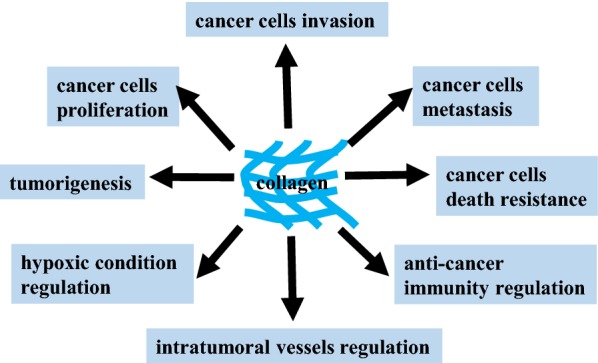
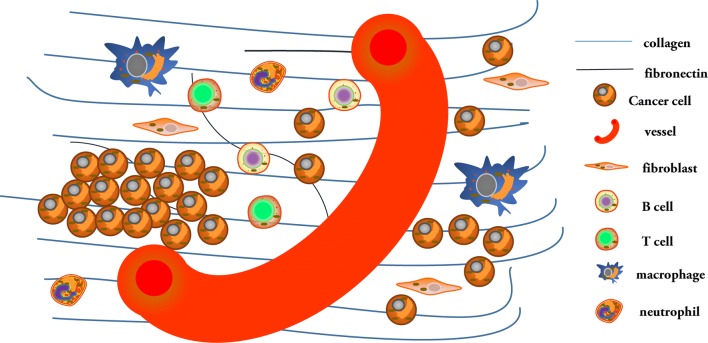
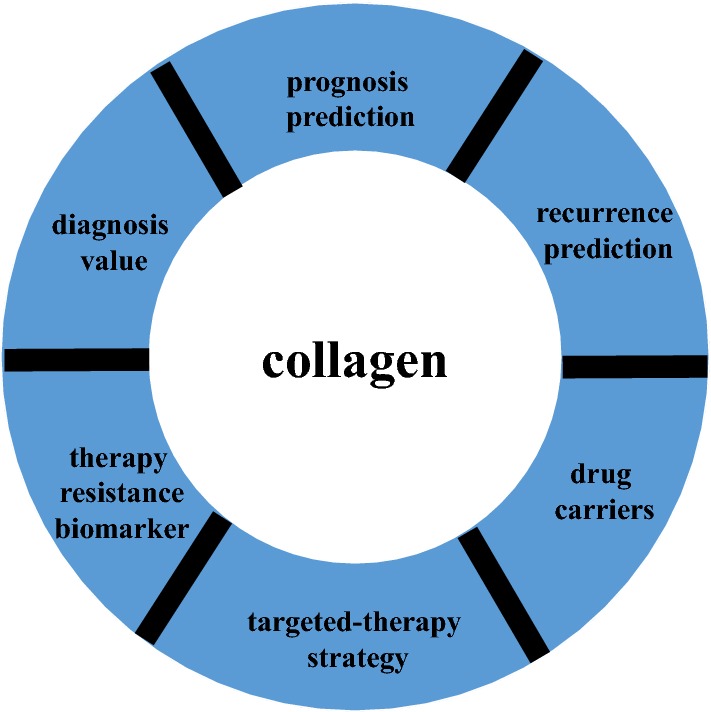
Collagen is the major component of the tumor microenvironment and participates in cancer fibrosis. Collagen biosynthesis can be regulated by cancer cells through mutated genes, transcription factors, signaling pathways and receptors; furthermore, collagen can influence tumor cell behavior through integrins, discoidin domain receptors, tyrosine kinase receptors, and some signaling pathways. Exosomes and microRNAs are closely associated with collagen in cancer. Hypoxia, which is common in collagen-rich conditions, intensifies cancer progression, and other substances in the extracellular matrix, such as fibronectin, hyaluronic acid, laminin, and matrix metalloproteinases, interact with collagen to influence cancer cell activity. Macrophages, lymphocytes, and fibroblasts play a role with collagen in cancer immunity and progression. Microscopic changes in collagen content within cancer cells and matrix cells and in other molecules ultimately contribute to the mutual feedback loop that influences prognosis, recurrence, and resistance in cancer. Nanoparticles, nanoplatforms, and nanoenzymes exhibit the expected gratifying properties. The pathophysiological functions of collagen in diverse cancers illustrate the dual roles of collagen and provide promising therapeutic options that can be readily translated from bench to bedside. The emerging understanding of the structural properties and functions of collagen in cancer will guide the development of new strategies for anticancer therapy.
Overview
The claims and statistics of this paper haven’t been checked yet.
Free: it reads the open-access text and checks the first 5 claims that cite a source we can check. Create a free account to check every claim.
Integrity signals
Registry
Cites
Statistics
Figures
Verification
Claims the paper makes
The claims and statistics of this paper haven’t been checked yet.
Free: it reads the open-access text and checks the first 5 claims that cite a source we can check. Create a free account to check every claim.
Claims other papers make about this one
Each is checked against this paper’s own text: does it say what the citing paper says it does?
The cited source says what the claim attributes to it.
In the citing paper
“Collagen in turn influences tumor cell behavior through integrins, tyrosine kinase receptors, discoidin domain receptors, and some signaling pathways [124].”
From Tumor microenvironment complexity and therapeutic implications at a glance (2020) · cites this paper as [124]
The cited source says what the claim attributes to it.
In the citing paper
“In addition, hypoxia, which is common in collagen-rich tumors, promotes cancer progression [124].”
From Tumor microenvironment complexity and therapeutic implications at a glance (2020) · cites this paper as [124]
Self-check
Percentages, sums and reported differences re-computed from the paper’s own numbers.
The self-check needs the paper’s full text.
Citations
Cites
1 retracted
Items 201–318 of 318
Hoey, C., Ahmed, M., Ghiam, A. F., Vesprini, D., Huang, X., Commisso, K., Commisso, A., Ray, J., Fokas, E., Loblaw, D. A., et al. (2019) · Journal of Translational Medicine · doi:10.1186/s12967-019-1920-5 · Cited by 64
Receptor tyrosine kinases in PI3K signaling: The therapeutic targets in cancer
Jiang, W., & Ji, M. (2019) · Seminars in Cancer Biology · doi:10.1016/j.semcancer.2019.03.006 · Cited by 63
Collagen XVII expression correlates with the invasion and metastasis of colorectal cancer
Moilanen, J. M., Kokkonen, N., Löffek, S., Väyrynen, J. P., Syväniemi, E., Hurskainen, T. L., Mäkinen, M. J., Klintrup, K., Mäkelä, J. T., Sormunen, R. T., et al. (2014) · Human Pathology · doi:10.1016/j.humpath.2014.11.020 · Cited by 62
Brown, C. W., Brodsky, A. S., & Freiman, R. N. (2015) · Molecular Cancer Research · doi:10.1158/1541-7786.mcr-14-0334 · Cited by 62
Procacci, P., Moscheni, C., Sartori, P., Sommariva, M., & Gagliano, N. (2018) · Cells · doi:10.3390/cells7100158 · Cited by 62
Devy, J., Duca, L., Cantarelli, B., Joseph‐Pietras, D., Scandolera, A., Rusciani, A., Parent, L., Thévenard, J., Brassart‐Pasco, S., Tarpin, M., et al. (2010) · British Journal of Cancer · doi:10.1038/sj.bjc.6605926 · Cited by 61
Keating, M., Kurup, A., Alvarez‐Elizondo, M. B., Levine, A. J., & Botvinick, E. L. (2017) · Acta Biomaterialia · doi:10.1016/j.actbio.2017.05.008 · Cited by 60
Potential of Integrin Inhibitors for Treating Ovarian Cancer: A Literature Review
Kobayashi, M., Sawada, K., & Kimura, T. (2017) · Cancers · doi:10.3390/cancers9070083 · Cited by 60
Yamazaki, S., Higuchi, Y., Ishibashi, M., Hashimoto, H., Yasunaga, M., Matsumura, Y., Tsuchihara, K., Tsuboi, M., Goto, K., Ochiai, A., et al. (2018) · Cancer Science · doi:10.1111/cas.13624 · Cited by 60
Rider, L. C., Oladimeji, P. O., & Diakonova, M. (2013) · Molecular Endocrinology · doi:10.1210/me.2012-1322 · Cited by 58
Liu, C.-C., Lin, S.-P., Hsu, H., Yang, S., Lin, C.-H., Yang, M., Hung, M., & Hung, S. (2016) · Nature Communications · doi:10.1038/ncomms11798 · Cited by 58
Freise, C., Erben, U., Muche, M., Farndale, R. W., Zeitz, M., Somasundaram, R., & Ruehl, M. (2009) · Matrix Biology · doi:10.1016/j.matbio.2009.08.001 · Cited by 56
Brodsky, A. S., Xiong, J., Yang, D., Schorl, C., Fenton, M. A., Graves, T. A., Sikov, W. M., Resnick, M. B., & Wang, Y. (2016) · BMC Cancer · doi:10.1186/s12885-016-2302-5 · Cited by 56
Collagen IV-conveyed signals can regulate chemokine production and promote liver metastasis
Vaniotis, G., Rayes, R. F., Qi, S., Milette, S., Wang, N., Perrino, S., Bourdeau, F., Nyström, H., He, Y., Lamarche‐Vane, N., et al. (2018) · Oncogene · doi:10.1038/s41388-018-0242-z · Cited by 56
A p53-Responsive miRNA Network Promotes Cancer Cell Quiescence
La, T., Liu, G., Farrelly, M. L., Cole, N., Feng, Y., Zhang, Y. Y., Sherwin, S. K., Yari, H., Tabatabaee, H., Yan, X. G., et al. (2018) · Cancer Research · doi:10.1158/0008-5472.can-18-1886 · Cited by 55
Collagen Prolyl Hydroxylases Are Bifunctional Growth Regulators in Melanoma
Atkinson, A., Renziehausen, A., Wang, H., Nigro, C. L., Lattanzio, L., Merlano, M. C., Rao, B., Weir, L., Evans, A. T., Matin, R., et al. (2018) · Journal of Investigative Dermatology · doi:10.1016/j.jid.2018.10.038 · Cited by 55
Self-citationA collagen‐binding EGFR single‐chain Fv antibody fragment for the targeted cancer therapy
Liang, H., Li, X., Chen, B., Wang, B., Zhao, Y., Zhuang, Y., Shen, H., Zhang, Z., & Dai, J. (2015) · Journal of Controlled Release · doi:10.1016/j.jconrel.2015.04.029 · Cited by 54
Sugiyama, N., Varjosalo, M., Meller, P., Lohi, J., Hyytiäinen, M., Kilpinen, S., Kallioniemi, O., Ingvarsen, S., Engelholm, L. H., Taipale, J., et al. (2010) · Cancer Research · doi:10.1158/0008-5472.can-10-1223 · Cited by 54
The vitamin D system is deregulated in pancreatic diseases
Hummel, D. M., Aggarwal, A., Borka, K., Bajna, E., Kállay, E., & Horváth, H. C. (2014) · The Journal of Steroid Biochemistry and Molecular Biology · doi:10.1016/j.jsbmb.2014.07.011 · Cited by 53
Lin, Y., Chen, F., Shen, L., Tang, X., Du, C., Sun, Z., Ding, H., Chen, J., & Shen, B. (2018) · Journal of Translational Medicine · doi:10.1186/s12967-018-1506-7 · Cited by 53
Tse, A. P., Sze, K. M., Shea, Q. T. K., Chiu, E. Y.-T., Tsang, F. H., Chiu, D. K., Zhang, M. S., Lee, D., Xu, M., Chan, C. Y., et al. (2018) · Oncogenesis · doi:10.1038/s41389-018-0052-8 · Cited by 53
Bleul, T., Rühl, R., Bulashevska, S., Karakhanova, S., Werner, J., & Bazhin, A. V. (2014) · Molecular Carcinogenesis · doi:10.1002/mc.22158 · Cited by 52
Sterzyńska, K., Klejewski, A., Wojtowicz, K., Świerczewska, M., Nowacka, M., Kaźmierczak, D., Andrzejewska, M., Rusek, D., Brązert, M., Brązert, J., et al. (2018) · International Journal of Molecular Sciences · doi:10.3390/ijms20010054 · Cited by 52
Stefano, V. D., Torsello, B., Bianchi, C., Cifola, I., Mangano, E., Bovo, G., Cassina, V., Marco, S. D., Corti, R., Meregalli, C., et al. (2016) · American Journal Of Pathology · doi:10.1016/j.ajpath.2016.05.019 · Cited by 52
Ramanathan, S., Douglas, S. R., Alexander, G. M., Shenoda, B. B., Barrett, J. E., Aradillas, E., Saçan, A., & Ajit, S. K. (2019) · Journal of Translational Medicine · doi:10.1186/s12967-019-1833-3 · Cited by 52
Lai, Y., Chen, J., Wang, X., Wu, Y., Peng, H., Lin, X., & Wang, W. (2017) · Journal of Experimental & Clinical Cancer Research · doi:10.1186/s13046-017-0564-7 · Cited by 51
Self-citationShea, M. P., O’Leary, K. A., Wegner, K. A., Vezina, C. M., & Schuler, L. A. (2018) · Cancer Letters · doi:10.1016/j.canlet.2018.06.025 · Cited by 51 · cited 1×
“After the withdrawal of rapamycin treatment, mutated COL1A1 reinforced PI3K–AKT-mammalian target of rapamycin (mTOR) signals in cancer stem cells to sustain the metastatic burden of ERα-positive breast cancer cells; however, lung metastases were independent of mTOR signaling [74].”
BackgroundExpression of COL6A1 predicts prognosis in cervical cancer patients.
Hou, T., Tong, C., Kazobinka, G., Zhang, W., Huang, X., Huang, Y., & Zhang, Y. (2016) · Europe PMC (PubMed Central) · Cited by 50
Self-citationDiagnostic and prognostic role of urinary collagens in primary human bladder cancer
Miyake, M., Morizawa, Y., Hori, S., Tatsumi, Y., Onishi, S., Owari, T., Iida, K., Onishi, K., Gotoh, D., Nakai, Y., et al. (2017) · Cancer Science · doi:10.1111/cas.13384 · Cited by 50
Nie, X., Wang, J., Zhu, W., Xu, X., Xing, Y., Yu, M., Liu, Y., Takano, Y., & Zheng, H. (2012) · Human Pathology · doi:10.1016/j.humpath.2011.10.028 · Cited by 49
Espinosa‐Neira, R., & Salazar, E. P. (2012) · The International Journal of Biochemistry & Cell Biology · doi:10.1016/j.biocel.2012.08.018 · Cited by 49 · cited 1×
“COLIV not only promoted a decrease in E-cadherin expression, an increase in N-cadherin expression, and upregulation of Snail1, Snail2, and Sip1 (E-cadherin transcriptional repressors that bind at E-boxes of the E-cadherin promoter) but also induced FAK and ERK1/2 activation in affiliation with TGF-β during EMT, result…”
BackgroundStromal PTEN Regulates Extracellular Matrix Organization in the Mammary Gland
Jones, C. E., Hammer, A. M., Cho, Y., Sizemore, G. M., Cukierman, E., Yee, L. D., Ghadiali, S. N., Ostrowski, M. C., & Leight, J. L. (2018) · Neoplasia · doi:10.1016/j.neo.2018.10.010 · Cited by 49
Nagaraju, G. P., Park, W., Wen, J., Mahaseth, H., Landry, J., Farris, A. B., Willingham, F., Sullivan, P. S., Proia, D. A., El-Hariry, I., et al. (2013) · Angiogenesis · doi:10.1007/s10456-013-9373-6 · Cited by 49
Ibbetson, S. J., Pyne, N. T., Pollard, A., Olson, M. F., & Samuel, M. S. (2013) · American Journal Of Pathology · doi:10.1016/j.ajpath.2013.05.014 · Cited by 48
Shen, Y., Shen, R., Ge, L., Zhu, Q., & Li, F. (2012) · International Journal of Gynecological Cancer · doi:10.1097/igc.0b013e318263ef34 · Cited by 48 · cited 1×
“Remodeled COLI affected the invasion of ovarian cancer cells by mediating the integrin-PTEN/PI3K/AKT signaling pathway [58].”
BackgroundYan, T., Zhang, A., Shi, F., Chang, F., Mei, J., Liu, Y., & Zhu, Y. (2018) · Journal of Biological Chemistry · doi:10.1074/jbc.ra117.000327 · Cited by 48
Expression and function of matrix metalloproteinase (MMP)-28
Rodgers, U. R., Kevorkian, L., Surridge, A. K., Waters, J. G., Swingler, T. E., Culley, K. L., Illman, S. A., Lohi, J., Parker, A. E., & Clark, I. M. (2009) · Matrix Biology · doi:10.1016/j.matbio.2009.04.006 · Cited by 47
Ganapathi, M. K., Jones, W. D., Sehouli, J., Michener, C. M., Braicu, E. I., Norris, E. J., Biscotti, C. V., Vaziri, S. A. J., & Ganapathi, R. N. (2015) · International Journal of Cancer · doi:10.1002/ijc.29815 · Cited by 47
Seniutkin, O., Furuya, S., Luo, Y., Cichocki, J. A., Fukushima, H., Kato, Y., Sugimoto, H., Matsumoto, T., Uehara, T., & Rusyn, I. (2017) · Toxicology and Applied Pharmacology · doi:10.1016/j.taap.2017.11.024 · Cited by 47
Biondani, G., Zeeberg, K., Greco, M. R., Cannone, S., Dando, I., Dalla Pozza, E., Mastrodonato, M., Forciniti, S., Casavola, V., Palmieri, M., et al. (2018) · The FEBS Journal · doi:10.1111/febs.14471 · Cited by 47
A role for collagen XXIII in cancer cell adhesion, anchorage-independence and metastasis
Spivey, K. A., Chung, I., Banyard, J., Adini, I., Feldman, H. A., & Zetter, B. R. (2011) · Oncogene · doi:10.1038/onc.2011.406 · Cited by 46
Wei, M., Sun, W., He, W., Ni, L., & Yang, Y. (2015) · Evidence-based Complementary and Alternative Medicine · doi:10.1155/2015/619720 · Cited by 46
Wegner, C. S., Gaustad, J., Andersen, L. M. K., Simonsen, T. G., & Rofstad, E. K. (2016) · Journal of Translational Medicine · doi:10.1186/s12967-016-0920-y · Cited by 45
Meng, C., He, Y., Wei, Z., Lu, Y., Du, F., Ou, G., Wang, N., Luo, X.-G., Ma, W., Zhang, T.-C., et al. (2018) · Biomedicine & Pharmacotherapy · doi:10.1016/j.biopha.2018.05.092 · Cited by 45
Gonçalves-Ribeiro, S., Pamplona, R. S., Vidal, A. D., Sanjuán, X., Díaz-Maroto, N. G., Soriano, A., Guardiola, J., Albert, N., Martinez-Villacampa, M. M., López, I. T., et al. (2017) · Annals of Oncology · doi:10.1093/annonc/mdx293 · Cited by 44
The Next Wave of Stroma-Targeting Therapy in Pancreatic Cancer
Huang, H., & Brekken, R. A. (2019) · Cancer Research · doi:10.1158/0008-5472.can-18-3751 · Cited by 44
Cryptic collagen IV promotes cell migration and adhesion in myeloid leukemia
Favreau, A. J., Vary, C., Brooks, P. C., & Sathyanarayana, P. (2014) · Cancer Medicine · doi:10.1002/cam4.203 · Cited by 43
Inhibition of Collagen XVI Expression Reduces Glioma Cell Invasiveness
Bauer, R. J., Ratzinger, S., Wales, L., Bosserhoff, A., Senner, V., Grifka, J. K., & Grässel, S. (2011) · Cellular Physiology and Biochemistry · doi:10.1159/000327947 · Cited by 43
Type IV collagen as a tumour marker for colorectal liver metastases
Nyström, H., Naredi, P. L. J., Hafström, L., & Sund, M. (2011) · European Journal of Surgical Oncology · doi:10.1016/j.ejso.2011.04.010 · Cited by 43
Whittington, C. F., Yöder, M. C., & Voytik‐Harbin, S. L. (2013) · Macromolecular Bioscience · doi:10.1002/mabi.201300128 · Cited by 43
Melanoma cell migration to type IV collagen requires activation of NF-κB
Hodgson, L., Henderson, A. J., & Dong, C. (2003) · Oncogene · doi:10.1038/sj.onc.1206059 · Cited by 43
Moss, N. M., Liu, Y., Johnson, J. J., Debiase, P., Jones, J. C. R., Hudson, L. G., Munshi, H. G., & Stack, M. S. (2009) · Molecular Cancer Research · doi:10.1158/1541-7786.mcr-08-0571 · Cited by 43
Ueno, H., Konishi, T., Ishikawa, Y., Shimazaki, H., Ueno, M., Aosasa, S., Saiura, A., Hase, K., & Yamamoto, J. (2014) · American Journal of Surgical Pathology · doi:10.1097/pas.0000000000000232 · Cited by 43
Wang, H., Mislati, R., Ahmed, R., Vincent, P., Nwabunwanne, S. F., Gunn, J. R., Pogue, B. W., & Doyley, M. M. (2019) · Clinical Cancer Research · doi:10.1158/1078-0432.ccr-18-2684 · Cited by 43
Dong, H., Luo, L., Zou, M., Huang, C., Wan, X., Hu, Y., Le, Y., Zhao, H., Li, W., Zou, F., et al. (2017) · American Journal of Physiology-Lung Cellular and Molecular Physiology · doi:10.1152/ajplung.00489.2016 · Cited by 42
The BRAFV600E inhibitor, PLX4032, increases type I collagen synthesis in melanoma cells
Jenkins, M. H., Croteau, W., Mullins, D. W., & Brinckerhoff, C. (2015) · Matrix Biology · doi:10.1016/j.matbio.2015.05.007 · Cited by 39 · cited 1×
“Crosstalk between TGF-β and the RasRaf-mitogen-activated protein kinase (MEK)-extracellular signal-regulated kinase (ERK) signaling pathway increased collagen synthesis along with p38 activation in melanoma cells to promote cancer progression [34].”
BackgroundCHO, K., MATSUDA, Y., UEDA, J., UCHIDA, E., NAITO, Z., & ISHIWATA, T. (2012) · International Journal of Oncology · doi:10.3892/ijo.2011.1280 · Cited by 39
Glycosylation Modulates Melanoma Cell α2β1 and α3β1 Integrin Interactions with Type IV Collagen
Stawikowski, M. J., Aukszi, B., Stawikowska, R., Cudic, M., & Fields, G. B. (2014) · Journal of Biological Chemistry · doi:10.1074/jbc.m114.572073 · Cited by 39
Spivey, K. A., Banyard, J., Solis, L. M., Wistuba, I. I., Barletta, J. A., Gandhi, L., Feldman, H. A., Rodig, S. J., Chirieac, L. R., & Zetter, B. R. (2010) · Cancer Epidemiology Biomarkers & Prevention · doi:10.1158/1055-9965.epi-09-1095 · Cited by 39
Souza, P. D. C., Rizzardi, F., Noleto, G. S., Atanazio, M. J., da Silva, O. B., Parra, E. R., Teodoro, W. R., Carrasco, S., Velosa, A. P. P., Fernezlian, S., et al. (2009) · Human Pathology · doi:10.1016/j.humpath.2009.07.018 · Cited by 38
Shen, H., Gao, Q., Ye, Q., Yang, S., Wu, Y., Huang, Q., Wang, X., & Sun, Z. (2018) · International Journal of Nanomedicine · doi:10.2147/ijn.s178585 · Cited by 38
Gurler, H., Yu, Y., Choi, J., Kajdacsy-Balla, A., & Barbolina, M. (2015) · International Journal of Molecular Sciences · doi:10.3390/ijms16023419 · Cited by 37
Jakubzig, B., Baltes, F., Henze, S., Schlesinger, M., & Bendas, G. (2018) · Cancers · doi:10.3390/cancers10120495 · Cited by 37
Targeting AngII/AT1R signaling pathway by perindopril inhibits ongoing liver fibrosis in rat
El‐Rahman, S. S. A., & Fayed, H. M. (2019) · Journal of Tissue Engineering and Regenerative Medicine · doi:10.1002/term.2940 · Cited by 37
Zhu, X., Rao, X., Yao, W., & Zou, X. (2018) · Europe PMC (PubMed Central) · Cited by 37
Nurmenniemi, S., Koivula, M.-K., Nyberg, P., Tervahartiala, T. I., Sorsa, T. A., Mattila, P. S., Salo, T. A., & Risteli, J. (2011) · Oral Oncology · doi:10.1016/j.oraloncology.2011.09.002 · Cited by 35
Ayalew, L., Acuna, J., Urfano, S. F., Morfin, C., Sablan, A., Oh, M., Gamboa, A., & Slowinska, K. (2017) · ACS Medicinal Chemistry Letters · doi:10.1021/acsmedchemlett.7b00117 · Cited by 35
Averett, C., Bhardwaj, A., Arora, S., Srivastava, S. K., Khan, M. A., Ahmad, A., Singh, S., Carter, J. E., Khushman, M. M., & Singh, A. P. (2016) · Carcinogenesis · doi:10.1093/carcin/bgw096 · Cited by 35
Goggins, E. S., Kakkad, S. M., Mironchik, Y., Jacob, D., Wildes, F. B., Krishnamachary, B., & Bhujwalla, Z. M. (2017) · Neoplasia · doi:10.1016/j.neo.2017.11.010 · Cited by 35
Antisense Knockdown of Kras Inhibits Fibrosis in a Rat Model of Unilateral Ureteric Obstruction
Wang, J., Newbury, L. J., Knisely, A. S., Monia, B. P., Hendry, B. M., & Sharpe, C. C. (2011) · American Journal Of Pathology · doi:10.1016/j.ajpath.2011.09.036 · Cited by 34
Cytoplasmic collagen XIαI as a prognostic biomarker in esophageal squamous cell carcinoma
Zhang, B., Zhang, C., Yang, X., Chen, Y., Zhang, H., Liu, J., & Wu, Q. (2018) · Cancer Biology & Therapy · doi:10.1080/15384047.2018.1423915 · Cited by 34
Molecular mechanism of Gd@C82(OH)22 increasing collagen expression: Implication for encaging tumor
Liu, J., Kang, S.-G., Wang, P., Wang, Y., Lv, X., Liu, Y., Wang, F., Gu, Z., Yang, Z., Weber, J. K., et al. (2017) · Biomaterials · doi:10.1016/j.biomaterials.2017.10.027 · Cited by 34
Ishikawa, Y., Rubin, K., Bächinger, H. P., & Kalamajski, S. (2018) · Journal of Biological Chemistry · doi:10.1074/jbc.ra117.000758 · Cited by 33
Analysis of dynamic molecular networks for pancreatic ductal adenocarcinoma progression
Pan, Z., Li, L., Fang, Q., Zhang, Y., Hu, X., Qian, Y., & Huang, P. (2018) · Cancer Cell International · doi:10.1186/s12935-018-0718-5 · Cited by 33
Tang, Y., Liu, Y., Wang, S., Tian, Y., Li, Y., Teng, Z., & Lu, G. (2019) · Drug Delivery and Translational Research · doi:10.1007/s13346-018-00610-1 · Cited by 33
Lewis, D. M., Pruitt, H. C., Jain, N., Ciccaglione, M., McCaffery, J. M., Xia, Z., WEBER, K. L., Eisinger‐Mathason, T. S. K., & Gerecht, S. (2019) · Cancer Research · doi:10.1158/0008-5472.can-18-1984 · Cited by 33
Induction of type XVI collagen expression facilitates proliferation of oral cancer cells
Ratzinger, S., Grässel, S., Dowejko, A., Reichert, T. E., & Bauer, R. J. (2011) · Matrix Biology · doi:10.1016/j.matbio.2011.01.001 · Cited by 32
Thaçi, B., Ulasov, I. V., Ahmed, A. U., Ferguson, S. D., Han, Y. S., & Lesniak, M. S. (2012) · Gene Therapy · doi:10.1038/gt.2012.42 · Cited by 32
Role of TGF-β1/Smad3-mediated fibrosis in drug resistance mechanism of prolactinoma
Hu, B., Mao, Z., Jiang, X., He, D., Wang, Z., Wang, X., Zhu, Y., & Wang, H. (2018) · Brain Research · doi:10.1016/j.brainres.2018.07.024 · Cited by 32
Awasthi, N., Mikels, A. J., Stefanutti, E., Schwarz, M. A., Monahan, S., Smith, V., & Schwarz, R. E. (2019) · Journal of Cellular and Molecular Medicine · doi:10.1111/jcmm.14242 · Cited by 32
Chang, C.-C., Hsieh, T.-L., Tiong, T.-Y., Hsiao, C., Ji, A. T.-Q., Hsu, W., Lee, O. K., & Ho, J. H. (2015) · Biomaterials · doi:10.1016/j.biomaterials.2015.04.058 · Cited by 31 · cited 1×
“In contrast, c-Met expression, rather than EGFR expression, colocalized with abundant COLI in pulmonary adenocarcinoma [38].”
BackgroundSprague, L., Muccioli, M., Pate, M., Singh, M., Xiong, C., Ostermann, A. O., Niese, B., Li, Y., Li, Y., Courreges, M. C., et al. (2014) · Experimental Cell Research · doi:10.1016/j.yexcr.2014.01.031 · Cited by 31
Chen, S.-Y., Lin, J.-S., & Yang, B.-C. (2014) · Archives of Biochemistry and Biophysics · doi:10.1016/j.abb.2014.05.004 · Cited by 31
Li, Y., Hong, J., Oh, J., Yoon, A. R., & Yun, C. (2017) · International Journal of Cancer · doi:10.1002/ijc.31060 · Cited by 31
Cdc42 Regulates Extracellular Matrix Remodeling in Three Dimensions
Sipes, N. S., Feng, Y., Guo, F., Lee, H., Chou, F., Cheng, J. D., Mulloy, J. C., & Zheng, Y. (2011) · Journal of Biological Chemistry · doi:10.1074/jbc.m111.283176 · Cited by 30
Kenny, T. C., Schmidt, H., Adelson, K. B., Hoshida, Y., Koh, A. P., Shah, N., Mandeli, J., Ting, J., & Germain, D. (2017) · Clinical Cancer Research · doi:10.1158/1078-0432.ccr-17-0342 · Cited by 29
Elenjord, R., Allen, J. B., Johansen, H. T., Kildalsen, H., Svineng, G., Mælandsmo, G. M., Loennechen, T., & Winberg, J. (2009) · FEBS Journal · doi:10.1111/j.1742-4658.2009.07223.x · Cited by 28
Hwangbo, C., Park, J., & Lee, J. (2011) · Journal of Biological Chemistry · doi:10.1074/jbc.m110.206789 · Cited by 28
Asama, H., Suzuki, R., Hikichi, T., Takagi, T. J., Masamune, A., & Ohira, H. (2018) · Pancreatology · doi:10.1016/j.pan.2018.10.012 · Cited by 28
Phadnis, S., Atilade, A., Bowring, J., Kyrgiou, M., Young, M., Evans, H., Paraskevaidis, E., & Walker, P. (2011) · BJOG: An International Journal of Obstetrics & Gynaecology · doi:10.1111/j.1471-0528.2011.03085.x · Cited by 27
miR-29b enhances prostate cancer cell invasion independently of MMP-2 expression
Ivanovic, R. F., Viana, N. I., Morais, D. R., da Silva, I. A., Leite, K. R. M., Pontes‐Júnior, J., Inoue, G. N. C., Nahas, W. C., Srougi, M., & Reis, S. T. (2018) · Cancer Cell International · doi:10.1186/s12935-018-0516-0 · Cited by 27
Prakobwong, S., Charoensuk, L., Hiraku, Y., Pinlaor, P., Pairojkul, C., Mairiang, E., Sithithaworn, P., Yongvanit, P., Khuntikeo, N., & Pinlaor, S. (2011) · International Journal of Cancer · doi:10.1002/ijc.26443 · Cited by 26
Shi, R., Hu, W., Zhang, Y., Gao, S., Smith, A. H., Ye, J., Cai, L., Graham, L. M., & Li, C. (2019) · Cellular and Molecular Life Sciences · doi:10.1007/s00018-019-03081-w · Cited by 26 · cited 1×
“Hydroxylation and glycosylation in the endoplasmic reticulum are two main modifications that occur after translation, and the hydroxylation modification is regulated by vitamin C and pyruvate metabolism [10, 11].”
BackgroundTargeting of Cell Surface Proteolysis of Collagen XVII Impedes Squamous Cell Carcinoma Progression
Galiger, C., Löffek, S., Stemmler, M. P., Kroeger, J. K., Mittapalli, V. R., Fauth, L., Esser, P. R., Kern, J. S., Meiß, F., Laßmann, S., et al. (2017) · Molecular Therapy · doi:10.1016/j.ymthe.2017.09.022 · Cited by 25
Jeannesson, P. (2012) · International Journal of Oncology · doi:10.3892/ijo.2012.1393 · Cited by 24 · cited 1×
“Although both collagen glycation and carbamylation affected the metastasis of cancer cells, glycation caused a more obvious delay in cell adhesion time and deficient actin stress fibers and inhibited the mean cell speed and FAK phosphorylation state more than carbamylation [78].”
BackgroundRolff, H. C., Christensen, I. J., Vainer, B., Svendsen, L. B., Eefsen, R. L., Wilhelmsen, M., Lund, I. K., Høyer‐Hansen, G., Nielsen, H. J., & Illemann, M. (2015) · Clinical Cancer Research · doi:10.1158/1078-0432.ccr-15-2342 · Cited by 24
Smith, S. D., Enge, M., Bao, W., Thullberg, M., Costa, T. D. F., Olofsson, H., Gashi, B., Selivanova, G., & Strömblad, S. (2012) · Journal of Biological Chemistry · doi:10.1074/jbc.m112.341917 · Cited by 23
Krasny, L., Shimony, N., Tzukert, K., Gorodetsky, R., Lecht, S., Nettelbeck, D. M., & Haviv, Y. S. (2009) · Nephrology Dialysis Transplantation · doi:10.1093/ndt/gfp525 · Cited by 23
Dayal, J. H. S., Cole, C. L., Pourreyron, C., Watt, S. A., Lim, Y. Z., Salas-Alanis, J. C., Murrell, D. F., McGrath, J. A., Stieger, B., Jahoda, C. A. B., et al. (2013) · Journal of Cell Science · doi:10.1242/jcs.128454 · Cited by 22
microRNA expression pattern as an ancillary prognostic signature for radiotherapy
Li, A.-L., Chung, T.-S., Chan, Y.-N., Chen, C., Lin, S., Chiang, Y.-R., Lin, C.-H., Chen, C.-C., & Ma, N. J.-L. (2018) · Journal of Translational Medicine · doi:10.1186/s12967-018-1711-4 · Cited by 21
Borrirukwanit, K., Pavasant, P., Blick, T., Lafleur, M. A., & Thompson, E. W. (2014) · Cancer Cell International · doi:10.1186/s12935-014-0099-3 · Cited by 20 · cited 1×
“COLI Modulating MMP-2 and MMP-14 activation via β1 integrin [244]”
BackgroundFerreira, A. R., Alho, I., Shan, N., Matias, M., Faria, M., Casimiro, S., Leitzel, K. E., Ali, S. M., Lipton, A., & Costa, L. (2016) · The Oncologist · doi:10.1634/theoncologist.2015-0527 · Cited by 20
Henke, A., Franco, O. E., Stewart, G. D., Riddick, A. C. P., Katz, E., Hayward, S. W., & Thomson, A. A. (2016) · Cancers · doi:10.3390/cancers8090077 · Cited by 19
Tamiya, M., Kobayashi, M., Morimura, O., Yasue, T., Nakasuji, T., Satomu, M., Kohei, O., Shiroyama, T., Morishita, N., Suzuki, H., et al. (2012) · Clinical Lung Cancer · doi:10.1016/j.cllc.2012.03.012 · Cited by 17
Sielaff, C. M., & Mousa, S. A. (2018) · Journal of Cancer Research and Clinical Oncology · doi:10.1007/s00432-018-2651-3 · Cited by 17
Prognostic significance of the expression of MUC1 and collagen type IV in advanced gastric carcinoma
Ando, H., Aihara, R., Ohno, T., Ogata, K., Mochiki, E., & Kuwano, H. (2009) · British journal of surgery · doi:10.1002/bjs.6635 · Cited by 16
Yoshida, T., Hashimura, M., Kuwata, T., Matsumoto, T., Suzuki, E., Tazo, Y., Nakajima, H., Inukai, M., & Saegusa, M. (2013) · Human Pathology · doi:10.1016/j.humpath.2012.12.019 · Cited by 16 · cited 1×
“For example, COL2A1 was shown to be under the transcriptional control of the NF-κB subunit p65 in sarcomatous [30].”
BackgroundBurmakin, M., van Wieringen, T., Olsson, P. O., Stuhr, L. E. B., Åhgren, A., Heldin, C., Reed, R. K., Rubin, K., & Hellberg, C. B. (2017) · Journal of Translational Medicine · doi:10.1186/s12967-017-1142-7 · Cited by 15
Acetylenic derivative of betulin induces apoptosis in endometrial adenocarcinoma cell line
Szoka, Ł., Karna, E., Hlebowicz‐Sarat, K., Karaszewski, J., Boryczka, S., & Palka, J. A. (2017) · Biomedicine & Pharmacotherapy · doi:10.1016/j.biopha.2017.08.104 · Cited by 15
Olsson, P. O., Gustafsson, R., Zandt, R. I. ‘., Friman, T., Maccarana, M., Tykesson, E., Oldberg, Å., Rubin, K., & Kalamajski, S. (2016) · Molecular Cancer Therapeutics · doi:10.1158/1535-7163.mct-16-0026 · Cited by 14
Wang, Y., Resnick, M. B., Lu, S., Hui, Y., Brodsky, A. S., Yang, D., Yakirevich, E., & Wang, L. (2016) · Human Pathology · doi:10.1016/j.humpath.2016.07.017 · Cited by 14
Mohsen, A., Collery, P., Garnotel, R., Brassart, B., Etique, N., Sabry, G. M., Hassan, R. E., Jeannesson, P., Desmaële, D., & Morjani, H. (2017) · Metallomics · doi:10.1039/c7mt00049a · Cited by 14
Shimizu, A., Kobayashi, A., Yokoyama, T., Motoyama, H., Sakai, H., Kitagawa, N., Notake, T., Shirota, T., Fukushima, K., & Miyagawa, S. (2016) · Surgery · doi:10.1016/j.surg.2016.06.024 · Cited by 12
Radiation-induced myosin IIA expression stimulates collagen type I matrix reorganization
Blockhuys, S., Rompaye, B. V., Rycke, R. M. D., Lambein, K., Claes, K., Bracke, M., Wagter, C. D., & Wever, O. D. (2013) · Radiotherapy and Oncology · doi:10.1016/j.radonc.2013.04.001 · Cited by 11
Angenendt, L., Mikesch, J., Görlich, D., Busch, A., Arnhold, I., Rudack, C., Hartmann, W., Wardelmann, E., Berdel, W. E., Stenner, M., et al. (2018) · Cellular Oncology · doi:10.1007/s13402-018-0389-1 · Cited by 11
Chang, K., Lu, Y.-C., Lin, M.-J., Chen, H.-Y., & Jin, Y. (2011) · Histopathology · doi:10.1111/j.1365-2559.2011.03898.x · Cited by 8
Spatiotemporal characteristics of fibroblasts-dependent cancer cell invasion
Miyashita, T., Omori, T., Nakamura, H., Sugano, M., Neri, S., Fujii, S., Hashimoto, H., Tsuboi, M., Ochiai, A., & Ishii, G. (2018) · Journal of Cancer Research and Clinical Oncology · doi:10.1007/s00432-018-2798-y · Cited by 8
Imamura, M., Nishimukai, A., Higuchi, T., Ozawa, H., Yanai, A., Miyagawa, Y., Murase, K., Sakita, I., Hatada, T., Takatsuka, Y., et al. (2015) · Breast Cancer Research and Treatment · doi:10.1007/s10549-015-3638-2 · Cited by 7
Cited by
Tumor microenvironment complexity and therapeutic implications at a glance
Baghban, R., Roshangar, L., Jahanban-Esfahlan, R., Seidi, K., Ebrahimi-Kalan, A., Jaymand, M., Kolahian, S., Javaheri, T., & Zare, P. (2020) · Cell Communication and Signaling · doi:10.1186/s12964-020-0530-4 · Cited by 1,784
“In addition, hypoxia, which is common in collagen-rich tumors, promotes cancer progression [124] .”
BackgroundExtracellular matrix and its therapeutic potential for cancer treatment
Huang, J., Zhang, L., Wan, D., Zhou, L., Zheng, S., Lin, S., & Qiao, Y. (2021) · Signal Transduction and Targeted Therapy · doi:10.1038/s41392-021-00544-0 · Cited by 962
Microenvironmental Determinants of Pancreatic Cancer
Hessmann, E., Buchholz, S. M., Demir, I. E., Singh, S. K., Gress, T. M., Ellenrieder, V., & Neesse, A. (2020) · Physiological Reviews · doi:10.1152/physrev.00042.2019 · Cited by 331
Collagen- and hyaluronic acid-based hydrogels and their biomedical applications
Xu, Q., Torres, J. E., Hakim, M., Babiak, P. M., Pal, P., Battistoni, C. M., Nguyen, M., Panitch, A., Solorio, L., & Liu, J. C. (2021) · Materials Science and Engineering: R: Reports · doi:10.1016/j.mser.2021.100641 · Cited by 318
Collagen: quantification, biomechanics and role of minor subtypes in cartilage
Bielajew, B. J., Hu, J. C., & Athanasiou, K. A. (2020) · Nature Reviews Materials · doi:10.1038/s41578-020-0213-1 · Cited by 311
Metadata
- Authors
- Xu, S., Xu, H., Wang, W., Li, S., Li, H., Li, T., Zhang, W., Yu, X., & Liu, L.
- Affiliations
- Shanghai Medical College of Fudan University (CN)
- Corresponding author
- Yu, Xianjun
- Liu, Liang
- Venue
- Journal of Translational Medicine
- Published
- 2019-09-14
- Volume
- 17
- Issue
- 1
- Pages
- 309-309
- ISSN
- 1479-5876 (ISSN-L)
- PMC
- PMC6744664
- OpenAlex
- W2972865130
- Cited by
- 735
- References
- 318
- Citations by year
- 2026: 40 · 2025: 105 · 2024: 139 · 2023: 141 · 2022: 120 · 2021: 130 · 2020: 56 · 2019: 1
- FWCI
- 4.89
- Type
- journal article
- Language
- en
- Open access
- gold
- doi.org
- Licence
- cc-by
- creativecommons.org/licenses/by/4.0/ (tdm)
- creativecommons.org/licenses/by/4.0/ (vor)
- Locations
- Journal of Translational Medicine (publishedVersion, cc-by)
- PubMed Central (publishedVersion, cc-by)
- PubMed (publishedVersion)
- DOAJ (DOAJ: Directory of Open Access Journals) (submittedVersion)
- Funders
- National Science Foundation for Distinguished Young Scholars of China (81625016)
- National Natural Science Foundation of China (81871941, 81872366, 81827807, 81802675, 81702341)
- Outstanding Academic Leader Program of the “Technological Innovation Action Plan” of the Shanghai Science and Technology Commission (18XD1401200)
- Young Talented Specialist Training Program of Shanghai
- Topics
- Physical Sciences › Materials Science › Biomaterials › Collagen: Extraction and Characterization
- Life Sciences › Biochemistry, Genetics and Molecular Biology › Cell Biology › Cellular Mechanics and Interactions
- Life Sciences › Biochemistry, Genetics and Molecular Biology › Molecular Biology › TGF-β signaling in diseases
- Keywords
- collagen, tumor microenvironment, collagen synthesis, integrins, discoidin domain receptors, exosomes, microRNA, tumor hypoxia, extracellular matrix, fibronectin, hyaluronic acid, matrix metalloproteinases, tumor immunology, tumor progression, nanotherapeutics, nanozymes, cancer therapy
- MeSH terms
- Collagen, Humans, Neoplasms, Prognosis, MicroRNAs, Exosomes, Translational Research, Biomedical
About these checks
Registry, retraction, Cites and statistics results are computed, not judged, with one exception: a printed reference that no index lists is read once by a model before it counts as a citation error. Claims are extracted by a model and kept only when their quote appears verbatim in the text; each cited source is then checked, with a model’s help, for whether it says what the claim relies on. Those verdicts can be wrong — read the claim’s quote and the cited source before relying on one.
Statistics and arithmetic are recomputed, not judged.
Confidence bands are shown only for fields calibrated on our annotated test set. None is calibrated yet, so no band is shown.
What counts as a claim ›How we measure confidence ›How we check this ›
Are you an author, or do you see a problem with this page? Request a review
Data sources
Bibliographic data: Semantic Scholar, OpenAlex, Crossref.
Contains information from the Semantic Scholar Academic Graph Datasets, made available under the ODC Attribution License (ODC-BY 1.0).
Semantic Scholar’s data is described in: Kinney, R., et al. (2023). The Semantic Scholar Open Data Platform. arXiv:2301.10140.
